




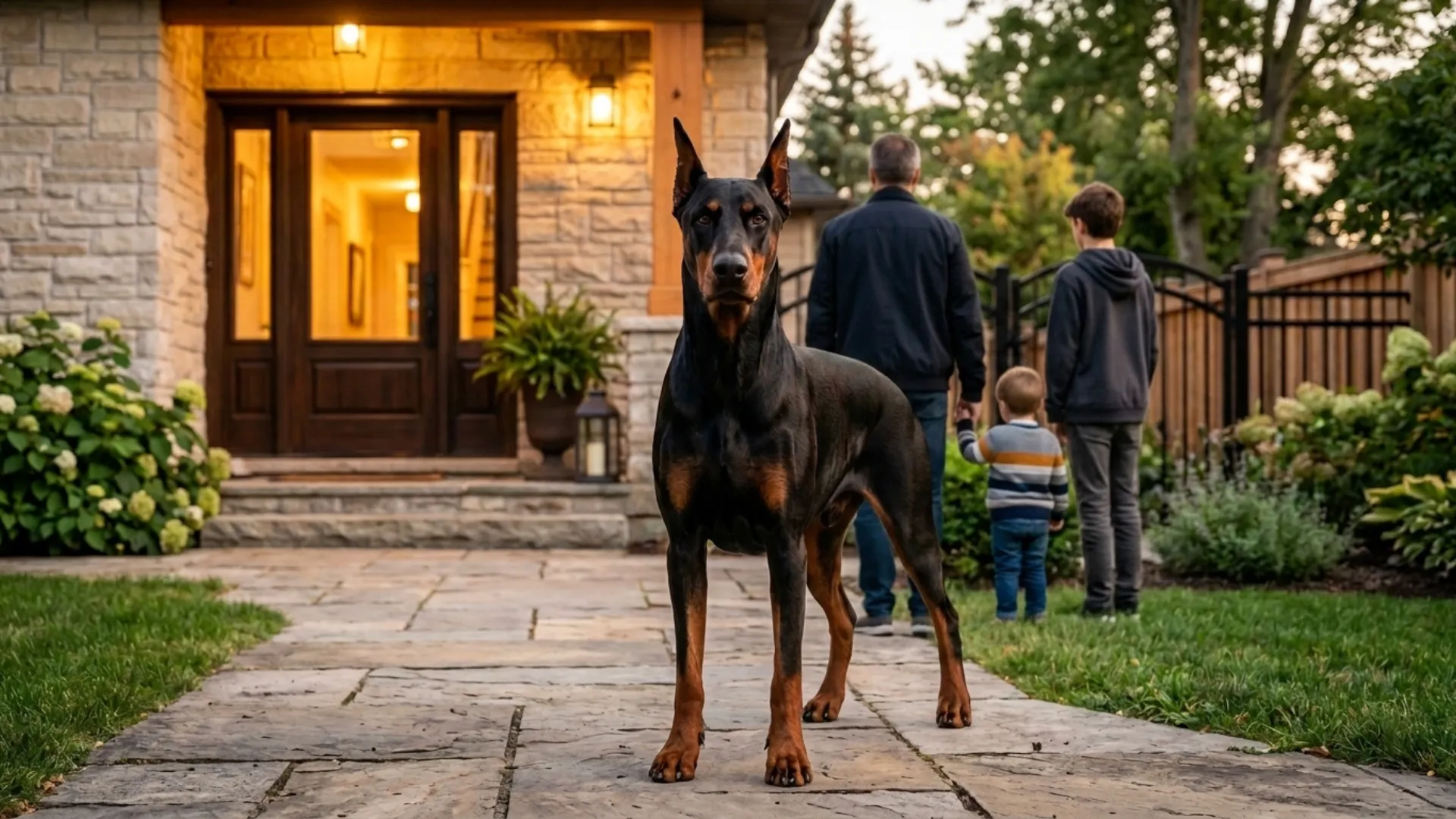
You have a beautiful wife, three cute kids, and an ideal apartment, but still feel incomplete? That is the time you need a dog.
A protection dog.
A dog that not only plays with your kids, goes on a brisk walk with you, and entertains your guests, but also puts its own life at risk when it encounters a life-threatening situation. It will assist you when a highly advanced security system fails.
Some dogs were built to herd sheep. Others were built to guard kings, castles, and farmhouses. These ten breeds fall into that second camp: dogs that do not just love you; they would stand between you and trouble without blinking. Think of them as four-legged bodyguards that also happen to steal your spot on the couch. Let’s meet them.
Highly Protective Dog Breeds Perfect for Family Guardians
1. German Shepherd
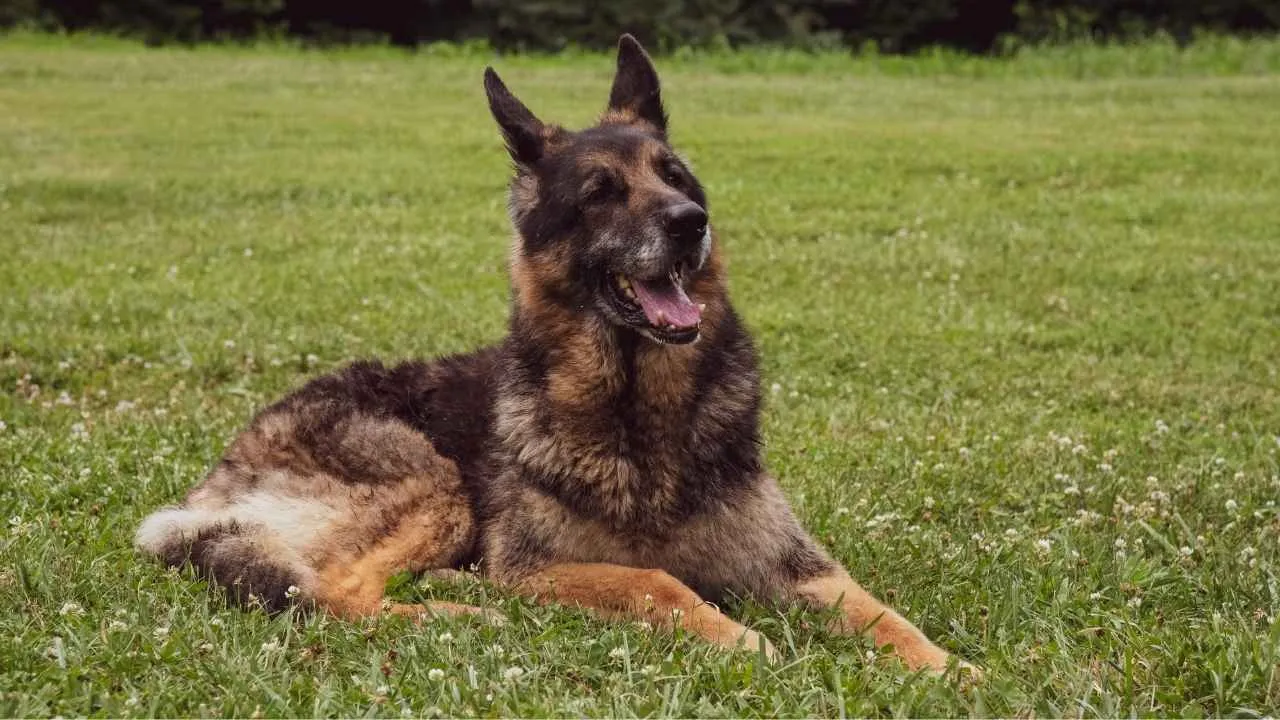
This high-energy, loving family pet was bred as a herding dog in Germany in 1899. It is a cross of the Old Shepherd and farm dogs. It is the third most intelligent dog breed.
It detects perimeter breaches and unusual activity using its strong senses of smell and sight. The DNA encodes strong flock-guarding and herding instincts; it has a balanced temperament of affectionate demeanor and protectiveness. It runs at a high speed of 30-35 mph.
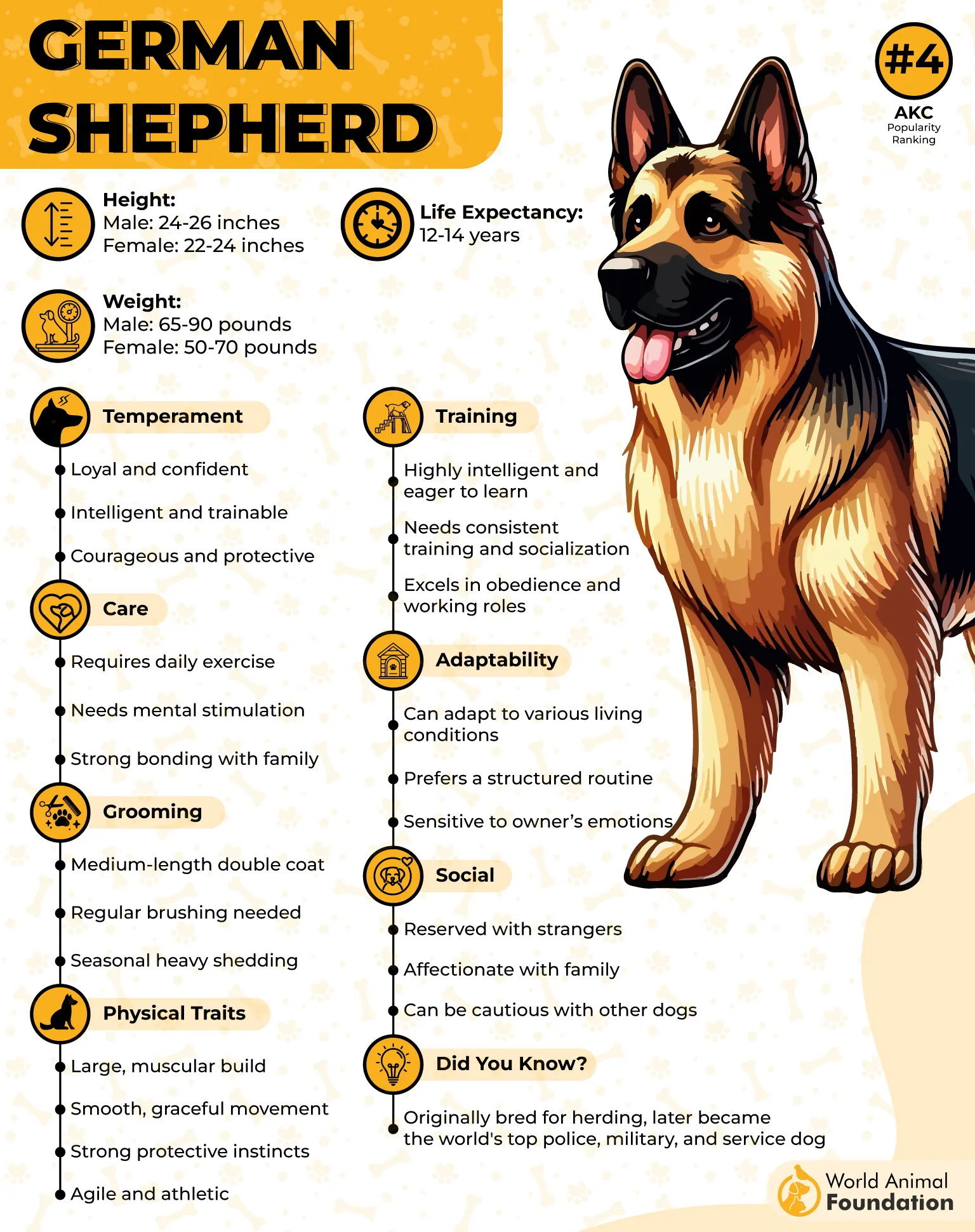
This guard dog breed can cope with traumatic events like wars easily. It thoroughly reads body language and facial expressions, as noted by Britannica. It needs 1-2 hours of daily exercise and mental stimulation: daily walks, hiking, fetch, agility training, swimming, and puzzle toys.
2. Doberman Pinscher
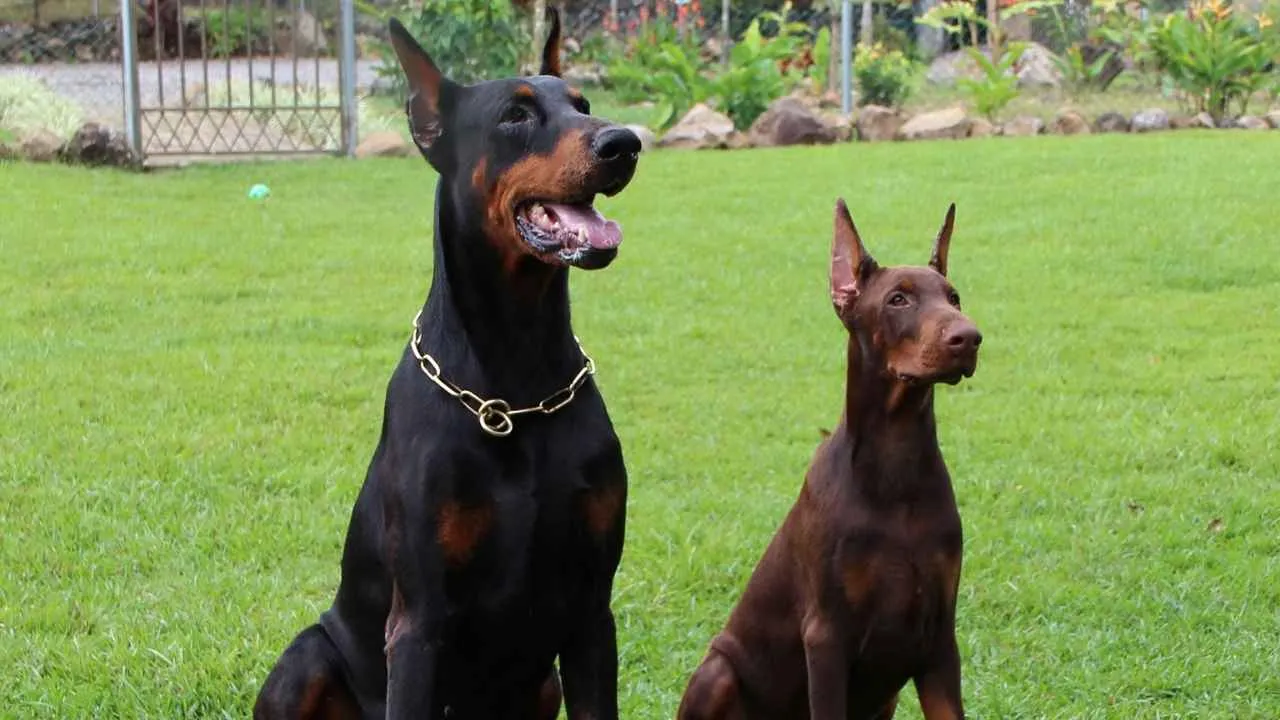
The dog with a calm demeanor was developed as a protection breed in the 1800s by a German tax collector, Louis Dobermann. He crossed an old German Shepherd with German Pinschers, Black and Tan Manchester Terriers, and Greyhounds to develop a strong breed with high emotional intelligence.
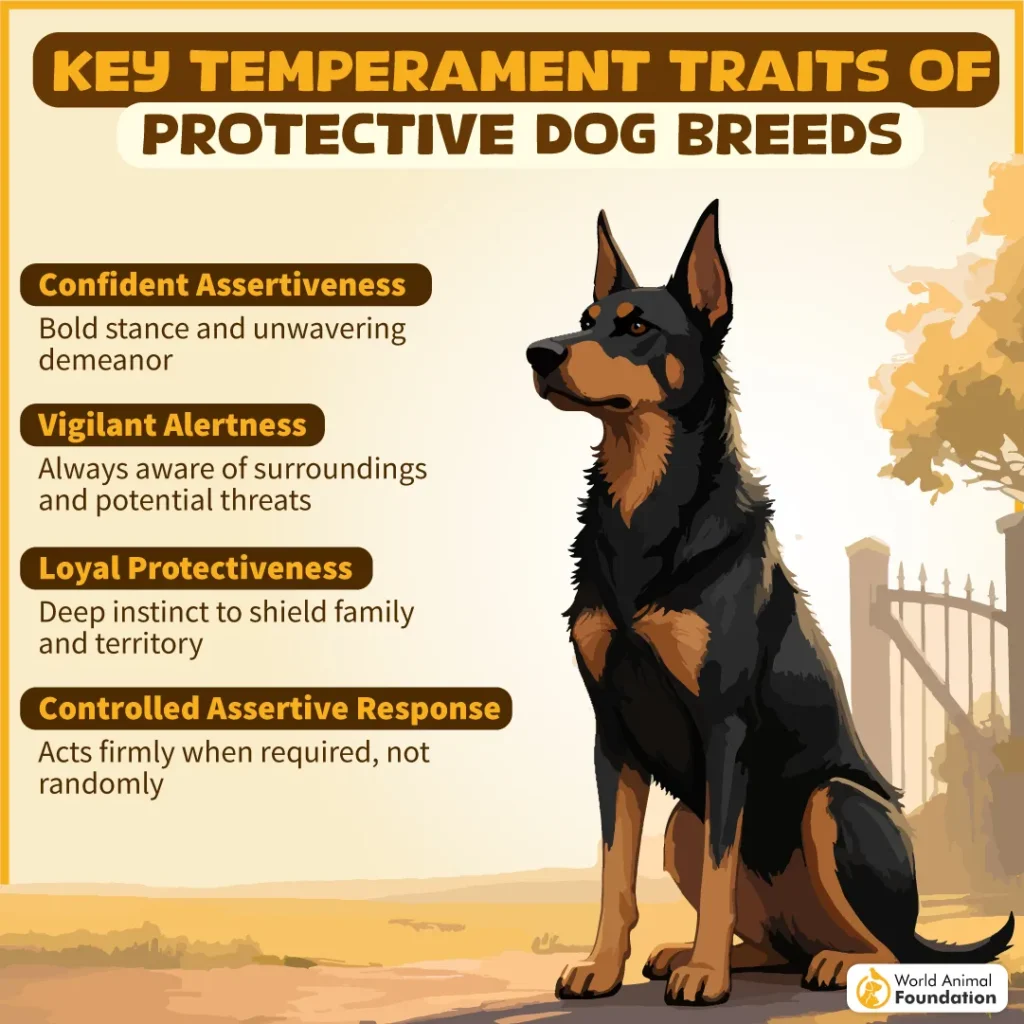
It is the 5th most intelligent dog breed; it has long legs that act like springs and sprints to catch the predator quickly. The deep chest and excellent lung capacity provide good heart-rate recovery. It exhibits a scissor bite with a bite force of 305 PSI, overlapping upper incisors perfectly over lower incisors.
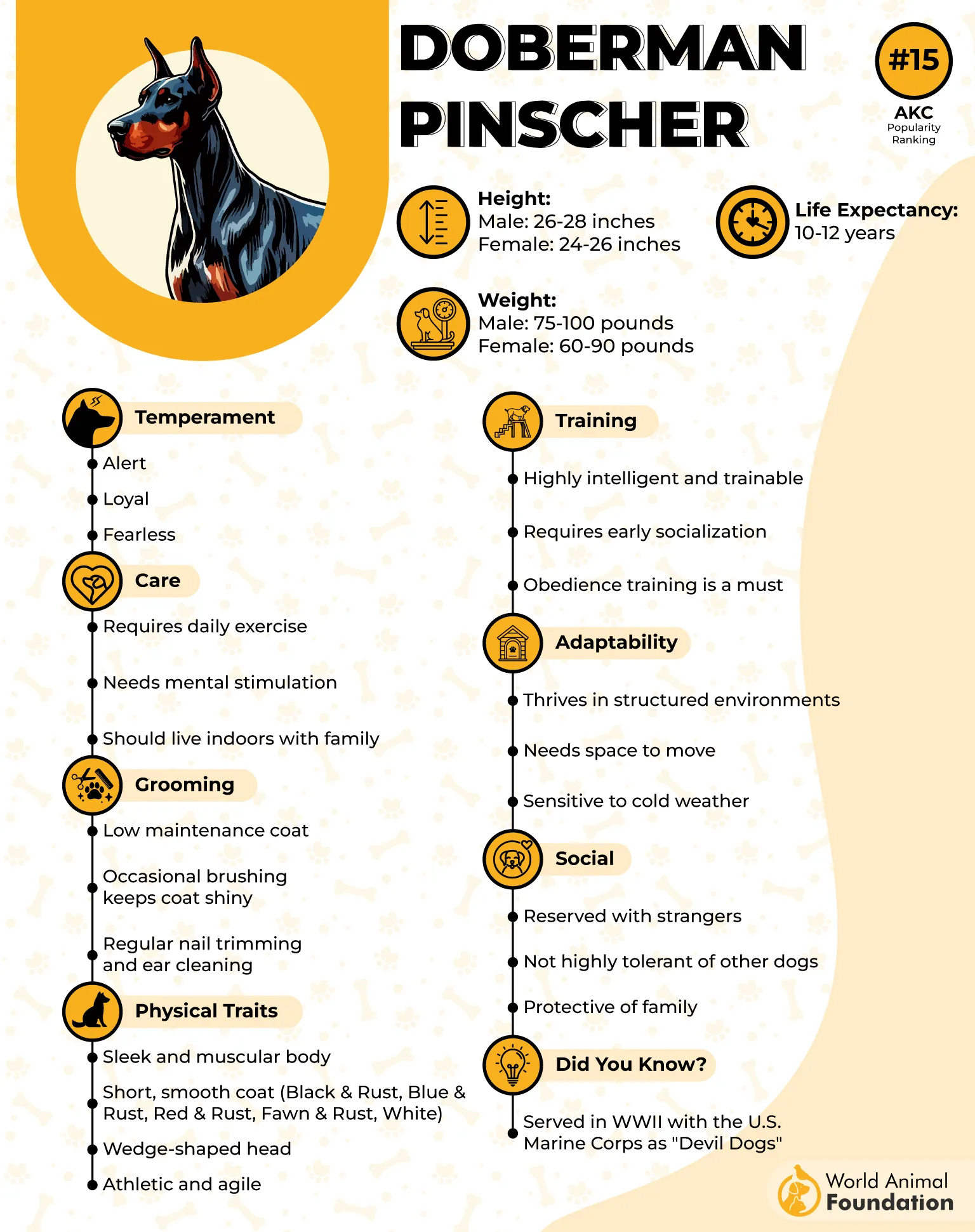
It has highly sensitive and radar-like ears that catch faint sounds with low frequency and move in the direction of the source. This is coupled with an advanced olfactory system, strengthening its guarding abilities. Its strong protective instincts mean it can misinterpret roughhousing or loud play among children. Clear boundaries and pack leadership are necessary to prevent it from “policing” family disputes
3. Rottweiler
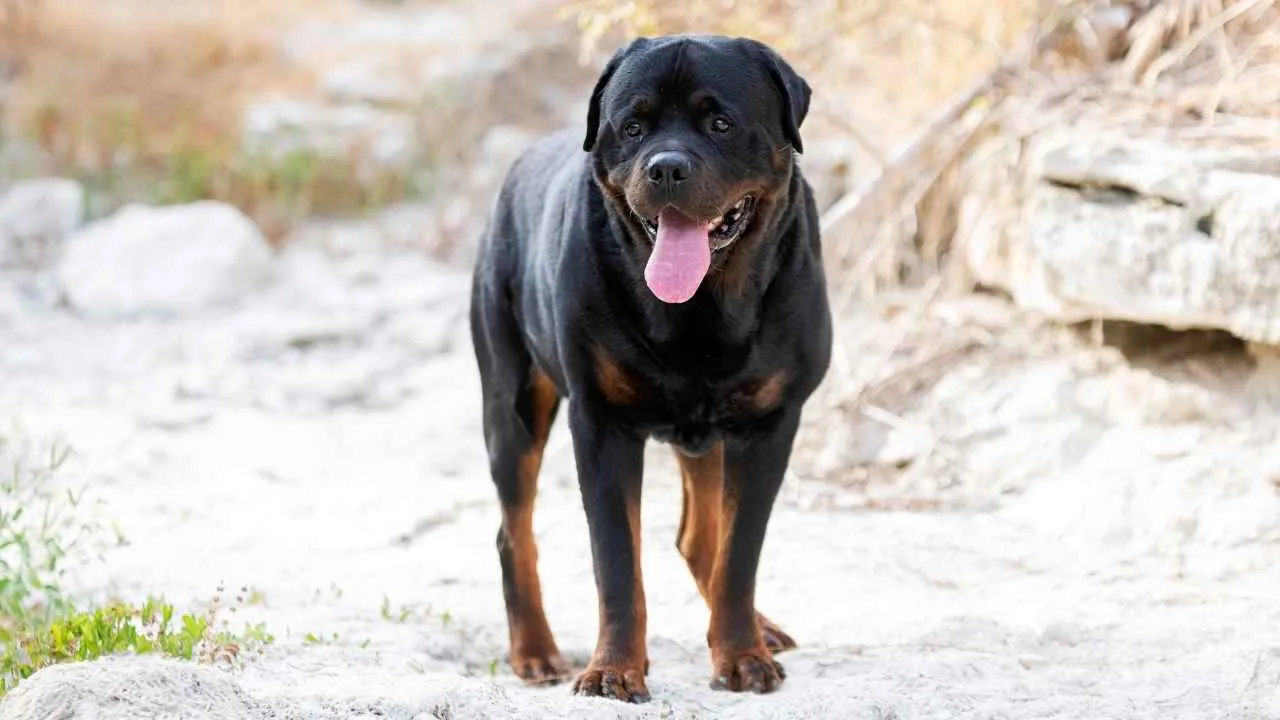
Descended from Asian mastiffs, the breed developed to herd and guard marching livestock. It was then adapted in the German town of Rottweil to protect butchers and their herds. After the invention of the railway, it was used for police, military, and heavy-duty blue-collar work, as per the AKC.
It has powerful muscles that enable a formidable bite (328 PSI), tearing the muscles apart and crushing the bones. With its high emotional intelligence and high brain-to-body ratio, the excellent guard dog can easily differentiate between family members, guests, and actual threats.
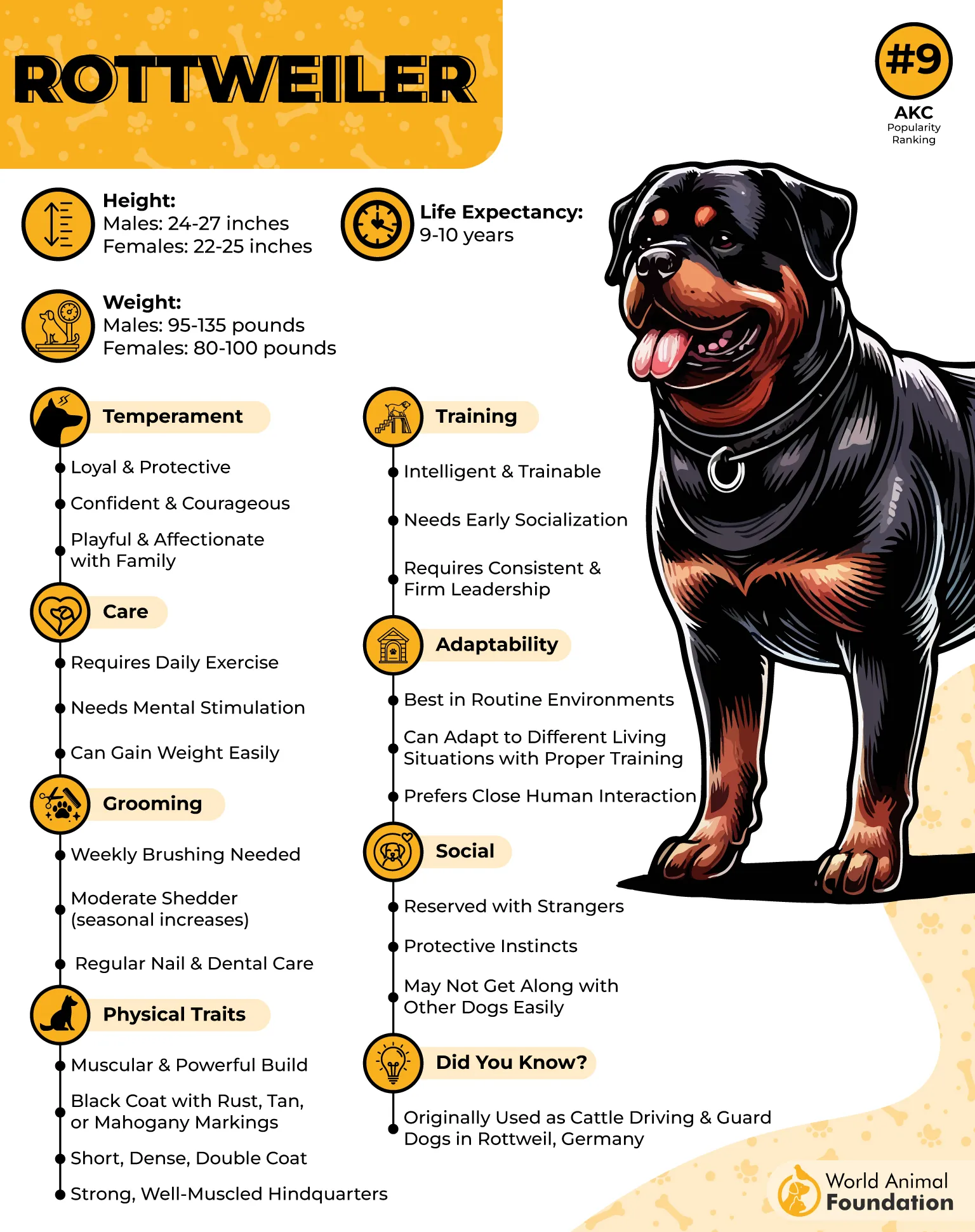
The breed tends to remain quiet and assesses the situation keenly. It acts only when a genuine boundary is crossed, or its pack is threatened. Known as a massive “clown” who loves to cuddle, the Rottweiler is Velcro in nature. It forgets it is giant and tends to adjust itself in your lap.
4. Bullmastiff
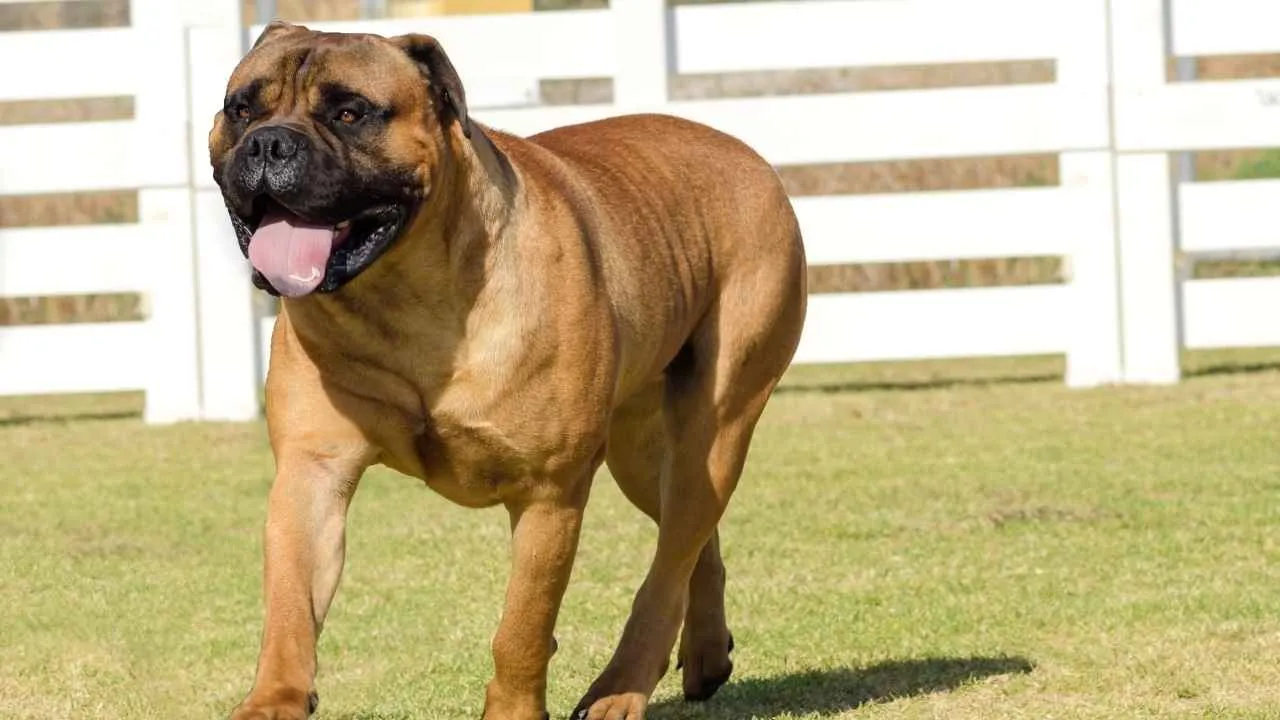
This English mastiff-type family guard dog was bred in the 19th century as the ‘Gamekeeper’s Night Dog’ to catch poachers at night. It is a nocturnal breed that tends to conserve its energy during the day and becomes alert at night. It uses its dichromatic vision (yellow and blue) to spot predators at night from a long distance.
The highly trainable dog has similar characteristics to the Molosser dog and is a cross of the Old English Bulldog and the English Mastiff dog. It delivers a powerful bite force of 552 PSI, providing a strong hold during an apprehension.
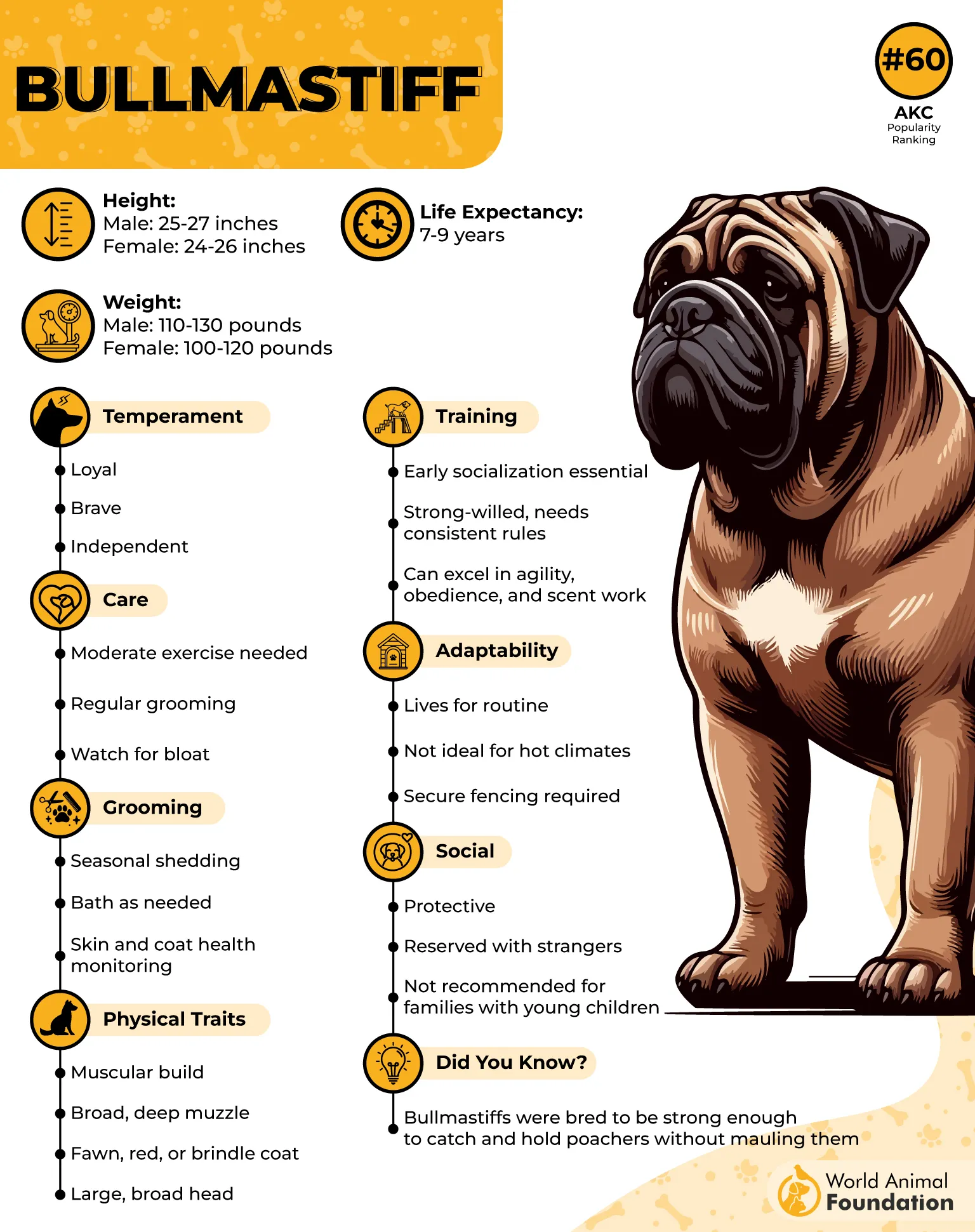
It is a silent approacher and catches the predator from behind. It knocks them down and puts its massive weight on their body to hold them while barking to inform the handler. It needs proper training and early socialization to avoid destructive behavior.
5. Boxer
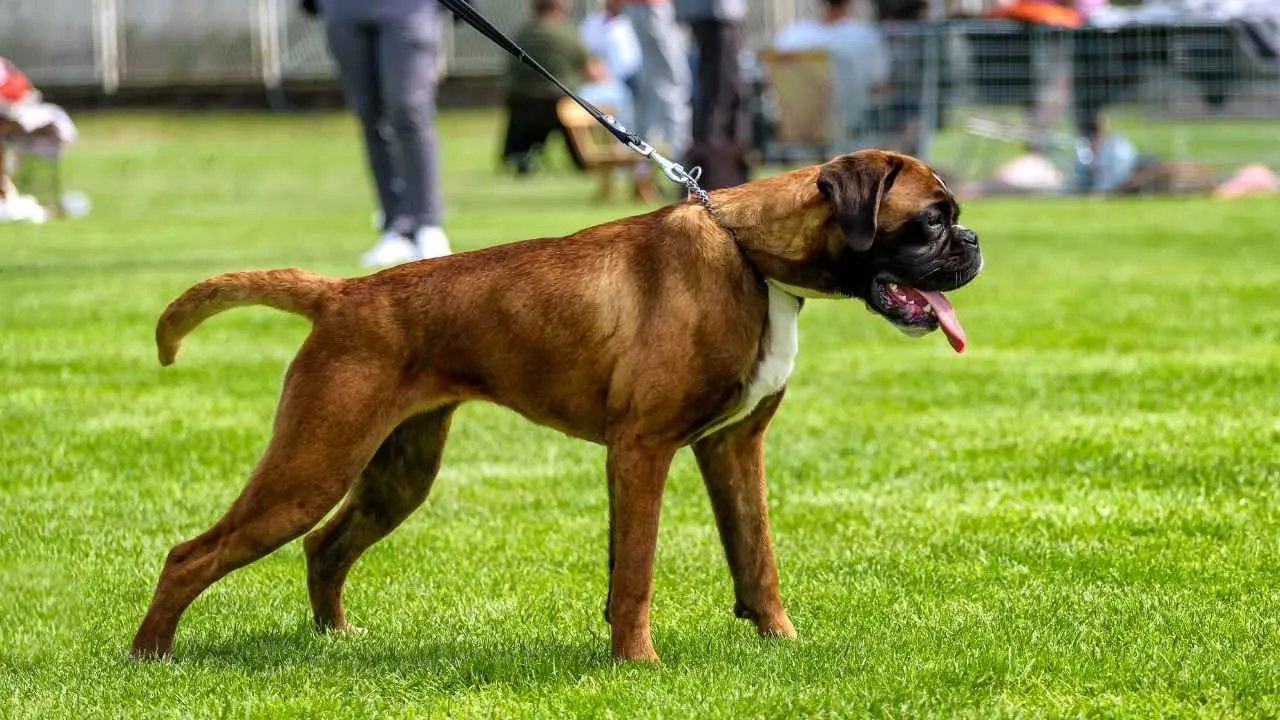
This medium-to-large, shorthaired mastiff-type dog breed was developed in Germany. It is a brachycephalic dog with a flat head, short muzzle, and narrowed airways. It was developed by crossing the now extinct Bullenbeisser and the Old English Bulldog, as reported by Wikipedia.
Because of its robust chest and lung capacity, it produces a commanding and deep bark to deter intruders and alert the owner. The well-developed musculature and well-angulated hind limbs provide jumping ability to quickly cover distances or intercept threats. It treats its human family as a ‘pack’ and welcomes non-threatening guests happily.
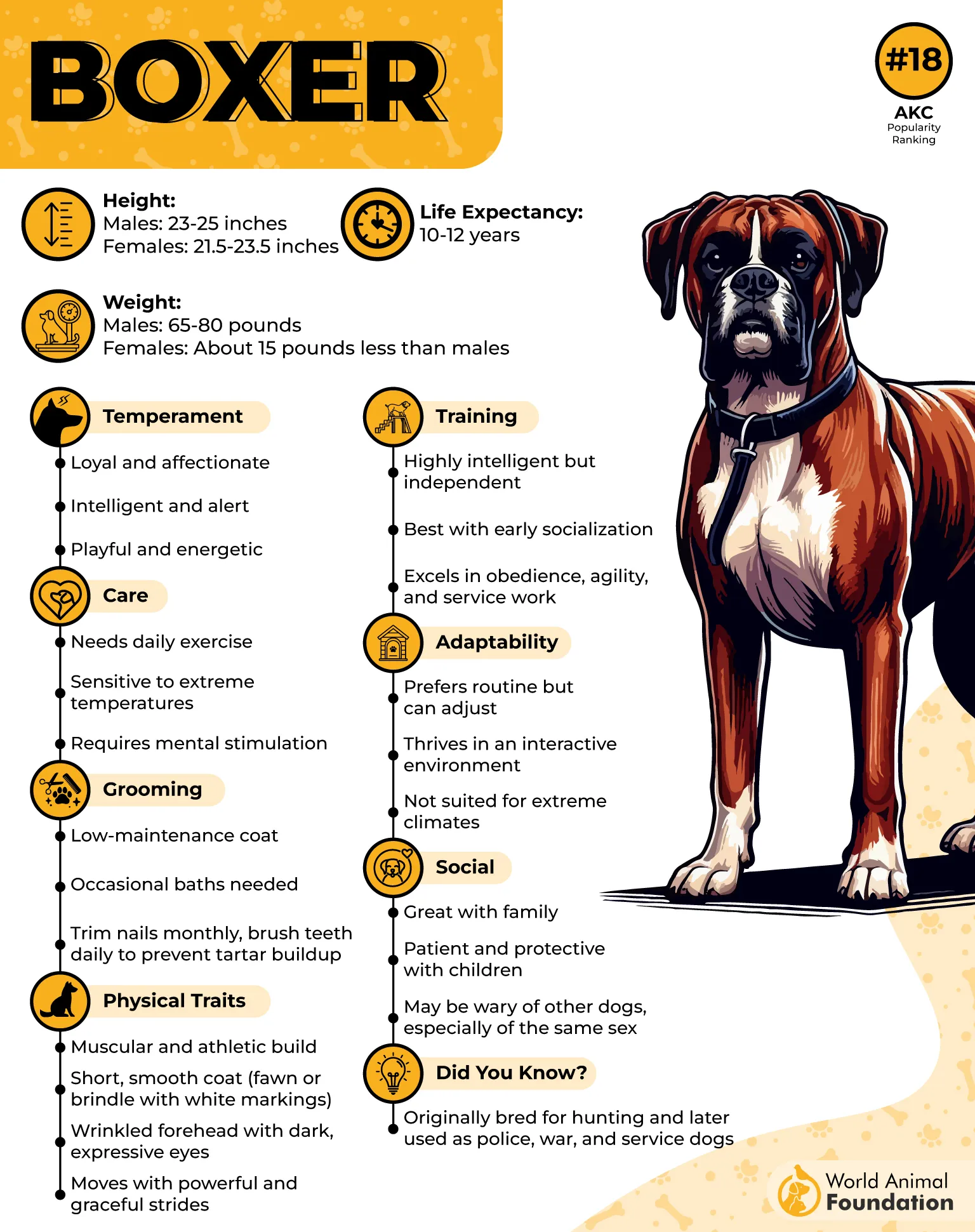
It is naturally wary of strangers and shows a standoffish behavior initially to deter intruders without becoming overly aggressive. Despite that, it is highly playful and energetic, keeping its puppy-like attitude to the adulthood.
6. Rhodesian Ridgeback
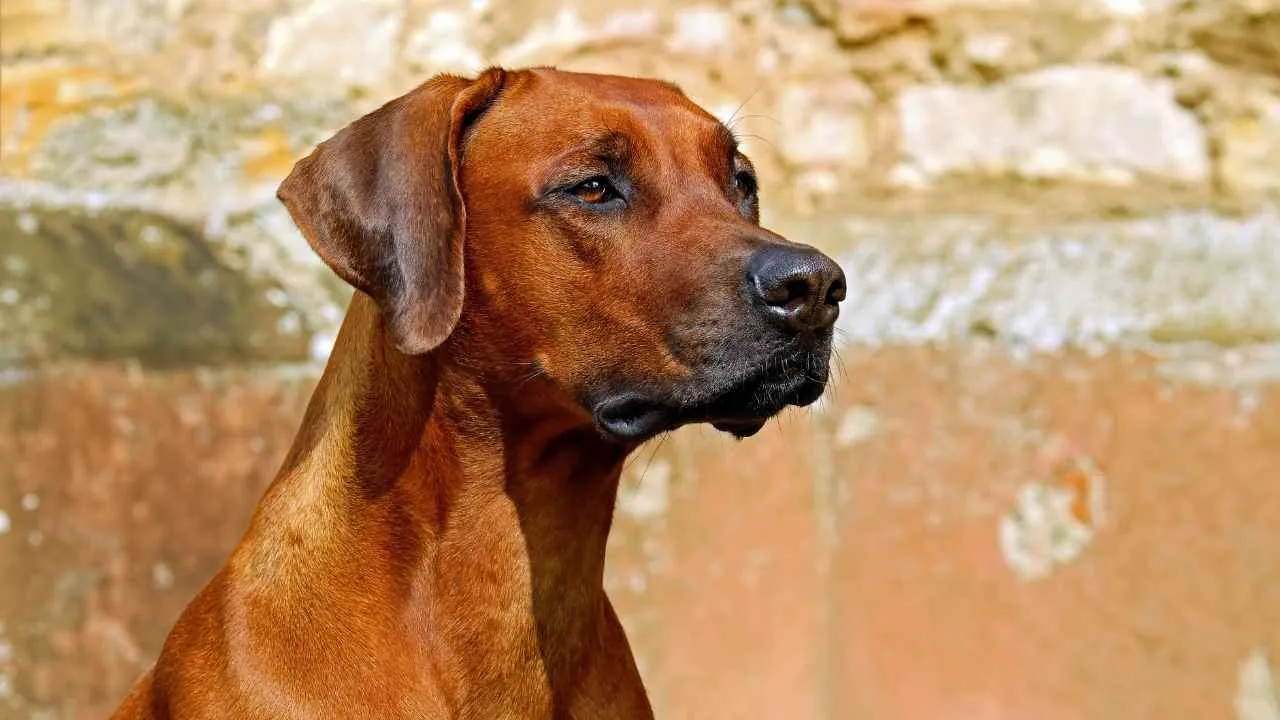
Also known as the African Lion Dog, this gentle companion with an intimidating presence was developed in South Africa. When the European settlers came to Africa in the 17th century, they brought their protection dogs to protect the farms and later interbred these dogs with the local breeds, resulting in the Rhodesian Ridgeback.
Bred to corner fast and agile prey, it possesses surprising bursts of speed and endurance, making it difficult for intruders to escape. It assesses the situation independently and places itself between the danger and the family when it perceives a threat. This deeply devoted animal may develop separation anxiety if left alone for more than 4-6 hours.
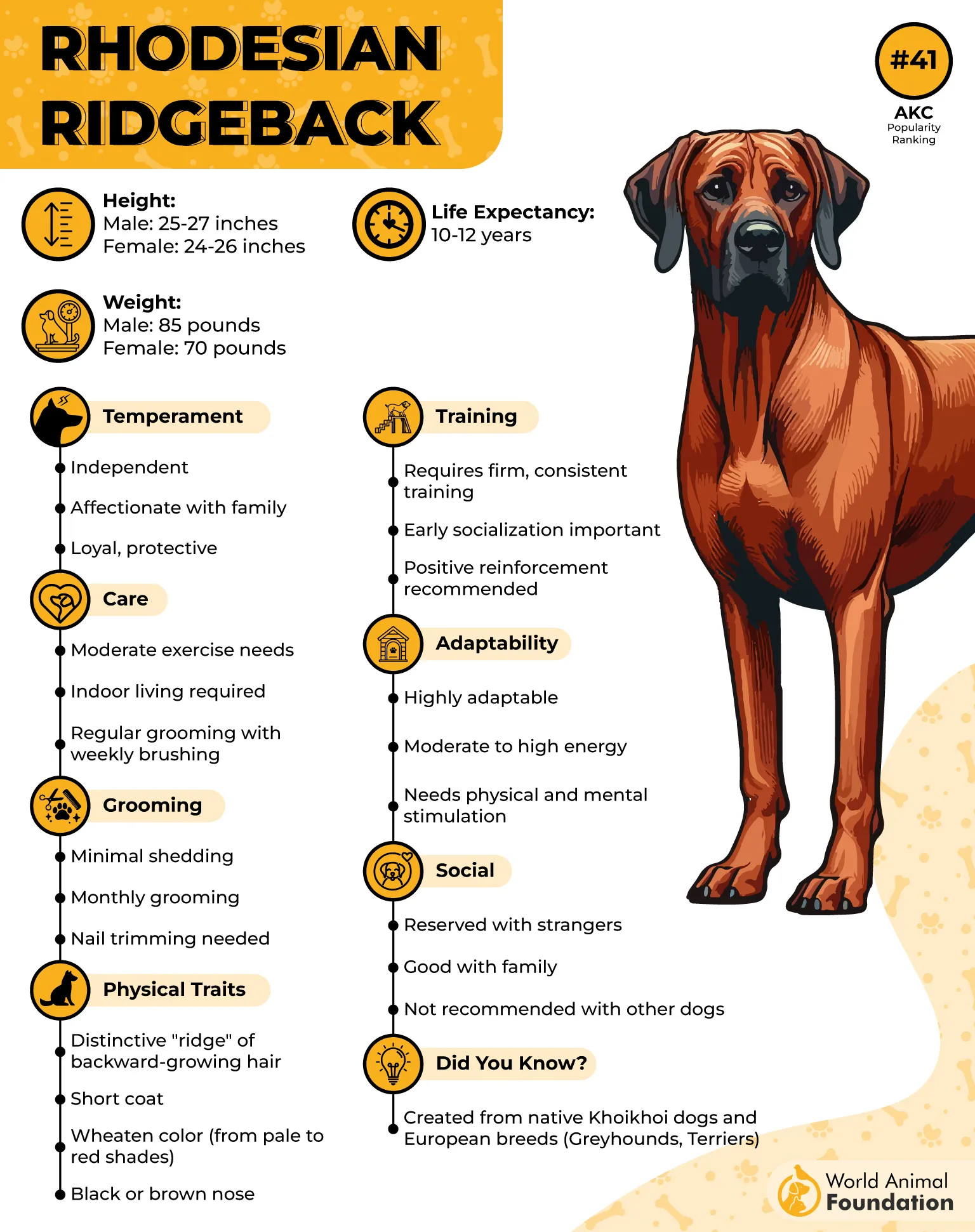
The breed needs at least 60 minutes of daily exercise: brisk jogging, hiking, or extended fetch sessions. High-impact exercise must be avoided for the puppies (aged less than 18-24 months). Use a well-fitted harness to prevent it from backing out of the collar.
7. Great Dane
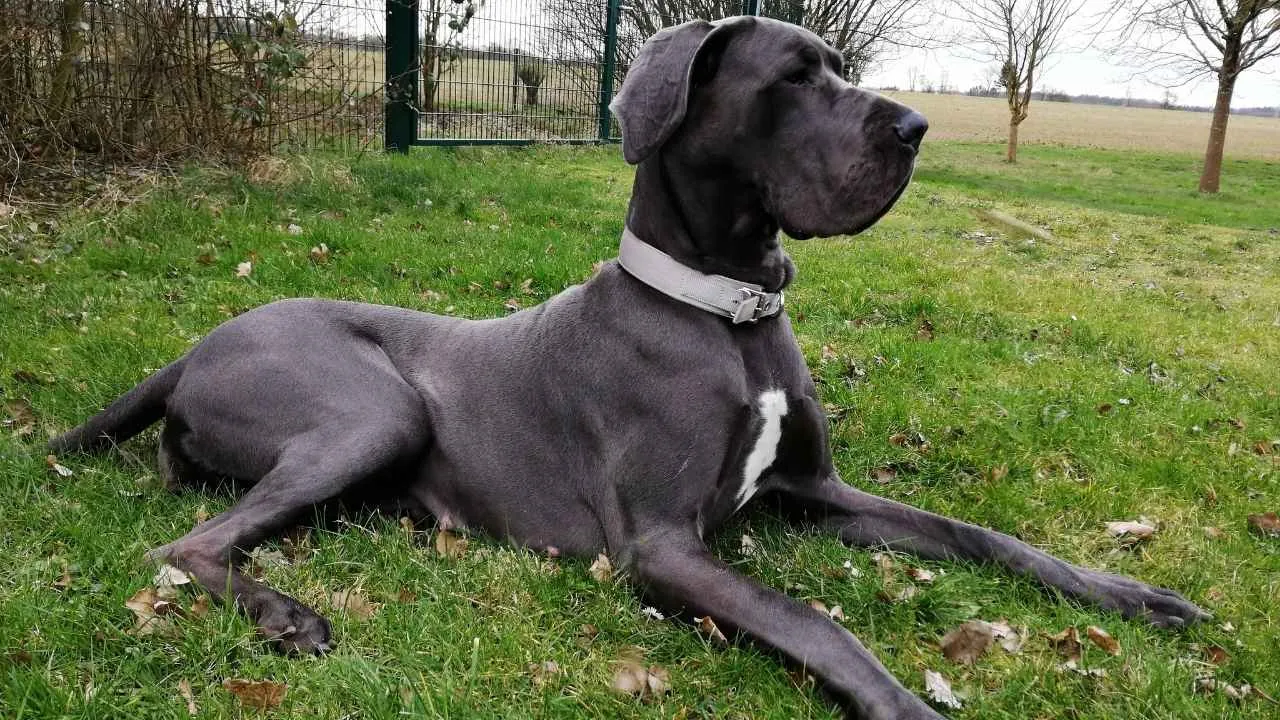
This German breed has been called the German Mastiff or the Deutsche Dogge for centuries. The ancestors were heavier and more mastiff than the current breed. It became popular as a high-status hunting dog in the Middle Ages and was used to work in a pack to hunt wild boars.
The gentle giant forms strong bonds with the family, making an excellent guard dog. It provides a physical deterrent to the attacker since it is the tallest reported dog to ever exist (Zeus: 44 inches tall). The breed has naturally protective instincts and produces a loud bark to alert the owner.
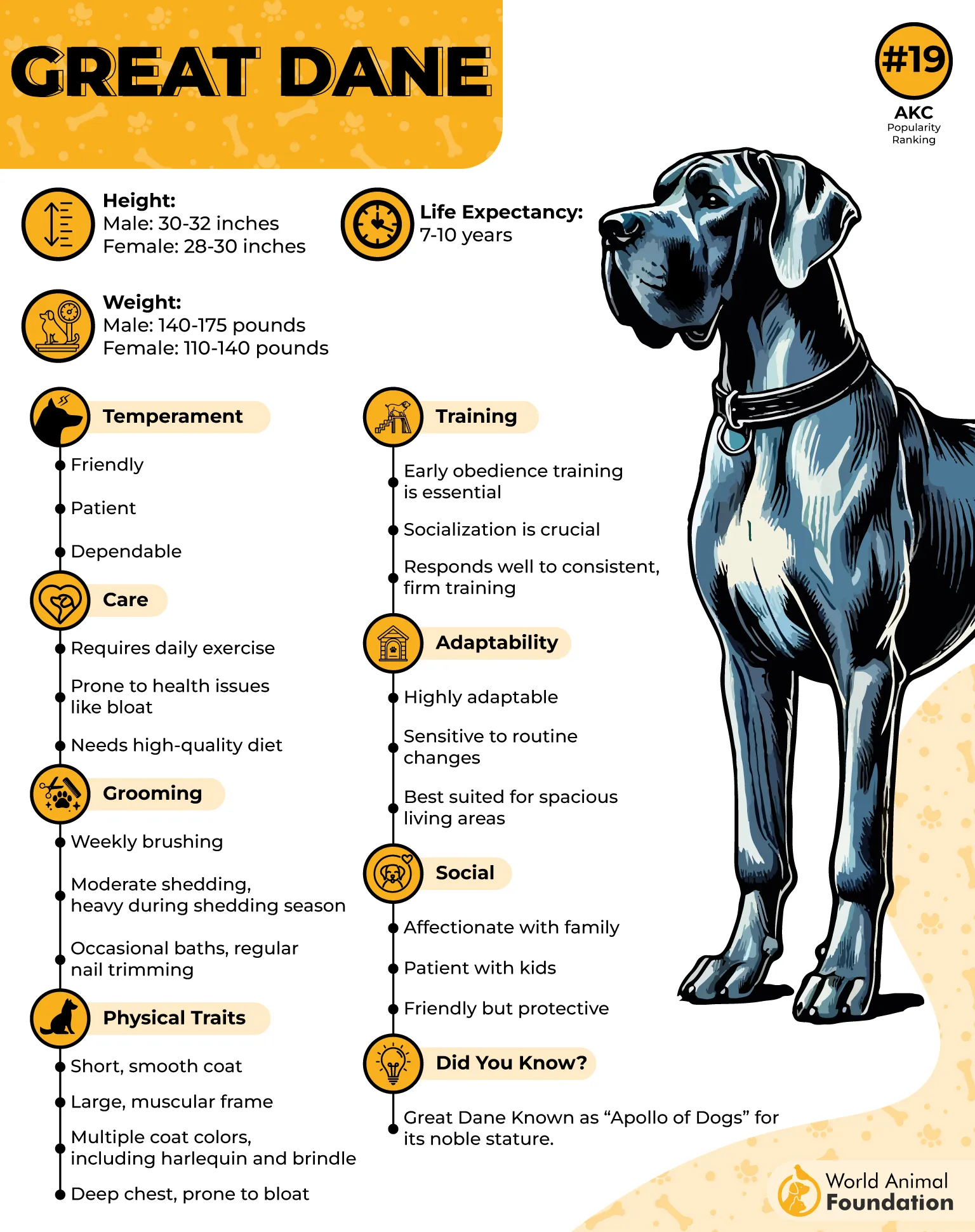
The energetic dog needs 1-2 hours of moderate-to-low regular exercise: swimming, walking, soft fetching, and brisk walks. Leash training and obedience training with positive reinforcement are non-negotiable.
Conclusion
Here is the thing about protective breeds: the loyalty is not a side effect; it is the whole point. These dogs were not bred to just sit pretty. They were bred to notice, to care, and to stand their ground when it counts.
Whichever breed you pick from this list, remember training and socialization make all the difference. A protective dog raised with patience becomes a gentle giant at home and a wall of muscle when it matters. That is really what this list comes down to. Loyalty is not taught. It is just who these dogs are.
