




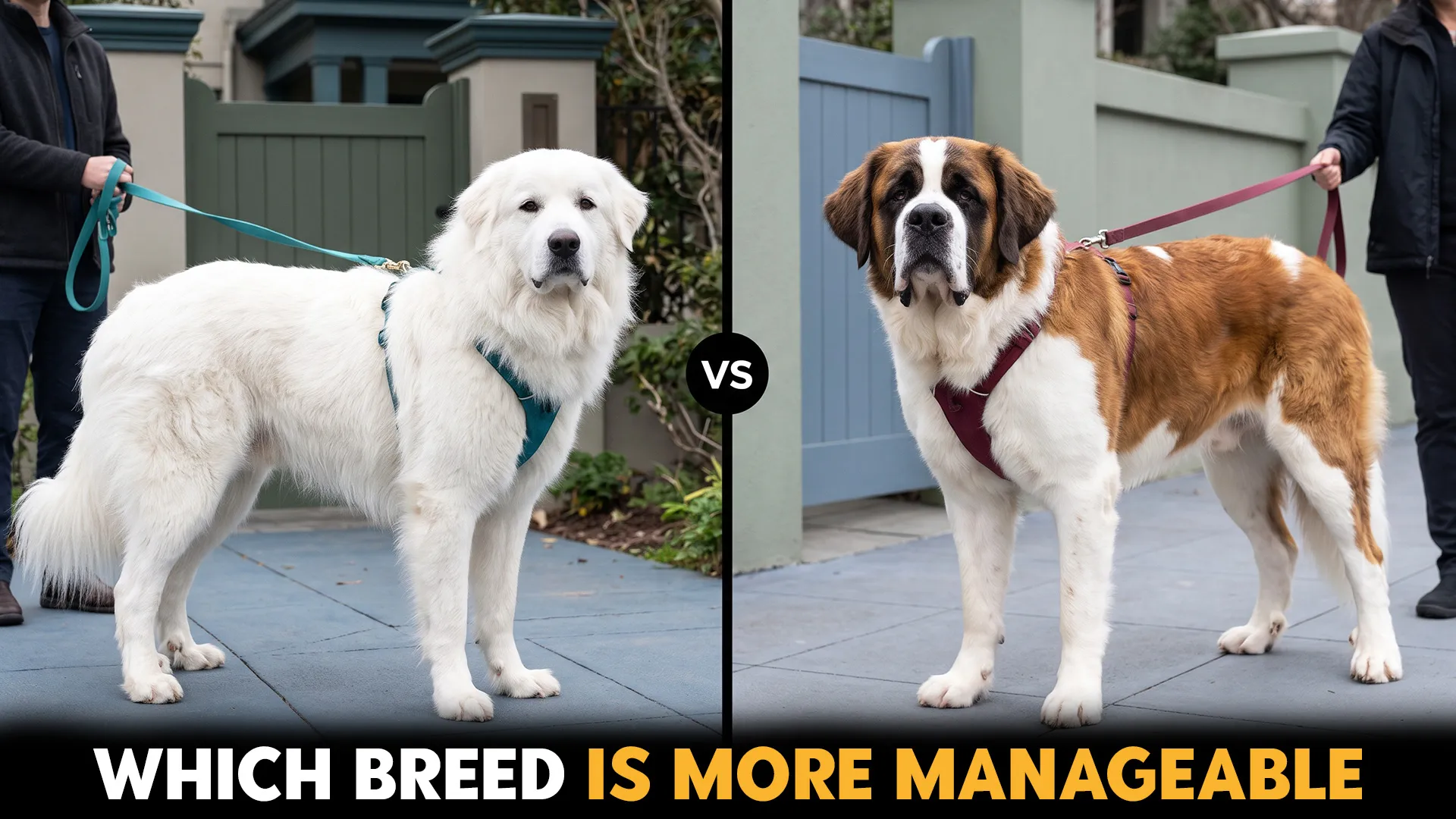
Both the Great Pyrenees and the Saint Bernard are big dogs, but there’s a lot more to them than size. Both can also be real couch potatoes at home.
They were originally bred for different jobs, and those jobs still shape everyday life.
The Great Pyrenees was bred to guard livestock in the hills and often made decisions without waiting for a person to give instructions. That history explains this giant breed’s independence, territorial streak, and watchfulness.
The Saint Bernard originated in the Swiss Alps and became well known for its service at the Great St. Bernard Pass, where these gentle giants assisted the monks and were later linked to rescue work. Today it’s mostly kept as a family pet thanks to its affectionate nature.
Both breeds need training, weight control, regular upkeep, and enough space to live comfortably, but the details differ quite a bit. That’s why a Great Pyrenees vs. Saint Bernard comparison works best when you look at the everyday-care areas one at a time.
Great Pyrenees vs. Saint Bernard: Which Giant Dog Is Easier To Manage?
Great Pyrenees and Saint Bernards are gentle giant dog breeds, but their size, temperament, and care needs can make them challenging to manage. If you’re wondering which breed is easier to handle, let’s compare their training, grooming, exercise needs, and everyday habits.
Size and Strength
Both are truly giant breeds, and their sheer size affects everything from walking to transport.
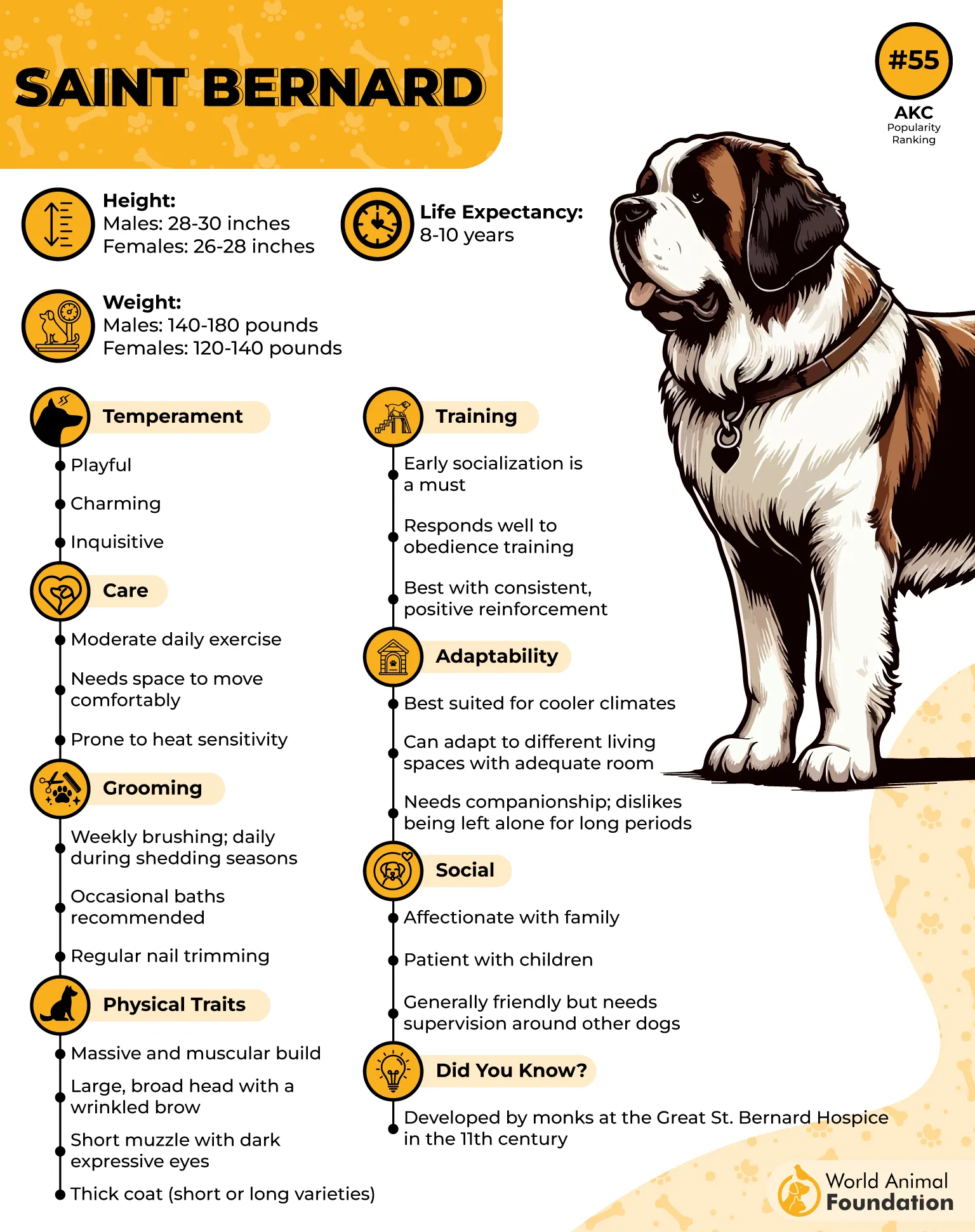
According to the AKC, the Great Pyrenees stands about 25 to 32 inches tall at the shoulder and weighs at least 85 to 100 pounds. Saint Bernards are bigger still, with males measuring 28 to 30 inches and weighing 140 to 180 pounds, and females standing about 26 to 28 inches and weighing 120 to 140 pounds.
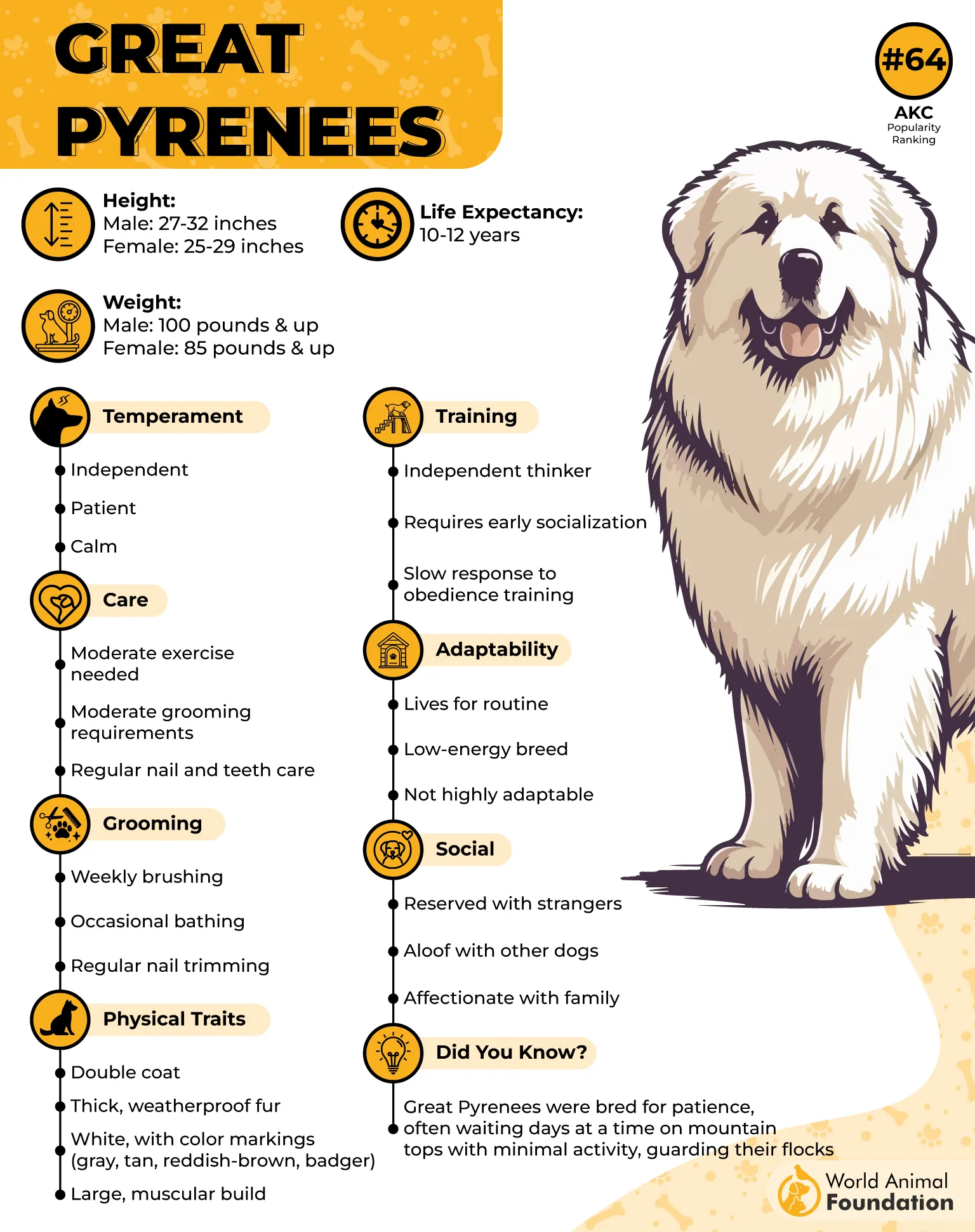
That difference matters when you’re handling an adult dog. The Saint Bernard’s extra body weight can make everyday tasks harder. It’s a lot to manage if the dog pulls on the leash, blocks a doorway, struggles to climb into a vehicle, or needs help getting up.
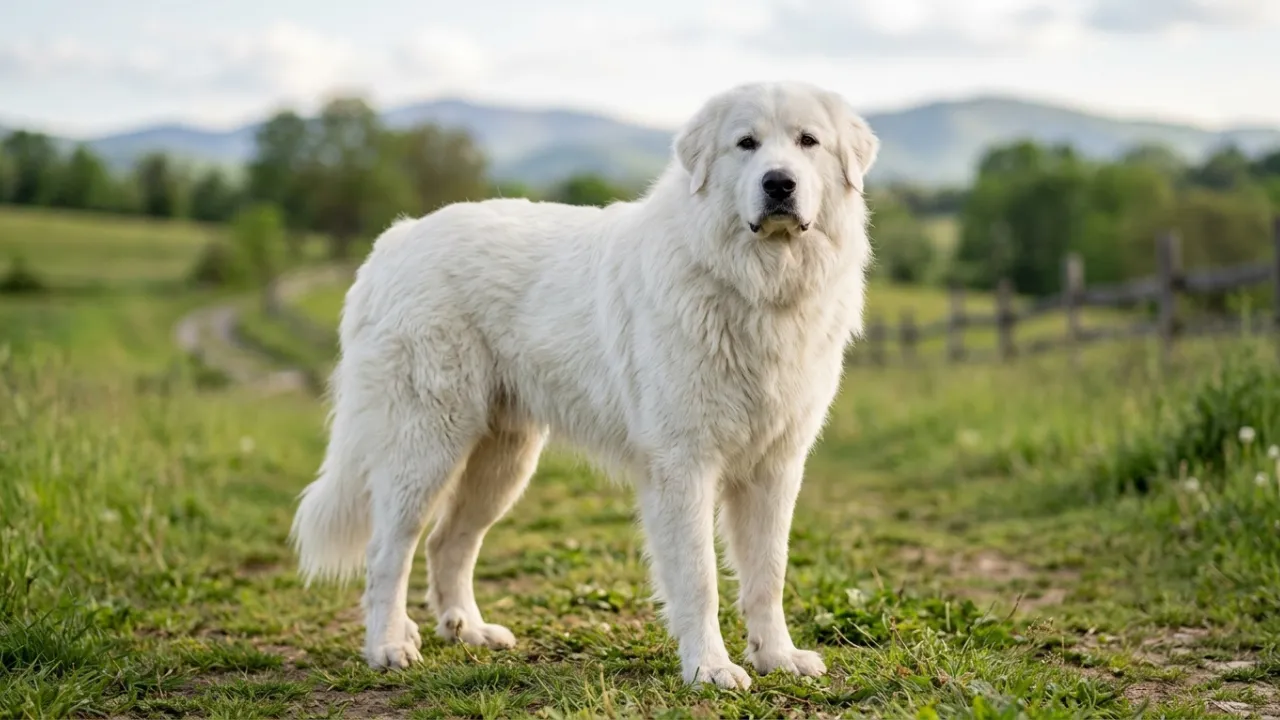
The Great Pyrenees can be physically demanding, too. Its guardian nature may lead it to pull away from its owner to investigate a sound, person, or animal.
Space matters for both. Neither breed needs to run around all day, but each needs enough room to move around and stay comfortable.
Temperament and Personality
This is one of the biggest differences between the two breeds.
Great Pyrenees are naturally protective, patient, calm, and loving with their families. They were also developed to protect livestock without human assistance, spotting possible dangers and acting on them without supervision.
Saint Bernards are generally the more outgoing of the two, much like the Bernese Mountain Dog. They’re watchful, patient companions, and veterinary sources describe them as affectionate and eager to please their families. Their balanced temperament makes them a great fit for family life.

Still, neither breed should be chosen on gentle nature alone. Both need early socialization and training.
Health and Lifespan
Before adopting a giant dog, it’s important to consider the health issues that come with large breeds.
The Great Pyrenees lives about 10 to 12 years. Common health concerns include hip dysplasia, luxating patellas, eye problems, some forms of cancer, and bloat.
The Saint Bernard’s average lifespan is 8 to 10 years, which is shorter than that of many other breeds. Other issues that can affect this impressive breed include hip and elbow dysplasia, eye disease, heart disease, some cancers, and gastric dilatation-volvulus (GDV).
Bloat deserves special attention in both breeds. GDV is a serious medical emergency in which the stomach swells and twists, and large breeds are at high risk.
Joint health is another long-term factor. A heavy body puts significant strain on the hips, elbows, knees, and other joints, so it’s important to keep either breed at a healthy weight throughout life.
Training and Exercise
Neither breed is built for prolonged, sustained activity, which is worth knowing if you have an active family.
The Great Pyrenees has moderate exercise needs. The routines that suit most high-energy sporting and herding dogs don’t really apply here, though regular walks and chances to move around are still important.
A Pyr may prefer watching over the yard to working through obedience drills. In general, short, varied training sessions and reinforcing good behavior work better than repeating the same command over and over.
Called powerful dogs by Purina, Saint Bernards also fall somewhere in the middle on exercise. For many adults, one long walk or about 30 minutes of play is enough, though the breed can also enjoy longer walks, hikes, and outdoor activities.
Because they’re so large, training is crucial. A Saint Bernard puppy is far easier to manage than a full-grown dog that barges through doors, pulls on the leash, and jumps up.
Puppies need extra care, too. Giant breeds shouldn’t be over-exercised while their bones and joints are still forming, so watch them closely and provide proper nutrition and veterinary care to support healthy growth.
Long-Term Vigilance
Daily supervision looks different for each breed.
A Great Pyrenees will keep you more aware of what’s going on around your home. Its livestock-guarding background draws it toward unfamiliar people, animals, and noises. It patrols, watches through windows, and speaks up when something looks off. That works well on a farm, but it can cause friction in an area where nearby dogs bark constantly.
The Saint Bernard is less focused on independently monitoring every corner of its territory. It historically worked alongside people and is usually kept as a pet today. Still, a Saint Bernard shouldn’t be left unsupervised because of its sheer size.

Even a dog with no aggression can cause problems without meaning to. Doors, fences, stairs, cars, furniture, food, and interactions with young children all need to be considered from a giant breed’s point of view.
Weather-Resistant Coats
Coat care is another area where the two breeds differ, though both are cold-weather dogs.
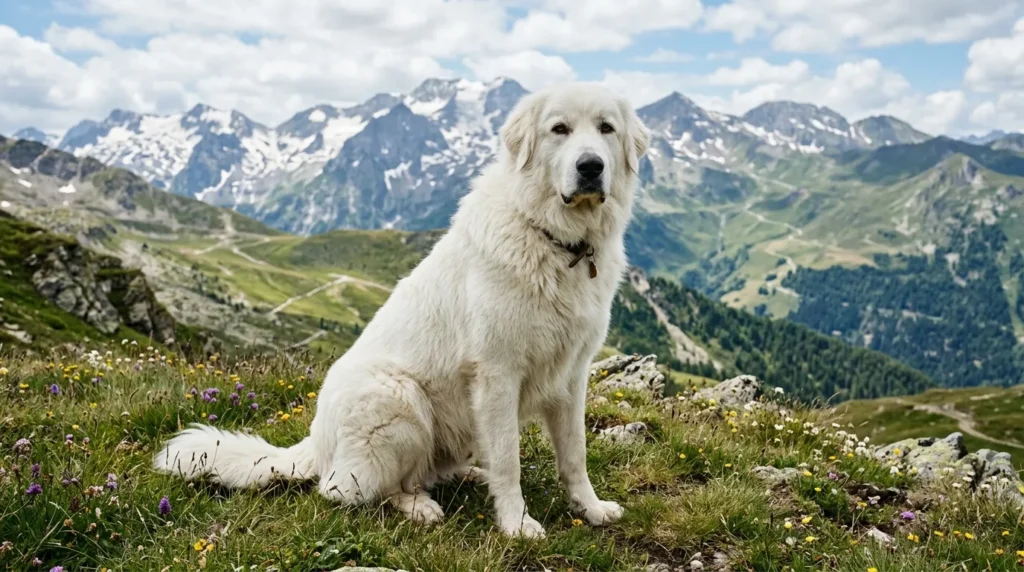
The Great Pyrenees has a thick, double-layered coat: a long, dense outer coat over a soft undercoat. It naturally resists dirt and matting and needs only occasional baths. The coat is magnificent, but it sheds heavily, so expect loose fur around the house.
Saint Bernards come in both long-haired and short-haired varieties. Both need regular brushing, and daily brushing during shedding seasons. Drooling is another thing prospective owners should expect, and it can mean wet floors, furniture, toys, and clothing.
Heat is a concern for both breeds. Their large, heavy coats make hot weather hard to handle, so they need shade, fresh water, and a cool environment when temperatures rise.
Natural Guard Instincts
Called excellent family pets by PetMD, the Great Pyrenees was bred to guard livestock from predators such as wolves and bears. It didn’t wait for a shepherd to give directions whenever something approached the flock. It simply watched, judged, and acted.
That same instinct is alive and well in the modern breed. Great Pyrenees tend to be wary of strangers and territorial over their homes and families. For the right family, that’s a desirable trait, while others may find it challenging.
Saint Bernards can be alert, too, but their nature is more oriented toward companionship. Their history in rescue work is very different from the Great Pyrenees’ role as a livestock guardian, and that difference affects how easy each dog is to manage.
Someone who wants a large dog that naturally keeps an eye on the property may prefer the Pyr’s instincts. The typical Saint Bernard temperament may suit someone who wants a giant family dog rather than one that is intensely protective of its territory.
Conclusion
Both the Great Pyrenees and the Saint Bernard are large breeds, but each comes with its own management challenges, and which one is “easier” depends on how your household defines the term.
If your main concern is independent action and territorial behavior, the Great Pyrenees may require more hands-on care. With the Saint Bernard, the challenges are mostly practical: its sheer size, its health needs, and the realities of living with an unusually heavy dog.
The best choice comes down to your experience, home, schedule, climate, and expectations.
