




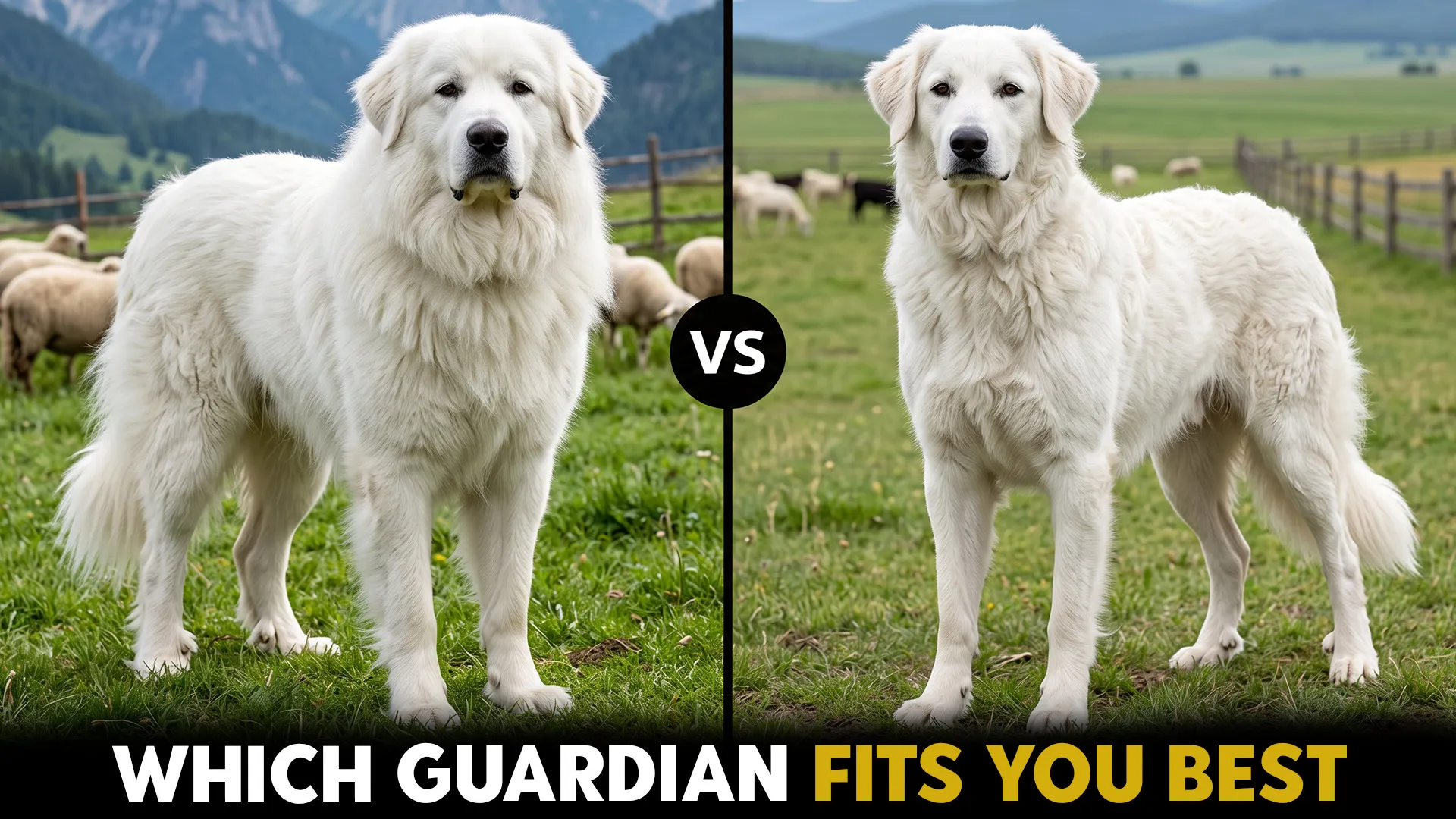
When it comes to livestock guardian breeds, the Kuvasz and the Great Pyrenees are both seriously impressive dogs. At first glance, though, telling them apart can be tricky, since they share a lot of physical and behavioral traits.
Both are working breeds built for the job: strong, tireless, and driven to protect. They also share that classic thick, light-colored double coat and a naturally protective streak that makes them excellent guardians.
That said, look closer and you’ll spot real differences between the two breeds in their coat texture, head shape, size, and general temperament. Knowing these differences can help you pick the right guardian dog for your home and needs.
Let’s break down the key differences between the Great Pyrenees and the Kuvasz.
Great Pyrenees vs. Kuvasz: Guardian Dog Differences
This comparison highlights their key differences in temperament, training, guarding style, and daily care.
Origins & Purpose
Though both the Great Pyrenees and the Kuvasz share a similar purpose, they actually come from two very different corners of the world.
The Kuvasz is an ancient breed that got its start working on Hungarian farms. Originally bred as livestock guardians, these dogs later went on to guard kings and eventually became cherished family companions. Their name comes from the Turkish word “kavas,” meaning “guardian.”
The Great Pyrenees shares a similar backstory, also bred for guarding livestock. Their exact history is a bit hazy since it stretches back thousands of years, but most experts agree these dogs originated in the Pyrenees Mountains, the natural divide between Spain and France.
Size & Build
With those thick, fluffy coats, it’s tough to tell at a glance, but Great Pyrenees dogs actually edge out the Kuvasz slightly in size. Male Kuvasz stand 28 to 30 inches at the shoulder and weigh in at 100 to 115 pounds, while females run a bit smaller at 26 to 28 inches and 70 to 90 pounds.
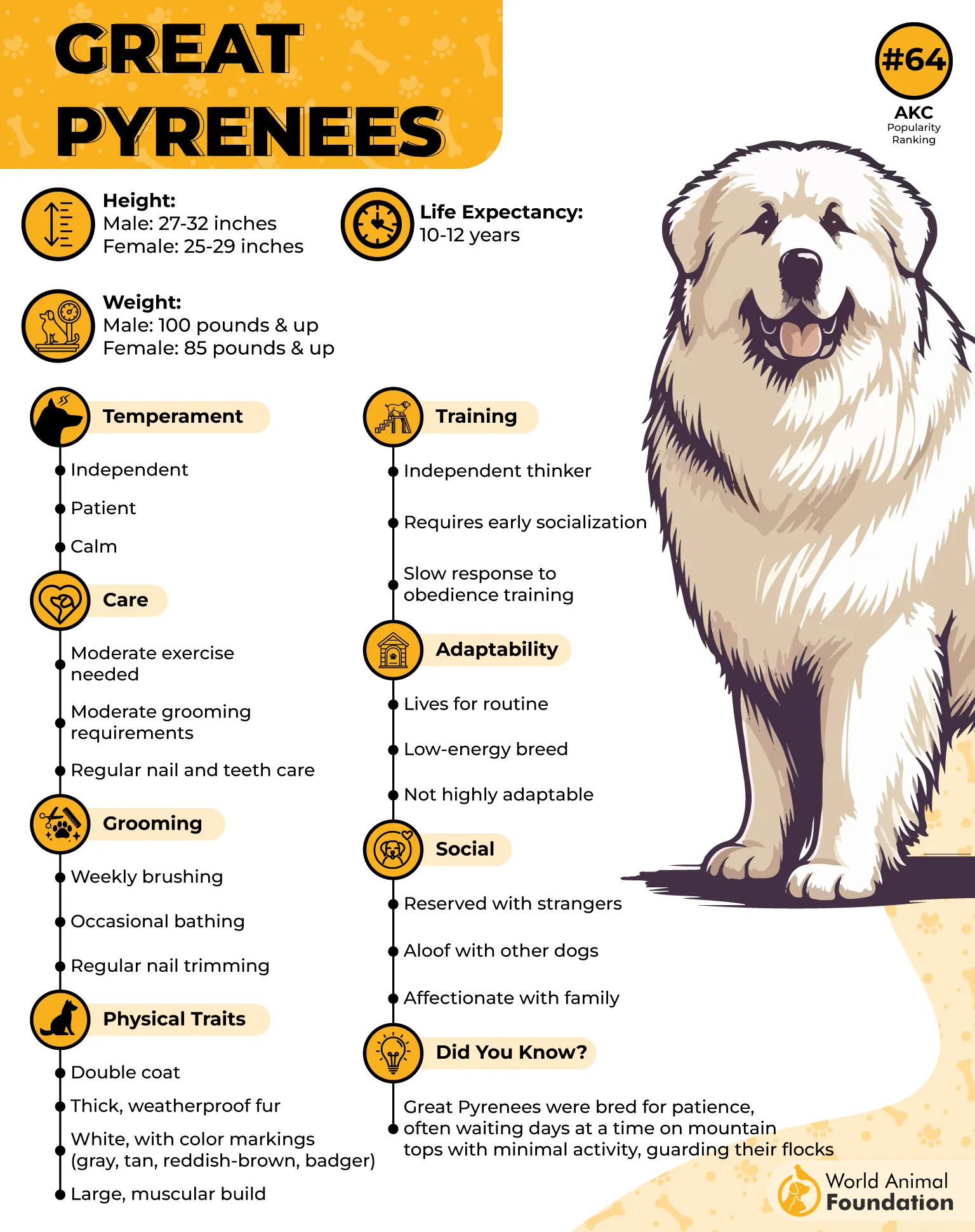
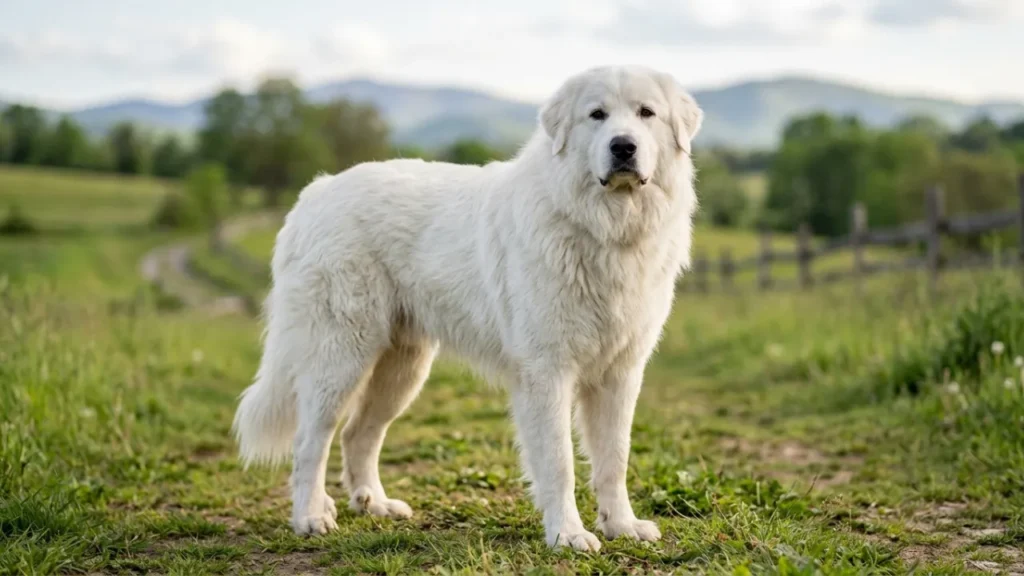
Great Pyrenees are big dogs too, though not quite as tall as the Kuvasz. Female Pyrs stand 25 to 29 inches and weigh 85 pounds or more, while males are taller still, reaching 27 to 32 inches and often topping 100 pounds.
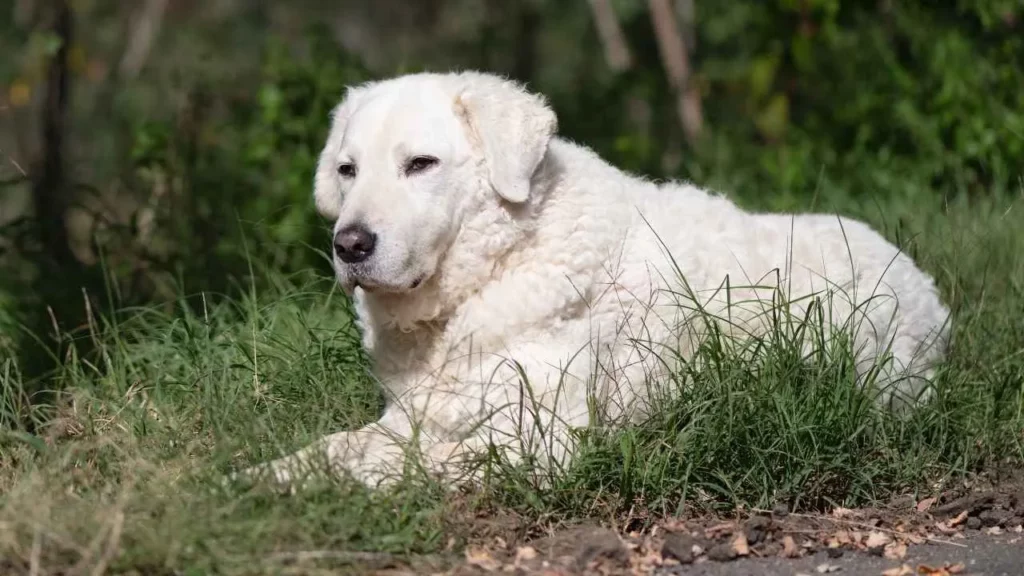
Head shape is another giveaway: Kuvasz have a clear stop, meaning there’s a noticeable break between the forehead and muzzle, while Great Pyrenees have a smoother, less defined transition.
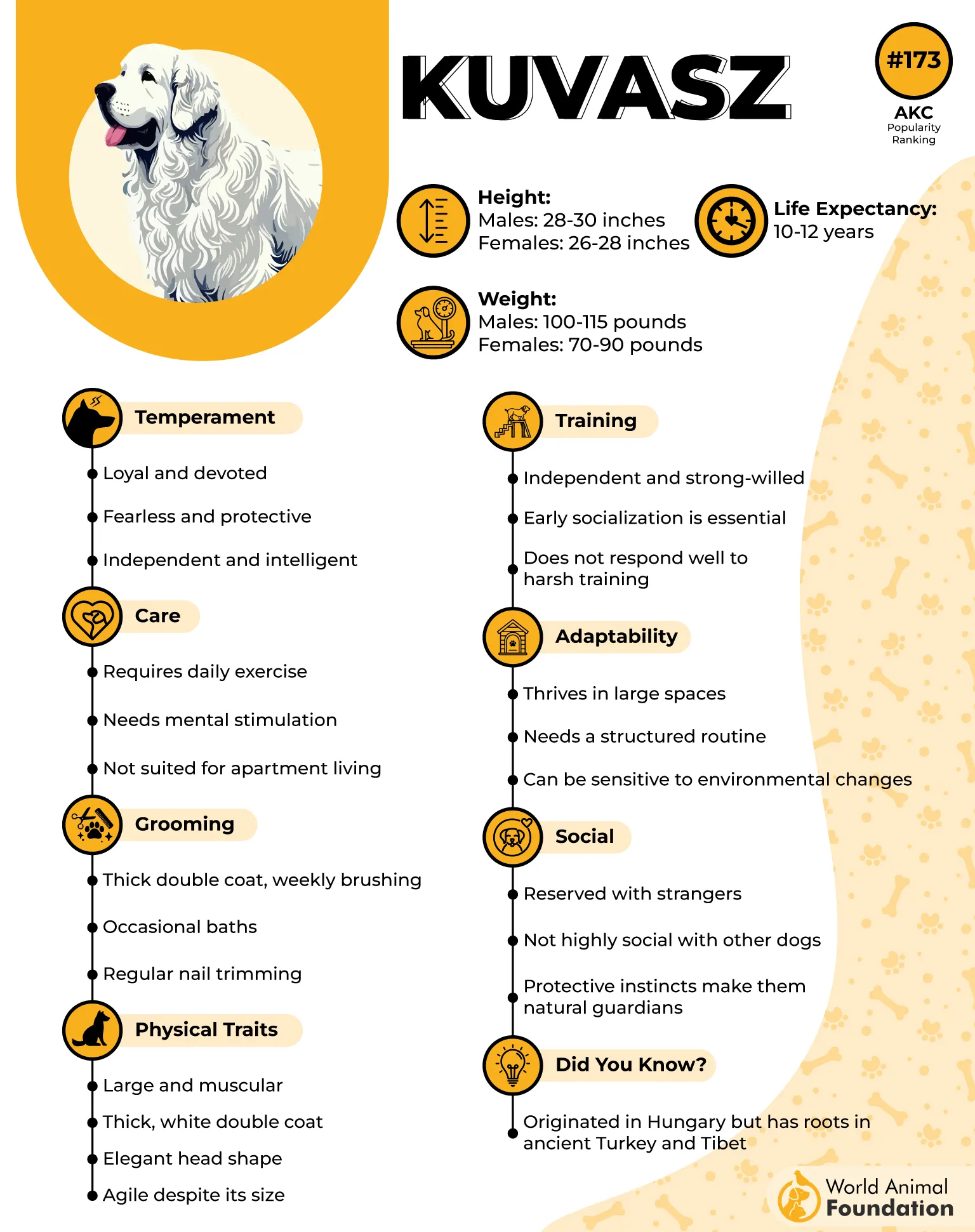
One more physical difference worth noting: rear double dew claws. Great Pyrenees have them, while Kuvasz are naturally born without them.
Price & Availability
Price-wise, the Kuvasz and Great Pyrenees are pretty similar. Depending on the breeder, a Kuvasz puppy will typically run you between $1,300 and $2,500, while Great Pyrenees puppies cost around $1,000 to $2,500.
If you’re looking to save some money, adopting from a shelter is always worth considering. As for availability, Kuvasz are relatively rare, while Great Pyrenees are much easier to find in most parts of the world.
Temperament & Personality
Since both the Great Pyrenees and Kuvasz were bred as livestock guardians, it’s no surprise they share a lot of behavioral traits. Both breeds are often called “gentle giants,” and for good reason.
The Kuvasz is a confident, quiet dog with centuries of watchful instinct built in. They bond closely with the whole family, though some Kuvasz may pick one person to attach to a little more than the rest.
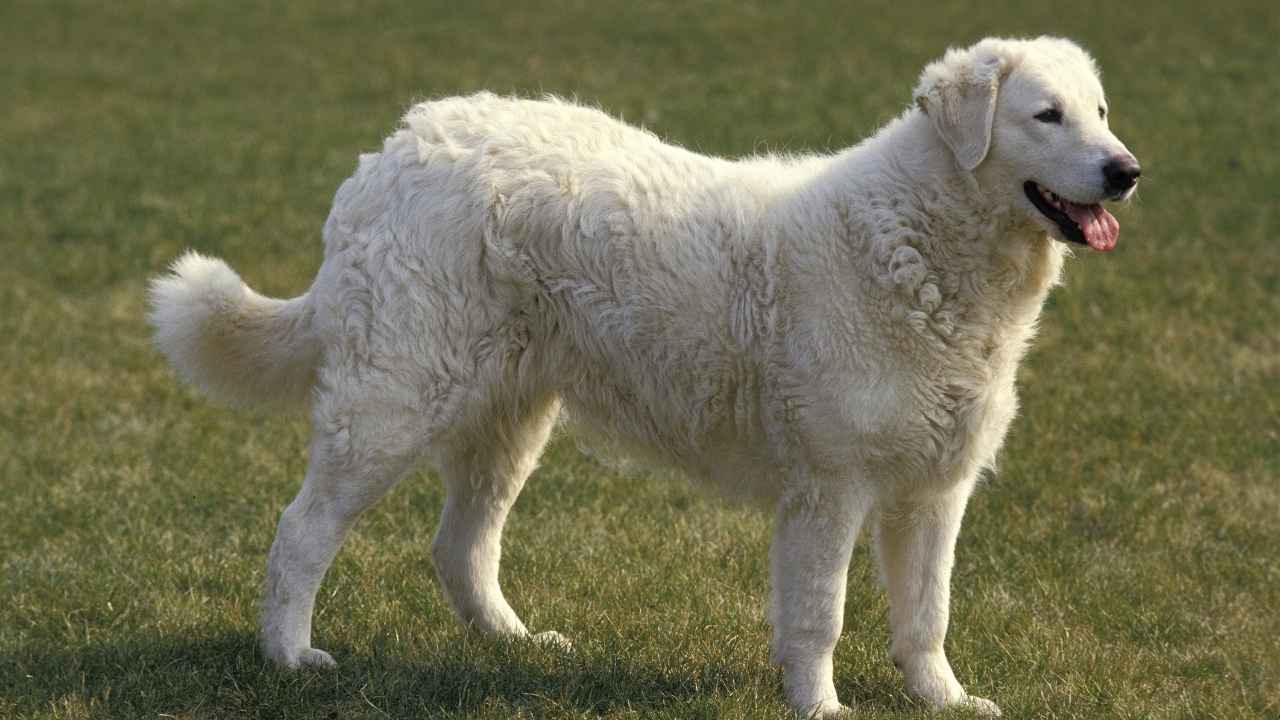
Their calm nature makes them great family dogs, but early training and socialization are non-negotiable. According to Hill’s Pet, Kuvasz are happy to curl up beside you in a big space, though they’re not especially clingy. They’re wired to protect the people they love and tend to be wary of strangers.
The Great Pyrenees is right up there as one of the calmest breeds around, gentle but always alert. With an even temperament, these majestic dogs make wonderful family companions when given proper training and early socialization.
They form deep bonds with their whole human family, much like the Kuvasz, and are similarly cautious around unfamiliar faces. Great Pyrenees generally get along well with other pets, but they still appreciate a bit of alone time now and then.
Exercise Needs & Energy Level
Kuvasz are working dogs built to handle tough conditions, and that shows in their energy levels, which run moderate to high. They don’t need intense, high-impact workouts, but they do need at least an hour of physical and mental engagement every day.
Daily walks are a great way to help them burn off energy in a healthy way. Just remember to keep your Kuvasz leashed or in a fenced yard when outdoors, since their guardian instincts can kick in fast.
Great Pyrenees, on the other hand, tend to have more moderate energy levels. Like a lot of large breeds, they don’t need a ton of exercise to stay happy and healthy. Regular walks with their owners, along with canine sports like obedience trials or cart pulling, are great ways to keep them physically and mentally stimulated.
Trainability & Obedience
Both the Great Pyrenees and Kuvasz were bred to think for themselves and make decisions without waiting on their humans, which definitely shows up in how they train.
Kuvasz are sharp, determined, and deeply loyal to their people. That said, their stubborn streak means they’re not the best fit for first-time dog owners, and they really need solid obedience training and early socialization to thrive. Patience is key here too, since Kuvasz are independent thinkers who mature slowly.
Great Pyrenees are plenty smart as well, but according to the American Kennel Club, they tend to be a bit indifferent to standard obedience training. The best approach with them is consistent, positive reinforcement-based training.
Grooming Needs & Shedding
Both the Kuvasz and Great Pyrenees sport a thick, white double coat that’s naturally waterproof and built to handle harsh weather. At first glance, the coats look nearly identical, but there are some real differences once you look closer at texture and grooming needs.
Kuvasz coats are solid white or ivory, with a coarse texture that can be either straight or wavy. They shed quite a bit and need brushing several times a week to stay in good shape, according to PetMD. Regular grooming keeps shedding under control, clears out loose hair, and helps prevent mats and tangles from forming.
Great Pyrenees coats, on the other hand, can feature colored markings in shades like gray, red, or tan. Just like the Kuvasz, their coat naturally resists dirt and tangles. Pyrs are also heavy shedders, so weekly brushing is key to managing loose fur and keeping their coat mat-free.
Guarding Instincts & Alertness
Kuvasz are gentle, patient dogs with serious guarding instincts baked in. They’re fiercely loyal to their people and hardwired to protect them from just about any threat. Naturally territorial, Kuvasz make excellent guard dogs.
Great Pyrenees are equally vigilant when it comes to protecting their people and territory. These calm, watchful dogs are always quietly taking in their surroundings, which makes them great guard dogs too.
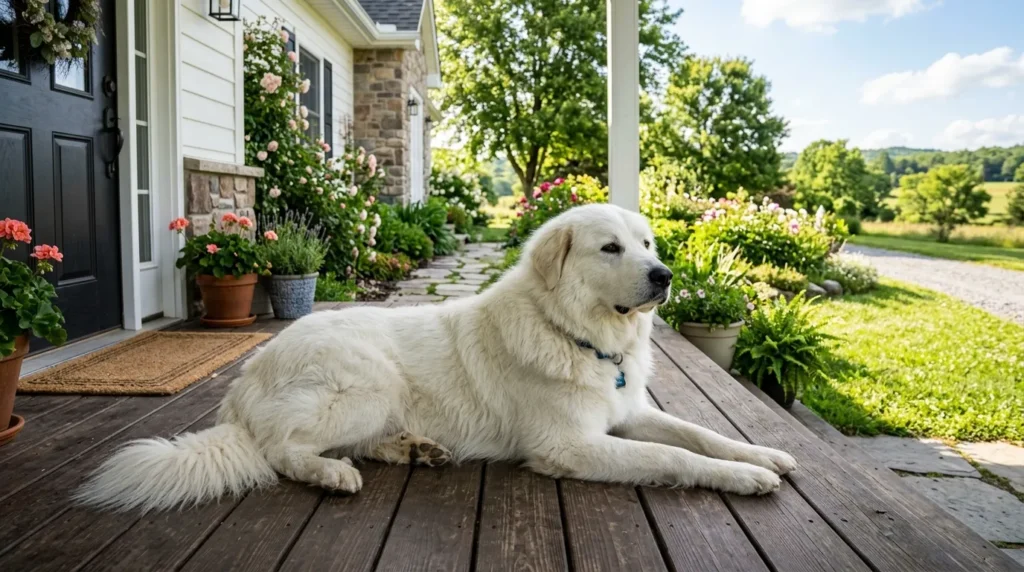
Like the Kuvasz, they stay alert and cautious around strangers. The main difference comes down to intensity: Kuvasz tend to be sharper and more assertive, while Pyrs generally have a softer edge.
Health & Lifespan
Both the Kuvasz and Great Pyrenees are generally healthy breeds with a life expectancy of 10 to 12 years, but like most large dogs, they’re not immune to certain health issues.
Kuvasz can be prone to hip and elbow dysplasia, gastric dilatation-volvulus (GDV, also known as bloat), and hyperthyroidism.
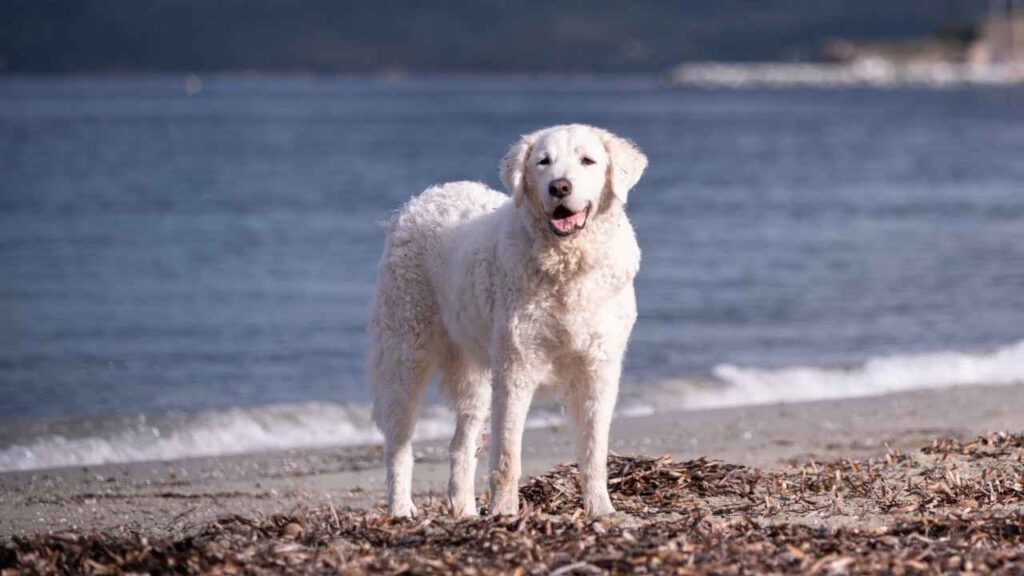
Great Pyrenees may face growth-related issues like hip and elbow dysplasia, along with patellar luxation, GDV, eye diseases, and neuronal degeneration.
Great Pyrenees vs. Kuvasz: Which Loyal Livestock Guardian Is Right for You?
Between their sheer strength, stamina, and independent streaks, both the Kuvasz and Great Pyrenees can be a handful, which is exactly why they’re not the best match for first-time dog owners.
These breeds really do best with experienced owners who know how to handle a large, strong-willed dog. Both also thrive in spacious homes with plenty of room to roam, play, and get all that exercise out of their system.
Conclusion
The Kuvasz and Great Pyrenees were both originally bred as livestock guardians, and they’re so alike in looks and temperament that telling them apart can be a challenge. But as we’ve covered, there are some clear differences once you know what to look for.
The Kuvasz dog hails from Hungary, while the Great Pyrenees traces its roots to the Pyrenees Mountains. Both are big dogs, though Kuvasz tend to run slightly larger. Physically, Pyrs have rear double dewclaws while Kuvasz don’t, and coat-wise, Kuvasz stick to solid white while Great Pyrenees can show markings in other colors.
Both dog breeds are devoted guardians of home, flock, and family, but if you’re after a slightly calmer guard dog, the Great Pyrenees might just be the right fit for you.
