




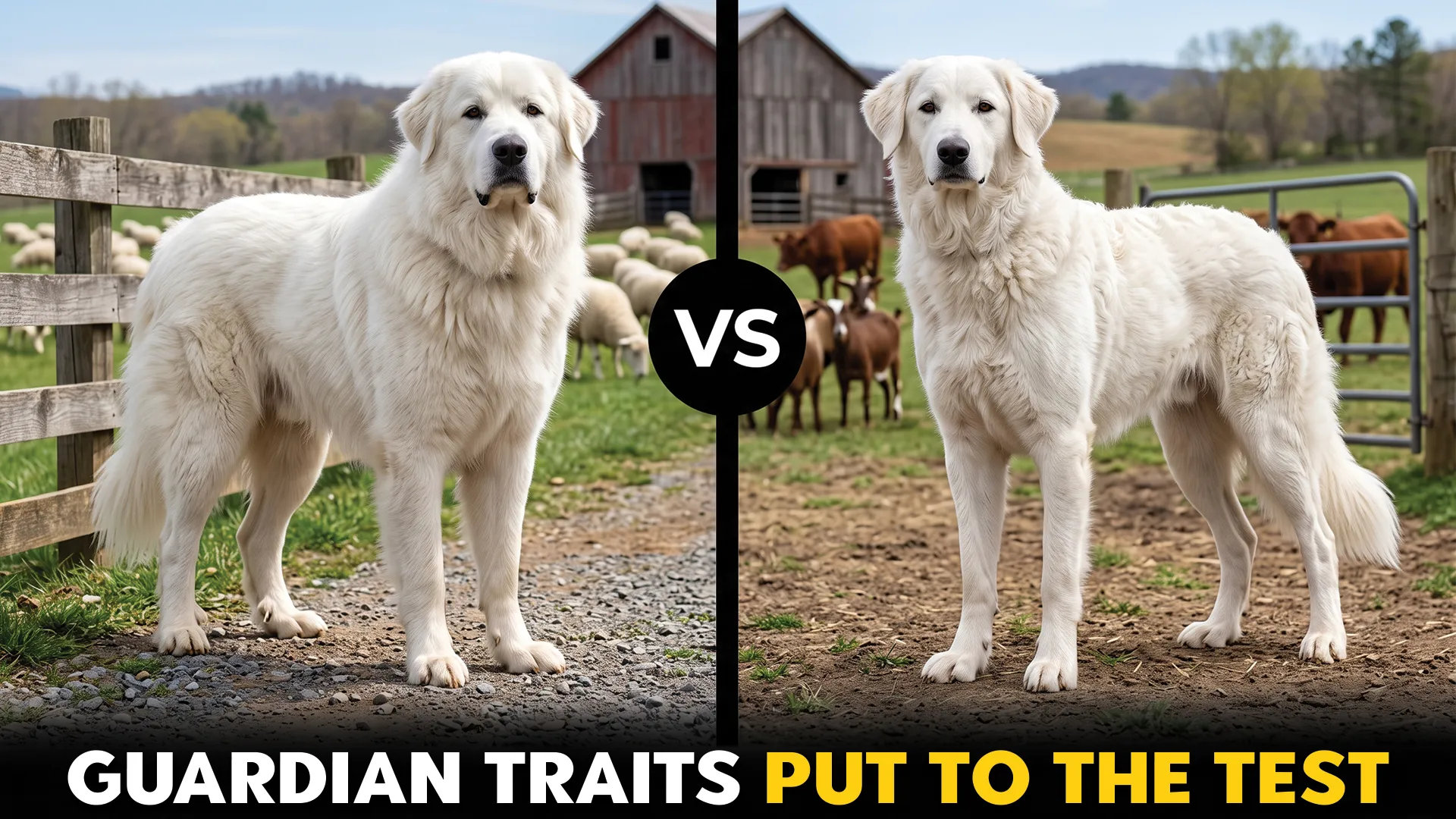
When it comes to protecting a farm, few dogs can match the courage, loyalty, and strength of livestock guardian breeds. These powerful farm dogs have spent centuries standing watch over flocks and property, using their size, instincts, and fearless nature to keep predators away.
Choosing the right farm protection dog is not always easy, especially when two breeds share so many similarities. Both are large, white-coated guardians with a calm presence, independent thinking, and a strong protective instinct.
They may look alike at first glance, but their origins, personalities, training needs, and working styles reveal some important differences.
In this comparison, we’ll explore how these two majestic farm protectors differ in size, temperament, care requirements, and suitability for different lifestyles.
Great Pyrenees vs. Kuvasz: Farm Protection Dog Comparison
Origins & Purpose
Great Pyrenees
The Great Pyrenees originated in the Pyrenees Mountains between France and Spain, with a history that dates back thousands of years. Bred by shepherds to protect sheep and livestock, their thick white coats helped them blend in with flocks while standing out from predators, as noted by the AKC.
Over time, their calm nature and protective instincts caught the attention of French royalty, and King Louis XIV named them the “Royal Dog of France,”.
The breed later arrived in the U.S. and was officially recognized by the American Kennel Club in 1933. Today, they continue to work as farm guardians while also being loved as gentle family pets.
Kuvasz
The Kuvasz has ancient roots, believed to have developed from large guardian dogs that traveled from Central Asia before becoming established in Hungary. Originally bred to protect livestock, they were known for their bravery, intelligence, and ability to defend animals from predators.
Once favored by Hungarian royalty, the Kuvasz later became a trusted farm guardian among farmers. Their white coat helped shepherds identify them easily among livestock.
The breed arrived in the U.S. in the 1920s and was recognized by the American Kennel Club in 1931. Today, the Kuvasz remains a loyal and fearless protector.
Size & Build
Great Pyrenees
The Great Pyrenees has a tall, elegant build with a balanced and noble appearance. Despite its size, this breed should look graceful rather than heavy. Its broad chest, strong shoulders, and muscular legs give it the strength needed for long hours of guarding.
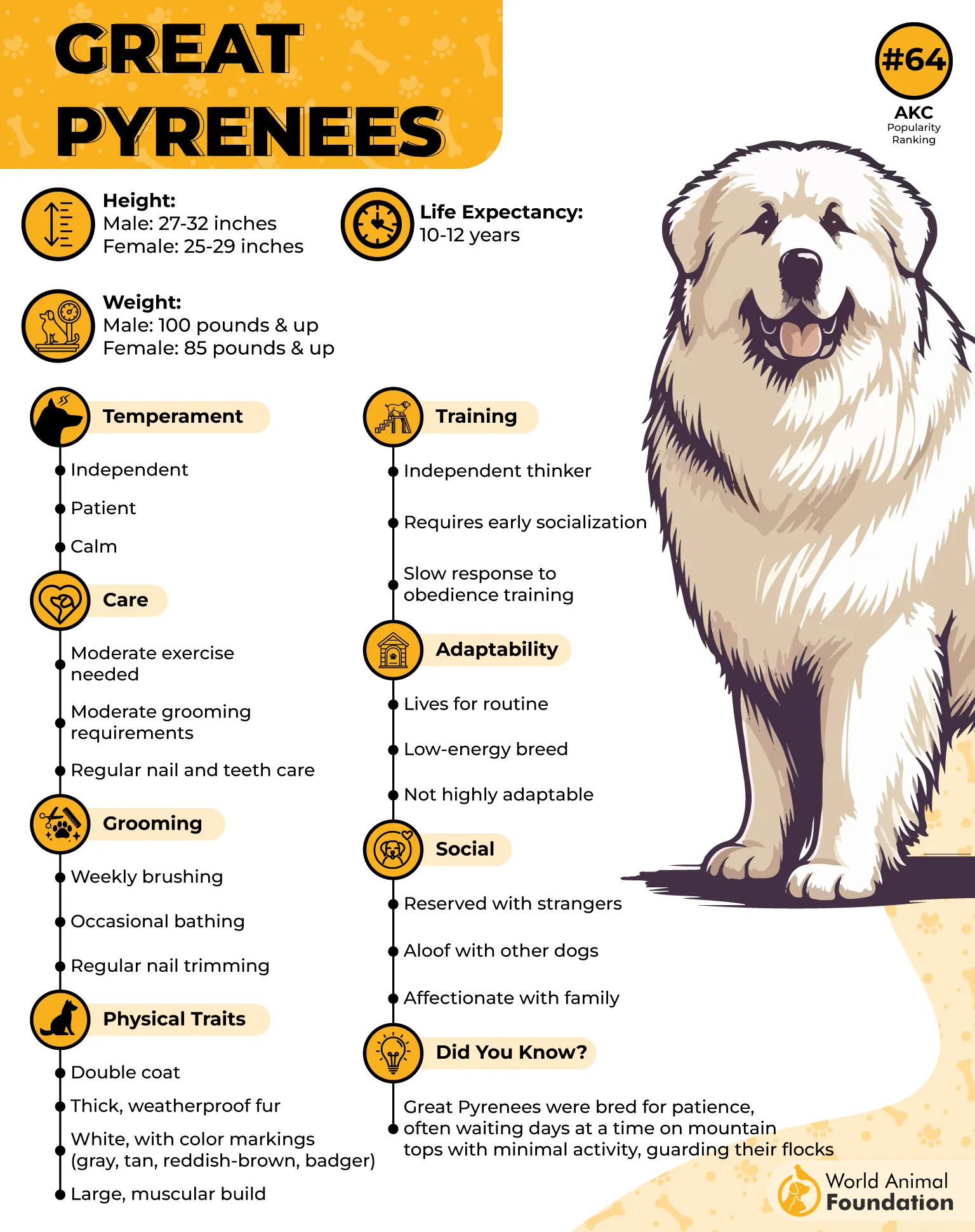
Height: 26–32 inches
Male weight: 110–130 pounds
Female weight: 90–115 pounds
The breed’s most recognizable features include a wedge-shaped head, expressive eyes, low-set V-shaped ears, and a long, plumed tail that may curl over the back. Its thick double coat has a soft undercoat and weather-resistant outer coat, helping it handle cold mountain conditions.
Kuvasz
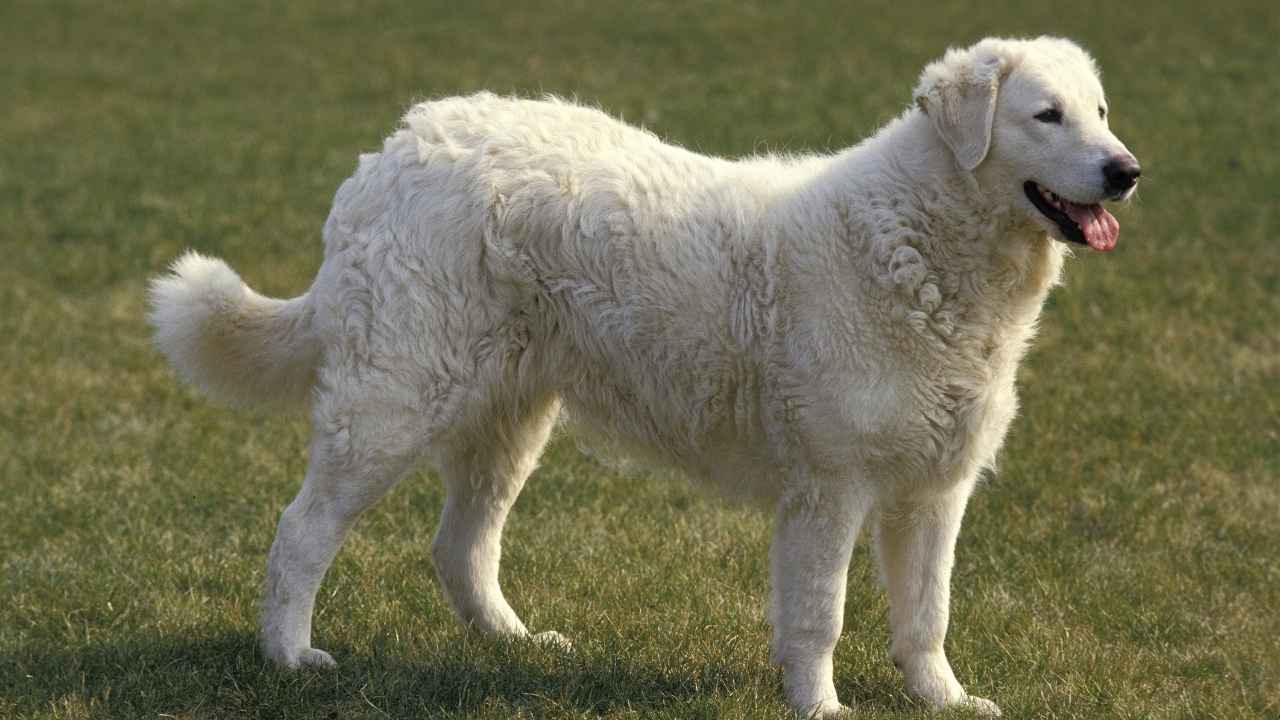
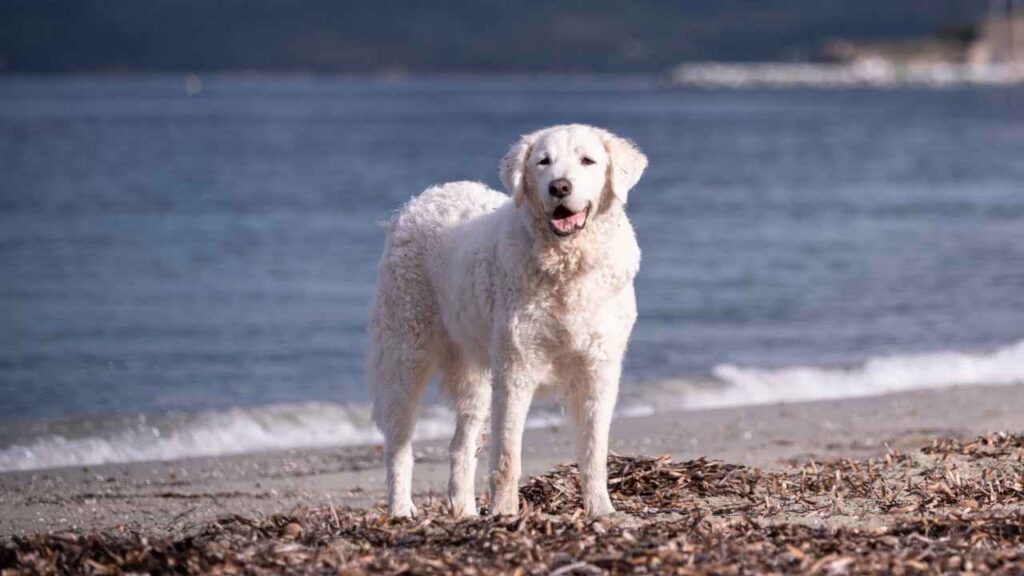
The Kuvasz is also a large, muscular dog with a powerful yet refined appearance. While it is often confused with the Great Pyrenees because of its white double coat, the Kuvasz has a more elongated head with a clearer distinction between the forehead and muzzle.
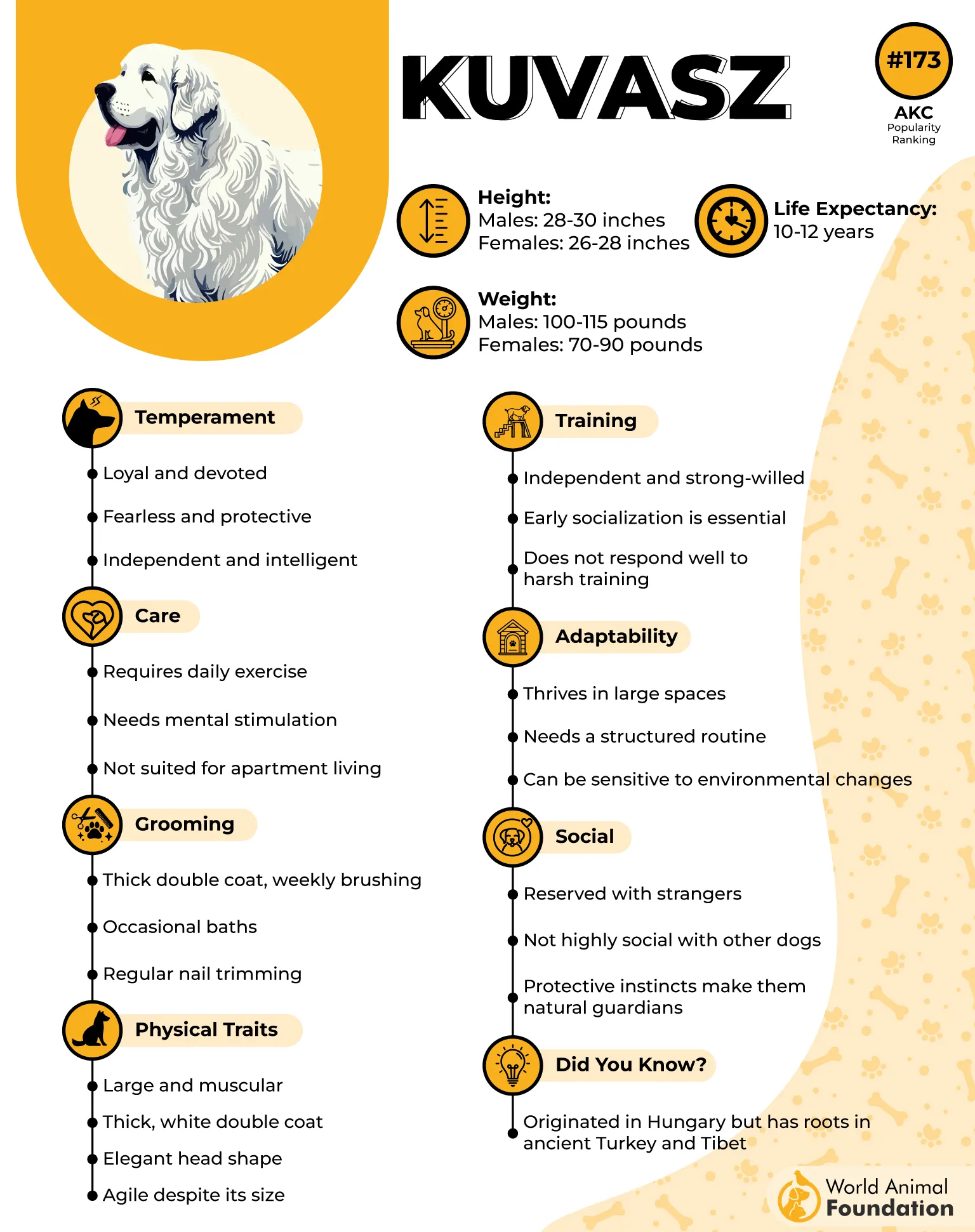
Height: 26–30 inches
Weight: 70–115 pounds
Females are generally smaller than males
The Kuvasz has a thick coat that can be straight or wavy, protecting it from harsh weather while working outdoors. Its strong frame, agility, and endurance make it a capable guardian that can quickly respond to threats.
Pricing & Availability
Great Pyrenees
Great Pyrenees puppies typically cost $1,750–$2,500 or more, depending on the breeder, pedigree, and health testing. Because the breed is relatively popular, it’s easier to find reputable breeders as well as rescue organizations and shelters with adoptable dogs.
Kuvasz
Kuvasz puppies usually cost $1,300–$2,500, with prices varying based on the breeder and bloodline. Since the breed is less common, you may need to join a waiting list or travel to find a reputable breeder.
Adoption is also possible through Kuvasz rescue groups or local shelters, although available dogs are less common than Great Pyrenees.
Temperament & Personality
Great Pyrenees
The Great Pyrenees is known for its calm, patient, and affectionate personality. Despite its large size, this breed is gentle and often forms strong bonds with its family.
Their history as livestock guardian dogs gives them a naturally watchful nature, allowing them to quietly observe their surroundings and step in when they sense danger.
Personality traits:
Patient and loving with family members
Usually good with children, cats, and other pets when properly socialized
Independent thinkers who may not always follow commands immediately
Naturally alert and known for barking to warn their owners of unusual activity
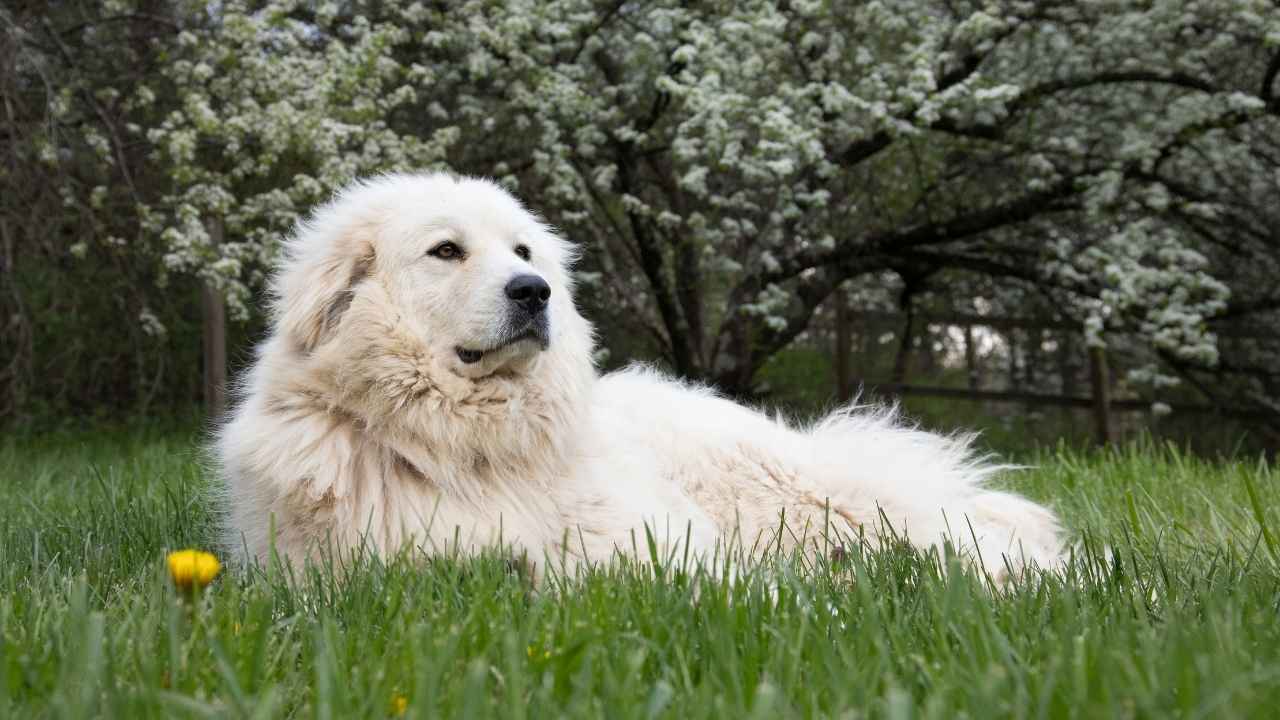
Although they are gentle, Great Pyrenees need consistent training because they were bred to make decisions on their own. They enjoy a peaceful home environment but still need regular exercise and mental stimulation to stay happy.
Kuvasz
The Kuvasz has a more serious and protective personality. Originally bred to guard livestock, this breed is naturally suspicious of strangers and other animals, as stated by Omlet.
Their strong guarding instincts make them excellent protectors, but they require experienced handling and proper socialization from an early age.
Personality traits:
Highly intelligent and capable of independent problem-solving
Alert and vocal when they sense something unusual
Can be reserved with strangers without proper socialization
Usually affectionate with children and animals they know
Kuvasz dogs are quick learners but can also be strong-willed. They need firm, consistent, and positive training to help them understand boundaries and distinguish between real threats and normal situations.
Exercise Needs & Energy Levels
Great Pyrenees
The Great Pyrenees has moderate exercise needs and is not the ideal choice for owners looking for a running or high-energy adventure partner. This breed prefers a slower pace and is happiest when it can calmly walk, explore, and keep watch over its surroundings.
Exercise needs:
Around 20–40 minutes of daily exercise is usually enough
Enjoys gentle walks, hikes, and time in a secure yard
Benefits from having space to roam and patrol
Should avoid excessive exercise in hot weather due to its thick coat
Although they appear relaxed, Great Pyrenees still need regular activity to maintain muscle strength and prevent boredom. A fenced yard is ideal, as they may wander while following their natural guarding instincts.
Kuvasz
The Kuvasz is a more energetic and athletic guardian compared to the Great Pyrenees. This breed enjoys being active and needs more daily exercise to stay physically and mentally balanced.
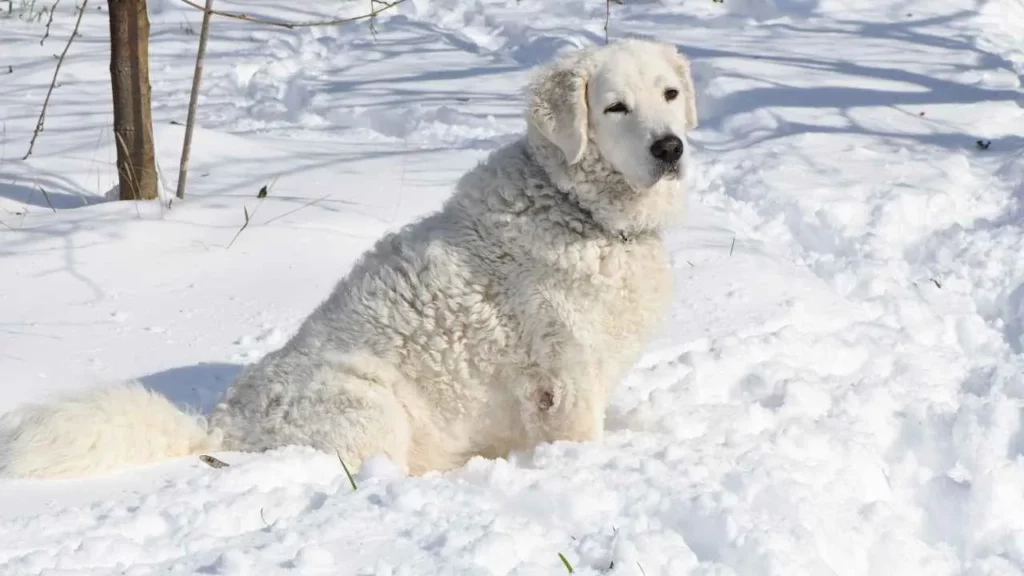
Exercise needs:
Requires around an hour of activity each day
Enjoys long walks, hiking, and exploring outdoor spaces
Does best with access to a large, securely fenced area
Can make a strong adventure companion for active owners
Because of their independent nature, Kuvasz dogs enjoy having room to move freely rather than being limited to city walks. They thrive when they have a job to do, whether that means guarding property or exploring a large outdoor area. Proper exercise also helps prevent boredom and unwanted behaviors.
Trainability & Obedience
Great Pyrenees
The Great Pyrenees can be challenging to train because of its independent nature. These dogs are smart, but they were bred to think for themselves rather than quickly follow commands. Their calm personality may sometimes come across as stubbornness during training sessions.
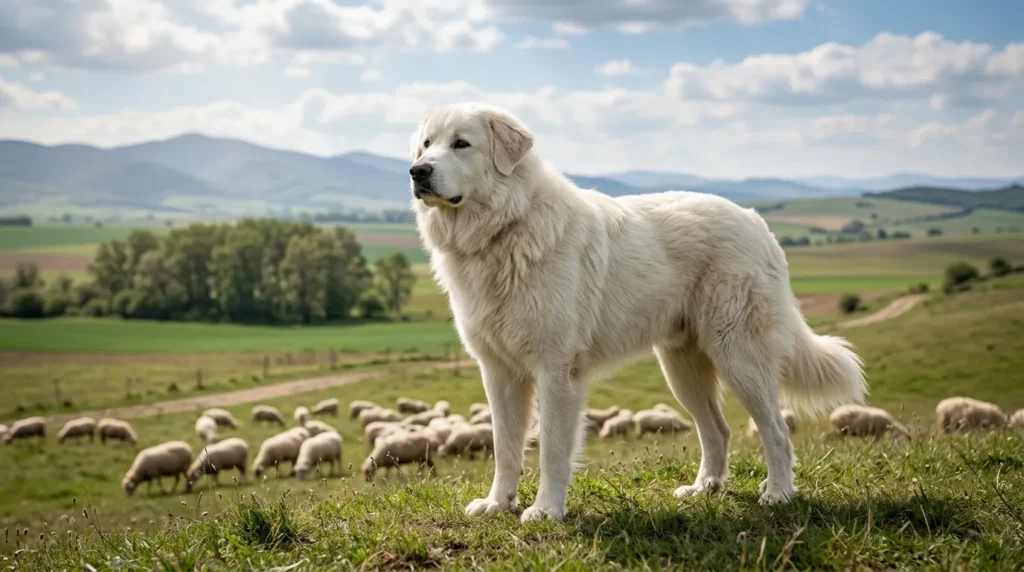
Training tips:
Start training and socialization from an early age
Use positive reinforcement with treats, praise, and play
Keep sessions short, engaging, and varied
Avoid harsh methods, as they respond best to patience and encouragement
Great Pyrenees benefit from obedience classes, especially for first-time owners. Training in different environments helps them become more confident and well-mannered. While they may not excel in competitive obedience, they can become reliable companions with consistent guidance.
Kuvasz
The Kuvasz is highly intelligent but can be a challenge for inexperienced owners due to its independent and protective nature, as mentioned by PetMD. This breed needs a confident, calm leader who can provide clear boundaries while building trust.
Training tips:
Begin socialization early to reduce suspicion toward strangers
Use positive reinforcement instead of harsh corrections
Keep training sessions short (around 10–15 minutes)
Stay patient and consistent, especially during adolescence
Kuvasz dogs are sensitive and respond best when training focuses on encouragement rather than punishment. With proper guidance, they can become loyal, obedient, and confident protectors. Without training and socialization, however, their strong guarding instincts may become difficult to manage.
Grooming Needs & Shedding
Great Pyrenees
The Great Pyrenees has a long, luxurious white coat with a soft, woolly undercoat and a smooth outer layer that naturally helps repel dirt and prevent tangles. Despite its elegant appearance, this breed is a heavy shedder, especially during seasonal coat changes.
Regular brushing once or twice a week is usually enough to keep the coat in good condition and remove loose fur. A longer brushing session can help manage shedding and keep their thick coat looking its best.
While their coat does not require frequent bathing, occasional baths every few months are usually sufficient because it naturally sheds dirt. Their coat should not be shaved in hot weather, as it helps protect them from the sun and regulate body temperature.
Kuvasz
The Kuvasz also has a thick double coat that can be straight or wavy, protecting against cold temperatures and outdoor conditions. While their coat is relatively easy to maintain, they are heavy shedders and require consistent brushing to remove loose hair and prevent tangles.
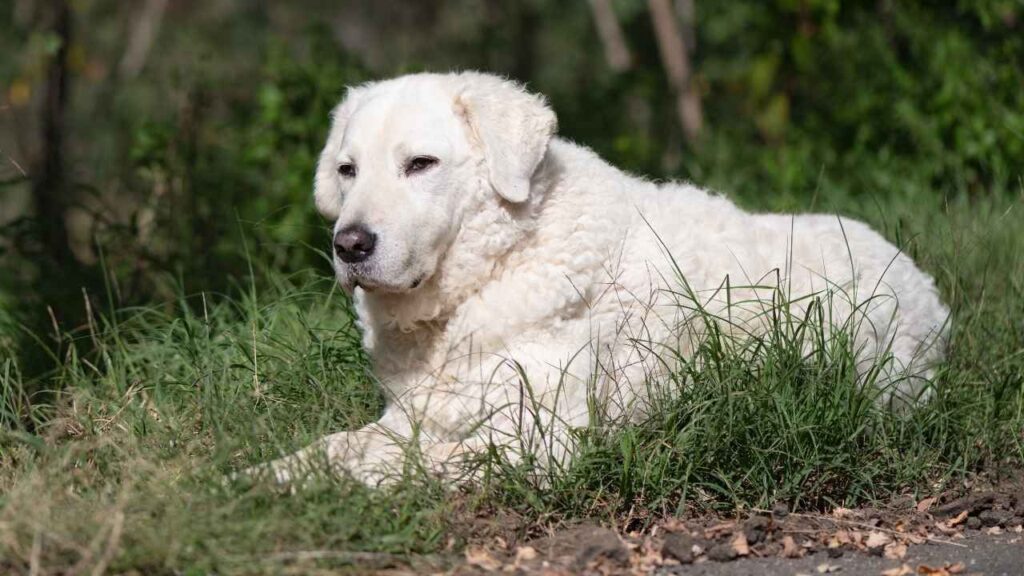
Weekly brushing is generally enough for most Kuvasz dogs, with extra grooming needed during shedding seasons. Using tools that reach the undercoat can help control excess fur and keep the coat healthy.
Bathing is only needed occasionally, as frequent washing can remove the natural oils that keep their skin and coat protected.
Guarding Instincts & Alertness
Great Pyrenees
The Great Pyrenees has a strong guarding instinct but expresses it calmly and patiently. Originally bred to protect sheep in the mountains, this breed was expected to observe threats from a distance and act when necessary.
Great Pyrenees are known to be gentle with their families but will quickly alert owners if they notice something unusual. They are often vocal barkers, using their deep bark to warn off potential threats.
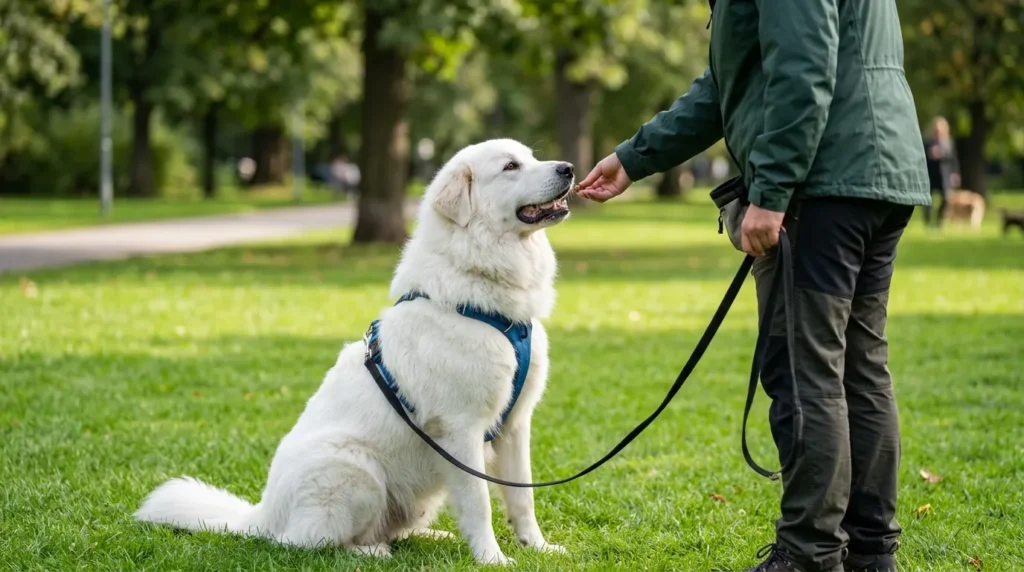
While they are usually friendly with familiar people and animals, early socialization is important to help them understand normal situations and avoid unnecessary suspicion.
Kuvasz
The Kuvasz has a strong and serious guarding personality. Bred to protect livestock from predators, this breed is naturally suspicious of strangers and highly devoted to its family.
Their intelligence and independence allow them to quickly assess situations and decide whether something appears threatening.
Kuvasz dogs are known for being alert, vocal, and protective of their territory. Without proper training and early socialization, their strong instincts can make them overly cautious around unfamiliar people or animals.
However, with early guidance, they can learn to distinguish between real dangers and everyday situations while remaining loyal and dependable protectors.
Health & Lifespan
Great Pyrenees
The Great Pyrenees is a hardy breed with an average lifespan of 10-12 years. However, its large size and genetics can make it more vulnerable to certain conditions. Owners should be aware of common health issues that may affect this breed.
Common health concerns include:
Bloat/Gastric Dilatation-Volvulus (GDV)
Deafness
Canine Multifocal Retinopathy
Cataracts
Entropion
Hip Dysplasia
Elbow Dysplasia
Luxating Patella
Neuronal Degeneration (NDG)
Kuvasz
The Kuvasz is also considered a healthy and long-lived breed, with a lifespan of approximately 10–12 years. However, like other large dogs, it may develop joint, eye, and other inherited health conditions throughout its life.
Common health concerns include:
Bloat/Gastric Dilatation-Volvulus (GDV)
Hip Dysplasia
Elbow Dysplasia
Luxating Patella
Entropion
Cataracts
Cardiac Conditions
Progressive Retinal Atrophy (PRA)
Hypothyroidism
Which Guardian Dog Fits Your Lifestyle Best?
Choosing between the Great Pyrenees and Kuvasz depends on your experience, lifestyle, and guarding needs. Both are loyal and protective, but they have different personalities and energy levels.
Choose a Great Pyrenees If You Want a Gentle Guardian
The Great Pyrenees is ideal for families looking for a calm, patient, and affectionate protector. They are a great fit for homes with space to roam and owners who prefer a quieter companion that can still guard livestock or property.
Choose a Kuvasz If You Need a Strong Protector
The Kuvasz is better suited for experienced owners who want a more alert and independent guardian. With its strong protective instincts and higher energy levels, this breed thrives with proper training, socialization, and plenty of outdoor space.
Conclusion
Choosing between the Great Pyrenees and Kuvasz comes down to understanding their unique personalities, guarding styles, and care needs.
While both breeds are powerful livestock protectors with deep loyalty and impressive instincts, the Great Pyrenees offers a calmer, more gentle presence, while the Kuvasz brings a more active and intensely protective nature.
The best guardian dog is not simply the biggest or strongest—it’s the one that fits your lifestyle, experience, and environment.
Take the time to consider your farm needs, training commitment, and daily routine before making a choice. With the right match, either breed can become a devoted protector and a cherished member of your family.
