




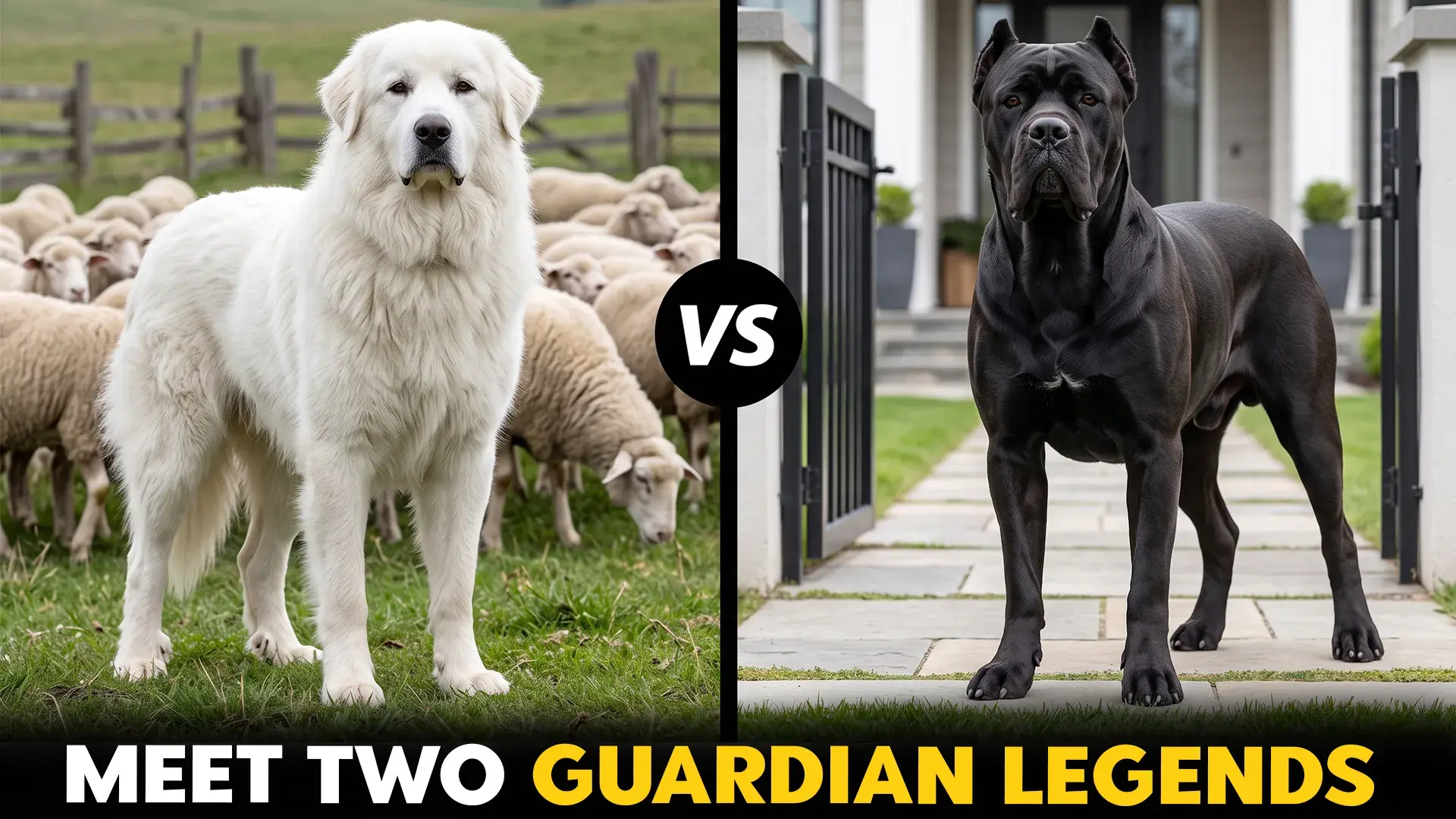
Great Pyrenees vs. Cane Corso.
Two of the most powerful guardian breeds on the planet. Two dogs that look like they could take down an intruder just by staring at them. And two very, VERY different approaches to what “guarding” means.
One is a fluffy white mountain dog who’s been watching over flocks since before your great-great-grandparents were born. The other is a muscular Italian bodyguard with a jaw that means business.
Both are loyal, both are protective, and both will make you feel a whole lot safer at 2 a.m. when you hear something outside.
But the thing is …
They do NOT guard the same way. They do NOT think the same way. And they are definitely not built for the same household.
If you are trying to decide between a Great Pyrenees and a Cane Corso, buckle up.
Fun Fact!
According to the American Kennel Club, Cane Corsos are direct descendants of ancient Roman war dogs called Canis Pugnax, dogs that literally went into battle alongside soldiers.
Meanwhile, Great Pyrenees dogs were guarding livestock in the Pyrenees mountains around that same era, minus the whole “going to war” part.
Oh, and get this: the name “Cane Corso” is widely believed to translate loosely to “bodyguard dog.”
Kind of on the nose, right?
Great Pyrenees vs. Cane Corso: Powerful Guardian Dog Comparison
Breed Origins & Functional Background
Let’s start where every good comparison should start. The beginning.
Because these two breeds could not have come from more different worlds.
The Great Pyrenees, also called the Pyrenean Mountain dog, comes straight out of the Pyrenees Mountains, the rugged range separating France and Spain. For centuries, these mountain dogs lived outside with the flock.
Not near the flock. WITH the flock.
Their job was to blend in with the sheep, bond with animals, and act as the last line of defense against wolves and bears.
Chewy notes these livestock guardians were bred to work independently, usually overnight, with basically zero human supervision.
The Cane Corso comes from a completely different lineage.
Developed in Italy, this guardian breed descends from ancient Roman war dogs we just mentioned. Over time, their role shifted from battlefield to farmland, where they were used to guard property, hunt wild boar, and even help manage badger and other pest populations that threatened crops and livestock.
This Italian dog breed went nearly extinct after World War II.
Farms modernized. Guard dogs were not as necessary as before. And the Cane Corso population dropped. Thankfully, dedicated breeders in Italy brought them back in the 1970s and 80s, and the breed has been steadily gaining ground in the U.S. ever since.
So right off the bat, you have got two totally different missions.
One dog was raised to protect as an independent thinker. The other was raised to protect a person and property.
Physical Characteristics & Body Structure
Now let’s talk size.
Because both of these breeds are BIG.
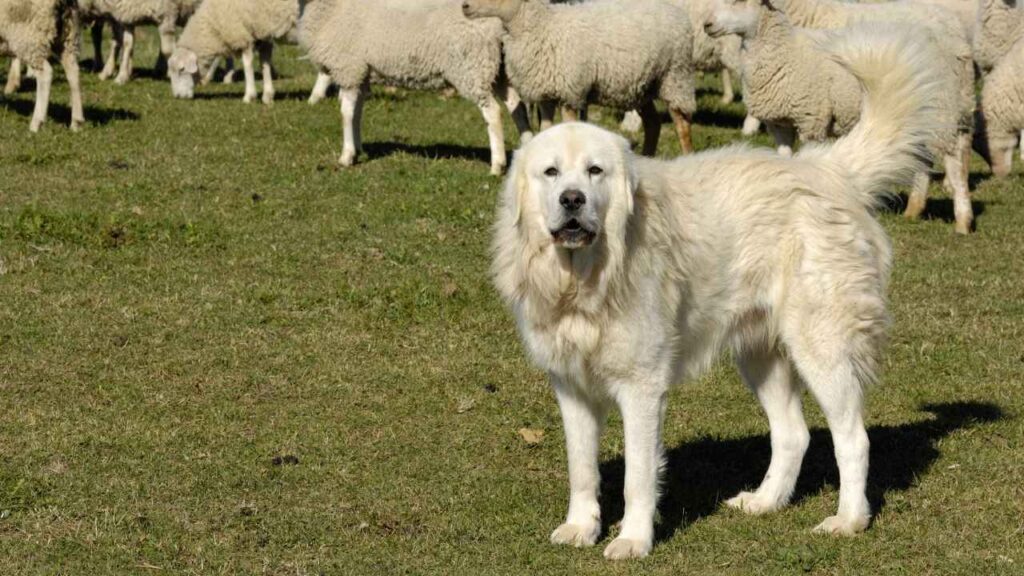
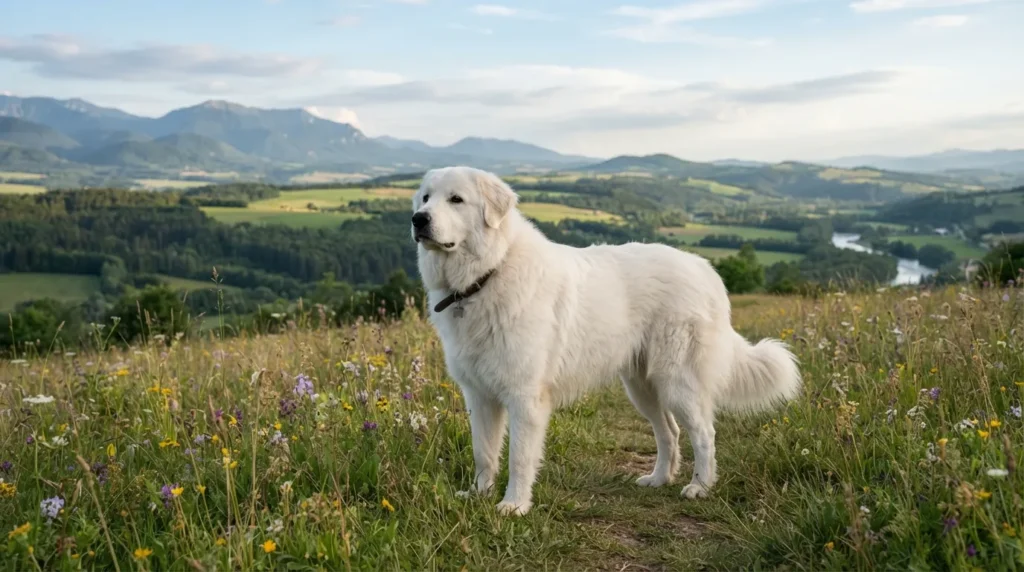
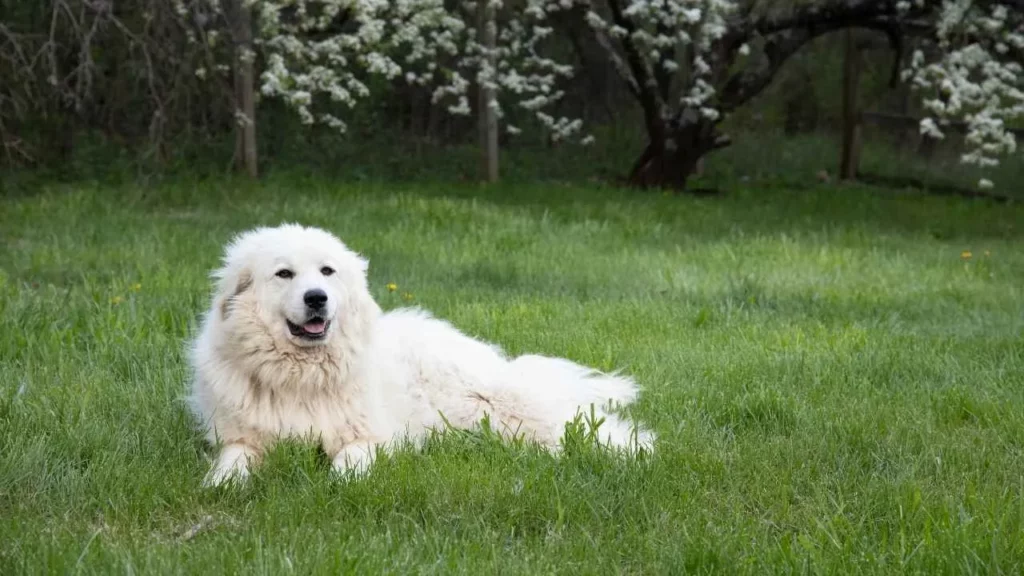
Great Pyrenees males typically weigh 100 pounds or more, with females landing around 85 pounds. Height ranges from 25 to 32 inches at the shoulder.
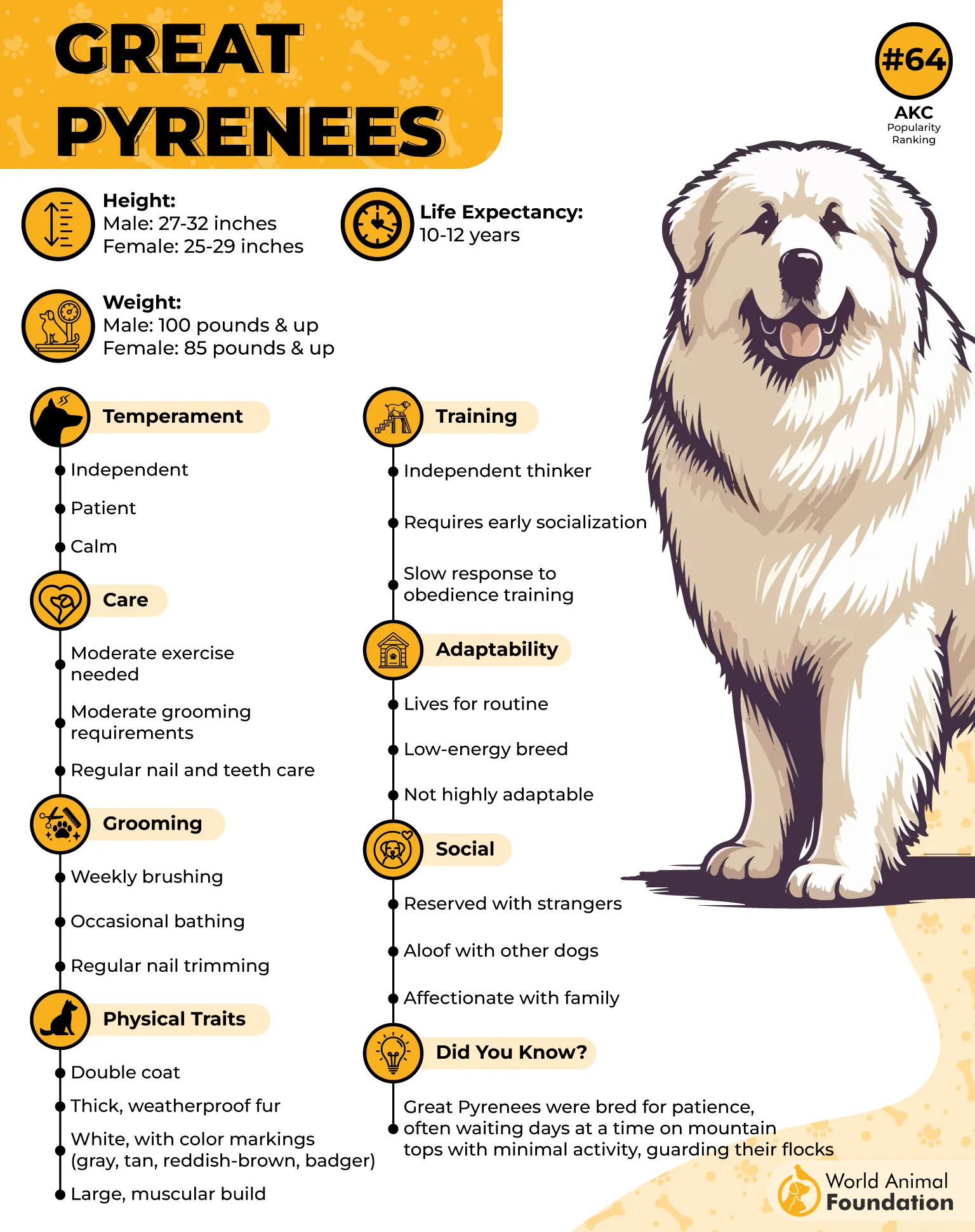
Their coat is thick, mostly white, sometimes with gray, tan, or badger markings around the ears and body. They have a soft undercoat tucked underneath a coarser outer layer to survive brutal mountain winters.
All in all, Great Pyrenees are beautiful white dogs.
Cane Corsos are a different kind of big.
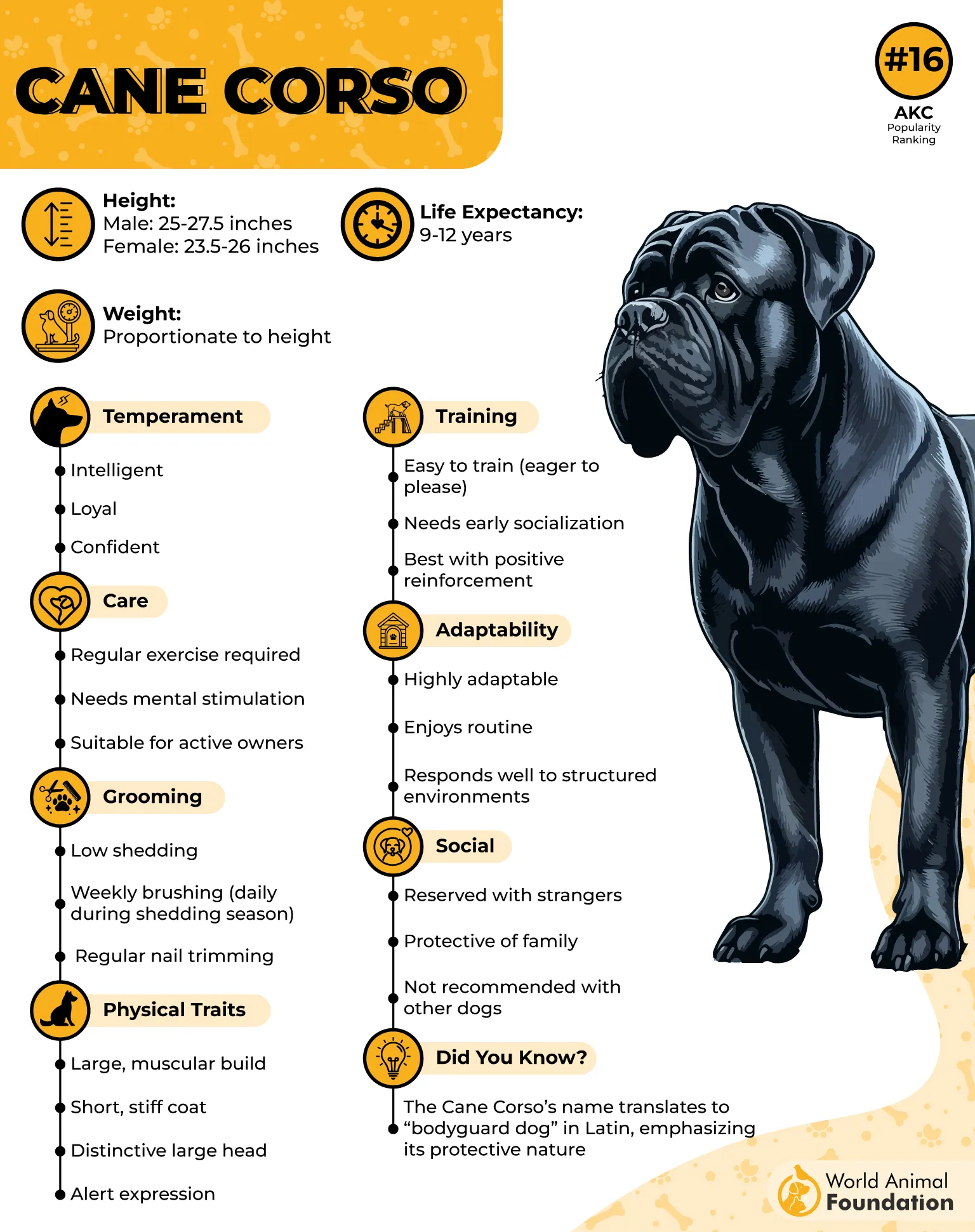
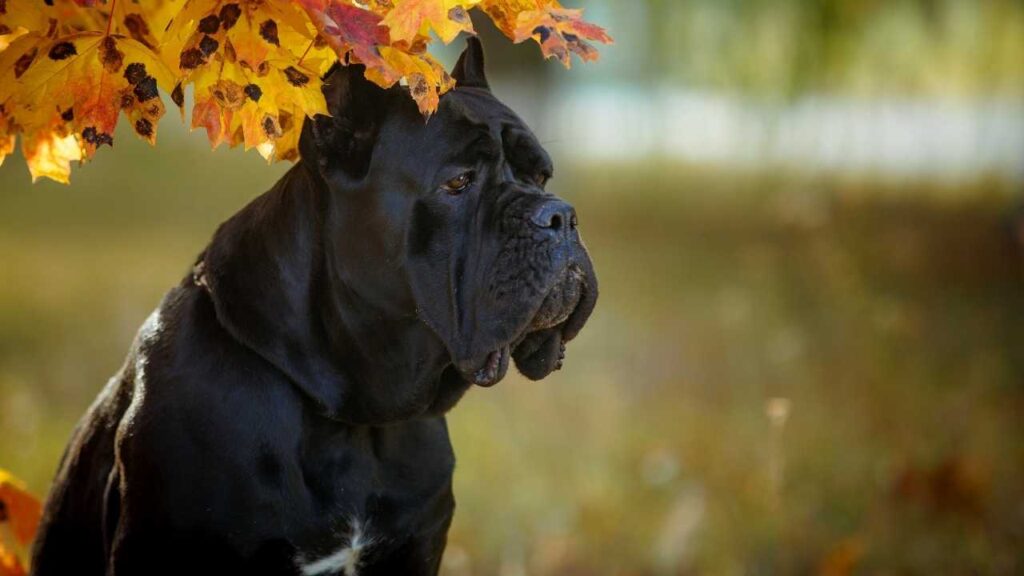
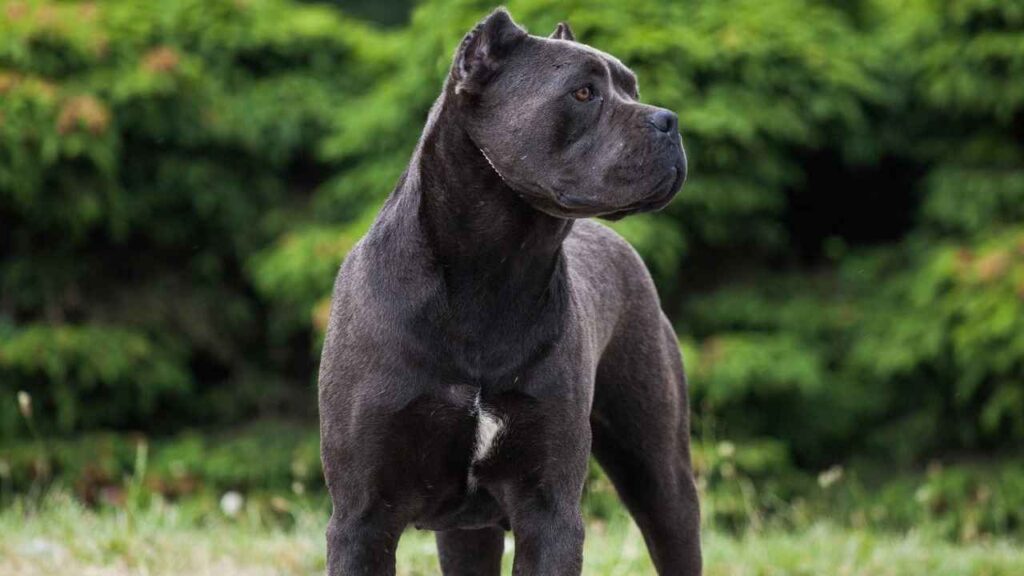
Males usually weigh between 90 and 110, females a bit less, somewhere around 80 to 100. They stand about 23 to 27 inches tall. This Mastiff dog breed has a dense, muscular, and athletic build, nothing like the fluffy Pyr.
Their coat is short, stiff, and comes in black, gray, fawn, red, and brindle, sometimes with striking gray markings or tan patterns.
The honest difference is…
A Great Pyrenees looks soft and huggable. A Cane Corso is a muscular athlete.
Regardless of sex, both breeds carry serious weight and serious presence. Neither one is a breed you casually pick up and toss around.
Temperament & Behavioral Profile
The Great Pyrenees is calm, patient, and independent almost to a fault. They were bred to decide things for themselves.
Is that noise a threat? Should I bark? Should I move the flock right away?
A Pyr answers these questions on instinct, not because a human told them to.
They are gentle with family, incredibly patient with children, and good with other dogs and animals when they are raised around them. But they are not people-pleasers. They love their family, sure. But they just don’t feel the constant need to prove it every five minutes.
The Cane Corso is intensely bonded to its owner. PetMD notes they are loyal and unwavering. This is a dog that wants to be near you. Watching you. Reading your body language.
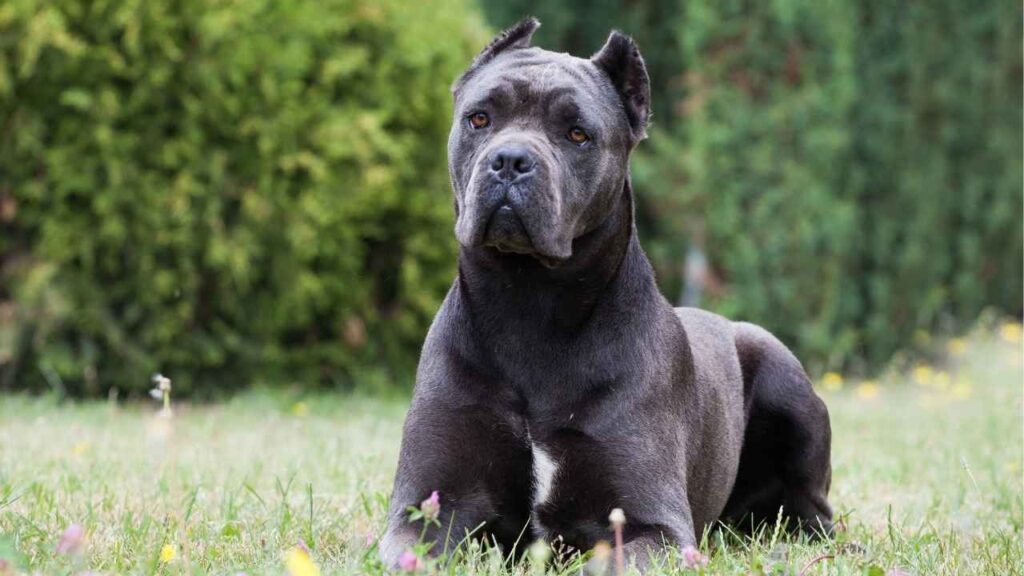
Cane Corsos are naturally wary of strangers and take their protective instincts seriously, which makes early socialization non-negotiable.
Done right, a Cane Corso is a devoted, affectionate family dog who’s alert to every single person who steps onto the property. Done wrong, and you have an unpredictable, overly suspicious dog.
Neither breed is “aggressive” by nature. But both need an owner who understands what they are actually working with.
Activity Requirements & Energy Levels
Good news for anyone worried about marathon exercise sessions. Neither of these breeds needs to run five miles a day.
Great Pyrenees do best with moderate exercise. Short walks, some time patrolling the yard, a little mental stimulation here and there. UKC mentions they are built for endurance and patrolling. Secure fencing is an absolute MUST. A Pyr who senses a threat will go after it. And they won’t think twice about wandering off your property to handle it.
Cane Corso needs a bit more structure in their exercise routine. Daily walks, some active playtime, and a job of some kind keep them balanced.
They are not hyper dogs by any means, but they do need an outlet, or that energy turns into boredom.
Both breeds benefit from having actual property to patrol. Neither one is thrilled about apartment life, and neither should be raised in one if you can help it.
Trainability, Intelligence & Learning Ability
Let’s be honest. Neither of these dogs is a Golden Retriever, eager to please just because you smiled at them.
The Great Pyrenees is a smart dog, no doubt about it.
But their intelligence comes with a healthy dose of independence and a sense of territory. They will consider your request. They might even respond to it… eventually… if they decide it’s worth their time.
Repetitive commands bore these smart dogs. Harsh corrections backfire immediately.
Positive reinforcement, patience, and short, engaging training sessions work best here.
The Cane Corso is also highly intelligent, and thankfully, shows a bit more willingness to work with you. According to Orvis, they are food-motivated, eager to bond, and want direction from a confident owner.
But “confident” is the key word. A Corso raised without firm, consistent boundaries can become a handful fast.
Both breeds need early socialization.
Puppies of both breeds need exposure to new people, animals, sounds, and situations well before adulthood.
Skip that step, and you will regret it later. Guaranteed.
Coat Maintenance & Grooming Needs
This is a fun difference. Grooming.
The Great Pyrenees has a thick double coat with a soft undercoat that sheds. Frequently.
It is more prevalent in spring when they blow their whole coat at once. Brushing two to three times a week helps prevent mats around the ears, chest, and legs.
The Cane Corso has it easy here. Their short coat is low-maintenance. Occasional brushing keeps shedding under control, and baths are needed way less often than with a Pyr.
If you are not a fan of finding dog hair on your couch, car, and in your coffee too, the Corso is the most forgiving option of the two.
Average Lifespan & Longevity
Both breeds land in a similar range. Great Pyrenees typically live 10 to 12 years, and Cane Corsos usually fall right around there too, give or take.
Common health concerns for the Great Pyrenees include Hip Dysplasia, bloat, and joint issues tied to their sheer size. Bloat is a real concern for deep-chested breeds like this one, so slower feeding methods are good.
Cane Corsos face similar concerns. Hip Dysplasia, bloat, and some eye conditions like cherry eye show up in this large dog breed. Working with a responsible breeder who screens for these issues is important.
Regular vet visits, quality food, and watching their weight go a long way toward a healthy life.
Great Pyrenees vs. Cane Corso: Suitability for Family Life vs. Guard Duties
So which one fits your family?
The Great Pyrenees is best-suited for families with space. A yard, some land, maybe even livestock. They are gentle with kids, patient to a fault, and take their job as livestock guardian seriously.
Expect some nighttime barking. It is not aggression, just their job. They are patrolling their territory, and they want every creature nearby to know it.
The Cane Corso fits a different kind of family.
One that wants an alert, devoted home protector, and has the experience to raise a powerful guard dog breed.
If you want a rural property guarded by an independent-minded gentle giant, go Pyrenees.
If you want a devoted, alert protector who bonds and watches every stranger who approaches your home, go Corso.
Conclusion
Cane Corso, Great Pyrenees… both are great guardian breeds.
Powerful, protective, and devoted, each in their own way.
But they were bred for different jobs and different families.
For a calm, independent protector who thrives with livestock, land, and a whole lot of trust, the Great Pyrenees is your dog.
For a loyal, alert, muscular guardian who wants to stay close to you and watch over your home like it’s his own… the Cane Corso is your match.
Both need training, socialization, and an owner who respects their instincts, because they are not small dogs.
Also, these are not just big dogs with intimidating personalities.
They are guardians.
And whichever one joins your family, one thing’s for sure: nothing is getting past your front door and house without them knowing about it first.
These dogs will be a friend and a present guardian at night.
