




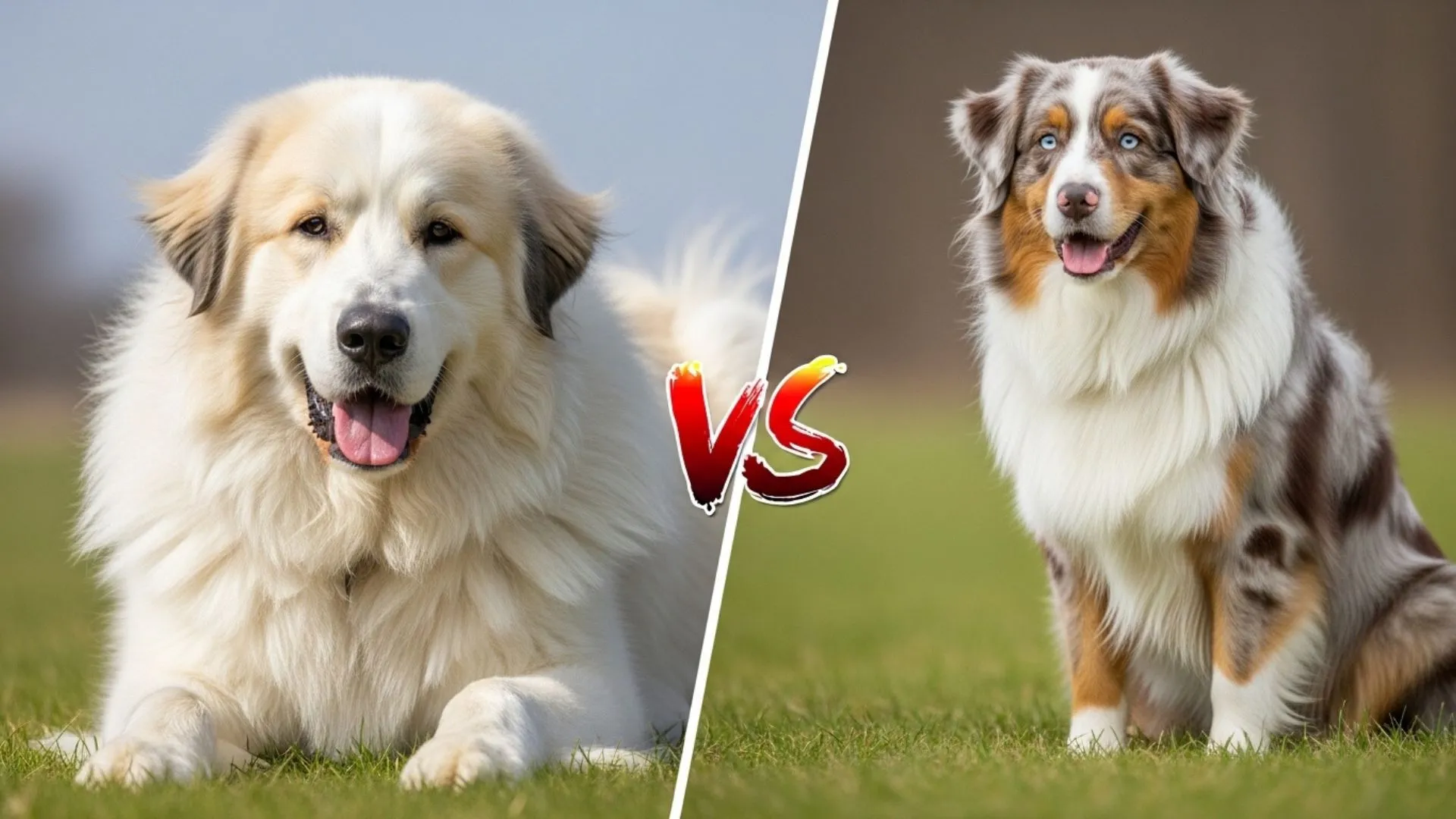
The decision between the Great Pyrenees and Australian Shepherd breeds requires more than evaluating their physical appearance. The selection process requires understanding the dog’s impact on daily life and need for canine companionship at home.
The two dog breeds show powerful traits that emerge through different behavior patterns.
One breed thrives in calm, open spaces, quietly watching over livestock and family. The other breed maintains an active state through its physical movements, mental activities, and social interactions that make daily activities into dynamic events.
The process of making a choice becomes both thrilling and somewhat daunting because of the existing differences between the two options.
Working dogs demonstrate improved emotional control when they receive assigned tasks. Active dog breeds show behavior improvement and stress reduction through mental challenges. Guardian breeds depend more on their instincts than their training orders. Herding breeds, however, excel in structured training and problem-solving tasks.
Great Pyrenees vs Australian Shepherd: A Bold Comparison
Origin & History
The Great Pyrenees lineage originates from the snowy mountains of the Pyrenees between France and Spain. The breed was created to function as an independent livestock protector who would patrol for extended periods without assistance. The breed developed its current characteristics of calmness and watchfulness, and natural protective behavior through its historical development.
The Australian Shepherd breed developed during the 1800s in the United States. Ranchers used the breed for herding livestock despite its name. Britannica states that this breed developed as a dedicated herding dog that could work in active settings.
Everything exists because of this particular origin. One breed provides silent protection while the other breed uses active methods to handle movement and disorder. The Great Pyrenees and Australian Shepherd comparison begins here, where instinct and purpose take different directions.
Size and Physical Build Differences
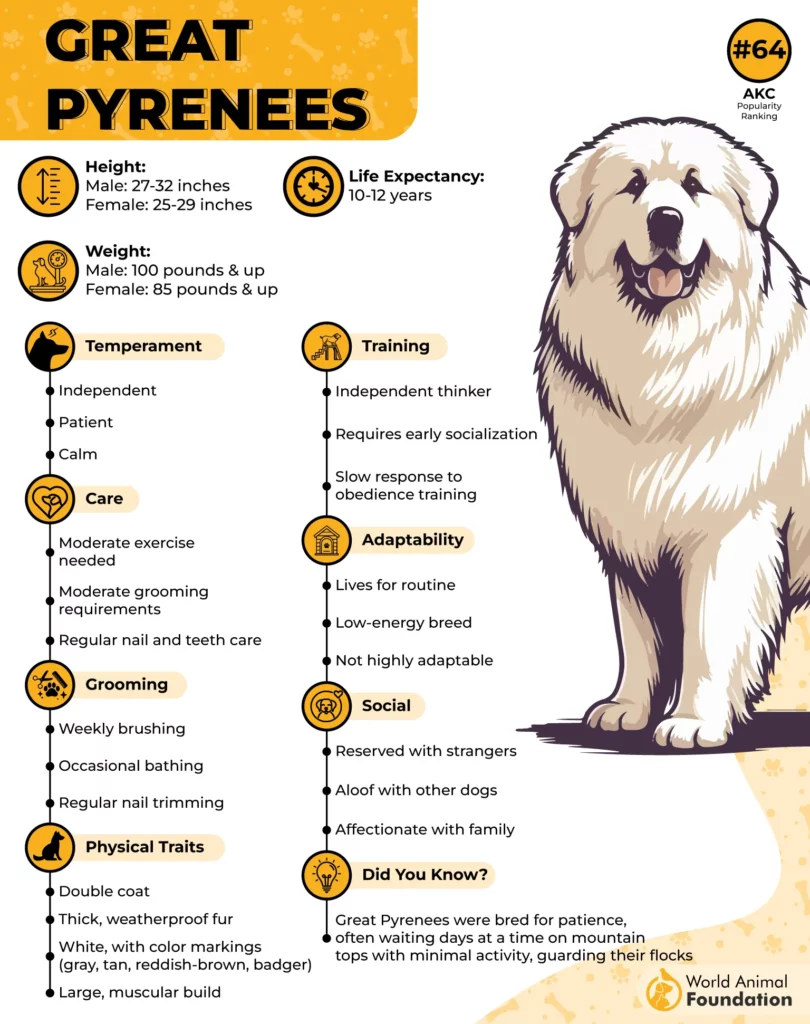
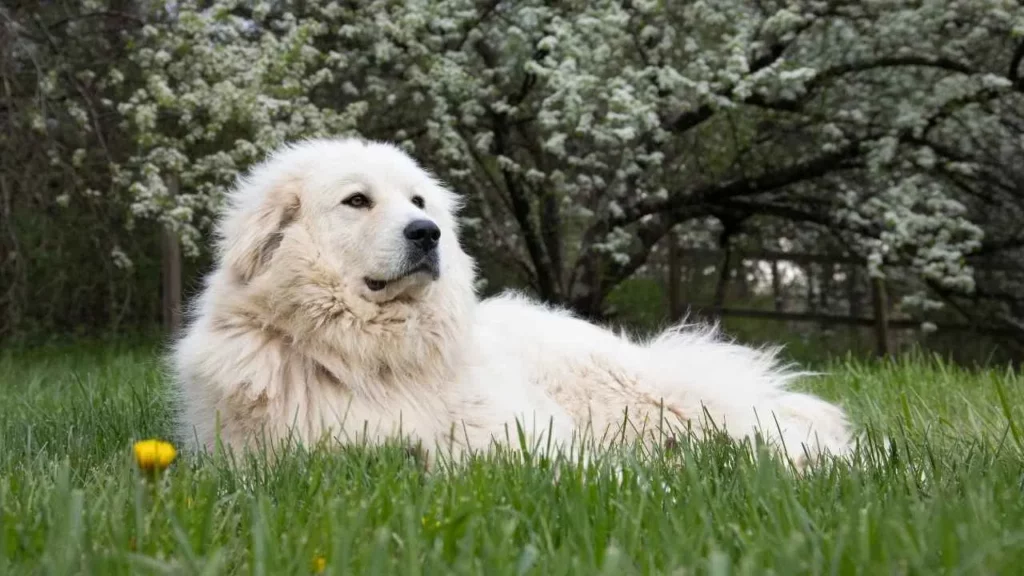
The Great Pyrenees stands out as a large, majestic dog with a powerful presence. Purina states that the typical height of this breed ranges from 25 to 32 inches, while its maximum weight reaches 130 pounds. The breed distinguishes itself through its thick white coat, which includes double dewclaws as unique features.
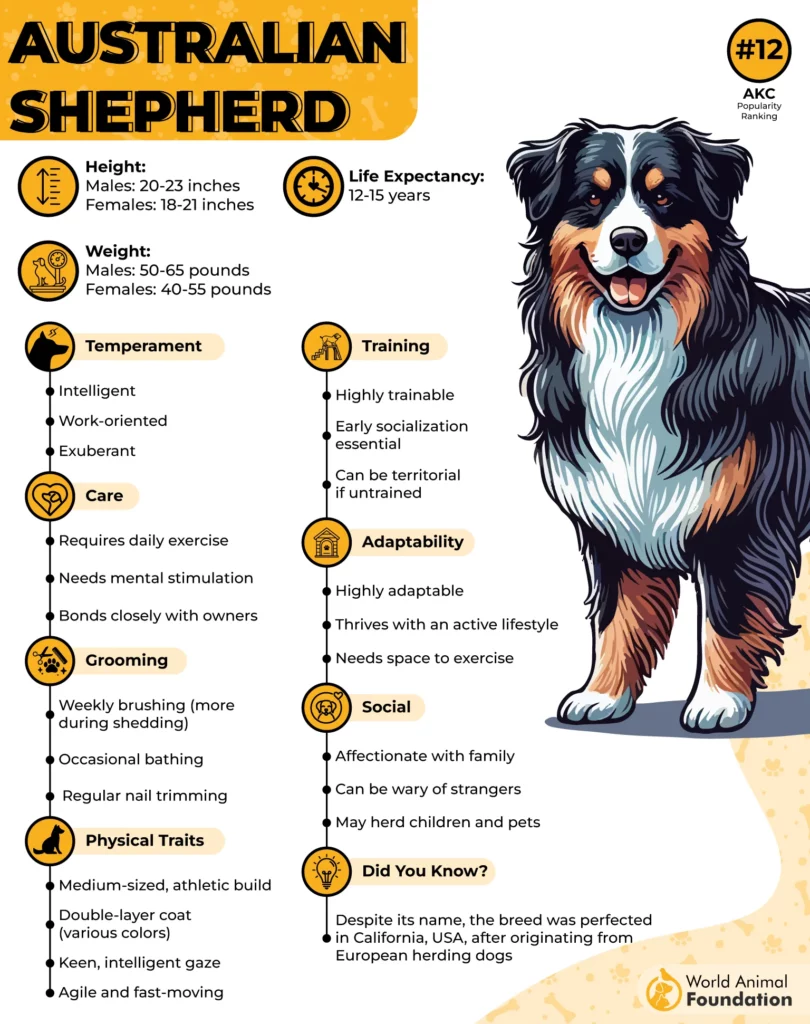
The Australian Shepherd, on the other hand, is a medium-sized breed. The dog can reach heights between 18 and 23 inches.
The first breed occupies space through its size, while the second breed uses its speed and coordination to unleash. The two breeds show different requirements because their size affects how they will live their lives and handle their daily activities.
Energy Level & Exercise Needs
The Great Pyrenees has a relaxed energy profile. The breed requires moderate daily exercise, which lasts between 20 and 40 minutes. The breed prefers slow outdoor walks, while it dislikes active physical activities.
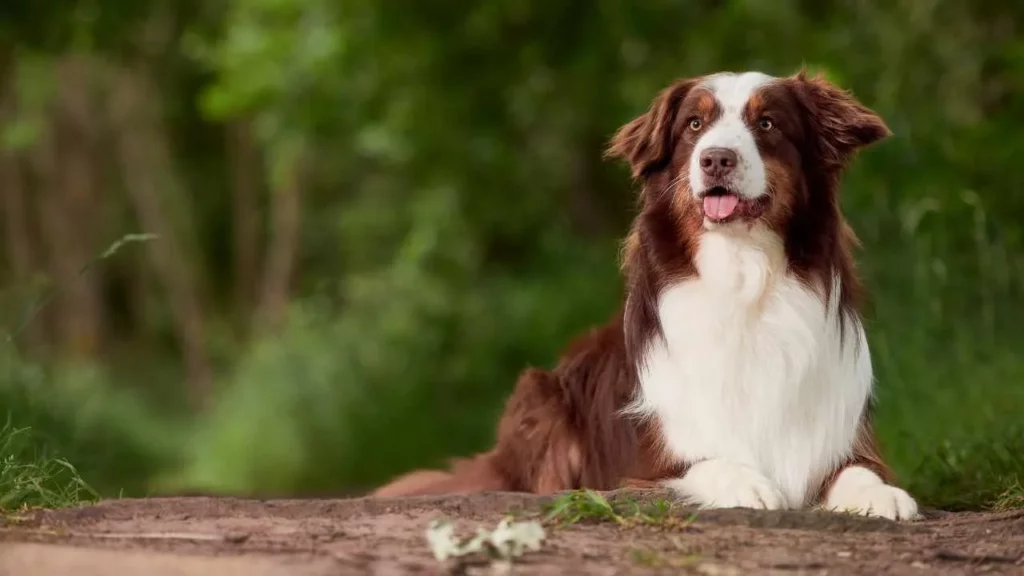
The Australian Shepherd requires between one and two hours of daily physical activity, as noted by the AKC. Owners need to combine running with playing and organized activities because these three elements help them achieve the required level of equilibrium.
The absence of exercise creates a clear distinction between the two groups. The first group shows calmness, while the second group develops behavior problems, which include restlessness and destructive tendencies. Most families choose their pets based on their animal companions’ energy levels.
Intelligence & Trainability
The Great Pyrenees demonstrates intelligence while following its independent nature, which developed from the breed’s history as a livestock protector. Trainers must develop patience and consistency while creating training programs.
People consider the Australian Shepherd to be a breed that exhibits high intelligence. The ability to learn fast and react promptly enables trainers to teach them more enjoyably. The breed succeeds when its members work in environments that provide daily tasks and challenges that require their active engagement.
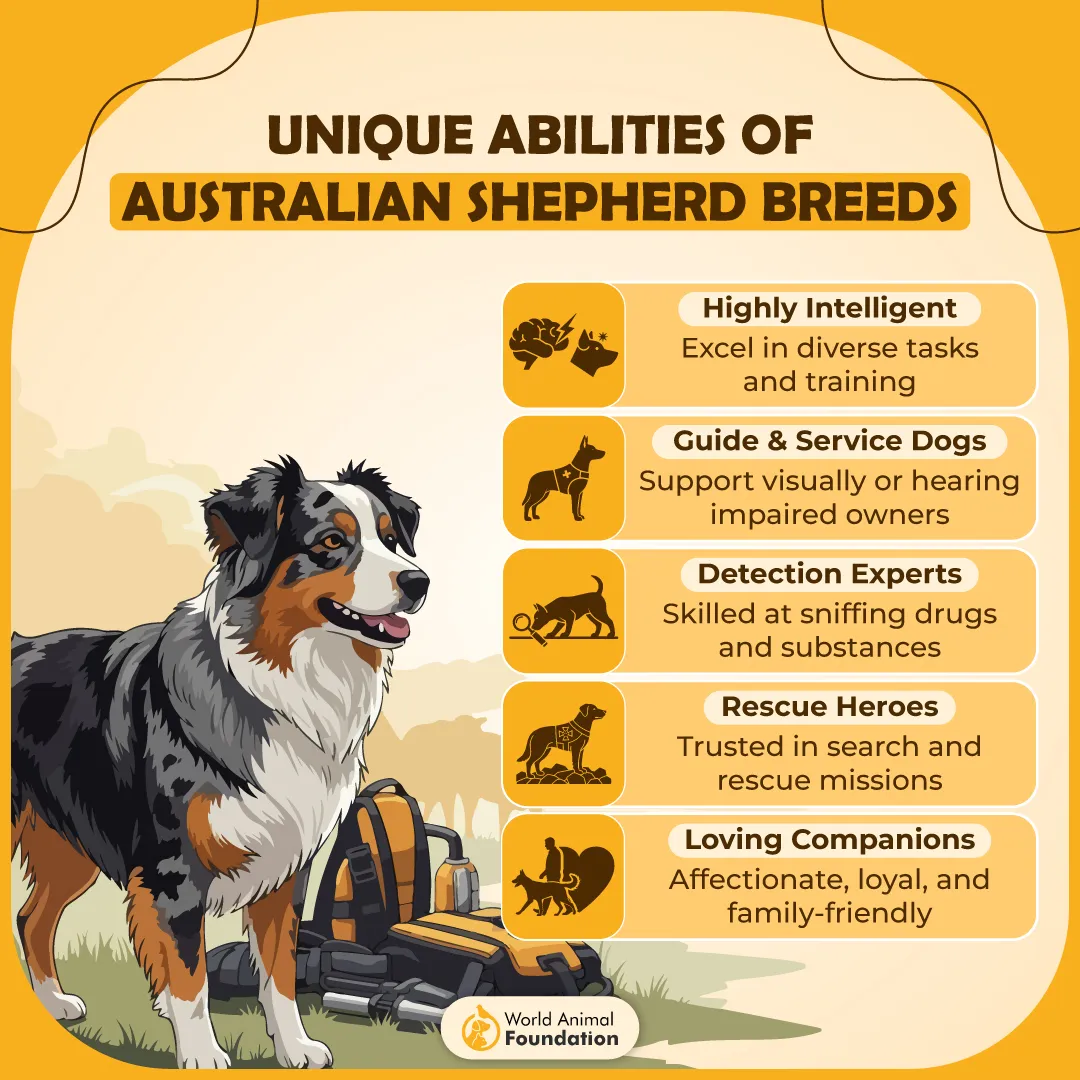
The difference lies in approach. One makes independent decisions while the other uses guidance to complete tasks. Trainers need to modify their teaching methods because different dog breeds require distinct training methods.
Temperament & Personality
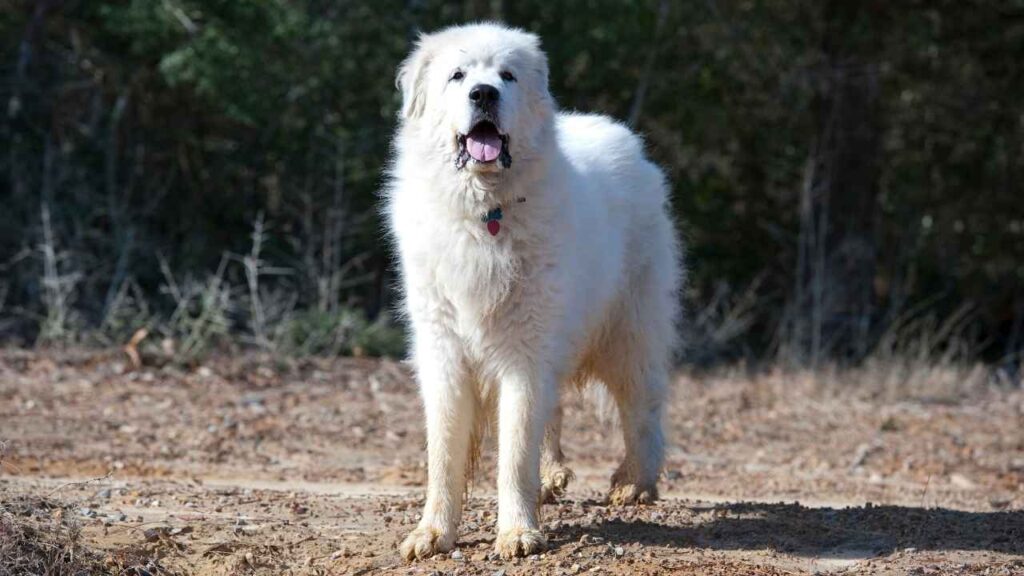
The Great Pyrenees shows a calm, gentle, and patient nature. According to the Great Pyrenees Club of America, this breed develops deep family connections while demonstrating protective behavior. The dog shows peacefulness through its confident behavior, which makes it a good fit for tranquil environments.
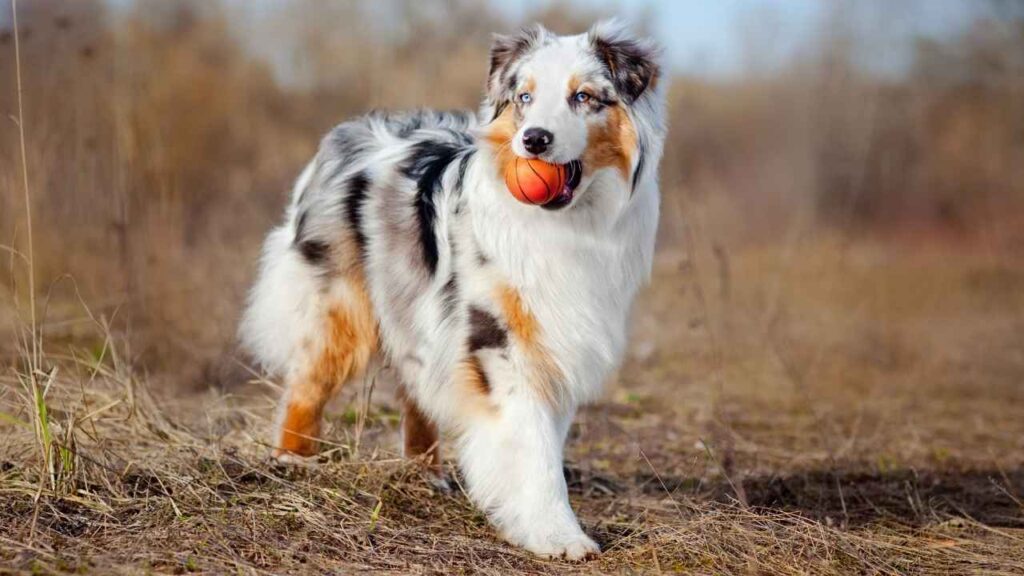
The Australian Shepherd displays an energetic and expressive personality. The breed forms strong bonds with humans and requires constant companionship because of its loyalty to people. The active playfulness of the dog becomes visible during times when it spends time with its family.
The two breeds show affection to people, but they display their feelings in different ways. One dog stays alert and silent while the other dog demands human interaction through active movements. The process of learning this information enables people to understand how actual outcomes will differ from their anticipated results.
Health & Lifespan
The Great Pyrenees has an average lifespan of around 10 to 12 years. The large breed maintains a consistent lifespan, which falls within standard limits. People can improve their health outcomes through regular medical assessments, together with proper health monitoring.
The Australian Shepherd also enjoys a similar average life span but may face issues linked to genetics. Joint health problems and vision disorders will emerge, which makes it necessary for owners to provide responsible care.
The two dog breeds need three essential components for their health. The effectiveness of preventive care exceeds that of treatment methods that occur at later stages of medical interventions.
Grooming & Coat Maintenance
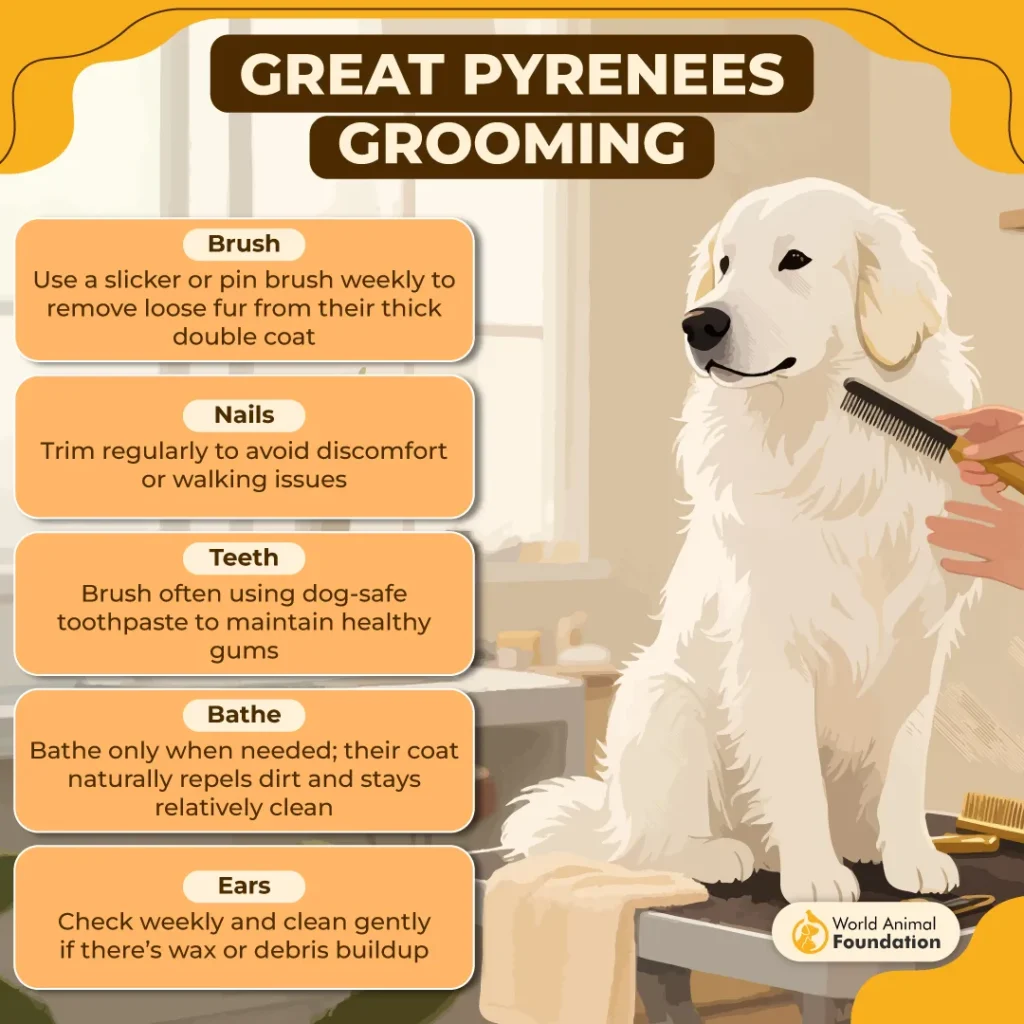
The Great Pyrenees has a double coat that protects it from extreme weather conditions. The dog experiences constant shedding, which becomes more intense during seasonal transitions. The dog owner should brush the dog regularly to remove extra hair and achieve a tidy coat.
The Australian Shepherd maintains a medium-length coat, which requires less work than other breeds. The dog needs maintenance three times a week to maintain healthy fur and decrease hair loss.
The two dog breeds require grooming services at different levels of effort. One dog requires extensive grooming because its coat needs special care, while the other dogs needs basic upkeep.
Friendliness & Social Behavior
The Great Pyrenees protects its home territory through reserved behavior toward strangers while showing deep loyalty to family members. The breed requires time to observe people because it needs to create a secure and protective space for children and family members.
Australian Shepherd is more social and interactive. The dog develops its personality through exposure to various people from an early age. Socialization helps people develop social confidence because they learn to deal with unfamiliar situations.
The two dog breeds show good adaptability, but their early life experiences determine their progress. Social conduct develops through training and social situations, rather than being a permanent characteristic.
Instinct & Working Role
The Great Pyrenees was bred to protect livestock. Their instinct remains strong because it persists even when dogs live in domestic environments. The natural behavior of dogs that protect their homes and families functions as an automatic watchdog system.
The Australian Shepherd was designed to herd. Humans present this instinct through their daily activities, which include following moving objects and performing their daily tasks. The natural drive requires management through organized activities, which provide controlled outlets for its expression.
The distinction between guardian and herding creates separate work responsibilities for each job. One person maintains silent observation, while another person takes charge of the present conditions through their active supervision. The daily activities of people show how they perform their tasks differently from one another.
Conclusion
The comparison between the Great Pyrenees and Australian Shepherd goes beyond surface traits. The two groups present two distinct ways of life that developed through their historical background and their fundamental functions and instincts.
One breed provides peaceful protection through its independent character and its consistent presence. The other breed introduces active energy, which people require to create their daily relationships and activities.
When people provide proper conditions for both of these breeds, they will develop strong loyalty towards their human companions.
