




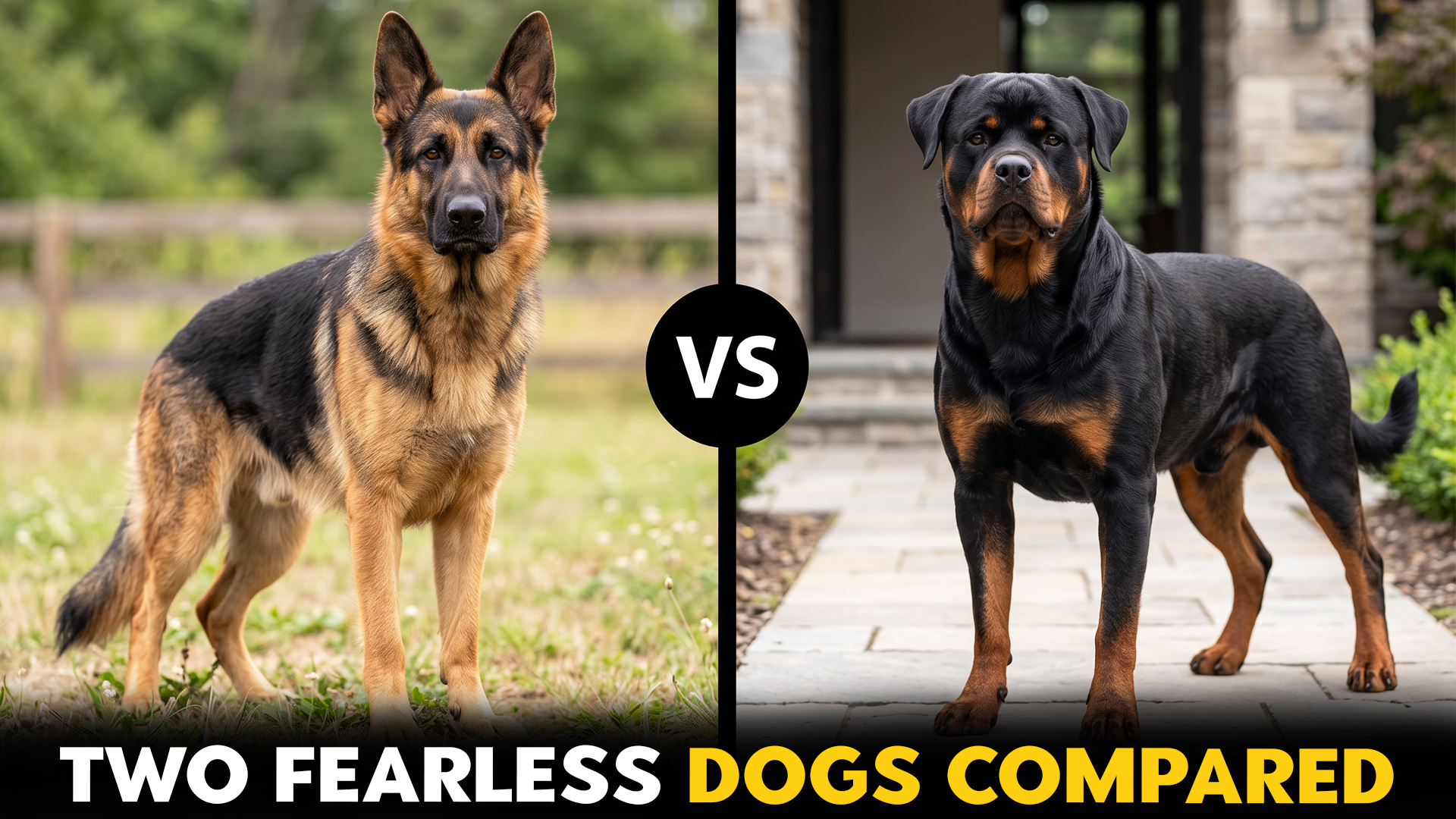
German Shepherds and Rottweilers are both hugely popular dog breeds, known for their unwavering loyalty, trainability, and strong work ethic. That said, the two differ quite a bit when it comes to appearance, energy levels, and overall care needs.
German Shepherds were originally bred as versatile herding dogs in Germany. They’re known for deep loyalty, strong protective instincts, and sharp intelligence, and as athletic dogs, they really thrive with plenty of physical and mental stimulation.
Rottweilers, on the other hand, are powerful working dogs with a muscular build and an imposing presence. Originally bred to drive and guard herds for the Roman army, Rottweilers tend to be courageous, loyal, and deeply devoted to their families.
Here’s a closer look at the key differences between German Shepherds and Rottweilers.
German Shepherd vs. Rottweiler: A Dog Breeds Showdown
German Shepherds and Rottweilers are both strong, loyal, and intelligent dogs, but they have different personalities and needs. This showdown compares their temperament, training, strength, and family suitability to help you choose the better match.
Origins & Purpose
German Shepherds and Rottweilers actually share quite a bit of history, both with strong herding backgrounds and origins tracing back to roughly the same part of the world.
German Shepherds were developed by Max von Stephanitz in Germany in the late 19th century, with the goal of creating the ideal herding dog. The breed made its way to the United States in 1908, when the first three German Shepherds arrived on American soil.
Rottweilers descended from the drover dogs left behind by Roman legions in Rottweil, Germany. They later accompanied local butchers on trading trips, protecting them from thieves and even carrying money pouches around their necks, which is how they earned the nickname “the Butcher’s Dog.”
Rottweilers have gone on to serve as guard dogs, rescue dogs, and draft dogs throughout history, and despite all those changing roles, their core temperament has stayed remarkably consistent.
Size & Build
Both German Shepherds and Rottweilers are large dogs with an imposing, strong build, but there are some notable differences in size and structure between the two.
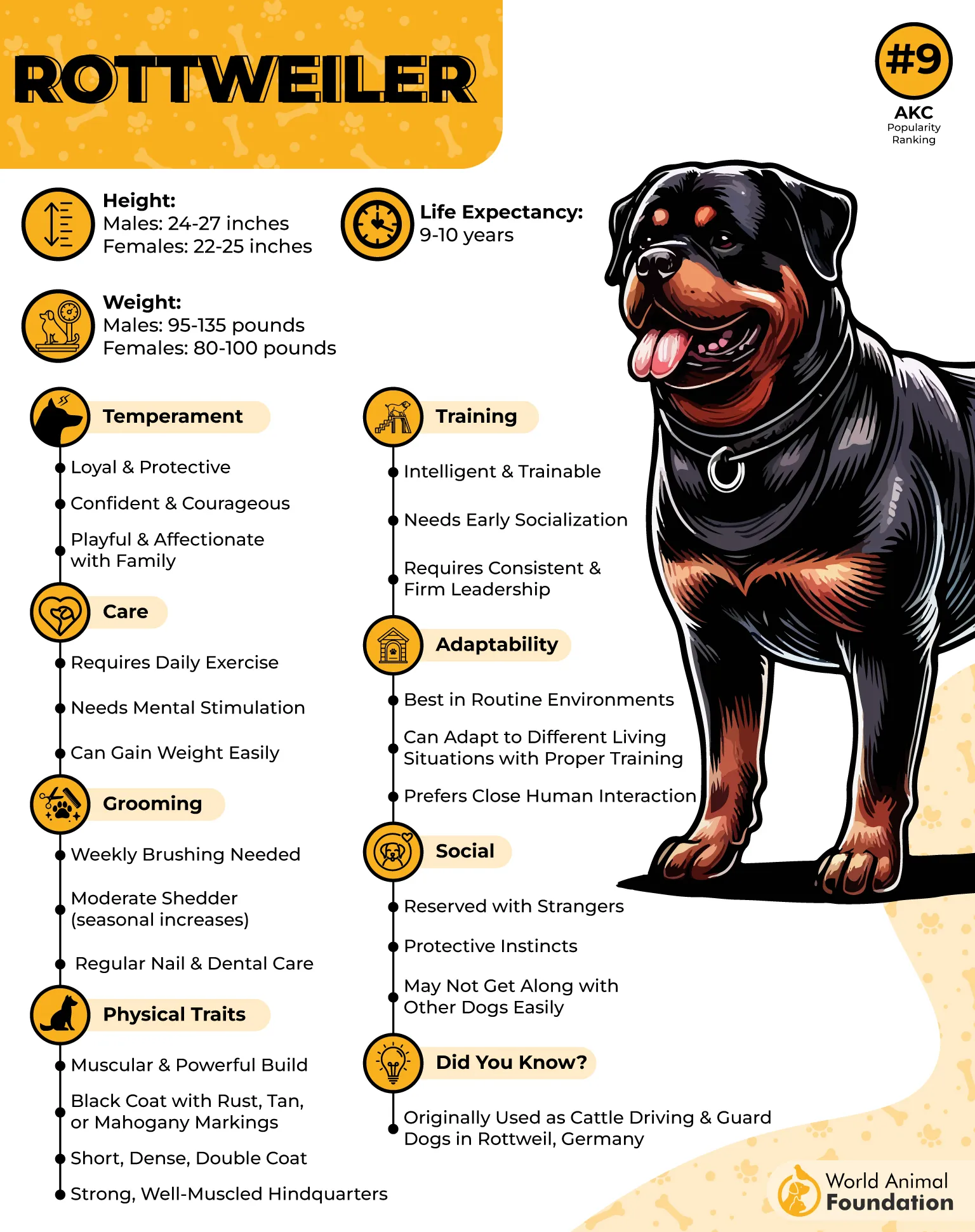
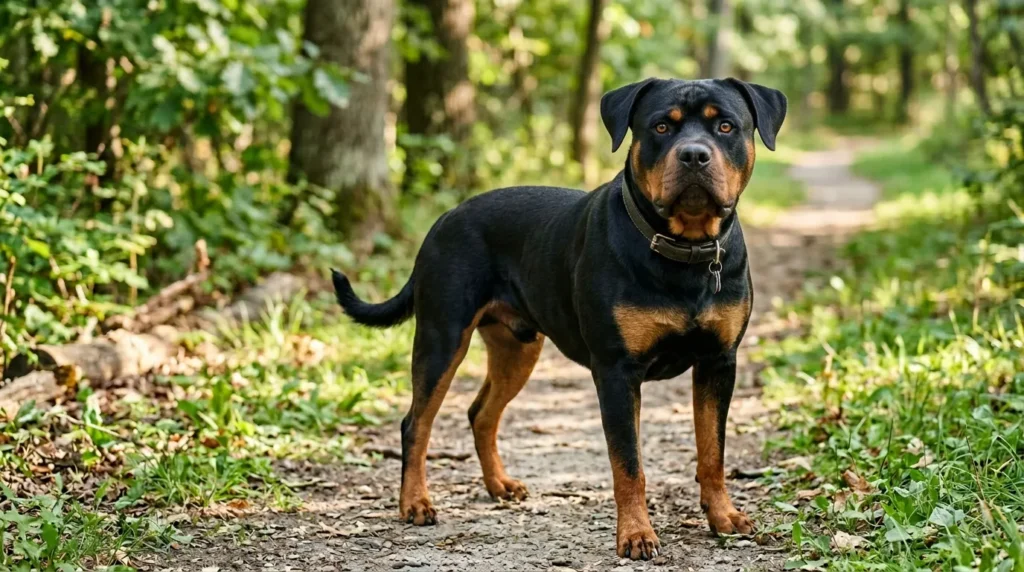
German Shepherds are agile, muscular dogs standing 22 to 26 inches at the shoulder and weighing between 50 and 90 pounds. Rottweilers stand slightly taller, at 22 to 27 inches, and carry noticeably more weight, typically between 80 and 135 pounds.
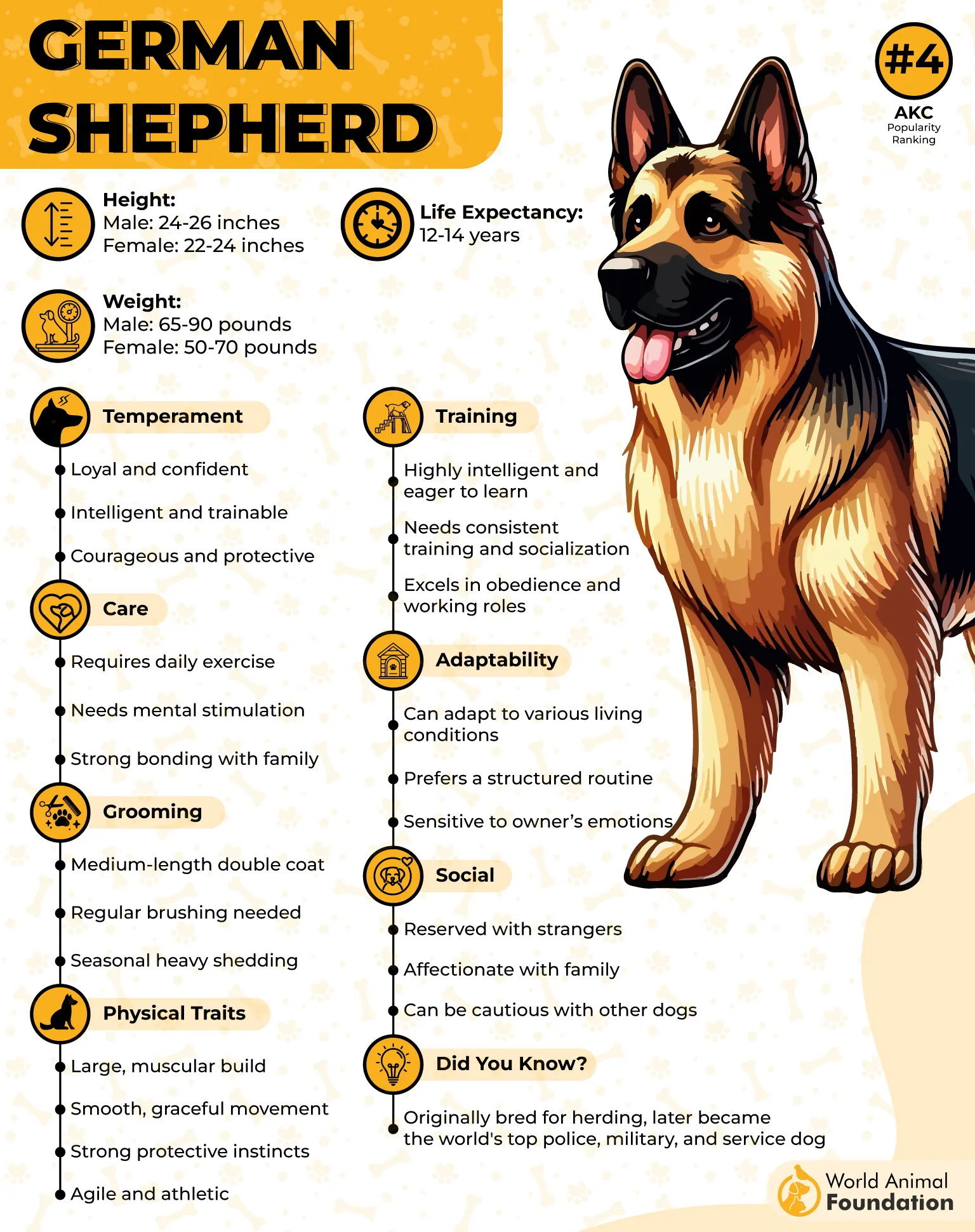
Their blocky, muscular frames are built for power rather than speed, and that difference in build really shapes how each breed needs to be handled. Rottweilers, in particular, can become difficult to manage without consistent training from an early age, since their raw strength calls for firm, confident handling right from the start.
Pricing & Availability
Buying a German Shepherd from a reputable breeder typically runs around $1,500 to $3,500, though show-quality, working-line, or imported dogs can easily cost $5,000 or more.
Rottweilers fall into a similar price range, generally between $1,500 and $4,000, with show-quality or working-line dogs also climbing past $5,000. Since both breeds are widely popular and easy to find, prices can vary depending on the breeder and location.
If cost is a concern, adopting from a shelter is a great way to bring one of these breeds home for a fraction of the price.
Temperament & Personality
Both Rottweilers and German Shepherds are courageous, loyal dogs at heart, though each brings its own distinct personality to the table.
German Shepherds are often described as loyal, confident, and brave. Deeply family-oriented, they form strong bonds with their people and tend to be gentle at home, while staying a bit more reserved around strangers.
The American Kennel Club even notes that German Shepherds will willingly put themselves at risk to protect the people they love. When well trained and properly socialized, they tend to get along great with kids too.
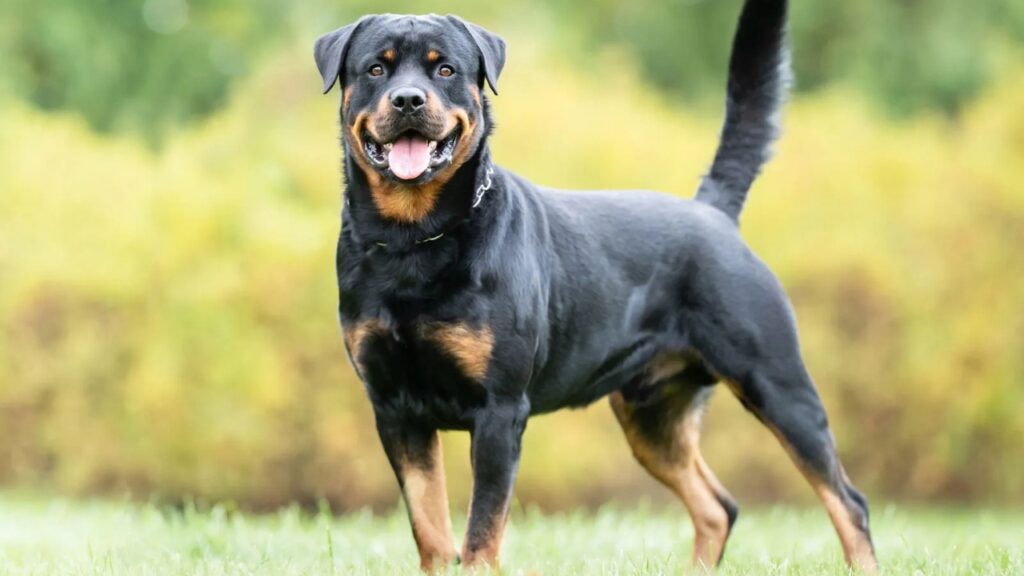
Rottweilers are just as protective of their families, though they tend to carry a slightly more reserved demeanor than German Shepherds. Often misunderstood as aggressive, Rotties are actually playful and affectionate with their loved ones, and at their core, they’re calm, gentle, quiet dogs.
Exercise Needs & Energy Levels
Both German Shepherds and Rottweilers are active, athletic breeds that genuinely thrive when they have a job to do, though their exercise needs differ a bit.
German Shepherds are high-energy dogs that need plenty of daily activity to stay both physically and mentally satisfied, typically around 1.5 to 2 hours a day, whether that’s long walks, jogging, fetch, or interactive games. They also enjoy hiking, tracking, agility, herding, and dock diving, according to PetMD.
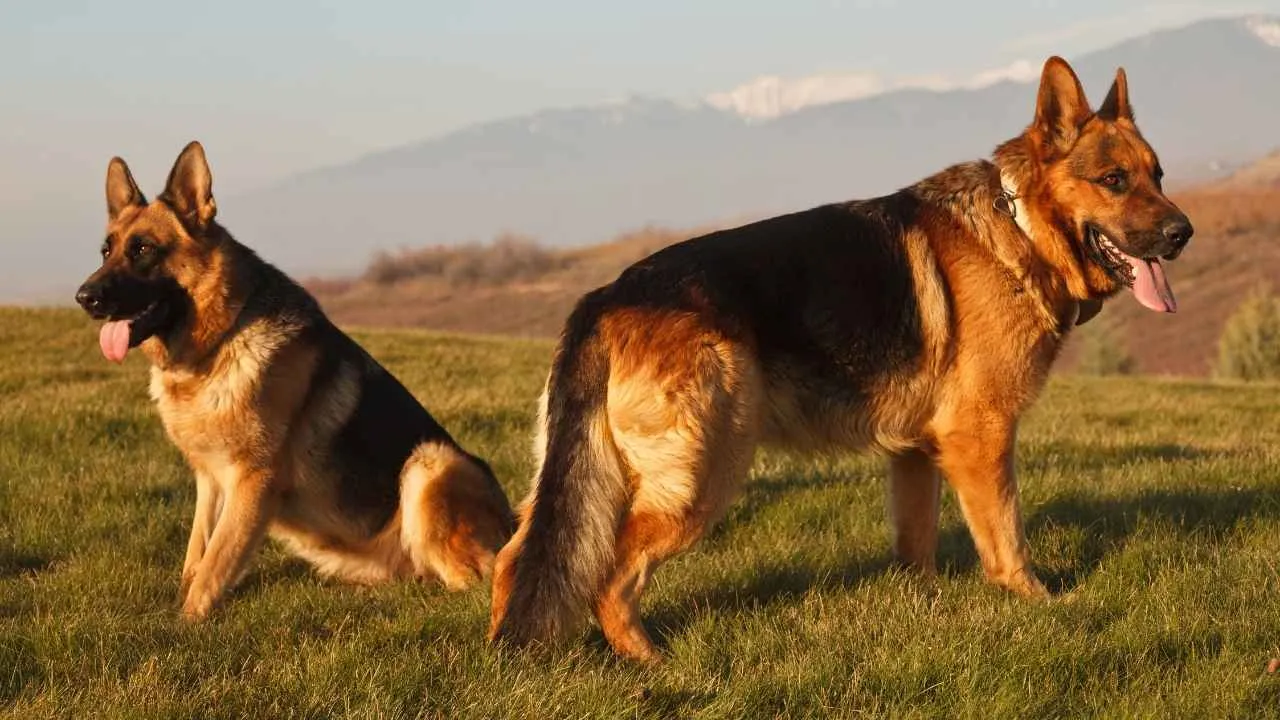
While German Shepherds tend to stay active and alert at home, Rottweilers are a bit more easygoing by comparison. Still intelligent and strong, Rotties need moderate to high physical and mental stimulation too, usually around one to two hours of exercise a day, which can be split across multiple sessions of walking, jogging, and playtime.
Trainability & Obedience
Both Rottweilers and German Shepherds are highly intelligent, eager-to-please breeds that respond well to positive reinforcement training, though there are some differences in how quickly they pick things up.
German Shepherds are incredibly active dogs that need consistent training and exercise to avoid slipping into destructive habits. Ranking third on the American Kennel Club’s list of smartest dog breeds, they typically learn new commands in fewer than five repetitions and excel at obedience training.
Rottweilers, meanwhile, rank ninth on that same AKC list. They’re big thinkers in their own right and respond well to training when it’s done consistently and correctly. Like German Shepherds, Rottweilers also do great with basic obedience work.
Grooming Needs & Shedding
Both German Shepherds and Rottweilers have a dense double coat built to handle harsh weather, though their grooming needs do differ a bit.
German Shepherds have a medium-length double coat that sheds heavily year-round, with a soft undercoat and a rougher, tighter outer coat. Regular at-home brushing helps manage the shedding, and bathing should stay occasional, since overdoing it can strip away the natural oils that protect the undercoat. Routine nail trims and ear cleaning round out the care needed.
Rottweilers have a shorter black-and-tan coat that also sheds quite a bit, though it doesn’t require nearly as much grooming. Brushing once or twice a week is usually enough to keep loose hair under control.
Guarding Instincts & Alertness
Both Rottweilers and German Shepherds are alert, watchful dogs that tend to be wary of strangers. With a naturally territorial streak, both breeds are highly protective of their families and make excellent guard dogs in their own right.
If you’re after a guard dog built on control and strategic thinking, a German Shepherd is likely the better fit. But if raw power and an intimidating presence are what you’re after, a Rottweiler might suit you better.
Beyond guarding, both German Shepherds and Rottweilers also serve as service dogs, and both are well suited to military work, police work, and search-and-rescue tasks.
Health & Lifespan
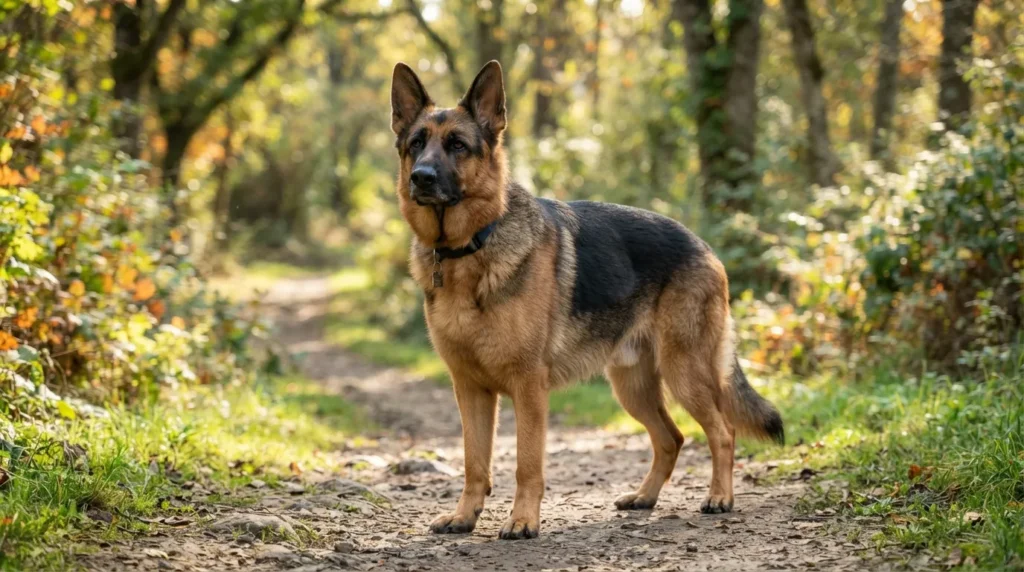
German Shepherds are relatively long-lived, with a typical lifespan of 12 to 14 years. While generally a healthy breed, they can be prone to certain health issues over their lifetime, including degenerative myelopathy, hip and elbow dysplasia, cancer, bloat and GDV, heart conditions, and allergies.
Rottweilers, like many large breeds, tend to have a shorter lifespan, usually around 9 to 10 years. Health concerns to watch for in this breed include obesity, hip and elbow dysplasia, osteosarcoma, GDV, entropion, and subaortic stenosis.
German Shepherd vs. Rottweiler: Which Loyal Guard Dog Is Right for You?
German Shepherds and Rottweilers are both better suited for experienced pet parents who know how to manage their energy and strength. Both breeds do best in homes with an active lifestyle, and according to Purina, Rottweilers in particular thrive with owners who spend a good chunk of their day at home, alongside sensible or older children.
At the end of the day, both breeds make excellent guard dogs, so choosing between the two really comes down to what fits your home and lifestyle best.
Conclusion
Rottweilers and German Shepherds were both originally bred for herding work in Germany, though they’ve grown into quite different dogs over time. Rottweilers are heavier with a blockier build and tend to be more easygoing at home, while German Shepherds stay a bit more alert and watchful.
These two breeds are athletic, though German Shepherds tend to run a bit more energetically overall. Either way, both need at least two hours of daily exercise to stay physically and mentally satisfied.
And thanks to their longer lifespan, German Shepherds will typically be by your side a few years longer than Rottweilers.
