




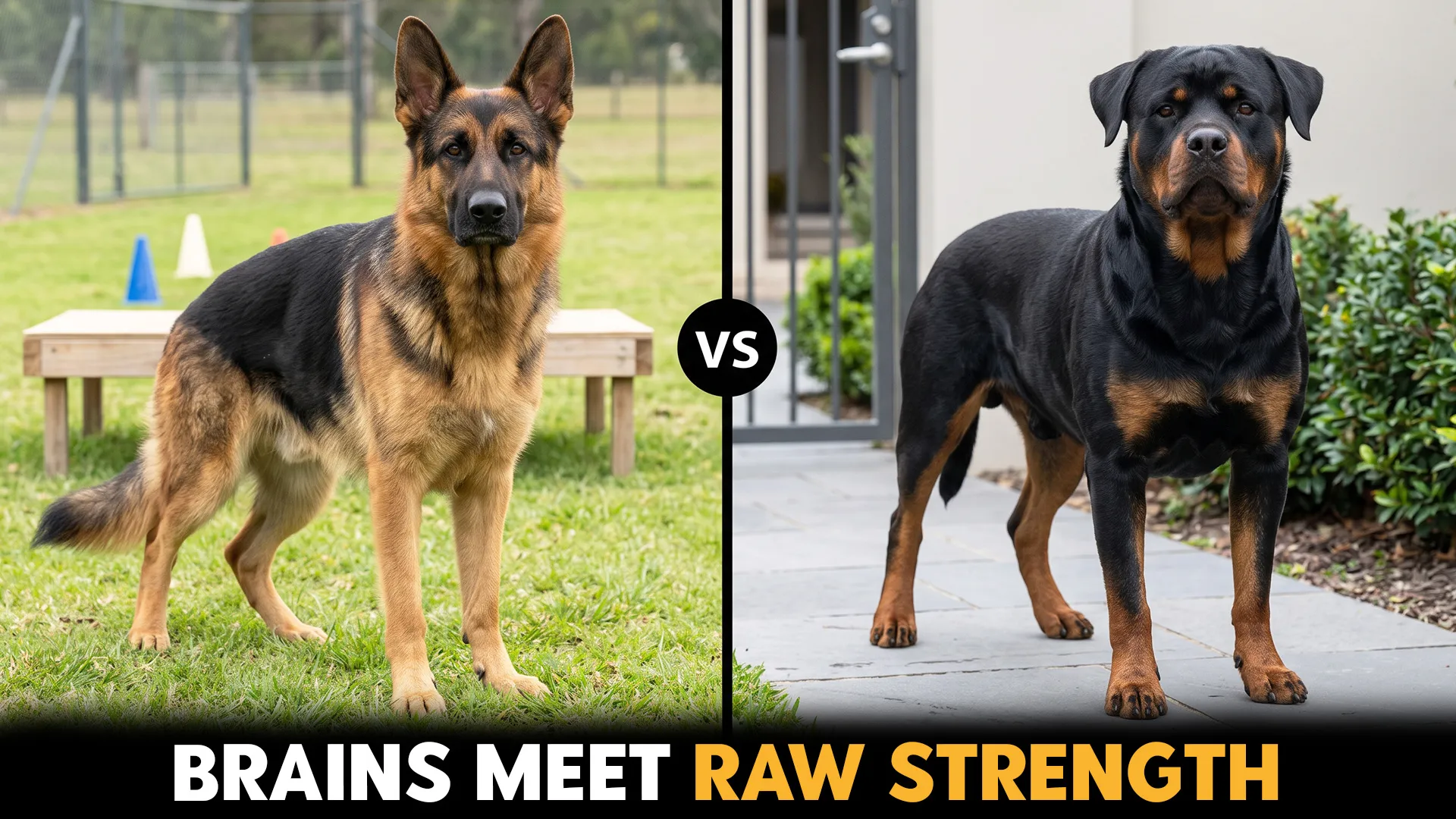
Few debates get dog lovers talking faster than German Shepherd vs. Rottweiler.
Both breeds carry serious muscle, serious brains, and reputations built on actual working history rather than internet fame, and that history still shapes how each one behaves at home today.
One grew up moving cattle through ancient trade routes, the other was shaped on German farms to herd, guard, and obey without hesitation, and neither breed ever really stopped working.
Put them side by side and the differences are not small; they show up in how each breed moves, thinks, bonds with a household and handles a long day.
This article walks through every trait that actually matters before bringing either breed home, covering build, temperament, exercise needs, trainability, grooming, and long-term health, so the final choice comes from facts instead of guesswork.
German Shepherd vs. Rottweiler
Origins & Purpose
Rottweilers worked long before they were ever cuddled.
Their story reaches back to ancient Rome, when Roman legions needed sturdy drover dogs to push cattle across Europe on long marches. A line of those dogs settled near the German town of Rottweil, where local butchers used them to herd livestock and pull loaded carts to market.
Britannica notes the breed carried the day’s earnings strapped to its collar, a detail that explains the natural protective instincts Rottweilers still carry today.
German Shepherds originated from local herding dogs scattered across rural Germany, but their path was far more deliberate. Captain Max von Stephanitz standardized the breed in 1899, as the AKC explains, choosing a working shepherd as the breed’s foundation sire and prioritizing stamina and obedience over looks.
Both breeds moved from farms to formal roles fast, one into guard work and the other into service dogs, police units, and military roles, proof that working dogs rarely stay idle.
Size & Physical Build
A full-grown male Rottweiler can weigh more than 110 lbs, outweighing most German Shepherds by a wide margin. Size is where these two breeds show their first real contrast, and the numbers tell most of the story.
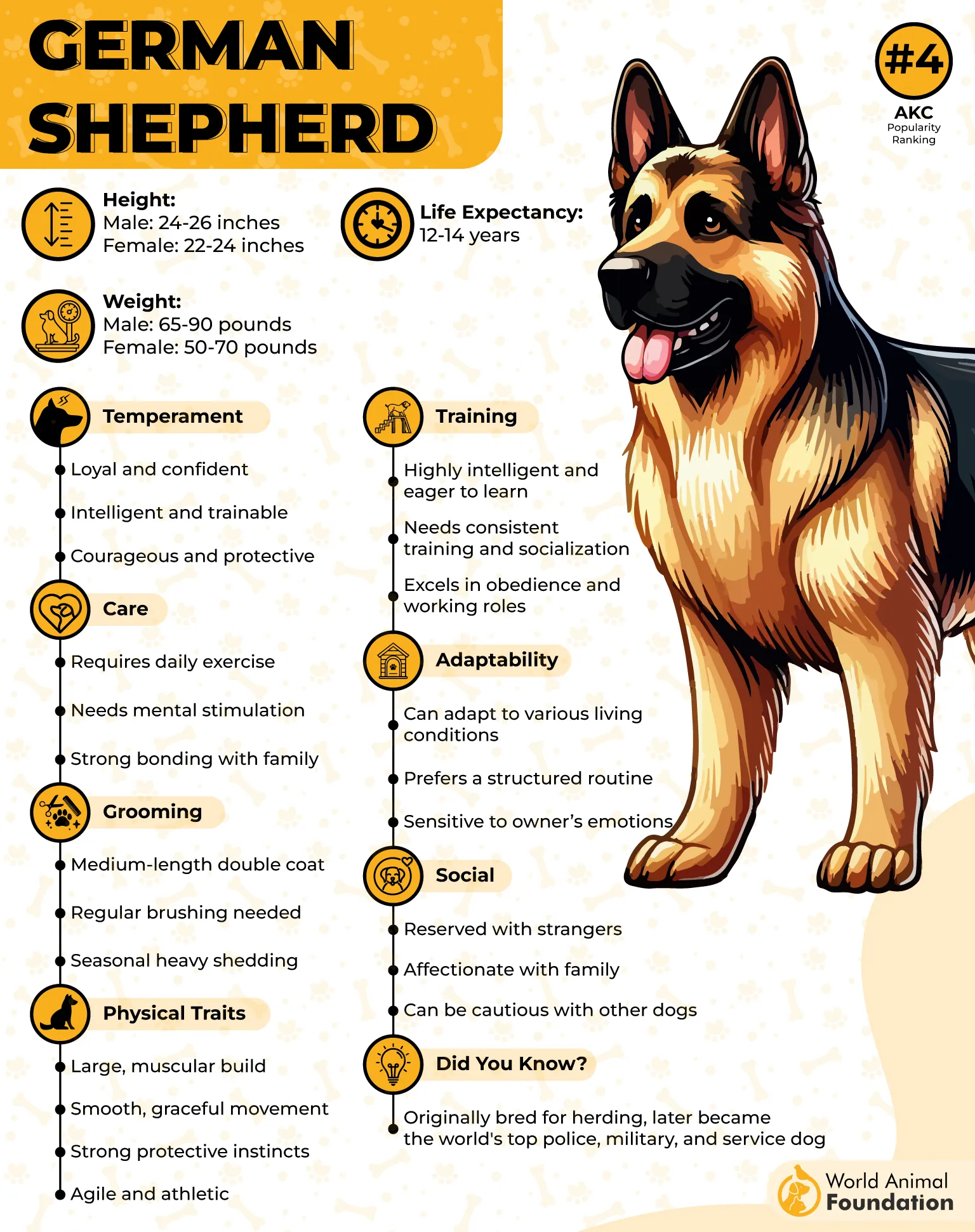
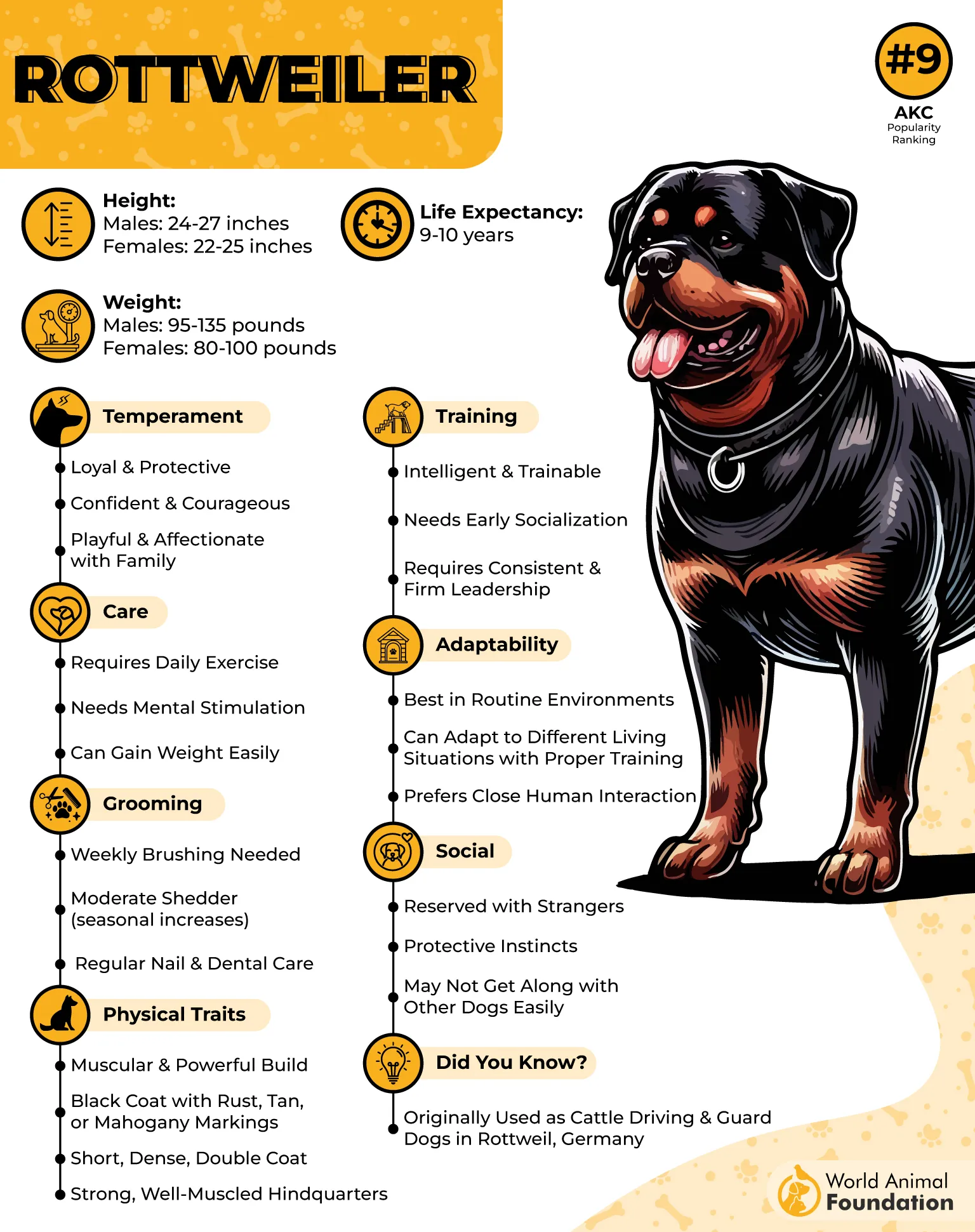
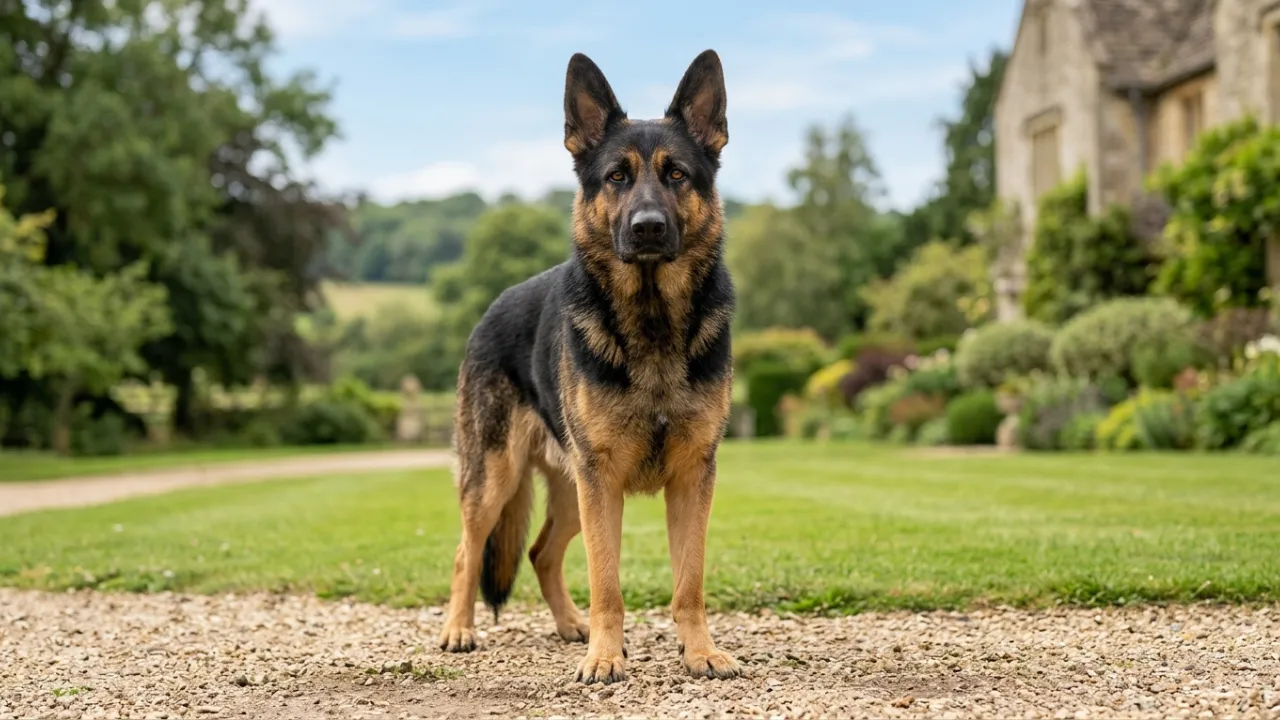
German Shepherd: Stands 22 to 26 inches tall and weighs 50 to 90 lbs, with a long sloping back built for covering ground.
Rottweiler: Stands 22 to 27 inches tall and weighs 80 to 135 lbs, with a broad head, deep chest, and powerful hind legs built for pulling and bracing.
Beyond the numbers, the shape of each breed tells its own story. German Shepherds carry weight forward and low, built for trotting long distances without tiring. Rottweilers carry weight through the chest and shoulders, built for short bursts of serious force.
Neither breed is small, and both need space, structure, and an owner ready for real muscle on a leash.
Temperament & Personality
Which breed makes the better family companion, the methodical German Shepherd or the quietly watchful Rottweiler?
Both breeds bond hard with family members, though they show loyalty in different ways. German Shepherds tend to shadow their person around the house, eager to help and quick to read a mood. Rottweilers show a calmer, more reserved affection, often leaning their full body weight against someone they trust.
Protective instincts run deep in both breeds, but the delivery differs. A German Shepherd tends to bark first and assess second, while a Rottweiler stays quiet and watchful until a real reason to act appears.
German Shepherds often reach full social maturity around 2 years old, while a Rottweiler puppy properly socialized before 16 weeks of age tends to grow into a naturally territorial yet remarkably gentle presence around small children.
Neither breed suits an owner looking for a passive companion, since both were built to notice everything happening around them.
Exercise & Energy Levels
High energy is the default setting for a German Shepherd.
PDSA recommends a minimum of 2 hours of exercise every day for the breed, split between structured walks, play, and mental stimulation like nose work or puzzle feeders. Without that outlet, a German Shepherd left alone too often can develop unwanted behaviors, from digging to nonstop barking. These dogs genuinely thrive on consistent activity and a clear job to do, from agility and dog sports to a simple long run.
Rottweilers were originally bred to drive cattle for miles, which explains why structured activity satisfies them more than aimless running. A brisk 30 to 45 minutes of daily exercise usually covers a healthy adult Rottweiler, though the breed still benefits from mental stimulation to stay balanced.
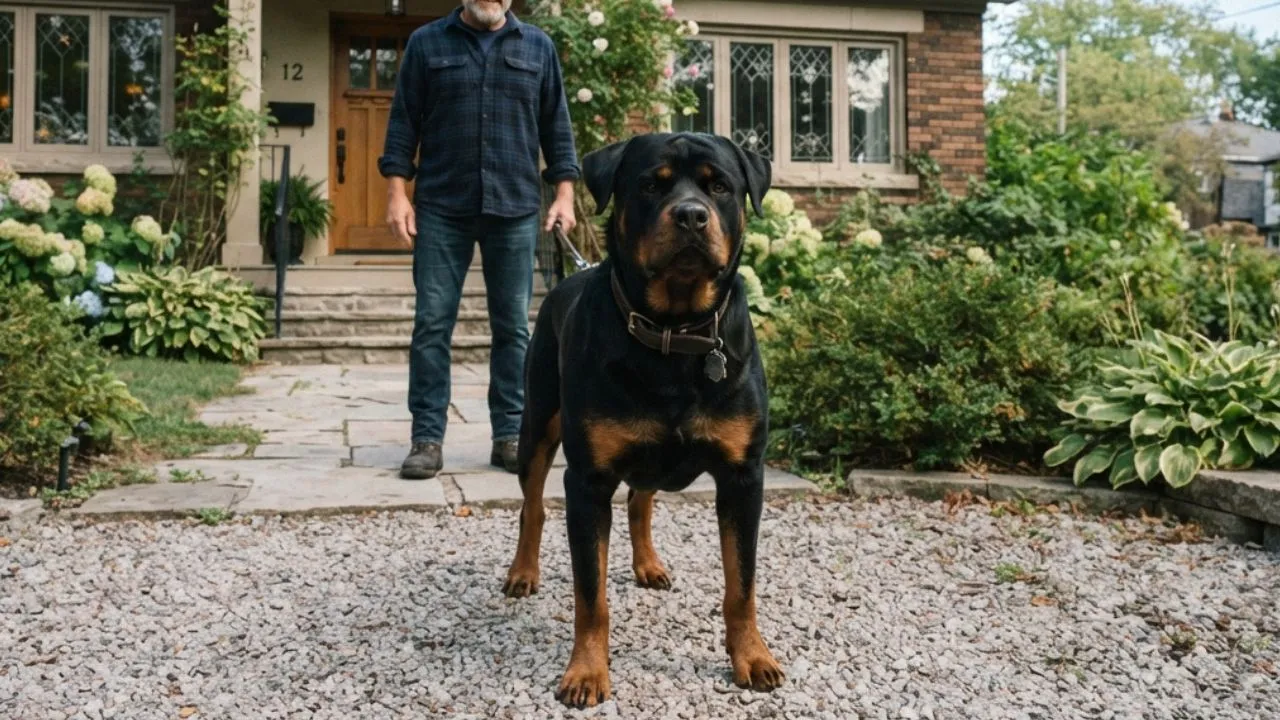
Both breeds benefit from owners who treat daily exercise as routine rather than an afterthought, since each is well suited to a life with purpose.
Training & Intelligence
15 minutes is often all it takes to hold a German Shepherd’s full attention during a training session.
Both German Shepherds and Rottweilers rank among the most highly intelligent working breeds, but they respond to training differently. A German Shepherd tends to pick up obedience training fast and stays engaged through back-to-back training sessions, especially when the work feels purposeful rather than repetitive.
A Rottweiler learns just as quickly but needs a reason to comply, since the breed was bred to think independently while herding livestock and guarding carts. Short training sessions of around 10 minutes, paired with clear, consistent training rules, tend to work better than long drilling for a Rottweiler puppy.
Reputable breeders on both sides point to early, professionally trained socialization as the real difference between a well-mannered adult dog and one that struggles with obedience later in life.
Grooming Frequency
How much hair ends up on the couch each week?
Both breeds carry a double coat built for weather protection, and both shed enough to notice daily. The difference shows up during shedding season, when loose hair increases dramatically for a few weeks each year.
German Shepherd: Needs brushing 3 to 4 times weekly, with daily brushing during shedding season to manage the undercoat.
Rottweiler: WebMD recommends weekly brushing to keep the coat shiny, with frequent brushing added only during the heavier shedding seasons each year.
Routine brushing keeps a coat healthy, distributes natural oils and reduces how much hair collects around the house. Neither breed needs professional grooming often, since both carry short to medium length fur that resists matting on its own.
A consistent brushing routine matters more than the tool used to do it.
Health & Lifespan
Rottweilers face a shorter road than most large breeds.
The average Rottweiler lives 9 to 10 years, and the breed is particularly prone to hip dysplasia, elbow dysplasia, and bone cancer, three of the most common concerns among large working breeds, especially in bigger male Rottweiler lines. Preventive care, a healthy weight, and early screening make a measurable difference in long-term health outcomes for this breed.
German Shepherds carry a slightly longer life expectancy of 12 to 14 years, though the breed comes with its own health issues. PetMD notes that German Shepherds are the breed most commonly affected by degenerative myelopathy, a condition that often requires physical therapy once hind leg weakness begins.
Joint issues affect both breeds as they age, which is why reputable breeders screen parent dogs and why daily life for either breed should include regular vet visits rather than reactive care.
German Shepherd vs. Rottweiler: Which One Is Best for You?
So which breed actually fits your life, a German Shepherd or a Rottweiler?
The honest answer depends on the kind of household waiting at home. A German Shepherd suits active owners who want a dog involved in daily life, from hiking to dog sports to simple companionship on every errand. Families drawn to service work, protection work, or an endlessly loyal shadow tend to lean toward this breed.
Choosing a Rottweiler depends more on wanting a calm demeanor paired with serious protective instincts. A Rottweiler puppy from reputable breeders typically costs between 1,500 and 2,500 dollars, a price band close to what many German Shepherd breeders charge as well, and Pawlicy Advisor notes that purebred dogs like the Rottweiler carry a higher risk of certain hereditary conditions, which makes pet insurance worth considering early.
Both breeds make excellent guardians and natural protectors for the right home. The real decision comes down to energy, experience, and how much structure a household can offer every single day.
Conclusion
German Shepherd vs Rottweiler never really ends in a tie; it ends in a decision shaped by lifestyle. Both breeds bring intelligence, loyalty, and natural protective instincts that few other dogs can match, built on generations of real working history rather than popularity contests.
Choosing between them comes down to energy levels, training style, and the kind of daily structure a household can realistically offer. A high-energy family suits a German Shepherd well, while a calmer household with structured routines often brings out the best in a Rottweiler.
Either breed rewards an owner who shows up consistently, offering decades of loyalty, protection, and genuine companionship in return.
