




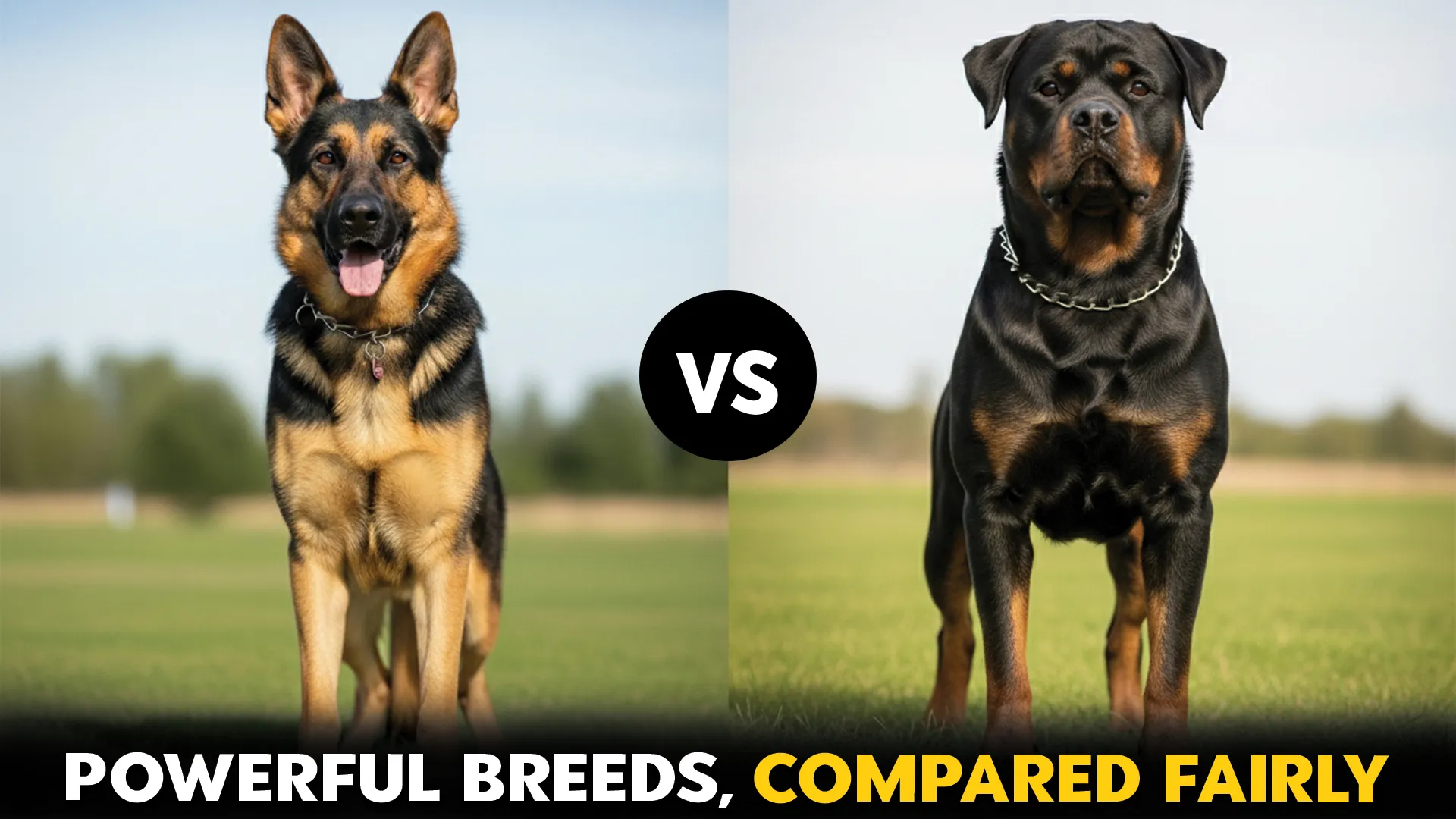
When it comes to powerful, loyal canine companions, few dogs can match the strength, intelligence, and heart of the German Shepherd and the Rottweiler. These dogs aren’t just pets—they’re protectors, helpers, and true family members who stand by your side no matter what.
If you’re trying to decide between a German Shepherd and a Rottweiler, you’re in good company—this is one of the most popular debates among dog lovers. Both breeds share amazing qualities but also have distinct personalities, energy levels, and training styles.
Whether you want a dog that’s a bit more independent or one that thrives on constant companionship, understanding these differences will help you find the perfect fit for your lifestyle.
So, let’s dive into this friendly showdown between the German Shepherd and the Rottweiler to help you discover which powerful pup could be your next best friend.
Key Takeaways
Uncover the loyalty and smarts of German Shepherds and Rottweilers—two breeds built to protect and love.
See how the agile Shepherd and powerful Rottie match up in energy, training, and personality.
Get grooming secrets for each coat type and keep your home as tidy as a hawk’s nest.
Find out which breed guards like an eagle and which moves with falcon-like precision—perfect for your lifestyle.
German Shepherd vs. Rottweiler: Comparing These Powerful Dog Breeds
Origin & Historical Background
German Shepherd
The German Shepherd has its roots in Germany, where it was originally bred in the late 1800s to herd sheep. Max von Stephanitz, the man credited with developing the breed, found a dog named Horand von Grafrath in 1899, as mentioned by the German Shepherd Dog Club of America.
This pup perfectly showed the qualities he wanted—intelligence, strength, and a wolf-like appearance.
These dogs were bred to be smart, fast, and agile, which made them great as herding dogs but also ideal for police and military work. Over time, German Shepherds became one of the most popular working dogs worldwide because of their unwavering loyalty, courage, and quick learning abilities.
Rottweiler
The Rottweiler’s history goes back much further—over 2,000 years to the time of the Roman Empire. These dogs started as strong, Mastiff-type dogs that traveled with Roman soldiers. Their job was to herd cattle and guard livestock as the army moved through the Alps.
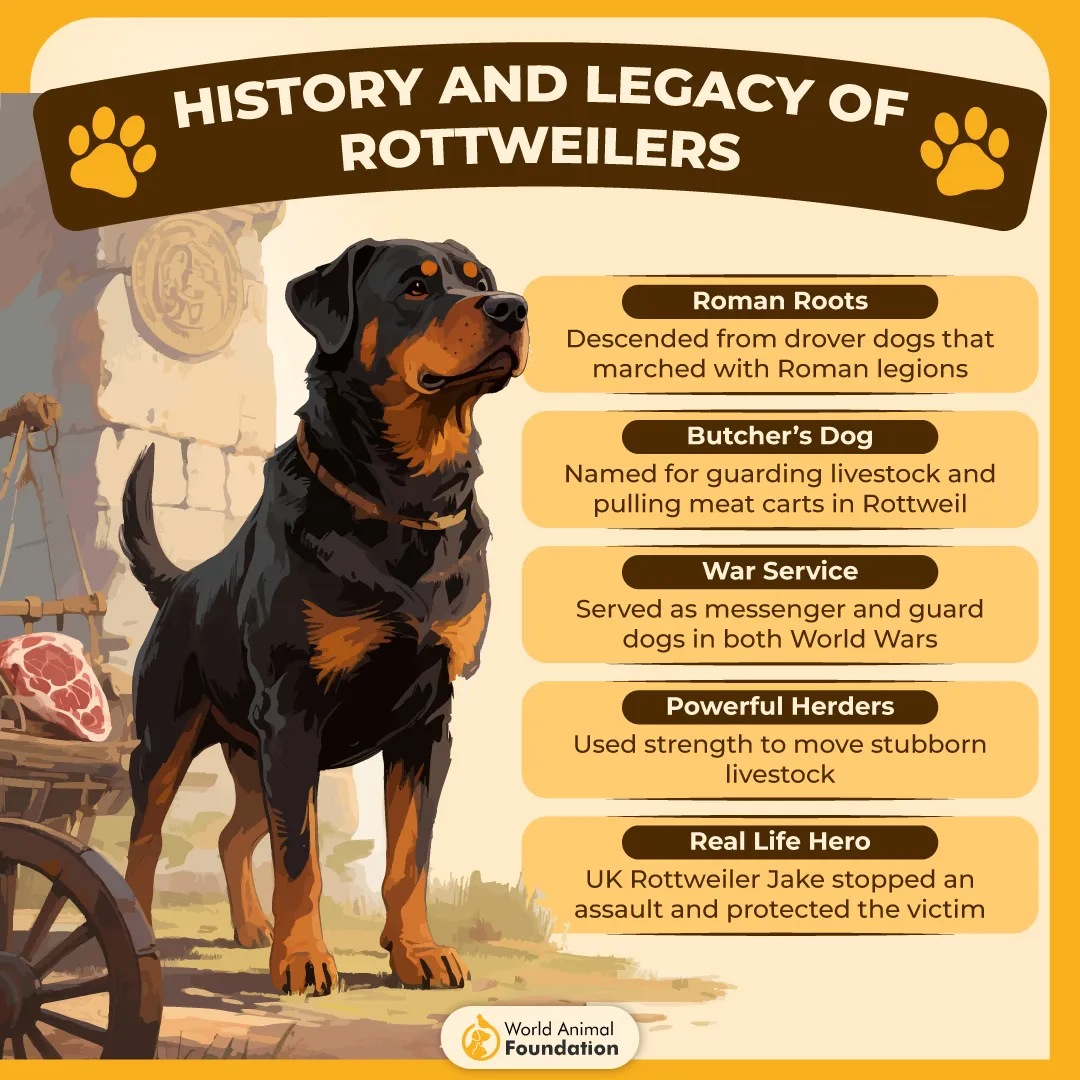
The breed’s name comes from the town of Rottweil in southern Germany, where these dogs worked in butcher shops, herding cattle, and pulling meat carts to market.
They even carried money in purses around their necks to protect it from thieves, earning the nickname “Butcher’s Dog of Rottweil.” Over the years, Rottweilers were bred with other mountain dogs, which helped develop their strength, loyalty, and guarding instincts.
Size, Build & Physical Appearance Comparison
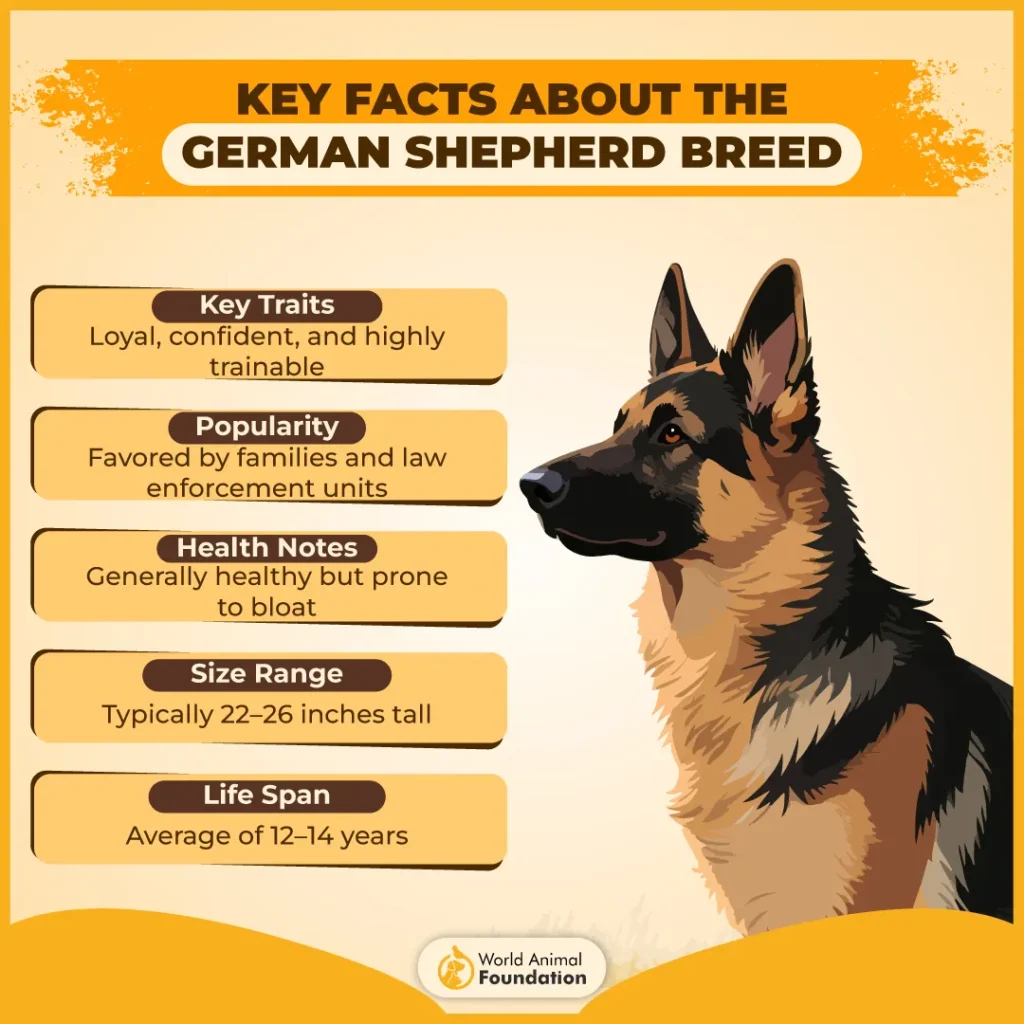
German Shepherd
Their double coat comes in many colors, but most are black and tan, often with a black saddle marking and a black mask on their face.
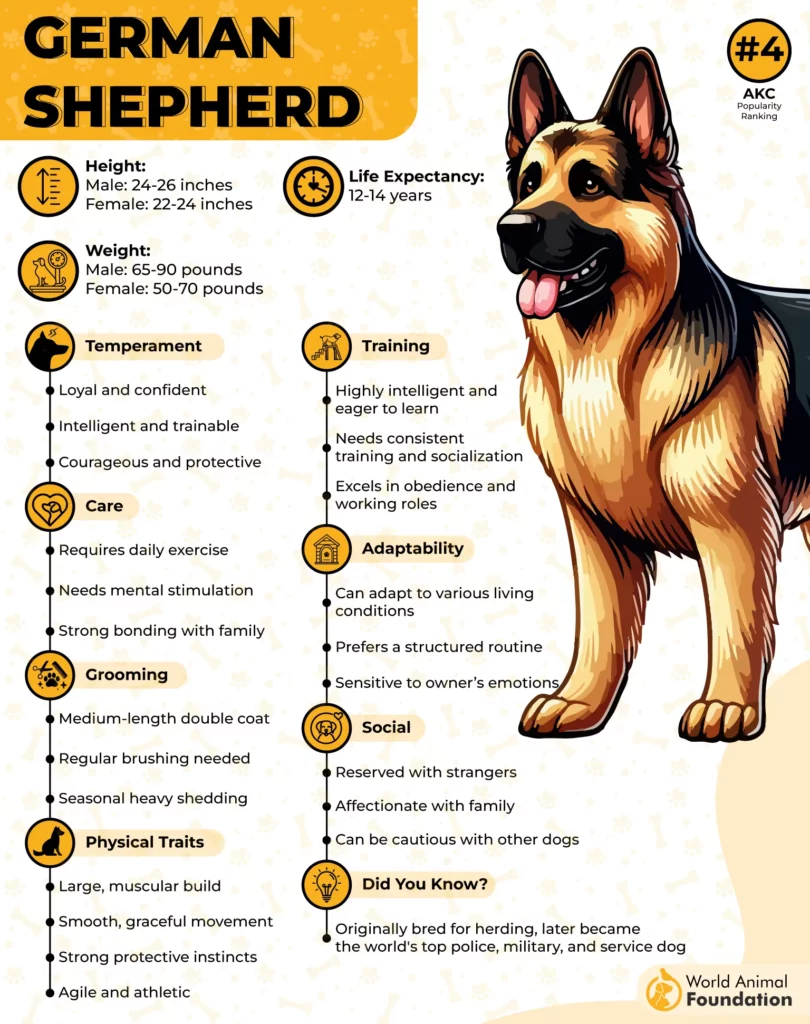
German Shepherds have upright, pointed ears and a long muzzle, giving them a sharp, alert expression. Because of their build, they are very agile and excel at activities like search and rescue or police work.
Rottweilers
Rottweilers are large, strong dogs with a broad, muscular build. They typically stand between 24 and 27 inches tall and weigh anywhere from 80 to 130 pounds. Their powerful frame, thick neck, and wide chest give them a solid, sturdy appearance.
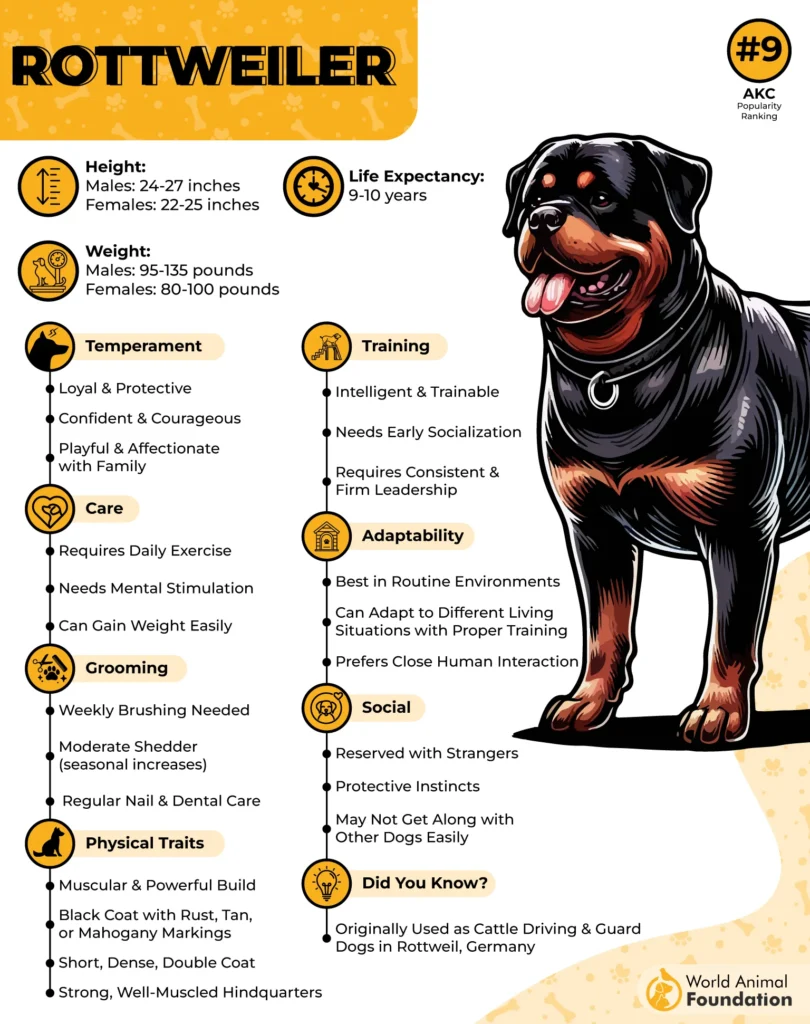
Their short, dense coat is usually black with clear rust-colored markings, which adds to their strong and confident look. Despite their tough exterior, Rottweilers are known to be gentle and playful with their families.
Temperament, Personality & Behavioral Traits
German Shepherd
German Shepherds are highly intelligent and eager to please, which makes them excellent learners and reliable family members. They tend to be reserved or aloof around strangers but quickly form deep bonds with their owners and family.
Affectionate and gentle with children
Emotionally sensitive and eager to please
Highly adaptable and trainable
Needs lots of physical and mental stimulation
Can suffer from separation anxiety if left alone for too long
Known for their moderate to loud bark—holding the record for the second loudest bark ever!
German Shepherds thrive when given a job or purpose. Their natural desire to work and please their family makes them both excellent watchdogs and loving companions. Early socialization is key to helping them adapt well to visitors, other pets, and new situations
Rottweiler
Rottweilers are known for their calm confidence and strong protective instincts. While they can appear aloof or distant, they are deeply loyal and affectionate with their family. They often seem reserved but are playful and loving with those they trust.
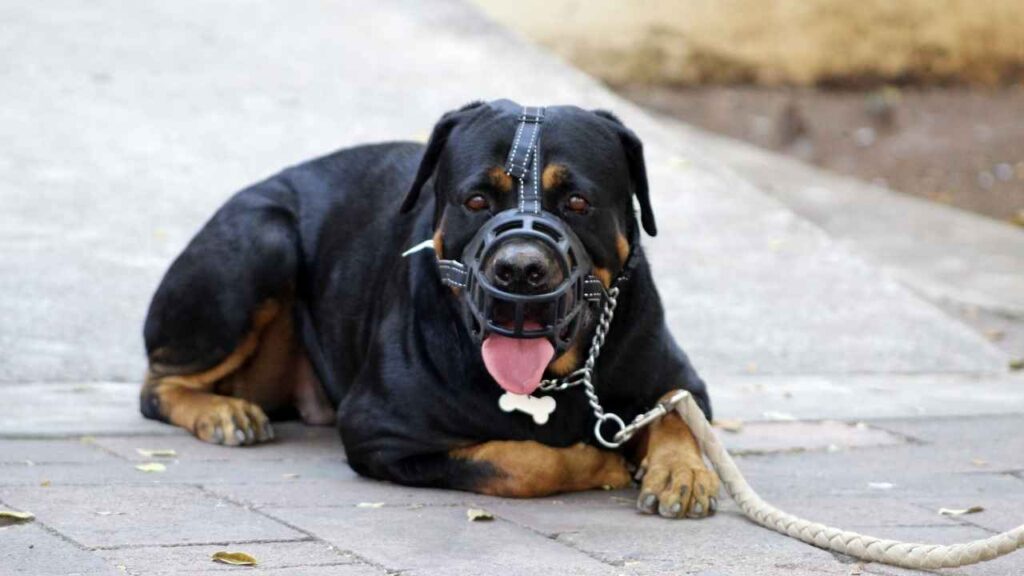
Fiercely protective and watchful
Playful yet calm, with occasional silly moments
Require consistent training due to stubborn streak
Thrive on mental challenges rather than constant physical activity
Can be wary of strangers but warm with well-socialized kids
Strong guarding instincts make responsible ownership essential
Rottweilers form strong bonds and are naturally cautious of strangers, making them excellent family protectors. Their reputation as aggressive dogs often stems from neglect or improper training. With early socialization and consistent guidance, they become devoted and obedient companions.
Exercise Needs & Energy Levels
German Shephed
German Shepherds are highly energetic and athletic dogs that thrive on regular physical and mental activity. They require at least 1 to 2 hours of exercise every day to maintain their health and happiness.
This exercise can be a mix of walks, playtime, obedience training, agility work, and interactive games that challenge their intelligence.
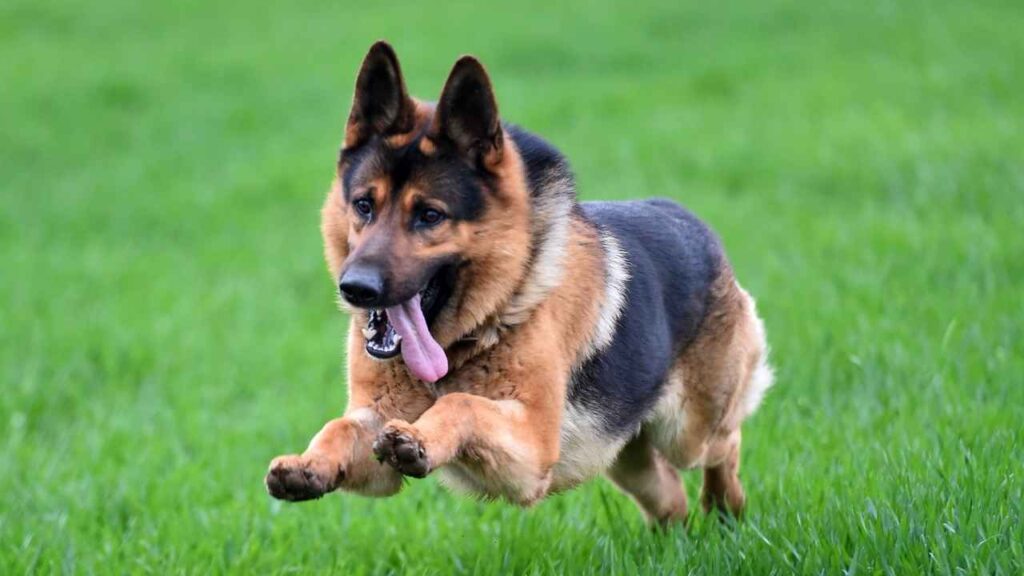
Because German Shepherds were bred as working dogs for herding and protection, they have a strong need for purpose and structure in their daily routine. Without sufficient activity and mental stimulation, they may become bored, leading to destructive behaviors like chewing or excessive barking.
Rottweiler
Rottweilers are strong, muscular dogs with moderate but consistent exercise needs. According to PetMD, they require about 60 minutes of exercise daily to stay healthy, happy, and mentally engaged.
Unlike some high-energy breeds, Rottweilers don’t demand nonstop activity but do best with regular physical and mental stimulation to prevent boredom, which can lead to destructive behaviors like chewing or excessive barking.
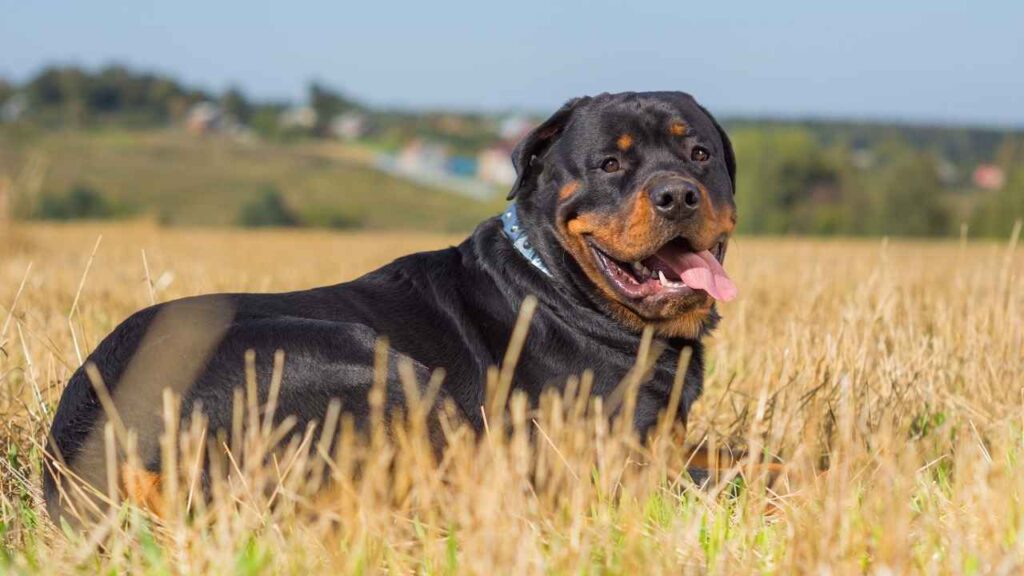
This breed thrives on activities that challenge both their body and mind. Walking around the neighborhood, hiking, tug-of-war, and interactive training sessions are all great ways to keep a Rottweiler engaged.
Intelligence, Trainability & Working Ability
German Shepherd
German Shepherds are among the smartest dog breeds worldwide. Ranked third in work intelligence and obedience by canine psychologist Dr. Stanley Coren, they quickly learn new commands—often after just five repetitions—and obey reliably about 95% of the time.
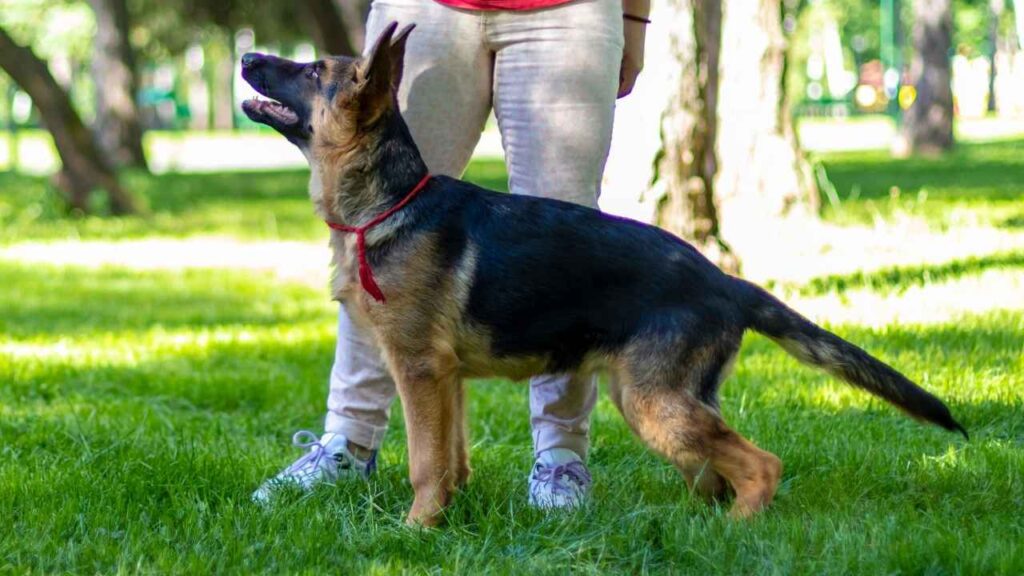
Their intelligence is paired with a strong desire to please, making training rewarding and efficient. This breed thrives on mental and physical challenges and excels as an obedience, agility, and service dog.
Key traits of German Shepherd intelligence and trainability
Rapid learners who quickly grasp new commands
Highly motivated to please their owners
Adapt well to stressful and changing environments
Excellent problem-solvers with a strong work ethic
Versatile working dogs in police, military, search and rescue, and disability service roles
Their high energy levels and intelligence require structured exercise and mental stimulation to prevent boredom and behavioral problems. With early training, German Shepherds become loyal, obedient companions ready for any challenge.
Rottweiler
Rottweilers are smart, focused dogs with impressive problem-solving abilities, especially in protection and safety roles. While intelligent, they can be more independent and stubborn compared to German Shepherds.
Training a Rottweiler requires consistent, firm leadership delivered with patience and respect. They respond best when they clearly understand the benefit of following commands, and they thrive with confident owners who can manage their strong personalities.
Highlights of Rottweiler intelligence and training needs
Sharp problem-solvers with strong focus and determination
Can be stubborn and test boundaries without clear leadership
Require consistent, firm, but positive training methods
Historically used in law enforcement, the military, and protection work
Loyal and obedient when trained by confident owners
Rottweilers balance their guarding instincts with affectionate family loyalty. With proper guidance, they develop into devoted companions and reliable working dogs.
Protective Instincts, Alertness & Guarding Style
German Shepherd
German Shepherds are smart and alert dogs who protect their families with careful thinking and quick reactions. They don’t just rely on strength; they use their intelligence to assess situations before acting. These dogs are always aware of their surroundings and can quickly spot anything unusual, as reported by the AKC.
They are fast and agile, which helps them respond quickly when needed. German Shepherds are very loyal and brave, making them excellent guard dogs for families, police, or military work. They protect with a balance of brains and strength.
Rottweiler
Rottweilers are naturally strong and confident protectors. They have a powerful build and a strong bite that makes them good at keeping intruders away. Rottweilers are very watchful and ready to act quickly if they sense danger.
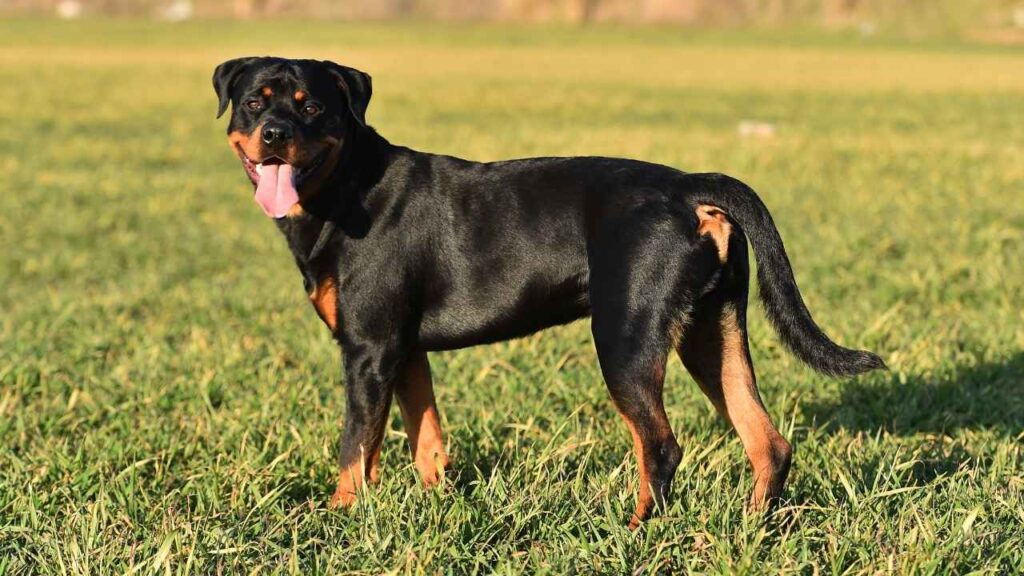
They are very protective of their home and family, often showing a strong territorial instinct. While they can be cautious around strangers, they are loving and loyal to their families.
Because of their strong guarding nature, Rottweilers need owners who can provide firm and consistent training to guide them properly.
Coat Type, Grooming Needs & Shedding Patterns
German Shepherd
German Shepherds have a thick double coat, consisting of a coarse, water-resistant outer layer and a soft undercoat for insulation. This coat makes them adaptable to various climates but also demands more attention.
Shedding: Heavy year-round shedding, with even more intense shedding twice a year during seasonal changes when they lose their undercoat.
Brushing: Ideally twice or thrice a week, with more frequent brushing during heavy shedding seasons, using an undercoat rake to manage loose fur.
Bathing: Recommended every 6–8 weeks, as too frequent baths can strip natural oils and cause skin dryness.
Nail Trimming: About every 4 weeks.
Ear Cleaning: Weekly, to avoid dirt buildup and infections.
Eye Care: Check and clean gently as necessary.
While German Shepherds require more grooming than Rottweilers, maintaining a proper routine keeps their coat healthy and minimizes shedding issues. Feeding a high-quality diet rich in essential nutrients can also reduce excessive shedding.
Rottweiler
Rottweilers sport a short, dense coat that is relatively low-maintenance. Their fur lies close to the body, which helps them stay clean and reduces the amount of dirt and debris they collect.
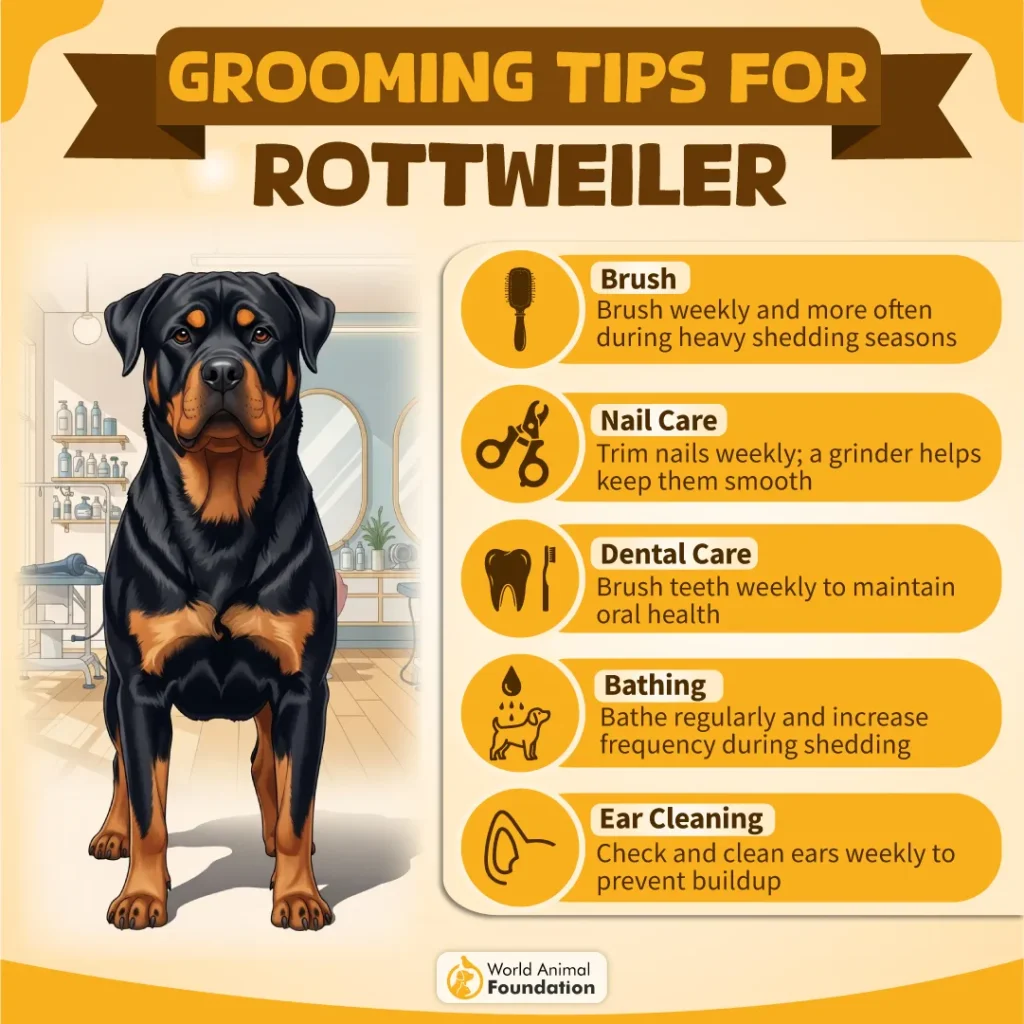
Shedding: Moderate throughout the year, with heavy shedding during spring and fall when they “blow out” their undercoat.
Brushing: Once a week is usually enough to remove loose hair and keep the coat shiny.
Bathing: Only as needed, generally every 6–8 weeks; gentle shampoos can be used for weekly washes if preferred.
Nail Trimming: About every 4 weeks.
Ear Cleaning: Weekly, to prevent infections.
Eye Care: Clean with a damp cloth as needed.
Rottweilers are fairly easy to groom and don’t require professional grooming sessions. Their short coat allows for a manageable routine that fits well with busy owners.
Common Health Concerns & Lifespan Comparison
German Shepherd
German Shepherds typically live around 7 to 10 years. While they are generally robust dogs, they are prone to several serious health conditions that owners should watch for closely.
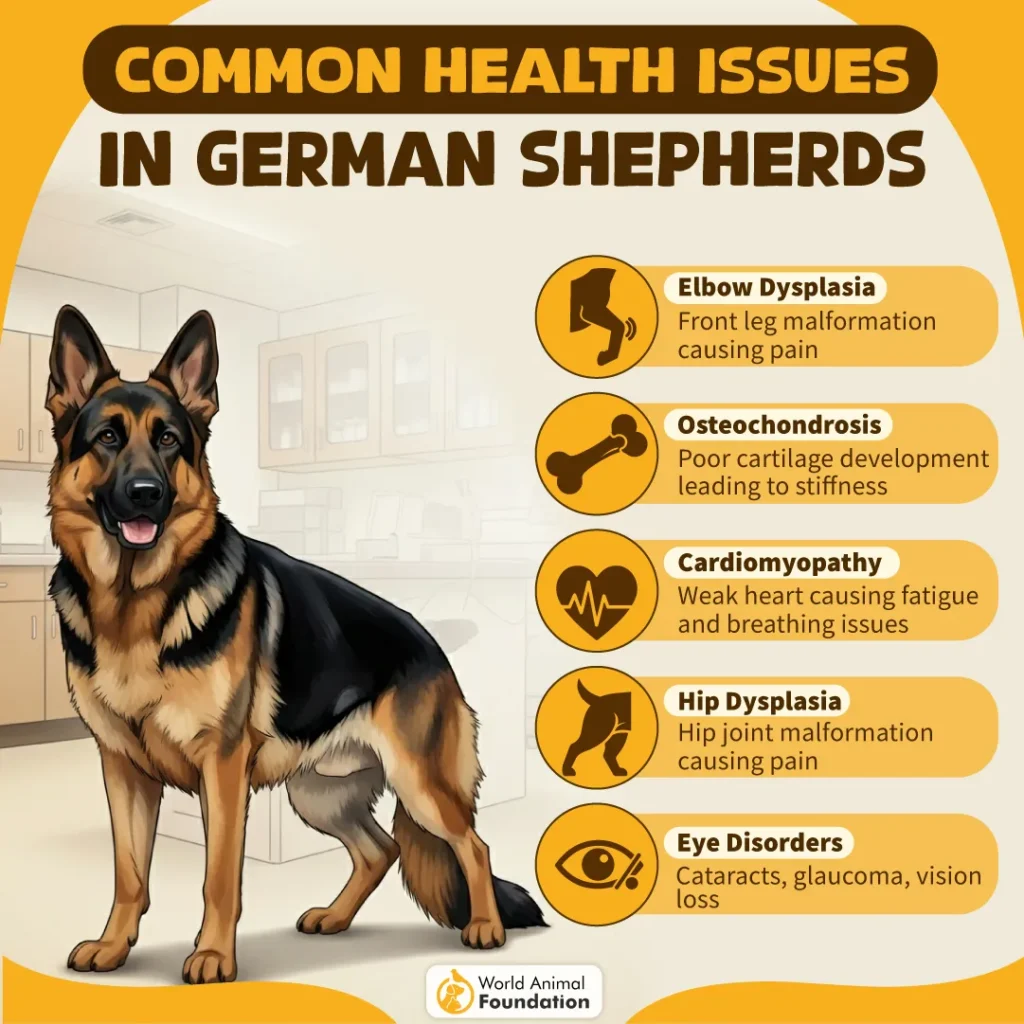
Common health concerns include
Degenerative Myelopathy: A neurological disease causing progressive paralysis in the hind legs.
Elbow and Hip Dysplasia: Joint diseases causing pain, limping, and arthritis.
Cancer: Includes hemangiosarcoma, bone cancer, lung cancer, and intestinal cancer.
Bloat and Gastric Dilatation-Volvulus (GDV): A life-threatening stomach twisting condition.
Allergies: Leading to itchy skin, infections, and digestive issues.
Heart Disease: Such as dilated cardiomyopathy and valvular disease.
Responsible breeders screen for genetic issues, and rescue dogs should come with available health histories. Early detection and regular vet checkups can improve your dog’s quality of life, especially for conditions like dysplasia and heart disease.
Rottweiler
Rottweilers generally have a lifespan of 9 to 10 years with proper care, but are prone to a range of health problems that require vigilance.
Common health concerns include
Obesity: Affects overall health and worsens joint problems.
Elbow and Hip Dysplasia: Causes lameness and arthritis if untreated.
Cranial Cruciate Ligament Rupture: A common ligament injury requiring surgery.
Osteosarcoma: An aggressive bone cancer.
Gastric Dilatation-Volvulus (GDV): A dangerous condition similar to that in German Shepherds.
Entropion: Eyelid rolls inward, irritating.
Subaortic Stenosis: A heart condition that can cause sudden death if untreated.
Regular veterinary exams, a balanced diet, controlled exercise, and preventative surgeries like gastropexy can help manage these risks effectively.
Suitability for Families, Guard Duty & Living Environments
German Shepherd
German Shepherds are widely regarded as one of the most adaptable and trainable breeds, making them suitable for families and individuals with active lifestyles.
Best for homes with medium to large backyards where they have room to run and play.
Perfect for active people who can dedicate a couple of hours daily to exercise and mental challenges.
Renowned for intelligence, agility, and quick threat assessment, they guard with strategy and speed rather than just brute force.
Known for loyalty and emotional sensitivity, making them affectionate family companions.
Less suited for apartment living or homes with limited outdoor space, and not ideal for owners who are frequently away.
German Shepherds excel in various security roles, from family guard dogs to police and military dogs, thanks to their strength, endurance, and sharp senses.
Rottweiler
Rottweilers thrive in homes where their intelligence and protective instincts can be properly managed. PetPlan states that they require firm, consistent training and socialization from an early age, making them better suited for experienced dog owners.
Ideal for families with spacious backyards and those who spend several hours outside the home.
Excellent working dogs for guarding, herding, or protection roles.
Naturally strong and confident, Rottweilers have a powerful bite and imposing presence that make them excellent deterrents against intruders.
Though generally calm, they require mental stimulation and regular exercise to prevent boredom and undesirable behavior.
Rottweilers can bond deeply with family members and are loyal protectors, but they can be wary or aggressive toward strangers and other same-sex dogs if not socialized well.
Conclusion
Choosing between a German Shepherd and a Rottweiler ultimately comes down to your lifestyle, experience, and what qualities you value most in a canine companion.
Both breeds offer incredible loyalty, intelligence, and protection, but their exercise needs, temperament, and training requirements differ.
Whether you prefer the strategic agility of a German Shepherd or the raw power and steady presence of a Rottweiler, both can make loving and devoted family members with proper care.
If you’re ready to welcome one of these remarkable dogs into your life, take the time to consider your daily routine and living situation carefully. Invest in consistent training, socialization, and plenty of mental and physical engagement to help your dog’s overall well-being.
Remember, choosing the right dog is the start of an incredible journey filled with trust, companionship, and unforgettable moments. Your perfect four-legged partner is waiting—are you ready to meet them?
