




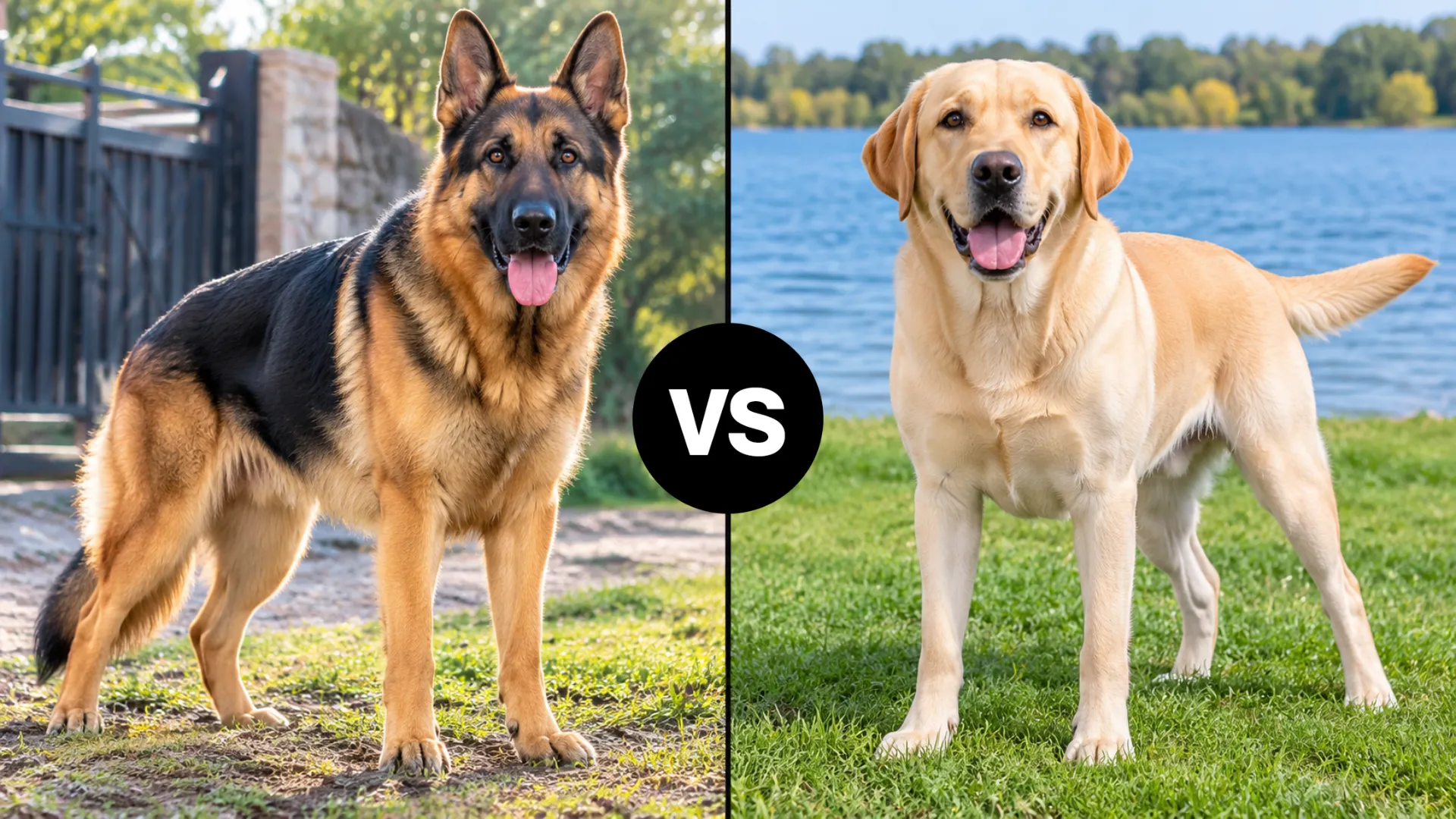
A German Shepherd and a Labrador Retriever may both become deeply devoted members of a family, but the experience of living with each can feel remarkably different.
The German Shepherd is a dog that wants purpose. Intelligent, hardworking, alert, and naturally protective, it thrives when its mind and body have something meaningful to do.
The Labrador, by contrast, brings a more openly social spirit to family life. Eager to learn, affectionate, energetic, and happiest around its people, it has the versatility to move easily between work, play, and companionship.
Neither breed is simply a “better” choice; the real question is which dog’s temperament and needs fit your life.
A German Shepherd may appeal to someone seeking a devoted, watchful companion with a strong working drive, while a Labrador can be a natural fit for those drawn to a friendly, people-oriented dog. Understanding that difference makes this comparison far more meaningful.
Key Takeaways
German Shepherds are highly intelligent and hardworking, with a strong desire for purpose, training, and mental stimulation.
Labrador Retrievers are intelligent, eager to please, and people-oriented, making training an enjoyable part of their relationship with owners.
German Shepherds have a naturally protective side, making them more suited to guard and protection roles.
Labradors are generally more openly friendly and sociable, which makes them especially appealing as family companions.
Both breeds need regular exercise and activity to stay physically and mentally engaged.
Must‑Know Facts About German Shepherd vs. Labrador Retriever Dog Breeds
Origins & Purpose
The German Shepherd and Labrador Retriever may both be intelligent, versatile companions, but their histories reveal two very different working identities.
The German Shepherd traces its roots to herding dogs and was developed to work closely with livestock, quietly keeping sheep within boundaries and guiding strays back to the flock.
Over time, the breed’s intelligence, courage, loyalty, and willingness to learn made it valuable for many other roles, including police, military, tracking, and guide work.
The German breed club, Verein für Deutsche Schäferhunde, was formed in 1899 and played an important role in developing the breed for working purposes. Today, that working heritage remains visible in the German Shepherd’s alert and purposeful nature.
The Labrador Retriever developed from working water dogs associated with Newfoundland, including St. John’s dogs. These dogs worked alongside fishermen, helping retrieve nets, ropes, and fish. Later, Labradors were refined in England for retrieving game, particularly waterfowl.
Their natural swimming ability, retrieving instinct, intelligence, and desire to work with people opened the door to many roles, from hunting companion to guide, service, search-and-rescue, and detection dog. Their history explains why both breeds are hardworking, but each brings a distinctly different purpose to life with people.
Size & Physical Build
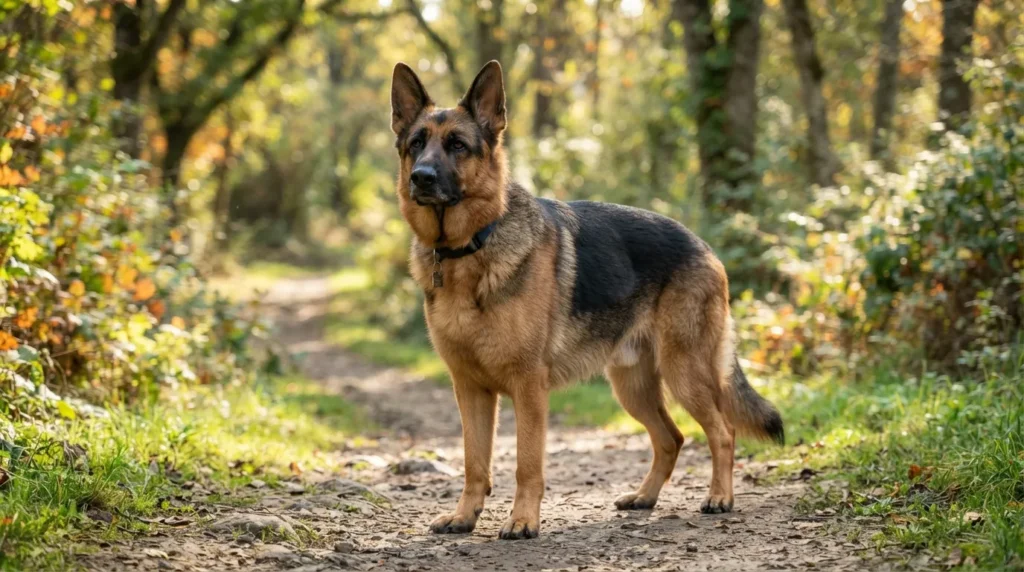
A German Shepherd has the kind of presence that can make you notice them the moment they enter a room. Large, muscular, agile, and well-balanced, the breed can stand as high as 26 inches at the shoulder, according to the American Kennel Club.
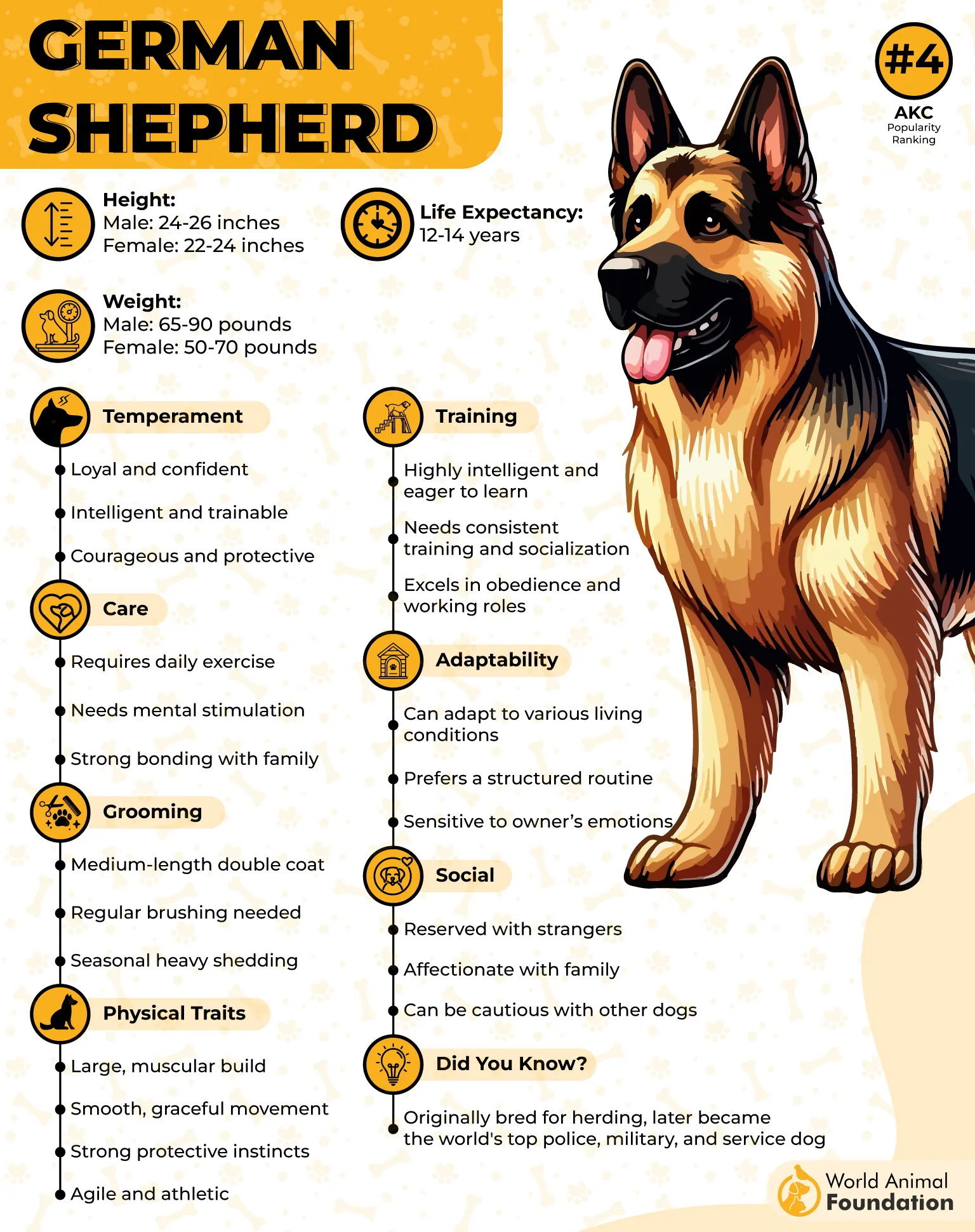
Rather than appearing heavy or angular, the German Shepherd’s outline is described as smooth and graceful, reflecting its athletic heritage. Its medium-length double coat has a dense, harsh outer layer and a softer undercoat.
Coat colours can include black, sable, black and tan, and black and gold. The breed carries itself with confidence and pride, with a natural gait that can shift from an easy trot to impressive speed. Regular brushing helps manage loose hair, particularly during heavier shedding periods.
The Labrador Retriever has a somewhat different build. It is sturdy and solid, with a strong body, sturdy legs, broad head, expressive eyes, and the distinctive thick “otter” tail.
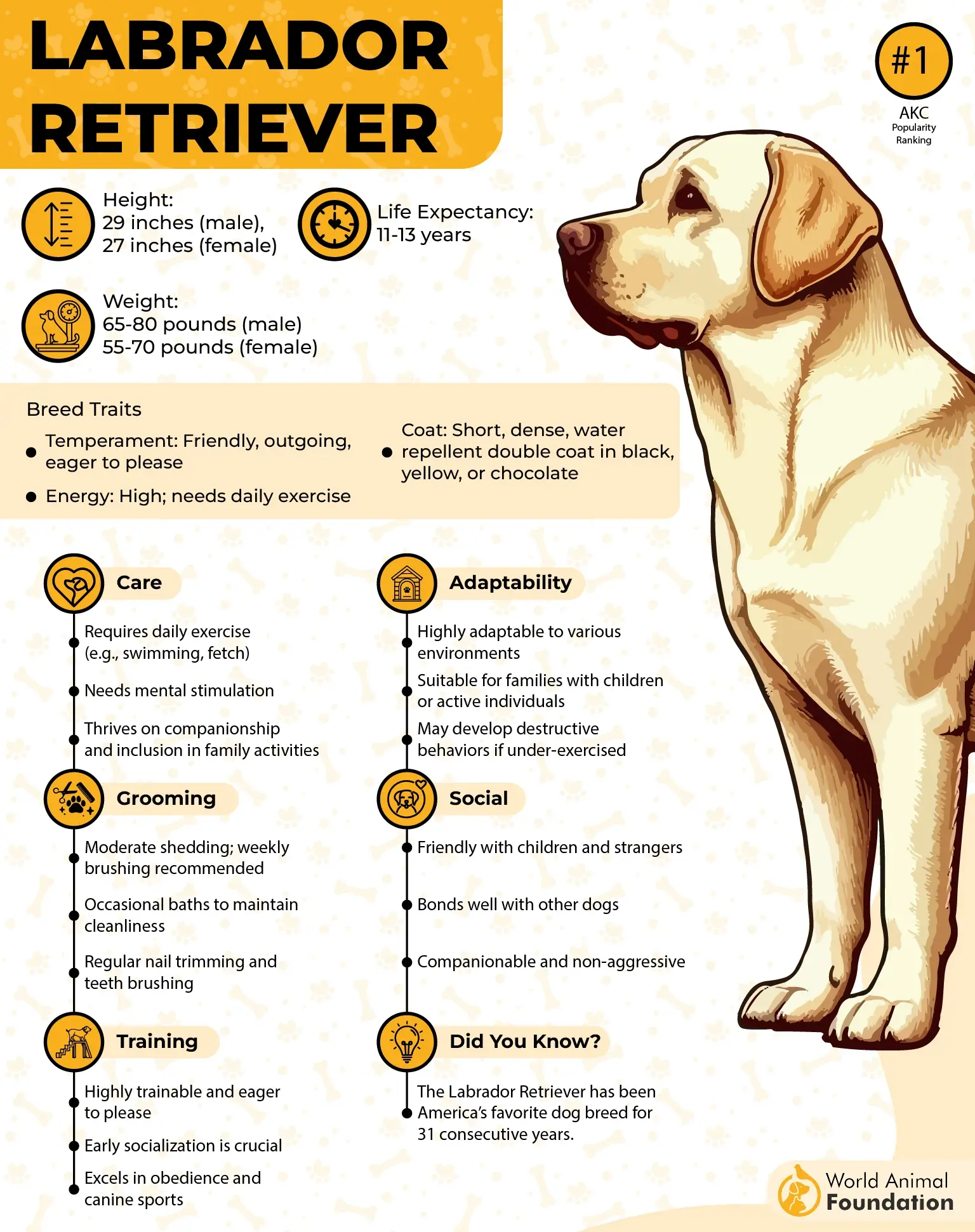
Males can reach around 23 to 24 inches at the shoulder, while females are slightly smaller, and their weight generally falls within a substantial medium-to-large range.
Labradors have a short, dense double coat that comes in black, yellow, or chocolate. Their coat is water-repellent, reflecting their history as water retrievers. Side by side, the German Shepherd looks more poised and streamlined, while the Labrador has a solid, friendly, athletic appearance
Temperament & Personality
The German Shepherd often forms a remarkably close bond with its people. Loyalty, confidence, courage, intelligence, and a willingness to learn are central to the breed’s character.
A well-bred and well-raised German Shepherd can be affectionate with its family while remaining more reserved around unfamiliar people. That natural aloofness is part of what distinguishes the breed from dogs that immediately welcome everyone they meet.
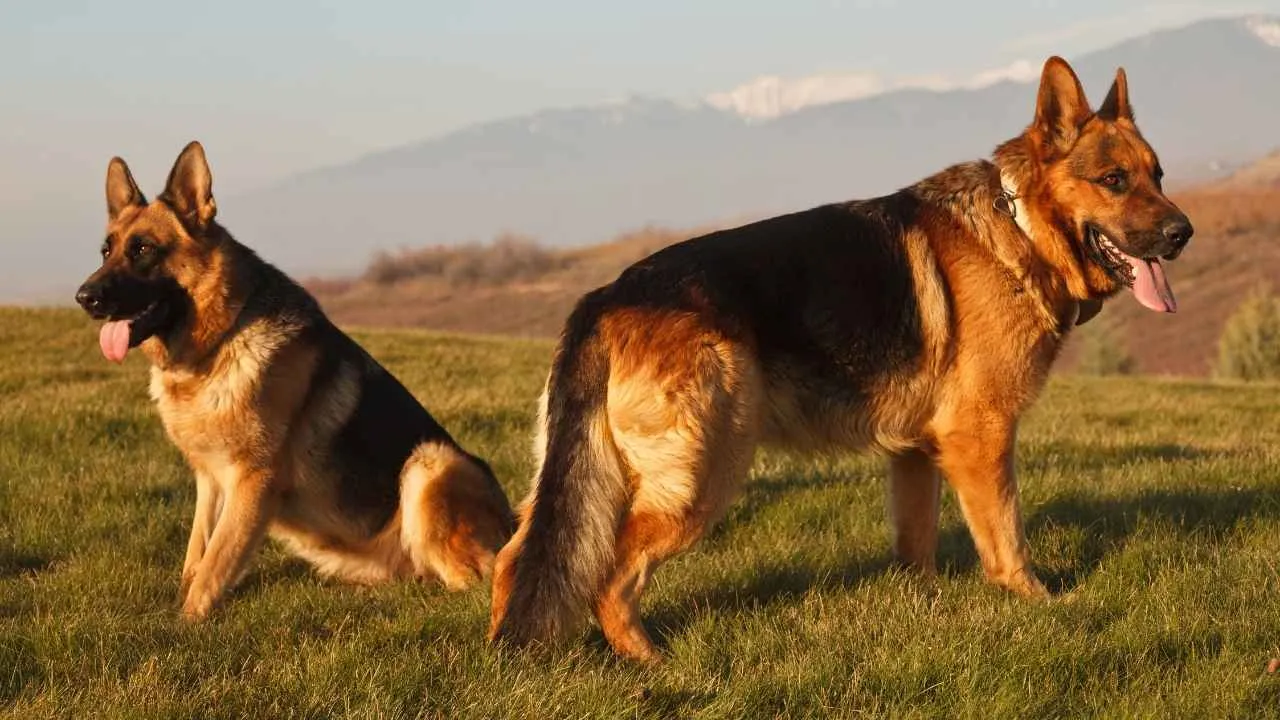
Early socialization and consistent, positive training are especially important, helping the dog grow into a confident and adaptable companion. With patience and reward-based training, the German Shepherd can become both a devoted family dog and a steadfast guardian.
Their strong attachment to their people also means they generally thrive when included in household life rather than being kept apart from the family.
The Labrador Retriever tends to greet the world with a much more openly friendly spirit. Labs are people-oriented, affectionate, playful, and eager to please, often forming friendships easily with strangers as well as their owners.
They are known for their intelligence and trainability and generally enjoy having a job or activity to occupy their minds, as stated by Pooch & Mutt. Their enthusiasm can sometimes make them bouncy and boisterous, particularly when young, so early obedience training remains important.
Unlike the more reserved German Shepherd, the Labrador’s welcoming personality means it is generally better suited to being a social companion than a serious guard dog. Both breeds can form deep family bonds, but their personalities express that affection in noticeably different ways.
Exercise & Energy Levels
The German Shepherd is an active, athletic breed that needs meaningful exercise for both body and mind. Simply having space to move is not enough; the breed benefits from activities that give its energy and intelligence a productive outlet.
Adult dogs may need around two hours or more of exercise, with variety in routes, surroundings, and activities helping keep daily life interesting. Walks, play, training, tracking, agility, herding, and other canine activities can provide opportunities to work both physically and mentally, as explained by Zooplus.
Puppies require greater care because their developing joints should not be overloaded with strenuous exercise. Short walks, controlled play, and age-appropriate training can provide useful stimulation without pushing them too far.

Mental exercise is equally important for this intelligent breed. Puzzle-solving games and training sessions can help prevent boredom and frustration. When a German Shepherd does not receive enough activity or companionship, unwanted behaviours such as excessive vocalisation, reactivity, or destructiveness may develop.
For owners willing to invest time, variety, patience, and consistent training, however, the breed’s energy can become one of its most rewarding qualities.
Training & Intelligence
When it comes to intelligence and training, both the German Shepherd and Labrador Retriever have a natural willingness to learn, but they bring different qualities to the experience. The German Shepherd stands out for its remarkable intelligence, focus, and strong desire to have a job.
Originally developed as a versatile working dog, it responds well to structured training and can learn a wide range of tasks. Training is especially important for this breed because its energy, protective instincts, and intelligence need positive direction.
A well-trained German Shepherd can become a devoted companion as well as a capable working or sporting partner.
The Labrador Retriever is equally rewarding to train, with an eager-to-please nature and an enjoyment of learning. Labs can excel in obedience, tracking, agility, retrieving, and other activities. Their friendly temperament can make training an enjoyable shared experience.
While both breeds benefit from early training and socialization, the German Shepherd generally thrives on structure and purpose, whereas the Labrador’s enthusiasm and affectionate nature often make learning feel like play. In either case, consistent training can strengthen the bond between dog and owner.
Coat Maintenance
German Shepherds and Labrador Retrievers both have dense double coats, so neither breed is completely free from shedding. The German Shepherd has a thick, medium-length double coat, with a dense topcoat and insulating undercoat.
Regular brushing is important, particularly because this breed sheds throughout the year and can shed its undercoat heavily during seasonal changes. Brushing at least once a week can help manage loose hair, while more frequent grooming during heavier shedding periods can reduce the amount of fur around the home.
The Labrador Retriever has a short, dense, weather-resistant double coat that is comparatively simple to maintain. Regular brushing helps keep the coat looking neat, while more frequent brushing during shedding periods can help manage loose fur.

Labradors are also known for having a healthy appetite, so maintaining a balanced diet and monitoring food intake is an important part of their overall care.
For owners choosing between the two, the difference is less about whether either dog sheds and more about the type of grooming commitment involved. The German Shepherd’s longer, heavier coat can demand more attention, while the Labrador’s shorter coat is generally easier to manage despite its shedding.
Health & Lifespan
Both German Shepherds and Labrador Retrievers can be wonderful companions for many years, but responsible care and breeding remain important considerations.
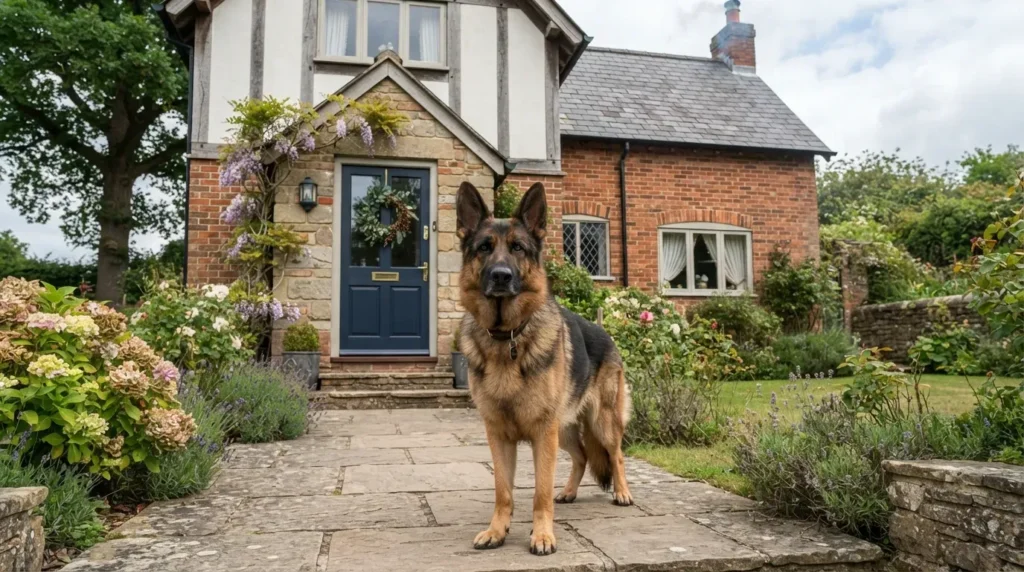
The German Shepherd has a listed life expectancy of around 7 to 12 years. Some health concerns associated with the breed include hip and elbow dysplasia, gastric dilatation-volvulus, degenerative myelopathy, digestive problems, hypothyroidism, epilepsy, allergies, heart conditions, and various eye disorders.
Responsible breeding and screening for common conditions can help reduce serious health concerns.
Labradors are described in the supplied material as robust dogs with an average lifespan of approximately 12 to 16 years.
However, they can also be susceptible to health problems, including hip and elbow dysplasia, certain knee conditions, eye problems, obesity, exercise-induced collapse, bloat, and other conditions. Responsible Labrador breeders use available screening programs to reduce the risk of inherited problems, according to WebMD.
For families choosing between the two, health should never be viewed simply as a numbers game. A dog’s individual health, breeding background, care, diet, exercise, and veterinary attention all matter.
Whichever breed captures your heart, choosing responsibly and staying attentive to its wellbeing can make a meaningful difference throughout its life.
Suitability as Family Pets vs. Guard Dogs
As family companions, both German Shepherds and Labrador Retrievers can bring loyalty, affection, energy, and a strong sense of connection into a home.
The German Shepherd, however, combines its family-friendly qualities with a pronounced protective instinct.
When properly socialized, it can be gentle and trustworthy with children while remaining naturally alert to unfamiliar people. Its intelligence, loyalty, and trainability also make it well suited to guard and protection work. The breed needs regular physical and mental stimulation and does best when it feels involved in family life.
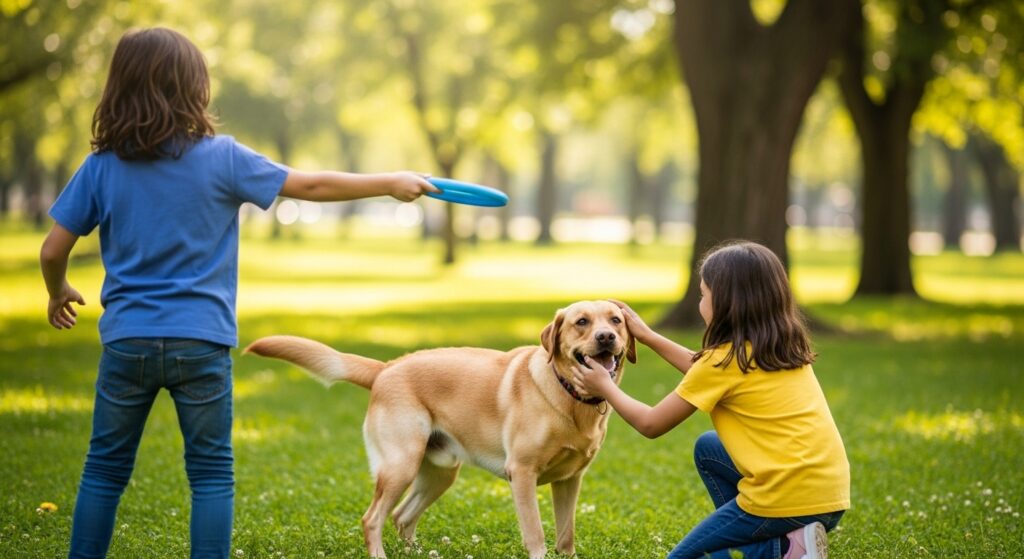
The Labrador Retriever has a different appeal. Its stable, affectionate, and friendly temperament makes it especially suited to family life.
Labs are loyal and patient with children and enjoy being close to their people. They can also work in service, guide, rescue, tracking, and detection roles. However, their naturally friendly character makes them less suited to traditional guard-dog duties.
Ultimately, the choice depends on what you want from your companion.
If you value a protective dog that can also become a devoted family member, the German Shepherd may be the stronger fit.
If your priority is a warm, sociable family dog with a love of activity and companionship, the Labrador can be an equally wonderful choice.
Conclusion
Choosing between a German Shepherd and a Labrador Retriever ultimately comes down to understanding what kind of relationship you want to build with your dog.
The German Shepherd is intelligent, driven, devoted, and naturally protective, making it a strong choice for someone who enjoys training, activity, and giving a dog a sense of purpose.
The Labrador Retriever offers a different kind of companionship, with its affectionate, friendly nature, eagerness to learn, and love of being around its family. Both breeds can be loyal and rewarding companions, but neither should be chosen simply because of its popularity or appearance.
Their energy, training needs, exercise requirements, and individual personalities deserve thoughtful consideration. If you want a watchful partner with a strong working instinct, the German Shepherd may feel like the natural match. If a warm, sociable family companion is what you seek, the Labrador may win your heart.
