




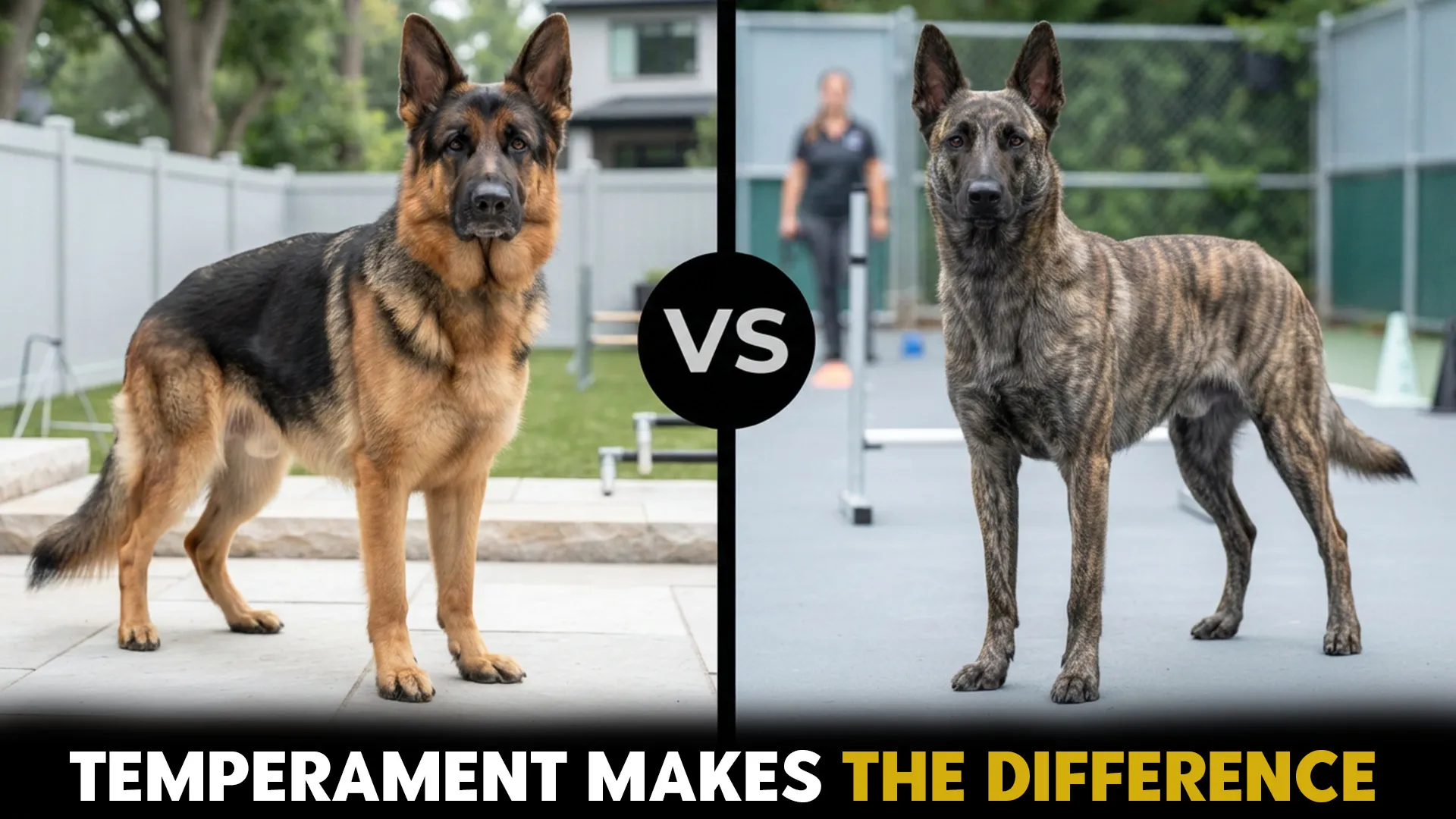
German Shepherds and Dutch Shepherds can honestly look like close cousins, especially when both are standing alert with those focused eyes and athletic bodies. Both breeds were bred for work in the beginning, and yeah, they still like having some kind of purpose in day-to-day life. But even if they share a working background, it does not really mean living with either one feels the same.
German Shepherds are pretty famous worldwide for loyalty, courage, and dependable obedience. Dutch Shepherds tend to come with a more lively temperament, strong herding instincts, and a lot of drive.
So for people considering adoption or ownership, the real question is not “which one looks more impressive, but which personality matches how much energy you can handle, what size you expect, and what kind of care routine fits your everyday schedule.
They come from neighboring parts of Europe, though each line developed a little differently. German Shepherd became known for many jobs beyond herding, and that expansion happened pretty early. Dutch Shepherds still feel connected to the old farm dog world, like it never fully left the blueprint.
German Shepherd vs. Dutch Shepherd: Key Differences Explained
1. Origin & Purpose
German Shepherds originated in Germany, bred as capable herding and working dogs. Early breeders put a lot of weight on intelligence, quick responsiveness, stamina, and practical ability, not just looks. Later, the breed moved well beyond farm duties and became recognized for police service, military tasks, search and rescue, scent detection, assistance work, and family companionship.
The American Kennel Club notes that the German Shepherd developed from German Sheepdogs and grew into a highly versatile working dog. The biggest purpose-based difference is kinda subtle but also important. German Shepherds became known as all-purpose workers, while Dutch Shepherds stayed tightly linked to versatile farm work.
Both breeds can absolutely enjoy modern dog sports, but that older “job” still guides their instinct, focus, and what they need day-to-day for energy and activity.
Dutch Shepherds came from the Netherlands, where farmers leaned on versatile sheepdogs for herding livestock, watching over property, and handling a whole set of different tasks across the farm. The expectation was that they would reason and move with purpose, responding without being constantly directed.
2. Size & Build
German Shepherds usually look bigger, and overall they seem more substantial in build. Adult German Shepherds often stand about 22-26 inches tall, and can weigh roughly 50-90 pounds. A strong chest, a muscular frame, a longer body, and athletic movement create that powerful look, but it does not remove agility at all; if anything, it helps keep them quick.
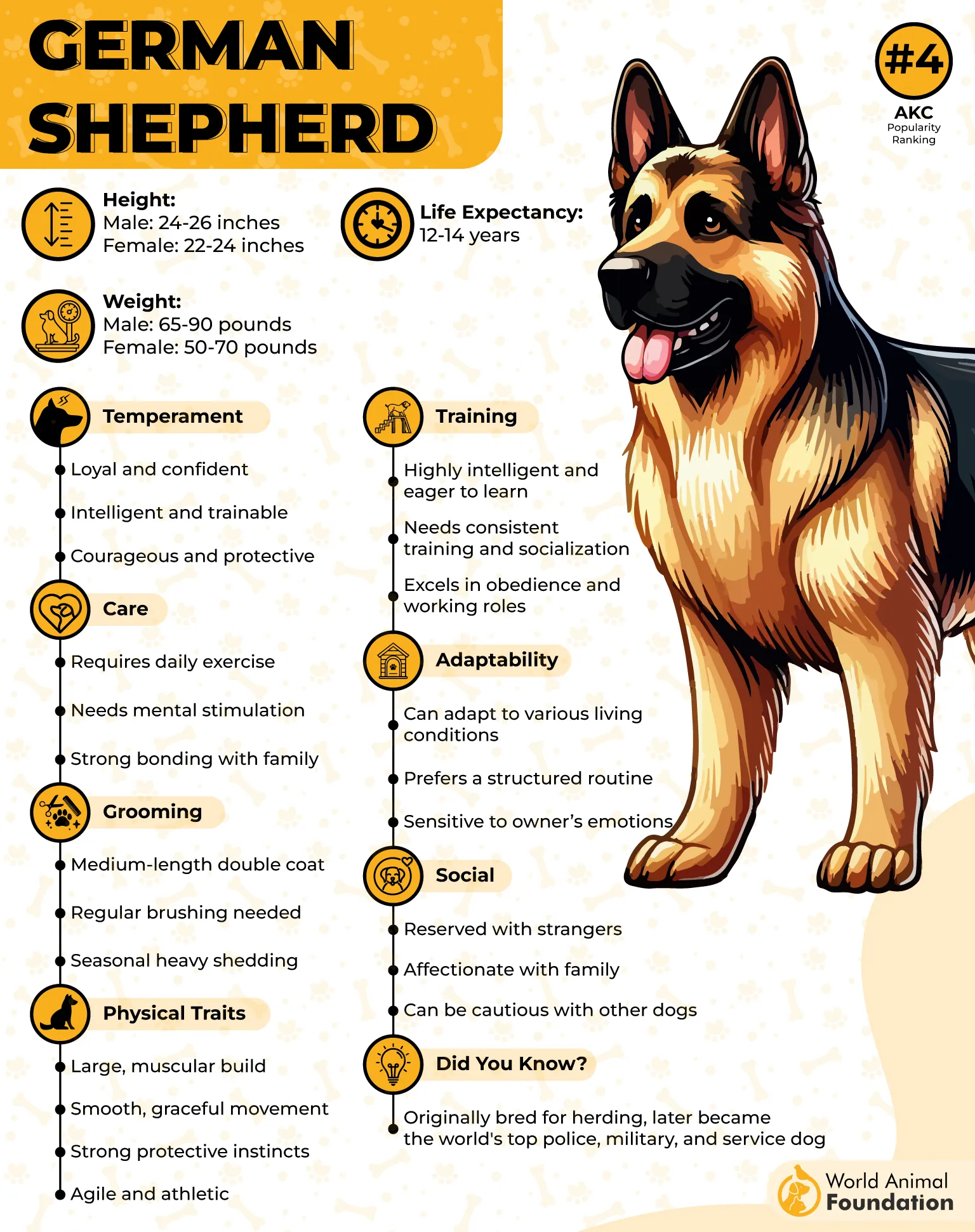
Dutch Shepherds are a bit smaller, though that does not mean weaker in the working sense. You can tell the difference pretty fast when both breeds stand together; German Shepherds often look heavier, while Dutch Shepherds tend to look lighter and a little more compact still. Both are made for motion, not just for looking impressive.
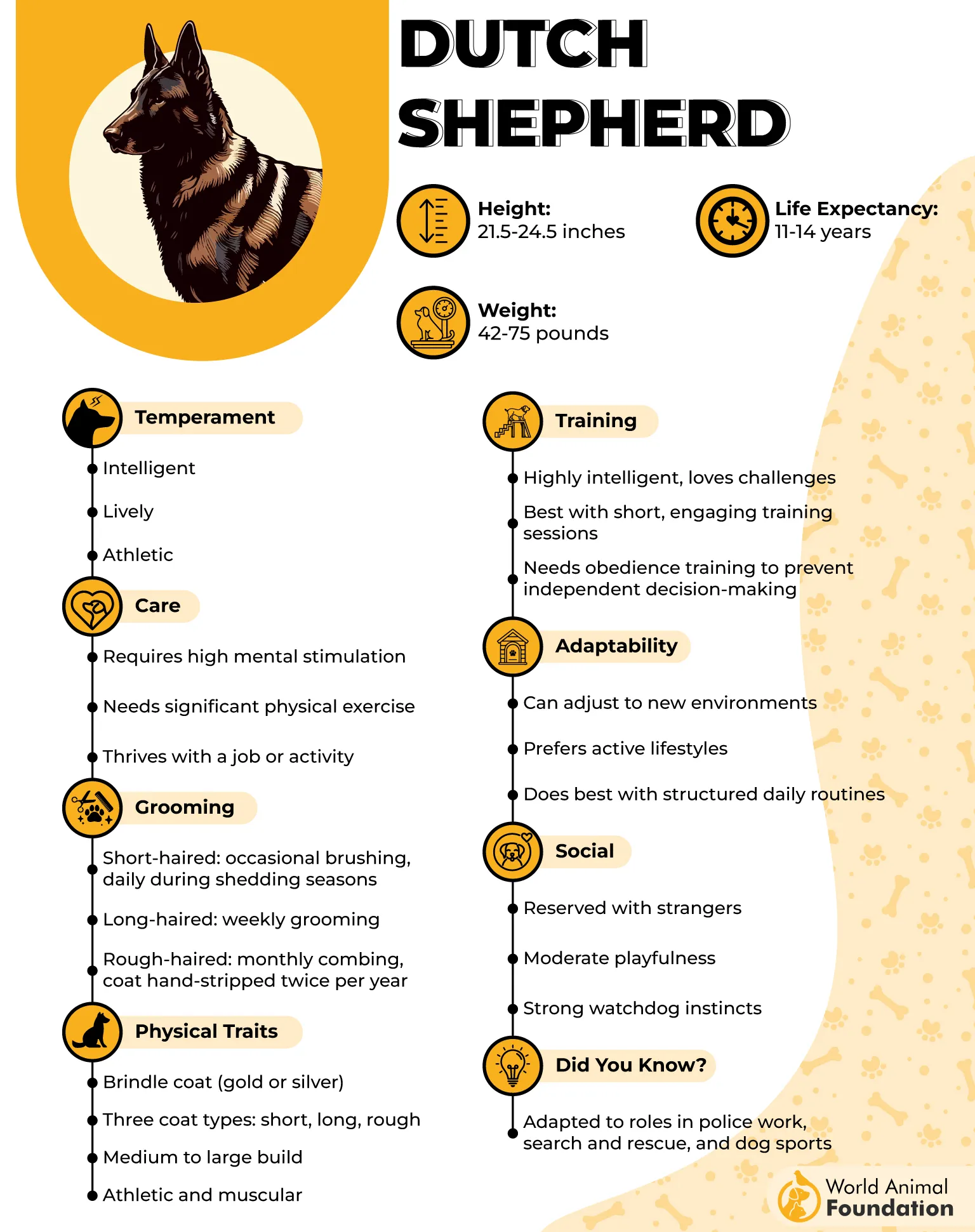
Dutch Shepherds typically stand around 21-25 inches and weigh about 42-70 pounds. Their body is muscular, well balanced, and built with endurance in mind. PetMD also mentions three coat types- short, long, and rough and describes the brindle pattern as a key visual trait for the breed. This really stands out once you see it in person.
3. Pricing & Availability
German Shepherds are usually a lot easier to locate in many countries since the breed is wildly popular. Prospective owners often can look into reputable breeder programs, rescue dogs, and then shelter adoption.
The price might swing depending on your location, bloodline, the kinds of health testing done, training, and also whether the pup is coming from working lines or showline GSD programs, or if it’s more companion-focused breeding.
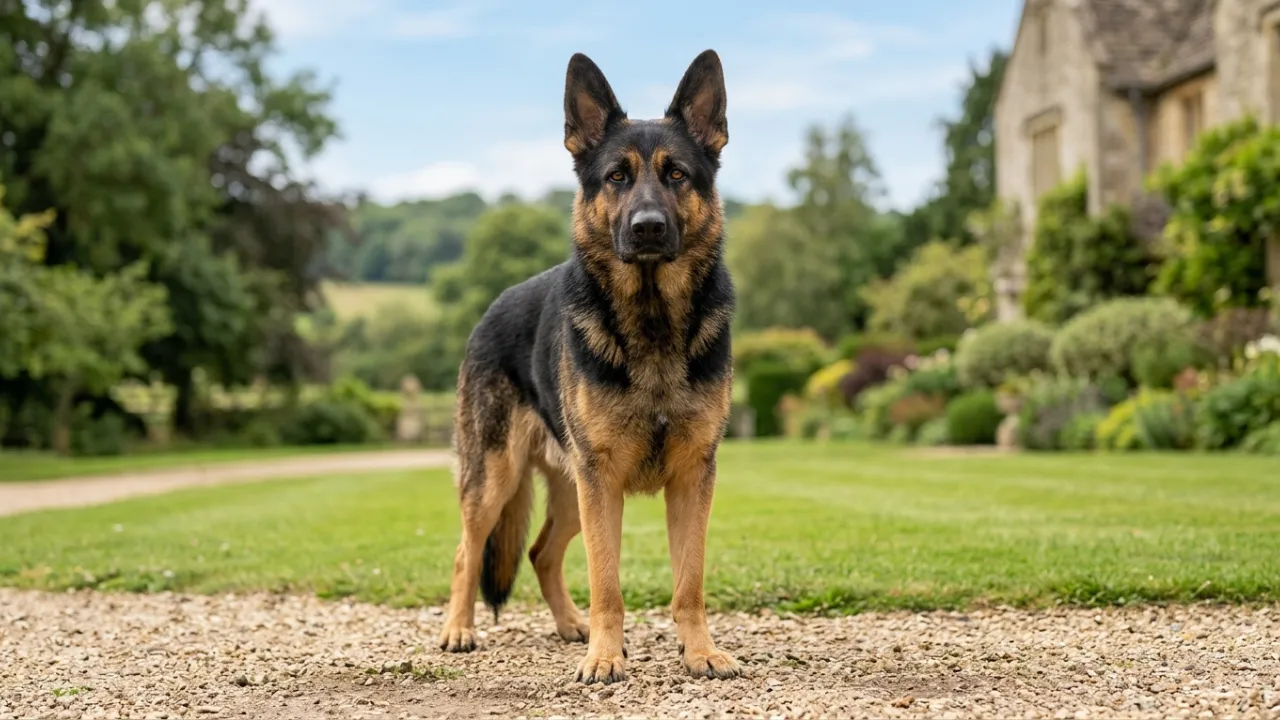
Dutch Shepherds can take a bit more searching because they’re just less common. Sometimes a good puppy isn’t available nearby, so waiting lists and a little travel may wind up being part of the deal. For either breed, a lower price should not be taken right away as a better bargain; it might mean different circumstances.
Dutch Shepherd puppies from a reputable breeder may cost differently compared with rescue options or adult dogs, and that can vary a lot by country and supply. Things like coat type, prior training background, pedigree, and even working capability can shift the cost too.
Adoption from a shelter or a breed rescue can also be an important route for families that are ready to welcome an adult dog instead of starting with a puppy.
4. Temperament & Personality
German Shepherds are typically self-assured, loyal, alert, and kind of tightly bonded to family life. In the house, they can be quite affectionate, yet remain somewhat cautious around unfamiliar people. A well-socialized German Shepherd can do well with children and other animals, but calm introductions and supervision are still a big deal.
The GSD is intelligent, brave, adaptable, and very devoted to its household.
Both breeds can become really good family companions, but neither one is great for a house that wants a low-key pet with almost no involvement. German Shepherds often give a steadier vibe, while Dutch Shepherds can feel more intense.
Dutch Shepherds are smart, faithful, full of drive, and naturally quite observant. A close bond with the family can grow through training, play, and shared routines. Some caution toward unfamiliar people may pop up if early socialization was thin, so positive, calm experiences with kids, visitors, other animals, and different places really help build confidence.
5. Exercise Needs & Energy Levels
German Shepherds need regular movement, plus mental work, not just physical burn. Long walks, hiking, retrieving games, obedience practice, tracking, and agility-type activities can give both mind and body something solid to focus on.
PDSA suggests a minimum of two hours of exercise each day, and it works best when that time is split up across the day, not done as one long stretch.
Both breeds can do well with active families, but daily exercise should be more than just opening a backyard gate. These working dogs tend to want interaction and a sense of purpose. If they get nothing to do, they may invent a personal project, which might include digging, chewing, barking, or figuring out how to slip out of the yard.
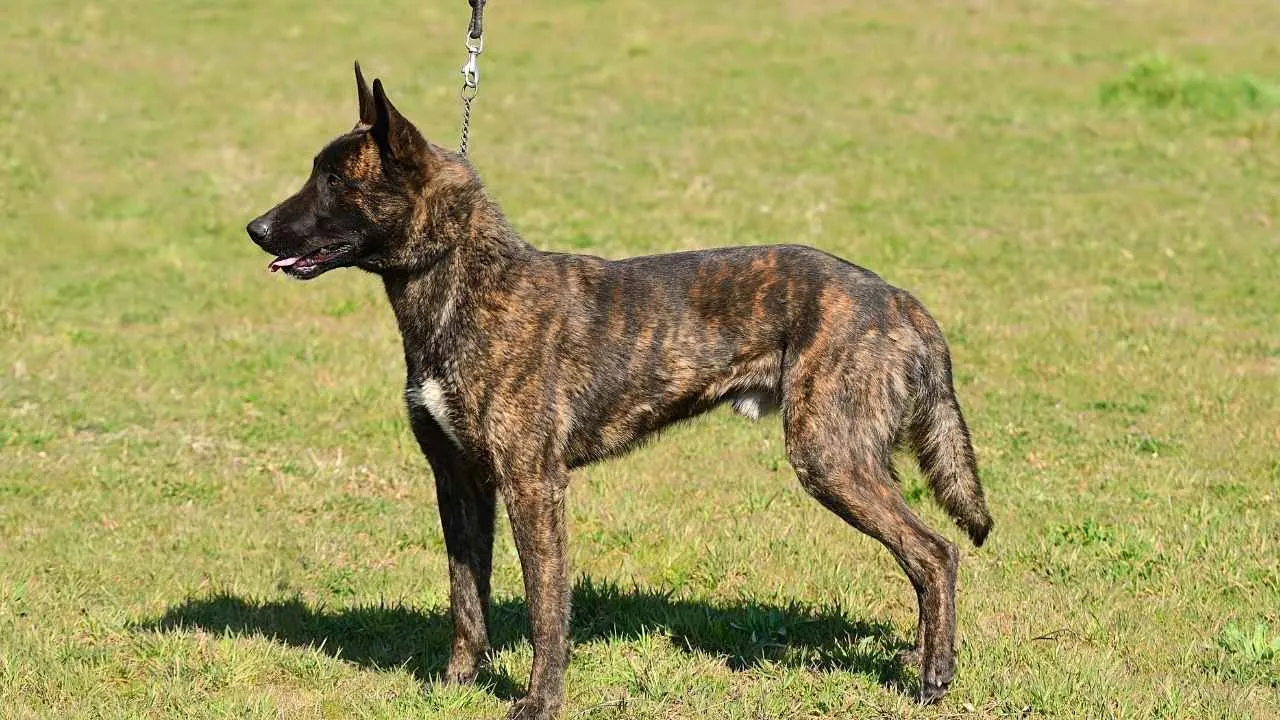
Dutch Shepherds also need a lot of movement and mental stimulation. About 90 minutes to two hours of daily exercise can work for many healthy adults, with scent detection, tracking, agility, obedience, and herding-style tasks giving useful outlets. The breed often shines when exercise feels like teamwork, shared participation rather than a checklist chore.
6. Trainability & Obedience
German Shepherds are basically known for learning fast and having this strong wish to do tasks with a handler. If routines stay clear, rewards show up often, and the rules stay the same, training tends to feel smoother, even kind of fun.
German Shepherd puppies can begin with basic politeness, then move on later toward obedience, tracking, scent work, or other organized activities once they mature a bit more and get steadier.
Now both breeds can figure things out quickly, but “being smart” doesn’t mean you can skip training… nope. Smart working dogs can spot inconsistency pretty fast too. Short sessions, fair limits, meaningful rewards, and some variety- these things help training stay productive, without every little moment turning into a stern classroom-type lesson.
Dutch Shepherds are very trainable, but they might also carry an independent streak, like they want to think for themselves.
If you do the same drills again and again, it can get boring, especially if there is no real reason behind it. When you mix obedience with tracking, agility, scent play, or problem-solving, learning feels more alive, and the strong drive can be guided into a healthier path instead of becoming chaos.
7. Grooming Needs & Shedding
German Shepherds usually have a medium double coat, and shedding can be heavy, especially when the seasons change. Brushing on a regular basis helps pull out the loose fur and keeps the coat looking better.
Long-coated German Shepherds may need extra attention around spots where tangles like to happen, and usual nail plus ear care should stay part of normal grooming too, not just when something seems “wrong”. Neither breed is truly low maintenance in the grooming world. But the day-to-day effort differs.
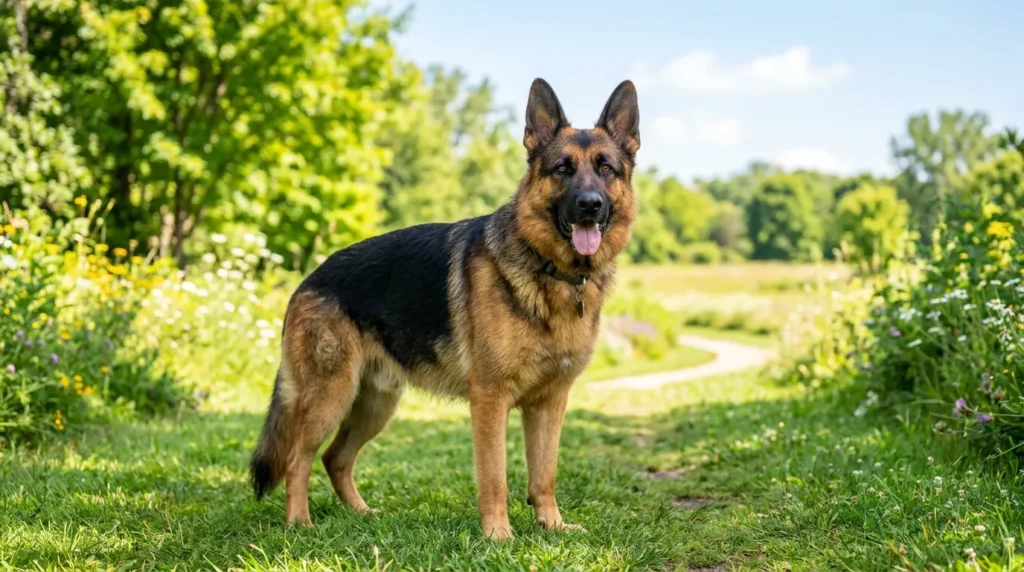
German Shepherds tend to drop more loose hair around the house, while Dutch Shepherds’ shedding and grooming depend more on the specific coat type.
If you hate frequent cleaning, it might be smart to consider shedding levels before choosing either breed and bringing it home.
8. Guarding Instinct & Alertness
German Shepherds often notice little changes around the home and can turn watchful when someone new comes near. That same “always aware” temperament helped the breed shift from herding into guarding, police, and even military work.
If you do good socialization early, it can help you end up with a confident companion that actually understands the gap between a real concern and just an ordinary visitor.
So, both breeds can act like attentive watchdogs, but the strong guarding drive needs some careful, thoughtful handling. Things like barking, staring, blocking access, or getting overly reactive at strangers shouldn’t just be treated like they’re automatically “good protection.”
Dutch Shepherds have that alert nature too, kind of pulled forward from farm work. They were expected to monitor livestock, pay attention to surroundings, and keep an eye on property. So, awareness shows up pretty easily, and it’s there by default.
9. Health & Lifespan
German Shepherds usually make it to about 10 to 12 years, though real lifespan can vary by dog. Common health worries include hip and elbow dysplasia, degenerative joint conditions, digestive issues, and degenerative myelopathy. Joint disease and degenerative myelopathy are key health considerations, which is why responsible breeding plus routine veterinary care matter a lot for this breed.
Dutch Shepherds are usually seen as a pretty solid working breed with an expected lifespan that often sits around 12-15 years. Still, you can’t say any breed is 100% clean, health-wise.

So, people who are thinking about getting one should really ask about health screening, family history, weight control, and what kind of vet care is planned instead of picking a puppy just because of how it looks or “working drive” stuff that looks impressive.
Dutch Shepherd health can drift a bit based on genetics and day to day lifestyle, nutrition, and how good the preventive care is. German Shepherds sometimes need extra eyes on joints and spine health, since these are the well-known risks with that line.
10. Which Breed Matches Your Lifestyle?
German Shepherds can match well with families or individuals who want a loyal pup with genuine serious work ability. A home that likes hiking, obedience training, dog sports, outdoor time, and steady practice tends to offer the sort of structure these dogs seem to love.
This choice gets less stressful when you straightforwardly look at your normal routine. Ask yourself how much time you realistically have to exercise, train, groom, socialize, and just hang out together.
Dutch Shepherd might be a match for active families who want a lively companion for training and also outdoor activities. This breed often draws attention from folks who are already into agility work, tracking, scent detection, herding, or honestly any dog sports that keep the brain busy.
Conclusion
So, if you put German Shepherd vs. Dutch Shepherd side by side, you basically get two outstanding working dogs, but they shine in different ways.
German Shepherds typically have a larger build, broad popularity, sturdy loyalty, and they tend to be very versatile overall. Dutch Shepherds, on the other hand, give you athletic movement, a quick and bright mind, a distinctive brindle coat, and a genuine connection to traditional herding duties.
Still you can’t base the decision only an appearance. The right fit really comes down to what time, experience, space, and daily energy you can actually provide.
Both breeds can turn into warm, loyal companions when training, exercise, socialization, and everyday attention are handled as part of the bond, not like extra chores that “need to be done.”
