




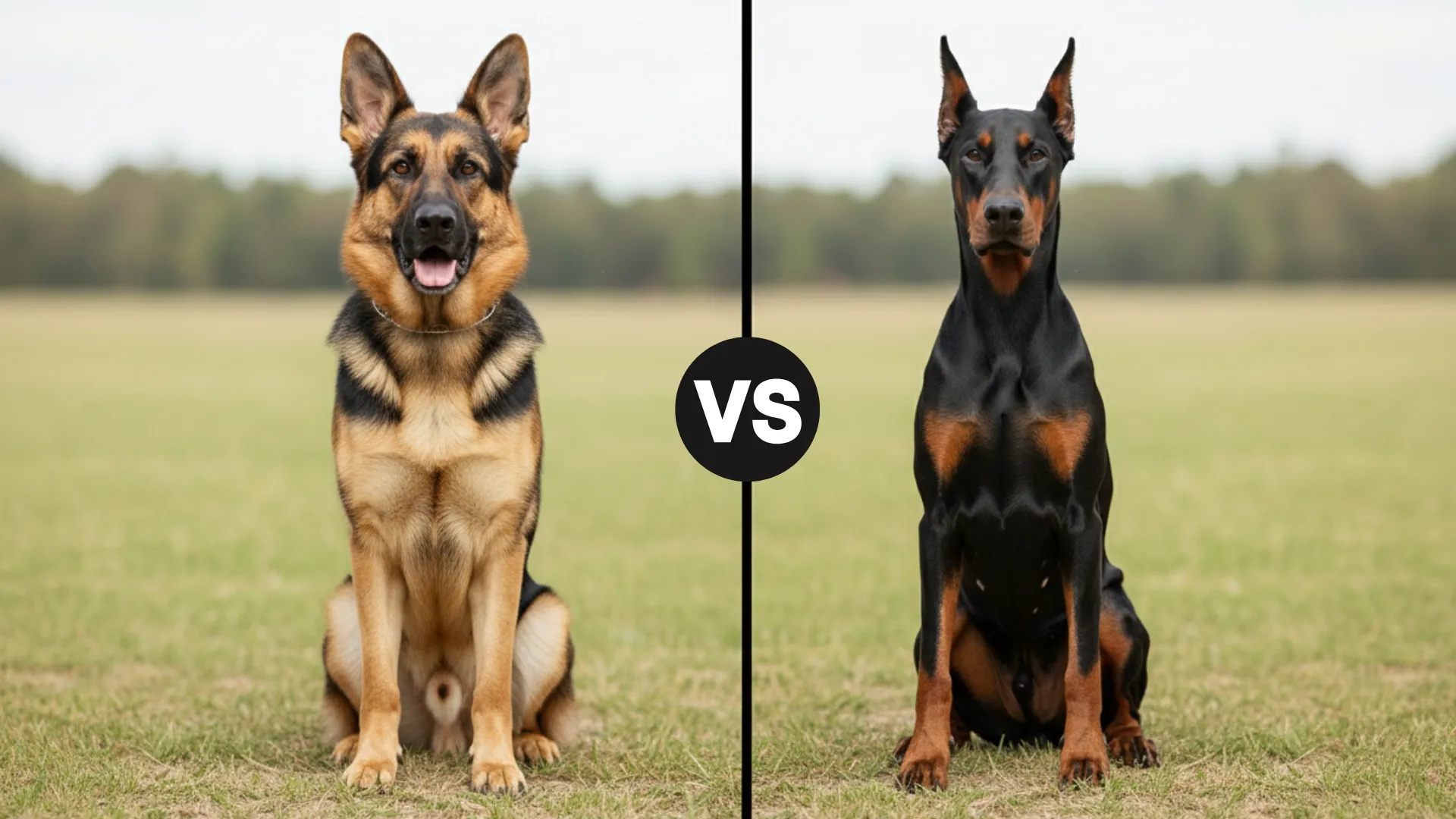
Alright, let’s settle a classic dog debate. You’ve got the German Shepherd, the all-purpose hero who can do pretty much anything, and the Doberman, the sleek bodyguard who looks like it means business even while napping.
Both are loyal, protective, and seriously impressive. But they don’t guard the same way, think the same way, or fit into every home the same way.
So… which one actually “wins”? The bold protector or the calculated strategist? The answer is not as obvious as you might think, and it depends a lot on you, your lifestyle, and what you expect from your four-legged security system.
Did you know?
German Shepherds have stayed among the most loved dog breeds in the U.S. for decades. They tend to be reserved around strangers but warm up quickly once they recognize someone as part of their circle. Dobermans, on the other hand, are known for their sharp minds and quick learning, often picking up tasks faster than expected.
German Shepherd vs Doberman: Which Guard Dog Wins?
Origin & Purpose
You’ve got two dogs here that were not just bred to look impressive; they were literally built for jobs. One started out managing sheep like a boss, the other was created to make sure no one messed with its owner. Guard dog energy from day one.
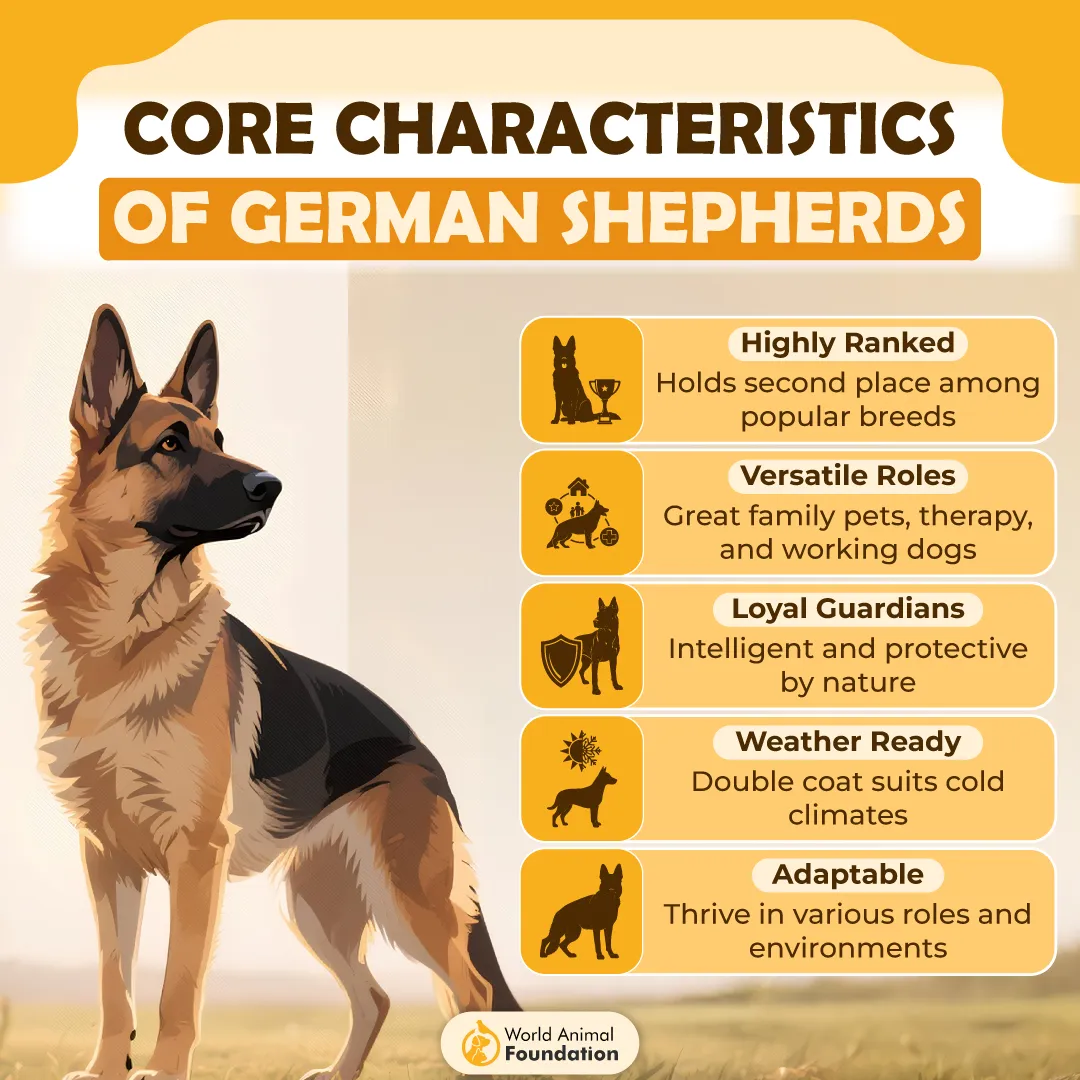
German Shepherds were developed in Germany as herding and working dogs, refined for intelligence, versatility, and work ethic. Over time, they became widely used in police, military, and search roles because they can handle multiple tasks with ease.
Doberman Pinschers were developed in Germany in the late 19th century by a tax collector who wanted a loyal and protective companion. The breed was intentionally created for alertness, speed, and strong guarding instincts, making protection their original purpose.
Size & Build
Now this is where things get visually interesting. One looks like a calm powerhouse ready to handle anything, while the other looks like it could sprint across a field, solve a problem, and be back before you finish blinking.
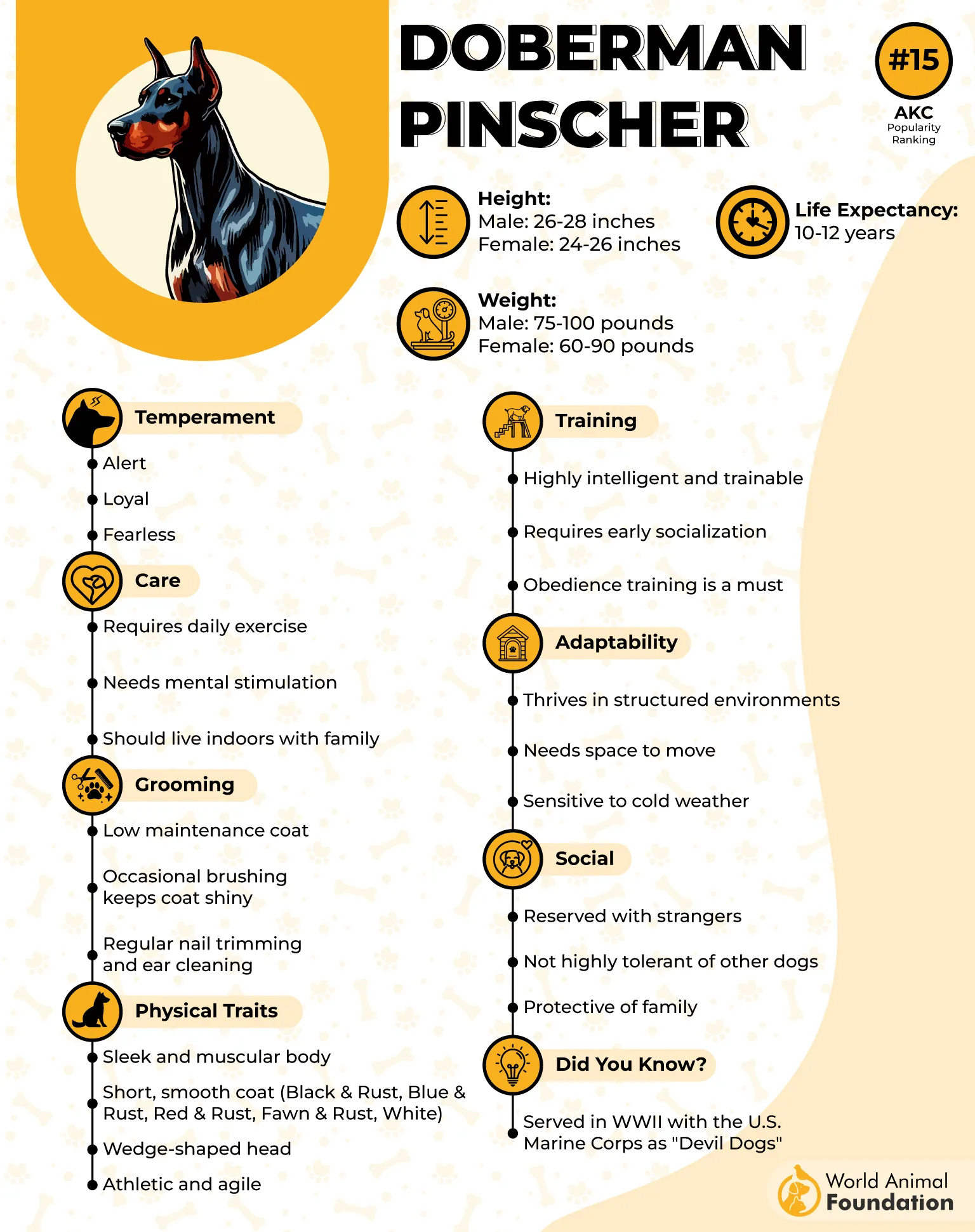
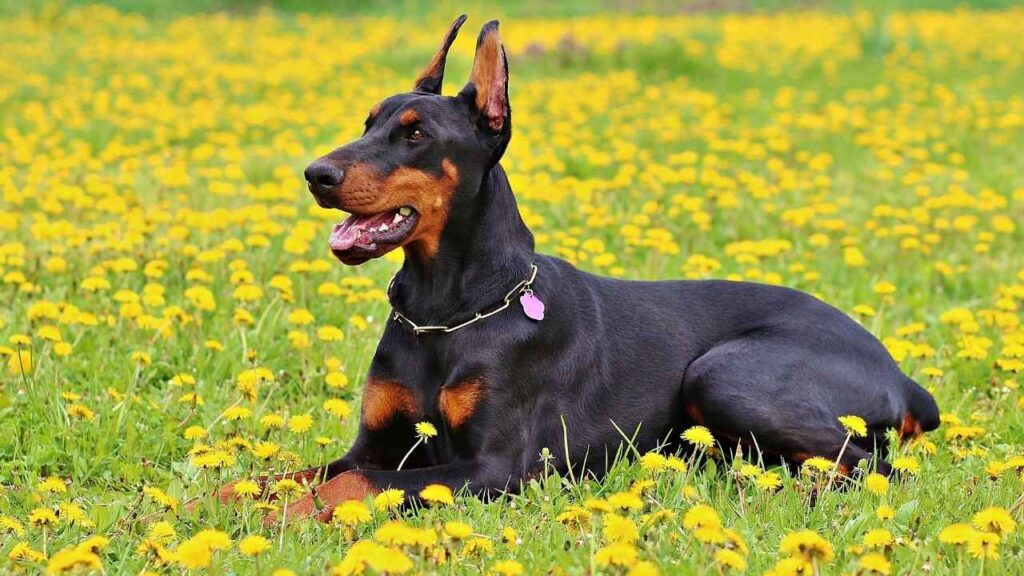
Dobermans are lean, muscular, and athletic with a short, smooth coat built for speed and agility. Their sleek, sharp appearance and naturally alert stance allow quick response and fast movement when something feels even slightly off.
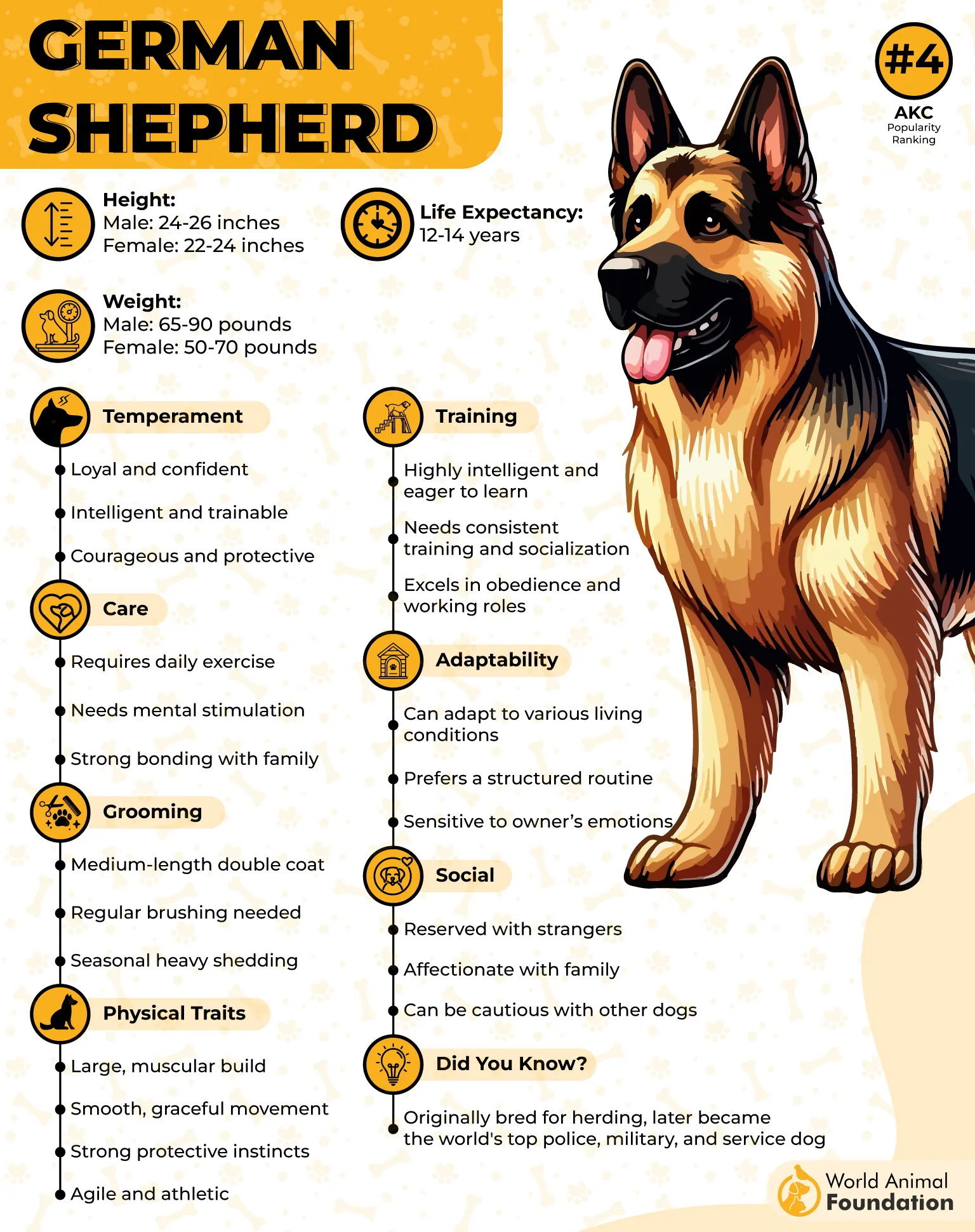
German Shepherds have a strong, slightly longer body with a medium-length double coat and a more substantial frame. Their build feels powerful and steady, and that thicker coat helps them stay comfortable across different environments without missing a beat.
Temperament & Personality
This is where the real personality showdown begins. One is quietly reading the situation like a strategist, and the other is already halfway to the door, deciding if something needs attention. Both loyal, just very different styles of showing it.
German Shepherds are intelligent, composed, versatile, and loyal, and they tend to assess situations before reacting. Their approach feels controlled and strategic, which makes them balanced companions who can protect while still staying calm around familiar people.
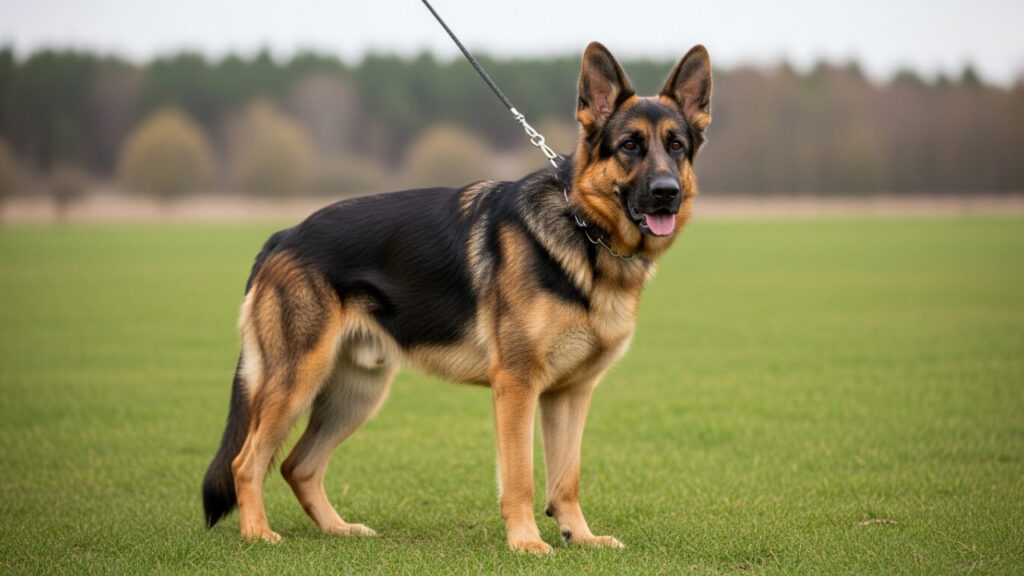
Dobermans are extremely loyal, highly alert, confident, energetic, and naturally suspicious of strangers. They react quickly to perceived threats and often form strong bonds with one or two people, giving them a more intense and immediate guarding presence.
Exercise Needs & Energy Levels
If you were hoping for a low-energy guard dog, this is your sign to keep scrolling. Both of these breeds have energy for days, and if you do not give them something to do, they will absolutely invent their own activities.
Dobermans require daily vigorous exercise like long walks, structured training sessions, agility, and interactive play. They need consistent activity to stay balanced, because without it, they can become restless and create their own entertainment.
German Shepherds also need substantial exercise and mental stimulation, including puzzle games, obedience drills, and scent-based activities. They enjoy having a job or task, so their energy feels more focused when they are mentally and physically engaged.
Trainability & Intelligence
Some dogs learn commands. Others feel like they are already five steps ahead, just waiting for you to catch up. This is one of those matchups where both breeds are smart, but they show it in very different ways.
As mentioned by the American Kennel Club (AKC), early socialization and puppy training classes are essential for shaping a well-mannered adult German Shepherd. With consistent, reward-based training, this highly intelligent breed thrives and stays happiest when closely involved in everyday family life.
Dobermans are highly intelligent and learn quickly, responding well to structured and consistent training. They require clear boundaries and confident handling, and without proper guidance, their protective instincts can become overactive and harder to manage over time.
Coat Type & Grooming
Here is where things shift from brains to brushing. One dog is fairly low effort when it comes to grooming, while the other will remind you very quickly that fur has a personality of its own.
Dobermans have a short, smooth coat that requires minimal grooming and only occasional brushing to keep it healthy. They do not need frequent bathing, and their overall coat care routine is simple and easy to maintain.
As noted by PetMD, German Shepherds need regular brushing to manage heavy shedding, along with occasional baths to keep their coat healthy. Keep an eye on their eyes and ears, trim nails regularly, and stay consistent with grooming to avoid bigger issues later.
Health & Lifespan
Every breed comes with its own set of health considerations, and these two are no exception. Knowing what to expect makes a huge difference, especially when you are planning for a long-term companion who depends on you.
German Shepherds may experience conditions like hip and elbow dysplasia, degenerative myelopathy, heart disease, and bloat. Their typical lifespan is 12-14 years, and regular care, proper diet, and early monitoring can help support their overall well-being.
According to WebMD, Dobermans are generally healthy but can develop issues like heart conditions, thyroid problems, and joint concerns over time. Their average lifespan is around 10–12 years, so regular vet care and early attention to changes really matter.
Early Socialization & Behavior Development
This is the part people sometimes underestimate. These dogs are smart, strong, and full of personality, which means how they are raised early on can shape everything that comes later.
German Shepherds need early socialization and proper training to grow into confident and well-mannered dogs. With the right exposure and structure, they become balanced companions who are gentle with their family while staying alert in unfamiliar situations.
Doberman Pinschers require early and consistent socialization along with obedience training to develop stable behavior. Without it, they can become pushy or overly reactive, but with proper guidance, they grow into loyal, loving, and well-adjusted companions.
Guarding Instinct & Protection Ability
Now we are back to the main event. Both of these dogs take protection seriously, but the way they handle it feels completely different, almost like two security styles working on the same mission.
German Shepherds are brave, confident, and willing to protect their people while still assessing situations before acting. Their guarding style feels controlled and thoughtful, making them dependable protectors who balance alertness with steady decision-making.
Dobermans tend to be naturally protective and can quickly determine when there is a threat. Their approach is more direct and decisive, and they react faster, giving them a sharper and more immediate protective response when needed.
Conclusion
So, here is the truth. Both of these dogs show up ready to protect, but they do it in their own style. The German Shepherd thinks, observes, and then acts. The Doberman senses, reacts, and takes charge instantly. It really comes down to what kind of presence you want beside you every day.
If you want a steady, adaptable partner who can balance protection with calm companionship, the German Shepherd stands out.
If you prefer a bold, alert protector who reacts fast and stays intensely loyal, the Doberman might feel like the perfect match.
Take your time, picture your daily life, and choose the one that fits your world.
