




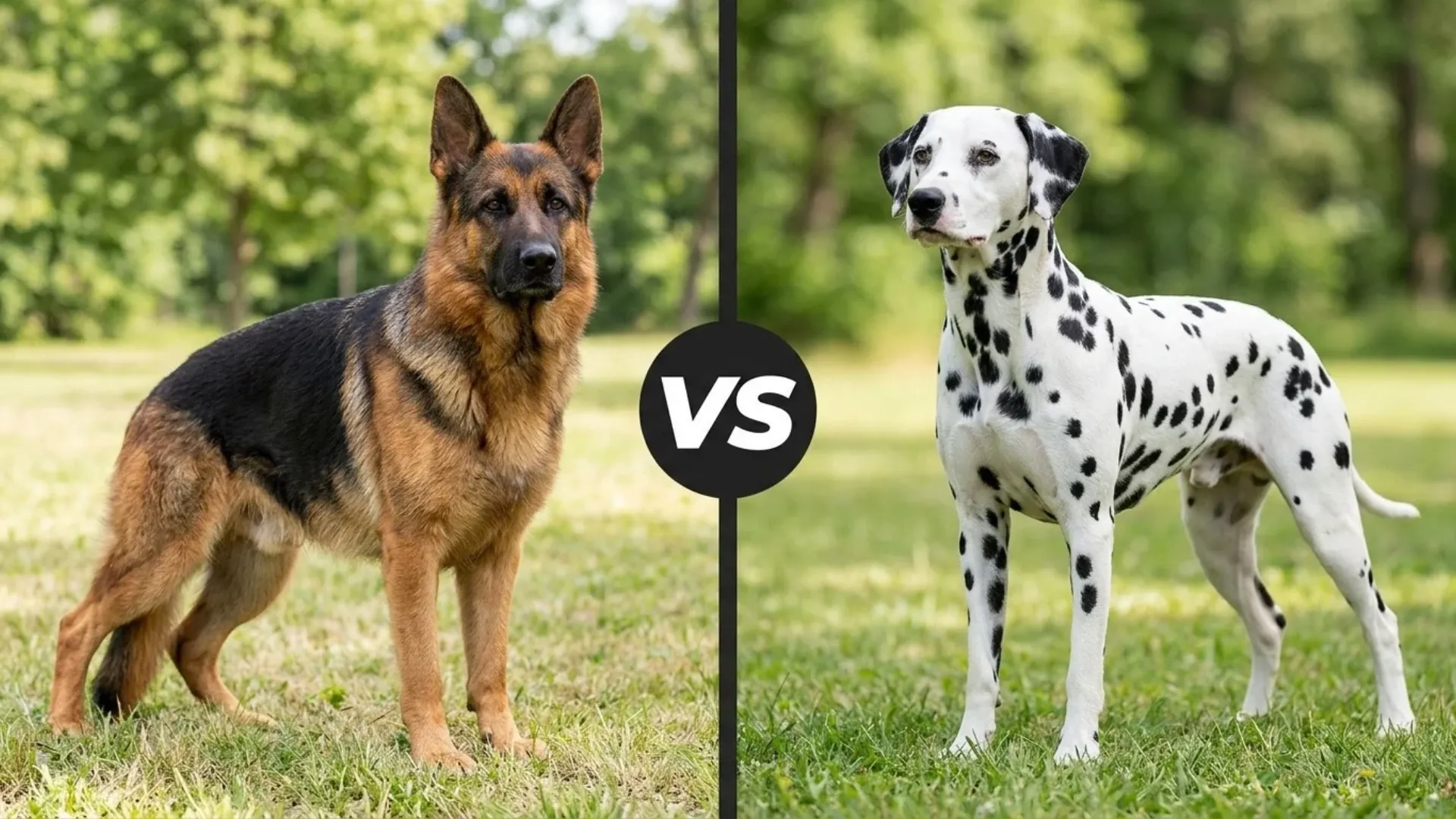
At first glance, the German Shepherd and the Dalmatian share a reputation as iconic, high-energy working dogs that turn heads wherever they go. Yet beneath their athletic builds and striking appearances lie two very different canine histories, temperaments, and daily care needs.
Choosing between them comes down to understanding how a focused, versatile herding guardian compares to a spirited, endurance-built carriage dog.
Developed in Germany to herd and protect flocks, the German Shepherd is famous for its sharp intelligence, deep handler loyalty, and adaptability across police, service, and family roles.
The Dalmatian, by contrast, spent centuries trotting alongside horse-drawn carriages and fire engines—giving this spotted athlete boundless stamina, a playful streak, and a more independent, outgoing personality around the home.
Whether you are looking for a trainable working partner, a lively running companion, or a loyal family pet, comparing these two breeds side by side reveals which one fits your routine best.
German Shepherd vs. Dalmatian
This matchup is not about crowning a winner. It is about handing a family the real information before any leash gets clipped on a collar.
Seven rounds decide the outcome here, covering everything from where each breed came from to how long a devoted friend like this tends to stick around. A few answers will surprise even seasoned owners of large dog breeds.
Grab a coffee and settle in. This reads like two experienced dog people trading notes, and neither one is holding back.
Origin and History
The German Shepherd is barely 125 years old, which makes it one of the younger working breeds on this list. Max von Stephanitz began standardizing Germany’s herding dogs in 1899, chasing a single idea: a dog that could think as fast as it moved. AKC traces the breed’s official recognition to 1908, with the German Shepherd Dog Club of America following in 1913.
That fast rise still echoes today. German working lines and American show lines split from the same root stock and now move differently enough to confuse new owners of a purebred German Shepherd.
The Dalmatian tells an older, foggier story. Spotted dogs appear in European artwork long before any club existed to register them, and this breed’s documented role as a coach dog guarding horses and cargo stretches back centuries.
Firehouses adopted the Dalmatian once horse-drawn engines became standard gear, and the job stuck for generations after engines went mechanical. The breed entered the American Kennel Club’s registry in 1888, 20 years ahead of its rival in this comparison.
One breed was engineered with a job already picked out. The other wandered into its job as a friend and protector and simply never left.
Size and Physical Characteristics
Size will not settle this matchup alone, but it sets the stage early and often gets underestimated. Orvis ties the German Shepherd’s proportions to a ratio of 10 units of length to 8.5 units of height, giving the breed its long, rolling stride.
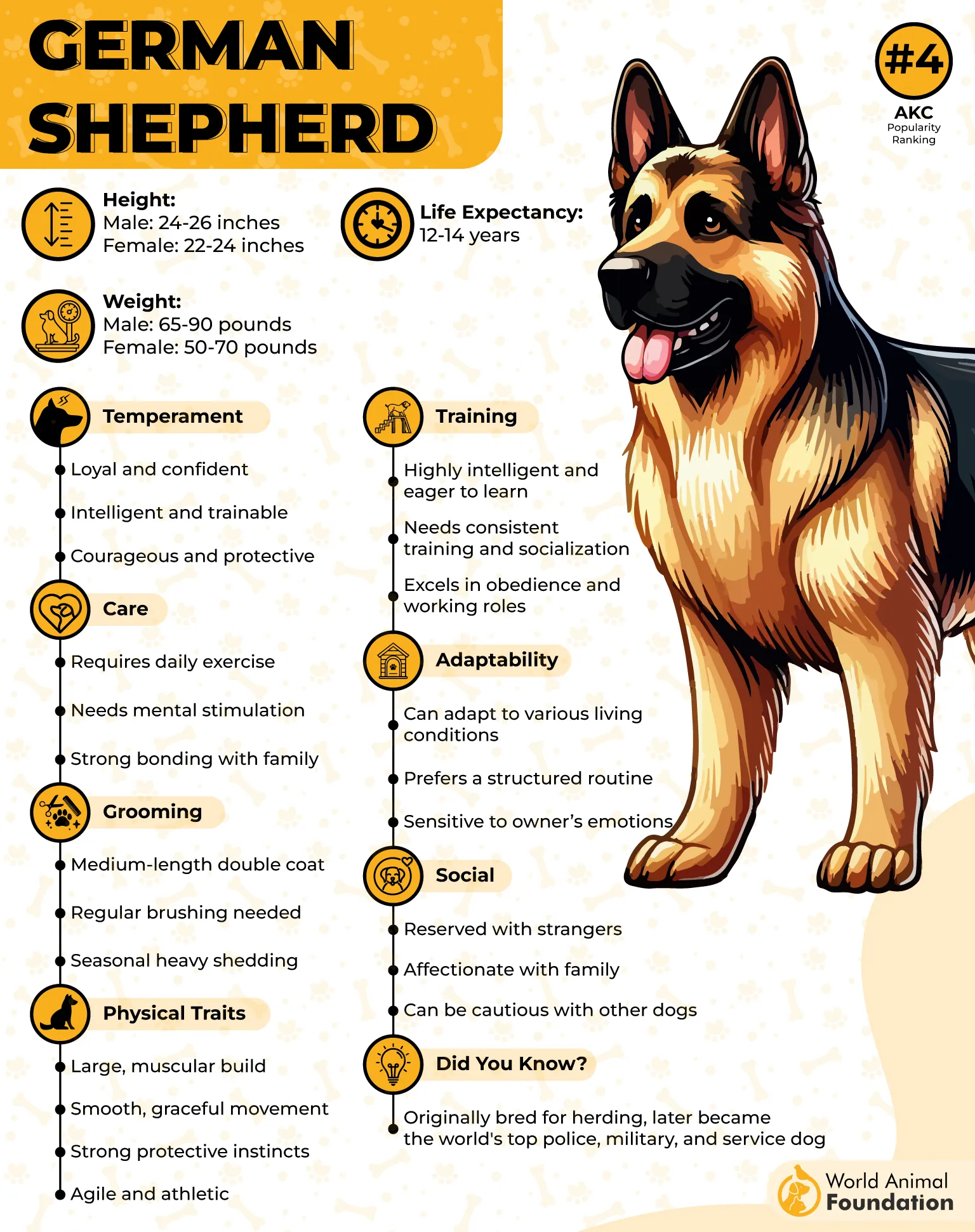
That frame carries real weight too. A mature German Shepherd typically lands between 50 and 90 pounds, built dense through the chest and shoulders.
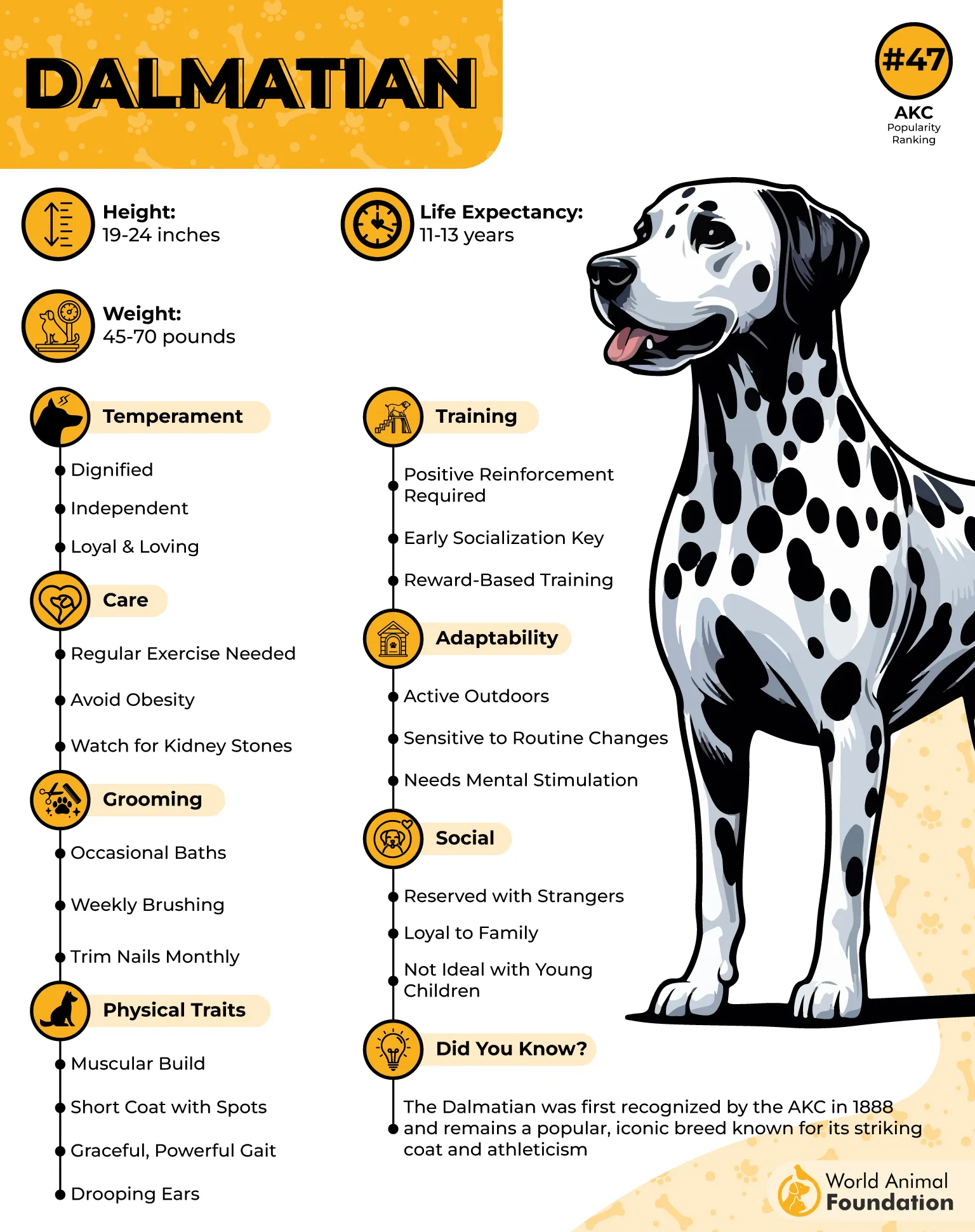
The Dalmatian trades bulk for a leaner, more compact athletic build. Both breeds land in the large dog breeds category on paper, yet each carries that size in a completely different way.
German Shepherd: Stands 24 to 26 inches at the shoulder for males, slightly less for females, with a domed forehead and dense double coat.
Dalmatian: Stands 19 to 24 inches at the shoulder, with a short single coat and round spots spaced across a white base.
A German Shepherd built close to standard moves like a tool designed for a job. An adult Dalmatian built close to standard moves like an athlete that happens to wear polka dots.
Temperament and Personality
Which of these two dogs would rather stay glued to your side every waking minute? Both, as it turns out, just on different terms.
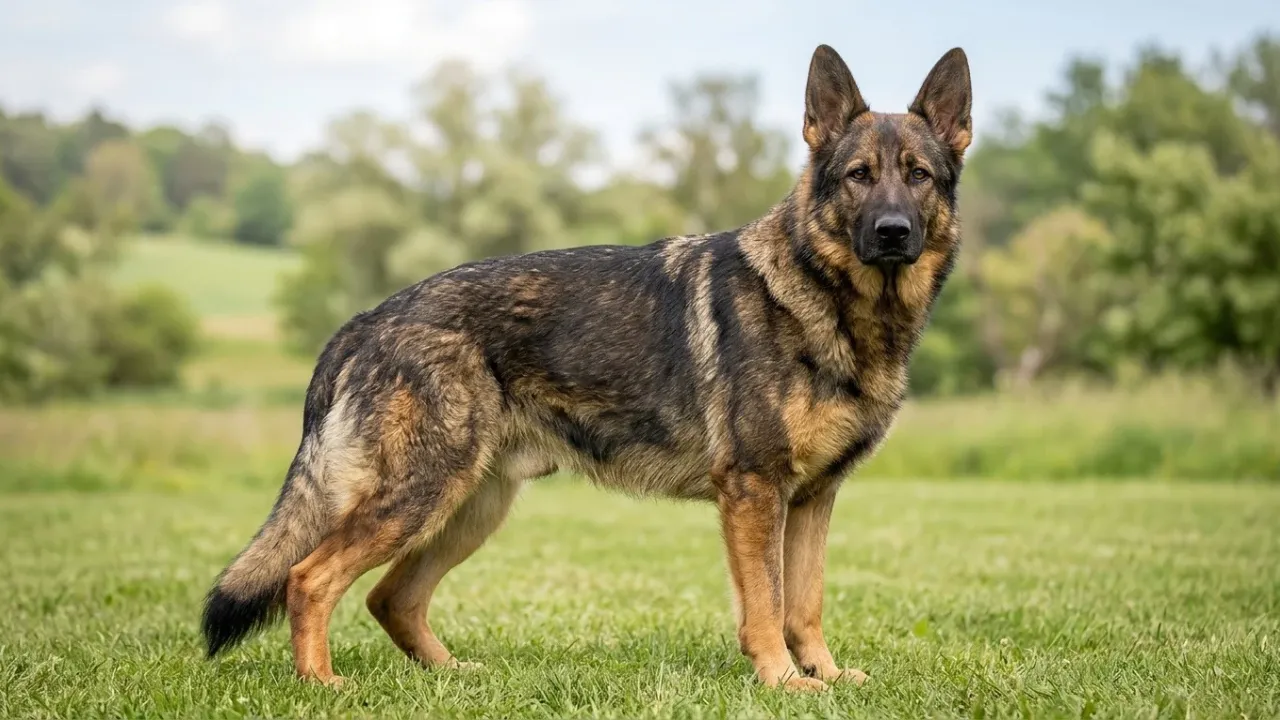
The German Shepherd forms a tight bond with its own household and stays reserved, even watchful, around strangers. That caution is not shyness. It is a working dog reading the room before choosing to relax.
The Dalmatian runs warmer with familiar people and stays politely distant with new ones. Early socialization matters enormously here, since an under-socialized Dalmatian can turn territorial, especially toward unfamiliar dogs of the same sex.
An interesting wrinkle for new owners: Dalmatian puppies are born solid white, with their signature spots emerging only in the first few weeks of life. The AKC also places these two breeds in entirely different groups, Herding for the German Shepherd and Non-Sporting for the Dalmatian, two categories that could not describe more different jobs.
Both dogs show gentle attributes with their own family and a more guarded character around everyone else. Neither temperament suits a hands-off owner.
Exercise and Energy Needs
90 minutes. That is roughly where most veterinary guidance lands for a healthy adult German Shepherd’s daily exercise floor, and plenty of working lines want more.
A bored German Shepherd does not nap quietly. It paces, chews, and invents its own jobs around the house, usually ones nobody asked for.
The Dalmatian pushes that number even higher. PDSA lists a minimum of 2 hours of daily exercise for the breed, and that figure assumes real off-leash running, not just a leash walk around the block.
German Shepherd: 60 to 120 minutes daily, split between structured walks, play, and mental work like scent games.
Dalmatian: At least 120 minutes daily, built around sustained running rather than short bursts.
A tired German Shepherd is a thinking dog with nothing left to overthink. A tired Dalmatian is simply a dog that finally burned through its famous coach-dog stamina.
Training and Intelligence
Training these two breeds calls for two different playbooks, even though both learn quickly.
The German Shepherd ranks third among all breeds for obedience and working intelligence in Stanley Coren’s widely cited rankings. That ranking shows up at home as a dog that reads routines fast and gets bored even faster without a job to do.
The Dalmatian learns just as quickly but negotiates every lesson first. Owners and trainers consistently describe this breed as intelligent and eager to please, right up until a command conflicts with whatever the dog had already planned to do. The Dalmatian Club of America was organized in 1905 partly to formalize training and conformation standards across the breed.

Consistency wins with both dogs, though the method shifts. A German Shepherd responds to structure and a clear chain of command, while a Dalmatian responds better to patience, positive reinforcement, and a long memory for routine.
Grooming and Coat Care
Which of these two breeds actually sheds more? Most people guess wrong, and the short-coated breed is usually the surprise answer.
The German Shepherd carries a dense double coat that sheds all year steadily, then blows its undercoat twice annually, typically each spring and fall. Owners describe those two to four week stretches as a second dog’s worth of fur arriving at once.
The Dalmatian looks low-maintenance thanks to its short, smooth coat, yet Royal Canin rates the breed only 1 out of 5 for grooming needs while still flagging a shedding level of 3 out of 5. Those fine, stiff hairs work their fur into upholstery in a way longer coats rarely manage.
German Shepherd: Brush 2 to 3 times weekly normally, daily during the twice-yearly coat blow.
Dalmatian: Brush weekly with a rubber grooming mitt, more often during seasonal shedding peaks.
Neither breed needs a professional groomer on a tight schedule. Both still need a vacuum that is ready for daily care.
Health and Lifespan
12 to 14 years. That is the realistic life expectancy window most veterinary guidance gives the German Shepherd, and genetics plays a bigger role in reaching the high end than most owners expect.
VCA flags bloat, spinal disorders, and degenerative myelopathy as recurring concerns worth discussing with a breeder before bringing a puppy home. Hip and elbow dysplasia round out the list, both tied to this breed’s rapid growth as a puppy.
The Dalmatian runs a slightly longer average, with WebMD placing typical life expectancy between 11 and 13 years. Deafness shows up more often in this breed than almost any other, and a puppy with a deaf parent carries a higher chance of inheriting it.
Urinary stones round out the Dalmatian’s health watchlist, tied to a uric acid quirk unique to this breed among dogs. Diet and water intake matter more here than in most other large breeds.
Both dogs reward preventive vet care generously. Neither one forgives owners who skip it.
Conclusion
So which breed actually wins this matchup? Neither, and that is the honest answer. The German Shepherd suits a family ready for structure, daily training, and a dog that treats every walk like a job. The Dalmatian suits a household built around constant motion, patient training, and a genuine love of that spotted, head-turning look.
Both breeds reward owners who respect their history instead of fighting it. A working dog bred for purpose and a coach dog bred for endurance both ask for the same thing underneath: real time, real exercise, and a family willing to meet them halfway.
Pick the lifestyle first. The right, recommended breed for your dog tends to follow on its own.
