




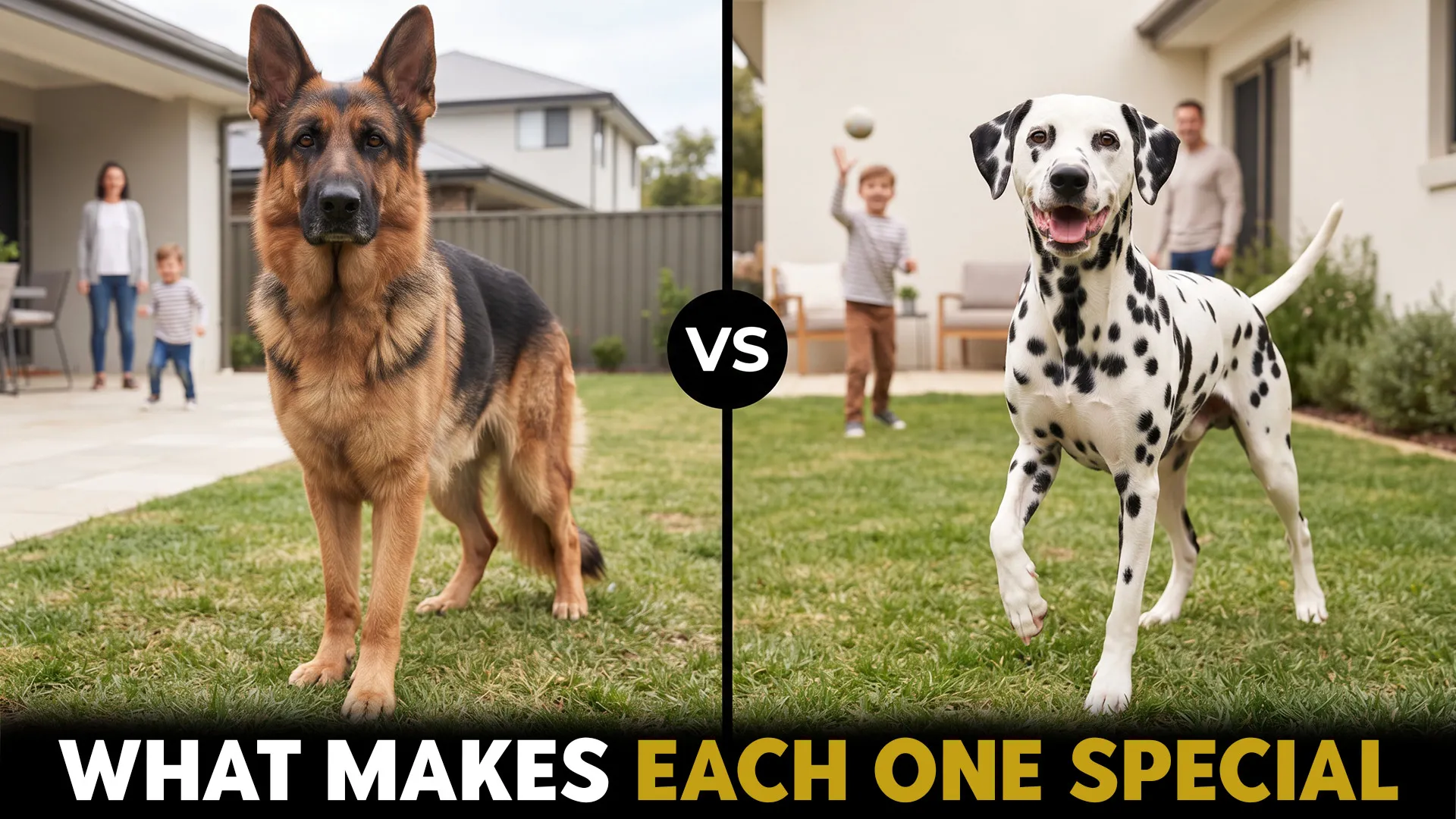
One walks into the room looking like they have important business to handle. The other seems perfectly capable of turning an ordinary Tuesday into an event. Put them side by side, and suddenly this comparison gets a lot more interesting.
Both breeds bring strong personalities, plenty of energy, and qualities that can work beautifully in the right family. The real differences start showing up in how they behave, how much activity they expect, how they respond to training, and what everyday care actually looks like.
Some of those differences are obvious. Others are hiding behind the famous coats and familiar reputations. So, before picking a favorite, let’s see what each dog quietly brings to family life.
Did you know?
German Shepherds have stayed among America’s most popular breeds for decades, combining family loyalty with a naturally watchful personality too. Meanwhile, British aristocrats once favored these spotted carriage dogs, inspiring colorful nicknames such as English Coach Dog and Plum Pudding Dog.
German Shepherd vs. Dalmatian: Hidden Benefits for Families
1. Origins & Purpose
These two breeds come with very different job résumés, and that history still shows. One was developed in Germany for serious herding work, while the other became famous for running beside coaches, guarding horses, and later working around firehouses.
For the German Shepherd, purpose has always meant having something useful to do. The breed was shaped for herding, then became valued for police, military, tracking, and search work, giving families a dog with a naturally work-focused background.
The Dalmatian took a much more theatrical route through history. Its coach-dog past involved running beside horse-drawn carriages, guarding equipment, and staying alert on the move, which helps explain why this spotted dog still carries such energetic working character.
2. Size & Build
Side by side, these dogs both look substantial, but they do not feel built from the same blueprint. The Dalmatian carries a sleek, athletic outline, while the German Shepherd presents a stronger, muscular frame with a more powerful working-dog silhouette.
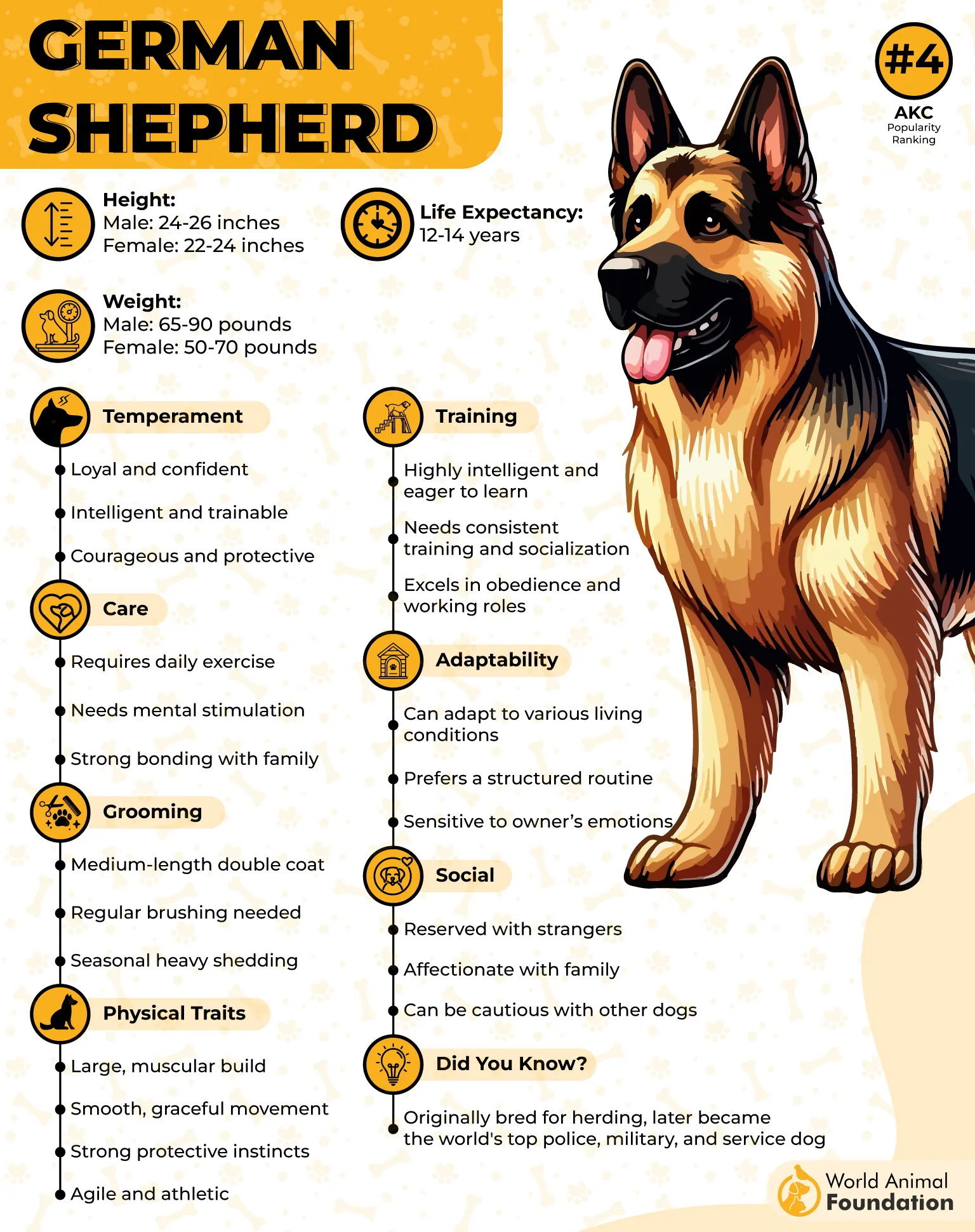
The Dalmatian is built for movement rather than bulk. Its body is athletic, muscular, well-balanced, and designed for endurance, creating that unmistakable combination of elegance and stamina that once made long runs beside horses part of the job.
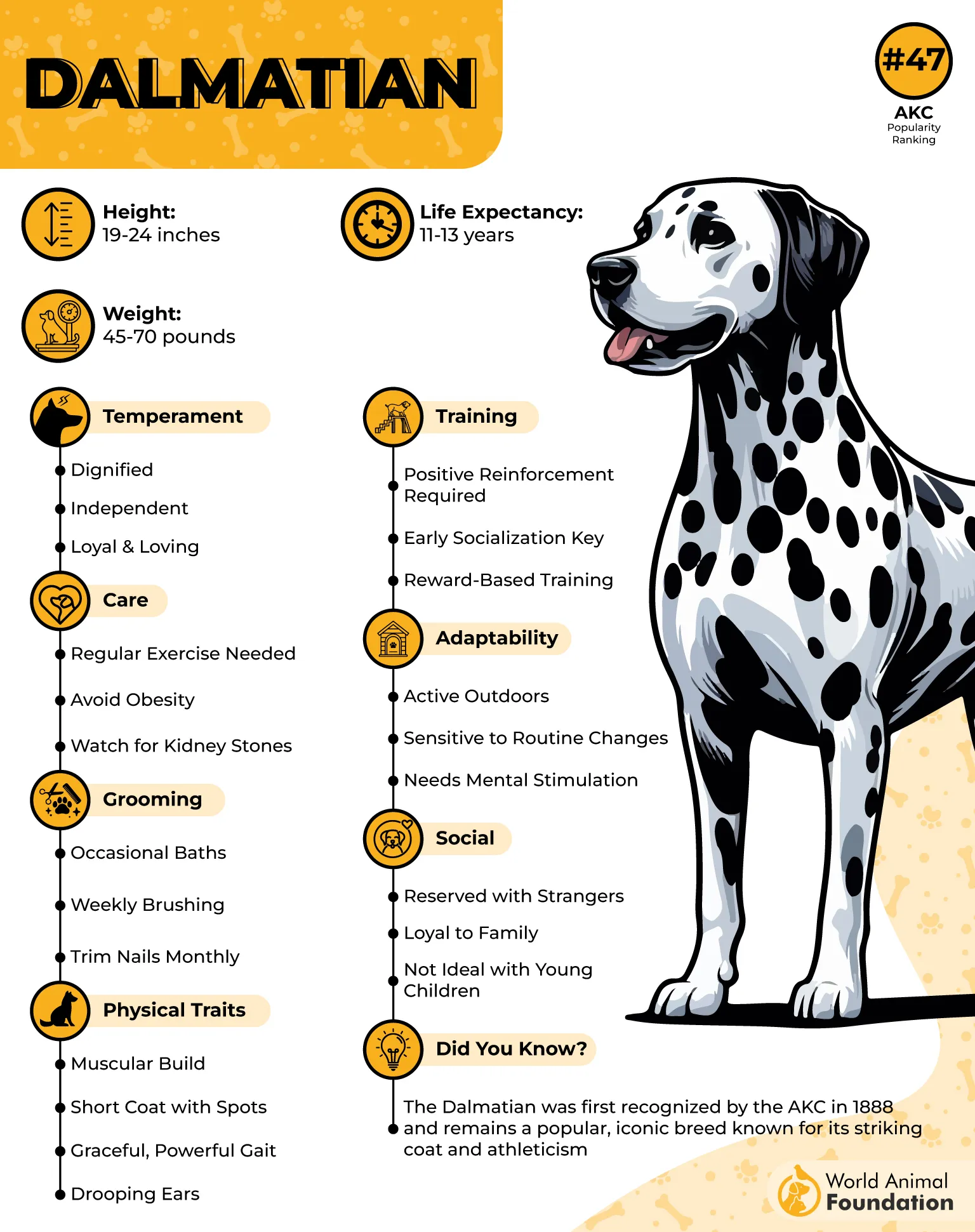
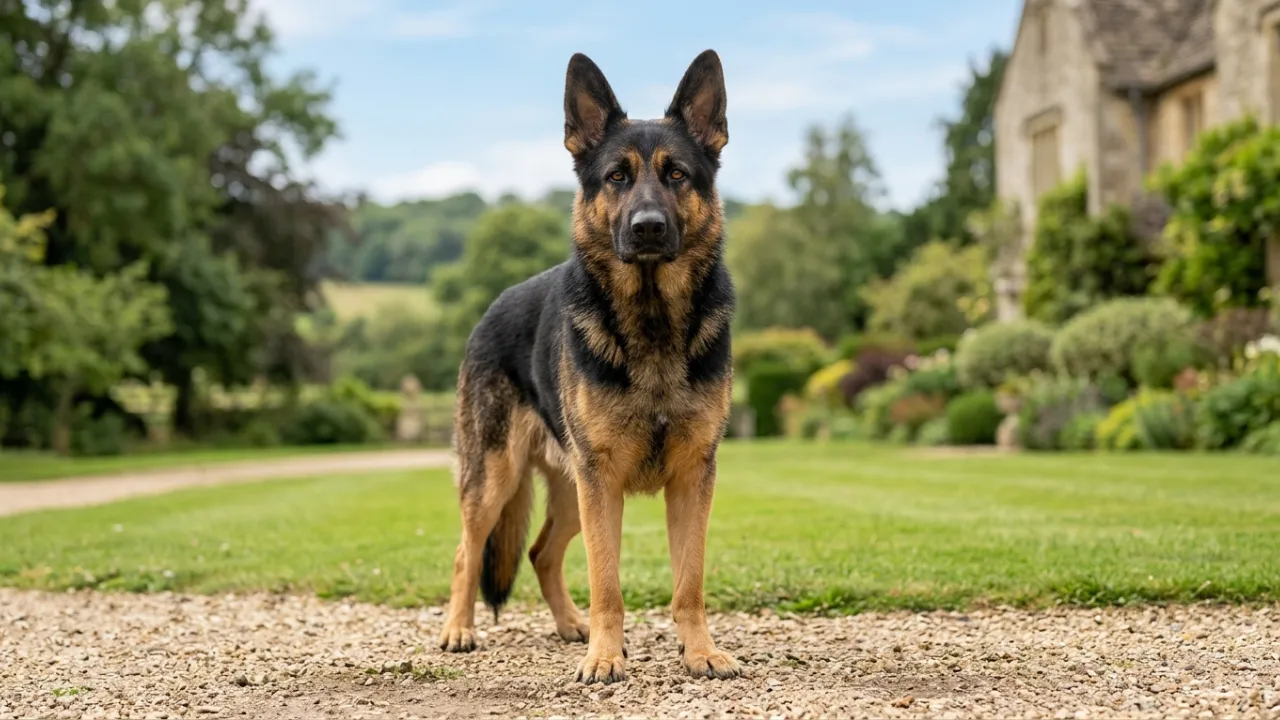
The German Shepherd brings a heavier, more powerful presence to the comparison. Its agile, muscular body was shaped around demanding work, with strength and athleticism working together rather than making the dog look bulky or clumsy in motion.
3. Pricing & Availability
Money talks, and these two breeds do not enter the conversation at quite the same level. German Shepherd puppies generally come with a higher purchase price, while Dalmatians tend to be the more budget-friendly option upfront.
For the German Shepherd, popularity and demand can make that first purchase feel a little heavier on the wallet. The good news is that availability is strong, so families interested in the breed are not dealing with a particularly hard-to-find dog.
The Dalmatian is typically easier on the initial budget while still being widely available. That gives families another practical option, especially if they love the spotted look but would rather avoid the higher starting cost associated with a German Shepherd.
4. Temperament & Personality
Personality is where these two dogs stop looking like simple alternatives and start feeling like very different housemates. The Dalmatian leans lively, playful, sensitive, and social, while the German Shepherd comes across as alert, confident, loyal, and watchful.
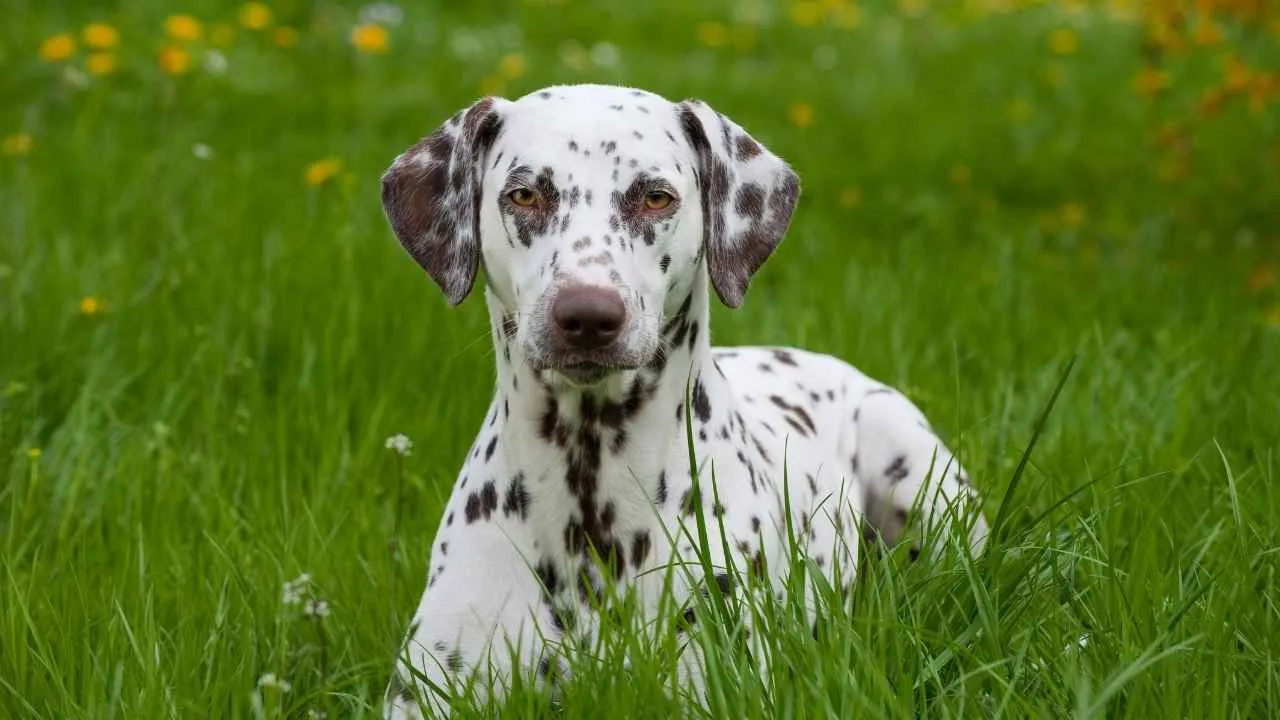
The Dalmatian brings plenty of personality to the room. Active, friendly, outgoing, sensitive, energetic, intelligent, and playful are all listed traits, along with strong social needs, so this is a dog that tends to enjoy being involved rather than sidelined.
The German Shepherd has a more serious social style. Alert, courageous, intelligent, obedient, confident, curious, loyal, and watchful all appear among its listed traits, creating a personality that can feel devoted and engaged without being quite as socially demanding.
5. Exercise Needs & Energy Levels
Neither breed is exactly built for a lazy schedule. Both bring plenty of energy, but the Dalmatian generally needs more activity, while the German Shepherd still expects regular exercise and enough mental engagement to stay happily occupied.
As noted by PetMD, German Shepherds need one to two hours of exercise every day to support their physical and mental health. Without enough activity and mental stimulation, all that stored-up energy can turn into unwanted behavior.
The Dalmatian is the one that really likes to keep moving. Long walks, runs, hikes, and active games fit this athletic breed well, making it a better match for households that genuinely enjoy an energetic daily routine.
6. Training & Obedience
There is no shortcut button with either breed, but their learning styles do feel different. Both are intelligent and trainable, yet consistency matters. One responds especially well to clear structure, while the other benefits from patient, positive guidance.
According to the AKC, Dalmatian training should start early, with plenty of positive experiences around unfamiliar people and places. Because these dogs can be sensitive, positive, reward-based training and early socialization help encourage polite, well-mannered behavior.
The German Shepherd brings strong trainability to the table and is known for following commands well. Consistent training and mental stimulation help keep that sharp brain busy, which is useful when a family wants a responsive, task-oriented dog.
7. Grooming Needs & Shedding
Here comes the fur question, because both dogs shed more than sleek photographs might suggest. Their coats are quite different, though. One has a dense double coat, while the other wears a short, fine coat that is simpler to maintain.
As mentioned by Purina, German Shepherd grooming works best with several thorough brushing sessions each week to remove loose and dead hair. Regular grooming can also help manage shedding, while bathing is only needed occasionally and trimming is unnecessary.
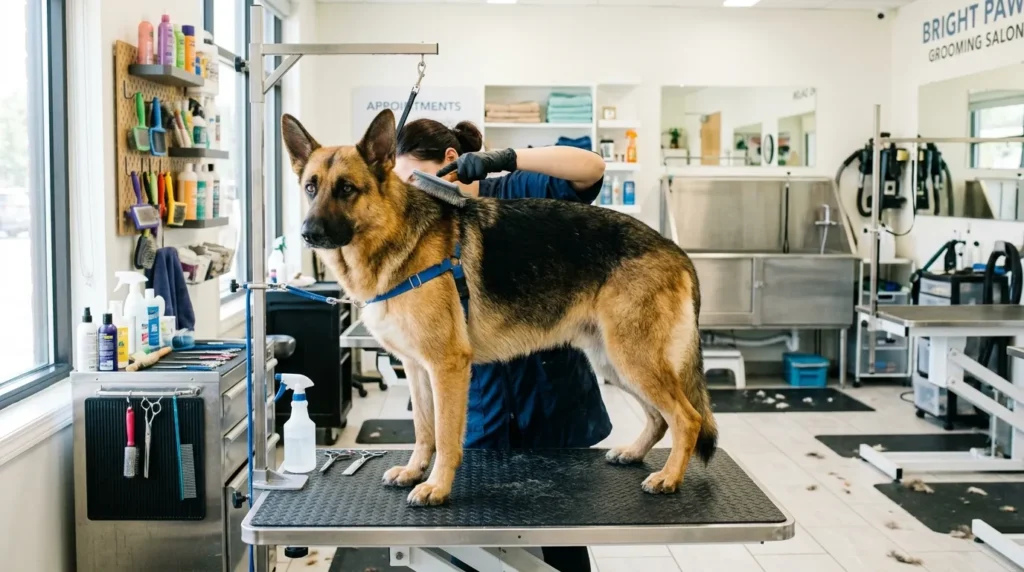
The Dalmatian keeps grooming simpler, even if the shedding does not completely disappear. Its short coat is considered low maintenance, and weekly brushing helps remove loose hair while keeping that famous spotted coat looking neat and glossy.
8. Working Background & Protective Instincts
If these dogs had résumés, neither would be short on job experience. Their work histories went in different directions, and those backgrounds still help explain why both breeds can be alert, purposeful, and aware of what is happening nearby.
The Dalmatian built its reputation beside horses and carriages, where it guarded coaches, horses, and equipment. That watchful streak never completely vanished, and the breed is still described as protective, alert, and willing to warn when something seems off.
The German Shepherd took the serious-work route with enthusiasm. Its background includes herding, police work, military service, scent detection, and search and rescue, while its guarding and protection instincts are rated above average in the comparison material.
9. Health & Lifespan
Now for the less glamorous but seriously important part. Both breeds have health concerns families should understand before bringing one home, and their lifespans are fairly close, making good long-term care an important part of either decision.
The German Shepherd has an expected lifespan of 10 to 13 years. Health concerns mentioned for the breed include hip and elbow dysplasia, degenerative myelopathy, and bloat, so knowing what may appear over time helps owners stay prepared.
The Dalmatian typically lives 11 to 13 years. Deafness and urinary stones are notable concerns, along with skin allergies and hip dysplasia, making responsible health care especially important for keeping this energetic spotted dog feeling its best.
10. Which Energetic Dog Fits Your Lifestyle?
So, which energetic personality fits the rhythm of your household? That depends on your family’s activity level, available time, and how involved everyone wants to be. Both breeds bring plenty of energy, but they channel it in very different ways.
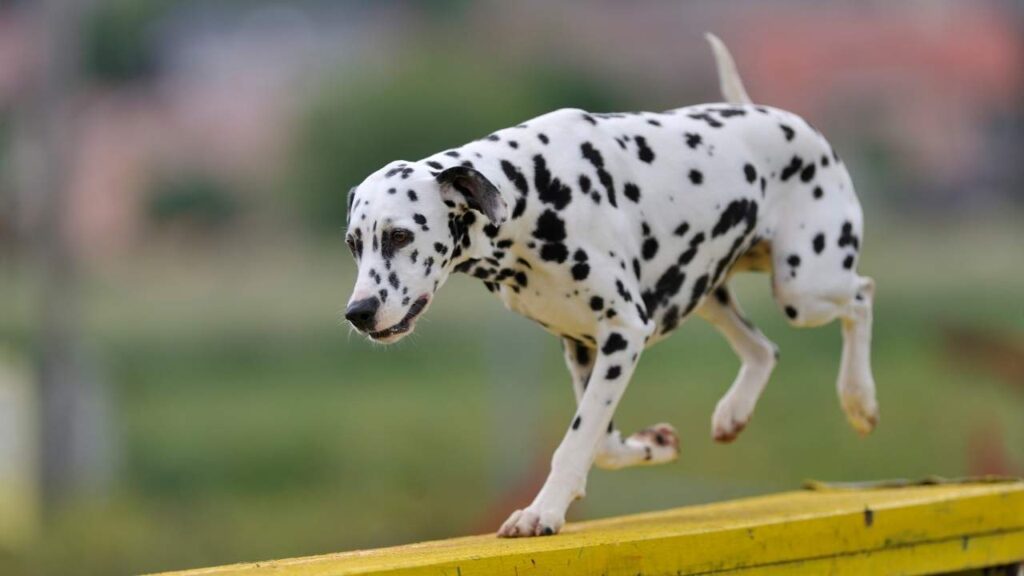
The Dalmatian suits active families who genuinely enjoy movement, not people who merely own walking shoes. High energy, strong stamina, and a social nature make this breed happiest with households that can provide regular activity, attention, and plenty of company.
The German Shepherd also fits families prepared for an active routine, but its energy pairs naturally with structure and purposeful tasks. Exercise, obedience work, and mental stimulation can suit households that enjoy staying involved and giving their dog something meaningful to do.
Conclusion
Two famous breeds, two very different personalities, and honestly, that is what makes this comparison so interesting. The German Shepherd brings loyalty, focus, trainability, and protective instincts, while the Dalmatian adds playful energy, stamina, and a social spark.
Neither is a casual commitment. The better fit comes down to the kind of activity, structure, attention, and personality your household can comfortably handle.
Pick the dog whose needs genuinely match your routine, because the best family bond starts when expectations and lifestyle line up beautifully.
