




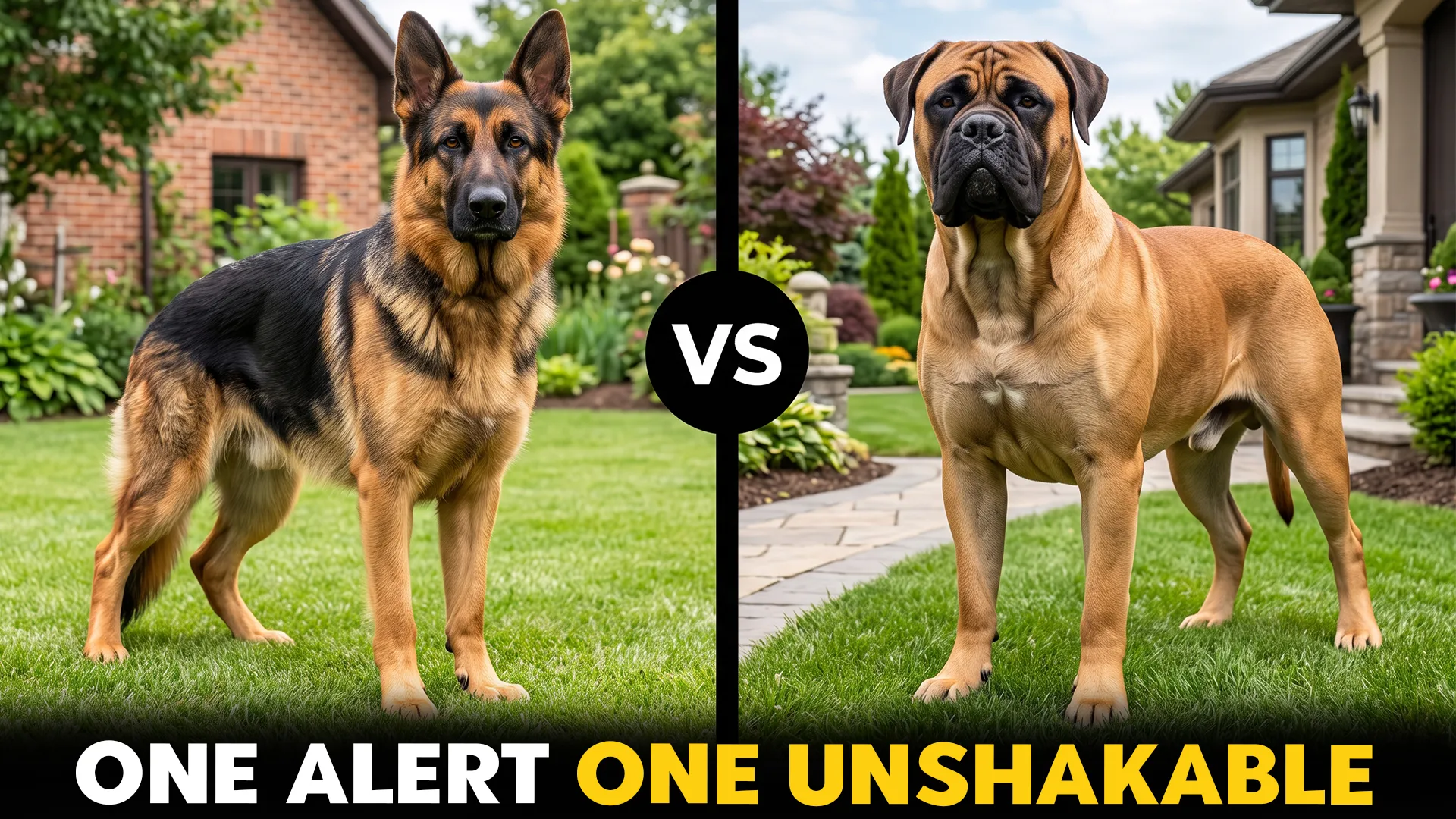
Ever had a dog pass by and your brain instantly wonder, “Is that a protector of a kingdom or a giant cuddle expert in disguise?” That’s the exact contrast we see when comparing the German Shepherd and the Bullmastiff.
The German Shepherd is sharp, energetic, and highly alert, often showing deeply loyal behavior when given proper early training. It’s the kind of dog that thrives on structure, activity, and mental engagement, always ready to respond to its owner and surroundings.
On the other side, the Bullmastiff is a calm, powerful, gentle giant with a naturally protective temperament. Despite its intimidating size, it often prefers a relaxed lifestyle, staying composed while still being watchful when circumstances demand it.
So, it really comes down to this—one thrives on action and precision, while the other brings quiet strength and steady presence. Understanding their nature makes choosing the right companion much easier.
German Shepherd vs. Bullmastiff: Important Breed Traits to Know
Origins & Purpose
Both the German Shepherd and Bullmastiff were developed with strong working roles in mind, but their original purposes shaped very different breed traits that still define them today.
German Shepherd
Originally bred in Germany in 1899 for herding sheep and farm work
Developed from traditional German herding dogs to improve intelligence and obedience
Later became a top choice for police, military, search-and-rescue, and service work
Known for adaptability, focus, and strong working drive
Bullmastiff
Developed in 19th-century England as a guard dog for estates
Cross between English Mastiff and Old English Bulldog
Bred to stop poachers with strength, speed, and silent tracking ability
Known for protective instincts, calm presence, and controlled power
These origins clearly explain why one breed is highly active and task-driven, while the other is steady, watchful, and naturally protective.
Physical Size & Build
Both the German Shepherd and Bullmastiff are powerful, well-built dogs, but their structure reflects very different roles and movement styles.
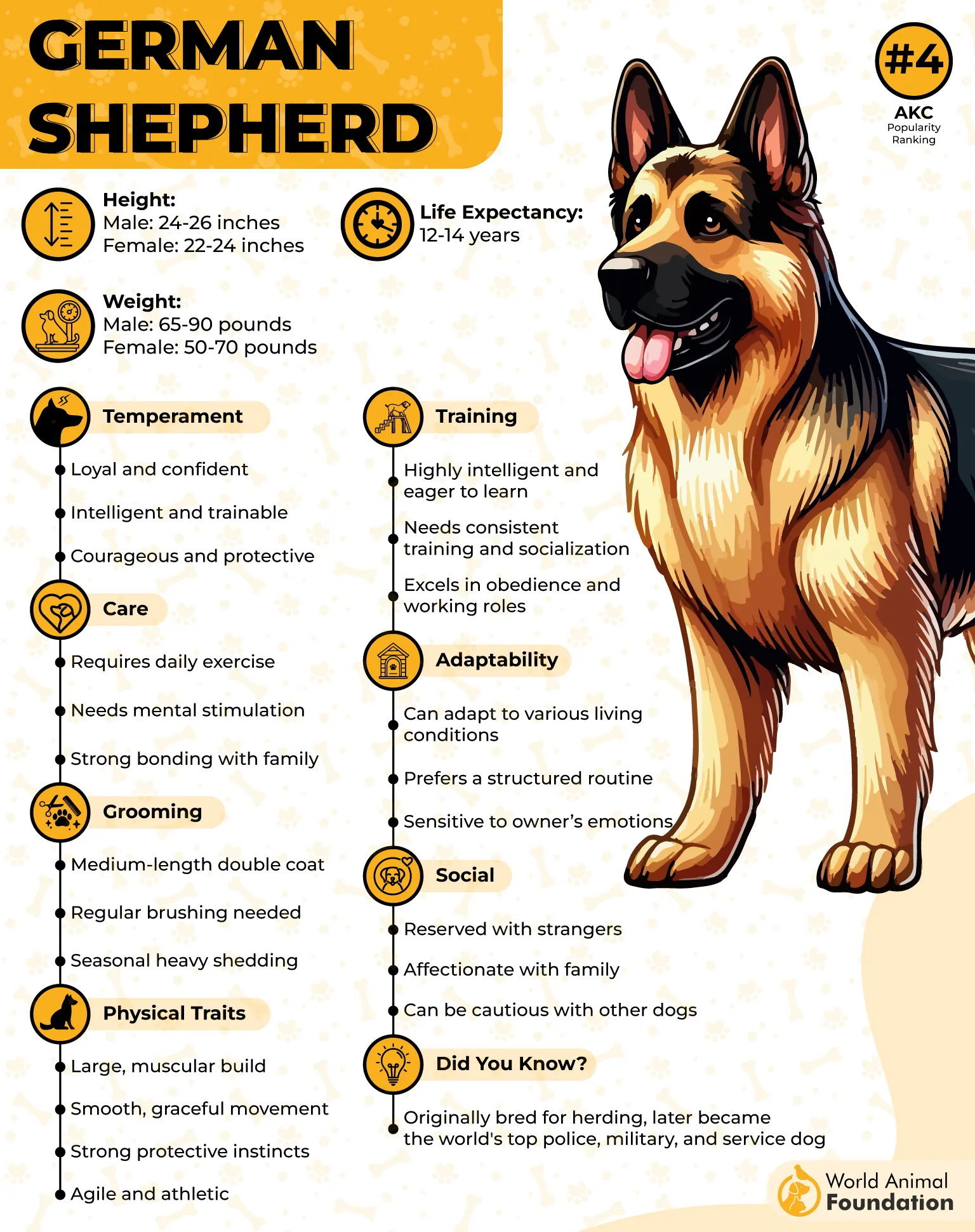
German Shepherd
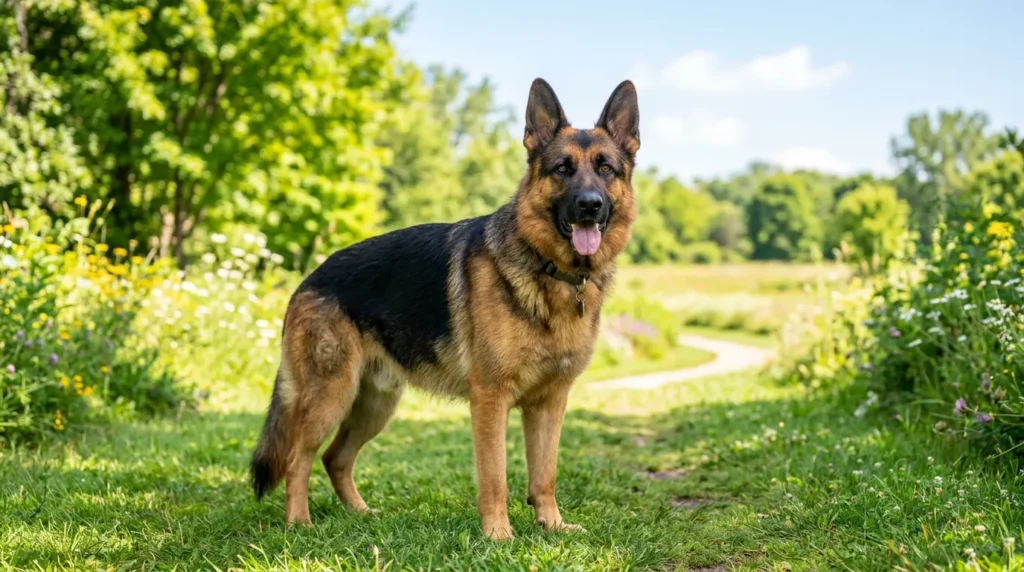
Medium to large-sized, males typically 60–65 cm and females 55–60 cm at the shoulder
Longer than tall body structure, built for agility and speed
Double coat (medium or long), dense and weather-resistant
Common colors include tan/black, red/black, sable, and solid black
Erect ears, long neck, and bushy tail support an alert posture and movement
Bullmastiff
Large, heavy-built dog with a strong, muscular frame
Males are generally taller and heavier than females, with solid body mass
Short, dense coat in fawn, red, or brindle shades
Black muzzle with a broad head and brachycephalic (flat) face
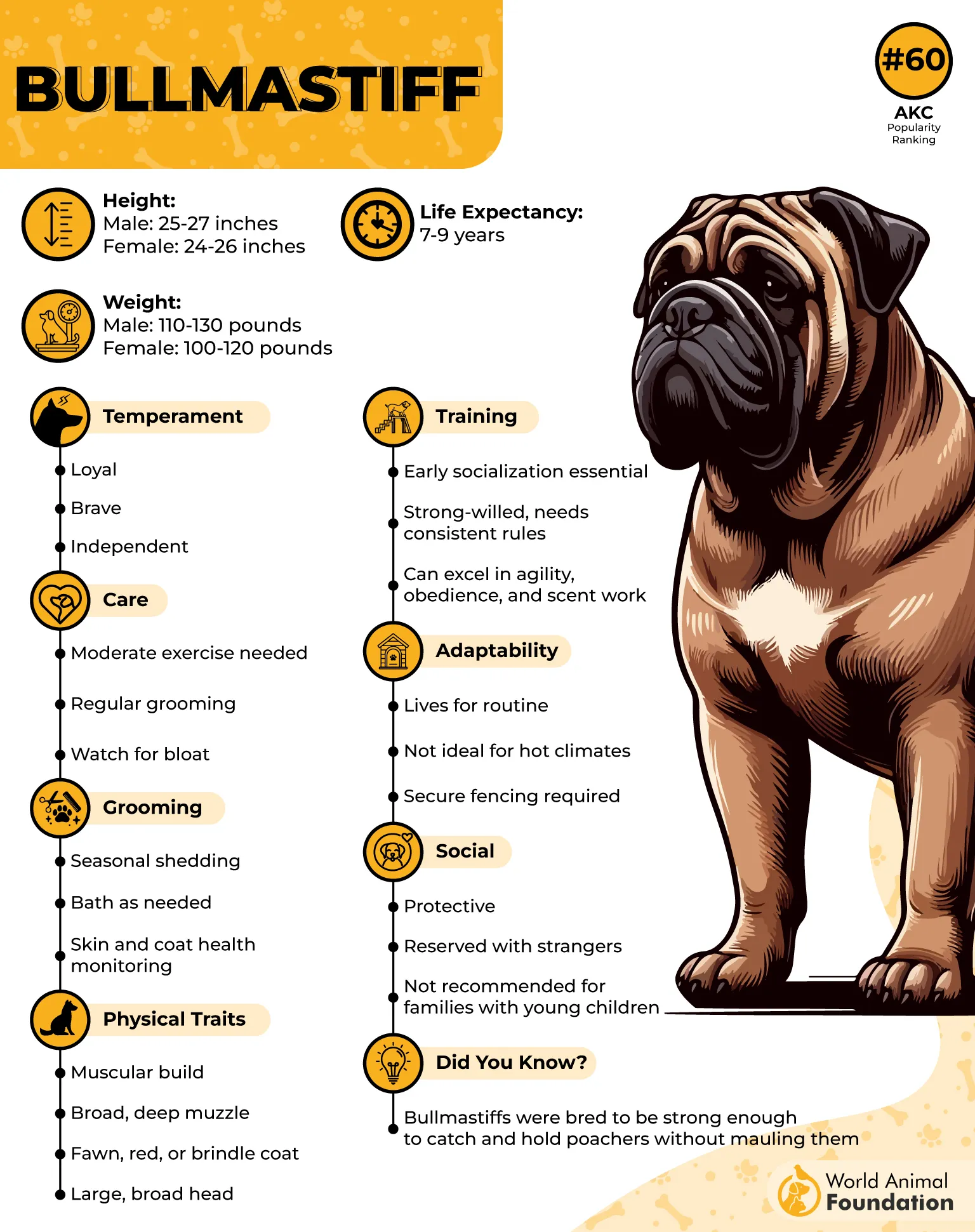
These physical traits clearly show one breed is agile and fast, while the other is strong, steady, and powerful.
Pricing & Availability
Both German Shepherd and Bullmastiff puppies vary in price depending on breeder quality, lineage, and training background, with long-term costs also playing a major role in ownership.
German Shepherd
Puppy prices usually range from $1,000–$3,000 from reputable breeders
First-year ownership can reach $2,500–$6,500, including training, food, and healthcare
Monthly cost after the first year averages around $70–$180
Higher prices are linked to strong working bloodlines, training potential, and breeder reputation
Availability is generally good, but well-bred working lines often have waiting lists
Bullmastiff
Puppy price typically ranges from $1,000–$2,500 depending on quality and breeder
First-year costs average around $5,000+ with ongoing monthly expenses near $200+
Health-tested breeding stock may cost more due to health-related concerns
Rare colors or show-quality pups can increase the price further
Availability is moderate, with responsible breeders often limiting litters
Overall, both breeds require investment, but responsible breeding and proper care greatly influence long-term value.
Personality & Temperament
The German Shepherd is known for its energetic, alert, and highly intelligent personality. This breed is naturally devoted and protective toward its family, often forming a strong bond that makes it an excellent companion as well as a dependable watchdog.
With proper early training and clear guidance, it learns quickly and performs well in roles like search and rescue, police work, and service assistance. However, its strong instincts mean it needs structure; without consistent training, it may become overly dominant or aggressive toward other dogs or unfamiliar situations, as per Britannica.
In contrast, the Bullmastiff has a calm, steady, and deeply loyal temperament, as noted by the AKC. It is friendly with its family and prefers close human companionship, often staying quietly by its owner’s side.
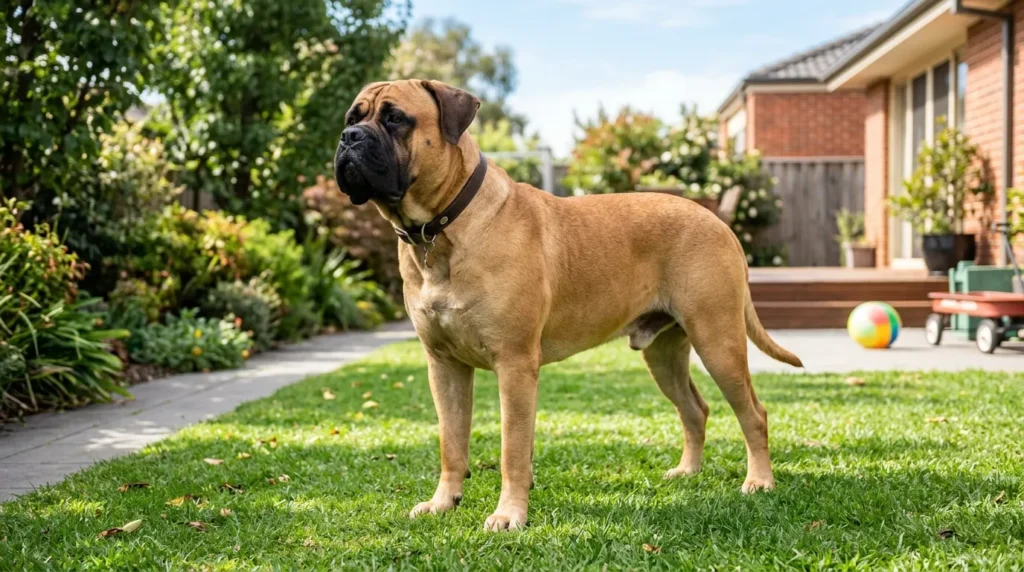
While generally gentle and good with children when properly socialized, its large size means supervision is important. It can be territorial and may not always get along well with other dogs or smaller pets. Overall, it is a composed guardian that relies on quiet confidence rather than constant activity.
Energy Levels & Exercise Needs
The German Shepherd is a highly active and athletic dog that requires regular physical and mental stimulation to stay balanced and happy. It thrives on structured exercise such as long walks, agility training, tracking games, and other activities that challenge both body and mind.
This breed enjoys tasks that give it a sense of purpose, and without enough activity, it may become restless or develop unwanted behaviors. Its strength, jumping ability, and swimming skills also mean secure fencing and active engagement are important in daily life.
In contrast, the Bullmastiff has a much lower energy level and prefers a calm, steady routine. It benefits from a couple of controlled walks each day and consistent leash training from an early age due to its size and strength.
While it enjoys companionship and light activity, excessive exercise—especially in hot weather—should be avoided because of its short muzzle and tendency to overheat. It is best suited to relaxed, moderate lifestyles rather than intense physical work.
Trainability & Intelligence
The German Shepherd is highly intelligent and quick to learn, making it one of the easiest breeds to train with consistent, positive reinforcement. Early training and socialization are essential to channel their energy and intelligence into good behavior.
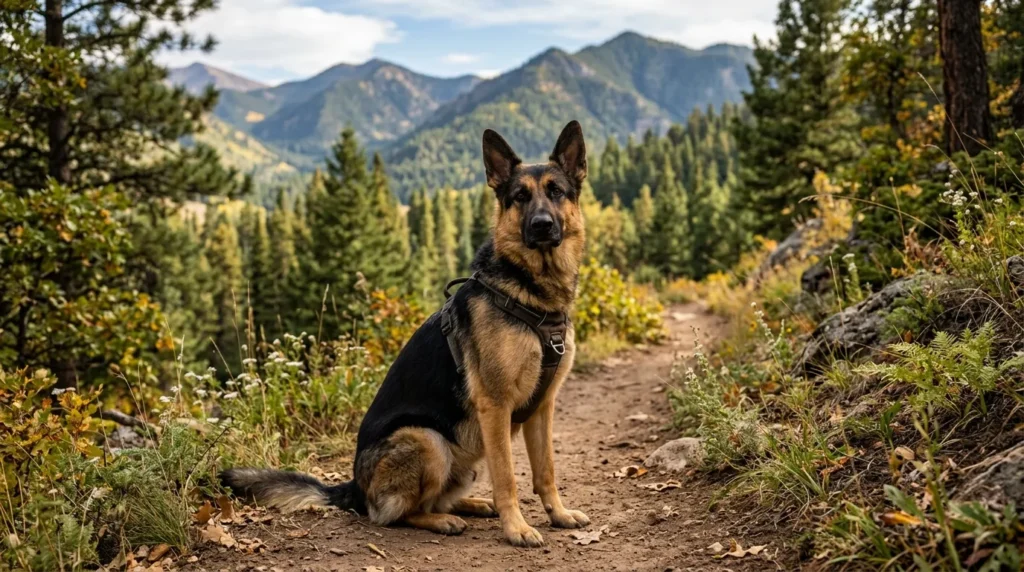
It responds best to structure, rewards, and mentally engaging tasks, and is often preferred by experienced dog owners who can provide firm but fair guidance.
The Bullmastiff is also intelligent but more independent and strong-willed. It can be trained effectively when started early, as it becomes more stubborn with age, as per PetMD. Calm, consistent training with positive reinforcement works best. While manageable, it generally suits experienced owners who understand large, powerful breeds and their need for steady leadership.
Guarding & Alertness
The German Shepherd is highly alert and quick to react, making it an excellent watchdog. It notices unusual activity fast, often barking to warn its family, and is widely used in police and security work due to its focus and intelligence. It responds well to training and can adapt to both home protection and professional roles with ease.
The Bullmastiff is a quiet but powerful guardian. Instead of constant barking, it relies on its strong presence and calm confidence to deter threats. Originally bred for estate protection, it is steady, reliable, and naturally protective of its family. It prefers observing first and acting only when necessary.
Coat Type & Grooming
Both the German Shepherd and Bullmastiff have very different grooming needs due to their coat type and shedding patterns. Regular care is important to keep their skin healthy and maintain overall coat condition.
German Shepherd
Has a dense double coat with a soft undercoat and a coarse outer layer
Comes in medium and long-haired variants, with long hair being rarer
Common colors include tan/black, red/black, sable, and solid black
Heavy seasonal shedding, especially in spring and autumn
Needs frequent grooming, ideally daily brushing, to control shedding
Bathing only a few times a year to protect natural skin oils
Regular grooming helps reduce hair around the home and maintains coat health
Bullmastiff
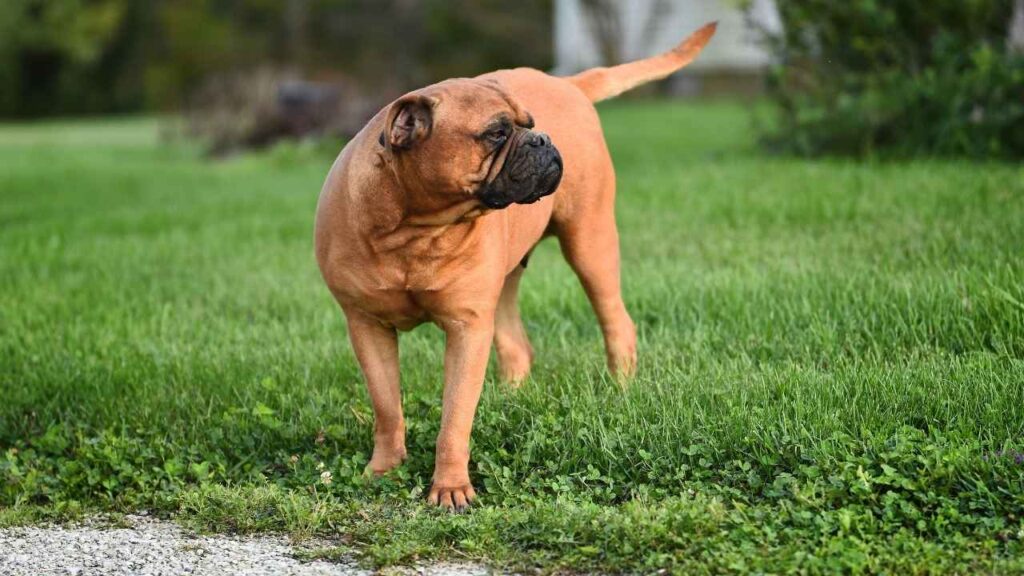
Short, smooth coat with seasonal shedding
Common colors include fawn, red, and brindle shades
Requires moderate grooming, usually once a month
Bathing and brushing help maintain coat cleanliness and skin balance
Owners should monitor skin dryness or oil imbalance for health issues
Overall grooming needs are lower compared to heavy-shedding breeds
Health & Lifespan
Both German Shepherds and Bullmastiffs are strong working breeds, but they are prone to certain hereditary and size-related health issues that require regular care and monitoring.
German Shepherd
Prone to hip and elbow dysplasia affecting mobility
Risk of degenerative myelopathy, a progressive spinal disease
Can suffer from bloat (GDV), a life-threatening stomach condition
May develop allergies and certain types of cancer
Regular vet checkups are essential for early detection and care
Average lifespan: around 7–10 years
Bullmastiff
Common issues include hip and elbow dysplasia in large breeds
Higher risk of heart, thyroid, and eye-related conditions
Also vulnerable to bloat (GDV), requiring immediate attention if it occurs
Joint stress increases due to a heavy body structure
Health testing and preventive care are important for longevity
Average lifespan: around 7-9 years
Overall, responsible breeding and consistent veterinary care help reduce risks and support a healthier, longer life.
German Shepherd vs. Bullmastiff: Which One Is Right for You?
Choosing between the German Shepherd and the Bullmastiff really comes down to lifestyle, experience, and what kind of companion you want by your side every day.
The German Shepherd is ideal for active owners who enjoy training, outdoor activity, and a highly intelligent, responsive dog that thrives on structure and mental stimulation. It fits well into homes that can provide time, consistency, and engagement.
On the other hand, the Bullmastiff suits those who prefer a calm, steady, and low-energy companion with natural guarding instincts. It is more relaxed in daily life but still deeply protective and loyal to its family, making it a strong choice for quieter households with confident handling.
Conclusion
At the end of the day, both the German Shepherd and the Bullmastiff bring something truly special to the table—one thrives on energy, intelligence, and constant engagement, while the other offers calm strength, quiet confidence, and steady protection.
Their differences in temperament, exercise needs, trainability, and health considerations make it clear that neither is “better,” only better suited to different lifestyles.
If you’re an active person who enjoys training, outdoor activities, and building a strong working bond, the German Shepherd may feel like a natural fit. If you prefer a more relaxed home environment with a loyal, watchful companion by your side, the Bullmastiff could be the right match.
Before making a decision, spend time understanding each breed’s needs and honestly reflect on your daily routine. Because the best companion isn’t just chosen by appearance—it’s the one that fits seamlessly into your life and grows with you over the years.
