




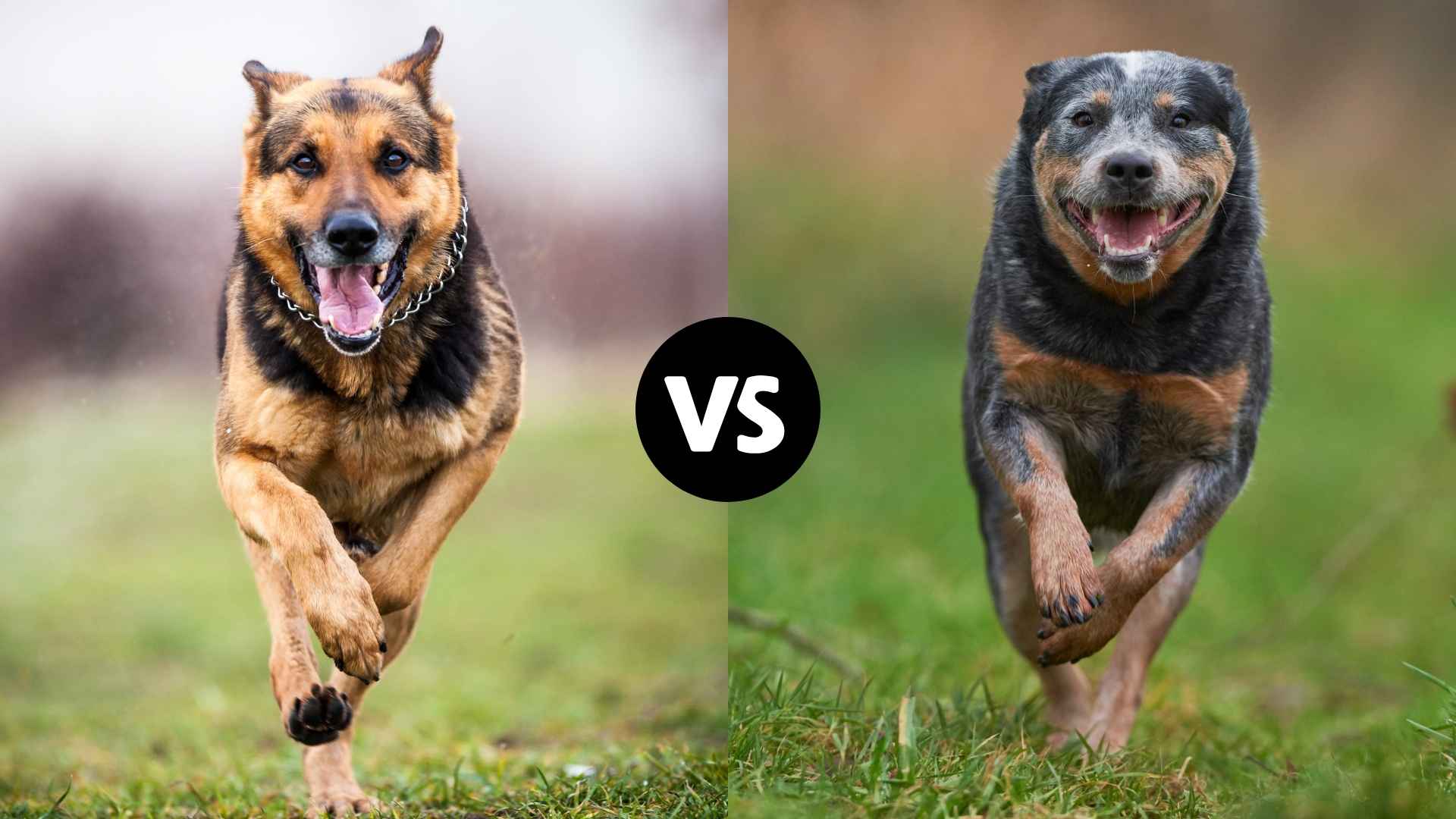
Picking a dog can feel like choosing a new roommate, a workout partner, and a tiny chaos manager all at once.
Sounds crazy, right?. And when the choice is a German Shepherd or Australian Cattle Dog, the pressure gets real. Both can be amazing. Both can also turn your life upside down if their needs don’t match your day-to-day activities.
Here’s the good part. You do not need to “guess and hope.” You can look at what each breed was built to do, how they act at home, and what they ask from owners. Then you pick the one that fits your energy, your space, and your patience level.
And here’s the best part! Once you understand the why behind their behavior, so many “problems” suddenly make sense.
German Shepherd vs. Australian Cattle Dog: Which Dog Breed is Best?
Overview
German Shepherd
This breed is known for focus, courage, and a strong bond with owners. Many people love how a German Shepherd dog likes having a job. Even if that “job” is walking the same route daily and keeping an eye on the house.
Australian Cattle Dog
Australian Cattle Dogs are built for control, stamina, and bold decisions. Cattle dogs often act like they are reading your mind, then making their own plan anyway. Heelers can be funny, intense, and deeply loyal when raised with clear rules.
Important note about your choice
A better dog is not the one with the best reputation. A better dog is the one that fits your real life. If your schedule is packed, the wrong match gets even worse, though, no matter how cute the puppy is.
Origins & Purpose
A German Shepherd was developed for herding and later became famous in police and military work, as noted by Britannica. Today, many people still choose this breed for service dogs, protection roles, and active companionship. The drive comes from purpose. When owners give structure, a lot of stress disappears.
Australian Cattle Dogs come from tough ranch life and the need to drive cattle across harsh land. The Australian Cattle Dog breed is shaped by endurance, quick turns, and fearless choices. Many stories link early lines to dingo influence, which helps explain that sharp survival mindset.
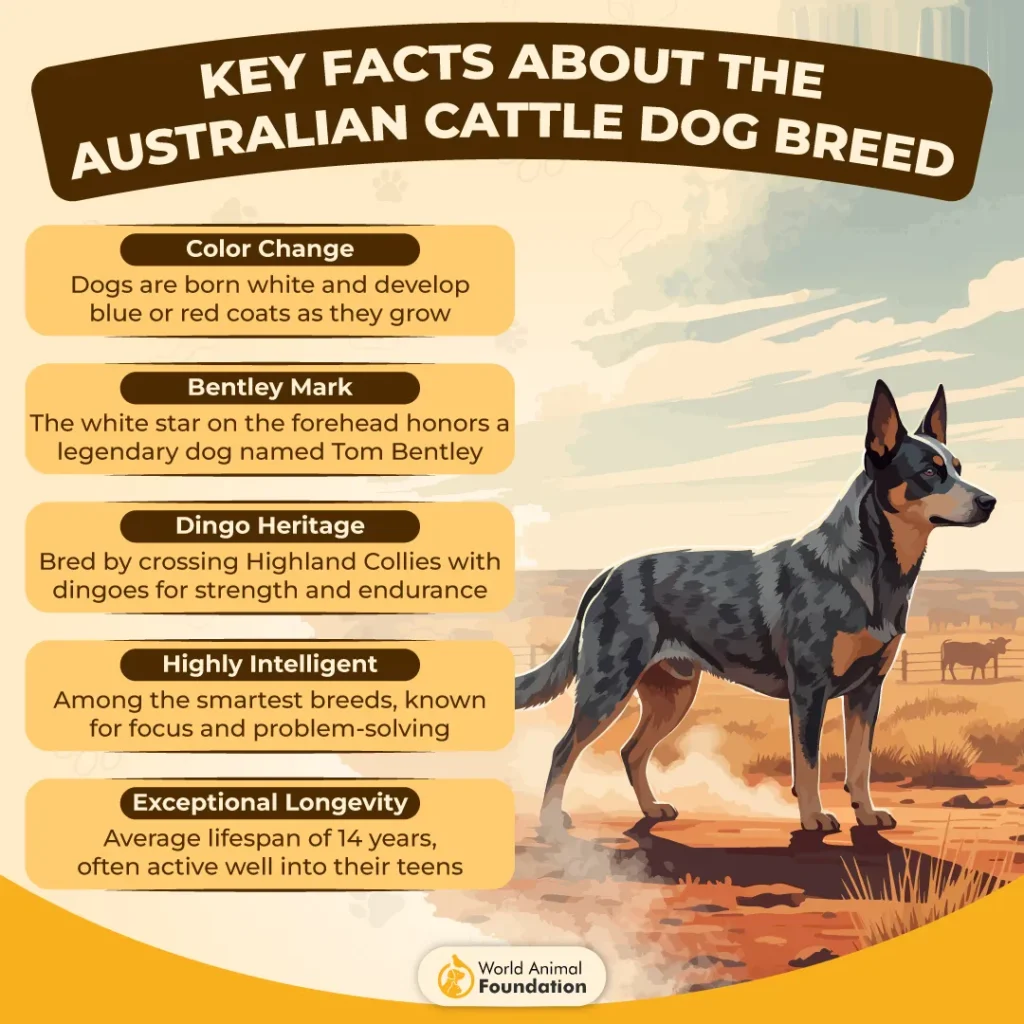
Cattle dogs were raised to work close to hooves and dust, not couches and quiet days. They were built to herd with speed, hold ground, and keep moving. That “keep moving” part matters more than most of the time owners expect.
Did you know?
Queensland Heeler and Blue Heeler are other names people use for this same hardworking type. Red Heeler is also used for the red-coated look.
Size & Physical Build
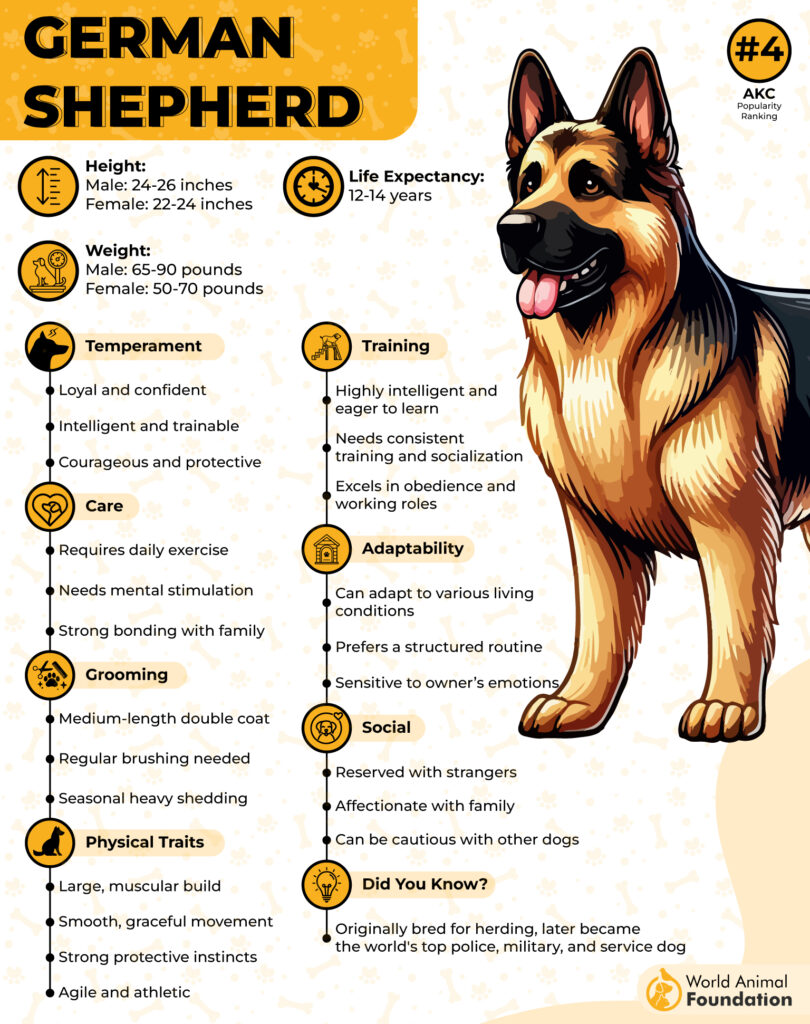
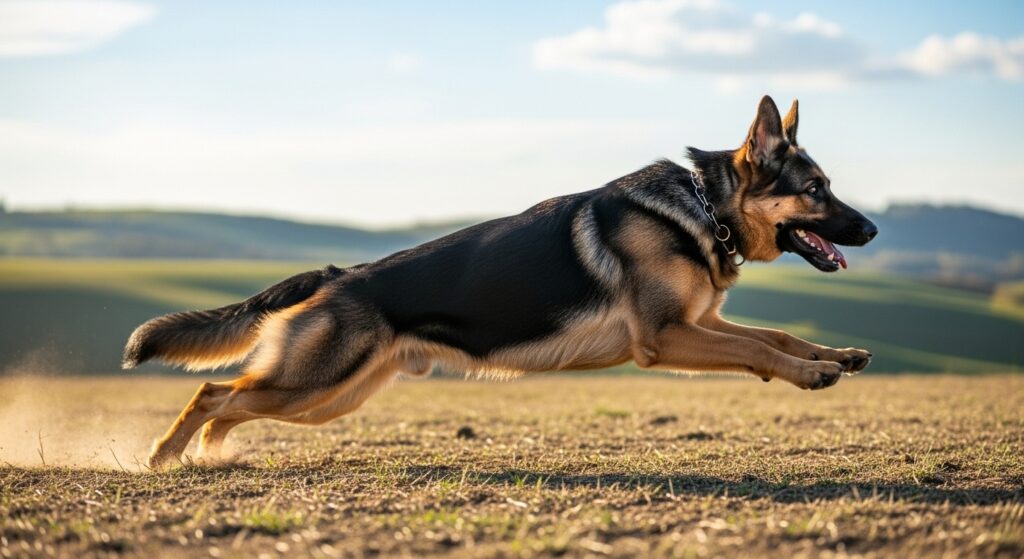
According to the AKC, a German Shepherd Dog is usually longer than tall, with a strong chest and powerful stride. Many GSD types look athletic and ready for long work. You can often see confidence in the posture alone.
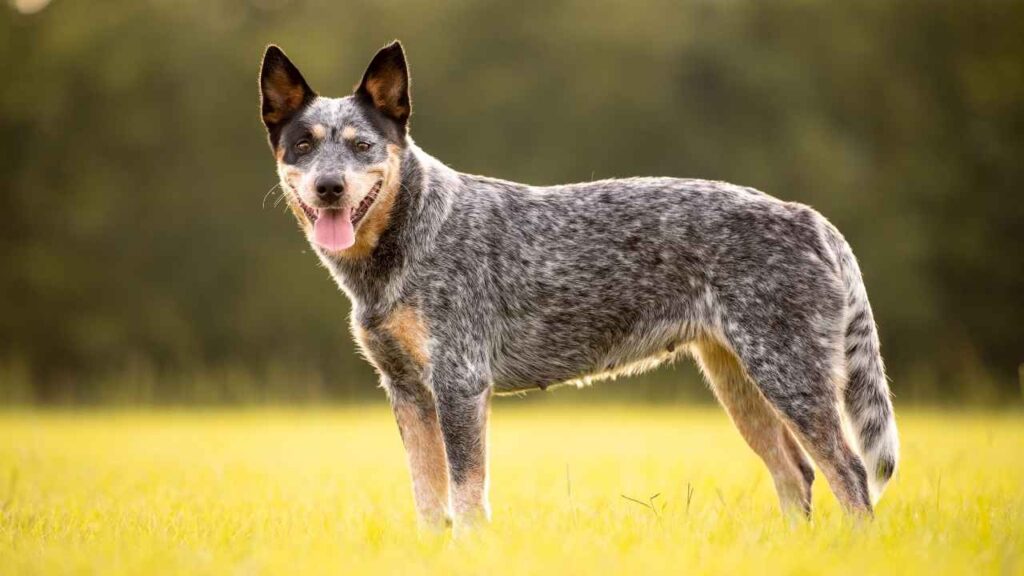
Australian Cattle Dogs are compact, tough, and built like a spring. Cattle dogs tend to feel heavier than they look because their muscle is dense. They are made for quick bursts, sharp pivots, and long distances without falling apart.
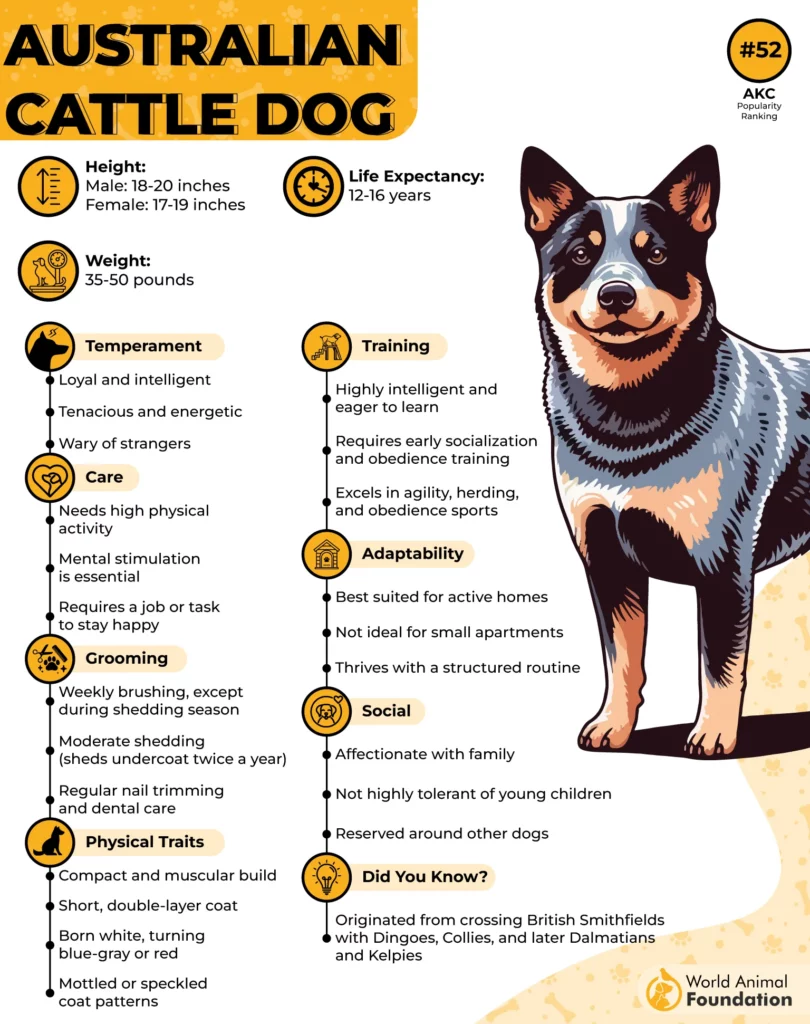
If you want a dog that can cover ground smoothly, the Shepherd’s body shape supports that. If you want a dog that can turn on a dime and keep pressure on cattle, Heelers shine.
Fun fact
Some working lines in both breeds show more muscle and intensity than show-focused dogs. That difference can affect daily life a lot.
Temperament & Personality
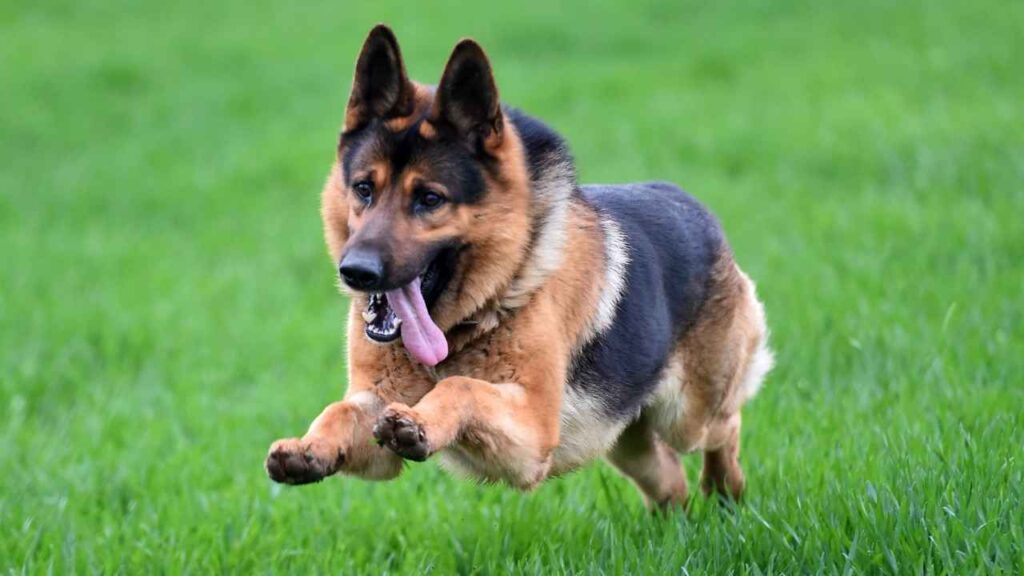
A Shepherd often acts steady and watchful. Many families describe a calm “shadow” vibe, where this dog is near you, checking the room, then relaxing again. With the right start, the bond can feel deep and protective.
Australian Cattle Dogs can be intense, playful, and stubborn in a funny way. Their personalities may swing from “clown mode” to “serious worker” fast. They can also be prone to testing rules if you let things slide.
Both breeds can be reserved with strangers. Social interaction helps, but it must be gentle and steady. If you skip early exposure, barking and tension can show up later.
Biting can become a habit in some Cattle Dogs because heel-nipping is part of how they herd. With clear boundaries, biting can be managed early. Without that, it can turn into chasing ankles and grabbing sleeves.
Important note
Some dogs try to herd people. That can look like circling, blocking hallways, or nipping. It is not “bad.” It is a job instinct with no job.
Exercise & Energy Levels
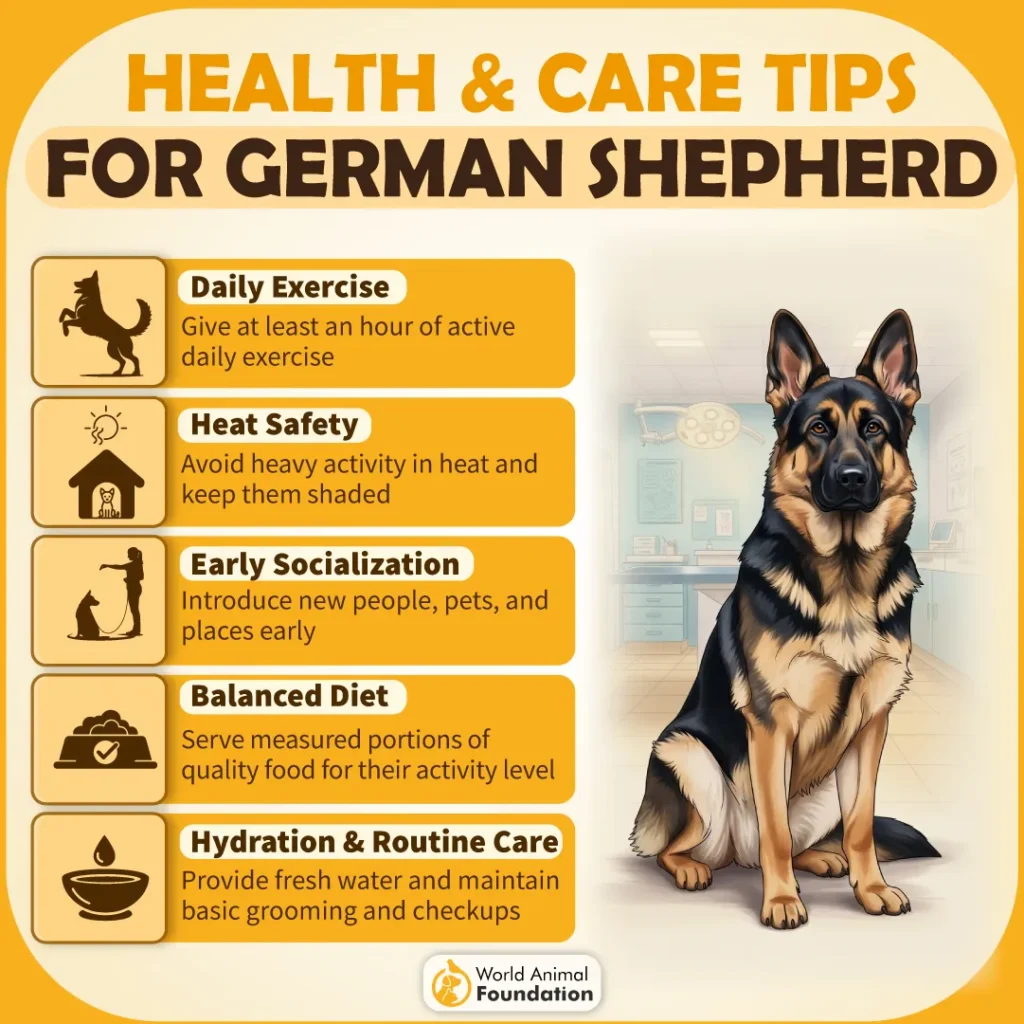
A GSD usually needs daily activity, but the type matters. A long walk, focused play, and a job-like task can go far. When exercise is skipped, restlessness can rise.
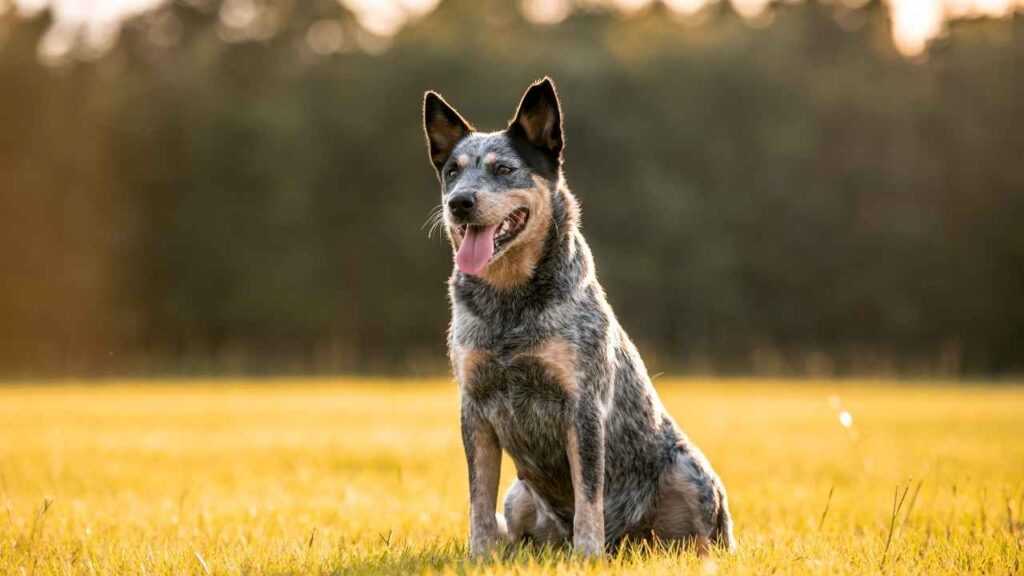
Australian Cattle Dogs often need more than a casual stroll. High energy shows up as pacing, bouncing off furniture, or finding “projects” like digging. If you want to be calm, you must plan physical activity and mental stimulation.
Both breeds can enjoy dog sports. Agility can be a great outlet, as long as joints are healthy and training is steady. Some cattle dogs love fast games, but they also need rules so chasing does not turn into rough play.
But why bother with that? Because tired dogs are usually kinder dogs. And because boredom can turn into chewing, barking, and biting.
Practical tip
If your week is busy, short sessions twice a day often work better than one long session once in a while.
Training & Intelligence
A German Shepherd is famous for learning fast and staying engaged. Many GSD learners do best when training feels like teamwork. Praise matters. Clear rules matter more.
Australian Cattle Dogs are smart companions, but their style can feel different. They are highly intelligent dogs in a “solve it myself” way. They notice patterns fast, then try to control the routine.
Structured training helps both breeds. Keep sessions short. Keep rewards meaningful. And stop before frustration hits. Patience is not optional here. Patience is the whole game.
Working lines may show stronger bite drive, more intensity, and more focus on control. That can be amazing with experienced owners. It can be a challenge in a casual home.
Did you know?
Many people call the German Shepherd “intelligent,” but intelligence is not just tricks. It is impulse control, recovery after stress, and choosing calm when excited.
Coat Maintenance
A Shepherd’s coat can shed a lot. Grooming helps keep hair off your sofa and reduces matting. Brushing a few times a week usually keeps things manageable.
Australian Cattle Dogs have a shorter coat that often feels easier. But Cattle Dogs still shed. And that stiff hair can stick to fabric like tiny needles. A rubber brush can help.
Both breeds do better when grooming starts early, while the puppy is still learning the world. Gentle handling now can save so much drama later.
Important note
If a dog fights the brush, slow down. Use treats. Make it calm. A battle routine becomes a lifelong headache.
Health & Lifespan
A German Shepherd can face common health issues like hip and elbow problems, plus digestive or skin troubles in some lines. This is why responsible breeders and thoughtful care matter.
As per VLP, Australian Cattle Dogs are often tough, but they can still have health issues, including joint concerns, eye problems, or deafness in some lines. Paying attention early helps. Keep weight steady. Protect the joints.
Ask about common health issues in the family line. Ask how the pups were raised. Ask what the parents do all day. Those answers often tell you more than a cute photo.
Quick reality check
No breed is “perfect.” A good breed is the one you can care for with time, money, and steady attention.
Suitability as Family Pets vs Guard Dogs
A German Shepherd dog is often chosen for guarding because it reads people well and stays alert. Many GSDs protect without being wild when raised with good training and calm exposure. Some also do therapy work because they can be steady and tuned in.
Australian Cattle Dogs can guard, too, but the style may feel different. Cattle dogs can be sharp, fast, and intense about space. They may be quicker to react, especially if they think the house is “their job.” That can be great in the right hands, and stressful in the wrong ones.
For family life, think about kids and movement. Herd instincts can make some Heelers chase running children. That is not mean. It is instinct. But it must be managed with training and safe routines.
If you want a second dog later, plan carefully. Some Cattle Dogs prefer tight bonds and may not love other dogs without slow introductions.
But wait, there’s more! Guarding is not just about courage. It is control. A dog with no control is not a guard. It is a liability.
Conclusion
If you want a calm protector who thrives on teamwork, a German Shepherd might feel like the right fit.
If you want a tough, compact worker who can drive cattle instincts into play and tasks, the Australian Cattle Dog may be your match. Both need training, boundaries, and daily effort from owners. Both can bring huge love into a home.
Here’s the good part. Once you match the breed to your routine, life gets easier fast. So take a breath. Picture your real week. Then pick the dog that fits that picture, not the fantasy.
And when you bring that puppy home, start simple, stay patient, and celebrate the small wins.
