




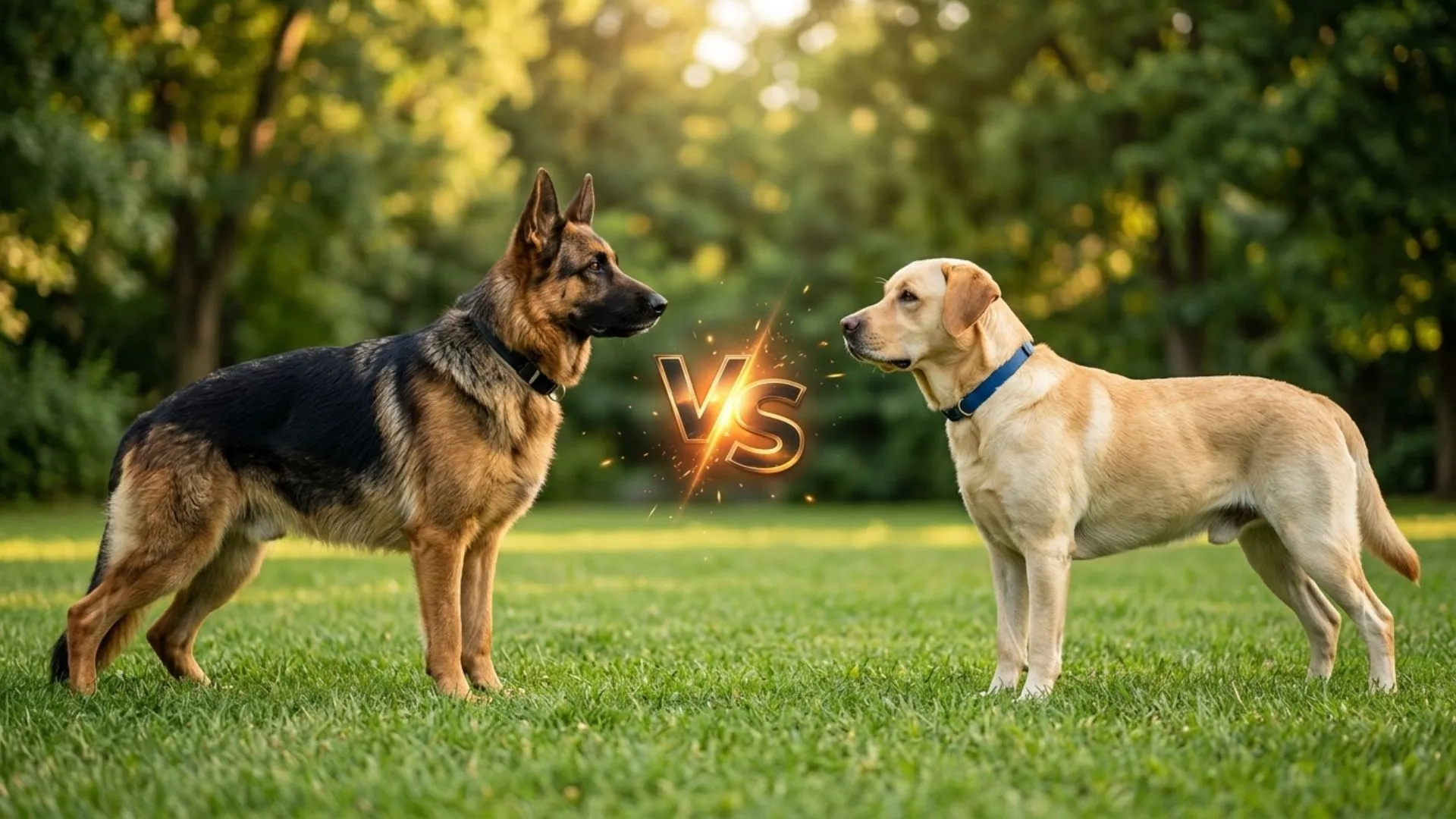
Choosing between a German Shepherd and a Labrador Retriever is like picking between a Navy SEAL and a golden-hearted social butterfly. Both brilliant. Both loyal. But widely different personalities under the fur. These two breeds have dominated American homes, movie screens, and rescue missions for decades.
According to the American Kennel Club, the Labrador held America’s most popular breed for 30 straight years. The German Shepherds have constantly ranked in the top 5. While the Labrador excels in problem-solving skills, the GSD can cope with intense traumatic events from the war.
So, which one deserves a spot on your couch? Grab a coffee, because we are about to go deep on everything that sets these two legends apart.
Profile Highlights of German Shepherd Dog vs. Labrador Retriever
Size & Build Differences
If there is a compact space, the GSD’s massive size will feel like parking an SUV in a living room. On the other hand, a Lab can adjust in a compact space.
German Shepherd: Male GSDs stand 24-26 inches tall, while female GSDs stand 22-24 inches tall to the shoulder. They typically weigh 50-90 pounds. It has a horizontal body stature, and its length-to-height ratio is 10-8.5. Despite being flat, they have a flat back and sloping shoulders.
Labrador Retriever: Comparatively smaller than the GSDs, the male Labrador Retriever is 22.5-24.5 inches tall, and females are 21.5-23.5 inches tall to the shoulder. They weigh around 55-77 pounds. Since they were built for water retrieving skills, they have strong legs, “otter” tail, deep chest, and athletic body.
Coat Type & Maintenance
No coat is low-maintenance in these breeds. So, if you are allergic to dog hair, you probably need to seek out some other dog breeds.
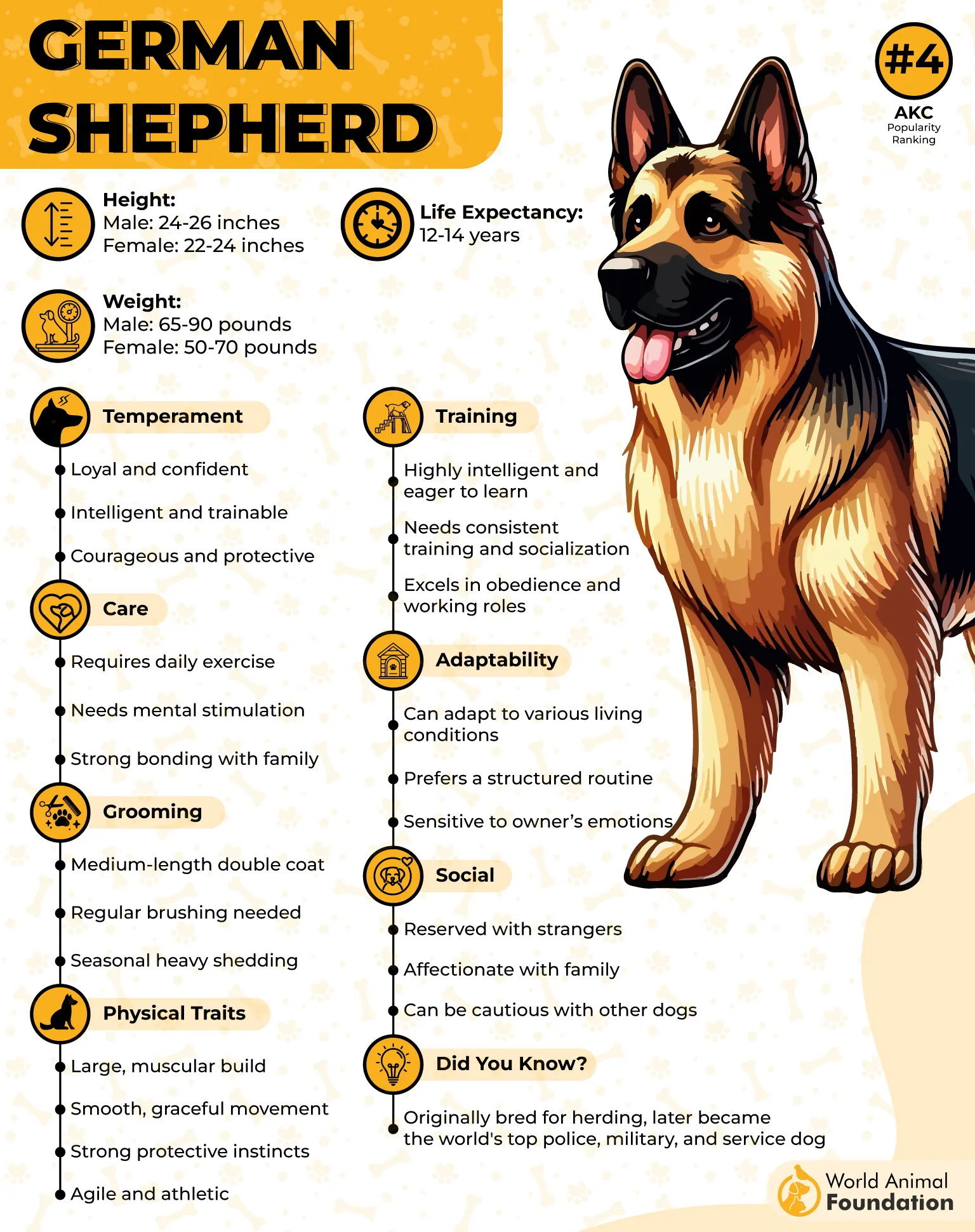
German Shepherd: They can swim, so they have a water-resistant coat. Overall, the coat is of three types: short/medium, long, and plush. The short (stock) coat is straight and requires low maintenance. Long-coated GSDs have dense hair around the tail, legs, and ears. While the plush coat is the mid-type between the two.
A short coat requires brushing once a week, while the long coat needs to be brushed 3-4 times a week. AKA the “German Shedders” because of heavy shedding, they shed more frequently, twice a year. A monthly bath is required.
Labrador Retriever: Developed to work in water, this dog breed has a weather-resistant coat but is shorter than the GSD’s coat. Unlike GSDs, they have an oily/slippery texture on their coat to function well in water. The outer coat is dense, while the inner coat is soft and water-resistant.
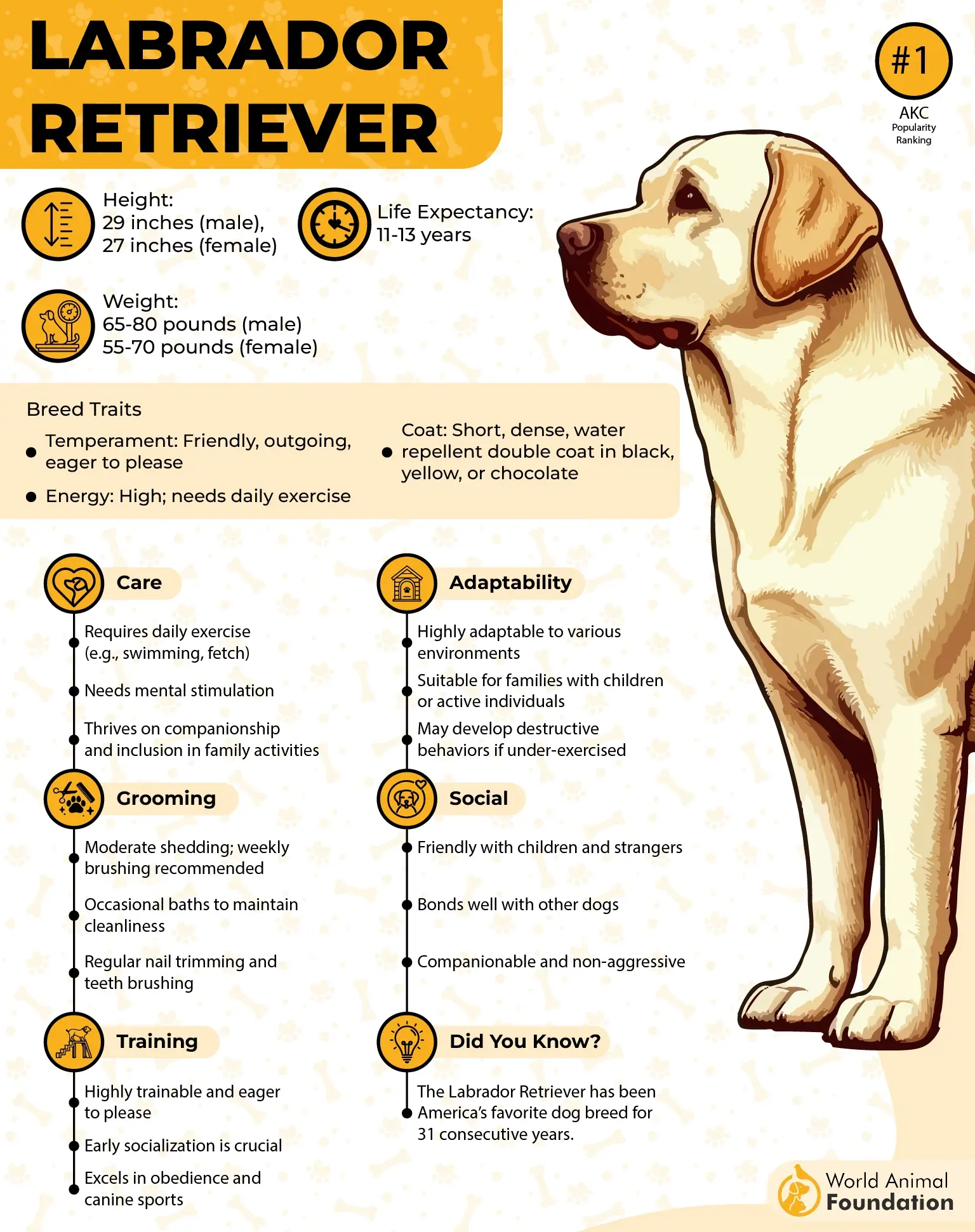
They usually need brushing 2-3 times a week. However, they shed heavily during spring and autumn, thus requiring daily brushing in those seasons. Overbathing can extract natural oils; bathing after every 6-8 weeks is enough. Completely dry out the dog after bathing to avoid skin issues.
🎧 Dogcast
Episode 37 — Why Dogs Stay Close without Touching
If you don’t hear sound, tap the button above to enable audio.
Temperament & Personality
They both crave love and human attention. While a GSD bonds truly with only one person, a Lab does not mind getting the same love from each family member.
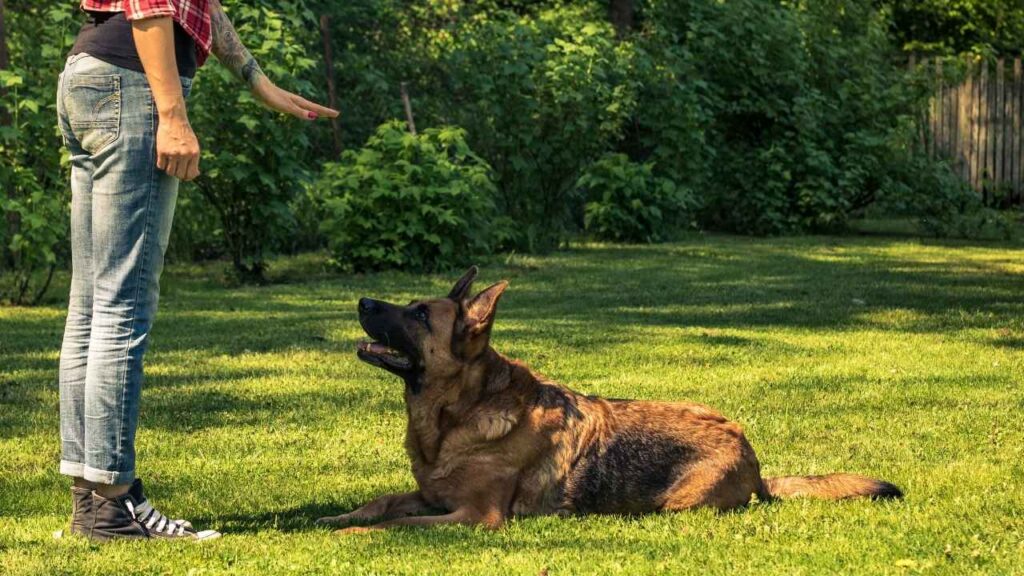
German Shepherd: Originally bred for herding, the German Shepherd is loyal, intelligent, confident, and has a protective nature. They are widely used in police work and military jobs, and as service dogs, as noted by the AKC. Aloof of strangers, the GSD is a one-person dog and forms deep bonds with its owner. It is a perfect dog for active families.
They crave companions all the time. Left alone for too long, they are likely to develop separation anxiety. Male GSDs are more protective, while female GSDs are more family-oriented.
Labrador Retriever: Unlike GSDs, the Labrador Retriever tends to be social and even make strangers their friends. They have an eager-to-please, friendly, playful, and puppy-like nature, making them perfect for gentle and sweet family members.
AKA “nanny dogs” because of their gentle and devoted nature towards children and other dogs. Both Labrador retrievers and GSDs are active outdoors, but this canine friend is relaxed indoors.
Intelligence & Trainability
Both breeds are among the top ten most intelligent dogs, with the GSD standing at the 3rd rank and the Labrador standing at the 7th rank.
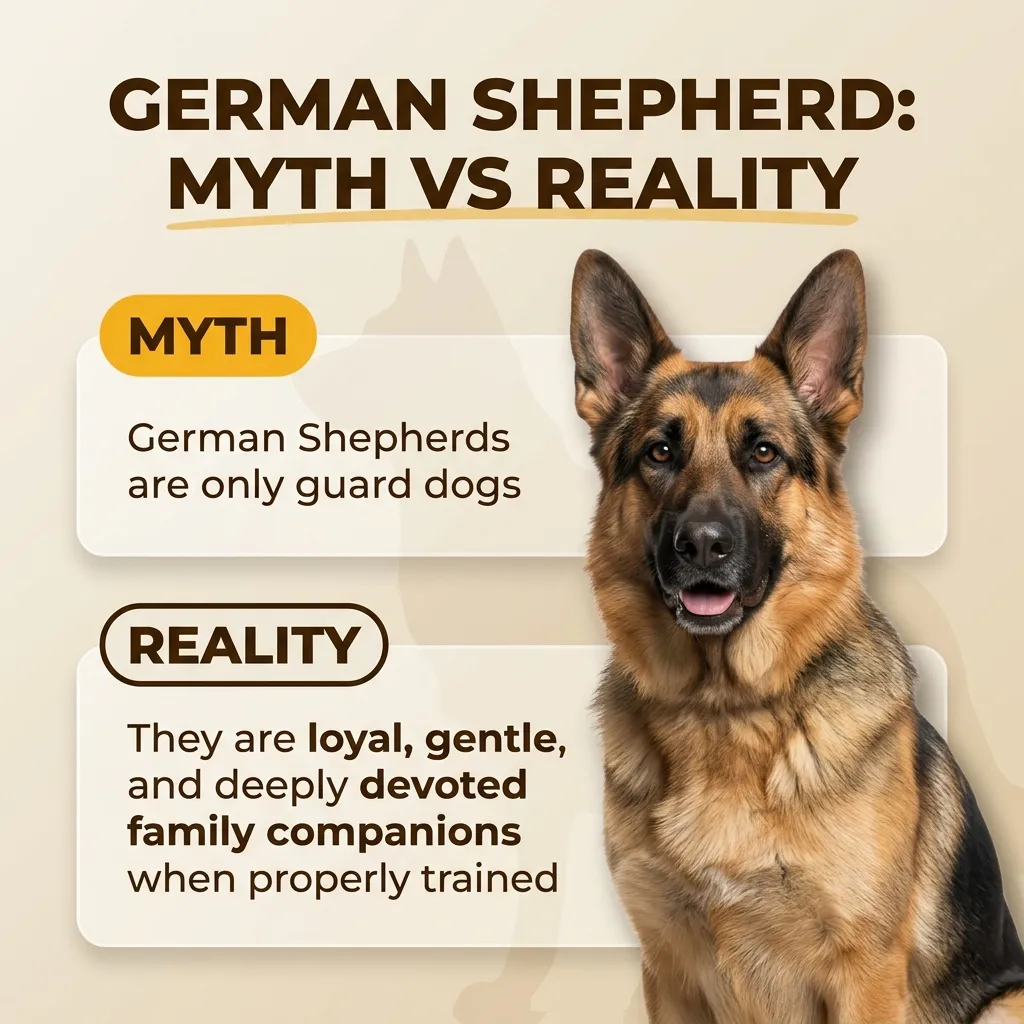
German Shepherd: They are more inclined to solve complex problems and learn faster than the Labs, such as opening a door. This breed is widely used as a therapy dog because of its emotional intelligence. The read human emotions and act accordingly to relax them. With their sharp memory, they can recall complex paths; they are a perfect guide dog. They observe and then learn. This strategic learning is the key to their presence of mind.
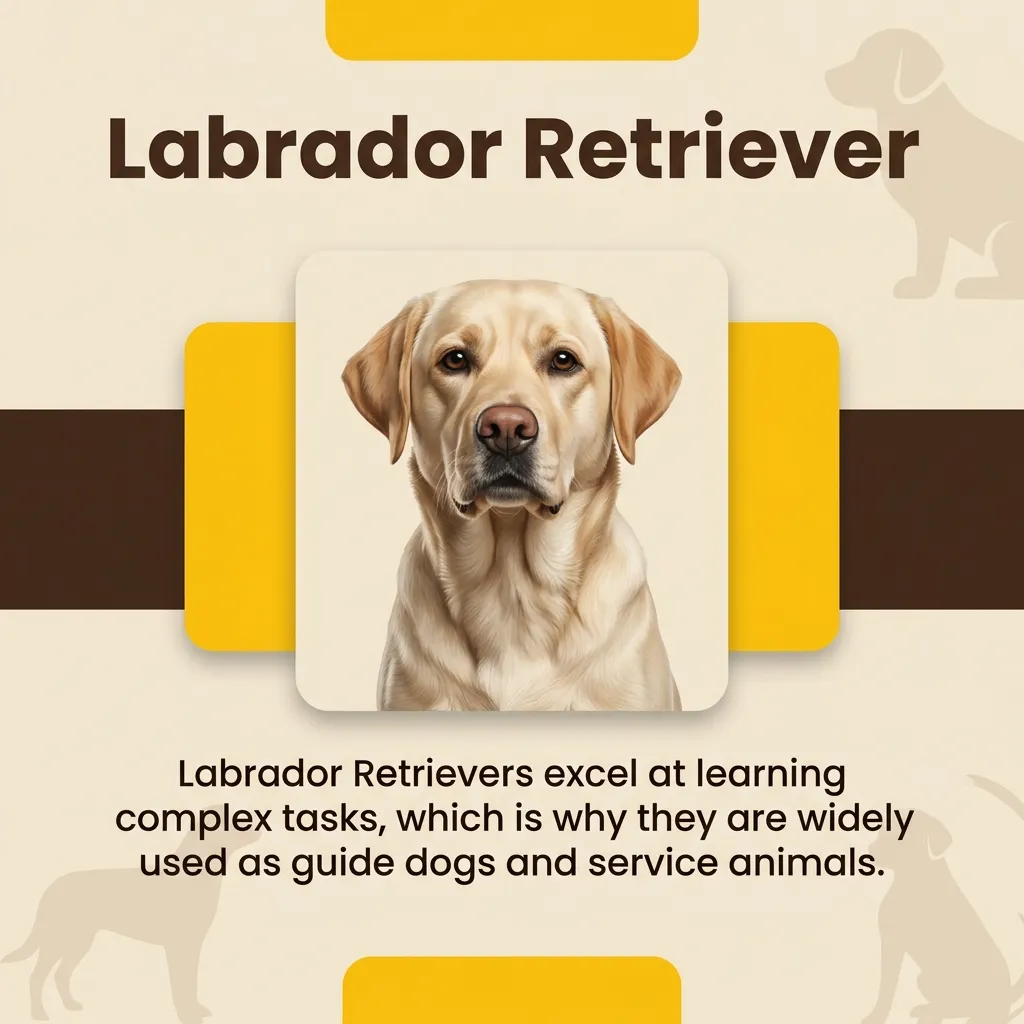
Labrador Retriever: Because of their high intelligence, they can learn commands with up to 5 attempts. When high intelligence is combined with a strong sense of smell, they produce a dog perfect for detection work and SAR departments. Food motivation is a good strategy for training. They usually don’t think beyond “treats” while training.
Energy Levels & Activity Needs
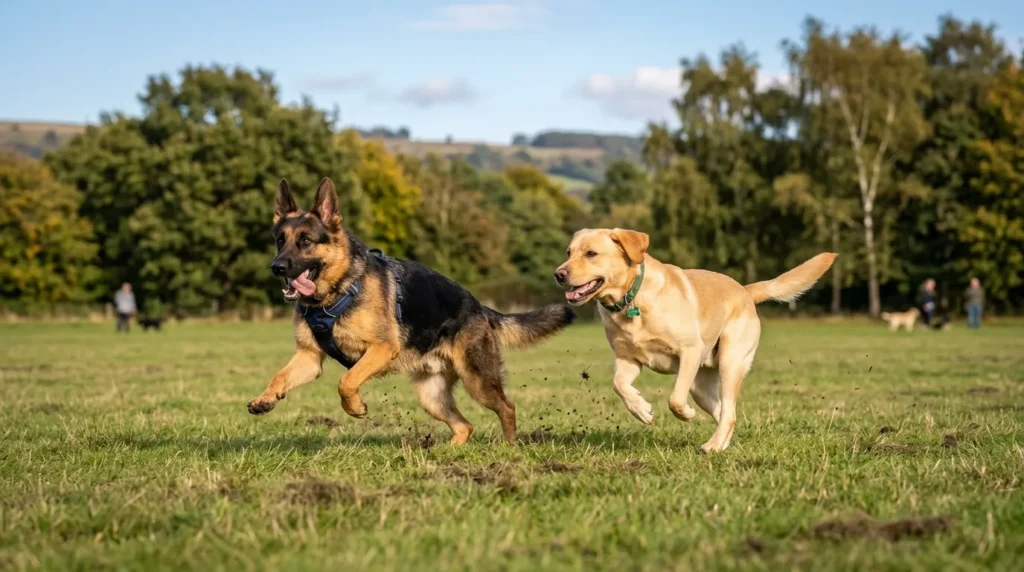
When under-stimulated, both are prone to destructive behaviors: chewing your furniture, barking, and digging. Obedience training at an early age is non-negotiable.
German Shepherd: This breed has 1-2 hours of daily exercise needs for mental and physical stimulation. Despite taking them to one long session, add breaks of 45 minutes to each session to avoid boredom and exhaustion.
Puppies of 8 weeks to 1 year need 5 minutes of light sessions twice a day. Adults (1-7 years) are high-energy breeds that require activities such as hiking, swimming, fetching, running, and dog sports. Inadequate exercise may result in chewing furniture, excessive barking, or restlessness.
Labrador Retriever: They score 7/10 on the energy level scale. Puppies need 30 minutes of daily exercise. Adults have intense physical requirements, and seniors need moderate exercise that helps prevent joint issues and obesity. Recommended activities include retrieving, swimming, canine sports, and walking/jogging.
This family dog loves to lounge after exercise, unlike a GSD, which remains watchful and active throughout the day. Lack of exercise may lead to obesity, chewing, digging, and hyperactivity.
Health & Lifespan Differences
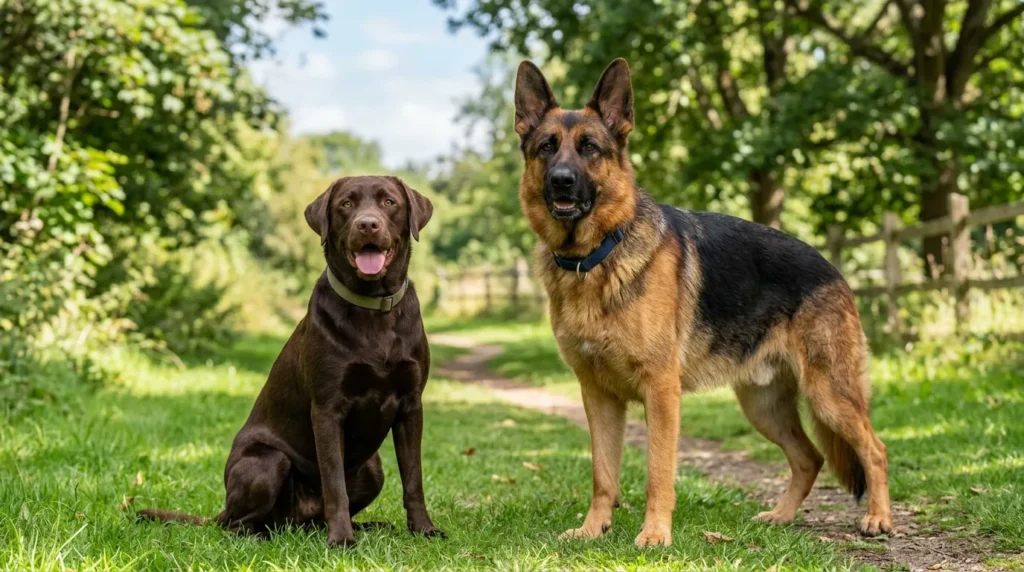
Despite being sharp and strong, they are not immune to health issues. Nearly 60% of Labradors are overweight in the U.S., and a GSD is prone to many diseases. Proper medical checkups, a healthy diet, and an active routine may help them lead a healthy life.
German Shepherd: This breed lives 9-13 years, which is a longer life expectancy for any large dog. Female GSDs (11.1 years) tend to live longer than the male GSDs (9.7 years). With proper care, physical activities, and a good environment, they can even live up to 13 years. Regular vet checkups, proper training, and early socialization are needed for a healthy and happy life.
They have high health problems because of selective breeding. The diseases include joint issues (elbow/hip dysplasia), degenerative myelopathy (a neurological condition that affects the spinal cord), bloating (air fills up your stomach), and cancer.
Labrador Retriever: The average life span of this breed is 10-13 years, where yellow and black Labradors live up to 12 years, as per PetMD. Chocolate Labs have 10% shorter lifespan (10 years) than yellow and black Labs. Regular vet checkups, an active lifestyle, and nutrition can enhance the longevity of this popular dog breed.
This popular family dog is prone to various genetic diseases, such as musculoskeletal disorders (joint issues, elbow dysplasia, and hip dysplasia), exercise-induced collapse (a genetic neuromuscular disorder), obesity, and otitis externa (ear infection because of their love for water and floppy ears)
Social Behavior & Stranger Interaction
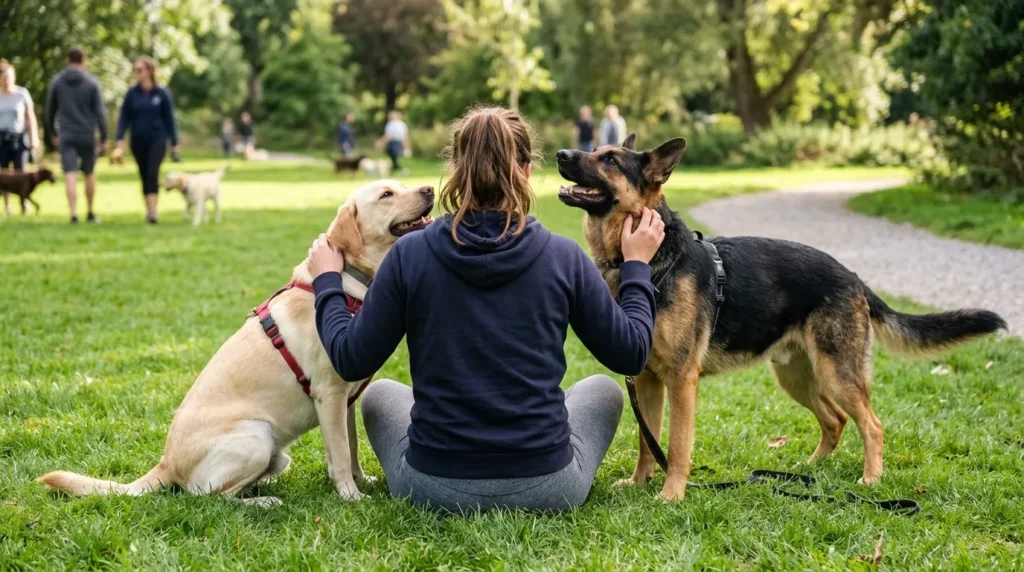
Each of these breeds is unique for different household dynamics and lifestyles. Both are excellent watchdogs, but Lab is a poor guard dog and can easily let a burglar in you home.
German Shepherd: Though they are aggressive towards strangers, but are reserved and observant, and do not trust people easily. Because of their herding history, they are protective towards their families and other pets.
Gentle and proper training with positive reinforcement from a young age helps adjust them to new environments. The good thing is that they always look at their owner to confirm whether to trust a new person or not. This excellent guard dog is gentle with the children of their families.
Labrador Retriever: This popular breed is generally friendly and makes good friends with strangers, making them poor guard dogs. They actively interact with new people by sniffing, jumping on them, or rubbing against them.
Despite their friendliness, they still require proper socialization, at least till the age of 16 weeks. If not socialized properly, they can adopt destructive/aggressive behavior by loud barking. Male labs are more prone to severe aggression than female labs.
Protection & Guard Dog Instincts
If home security is a priority, this is one category where the GSD wins without contest.
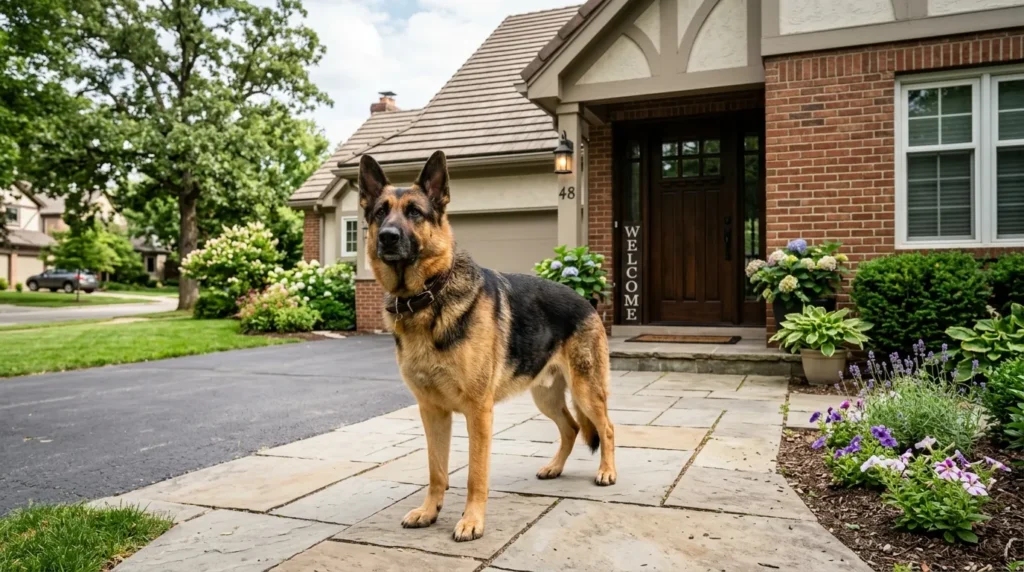
German Shepherd: Being observant, they are capable of differentiating between a normal situation and a threat. Starting at 3-6 months, they reach maturity at 1.5-2 years; thus, they can protect you in the early years of their lives. They remain watchful rather than aggressive, and act roughly only when needed. They don’t need formal protection training to be able to protect their “flock”.
Labrador Retriever: Despite being friendly, they bark to alert the owner of a threat and use their giant body to deter the intruder with intimidation. Though they are not naturally guard dogs, professional training may help them differentiate between a threat and a friendly stranger. Sometimes, a Lab shows possession over things and is less likely to be protective of their owner and territory.
Lifestyle Compatibility for Households
The GSD is perfect for homes with big yards and outdoor spaces where they can perform intense physical tasks. Small homes are not recommended. While the Labs can adjust in a compact space, they still need some space to actually “live” in your home.
|
Factors |
German Shepherd |
Labrador Retriever |
|
First-time owners |
Moderate difficulty |
Easy to manage |
|
Apartment living |
Not ideal |
Possible with exercise |
|
Families with kids |
Better with older kids |
Excellent for all ages |
|
Multi-pet households |
Possible with socialization |
Very adaptable |
|
Active individuals |
Perfect match |
Great fit |
|
Work-from-home owners |
Loves the company |
Playful and mischievous |
Conclusion
At the end of the day, neither a GSD nor a Labrador is the “better dog”; they are just different answers to different questions about your life. If you want a loyal, driven companion who will grow to be your shadow and take every walk like it’s a mission, the GSD is your dog.
If you want a warm, joyful, always happy-to-see-you partner who makes everyday life like a tail wagging celebration, the Lab is calling your name.
Study the breed, visit reputable breeders, spend time with both, and trust your gut. Your future dog is already out there, waiting to become the best part of your day.
