




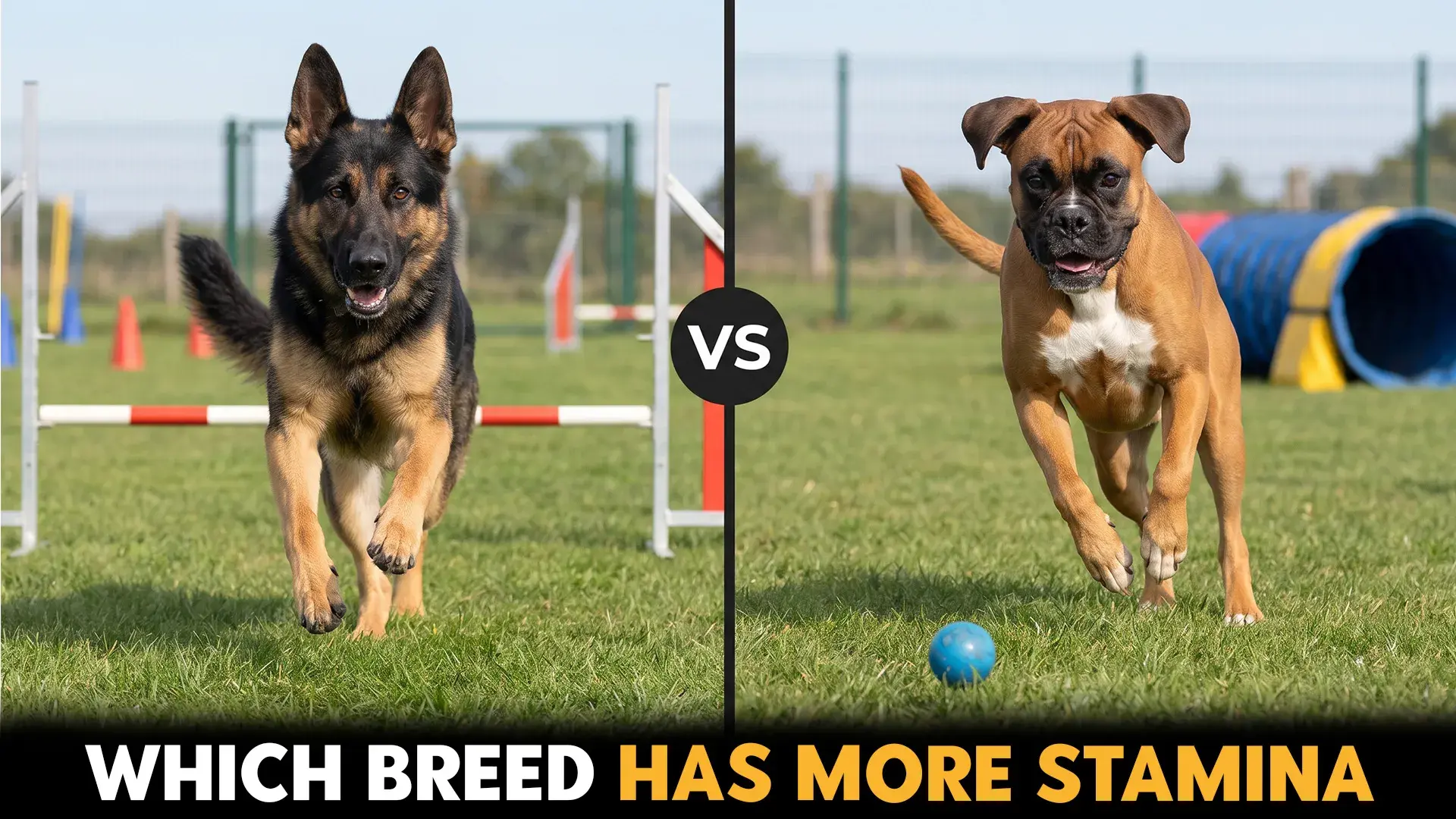
Choosing between a German Shepherd and a Boxer can be tricky, especially when both breeds have so much to offer.
Although they share qualities like bravery and devotion to their families, these breeds have their own distinct personalities.
German Shepherds are often more focused and serious, while Boxers tend to bring a fun-loving, energetic spirit to the household. Their exercise needs, behavior, and common health concerns are also worth considering.
So, which breed is the better fit for your lifestyle? Whether you want a loyal guardian, an enthusiastic playmate, or a loving family companion, understanding how German Shepherds and Boxers compare can help you make the right decision.
Let’s explore what makes each breed unique!
German Shepherd vs. Boxer: Personality and Energy Compared
Breed Origins & Functional Background
German Shepherd
German Shepherds have a long history of working alongside humans, with their ancestors serving as both companions and working dogs for hundreds of years.
Developed from older shepherd and farm dogs, the modern German Shepherd was officially introduced in Germany in 1899 by Capt. Max von Stephanitz, who founded the breed.
The breed quickly attracted attention worldwide in the early 1900s and received recognition from the American Kennel Club (AKC) in 1908.
According to GSDCA, during World Wars I and II, the word “German” was dropped from its name, and the breed became known as the Shepherd Dog or Alsatian, a name still commonly used in parts of Europe.
Boxer
The Boxer’s history dates back to 19th-century Germany, where its ancestors included the Bullenbeisser, a powerful hunting dog capable of taking on large animals such as boars, bulls, and even bears.
As the Bullenbeisser became less popular, it was bred with English Bulldogs and other smaller breeds, eventually producing the Boxer we recognize today.
Smaller and leaner than its ancestors, the Boxer spread across Europe and eventually reached the United States in the late 19th century. Its strength, loyalty, and versatility made it useful in several working roles, including farm work, guarding, and service in the police and military.
The American Kennel Club officially recognized the breed in 1904, and it ranked as the 18th most popular dog breed in the United States in 2023.
Physical Characteristics & Body Structure
German Shepherd
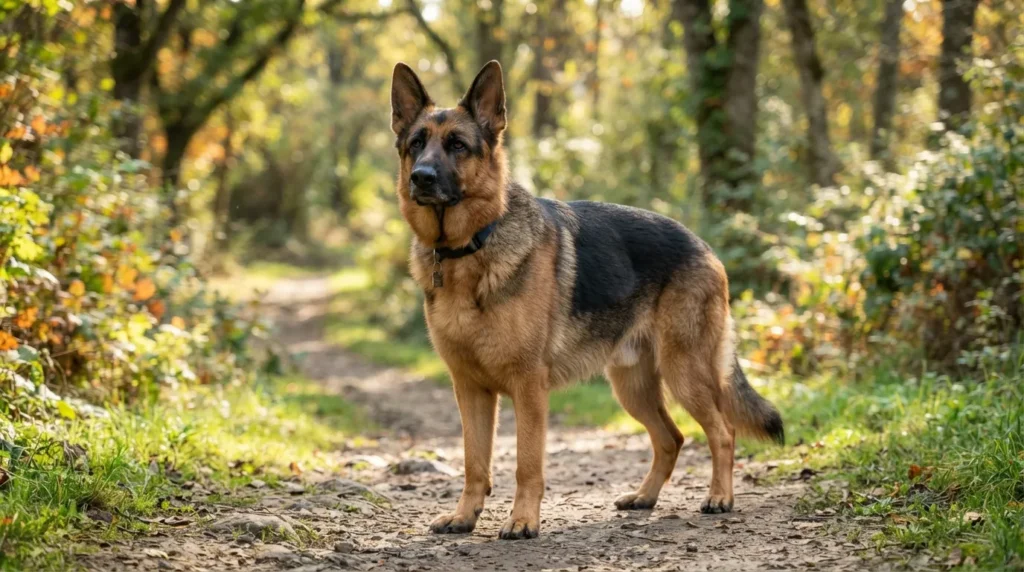
German Shepherds are large, athletic dogs with a strong, streamlined build. Their bodies are slightly longer than they are tall, with a noble head, dark almond-shaped eyes, and upright ears that give them an alert, intelligent expression.
They have deep chests, firm abdomens, and bushy tails. Their smooth, effortless trot reflects their strength and agility.
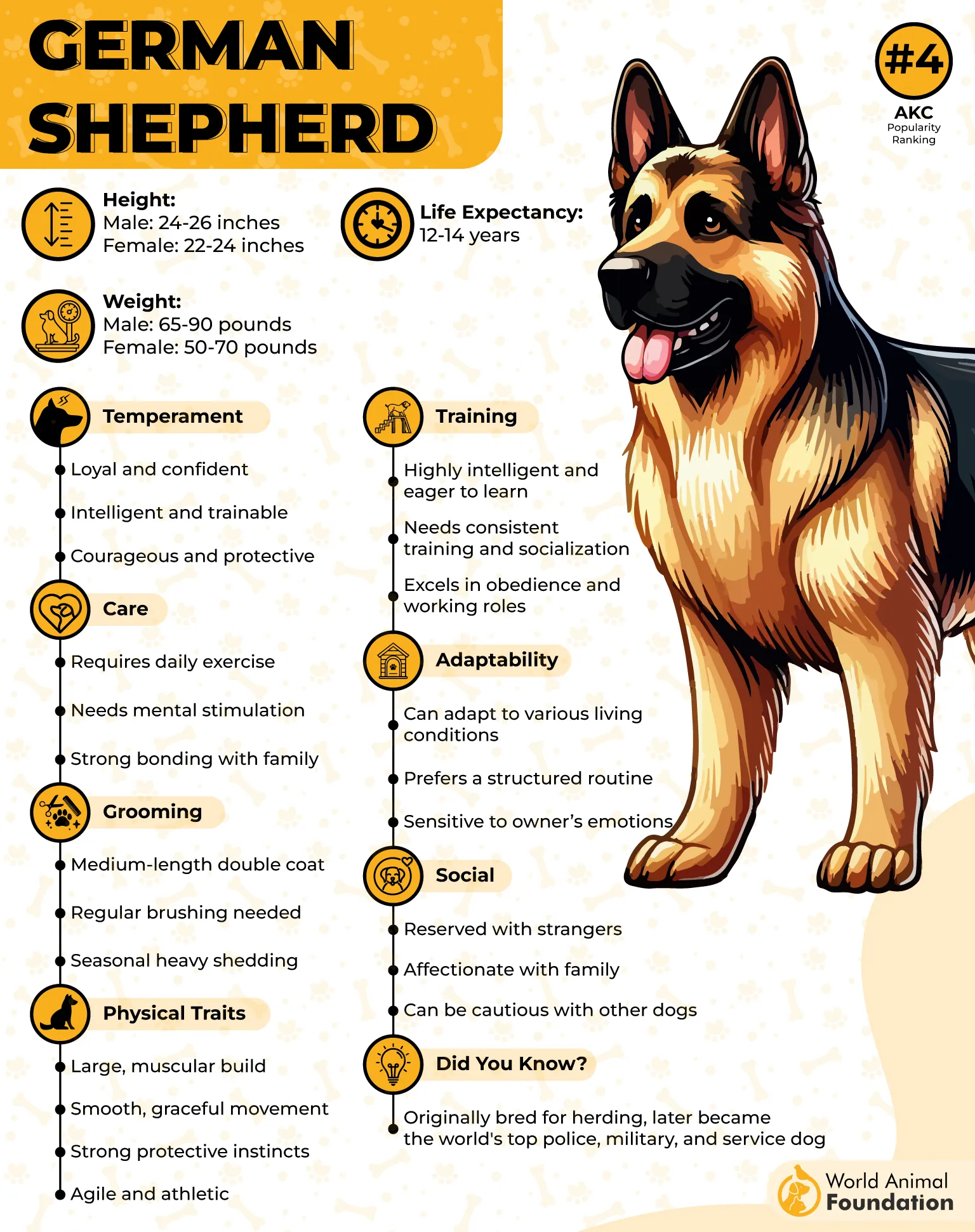
Most have a thick, medium-length double coat with a dense topcoat and a woolly undercoat that provides insulation in cold weather. Coat colors include black, black and tan, black and red, sable, gray, blue, liver, and white.
Height: 22–26 inches
Weight: Males up to 96 pounds; females up to 70 pounds.
Boxer
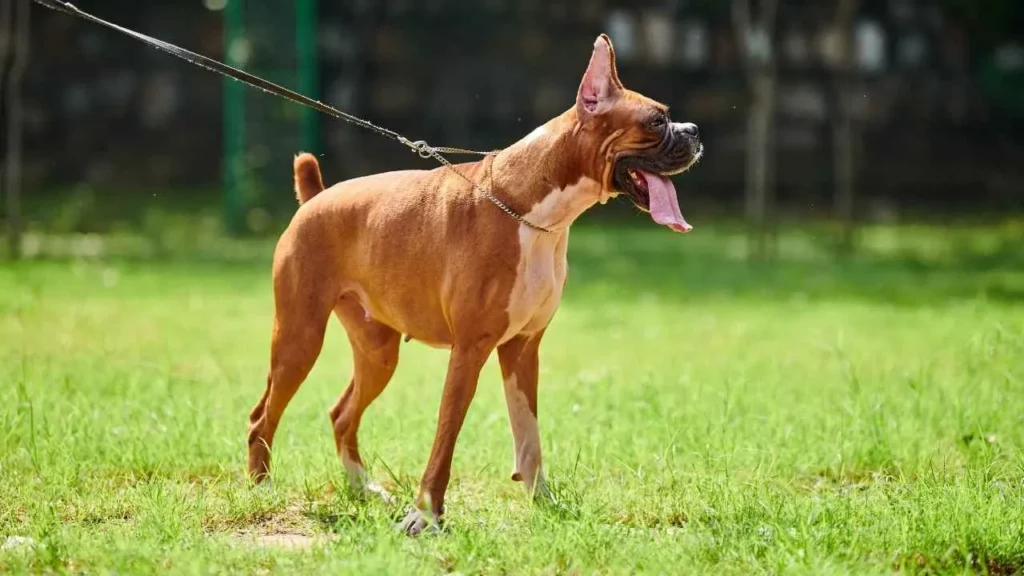
Boxers have a muscular, medium-sized body with a square build. Their strong muscles, deep chest, and short, smooth coat give them a powerful appearance. They have a chiseled head, short muzzle, distinctive underbite, and loose jowls.
Their dark brown eyes and slightly wrinkled forehead add to their alert expression. They move with energy, agility, and confidence.
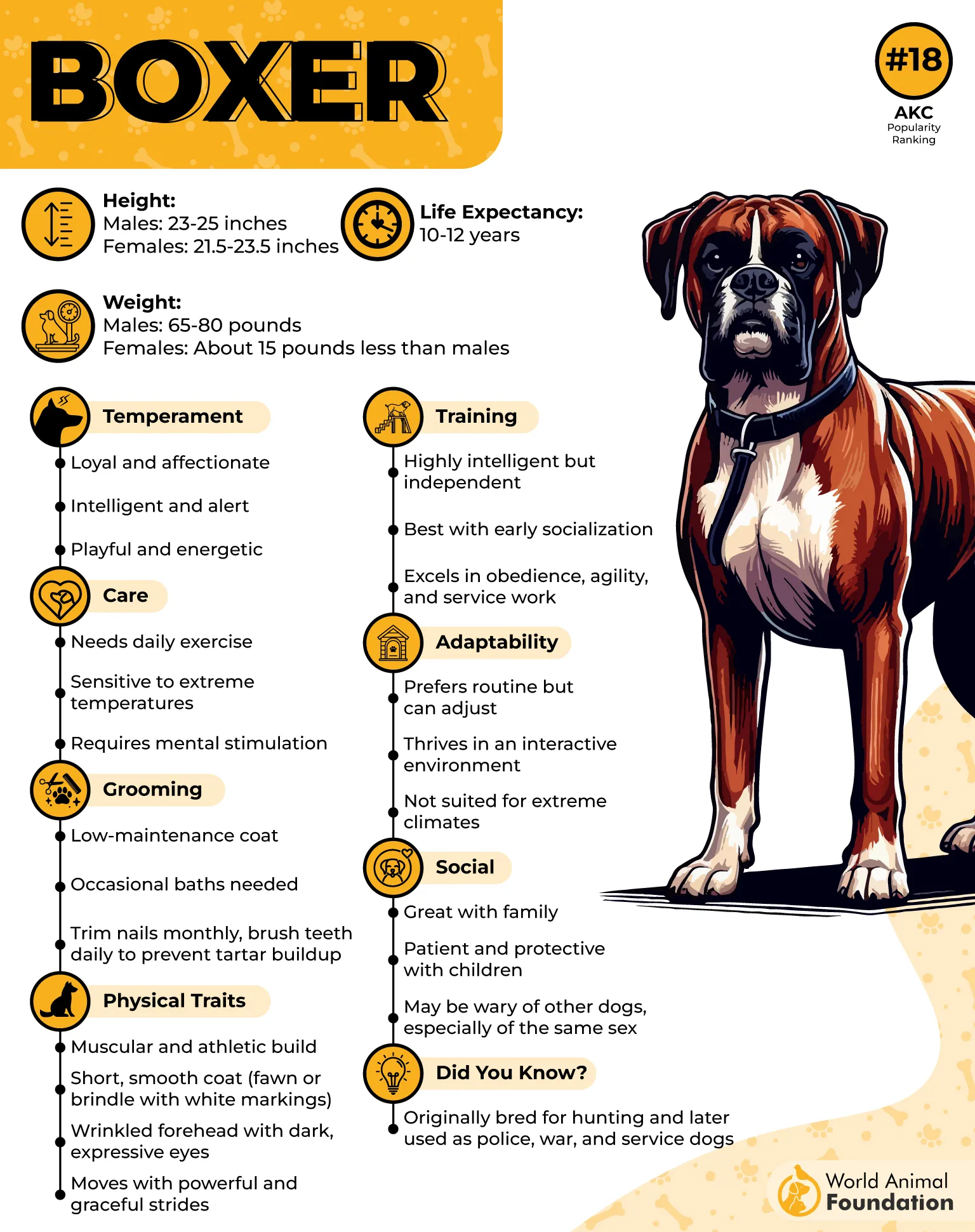
Their shiny coat comes mainly in fawn and brindle shades. Fawn ranges from light tan to deep mahogany, while brindle features dark stripes. Some Boxers also have a black facial mask and white markings on the face and chest.
Height: 21–25 inches
Weight: Approximately 55–80 pounds.
Temperament & Behavioral Profile
German Shepherd
German Shepherds are loyal, intelligent, and protective dogs with a naturally alert personality. Their history as herders and guardians makes them devoted to their families, although they can be reserved around strangers.
They are confident and composed but also playful and eager to learn. Highly trainable, they enjoy having a job to do and being involved in family activities. They also crave human attention and may become destructive if left alone for long periods.
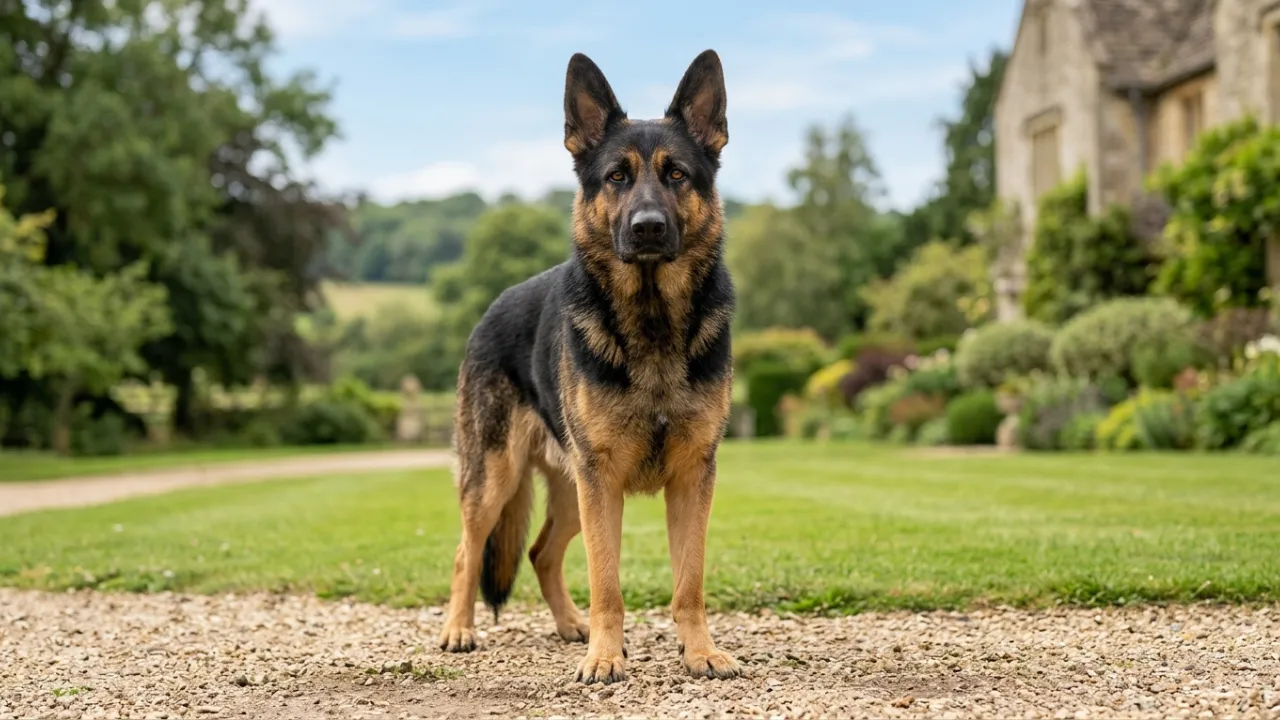
German Shepherds are generally good with children when properly trained and socialized. They can be gentle and affectionate with their families, but interactions with children should always be supervised.
Boxer
Boxers are energetic, affectionate, and fun-loving dogs with plenty of personality. They are intelligent and loyal and often form close bonds with their families.
While they can be reserved around strangers, they are usually attentive and friendly with people they know. Their playful nature can make them quite boisterous, especially when excited, so consistent training and plenty of exercise are important.
Boxers are generally gentle and playful with children and enjoy receiving affection and attention. However, their tendency to jump and paw during play can be overwhelming for younger kids.
They can also be friendly with familiar pets but may show aggression toward unfamiliar dogs, making early socialization important. Supervision is recommended during interactions with children and other pets.
Activity Requirements & Energy Levels
German Shepherd
German Shepherds are high-energy working dogs, typically scoring between three and five on a five-point energy scale. They need plenty of daily exercise to stay physically fit and mentally satisfied.
A simple daily walk usually isn’t enough. They enjoy running, playing, and exploring, making them great companions for joggers and active owners.
Without enough activity, German Shepherds can become bored and frustrated, leading to destructive chewing, digging, or excessive barking.
Their daily activity should include:
Long walks and jogging sessions
Running, fetching, and outdoor play
Exploring and other mentally stimulating activities
Chew toys to keep them occupied
A fenced yard provides extra room to play, but regular attention and interaction with their family are just as important. They should not be left alone for most of the day.
Boxer
Boxers have very high energy levels and need plenty of daily exercise to burn off their enthusiasm, according to Orvis.
Two 30-minute walks each day, along with active playtime, can help keep them healthy and prevent boredom-related destructive behavior. They also enjoy activities that challenge both their bodies and minds.

Their favorite activities include:
Long walks and jogging sessions
Running, fetching, and frisbee
Hiking and outdoor exploration
Nose work and interactive games
Boxers prefer doing activities with their owners rather than being left alone in a yard. However, their short coats offer little protection against cold weather, while their short noses make it harder to cool down in hot temperatures.
During extreme weather, indoor exercise is a better option, and outdoor walks are best scheduled during cooler parts of the day.
Trainability, Intelligence & Learning Ability
German Shepherd
German Shepherds are among the smartest dog breeds, making them highly trainable and quick to pick up new commands. Their strong work drive and intelligence help them excel in structured training.
They respond best to consistency and positive reinforcement, especially when treats or toys are used as rewards.
Early training is important because German Shepherds have a strong instinct to chase smaller animals. They should be kept on a leash or inside a fenced yard when outdoors. Without proper guidance, they may also develop anxiety or aggressive behaviors.
Training should focus on:
Building reliable recall and leash manners
Teaching tasks that engage their working instincts
Practicing calm behavior around distractions
Developing confidence in unfamiliar environment
Boxer
Boxers are intelligent and capable of learning quickly, but their energetic and playful nature can make training a little challenging.
They need patience and clear, consistent guidance to stay focused. Positive reinforcement works well, helping them understand desired behaviors without making training feel like a chore.
Their tendency to jump on people is one behavior that needs attention from an early age. Puppy training classes can also help them learn appropriate manners and become comfortable around unfamiliar people and animals.
Important training priorities include:
Teaching them to keep all four paws on the ground
Improving focus during training sessions
Practicing polite greetings with people
Encouraging calm interactions with other dogs
Coat Maintenance & Grooming Needs
German Shepherd
German Shepherds have a thick double coat with a soft undercoat and a coarse, sometimes wiry outer coat. They shed heavily throughout the year, with increased shedding during spring and fall. Regular grooming is essential to manage loose fur and keep their coat healthy.
Their grooming routine should include:
Brushing: Every few days to remove loose hair and control shedding.
Bathing: A few times a year or as needed. Avoid frequent baths because they can strip the coat of its natural protective oils.
Seasonal care: Brush more often during spring and fall when shedding increases.
Expect some dog hair on your furniture and clothing, so regular vacuuming may also be necessary.
Boxer
Boxers have short, smooth coats that shed moderately, making them much easier to groom than German Shepherds. Their grooming needs are fairly simple, and weekly brushing is usually enough to remove loose fur and debris.

They may shed more during seasonal changes, so brushing more frequently during spring and fall can help.
Their basic grooming routine includes:
Brushing: Once a week with a brush to remove loose hair and debris.
Bathing: Every couple of months or when needed to keep the coat clean.
Skin care: Omega-3 fatty acids may help support skin and coat health, with veterinary guidance.
Some Boxers also drool quite a bit, so their mouth area may need occasional cleaning with a damp cloth.
Average Lifespan & Longevity
German Shepherd
German Shepherds have an average lifespan of 7–10 years. Although responsible breeding can help reduce the risk of inherited health problems, the breed is still prone to several conditions that may affect its quality of life and longevity.

Common health concerns include:
Hip dysplasia
Elbow dysplasia
Elbow hygroma
Gastric dilatation-volvulus (bloat)
Degenerative myelopathy
Boxer
Boxers typically live around 10–12 years, giving them a slightly longer average lifespan than German Shepherds. However, they are susceptible to several hereditary and other health conditions.
Their flat faces also make them more prone to breathing difficulties and overheating, which can affect their overall health.
Common health concerns include:
Hip dysplasia
Heart conditions
Hypothyroidism
Degenerative myelopathy
Cancer
Chronic kidney disease
Underbite
Gastric dilatation-volvulus (bloat)
German Shepherd vs. Boxer: Suitability for Family Life vs. Guard Duties
German Shepherd
German Shepherds can make devoted family companions while also serving as excellent guard dogs. They are naturally protective, alert, and loyal, often remaining reserved around strangers until they feel comfortable.
Their intelligence and strong working instincts make them highly trainable for protective duties, while their affectionate side helps them form close bonds with family members.
They are generally good with children when properly trained and socialized, but they need regular attention, exercise, and mental stimulation. They are best suited to active households that can involve them in daily activities rather than leaving them alone for long periods.
Boxer
Boxers are affectionate, playful, and energetic family dogs that enjoy spending time with both adults and children.
Their fun-loving nature makes them wonderful companions, although their enthusiasm and tendency to jump can sometimes be overwhelming for younger children, as mentioned by PetMD.
They are also alert and loyal, with a history of working as guard dogs. Although they can be reserved around strangers and protective of their families, their energetic and outgoing personalities make them different from more serious working breeds.
Early socialization and obedience training help them manage their excitement and interact appropriately with unfamiliar people and other animals.
Conclusion
German Shepherds and Boxers share loyalty, courage, and a strong bond with their families, but they differ in personality, energy, training, and grooming needs.
German Shepherds are more focused and naturally protective, while Boxers bring a playful, outgoing personality to everyday life. Both need consistent training, regular exercise, and proper care to stay happy and healthy.
Before choosing between them, consider your daily routine, living space, and the time you can dedicate to exercise and companionship.
A good match isn’t simply about finding the smarter, stronger, or more energetic dog. It’s about choosing a companion whose personality fits your home and whose needs you can meet for years to come.
