




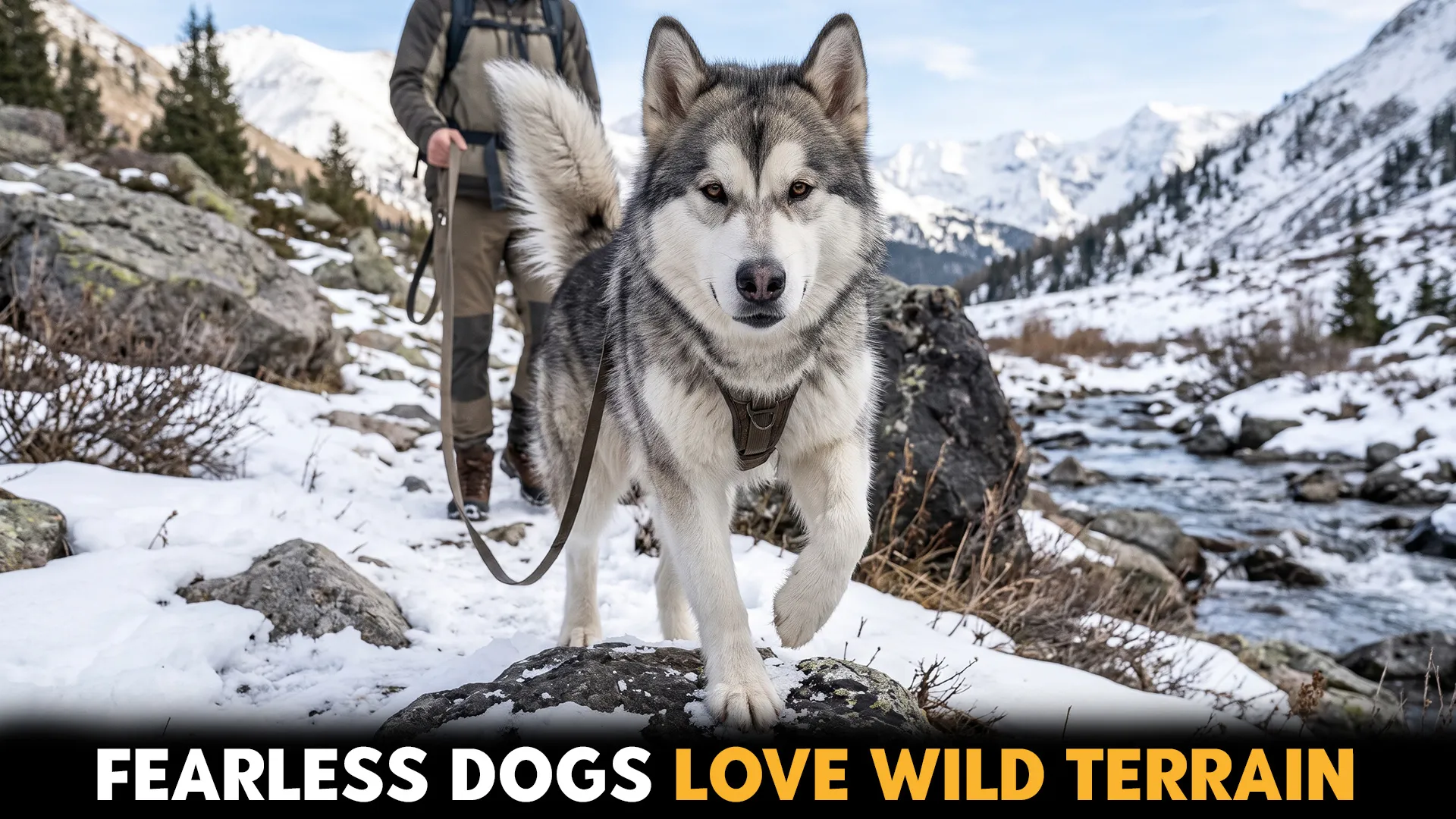
Some dogs are happy with a short walk and a cozy spot on the couch. Others seem to look at a hiking trail and think, “Let’s see where this goes.” If your idea of a great weekend includes muddy paws, steep paths, long runs, or exploring new places, the right dog can make those adventures even better.
Fearless does not mean reckless, though. A bold outdoor dog still needs training, conditioning, shade, water, and sensible limits.
The seven breeds below stand out for their athletic ability, stamina, working instincts, or confidence in challenging settings. Each brings something different to the adventure. The real trick is finding one whose energy and temperament fit your lifestyle, not simply choosing the toughest-looking dog.
Fearless Dog Breeds for Thrilling Outdoor Escapades
1. Belgian Malinois
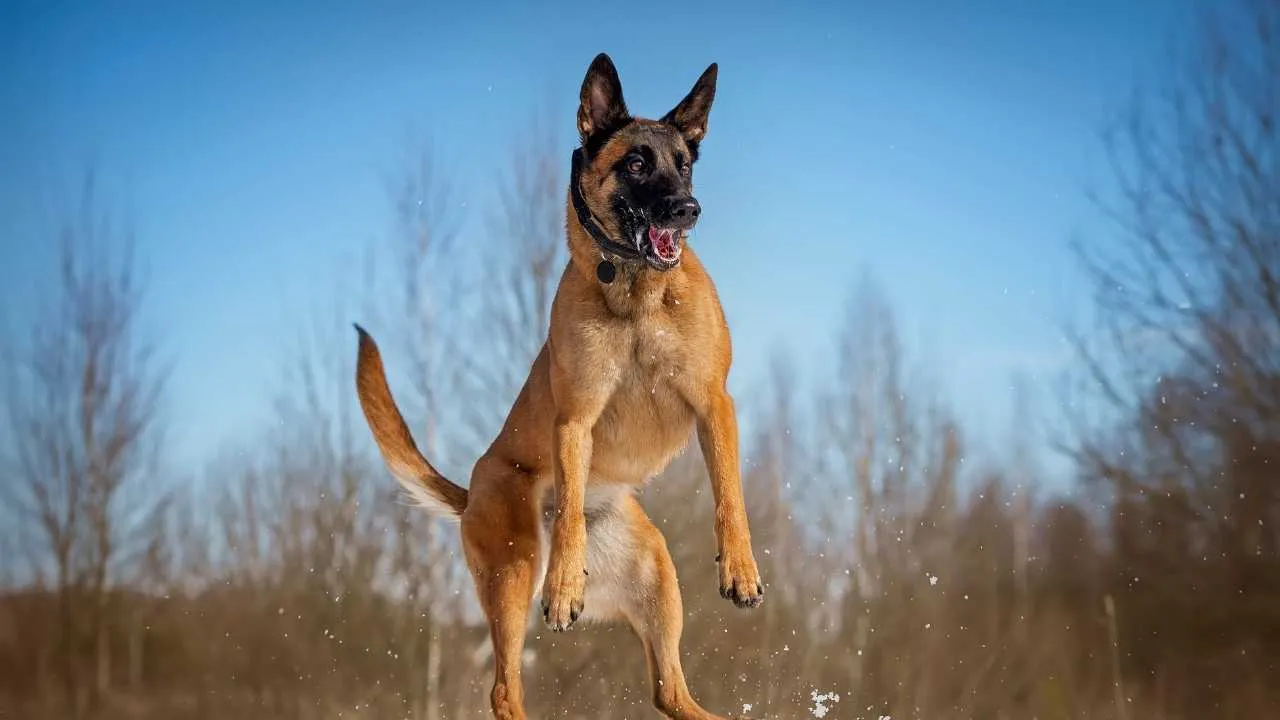
First bred in Belgium, the Belgian Malinois was originally bred as a herding dog, but its strong prey drive and high trainability opened the doors to other fields, such as SAR operations, bomb detection, police work, and military jobs, according to PetMD.
The square body structure provides stability and balance over rugged and rough terrain. The deep but narrow chest enables maximum lung expansion during cardiovascular exertion. The active dog breed has a springy movement because of strong hindquarters, and it runs at a high speed of 30 mph.
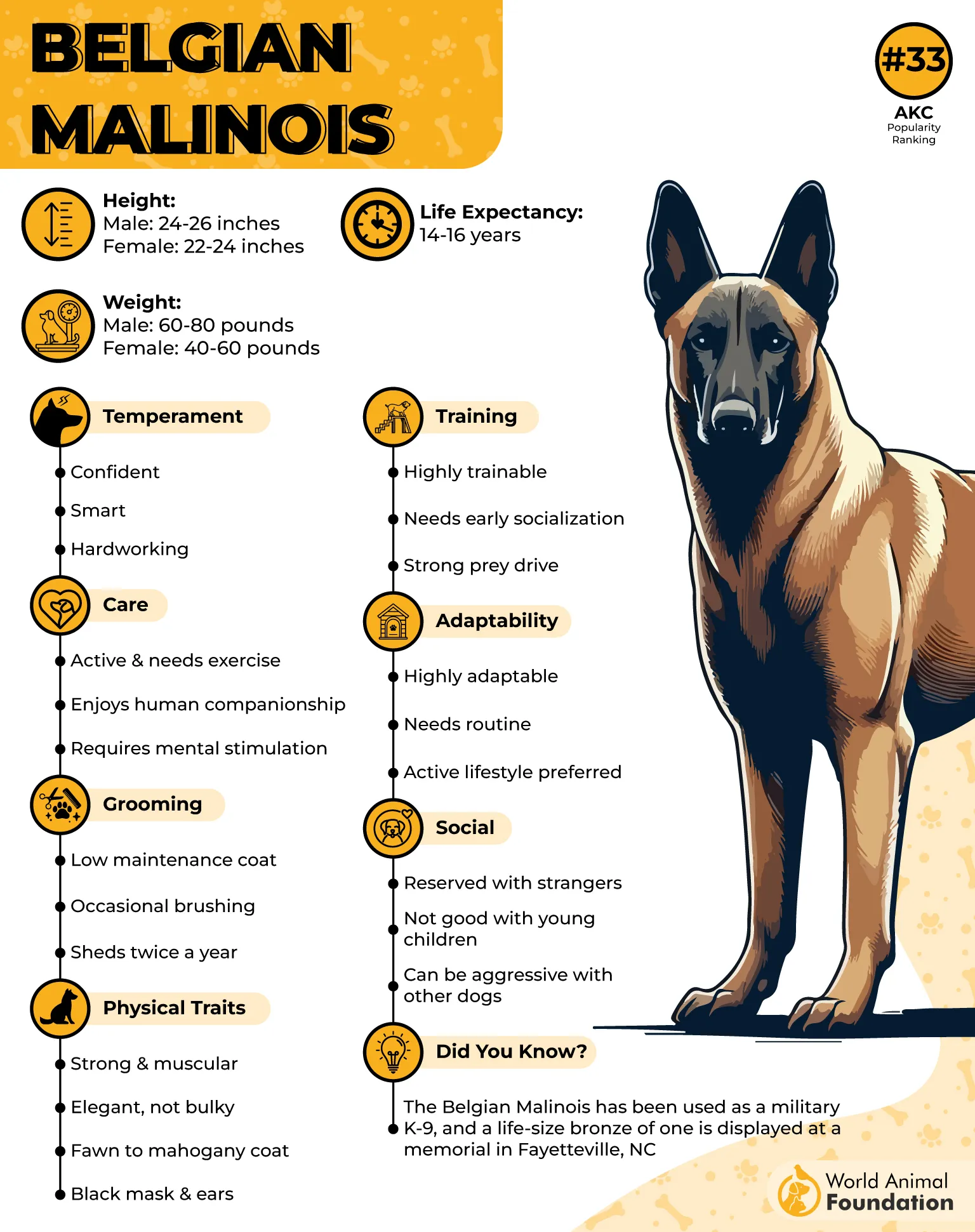
It has a short but dense, water-resistant double coat that provides a shield against external stimuli. It has a high work drive and stays focused when given a task: agility course, hiking, and running.
2. Australian Cattle Dog
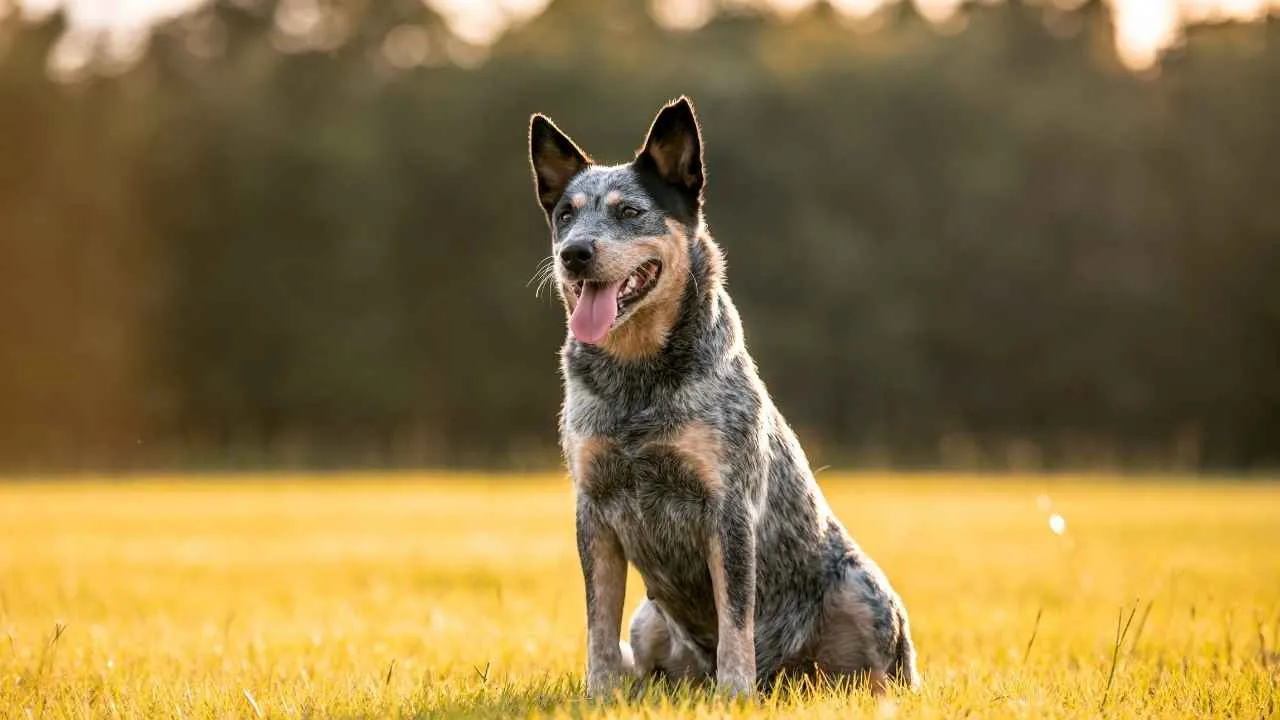
Australian ranchers in the 19th century faced a problem: the British herding dogs were not suitable for herding large livestock in the harsh environment. They started crossing breeds to develop a fast-paced breed with not an overly aggressive approach, resulting in the ACD.
The breed has high metabolic efficiency and heat tolerance that make it work in intense hot climates. This large dog breed can take high-speed turns because of its powerful hindquarters. Well-angulated shoulders and a strong back allow it to maintain a steady trot for a longer period of time.
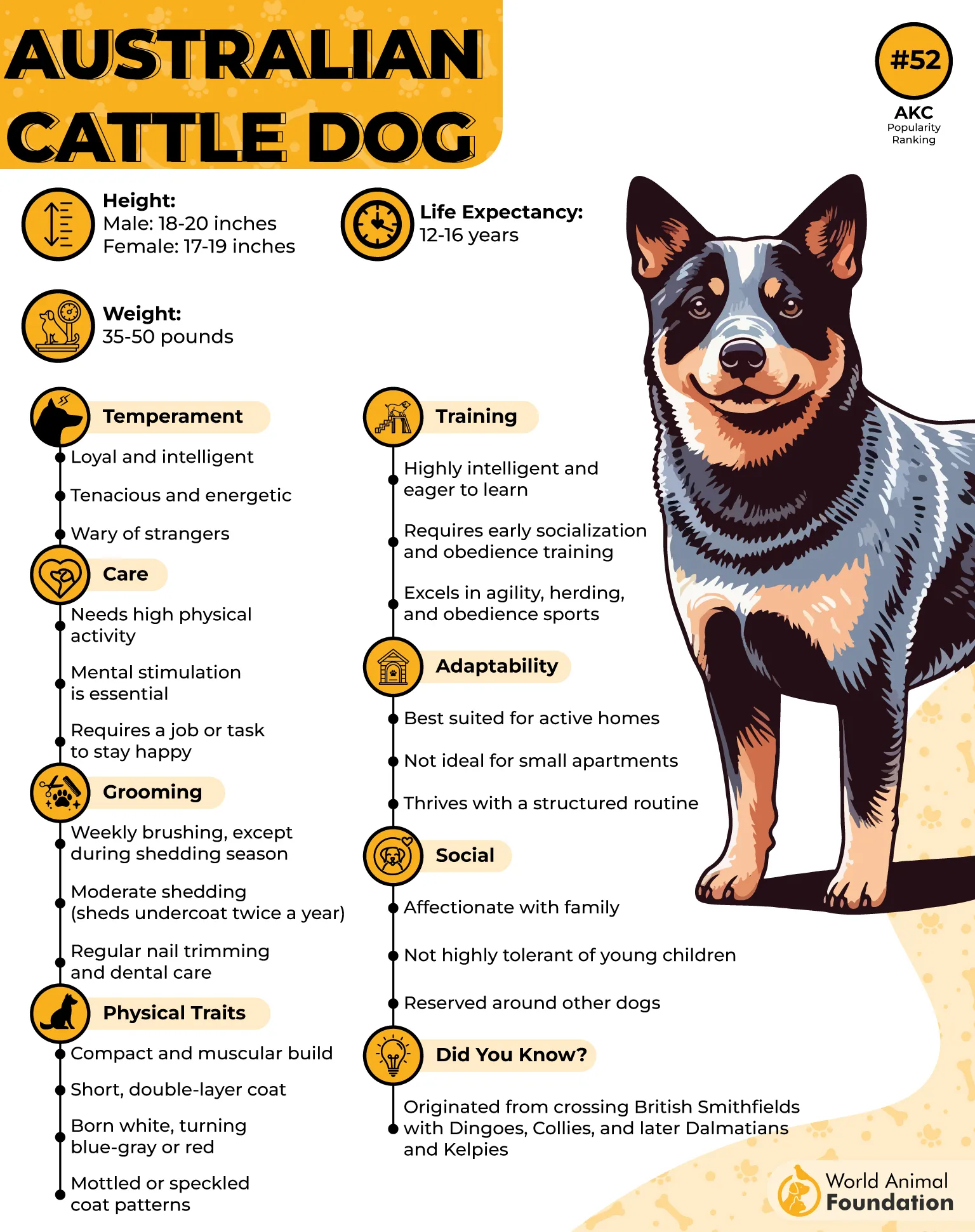
The ACD loves to chase moving objects (balls, kids, and bikes) because of its herding history. However, it is prone to nip at the heels of children when not socialized properly. High-impact activities, such as bike journeys, advanced fetching, playing frisbee, flyball, and agility courses, are highly recommended.
3. Rhodesian Ridgeback
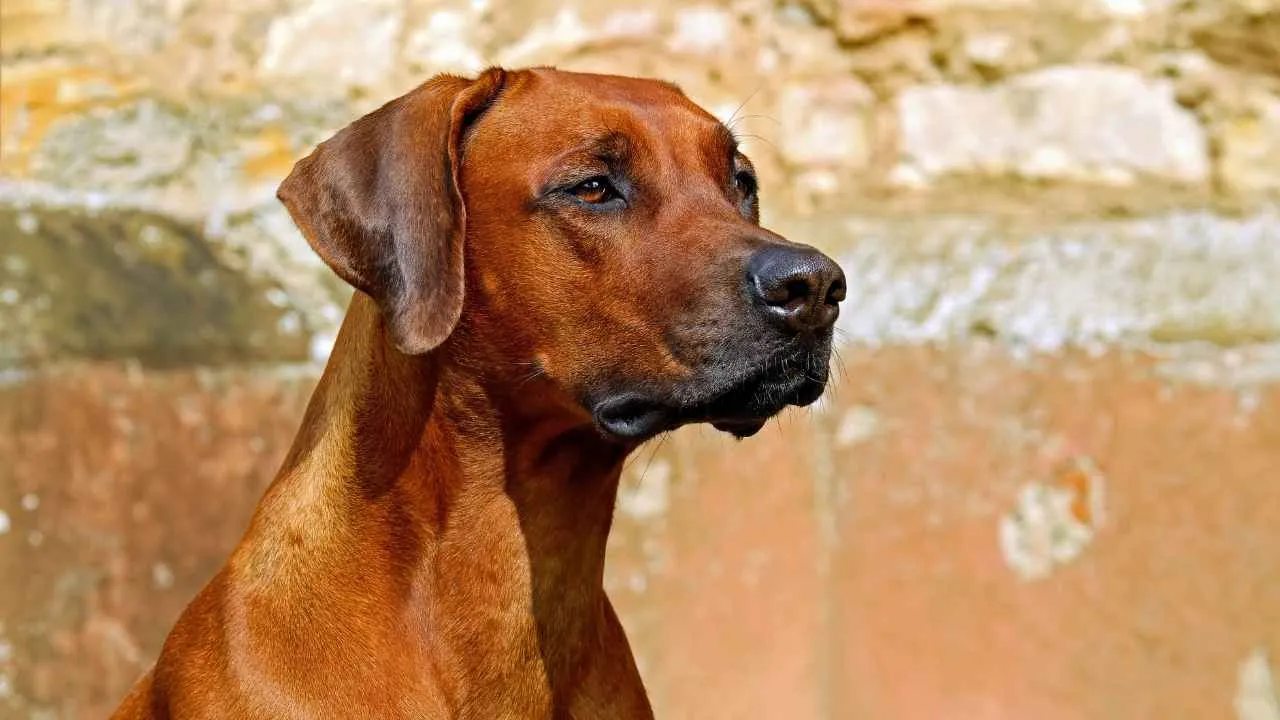
This breed has boundless energy and is semi native to South Africa. The development started with European settlers in the 17th century by crossing Bulldogs, Bloodhounds, Mastiffs, Great Danes, Terriers, and Greyhounds. The resultant breed was used as a hunting dog to hunt large game, as per the Royal Kennel Club.
It has a lean body with a Greyhound-like efficiency. This reduces the required metabolic energy to move and maximizes stamina. It has an exceptional metabolic resistance since the ancestors were bred to work for 24 hours without regular water stops. The thick pads act as a natural shock absorber while navigating through rocky terrain.
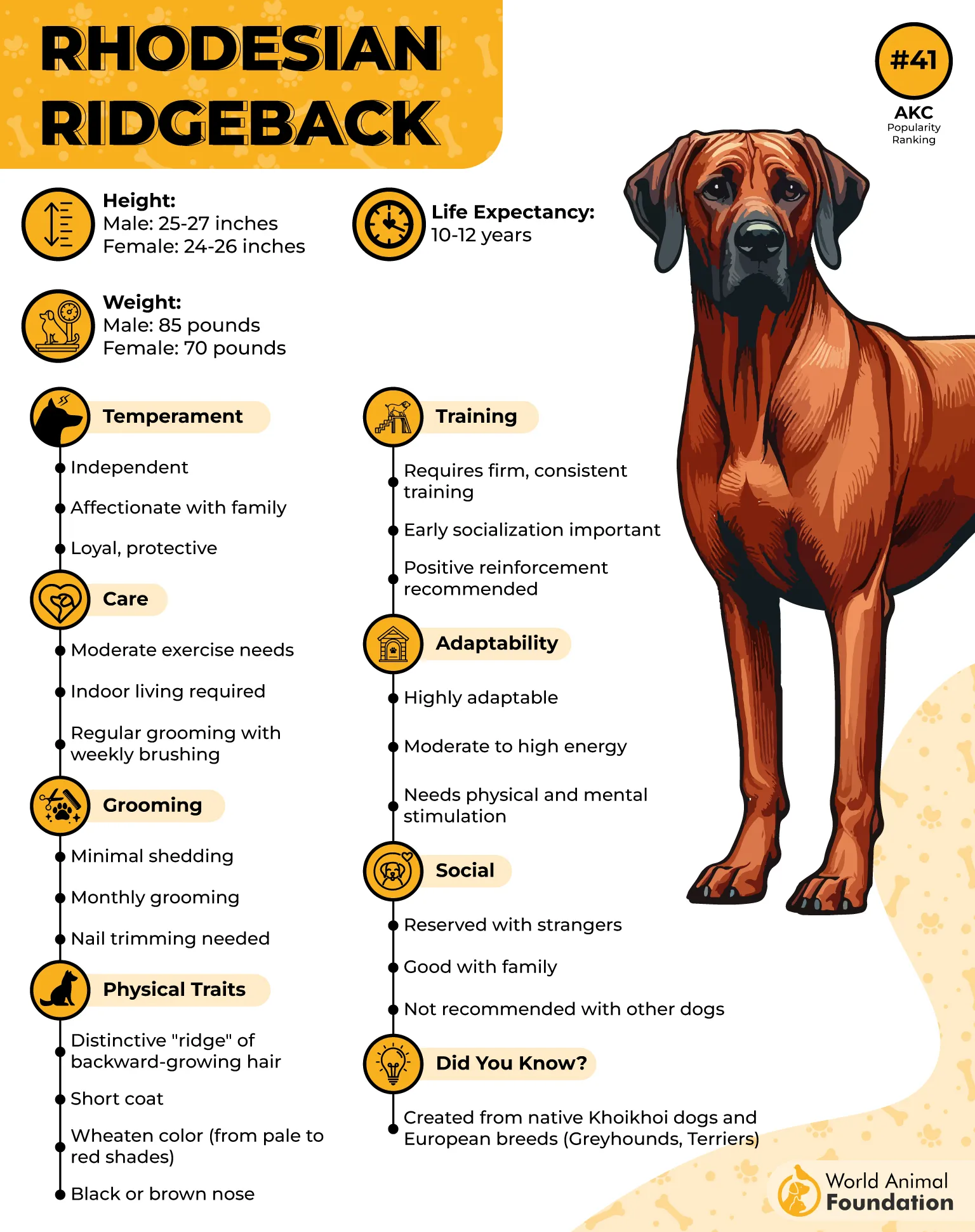
While affectionate with family members, the hunting companion is aloof with strangers and has strong watchful instincts. The perfect switch-off mode makes it an ideal couch potato indoors and a resilient outdoor adventurer. The breed loves intense activities, such as dog backpacking, jogging, and tracking.
4. Alaskan Malamute
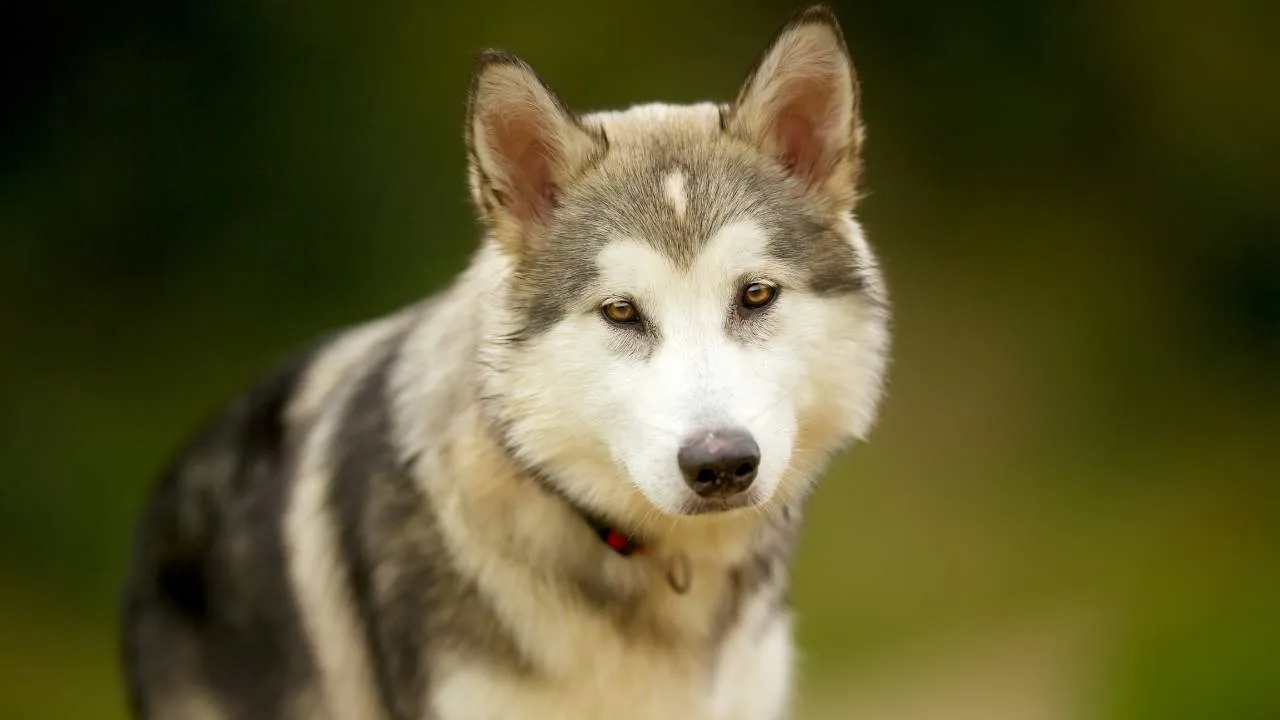
This large breed was developed by the people of Inuit tribes to pull heavy sleds slowly in the mountains for long distances. The breed was then used by American soldiers during World War II. It was officially recognized by the AKC in 1935.
The heavily muscled thighs with powerful joints provide immense propelling power for climbing and traversing deep snow. The double coat provides thermal regulation and protection against external stimuli. It has a plumed tail that is wrapped around the muzzle and eyes while resting to protect them from the freezing winds.
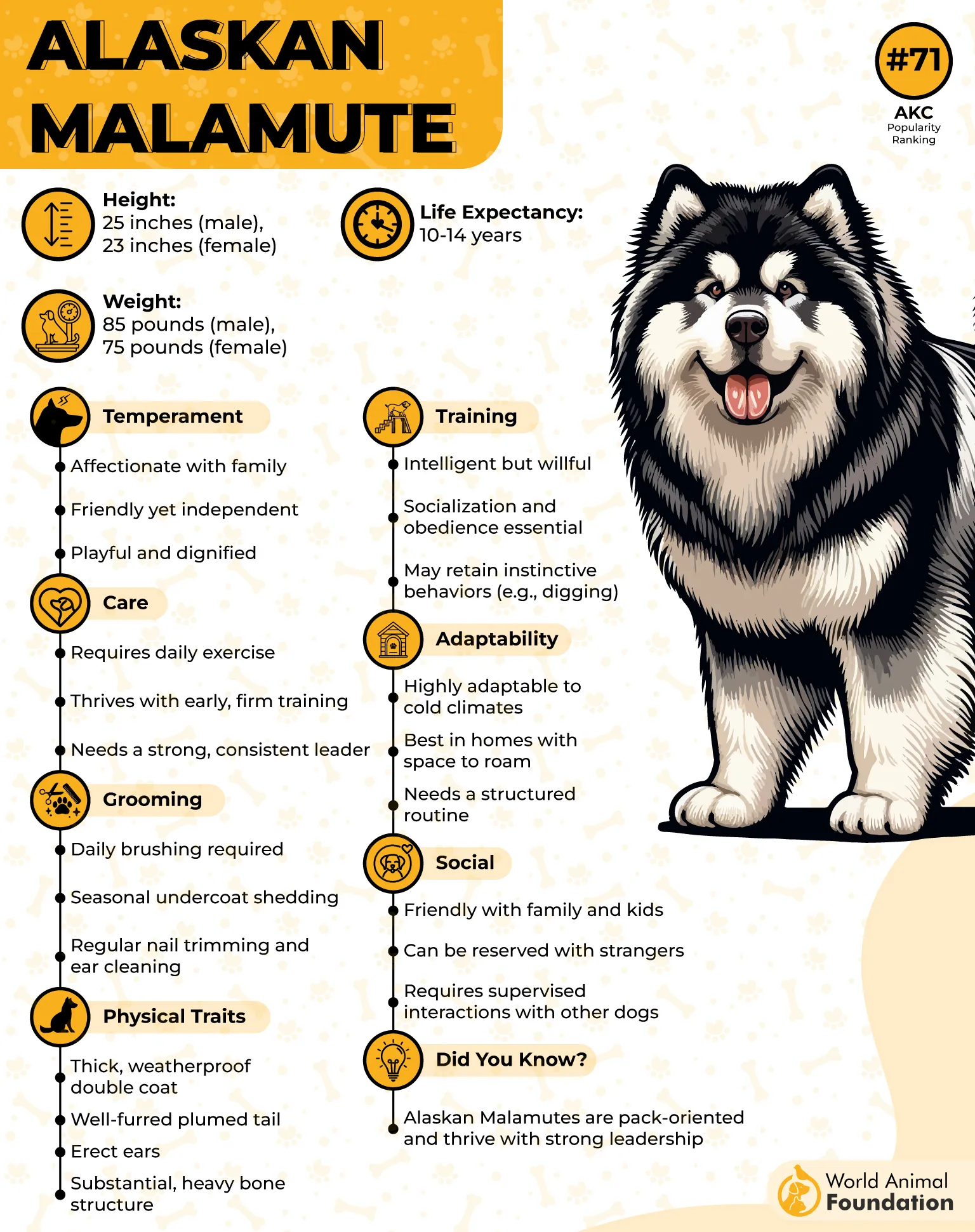
Since it was meant to move slowly, the fats and dietary proteins transition into slow-burning reserves that provide energy conservation. The breed excels in sledding, skijoring, pulk sledding, bikejoring, and canicross.
5. Siberian Husky
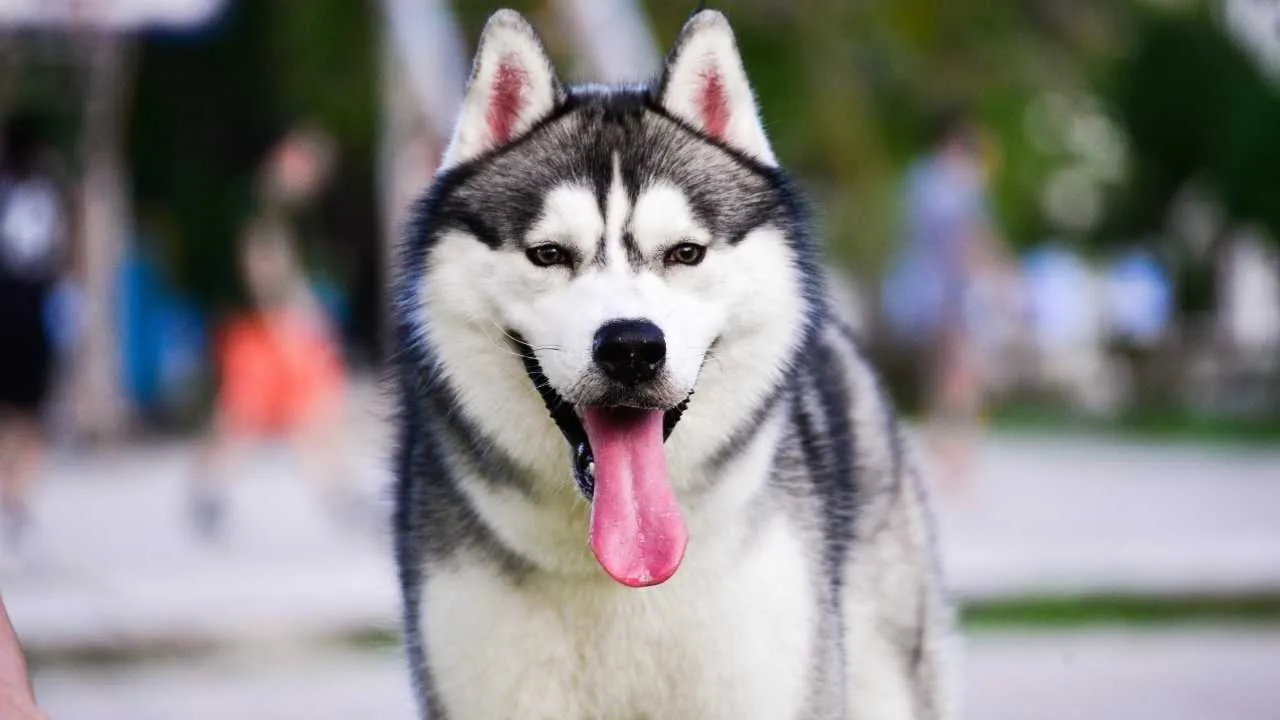
This medium-sized working dog was originally developed for sledding. Descended from the Spitz family, the Siberian Husky was first bred by the Chukchi people in Alaska. It has a thick coat, webbed feet, and sharp eyes to survive in cold weather, according to Wikipedia.
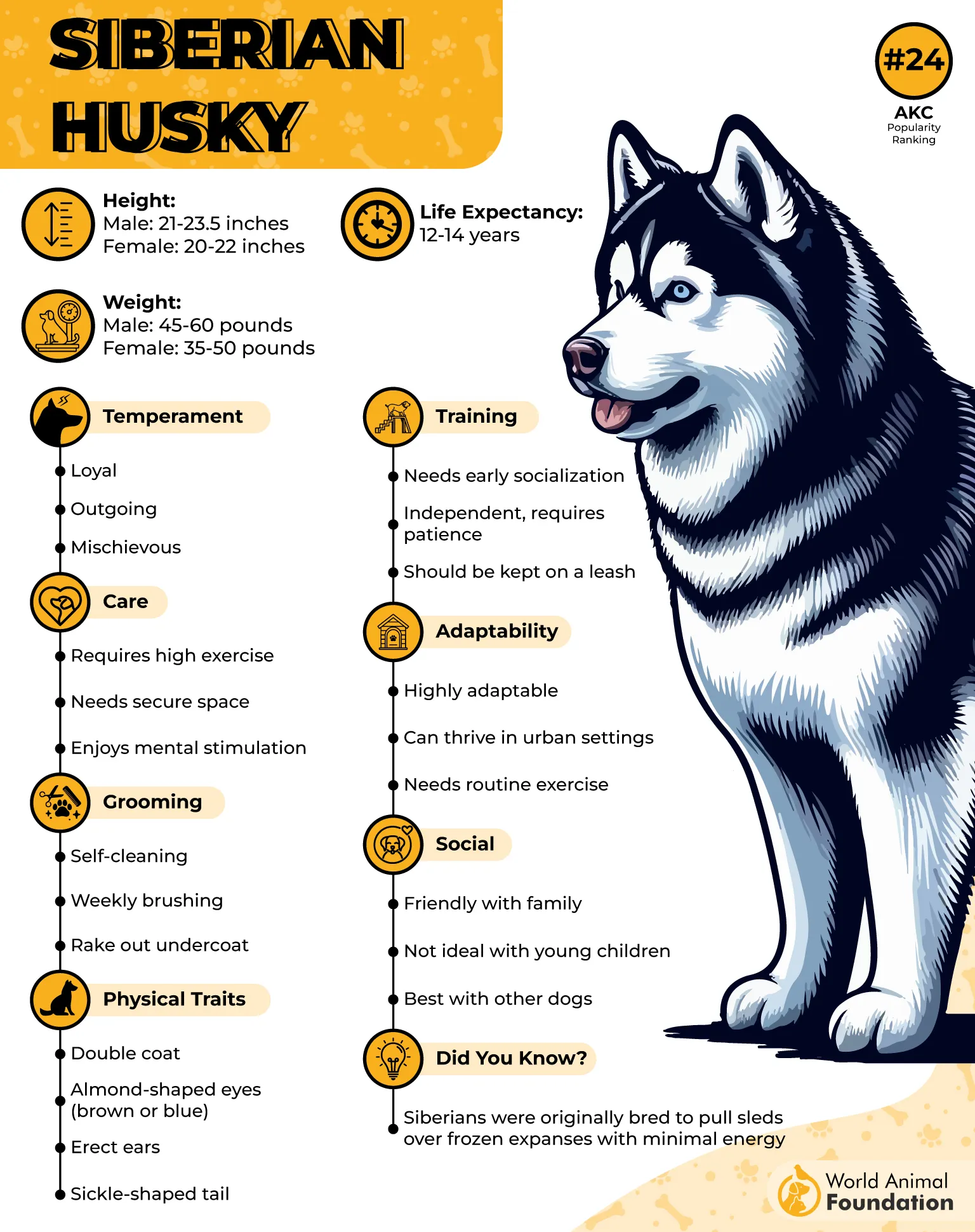
The breed has a unique metabolic switch where it burns through glycogen and glucose during the first few hours of intense exertion. That is why, even while running 100 miles a day, it remains active for consecutive days. The efficient skeletal proportions provide an exceptional ground-covering trot.
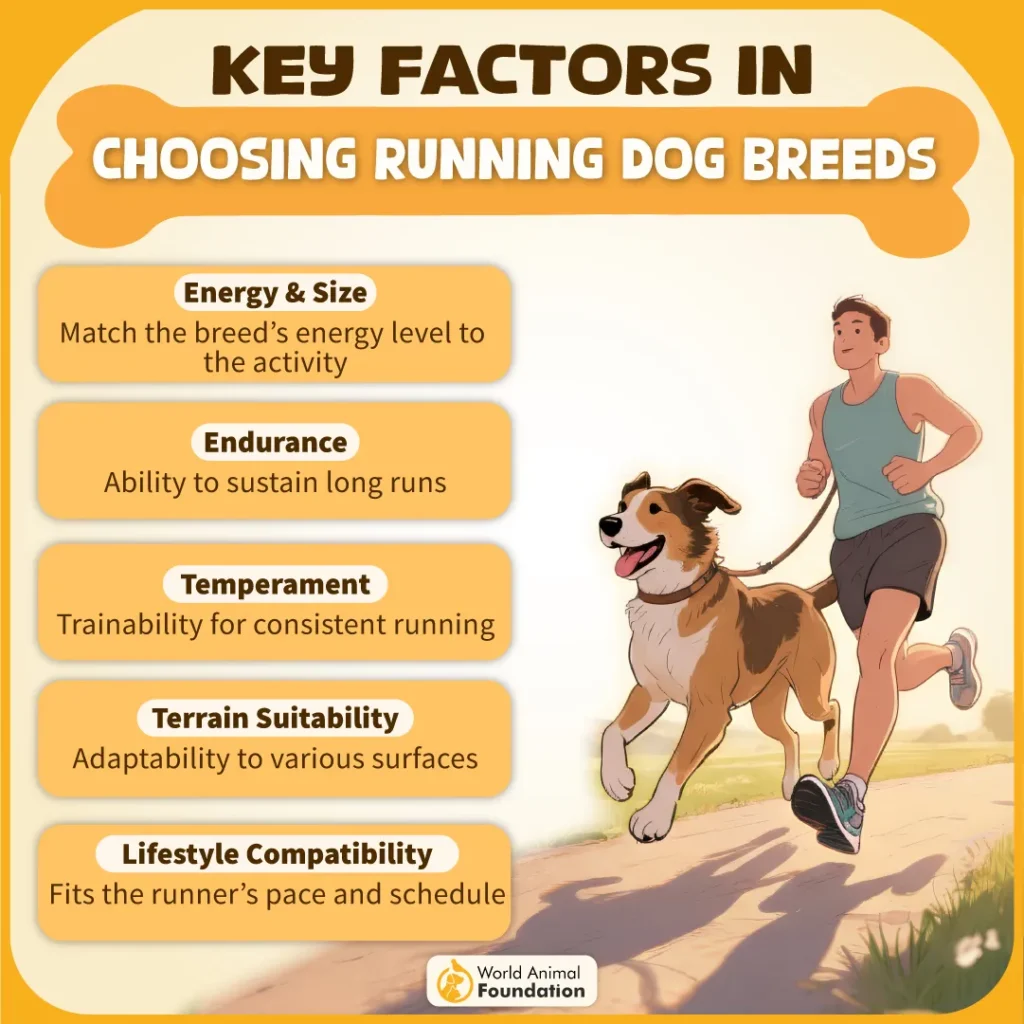
The high-energy breed requires 1.5-2 hours of daily exercise. It excels in bikejoring, canicross, skijoring, backpacking, hiking, obstacle courses, and swimming. Since it was built for cold regions, the breed is highly sensitive to hot weather conditions.
6. Catahoula Leopard Dog
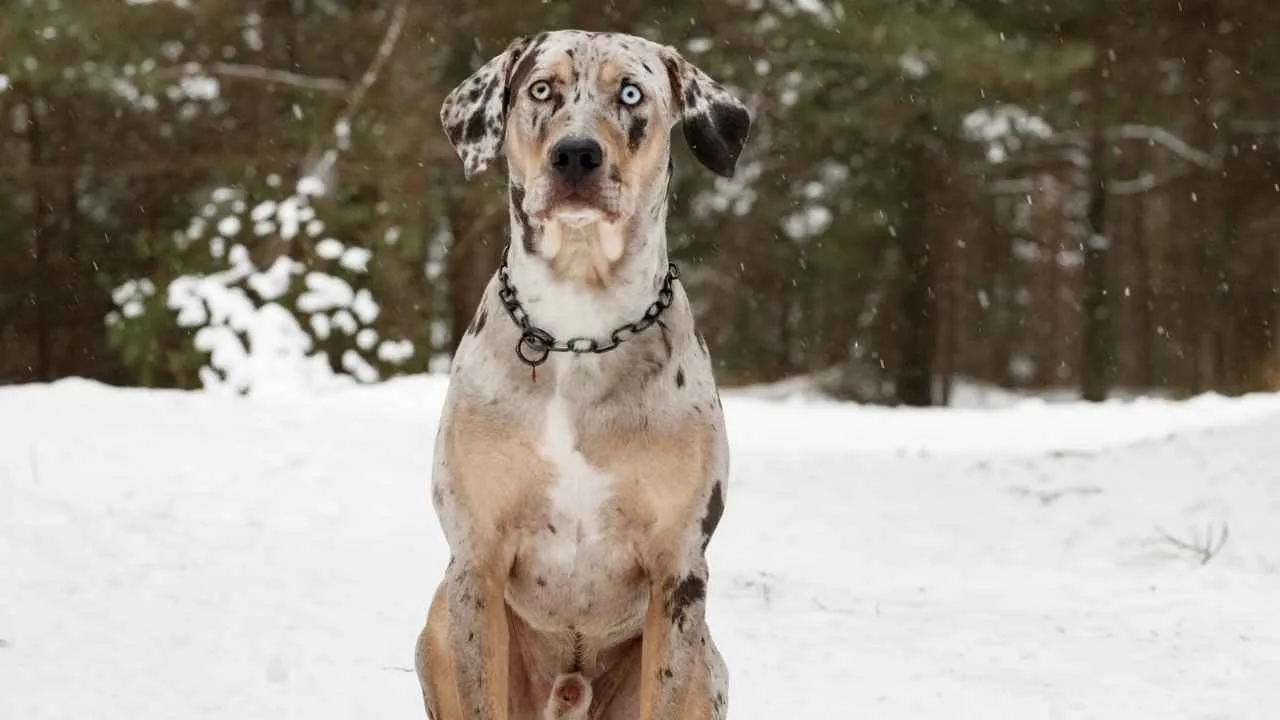
It is believed that the breed was developed by crossing North American domesticated dogs with Spanish breeds. Later, it was interbred with hounds in the 18th century, resulting in the modern-day Catahoula Leopard Dog. Known for its exceptional hunting skills, the breed is also used to herd wild cattle and hogs.
The breed has extensive digital webbing that stretches the length of entire toes. The snowshoe provides maximum traction while working on snow. The body is designed for sustained physical work rather than short bursts of energy, making it a great hiking partner.
With its intense prey drive and sharp focus, it thrives on constant physical and mental stimulation. The super smart breed enjoys hiking, swimming, advanced fetching, scent work, and dog sports.
7. German Shorthaired Pointer
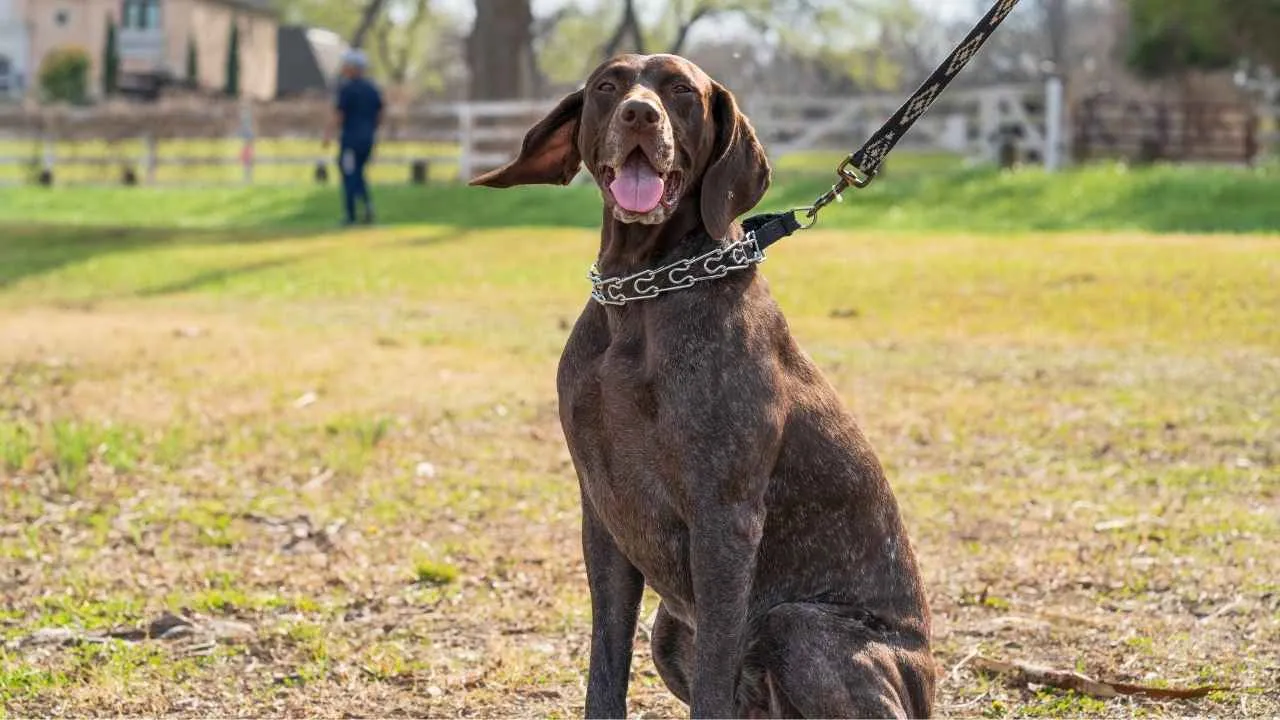
The breed was developed in Germany during the 18th and 19th centuries as a bird hunting dog. However, this medium-sized, all-purpose gun dog excels in both hunting and retrieving on land and in water. It is also kept as a companion dog across various regions.
The short, muscular back reduces spinal flexing during locomotion, which minimizes energy waste. With its advanced olfactory pathways, it gathers a large amount of scent molecules that help it track its prey. The breed needs a constant job, and 1-2 hours of daily exercise is ideal for GSPs.
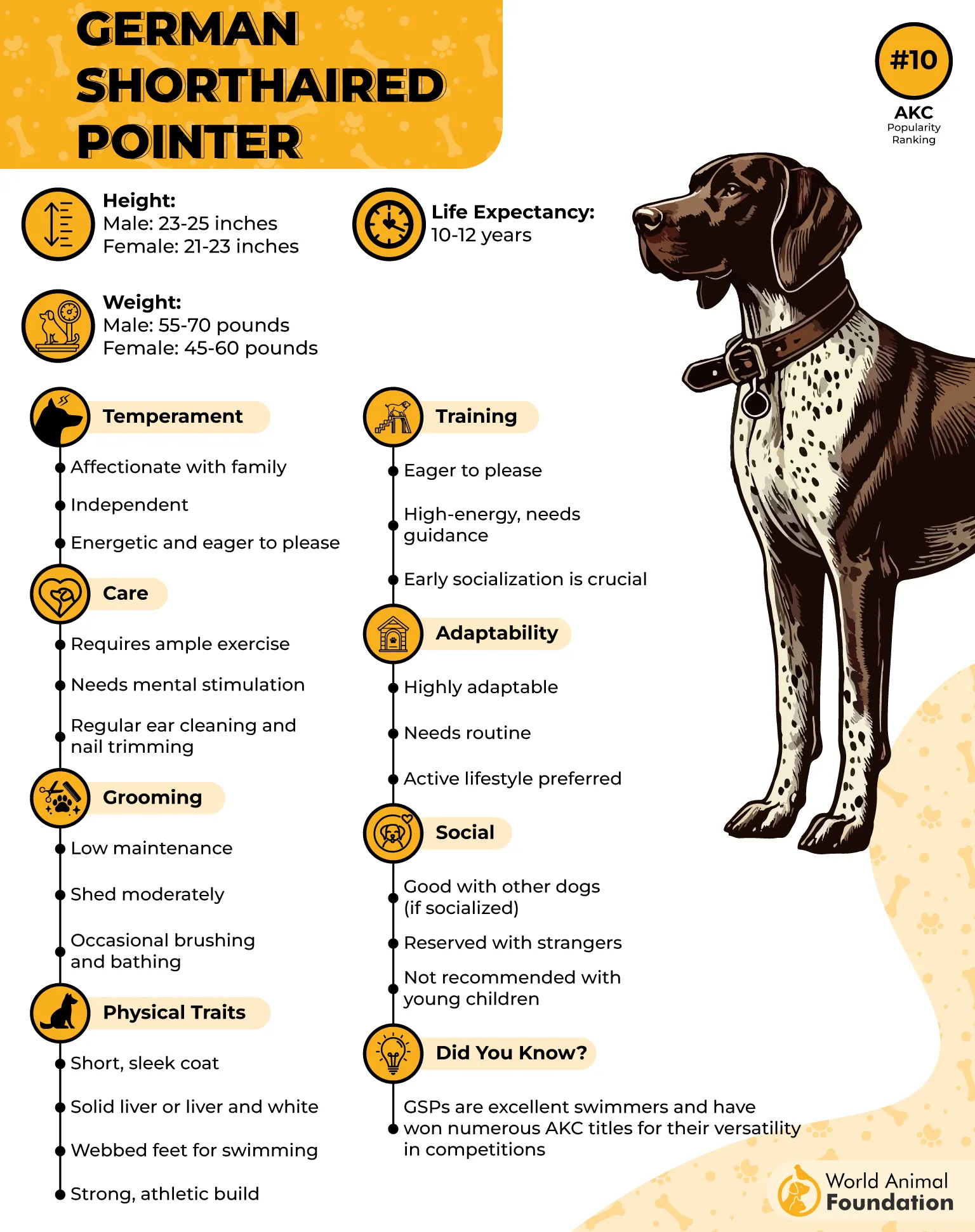
Because of its high stamina, the breed excels in hiking, swimming, dock diving, trail running, pulling sports, agility work, nose work, and field training.
Conclusion
The best adventure dog is not necessarily the fastest, strongest, or most intimidating breed. It is the one whose natural abilities fit the way you actually spend your time. A Belgian Malinois may thrive on structured challenges, while a Husky may be happiest covering miles in cool weather.
A Malamute brings strength to winter outings, whereas a German Shorthaired Pointer can add energy to hikes, runs, and water games. Before choosing any breed, think beyond the Instagram-worthy trail photo. Consider exercise needs, training demands, climate, size, grooming, recall, and your ability to provide daily enrichment.
