




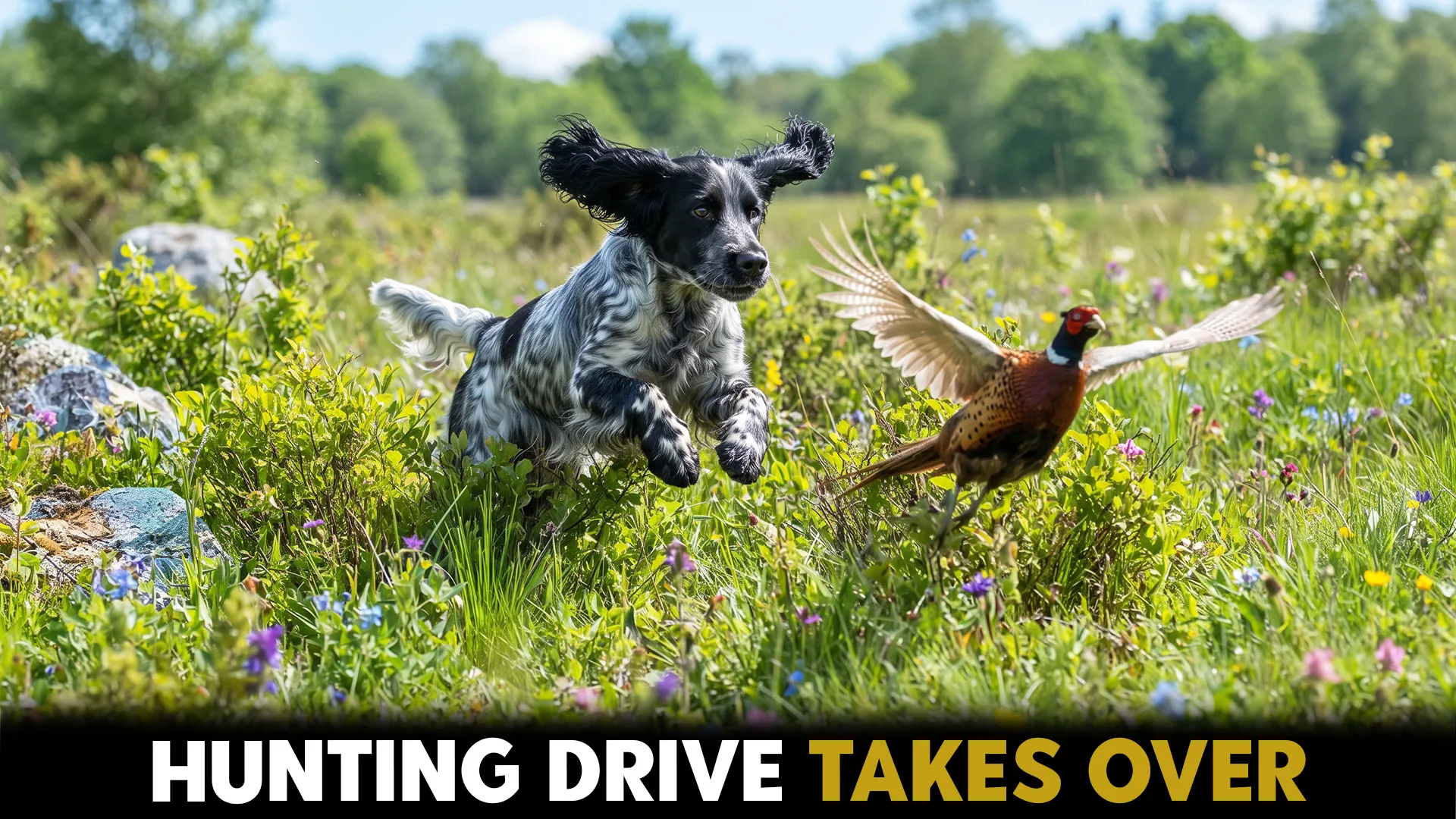
A single game bird can disappear into grass, brush, reeds, or woodland cover within seconds, leaving the hunter with little to follow except scent. That is where a top hunting dog breed earns its place.
Dogs bred for this work can search likely cover, pick up the scent of hidden birds, and pressure them into flight when the hunting method calls for a flush. Their work can continue after the shot, when careful scenting helps locate downed birds hidden from view. Good field performance depends on more than instinct alone.
A dog needs concentration, responsiveness, physical stamina, and enough training to work within the hunter’s range. Different hunting lines have been developed for different tasks, so their methods can vary considerably in the field. Some naturally range farther, while others stay closer and work dense cover with greater intensity.
These differences matter when comparing the breeds behind this demanding field work.
Key Takeaways
A good bird dog may spend much of the hunt working where human eyes can barely see, following scent through grass, brush, and woodland cover.
English Springer Spaniels are built for this kind of close search, while Boykin Spaniels bring webbed feet and a soft-mouth retrieve to the field.
The Sussex, Field, and Cocker Spaniels each work cover in their own way, with traits that can help when hunting pheasants or searching for birds hidden from view.
Then comes the Welsh Springer Spaniel with its keen sense and retrieving ability, followed by a retriever that can actually lure waterfowl toward the shore.
Exceptional Dog Breeds Skilled at Driving Game Birds
1. English Springer Spaniel
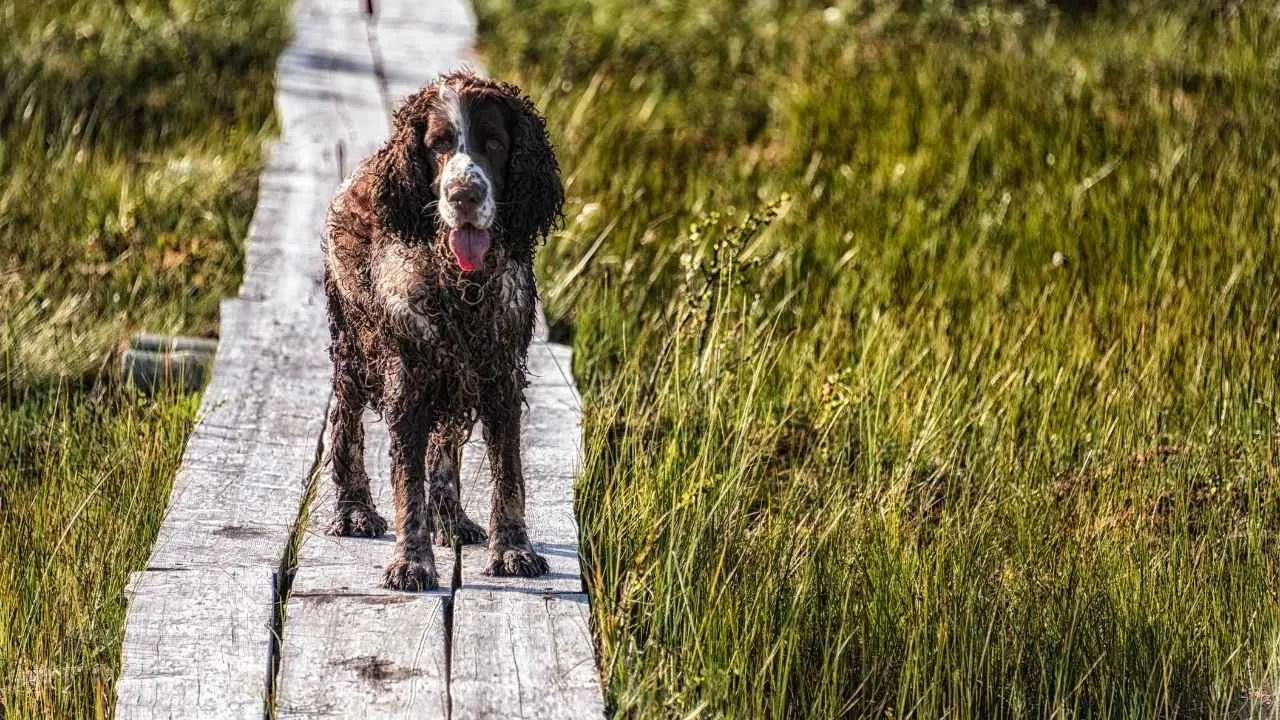
The English Springer Spaniel gets its name from how it worked in the field, springing game from cover toward waiting guns. Its roots trace back to Spanish Spaniels, and the breed remained close to the old Land Spaniel type that later split into several British Spaniel breeds.
Built for Thick Cover
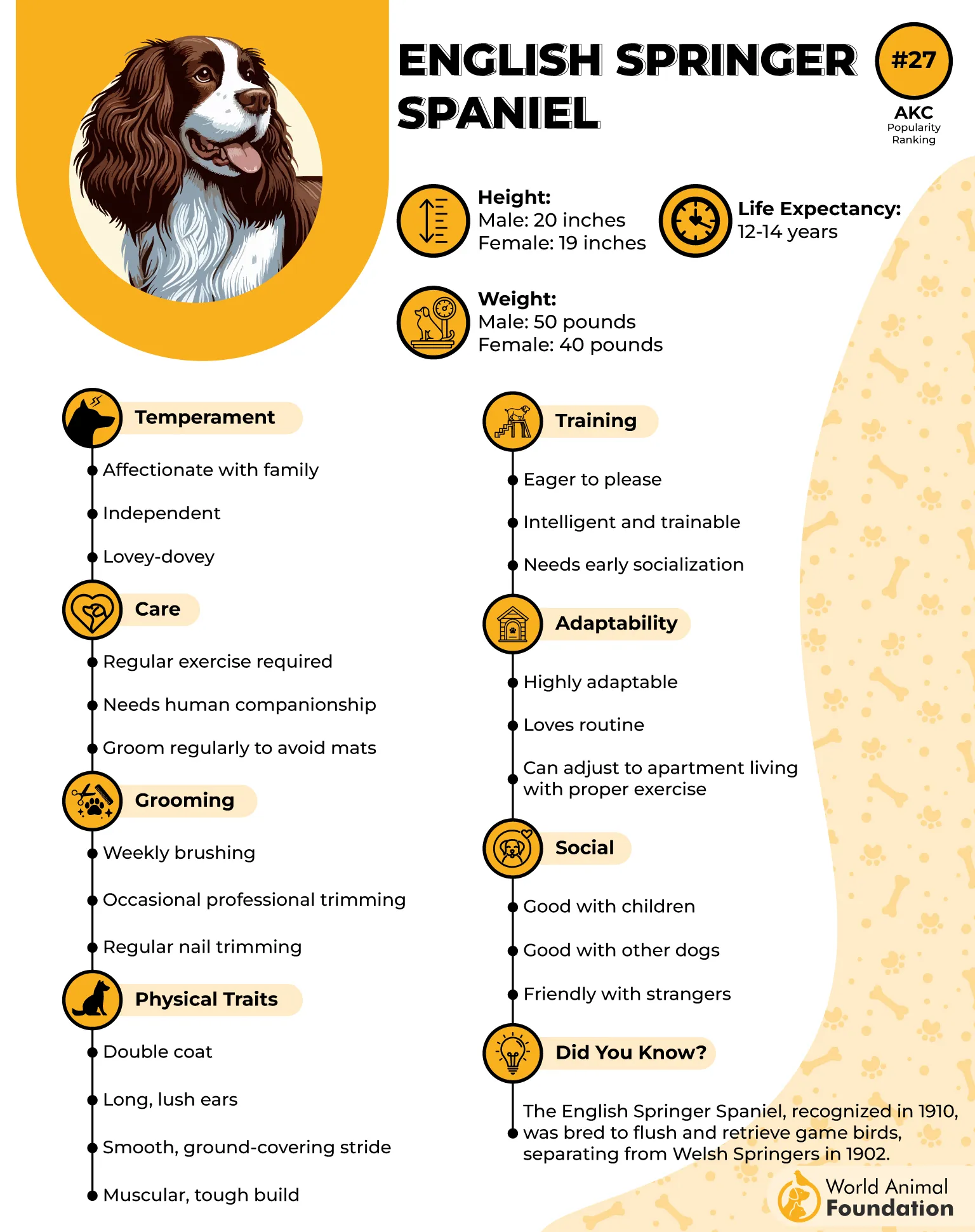
This hunting dog breed is particularly suited to flushing smaller upland birds and retrieving ducks around shallow water, including quail, woodcock, ruffed grouse, and pheasants, as per Gun Dog Mag. Its deep chest, powerful hindquarters, and efficient gait help it work through dense cover for long periods.
The working style of this is reflected in these points:
Quartering side to side to locate scent
Strong scent focus during searches
Persistence when working through cover
Nose Always Working
English Springer Spaniels often investigate walks with their noses down, making scent games and tracking-style activities a natural fit. Its soft-mouth retrieving ability also allows careful delivery of toys or training dummies when taught through consistent, reward-based methods.
2. Boykin Spaniel
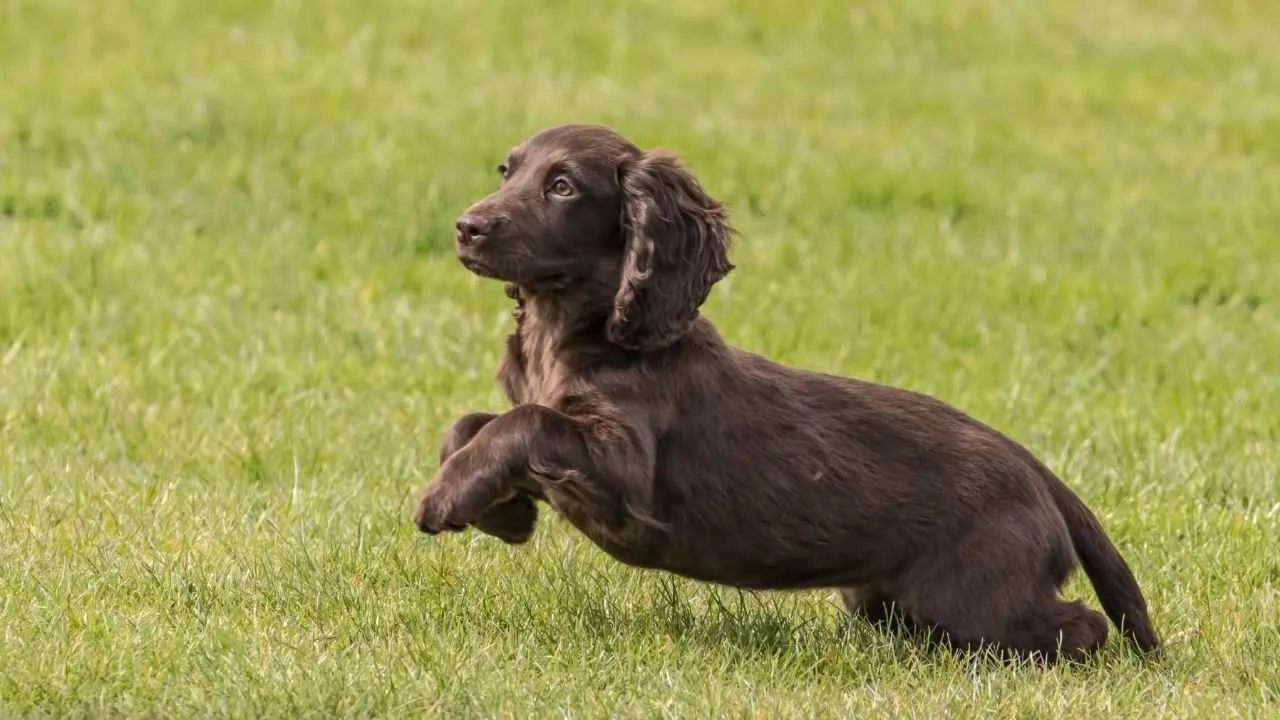
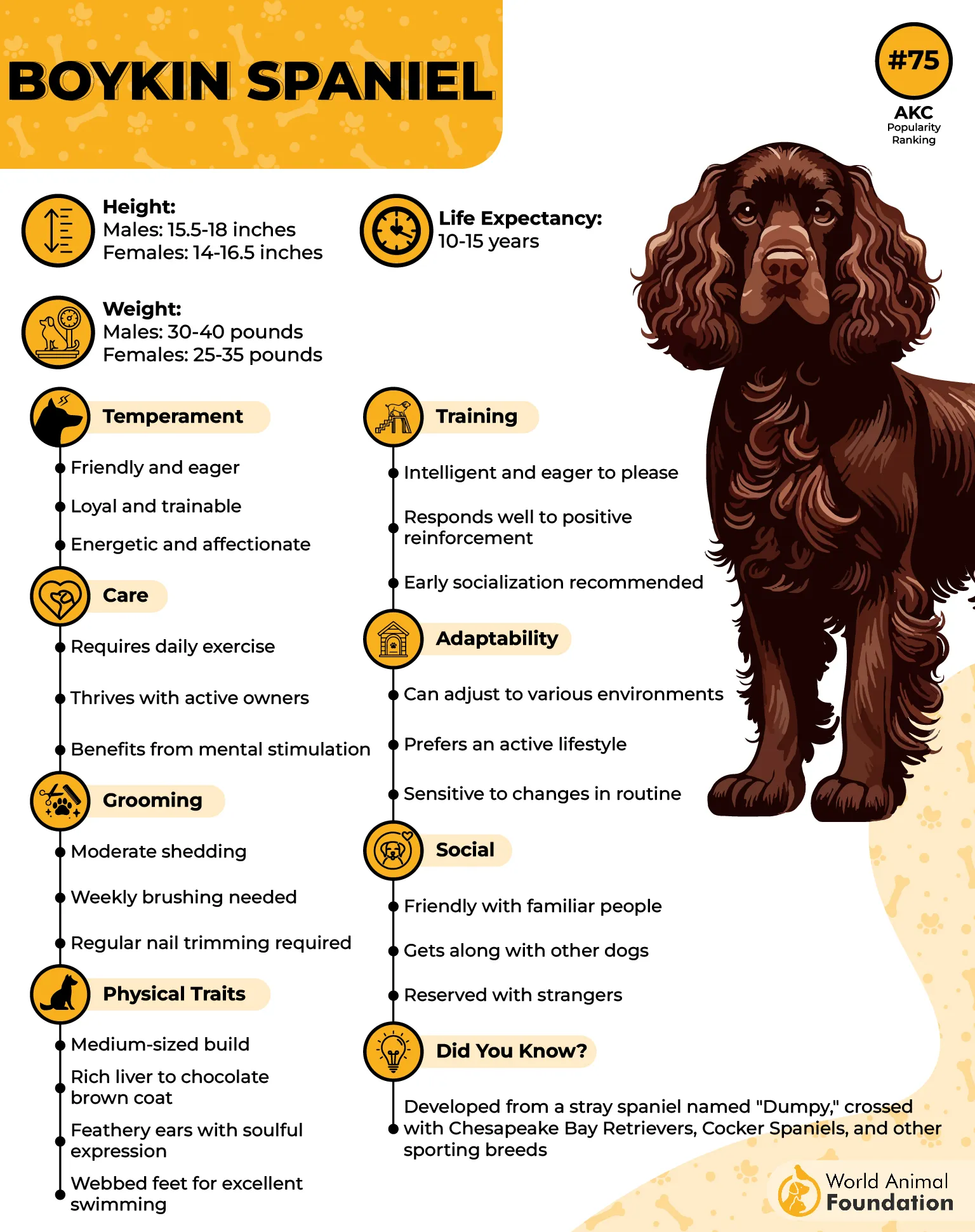
Boykin Spaniel took shape along South Carolina’s Wateree River in the early 1900s, where hunters needed a bird dog that could fit inside cramped boats already packed with people, guns, and supplies. The compact spaniel became suited to pursuing wild turkey and waterfowl from these one-man boats.
Close to the Gun
Boykin Spaniel naturally works within the hunter’s range, sweeping back and forth through cover while checking in with the handler. Its flushing instinct can put birds into flight, while its retrieving drive helps locate game birds back to hand.
These field details make its working style especially practical:
Webbed toes for swimming and muddy footing
Soft-mouth tendency for gentle retrieves
Feathering that offers some brush protection
Lively in the Field
This waterfowl hunting breed is athletic and quick to learn, with focused attention during training and plenty of energy for active work, as noted by the AKC.
When properly socialized, it can be friendly with unfamiliar people and dogs, while its sensitivity to rough handling makes respectful interactions especially important with children.
3. Sussex Spaniel
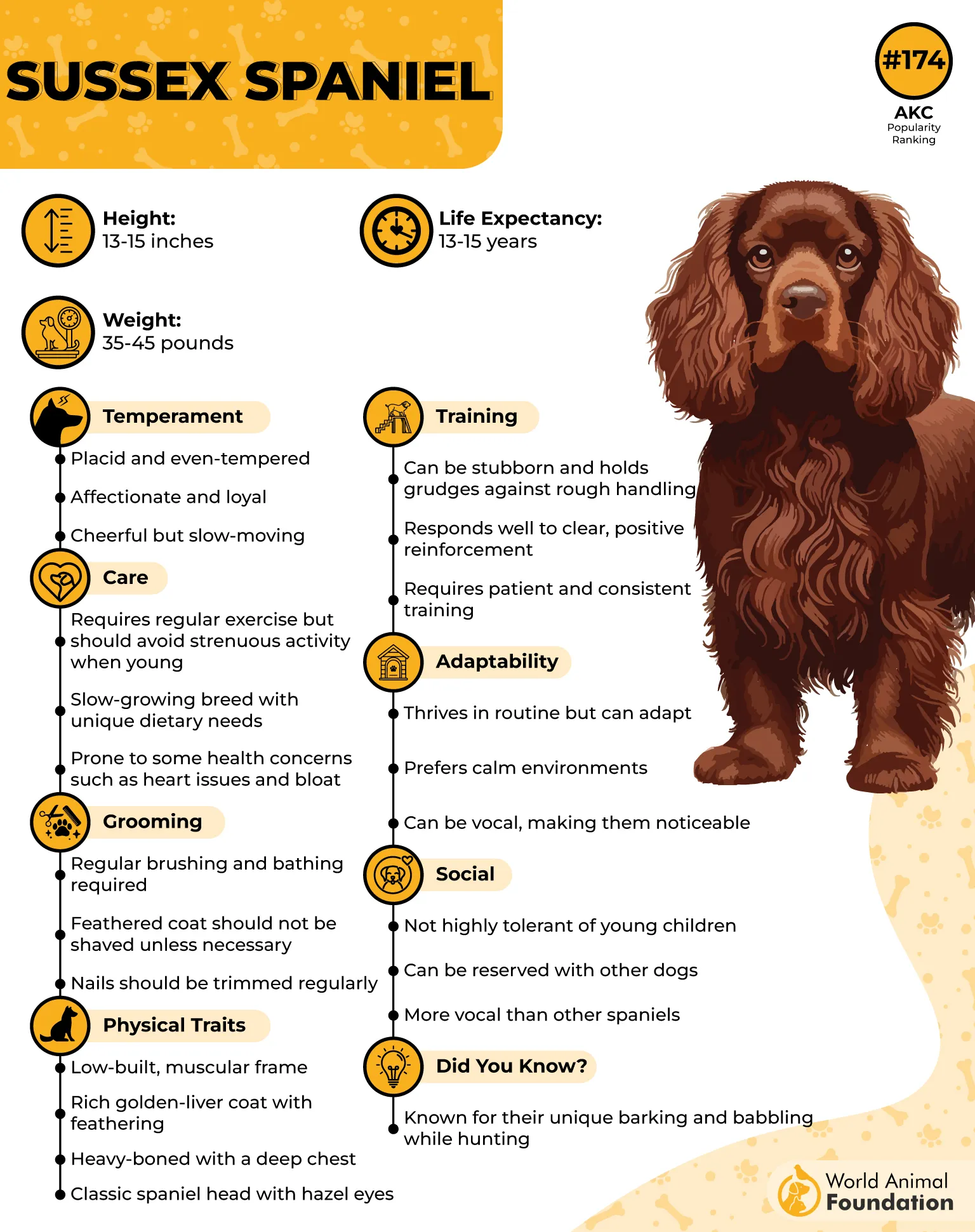
Sussex Spaniel was already part of the land-spaniel mix in the early 1800s, with Mr. Fuller of Sussex becoming a major figure in its breeding. He worked with the breed for about 50 years, but by the end of World War II, only five Sussex Spaniels were thought to remain.
A Deliberate Field Worker
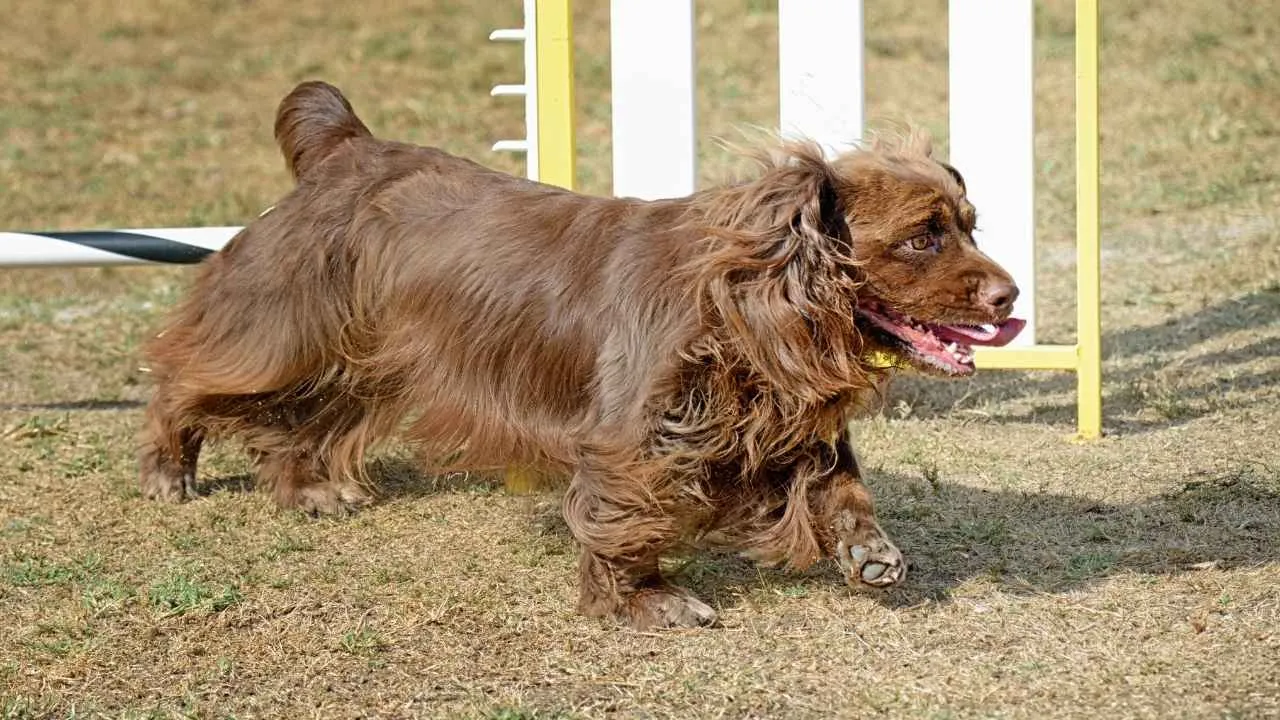
Sussex Spaniel works at a measured pace, using its excellent nose to locate hidden feathered game and flush birds toward hunters. Its steady approach lets hunters keep up on foot through difficult cover while the dog works methodically through scent trails.
Three field details are especially useful to know:
Gives tongue while following scent
Vocal enough to stay audible in thick cover
Works slowly through dense cover
Field Dog, Family Dog
This bird dog breed enjoys outdoor work and tends to be cheerful around people, children, and familiar animals after proper socialization, as Omlet describes. At home, it can be calm and placid, while long periods alone may trigger barking, howling, or destructive behavior.
4. Field Spaniel
Field Spaniel has Spanish ancestry, while its recognizable breed type took shape in England during the 1800s. Early breeding combined Cocker, English Water, and Sussex Spaniels, followed by a period when exaggerated show-ring features left the breed with health and hunting problems.
Made for Cover
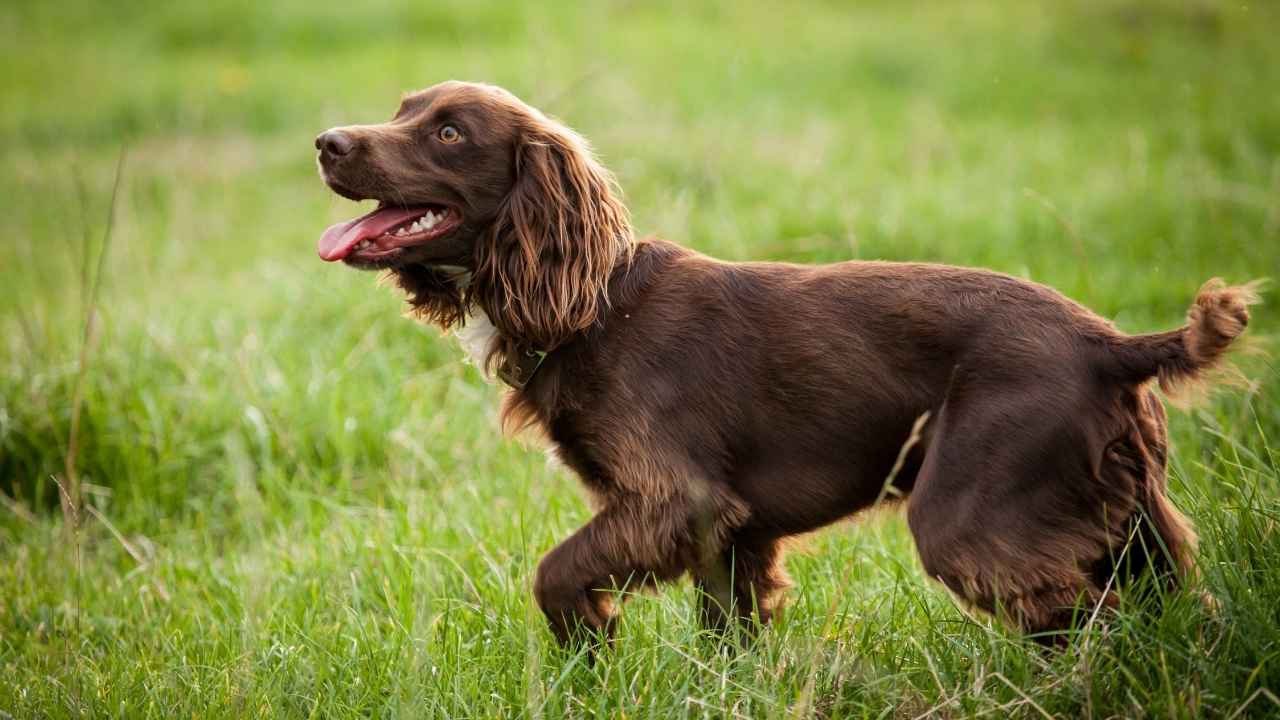
Field Spaniel has a feathered coat that helps shield the skin from brambles and wet vegetation while flushing or retrieving game. Its moderately long, athletic frame also helps it work through undergrowth while making quick turns during a search.
These field-specific details make its hunting style easier to picture:
Long ears aid scent detection in dense cover
Broad nasal cavity supports scenting work
Steady gait suits prolonged field sessions
A Nose-Led Search
This medium-sized dog often works in a zig-zag pattern ahead of the handler, sweeping across cover to locate scent rather than charging in a straight line. Its close-working style also includes frequent visual check-ins, keeping the dog within a manageable distance during a hunt.
5. Cocker Spaniel
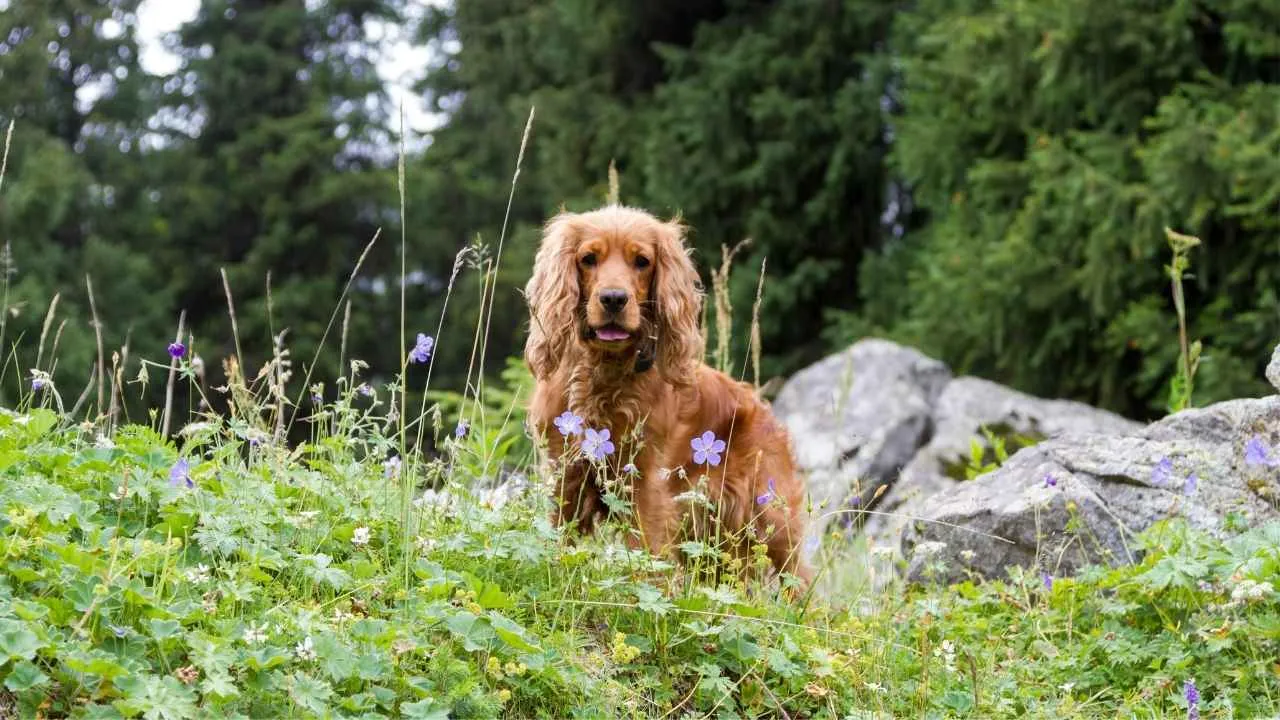
Cocker Spaniel was once grouped with Springer Spaniels under the broader Land Spaniel category before their hunting roles began separating by size. By 1893, the two were recognized as distinct breeds, with the smaller Cocker suited to flushing woodcock from dense cover.
Made for Thick Cover
This upland bird hunting breed has a compact, athletic build that lets it work through hedgerows, bracken, and woodland undergrowth where larger dogs can struggle to reach game. Its close-working pattern keeps it near the handler while it searches ahead.
A few working details make that hunting style especially precise:
Works within gun range
Uses whistle cues well
Long ears help shield against thorns and debris
Ready to Work
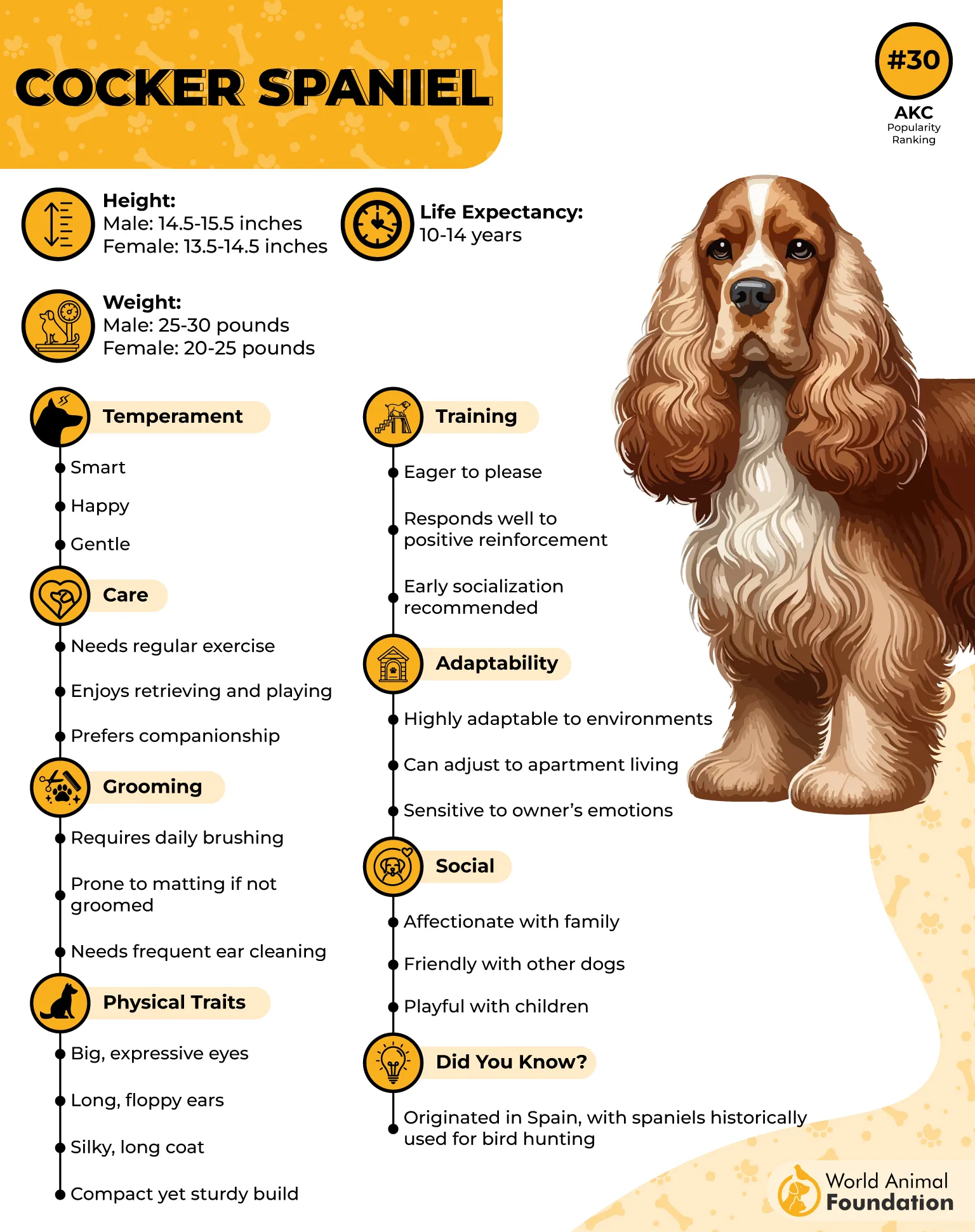
Cocker Spaniel learns readily and enjoys having an active task, making reward-based training useful from puppyhood onward. Scent games, agility, and gundog activities can channel its hunting instincts, while regular grooming is important for the feathering around the ears, chest, legs, and belly.
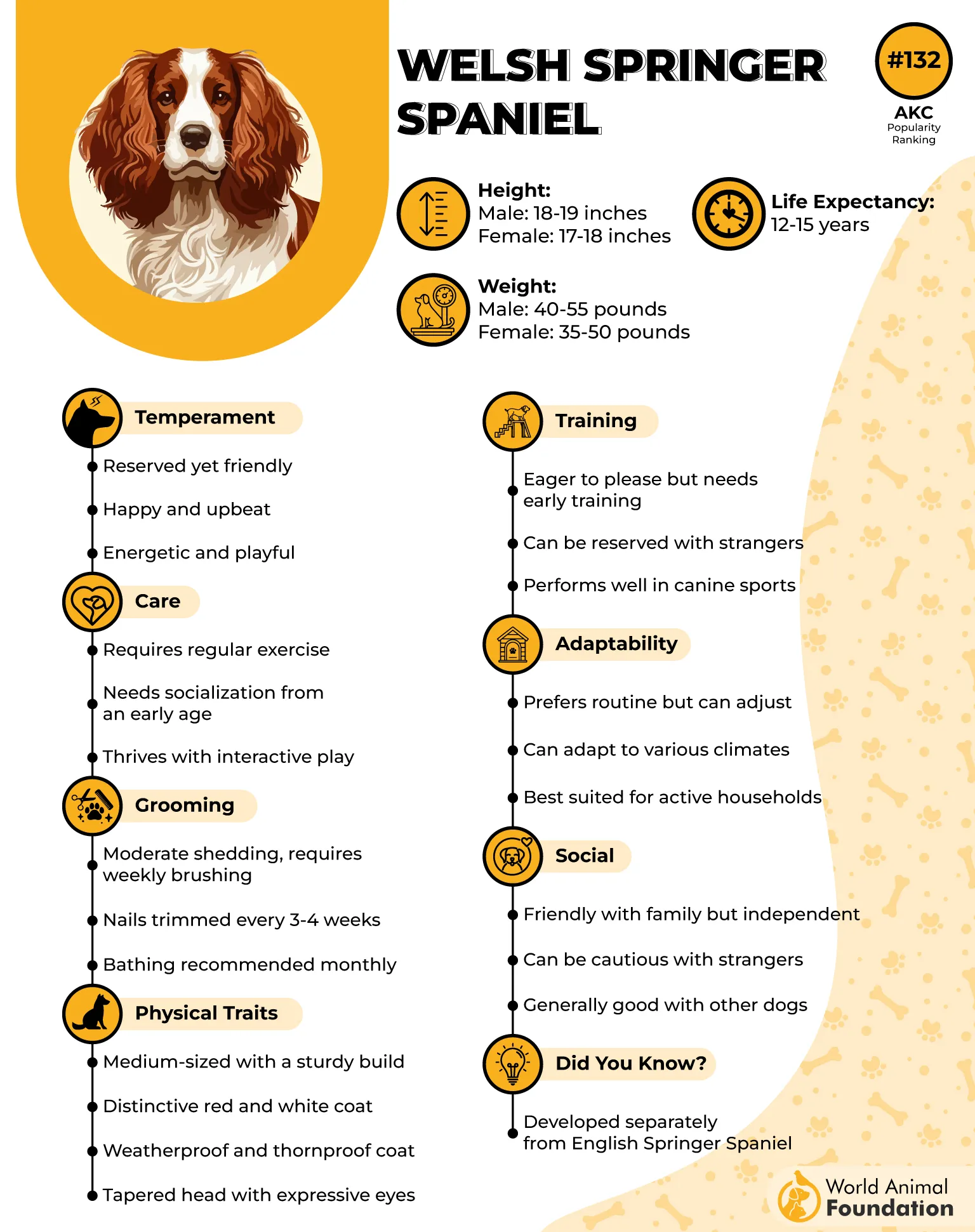
6. Welsh Springer Spaniel
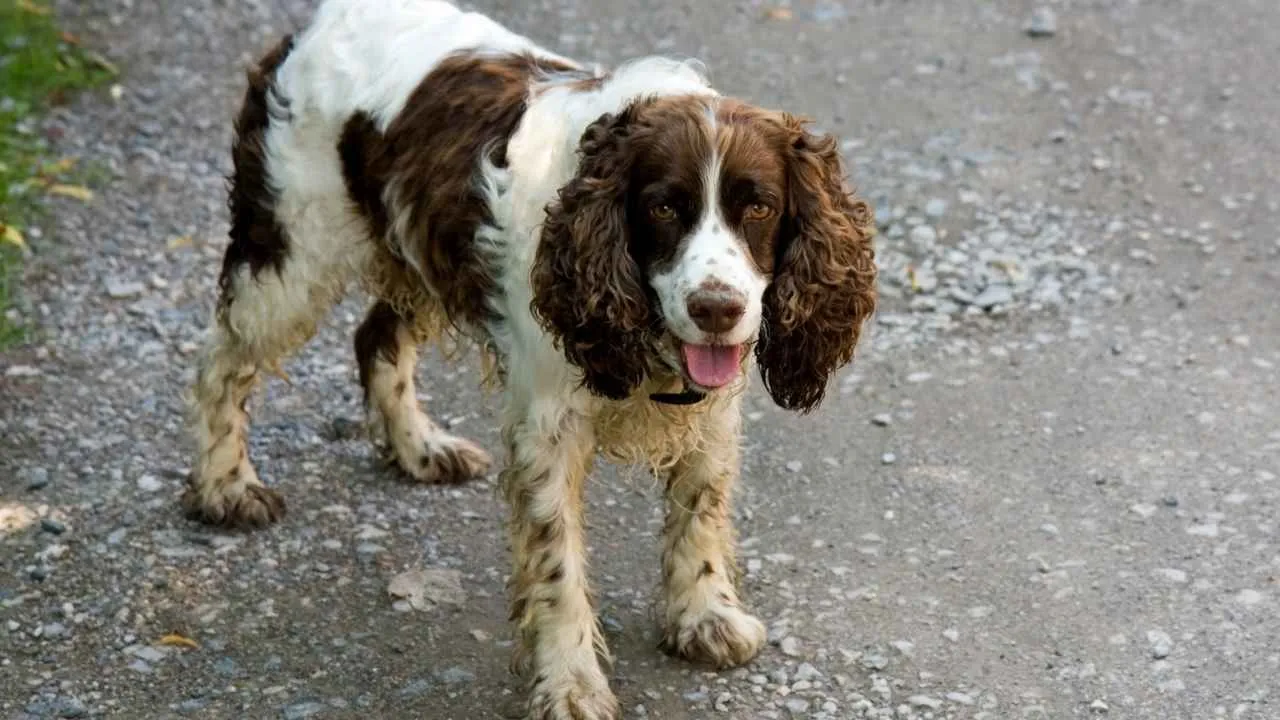
Welsh Springer Spaniel may belong to the oldest surviving Spaniel lines, with references to red and white spaniels appearing as far back as the 10th century. The breed was originally bred from the wider land-spaniel group, with these regional types sharing ancestry across western Europe and Britain.
Working the Cover
This hunting companion works close to the hunter, using persistent scenting to locate birds before flushing them from thick cover. Its compact athletic frame helps it turn quickly through brambles and wet grass, while its feathered coat sheds water from the outer layer.
These traits reveal how specialized that field style is:
Long ears aid ground-scenting
Low head carriage supports scent work
Dense feathering shields the skin
A Versatile Gundog
Welsh Springer Spaniel can retrieve shot game as readily as it searches for bird species, giving it a broader and more useful working role in the field. Its eagerness to cooperate with people also makes training more approachable and rewarding for handlers who enjoy active dog work.
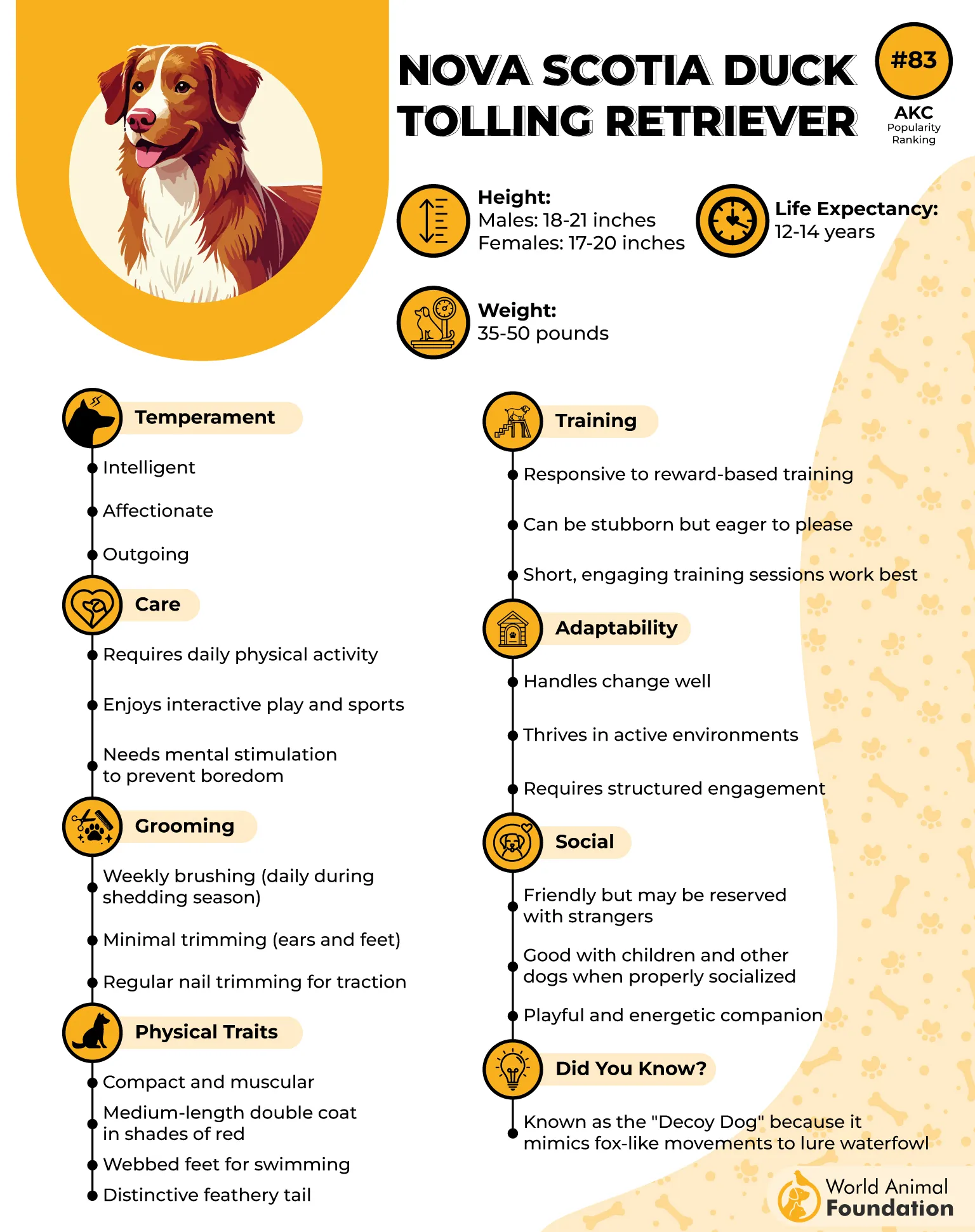
7. Nova Scotia Duck Tolling Retriever
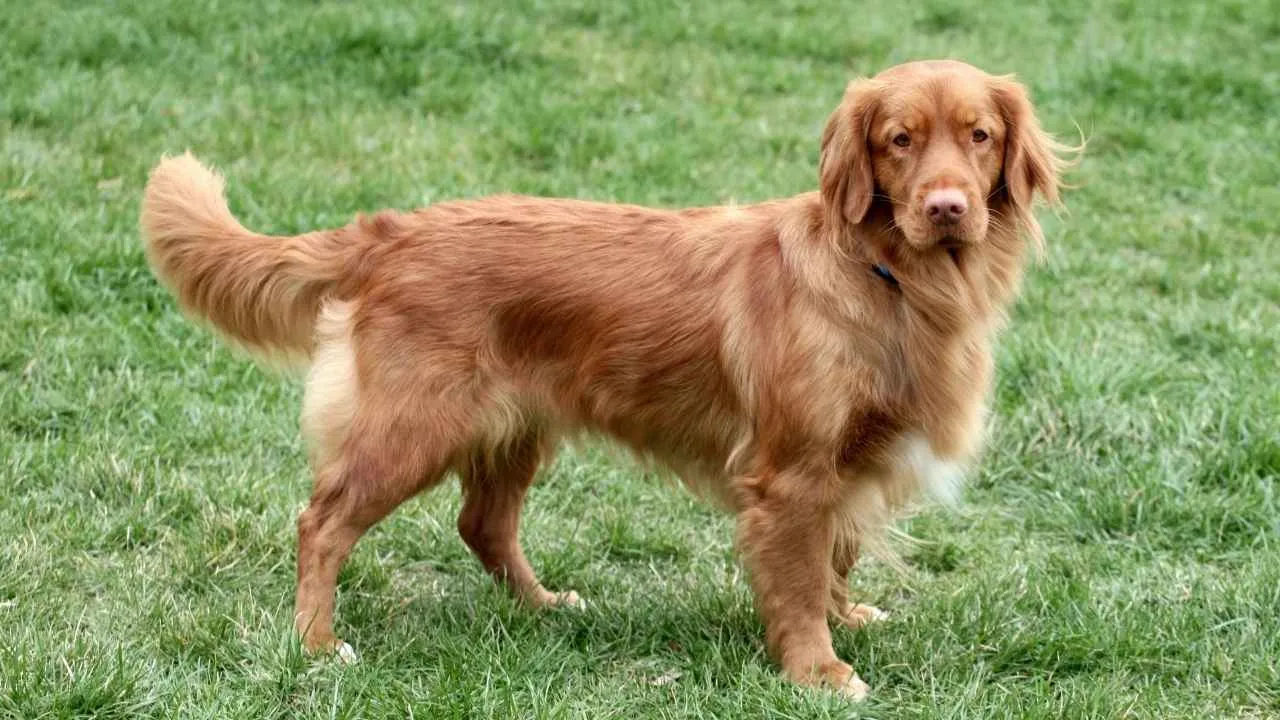
Nova Scotia Duck Tolling Retriever came from the Little River region of Nova Scotia, Canada, where hunters used its unusual behavior to bring waterfowl closer to shore. The breed’s name refers to “tolling,” the act of enticing birds toward the water’s edge.
Built for the Retrieve
This medium-sized breed uses an energetic shoreline display to attract waterfowl, then shifts into focused work once the birds are within range. Its dense double coat, webbed feet, and powerful rear legs also suit cold-water retrieving in demanding conditions.
Three details make that working style especially interesting:
Compact frame for quick shoreline agility
Soft-mouth retrieving with training
Short, upbeat sessions suit its sensitivity
Fast Switches
Nova Scotia Duck Tolling Retriever can shift quickly from teasing play to concentrated retrieving, a useful trait during field work that also calls for impulse control. Its strong desire to deliver objects and repeat tasks can keep it engaged through extended training sessions.
Conclusion
Game bird hunting becomes easier when a dog knows how to search cover without losing contact with its handler. Strong scenting, steady quartering, stamina, and a willingness to retrieve can make a difference when hunting birds are hidden from view. Each working style has advantages, so hunters should consider the cover, water, bird species, and pace of their usual upland game hunting outings.
Proper training is equally important for building recall, whistle response, controlled searching, and dependable retrieves. Outside hunting season, these active dogs still need useful outlets for their instinct and energy, especially across different hunting scenarios.
The right match can support productive hunts and enjoyable days together outdoors while helping locate wounded game.
