




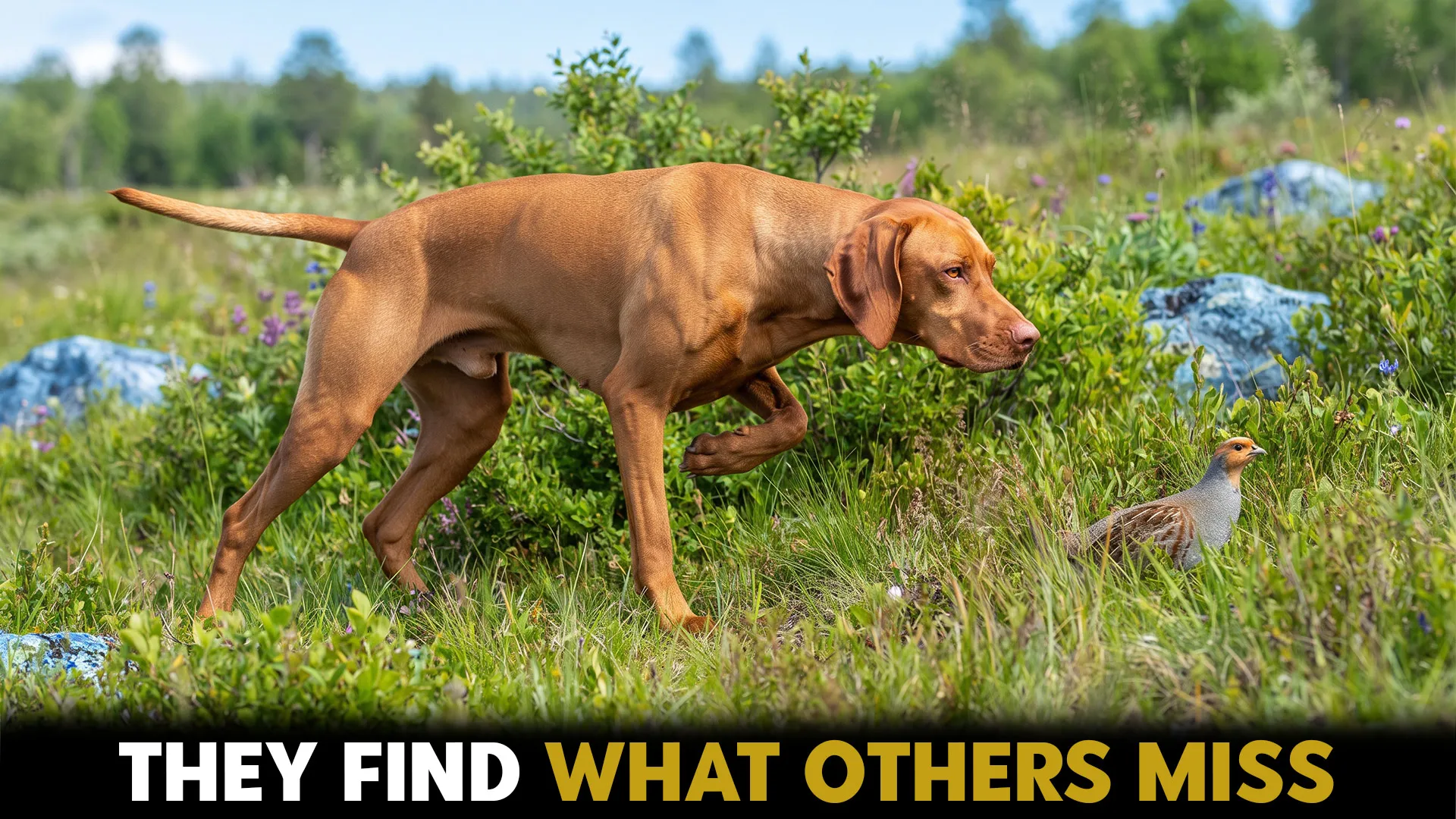
The real test begins when a bird disappears into the cover, and the dog has to find what the hunter cannot see. Excellent bird dogs rely on their powerful sense of smell, stamina, and focused hunting instincts to search for game and follow its scent through fields and dense cover.
But locating a bird is only part of their job. Pointers and Setters are valued for the distinctive way they indicate where hidden game is waiting, allowing the hunter to approach with greater awareness.
Different gundog breeds have been selectively developed for particular roles, including trailing, flushing, pointing, and retrieving, while some combine several of these abilities. Their effectiveness comes from a blend of instincts, physical ability, and training.
For hunters seeking a reliable companion in the field, breeds with strong locating and pointing skills can turn a difficult search into a more focused and rewarding part of the hunt.
Key Takeaways
Pointer breeds use their natural scenting abilities to locate hidden game birds.
Strong hunting instincts help dogs search fields and cover with focus and purpose.
Some breeds are naturally suited to covering wider areas during a bird search.
Close- to medium-range hunters can work carefully through dense cover to locate birds.
Natural pointing instincts allow dogs to indicate where hidden game is located.
Excellent Dog Breeds That Locate and Point Game Birds
1. German Shorthaired Pointer
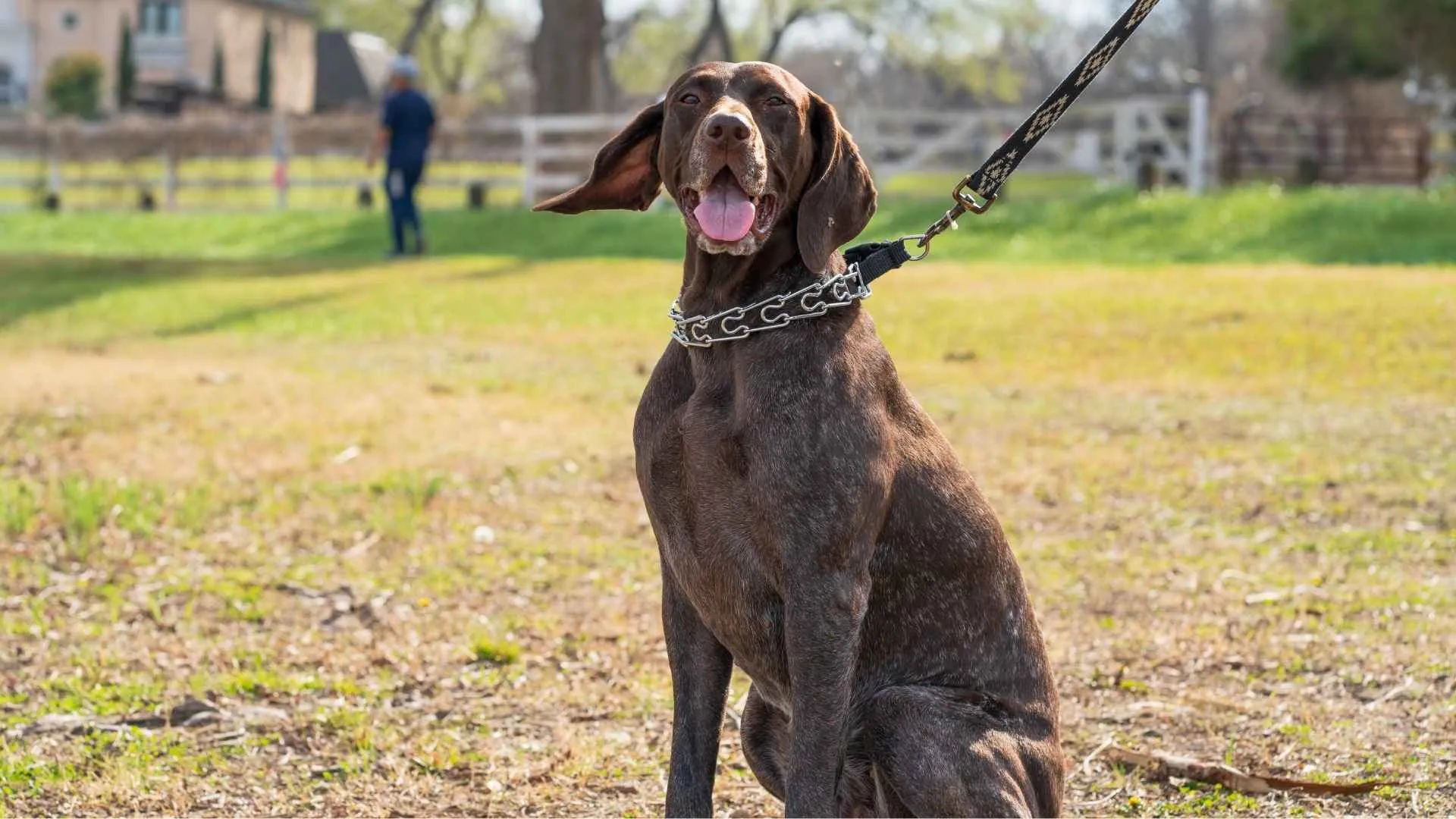
The German Shorthaired Pointer is built for the moment when a hidden game bird is somewhere ahead, waiting to be found. Its strong hunting instincts and natural pointing ability make it particularly valuable for locating birds in the field.
The GSP can search large areas with speed and stamina, using its keen hunting drive to work through different types of cover in pursuit of game.
Once it detects a bird, its pointing instinct helps it indicate where the bird is located, giving the hunter an important signal before the bird is flushed.
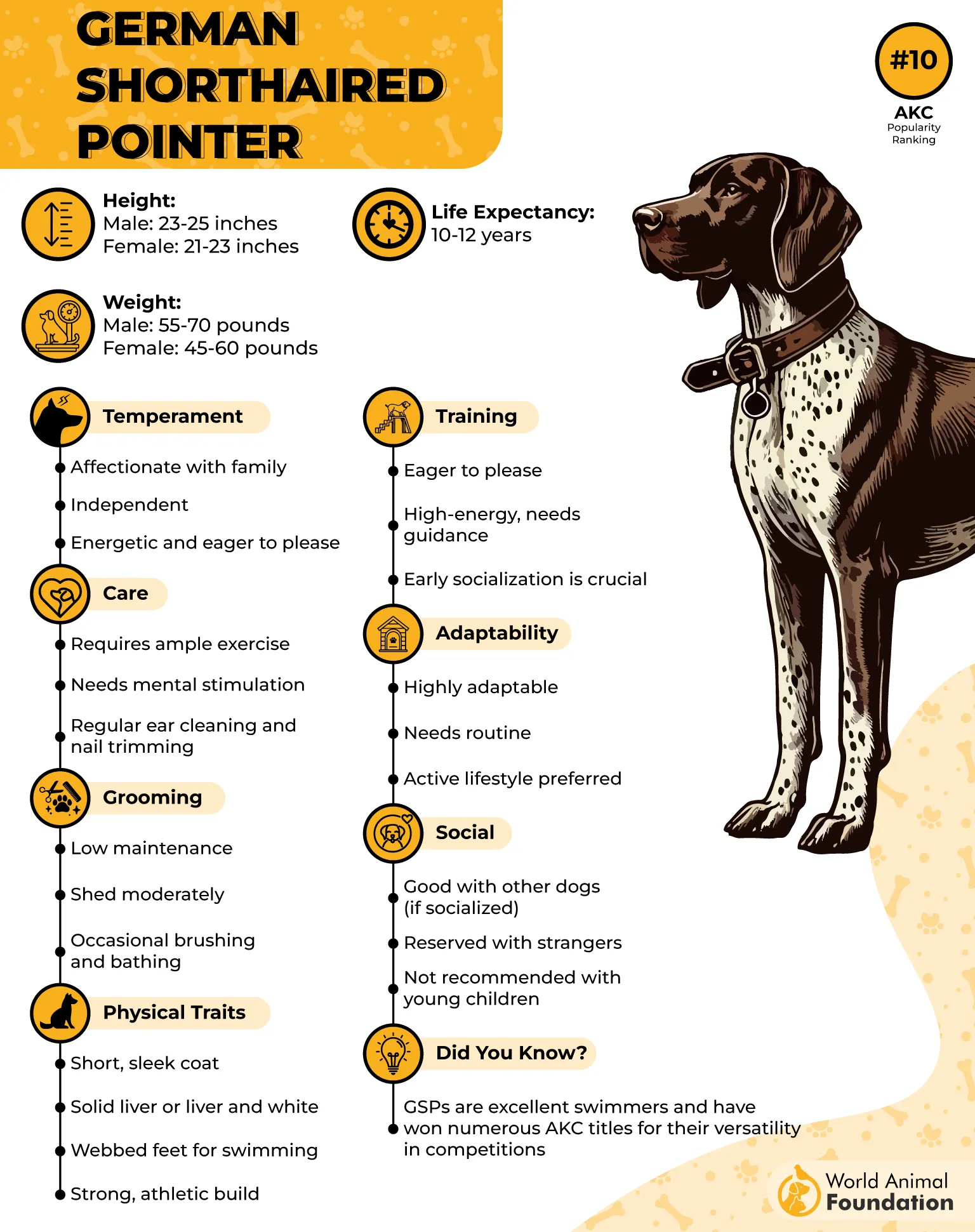
What makes the GSP especially useful is its versatility as a hunting dog, according to the American Kennel Club.
It has the energy to cover ground for extended periods and the intelligence to learn the training needed for fieldwork. With consistent guidance, its instincts to locate, point, and retrieve can be developed into effective hunting skills.
For owners seeking a dog capable of actively searching for and pointing out game birds, the GSP offers a combination of drive, athleticism, and natural field ability.
2. English Pointer
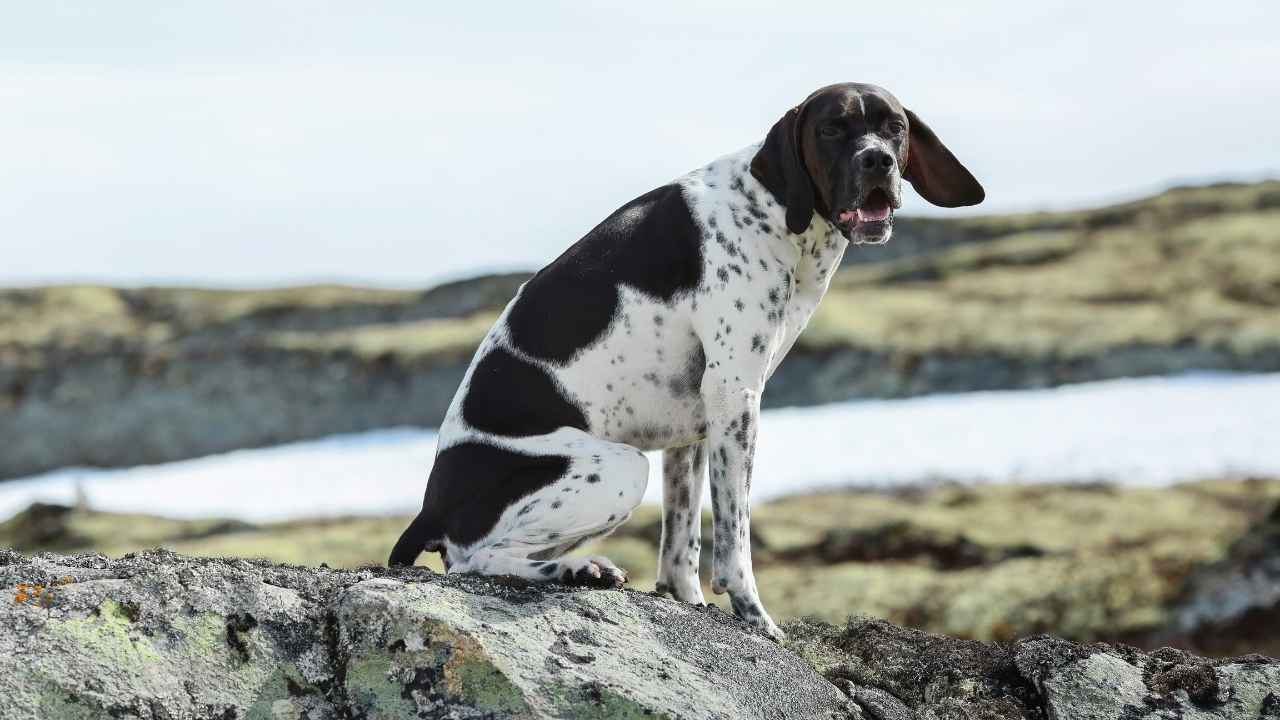
A quiet field, a hidden bird, and suddenly the English Pointer freezes in place, nose lifted, body tense, and every movement focused on what lies ahead.
This dramatic moment captures exactly why the breed has earned its reputation as an exceptional pointing dog.
The English Pointer was developed for hunting and has a remarkable ability to use its nose to locate game birds hidden in fields and cover.

Rather than rushing toward the bird, it naturally stops and points, using its body to indicate where the hidden quarry is waiting.
Its speed, stamina, and strong hunting drive allow it to search wide areas with purpose, while its athletic build helps it keep moving across demanding terrain.
With proper training and experienced handling, these instincts can be shaped into effective fieldwork.
For hunters looking for a dog that can actively search for game birds and clearly signal their location, the English Pointer offers a distinctive combination of scenting ability, drive, and natural pointing instinct.
3. German Wirehaired Pointer
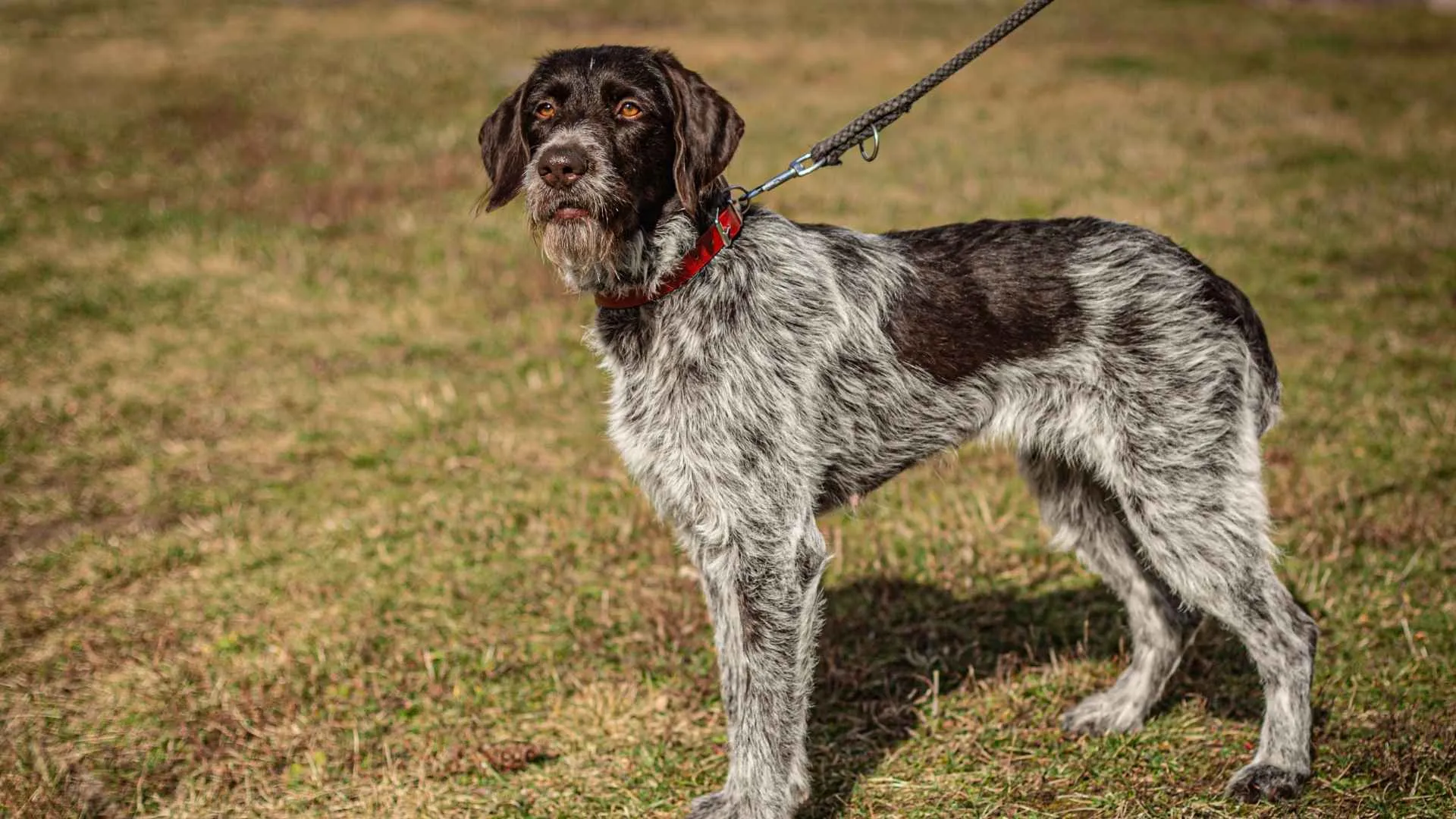
When a game bird is hiding in dense cover or difficult terrain, the German Wirehaired Pointer is the kind of hunting partner bred to keep searching until it finds it.
Developed as a versatile hunting dog, this sturdy breed was specifically shaped to search for, locate, and point upland game while also handling retrieving work.
Its strong hunting instincts and intelligence allow it to track and find game, then indicate its location through its natural pointing behavior.
The breed’s rugged build and distinctive wire coat also support its work in challenging conditions, helping protect it while moving through heavy cover or cold water, as stated by Dogs NSW.
German Wirehaired Pointers are known for their strength, endurance, and ability to work closely with their handlers. Their natural intelligence and biddable nature can make training their hunting abilities rewarding when given proper guidance.
For hunters seeking a strong, loyal dog that can actively search for birds, point them out, and continue working across varied terrain, the German Wirehaired Pointer offers the versatility and determination that made it such a valued hunting breed.
4. Vizsla
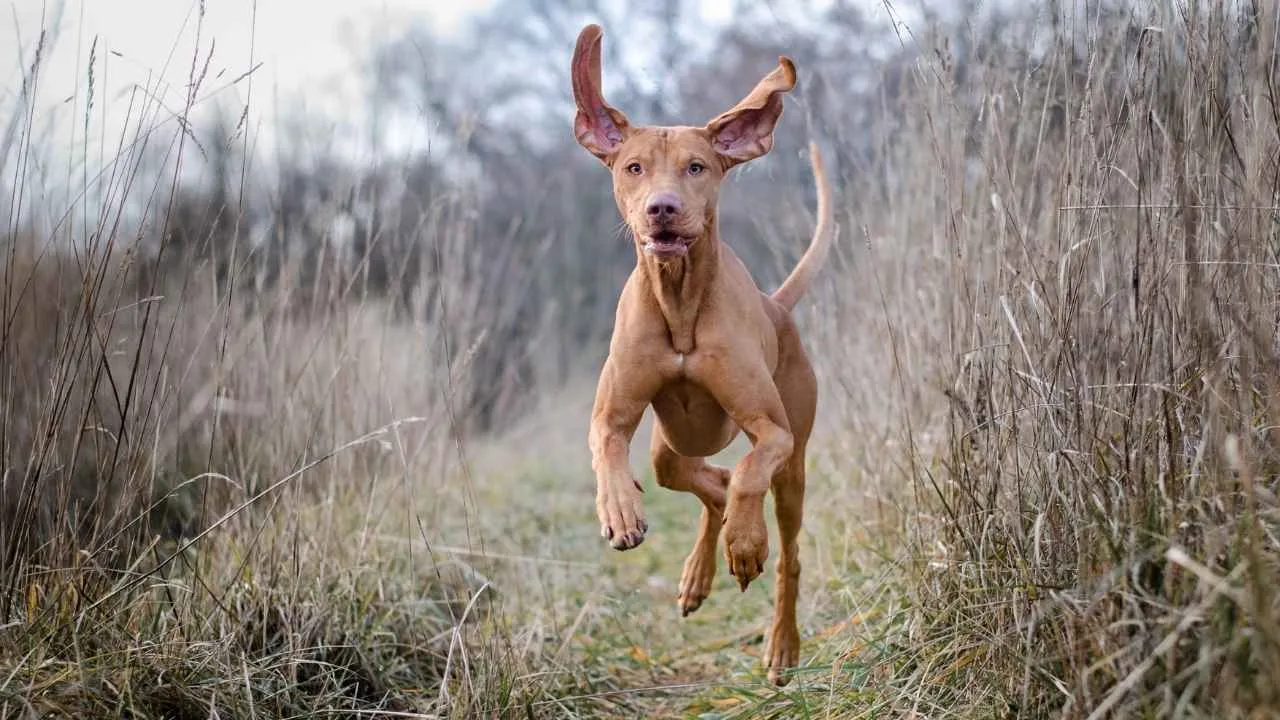
The field goes quiet as the Hungarian Vizsla slows its pace, lifts its nose, and suddenly freezes, its body pointing toward a bird hidden somewhere in the cover. This instinctive response is what makes the breed such a valuable pointing dog.
The Vizsla has a natural ability to search for game birds, follow their scent, and indicate their location before the hunter moves closer.
Its pointing instinct often develops early, giving it a strong foundation for upland bird hunting.
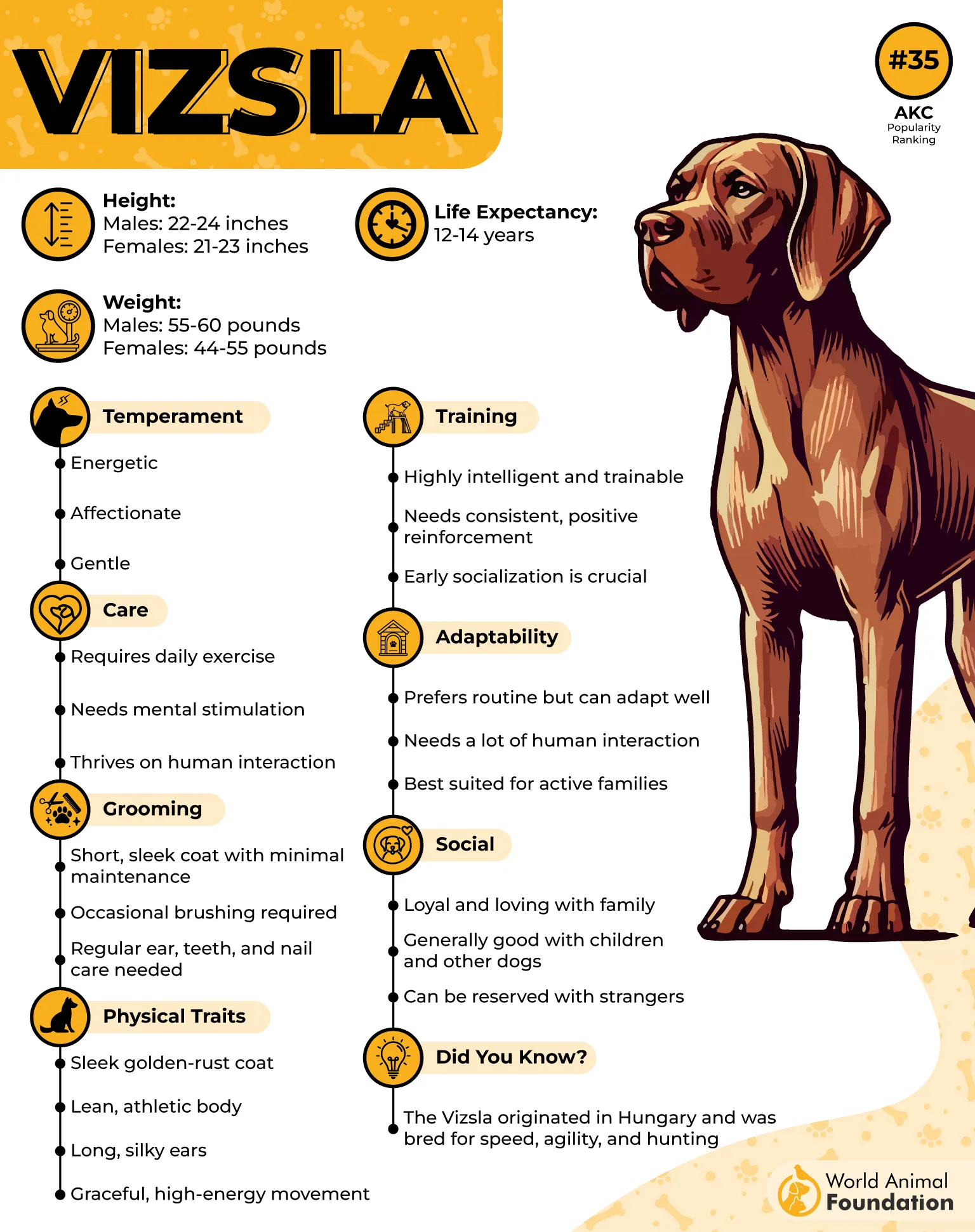
Generally a close- to medium-range worker, the Vizsla searches the field with purpose while staying connected to its handler.
However, hunting style can vary between lines, with some field-trial dogs covering greater distances at faster speeds. Its abilities extend beyond pointing, as the breed is also a natural retriever and has historically been valued for tracking.
This combination of searching, pointing, tracking, and retrieving allows a well-bred Vizsla to remain useful throughout different stages of a hunt.
5. Brittany
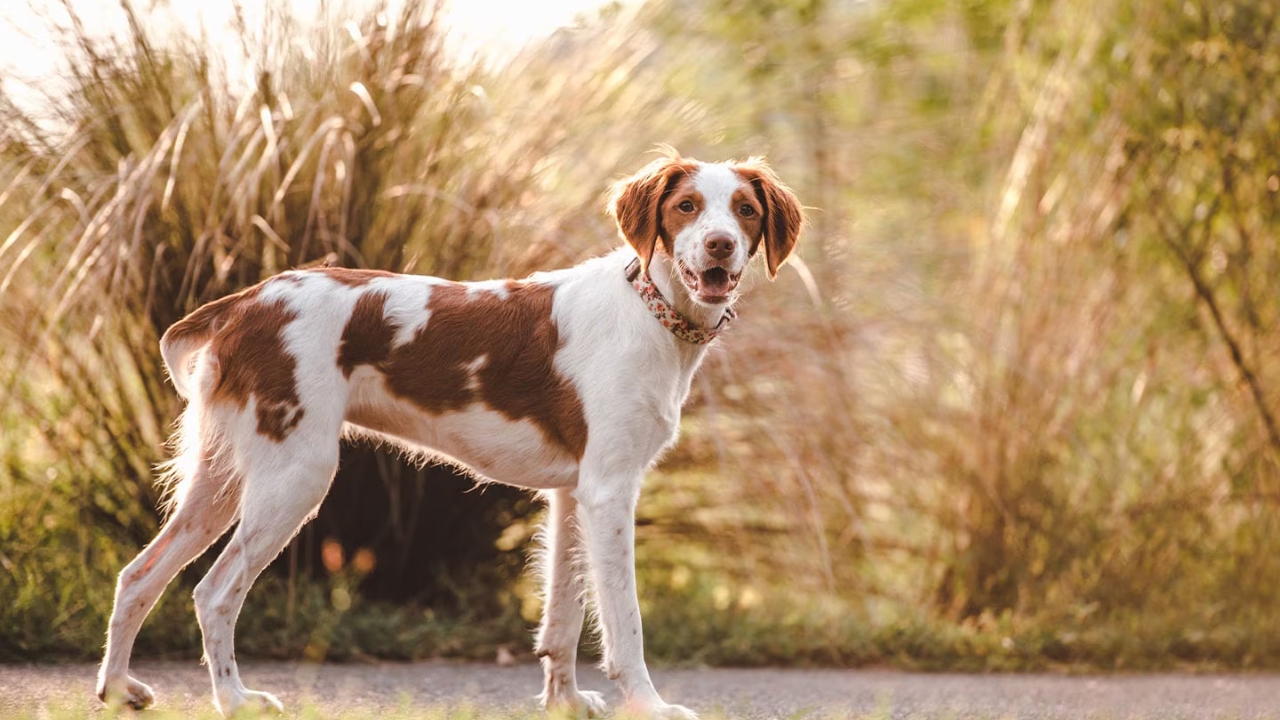
The cover looks empty, but the Brittany knows better. Nose down and working methodically, it can follow a bird’s trail until the search suddenly ends with the dog standing still on point.
This combination of determination, intelligence, and natural hunting ability is what makes the Brittany such a capable game-bird dog, as explained by Gun Dog.
Originally bred as a hunting dog in France, the Brittany is known for working at a moderate range and thoroughly searching the ground rather than simply racing across it.
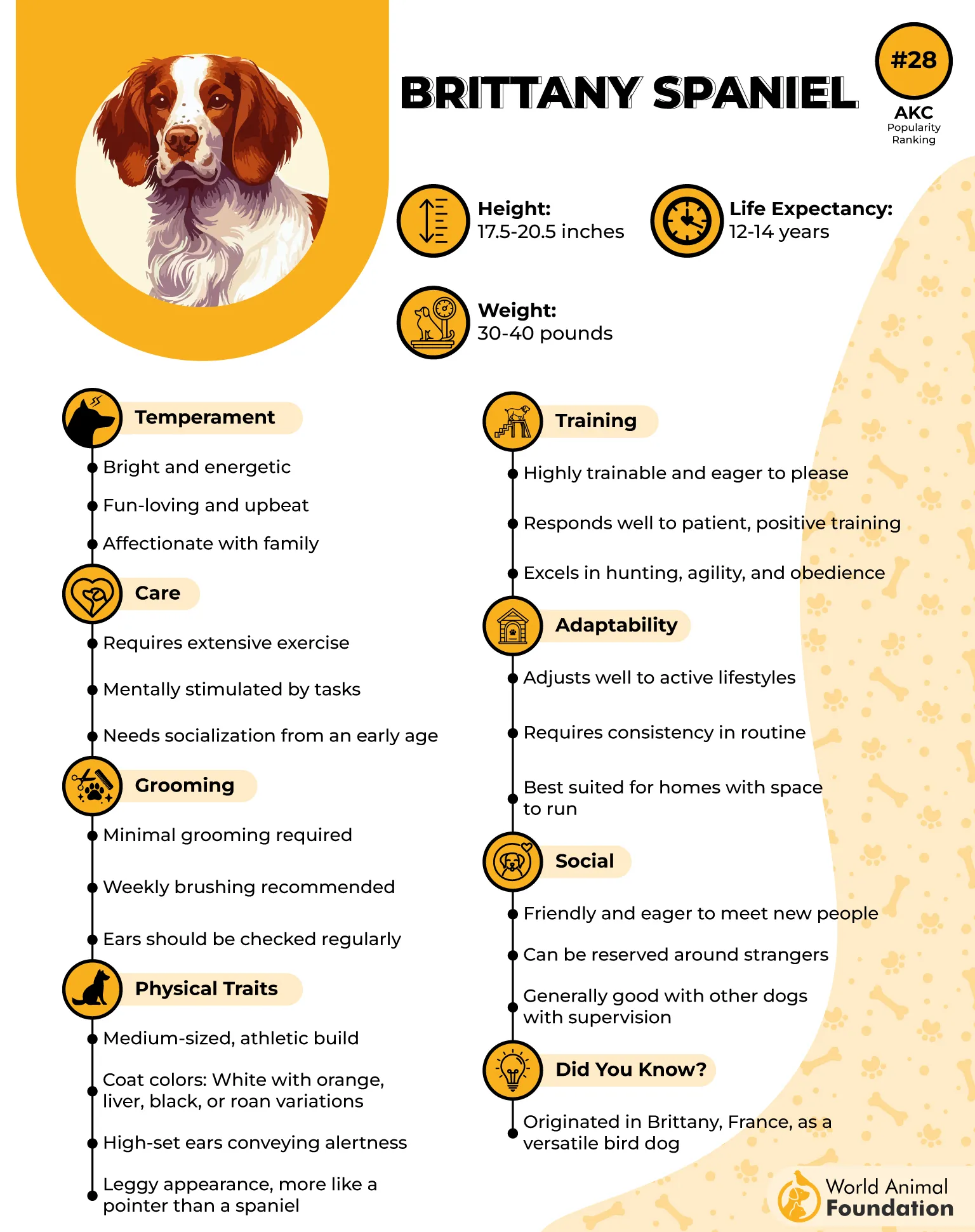
This approach can make this versatile dog breed particularly effective in close cover, where careful searching matters more than covering the greatest distance.
Experienced Brittanys can locate a variety of game birds, including Hungarian partridge, ruffed grouse, sharp-tailed grouse, quail, woodcock, and chukars.
Their pointing style may be less dramatic than that of some other pointing breeds, sometimes appearing simply as a sudden stop, but the purpose is clear: locate the bird and hold its position for the hunter. With experience and training, the Brittany can become a remarkably reliable upland hunting companion.
6. English Setter
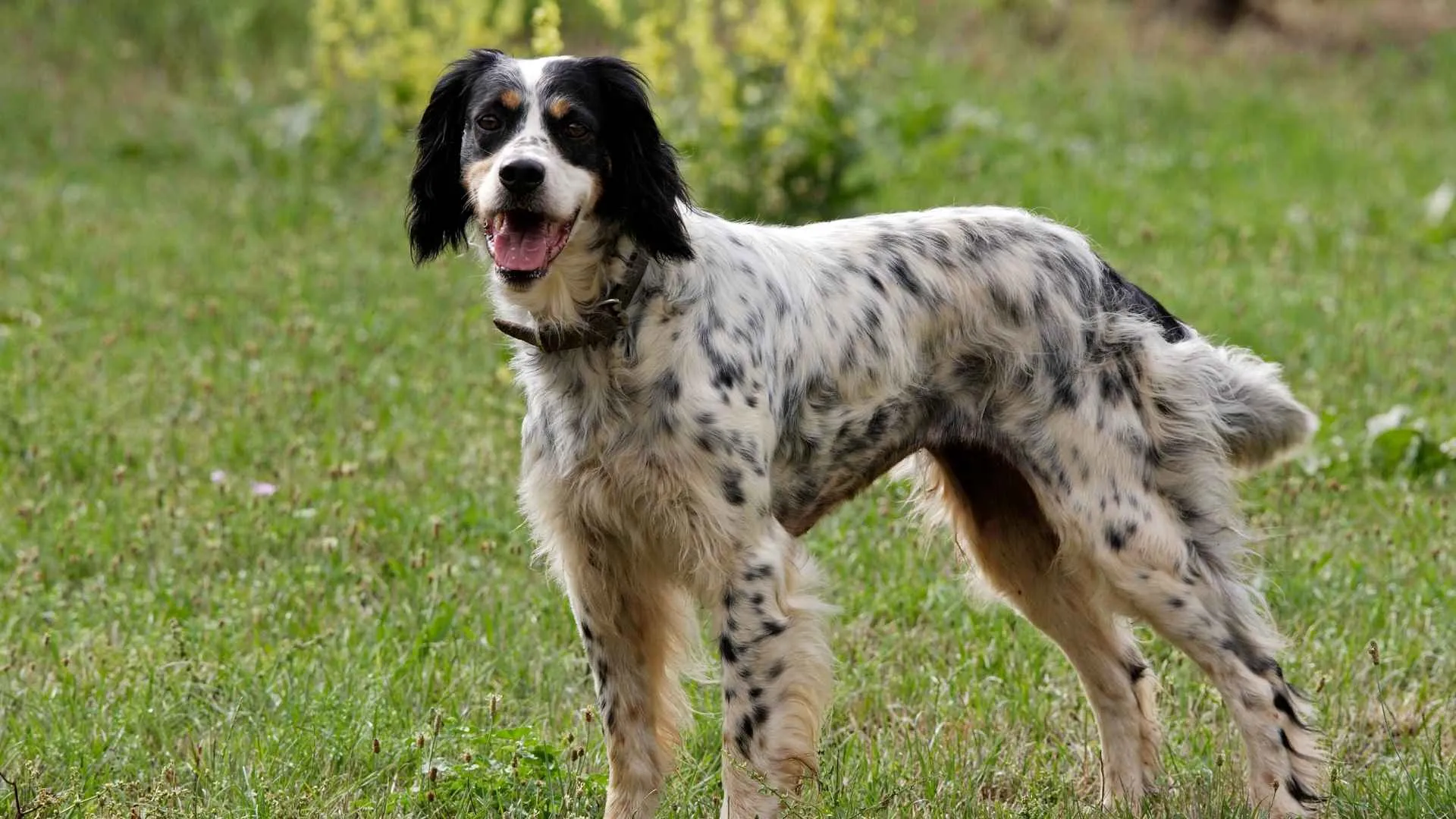
The grass barely moves as the English Setter suddenly slows, lifts its nose, and freezes with unwavering focus. Somewhere ahead, a game bird is hidden in the cover, and the dog’s posture tells the hunter it has found the scent.
This natural ability is at the heart of the English Setter’s reputation as an excellent bird dog.
Originally developed for hunting, the breed was specifically used to search for game birds and signal their location by taking a pointing position.
Traditionally, Setters would crouch or lie down when they found birds, although upright pointing styles are preferred in some regions and lines.
English Setters can cover substantial ground while searching for quarry, with field-bred dogs particularly valued for their hunting abilities.
Their pointing instinct can develop naturally, sometimes at an early age, while their intelligence and willingness to work with a handler support field training. They have also historically been expected to retrieve game, giving them another useful skill during a hunt.
7. Irish Setter
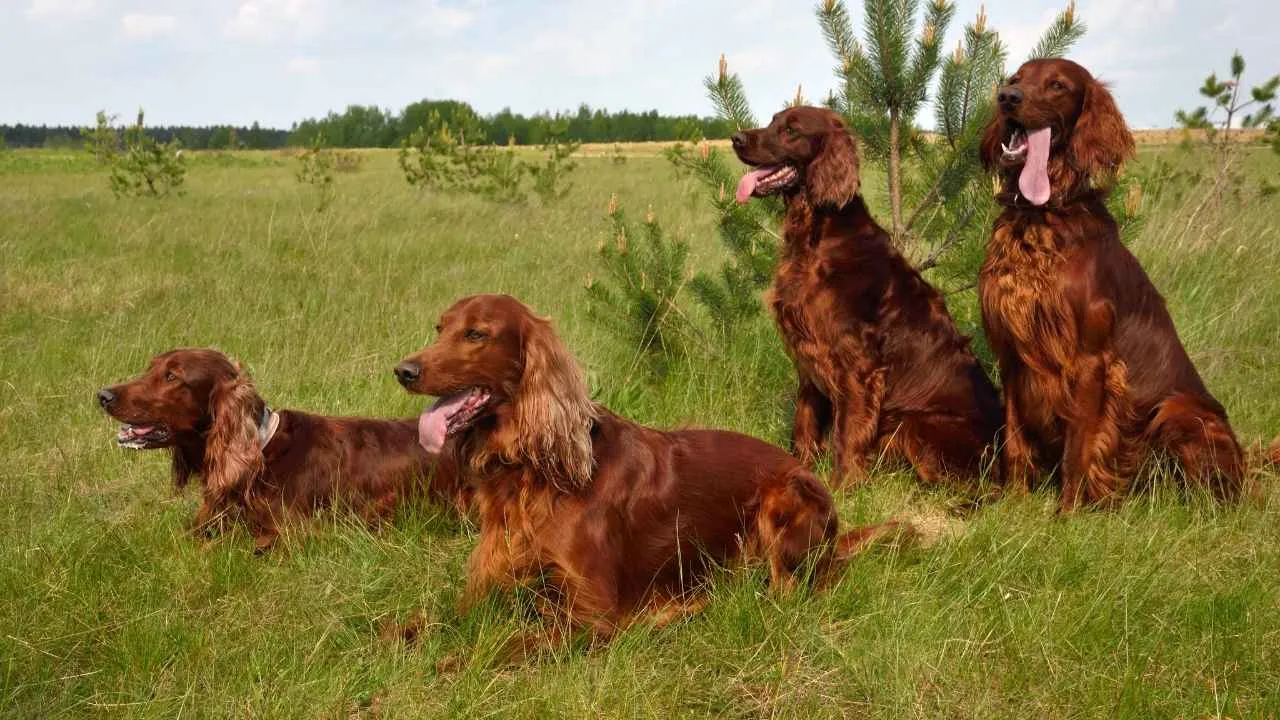
Picture a red Irish Setter moving quietly through the field, nose working through the scent, until it suddenly stops and fixes its attention on one spot.
That instinctive pause is the heart of what made this breed such a valued bird dog.
Originally developed for hunting in Ireland, Irish Setters were bred to use their keen sense of scent to locate game birds and then “set” them by crouching or lying down, alerting the hunter to where the birds were hiding.
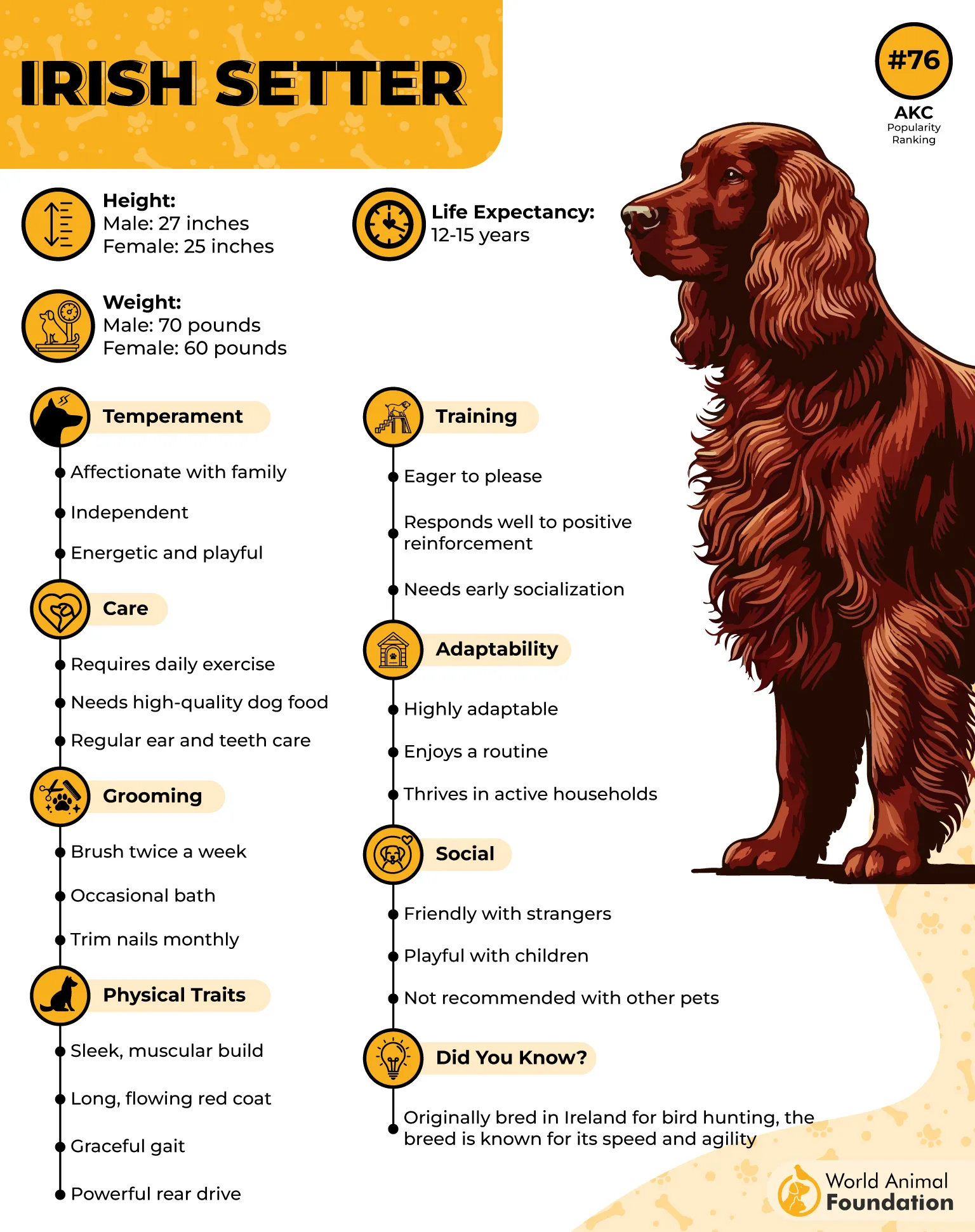
Field-bred Irish Setters continue to demonstrate these hunting qualities, with good dogs capable of holding their own alongside other pointing breeds. They are energetic, athletic, eager to work, and generally biddable, qualities that can support their performance in the field, according to Pooch and Mutt.
Their hunting ability is particularly evident in dogs bred specifically for field work rather than appearance alone.
For hunters seeking a bird dog with a strong scenting instinct, natural pointing behavior, and the drive to search fields thoroughly, the field-bred Irish Setter remains a distinctive and capable companion.
Conclusion
When it comes to locating and pointing game birds, the right dog can make every moment in the field more purposeful.
Breeds such as the German Shorthaired Pointer, English Pointer, German Wirehaired Pointer, Hungarian Vizsla, Brittany, and Irish Setter were developed with natural hunting abilities that help them search for birds, follow scent, and alert their handlers to hidden game.
While each breed has its own working style, range, stamina, and pointing or setting behavior, their shared purpose is clear: helping hunters locate birds efficiently. Some excel at covering wider ground, while others work closer and search cover more carefully.
Training and breeding also play an important role in bringing out these instincts. For hunters choosing a bird dog, understanding how each breed searches, points, tracks, or retrieves can help them find a companion whose natural abilities match the demands of their hunting style and terrain.
