




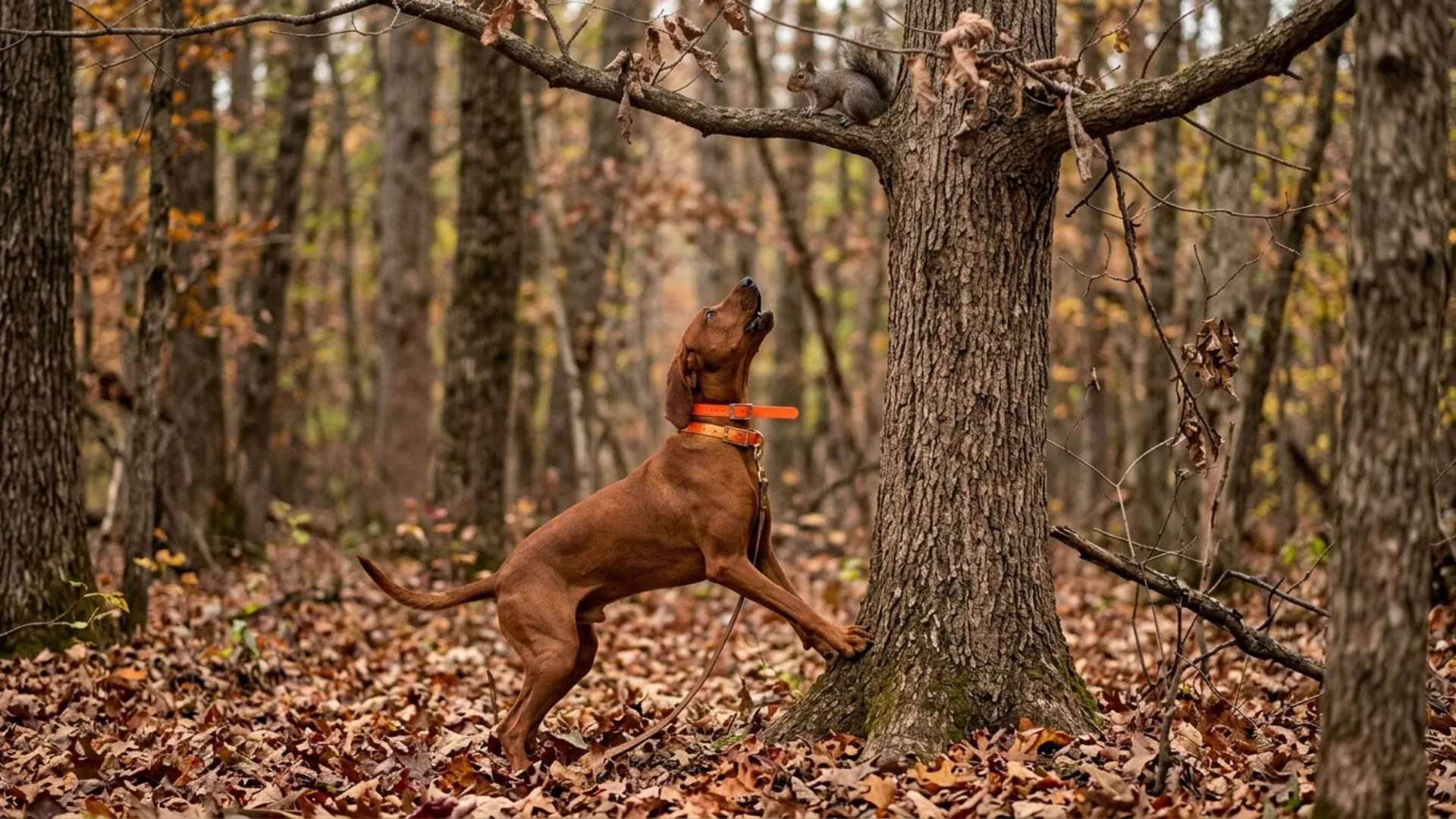
Netflix and chill is great and all, but when it’s time for an outdoor adventure, you need a partner who’s just as pumped as you are, and finding one who won’t tire out halfway through can be a challenge. That’s where a good hunting dog comes in.
Medium build, athletic body, wide-set eyes for a broad field of vision, and well-angled legs built for quick movement, that’s pretty much the blueprint for an ideal hunting companion.
Squirrel hunting is a blast, but it definitely takes patience, since these little guys are fast and always on alert. You need a dog with real speed, sharp senses, and a strong prey drive to keep up with them. The 7 breeds in this article are all excellent choices for squirrel hunting, and many of them can also hold their own in canine sports or even take on bigger game when needed.
Let’s get into it and help you find your perfect match.
Driven Dog Breeds That Excel at Squirrel Hunting
1. Mountain Cur
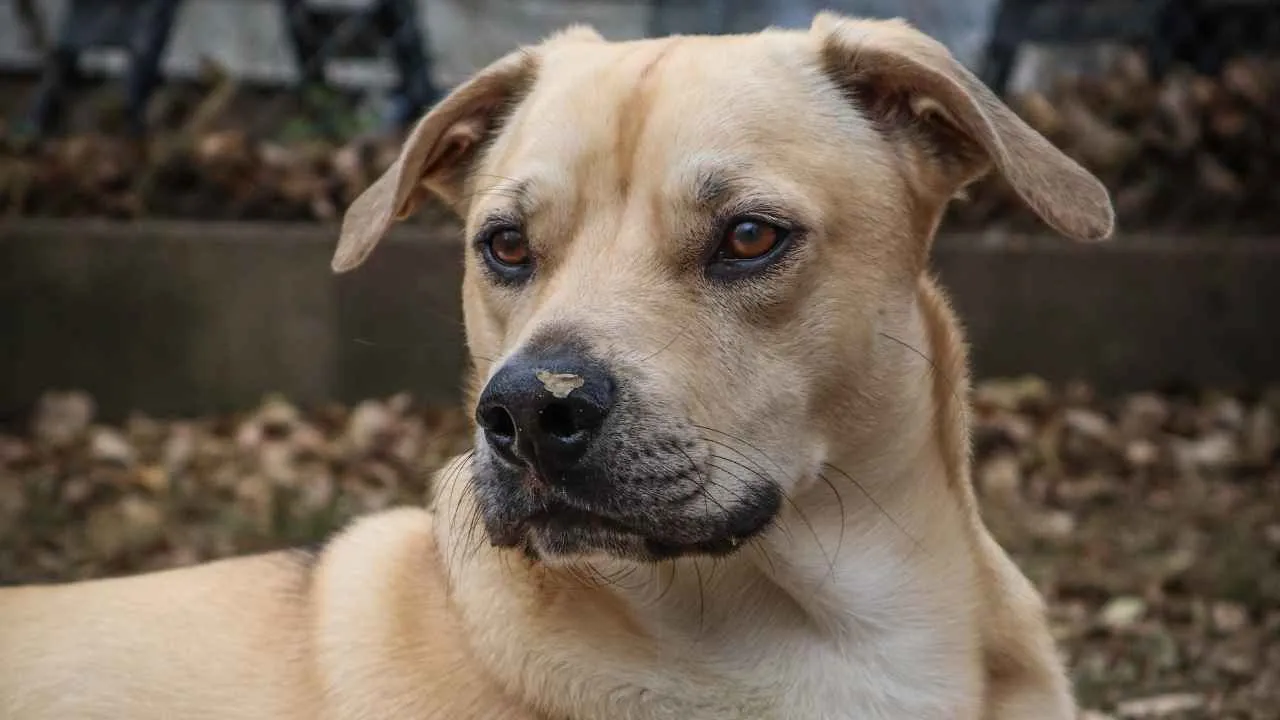
This powerful dog played a key role in helping settlers navigate the mountainous regions of early North America. It was widely used to hunt small game like rabbits and squirrels, but it also proved capable of taking on much larger animals, according to UKC.
Its firm, tough feet give it excellent traction for climbing steep inclines and maneuvering rocky ledges with ease.
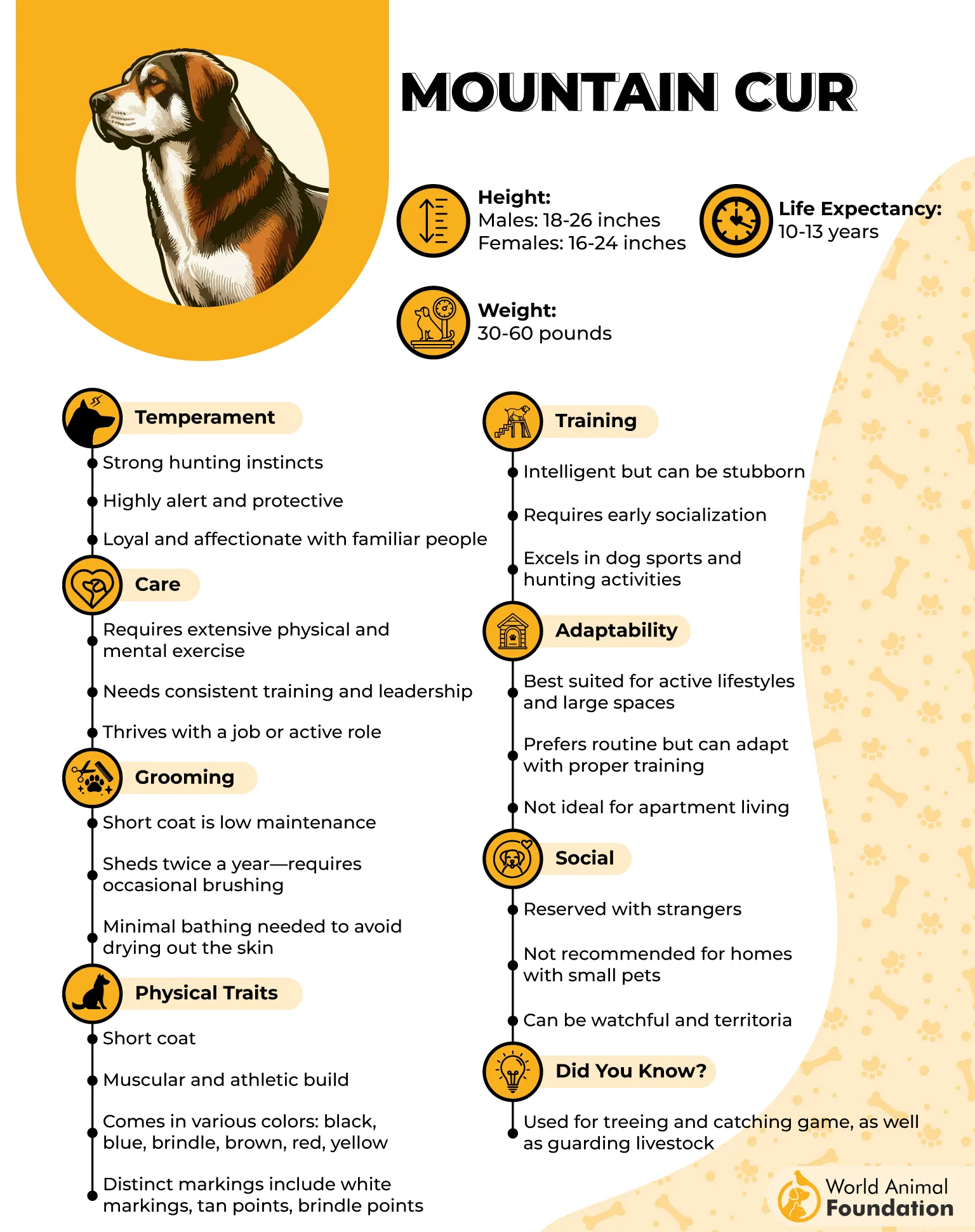
It also runs with its head held high to catch scents carried on the wind, making it a fast and efficient tracker. Physically, it’s built to tree smaller prey and bay larger animals, adapting its technique to the size of the game.
Naturally alert and protective, the Mountain Cur makes an excellent guardian for both livestock and property. Its commanding presence and instinct to take charge also make it a capable herding dog. Daily exercise should be around 60 to 90 minutes, such as brisk walking, jogging, track games, and running.
2. Treeing Walker Coonhound
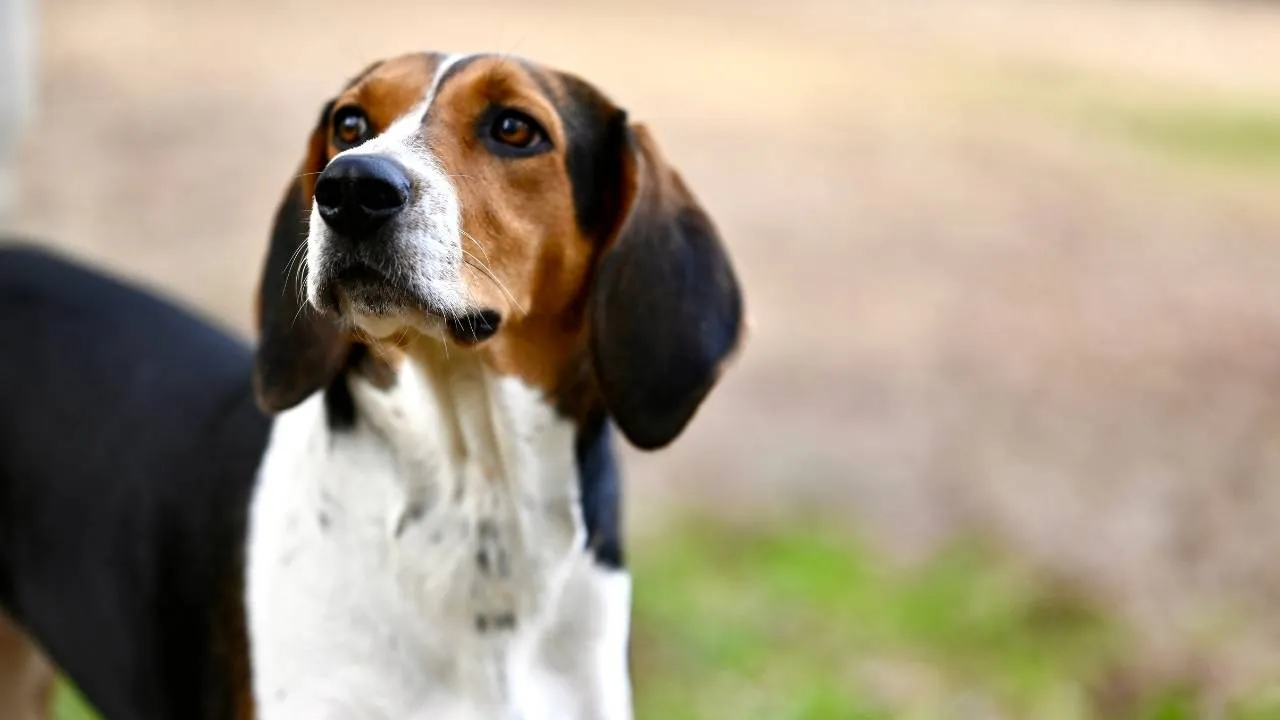
This good dog descends from English Foxhounds brought to America by British colonists and is also known as the English Coonhound. Its name honors Thomas Walker, who played a key role in shaping the breed in its early days.
It has tough, cat-like paws that hold up well against rough undergrowth, thorns, and rocky terrain. True to its coonhound instincts, it’s wired to corner and tree prey like raccoons rather than attack them, barking steadily until its owner catches up.
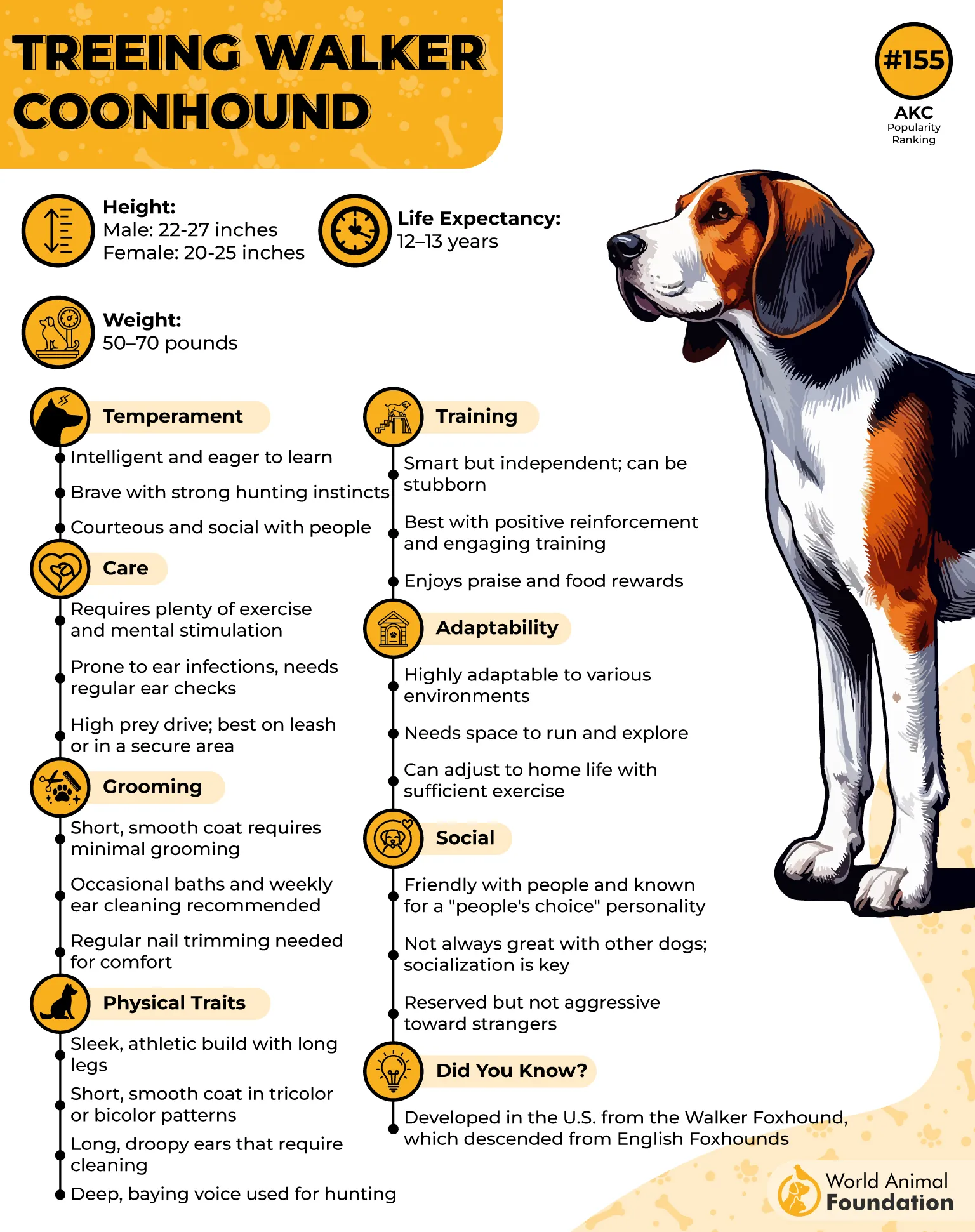
Fast and sharp, this breed really shines in coonhound hunting competitions that reward both speed and smarts. And despite its hunting roots, it’s also found success in therapy work, thanks to its gentle, people-oriented side. As for exercise, it needs a moderate 60 to 90 minutes a day to stay happy and balanced.
3. Redbone Coonhound
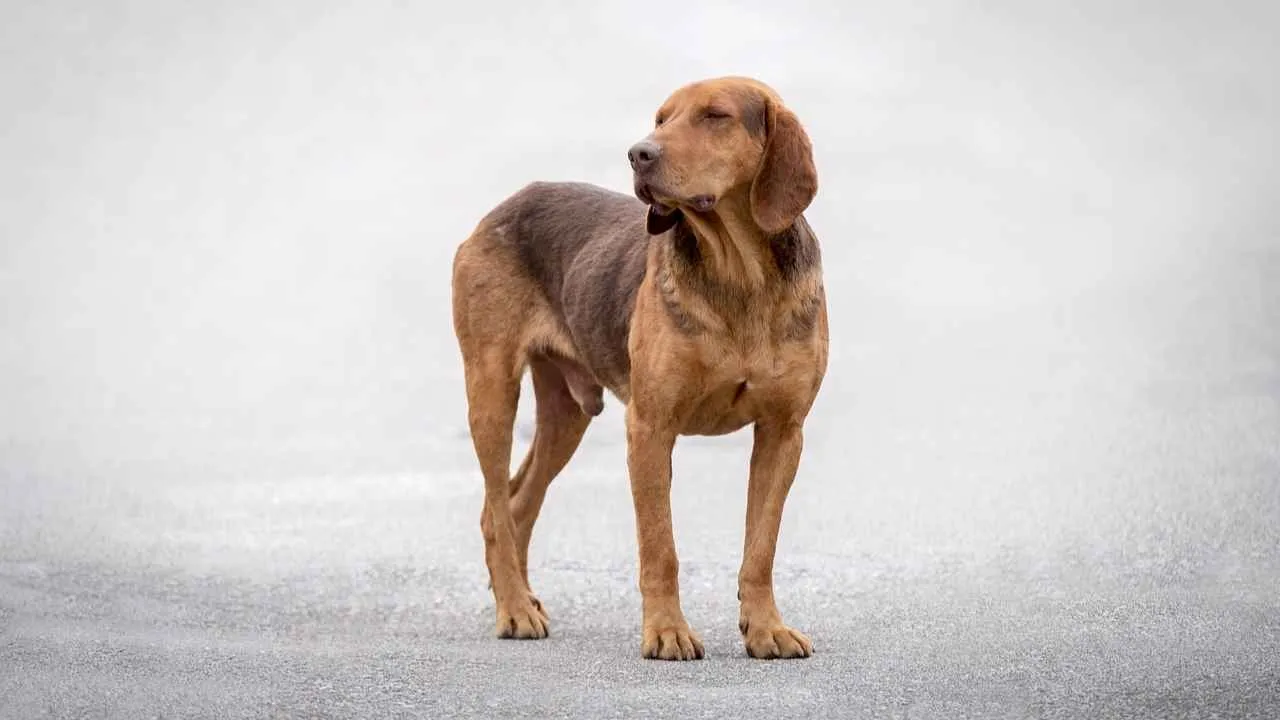
This American hunting breed was originally developed to track small game like raccoons, opossums, and squirrels. Its history dates back to the pre-Civil War era, with Bloodhound and Foxhound bloodlines forming its foundation. It’s best known for its striking red coat and impressive ability to follow long, cold trails, according to Wikipedia.

Well-balanced muscles give the Redbone Coonhound excellent lung capacity and stamina in the field. Its long, functional ears help sweep scent particles toward its nose, sharpening its tracking ability even further. And that high, slightly curved tail isn’t just for looks; it acts as a visual flag, helping hunters spot the dog in thick brush.
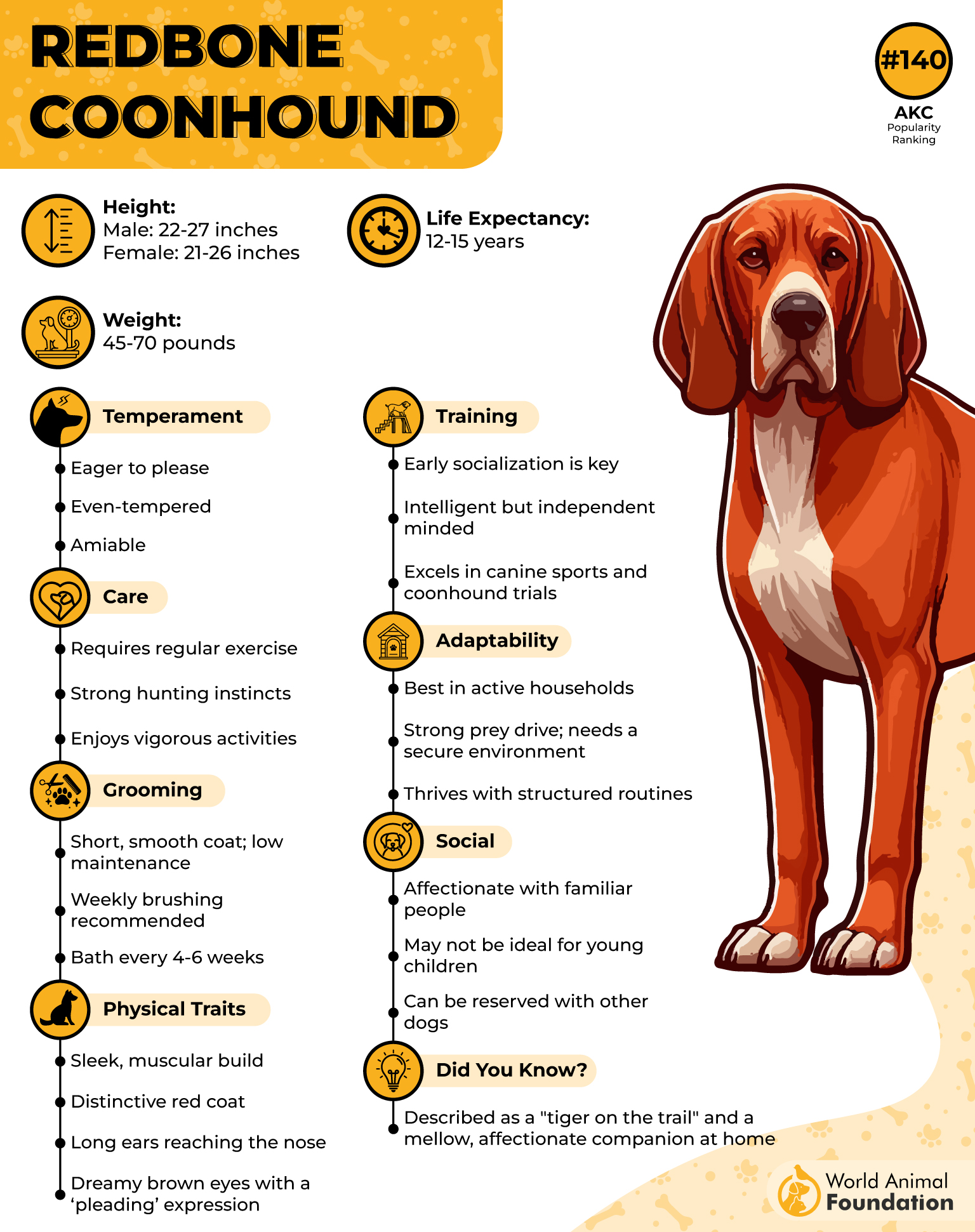
Thanks to its skill at picking up both fresh and cold scents, the Redbone Coonhound is also used in search and rescue work to help locate missing people.
It can comfortably maintain a steady trot or run for five miles or more without tiring. This is a genuinely energetic breed, needing 1 to 2 hours of vigorous exercise daily to stay both physically and mentally satisfied.
4. Black And Tan Terrier
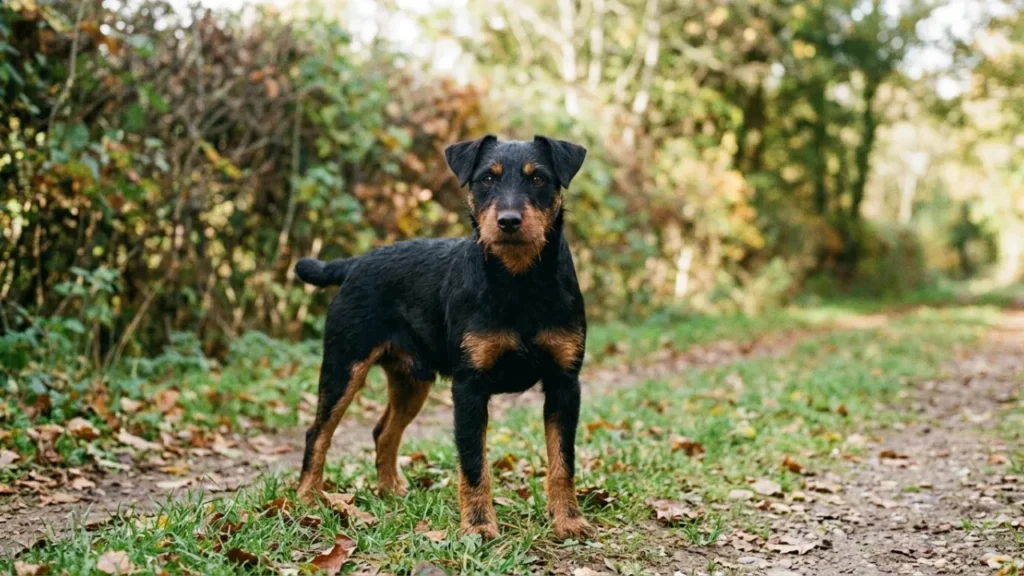
This breed traces back to one of the earliest terrier types out there. Though the original breed itself is now extinct, it’s widely believed to be the ancestor of all modern Fell Terriers as well as the Welsh Terrier. Physically, it was built for the job: a narrow chest for squeezing into underground burrows, a protective wiry coat, a powerful bite, and remarkable stamina.
Its jaw features a scissor bite, meaning the upper incisors overlap neatly with the lower ones, giving it a strong, precise grip. That wiry coat does more than look rugged; it shields the skin from harsh weather, dampness, and scrapes from briars or debris underground.
Even the ears are practical; their V-shape helps keep dirt and soil out of the ear canal while working below the surface.
With an inborn drive to dig and chase, this breed thrives in agility courses, earthdog trials, lure coursing, tracking, and flyball. It also forms close bonds with its owner, making it a wonderful family dog on top of everything else. Exercise needs are moderate, around 30 to 45 minutes a day are enough to keep it content.
5. German Shorthaired Pointer
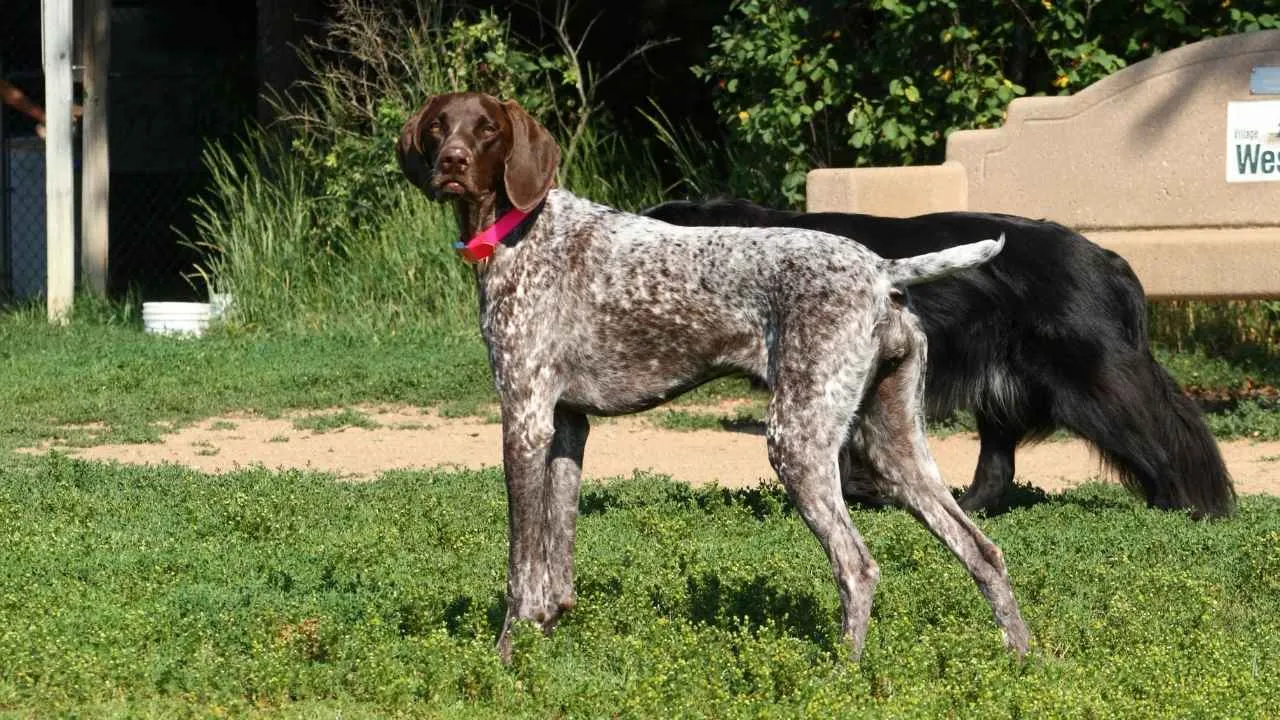
This multi-purpose hunting dog came together in the mid-19th century, though earlier versions of the breed may have existed as far back as the 17th century.
It started as a cross between the Bloodhound and the Spanish Pointer, bred first for obedience and later refined in Germany into the versatile working dog we know today, with English Pointer bloodlines added along the way to sharpen its skills, as per Orvis.
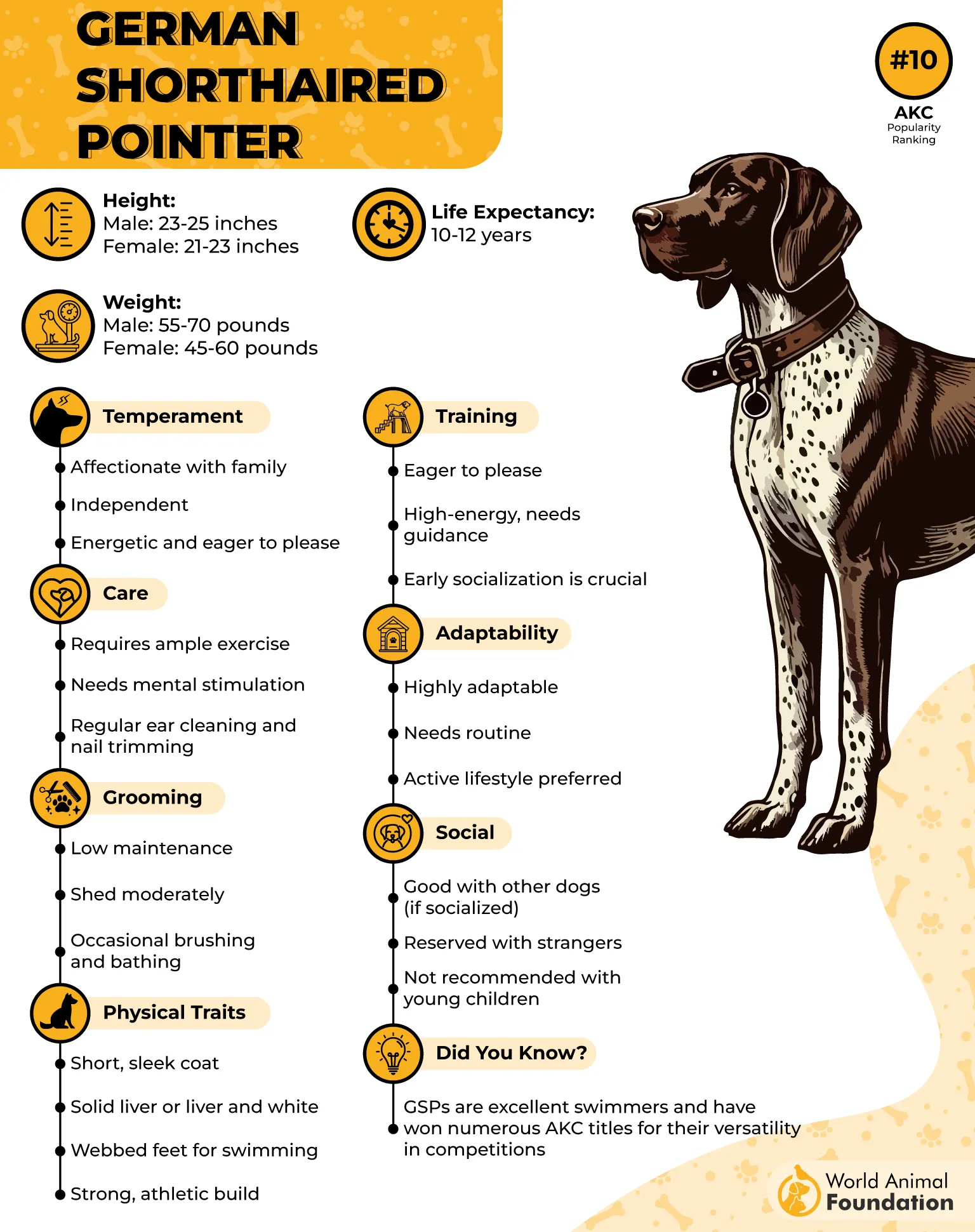
Its short, tight, water-repellent coat helps keep it cool during intense activity, while a ground-covering trot and powerful gallop let it work efficiently for hours. It’s also known for its famously “soft mouth,” which allows it to retrieve birds, even ones that have gone down in water, without causing any damage.
Hunters rely on this capable breed to follow blood trails and track larger game like wild boar, deer, and foxes. It’s also trusted by the TSA and the U.S. Air Force, where its intense focus and eagerness to work closely with a handler make it a strong candidate for bomb detection and sniffing out illicit substances.
6. American English Coonhound
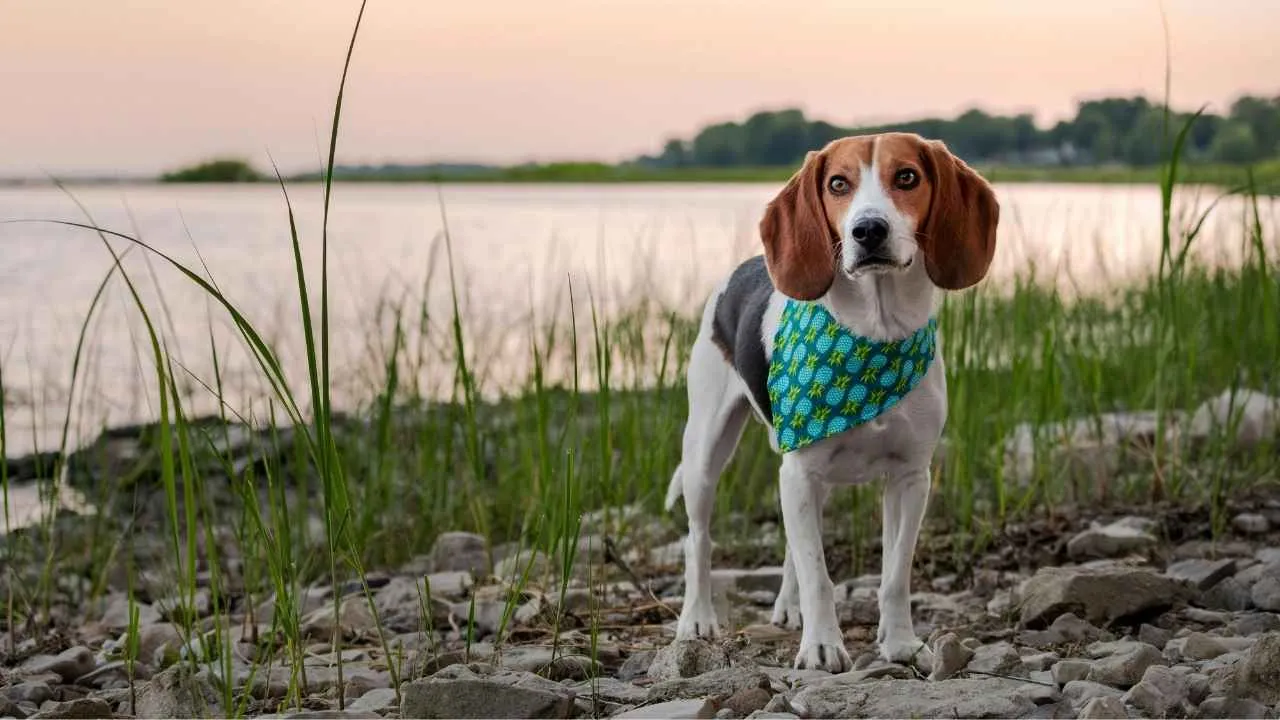
Also known as the “Redtick Coonhound,” this breed descends from European hunting dogs brought over by early settlers in the U.S. It’s a medium-sized dog known for its droopy ears, expressive eyes, distinctive baying voice, and short, hard coat that comes in a mix of colors, including red, blue, and white.
Its well-balanced frame, slightly longer than it is tall, gives it the acceleration it needs to keep up with fast-moving prey, while its “otter” tail acts like a rudder, helping it stay balanced through high-speed chases and sharp turns.
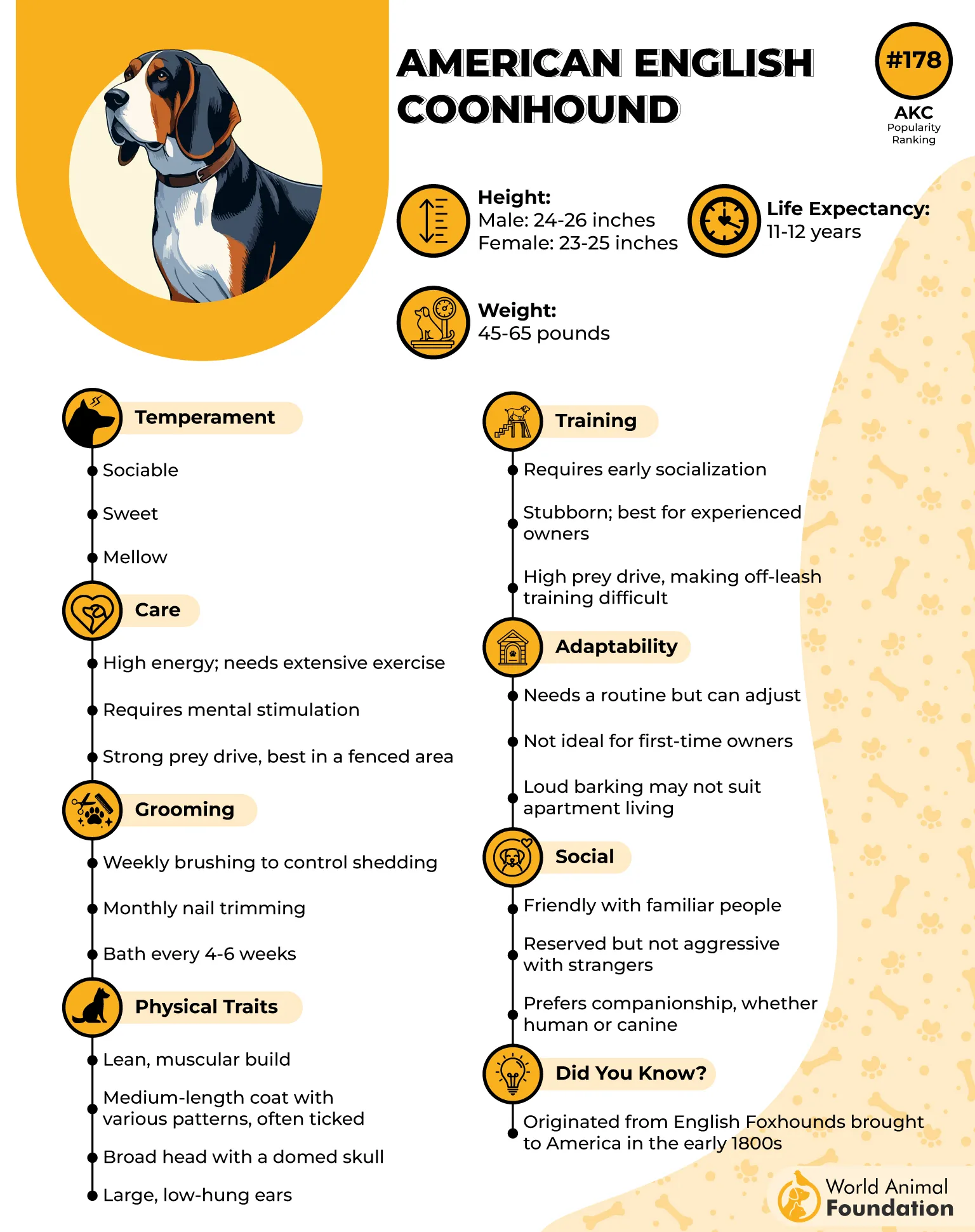
And while it doesn’t rely much on sight, its powerful nose more than makes up for it, letting it track scent trails through the night with real precision.
This breed is a favorite in competitive tracking, hound trailing, and “hound music” (baying) events. It needs 60 to 90 minutes of exercise daily, whether that’s a couple of walks, a jog, a hike, or some good old-fashioned scent work and fetch.
7. Rat Terrier
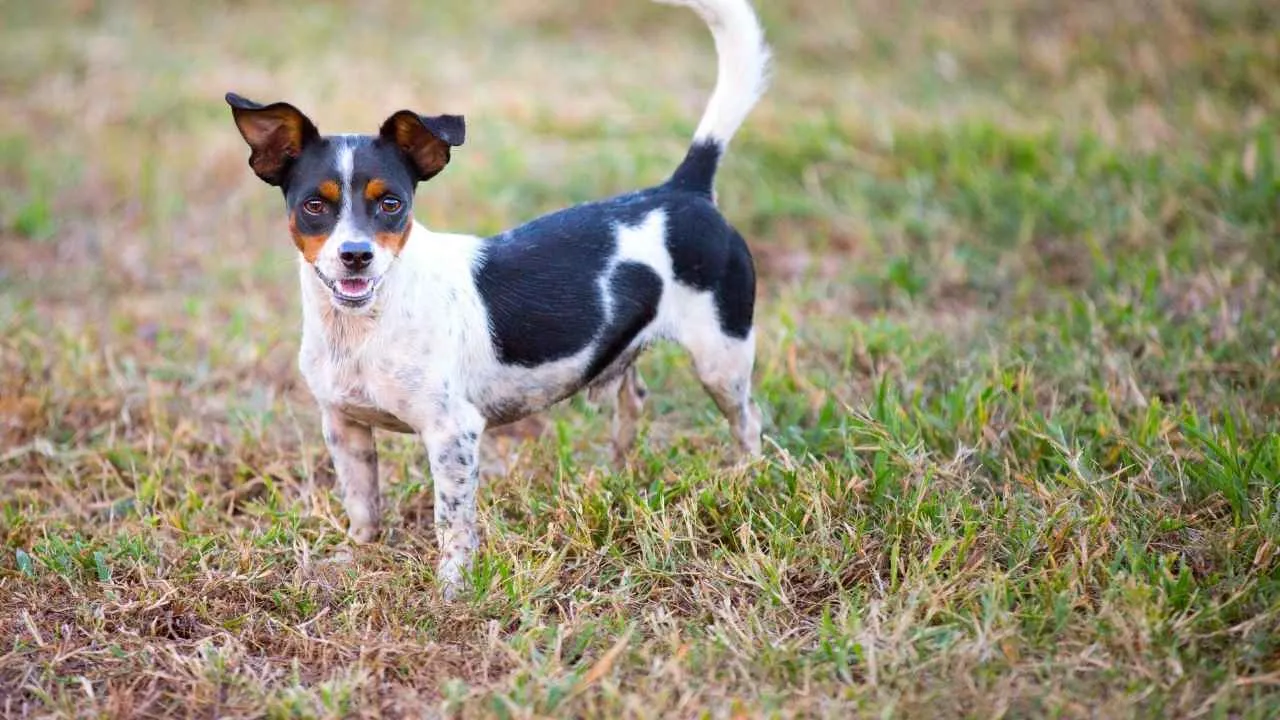
This American breed was originally developed as a versatile farm dog and hunting companion, with roots tracing back to small hunting dogs known as feists. Some of its earliest ancestors are linked to the “Hatch,” a small hunting dog whose remains were recovered from the Mary Rose, the flagship of Henry VIII that sank in 1545 and was raised in 1982.
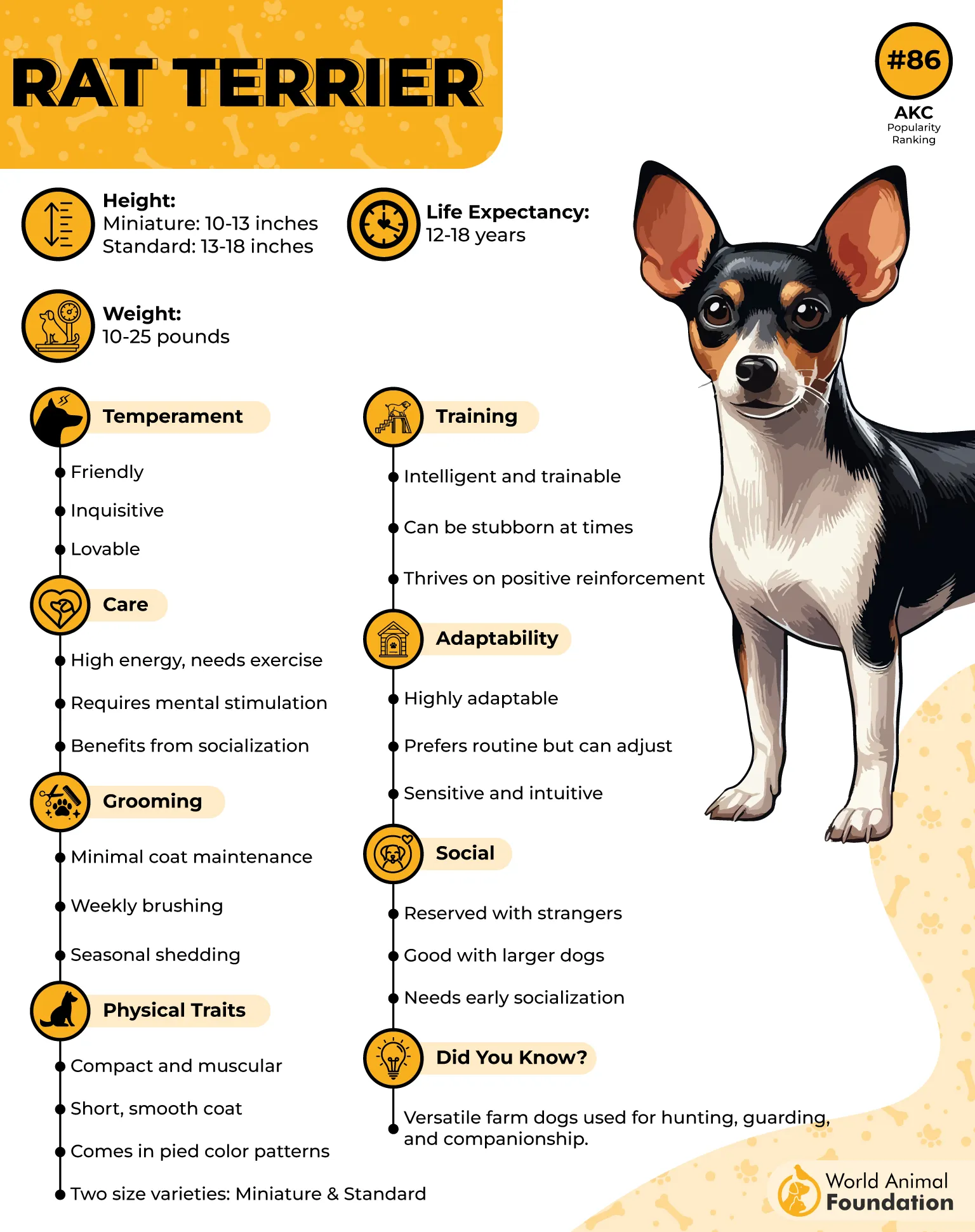
Built for agility, their athletic frame allows them to easily navigate tight underground burrows, rocky crevices, and dense brush. They feature a strong jaw structure and durable teeth designed for a swift, efficient bite, paired with well-laid-back shoulders and powerful hindquarters that make them exceptional at chasing down small game.
These dogs possess a high prey drive, quick reflexes, and a natural bite-and-shake instinct tailored for hunting. They are also highly alert, utilizing their keen territorial instincts to bark and notify their owners of any unusual sounds. To keep them happy and healthy, this active breed requires 30 to 60 minutes of daily exercise.
Conclusion
The best squirrel hunting dogs more than quick runners. They combine intelligence, determination, strong scenting ability, and the confidence to work through thick woods without giving up. While every breed brings its own style, they all share an impressive drive that has been shaped over generations. The right choice depends on your hunting environment, experience, and lifestyle.
A well-trained dog also needs regular exercise, mental challenges, and plenty of positive interaction outside hunting season. When you invest time in building trust, the reward goes far beyond successful hunts. You gain a loyal companion that enjoys every outdoor adventure with you, whether you are following fresh tracks at sunrise or simply exploring your favourite trail together.
