




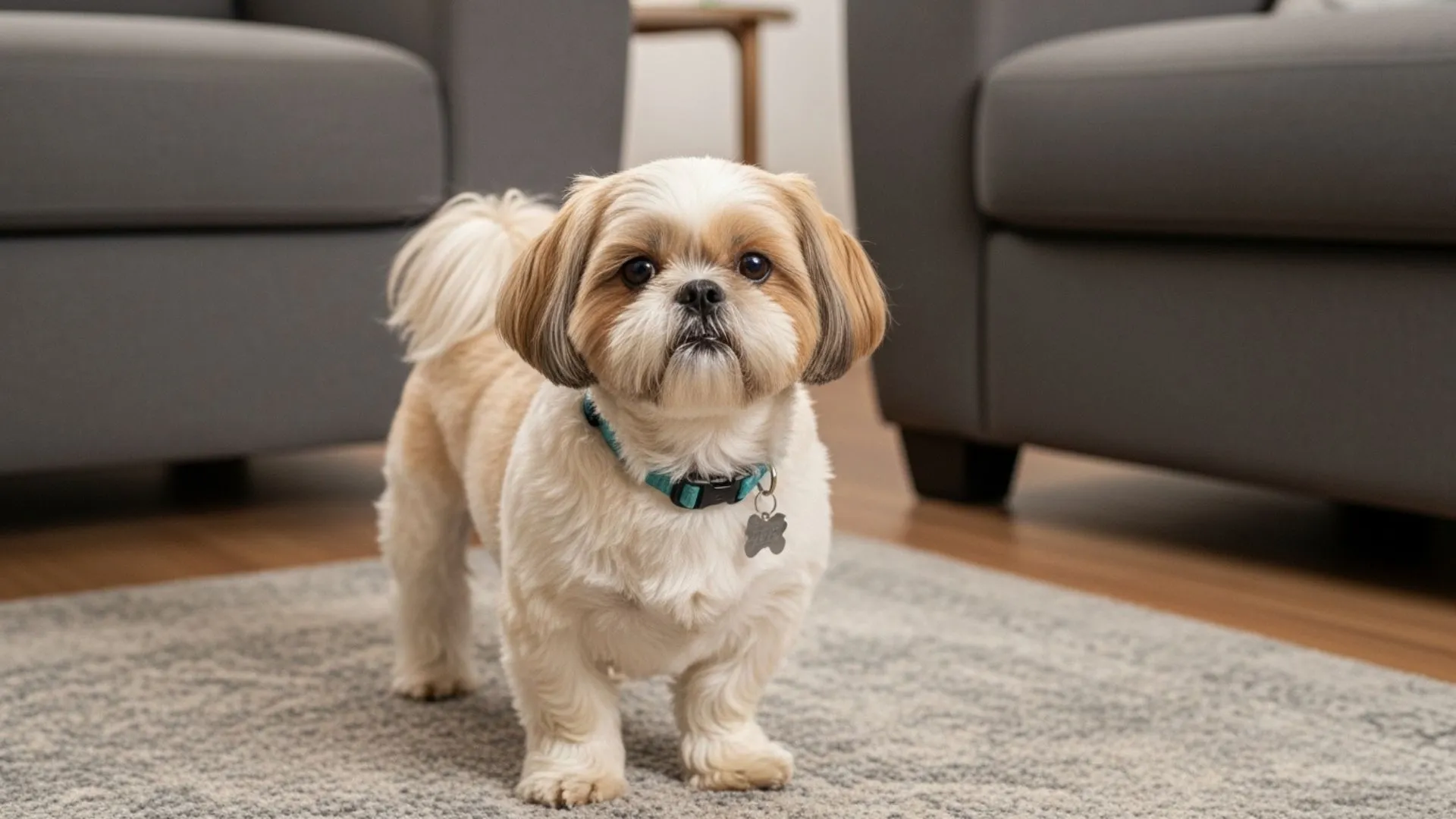
You love dogs. You just don’t love finding their fur in your coffee. Sound familiar? If you have ever rolled a lint roller over yourself three times before leaving the house, or found dog hair in places that defy physics, welcome to this article.
Millions of dog lovers are searching for a companion that does not turn their sofa into a fur coat. Here is the good news. Some dogs barely shed at all. Less shedding does not mean they are entirely hairless. Some of them are, some of them trap the hair in their wiry coat, while some just don’t shed much.
As the famous author Dean Koontz once said, “Once you’ve had a wonderful dog, a life without one is a life diminished.” And we can’t agree more. And what if you find a companion who does not shed? Cherry on top. Right?
Whether you are managing allergies, protecting a dark wardrobe habit, or simply trying to keep a clean home, these 7 dog breeds with less shedding are about to change your life.
Dog Breeds With Minimal Shedding: A Clean Home is Possible
1. Cavalier King Charles Spaniel
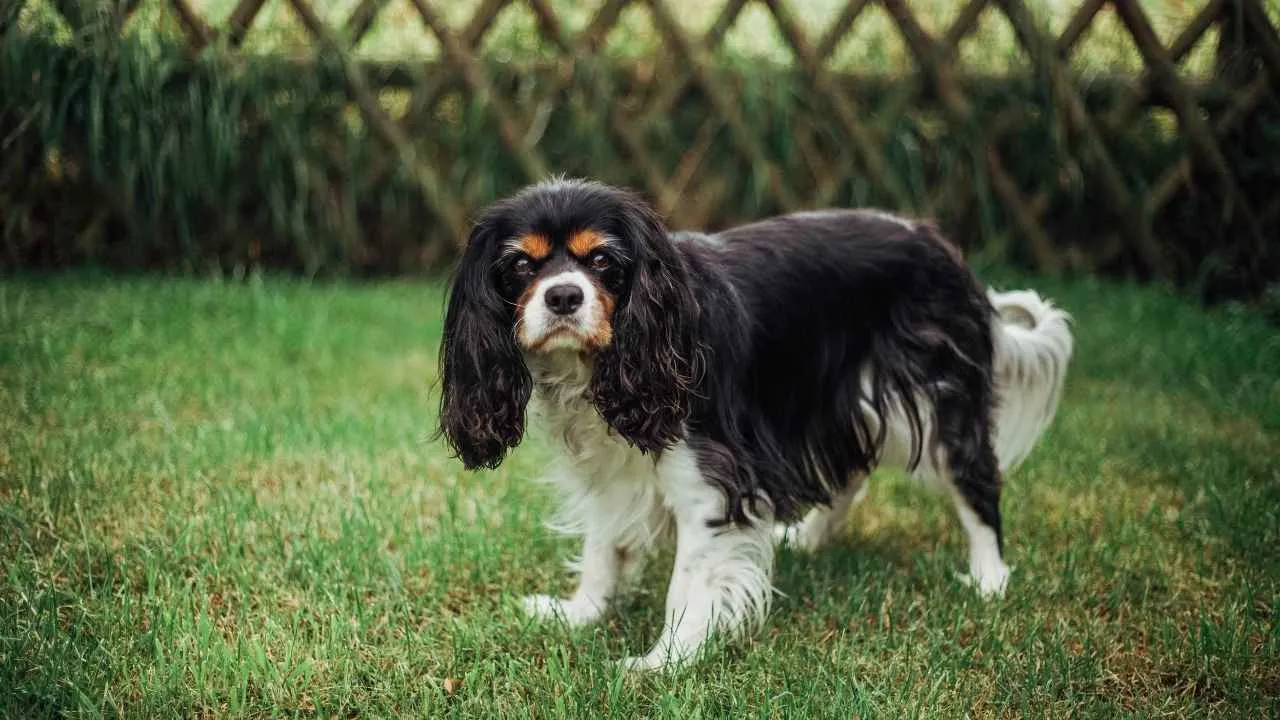
Don’t be fooled by these silky, flowing locks. The Cavalier King Charles Spaniel is surprisingly manageable in the shedding department.
Originally bred to warm the royal laps, this low-shedding dog was the favorite of King Charles I and his son Charles II. They were so fond of this breed that they even took them to the parliament sometimes, according to PetMD.
If you want a companion dog who consoles you in your lows, pet hair should be the least thing you are worried about. Hence, Cavalier is the perfect choice for you. However, it should be taken care of regularly since the coat around its abdomen may get hard because of the urine.
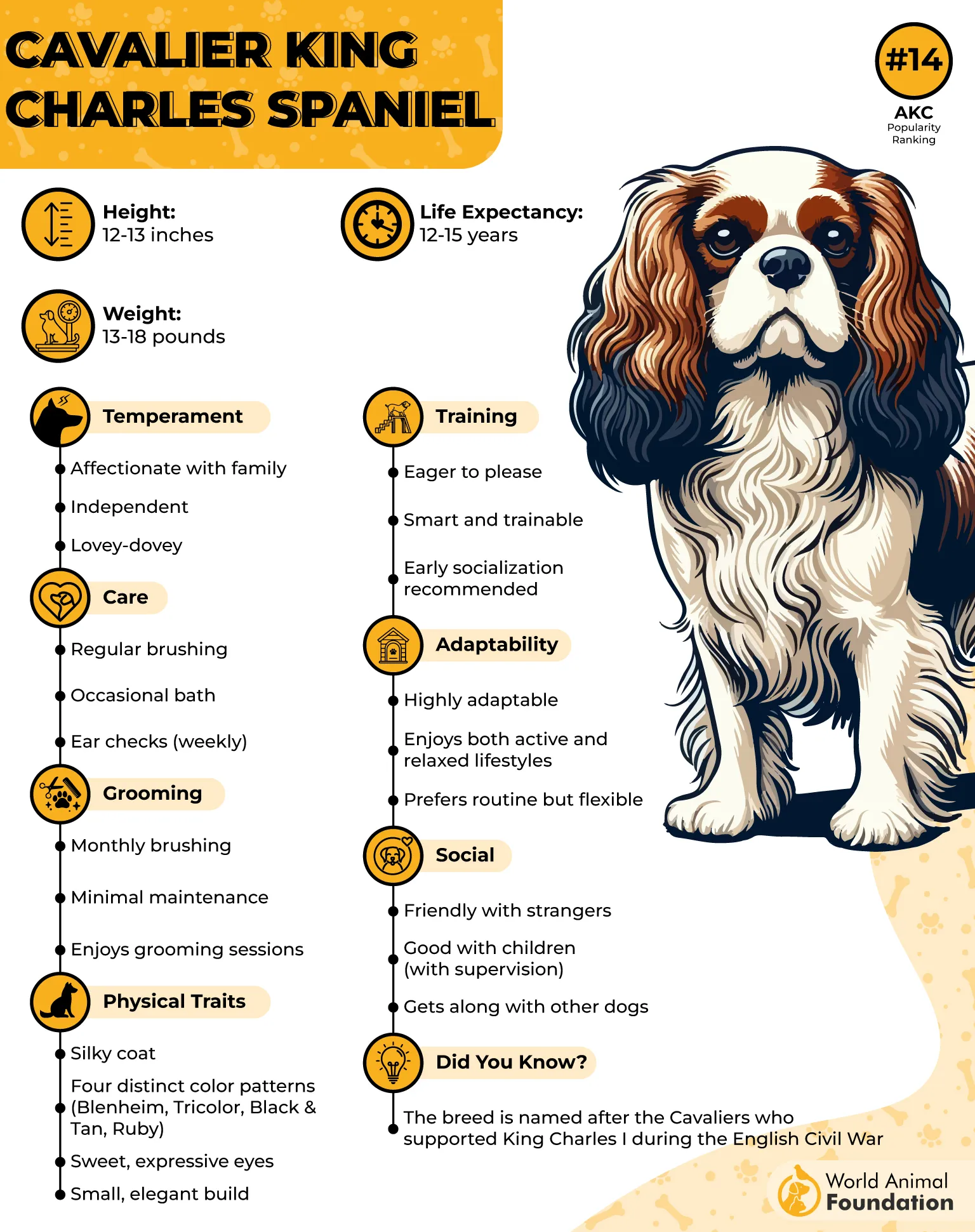
Coat Description: Medium length, silky, and slightly wavy coat, shiny, and comes in 4 varieties: Blenheim, tricolor, ruby, and black & tan.
Shedding Season: Low shedding year-round, with a slight uptick in autumn and spring.
Grooming: Brush 2-3 times per week with a bristle or pin brush (to prevent tangles and mats), bathe once or twice a month, weekly ear checks, occasional trim around the feet and featherings
Health Watchouts: Eye conditions, MVD, hip dysplasia, luxating patella, and syringomyelia.
2. Whippet
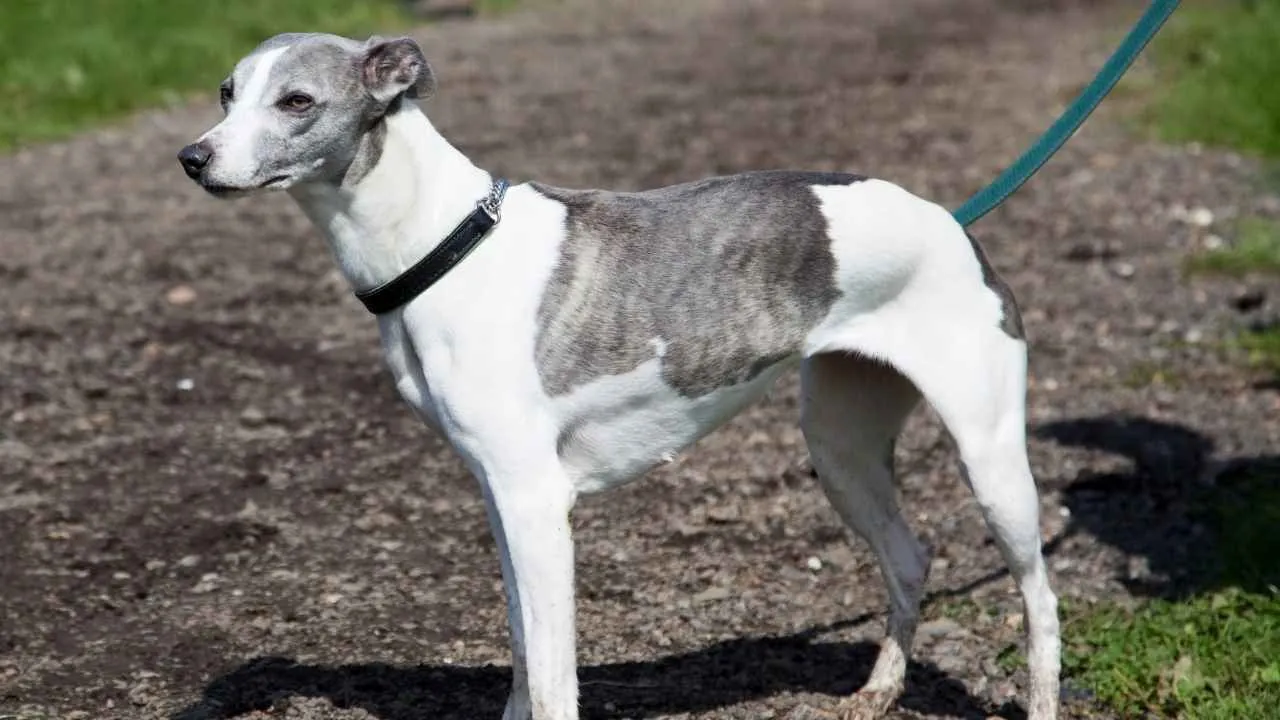
This one is basically a sports car of the dog world: sleek, elegant, and slightly low on upkeep. If a fur-free home is your dream, congratulations! Your dream is about to come true.
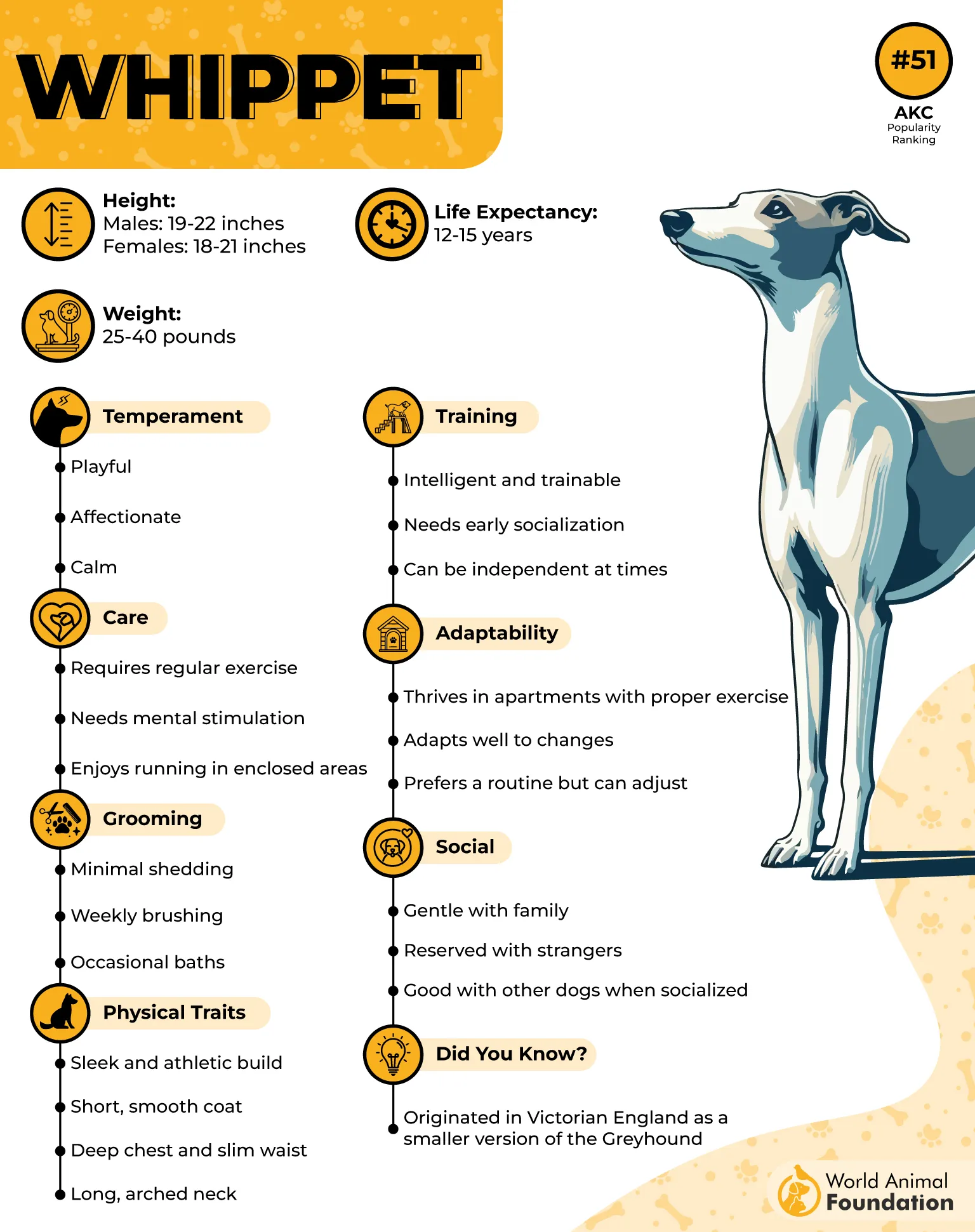
The coat plays an important role in dominating the athletic, strong, and cheerful disposition of this non-shedding dog. This makes them a hypoallergenic breed, perfect companions for people with allergy issues.
However, they do not have a cold-weather-resistant coat. So, keep them indoors and get a pair of sweaters for them.
Coat Description: Dense, single-layered short coat, wide range of mixed and solid colors.
Shedding Season: Low shedding coat year-round, with a slight increase in spring.
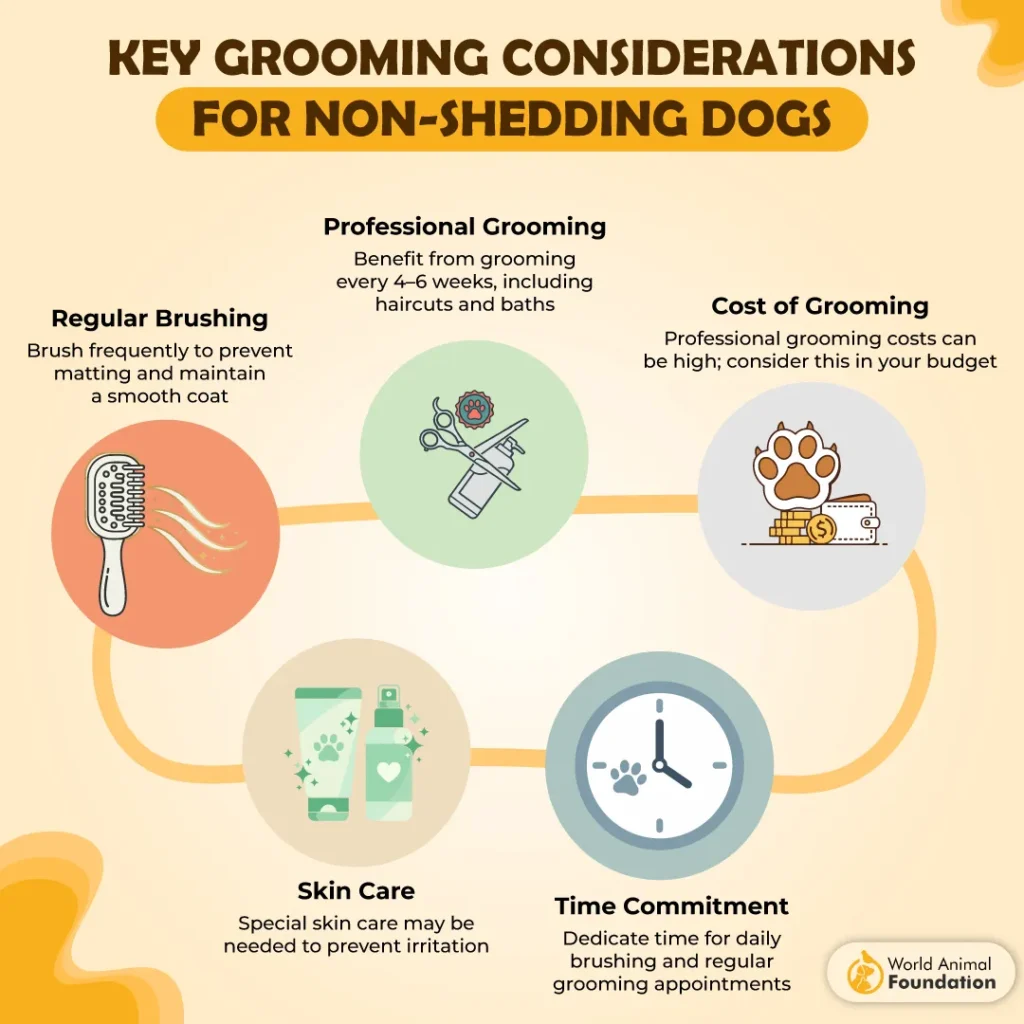
Grooming: Weekly wipe down with a grooming mitt, regular nail trims, and occasional baths with agood pet shampoo.
Health Watchouts: Dilated cardiomyopathy, sensitive skin, anesthesia sensitivity, MVD, bloat,lacerations (because of thin coat), Von Willebrand Disease, and deafness.
3. Basset Hound
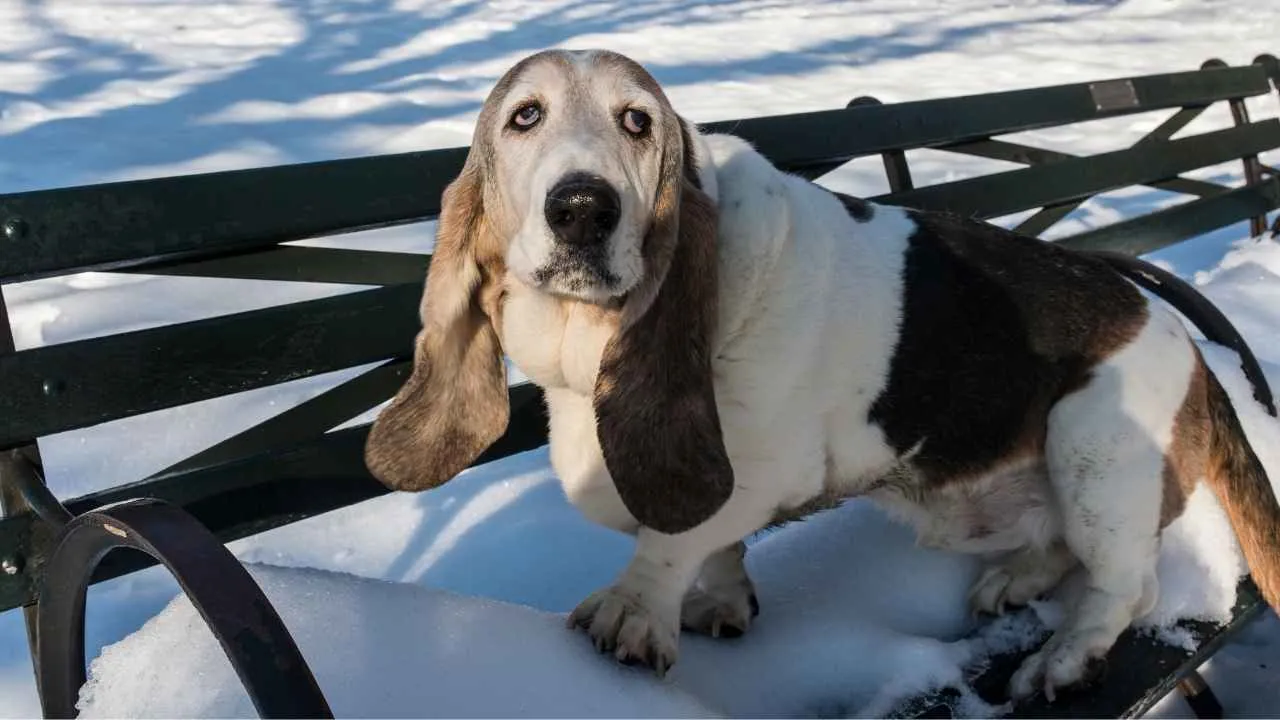
The long ears and droopy eyes give the Basset Hound the permanent look of someone who just heard bad news. But what is the good news for you? Their shedding. For a hound, it is surprisingly clean.
This breed is prone to allergic reactions because of its thin coat. The skin is sensitive and can develop scratches, rashes, or a bad odor. Hence, these dogs require regular grooming: a good pet odor-free shampoo and regular vet checkups, etc.
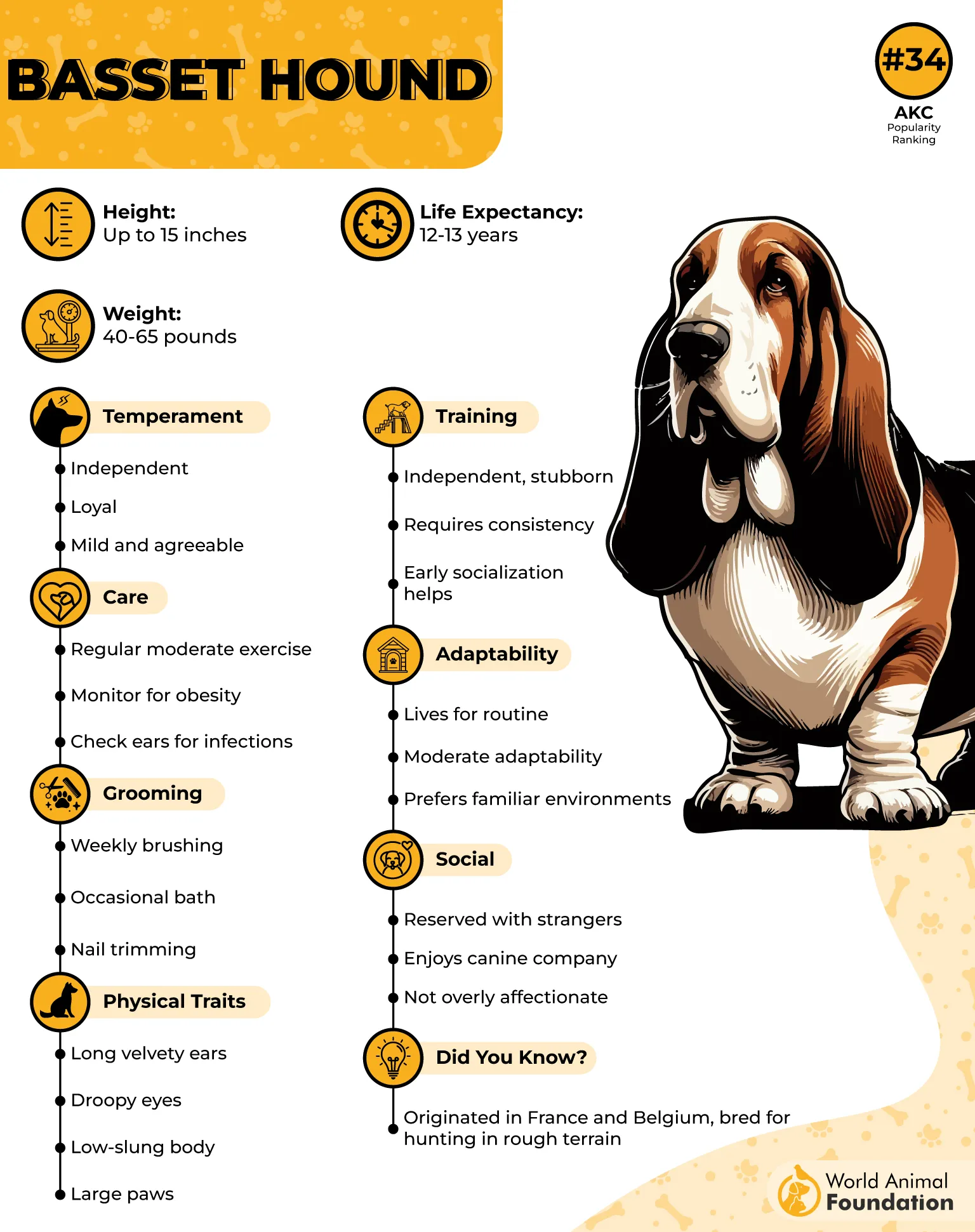
Coat Description: Hard, tight-fitted short coat that comes in bi/tri-color patterns: black, white, and tan.
Shedding Season: Moderate throughout the year, slightly heavier in spring.
Grooming: Weekly regular brushing using a soft brush or a shedding tool, ear cleaning, monthly nail trims, and paw pad and wrinkle checks.
Health Watchouts: Ear infections, obesity, glaucoma, elbow/hip dysplasia, skin issues, arthritis, luxating patella, IVDD, and bloat.
4. Bichon Frise
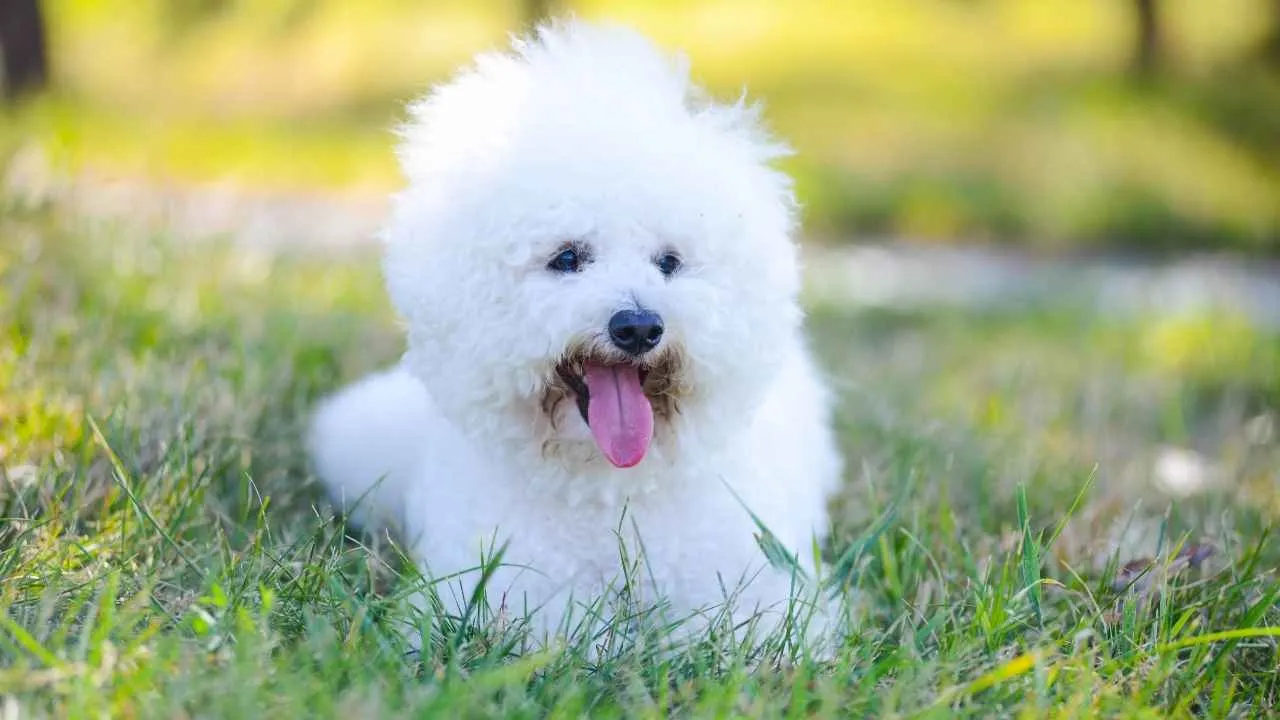
The Bichon Frise looks like a walking, breathing cotton ball, and somehow, it barely sheds minimally. It’s the rare breed where all that fluff stays on the dog and not all over your black pants.
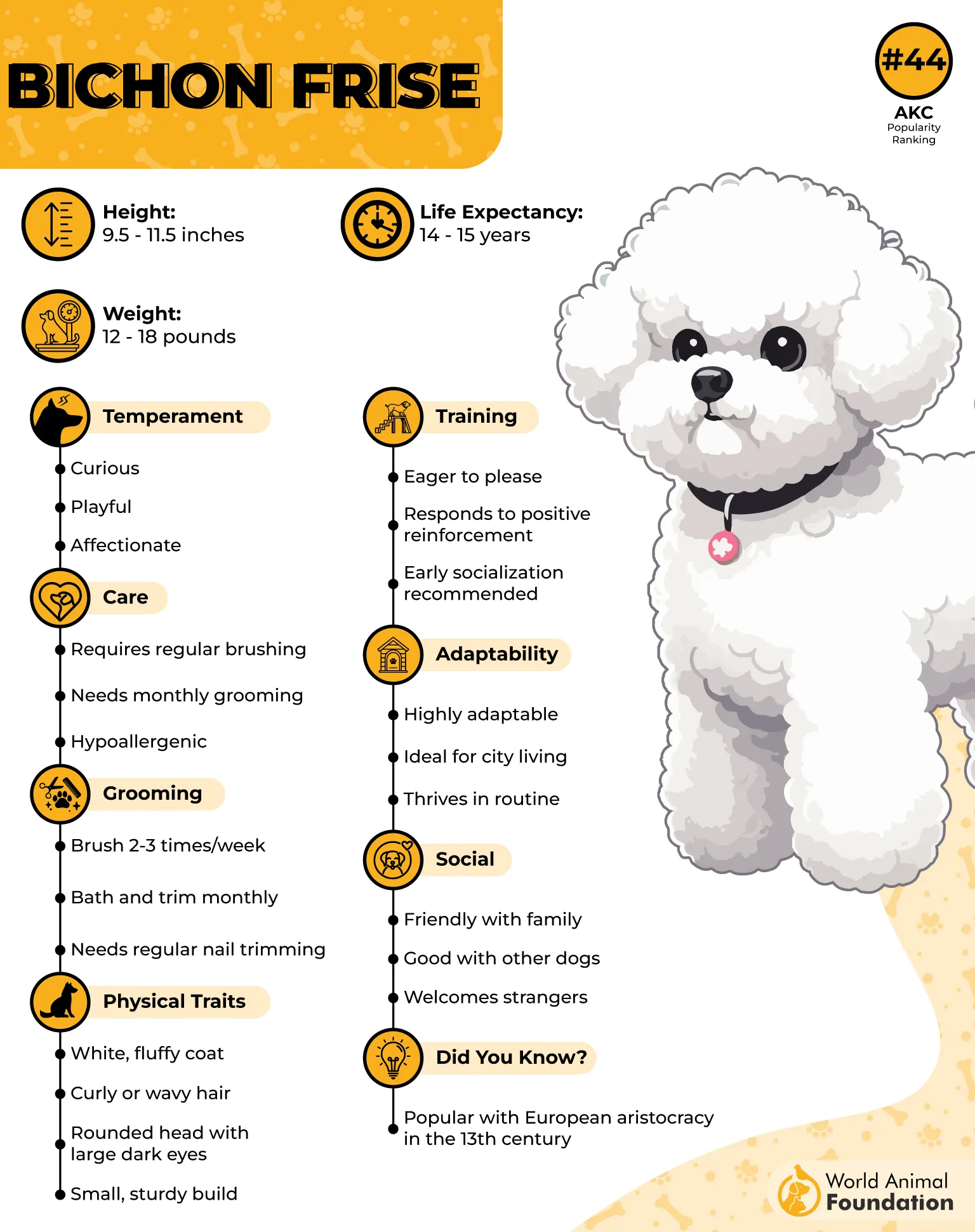
‘Bichon Frise’ literal meaning in English is ‘curly-haired small dog’, as per Wikipedia. They were the favorite breed in France, Spain, and Italy during the 13th century because of their cloud-like fur and playful and gentle personality.
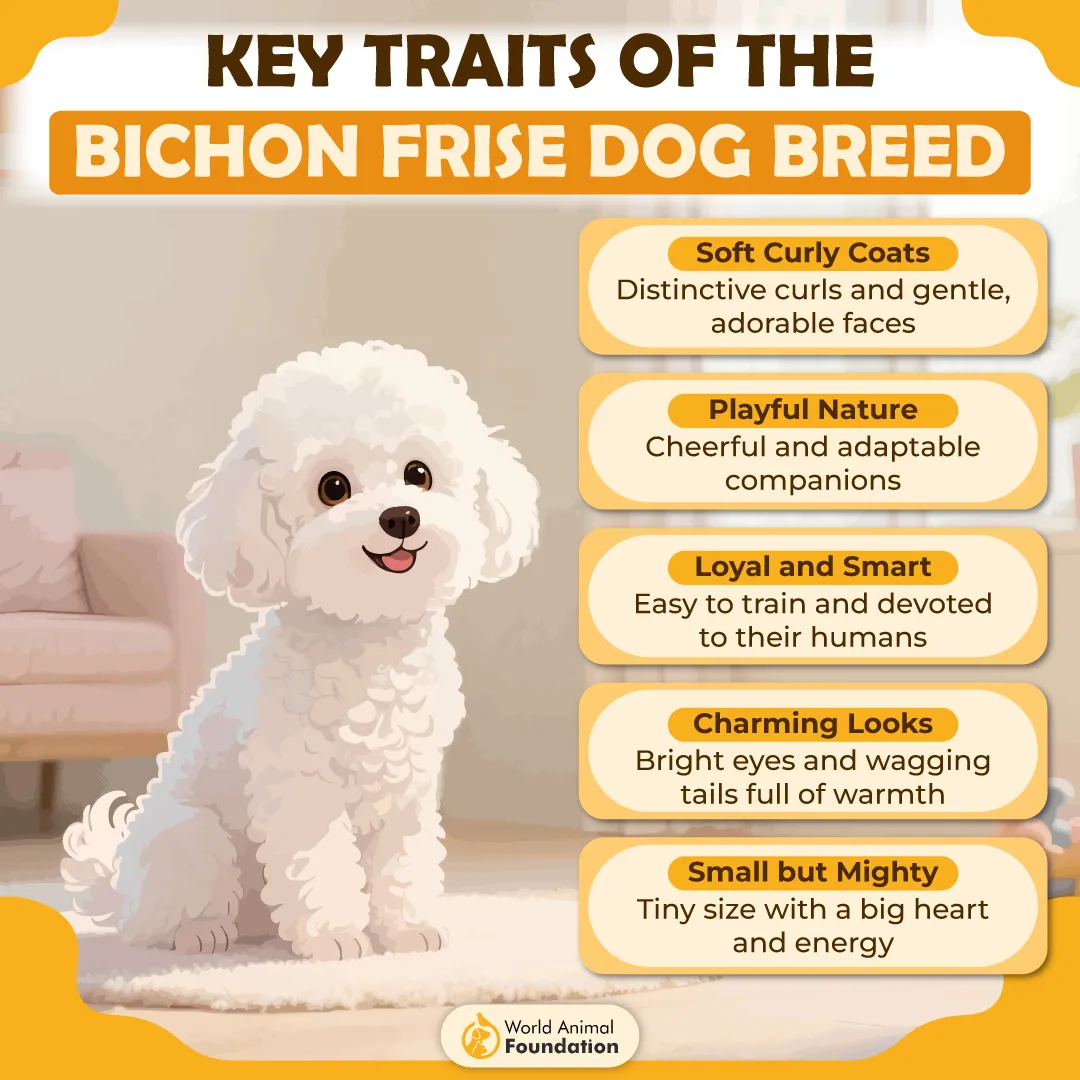
Coat Description: Soft, dense, curly double coat, always white, sometimes with cream or apricot tints around the ears.
Shedding Season: Minimal throughout the year. Loose hair stays trapped in the curls rather than falling.
Grooming: Professional grooming after every 4-6 weeks, daily brushing or at least 2-3 times a week to avoid matting, monthly bathing, regular ear and eye checkups
Health Watchputs: Skin allergies, bladder stones, luxating patella, diabetes, corneal dystrophy, cataracts, dental diseases, and liver shunts.
5. Shih Tzu
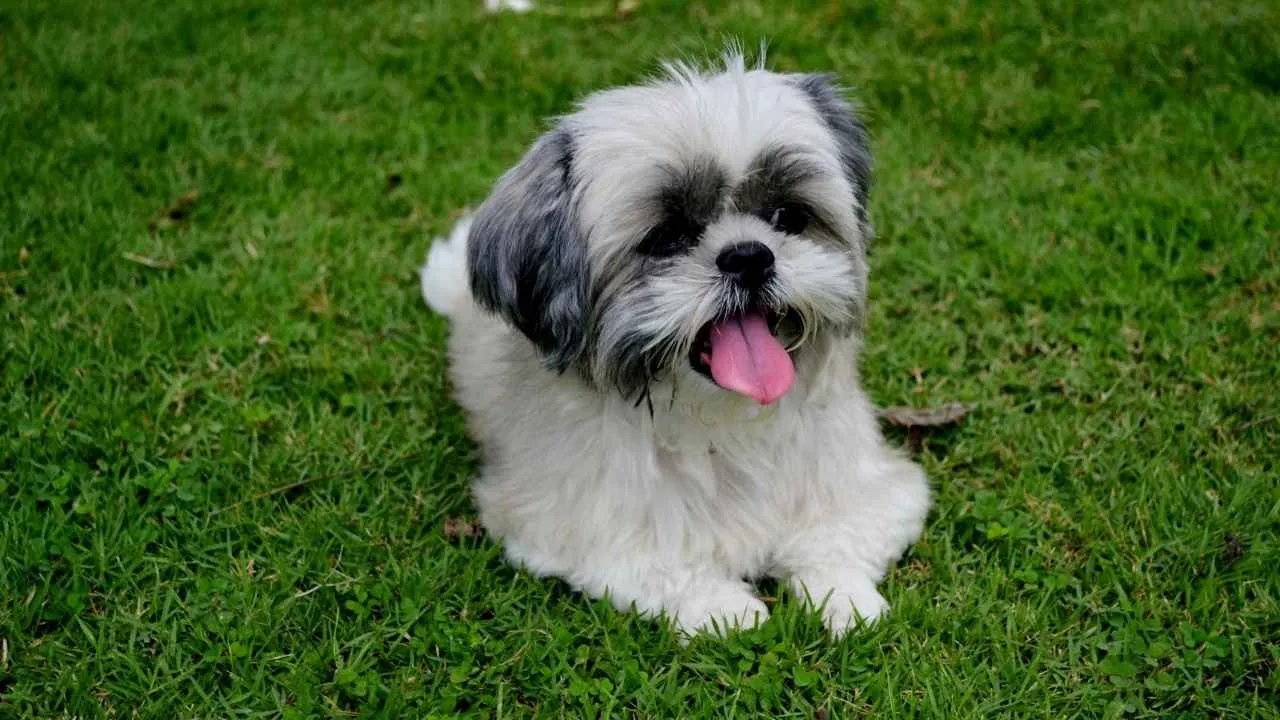
The word “Shih Tzu” literally means “lion dog” in Chinese. Nothing is intimidating about this little creature except the fact that they have less.
Originally bred to guard properties, this ‘lion dog’ was later crossed with Pugs, Pekingese, and other breeds by Chinese breeders to create the present-day low-maintenance great companion. The coat of a Shih Tzu is often given a ‘puppy cut’ to avoid regular grooming.
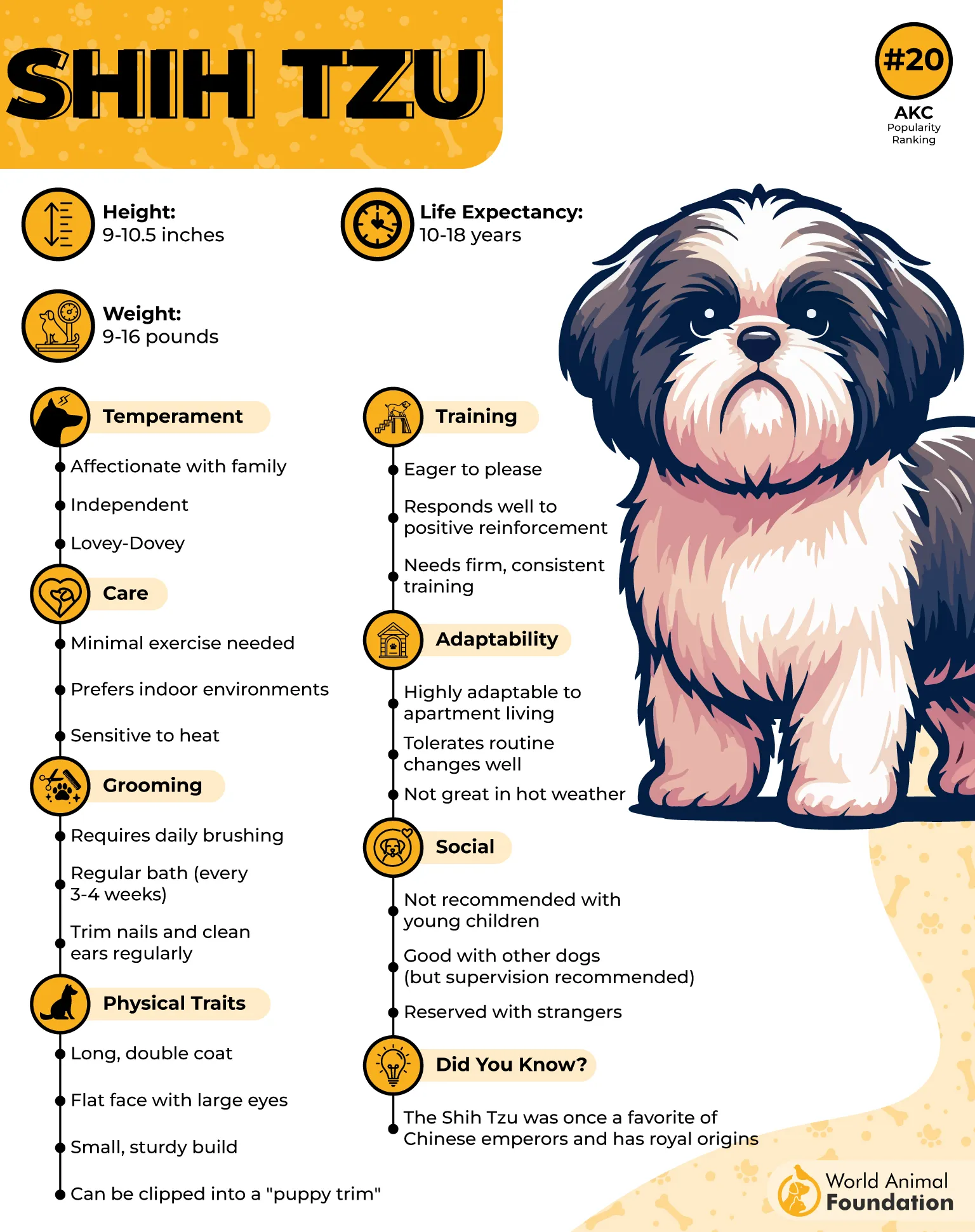
Coat Description: Long, flowing, silky double coat, comes in a variety of colors and multi-color combinations.
Shedding Season: Minimal. Hair grows continuously rather than shedding in seasonal cycles.
Grooming: Daily brushing. Professional trim after every 6-8 weeks and weekly eye/ear care
Health Watchputs: Brachycephalic breathing issues, eye ulcers, kidney diseases, obesity, luxating patella, periodontal disease, liver shunts, and hip dysplasia
6. Xoloitzcuintli
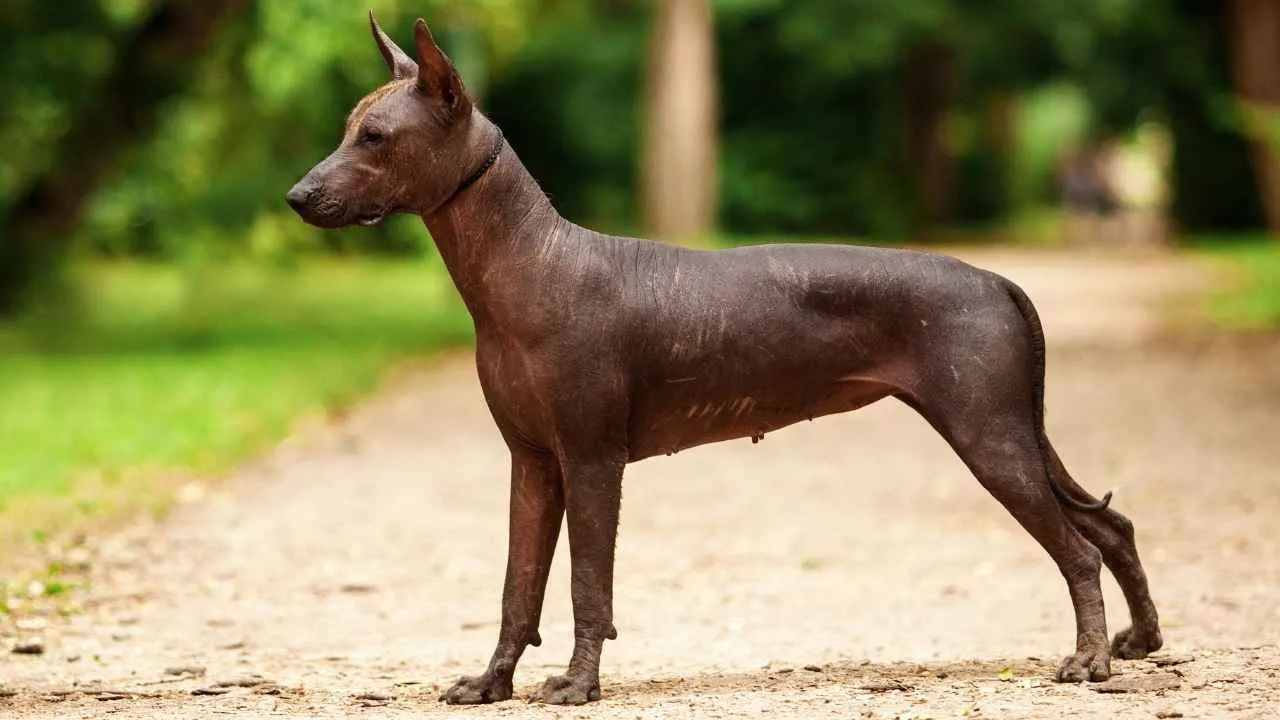
Say its name three times fast and then move forward, “show-lo-eets-QUEEN-lee”. It’s the most ancient, hairless, and most underrated dog on this list.
This is one of the oldest dog breeds, dating back more than 9000 years. The original breed used to have a thin coat, but a certain mutation caused hairlessness. However, a small patch of short hair is still seen on the heads, toes, and tail of some dogs.
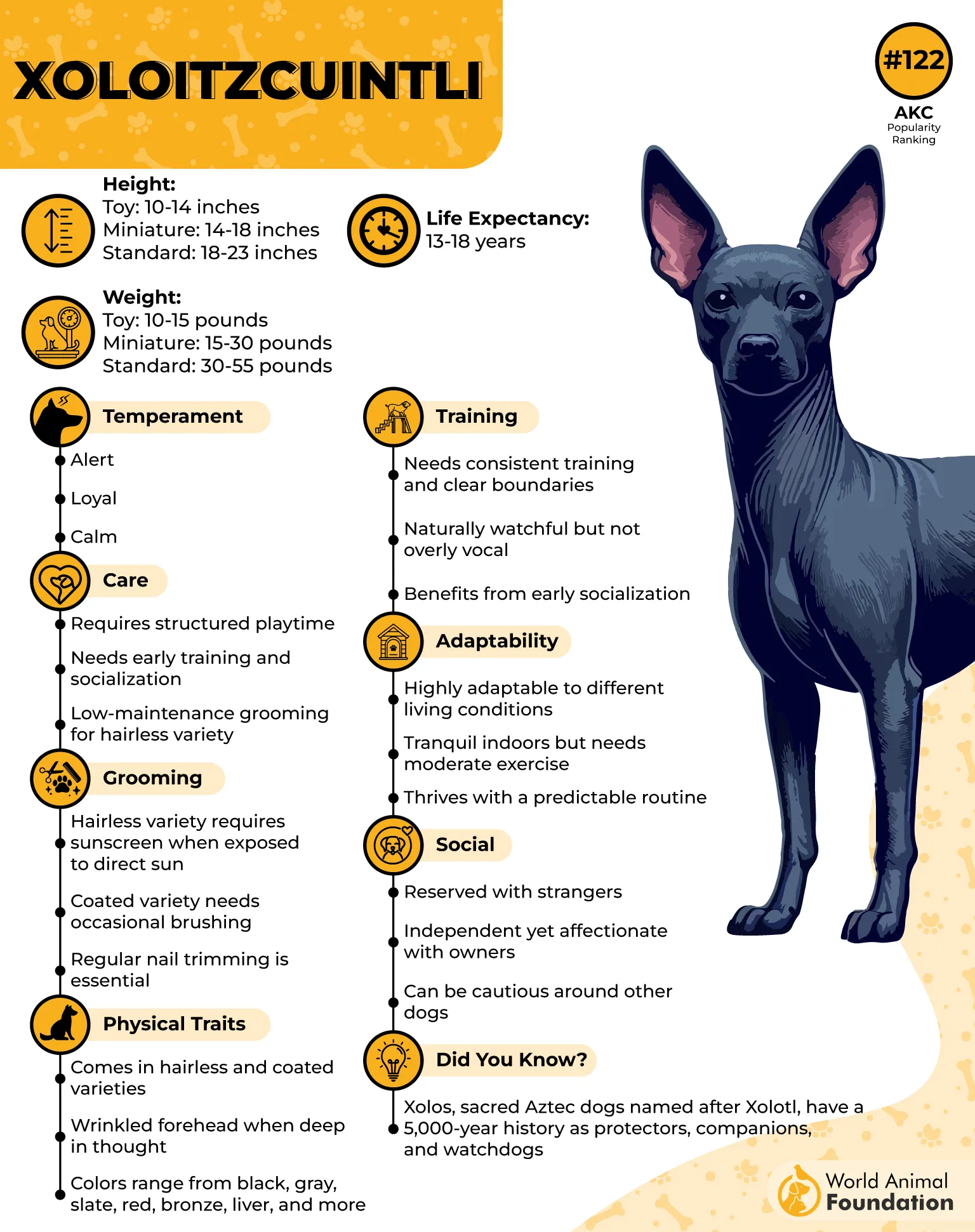
Coat Description: Hairless variety has smooth, tough skin and dark shades: brown, slate, gray, and bronze. The coat is flat and short.
Shedding Season: Since this is a hypoallergenic dog breed, there is zero shedding or very minimal throughout the year.
Grooming: Regular skin moisturizing, sunscreen for outdoor activities, and routine ear/nail care
Health Watchouts: Skin irritation and skinburn, dental issues, acne, joint stiffness in cold weather. They are prone to acne that can lead to scarring if not treated in a timely manner. Keep their face dry and clean.
7. Maltese
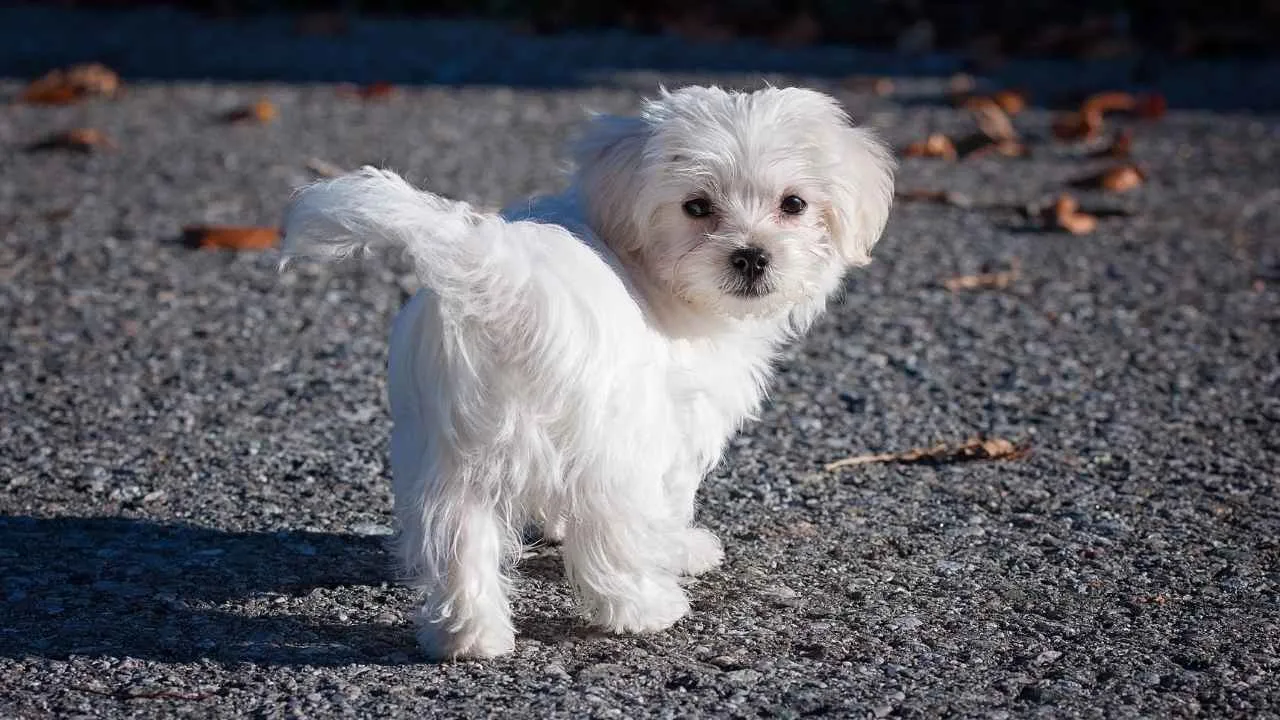
The Maltese dogs have been the darlings of royal families, celebrities, and dog lovers for thousands of years. Life is not always fair, but we are not complaining here, because this breed has less shedding despite having a long coat.
Hills Pet mentions that the long coat often touches the ground. So is top-knotted to prevent discomfort or an untidy coat. This dog was kept as an ornamental breed in noble houses and royal families because of their cute appearance, polite nature, and preference for allergy sufferers.
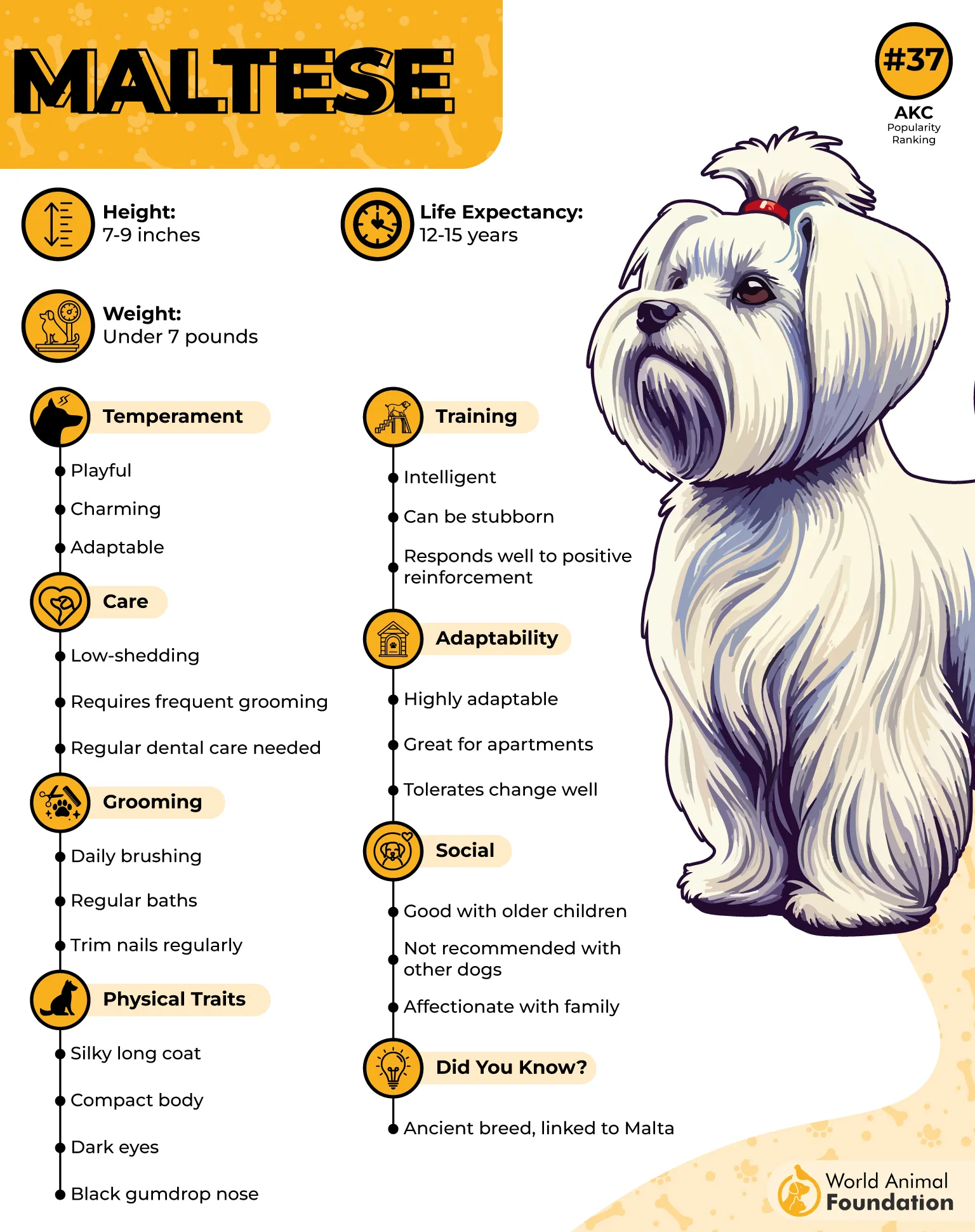
Coat Description: Long, straight, single-layered silky white coat, often grown to full length in show dogs
Shedding Season: Minimal. The coat grows continuously.
Grooming: Consistent grooming: short trims, daily brushing, regular eye strain management, and weekly ear checks.
Health Watchouts: Dental disease, luxating patella, hypoglycemia, heart conditions, and skin conditions.
Conclusion
Living with a dog does not mean living in a fur storm. You can have deep canine companionship without waging a daily war against shedding.
From the old Xolo with no shedding to the curly-coated Bichon that traps its own loose coat, there is a low-shedding option for every lifestyle, personality type, and living situation.
A clean home and a deeply loved dog are not mutually exclusive. You just have to choose the right one. And you know exactly where to start.
