




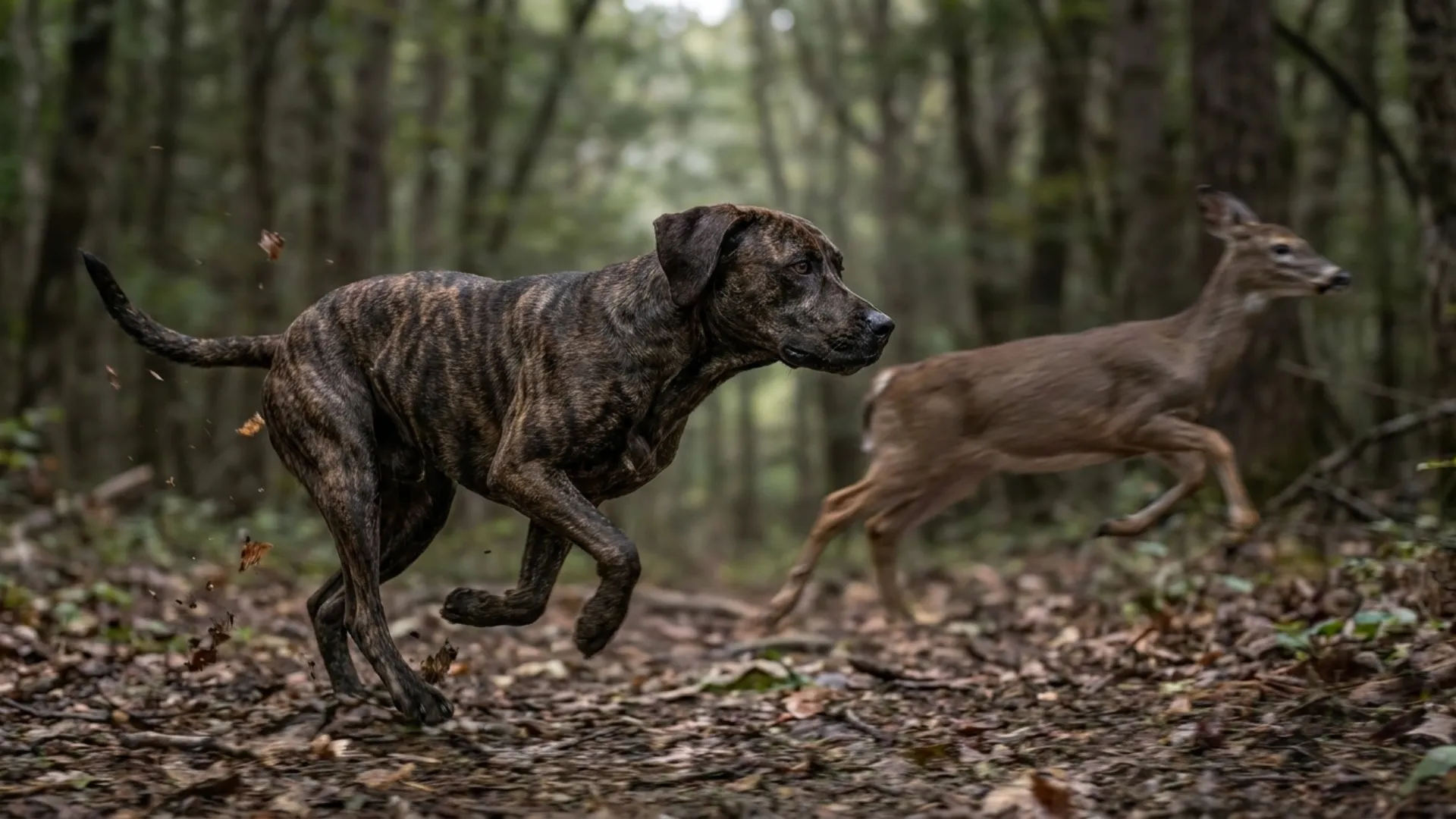
A deer can disappear into thick woods in seconds flat, leaving most dogs standing there wondering where it went. But some breeds were bred for exactly this kind of fast, high-stakes chase. Their speed, stamina, sharp noses, and strong prey drive make them impressive trackers in forest terrain.
The breeds on this list all come from very different working backgrounds. Some rely mostly on sight, while others follow scent through the roughest cover. That distinction matters more than you’d think: a dog built to follow a long scent trail isn’t necessarily the same dog that can sprint after a deer through open woodland.
If you’re curious about working dogs, these seven breeds offer a great look at just how much breeding has shaped canine hunting instincts.
Dog Breeds Known for Rapid Chase of Deer in Forests
1. Scottish Deerhound
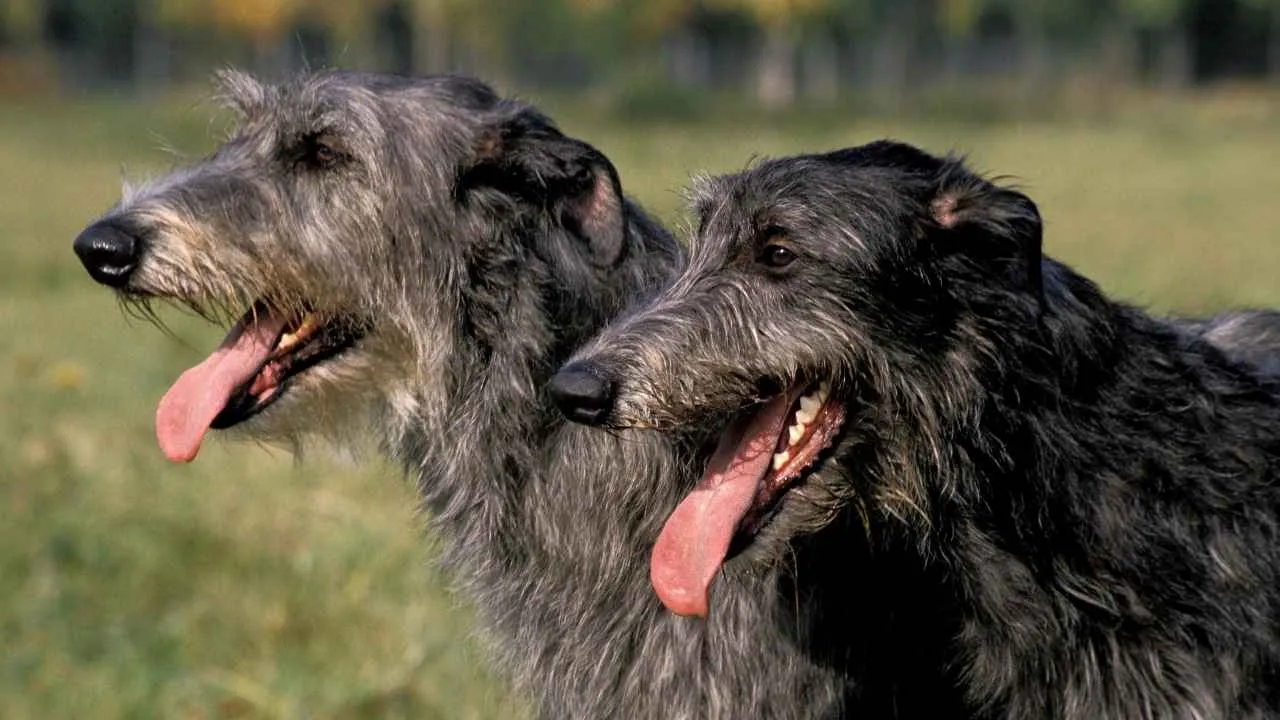
Originally bred in Scotland to hunt deer, the Scottish Deerhound was also a favorite among nobility. Its numbers declined in the 19th century as gun hunting rose in popularity, though the breed bounced back after World War I, according to Omlet.
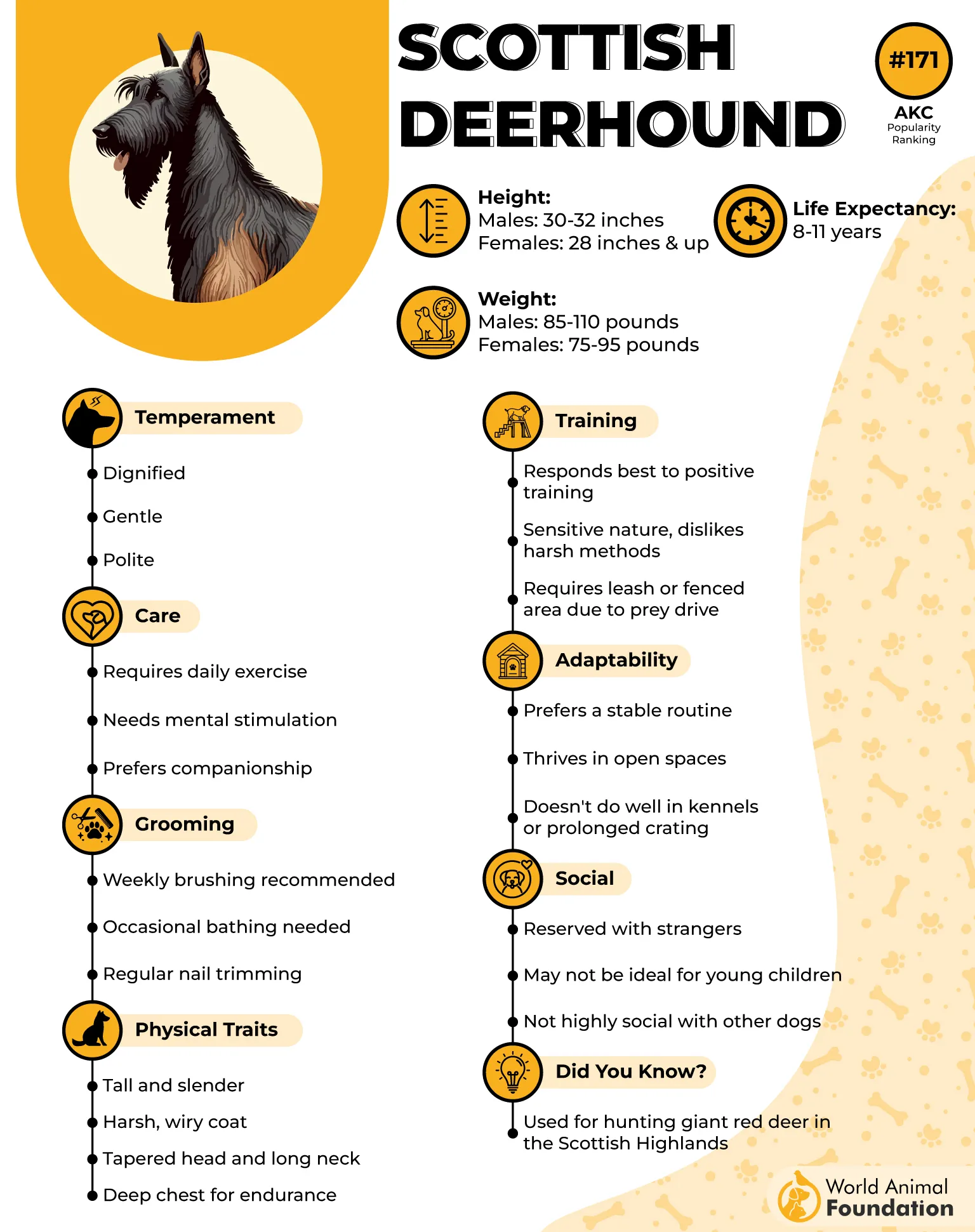
The Deerhound has distinctive rose ears that fold back against its head when it gets excited, along with a scissor bite where the upper incisors overlap the lower ones perfectly. Its harsh, wiry coat helps it handle the wet, hilly terrain of the Scottish Highlands with ease.
This sighthound excels at both coursing and stalking. Its wide-set eyes give it a broad field of vision, letting it pick up on the smallest changes in its surroundings, while its flexible, extending spine allows the hind legs to cover impressive ground in very little time.
2. Plott Hound
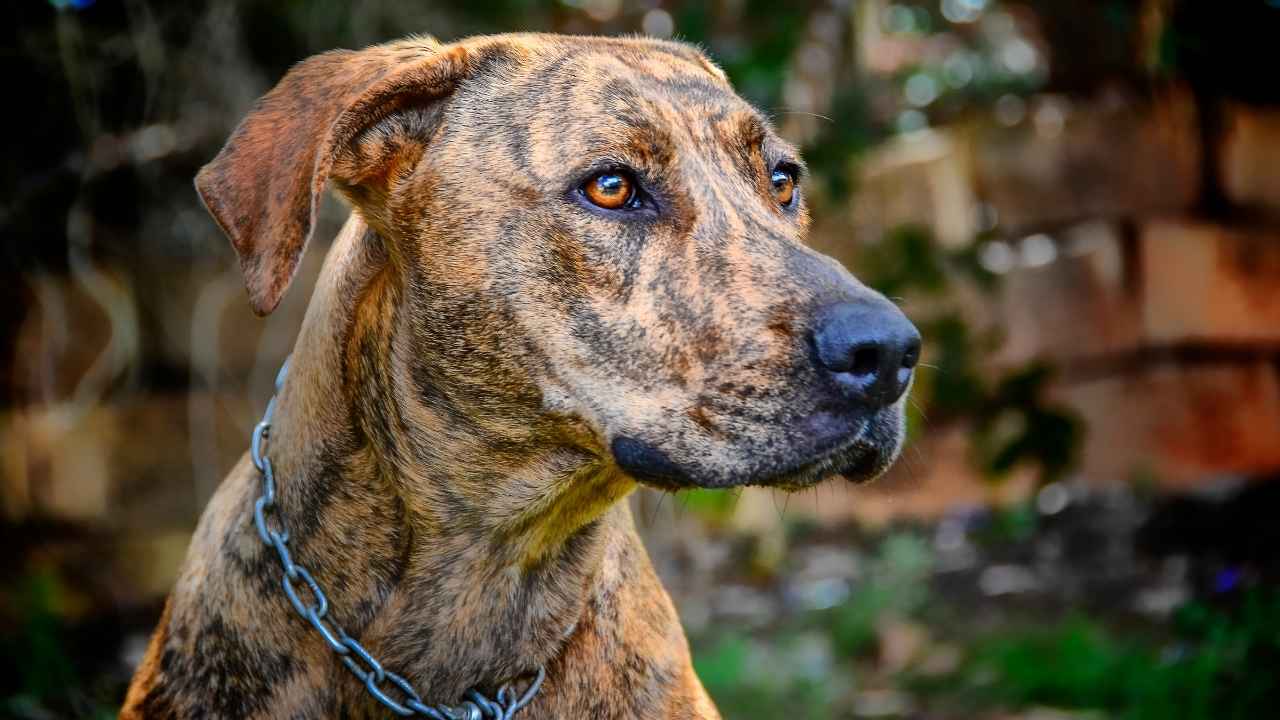
This is one of the finest hunting dogs around, originally developed in North Carolina. The breed actually traces its name back to a German gamekeeper, Johannes Plott, who developed it from his Hanoverian Scenthounds. The modern-day Plott Hound is largely thanks to refinements made by the seventh generation of the Plott family.
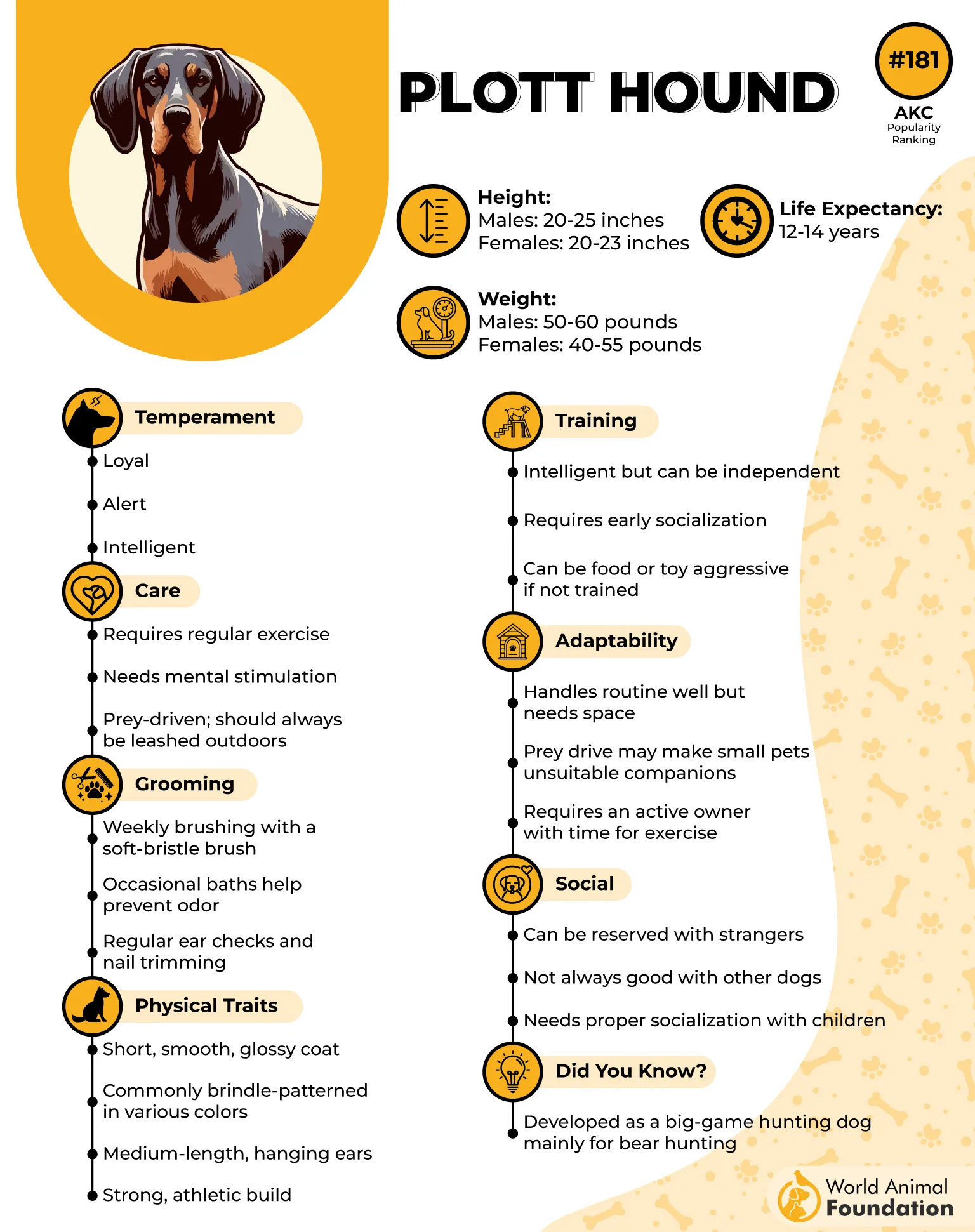
A wonderful family dog at heart, the Plott Hound is eager to please, and its high intelligence means it picks up even complex tricks quickly. That said, its strong prey drive means it’s prone to chasing small game, and it tends to be aloof with strangers until properly introduced. Its sharp nose is excellent at tracking both hot and cold scents.
The Plott Hound also has a distinctive, resonant bark that helps it communicate with its handler out in the field. Its tight-fitting skin protects it from getting scratched up in harsh brush, while its cat-like feet give it sure footing across ice, rocky terrain, and rough ground.
3. Bluetick Coonhound
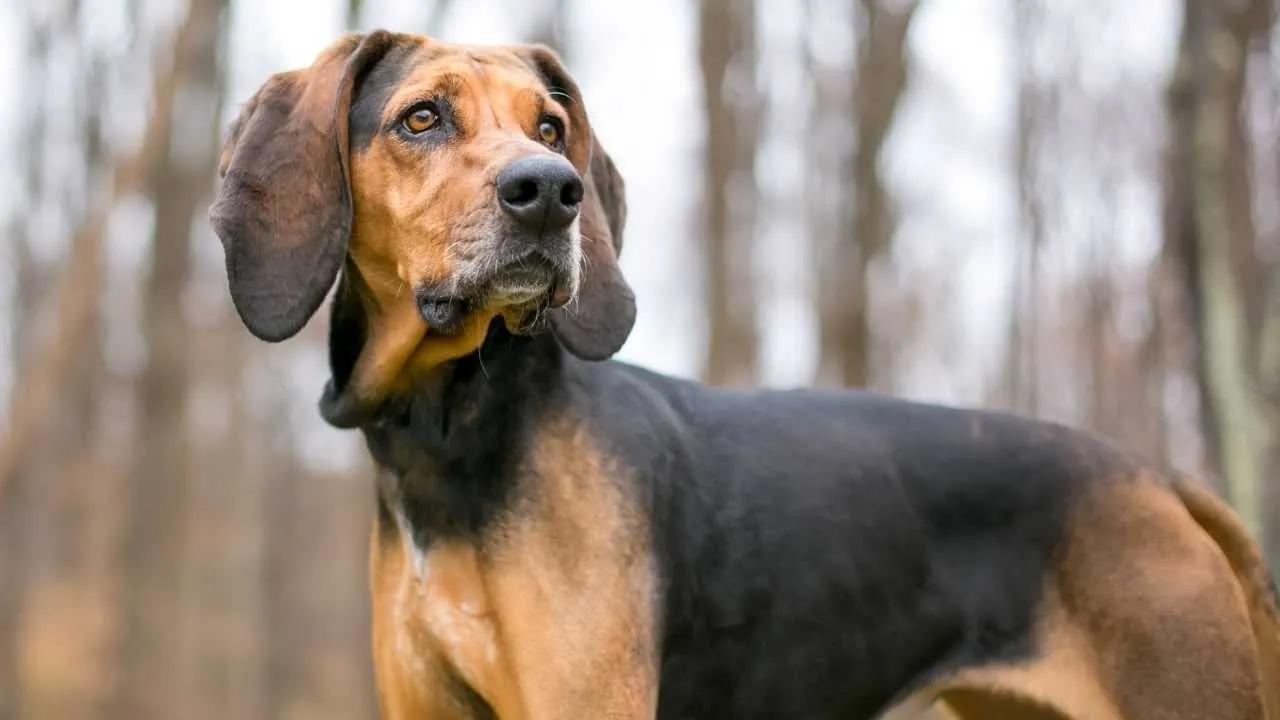
This breed was developed in the United States, though its story actually traces back to George Washington’s era, when he was gifted a French hound. That dog was later interbred with other scent hounds, eventually giving rise to the Bluetick Coonhound, as reported by Showsight Magazine.
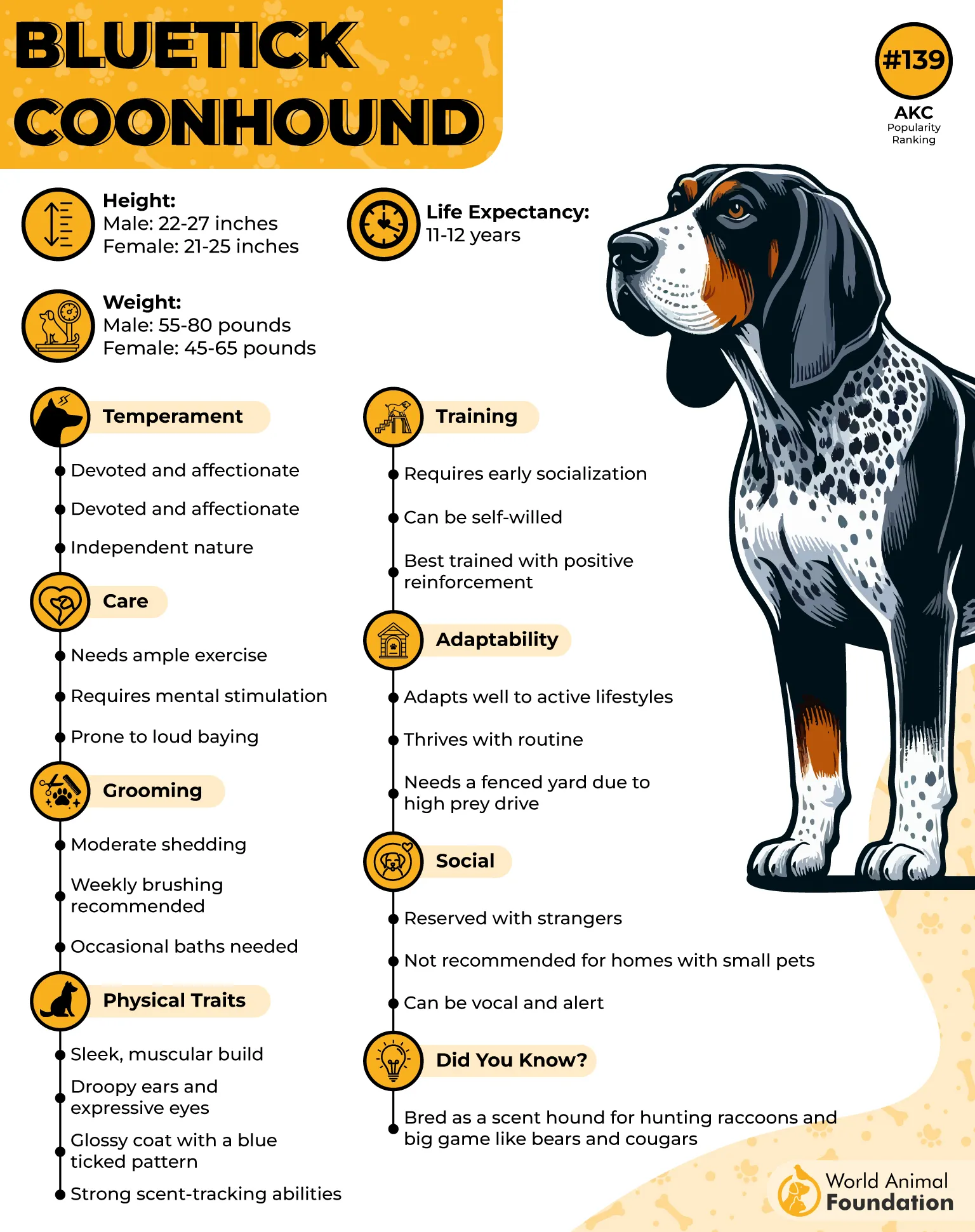
This hunting breed has a powerful nose and was historically used by frontiersmen for raccoon and big-game hunting. Its strong prey drive keeps it laser-focused while tracking, and its solid musculature, paired with well-laid-back shoulders, helps it keep pace with prey over long stretches. The loose skin around its jaws even helps trap scent from the surrounding air and funnel it toward the nostrils.
Bluetick Coonhounds are high-energy dogs that need at least 1-2 hours of daily exercise; think brisk walks, hiking, jogging, tracking, agility, dog sports, or scent work. Leash training is especially important with this breed, since they’re known to be talented escape artists.
4. Redbone Coonhound
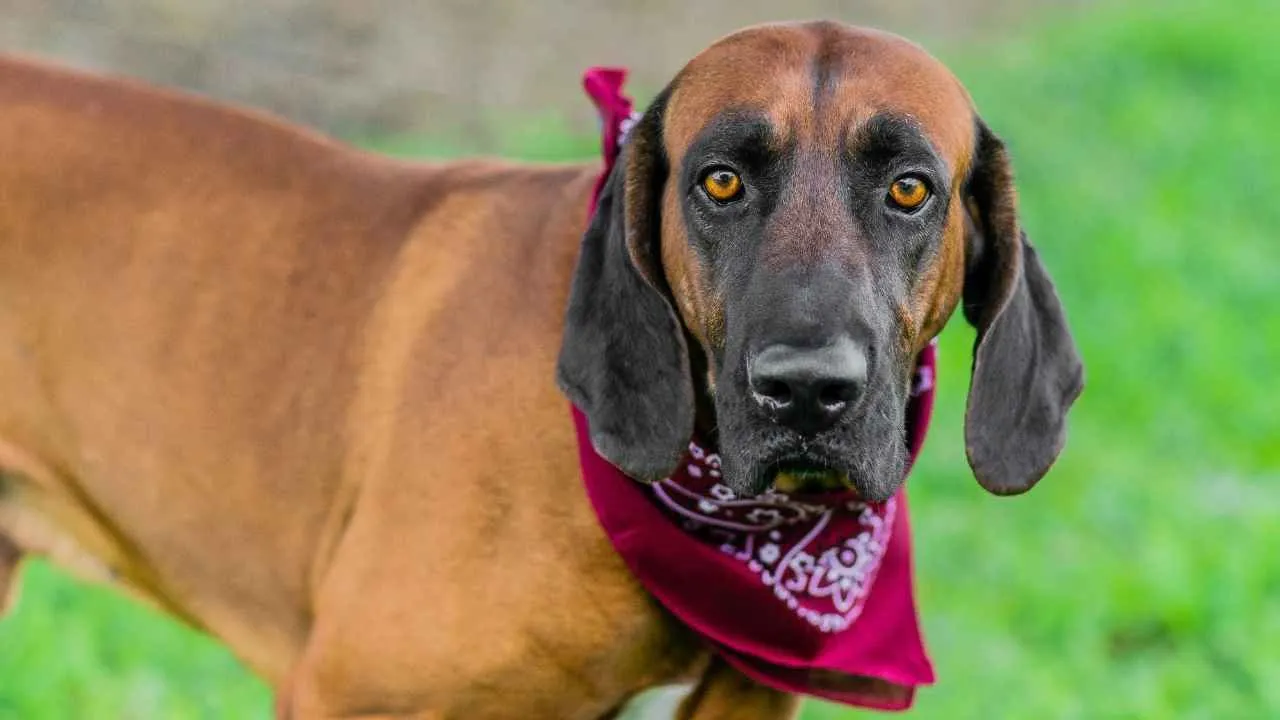
The Redbone Coonhound was developed by Scottish immigrants in the United States back in the 18th century. Originally bred for raccoon hunting, it was later crossed with the Irish Hound and Bloodhound to create the dog we know today.
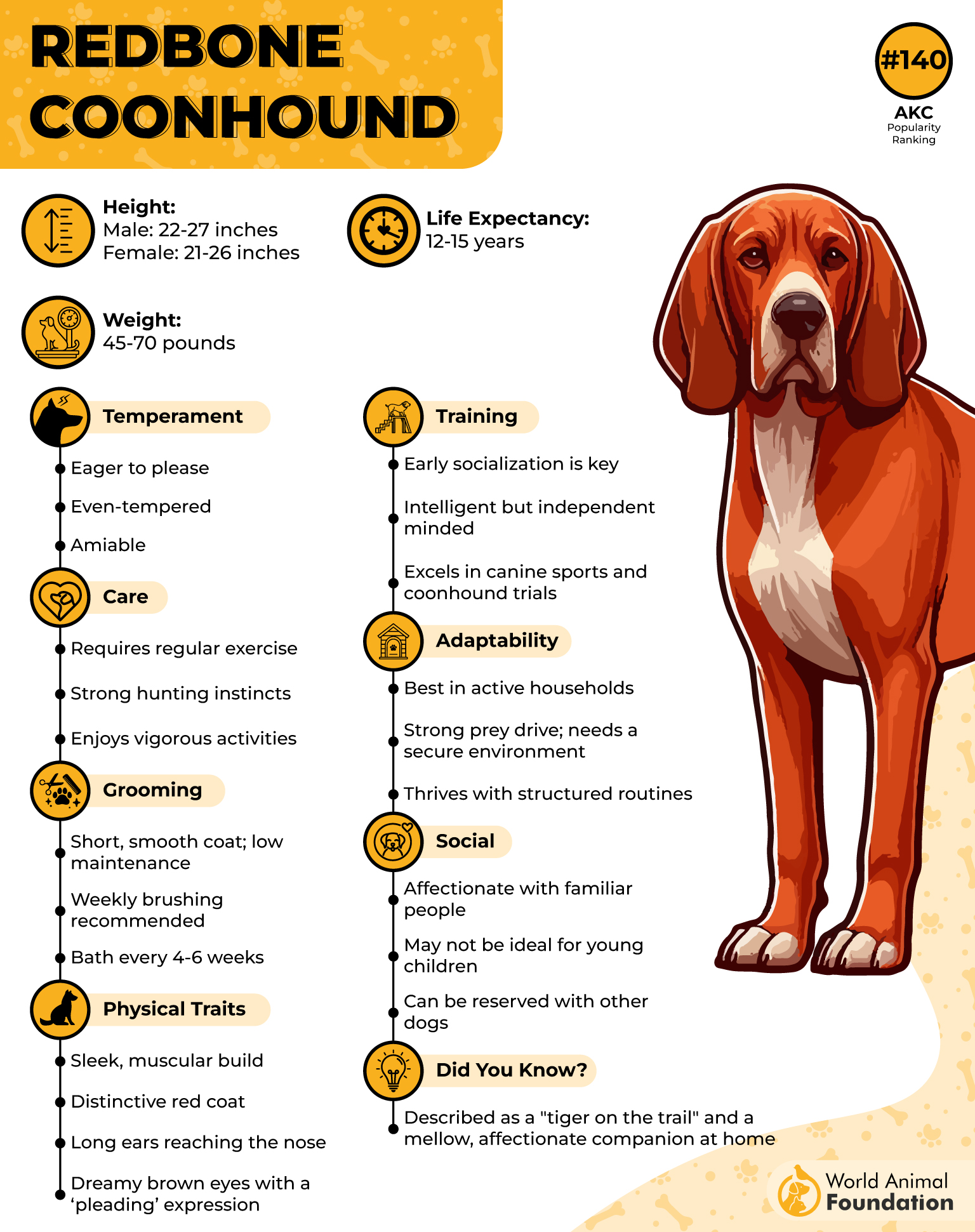
Known for its methodical, steady pace, the Redbone Coonhound uses its low-set, floppy ears to help gather scent from the ground, and its deep, loud bark lets hunters know exactly where it is at all times. With a cold nose capable of picking up even sparse blood trails, this breed also excels at deer hunting thanks to its endurance, stamina, and speed.
Thanks to the perfect angulation between its front and hindquarters, the Redbone Coonhound can cover a lot of ground while conserving energy. Its short, dense red coat is naturally water-resistant, thanks to its natural oils, which makes it a strong, capable swimmer as well.
5. Weimaraner
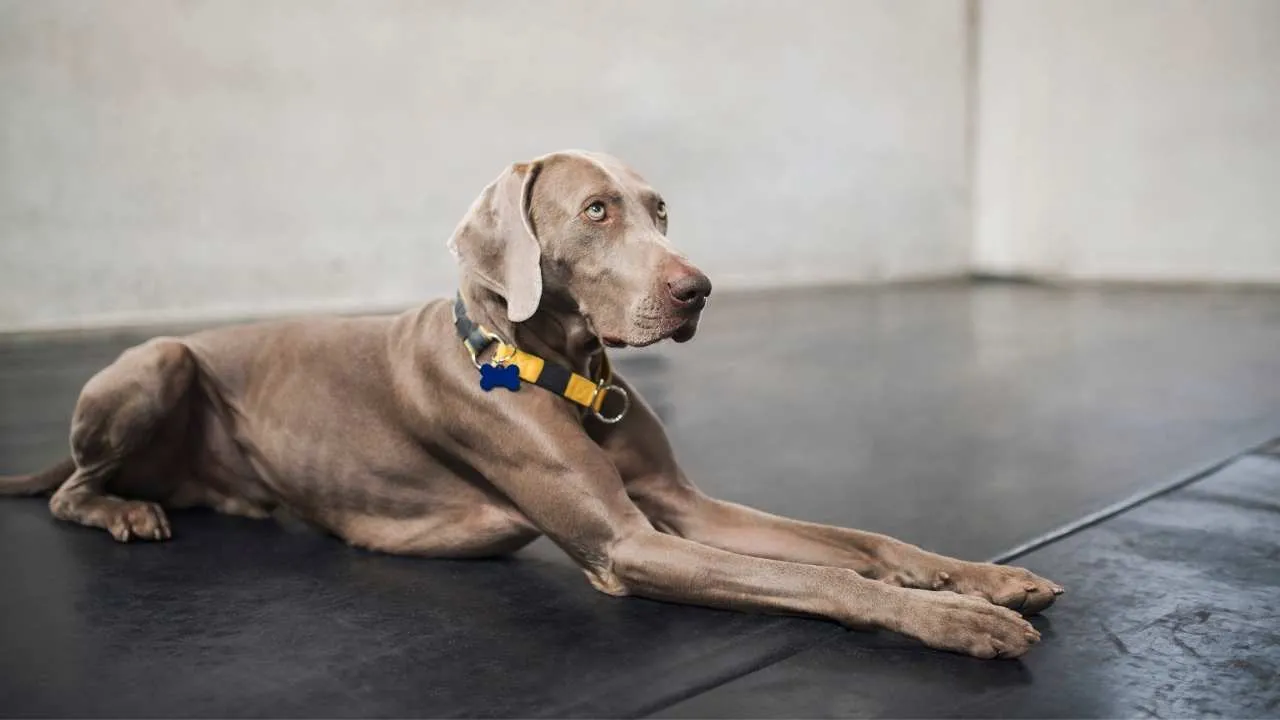
Developed in 19th-century Germany by the nobility, the Weimaraner is known for its durability, speed, endurance, and sharp tracking ability. It later made its way to the U.S. as a hunting dog, and thanks to its short coat, it doesn’t need much grooming, according to PetMD.
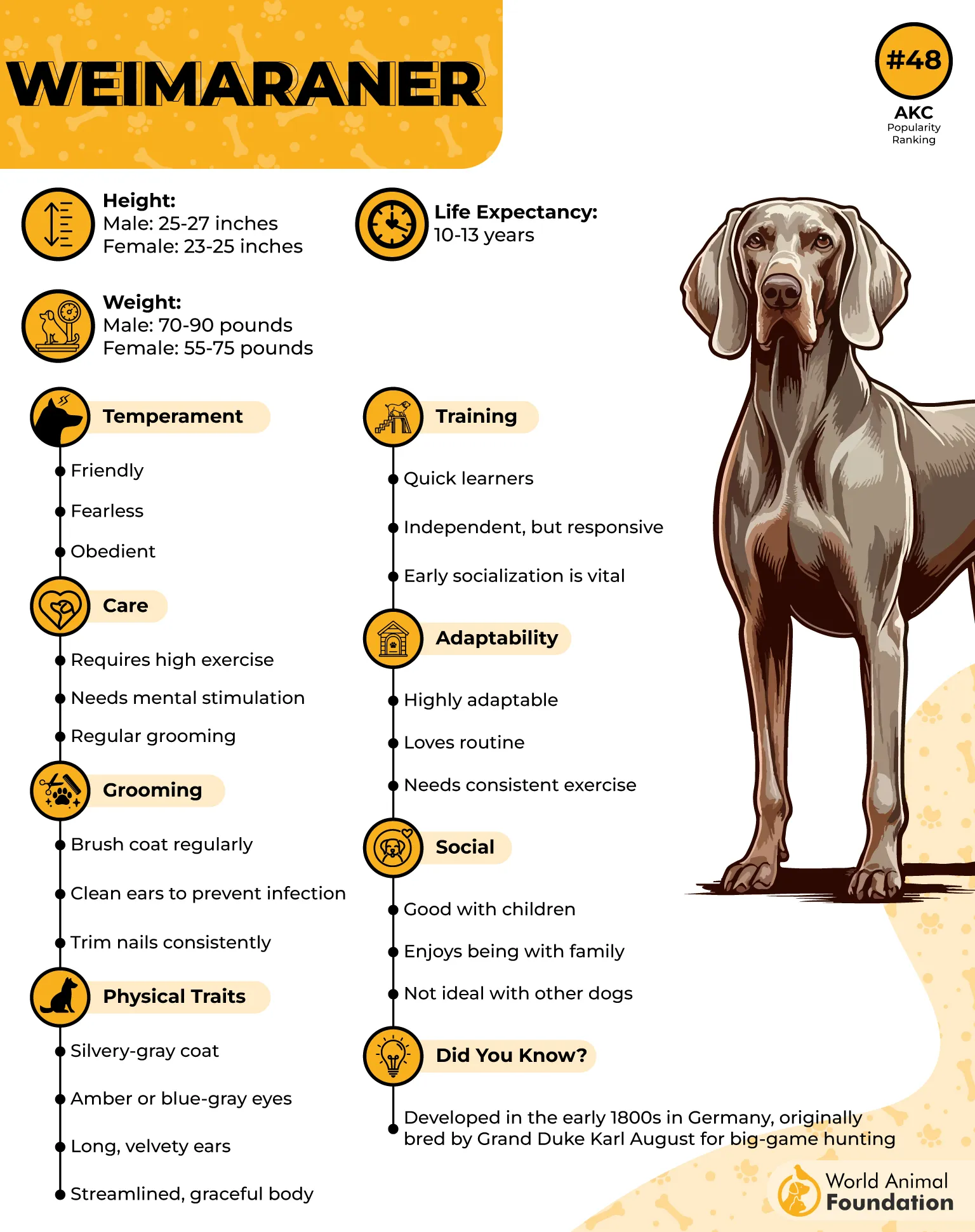
Unlike typical pointing dogs, the Weimaraner was actually bred to track and hunt large game like wild boar, bear, and deer. Its explosive speed and courageous temperament give it the confidence to hold its own against aggressive animals, while its arched toes and webbed feet provide solid footing on rocky ridges and through thick forest undergrowth.
Because it’s such a velcro dog, the Weimaraner can develop separation anxiety if left alone too long, and it also tends to be an avid chewer. That makes proper training and early socialization absolutely non-negotiable.
6. Treeing Walker Coonhound
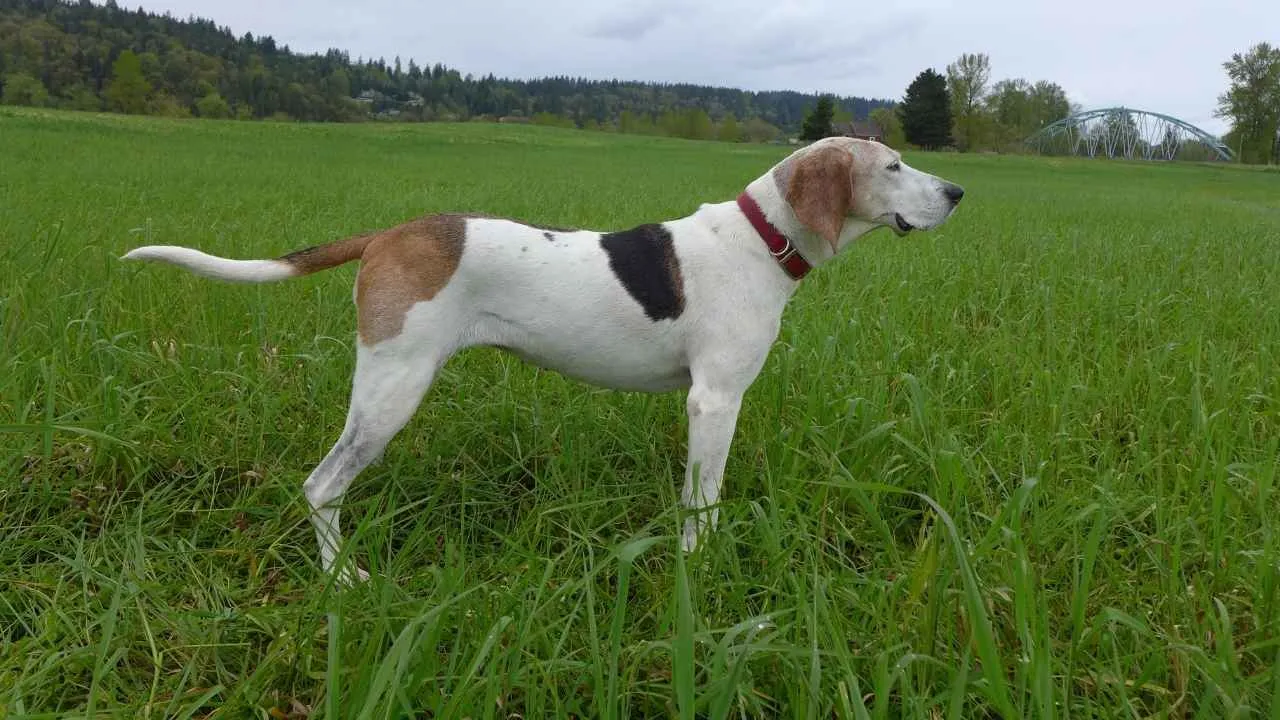
The Treeing Walker Coonhound descends from English Foxhounds brought over by British settlers in America and has long been known as a top raccoon-hunting breed. It gets the “treeing” part of its name from its knack for cornering prey up a tree and barking non-stop until the handler catches up.
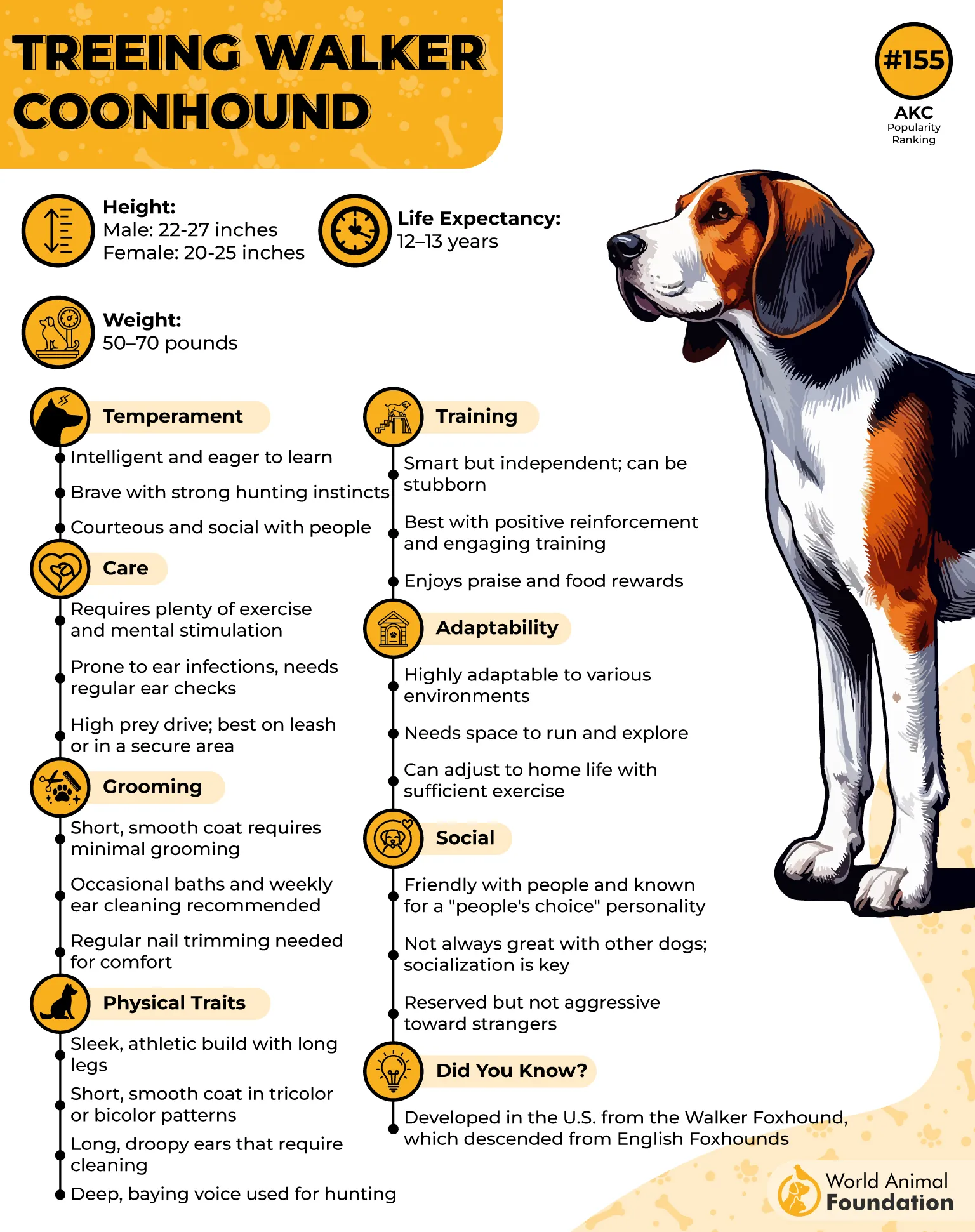
This breed can run for miles while keeping up high speed during a long chase. When hunting deer, it corners its target on the ground and holds it in place until help arrives. Its thick paw pads absorb shock well, and its sharp reflexes keep it locked onto moving targets. Physically, it has long legs, a medium-sized muzzle, and oval eyes.
Being such a high-energy breed, the Treeing Walker Coonhound needs 1-2 hours of exercise a day, whether that’s long walks, fetch, running, or hiking. Its dirt-repellent coat is fairly low-maintenance too, needing just occasional baths and a weekly brushing.
7. Black And Tan Coonhound
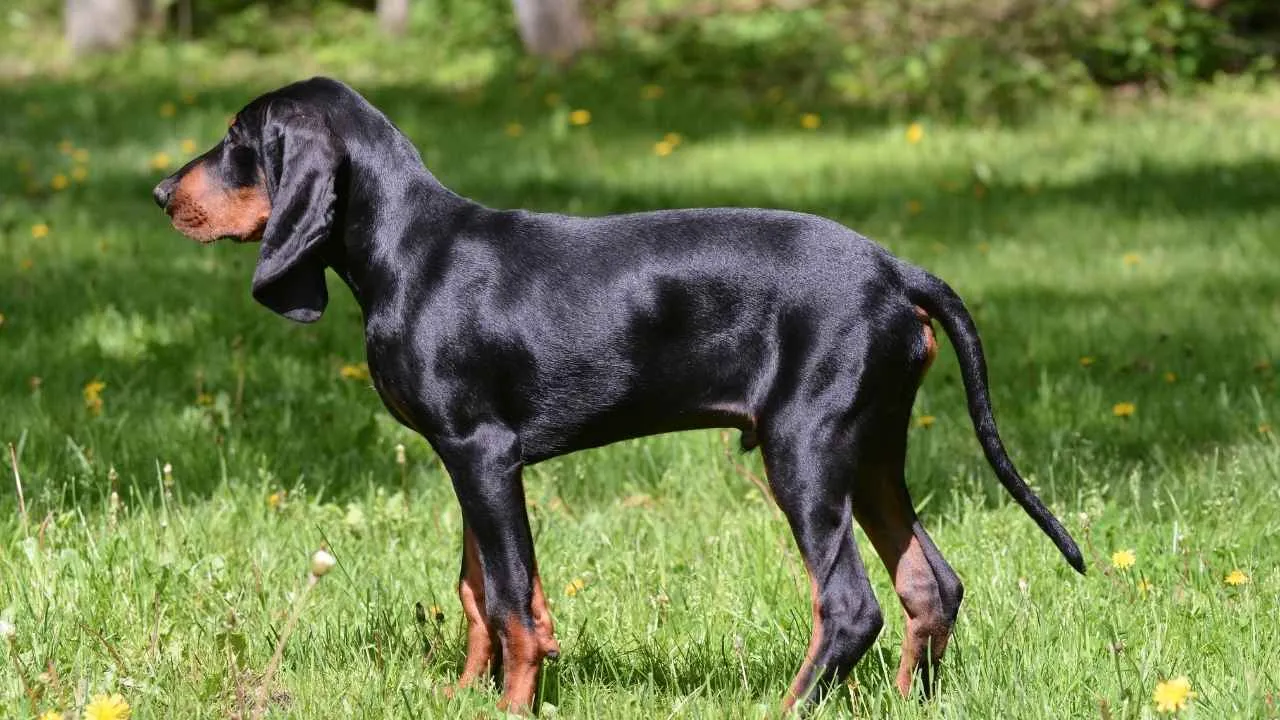
This medium-sized hunting dog was developed in the United States by crossing the Black and Tan Virginia Foxhound with the Bloodhound. Bred primarily for raccoon hunting, this breed has a cold nose and thrives when given a job to do.
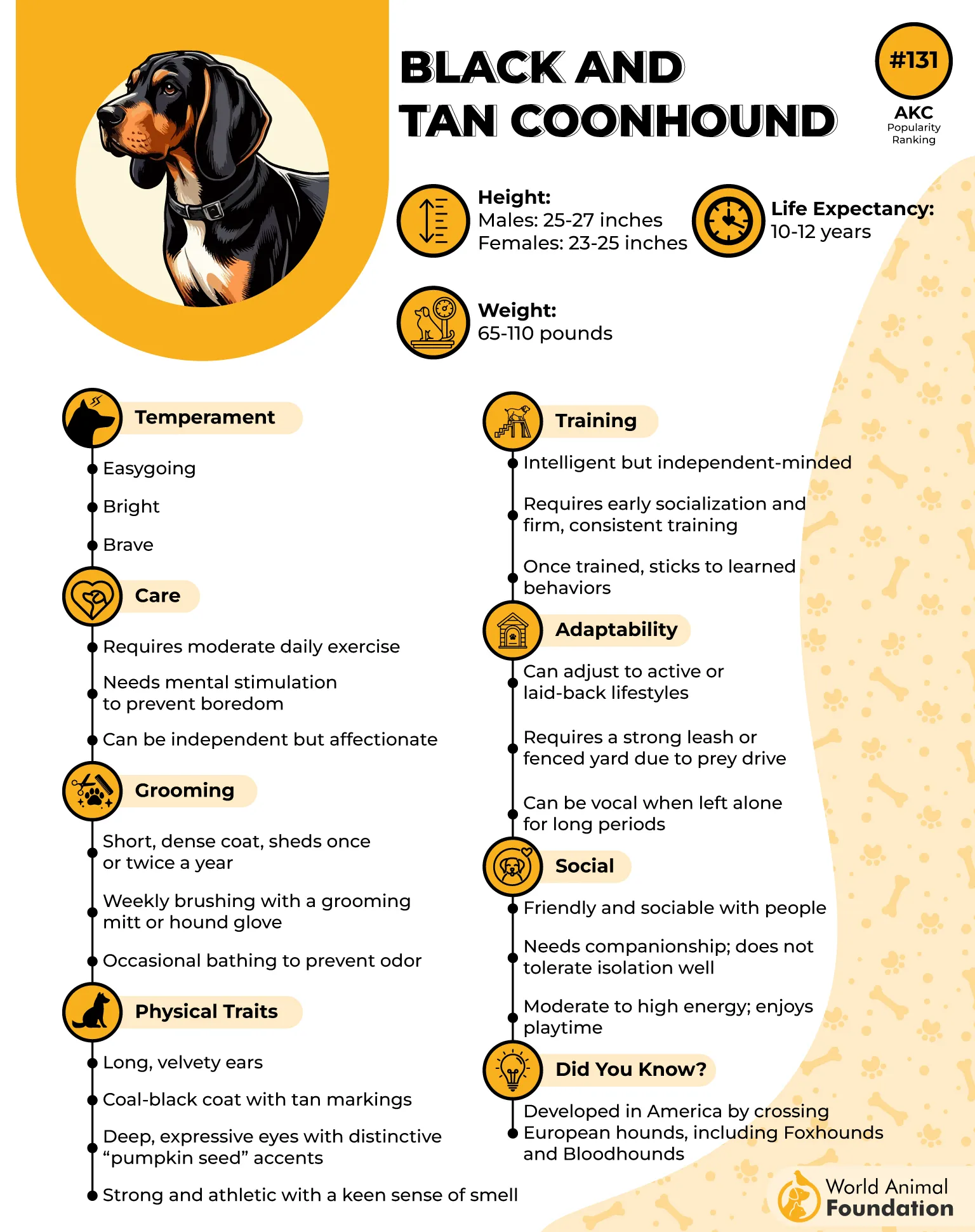
Independent by nature, this dog often works on its own instincts rather than waiting on the handler’s cues. Its keen observation skills and high intelligence help it pick up on lost trails and track deer movement, while its long, hanging lips (called flews) help trap and hold onto scent particles.
Its persistence at cold-trailing lets it work for hours even in cold conditions. Temperament-wise, this breed tends to be friendly and a bit shy, rarely showing aggression, though its strong prey drive does keep it highly alert at all times.
Conclusion
These seven breeds make it clear that chasing deer is anything but a single, simple skill. The Scottish Deerhound represents pure speed and sight-based pursuit, while breeds like the Plott Hound and various Coonhounds bring powerful scenting ability and sheer persistence to the table. The Weimaraner, meanwhile, adds the versatility of a true multipurpose hunting dog. Each breed carries its own history, body type, and working style, shaped by generations of purpose-driven breeding.
That said, just because a dog is capable of chasing wildlife doesn’t mean it should be given free rein to do so. Deer can get injured, dogs can end up lost, and both can end up in real danger. A responsible owner respects wildlife and local laws while still giving a working breed safe, appropriate outlets for its natural instincts. That’s really where the magic happens — letting a dog be a dog, without turning the whole forest into one big game of hide-and-seek.
