




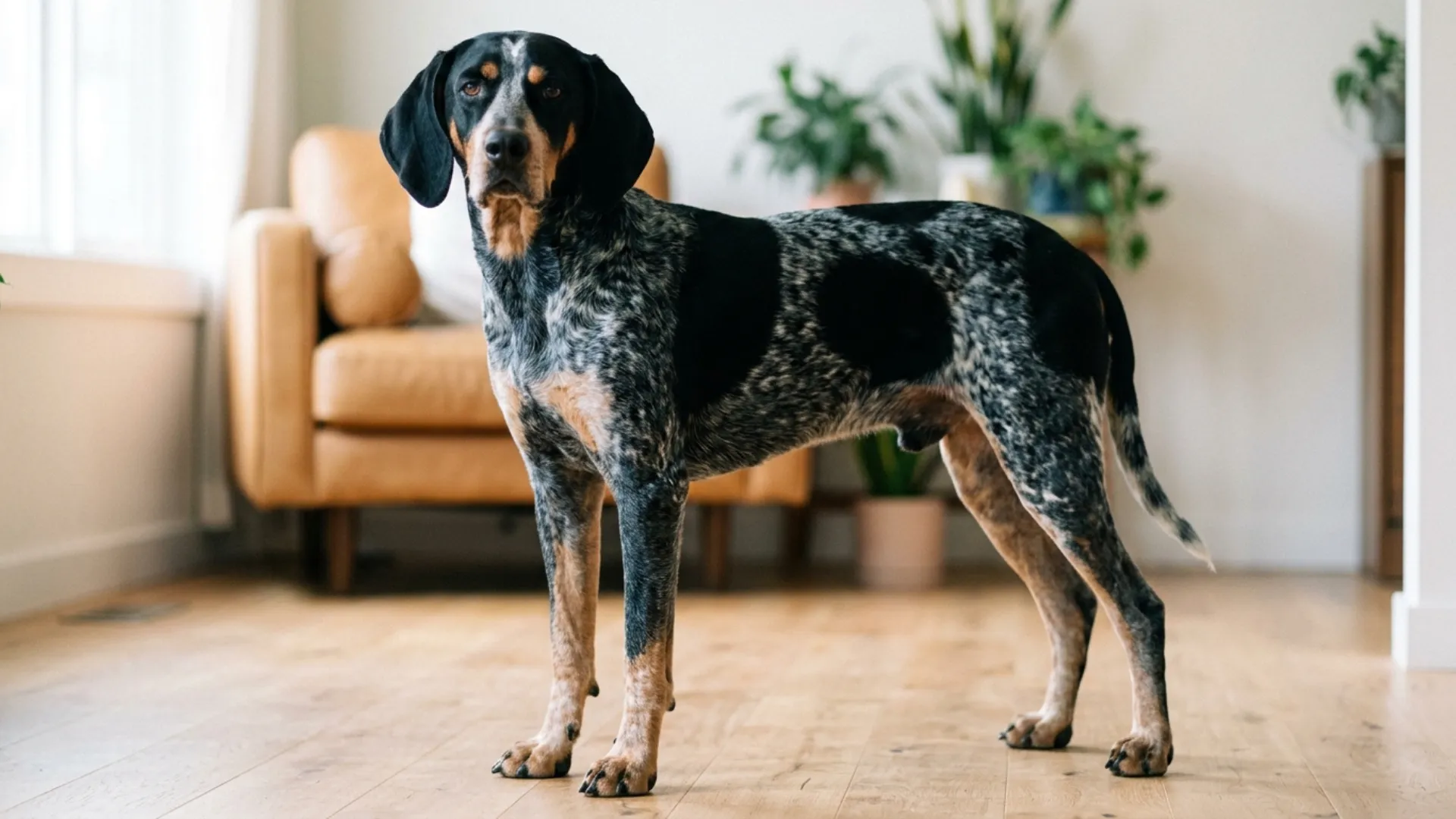
Some dogs don’t just enter a room; they instantly capture attention. Not because they are loud or demanding, but because their coats are genuinely unforgettable. These are the dogs with striking patterns, rare markings, and naturally artistic coloration that can stop a casual scroll and make you look twice, as if nature itself picked up a paintbrush.
As Roger Caras once said, “Dogs are not our whole life, but they make our lives whole.” For many people, that bond begins with fascination, often sparked by a dog’s appearance, personality, or unique presence that sets it apart from the rest.
According to the American Kennel Club, there are over 200 recognized dog breeds in the United States, but only a select few are known for truly extraordinary coat patterns and standout aesthetics.
Whether you are a dog lover, a curious reader, or someone who has ever paused to admire a uniquely patterned dog at the park, this guide explores the most visually striking breeds that continue to turn heads wherever they go.
Dog Breeds with Striking Coat Markings to Admire
1. Dalmatian
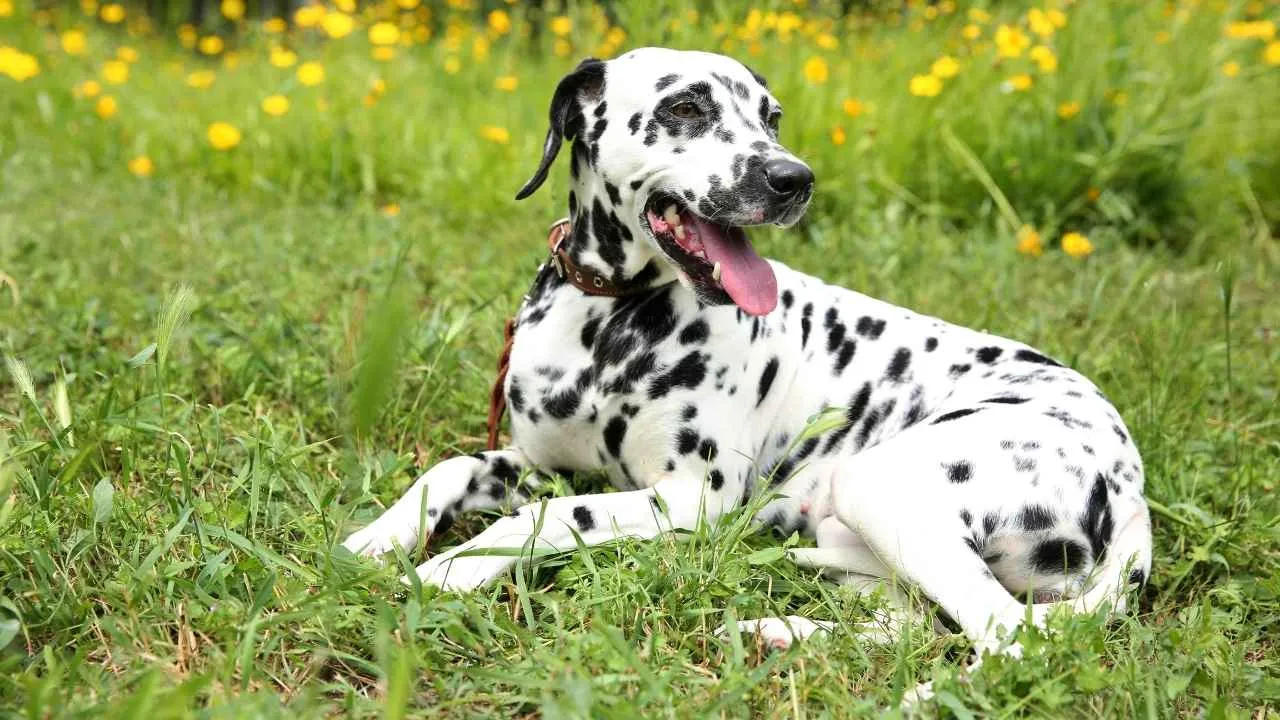
The Dalmatian is a gentle and energetic breed that traces its origins back to Croatia, where it was historically developed as a versatile working and hunting dog. According to the Royal Kennel Club, spotted Great Danes and Pointers are believed to be among its ancestral contributors, shaping the modern Dalmatian we recognize today.
Dalmatians typically stand around 19 to 23 inches tall. Puppies are born with a pure white coat, and their distinctive spots begin to appear within the first 10 days of life, gradually developing as they mature. The coat reaches full development by around 18 months.

While classic black-and-white spotting is the most well-known, Dalmatians can also appear in liver, blue-grey, brindle, lemon, orange, mosaic, and tri-color variations. Nose color generally corresponds with coat pigmentation, with liver-spotted dogs having brown noses and black-spotted dogs having black noses.
In terms of grooming, Dalmatians are relatively low-maintenance. Weekly brushing (1–2 times) helps control shedding and remove loose hair, while bathing is only necessary when needed, typically about once a month. Regular care should also include monitoring skin health, especially on pressure points like elbows, and using gentle or hypoallergenic shampoos when required.
2. Bluetick Coonhound
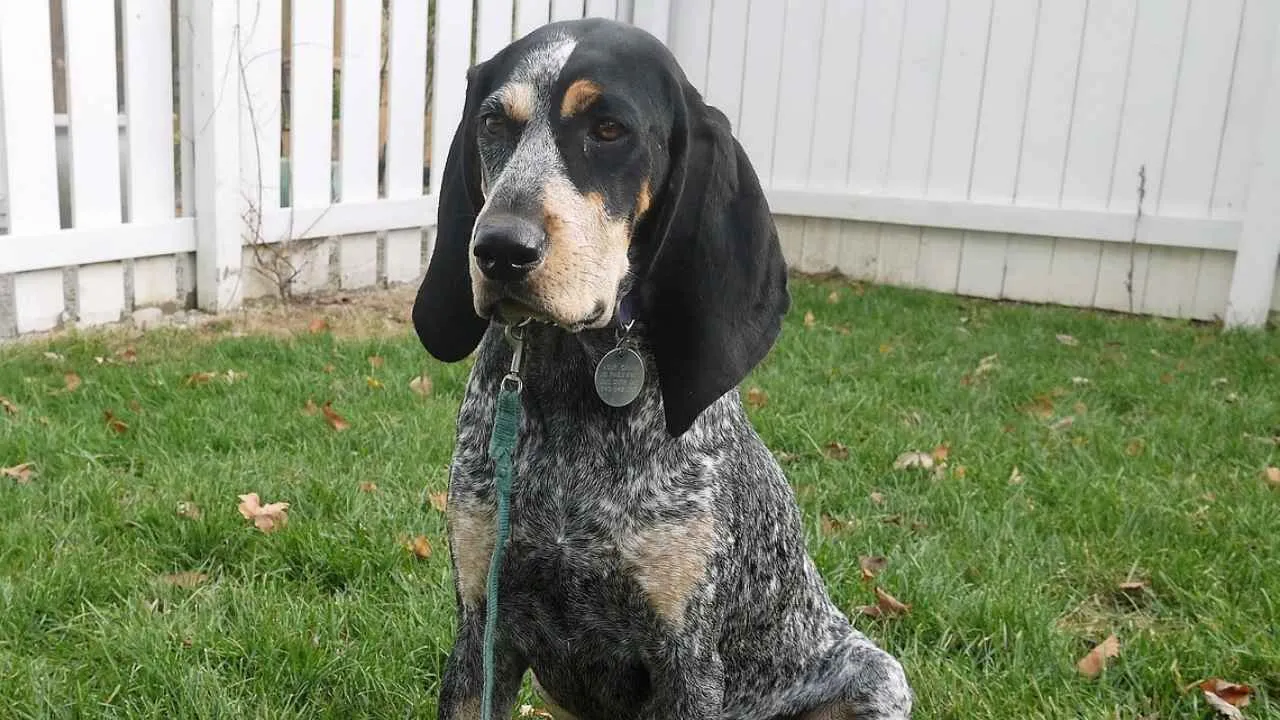
This breed originated in the United States and was initially classified alongside Coonhounds and English Foxhounds before being officially recognized as a separate breed in 1946. It is widely used in raccoon hunting as well as search-and-rescue (SAR) work, thanks to its exceptional “cold nose” ability, which allows it to detect scent trails that are several days old.
The coat is typically glossy and somewhat coarse, with its signature blue appearance created by black ticking over a white base, giving it a distinctive bluish-gray look. Markings vary widely, ranging from spotted patterns on the ears, sides, and back to solid areas of color, with some individuals showing minimal markings altogether.

The head and ears are often predominantly darker in tone. Its dense coat also provides strong weather resistance, making it well-suited for outdoor work.
In terms of grooming, weekly brushing is recommended to remove loose fur and maintain healthy natural oils. Bathing should be done once or twice a month using a high-quality dog shampoo. Regular ear cleaning is essential to prevent infections and remove debris, especially due to the breed’s long ears.
Additionally, consistent dental care is important, as the breed can be prone to drooling, making regular teeth brushing necessary for overall hygiene.
3. Treeing Tennessee Brindle
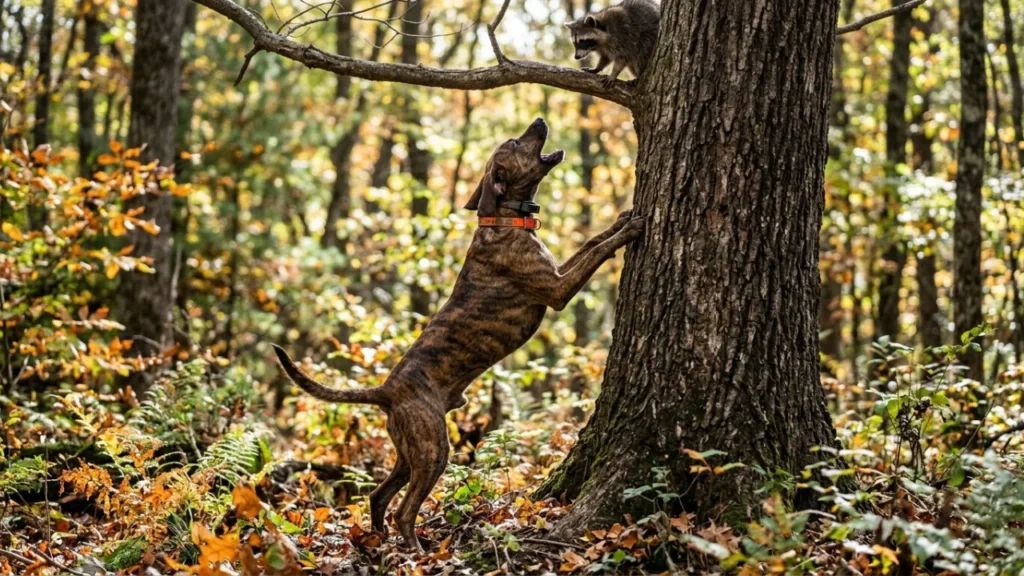
This bold American breed is known for its strong legs, white chest and feet, upright tail, and lean yet athletic build. Developed as a skilled working dog for hunters, it uses its powerful sense of smell to track prey with precision. One of its defining hunting behaviors is the “treeing” strategy, where it drives prey up a tree and then alerts its handler by barking loudly, as noted by Purina.
The breed typically stands 18 to 24 inches tall and weighs around 30 to 40 pounds. It has a short, soft coat that is commonly black with brindle trim or solid brindle.
While highly active outdoors, it is known for being calm and relaxed indoors, often forming strong bonds with its family and preferring to stay close to its owners. It is also an effective watchdog, producing a distinctive baying sound to signal potential threats.
Shedding ranges from low to moderate throughout the year. Weekly brushing is recommended to control loose hair and maintain coat health. Basic grooming tools, such as a soft-bristle brush or grooming gloves, are usually sufficient. Due to its hunting instincts and tendency to chase small animals, regular nail trimming is also important to maintain safety and prevent accidental injury during activity.
4. Catahoula Leopard Dog
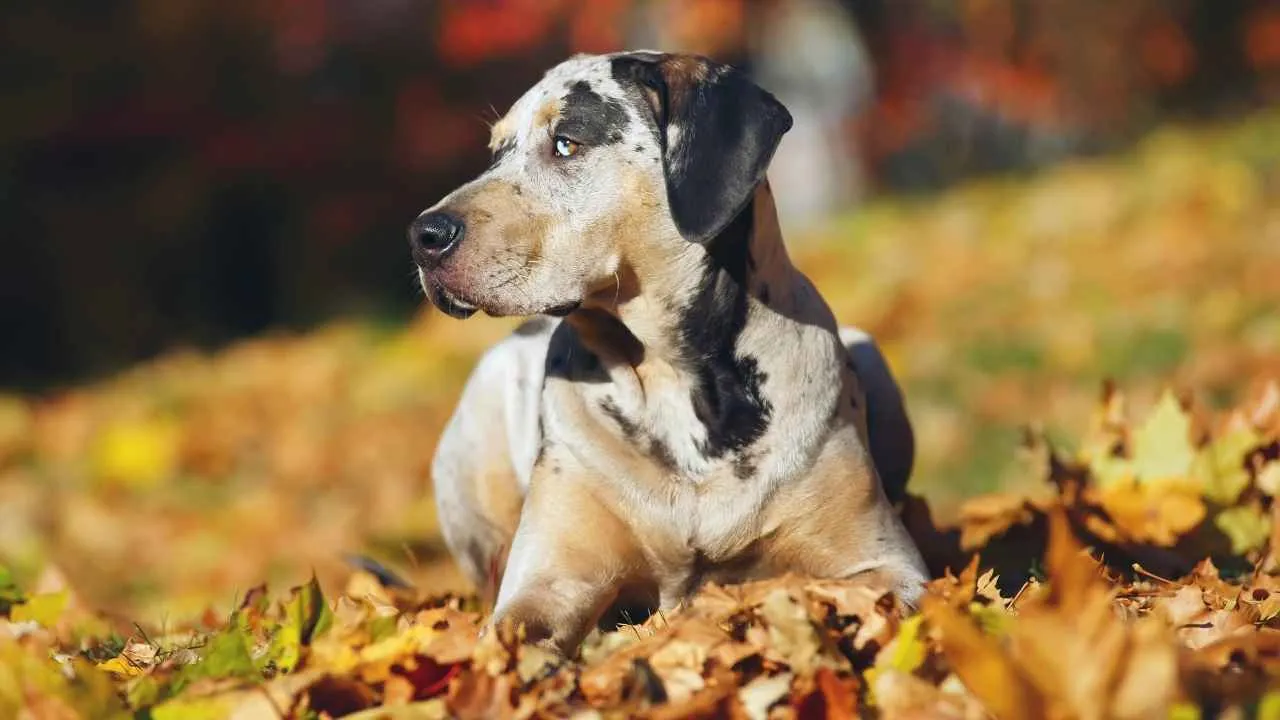
The Catahoula Leopard Dog, the official state dog of Louisiana, traces its origins back to the mid-1700s, where it was developed in North America as a versatile herding and working breed. It is known for its muscular, rectangular build, strong neck, curved tail, droopy ears, and tapered muzzle, all of which give it a powerful and alert presence that can appear imposing to strangers.
Its short-to-medium coat comes in a wide variety of colors, including blue merle, red merle, brindle, and solid shades. The term “leopard” refers to its distinctive spotted patterning, which can appear across the chest, legs, and face. Eye color is often strikingly varied, ranging from blue, green, amber, to brown, and in some cases, a combination of these.
Grooming is relatively simple for this breed. Weekly brushing with a grooming mitt or rubber curry brush helps distribute natural oils and remove loose hair. Nails should be trimmed when they begin to click on hard floors. Basic hygiene care, such as wiping tear stains with a damp cloth and scheduling regular veterinary ear and dental checkups, is also recommended to maintain overall health and cleanliness.
5. Bernese Mountain Dog
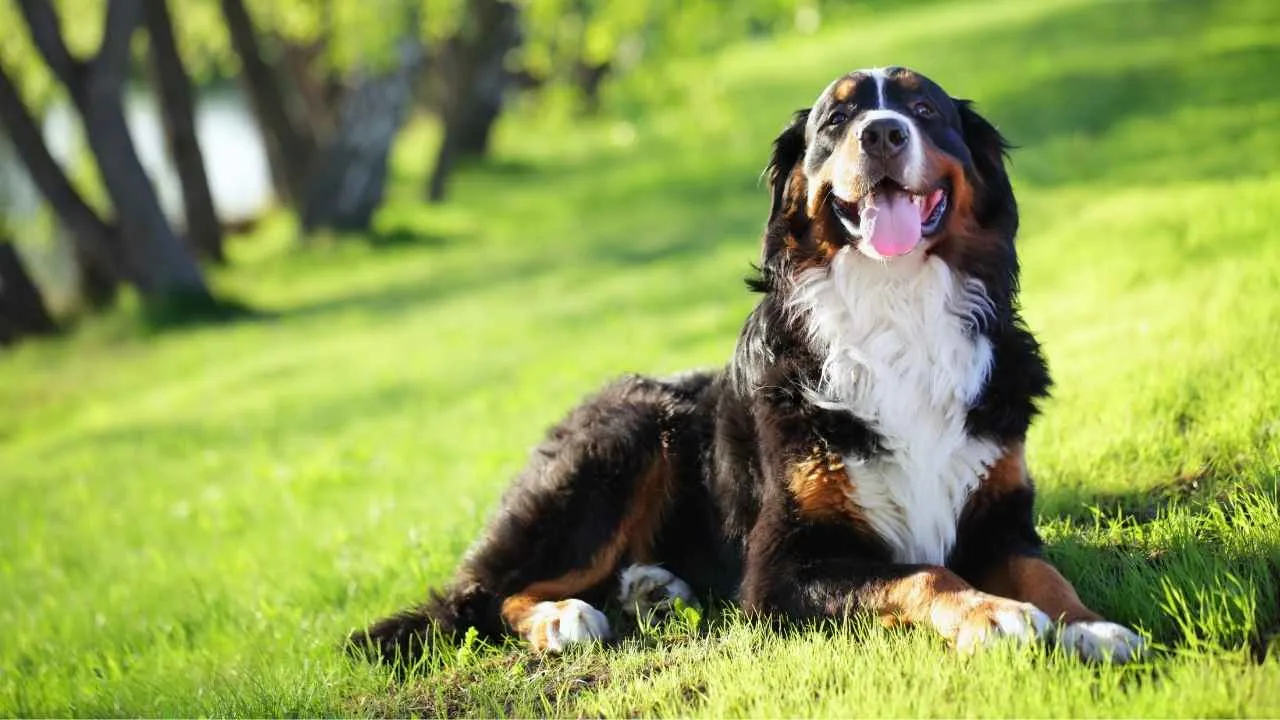
This ancient dog breed traces its origins back nearly 2,000 years to the time when Switzerland was invaded by the Romans. According to PetMD, Roman Mastiffs were crossed with local flock-guarding dogs that were well adapted to the harsh alpine climate, giving rise to this strong and resilient mountain breed.
It is a large, powerful dog with a distinctive and recognizable coat pattern. Common colorations include a white chest with black and rust markings, as well as a tri-color coat featuring a black base with rust and tan accents. It is the only white-marked breed among the Sennenhund dogs, and is especially known for the distinctive white “Swiss cross” marking visible on the chest when viewed from the front.
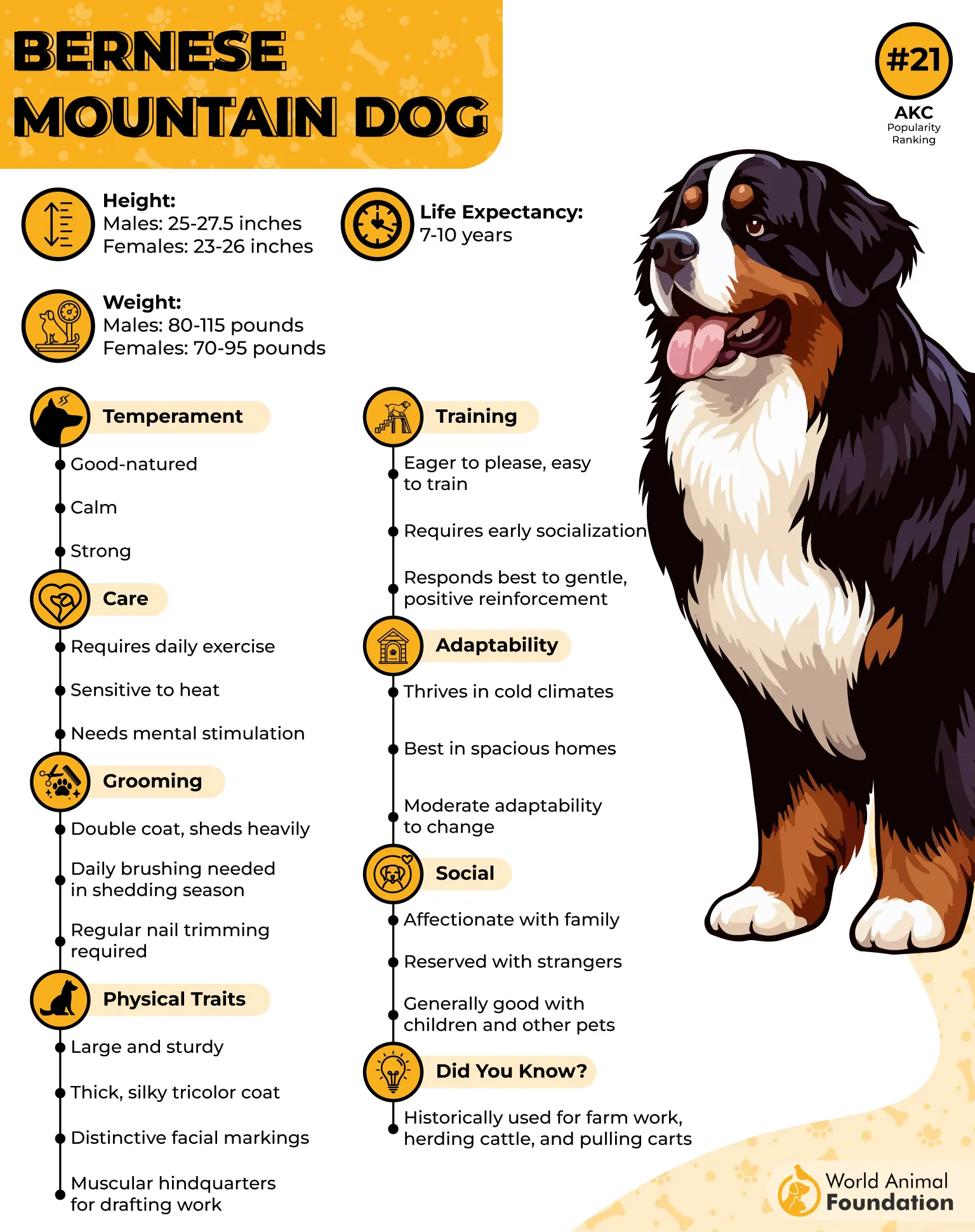
The breed has a dense double coat designed to protect it from cold mountain winds and extreme weather conditions. Proper grooming requires an undercoat rake and a long-bristle slicker brush to remove loose or wavy hair. Special attention should be given to areas prone to matting, such as under the legs, around the ears, and near the tail.
During heavy shedding seasons in summer and fall, daily brushing for around 10 minutes is recommended. Shaving should always be avoided, as the coat provides essential insulation and protection from sunburn. A metal comb can also be used to ensure the coat is fully free of tangles and mats.
6. Australian Cattle Dog
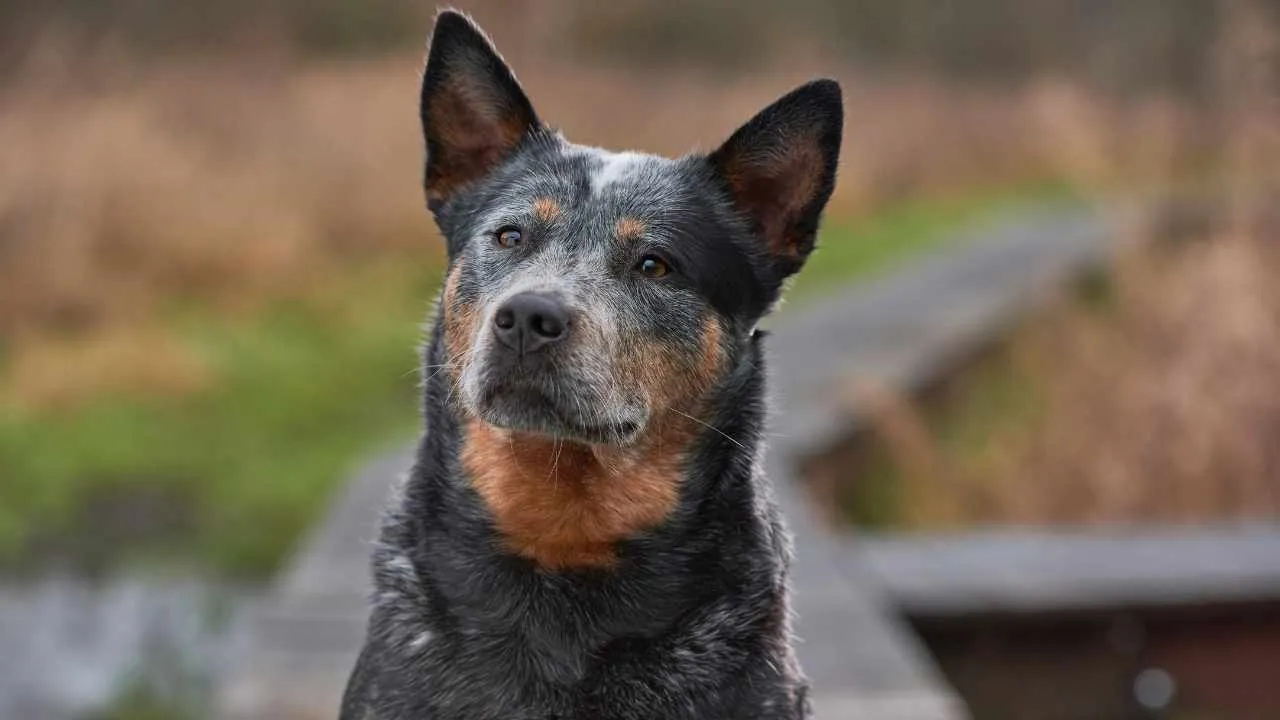
This cattle herding breed was developed in Australia to cover long distances across rough and demanding terrain. It is a medium-sized, highly energetic dog known for its endurance, intelligence, and strong work drive. Commonly referred to as the “Blue Heeler” or “Red Heeler,” this breed is built with a strong body, short muzzle, and an instinctive need to stay active and engaged in purposeful work.
The coat comes in two main color types: a blue-speckled appearance created by white hair mixed with black ticking, or a red-speckled variation. Puppies are typically born with a white coat that gradually develops its signature coloration as they mature.
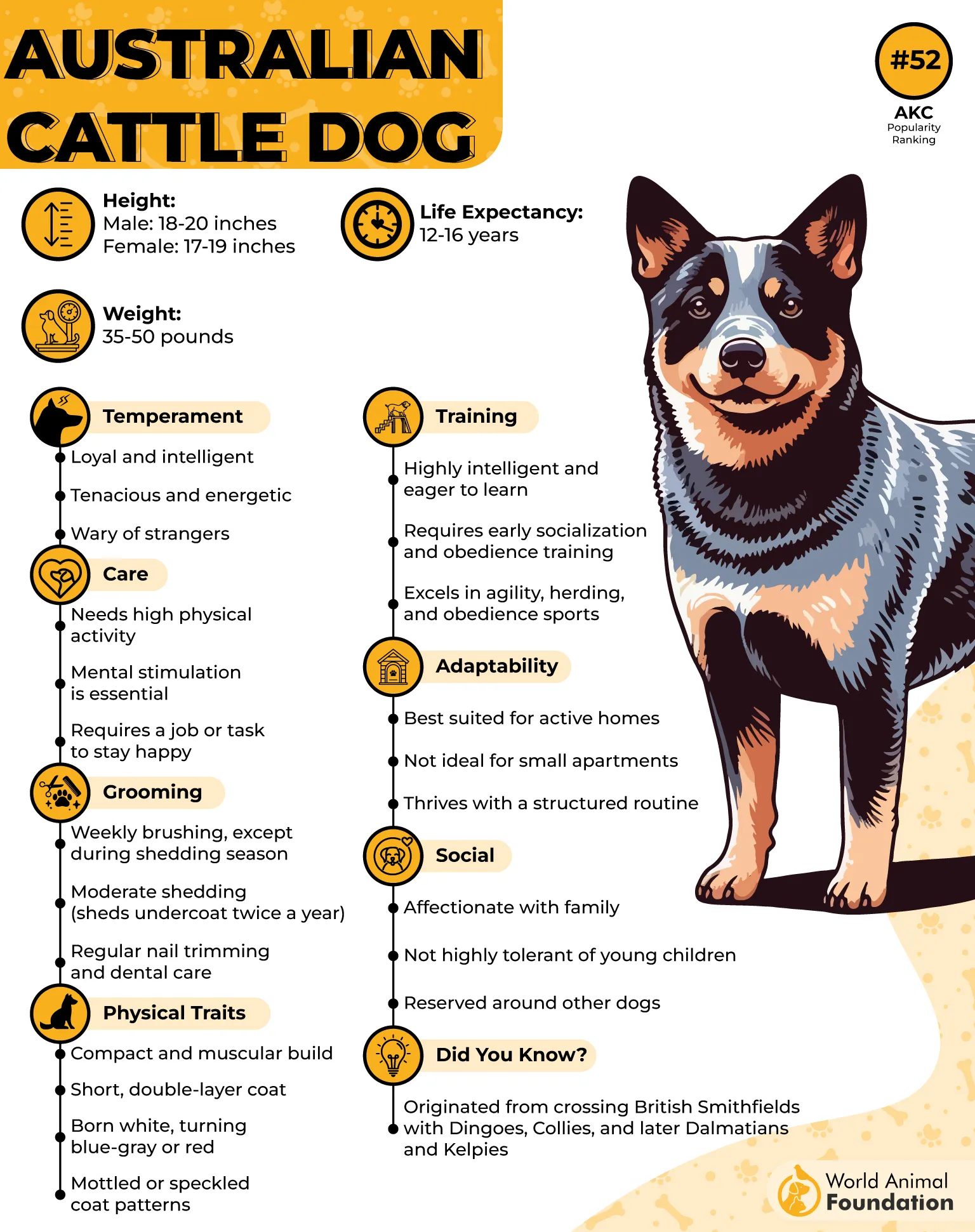
The breed has a short, dense double coat, where the outer layer is straight to slightly wavy and weather-resistant, while the undercoat is thick and insulating. The coat length generally ranges from 1 to 1.5 inches and helps protect the dog from harsh sun exposure while remaining relatively low-odor.
Grooming needs are minimal for most of the year, but the breed does shed heavily during seasonal coat changes in spring and summer. During these periods, daily brushing is recommended, while weekly grooming is usually sufficient at other times. Tools such as a slicker brush, bristle brush, or rubber curry brush are effective for removing loose hair and maintaining coat health.
7. Whippet
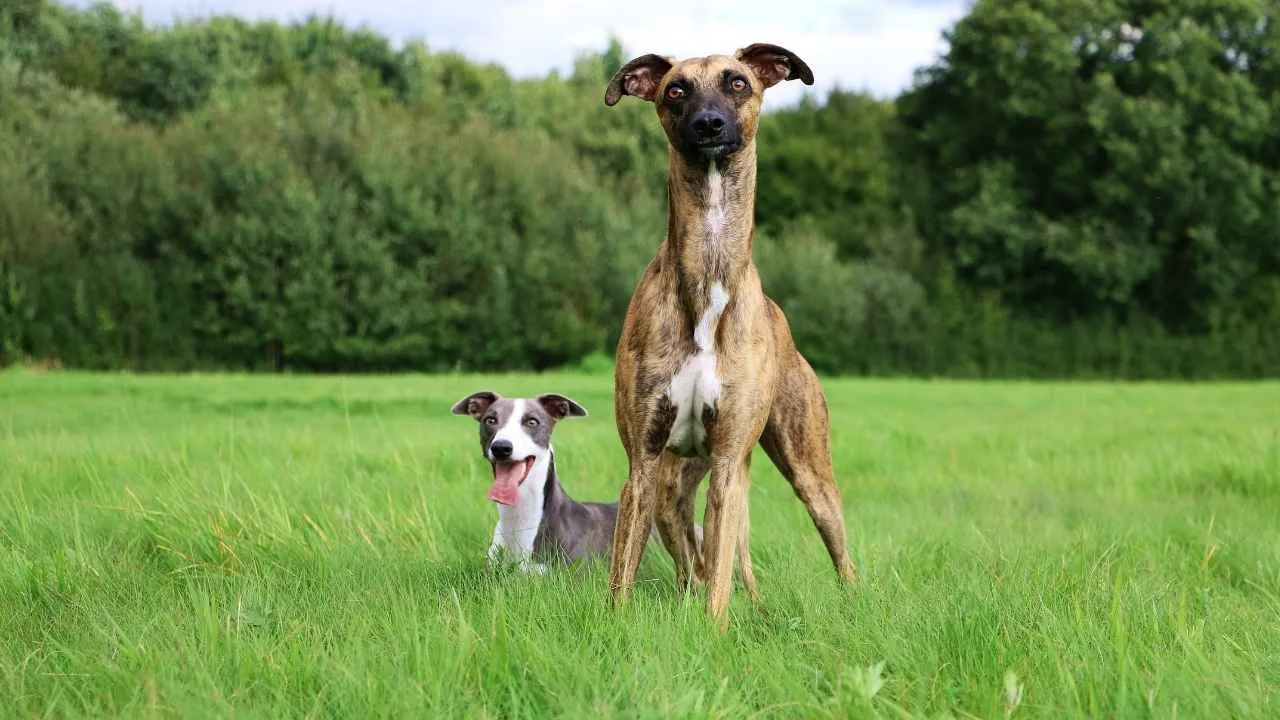
This sighthound, closely resembling the Greyhound and Italian Greyhound, is commonly kept as a companion dog and also excels in dog sports and amateur racing. It is typically calm and docile indoors, but becomes highly energetic and fast-paced when outdoors, reflecting its strong athletic instincts. The breed has a short, smooth coat that is easy to maintain due to its low-shedding nature.

Its aerodynamic body features a deep chest that allows for excellent lung capacity, supporting its natural speed and agility. Coat colors and patterns vary widely and may include solid black, red, white, blue, cream, brindle, and fawn. However, merle-patterned Whippets are not recognized and were banned by the AKC in 2019.
Because this breed has very little body fat and no undercoat, it is highly sensitive to temperature changes and should be kept indoors in cold weather, particularly when temperatures drop below 10–12°C. For grooming, a soft-bristle brush or rubber grooming mitt is sufficient to remove dirt and loose hair. Bathing is generally recommended every 4–6 weeks, depending on activity level and exposure.
Conclusion
From the Dalmatian’s iconic polka dots to the Whippet’s sleek, sculpted elegance, these seven breeds demonstrate that nature is the ultimate designer. No two coats are exactly alike, and no two dogs are truly identical; this individuality is exactly what makes them so captivating to watch and admire.
Whether you are considering adding one of these breeds to your family or simply appreciating their beauty, one thing becomes clear: striking coat patterns are more than just appearance. They reflect heritage, geography, purpose, and the unique traits shaped by generations of breeding.
So the next time a spotted or speckled dog walks past you, take a moment to look twice. You are not just seeing a beautiful animal, you are seeing a living work of art shaped by nature and history.
