




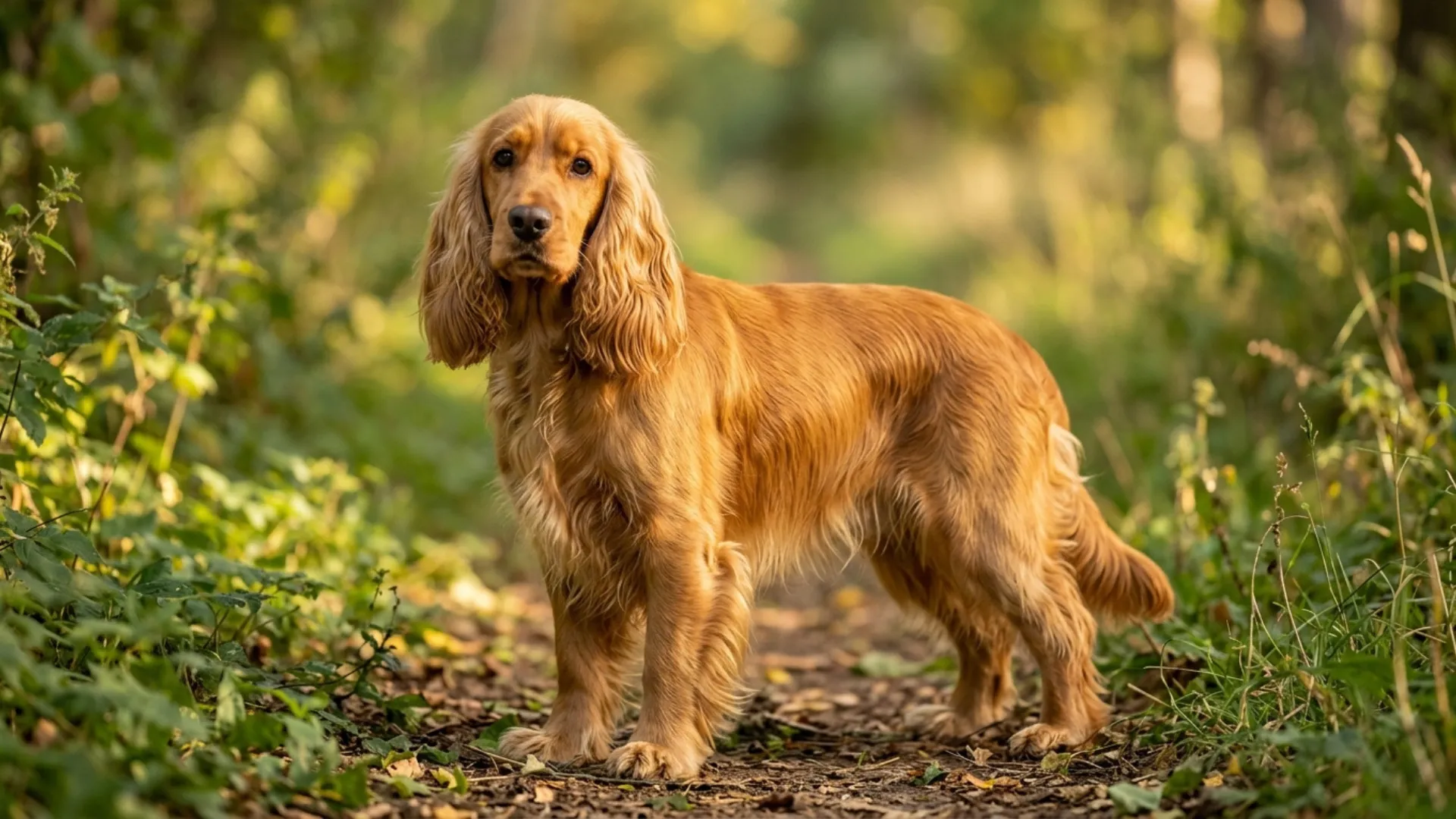
Some dogs enter a room; golden-coated dogs seem to bring their own lighting. From pale cream to deep amber, these shimmering shades can make even an ordinary walk look like a red-carpet event.
Yet a beautiful coat is more than decoration. Texture, shedding, grooming needs, and genetics all shape how that glow looks—and how much work it demands from its devoted human stylist at home.
This guide explores breeds celebrated for warm, radiant fur while highlighting the personalities, histories, and care routines beneath the shine. Prepare to meet loyal athletes, gentle companions, and glorious fluffballs worth admiring up close.
Dog Breeds With Rich Golden Coats to Admire
1. Golden Retriever

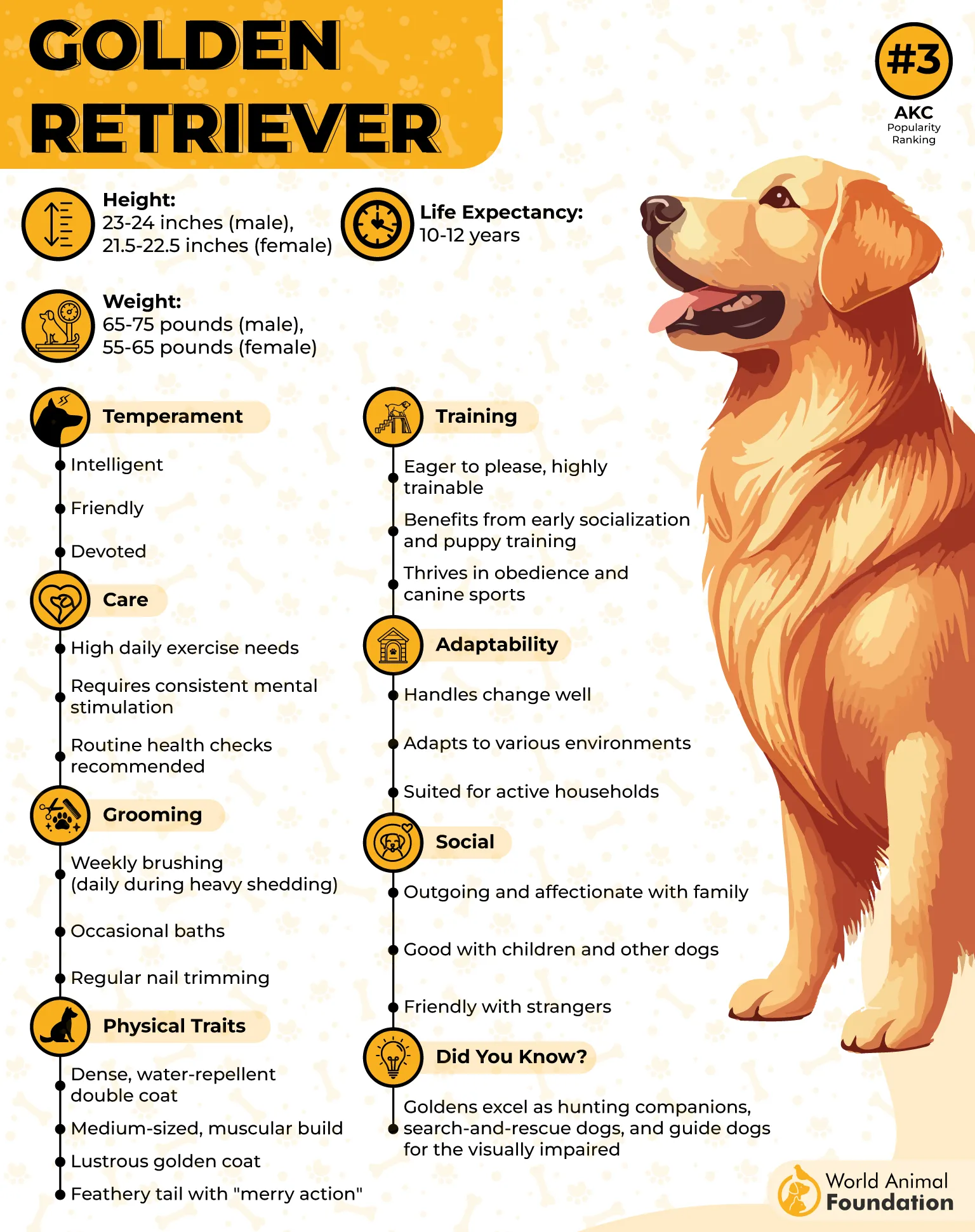
The Golden Retriever wears a dense, water-repellent double coat with feathering along the neck, chest, legs, belly, and tail. The American Kennel Club (AKC) recognizes three standard Golden Retriever colors: light golden, golden, and dark golden, so the breed’s signature glow ranges from pale champagne to warm amber.
Typical upkeep
Frequent brushing twice a week handles ordinary shedding, and the thick double coat asks for more when it blows once or twice a year.
Comb the feathering while tangles are still tangles. Mats are a different job.
What makes this coat special is its working design. The outer layer helped protect retrieving dogs in wet terrain, while the undercoat provided insulation; today, that practical construction creates the full, flowing outline people admire.
Main challenge
Shed undercoat finds carpets, car seats, and every dark garment you own.
Wet feathering carries home mud, seeds, and pond.
This beautiful coat best suits owners who enjoy brushing, tolerate seasonal golden “glitter,” and can check the ears, tail, and trousers after outdoor adventures.
The reward is unmistakable: a naturally luminous coat that looks elegant in motion and gloriously windswept after a swim. Keep the undercoat loose, and the feathering clean, and the gold does most of the showing off.
2. Vizsla
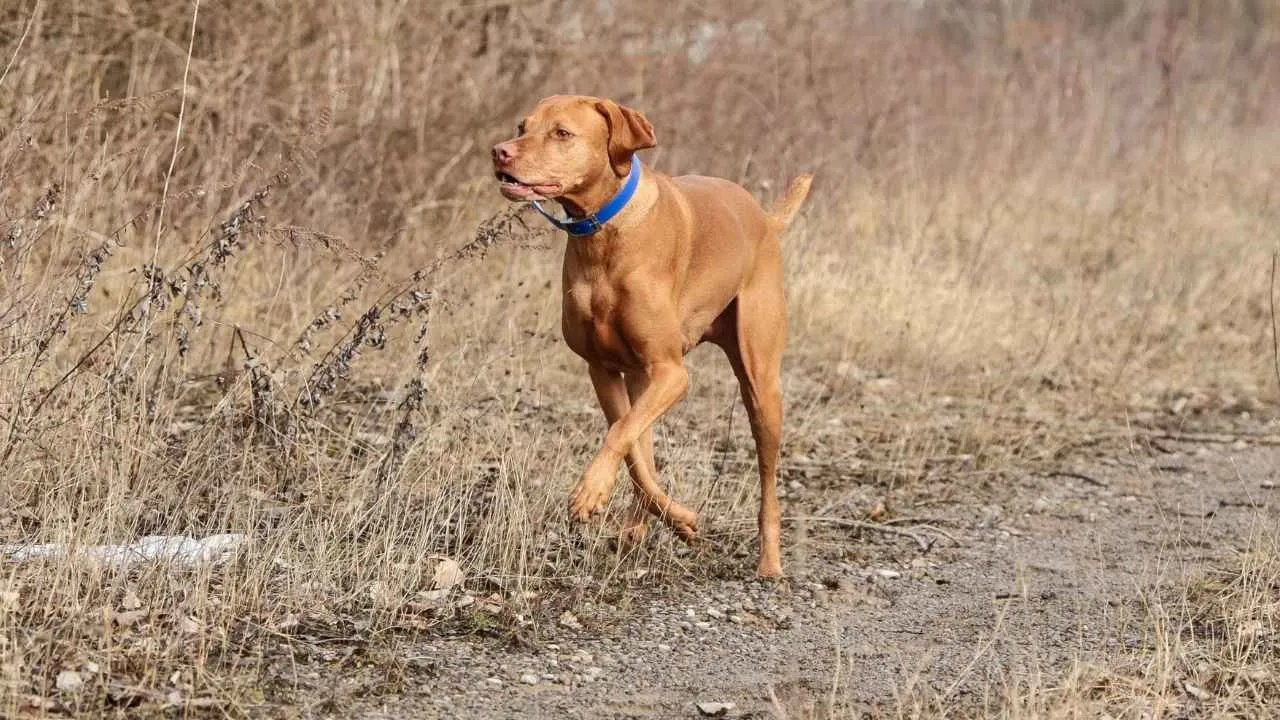
The Vizsla’s short, smooth hair lies close to the body, allowing every athletic line to remain visible. Dog experts describe the color as red-golden, while the matching nose, lips, and eye rims give the dog an unusually coordinated, almost monochromatic finish.
Main challenge
Short hair does not mean less hair. It means hair that embeds itself in upholstery like a splinter.
There is very little insulation here, so cold weather registers immediately.
This coat stands out because it appears glossy without long feathering, a heavy mane, or hours of combing. A quick pass with a grooming mitt removes loose hair and spreads natural oils, making the golden-rust surface look freshly polished.
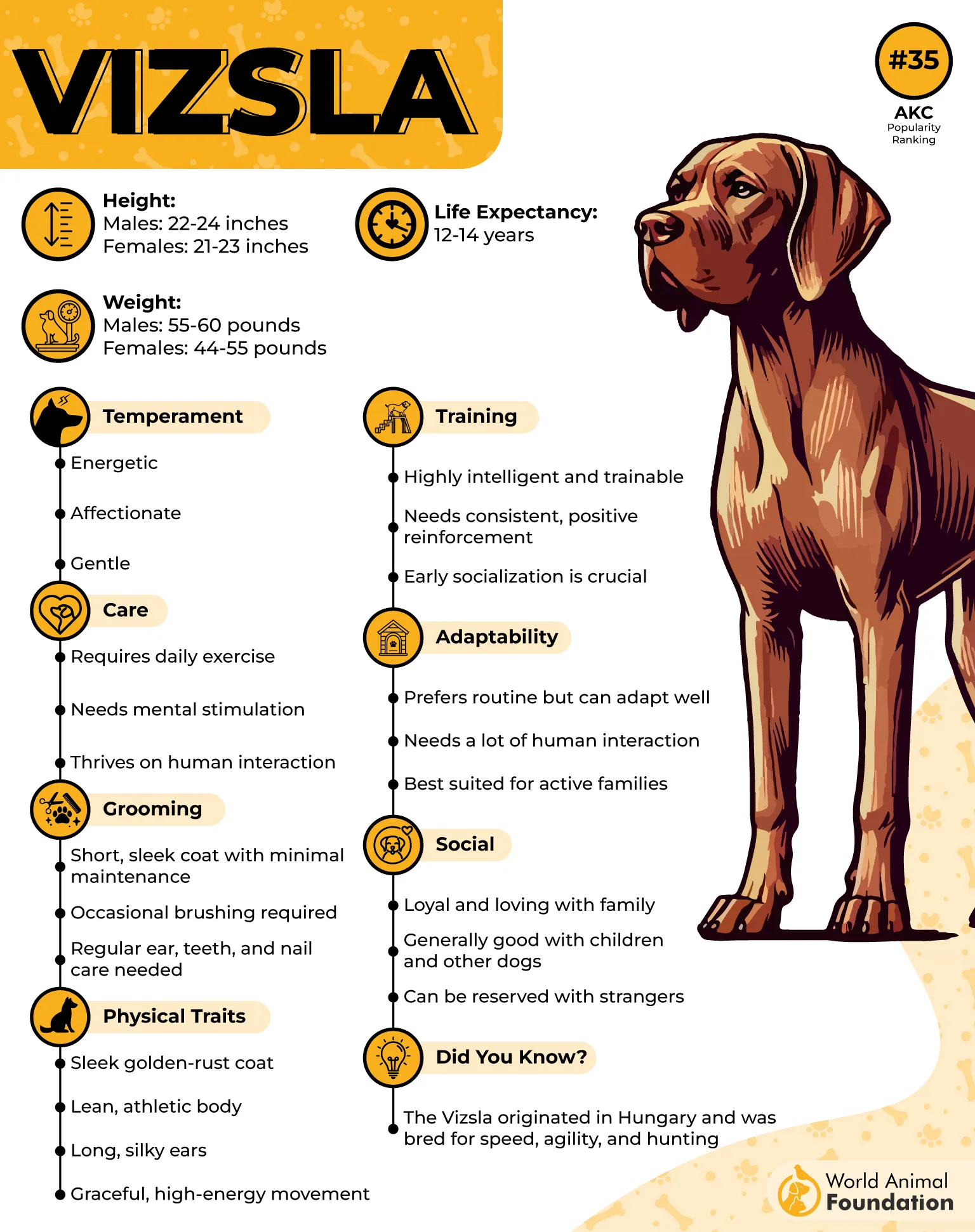
PetMD recommends at least one hour of exercise daily. That matters to the coat: running through fields, swimming, and hiking introduce dust, water, grass seeds, and the occasional heroic smear of mud.
Typical upkeep
A short coat like this sheds a moderate amount, so brushing once a week is the entire schedule.
Towel the ears out afterward and look for irritation.
The Vizsla best suits someone who wants dramatic golden color without a salon-level grooming routine. The catch is beautifully ironic: coat care takes minutes, but the athletic dog wearing it may happily occupy the rest of your afternoon.
3. Tibetan Spaniel
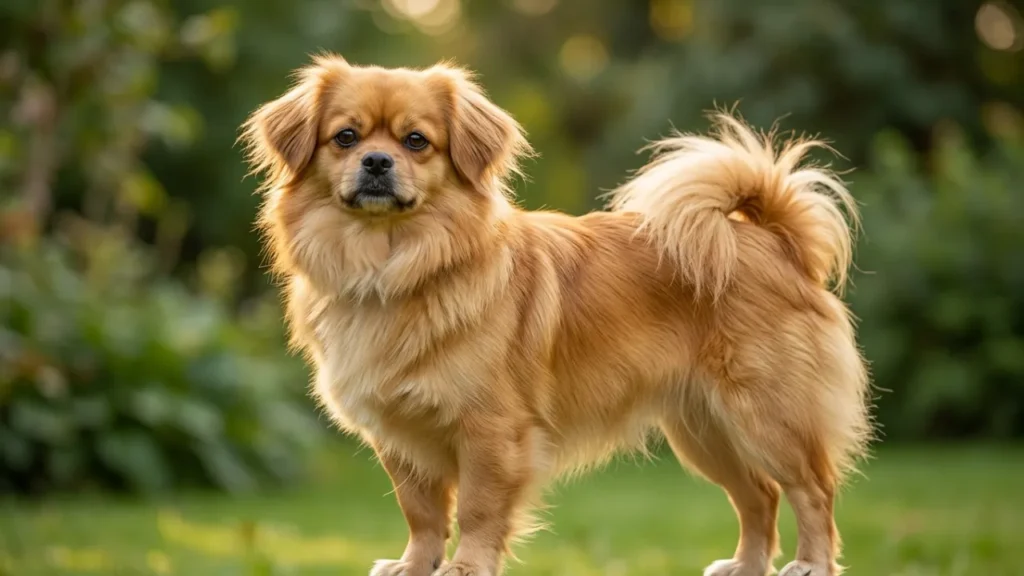
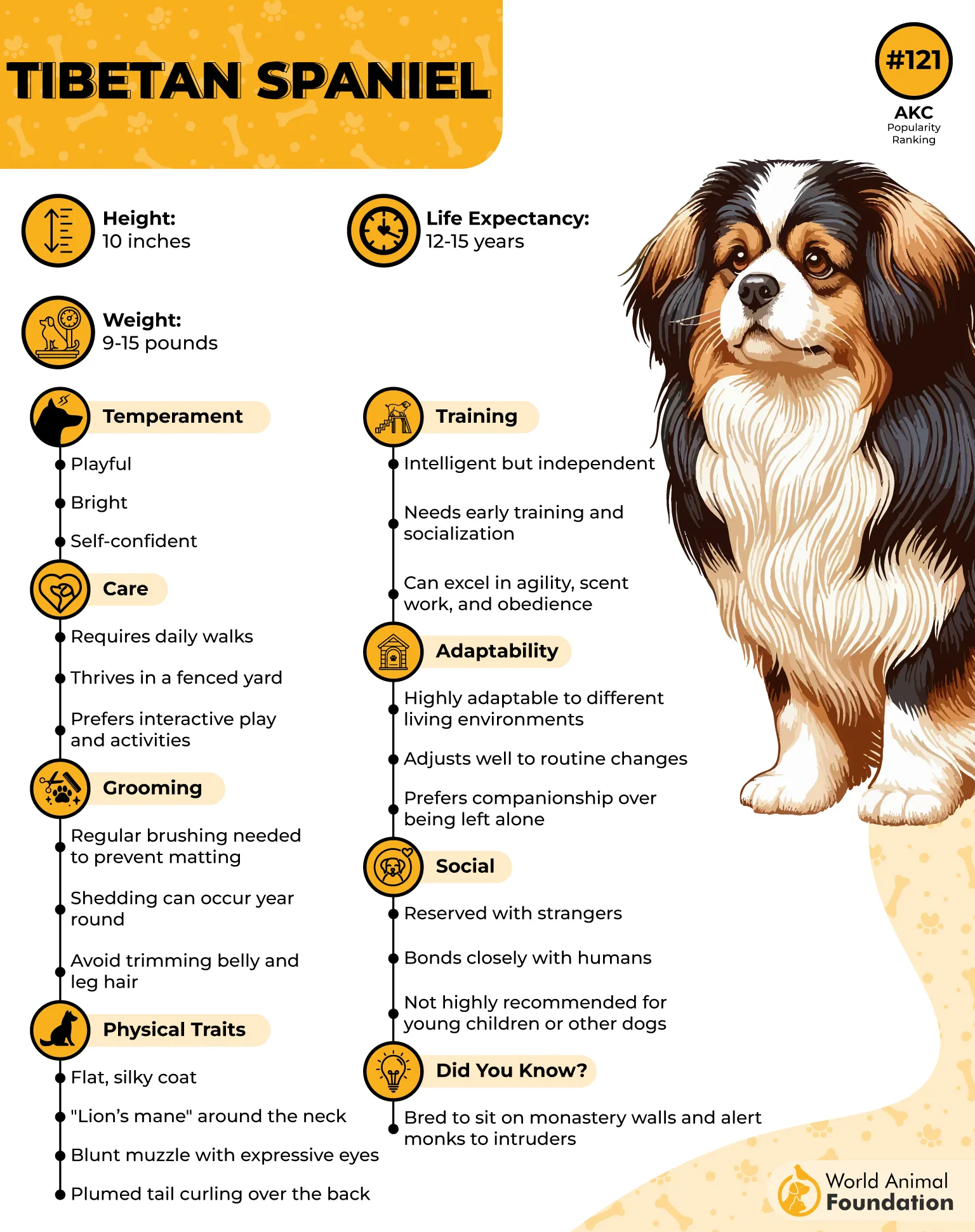
A silky double coat covers the Tibetan Spaniel, with longer hair creating a mane around the neck and feathering on the ears, legs, and tail. Golden individuals may appear honey-colored or lightly shaded, while the plumed tail curls over the back like a carefully arranged finishing flourish.
Purina claims that the mane is especially pronounced in males, producing a miniature-lion effect without requiring the coat to be sculpted into shape.
Typical upkeep
Brush weekly as it sheds a lot, and get the comb behind the ears, where fine hair knots quietly.
Leave the scissors alone. The outline is the point.
The coat’s standout feature is movement: feathering floats around the body while that curled tail carries a soft golden plume above the back. Its texture also reflects the breed’s Tibetan background, where a double layer offered useful protection in a demanding climate.
Main challenge
Dust and seeds settle into the feathering and stay there.
Bathe too often, and the coat goes dry instead of silky.
This golden-coated lookout best suits someone who enjoys regular combing but does not want a floor-length grooming project. Provide a safe windowsill, and the finished coat may spend hours glowing in the sunlight while its owner supervises the neighborhood.
4. English Cocker Spaniel
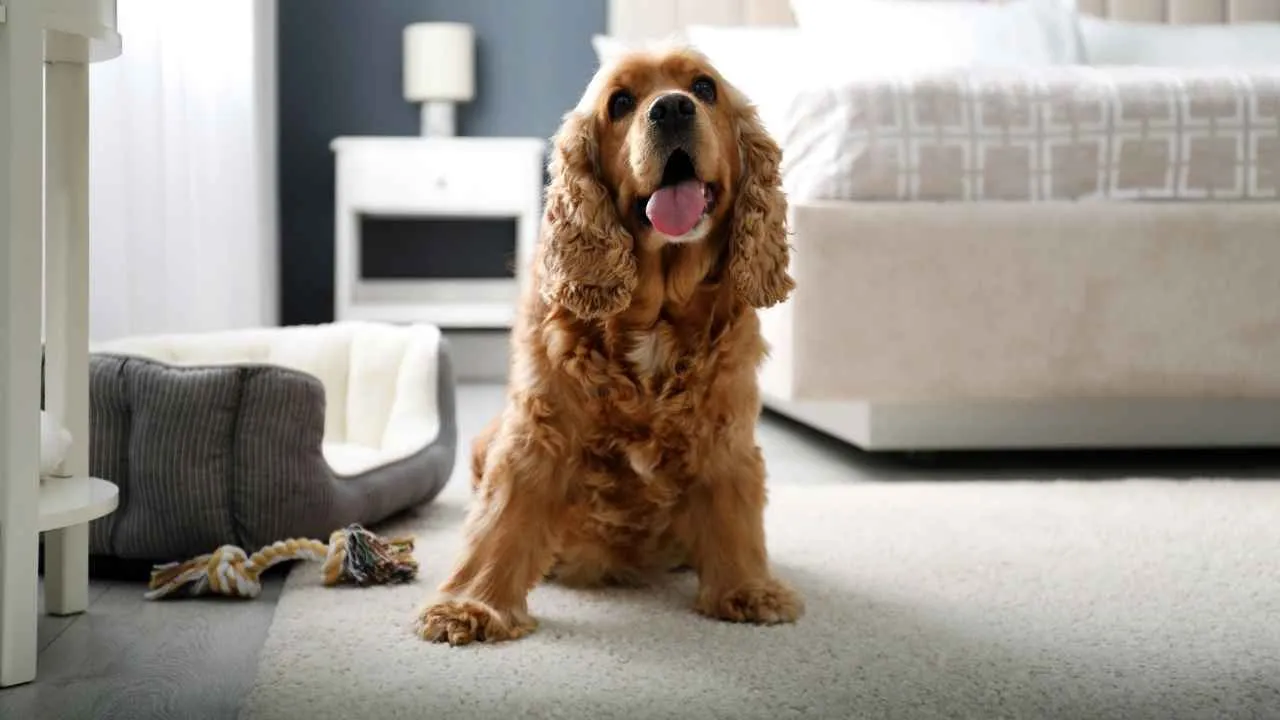
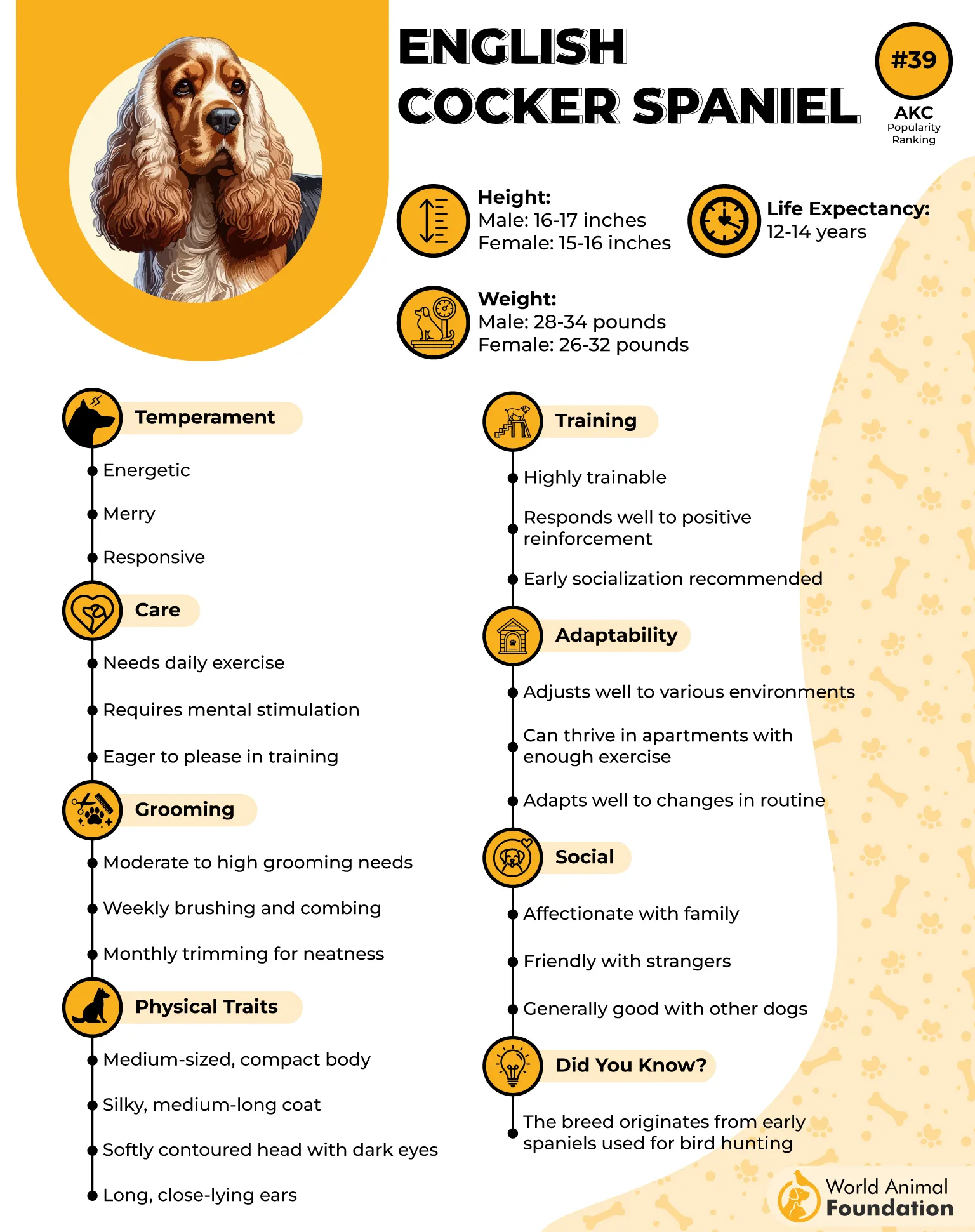
The golden English Cocker Spaniel wears smooth, silky hair with longer feathering across the ears, chest, belly, legs, and tail.
Typical upkeep
Brush and comb several times a week. This is not a once-a-week breed.
Lift the floppy ears, check underneath for tangles, and take your time drying them after a bath.
That flowing coat hides a genuine sporting dog. Originally bred to flush woodcock from dense cover, this spaniel still enjoys sniffing through bushes and may return wearing half the garden.
Main challenge
None of that garden debris falls out on its own.
Moisture stays trapped inside the long ears.
This breed suits owners who want golden glamor and enjoy active walks, retrieving games, and hands-on coat care. Keep a comb near the door, because outdoor adventures rarely end with perfectly arranged feathering.
5. Nova Scotia Duck Tolling Retriever
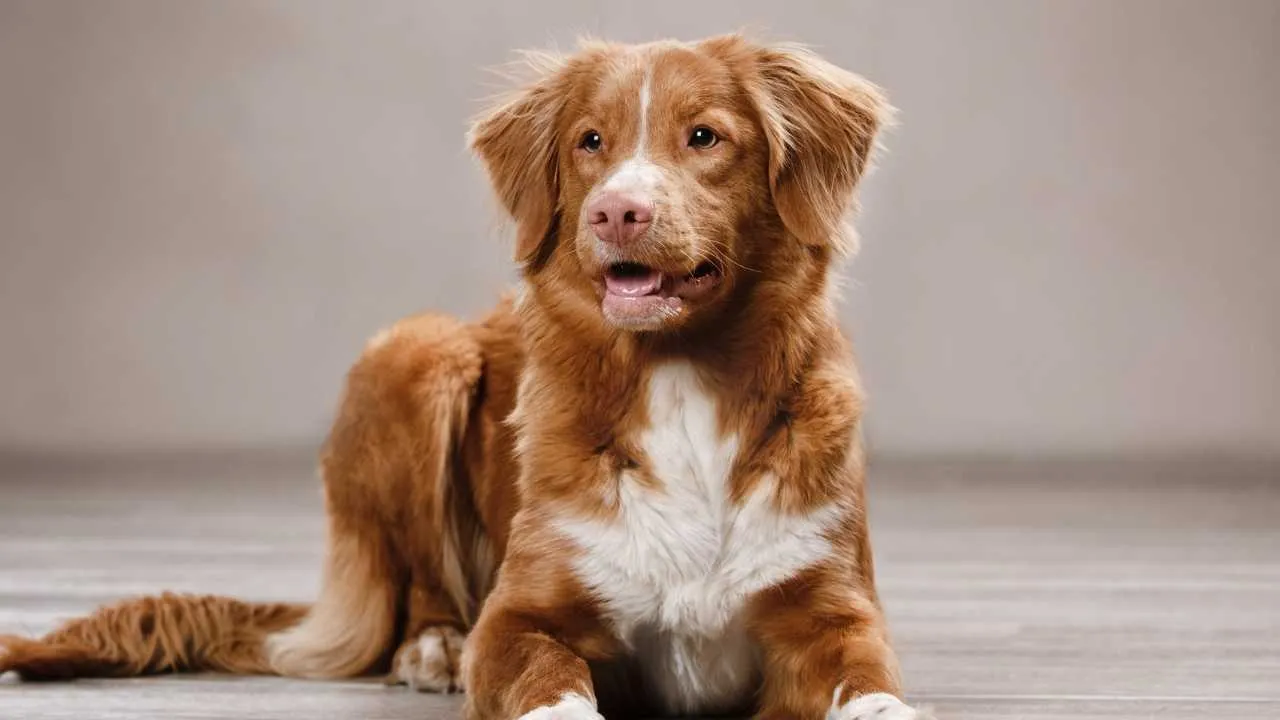
The Nova Scotia Duck Tolling Retriever has a medium-length, water-resistant double coat ranging from golden red to deep copper. White markings may appear on the chest, feet, face, or tail tip, sharpening its fox-like appearance.
Typical upkeep
One weekly brush covers it, though the seasonal shed changes that math.
Rinse after muddy swims and dry the ears and undercoat completely. A few white hairs on the chest and feet will show whatever you miss.
This retriever was developed to “toll” ducks by playing along the shoreline, attracting curious birds within range. The same lively movement now appears during fetching sessions, water games, and excited backyard sprints.
Main challenge
Wet hair holds mud and debris instead of shaking them off.
The high-pitched “Toller scream” is real, and it is never mentioned in the sales pitch.
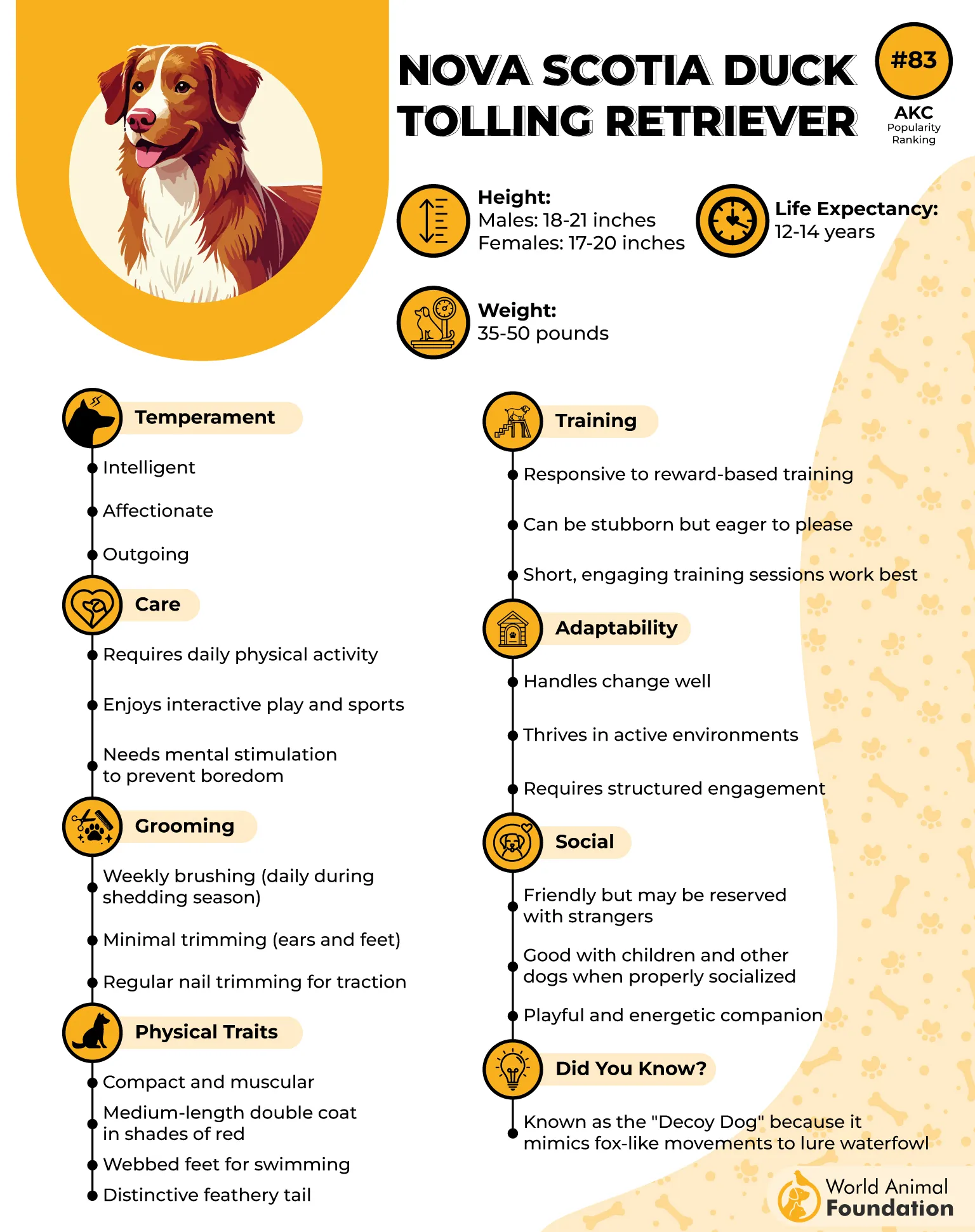
The pup is highly energetic, so the glowing coat comes attached to a serious working engine. It best suits active owners who can provide retrieving, swimming, training, and regular coat checks after outdoor adventures.
6. Lhasa Apso
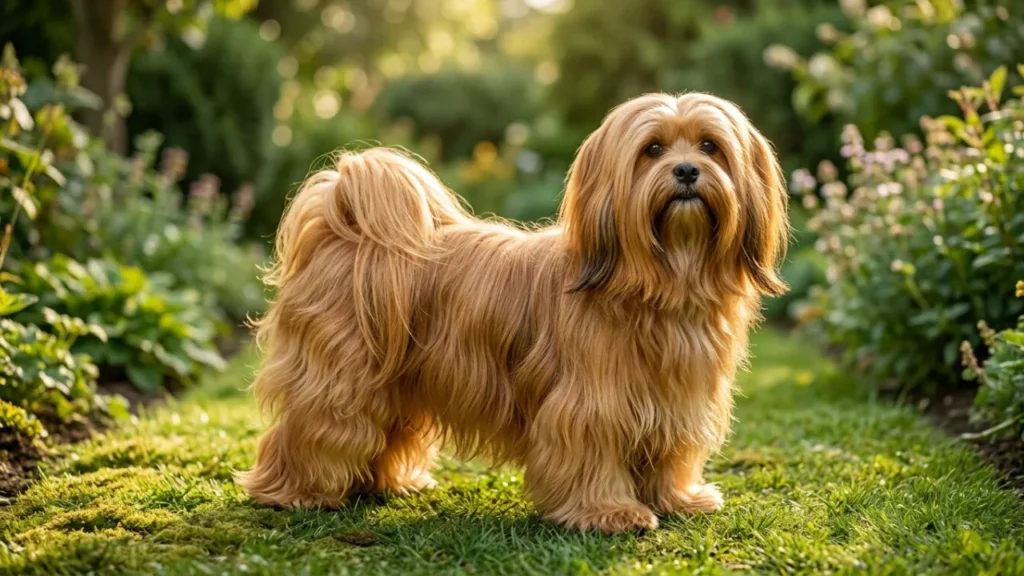
A golden Lhasa Apso can wear a straight, heavy coat that reaches the floor and parts naturally along the back. Its small frame makes the amount of hair surrounding that small frame especially impressive.
Typical upkeep
A full coat needs daily combing. There is no weekly version of this.
Wipe the face after meals and check under the legs, where friction quietly builds mats.
The coat’s rich honey and golden shades suit the breed’s lion-like appearance, but the hair is not merely decorative. Tibetan households and monasteries historically kept these alert dogs as indoor sentinels, and many still monitor doors with surprising seriousness.
Main challenge
The surface can look immaculate while mats build underneath it.
Any damp section has to be dried through to the skin.
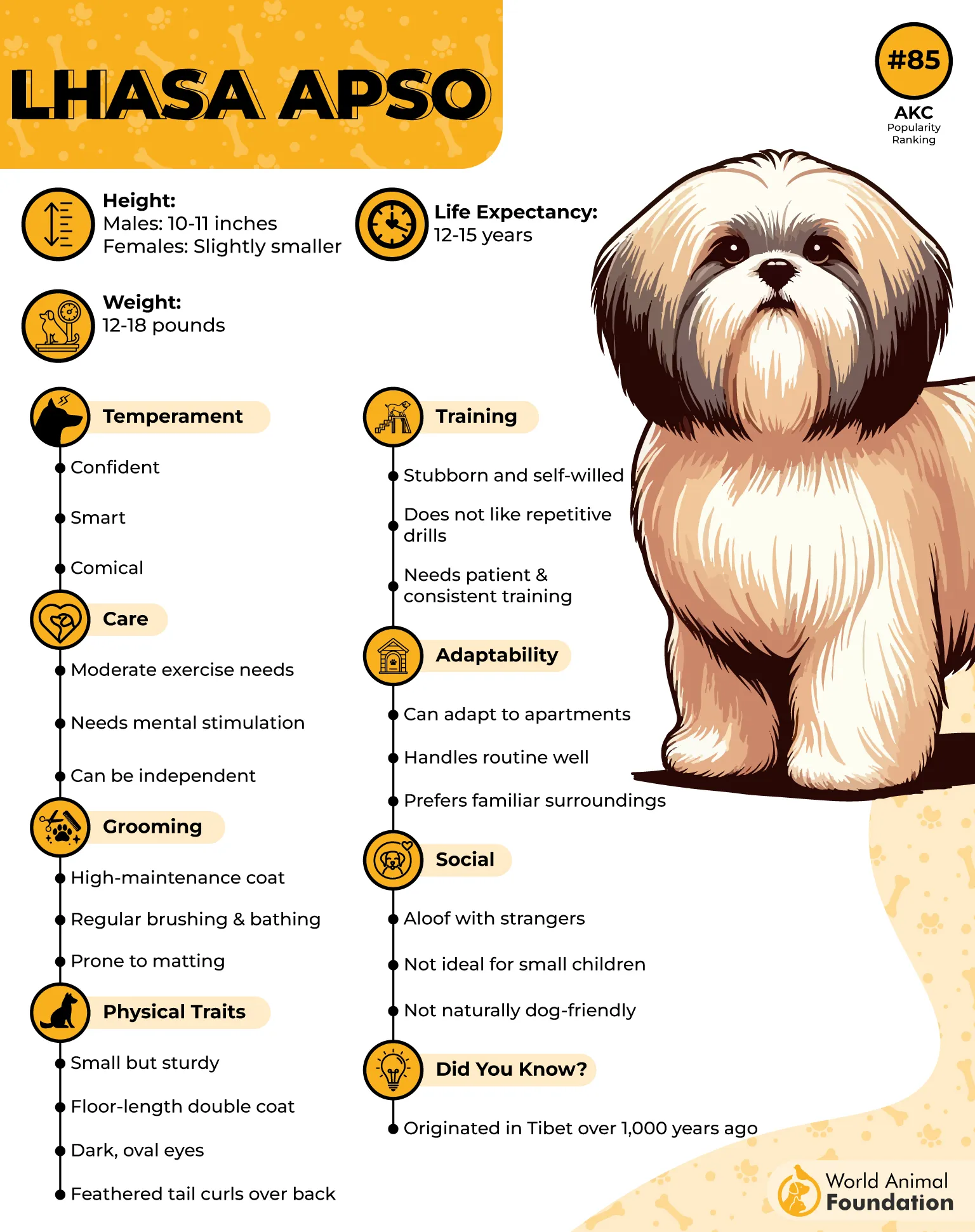
This breed suits someone who enjoys detailed grooming or accepts the cost and scheduling of a shorter cut. The payoff is a golden coat with remarkable movement, plus a tiny security officer underneath who notices every visitor.
7. Chow Chow
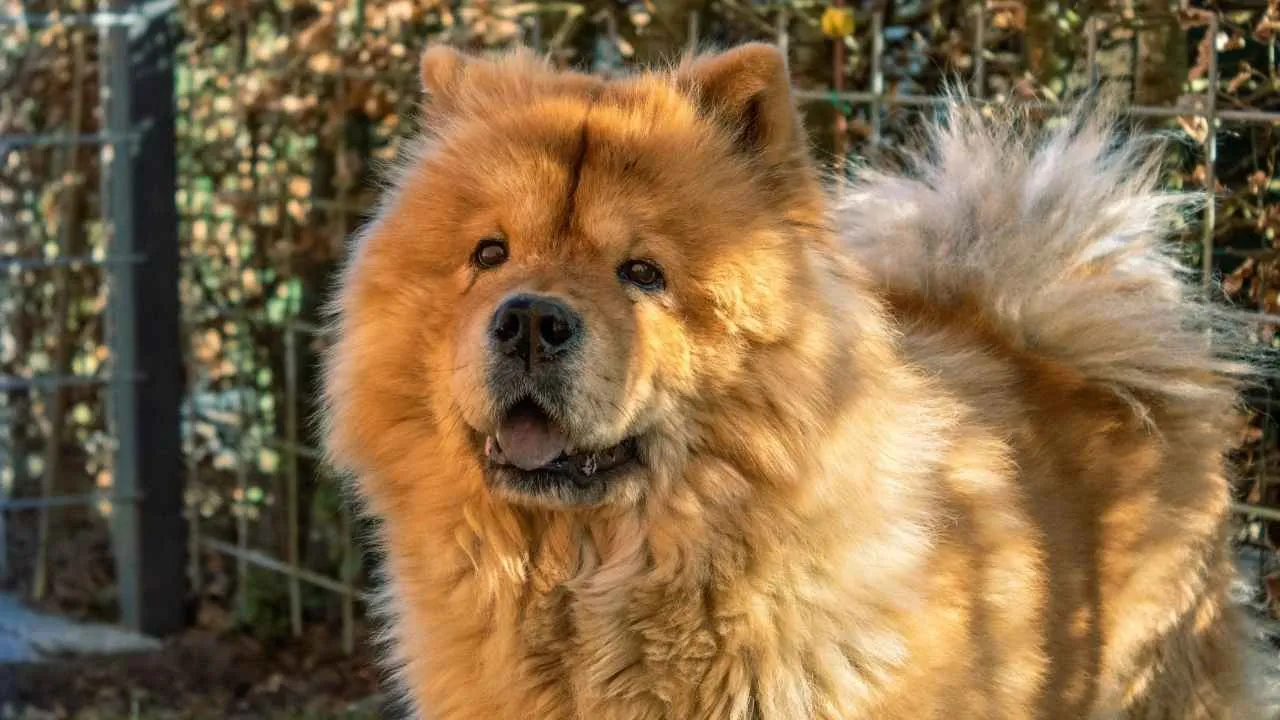
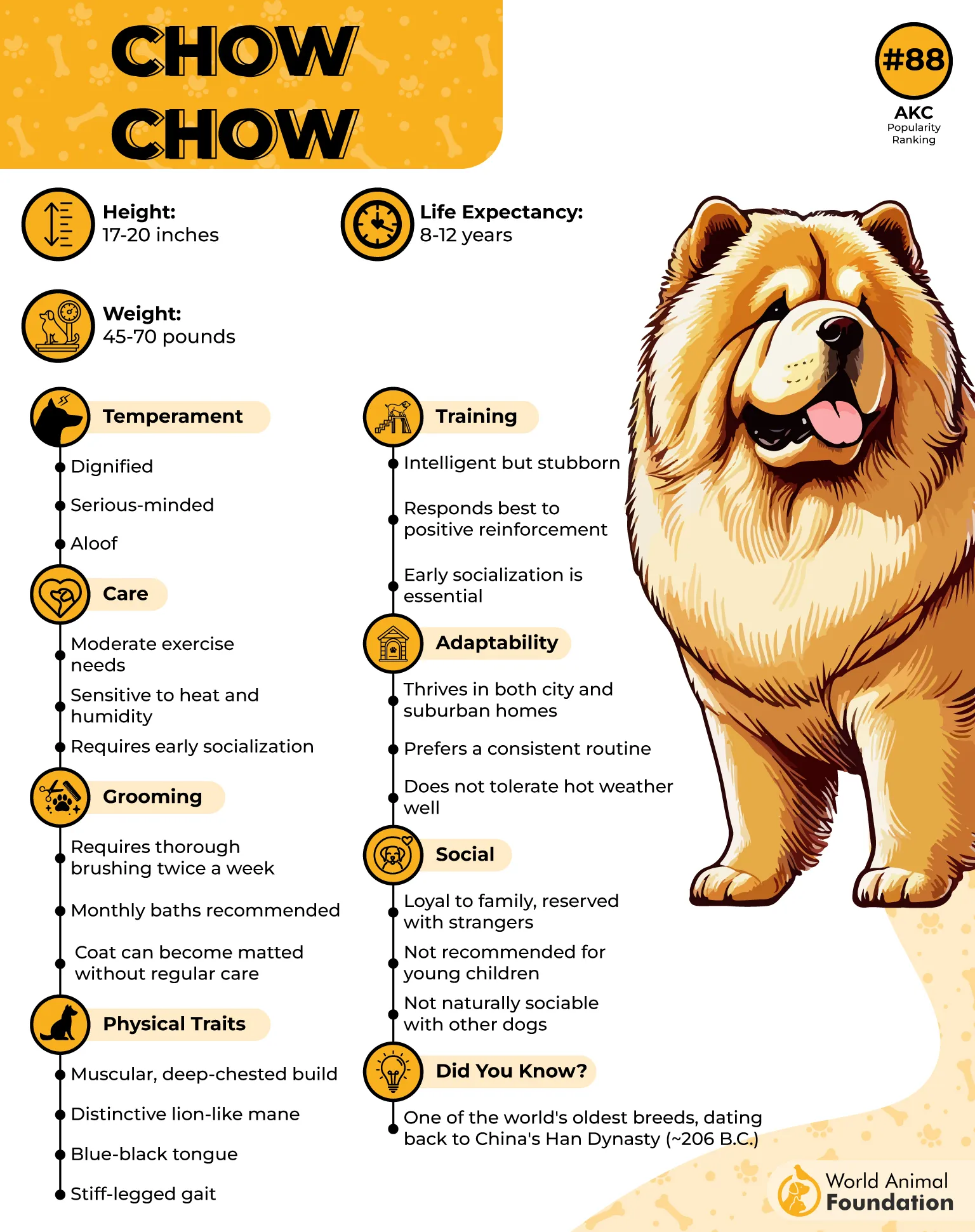
The Chow Chow’s red, cinnamon, or cream coloring can appear richly golden in natural light. Most breed clubs recognize rough and smooth coats, although the rough variety creates the famous mane around the head and neck.
Typical upkeep
Twice a week is the norm, and every session has to reach the skin.
After a bath, the dense undercoat has to come out bone dry.
Adults are fairly medium-sized, so coat maintenance covers considerable territory. The blue-black tongue, small triangular ears, and stiff-legged gait make the golden, lion-like outline even more distinctive.
Main challenge
Shed hair that stays in the coat packs down tight and hard.
Warm weather takes planning for a dog with this much insulation. A professional groomer can be tough on the pocket.
This breed best suits owners who appreciate its reserved manner and can begin grooming practice early. Regular brushing preserves the full golden ruff, while patient handling teaches this dignified dog that combs are tools, not personal insults.
Conclusion
A lustrous golden coat may turn heads, but coat color is only the opening chapter. Varying shades, weekly brushing, frequent grooming, and daily exercise shape the real experience of living with these eye-catching dogs.
For honourable mentions, the Irish Setter offers flowing dark red elegance, the Rhodesian Ridgeback pairs a reddish-gold coat with an athletic build, the Pharaoh Hound brings long legs and low-maintenance hair, and the Shiba Inu delivers distinctive red coloring with a big personality.
Shortlist breeds by grooming demands, shedding, mental stimulation, and physical activity, then meet each dog through a reputable breeder or rescue. Examine the coat in person, ask about upkeep, and schedule your first visit.
