




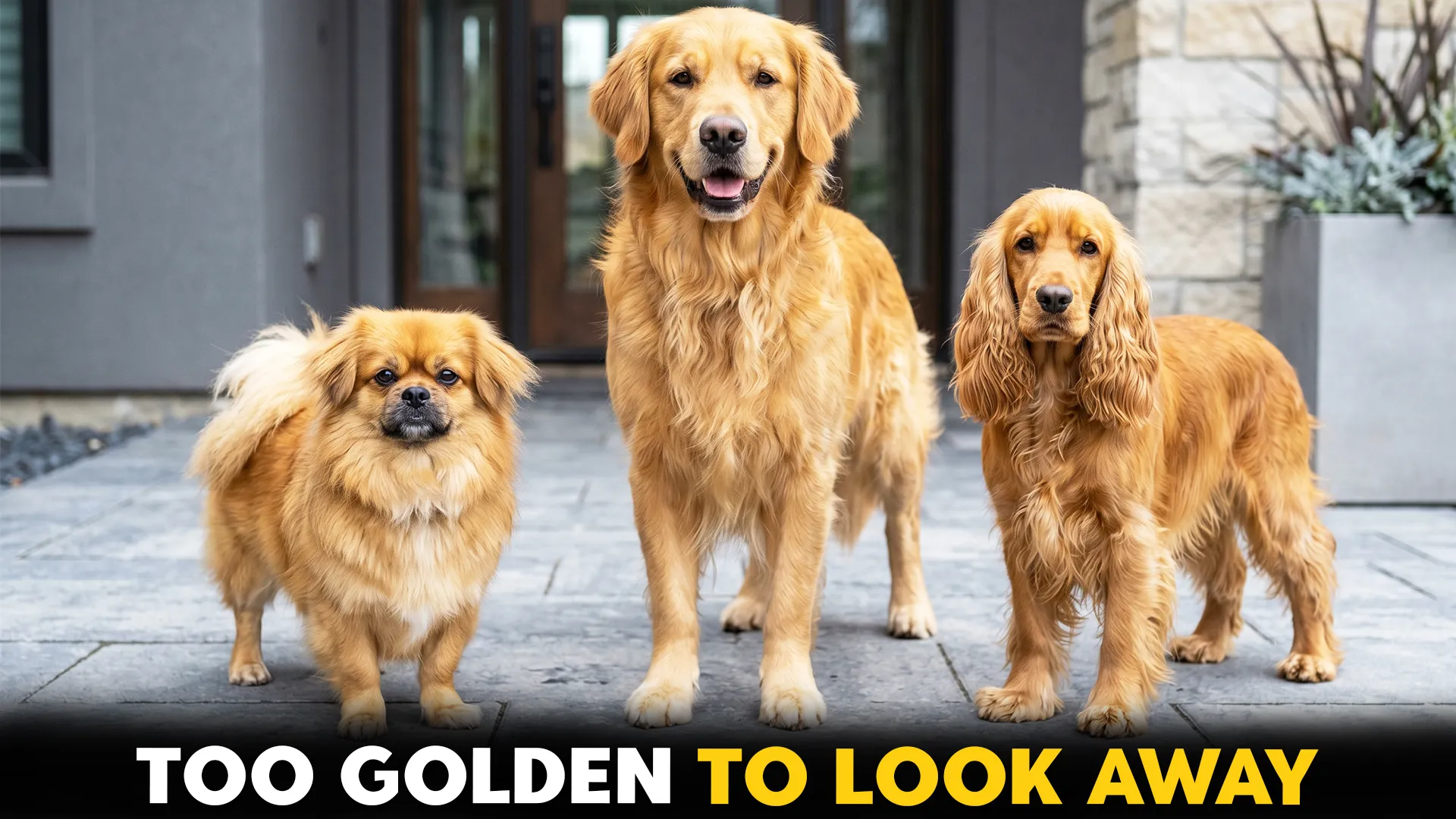
There is something about a golden-coated dog that just hits different. Whether it is the way that warm, honeyed fur blows in afternoon sunlight or how it practically begs for a scratch behind the ears, these dogs do not just look good.
They feel good to be around. Golden dogs have been stealing hearts for centuries, from Tibetan monastery walls to modern suburban backyards.
A famous author and a dog rescue advocate, David Rosenfelt, once said, ‘The face of a golden retriever feels like home.’ And this is kinda true; the honey-like lustrous coat gives a royal look and makes you feel like a king/queen.
This list digs into 10 gorgeous golden-coated breeds; each with its own vibes, history, and reason to be obsessed over.
Top Dog Breeds with Rich, Golden Coat Colors
1. Havanese
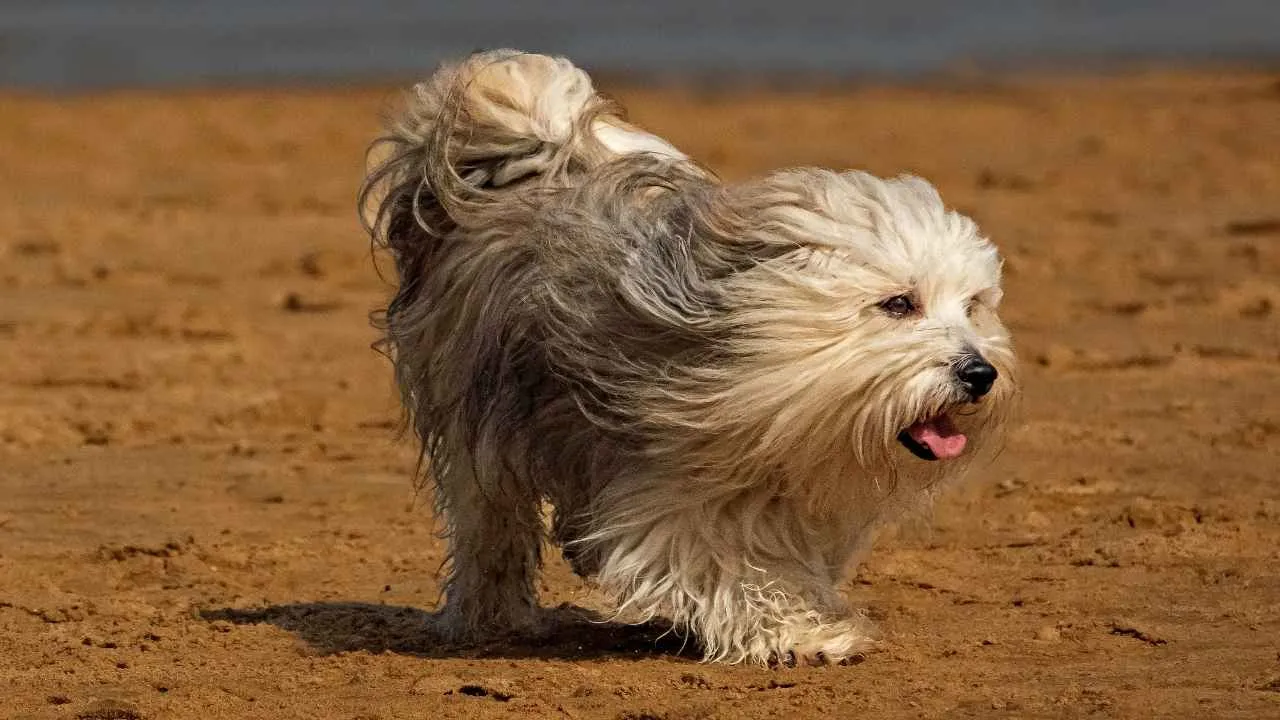
The national dog of Cuba, the Havanese was developed by crossing an extinct white breed, Blanquito de la Habana, with bichon-type breeds, such as the Poodle. Because of its gentle and affectionate nature, it is widely used in assistive, therapy, signalling, and performance purposes, according to Wikipedia.
It has a silky, slightly wavy outer coat and a soft undercoat. The coat type may vary from a silky type to a corded one. It has a lightweight double coat that comes in various colors: black, white, silver, cream, gold, fawn, blue, red, and chocolate. The coat is hypoallergenic and is perfect for people with allergy issues.
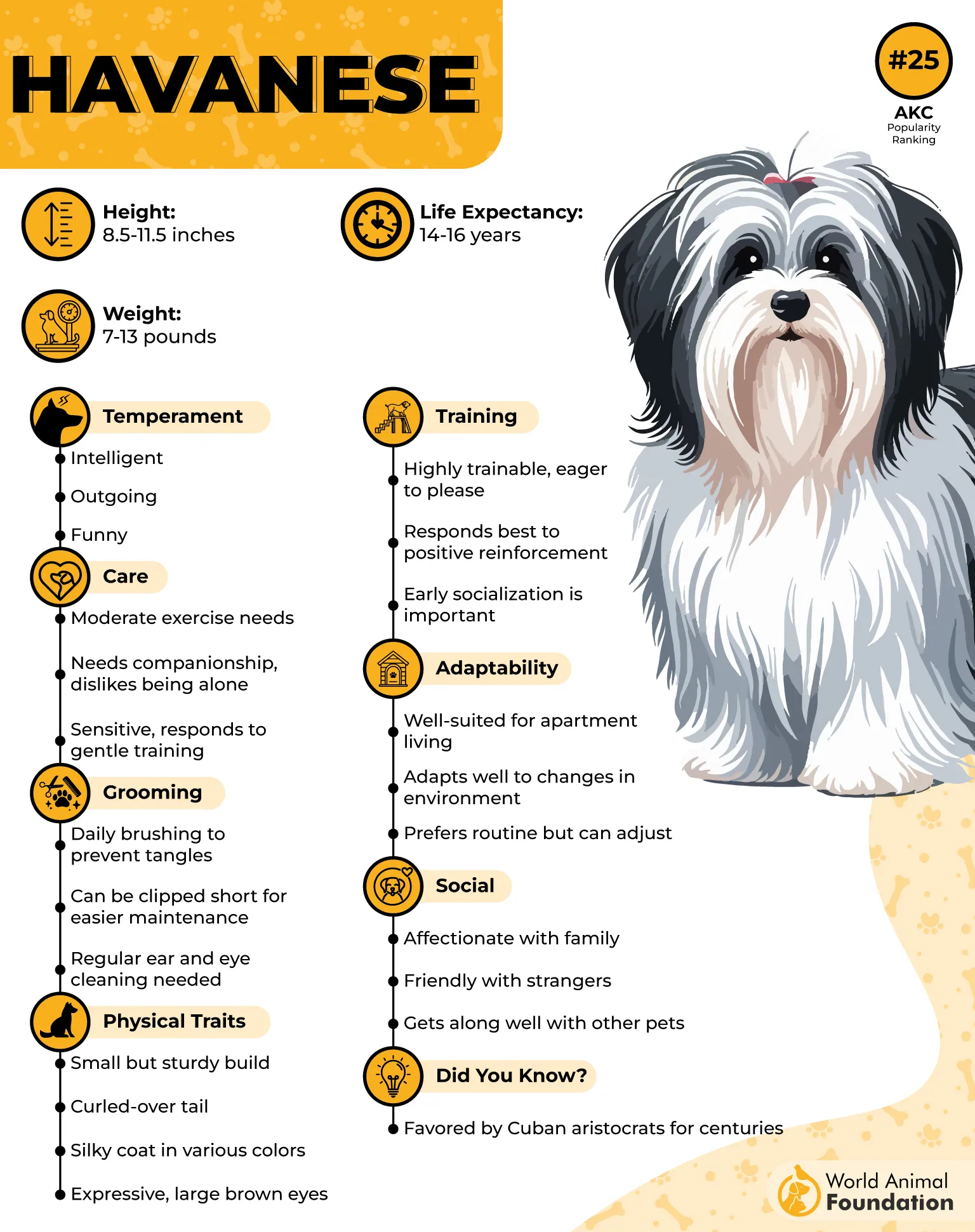
Since dense matting traps in moisture and bacteria, leading to bacterial infections, it needs regular grooming. Daily brush the coat using a pin brush and a steel Greyhound comb with the ‘line brushing’ technique. Make sure that the coat is 100% matt-free before bathing.
2. Lhasa Apso
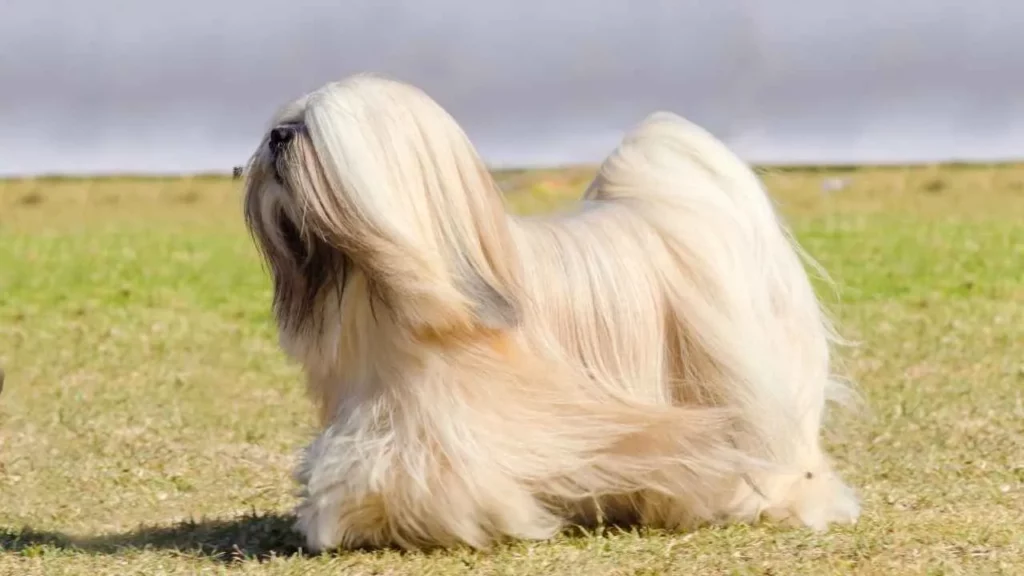
This non-sporting dog breed was originally bred in Tibet as an interior watchdog. This ancient breed is famous for having a floor-length, flat-hanging coat that is parted perfectly in the middle. It has oval-shaped dark eyes and well-developed musculature.
It has a straight, hard, and dense coat that is neither woolly nor silky. The undercoat is long and flowing, while the outercoat is extremely heavy. The long coat consists of 5 solid colors: white, cream, red, black, and golden, with the combination of patterns and markings. The puppies change their coat colors as they age.
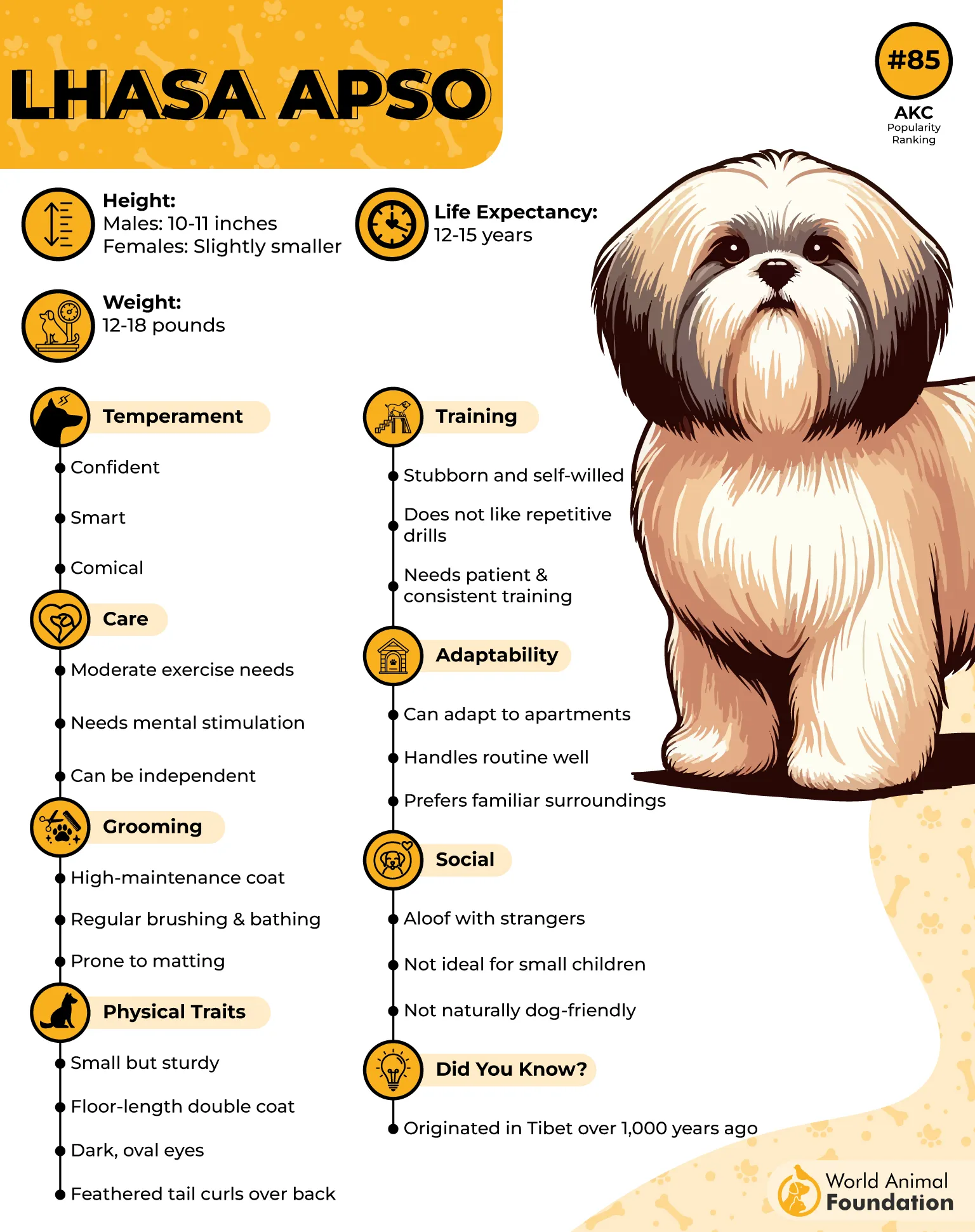
The golden hue in the coat is determined by Phaeomelanin (a pigment responsible for the yellow/red spectrum), responsible for creating golden tones. It requires daily brushing to prevent matting. Bathing is crucial after 2-4 weeks. Gently wipe the beard after eating to prevent staining.
3. Tibetan Spaniel
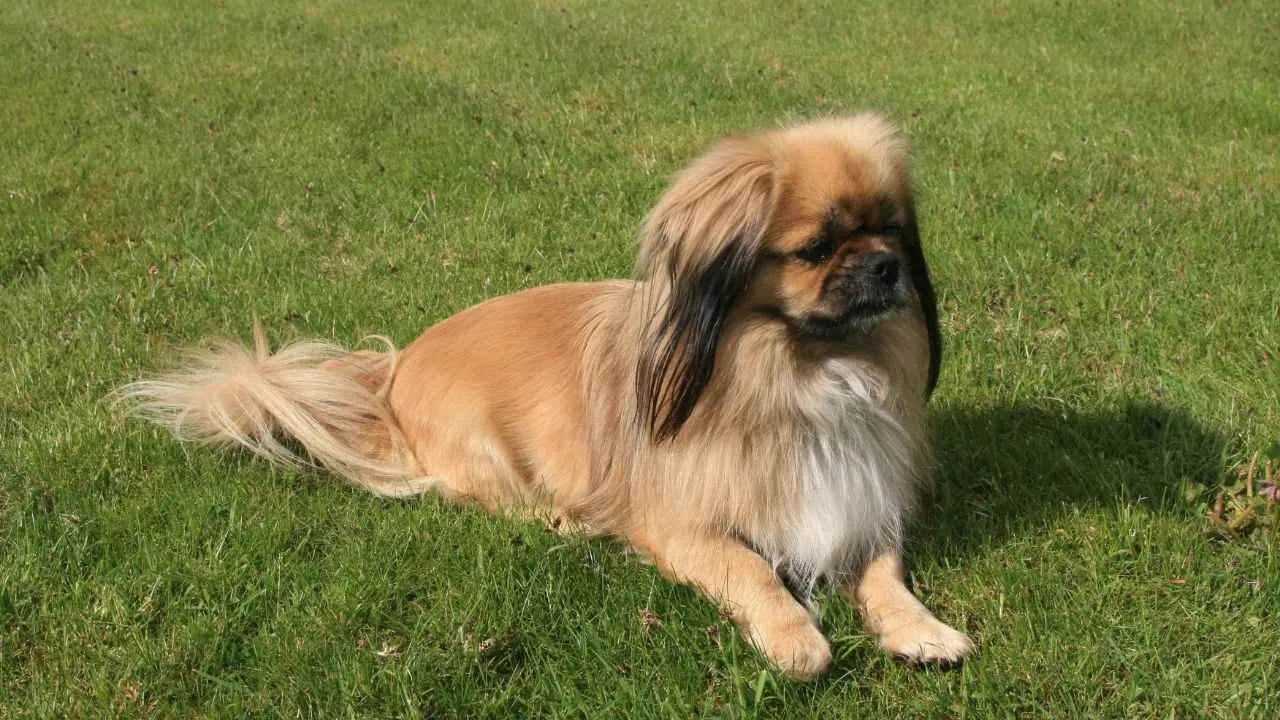
This small dog with a striking appearance was also developed in Tibet, and unlike other spaniels who are mostly gun dogs, the Tibetan Spaniel was bred to be a companion breed. In fact, it is not even a spaniel and is called so because of its resemblance to the Cavalier King Charles Spaniel.
The coat has a moderate length on the body and is shorter on the head and front of the legs. The thick and dense hair is present around the neck, giving it a lion-like mane appearance. It comes in 5 different shades: cream, red, gold, white, and black with multi-color markings (patches of white with other colors).
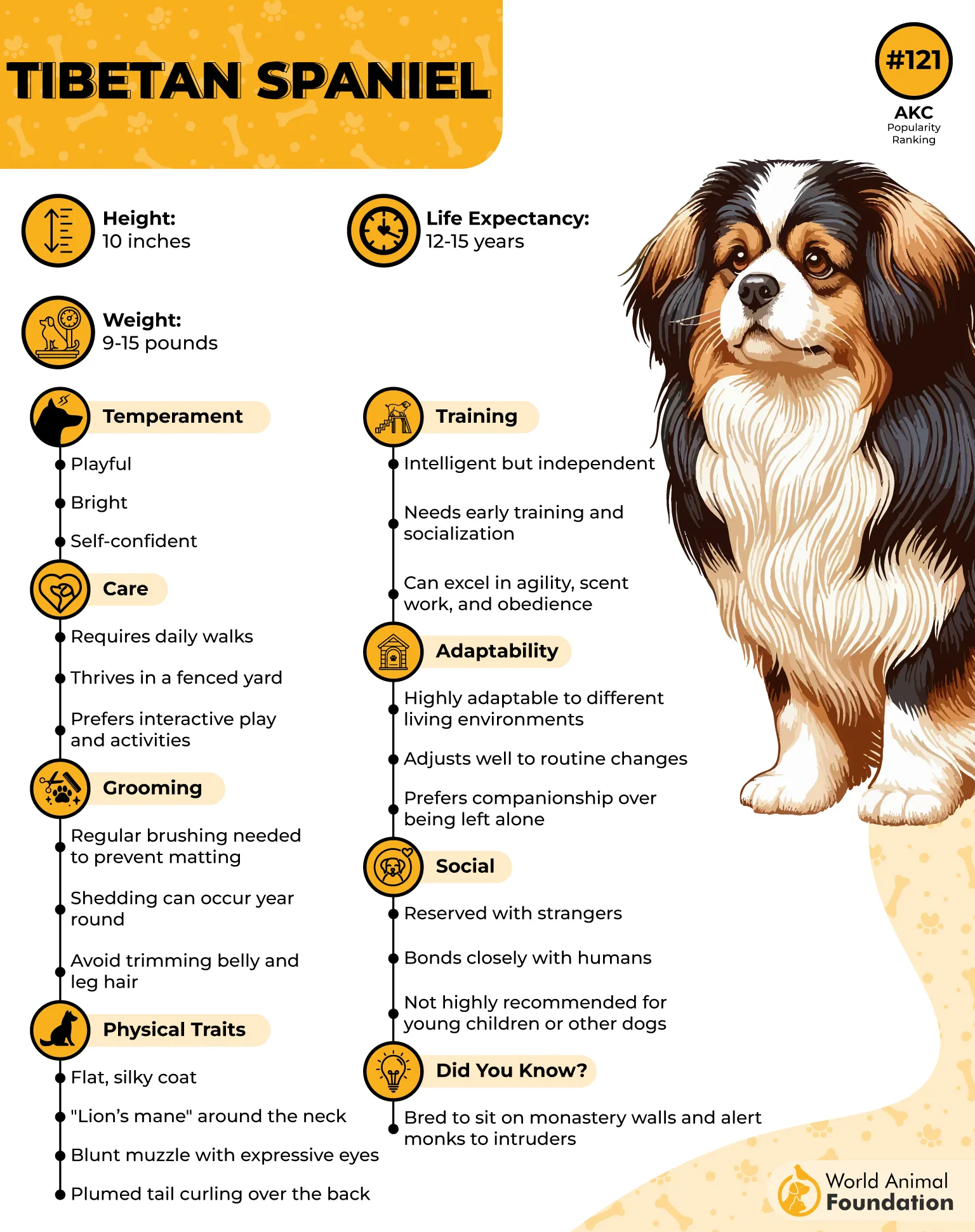
The soft undercoat provides insulation by trapping air. The golden-colored coat is less prone to tangling because of its flat texture. Because of this reason, it sheds less, and weekly brushing is enough using an oblong pin brush, steel comb, and a bristle brush. Occasional baths are usually recommended.
4. Golden Retriever
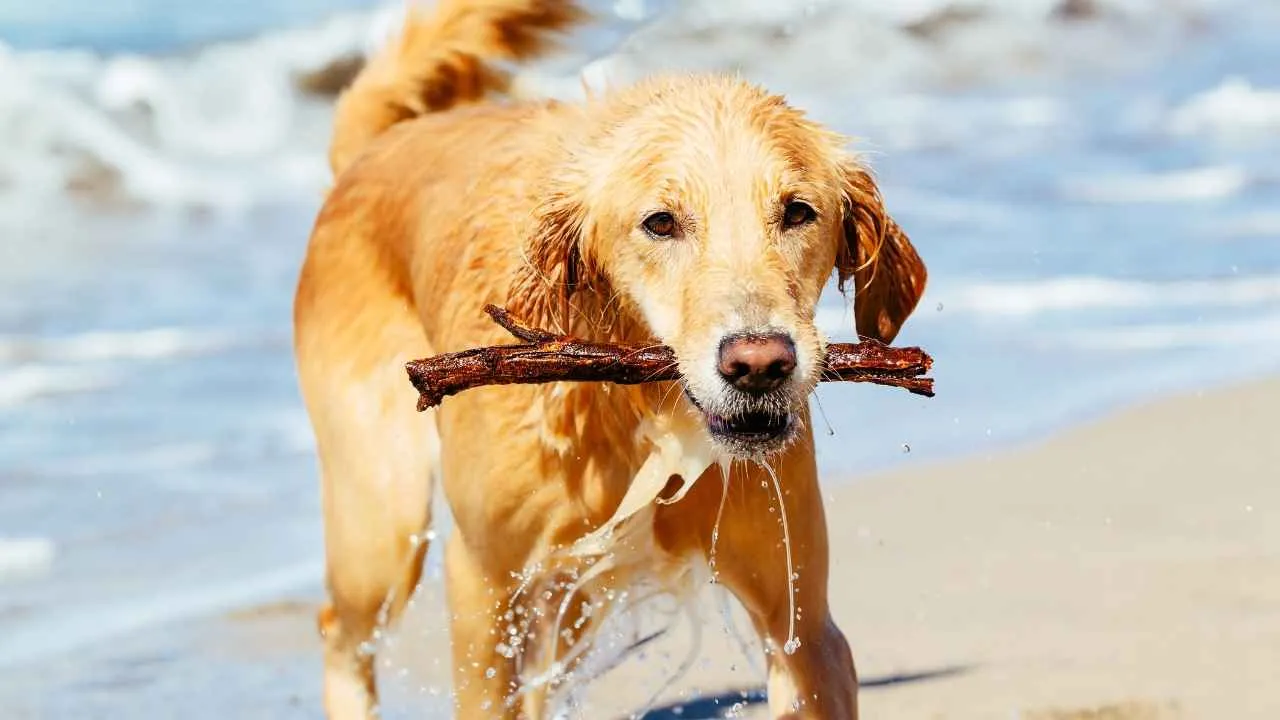
This loyal, intelligent, and easy-to-train breed is a medium-sized dog that stands 22-24 inches tall and weighs around 55-75 pounds, as per PetMD. It has short ears, a deep chest, a muscular build, and a broad head.
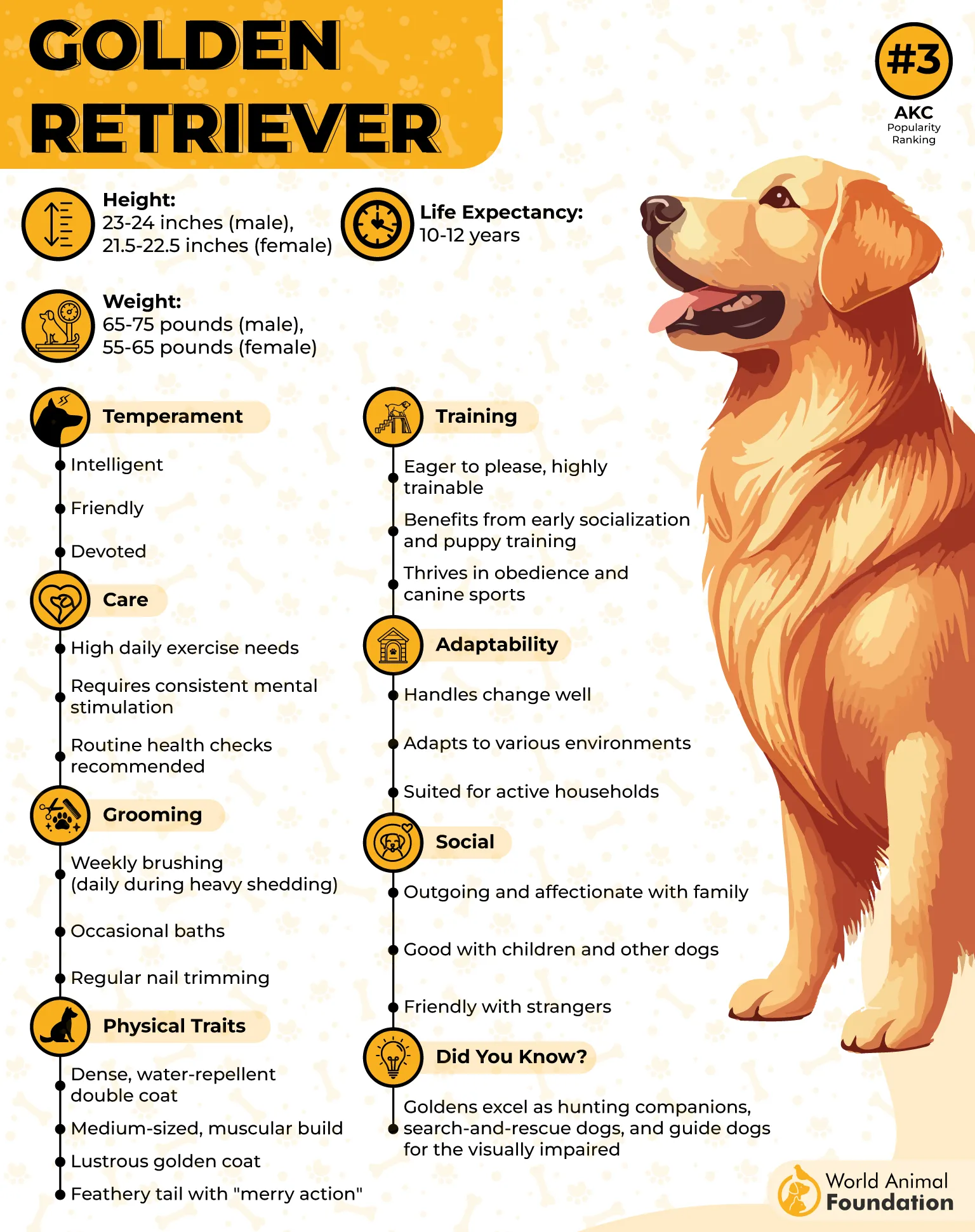
Known for its water-repellent outer coat and inner coat, the Golden Retriever comes in different shades of two colors: golden and cream. The shades include: honey-like hue, pale cream, lustrous warm gold, sun-kissed gold, and reddish-gold. The outer coat is either flat or wavy, and the inner coat is dense and short.
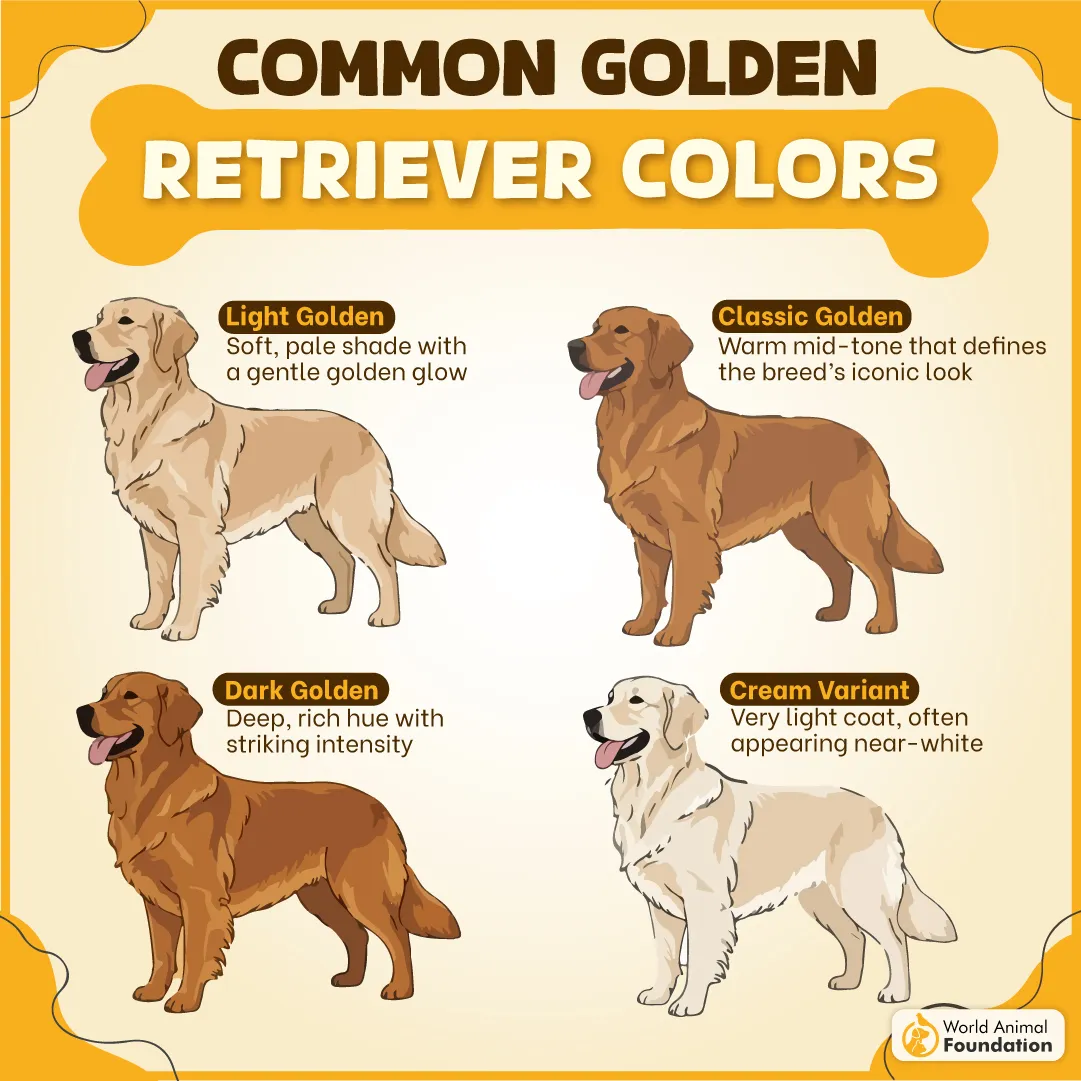
Both layers of the coat have natural oils, making the coat water-resistant. If the coat is not dried completely, the moisture can cause acute moist dermatitis and other skin-related issues. The coat blows in shedding seasons (spring and summer) heavily. Otherwise, weekly brushing and monthly baths are enough.
5. English Cocker Spaniel
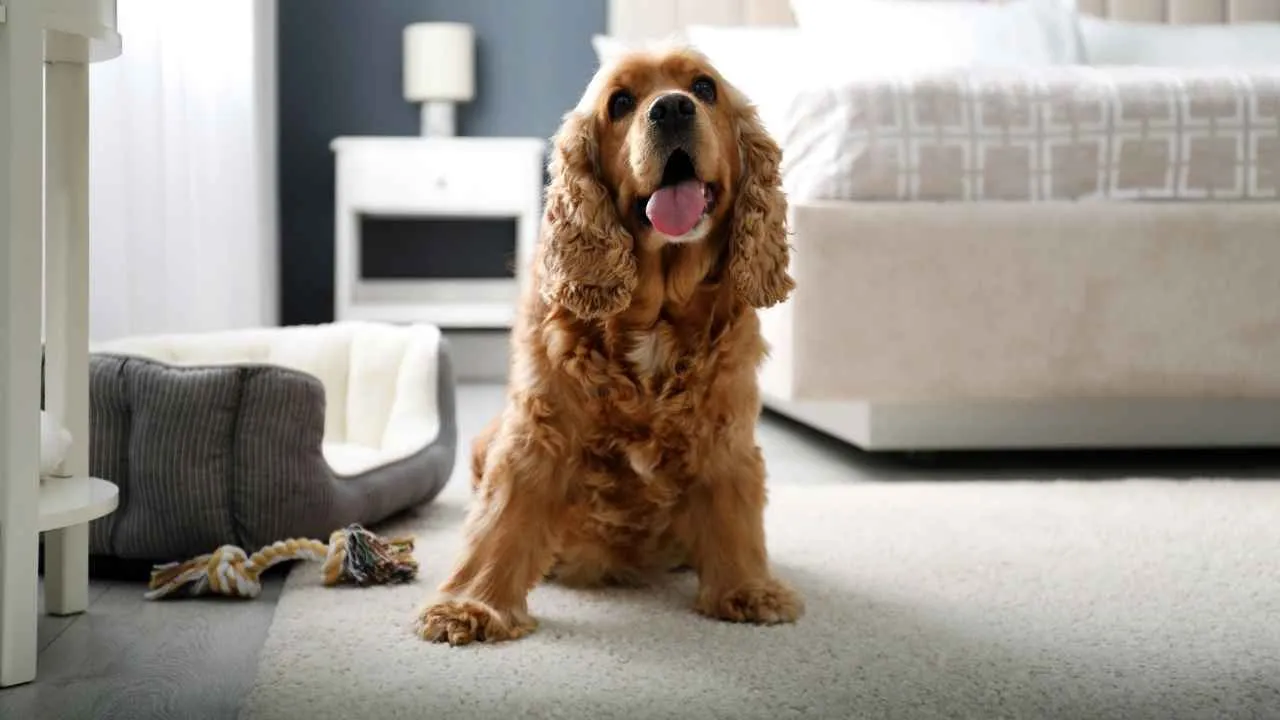
The breed has been depicted in the art and literature of England for 500 years, but was divided into two categories at that time: land spaniels and water spaniels. This working breed is also known as ‘Merry Spaniel’ because of its continuous wagging tail. Since the breed was used to flush woodcock, ‘cocker’ was added to the name because of this.
This is a double-coated breed with a longer and silky topcoat and a short and protective undercoat. There are feathing of the belly, chest, ears, and legs. The texture of the coat is either flat or slightly wavy. This friendly dog is classified into 2 groups based on coat colors: red (orange, lemon, and golden) and black (or variations like liver/brown).
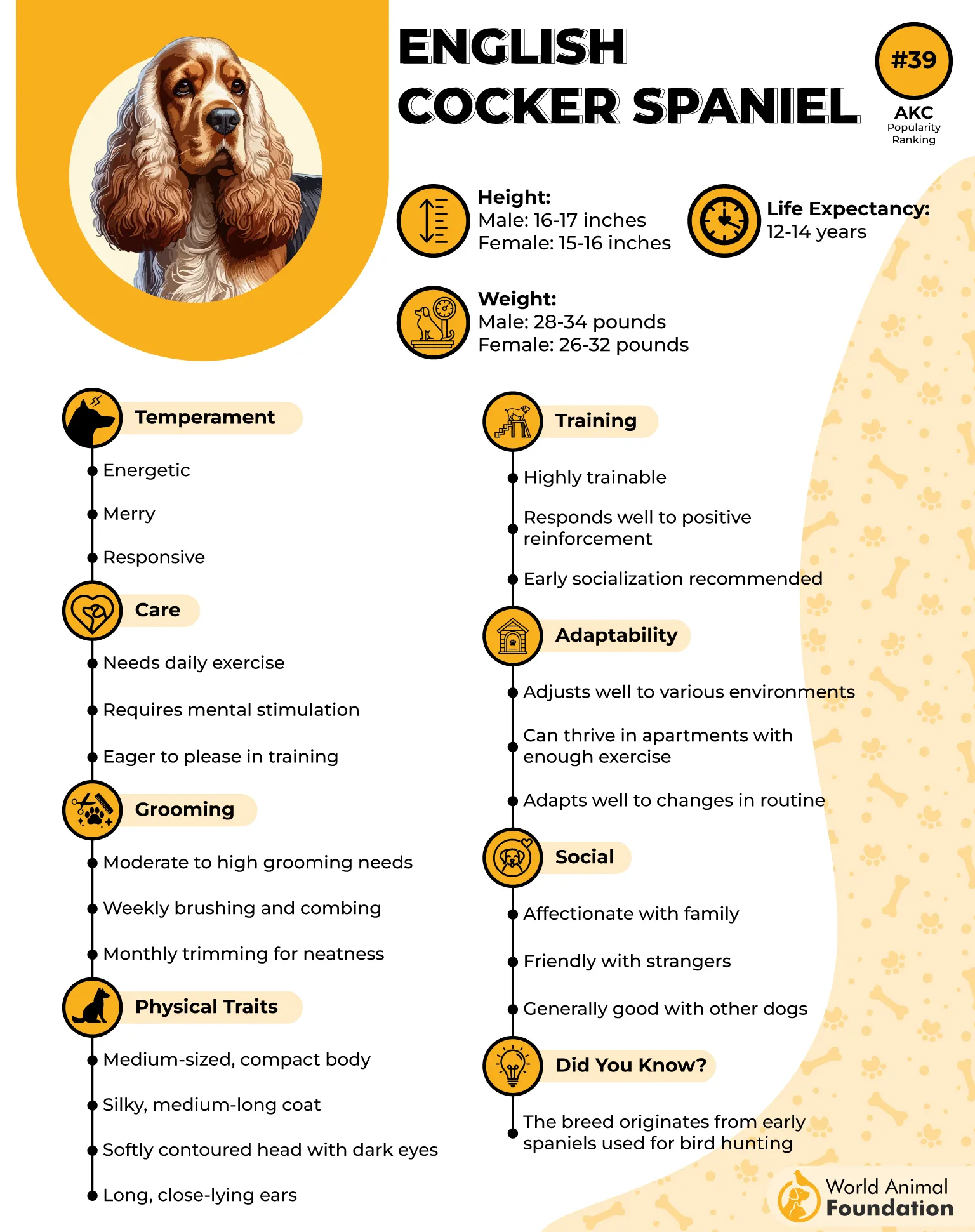
The silky jacket and thick feathers require regular grooming. Use a metal comb and a slicker brush to brush 2-3 times a week. Pay close attention to high-friction areas: armpits, behind the ears, and under the thighs. Avoid clipping with electric clippers since it can ruin the silkiness of the distinctive appearance.
6. Goldendoodle
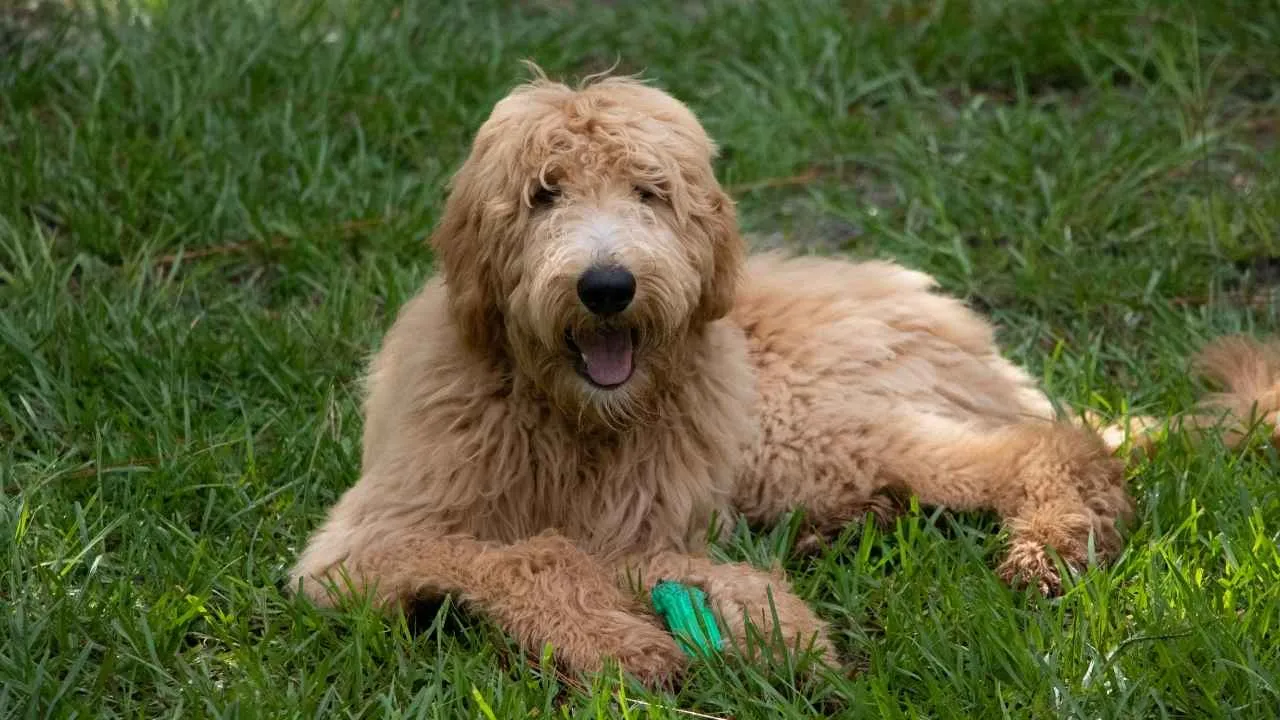
Originating in the 1990s, the Goldendoodle is a cross of the Golden Retriever and the Poodle. It has a friendly and affectionate nature, making it an ideal companion dog. The coat comes in 3 textures: straight (flat or shaggy coat), curly (hypoallergenic), and wavy (relaxed wavy appearance giving a teddy-bear appearance).
Despite having a red, chocolate, cream, and black coat, the most prominent one is the apricot (warm peachy and sun-kissed golden shade). The curly traits have come from the Poodle, and the water-resistant attribute comes from the Golden Retriever.
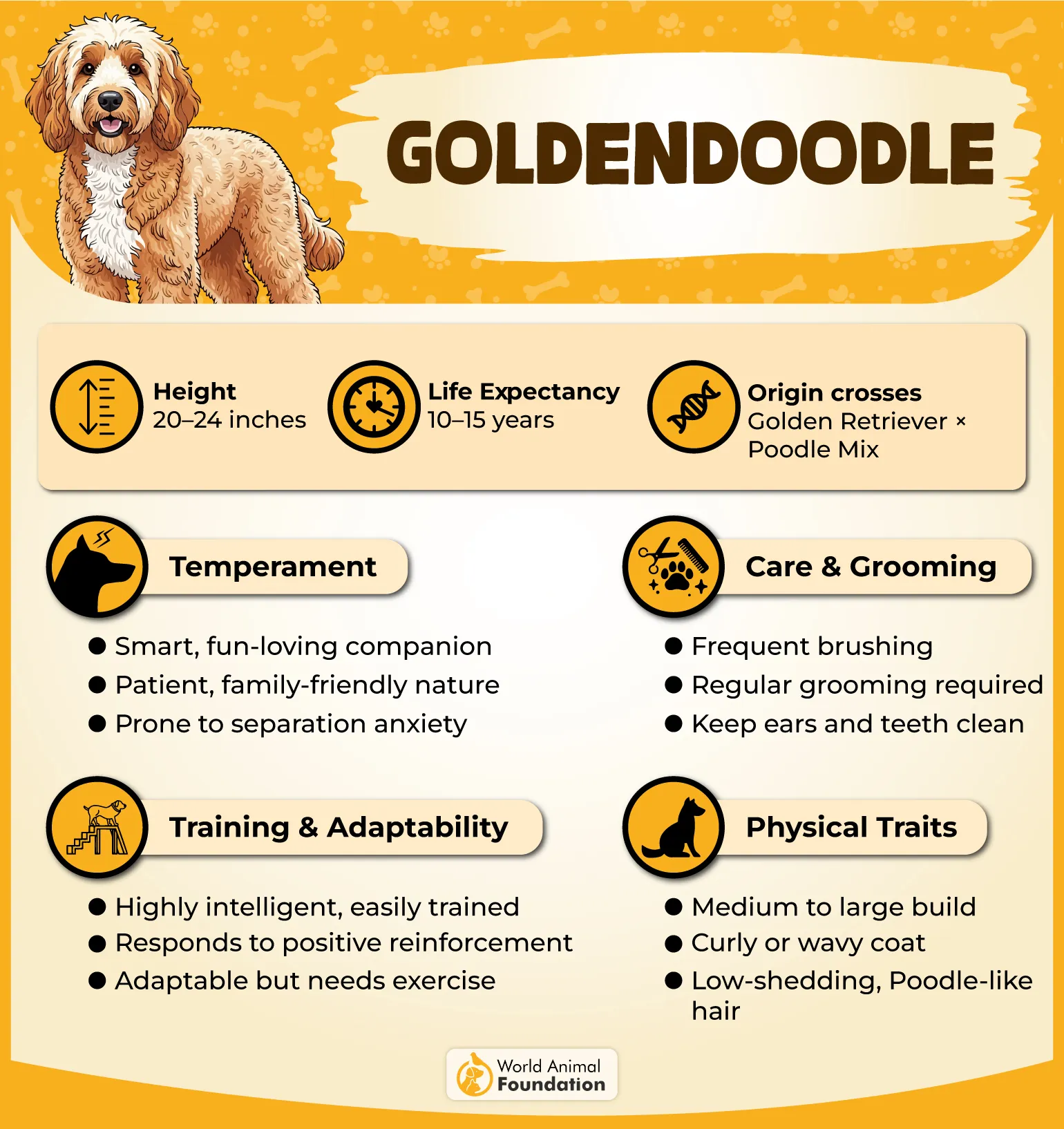
Though it produces less dander, the breed requires regular brushing (3-4 times a week), monthly baths, and professional grooming after 6-8 weeks. Trim the excess fur grown between the paws to prevent dirt build-up. Do not let air-dry the coat and always use a high-velocity dryer for this purpose.
7. Chow Chow
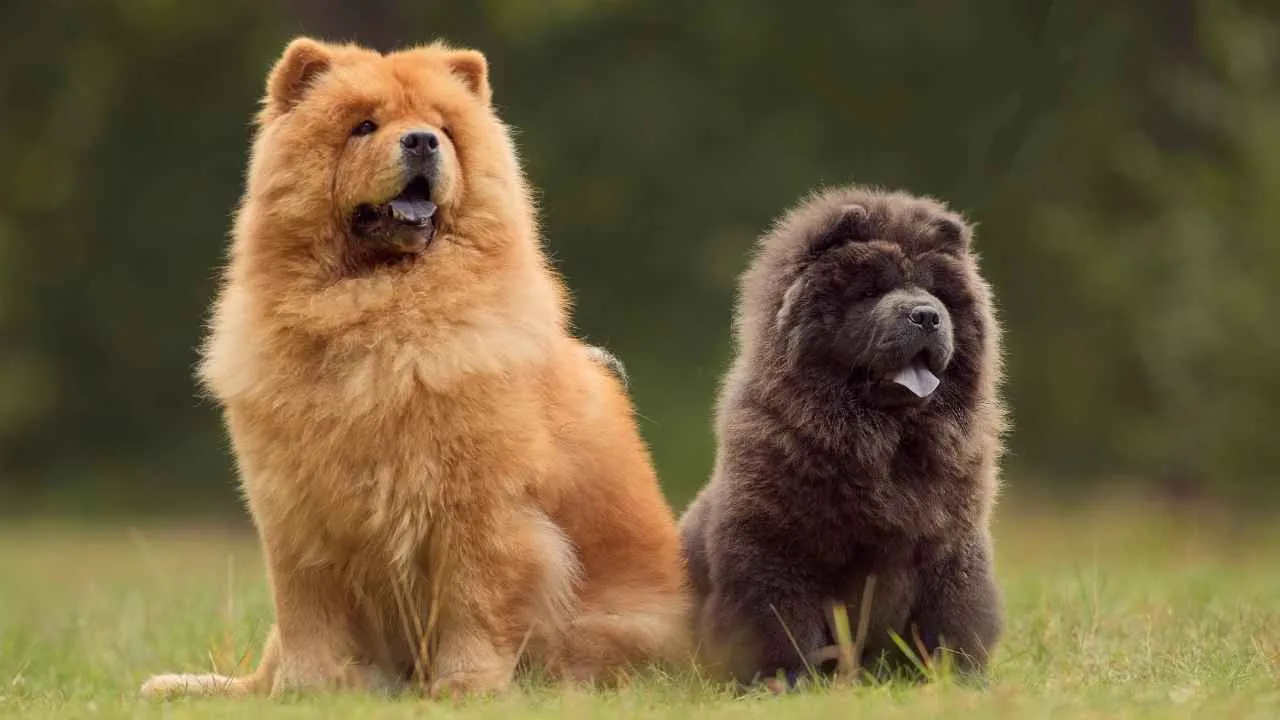
Possibly the oldest dog breed, even depicted in the artwork of China’s Han Dynasty (206 B.C.), the Chow Chow has been warming the royal laps for centuries. Even an emperor from the Tang dynasty is believed to have had at least 5,000 Chows, says the American Kennel Club (AKC).
The thick double coat comes in 2 different types: rough (coarse, long, and abundant) and smooth (sleek and short). Both have a mane around the neck. The coat color is diverse: blue, cream, black, red, and cinnamon.
It has a grey-blue/black tongue. Since the heavy coat reduces the air reaching the skin, it is prone to certain skin-related issues, such as hot spots and autoimmune skin diseases.
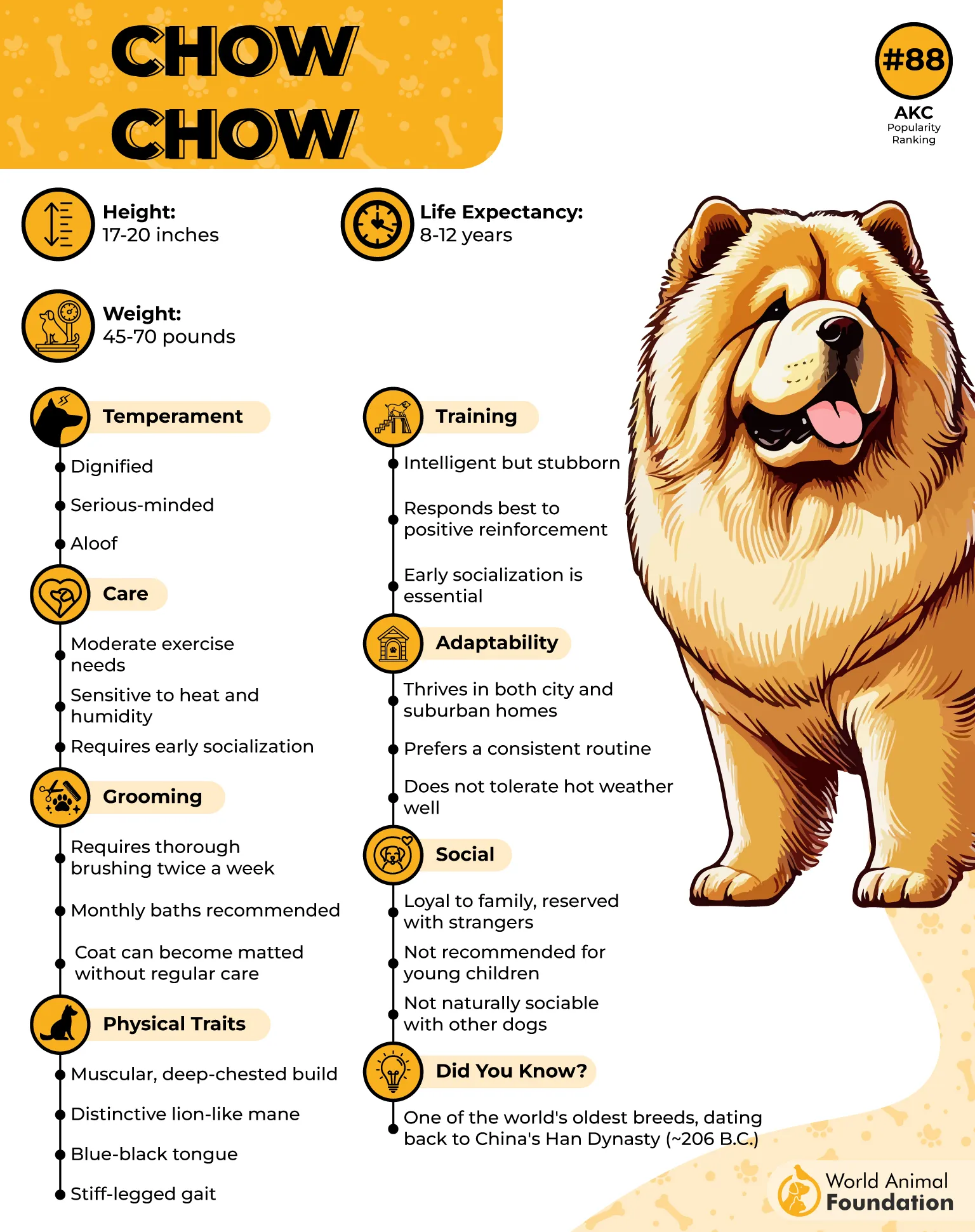
To prevent such diseases, you need to brush the coat (2-3 times a week) using a metal comb and a slicker brush. Never brush its smooth coat dry. Always moisten the coat using a light conditioning spray. Shaving is not recommended until necessary.
8. Vizsla
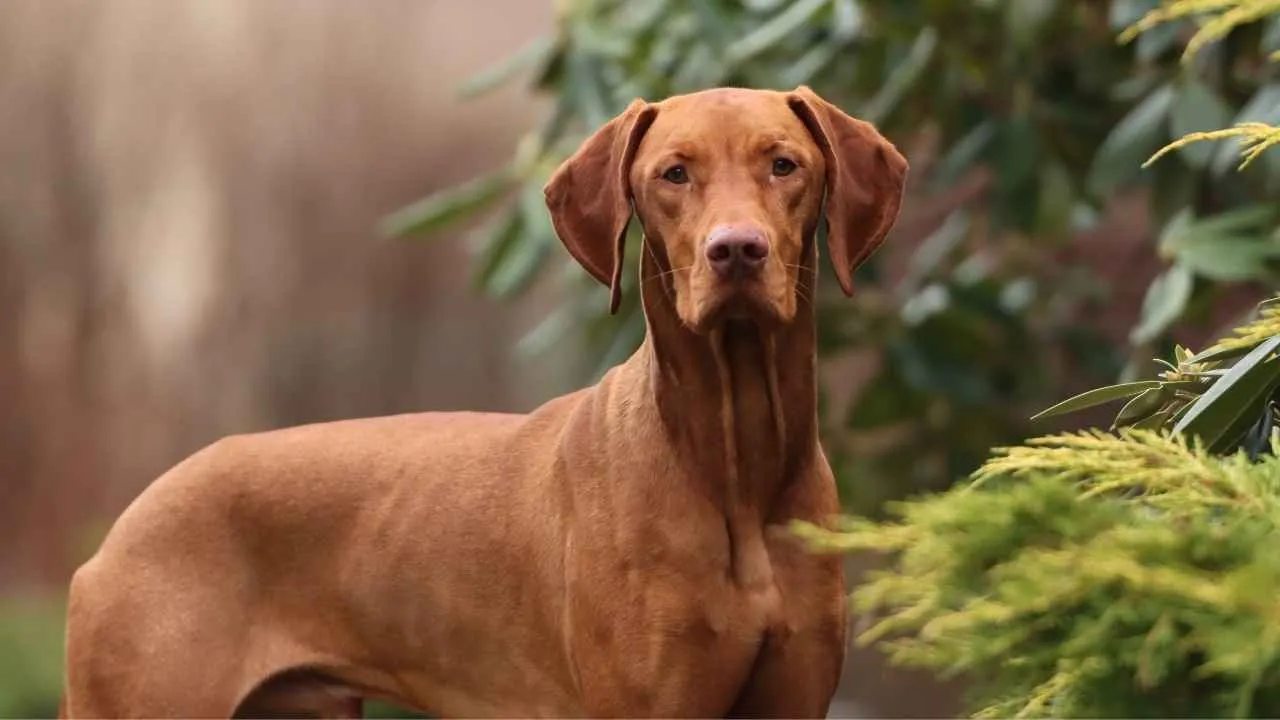
This is a medium-sized hunting dog that thrives in dog sports and was developed in Hungary to hunt down fowl and upland game birds. It is widely used to hunt, point, and retrieve. It is gentle, affectionate, and emotionally sensitive, making it a natural protective dog.
The coat comes in two varieties: wiredhead and shorthead. Both are single-layered and have rich, red-based-colorations: russet gold, dark sandy gold, and golden rust. Since the breed lacks an undercoat, it requires low maintenance (no clipping or trimming). Weekly brushing and bathing after 1-2 months are usually enough.
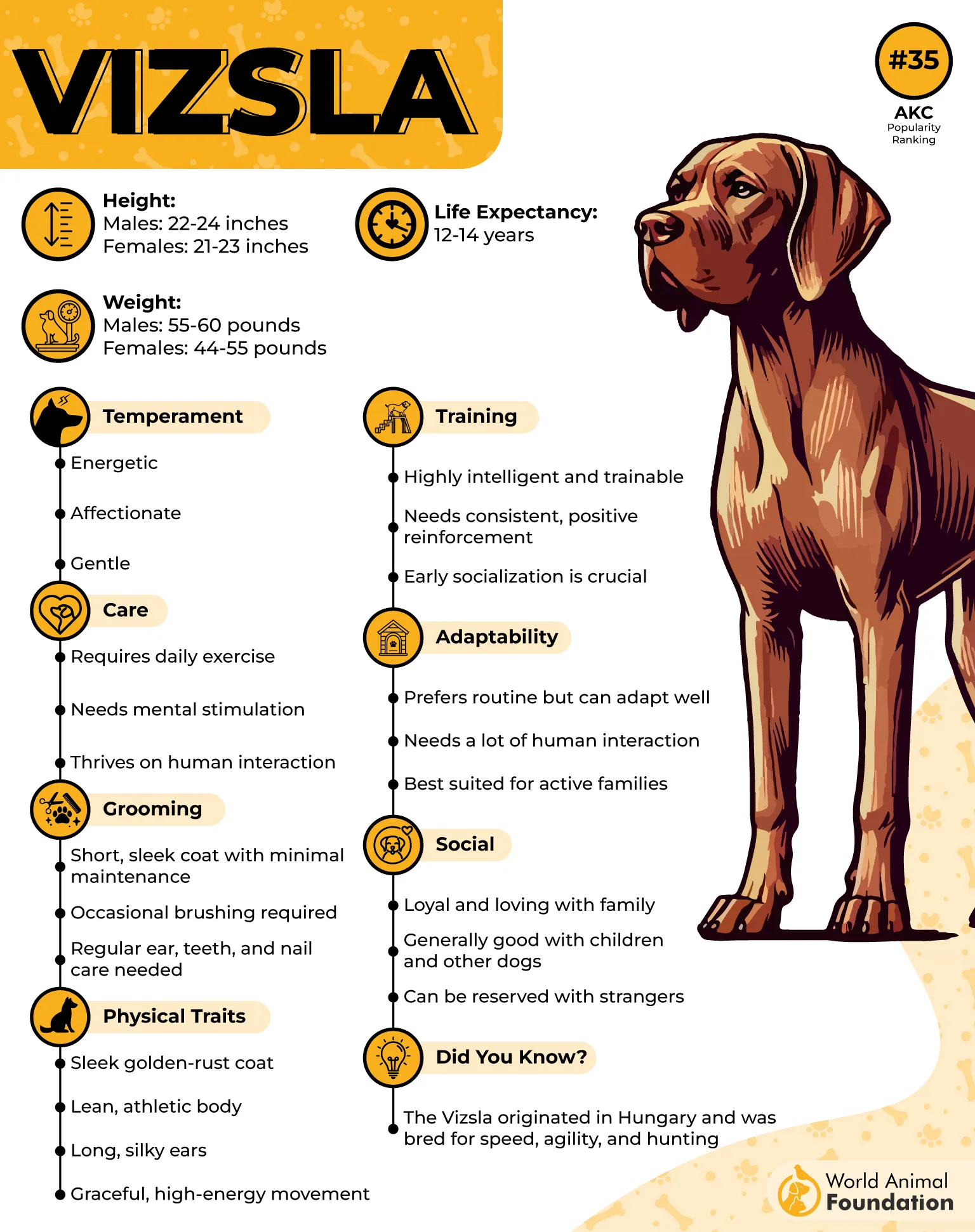
This dog is perfect for active families since it needs 1-2 hours of daily exercise: hiking, jogging, brisk walks, off-leash running, and indoor play for physical and mental stimulation. The 5-minute rule is ideal for puppies (increase 5 minutes of exercise each month til it reaches 18-24 months.
9. Saluki
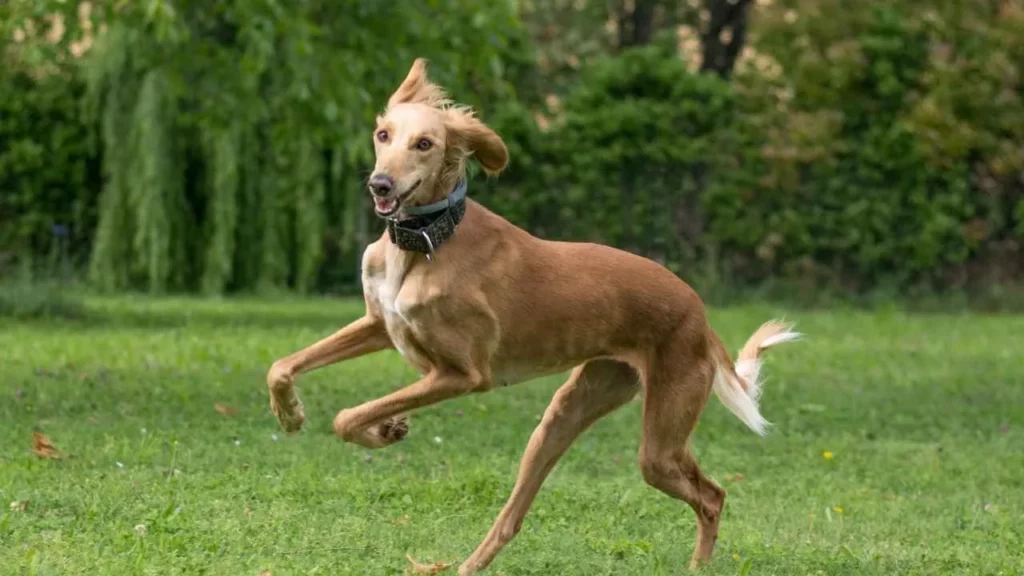
Also known as the Arabian hound was developed as a sighthound to hunt game animals. This is a purebred in both the Middle East and the West, and closely resembles Afghan Hounds. The breed is aloof of strangers and is known to have a stubborn streak.
The low-shedding coat consists of two types: smooth (short hair) and feathered (longer and silky hair on thighs, ears, shoulders, and back of the legs). The coat comes in solid colors (fawn, gold, white, cream, and red), tri-colors (black, white, and tan), grizzle, and parti-colors.
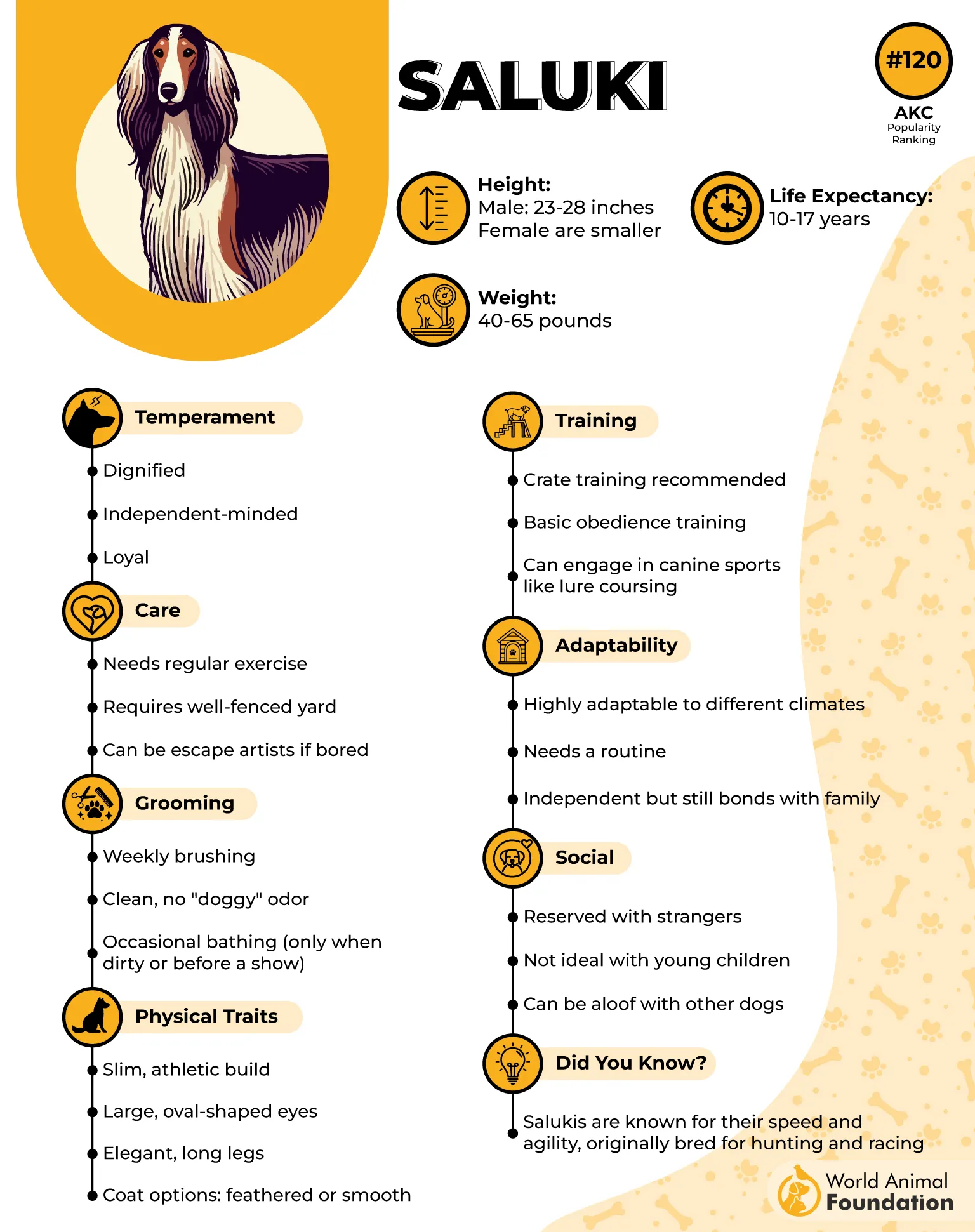
Smooth coat needs to be brushed weekly, while the feathered coat requires brushing 2-3 times a week. Use a product rich in natural oils for bathing to retain a healthy sheen. Use a snood to pull long ear fringes back during meals.
10. Borzoi
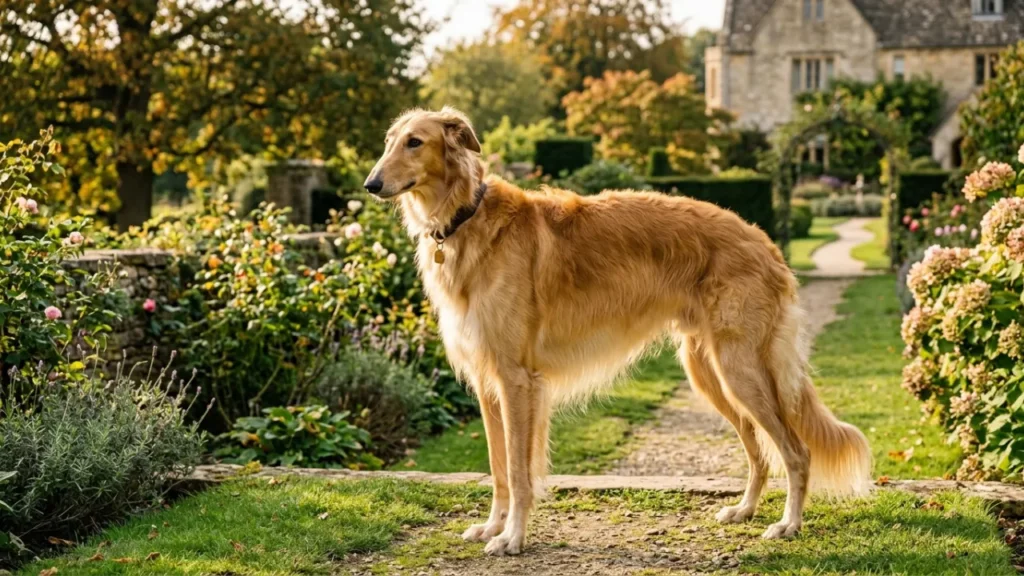
This Russian hunting dog is a sighthound developed for wolf hunting. It was bred by crossing Greyhound-like dogs from ancient Egypt with the heavily coated herding breed of Russia. The resulting breed was further crossed in the 19th century, giving birth to the Borzoi.
Its coat ranges from wavy to flat to slightly curly, with heavy feathering on legs, tail, and neck. The coat color comes in solid colors (cream, red, black, and fawn), white markings (white with colored patches, such as yellow, black, grey, and tan), sables (red and gold), and brindles.
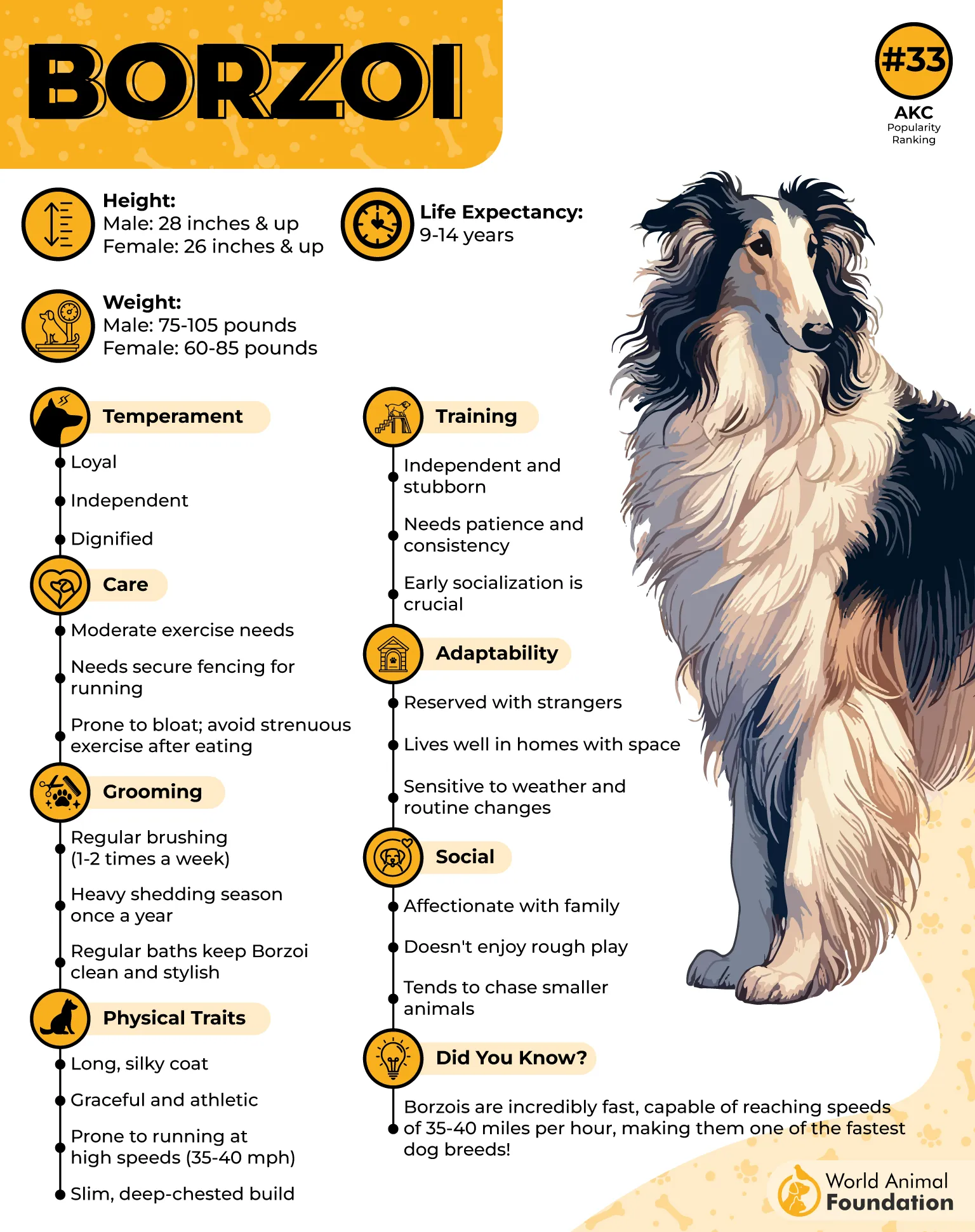
Hair between the paw pads needs to be trimmed regularly. You can use a detangling spray, blunt-edged scissors, a slicker brush, a meta comb, and a pin brush. Never rub the coat in a circular motion while bathing the dog.
Conclusion
Golden-coated dogs are not just visually stunning; each breed on this list comes with centuries of history, a distinct personality, and something genuinely worth knowing. From the Saluki’s 4,000-year royal legacy to the Goldendoodle’s modern-day allergy-friendly appeal, no two golden breeds are cut from the same cloth. The color may be similar, but the stories could not be more different.
Whether you are seriously considering a new dog or just here to appreciate the beauty, one thing is clear. A golden dog is not just a pet. It is a presence. Choose your shade, do your research, and find the one that matches your energy because somewhere out there is a light golden dog that was basically made for you.
