




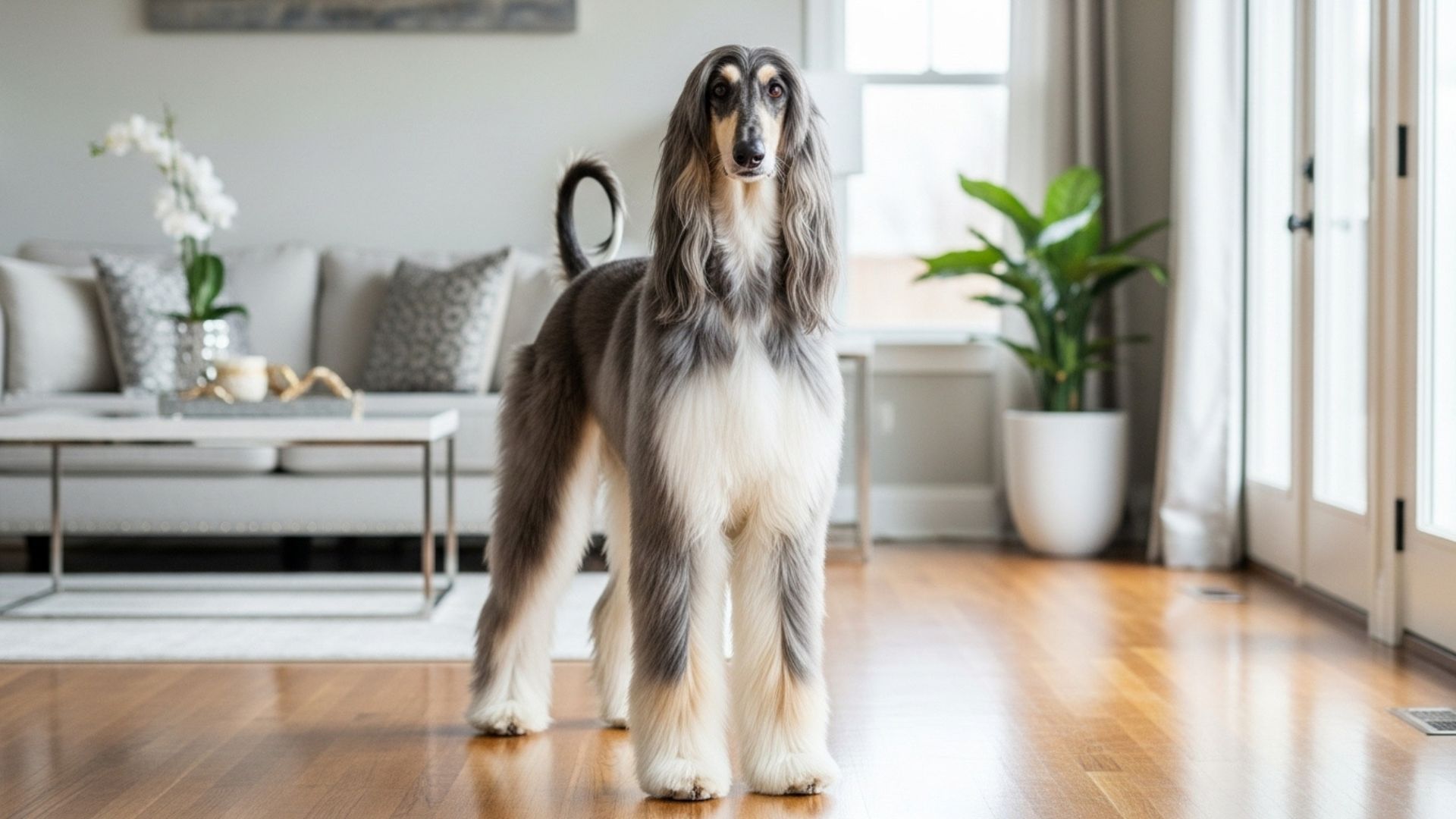
Ever looked at a dog’s face and felt instantly drawn to that refined, sensitive snout? Some noses seem almost too elegant for the rough and tumble world, yet they carry a quiet strength and history. It is the kind of detail that makes you pause, smile, and want to know more about what makes these dogs so special.
According to the Guardian, canine lifespan is closely linked to size, facial shape, and sex. Smaller, long-nosed dogs often live longer lives, with females averaging around 13.3 years. On the other hand, flat-faced dogs face more health risks, which can shorten their time with us.
This blog is a breed showcase focused on dogs with delicate noses. It highlights what makes these breeds unique, why their facial structure matters, and what potential owners should understand before welcoming one home.
Dog Breeds with Delicate Noses: A Breed Showcase
1. Saluki
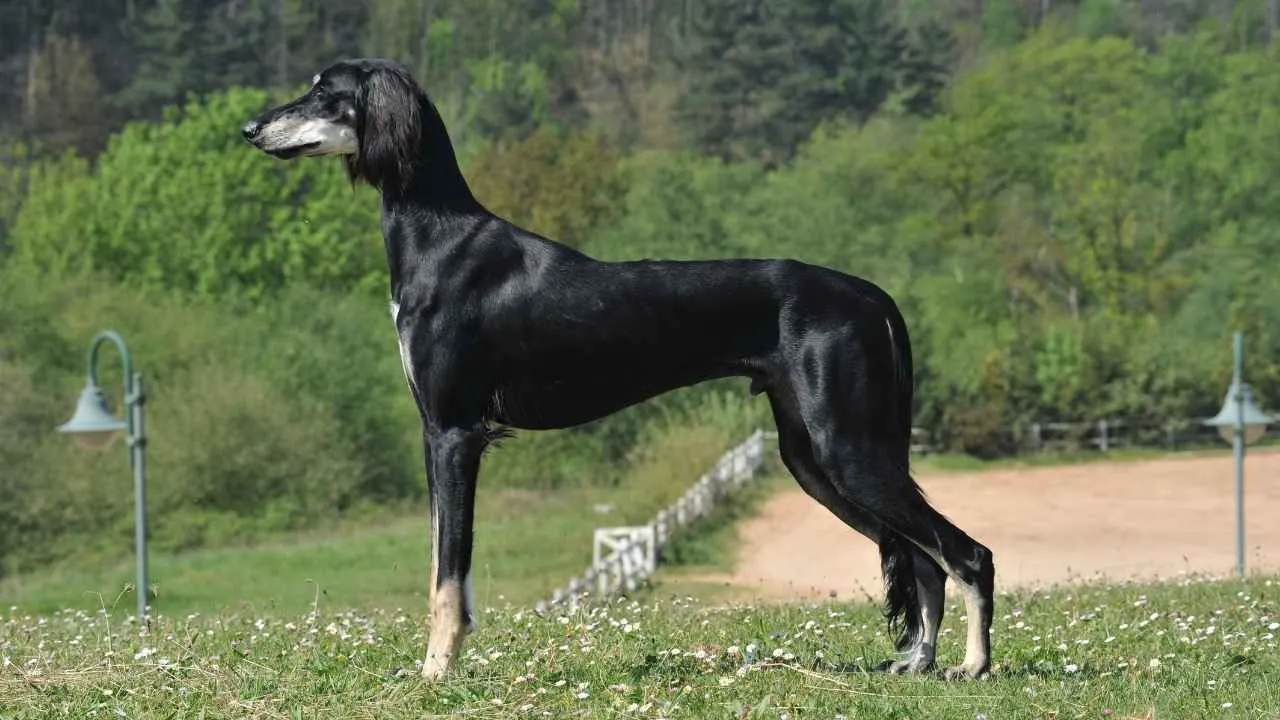
The Saluki is known as the “Royal Dog of Egypt” and is among the oldest domesticated breeds. This graceful sighthound has a swift build that reflects its ancient Fertile Crescent roots. Because of this heritage, the Saluki carries a noble profile that is truly timeless.
The Saluki features a narrow muzzle that is roughly equal to the length of its skull. This head shape is built for speed, which is why people call the Saluki the “Greyhound of the Desert.” Additionally, the gentle stop on its face adds to its adorable appearance.

A cool feature of the Saluki is the fragrant scent emitted by a gland at the back of its head. Owners cherish the Saluki for this trait, as it helps them distinguish the dog. Consequently, this unique smell makes these long-nosed dogs a very special companion.
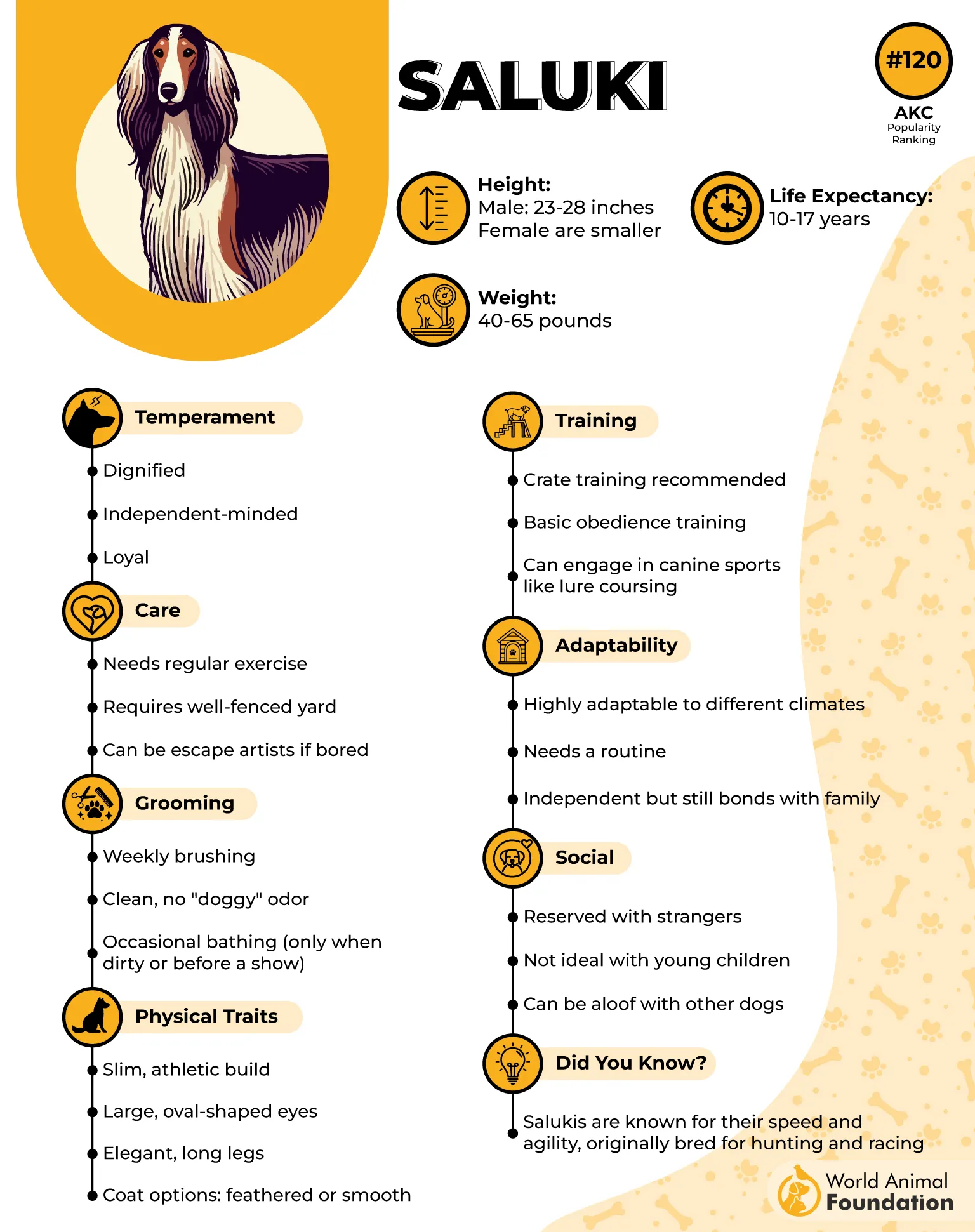
While they have a reserved nature, the Saluki forms a deep bond with its dog owners. However, the independent spirit of the Saluki means they aren’t always for first-time owners. You must be patient to manage the unique traits of this beautiful hound.
Care Tips
Maintain a healthy weight to protect joints
Use positive reinforcement for training
Avoid hard exercise after meals
2. Whippet
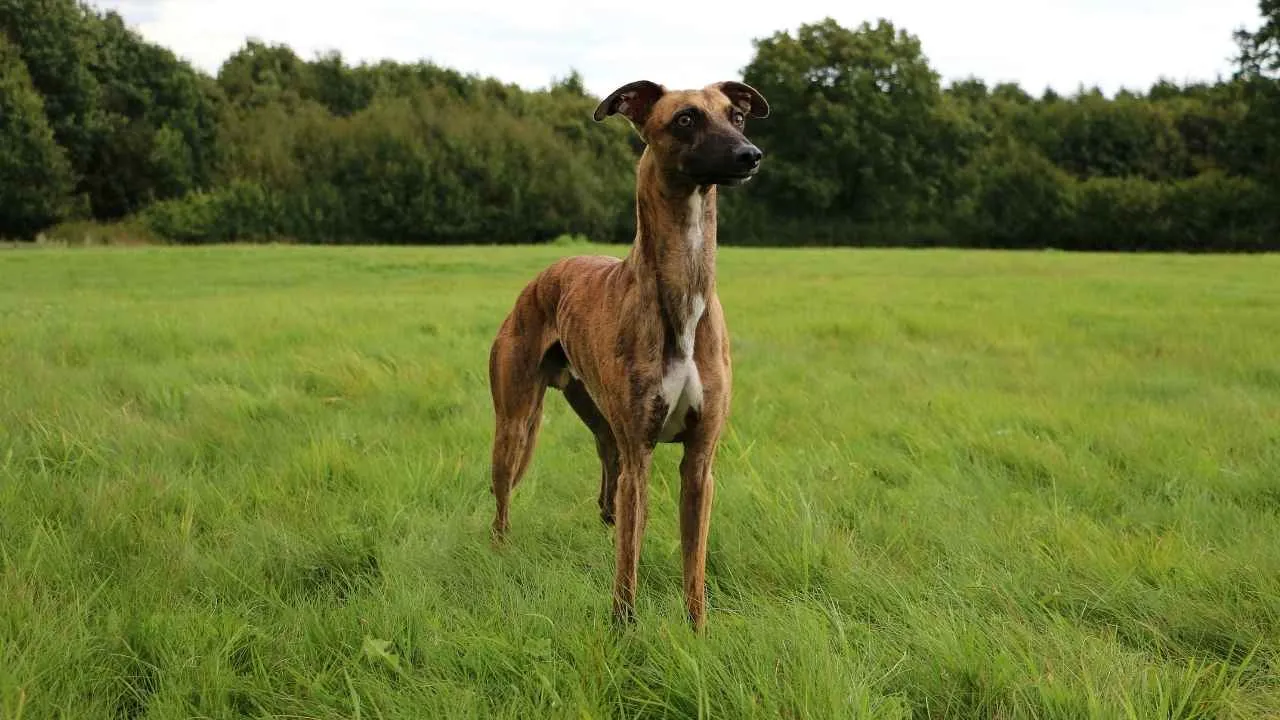
The sleek Whippet is known as the ‘Poor Man’s Racehorse’ and is lightning quick on its feet. While it is a gentle soul, it becomes business-minded the moment it has something to chase. This medium-sized breed is the definition of streamlined grace and athletic speed.
Whippets are bright, but these smart dogs also have an endearingly sensitive side to them. Although they rarely bark, the Whippet is always happy to say hello to new friends. Because they are social, the Whippet may struggle with separation anxiety if left alone.
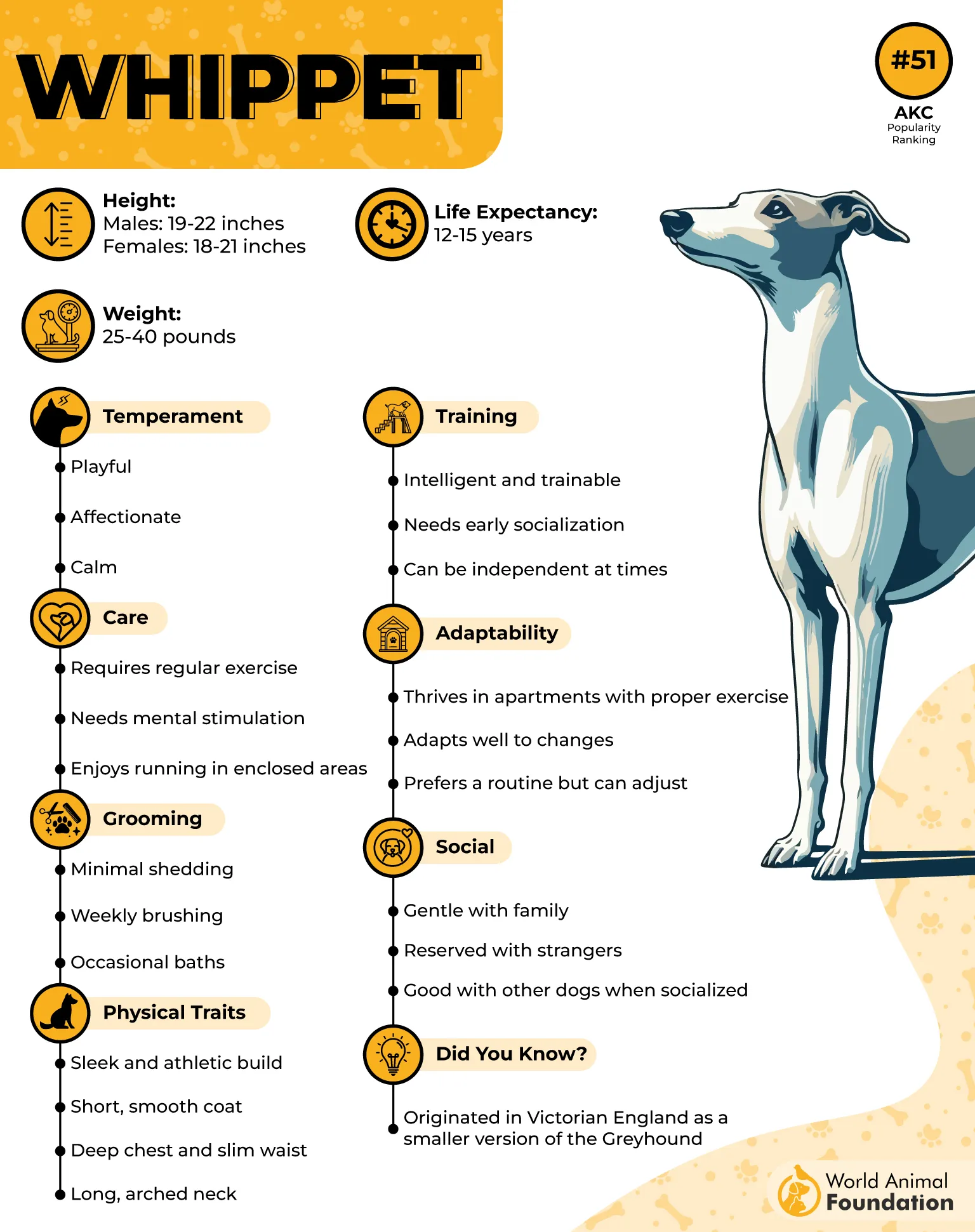
As sighthounds, Whippets have a slender head and a tapered muzzle built for aerodynamic speed. As a smaller cousin to the Greyhound, the Whippet is a long-snouted dog. This sleek structure helps them cut through the air while running.
Remember that your Whippet is a runner, and you likely won’t keep up with him. Since they reach 35 mph, the Whippet needs a fenced yard to expend energy safely. A secure area is ideal for these pups to zoom around.
Care Tips
Feed a diet rich in high-quality animal protein with moderate fat
Provide warm coats, jumpers, and dry shelter in cold weather
Use soft bedding and avoid rough play on hard surfaces to protect thin skin
3. Afghan Hound
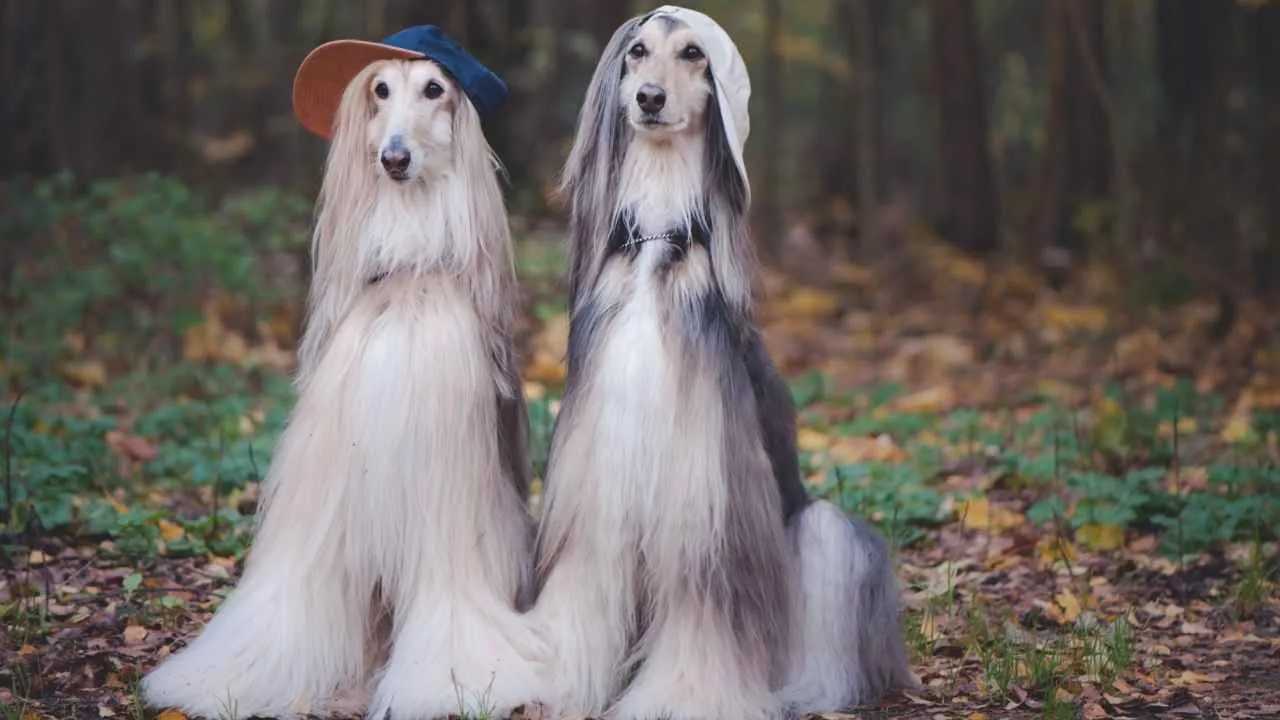
The Afghan Hound is famous for its luxurious, long hair that looks great in any color. Her long face features a prominent nose, giving the Afghan Hound a regal, Roman appearance. Additionally, her dark, expressive eyes and long ears add to the exotic look.
The temperament of an Afghan Hound is unique because they are very reserved and aristocratic. However, owners know that the Afghan Hound has a playful side behind that exterior. Although called aloof, they are still excellent family dogs to live with.
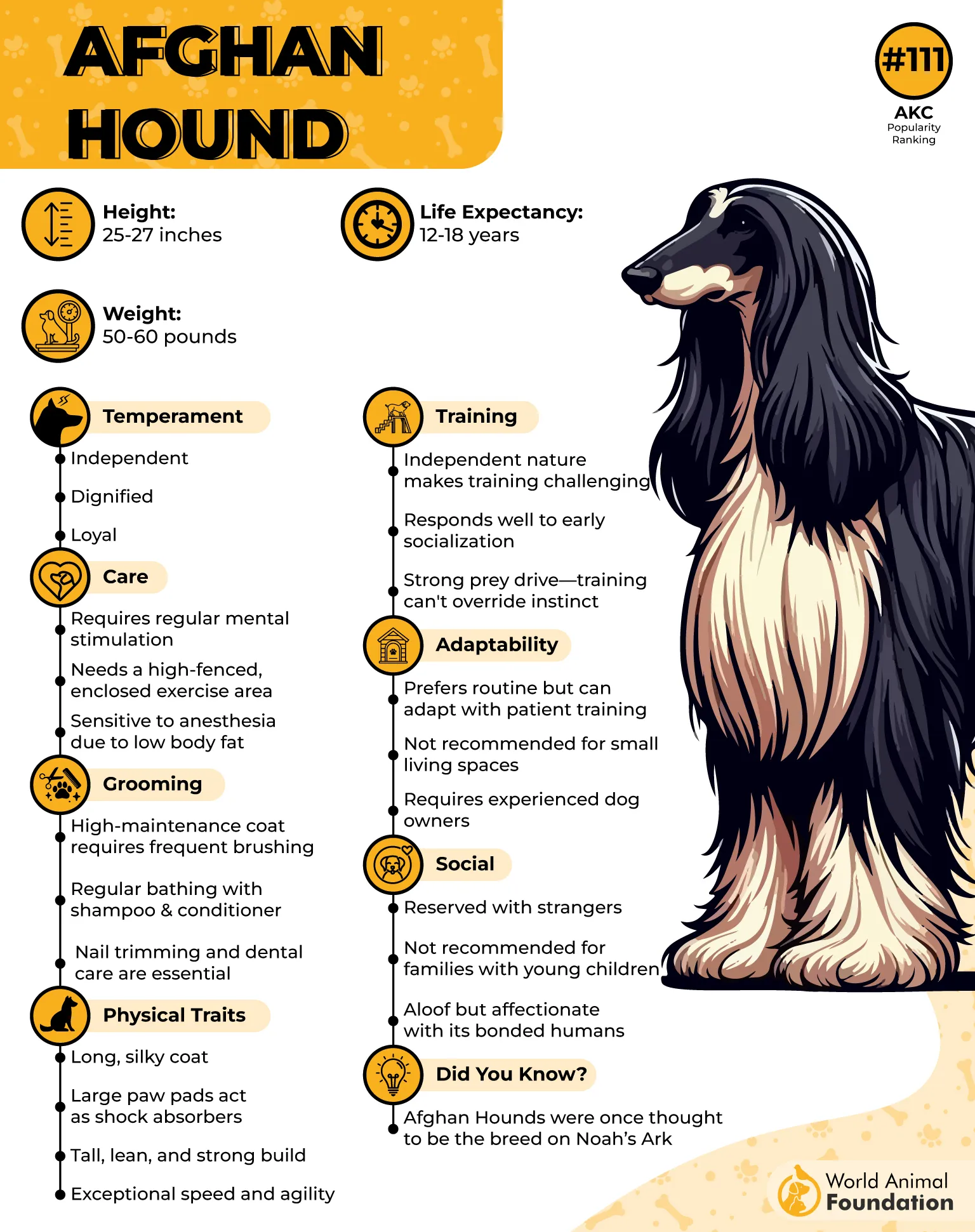
This breed is wary of strangers, but the Afghan Hound does well with children. Because they are independent, you should approach training an Afghan Hound with a thoughtful plan. Their intelligence is high, but they prefer doing things on their own terms.
As sighthounds, Afghans have a natural instinct to chase anything that moves quickly. For this reason, you should always keep an Afghan Hound on a leash, as mentioned by PetMD. They are great at jumping, so the higher the fence for your dog, the better. Moreover, these pups have a high energy level, so they are best suited for active families.
Care Tips
Do not brush the coat when it is dry or dirty
Serve 3 to 4 meals each day to aid healthy growth
Keep fresh, clean water available at all times
4. Greyhound
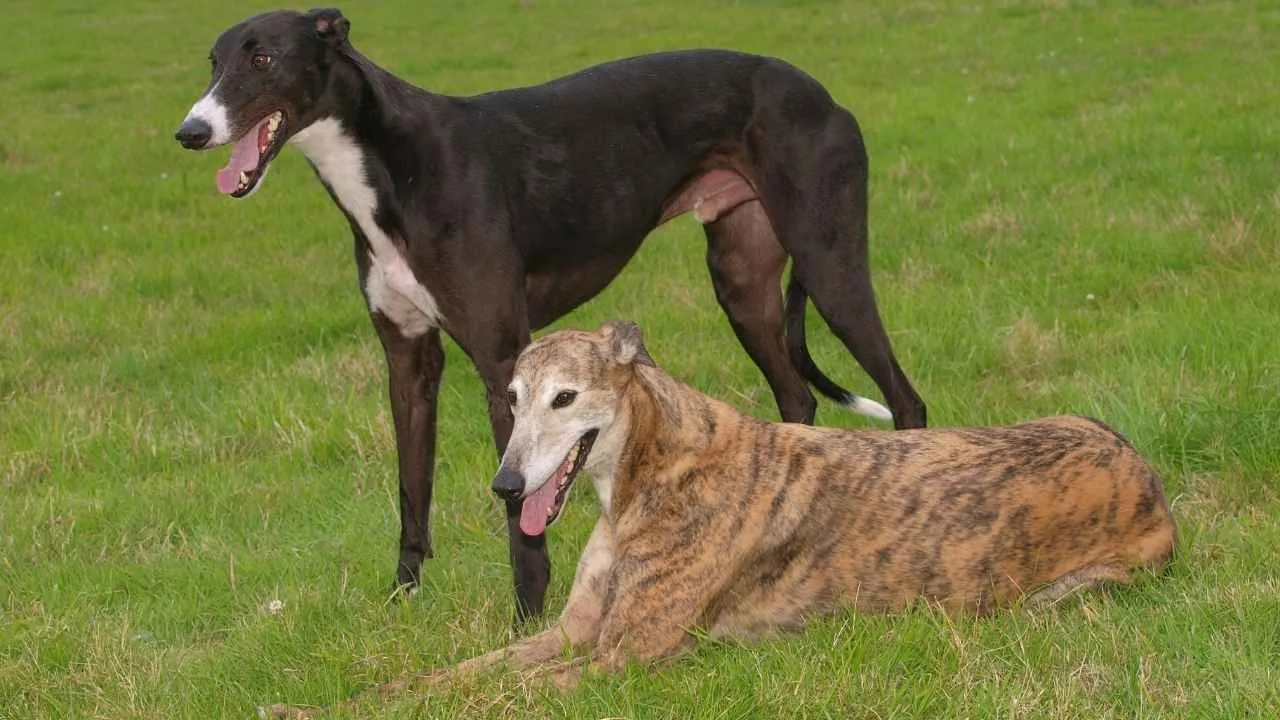
The Greyhound is the fastest dog breed, featuring a sleek, aerodynamic body and powerful legs. Originally bred as a hunting dog, the Greyhound’s agility made them excellent at catching prey. Today, these dogs are famous for their 45 mph speed and grace.
Greyhounds are “long-headed,” featuring a long snout designed for speed rather than scent hunting. This signature narrow head helps the Greyhound stay aerodynamic while it is sprinting. Despite this, they are called “couch potatoes” because the Greyhound loves to lounge.
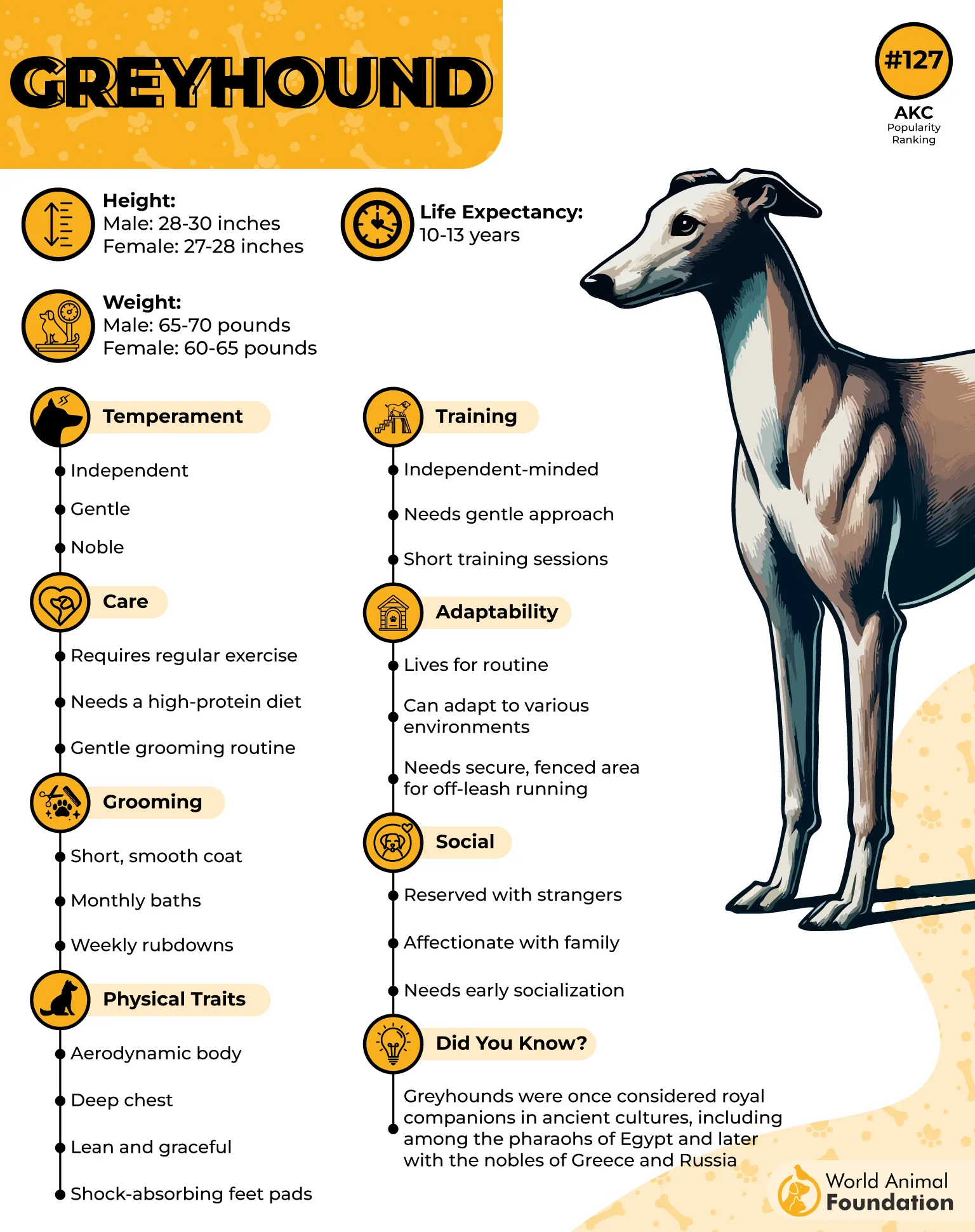
Most Greyhounds have a wonderful temperament and are generally very friendly and non-aggressive dogs. Although a Greyhound can be aloof with strangers, a treat makes it your friend. Remember these dogs can get severe separation anxiety if they spend alone time for extended periods.
These dogs have a sensitive side and react quickly to tensions within the home. A Greyhound can become shy if it experiences mistreatment, even if it is unintentional. Their temperament is shaped by many factors, so proper socialization is vital for them.
Care Tips
Brush your Greyhound’s teeth at least once a week
Clean her ears every week, starting from puppyhood
Watch for food sensitivities and any changes in weight
5. Boxer
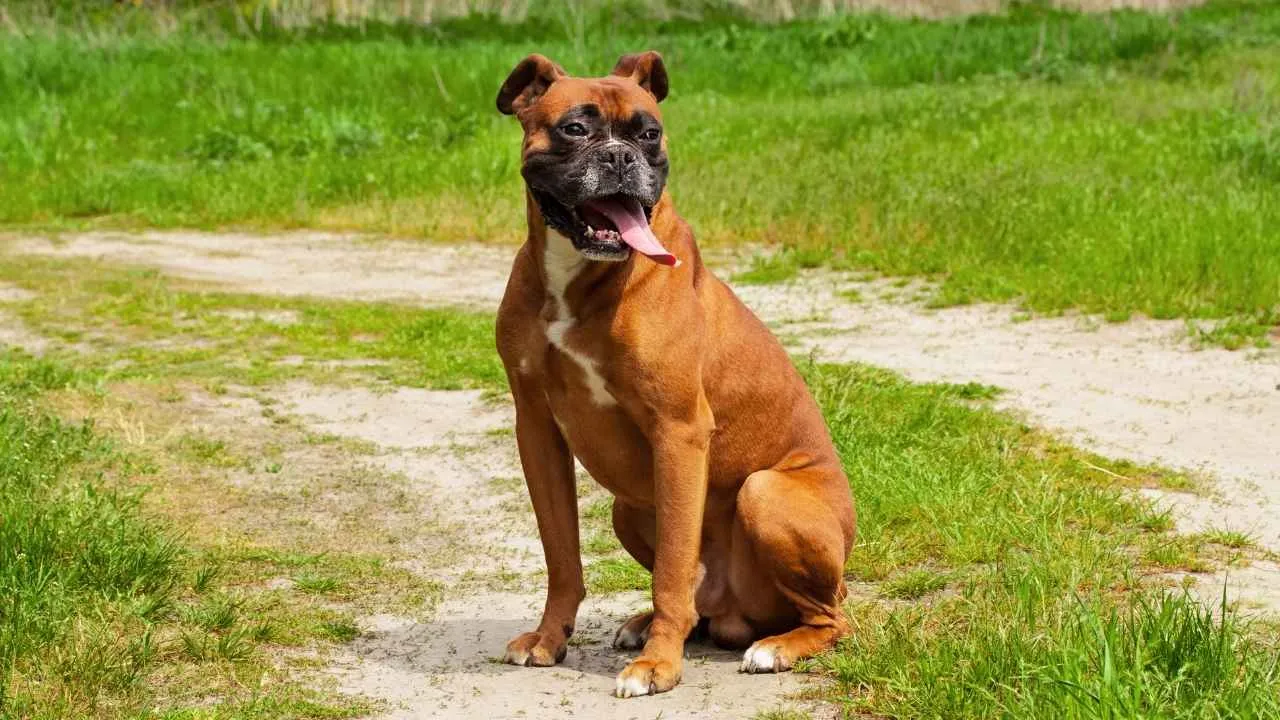
Boxer dogs possess a recognizable nose that is short, broad, and black with an upturned snout. As a brachycephalic breed, the Boxer has a flat face that contributes to its wrinkled look. You might even see freckles on a Boxer puppy, which adds more charm.
Boxers are happy, trustworthy dogs that remain completely devoted to their human family. While they protect loved ones, a Boxer can be quite wary of strangers. However, they will eventually warm up and show off the famous charm of the breed.
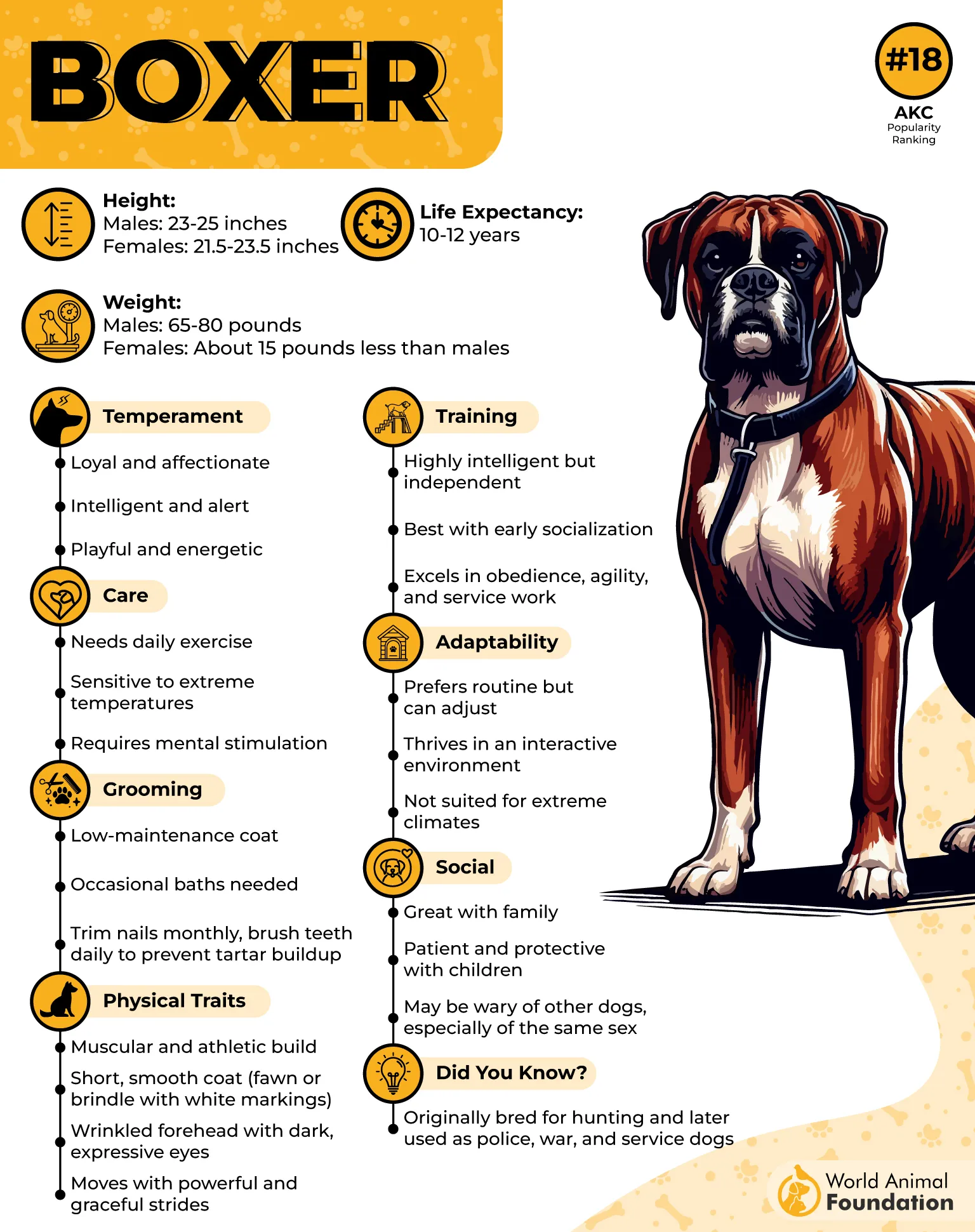
A notable trait of a Boxer is its constant desire for human affection and physical companionship. Often called the “clown,” the Boxer is an eternal puppy that stays bouncy. They have been popular pets for years because the Boxer has a gentle temperament.
The American Kennel Club (AKC) notes that Boxers generally have an affectionate nature and tend to be gentle when playing with children. It is recommended to start socialization so the Boxer learns to manage its strength. Because they are boisterous, a Boxer is ideally suited for families with teenagers.
Care Tips
Monitor breathing during hot weather
Use elevated bowls for meals
Provide daily high-energy mental play
6. Brussels Griffon
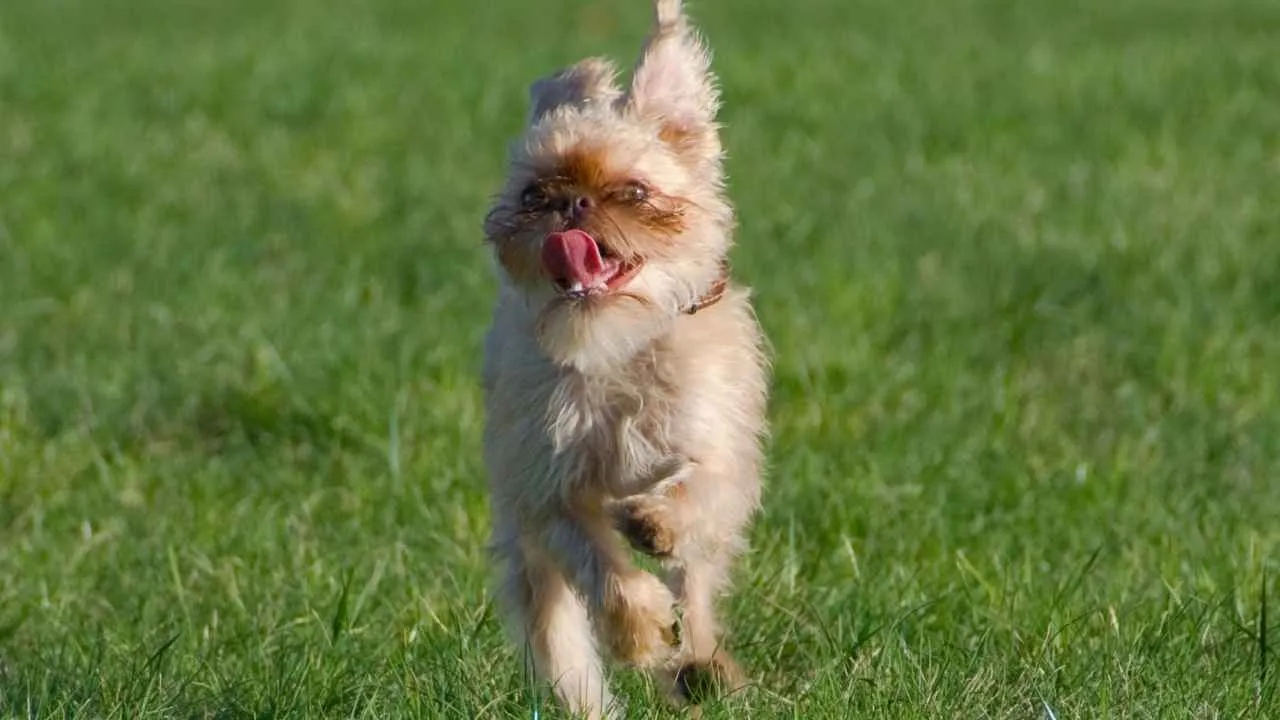
The Brussels Griffon is a compact toy breed with a square body and muscular legs. Because they are brachycephalic, the Brussels Griffon has a flat face and a short nose. These features mean the Brussels Griffon may sometimes struggle with heat or breathing problems.
The Brussels Griffon is a loyal companion that loves its human family. While they are protective, the Brussels Griffon primarily desires to be the center of attention. If you have children, it is best to raise the dog with them.
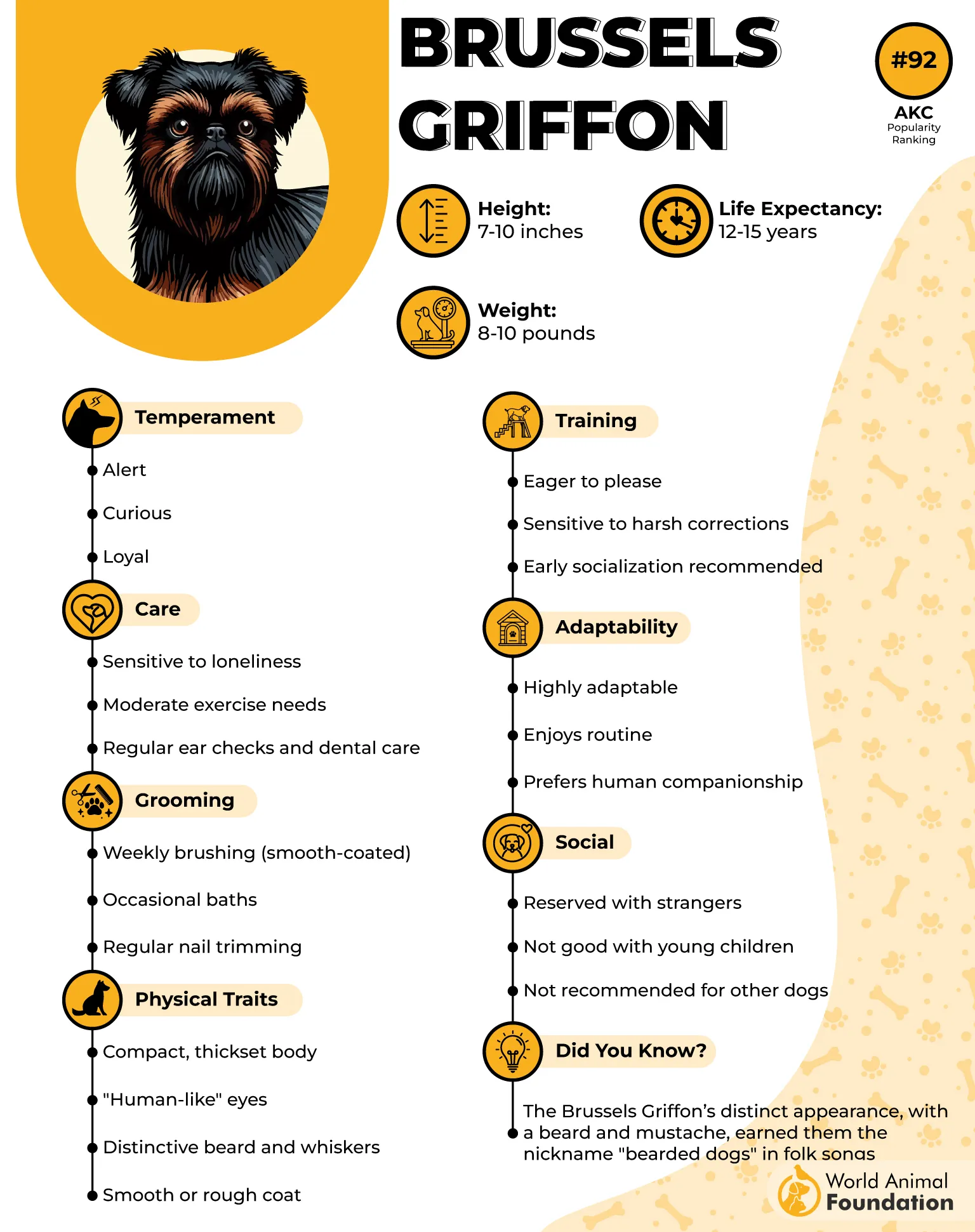
Your Brussels Griffon will be friendly with strangers once he knows they are welcome. He gets along with other animals, though the Brussels Griffon often forgets his size. This “big dog” attitude is a classic trait of the spunky Griffon personality.
These dogs have a smooth coat that is a great choice for people with allergies, but regular grooming is recommended. While they enjoy play, the Brussels Griffon does not require extensive exercise to stay fit. This makes the Brussels Griffon an excellent companion for a less active lifestyle.
Care Tips
Check eyes for dust daily
Walk using a supportive harness
Schedule regular professional dental cleanings
7. Japanese Chin
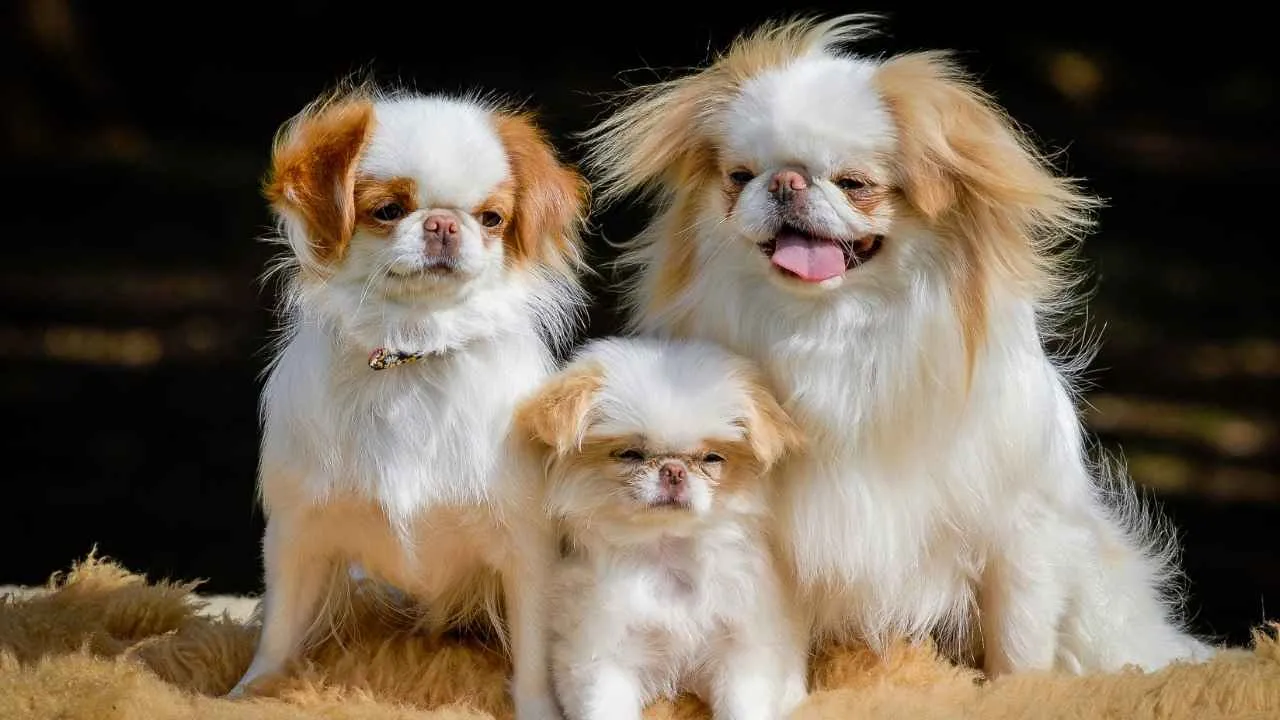
Japanese Chin is a dainty, happy little dogs that feature a silky coat in black or red. They are stylish in movement and carry a feathered tail plumed over their back. You will find that the Japanese Chin is smart, making it a very adorable pet.
The head is a major characteristic of the Japanese Chin, as it is large but not coarse. Even though the muzzle is short, the nose is not recessed or wrinkled. This “snub” nose is best seen when looking at the Chin from the side.
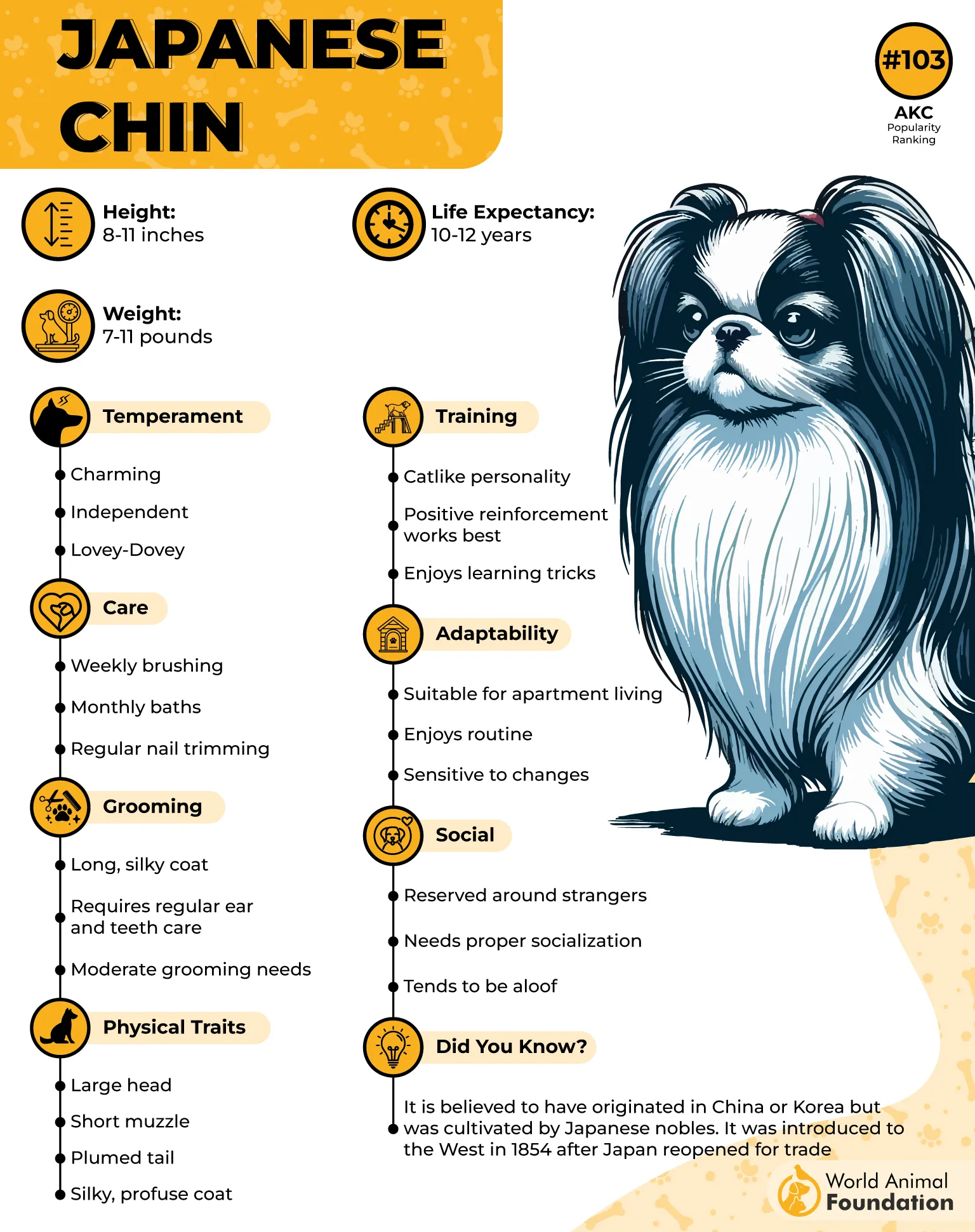
In short-muzzled breeds, the nostrils should be large to help the Japanese Chin breathe. The nose color should match the coat, appearing black or red. It is also important that the muzzle looks well-cushioned on each side of the nostrils.
The Japanese Chin is an even-tempered, loyal breed that develops strong bonds with pet parents. Moreover, these smaller dogs will do well in an apartment. Although the Japanese Chin is not a high-energy dog, regular exercise is a must for physical and mental stimulation.
Care Tips
Provide stairs for high furniture
Measure food portions very strictly
Keep indoor environments calm and quiet
Conclusion
Living alongside a sensitive snout is a reminder that beauty often comes with quirks. Those refined faces and delicate noses need a little extra care, a softer touch, and a lot of understanding. In return, you get elegance, loyalty, and plenty of playful antics packed into every glance.
These pups may sniff the world differently, but that sensitivity is part of their charm. From dramatic zoomies to quiet cuddle moments, life never feels boring. You just learn to slow down, adapt, and laugh more often.
So if your heart leans toward a fragile nose, embrace it fully. With patience, play, and love, you gain a companion that feels truly special.
