




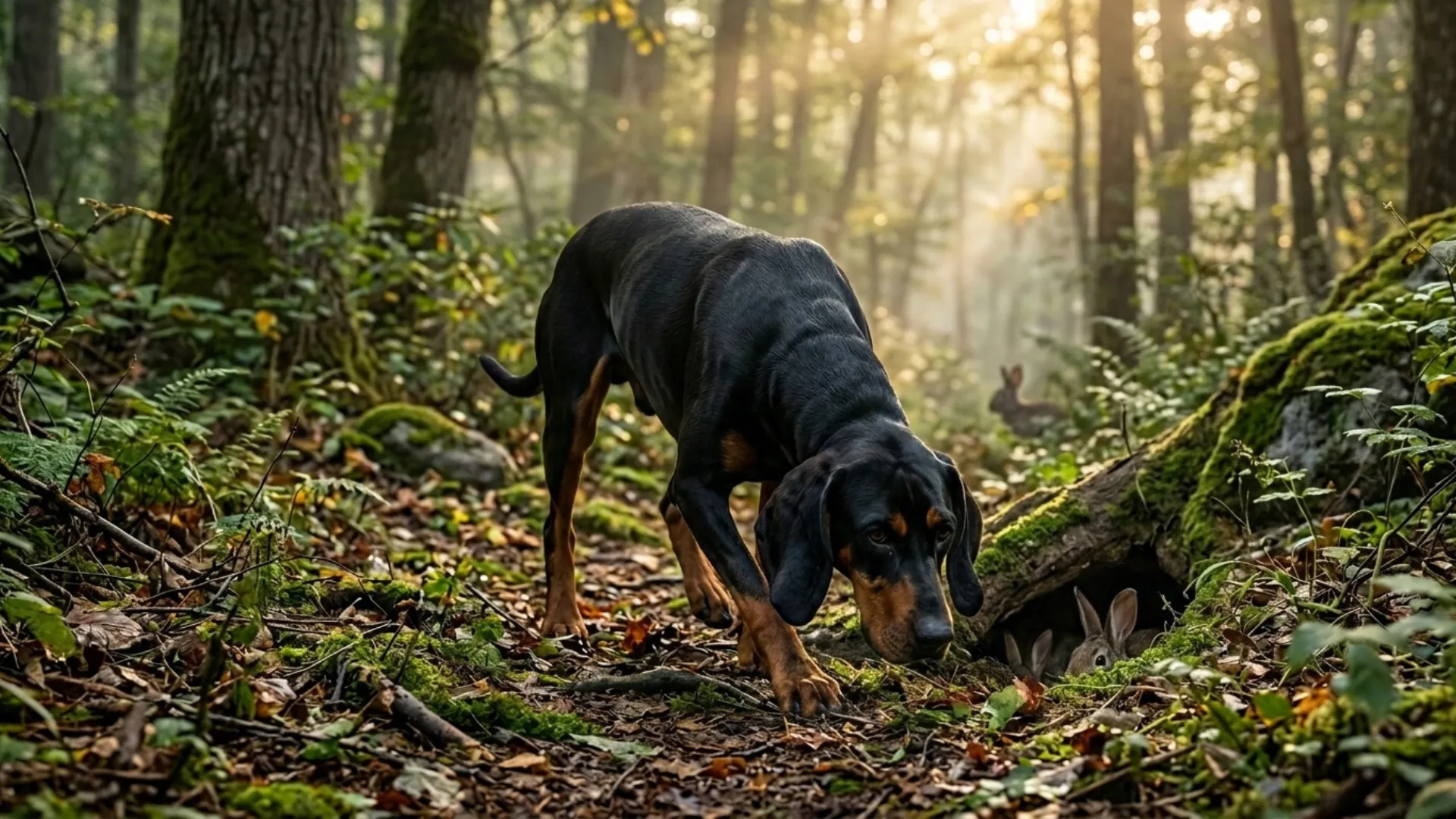
If you watch a lot of true crime or investigation content, you’ve probably seen a four-legged partner walking beside the officer, head down, tail up, following a scent trail.
That’s a working dog, and breeds like these have been helping with search and rescue for hundreds, maybe even thousands, of years. Each one is the result of generations of careful, selective breeding.
What’s interesting is how these dogs switch modes depending on where they are. At home, they’re playful, cuddly, and happy to roughhouse with the kids. Out in the field, they become something else entirely: a living GPS powered by raw speed, a powerful nose, and sharp eyes.
This article will help you find the perfect match for your own hunting adventures.
Dog Breeds with a High Drive to Locate Hidden Prey
1. Black And Tan Coonhound
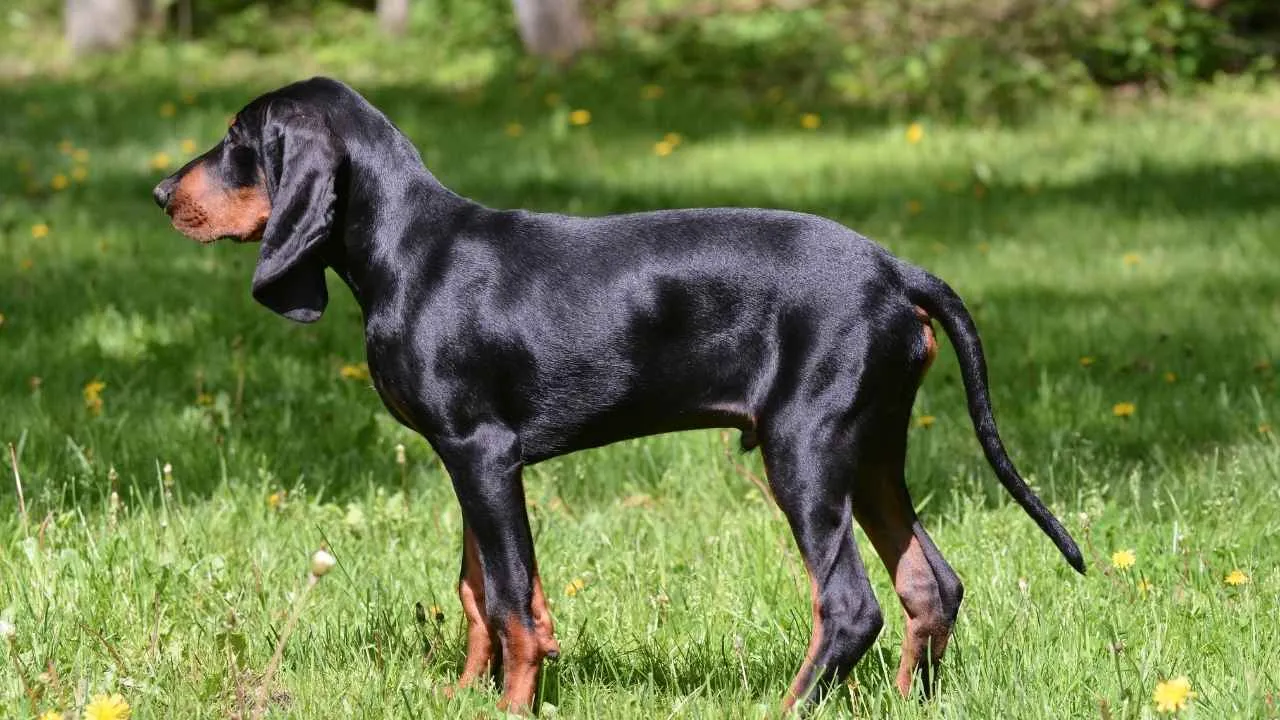
The dog was developed as a raccoon hunting dog breed in the United States in the 18th century. It was bred by crossing the Bloodhound and the Foxhound to create a hardworking breed with a strong sense of smell and sharp focus, says Orvis.
Having a friendly and alert expression, the dog’s prey drive is high. It has low and long-hanging ears that collect scent particles and direct them to the wide nostrils. A muscular neck coupled with well-angulated hindquarters assists in holding the prey tightly. It is a non-aggressive breed despite being a working dog.
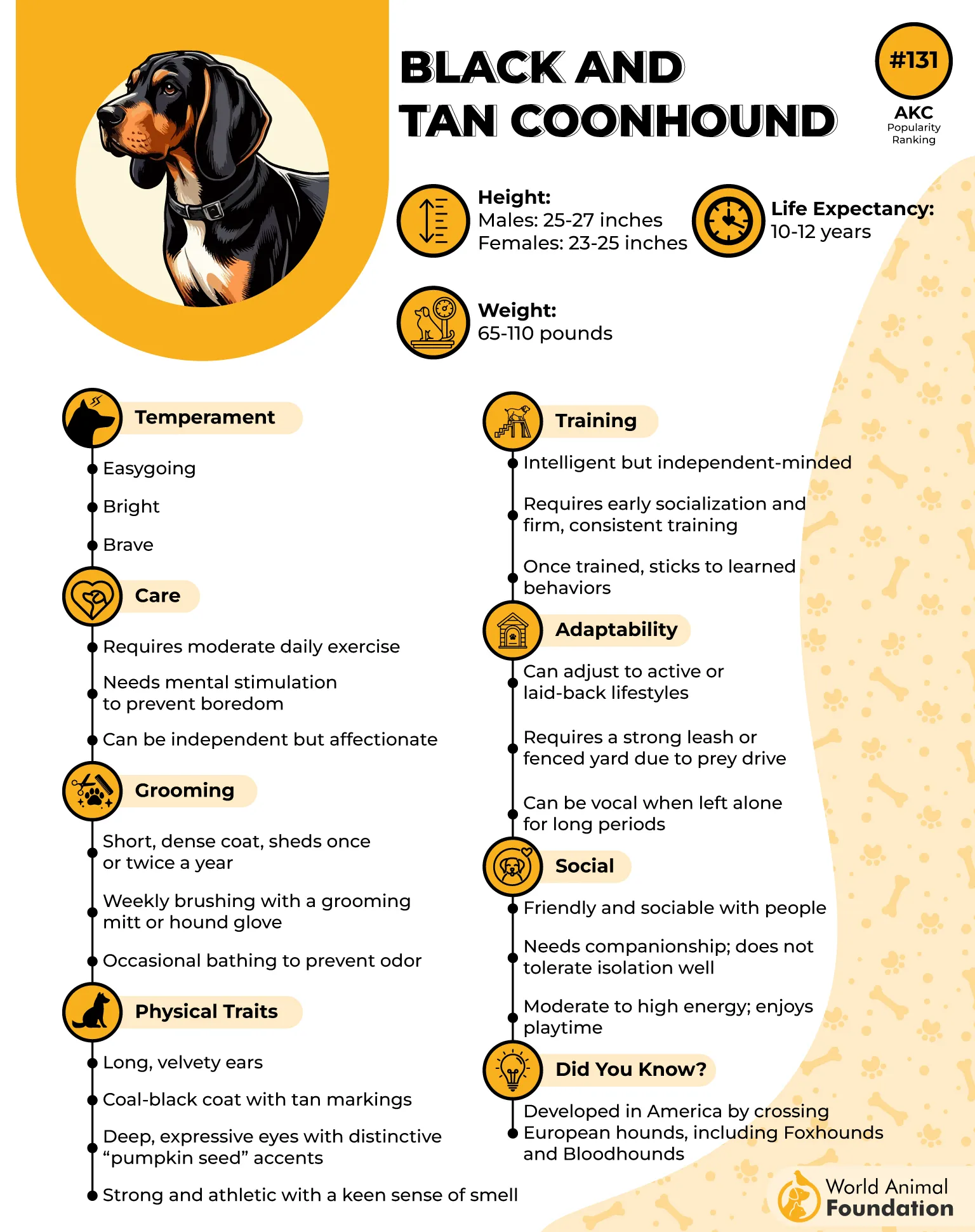
It has two modes: laid-back (indoors) and scent hunting (outdoors). It can tolerate a wide range of temperatures as it was intentionally bred to work over rough terrain. This high prey drive dog can jump over 5 ft; thus, leash training is important.
2. Weimaraner
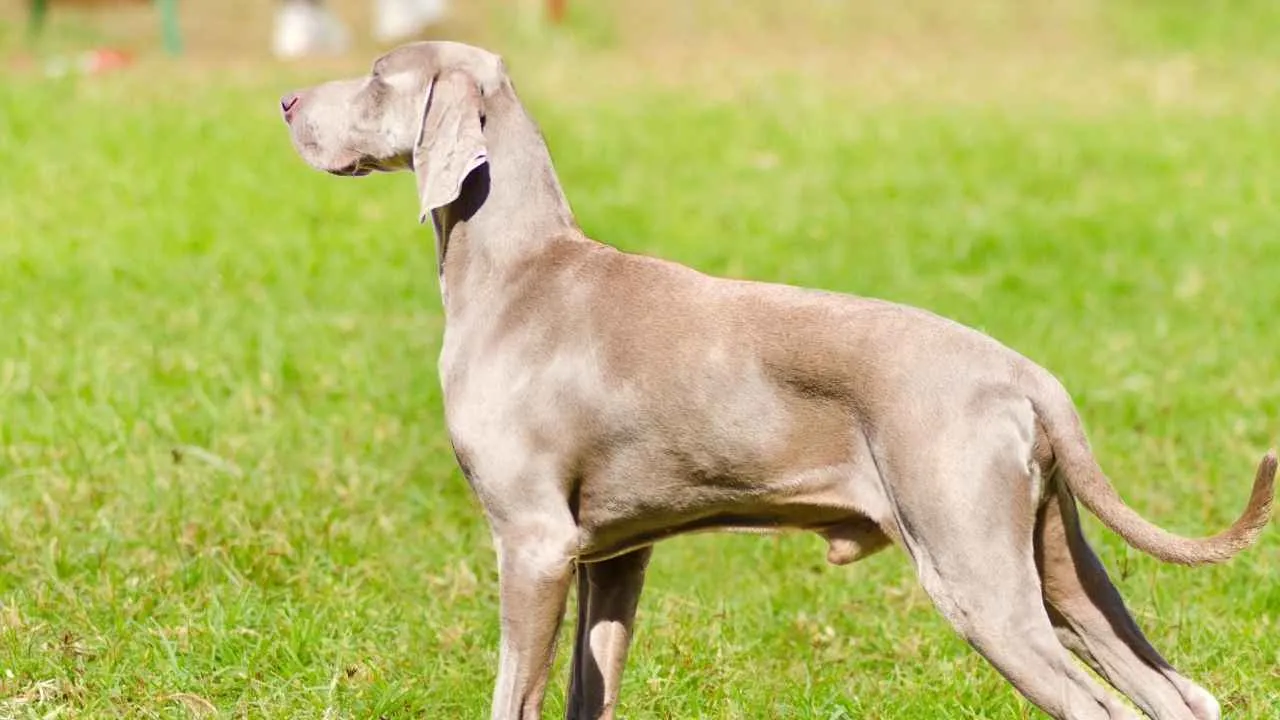
This is a relatively newer breed and was developed in Germany in the 19th century. It was bred by mixing German and French sporting dogs, such as German Shorthaired Pointer and Bloodhound. The primary goal was to hunt large game (bears, wolves, and wild boars), as reported by the UKC.
The breed later gained popularity as a gun dog that excels in pointing and retrieving bird game. It has long legs and a deep chest, suggesting it was clearly built for running (35 mph). It has a natural desire to catch small animals, such as small dogs, cats, and squirrels, etc.
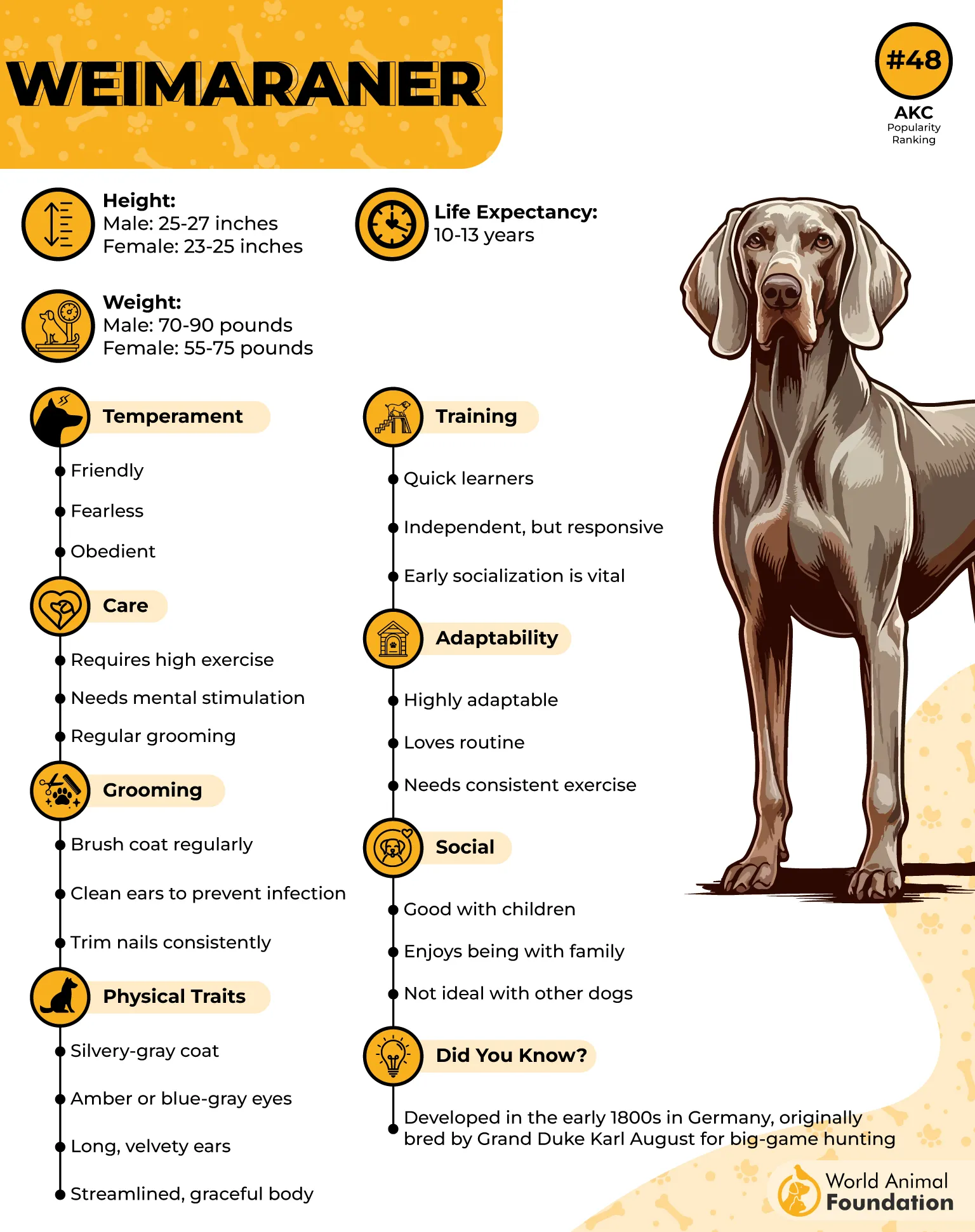
This high-energy breed needs at least 1 hour of daily exercise and mental stimulation: long walks, sprinting sessions, running, flyball, dock diving, and canine agility. Daily exercise prevents destructive behavior, such as chewing and digging.
3. Bluetick Coonhound
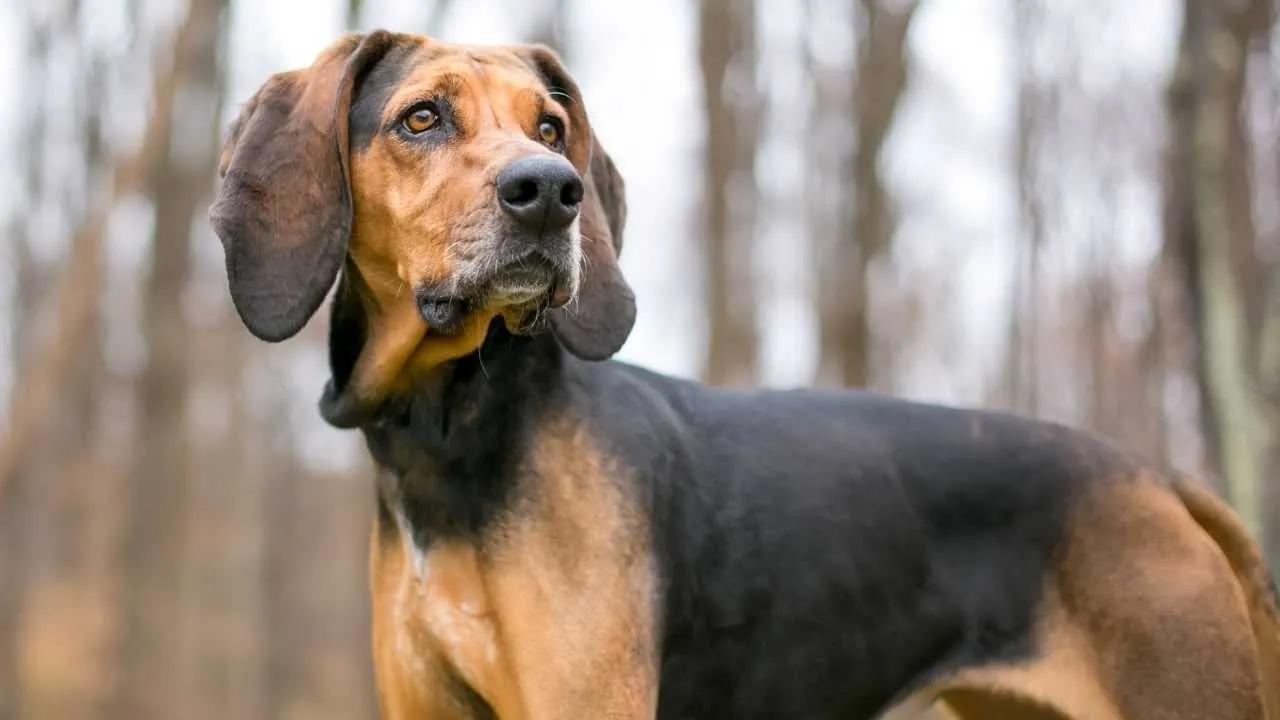
Originally bred in the United States, the breed is descended from a French hunting dog that was gifted to George Washington by the Marquis de Lafayette in the 18th century. The Grand Bleu de Gascogne, specifically, is credited as a pioneer of many dog breeds that exist today, including the Bluetick Coonhound.
The body can either be strong or slightly rectangular, providing a low centre of gravity. It has a long and square muzzle with long flews. It is a talkative breed because of the bugle-like bay. If it catches an interesting scent, it tends to follow that and may ignore your commands. Though bred to tree raccoons, it is widely used to hunt other small animals as well.
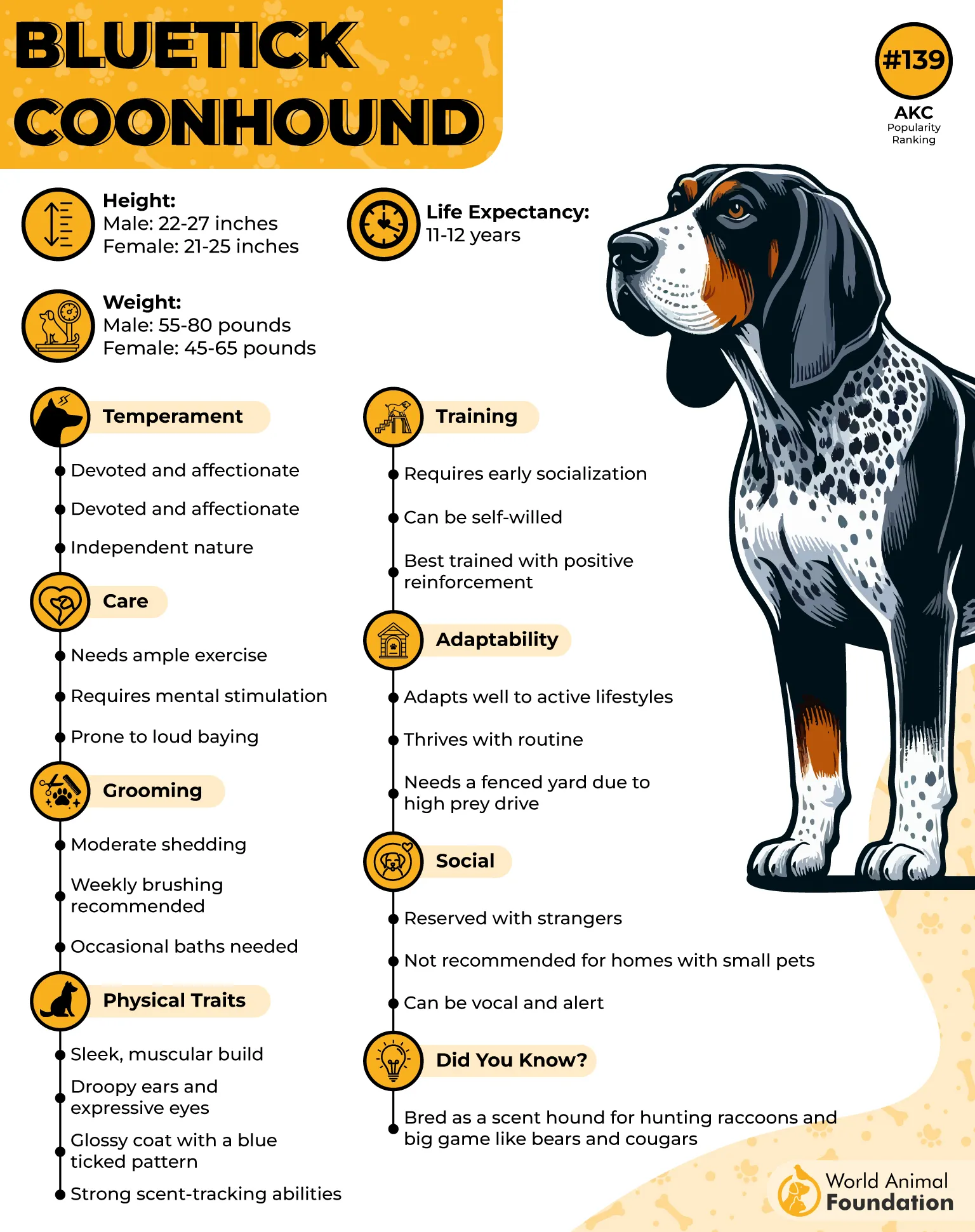
It has moderate exercise requirements (30-60 minutes) daily. It can run up to 6 miles and loves hiking. It has a ‘cold nose’ and can track days-old scents quickly. The breed is built for working long hours.
4. Redbone Coonhound
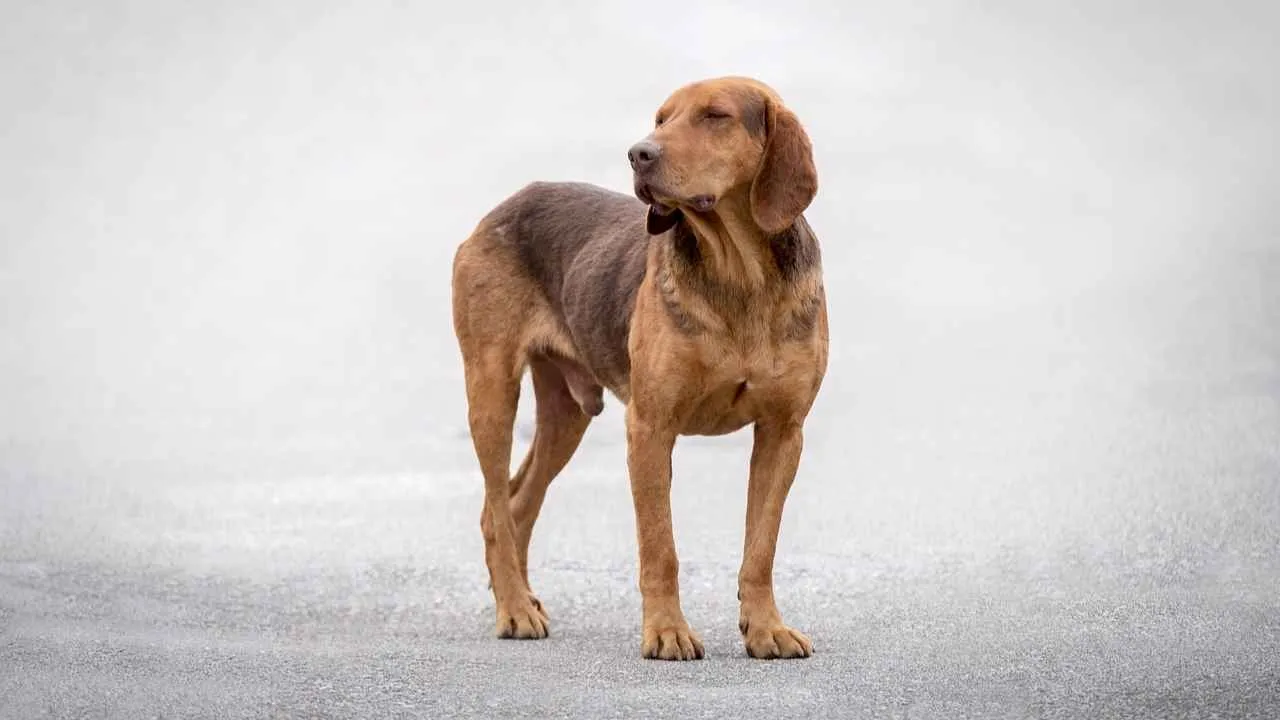
Originating in the United States as a raccoon hunter, the breed excels in hunting North American prey, such as deer, bear, and cougar. It uses its advanced hunting skills, speed (25-30 mph), and strong senses of sight and smell to catch its prey.
With its medium-length neck, it carries its sculpted head proudly. It has dark brown or hazel ‘pleading’ eyes. It uses its silky, pendant ears to collect scent particles from the dust and direct them to the nose to process the scent. It remains aggressive on the hunt and cuddly indoors.
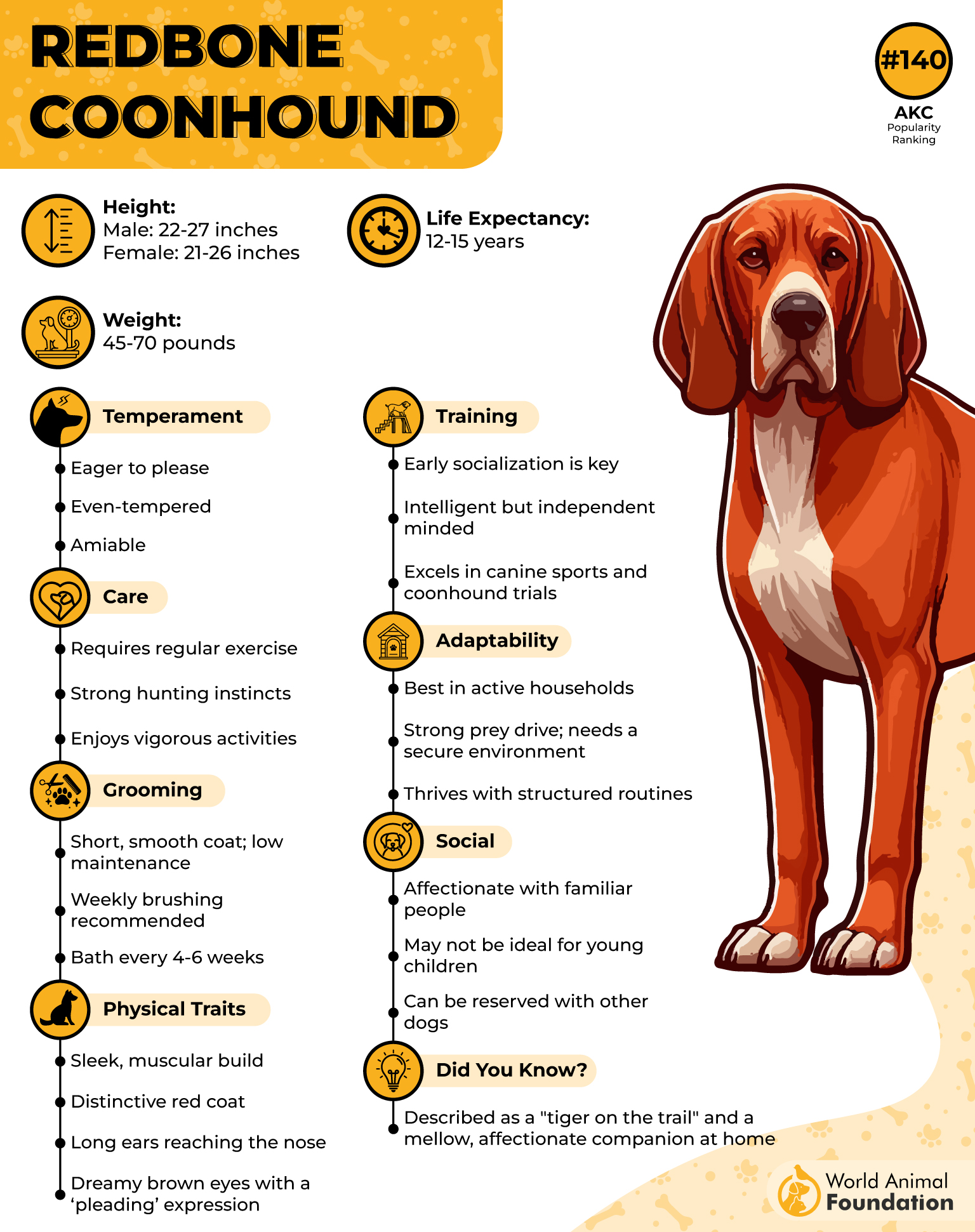
The breed is highly focused and has nocturnal instincts, which make it excel in treeing its prey at night. It loves to spend most of its time outdoors, hiking, fetching, hunting, and playing. It needs at least 2 hours of daily exercise.
5. German Shorthaired Pointer
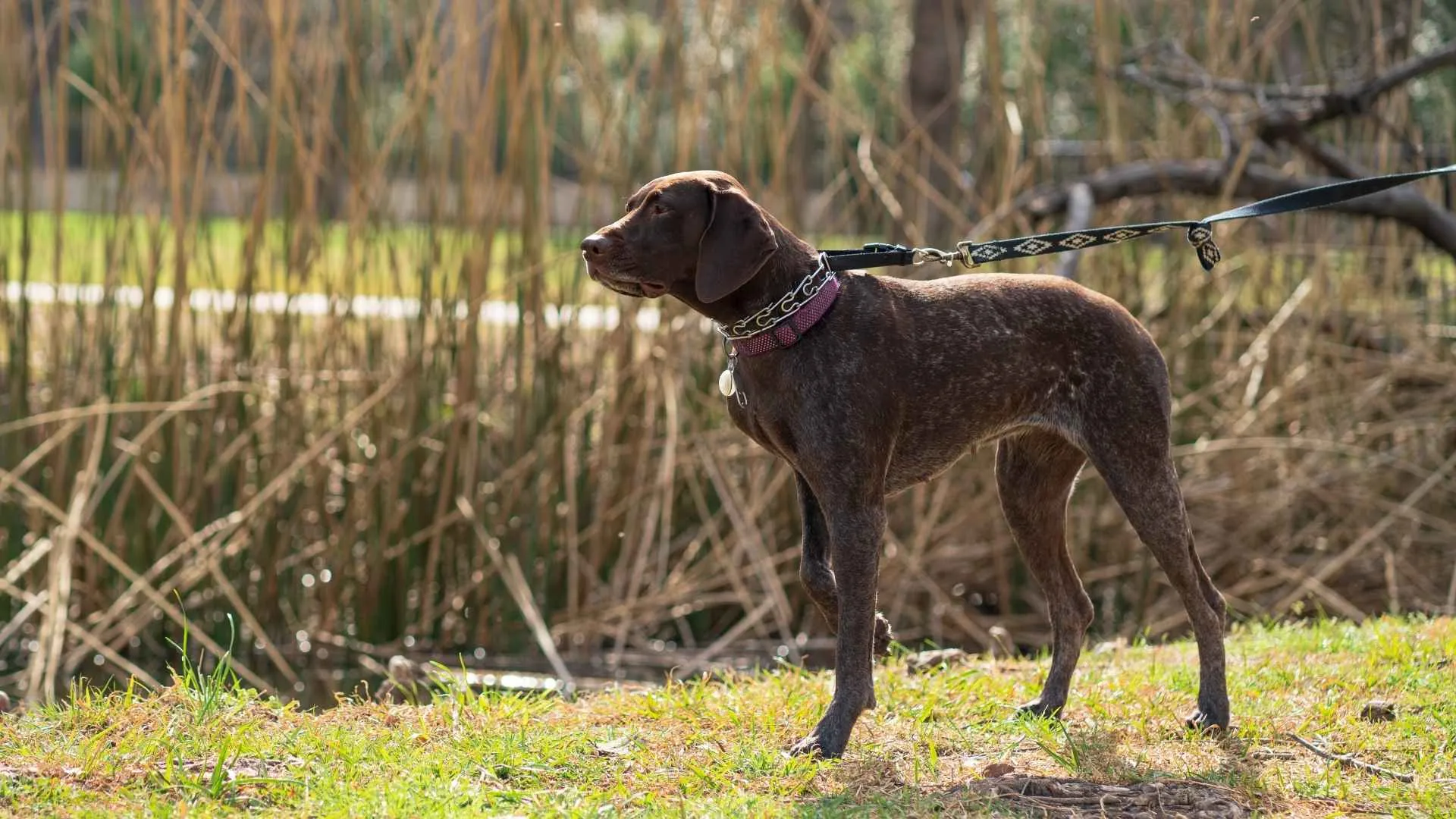
This medium-sized dog breed was developed in Germany in the 19th century from a pointing dog of Braque type. This versatile hunting breed is widely used in retrieving (both on the land and in water), pointing, and for companionship, as per Wikipedia.
It has an overall streamlined look that increases speed and agility while hunting game. The barrel-shaped chest is extended to the elbow joints, giving it power without detracting from speed and flexibility. It is famously used to hunt game birds, rabbits, possums, deer, raccoons, and rodents.
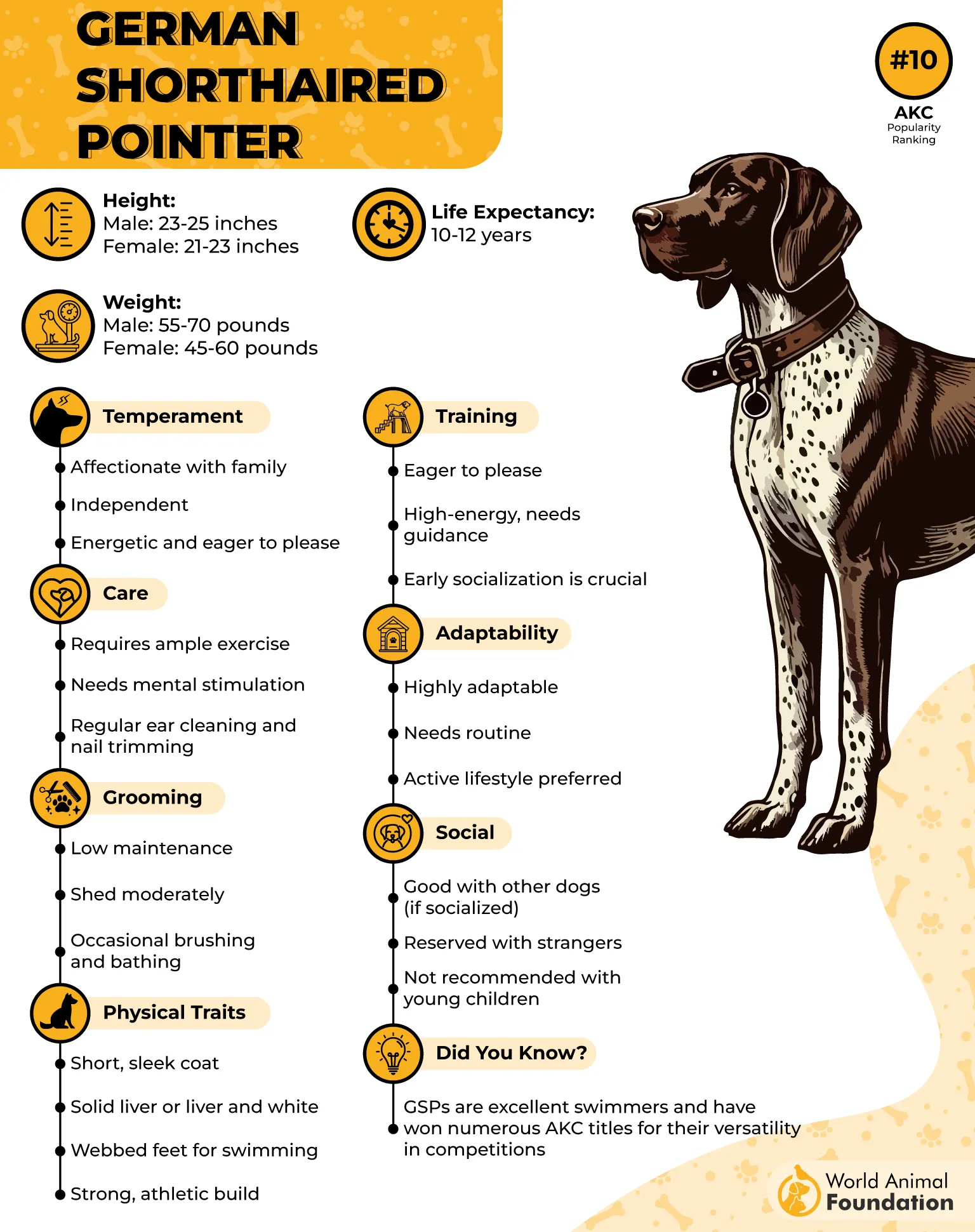
It is ranked in 5th position by the AKC for hunting training. The dog excels in high-impact exercise, such as dog sports, swimming, running, fetching, and obedience training.
6. Treeing Walker Coonhound
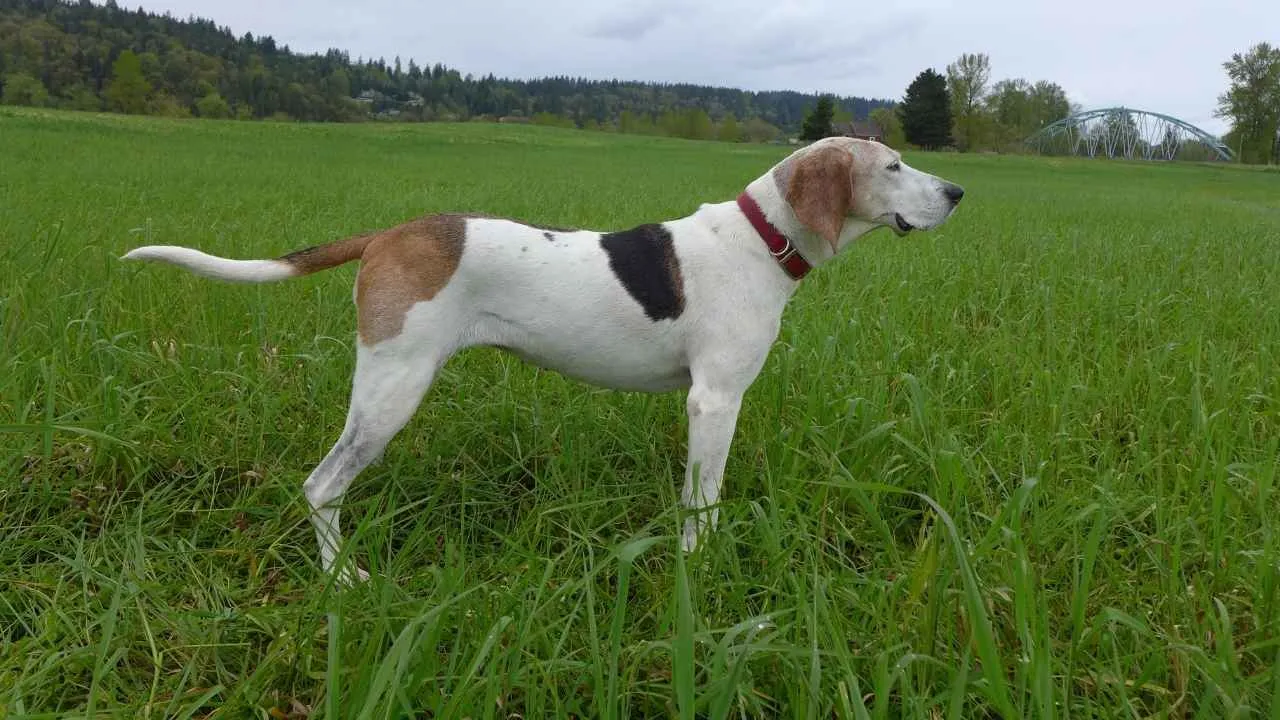
The history of this ancient breed began in the mid-18th century in Virginia, United States. Starting from the Walker Foxhound (which came from the English Foxhound). It tends to corner its prey and forces it to climb up the tree. Then, it produces a ringing, bugle-like bark to alert the handler.
With its good balance of bones and muscles, it has extreme endurance. It has a strong jaw structure that provides a bite force of 200-400 PSI. The powerful breed has thick pads and well-arched toes, giving it a cat-like appearance and helping it smoothly travel rugged terrain.
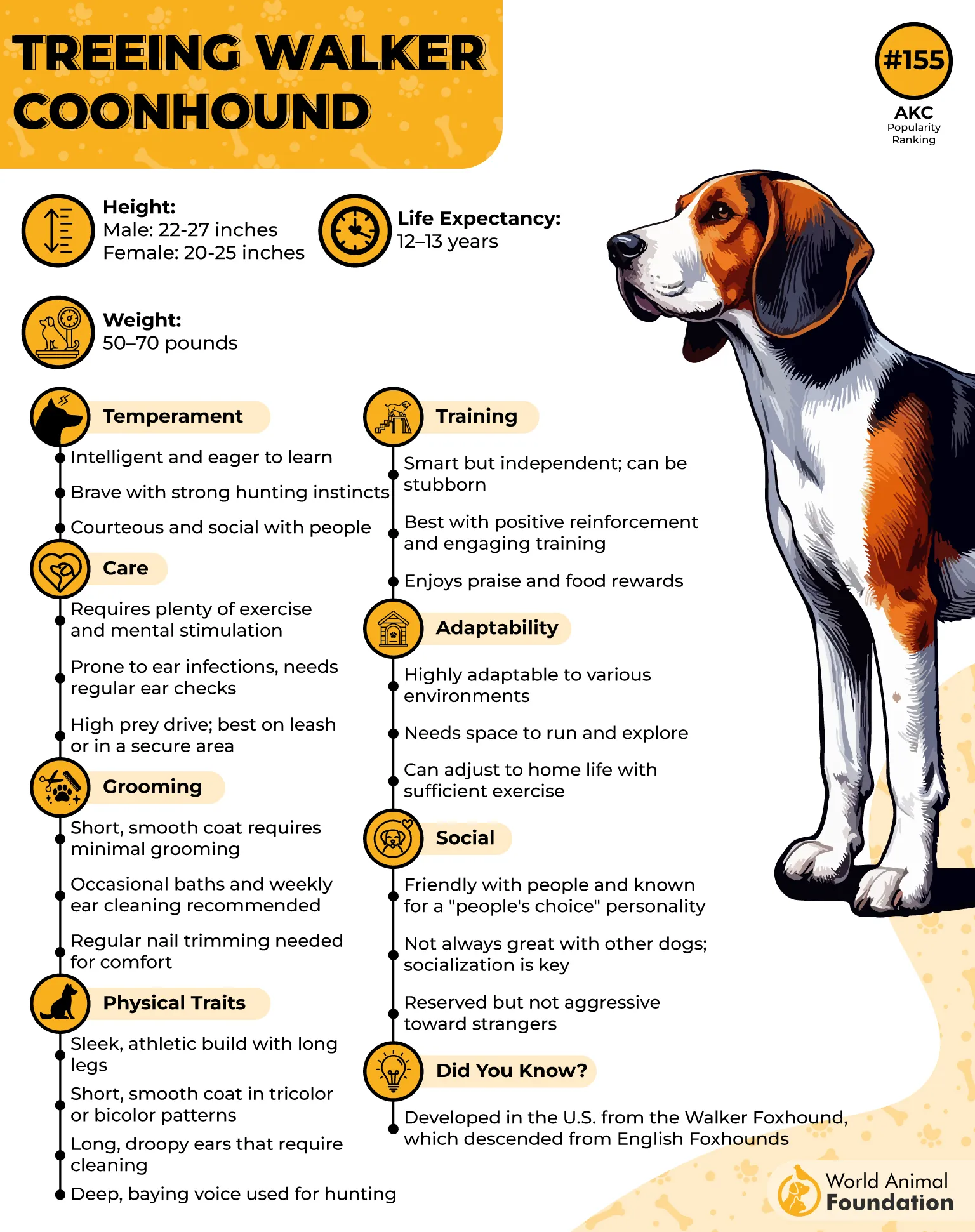
It accurately follows orders and takes commands and has a competitive spirit. Great for families with an active lifestyle, it needs a lot of physical and mental stimulation: fetching, running, hunting, and hiking.
7. English Springer Spaniel
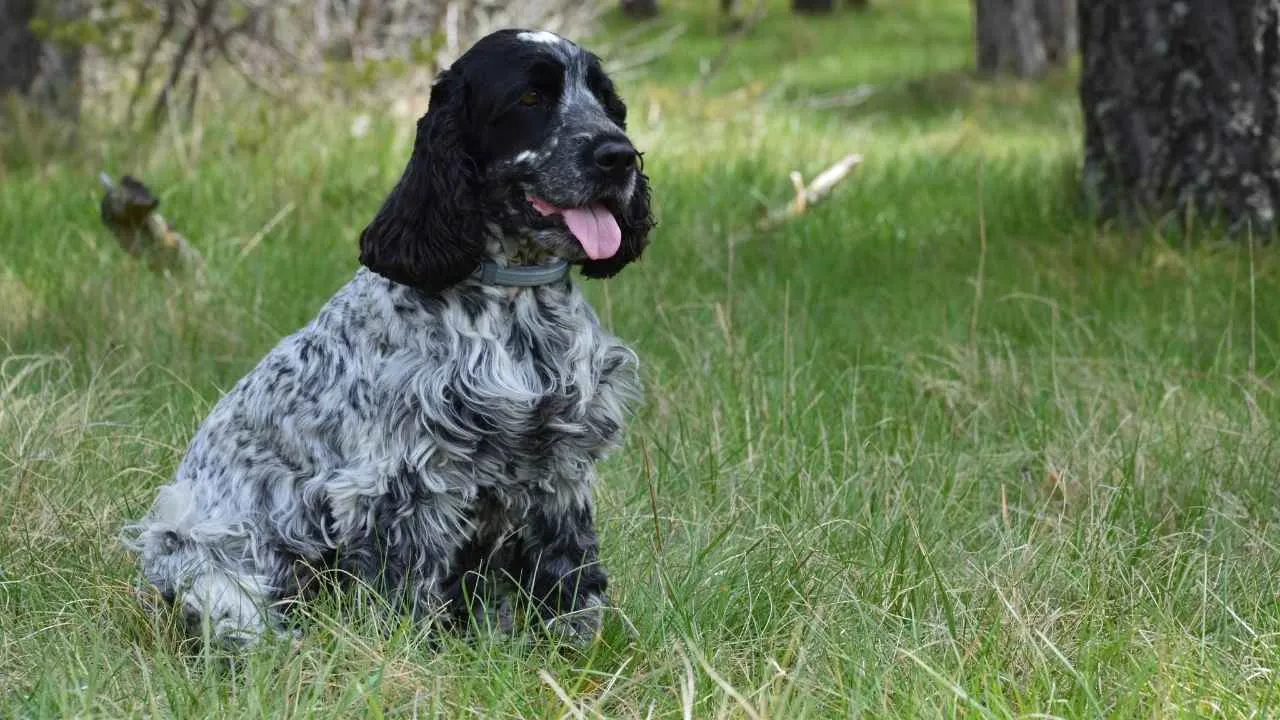
The breeding of this dog started with the Springer Spaniel type dogs in the 19th century to flush or spring game for hunters. The breeders needed an athletic breed that could flush and retrieve game. It was classified as a separate breed from a Cocker Spaniel in 1902.
It relies heavily on its nose while hunting and is also used as a custom dog because of its strong sense of smell and eager-to-please behavior. Because of its hyperactive nature, it is highly responsive to the slightest change in movement. It has a lighter and thinner coat, making it ideal for fieldwork.
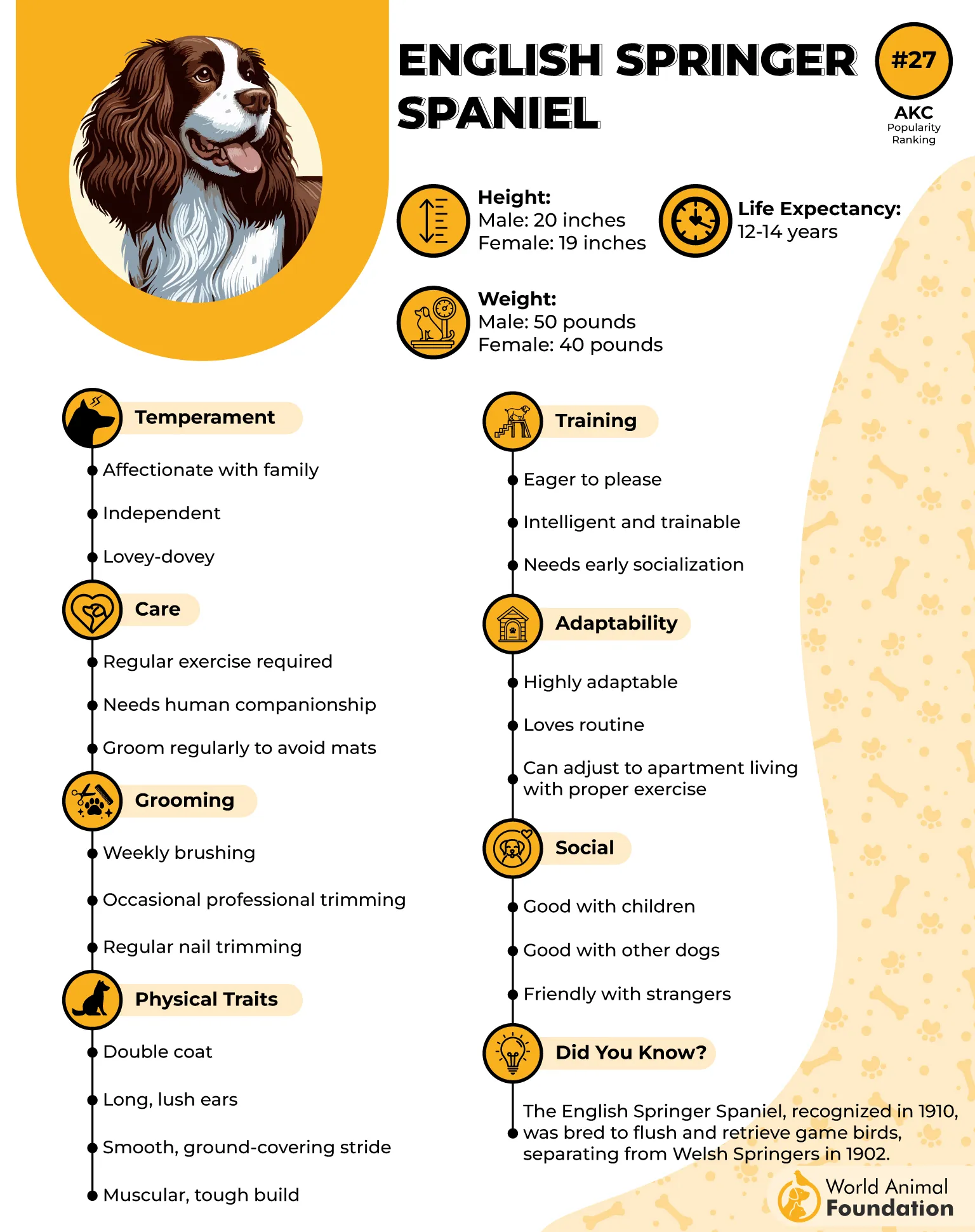
It forms strong emotional bonds with family members, children, and other pets and may develop separation anxiety when left alone for too long. It can be easily infected and thus needs regular medical checkups.
Conclusion
Dogs with a high drive to locate hidden prey are more than skilled hunters. They are intelligent, hardworking companions with instincts that deserve respect and the right outlet. While each breed approaches tracking differently, they all share remarkable scenting ability, persistence, and enthusiasm for solving nature’s puzzles. Living with one means providing regular exercise, mental challenges, and activities that let those natural talents shine.
When their needs are met, these dogs become loyal family members who thrive on purpose and partnership. Whether you are interested in hunting, scent work, or simply admire extraordinary canine instincts, these different breeds prove that sometimes the nose truly knows best. Their passion for following a trail remains one of the most fascinating abilities in the dog world.
