




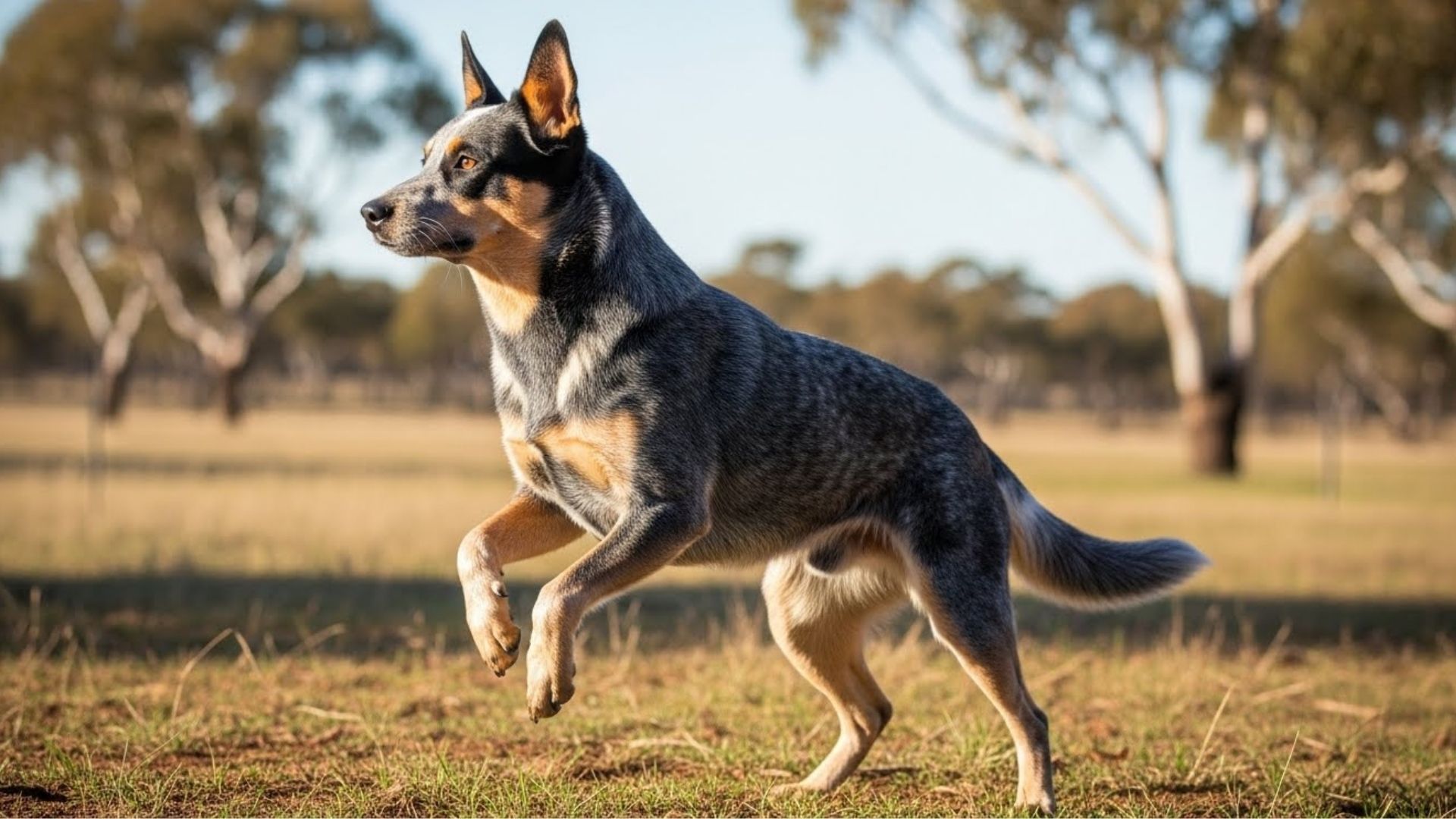
Prey drive is defined as a dog’s inherent desire to chase, capture, and kill prey. While it may seem to be an undesired trait, it is an instinctive behavior in dogs that they have inherited from their wolf ancestors.
High prey drive dogs scent the ground and air to track their prey. Once the target is identified, they fix their gaze on it and then chase the target. Next, they try to take down, shake, or choke prey. Domestic dogs chase the prey but are very unlikely to ‘kill’ it.
Herding breeds, hound dogs, terriers, and sporting dogs like pointers, retrievers, and spaniels usually love to chase their prey. Such dogs usually do not do well in homes with multiple pets. Also, it is better to keep them on a leash and let them play and roam freely in securely fenced areas.
Have a look at these dog breeds and learn which one has the highest prey drive.
Dog Breeds: Which Have the Highest Prey Drive?
1. Australian Cattle Dog
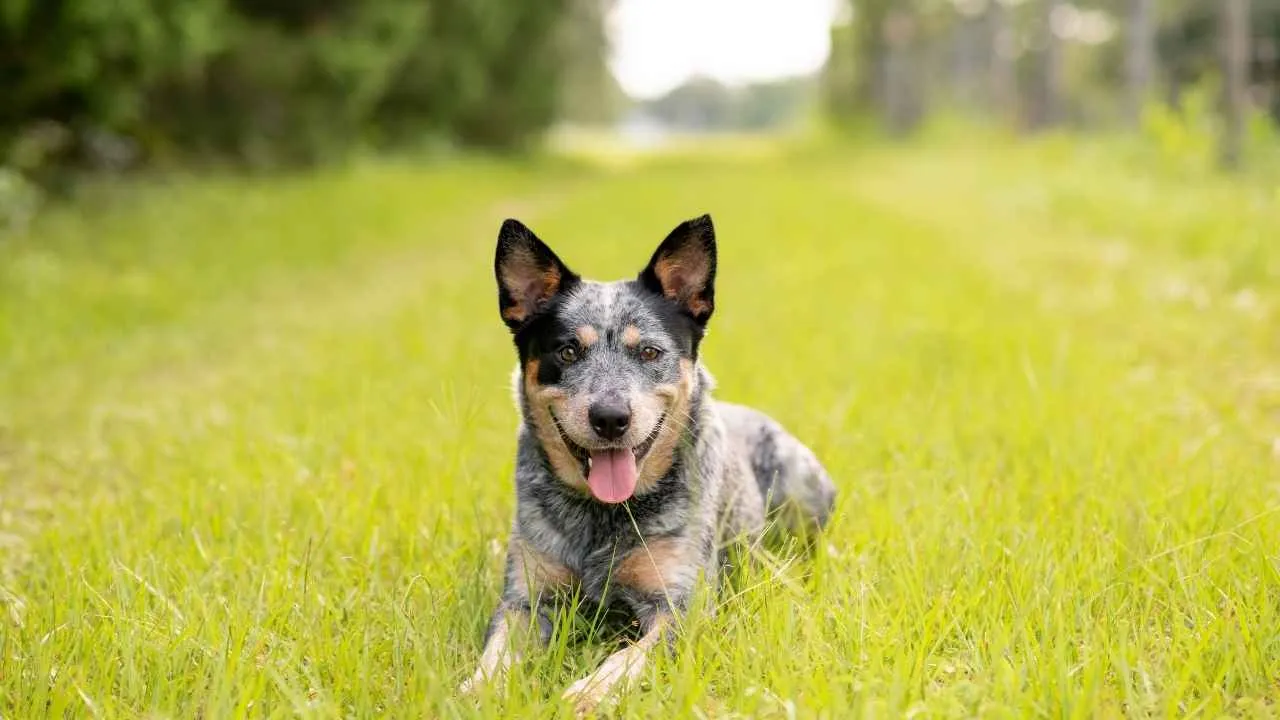
As the name indicates, Australian Cattle Dogs were bred to herd cattle. Having an innate instinct to protect their flock, Aussies are known for their high prey drive. Even when they are not on the farm, they tend to nip and chase.
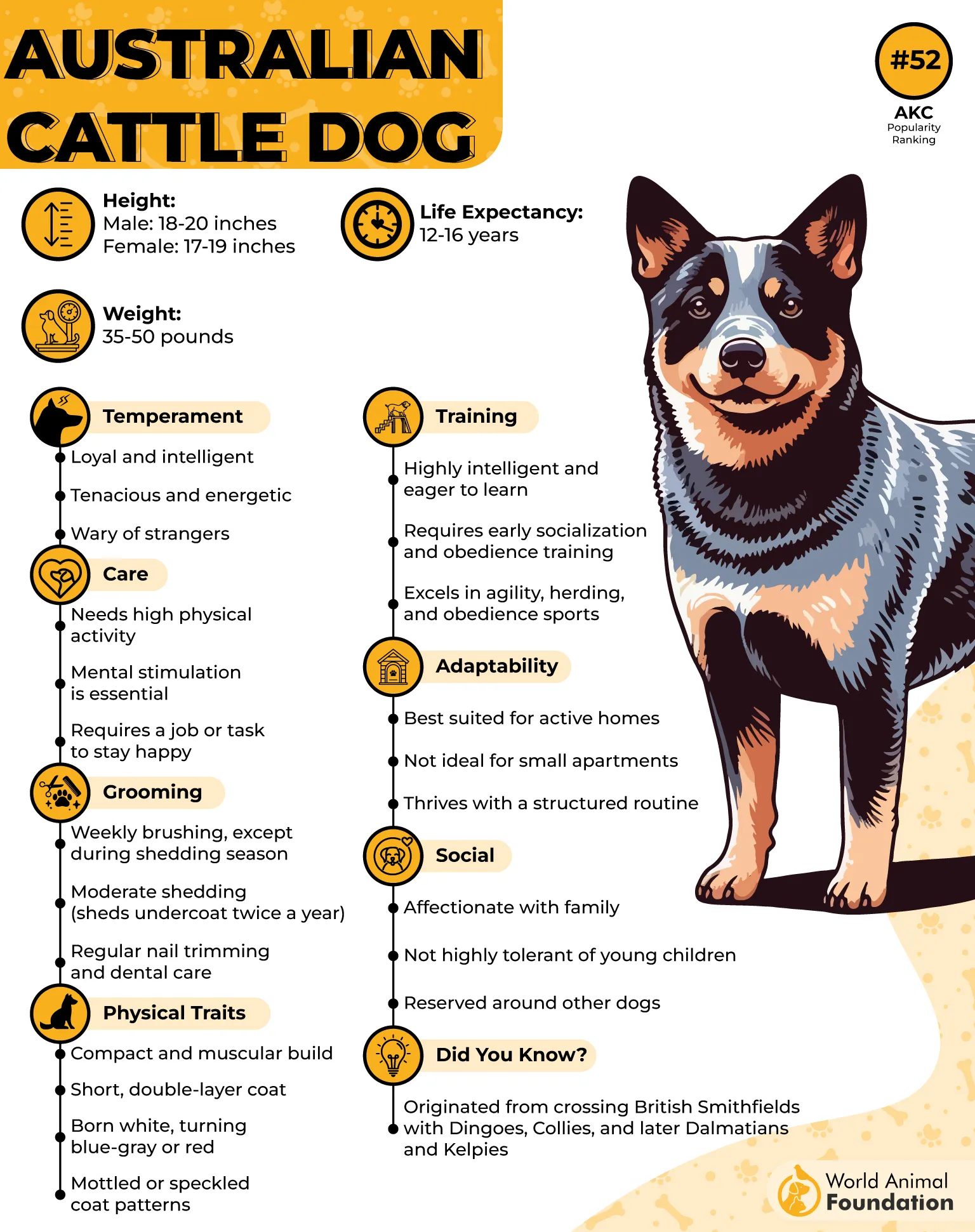
Due to these traits, they are not an ideal fit for homes with small animals and young children. To avoid such behaviors, make sure to engage your Australian Cattle Dog in intense activities like running, hiking, and agility training.
PDSA recommends more than two hours of daily exercise for these dogs to ensure adequate physical and mental stimulation. These tremendously intelligent and hardworking dogs have a natural desire to protect their loved ones.
They bond tightly with their family, but are wary of strangers. Australian Cattle Dogs can develop separation anxiety due to their immense loyalty.
2. Border Collie
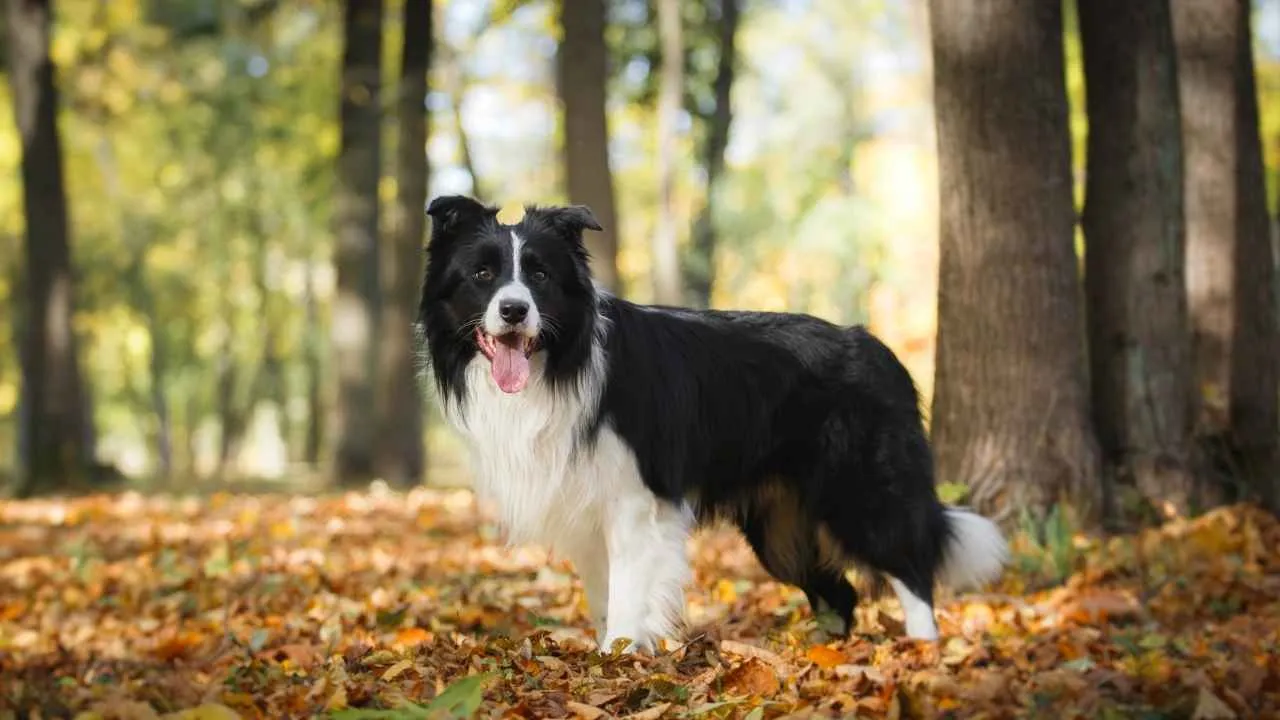
The brainiacs of the dog world, Border Collies, are loved for their high intelligence and eager-to-please nature. Originally bred as herding dogs, they possess boundless energy and a natural desire to chase moving animals and objects.
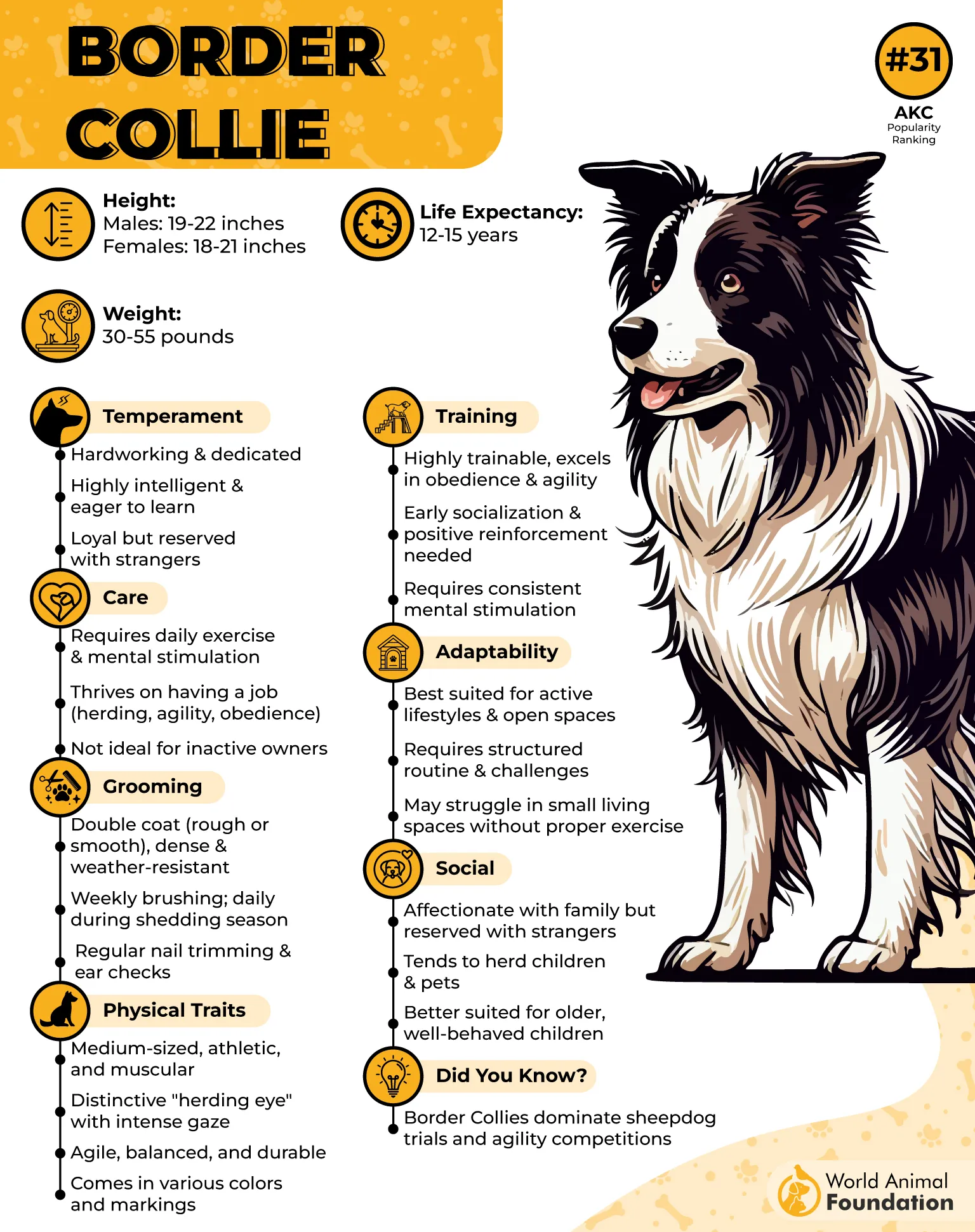
Border Collies are high prey drive dogs who tend to herd everybody, including small children around them. You can overcome this behavior with proper training and socialization. Border Collies are highly trainable and need a proper outlet to channel their boundless energy.
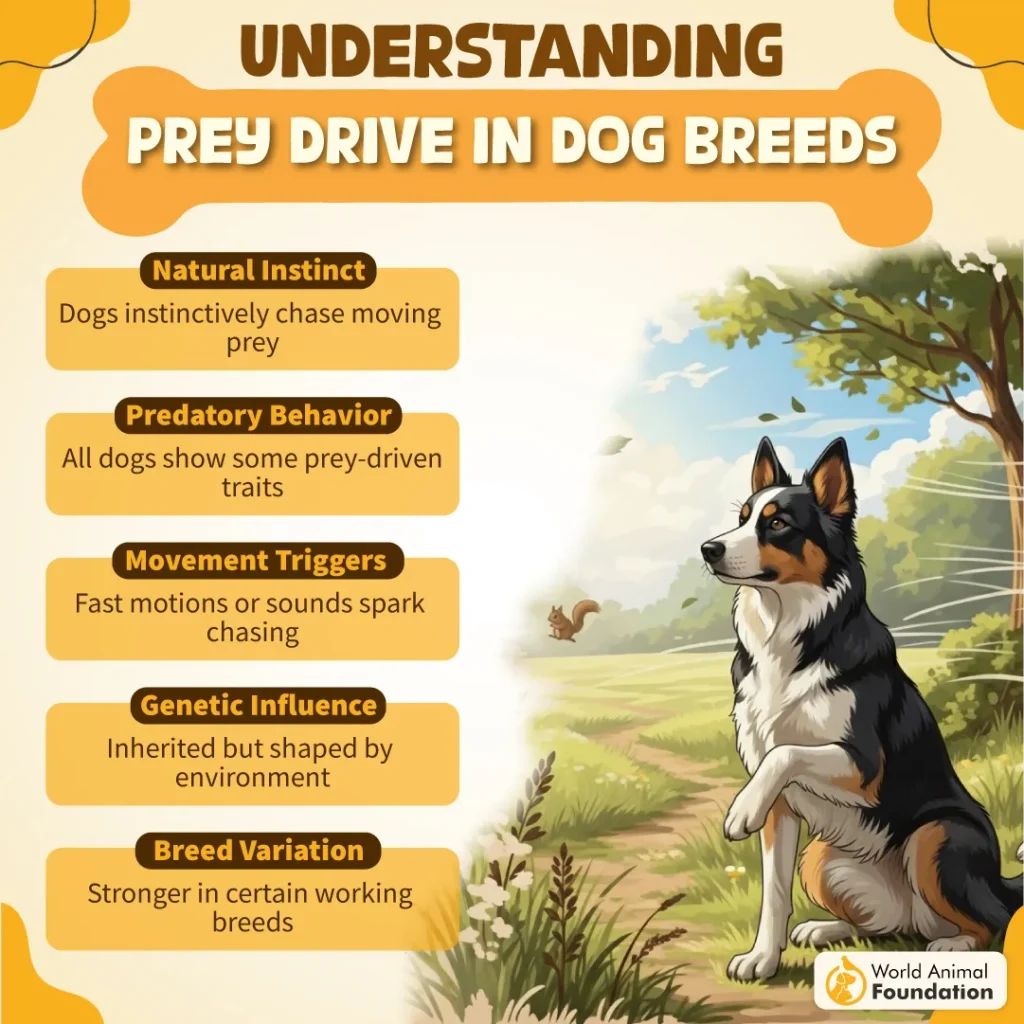
These agile dogs need plenty of exercise and engaging games to manage their high prey drive. Lack of adequate stimulation can lead to destructive behaviors. Border Collies also possess a sharp focus. They do well on ranches and homes with fenced yards.
Border Collies have also been used as police dogs. They excel in a variety of canine sports, including agility and obedience training.
3. Jack Russell Terrier
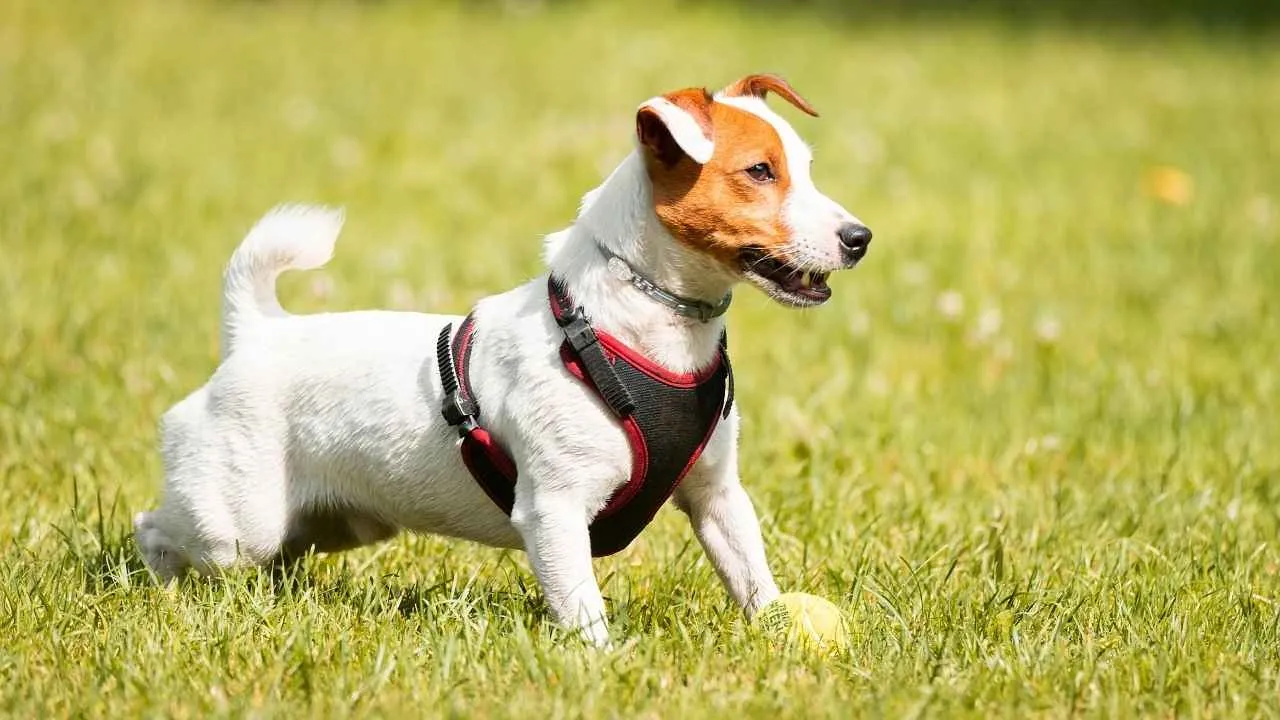
Jack Russell Terriers are energetic and confident dogs full of character. These tireless canines were bred for hunting and chasing foxes in England. Their high prey drive is attributed to their historical background. Jack Russell Terriers have big personalities and an eagerness to please their owners.
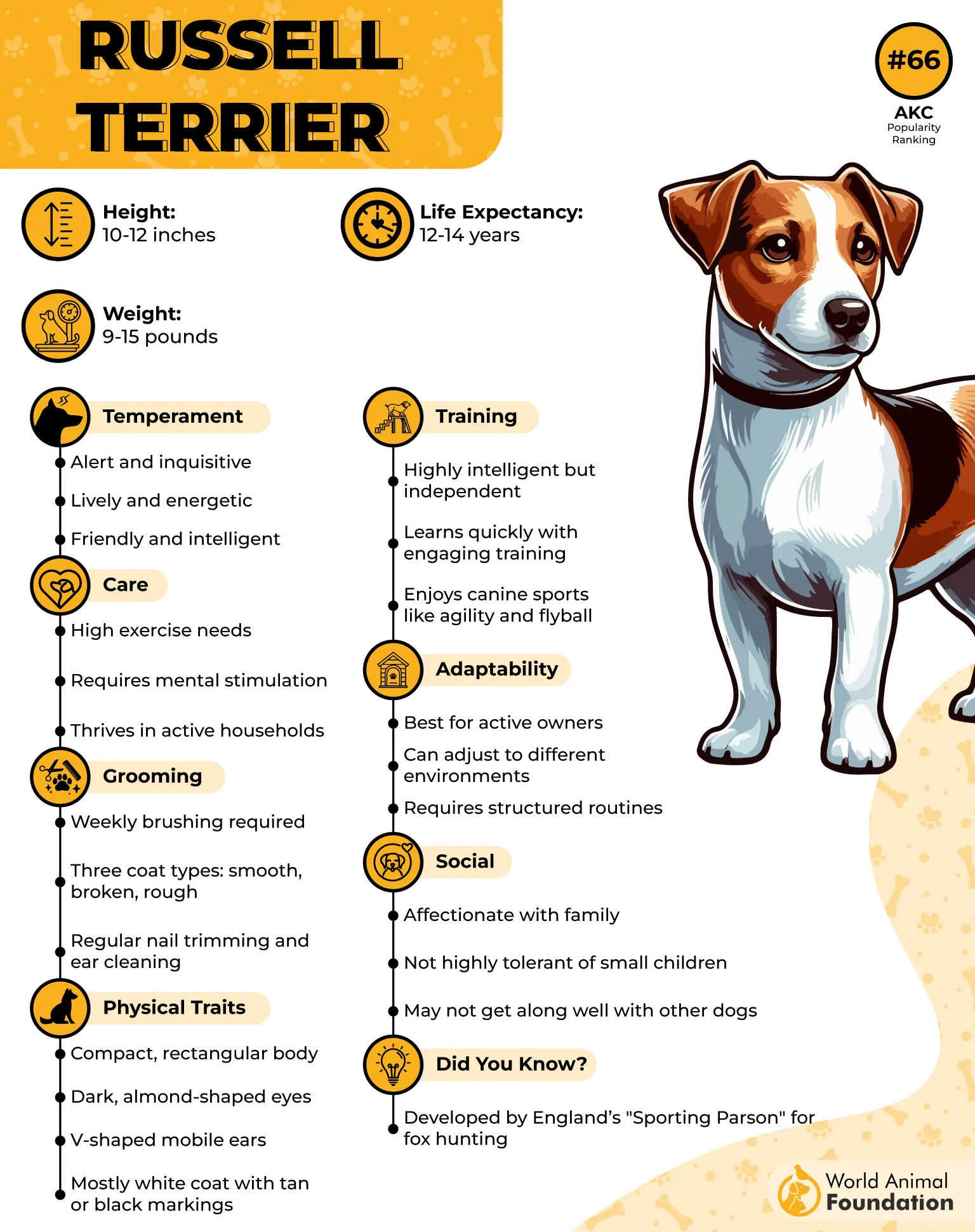
Their strong hunting instincts and high drive urge them to chase everything that moves, whether that’s birds, squirrels, or even cars. Jack Russel Terriers love to run and excel at many dog sports, including flyball and agility.
Jack Russell Terriers are friendly, active, and playful dogs who make loyal companions. Their surprising stamina and willpower make them unsuitable for first-time dog parents. These agile dogs make fun-loving family pets.

Their strong prey drive can be a bit problematic in households with other pets, such as cats and dogs. Early socialization is important to turn them into well-behaved pets.
4. Weimaraner
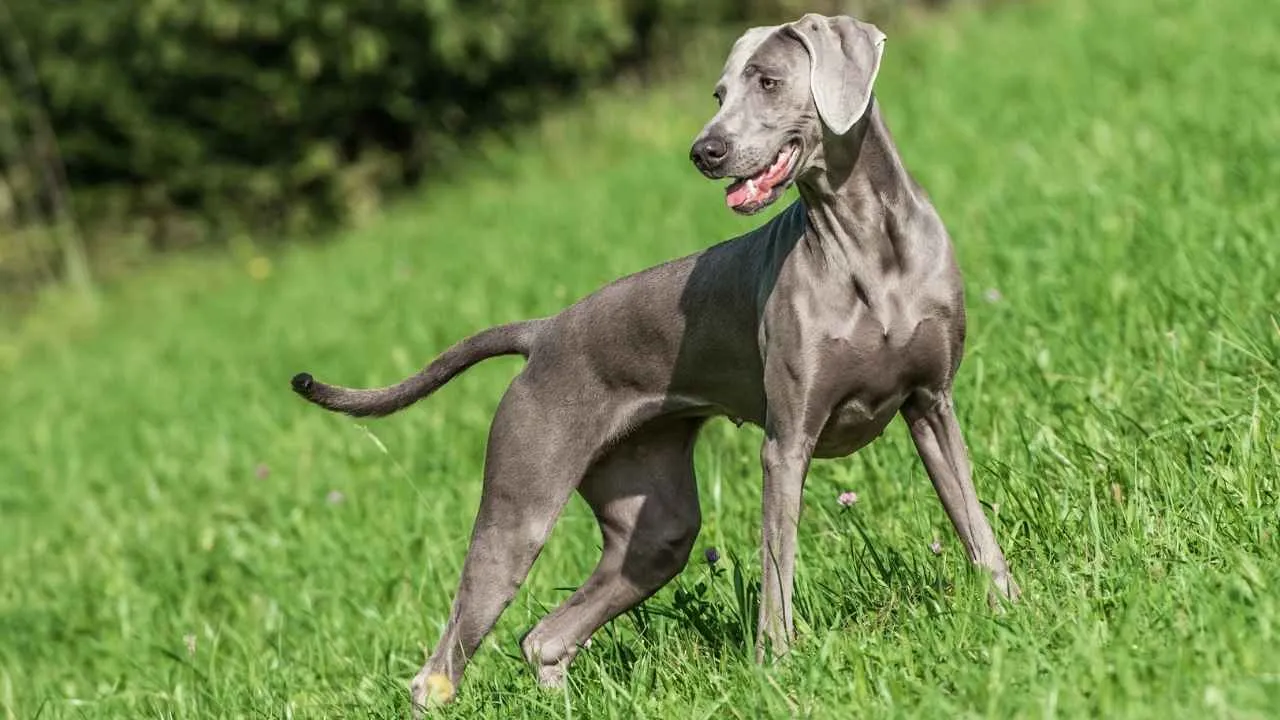
Weimaraners have a very high prey drive due to their rich history as hunting dogs. Originally bred for hunting large game in Germany, these athletic dogs often end up chasing birds, squirrels, and unfamiliar pets.
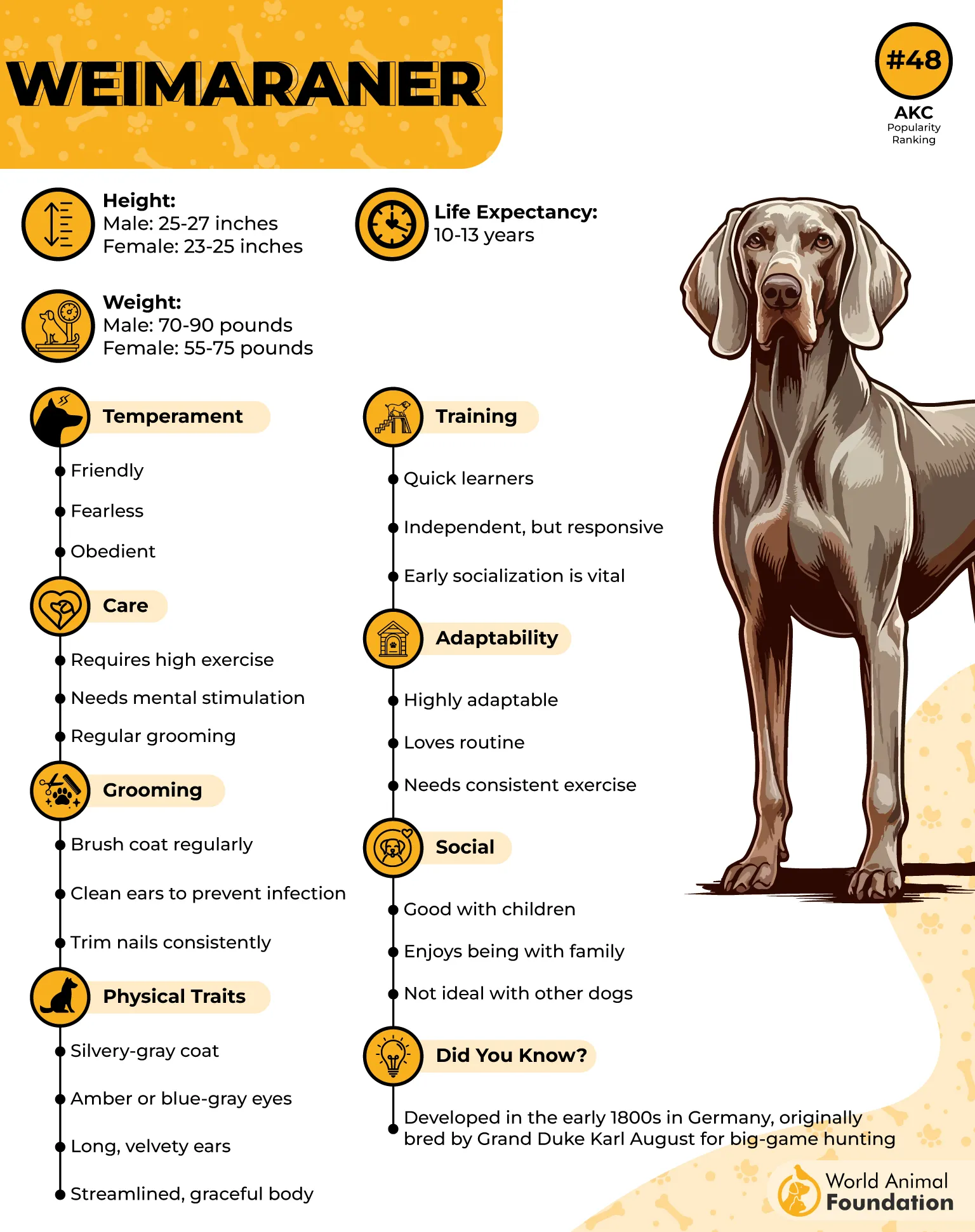
Due to this, it can become very difficult for a Weimaraner to live in homes with other pets. These canines have high exercise requirements. Regular and vigorous physical activity, like running and hiking help them channel their inner energy.
Mental stimulation is also important to engage their smart minds. Setting boundaries and offering consistent training will keep everyone safe and happy. Weimaraners learn both good and bad behaviors quickly, explains the American Kennel Club.
Their short coat is quite easy to maintain, but they love chewing things. It makes them prone to gum injuries.
5. American Staffordshire Terrier

American Staffordshire Terrier is a loyal, loving, and courageous dog. Due to their high prey drive, they need to be closely monitored around small animals and children. They have been nicknamed ‘nanny dogs’ due to their love and protectiveness towards kids.
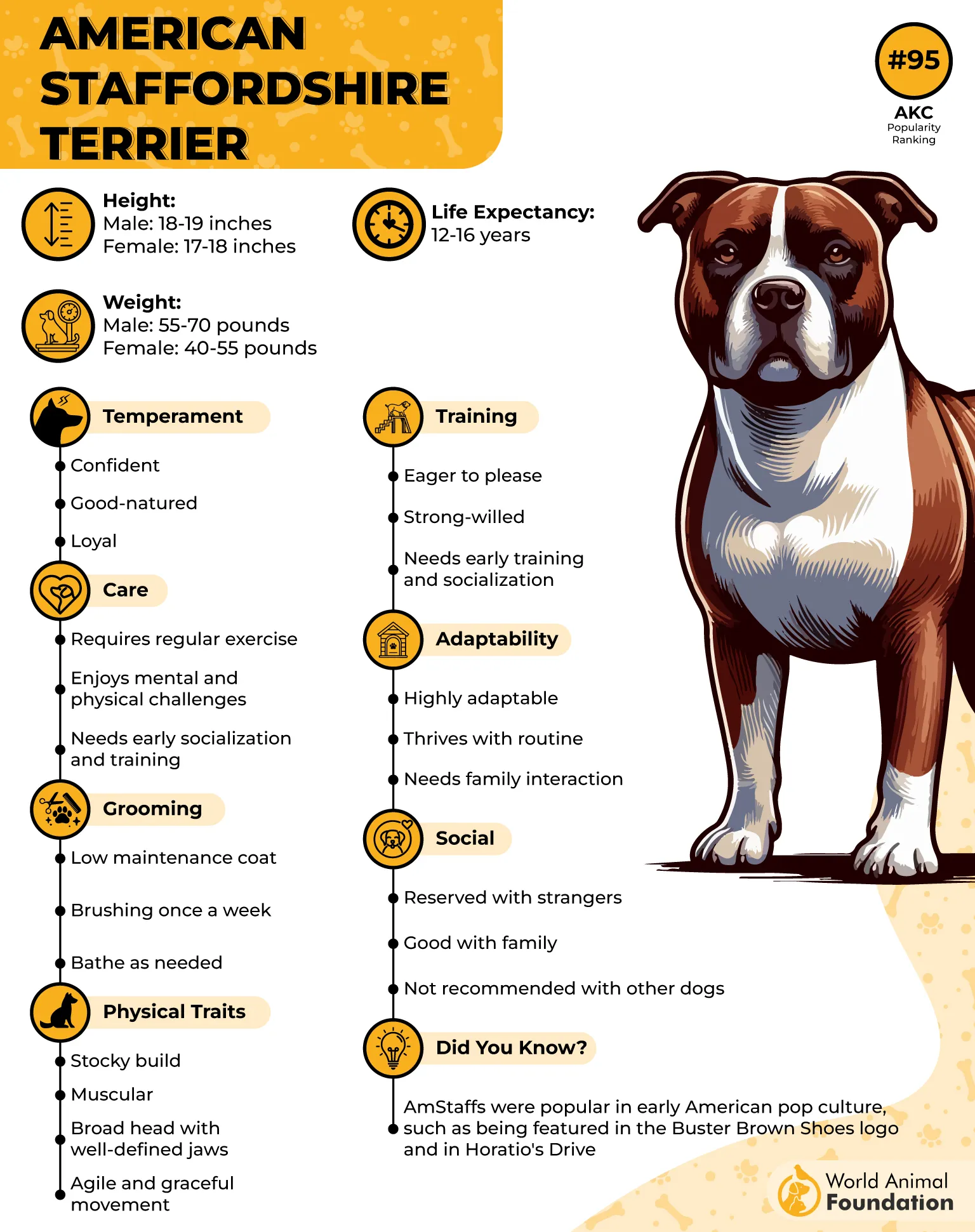
Staffordshire Terriers make excellent family pets and can easily ward off strangers due to their imposing size and appearance. These muscular dogs are not ideal for faint-hearted pet parents and are better suited for experienced handlers.
AmStaffs love chasing small animals, especially if they are small, so make sure to keep them on-leash when you take them for a walk. These tough dogs are quite intelligent but have a willful personality. So, early socialization and proper training are a must.
According to PetMD, these high-energy dogs need at least an hour of vigorous exercise every day. They are prone to anxiety that needs to be managed by providing a steady routine.
6. Rhodesian Ridgeback
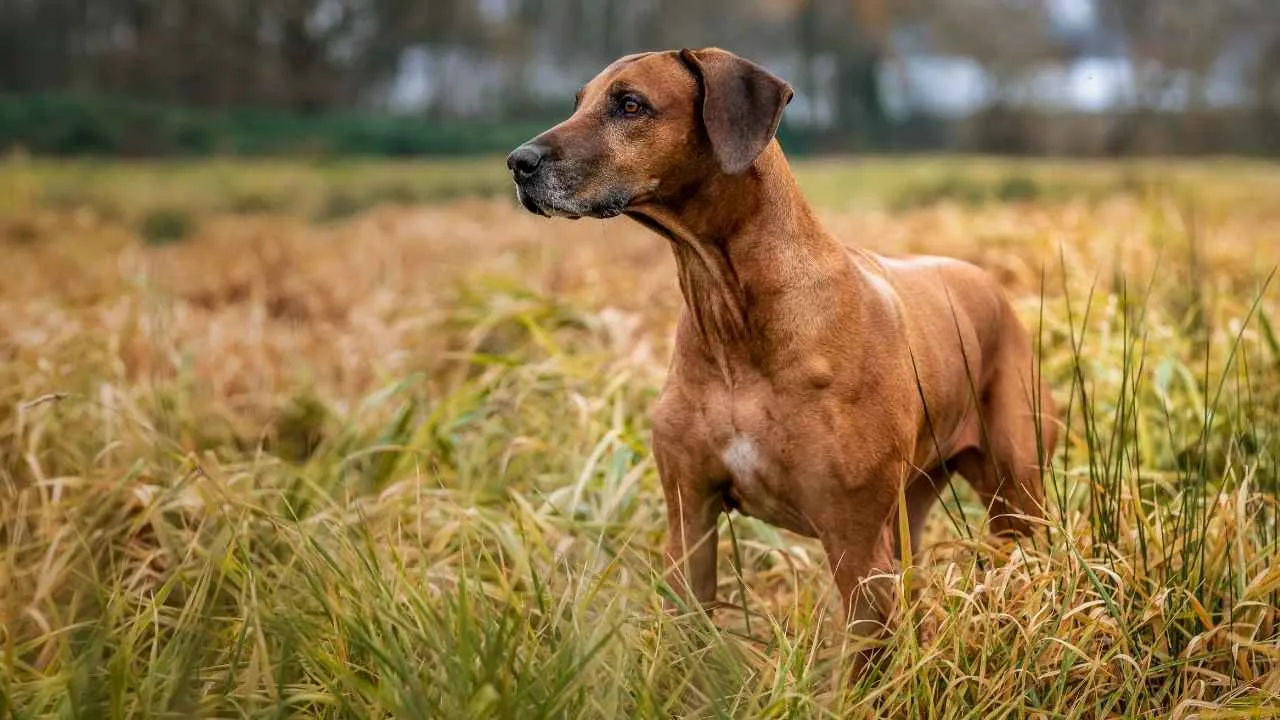
Rhodesian Ridgebacks were originally bred to hunt lions in Africa. These fierce and strong dogs have a high prey drive and never miss an opportunity to chase if they see small animals. Ridgebacks are territorial and have a natural instinct to protect.
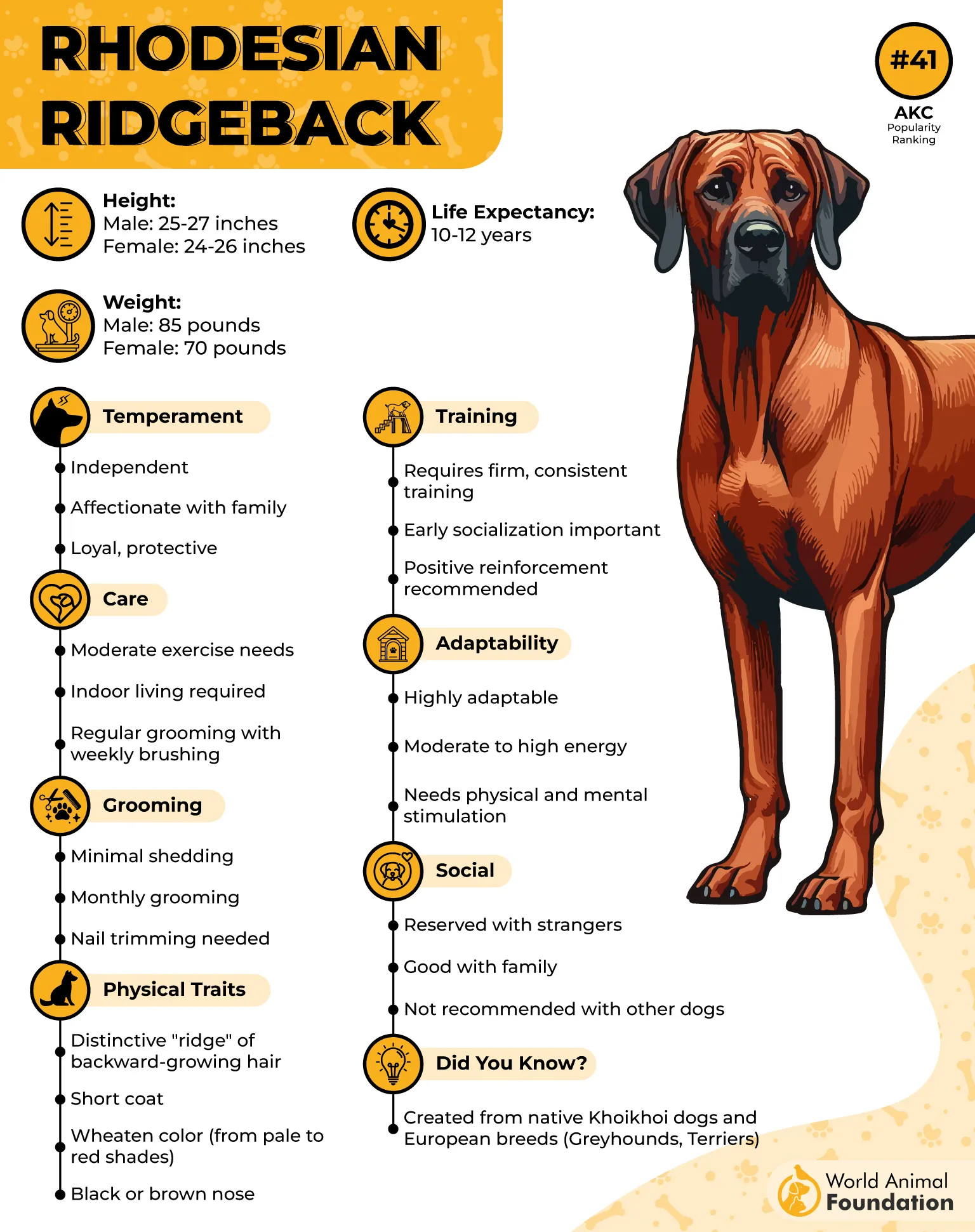
These traits make them unsuitable for homes with small pets and kids. Rhodesian Ridgebacks make excellent family pets with consistent training and proper socialization. They may not be a good choice for first-time dog owners.
Rhodesian Ridgebacks are athletic dogs with moderate energy levels. They bond closely with their owners and make excellent guard dogs. Participating in canine sports is a good way to exercise these dogs.
Lack of adequate mental and physical stimulation can lead to destructive behaviors like chewing and excessive barking.
7. Greyhound
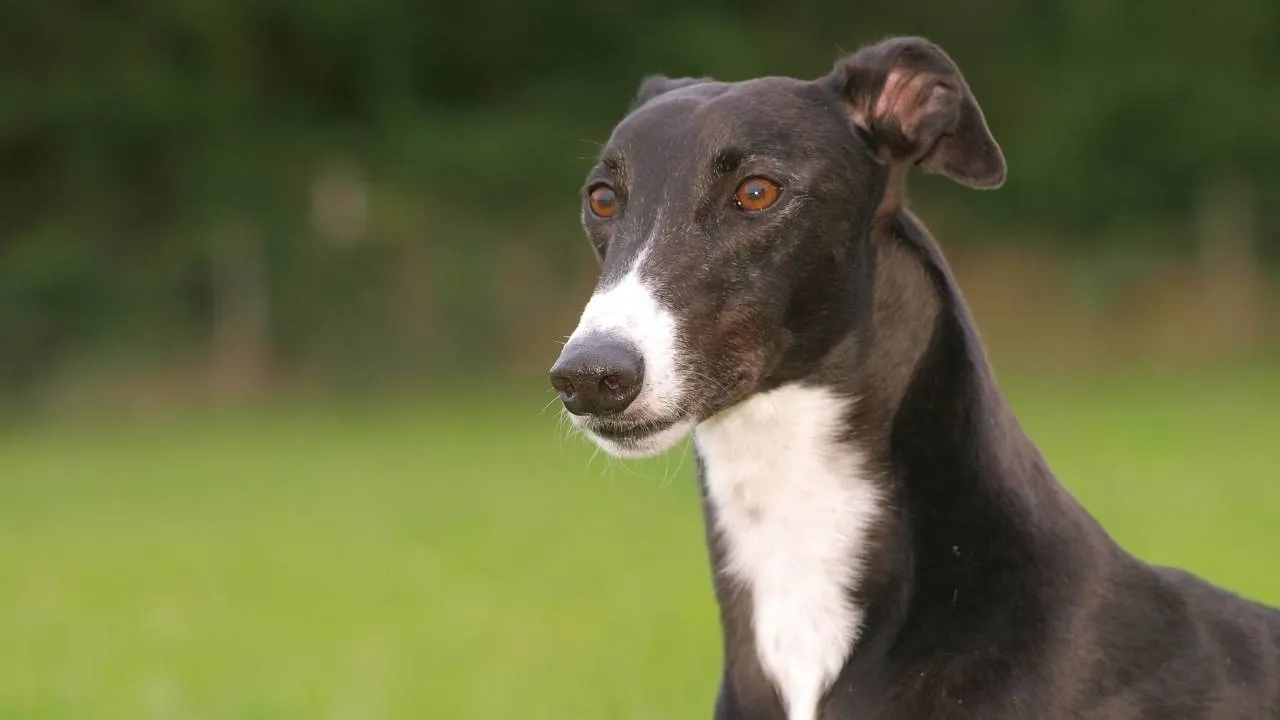
Known for their speed and racing skill, Greyhounds were originally bred to pursue game using their sense of sight. Their high prey drive is attributed to their rich history as sight hounds. They love to chase every moving object, cats, smaller dogs, and even children.
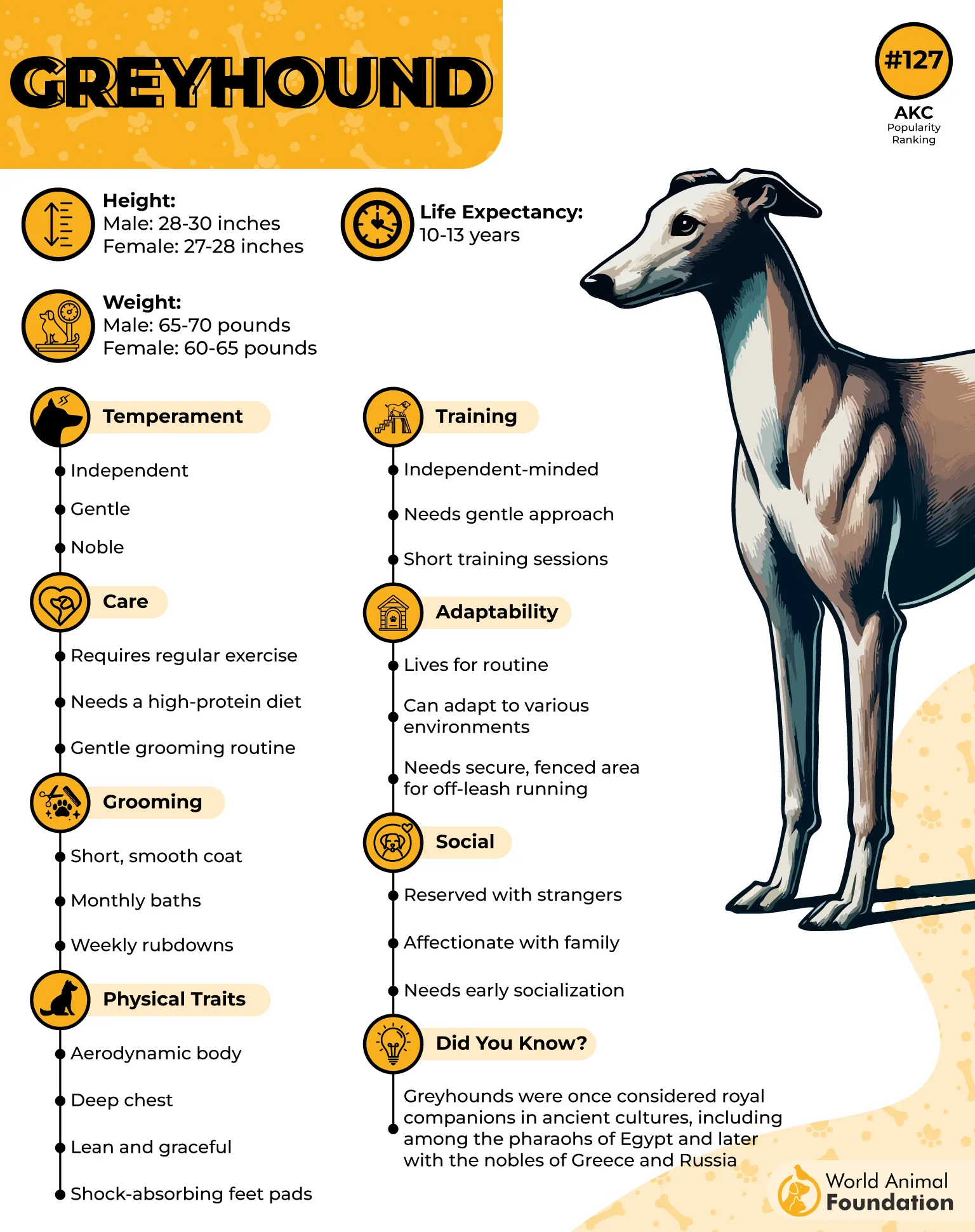
However, well-trained and properly socialized greyhounds make loving and gentle family pets. Their streamlined bodies and deep chests give them a distinctive appearance. Greyhounds are not a good choice for multi-pet households.
Despite their great athletic abilities, Greyhounds can happily spend their entire day sleeping. They have incredible endurance, but need only moderate exercise to stay physically and mentally fit. Their sweet nature and friendly attitude make them ideal companions.
Conclusion
Dogs have a natural instinct to hunt and chase, but some breeds have a higher prey drive than others. They tend to run and chase after small animals and every moving object. Such breeds need proper training and socialization to turn into well-behaved pets.
As pets, they are incredibly loyal and affectionate to their owners and bond firmly with them. They also need regular exercise to manage their high prey drive. It is recommended to keep them on a leash or in a securely fenced area.
