




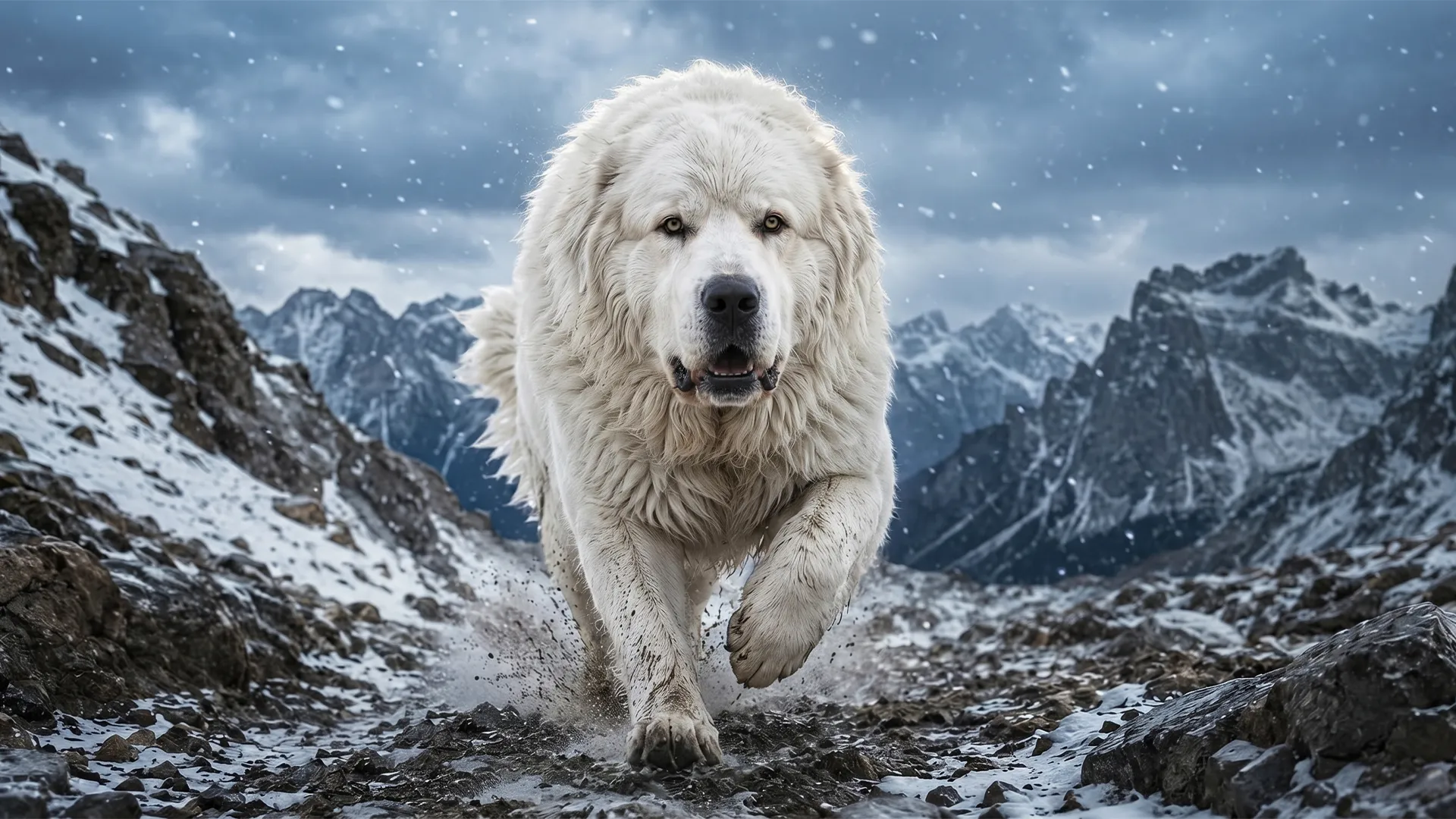
If you love the great outdoors, you know there’s nothing quite like exploring rugged trails with a loyal companion by your side. But not every dog is built for mountains, long hikes, or harsh weather—some thrive when the going gets tough, while others prefer the comfort of the couch.
The truth is, certain breeds are natural adventurers, with the stamina, strength, and smarts to handle challenging terrain and unpredictable conditions.
These dogs don’t just enjoy the outdoors—they need it. With strong instincts, protective instincts, and boundless energy, they’re happiest when they have space to roam, climb, or guard, making them perfect partners for hiking, camping, or just exploring nature’s hidden corners.
In this article, we’re diving into nine enduring dog breeds that thrive in rugged outdoor conditions—perfect companions for anyone looking to share adventures with a four-legged explorer.
Key Takeaways
These 9 dog breeds thrive in rugged outdoor conditions and love physical and mental exercise.
Early socialization, consistent training, and daily exercise are essential for happy, well-behaved dogs.
Each breed has unique traits—consider energy level, prey drive, and grooming needs when choosing a companion.
With proper care and engagement, these dogs make loyal, adventurous, and enduring partners for active families.
Enduring Dog Breeds That Thrive in Rugged Outdoor Conditions
1. Alaskan Malamute
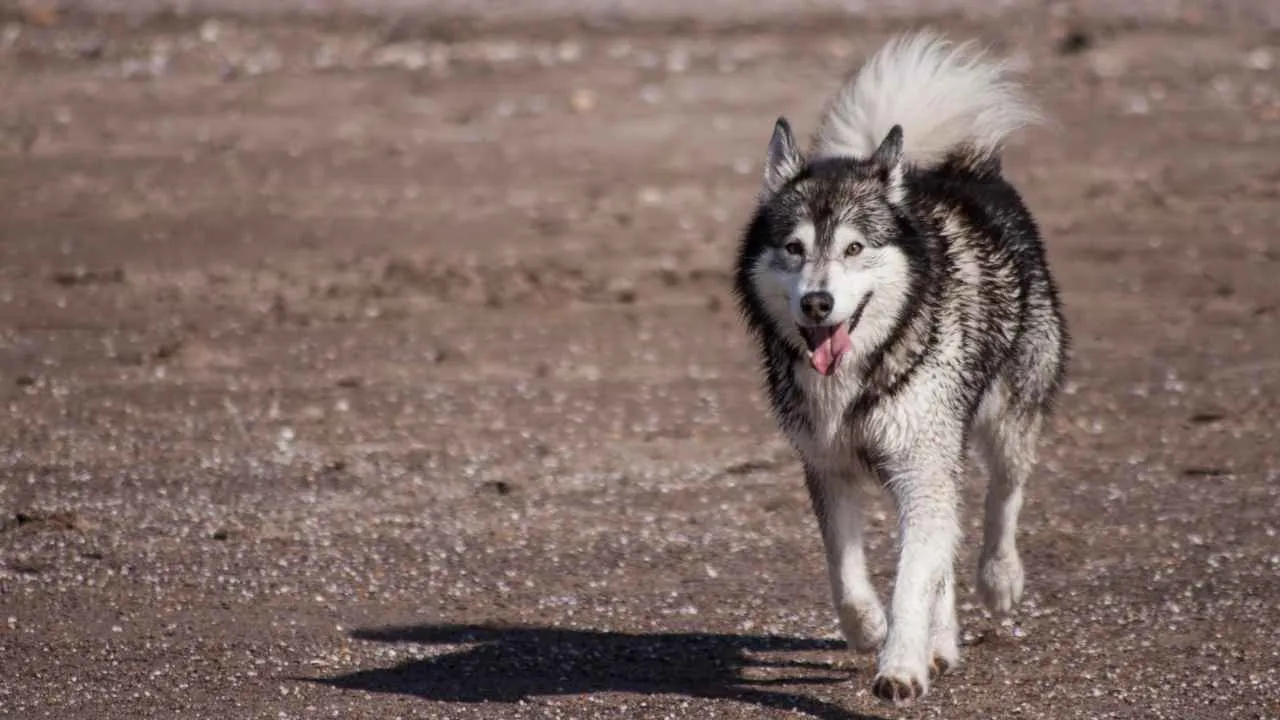
Alaskan Malamutes are strong, loyal, and playful dogs built for the toughest outdoor conditions. Originally bred by the Mahlemut tribe in Alaska, these dogs hauled heavy loads across icy terrain and even helped with hunting seals and scaring polar bears, according to PetMD.
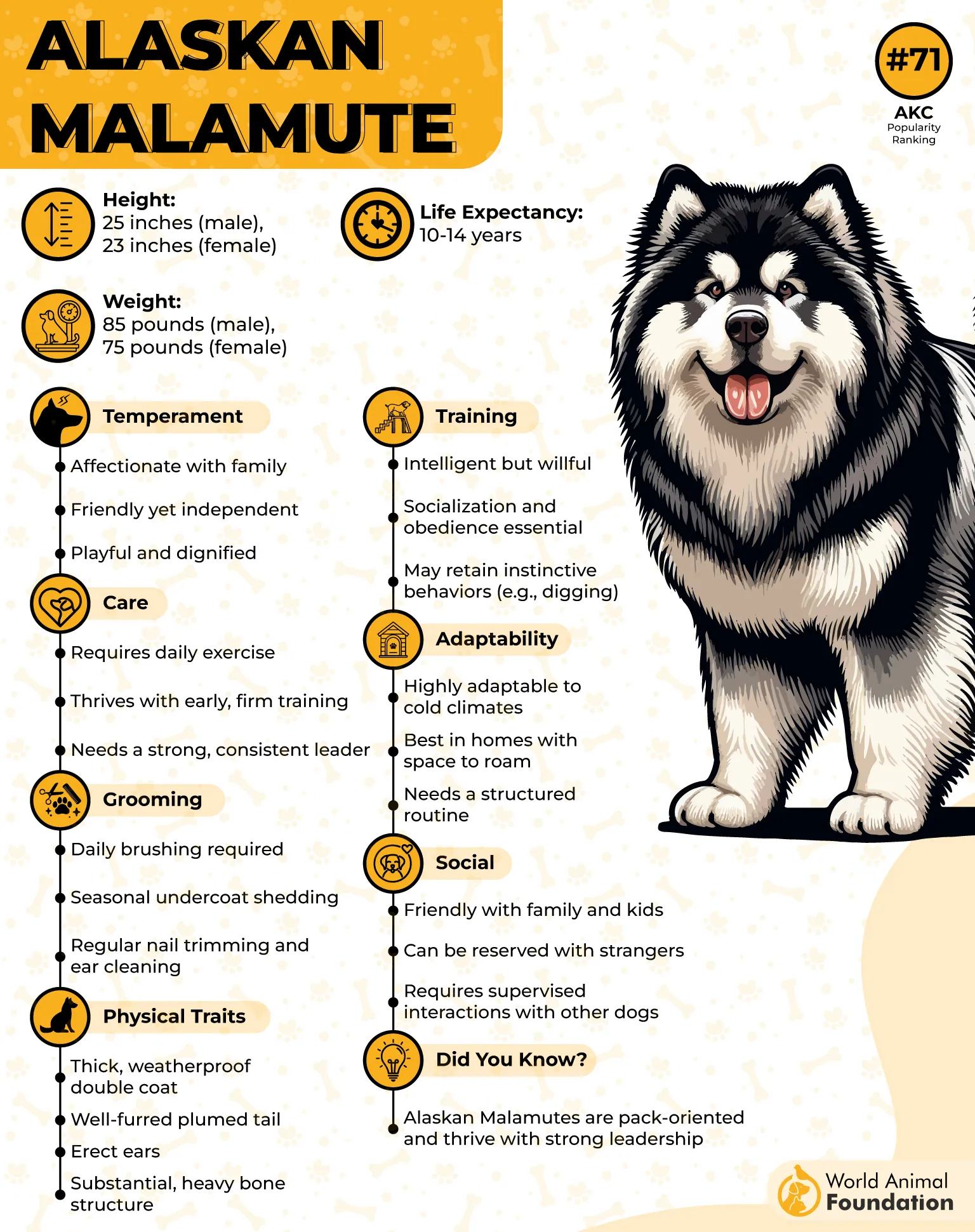
Their thick double coats, erect ears, and bushy tails are designed to withstand freezing weather. Despite their rugged origins, Malamutes are affectionate pack animals who thrive on companionship and enjoy snuggling with their families after a day of activity.
Personality and Training
Malamutes are intelligent, independent, and sometimes stubborn. They require early socialization and firm, consistent training to ensure they respect their family pack. While they are friendly with strangers and not suited as guard dogs, they are gentle, playful, and great with children.
Malamutes love being active, and without proper exercise, they can become bored or pushy. Owners should expect some digging behavior and be ready to provide secure fencing to keep them safe.
Exercise and Care
These dogs need daily physical activity to stay happy and healthy. Hiking, running, swimming, or pulling weighted packs are all ideal ways to engage them. Their thick coats need daily brushing, especially during shedding seasons, to prevent mats and skin issues.
Occasional baths and regular nail and ear care are also important. Malamutes have long lifespans and, with proper care, remain devoted companions who love the outdoors.
2. Siberian Husky
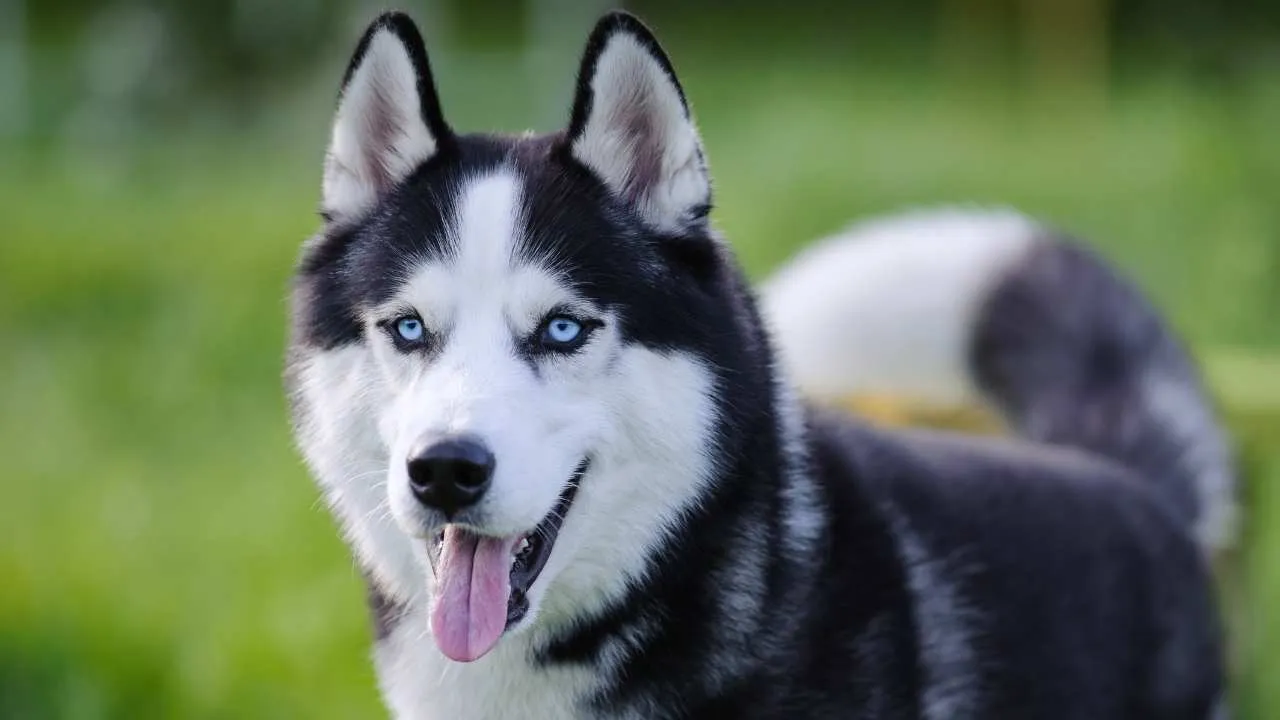
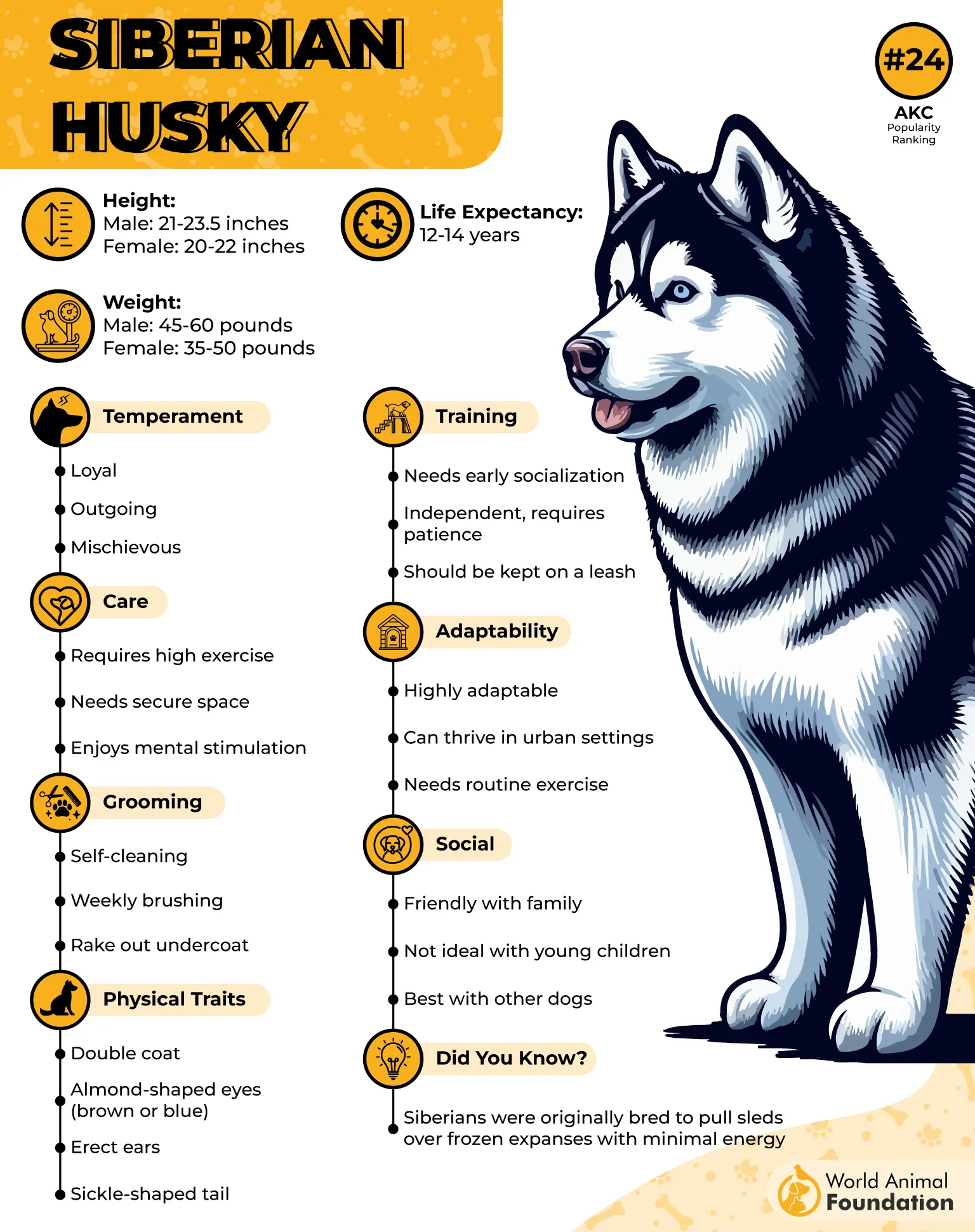
Siberian Huskies are energetic, friendly, and built for endurance in harsh conditions. Originally bred by the Chukchi people of Siberia, they pulled sleds over frozen terrain and worked in packs.
With thick double coats and striking eyes—sometimes one blue and one brown—these dogs are instantly recognizable. Huskies are social pack animals and thrive on being part of an active family. They are affectionate and playful but need plenty of attention and activity to stay happy.
Personality and Training
Huskies are intelligent, independent thinkers with strong prey drives. They need early socialization, obedience training, and consistent guidance to prevent unwanted behaviors. Huskies are not natural guard dogs—they are friendly with strangers.
They love running and exploring, so secure fencing or leashes are essential. Without proper stimulation, they may become bored, howl excessively, or escape. Positive reinforcement and fun training sessions work best with this breed.
Exercise and Care
Siberian Huskies require daily mental and physical stimulation. Hiking, sledding, agility, or running games keep them fit and content. Their thick coat sheds twice a year heavily, but regular brushing, occasional baths, and basic grooming keep them healthy.
Huskies are social and happiest with human or canine companionship. With proper care, they remain loyal, playful, and enduring companions who thrive in rugged outdoor conditions.
3. Great Pyrenees
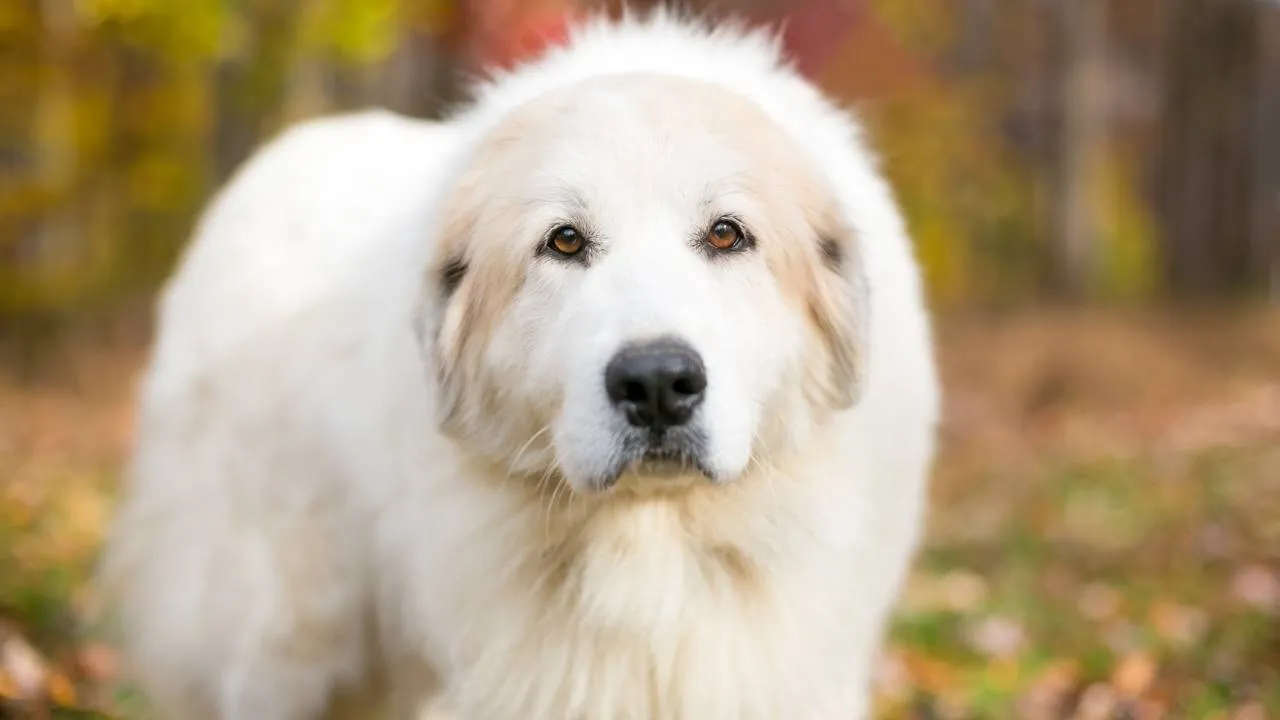
The Great Pyrenees is a powerful, calm, and independent dog bred to guard flocks in snowy mountain regions. Originally from the Pyrenees Mountains between Spain and France, these dogs protected sheep from wolves, bears, and other predators.
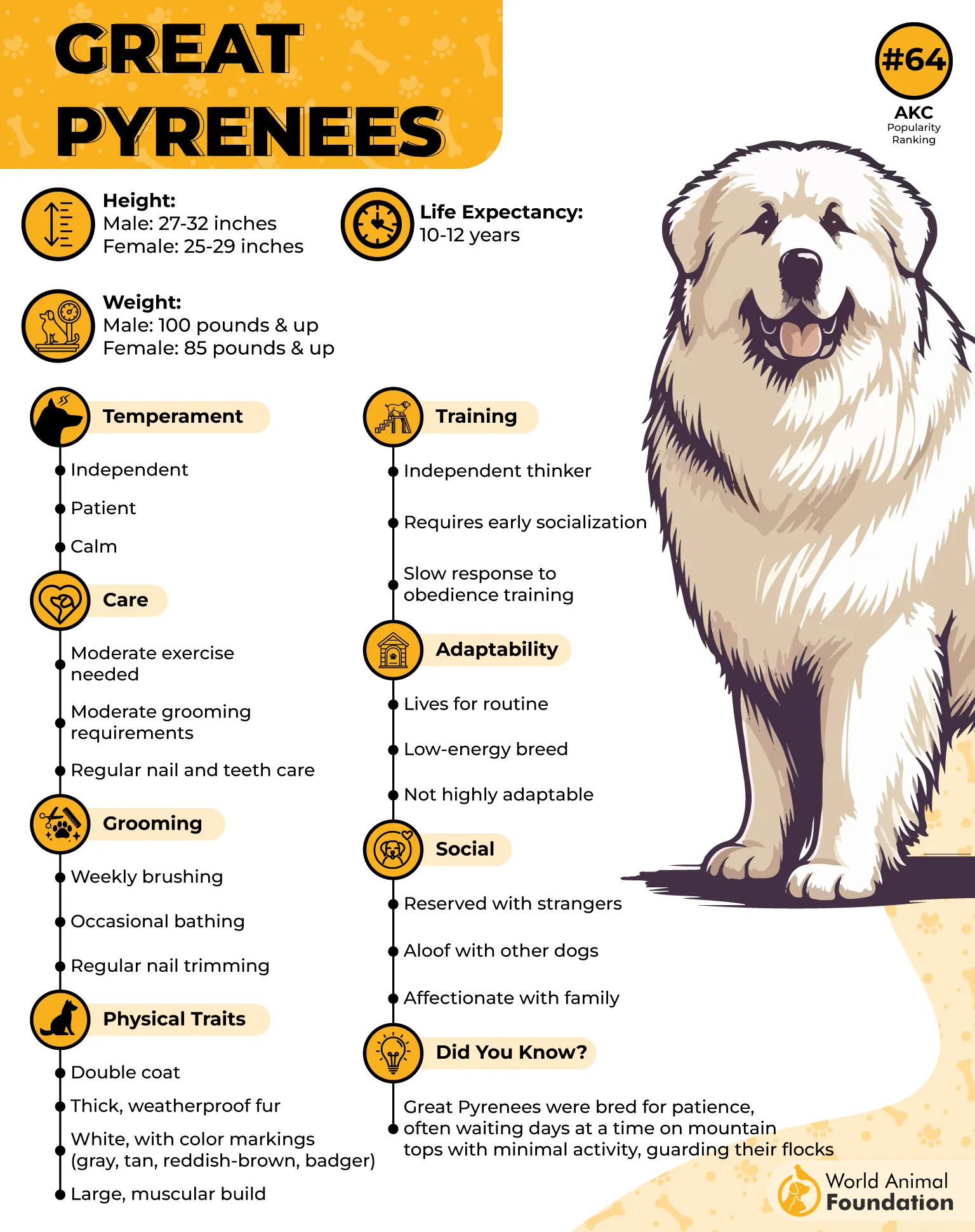
With thick white double coats, plumed tails, and graceful movements, they are perfectly suited for harsh outdoor conditions. Despite their size and strength, Great Pyrenees are gentle, affectionate, and devoted to their families.
Personality and Training
Pyrs are intelligent but independent thinkers. They value their alone time and are not highly active, conserving energy for guarding when needed. Early socialization and puppy training are important to help them become well-mannered companions.
While they can be strong-willed, positive reinforcement and consistency work best. Pyrs are alert and protective, but their friendliness makes them poor guard dogs for strangers—they bark to warn but rarely act aggressively.
Exercise and Care
Great Pyrenees enjoy moderate activity such as daily walks, hiking, or farm work. Their long outer coat is dirt- and tangle-resistant, requiring only weekly brushing to maintain the soft undercoat. Regular nail trims, teeth brushing, and basic grooming keep them healthy.
These large dogs thrive in rural or suburban homes with space to roam and quiet routines. With patience, care, and proper socialization, they make enduring, loyal companions for families and outdoor adventurers alike.
4. Rhodesian Ridgeback
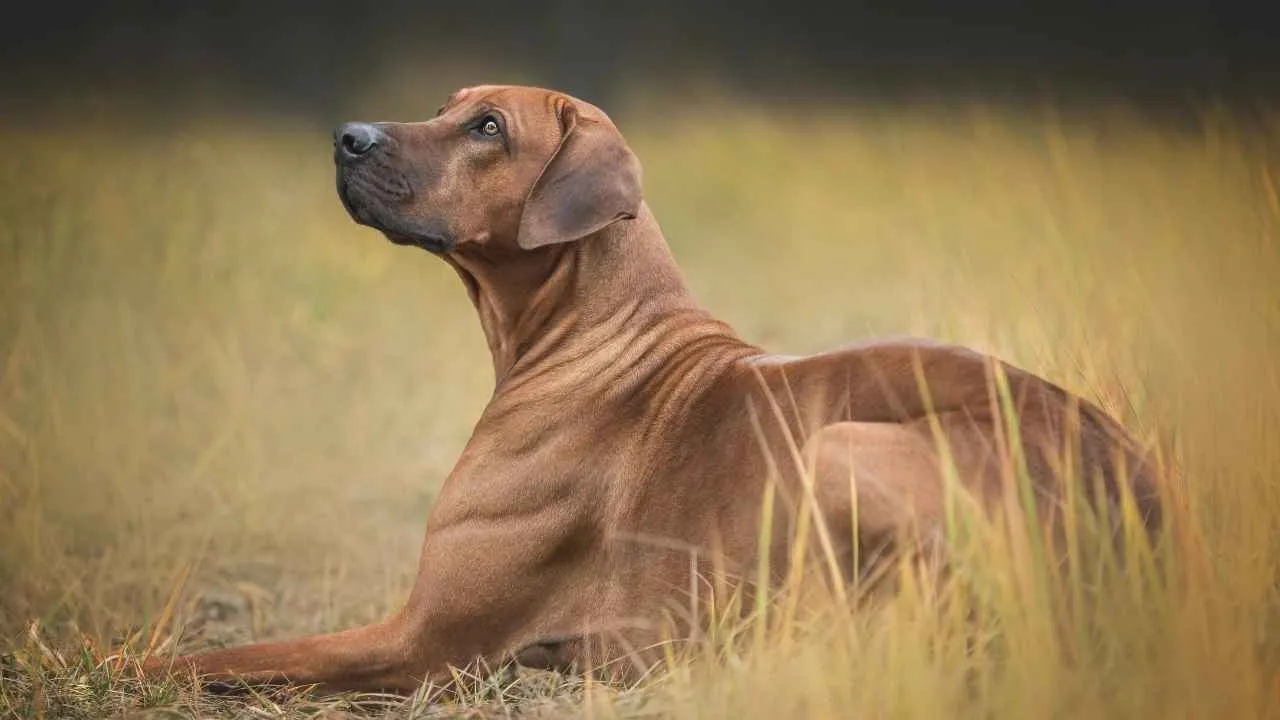
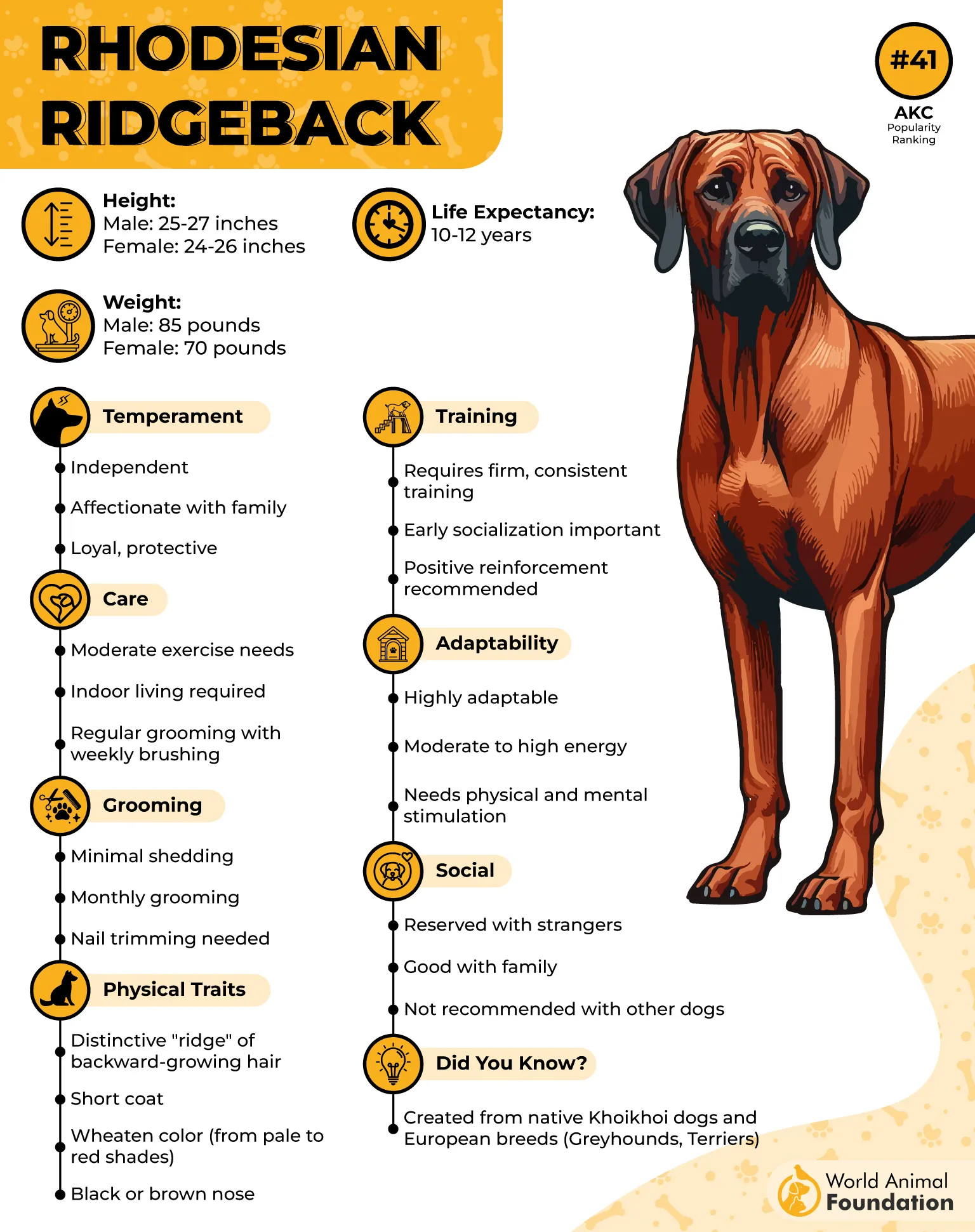
The Rhodesian Ridgeback is a strong, athletic, and independent dog, famous for the ridge of hair along its back. Originally bred in Africa to track lions and protect game, Ridgebacks are fast, powerful, and have incredible stamina.
Today, they are loyal family companions, affectionate with loved ones but often aloof with strangers. Their short wheaten coat is low-maintenance, and their striking appearance reflects a history of endurance and courage.
Personality and Training
Ridgebacks are intelligent and strong-willed, so early training and socialization are essential. They respond best to firm but fair guidance and positive reinforcement.
While they are gentle with children and loyal to family, their independence and strong prey drive mean they must be kept in secure areas off-leash. Ridgebacks are curious and sometimes mischievous, so mental stimulation is just as important as physical exercise to prevent boredom.
Exercise and Care
These dogs need daily exercise, including running, hiking, and active play, to stay happy and healthy. Ridgebacks can also excel in activities like tracking, agility, and obedience competitions.
Grooming is simple—weekly brushing and occasional baths are enough to maintain their coat. With proper training, exercise, and socialization, Rhodesian Ridgebacks are enduring, athletic companions who thrive in rugged outdoor conditions.
5. Weimaraner
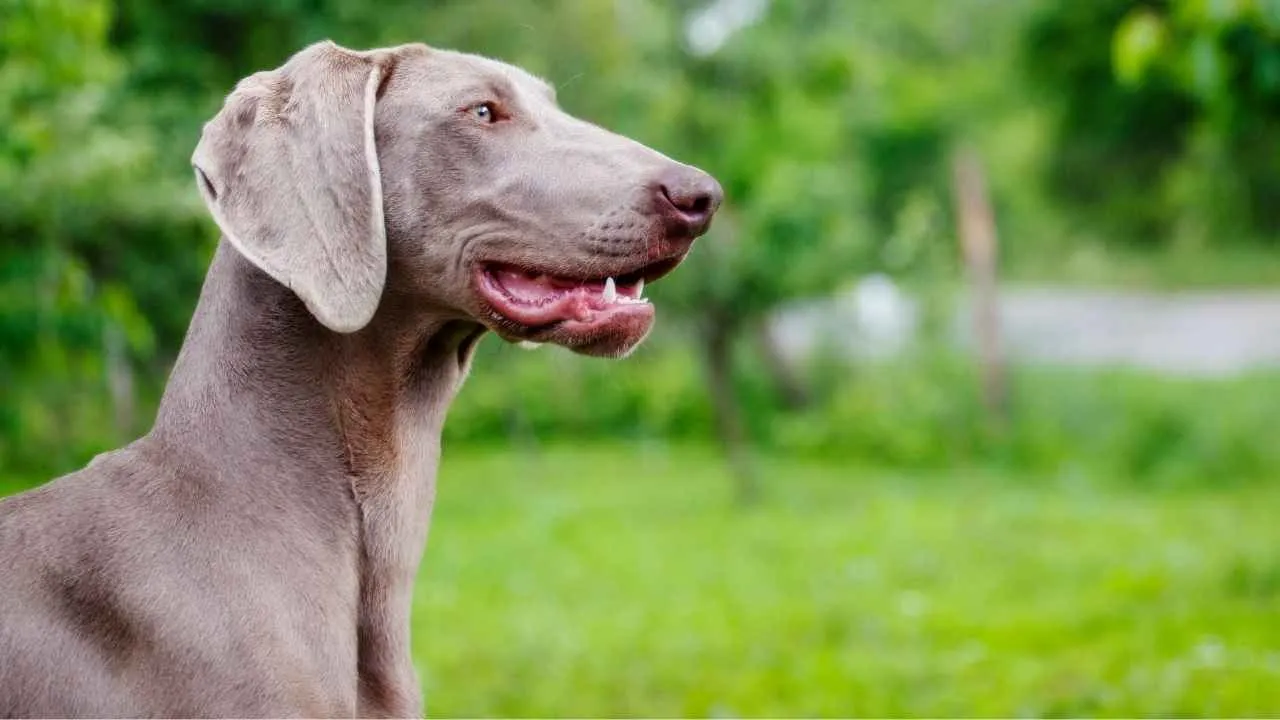
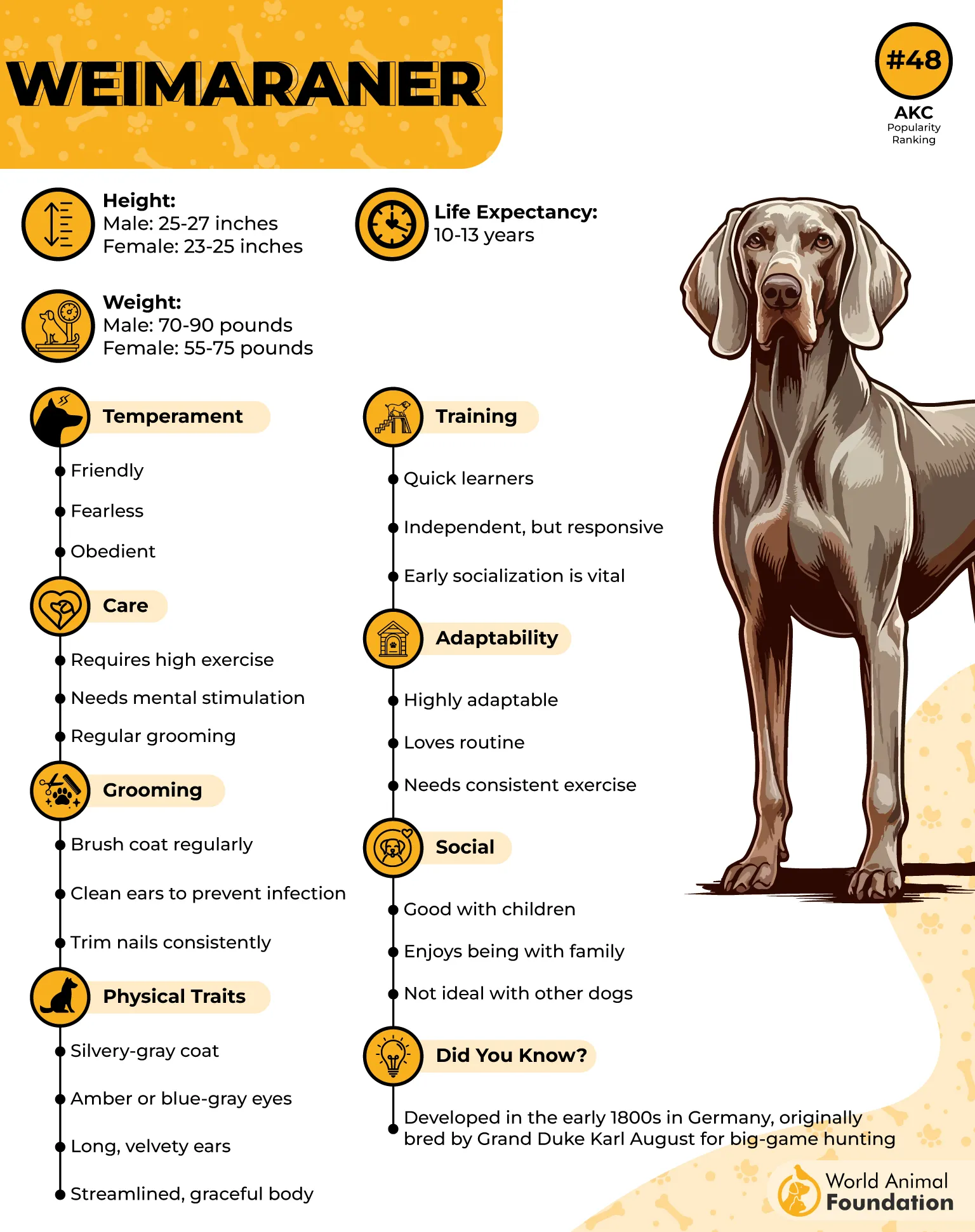
The Weimaraner is a sleek, athletic dog built for speed, endurance, and outdoor adventure. Originally bred in Germany for hunting, these dogs excel at tracking and retrieving.
Their striking silver-gray coat, long ears, and amber or blue-gray eyes make them instantly recognizable. Friendly, loyal, and affectionate, Weimaraners thrive on human companionship and enjoy being full members of the family.
Personality and Training
Weimaraners are intelligent, independent, and energetic. They learn quickly, both good and bad habits, so early training and socialization are essential. These dogs respond best to positive reinforcement and consistent guidance.
They are gentle with children and can get along with other dogs, but their hunting instincts mean small pets may not be safe companions. Bored Weimaraners can develop destructive behaviors, so mental stimulation is as important as physical exercise.
Exercise and Care
Weimaraners need at least two hours of exercise daily, including running, hiking, or play sessions. Short grooming is simple—weekly brushing and occasional baths keep their sleek coat healthy.
Nail trims, ear cleaning, and teeth care are also important. With proper activity, training, and socialization, Weimaraners are enduring, intelligent, and adventurous dogs that love life outdoors.
6. Australian Cattle Dog
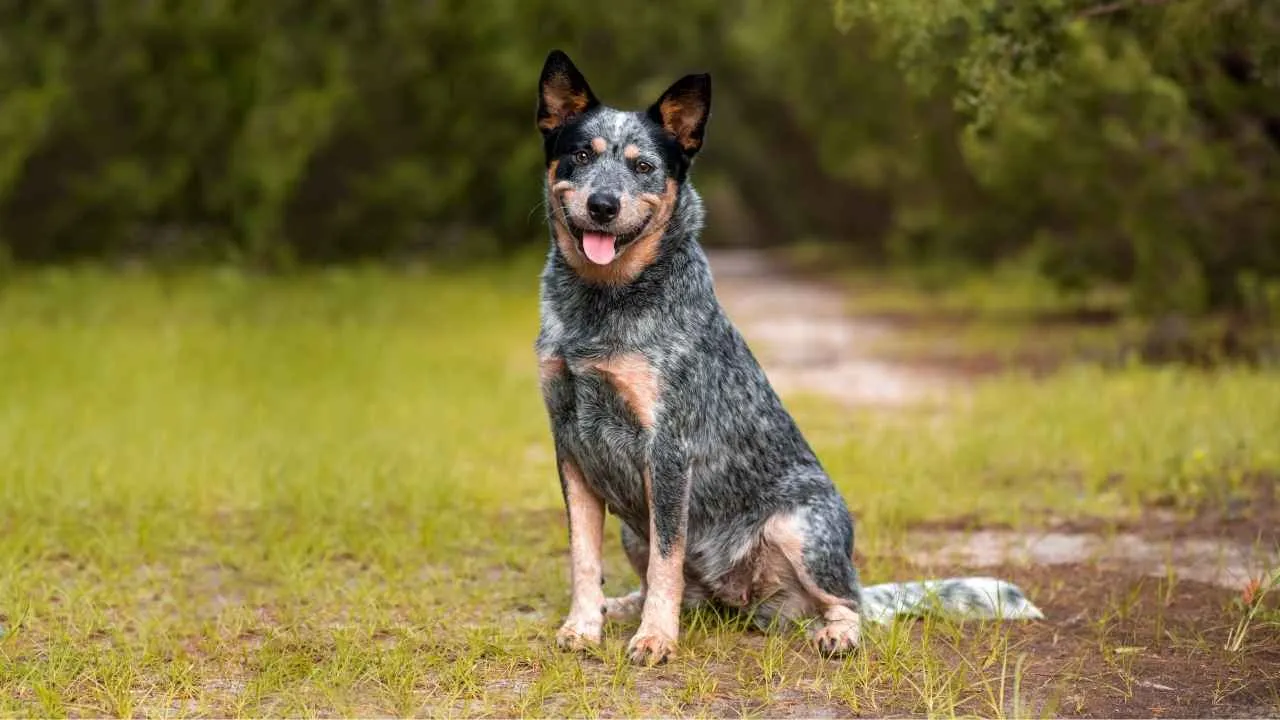
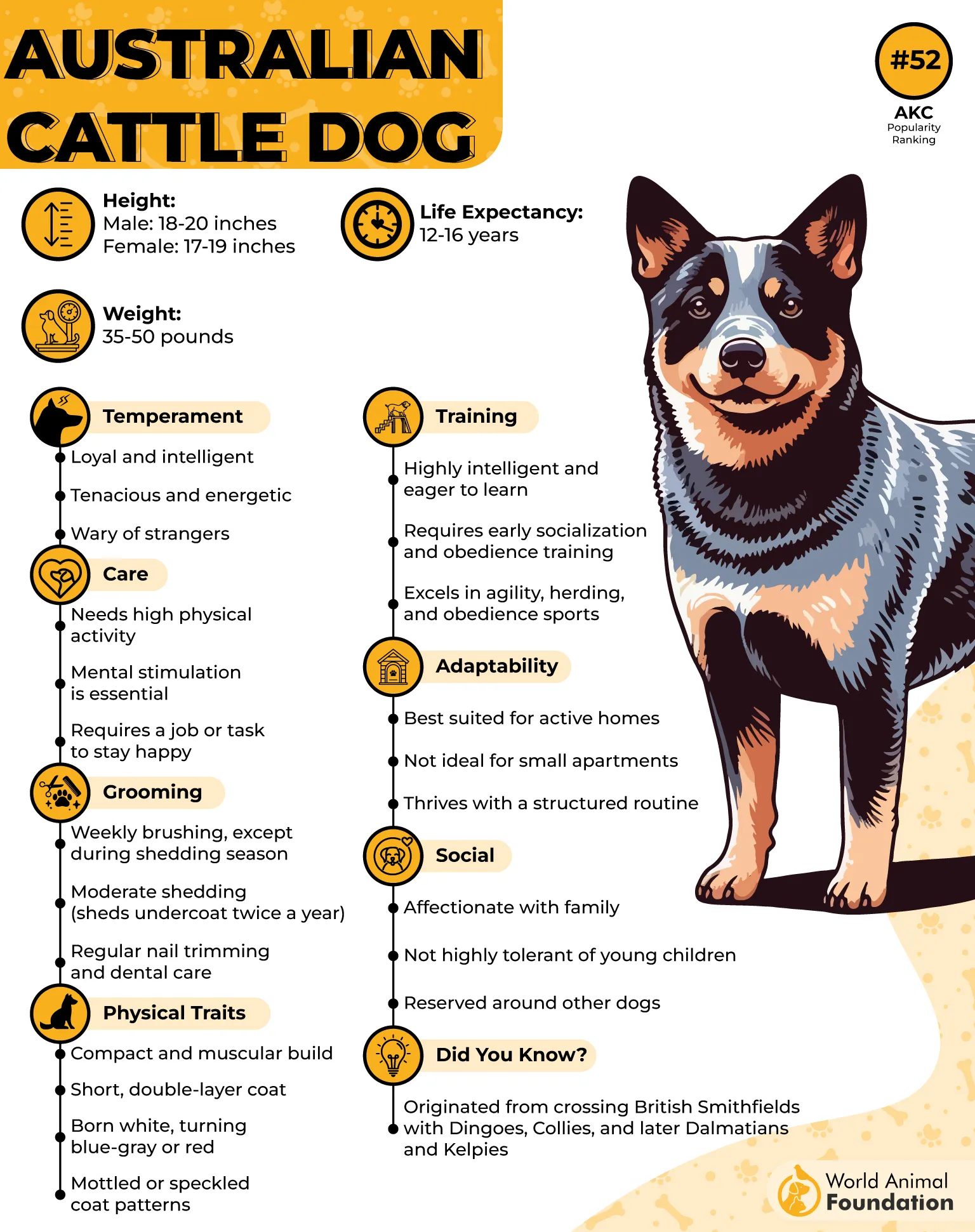
Australian Cattle Dogs are sturdy, hard‑working dogs originally bred to herd cattle across rugged Australian terrain. These dogs are loyal, smart, and always ready for action—they excel at running, hiking, chasing, and outdoor work thanks to their strong build and high endurance.
Bred to think and act independently in challenging conditions, they are ideal companions for active owners who enjoy outdoor adventures and purposeful play, as mentioned by Britannica.
Personality and Training
ACDs are highly intelligent and alert dogs with boundless energy and a strong work ethic. If they’re not given a job or a challenge, they can become bored and destructive, so early socialization and obedience training are essential.
These dogs respond best to firm but fair guidance and thrive when involved in herding, agility, or other dog sports. Their prey drive and protective nature make them wary of strangers, and a secure, enclosed outdoor space is important when they’re off leash.
Exercise and Care
Australian Cattle Dogs need vigorous daily exercise—often 1.5–2 hours of running, hiking, or high‑intensity play—to stay healthy and content. Activities that combine physical work with mental challenges, like herding games, agility, or fetch, are ideal.
Their short, dense double coat is weather‑resistant and easy to groom with weekly brushing, though more frequent brushing helps during heavy shedding periods. Regular nail trims, occasional baths, and ear checks complete their basic care routine.
7. Bloodhound
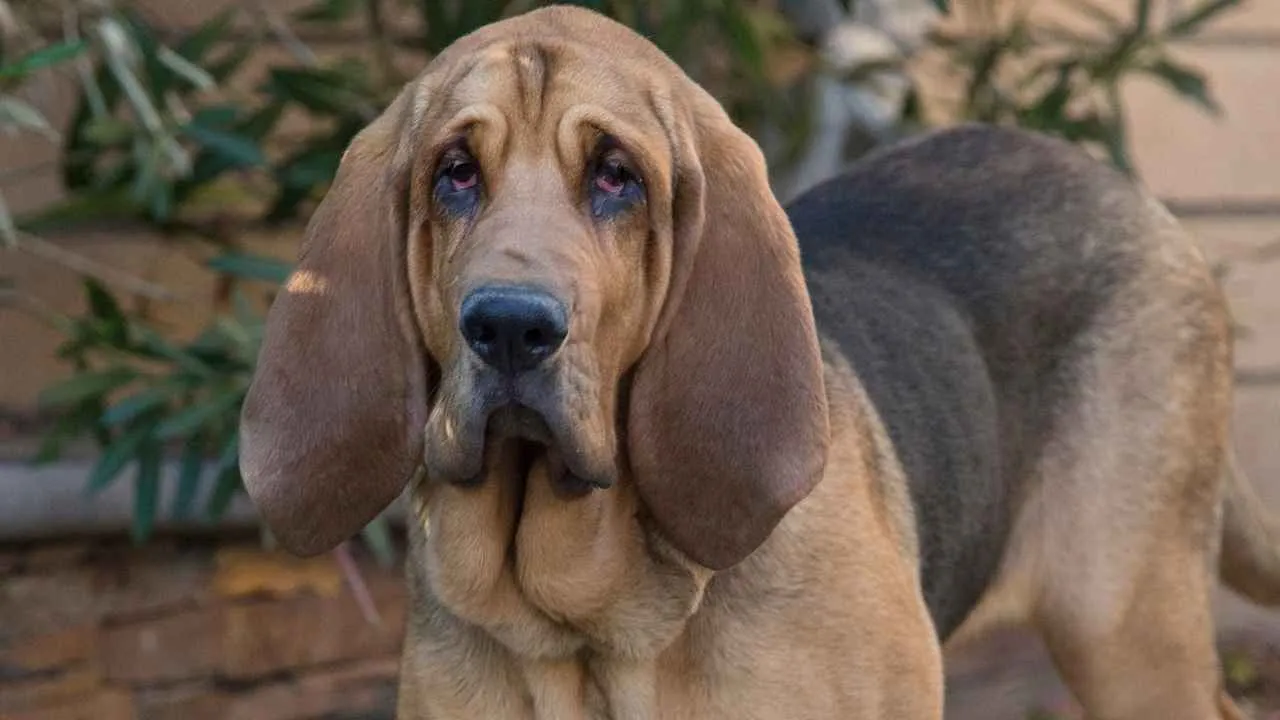
Bloodhounds are large, powerful dogs famous for their unmatched sense of smell. Bred to follow scents across miles of challenging terrain, they are tireless and determined trackers.
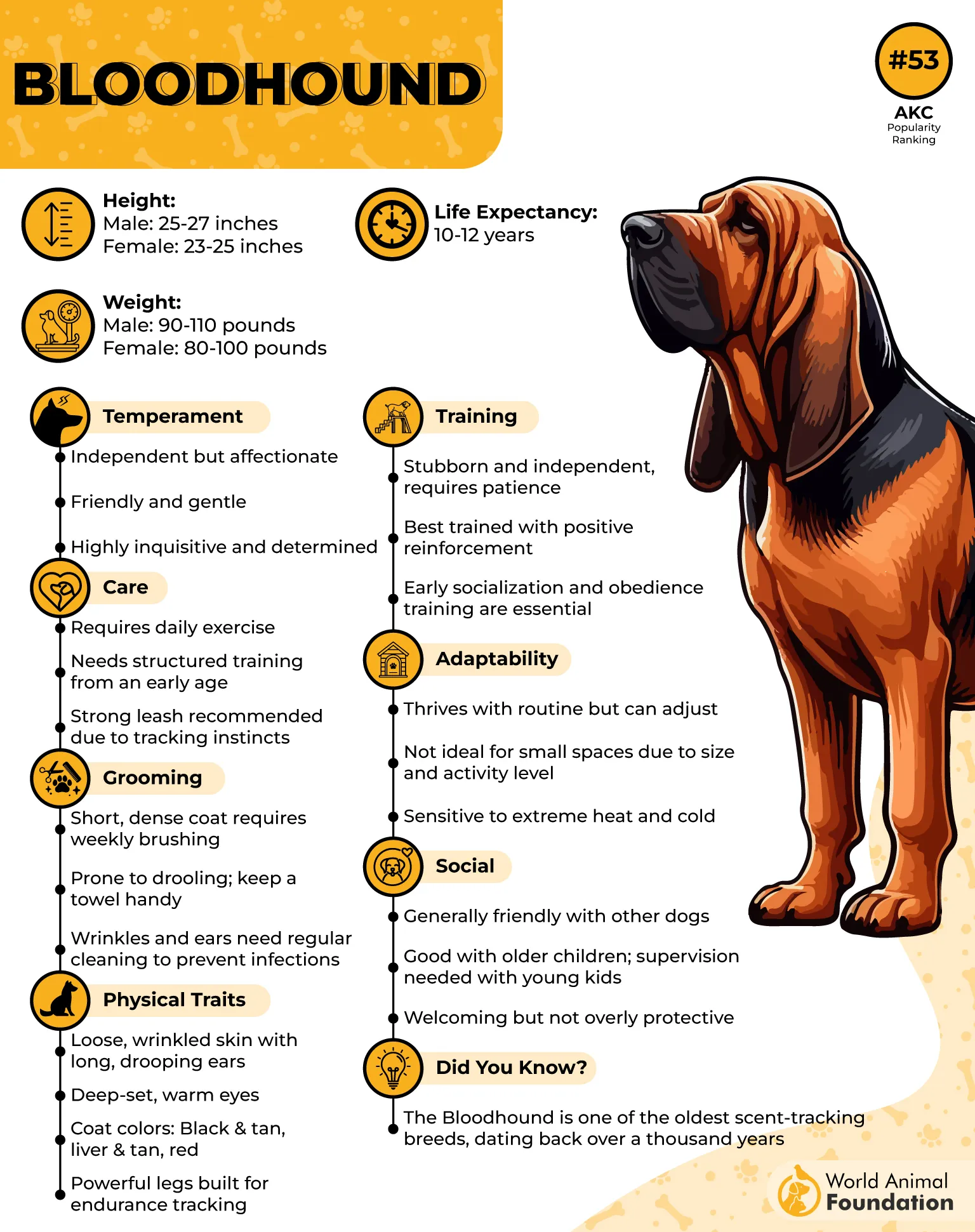
With droopy ears, wrinkled faces, and deep-set eyes, Bloodhounds are instantly recognizable. Despite their work-focused instincts, they are gentle, affectionate, and enjoy being part of a family, including kids and other dogs. They are independent and inquisitive, as noted by the AKC.
Personality and Training
Bloodhounds are intelligent, stubborn, and independent. They require early socialization and consistent, positive training from puppyhood. Firm but kind guidance works best, as they can easily ignore commands when following a scent.
Bloodhounds are not suited for off-leash walks in unsecured areas due to their strong tracking instincts. While slow to mature, they are loyal and devoted companions for patient owners.
Exercise and Care
Daily exercise is essential for Bloodhounds, including long walks and secure outdoor time where they can sniff and explore. Their short, dense coat sheds minimally and needs only weekly brushing and occasional baths.
Nails should be trimmed regularly, and their droopy skin and ears must be cleaned to prevent infections. With proper care and supervision, Bloodhounds make enduring, gentle, and highly capable outdoor companions.
8. Redbone Coonhound
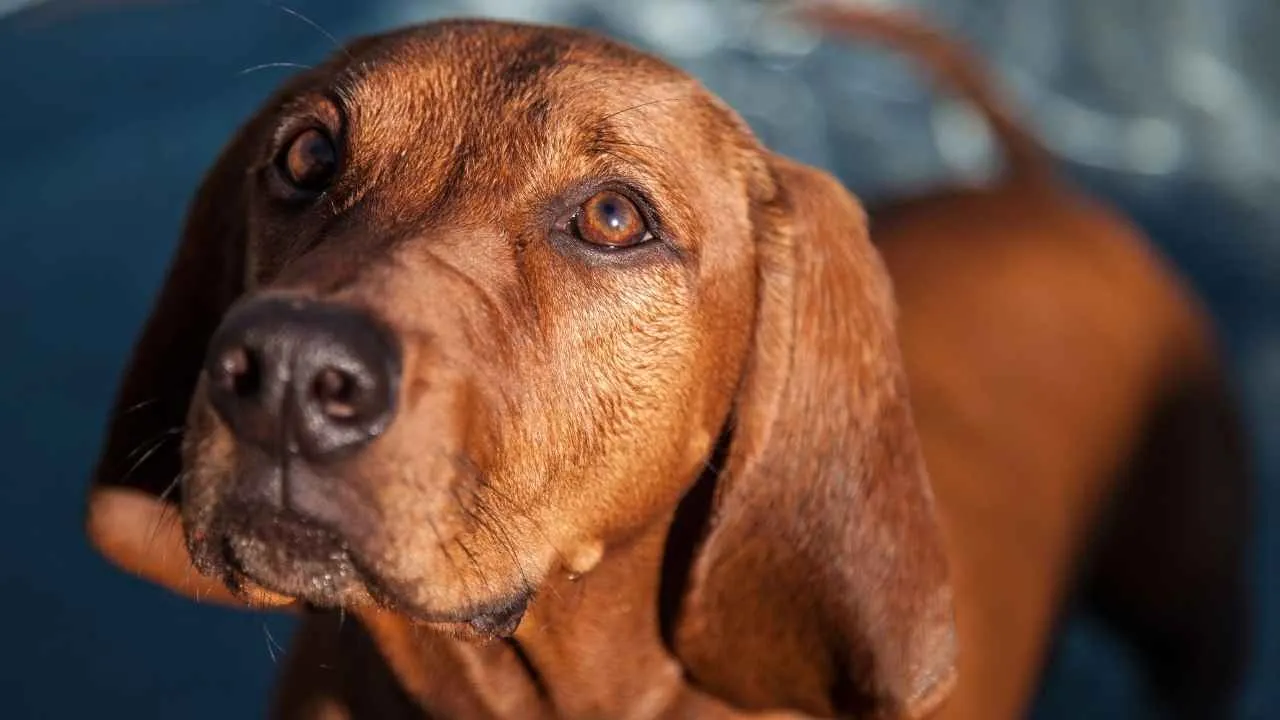
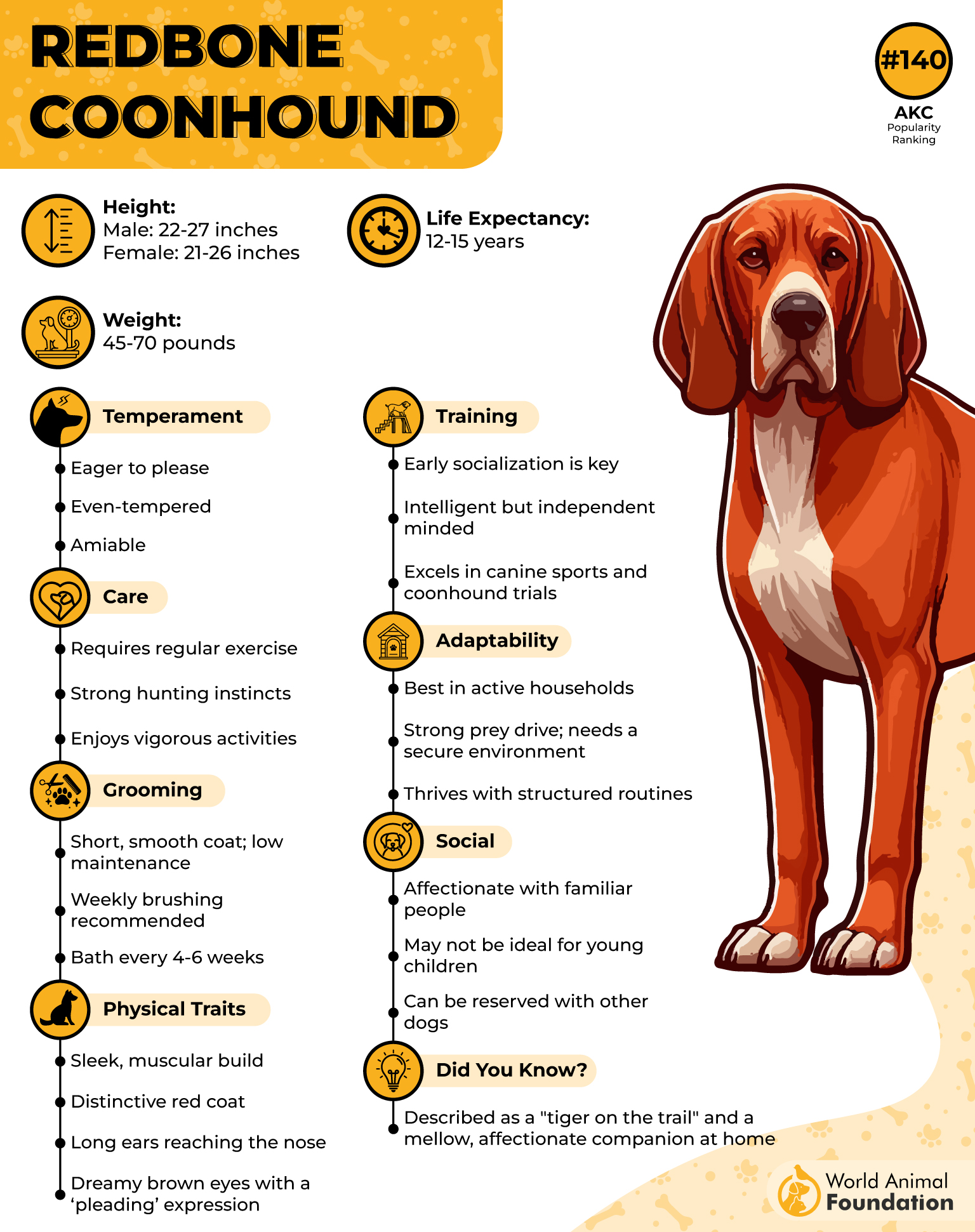
Redbone Coonhounds are medium-to-large hunting dogs built for speed, stamina, and rugged terrain. Famous for their deep red coat, long floppy ears, and expressive brown eyes, they are graceful and muscular.
Originally bred for tracking raccoons and big game, Redbones thrive on purpose-driven work. While they are calm and affectionate at home, they become energetic and focused outdoors, making them perfect companions for active families and hunters alike.
Personality and Training
Redbone Coonhounds are intelligent, friendly, and independent thinkers. They love to follow scents, which can make them stubborn or easily distracted. Early socialization and consistent training using positive reinforcement are essential.
According to WebMD, these dogs are loyal and gentle with children and other dogs, but should be supervised around smaller pets due to their hunting instincts. Without sufficient exercise and mental stimulation, Redbones may become bored or mischievous.
Exercise and Care
Daily activity is crucial for Redbones, including running, hiking, hunting, or tracking games. Their short, smooth coat is low-maintenance and only needs weekly brushing, with occasional baths as needed. Regular nail trims and ear checks are important to maintain health.
With proper exercise, training, and socialization, Redbone Coonhounds are enduring, intelligent, and highly capable outdoor companions who excel in rugged conditions.
9. Black and Tan Coonhound
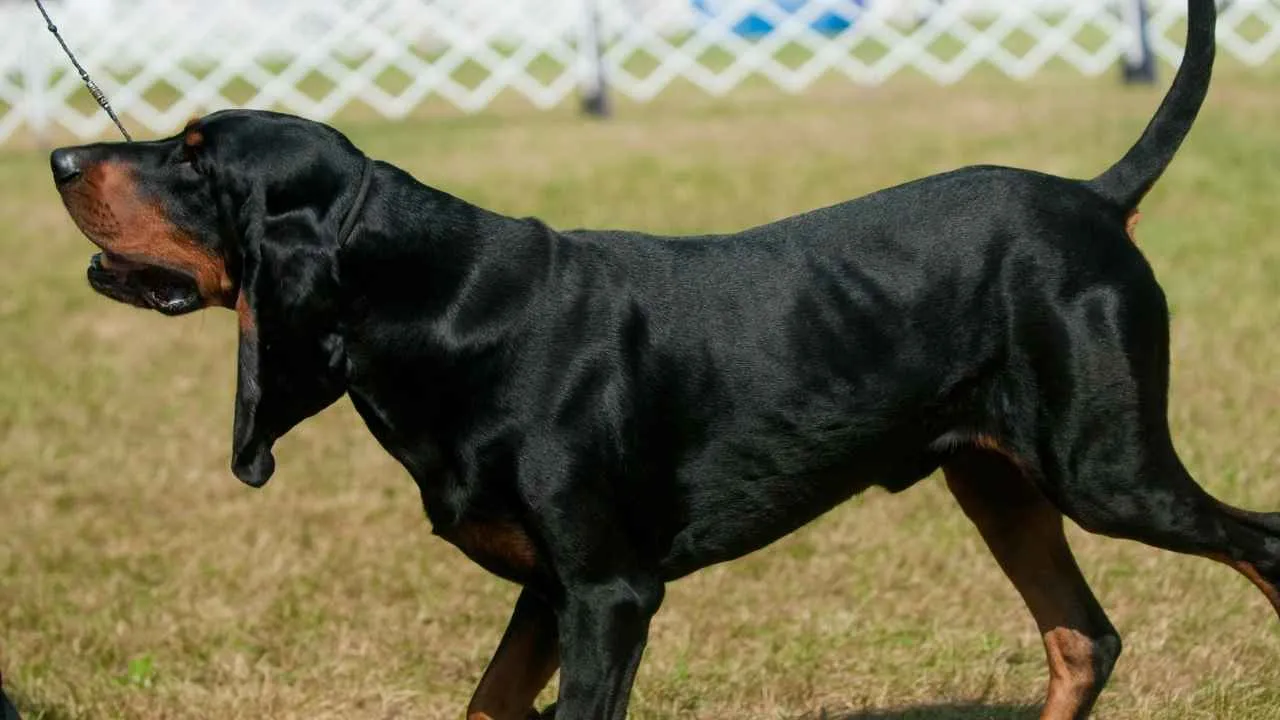
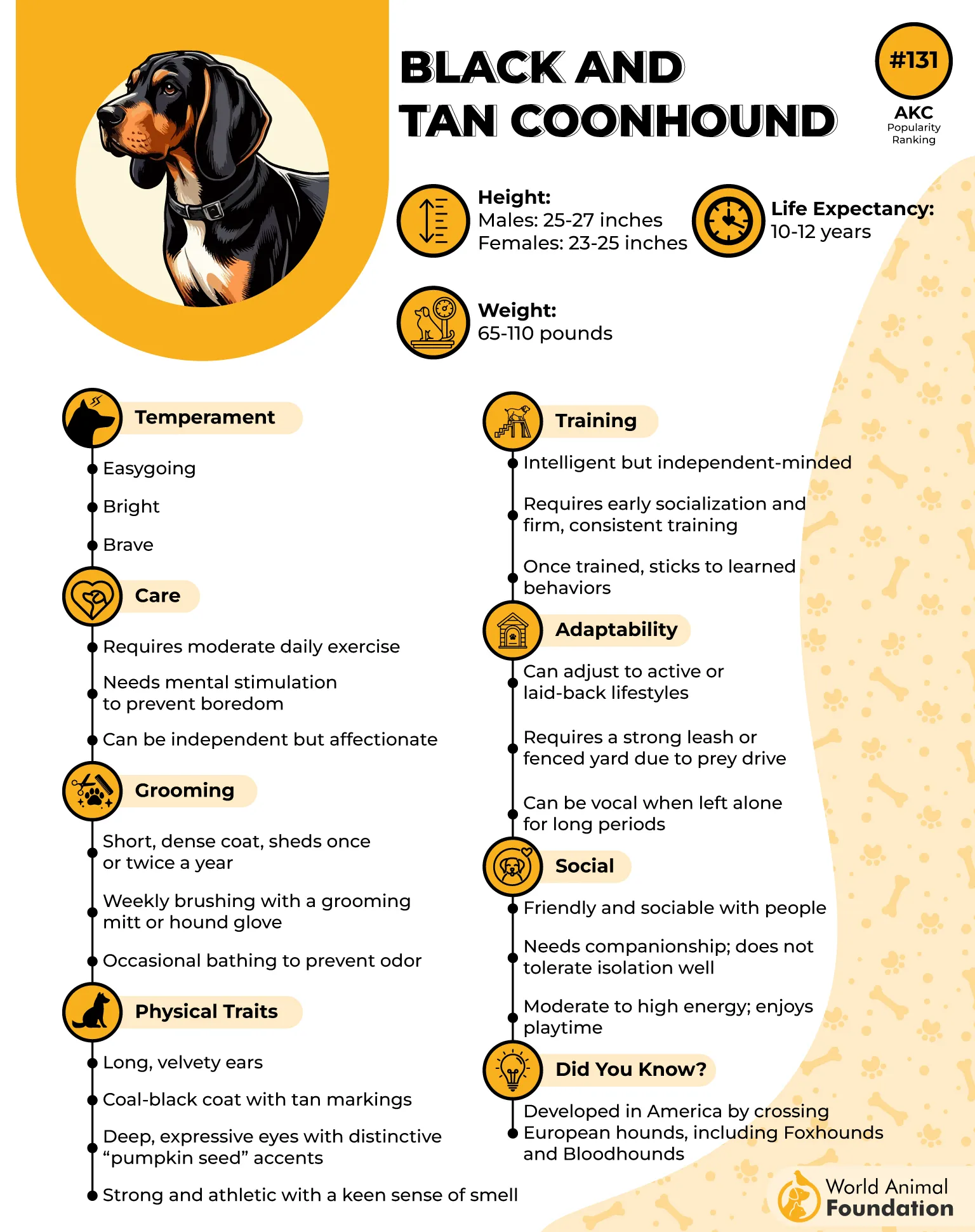
Black and Tan Coonhounds are large, athletic scent hounds bred in the United States for tracking raccoons and other game across challenging terrain. They combine a powerful nose with long, velvety ears and a short, dense coat that sheds minimally and is easy to care for.
Though calm and friendly around the house, their instincts instantly kick in outdoors—they love following trails and exploring wide‑open spaces with eager, rhythmic strides.
Personality and Training
These dogs are loyal, affectionate, and social, enjoying time with people and other dogs. Black and Tan Coonhounds have an independent nature with a strong prey drive, so early socialization and consistent, positive training are important.
Their nose often distracts them, so recall can be challenging, and they should be kept on a strong leash or in secure spaces. They communicate with a distinctive bay or howl, especially when excited or tracking.
Exercise and Care
Daily exercise is essential—long walks, tracking games, hikes, or other outdoor activities keep them fit and content. Their friendly nature makes them good family companions, but they also need mental stimulation to prevent boredom.
Weekly brushing keeps the coat healthy, and weekly ear cleaning helps prevent infections due to their long ears. Nails should be trimmed regularly, and occasional baths keep them fresh.
Conclusion
These nine dog breeds prove that some dogs are built to thrive in rugged outdoor conditions. From tireless trackers to mountain guardians, each breed combines strength, intelligence, and loyalty with a love for adventure.
While their personalities and exercise needs vary, all of them share a common trait: they shine when given space to roam, tasks to complete, and plenty of companionship from their humans.
With patience, training, and love, these dogs will reward you with unmatched devotion, energy, and outdoor enthusiasm. Remember, the right companion can turn any hike, trail, or backyard into an unforgettable adventure.
Looking for more outdoor dog breeds? You can also check out the Bernese Mountain Dog, Anatolian Shepherd, Tibetan Mastiff, Australian Shepherd, German Shepherd, and Labrador Retriever.
