




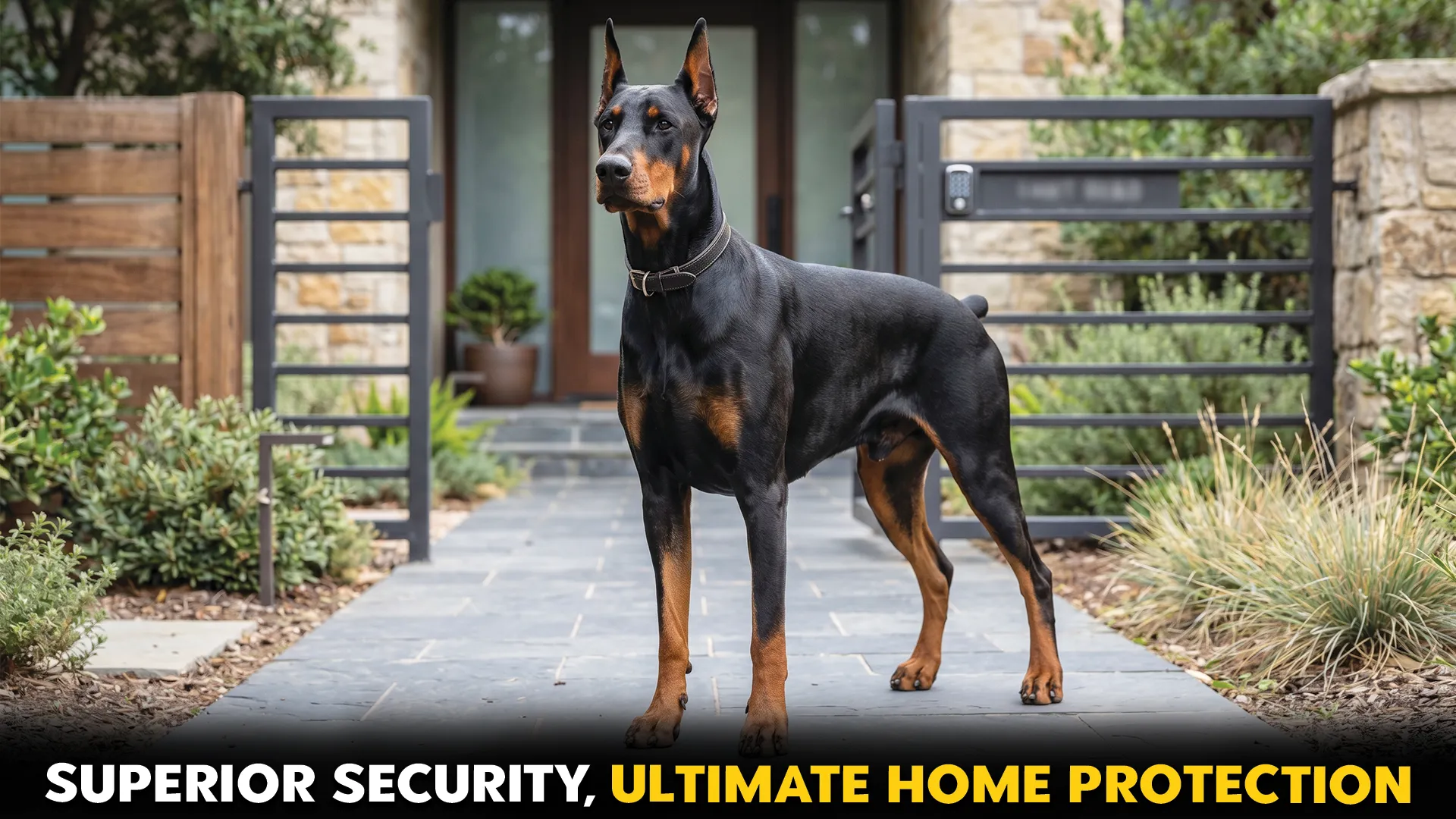
You could spend thousands of dollars on security systems, cameras, and motion sensors, or you could have a dog that genuinely loves protecting you. There’s a reason law enforcement agencies, military units, and families around the world trust certain breeds more than any alarm system. Dogs don’t need Wi-Fi to do their job.
“The firmest friend, the first to welcome, the foremost to defend.” These dogs are everything at once; they can cuddle with you at home like a companion and stand guard like a bodyguard when needed.
Studies suggest that burglars are less likely to target homes with dogs. In this article, we break down nine excellent guard dog breeds that don’t just bark; they truly mean it. Each one brings something unique to the table, and one of them could be the perfect fit for your family.
Let’s get to know them.
Dog Breeds That Provide Superior Home Security
1. German Shepherd
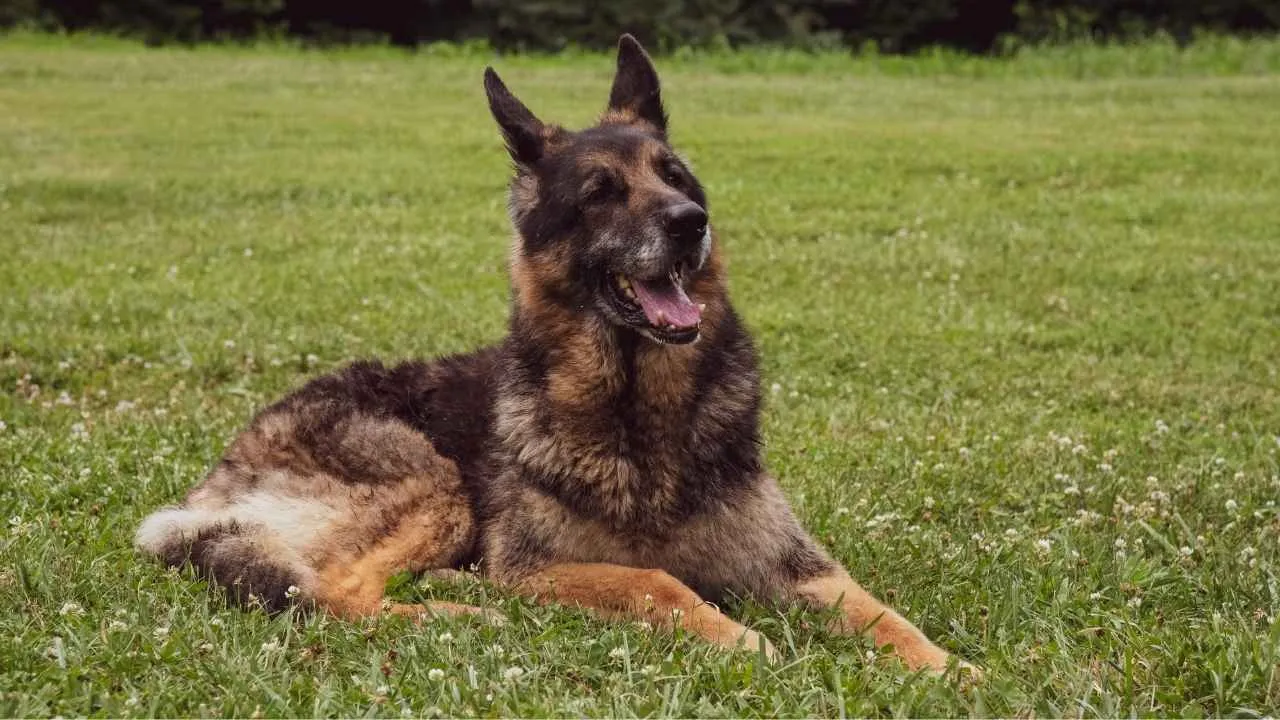
These large, energetic dogs were originally bred in Germany for herding livestock. Over time, their high intelligence (often ranked among the top three smartest breeds), trainability, and naturally protective temperament made them invaluable in police and military work, search-and-rescue operations, and even therapy roles, according to Britannica.
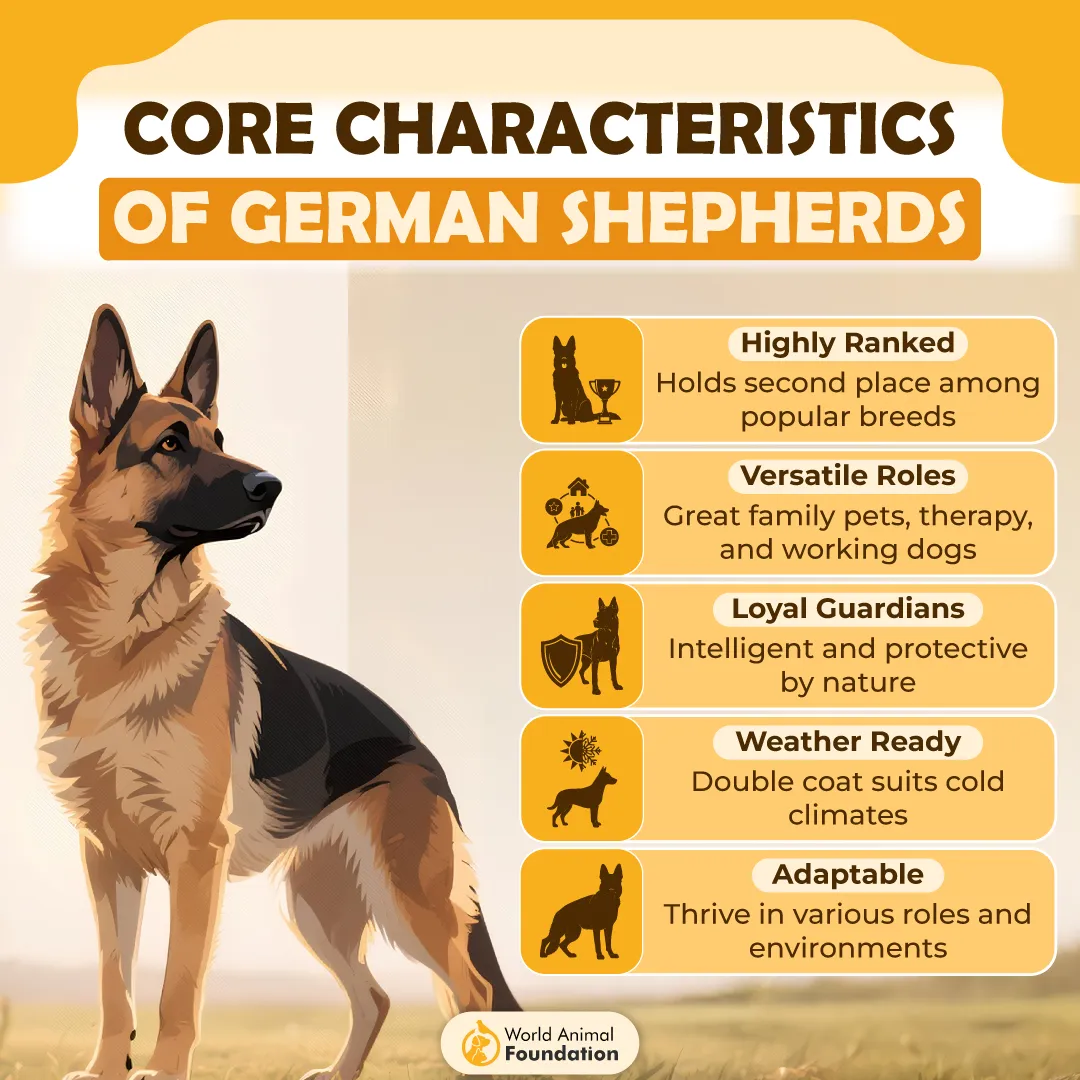
German Shepherds are known for their strong resilience in high-stress situations and their ability to respond calmly in challenging environments. They are highly observant and can pick up on human body language, including signs of stress, fear, and anxiety, allowing them to react quickly even without verbal commands.
They form deep bonds with their families and often see them as their pack. Rather than simply reacting after a threat occurs, they are more likely to stay alert and anticipate potential danger.
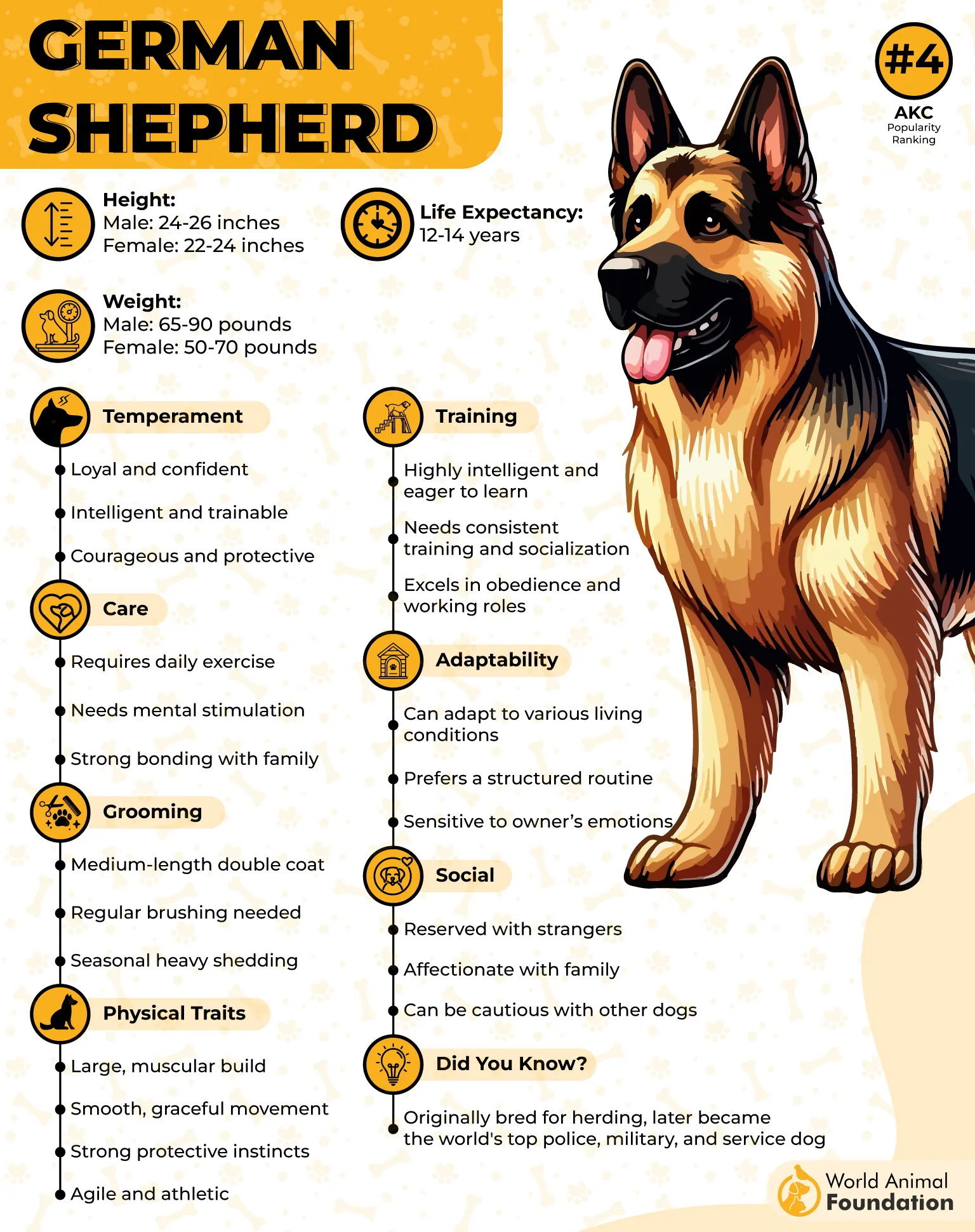
German Shepherds are highly territorial and naturally inclined to patrol their surroundings. They often monitor key vantage points such as doors, windows, and balconies to maintain a full view of their environment. Their vocal behavior also varies, ranging from deep warning barks for strangers to lighter sounds for familiar guests, and a focused, watchful “stalking mode” when something seems uncertain.
2. Rottweiler
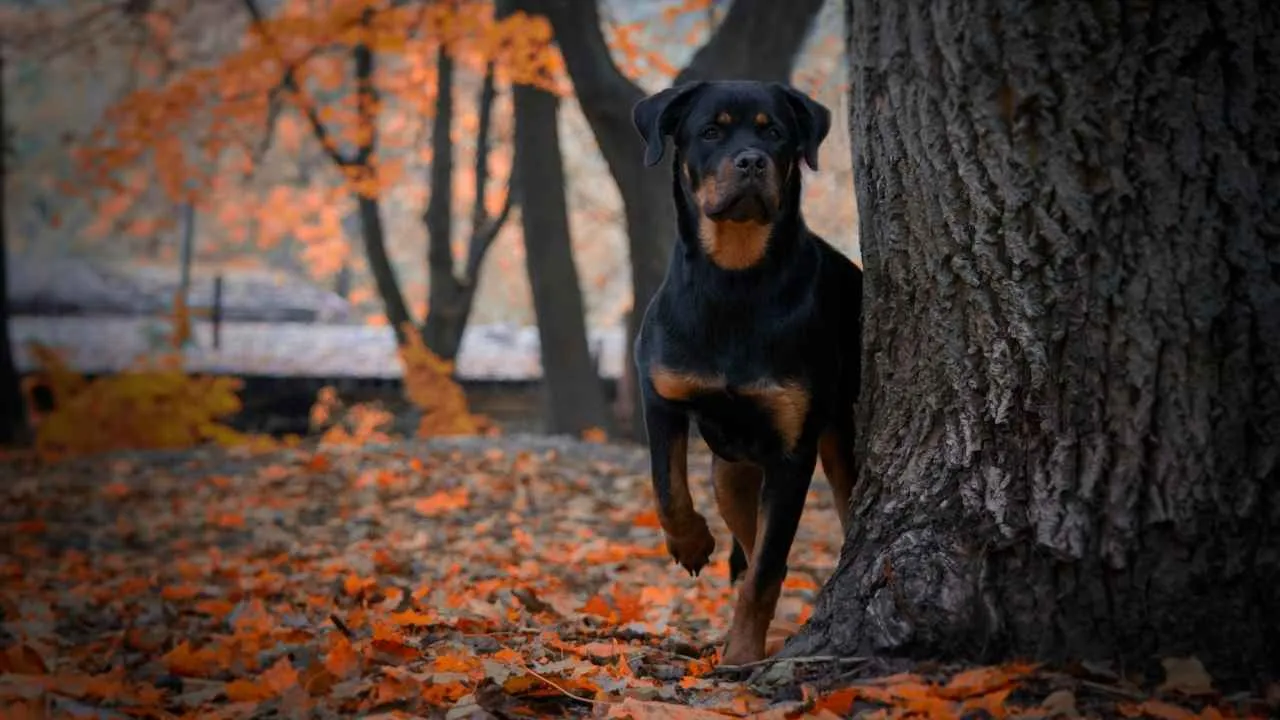
Known in German as the Rottweiler Metzgerhund (“butcher’s dog”), the Rottweiler was originally used to herd livestock and pull meat carts to market before railways emerged in the 19th century. Today, this powerful breed is widely used in search-and-rescue work, herding, service roles, and in police and military units.
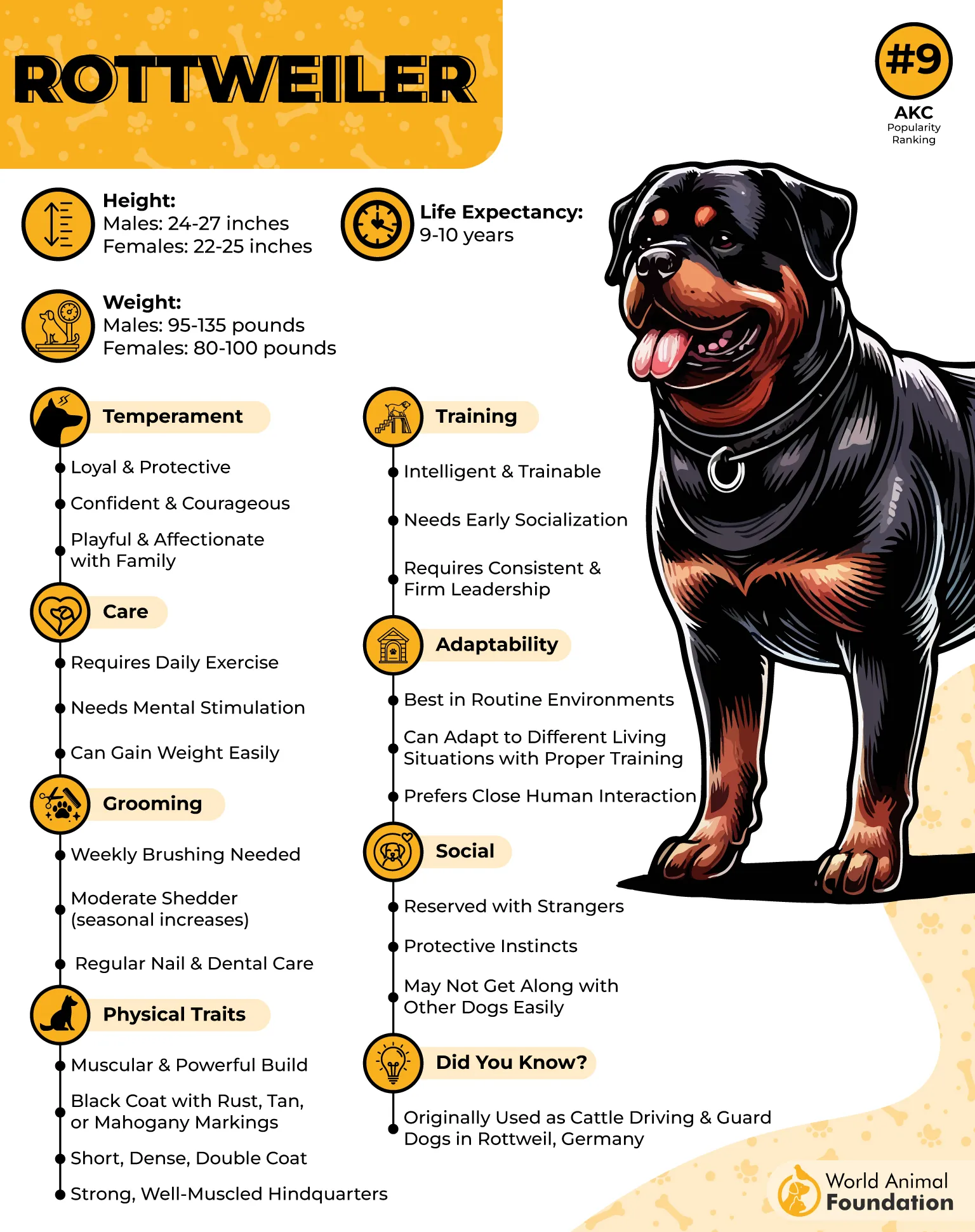
Weighing over 100 pounds, Rottweilers are strong, muscular dogs with a black coat and a naturally imposing presence. Despite their intimidating look, they are often playful and even clownish at home, forming deep bonds with their families and showing strong protective instincts. They can be affectionate with children and well-integrated pets when properly trained and socialized.
Rottweilers tend to position themselves where they can observe their surroundings, often choosing elevated or strategic spots. They rely on their strong sense of smell and hearing to detect unusual activity and changes in their environment. When something seems off, they typically issue a firm warning bark before taking further action.
With proper training and responsible handling, Rottweilers can become highly reliable guardians. They are known for their strength, confidence, and natural territorial awareness, which makes them effective protection dogs when well-managed.
3. Doberman Pinscher
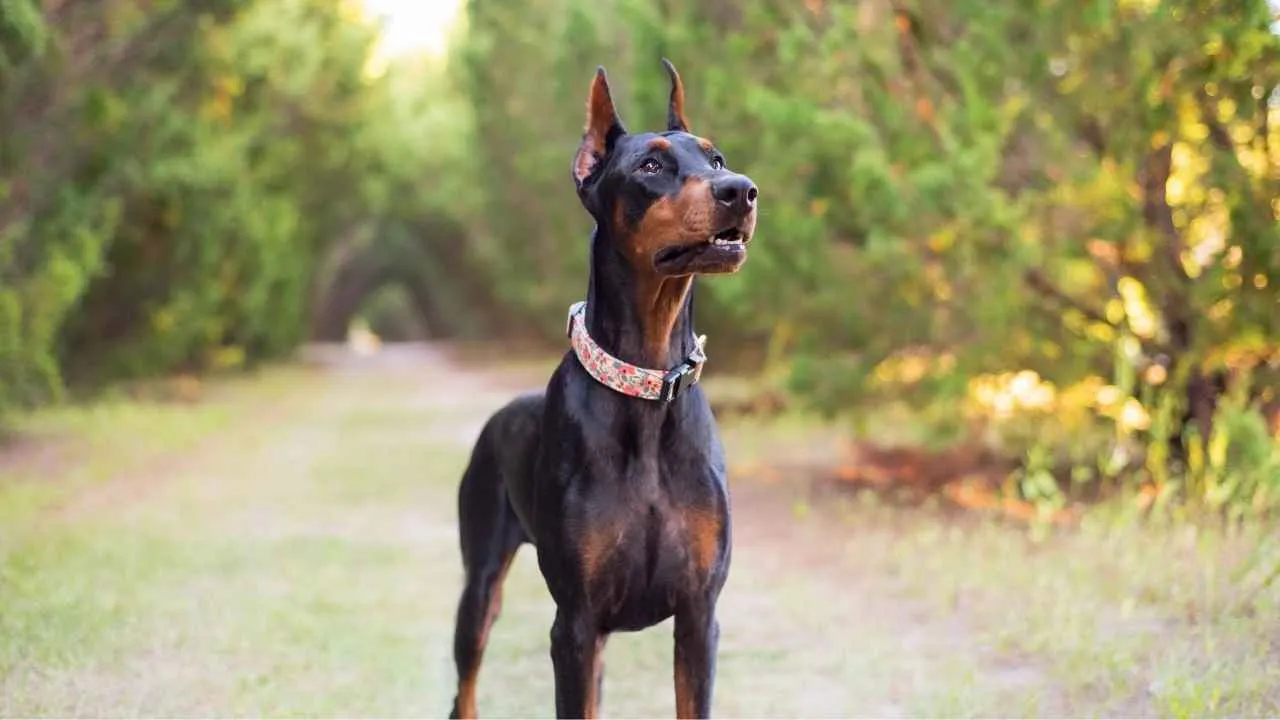
Originally bred in the 1890s by a tax collector named Louis Dobermann, the Doberman Pinscher was developed as both a companion and a protection dog. They also served as war dogs during World War II alongside breeds like the German Shepherd. Early socialization (from 8–16 weeks onward) and consistent, gentle training are essential to prevent behavioral issues and ensure a well-balanced temperament.
One of the smartest dog breeds, Dobermans are highly attuned to human emotions and can respond to subtle changes in mood and energy. They are capable of learning a large number of commands and are eager to please, often forming strong bonds with their families. Highly energetic, they typically require 1.5–2 hours of daily exercise to stay balanced and happy.
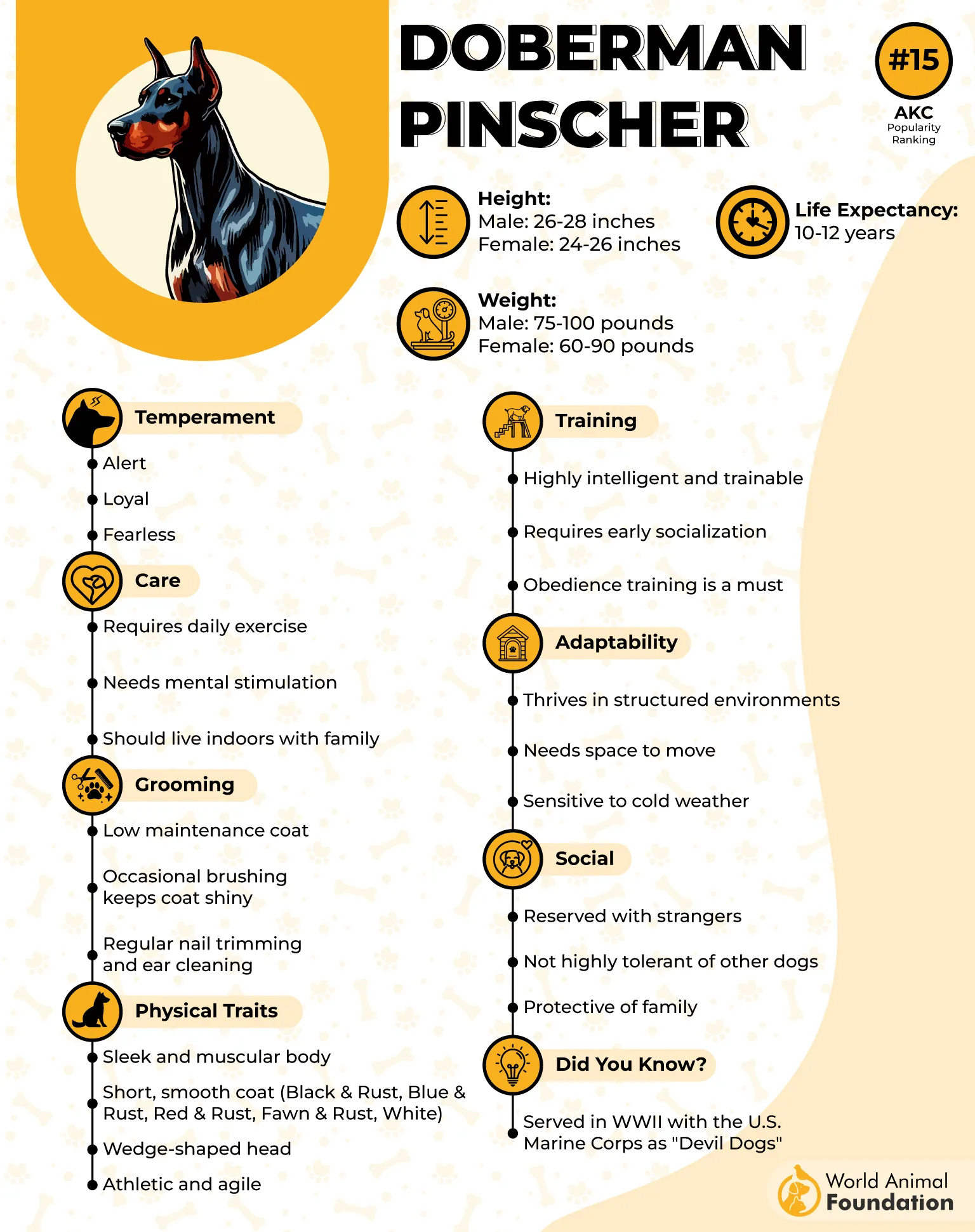
Dobermans are naturally alert and often patrol their surroundings, checking boundaries and staying aware of any unusual activity. At home, they tend to position themselves in ways that allow them to monitor entry points like doors. They are highly observant dogs that quickly notice changes in their environment and will bark to alert their family if something seems off.
With proper training and structure, Dobermans become confident, loyal, and highly dependable protection dogs, combining intelligence, speed, and strong awareness of their surroundings.
4. Belgian Malinois
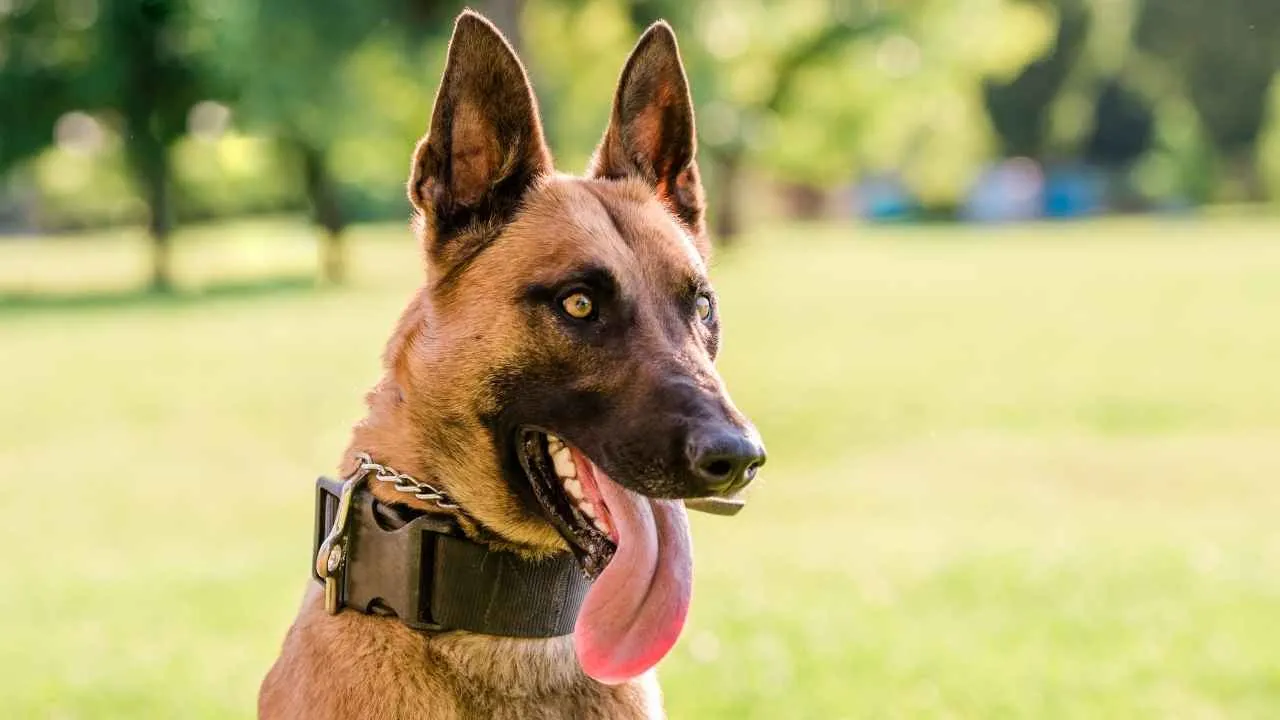
The Belgian Malinois was originally bred as a herding dog, but its strong drive, intelligence, and protective instincts have made it one of the most widely used working dogs today. It is commonly employed in police work, military operations, bomb and drug detection, and assistance roles. Ranked among the most intelligent dog breeds, it is capable of learning and executing complex commands.
Despite its intensity, the Belgian Malinois is known for maintaining a calm and controlled demeanor in high-stress situations, reacting only when necessary. With speeds of up to 30 mph and the ability to jump over 6 feet, this athletic breed is built for performance.
They require constant mental and physical stimulation, as boredom can lead to unwanted behavior. Early socialization and consistent, positive reinforcement training are essential.
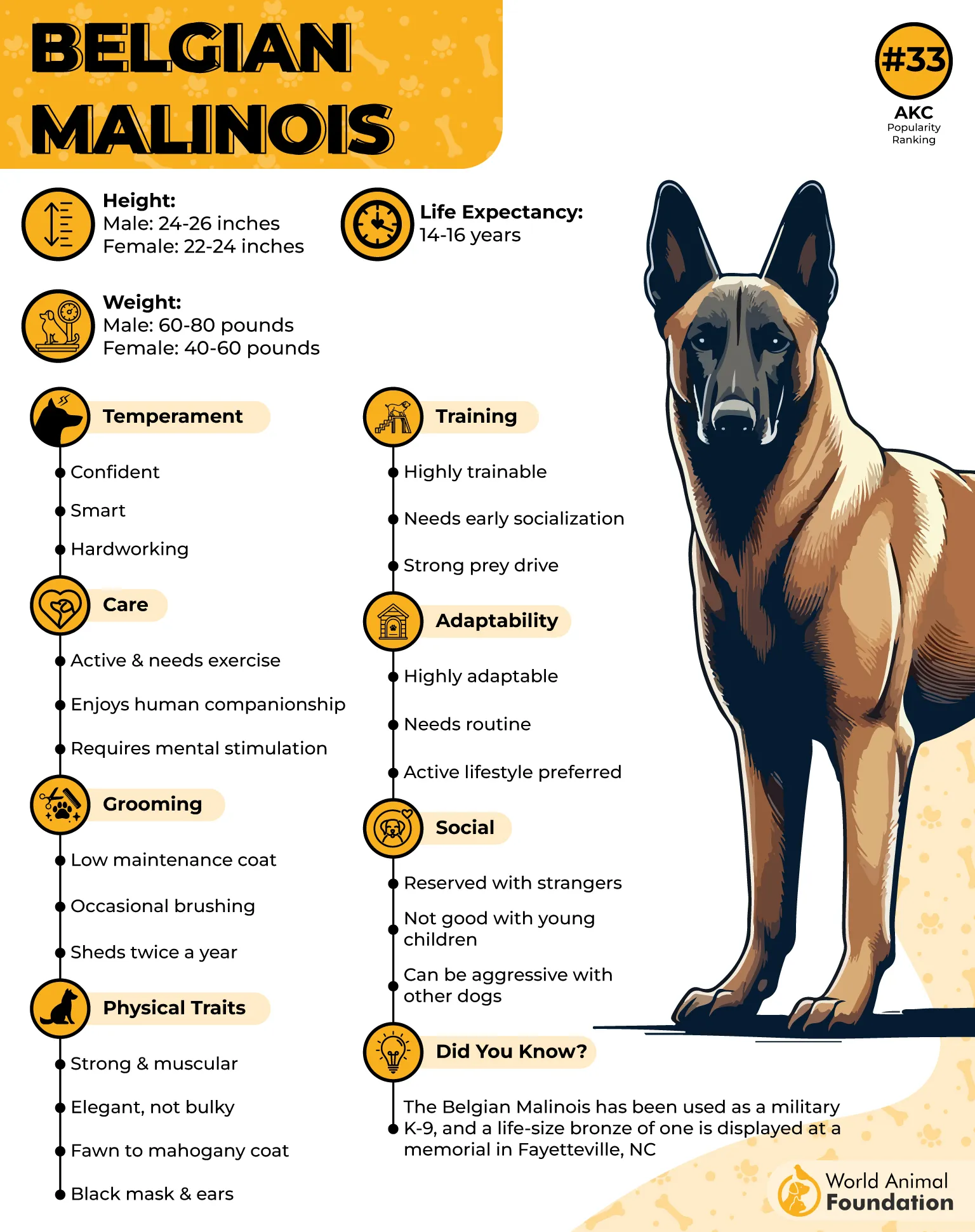
Belgian Malinois dogs are highly observant and often become familiar with the entire layout of their territory, which they mentally map for patrolling. Through alert body language, such as direct eye contact, upright ears, and a focused stance, they signal readiness to respond if needed. Rather than acting impulsively, a well-trained Malinois follows controlled commands and uses disciplined restraint, working closely with its handler in structured situations.
5. Bullmastiff
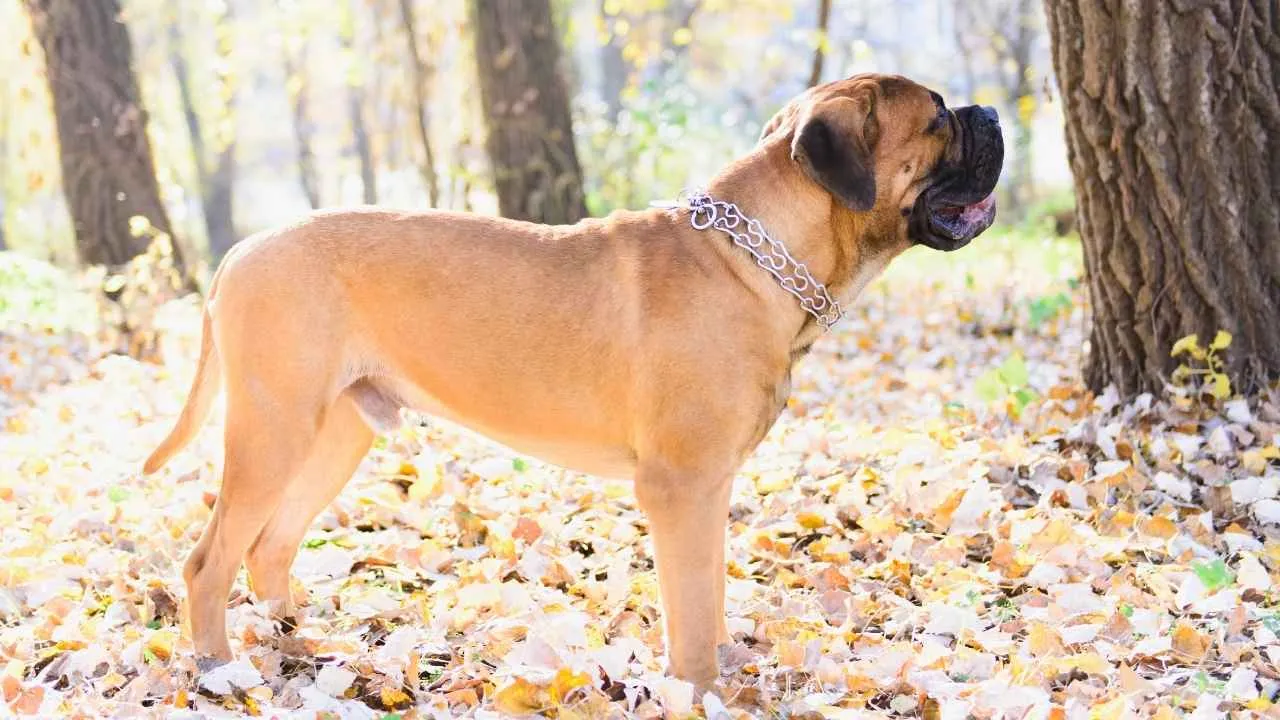
Bulldogs and Mastiffs were crossbred in the 1860s to create a large, powerful dog capable of helping gamekeepers catch poachers, according to PetMD. With dark eyes, V-shaped ears, a muscular frame, and strong legs, this breed naturally projects an intimidating presence. They are highly intelligent and deeply devoted, making them natural guardians. However, supervision around small children is important due to their size and strength.
Rather than attacking impulsively, they are known for controlled guarding behavior. They may quietly follow a suspect, knock them down, pin them, and hold them in place until their handler arrives—aiming to contain rather than harm. In some accounts, they may allow an intruder to enter but will not let them leave until the owner is present.
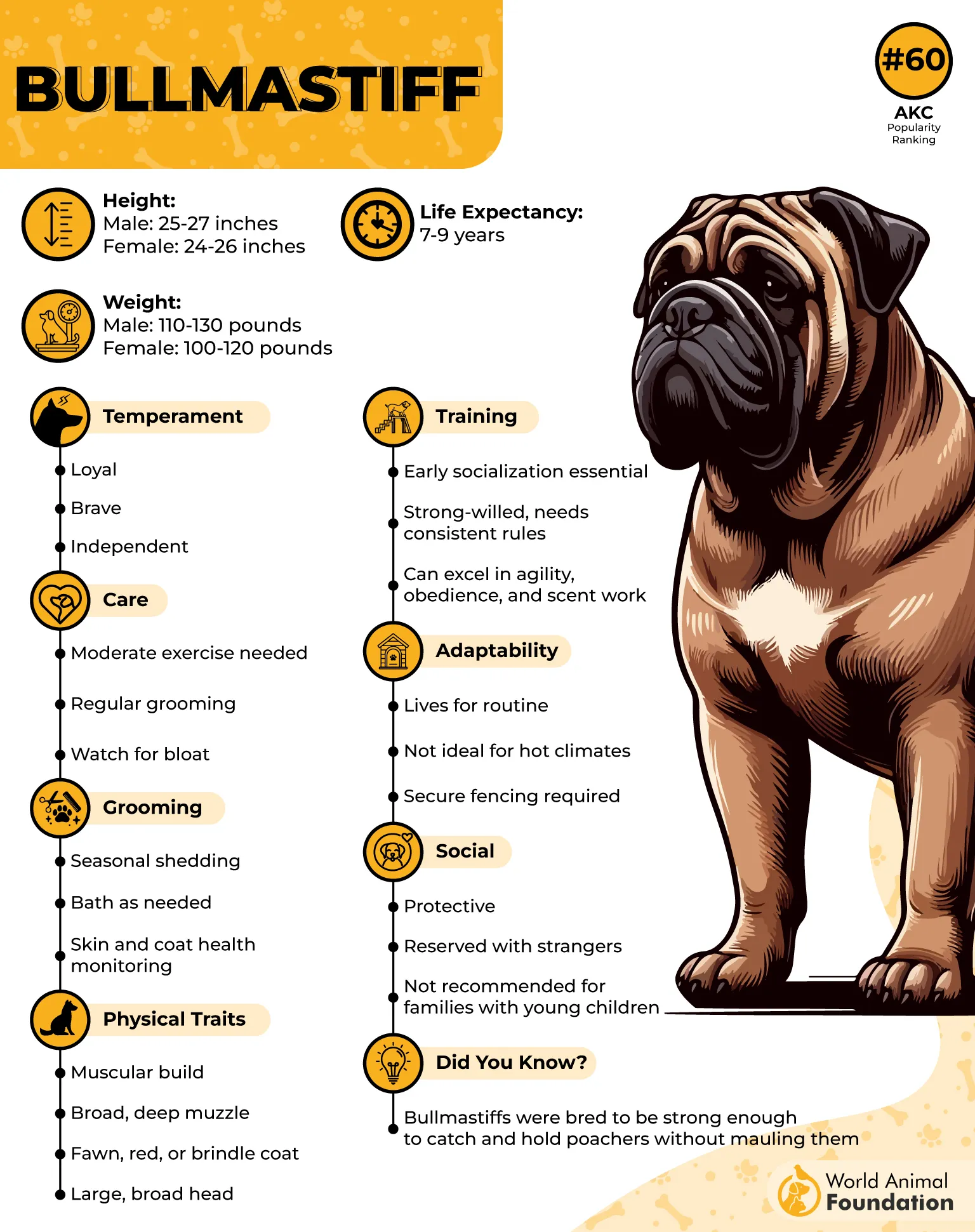
At home, they often prefer to relax indoors and spend much of their time resting on the couch. However, once they detect a threat, they quickly become alert, using loud barks to deter potential intruders. Their strong senses of sight and smell also make them effective in low-light conditions, earning them the reputation of the “Gamekeeper’s Night Dog.”
6. Akita
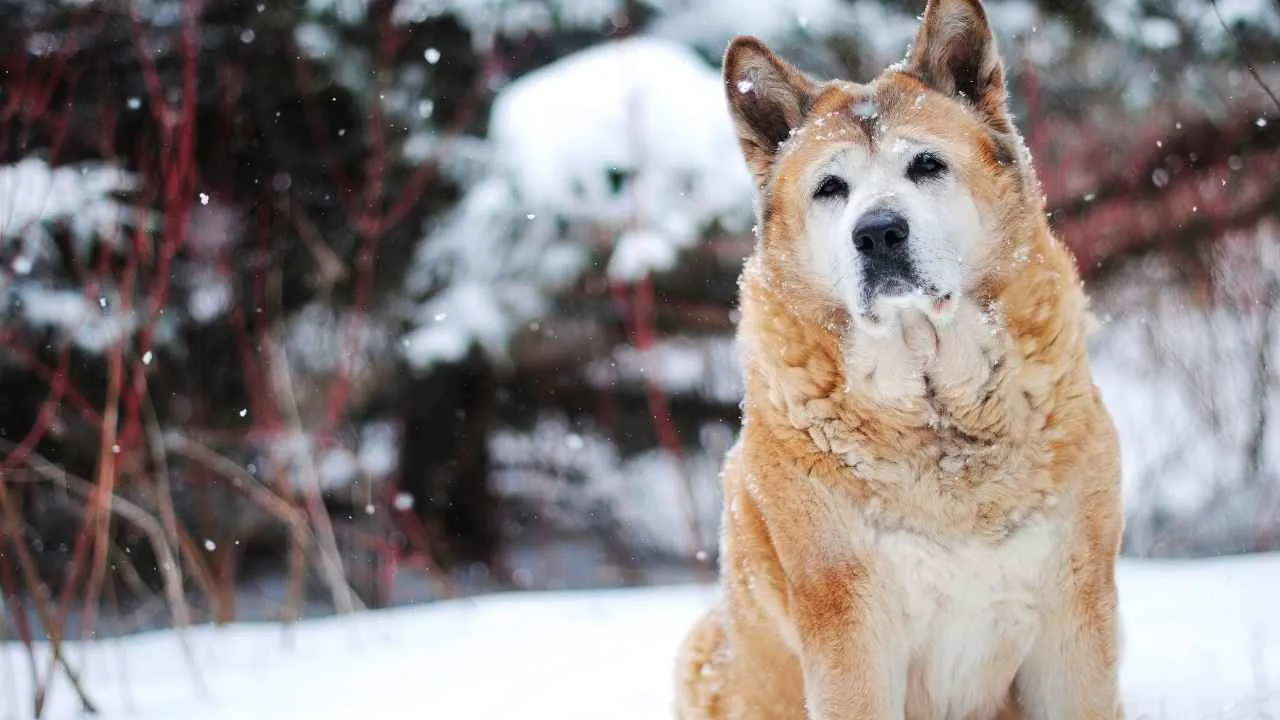
Originating from the mountainous regions of northern Japan, the Akita is a powerful and deeply loyal breed that once accompanied samurai as a guardian and hunting dog. In Japanese culture, it is regarded as a symbol of protection, good fortune, and loyalty. One of the most famous Akitas, Hachikō, became legendary for waiting at a Tokyo railway station for nearly 10 years for his owner, who had passed away.
Akitas are naturally reserved with strangers and possess strong protective instincts, making them effective guardians for the home. However, their independent and sometimes stubborn temperament can make them challenging for first-time dog owners. They have a dense double coat designed to withstand harsh mountain climates, and their strong build and sure footing also make them capable in snowy and icy conditions.
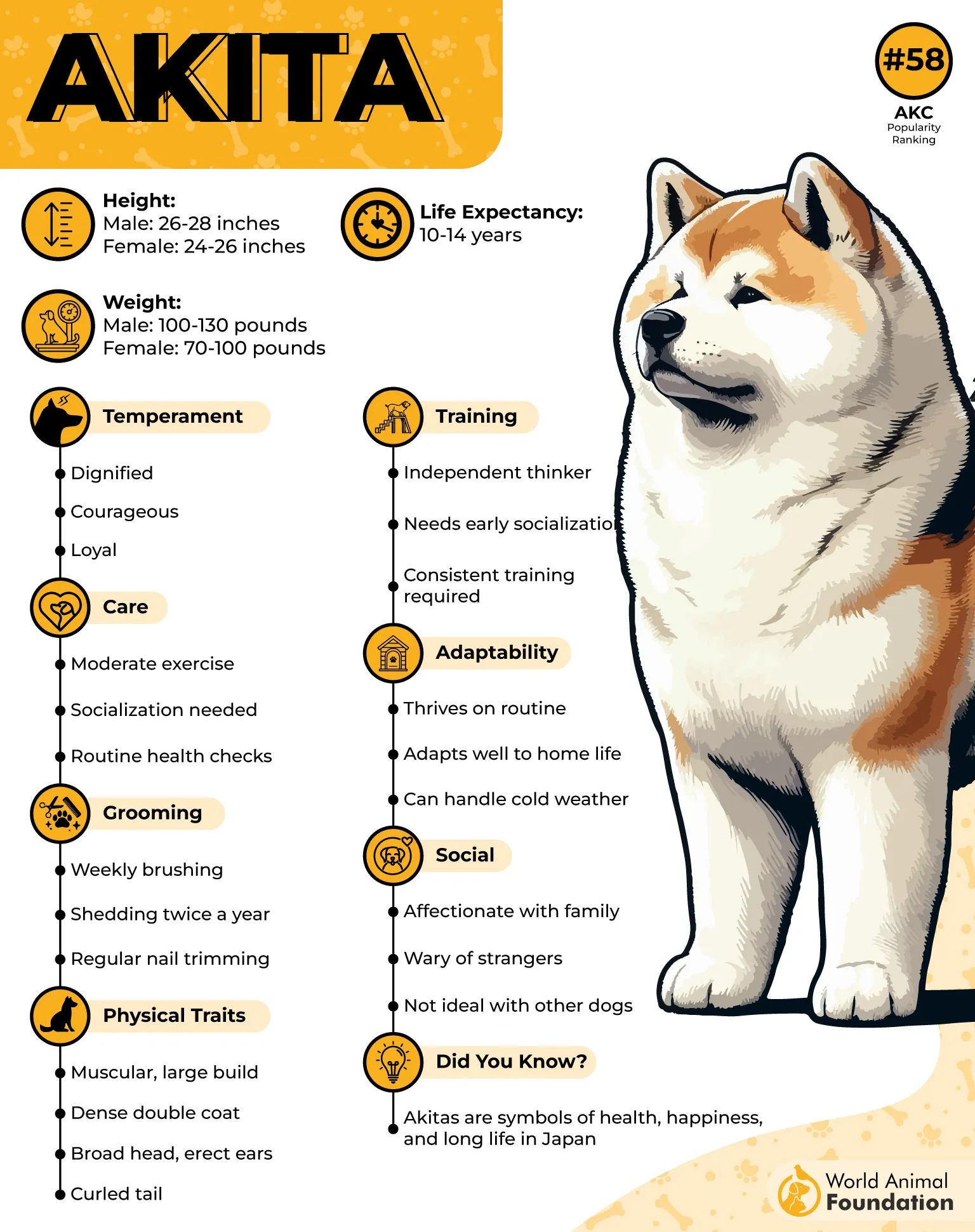
Akitas are naturally alert and tend to carefully observe their surroundings before reacting. Their body language—such as a stiff posture, forward-facing ears, and focused gaze—often serves as a quiet warning to potential threats. They are typically calm and composed, escalating only when they perceive a real danger, and can return to a relaxed state once the situation is resolved. Early socialization and consistent training are essential to ensure their protective instincts remain well-balanced and manageable.
7. Cane Corso
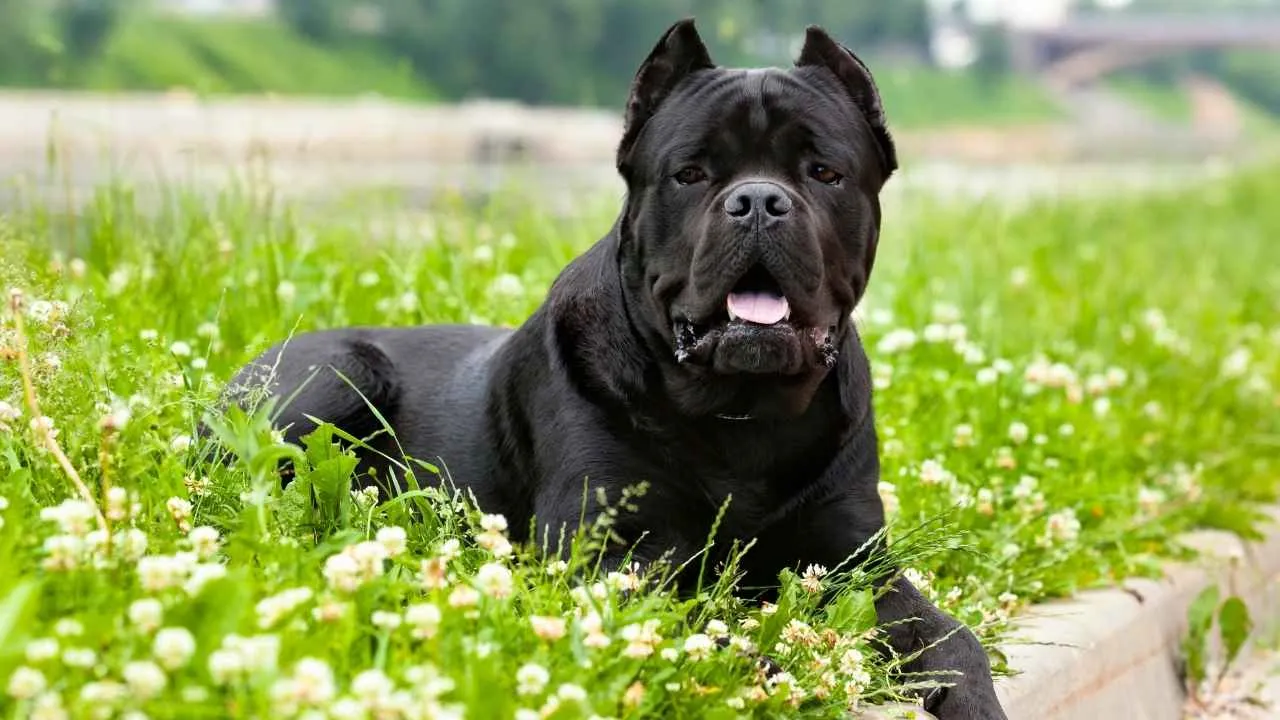
Also known as the Italian Mastiff, the Cane Corso was historically used as a farmhand, watchdog, and even a canine soldier. Its name roughly translates to “bodyguard dog,” reflecting its natural guarding instincts. Despite its powerful build and one of the strongest bite forces among dog breeds (around 700 PSI), the Cane Corso is not inherently aggressive and typically reacts only when a real threat is perceived.
This breed is highly attuned to its owner’s emotions and often becomes more alert if it senses stress, tension, or unease. Cane Corsos are independent and strong-willed, which means they are best suited for experienced dog owners. They require consistent training and around 1–2 hours of daily physical and mental exercise to stay balanced and well-behaved.
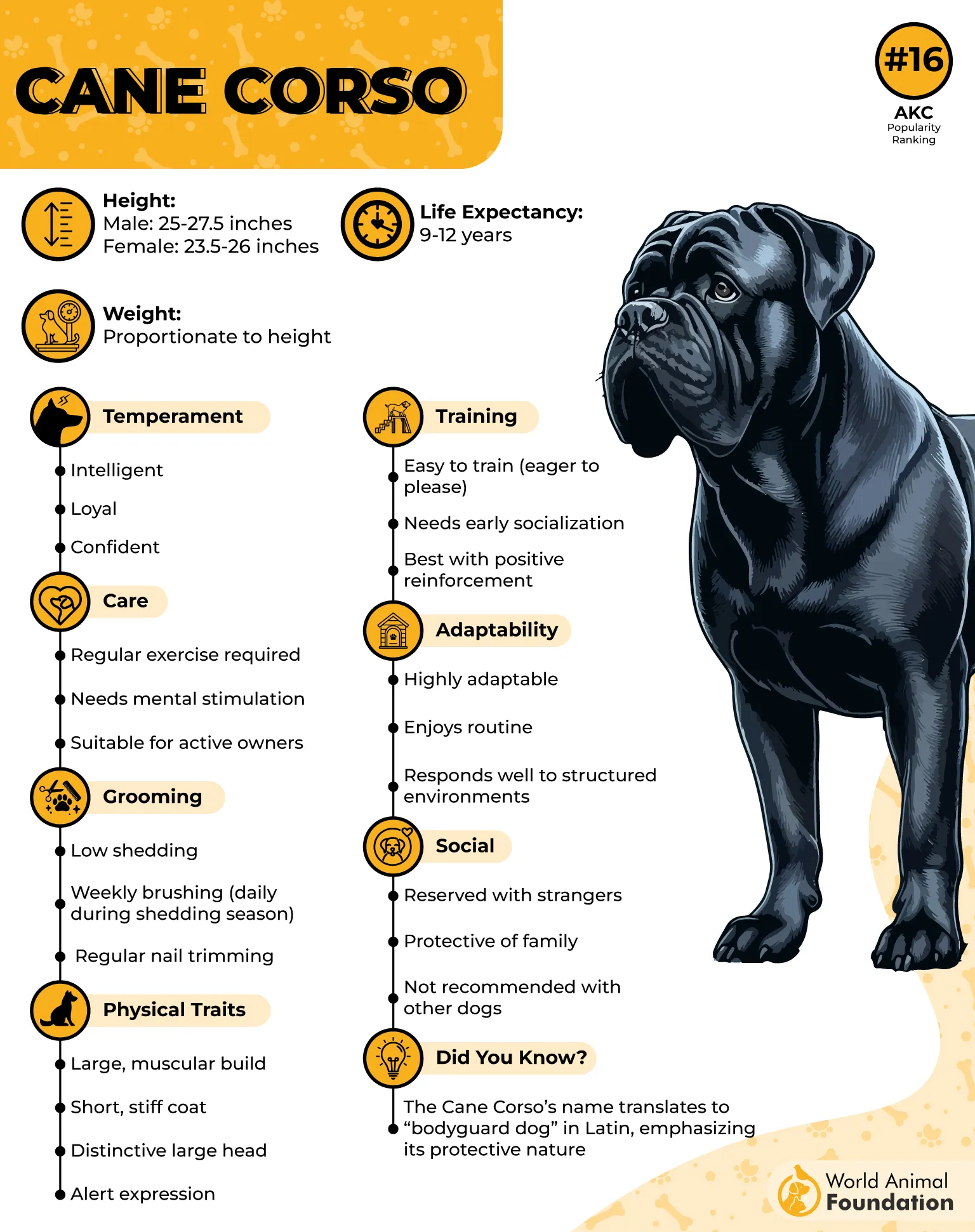
Cane Corsos are highly observant dogs that carefully study a visitor’s body language, movement, and behavior to assess potential risk. They are known for their calm but watchful presence, often positioning themselves between their family and unfamiliar individuals when needed. With proper training, they remain controlled and responsive to their handler’s commands, using restraint and presence as their primary form of protection.
8. Giant Schnauzer
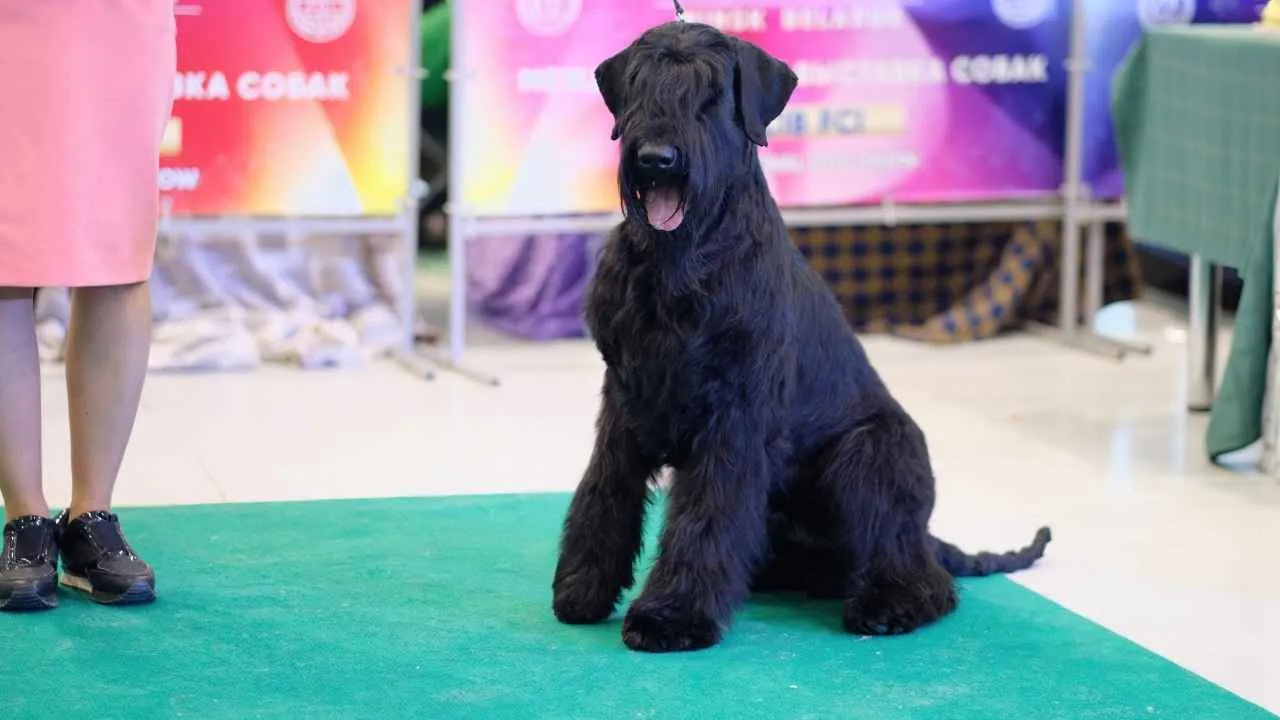
This deeply devoted large breed was originally developed to protect property and herd livestock. It gained recognition beyond Bavaria during World War II, when it was also used in military roles. The Giant Schnauzer has a dense double coat that provides protection against harsh weather and pests, and it typically requires only regular brushing to stay in good condition.
They thrive in active households and need consistent leadership to prevent stubborn or destructive behavior. As a high-energy working breed, they require regular physical and mental engagement to stay balanced. Despite their serious working nature, they can also be playful, mischievous, and expressive in their communication.
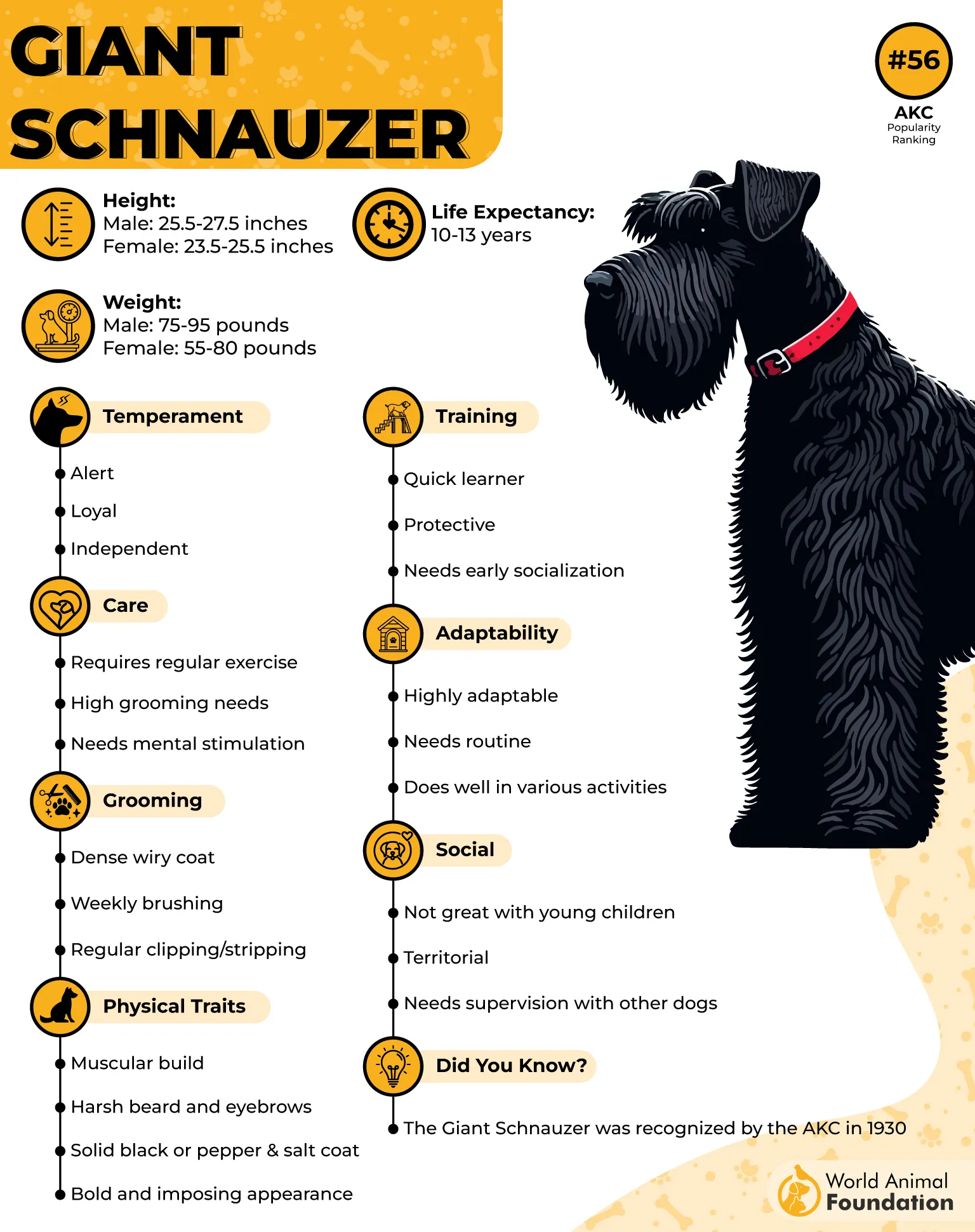
Giant Schnauzers often position themselves in elevated or strategic spots where they can observe their surroundings. Weighing up to around 110 pounds, they have a strong and imposing presence. Highly alert and observant, they typically assess situations carefully and do not react unless they are confident a real threat exists, making their responses generally controlled and deliberate.
9. Rhodesian Ridgeback
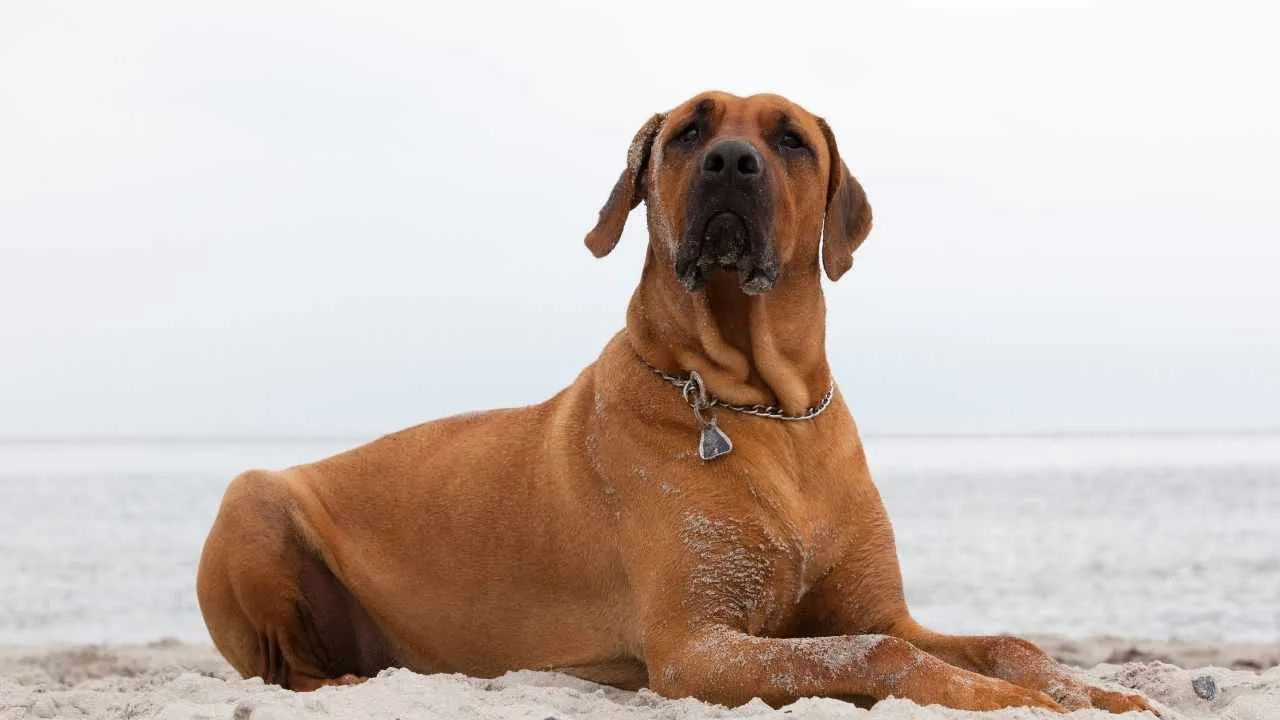
This deeply loyal breed originated in Africa and was historically used to track and bay lions without engaging in direct combat, according to the AKC. Today, Rhodesian Ridgebacks are also valued by families looking for a confident and protective companion. Puppies should not be exposed to harsh training methods, as they respond best to fair, consistent, and respectful guidance.
Rhodesian Ridgebacks are highly intelligent and capable of assessing threats in a calm, calculated way. They often position themselves between their owner and any perceived danger as a natural protective instinct. Known for their “dual nature,” they can be alert and protective outdoors while remaining affectionate and relaxed at home. They may also show a selective, almost cat-like independence, sometimes ignoring commands when distracted by strong scents or curiosity.
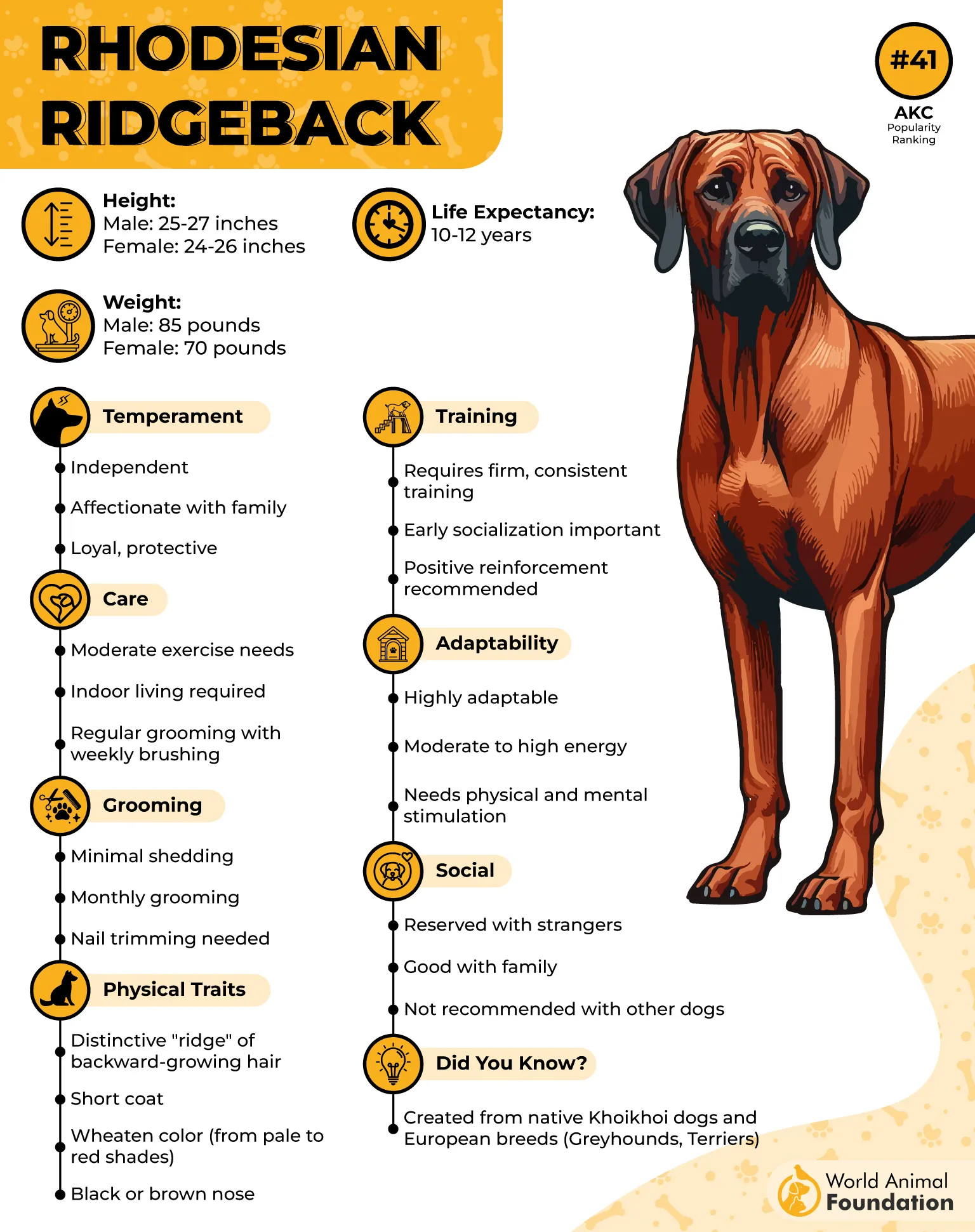
Rhodesian Ridgebacks often use steady eye contact and low growls as a warning signal to deter potential threats. Although they have a history of tracking large game such as lions and wild boars, well-trained Ridgebacks exhibit controlled behavior rather than uncontrolled aggression. With speeds of up to 25–30 mph, they are capable of covering large areas efficiently while patrolling or exercising.
Conclusion
Choosing the best guard dog breed is not just about picking the biggest or most intimidating breed. It’s about finding a dog that matches your lifestyle, home environment, and family needs.
A Doberman thrives in an active household, while a Bullmastiff suits a calmer family that still wants reliable protection. A Belgian Malinois, on the other hand, requires an experienced handler who can commit to training as if it’s a full-time responsibility.
Each protective dog breed on this list offers something different: unique personalities, strengths, and ways of interacting with their families. What they all share is loyalty, a protective nature, strong instincts, and a bond with their owners that no security system can truly replace.
