




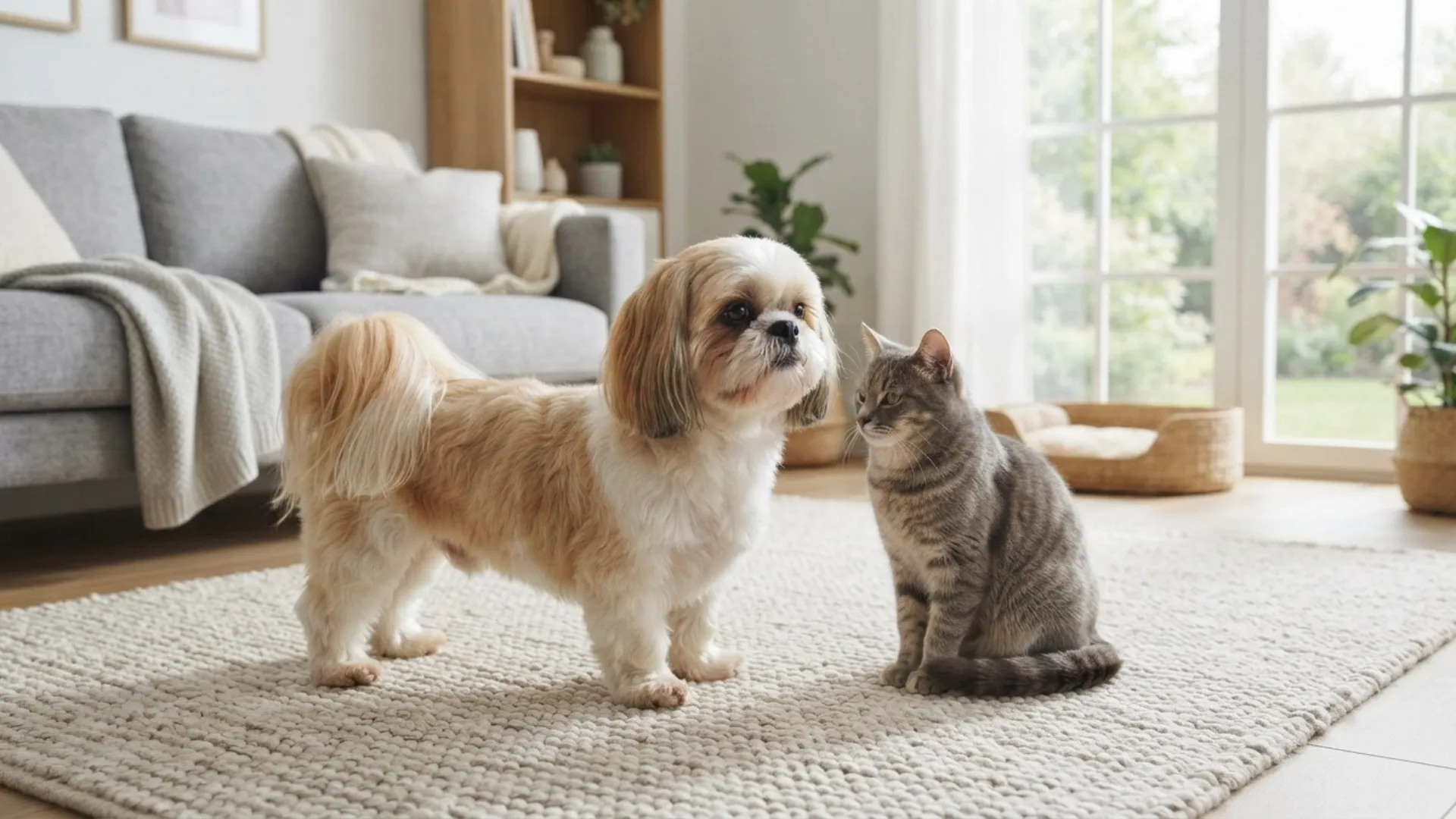
The easiest dog and cat households have something in common: neither animal feels constantly pressured by the other.
A dog that can pause, respond to its handler, and accept another animal’s presence has a better foundation for peaceful shared living. A cat needs room to retreat, observe, and approach on its own terms. Breed tendencies can help identify dogs with traits that may suit this arrangement, although they are only one part of the picture.
There are differences in prey drive across breed groups, and individual personality matters greatly. Early socialization can shape how comfortably a dog responds to cats. Training adds another layer by giving owners ways to manage chasing, excitement, and unwanted attention.
The breeds covered here offer a look at dogs whose typical traits can support calmer cat-and-dog homes.
Key Takeaways
The secret to a calmer dog and cat household often starts with giving both pets time to figure each other out.
Bichon Frise can make a gentle housemate, and its old connection to circus performances adds an unexpected detail to its story.
Golden Retrievers and Shih Tzus follow with their friendly nature, while Papillons and Bulldogs show how different temperaments can work in the right setting.
By the final breeds, there is even a dog whose ancestors helped fishermen and another that once served as a warm lap companion.
Dog Breeds That Get Along With Cats for Stress‑Free Homes
1. Bichon Frise
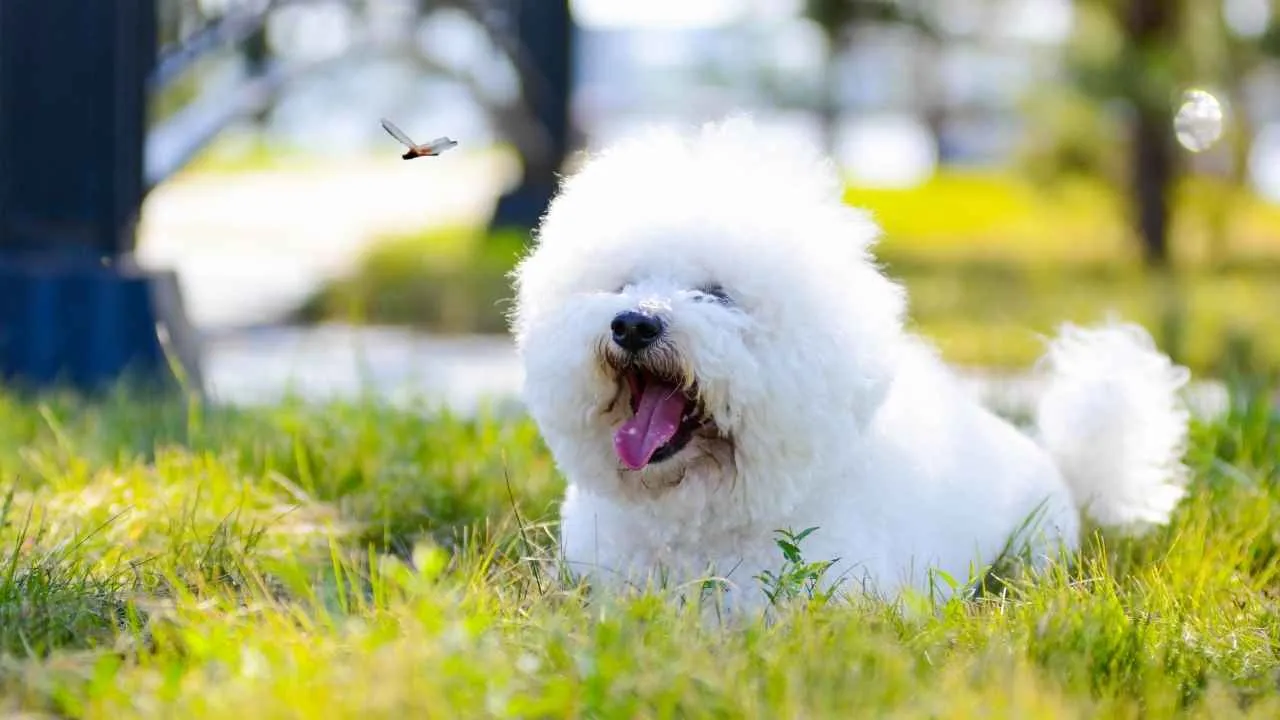
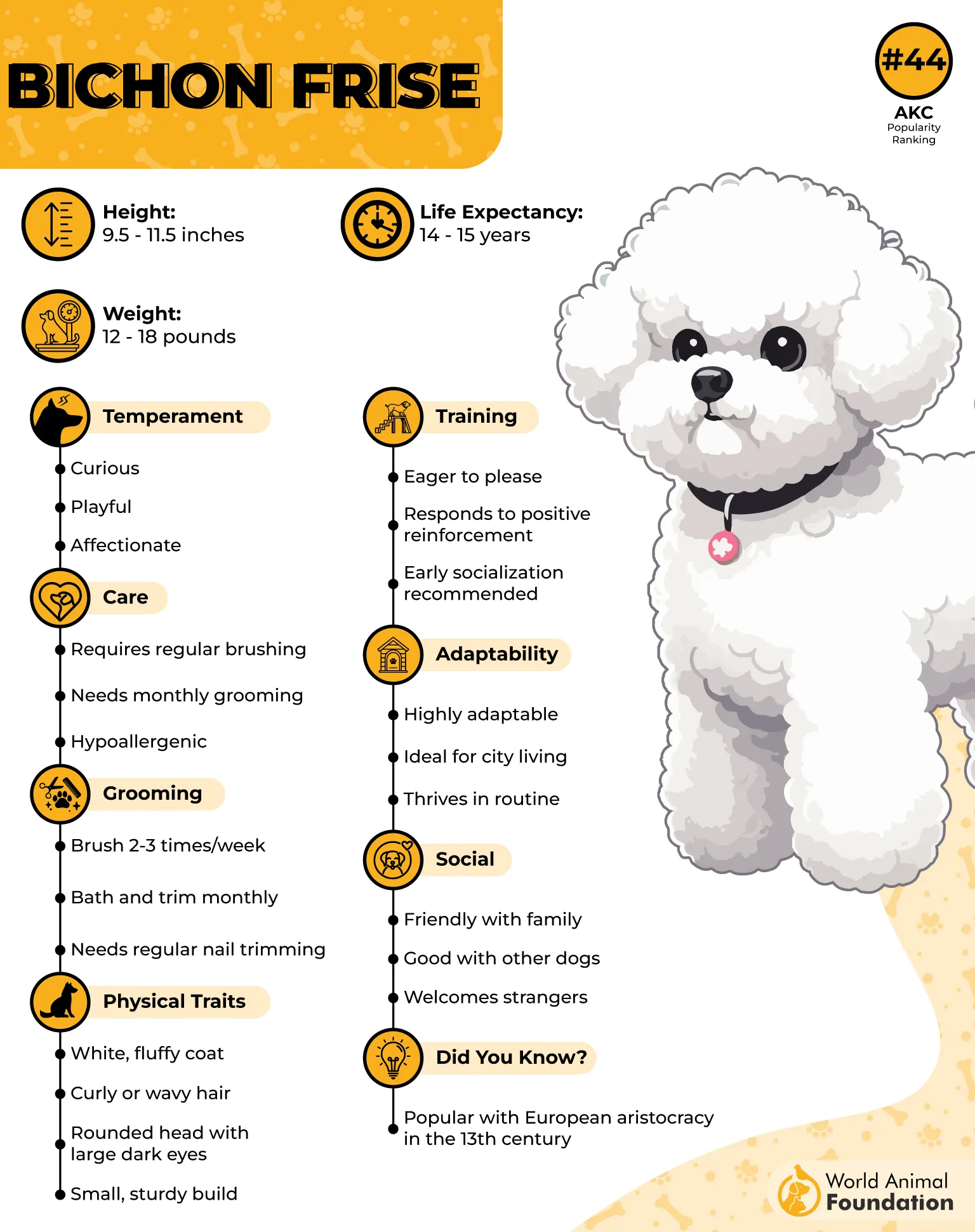
Bichon Frise is linked to the Mediterranean and may descend from the water spaniel, with records placing similar dogs in the region as far back as the Middle Ages.
Some historical accounts suggest sailors brought these dogs from the Canary Islands to Europe, where they later became favorites of European nobility.
Easy Around Cats
They have a gentle, non-aggressive personality and a low prey drive, two qualities that can make introductions with cats easier to manage. Their cheerful nature also makes them more likely to approach another household pet with curiosity rather than intense chasing instincts.
These playful dog breeds have these daily life behaviors:
Enjoys play and regular interaction
Learns tricks and cues quickly
Has a history of circus performances
Gentle at Home
Bichon Frise can shift from lively play to a calmer presence, which has helped the breed work as a therapy dog in places such as hospitals and nursing homes. Long periods alone can be difficult, though, as separation anxiety may lead to whining, chewing furniture, or toileting indoors.
2. Golden Retriever
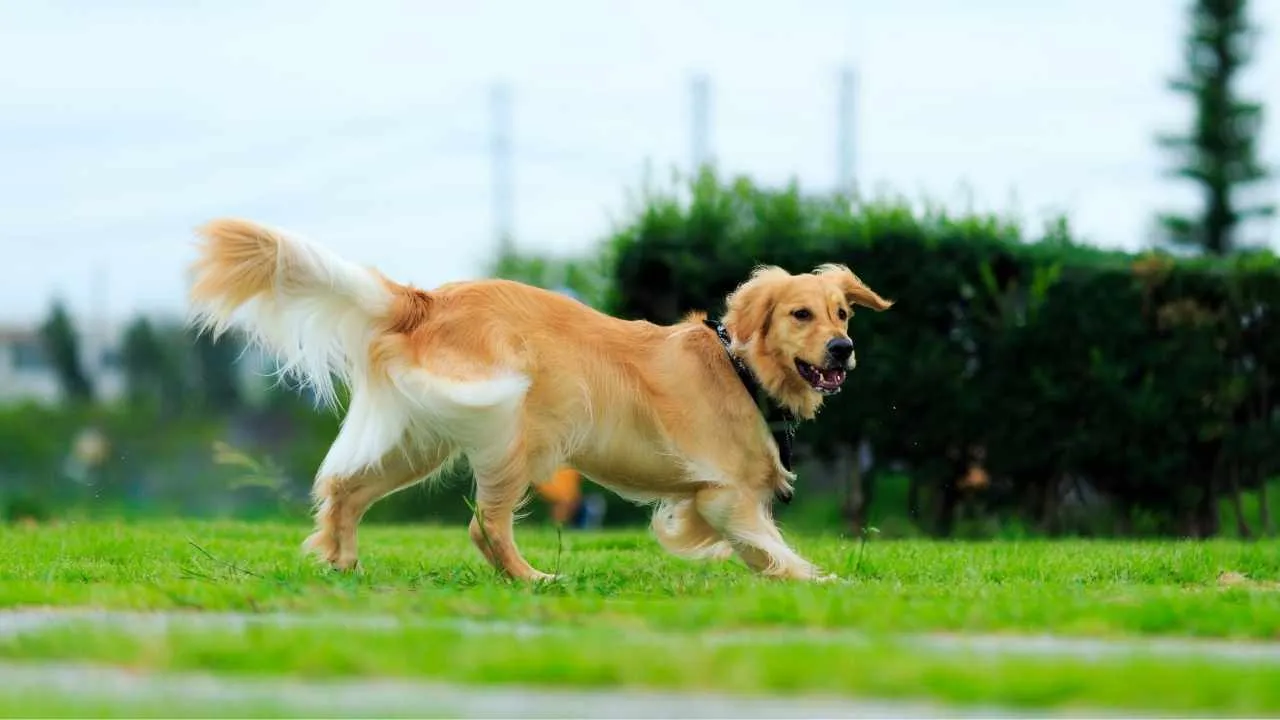
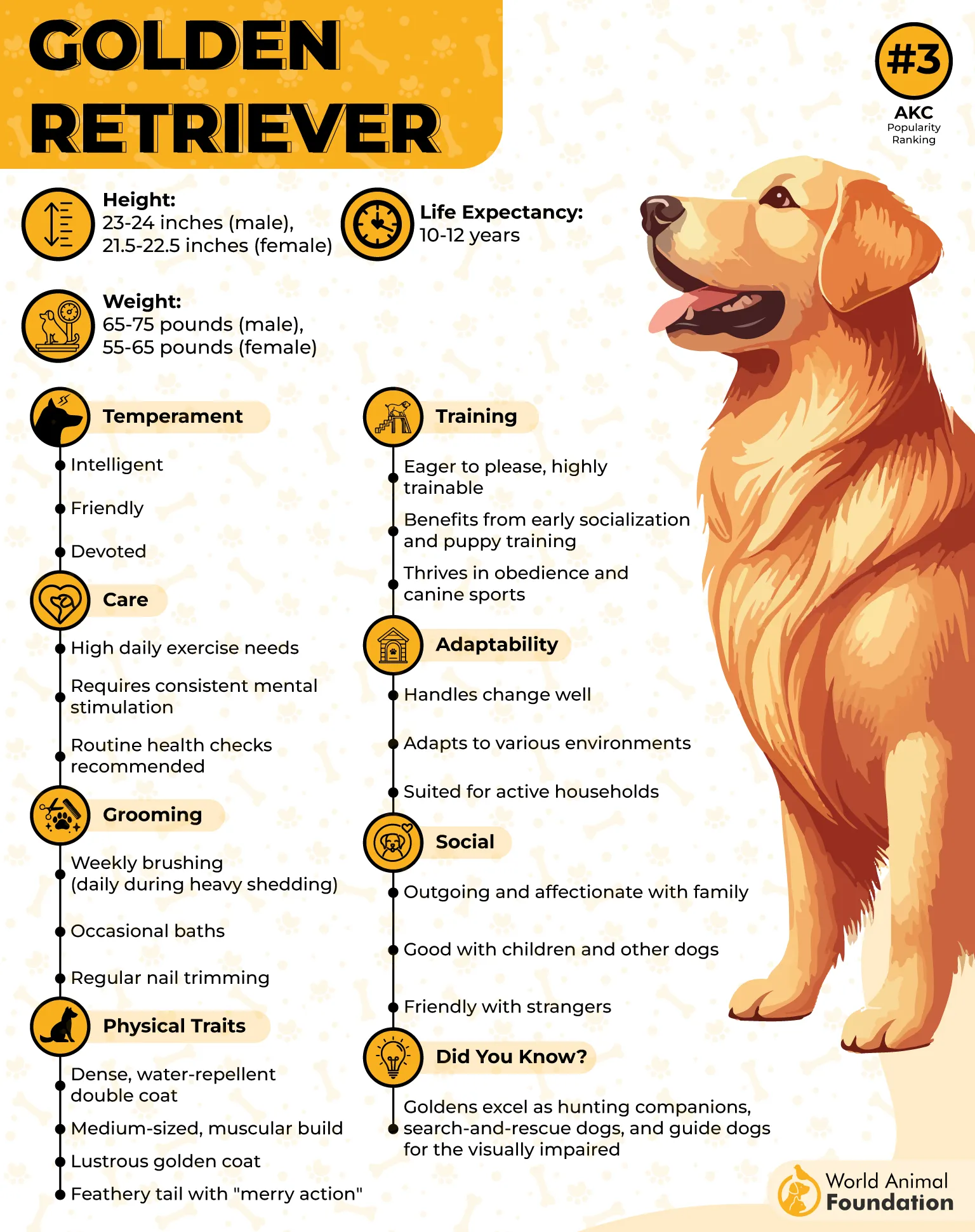
Golden Retriever was bred in Scotland during the mid-19th century after Lord Tweedmouth sought a dog that could retrieve game through dense undergrowth.
Crosses involving a Newfoundland, Labrador, and Water Spaniel lineage, followed by Setters, produced the soft-mouthed retriever prized for bringing game back undamaged.
A Gentle Housemate
Golden Retrievers’ naturally friendly and docile temperament can make sharing a home with a cat easier, especially when the dog learns early that the feline is part of its household. Its willingness to follow guidance also gives families a practical way to shape calm interactions.
These traits from its working nature add useful context:
Enjoys retrieving as a core activity
Works as a guide dog, as GRCA mentions
Assists search-and-rescue teams
Start Slowly
The breed’s introductions work best when the cat has its own retreat, and early meetings remain brief and supervised.
Scent swapping through bedding or toys can begin before face-to-face contact, while praise and treats can reinforce calm behavior during gradual introductions.
3. Shih Tzu
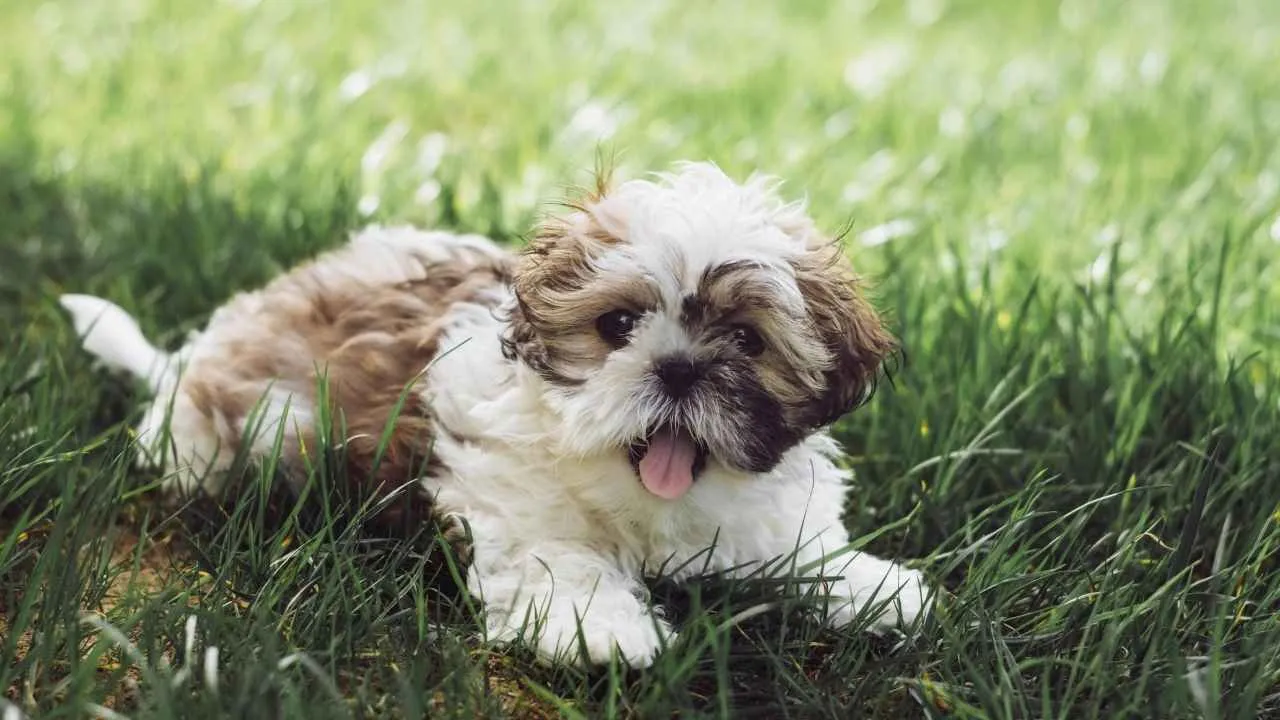
Shih Tzu has a fascinating history that crosses both China and Tibet, with strong connections to Buddhist culture and the traditional idea of the Lion Dog. Its earlier development is less certain, although one theory links the breed to Pekingese and Lhasa Apso ancestry.
A Gentle Housemate
This little fur baby can share a home with cats, particularly when both animals receive gradual introductions and time to adjust to each other’s signals. Their different activity patterns also matter, since cats may become active when a Shih Tzu is ready to sleep.
A little planning can make initial interaction easier:
Keep Shih Tzu on a harness and leash during first introductions
Give the cat a clear escape route to avoid feeling cornered
Rescue pets may need extra adjustment time

Patience With Training
Shih Tzu learns basic obedience at a slower pace, so consistency, praise, rewards, and treats can make lessons easier to manage, as revealed in Omlet. House training can take longer too, making patience especially useful during the early months of sharing a home with another pet.
4. Papillon

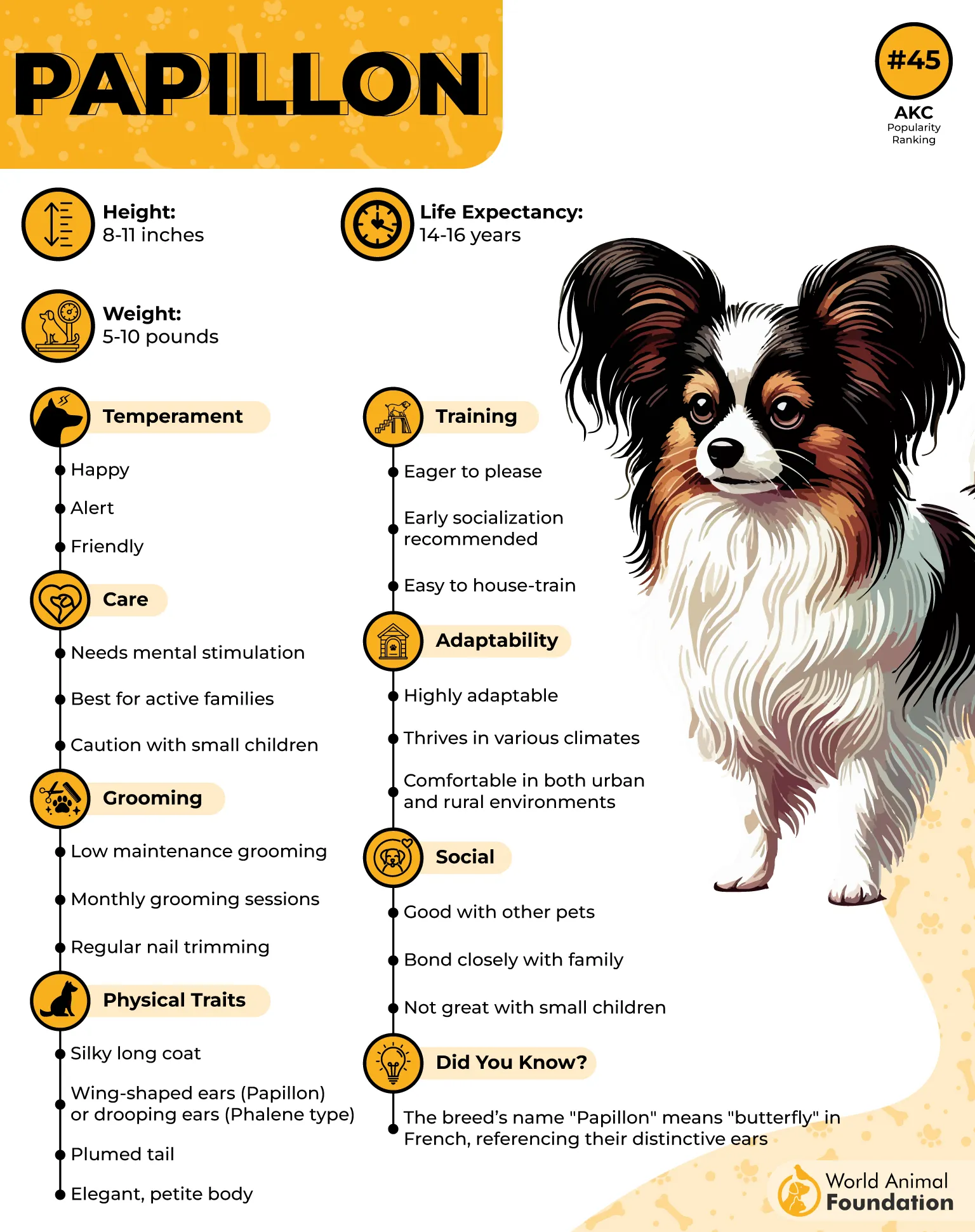
Papillon has a long connection with European royal courts, tracing its ancestry to Toy Spaniels that appeared in paintings as early as the 16th century. Titian, one of the best-known artists of the period, featured these tiny spaniels in several works dating back to around 1500.
A Natural Match for Cats
Papillon can be a good feline companion when introduced carefully from a young age, helped by its small size and gentle presence around a cat. Early socialization gives both animals time to become familiar without making the first meeting overwhelming.
These simple habits ease the adjustments:
Teach “sit” and “down” before meetings
Feed pets on opposite sides of a closed door
Exchange bedding to introduce familiar scents
Take It Slowly
They can adapt well to different homes and generally need little exercise, leaving more room for calm indoor routines between play sessions. During the first few days, keeping both animals in separate rooms lets them hear and smell each other before any face-to-face meeting.
5. Bulldog
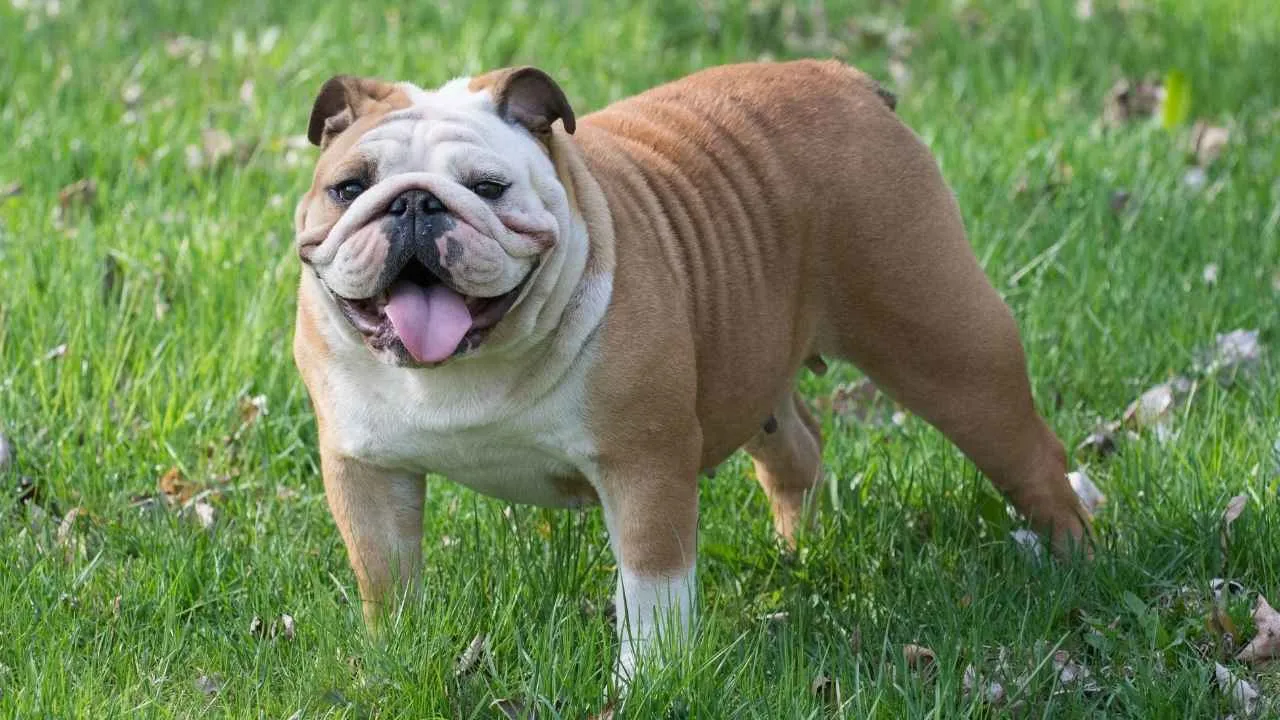
Bulldog was developed in England as a bull-baiting dog, with its short, sturdy face suited to gripping the animal during the sport. Later, the breed became closely associated with Oxford and Cambridge, while English settlers brought Bulldogs to America during the 18th century.
A Calmer Companion
Bulldog’s modern temperament is far removed from its old sporting role, with reduced aggression contributing to its generally calm demeanor around other pets. Its low prey drive also means it has less instinct to chase or capture smaller animals such as cats.
These gradual start habits can make sharing space easier:
Begin with scent swapping
Give cats elevated escape spots
Feed pets in separate areas

Introductions Still Matter
A bulldog may bark when an unfamiliar person approaches the home, giving it a useful alerting habit without requiring constant interaction. With cats, gradual introductions using barriers and supervised meetings can help both animals become familiar at their own pace.
6. Boston Terrier
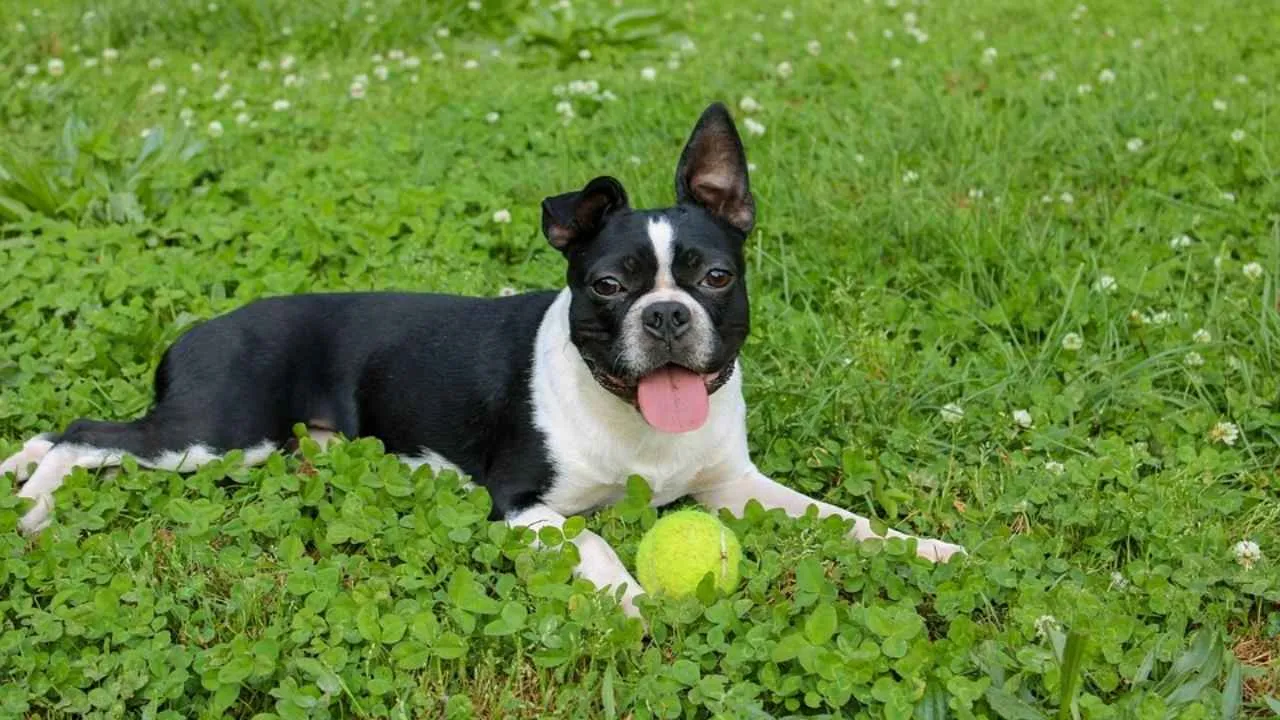
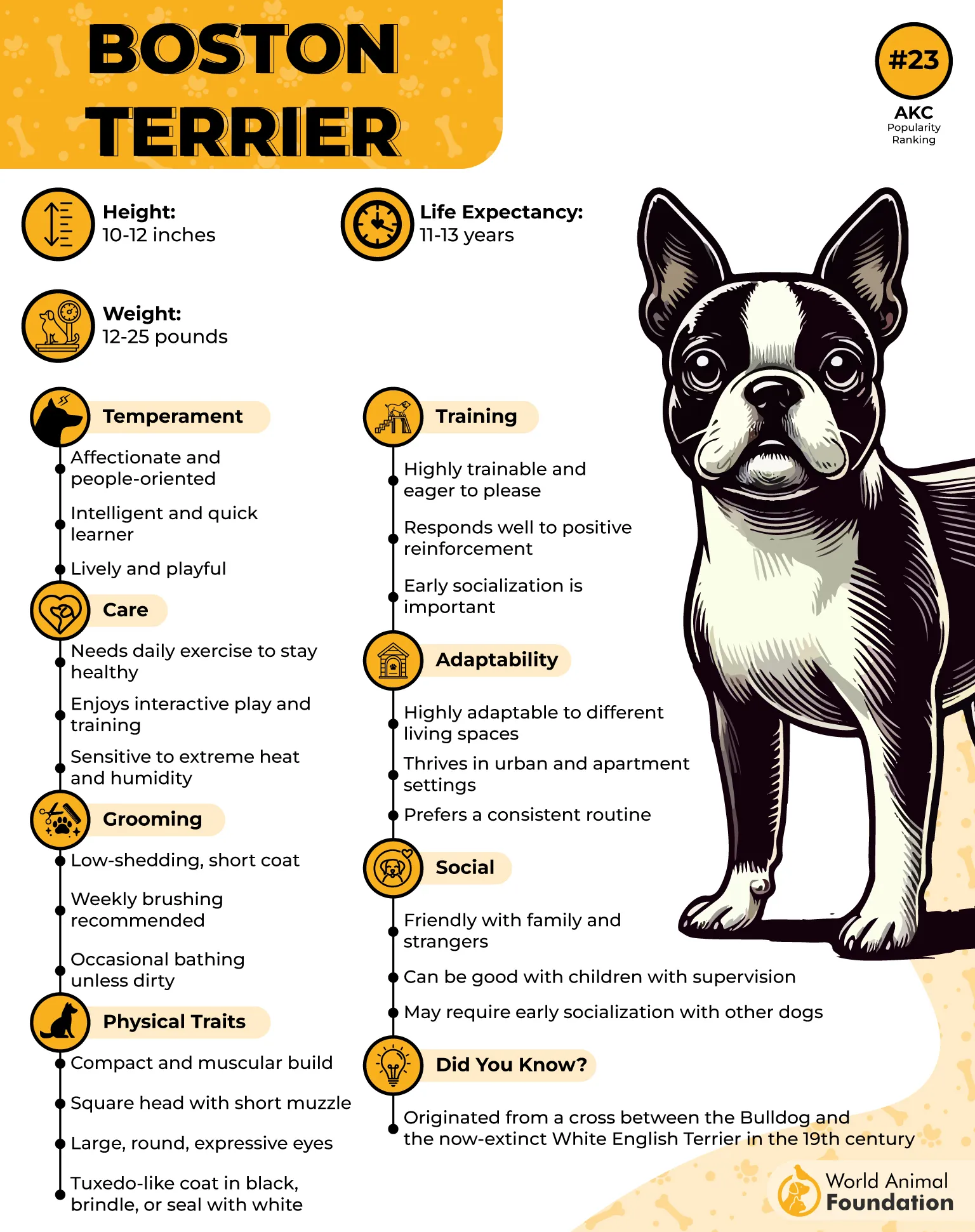
The story of the Boston Terrier starts in the United States in the late 1800s, when breeders crossed a Bull and Terrier type dog with French Bulldogs. By 1893, the American Kennel Club had recognized the breed, giving it an established place among dogs developed on American soil.
Cat Introductions
This terrier can learn to share a home with a cat when introductions are handled gradually, and both animals have room to adjust. Starting with separate rooms lets them become familiar with each other’s scent and sounds before they ever meet face to face.
A careful introduction can then progress through these steps:
Begin with a closed door between them
Use a gate for early visual contact
Reward calm behavior with treats
Let Them Set the Pace
Boston Terrier should remain leashed when the cat first enters the same room, giving you control if it tries to rush toward its new housemate. Keep these meetings brief and watch for fear, discomfort, barking, or other signs that either animal needs more space.
7. Maltese
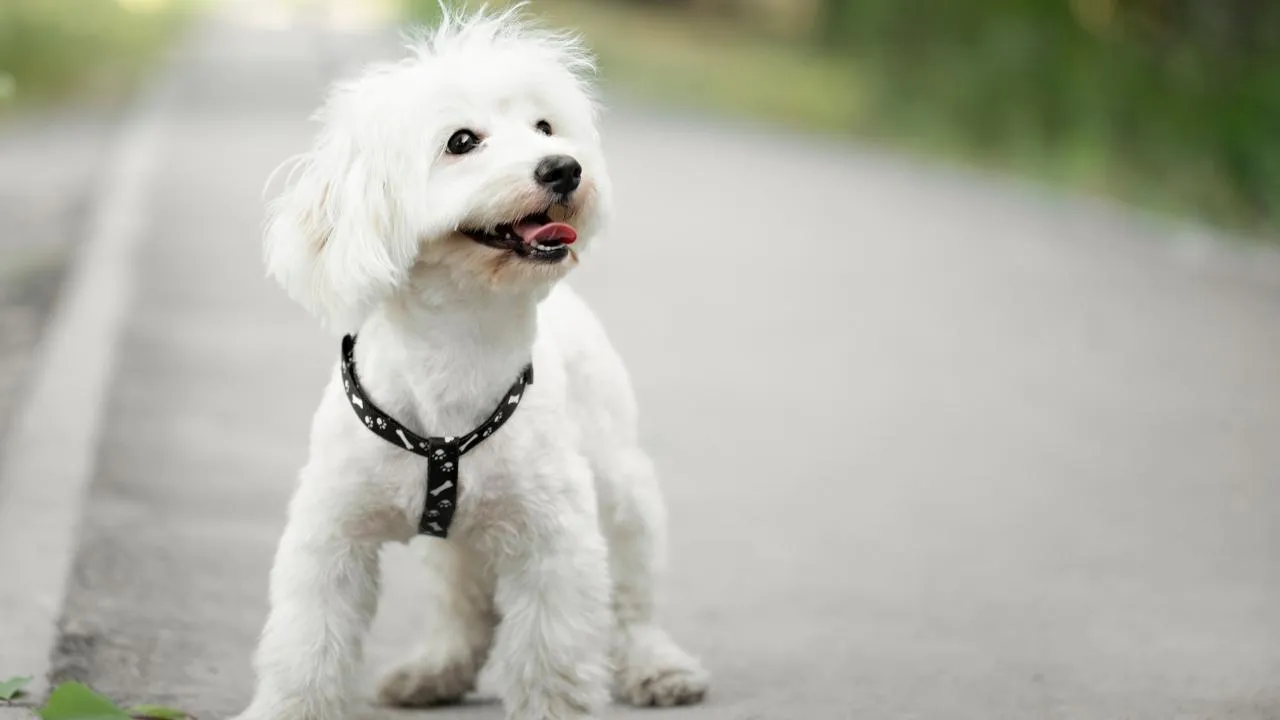
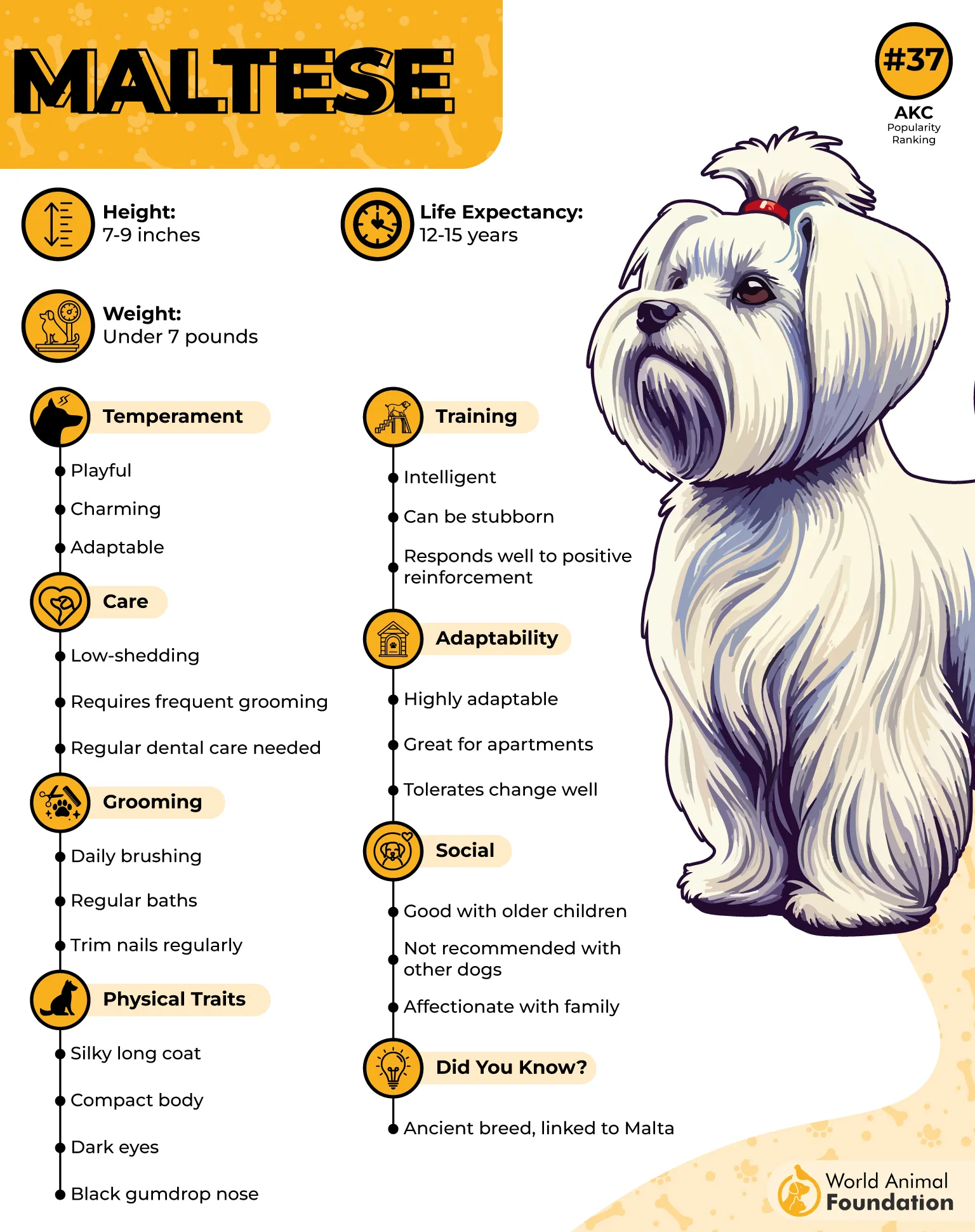
Maltese has a story reaching back to at least 300 BC, although its exact beginnings remain uncertain and somewhat debated. Some accounts connect the breed with Central European traders and Malta, a major trading port where these small dogs became closely associated with the region over time.
Easy Cat Introductions
They can be affectionate and playful around people, yet compatibility with a cat depends on the individual animals. A calm introduction, controlled with basic commands and a leash or harness when needed, gives both pets room to adjust without unnecessary pressure.
This is how you can make those first meetings easier:
Practice “Sit” when the cat is nearby
Test reactions with a dog-friendly cat
Let each animal retreat when needed
A Playful Housemate
Maltese has modest exercise needs, with a short walk or backyard run often fitting comfortably into its everyday routine. Its playful nature can make it an enthusiastic companion for respectful children, while early training can help manage barking when someone arrives unexpectedly at the door.
8. Labrador Retriever

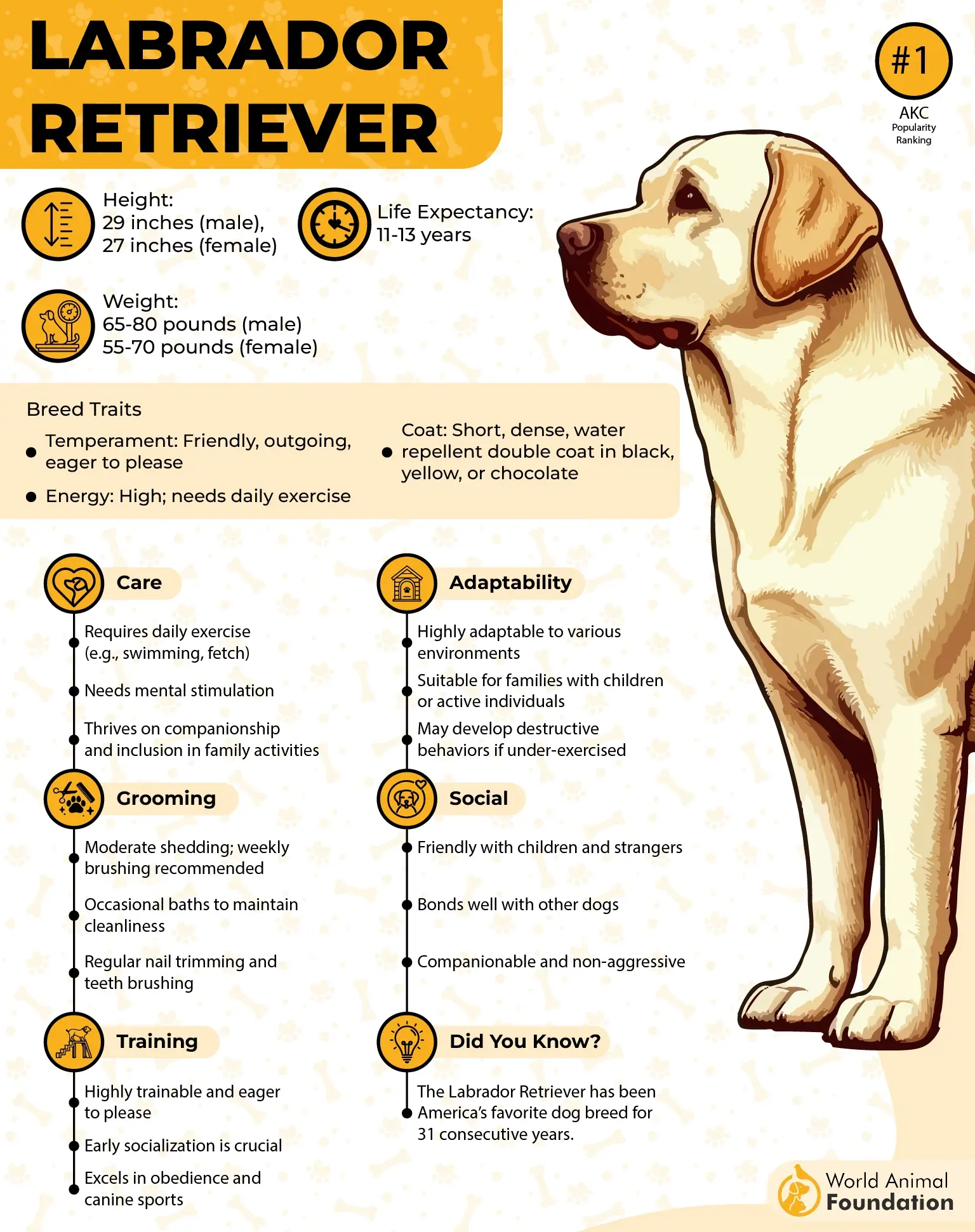
Labrador Retriever traces its early roots to Newfoundland, where smaller black dogs helped retrieve game and fish and even pulled boats across lakes. Their strong affinity for water made swimming part of the work, especially when assisting fishermen with tasks around the shoreline.
Cat-Friendly by Nature
A Labrador may show plenty of interest in a cat at first, especially if it is curious about every new addition to the household. With time and sensible boundaries, that early curiosity can settle into a familiar routine where both animals know how to share the same space.
Their comfort during introductions depends on these details:
Give the cat an elevated escape route
Let the cat leave the first meeting freely
Keep the Labrador on a regular leash
A Social Personality
Labrador Retrievers enjoy learning and respond well to training from an early age, while their calm behavior around children and other animals can translate well to a mixed-pet household. Their intelligence has also made them useful as assistance, therapy, detection, and sporting dogs.
9. Cavalier King Charles Spaniel

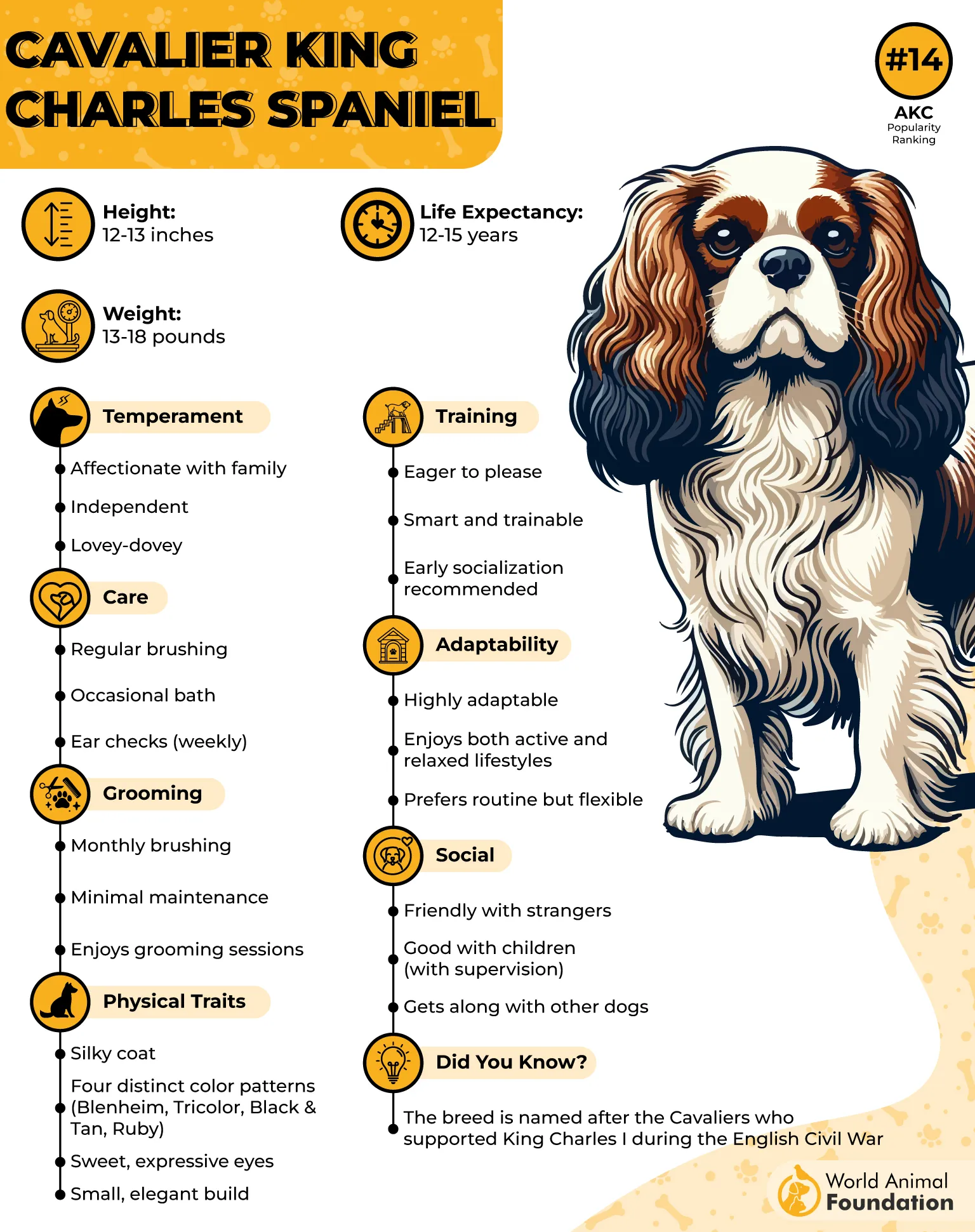
Cavalier King Charles Spaniel has a surprisingly practical connection to human comfort, having once been kept as a lap warmer during Tudor times and on chilly carriage rides.
King Charles II was so attached to these little spaniels that he reportedly kept several close by and granted them access to public places.
Cat-Friendly Nature
These spaniels are gentle, adaptable, and naturally sociable, qualities that can make life with a feline companion easier. Their prey drive can still trigger a chase, so early training and careful introductions matter when both animals share a home.
Both pets need time to adjust at their own pace:
Give the cat a separate retreat
Keep pets apart for 3 to 4 days
Use a leash during initial meetings
Keep It Calm
Cavalier King Charles Spaniel responds well to positive reinforcement, including verbal praise, neck rubs, and attention from its people. Short, controlled meetings let the cat approach or leave freely while the dog receives rewards for sitting and remaining calm.
Conclusion
A dog and cat can share a home peacefully when neither animal is expected to adjust overnight. Early meetings should be gradual, with barriers, leashes, separate spaces, and rewards helping most dogs create positive experiences around a new pet. The cat needs freedom to leave or retreat, while the new puppy needs clear guidance around chasing, excitement, and playtime.
Breed traits can help narrow the options, but individual temperament remains important once the pets actually interact. Owners should give both animals time to become familiar with each other’s sounds, scents, and routines in their shared environment. With steady supervision and patience, a mixed-pet household can become a comfortable place for everyone.
