




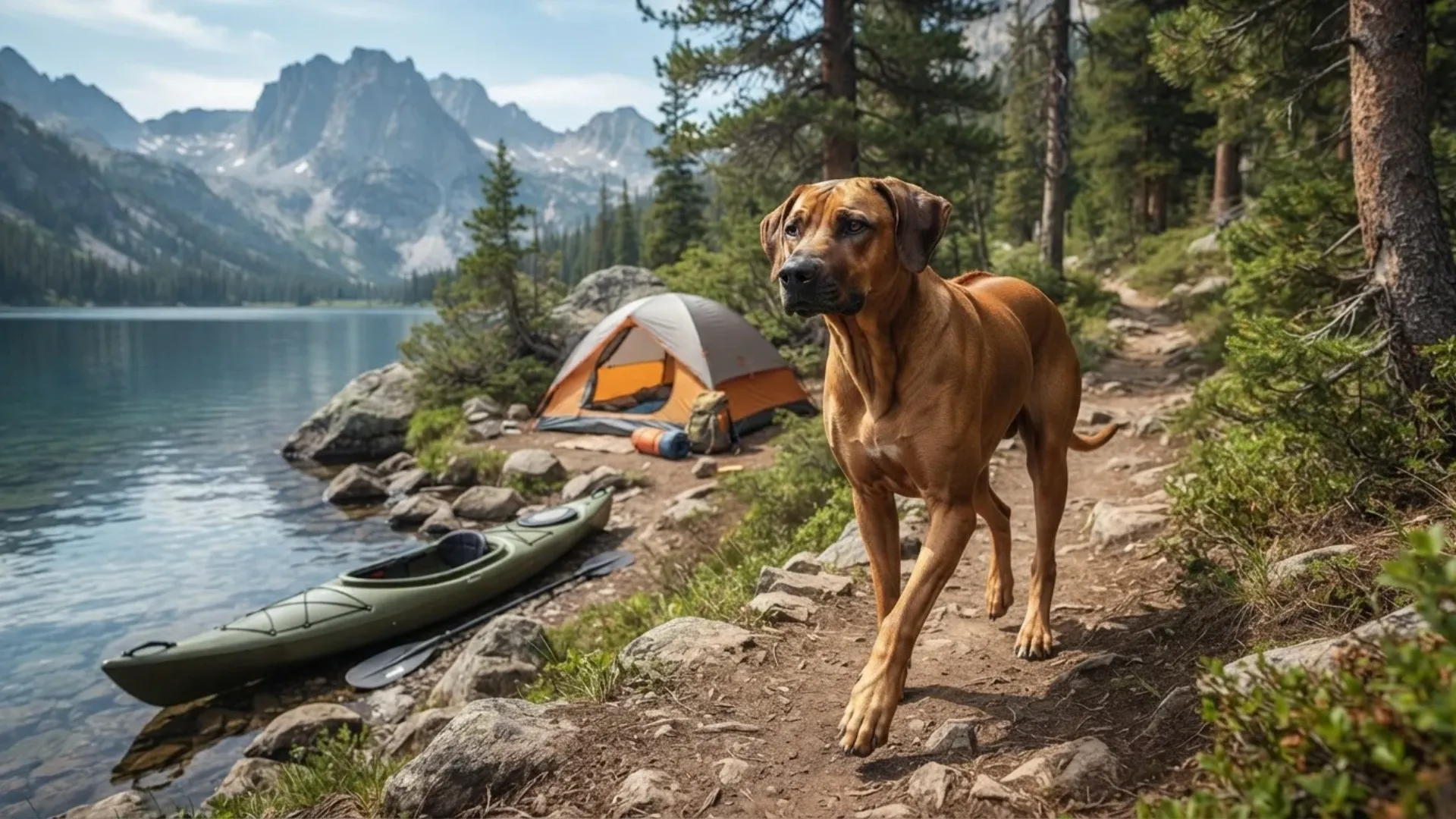
Taking a vacation to the outdoors can become a real adventure through camping, kayaking, and hiking. For dog owners, this can make those trips even more enjoyable when you have the right dog with you.
A number of breeds have been bred for cold water bird retrieval. Other dogs pulled sleds and worked farms or tended livestock or hunted long distances over many years. That background can provide them with the endurance, strength, and self-assurance to enjoy active outdoor trips.
This is an important factor to remember: not all breeds are suited for adventures. There are many factors involved in the age, health, training, swimming, and conditioning of a dog.
Breeds not typically known for being good swimmers should be accustomed to water gradually; otherwise, they should be accompanied and supervised around lakes, rivers, and boats.
Dog Breeds That Excel in Camping, Kayaking, and Hiking
1. Vizsla
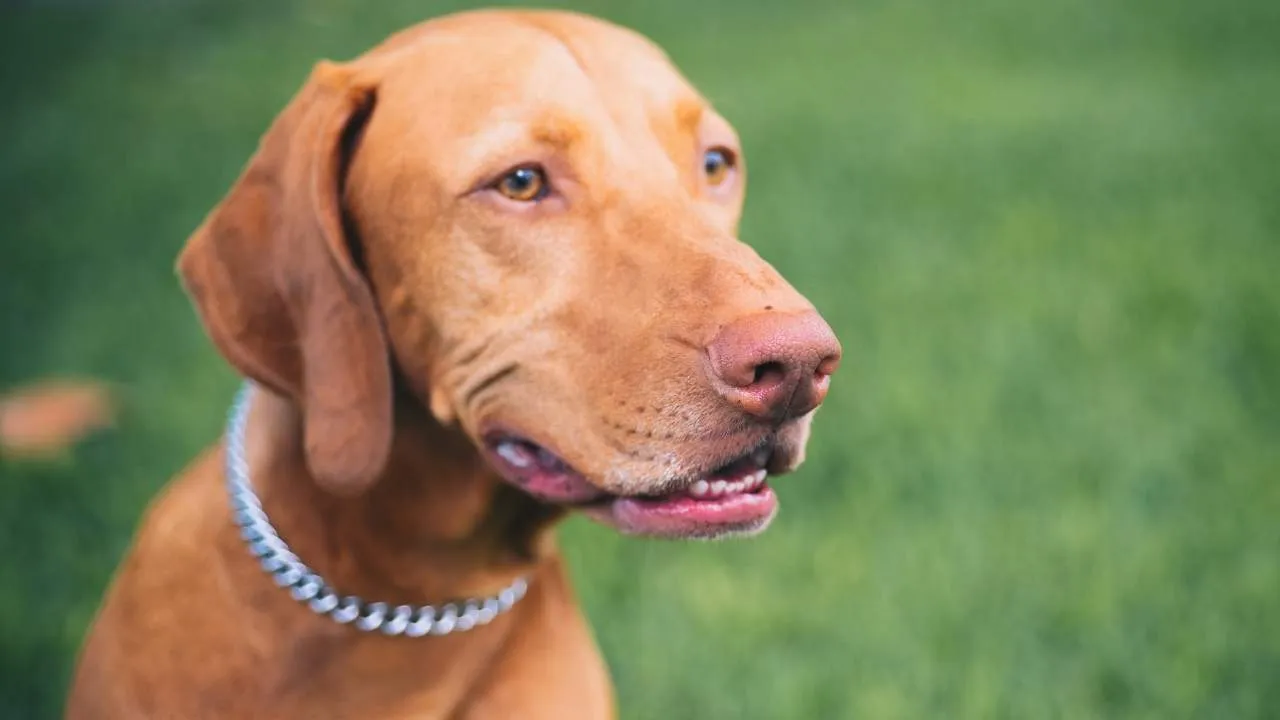
The Vizsla, called a versatile gundog by the American Kennel Club, makes an excellent companion for the active owner who doesn’t want to have a dog who becomes a burden on trail running.
The Vizsla was originally bred to work long hours in the field in Hungary. This history endowed the breed with a lot of stamina and a love of exercise.
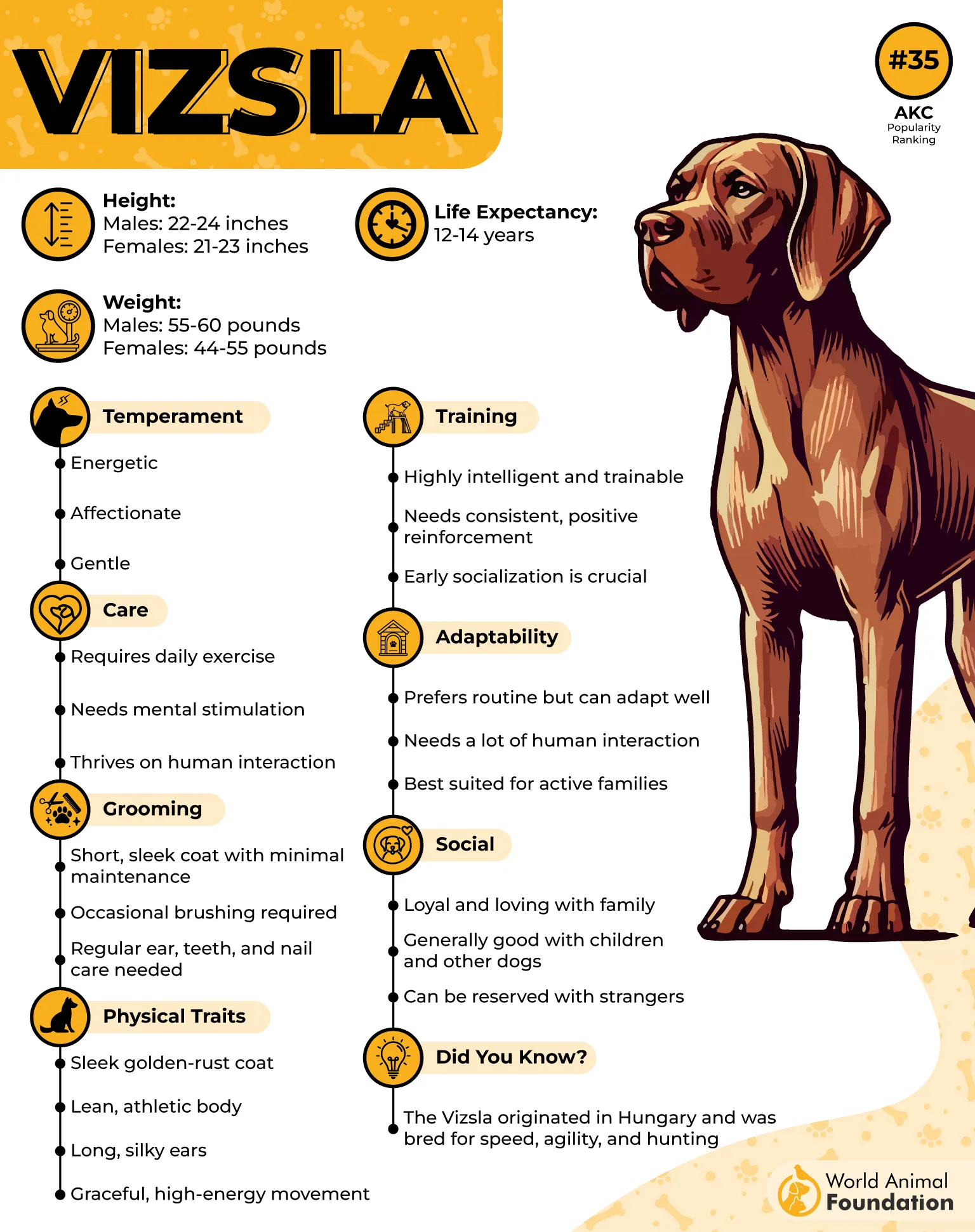
The Vizsla’s most notable attribute for hikes and camping is its athleticism. It can be used for active days and loves to be used with its owner, not on its own.
This dog’s short coat is also very handy when camping since it will not gather as many burrs, debris, and mud as a long coat. But that is the way it is in cold weather – the shorter the coat, the less insulation. If your Vizsla camps in cold weather, it may require additional protection, especially when it comes to night-time temperatures.
2. Siberian Husky
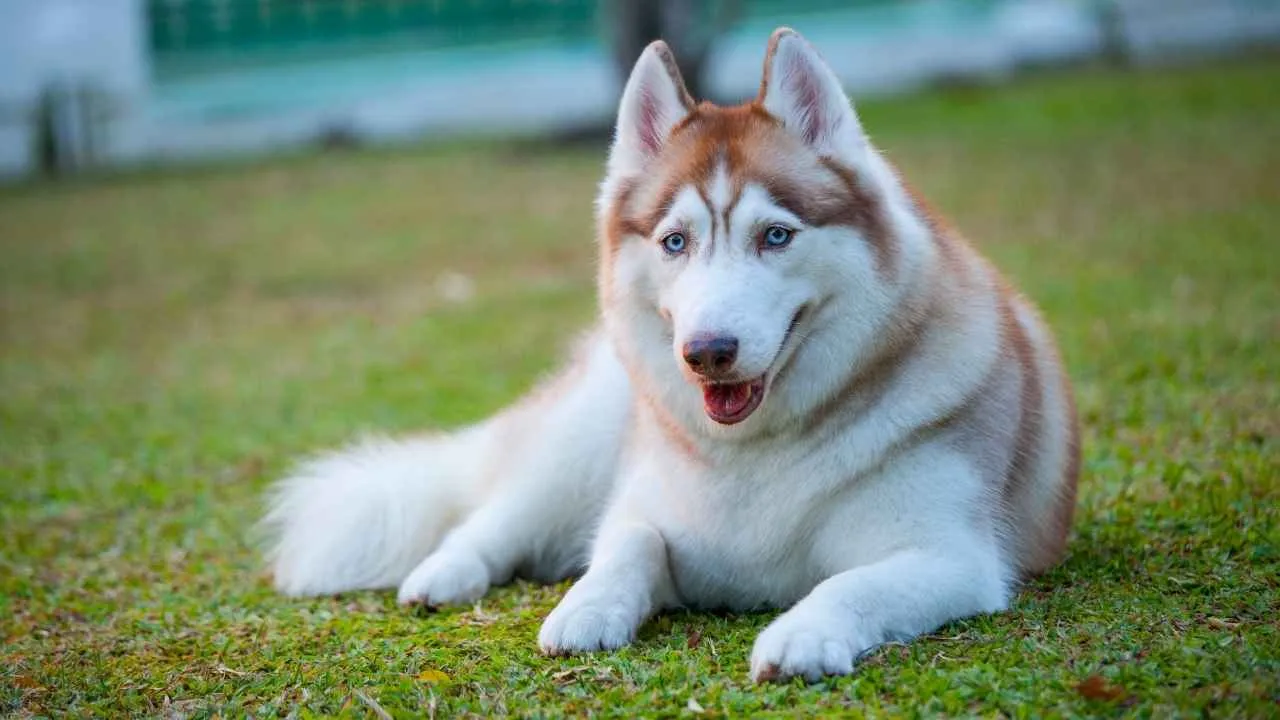
Coined an affectionate breed by Purina, the Siberian Husky has a different set of benefits, better suited for snow and cold-weather trails.
This breed was bred as a sled dog in very cold conditions and is very good at running long distances. Siberian Huskies are very energetic and best suited to the person who loves going outdoors and is fond of snow.
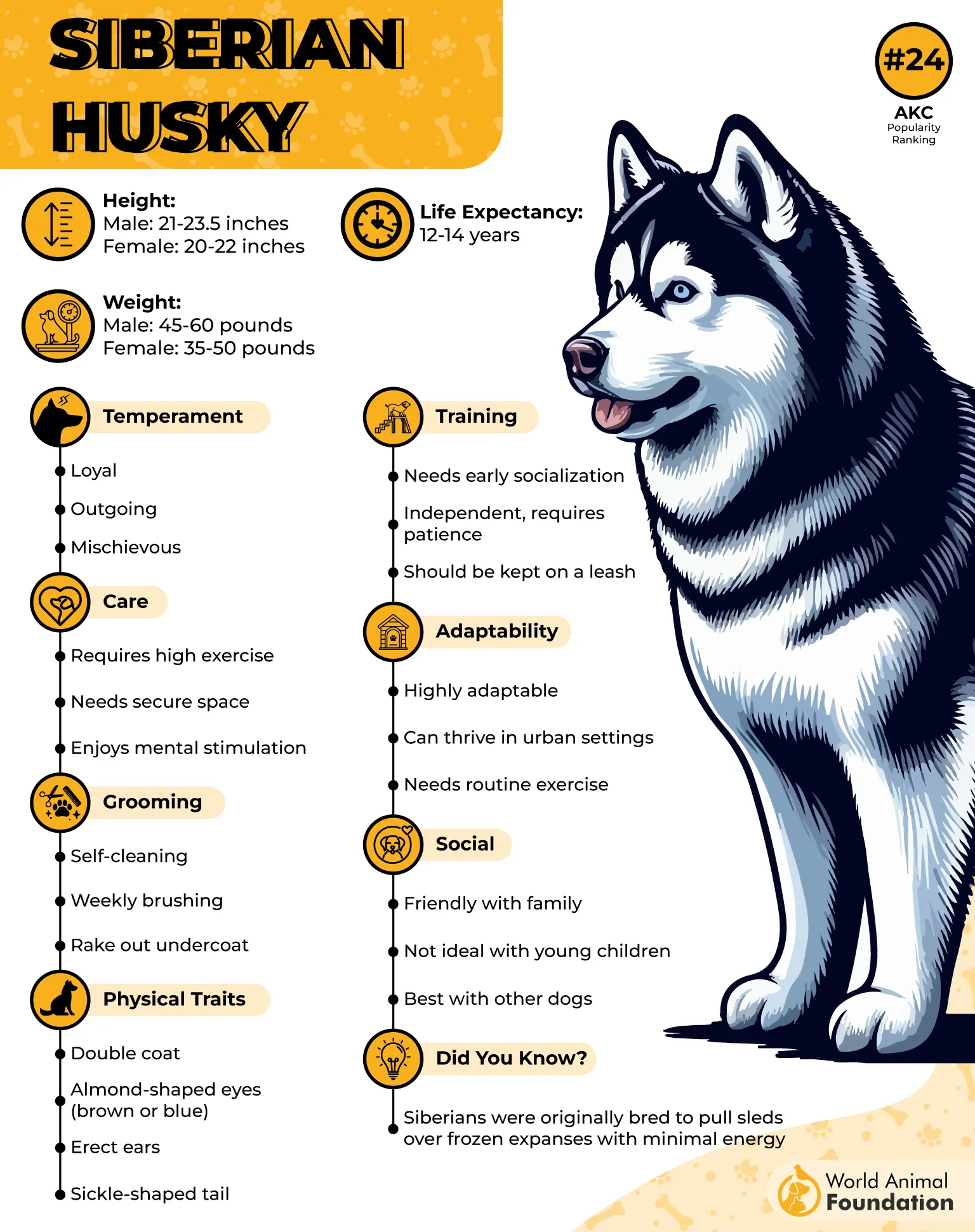
This makes the Husky particularly suitable for winter camping and hiking. Equipped with a thick double coat, it offers great insulation and its durability has the ability to remain active for a long time.
The coat is a benefit in cold weather, but can be a hindrance in hot weather adventures.
This cute pet can also be independent and have a strong instinct to chase. It is important to have reliable control of the leash and management of the campsite. While a lovely forest campsite is a good place for a dog to stay, it is not a safe space for a dog that suddenly becomes a predator.
3. Bernese Mountain Dog
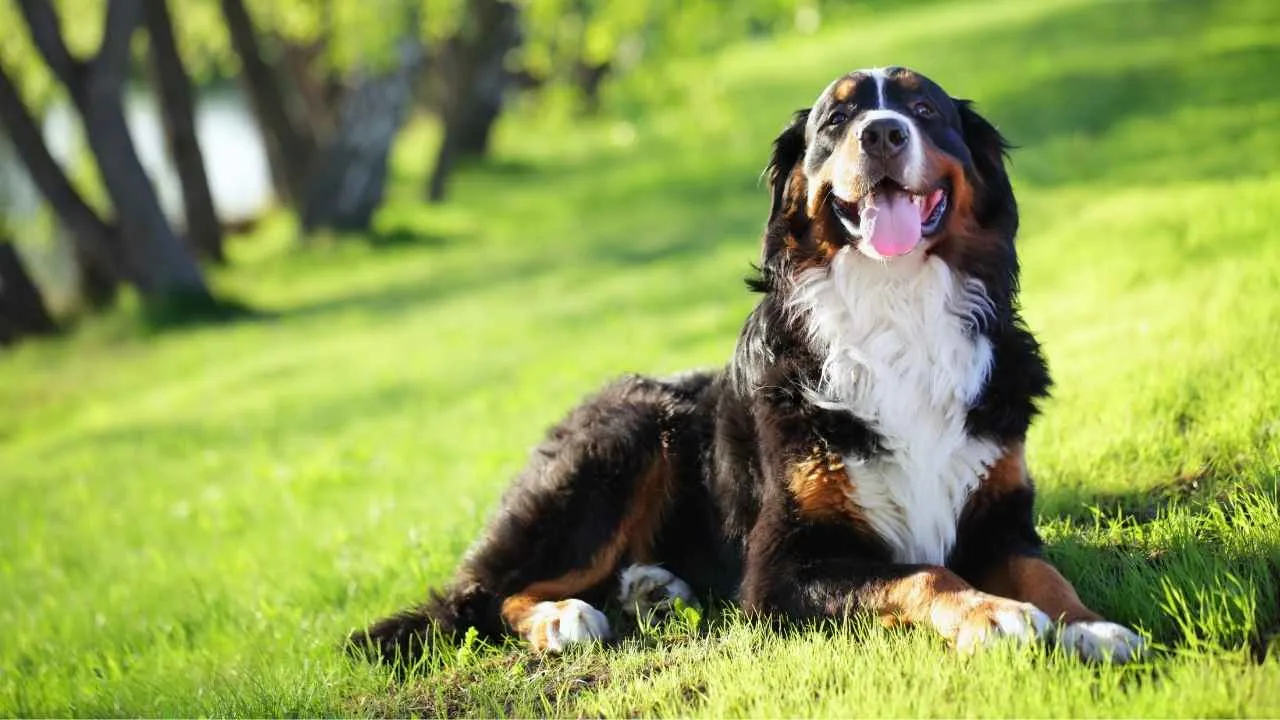
An easy-to-train breed, as reported by Britannica, the Bernese Mountain Dog is well suited to campers who like cooler weather and more steady outdoor activities as opposed to very frantic kinds of exercise.
This dog breed was developed in Switzerland as a general-purpose working dog, including the herding of cattle. This explains why this puppy is at ease in cold, wet, and snowy weather, as it has been around in the Swiss Alps.
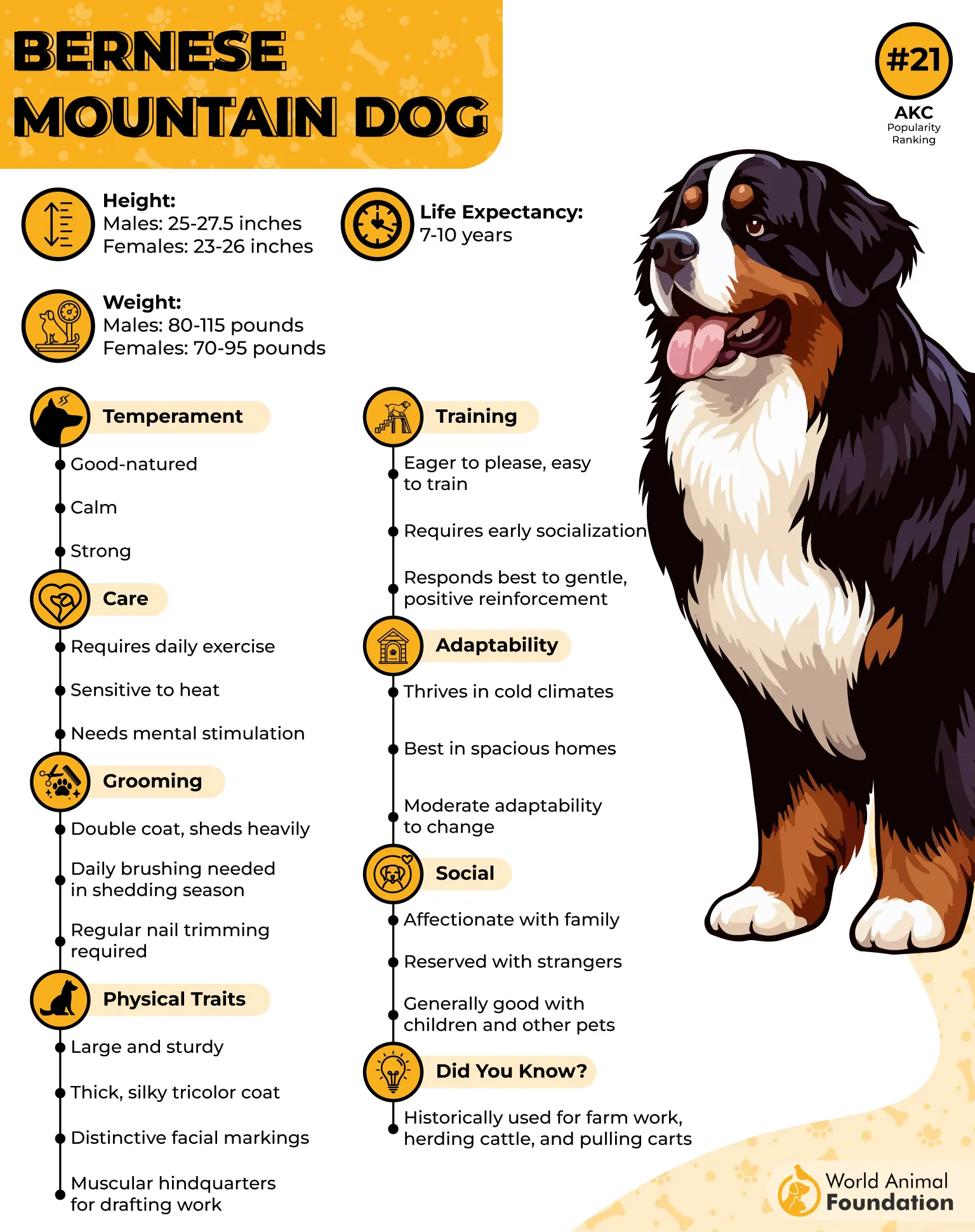
A Berner can be a good hound to hike with, as it does not require the constant hustle and bustle of some sporting or herding breeds. This fluffy dog can go for a long hike or long walks up the mountains and then come back to the campsite with its family.
It also provides some protection from the cold weather with its coat. The compromise is grooming. The wet, muddy double coat can bring many mud and dirt pies back to camp, and the shedding can occur seasonally, meaning regular brushing and grooming is needed.
4. Rhodesian Ridgeback
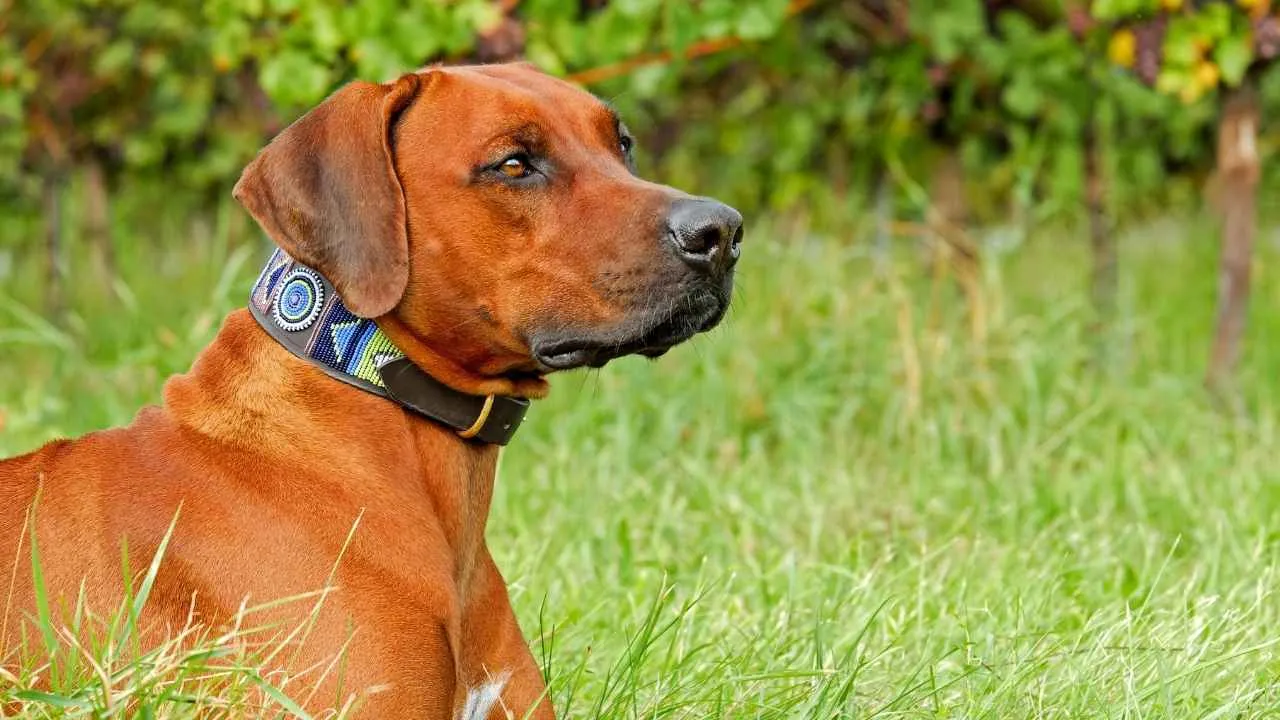
Rhodesian Ridgeback is a distance runner. As a hunting dog in Southern Africa, it demanded endurance, athleticism, and activity over rough ground.
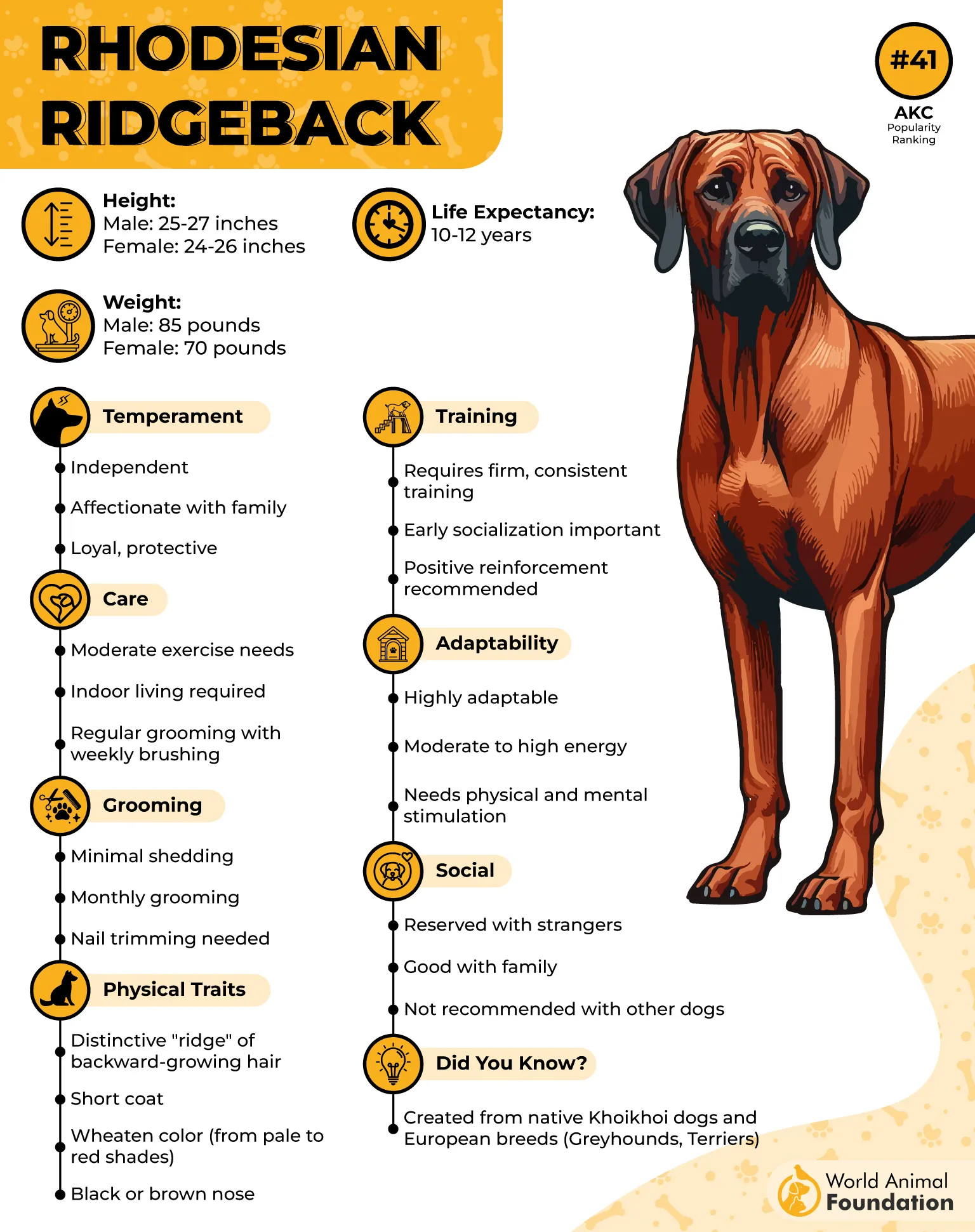
Today, the breed is still a fine hound for the active individual who loves hiking, jogging, swimming, and other fitness activities. The Ridgeback is an athletic dog with a lot of energy, and activities such as hiking and swimming are allowed.
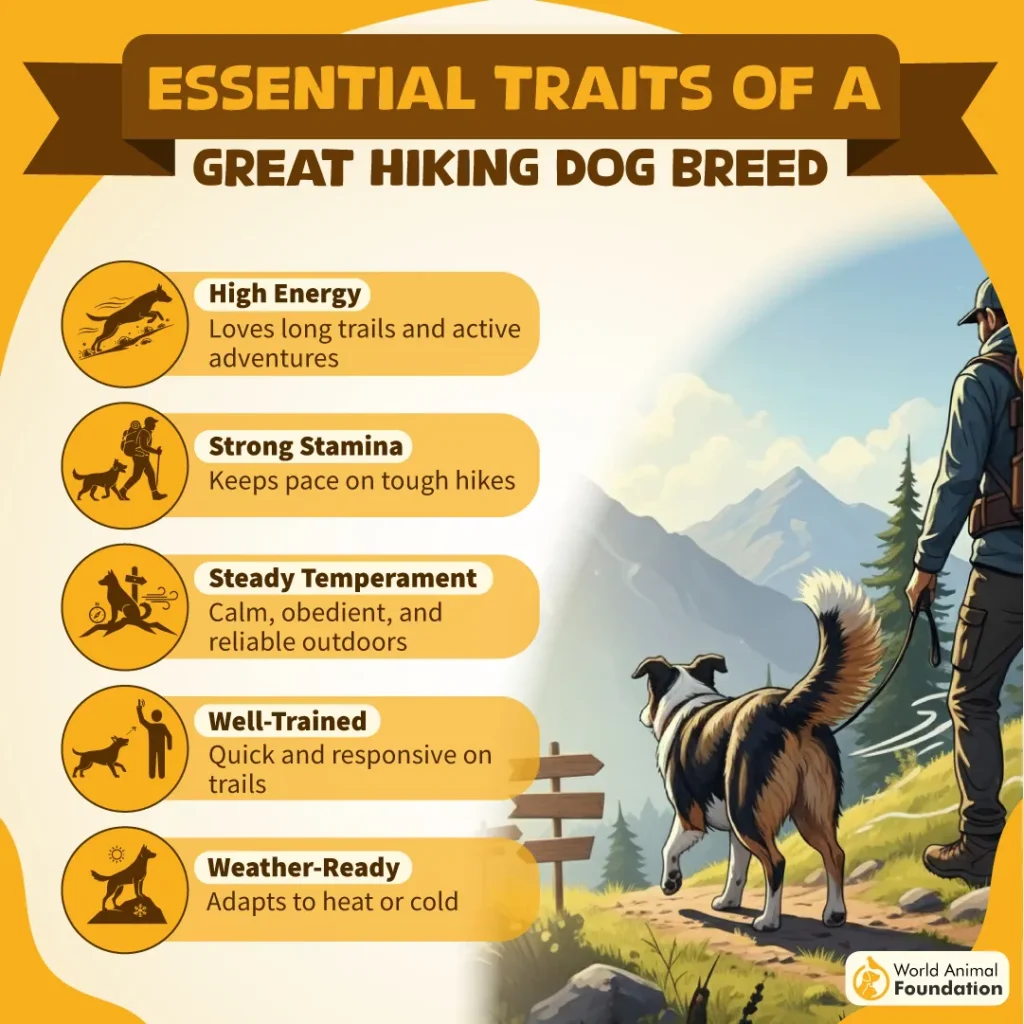
The Ridgeback has a short coat, which is especially convenient for camping. It dries more quickly than a thick double coat and is less likely to hold onto burrs and plants.
Once conditioned, the breed can be very comfortable on longer adventures. An active Ridgeback will be better equipped for a long day out than a Ridgeback that is doing little or no activity the majority of the week.
5. Golden Retriever
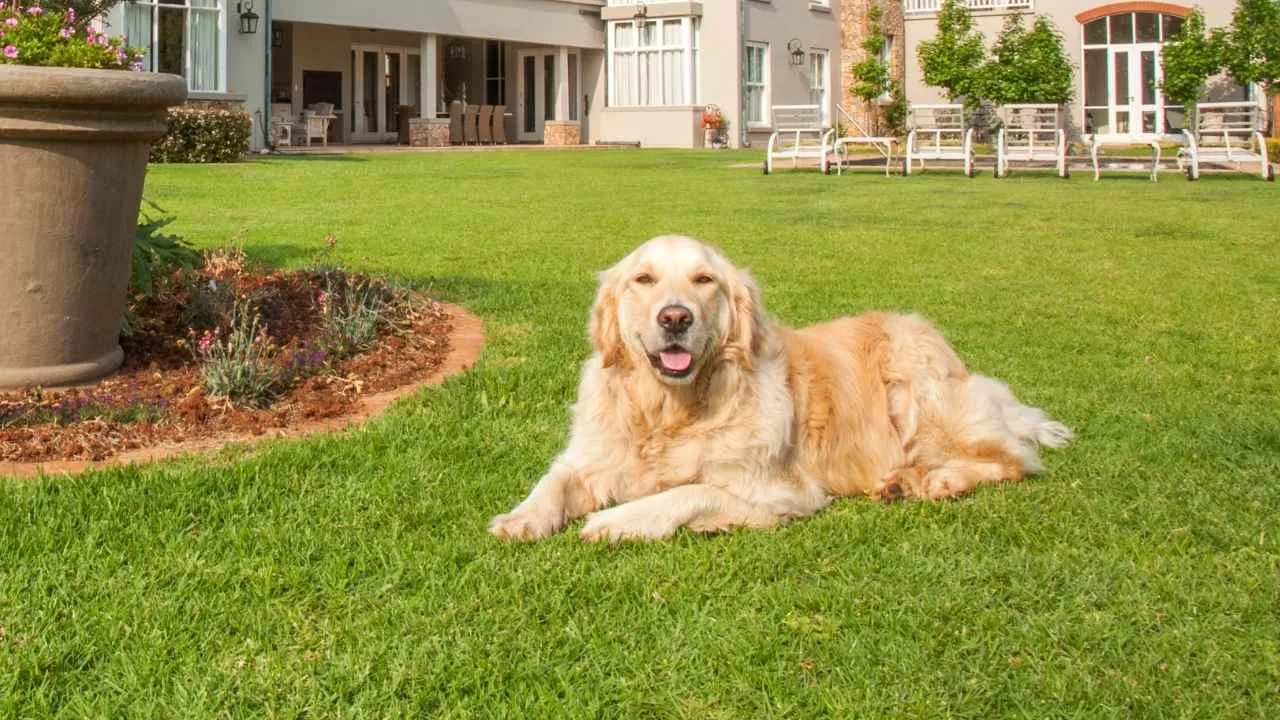
It’s possible that the Golden Retriever is one of the most adaptable breeds for a home with a combination of hiking and water fun.
These dogs are bred as sporting dogs and have long been retrievers. They are generally appreciated today as ideal companions for hiking, retrieving, and dog sports.
This is the reason why the Golden is a great help for kayaking trips. Many like to go into the water and bring up floating items, and swimming should be introduced safely.
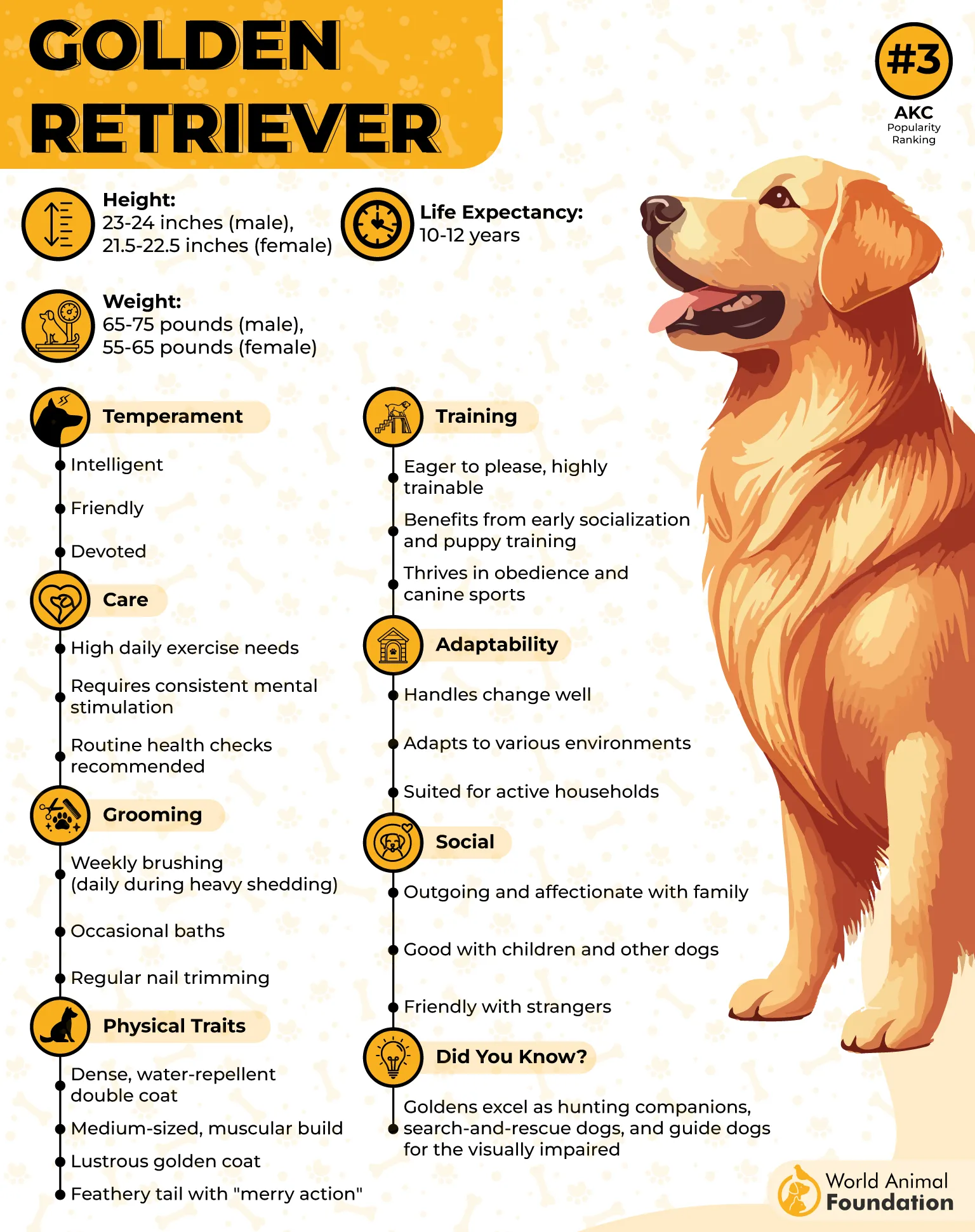
There’s also a practical side to camping that these good dogs tend to appreciate. They like hanging out with their families and friends, prefer to spend time with their owners, and their active and social temperament could be met with a day of hiking, fly fishing, swimming, and relaxing around the campfire.
Owners should dry their ears after swims. Golden Retrievers have floppy ears, and water can lead to ear issues. After swimming, ears should be checked and then dried. They also require more frequent brushing of their longer coat, particularly after going on a hike through the vegetation.
6. German Shepherd
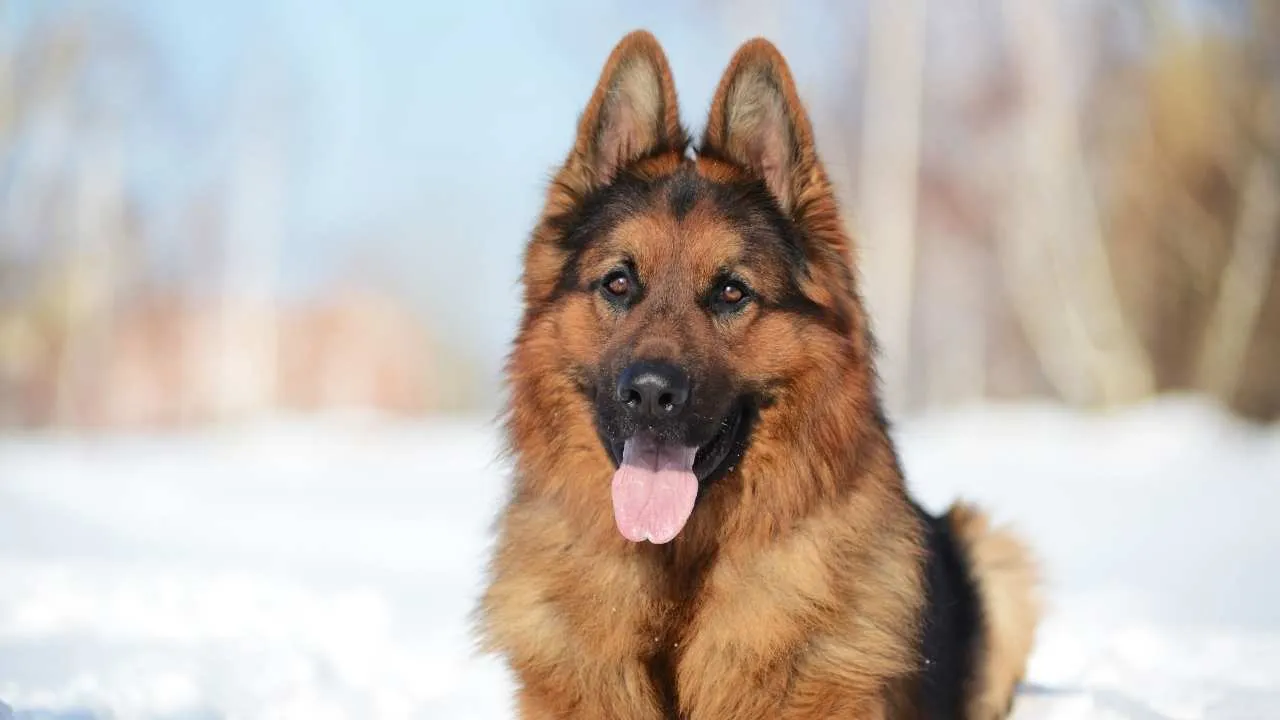
For campers seeking a highly trainable dog that is adept at dealing with various environments, the German Shepherd Dog is a good choice.
German Shepherds are athletic, intelligent, and responsive to structured training and were originally bred to herd animals but have also been utilized in a variety of working jobs. Daily walks, jogs, hikes, retrieving, and other physical activities may be appropriate for the breed.

A dog that has learnt basic commands is much easier to handle around tents, cooking equipment, other campers, and around new environments.
German Shepherds are also capable of tackling a range of terrain with ease if trained sufficiently. They are strong and agile, and are good companions for extended hiking sessions, not just short strolls for recreation.
7. Alaskan Malamute
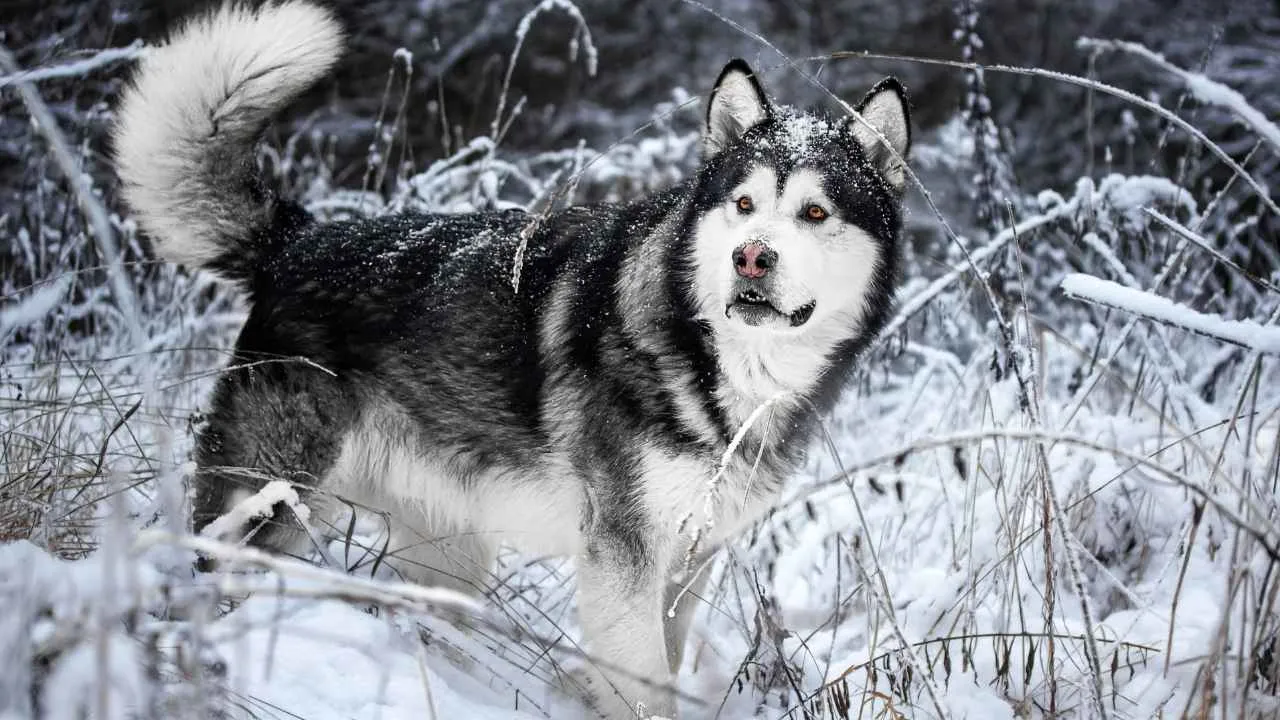
It’s no wonder that the Alaskan Malamute is a favorite choice for rugged camping and long-distance hiking, especially in colder areas.
It was bred to be an Arctic dog of the sled team that can pull heavy loads over long distances. Malamutes are described as strong, athletic dogs with great endurance and love hiking, running, swimming, backpacking, and other outdoor activities.
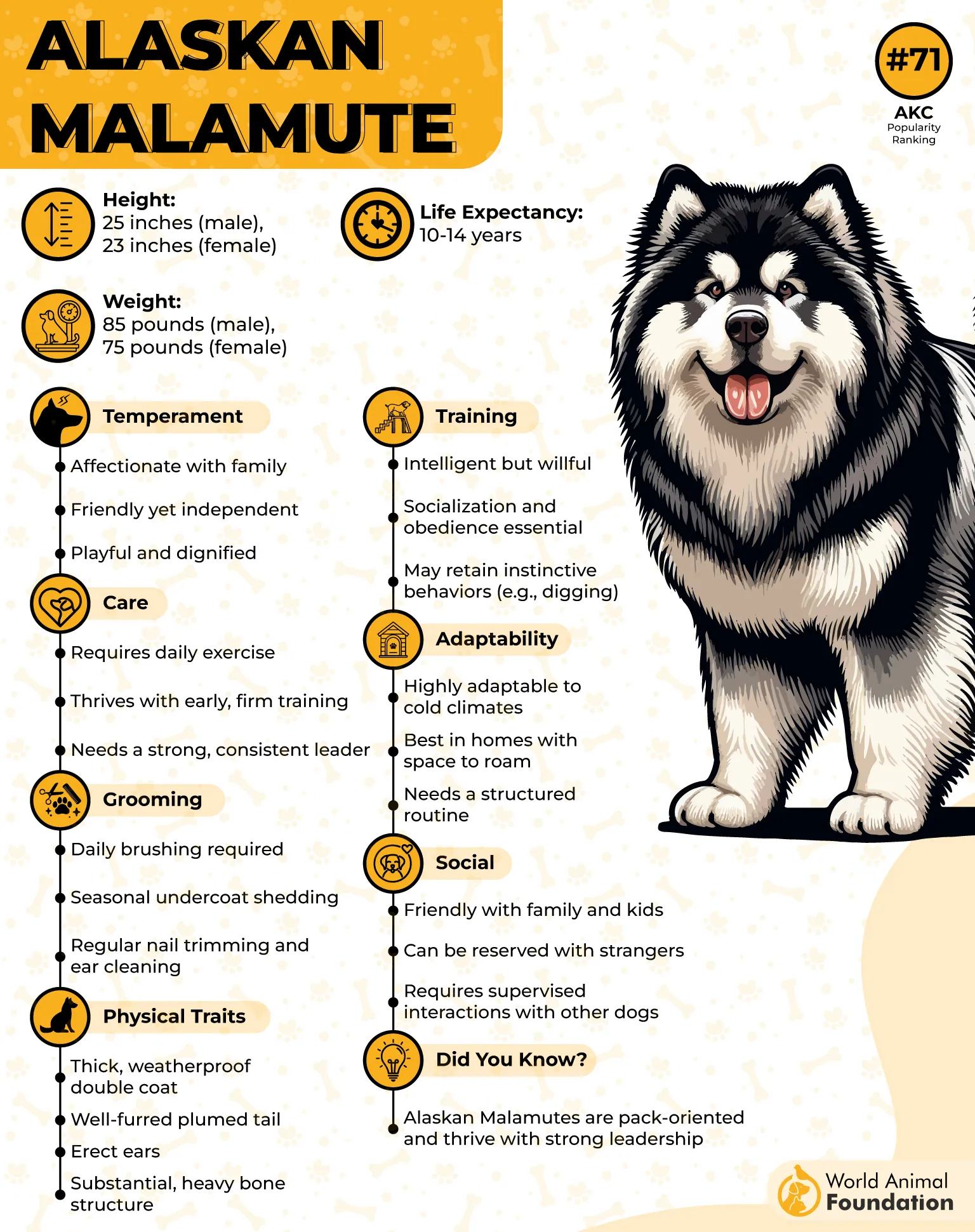
They are ideal for camping trips where the dog may have to carry a well-fitted pack after being conditioned appropriately. But not all dogs need to be equipped with gear. All of these factors, including weight, time, terrain, age, and health of the particular dog, must be considered and taken into account.
Malamutes can be independent and strong-willed. Good campsite behavior and leash skills should be taught before entering a remote area with a camp.
8. Labrador Retriever
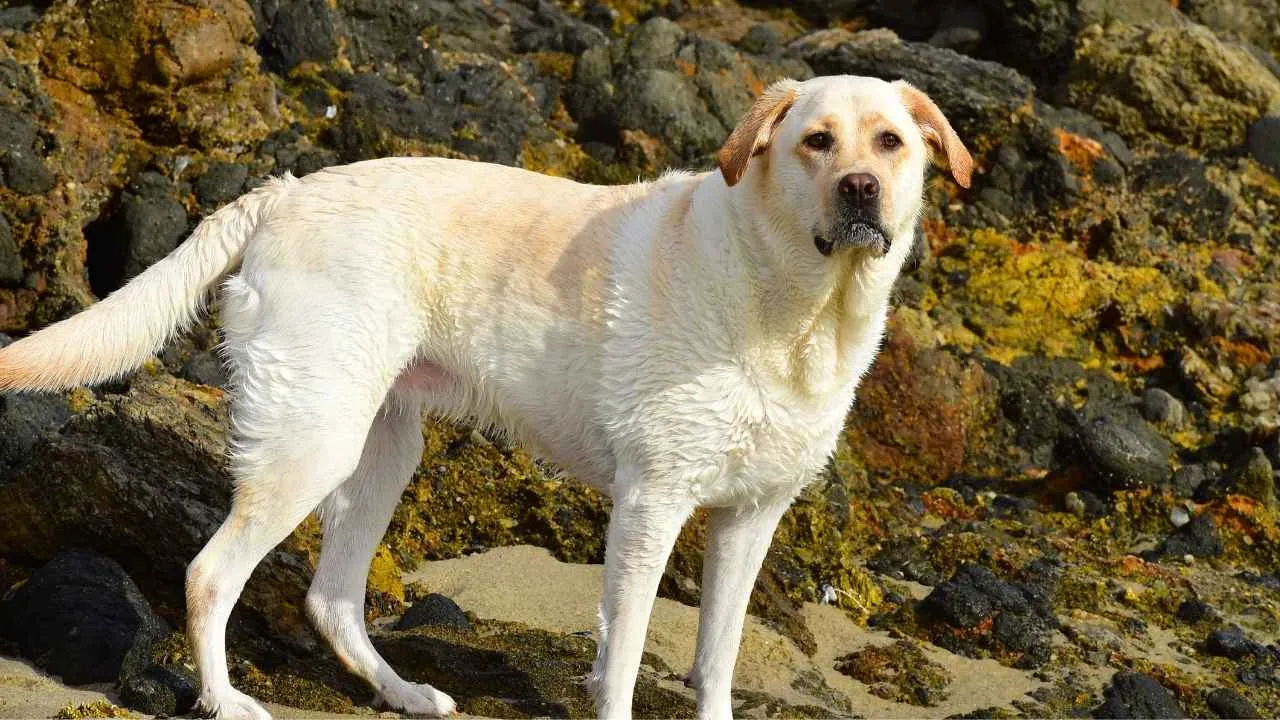
One of the most obvious choices for outdoor adventures in your spare time is the Labrador Retriever.
Labs were originally bred for the retrieval of waterfowl and to work around water. They have a thick coat, webbed feet, and a strong tail which helps them swim well.
The dog has several opportunities to expend its energy during the day: a morning walk followed by a swim or kayak trip. Water games can be a particular source of joy for this breed, as they are often more enjoyable because they help them retrieve.
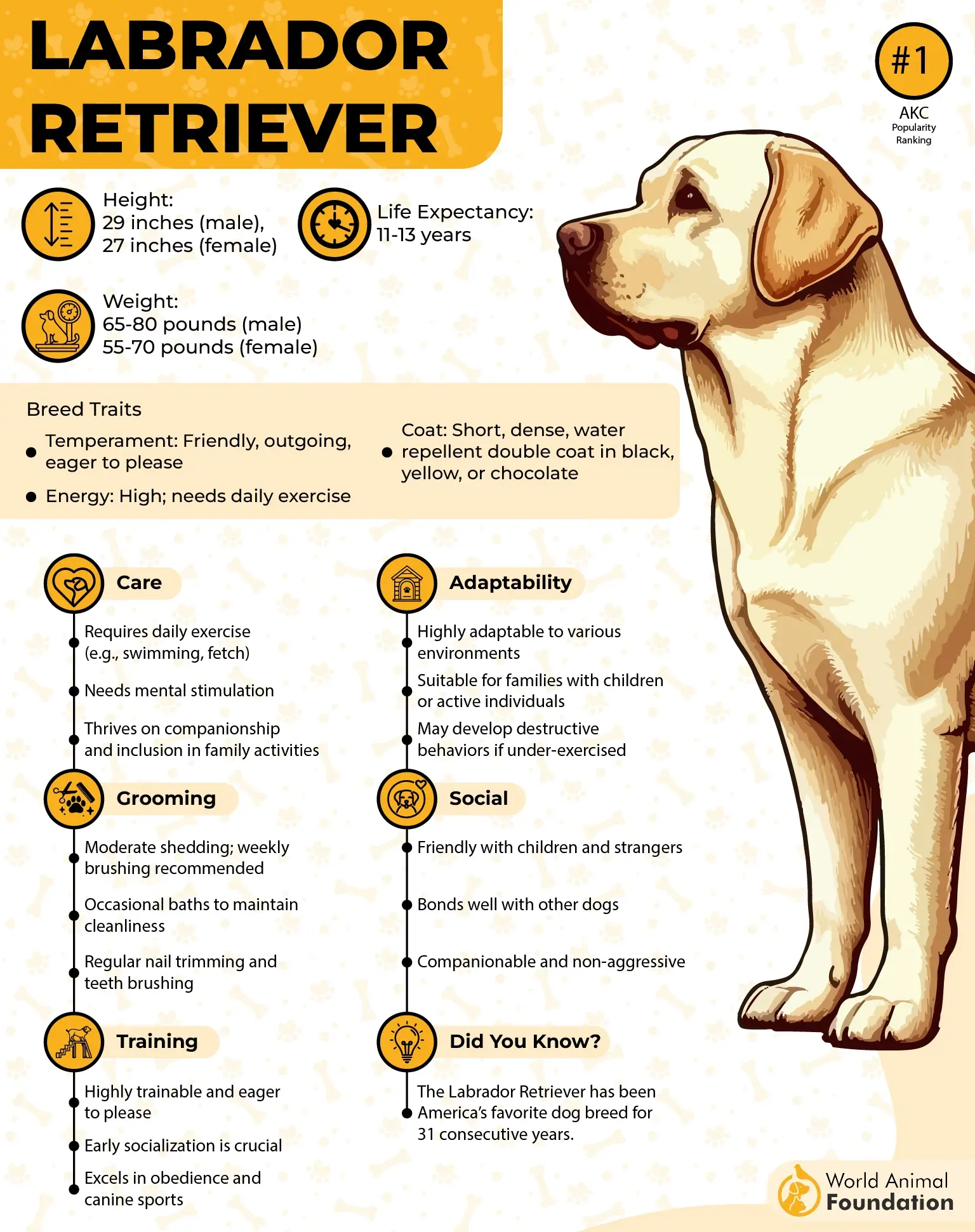
The only problem is Labs have a lot of energy. They don’t just want to be taken outside once on a campout; they want regular physical and mental activity.
They also shed a lot throughout the year, so don’t expect that their dog hair won’t end up inside the tent or in the car, sleeping bag, and most likely anywhere else.
9. Border Collie
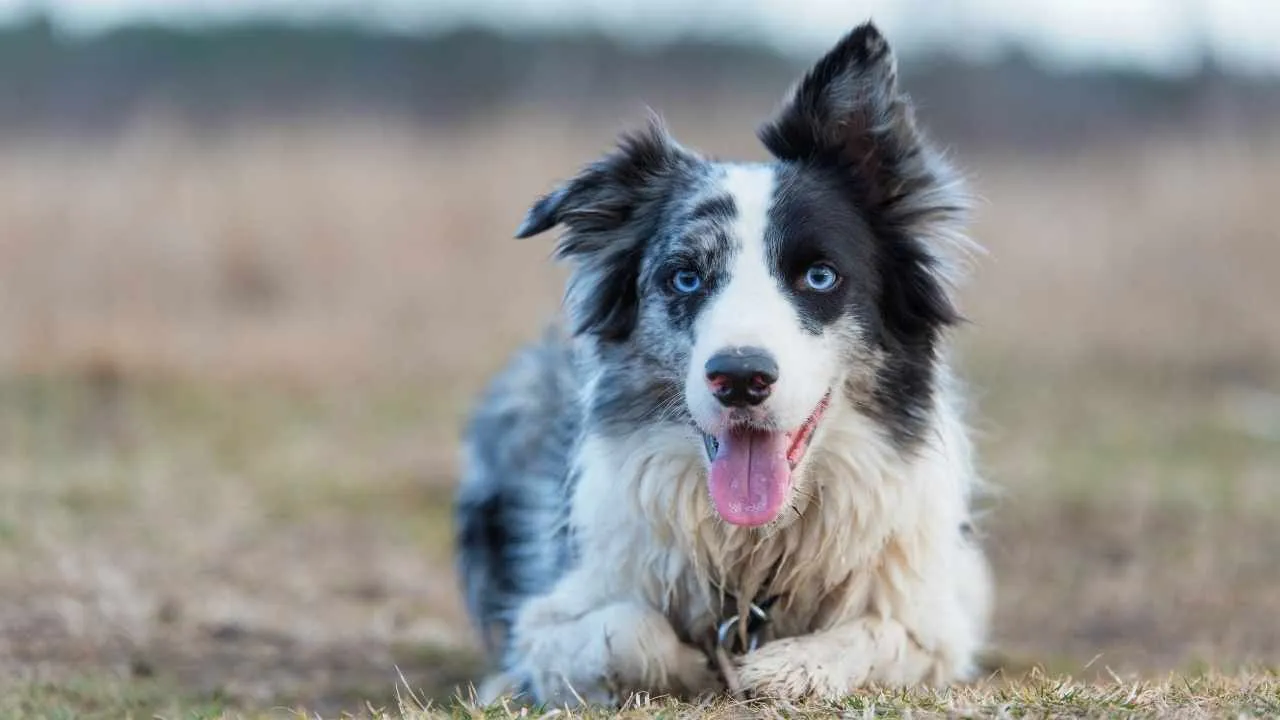
The Border Collie is a dog best suited for those who can provide it with plenty of exercise and mental stimulation.
Originally bred to be herding dogs and to work long hours, they are adept at problem-solving. This breed might require more than a stroll and activity, as it is a high-energy dog that adores its special time solving problems and running around.
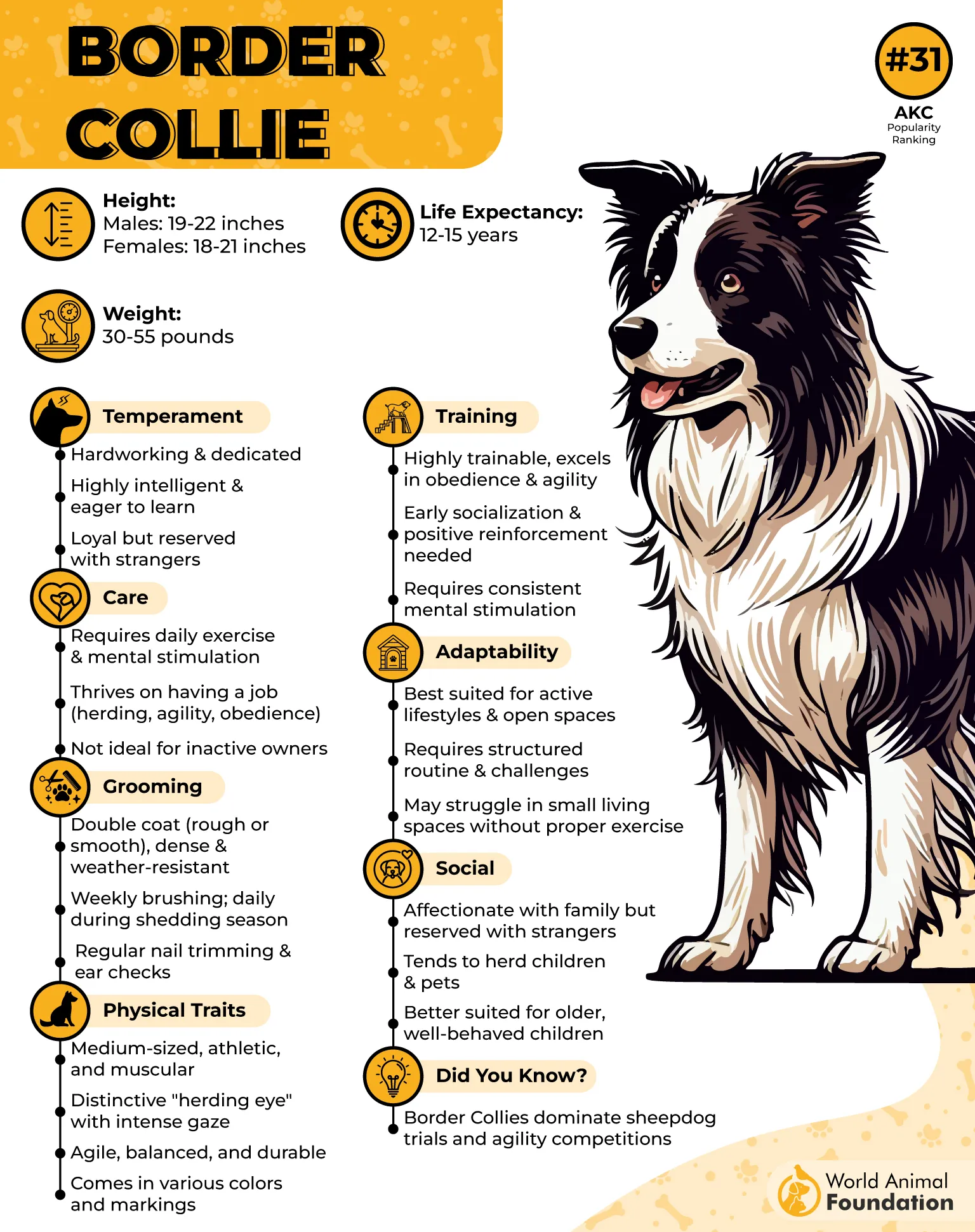
This breed may be provided with an outlet through camping, but it is important owners do not assume that physical exercise is enough to keep it satisfied. Mentally stimulating activities should also be incorporated into its routine.
This breed is best suited for owners who like to engage their dog in adventures, rather than take it along for the scenery.
Conclusion
The objective is not just to look for an adventurous-looking dog. The key is to discover a breed that fits the amount of exercise you do in your life, how they cope with those elements, the training they require, and how they interact with water.
If those reasons coincide, then camping, kayaking, and hiking can be frequent adventures that you can enjoy with your fluffy best friends. Take your dogs to national parks and plan a nice picnic. The dogs listed in this guide are good for pet parents who get excited watching their dogs run and play.
