




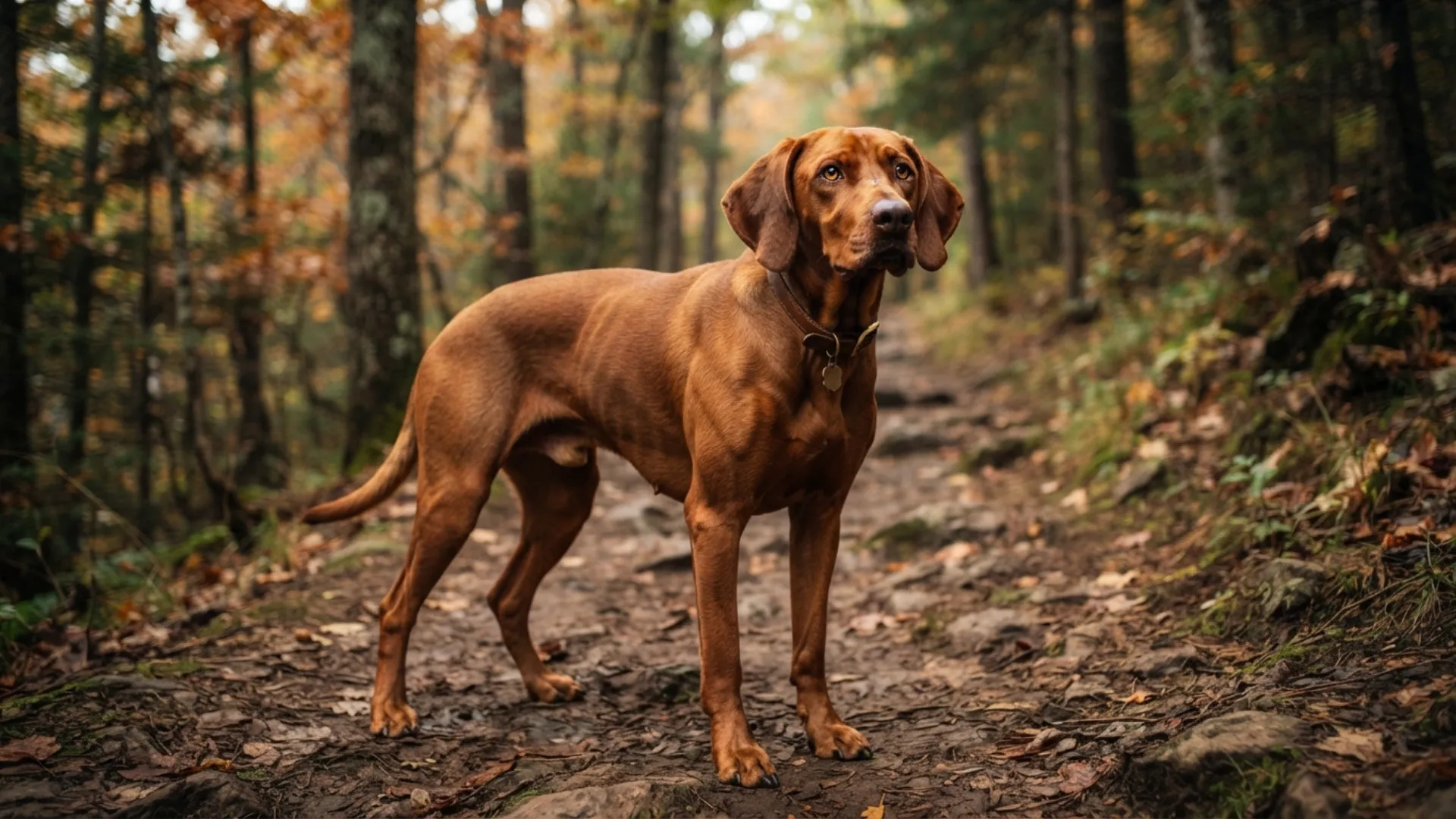
When it comes to wildlife tracking, a great dog can seem almost magical. While you’re scanning the terrain, a skilled canine can pick up faint scents, follow hidden trails, and stay focused when the trail gets difficult.
But tracking takes more than a powerful nose. The best dogs combine stamina, intelligence, focus, athleticism, and a strong work ethic. They can handle rough terrain, changing weather, long hours, and distractions while staying responsive to their handler.
So, what makes a dog truly exceptional at wildlife tracking? Let’s explore the top breeds known for their tracking abilities, keen instincts, and endurance, and see what makes each one a valuable partner in the field.
Key Takeaways
Meet seven impressive tracking breeds built for scent, stamina, focus, and tough terrain.
Discover why German Shorthaired Pointers and Bloodhounds stand out as tracking specialists.
See how Rhodesian Ridgebacks, Labrador Retrievers, and other breeds balance instincts with family life.
Find out which training, exercise, grooming, and care needs come with these hardworking dogs.
Top Dog Breeds That Excel at Wildlife Tracking
1. German Shorthaired Pointer
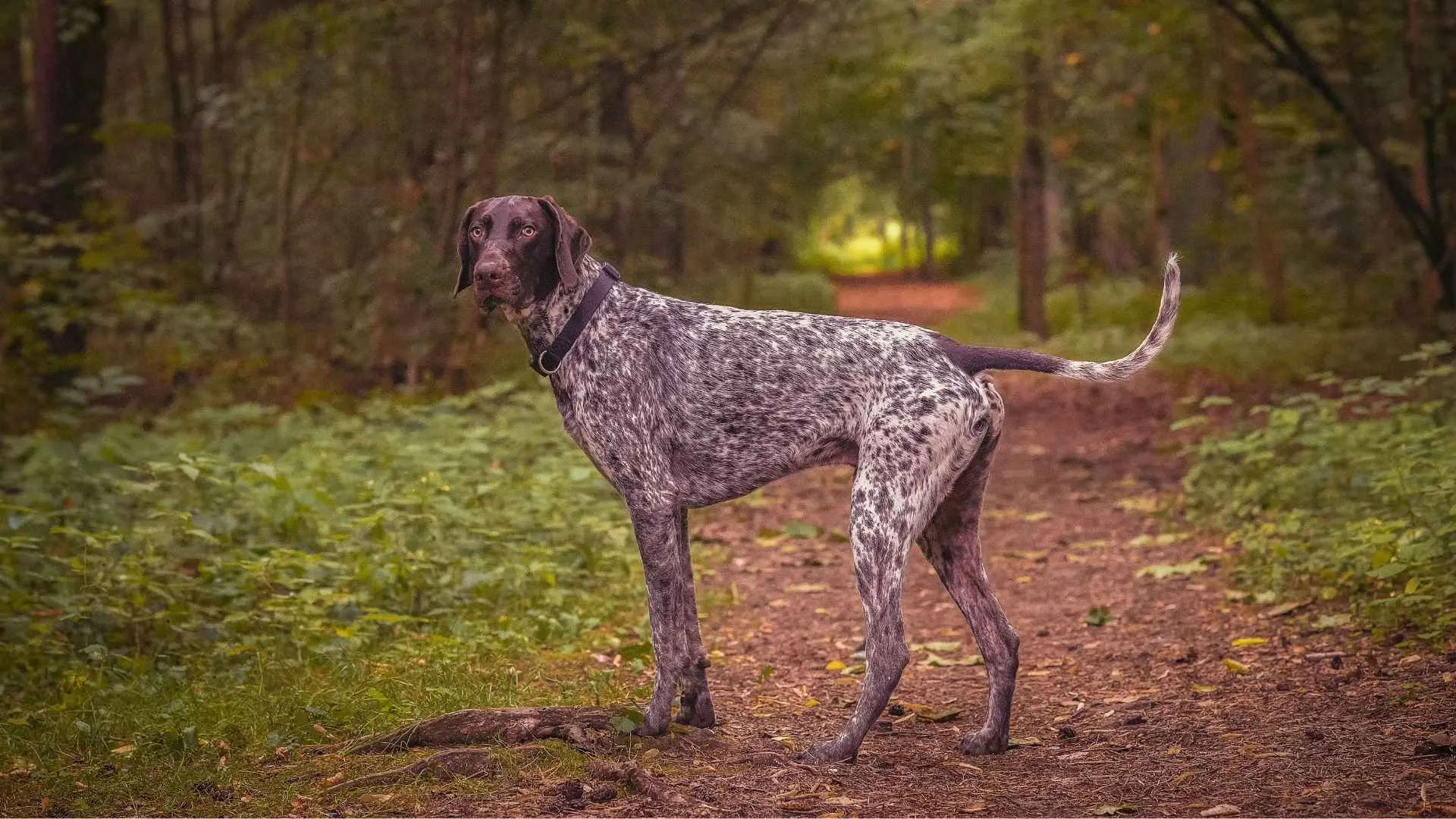
German Shorthaired Pointers are versatile bird dogs with a natural talent for locating and tracking wildlife. Their keen noses help them follow scents across open fields and rough terrain, as noted by the AKC.
When they catch a scent, they can stop and point their nose toward its source, alerting hunters to the animal’s location. Their speed, agility, endurance, and strong prey drive make them good tracking dogs in the field.
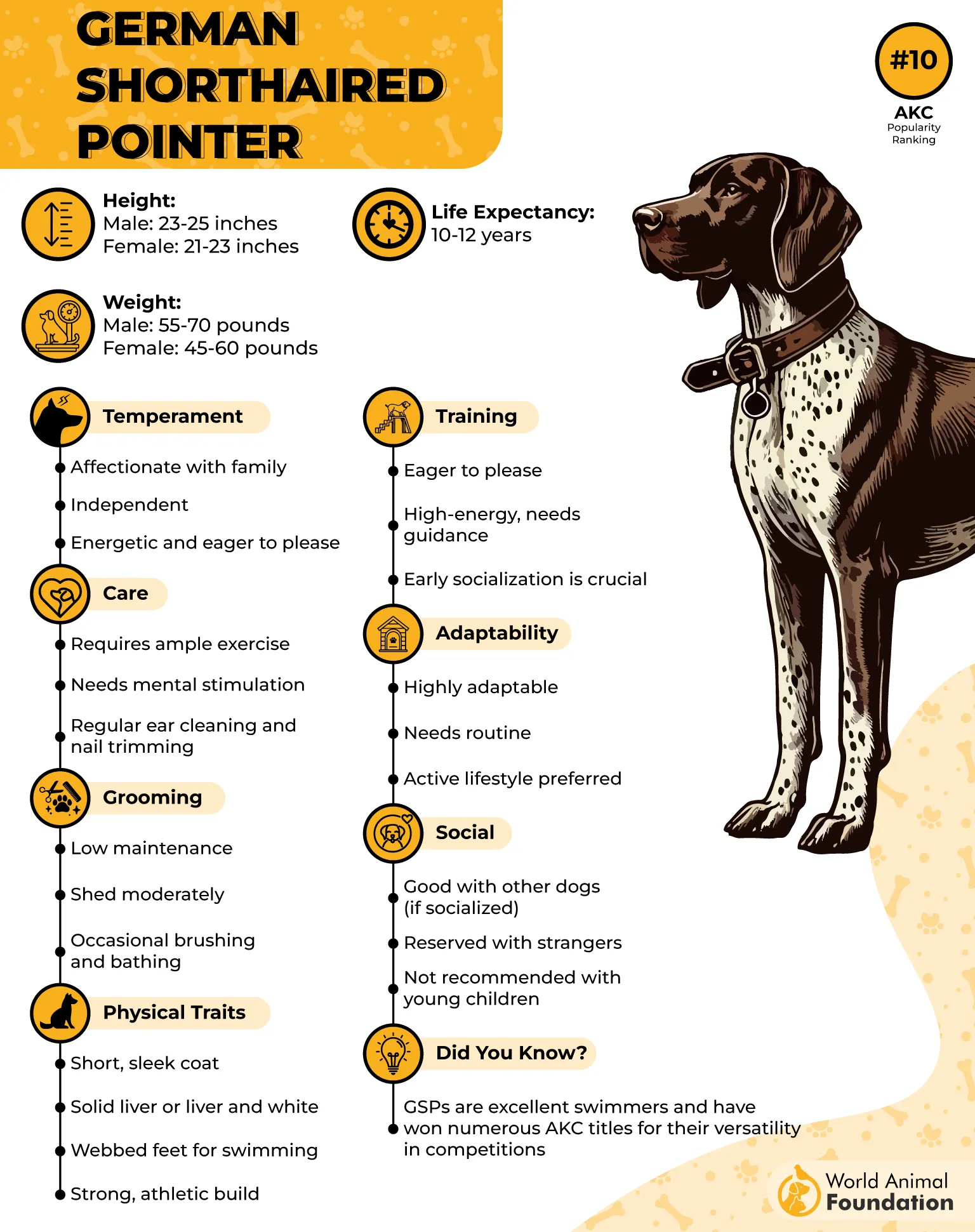
Versatile, Intelligent, and Energetic
These dogs combine strong hunting instincts with intelligence and athleticism. They learn quickly with proper training, although their independent nature can make them easily distracted by interesting scents. Their history reflects their versatility.
They were developed to trail mammals, point birds, retrieve, and handle wounded game. Today, they can track birds, rabbits, raccoons, and even deer.
Active Companions Beyond the Field
At home, German Shorthaired Pointers are playful, loyal, and affectionate with their families. Their high energy means they need plenty of physical and mental activity.
Running, hiking, swimming, fetch, agility, and obedience training can keep them satisfied. Their short, smooth coats are easy to maintain, with weekly brushing usually enough to manage moderate shedding.
2. Redbone Coonhound
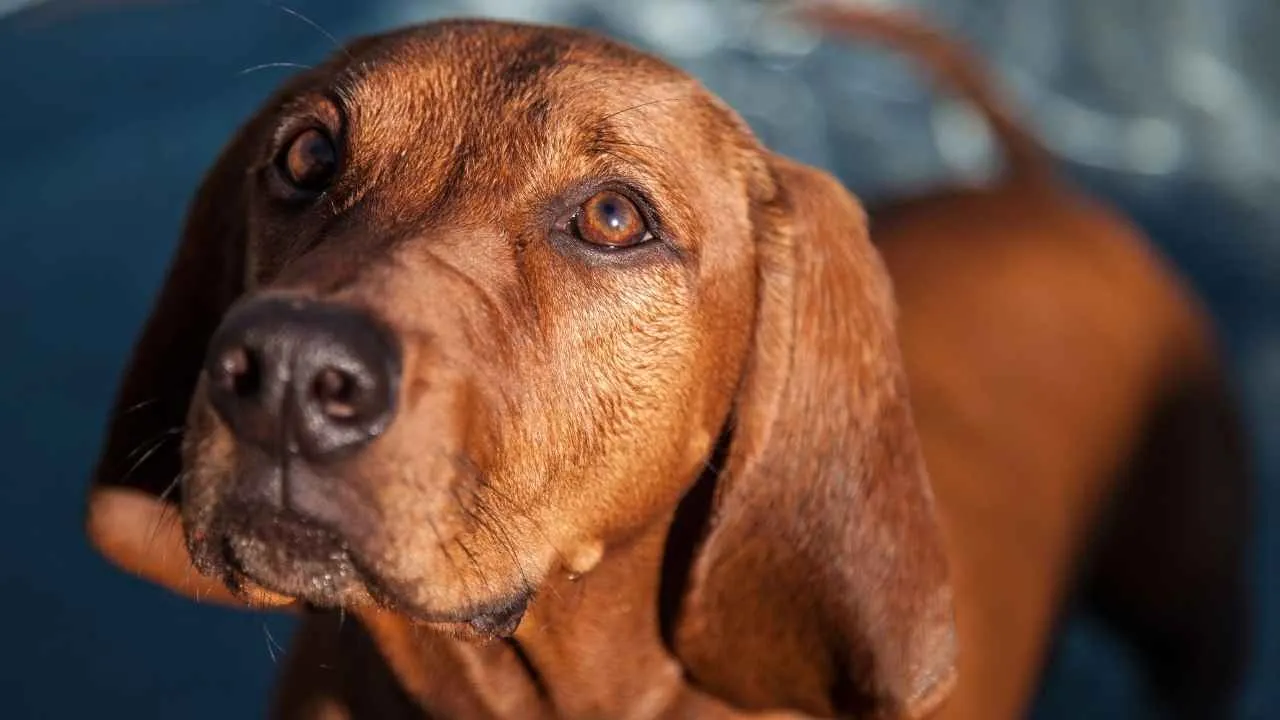
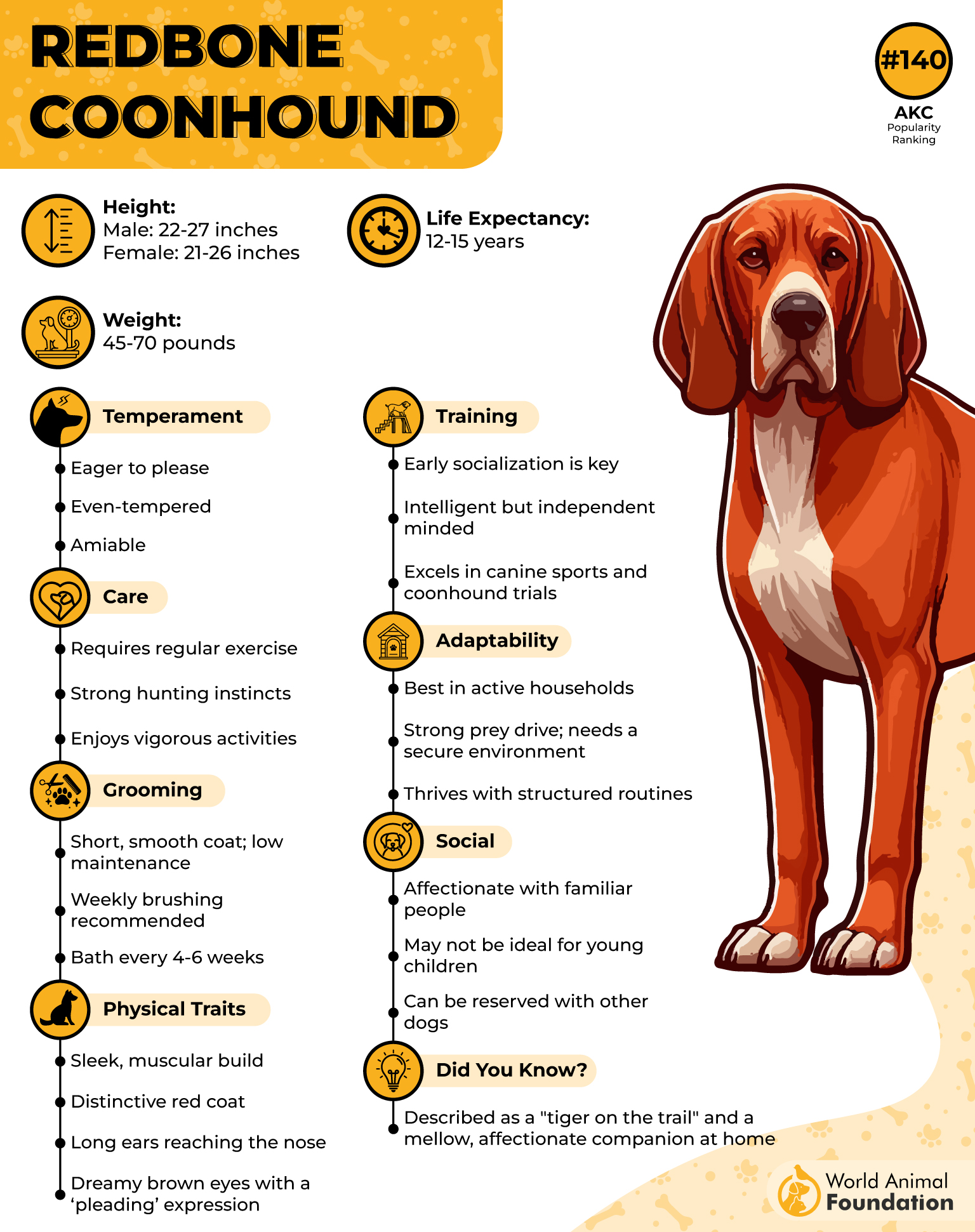
Redbone Coonhounds are scent hounds built for following wildlife trails. Originally developed to hunt raccoons and cougars, they can track a cold trail with impressive focus.
Their speed, agility, athleticism, and fearless nature help them work across challenging terrain, from dense swamps to steep mountains. Their strong noses and determination make them especially valuable when wildlife has moved out of sight.
Focused Hunters With a Strong Work Ethic
These hounds are energetic, intelligent, and naturally curious. They are often easier to train for hunting than for routine obedience because tracking comes naturally to them. However, they can be independent and stubborn, so patience, consistency, early socialization, and positive reinforcement are important.
Their strong scent drive also means they may follow an interesting trail and wander, making leashes and secure fencing important outside working situations.
Friendly Companions After the Hunt
Despite their bold nature in the field, Redbone Coonhounds are affectionate, friendly, and eager to please at home. They enjoy outdoor activities such as hiking, swimming, hunting, nose work, and agility. Their high energy means they need plenty of exercise and mental stimulation.
3. American English Coonhound
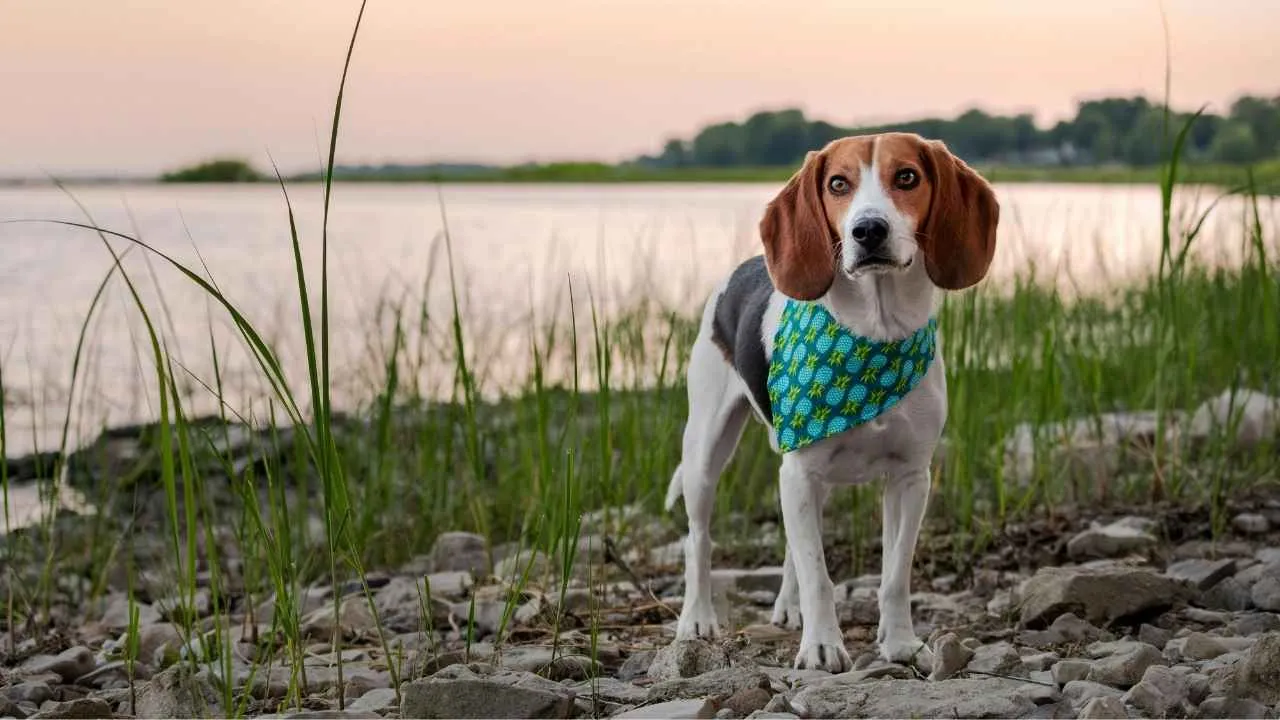
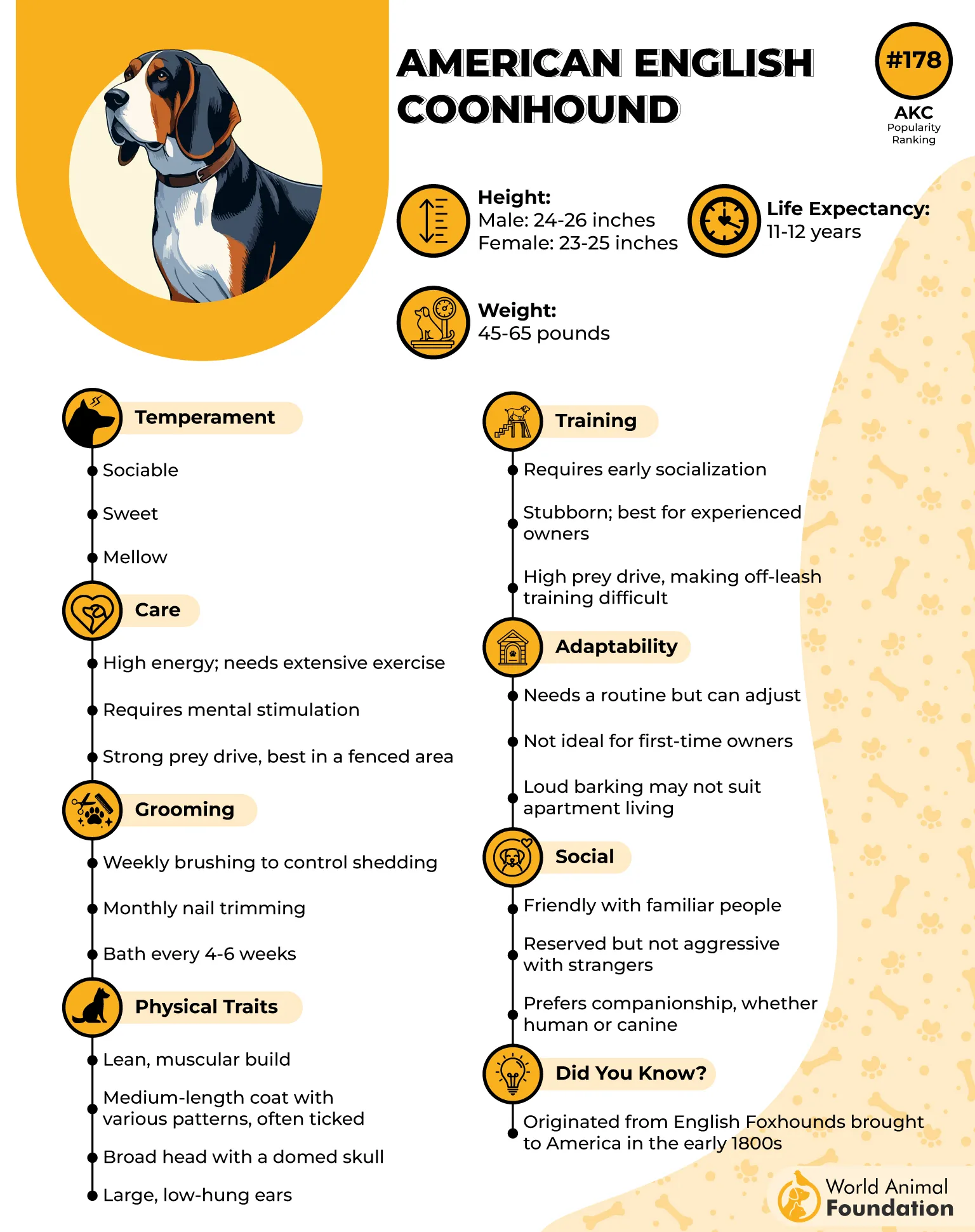
American English Coonhounds are scent hounds with a strong instinct for following wildlife trails. Also known as Redtick Coonhounds, they descended from European hunting dogs brought to the United States.
They were refined to track raccoons and other game, using their powerful noses, speed, and stamina to stay on a trail. Their distinctive baying voice also helped hunters locate them when they were out of sight. They are persistent hunters and can even tree prey when pursuing a scent.
Energetic and Independent Hunters
These hounds are intelligent, athletic, and highly driven. Their strong prey drive can make them easily distracted outdoors, especially when they catch an interesting scent. They learn best through short, engaging sessions and positive reinforcement.
Early socialization and consistent training are important. Because they may wander or chase smaller animals, secure fencing and leashes are essential outside working situations. Their natural abilities also make activities such as hunting, tracking, nose work, field trials, hiking, and scent walks excellent outlets.
Affectionate Companions With Simple Care Needs
Despite their determination in the field, American English Coonhounds are friendly, loyal, and affectionate with their families.
They generally do well with children and other dogs when properly socialized, although their prey drive requires care around smaller pets. They thrive in active homes where they receive plenty of exercise and mental stimulation.
4. Belgian Malinois
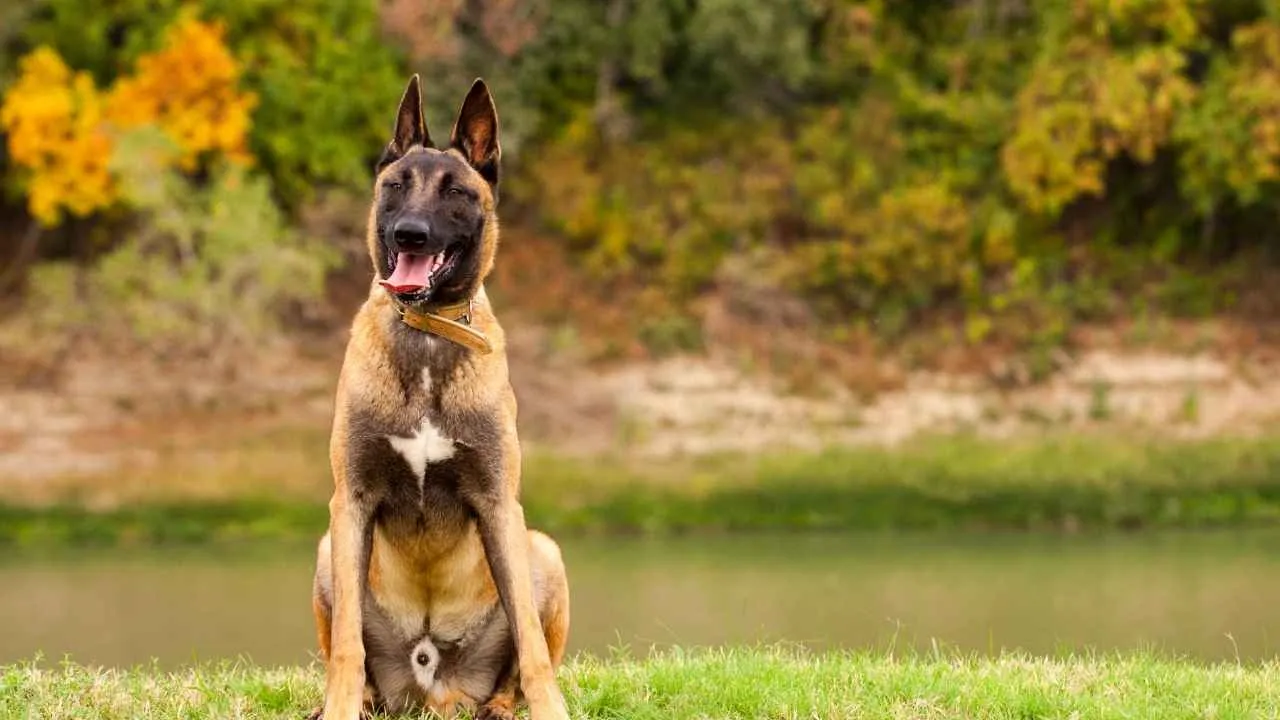
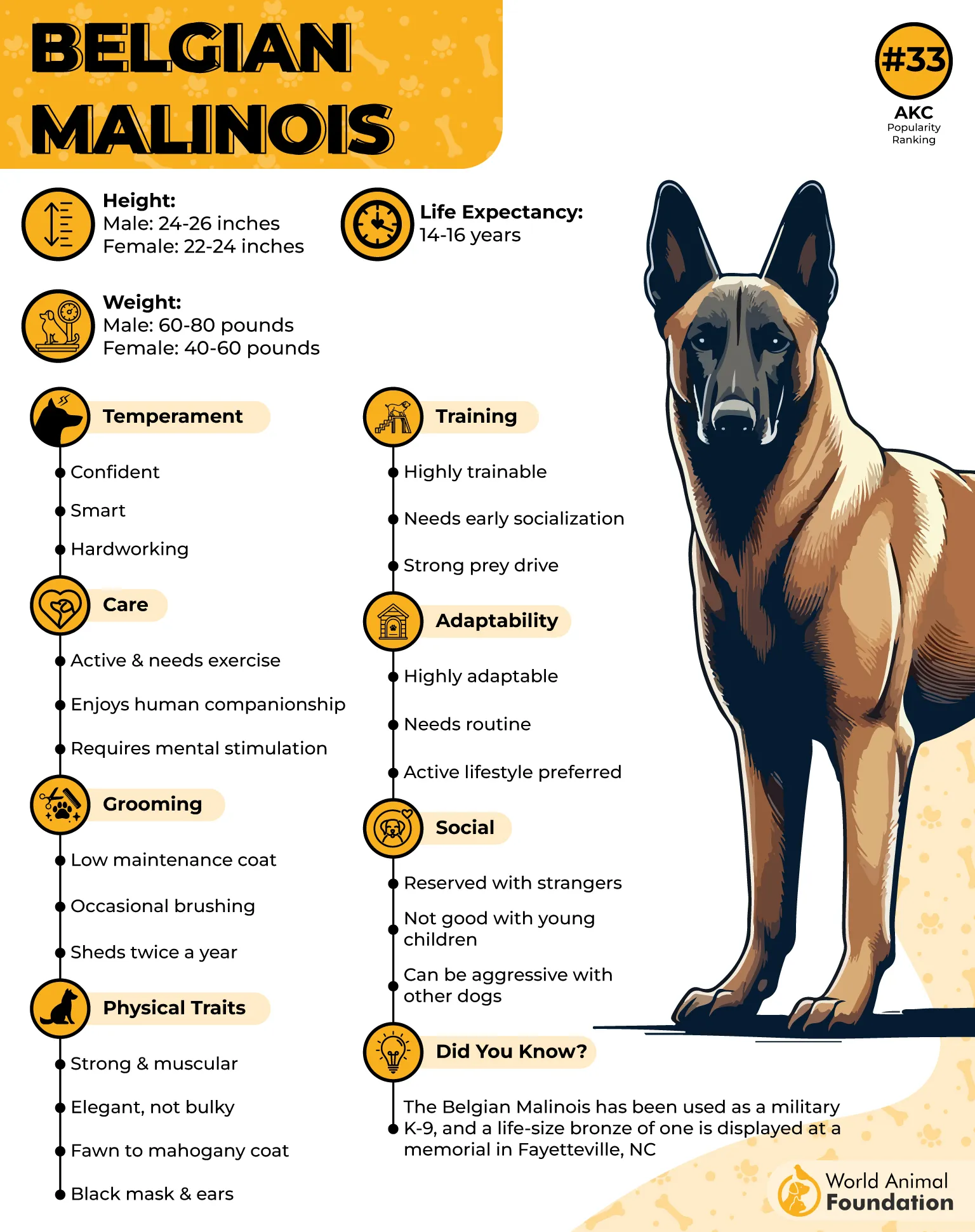
Belgian Malinois are intelligent, athletic working dogs originally bred for herding in Belgium. Their exceptional trainability, strength, stamina, and eagerness to work have made them valuable in police and military roles, as well as search and rescue, detection, tracking, and protection work.
They excel when given a meaningful task and can channel their abilities into activities such as obedience, agility, herding, scent work, and tracking.
Energetic and Intensely Driven Workers
These dogs are exceptionally energetic, focused, and eager to learn, but their high drive requires experienced handling. Daily walks alone are not enough; Belgian Malinois need substantial physical exercise, mental stimulation, and consistent training throughout their lives.
PetMD mentions that their strong prey drive can make them chase moving animals, cars, or even children, while insufficient stimulation may lead to destructive behaviors such as digging, chewing, or damaging household items.
Loyal Companions With Demanding Care Needs
Despite their intense working nature, Belgian Malinois form exceptionally strong bonds with their families and are deeply loyal and devoted companions.
They can become excellent family dogs when properly trained and socialized, although their watchful nature and high energy require careful management around strangers and children.
5. Rhodesian Ridgeback
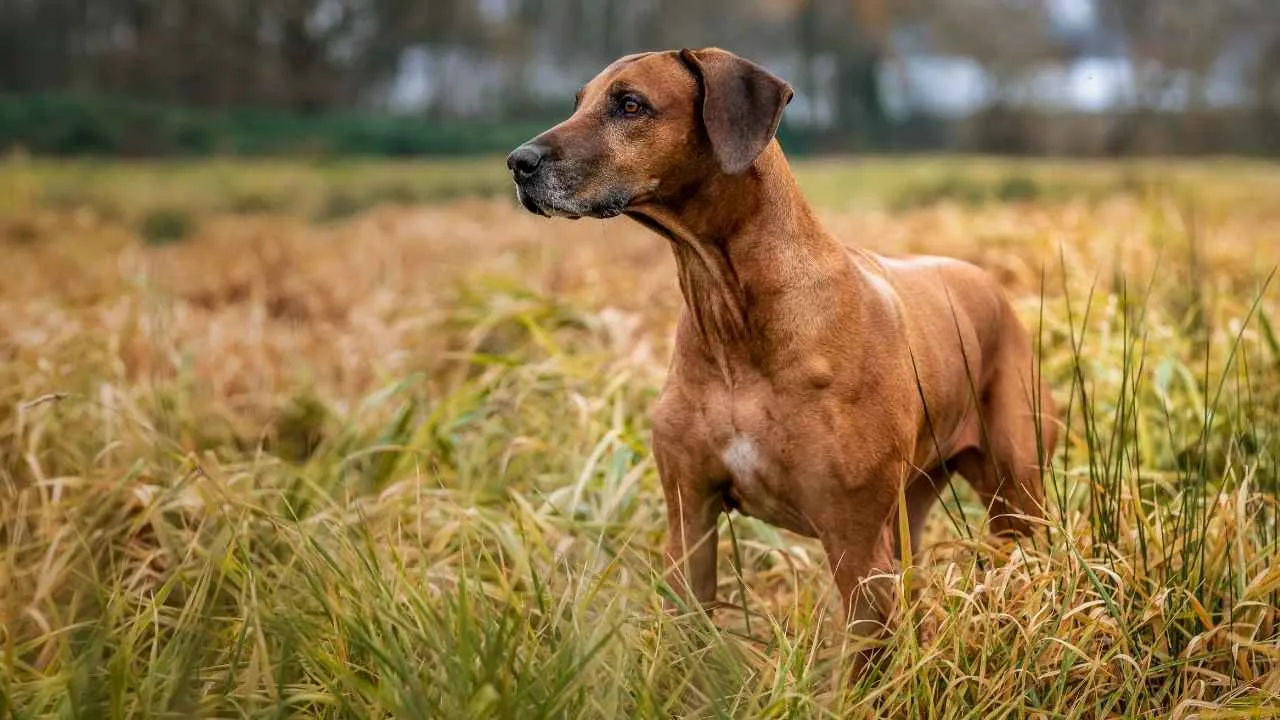
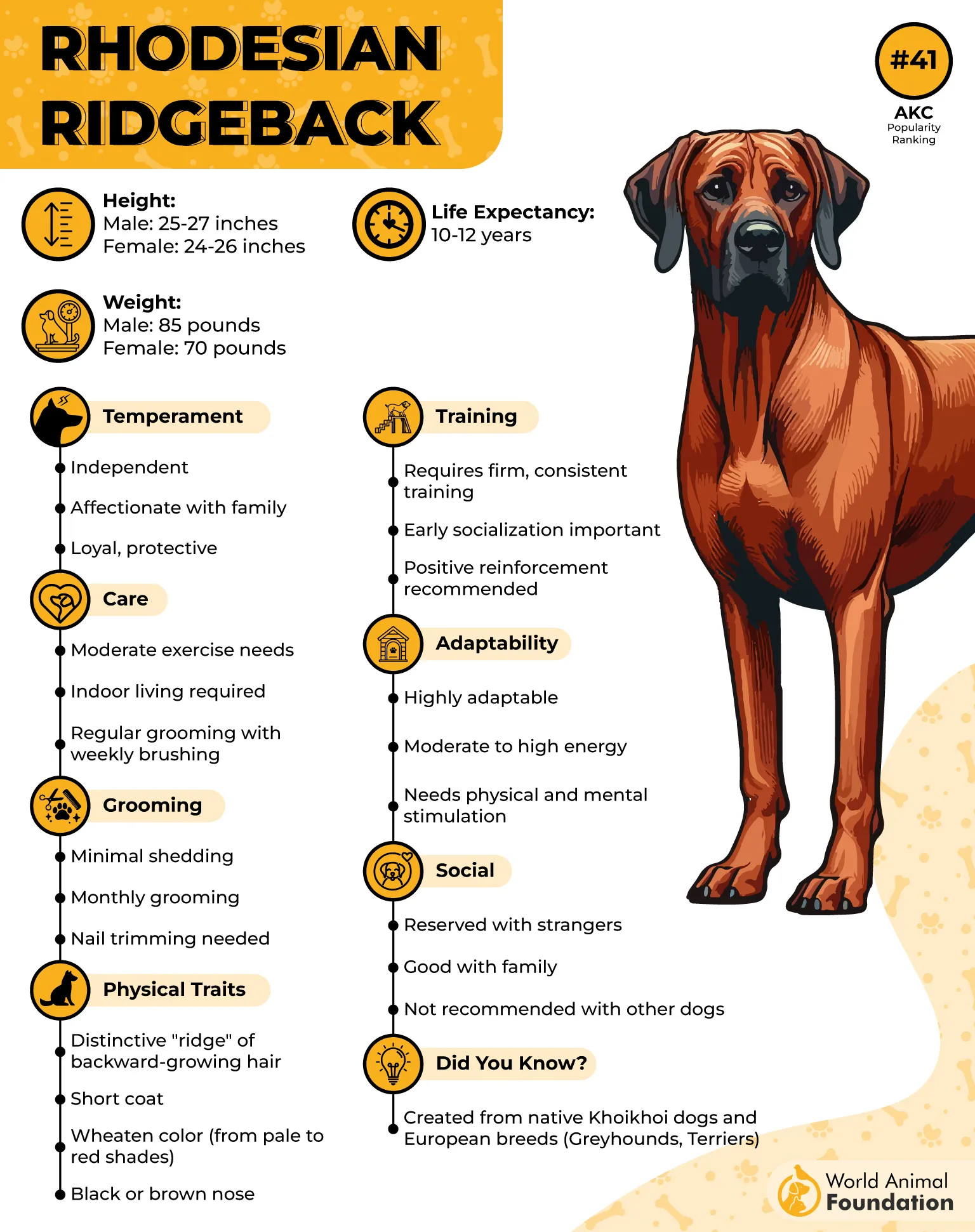
Rhodesian Ridgebacks are powerful, athletic dogs originally developed in southern Africa for hunting and tracking large game. Their most distinctive feature is the ridge of hair growing backward along their spine, which gives the breed its name.
Built for endurance, speed, and strength, these dogs have a short, low-maintenance coat and a muscular frame that allows them to stay active for long periods. Today, they are valued as loyal companions, capable working dogs, and versatile outdoor partners.
Independent and Courageous Protectors
These intelligent dogs are confident, determined, and naturally independent. Their strong hunting instincts can make them curious and easily distracted outdoors, so early training, socialization, and secure fencing are important.
Rhodesian Ridgebacks need regular physical and mental exercise, with activities such as long walks, running, hiking, and structured play helping to keep them satisfied. Their protective instincts also make consistent training important so their confidence develops into controlled, reliable behavior.
Loyal Companions With Simple Grooming Needs
Despite their imposing appearance and courageous nature, well-socialized Rhodesian Ridgebacks can be affectionate and devoted family companions. They often form strong bonds with their people and appreciate being included in family life rather than left alone for long periods.
6. Bloodhound

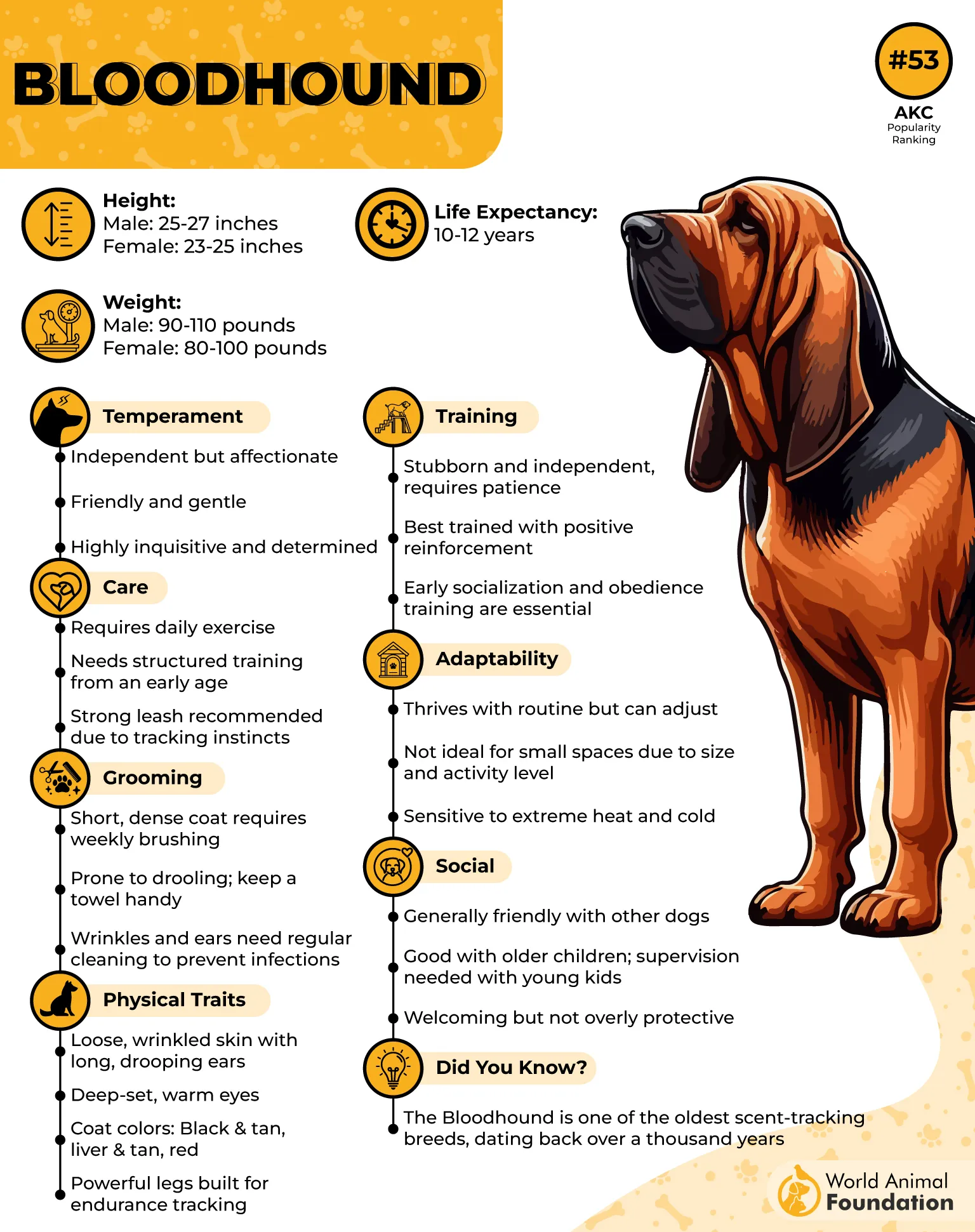
Bloodhounds are legendary scent hounds renowned for their extraordinary ability to follow scent trails over long distances.
Also known as St. Hubert Hounds, they trace their ancestry to scent hounds developed at the St. Hubert Monastery in Belgium during the Middle Ages, according to Britannica.
Their powerful noses, with hundreds of millions of scent receptors, allow them to track people and animals with remarkable accuracy. Historically used by hunters and nobility, Bloodhounds are still valued for search-and-rescue and tracking work today.
Determined and Independent Trackers
These large hounds are intelligent, persistent, and driven by scent. Once a Bloodhound catches an interesting smell, it may become completely focused on following the trail, making secure fencing and leashes essential outdoors.
Their independent nature can make training challenging, so patience, consistency, and positive reinforcement work best. Long walks, hiking, tracking exercises, and scent-based activities provide excellent outlets for their boundless energy and powerful instincts.
Gentle Companions With Routine Care Needs
Despite their impressive tracking abilities, Bloodhounds are generally gentle, affectionate, and patient family dogs. They often form strong bonds with their people and can do well with children and other pets when properly socialized.
Their short, dense coats require relatively little grooming, although weekly brushing helps manage moderate shedding.
7. Labrador Retriever
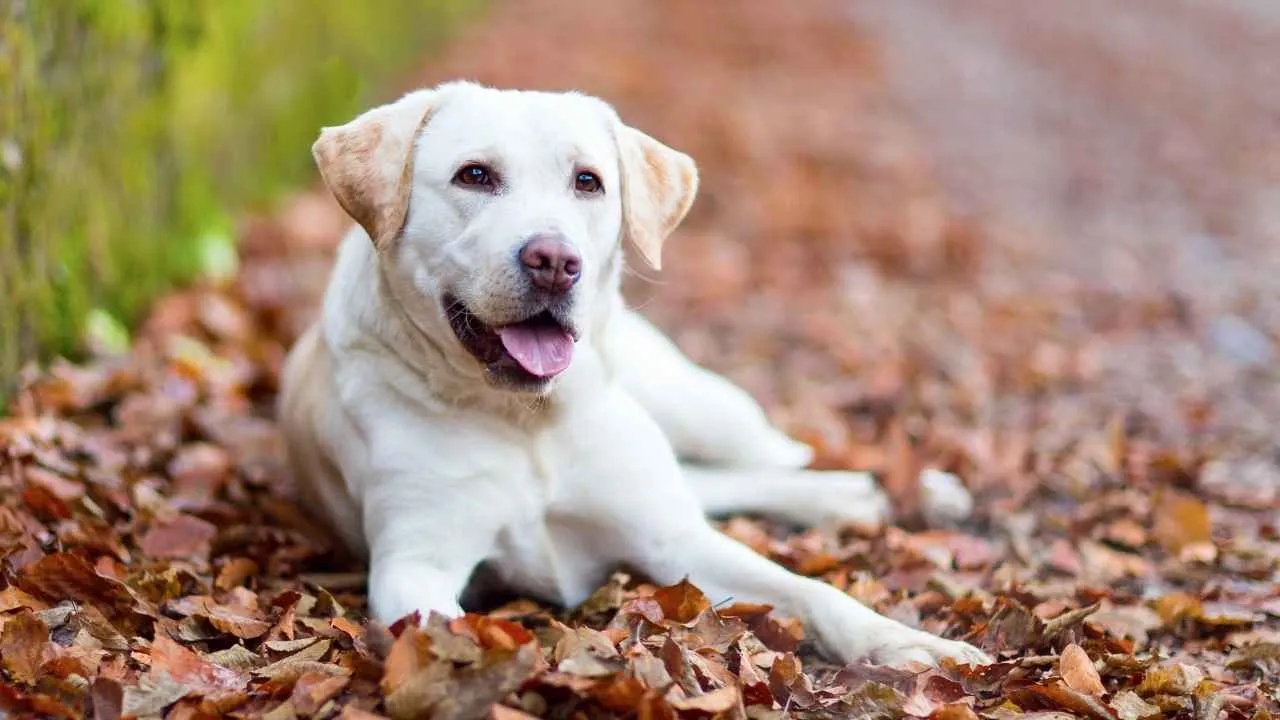
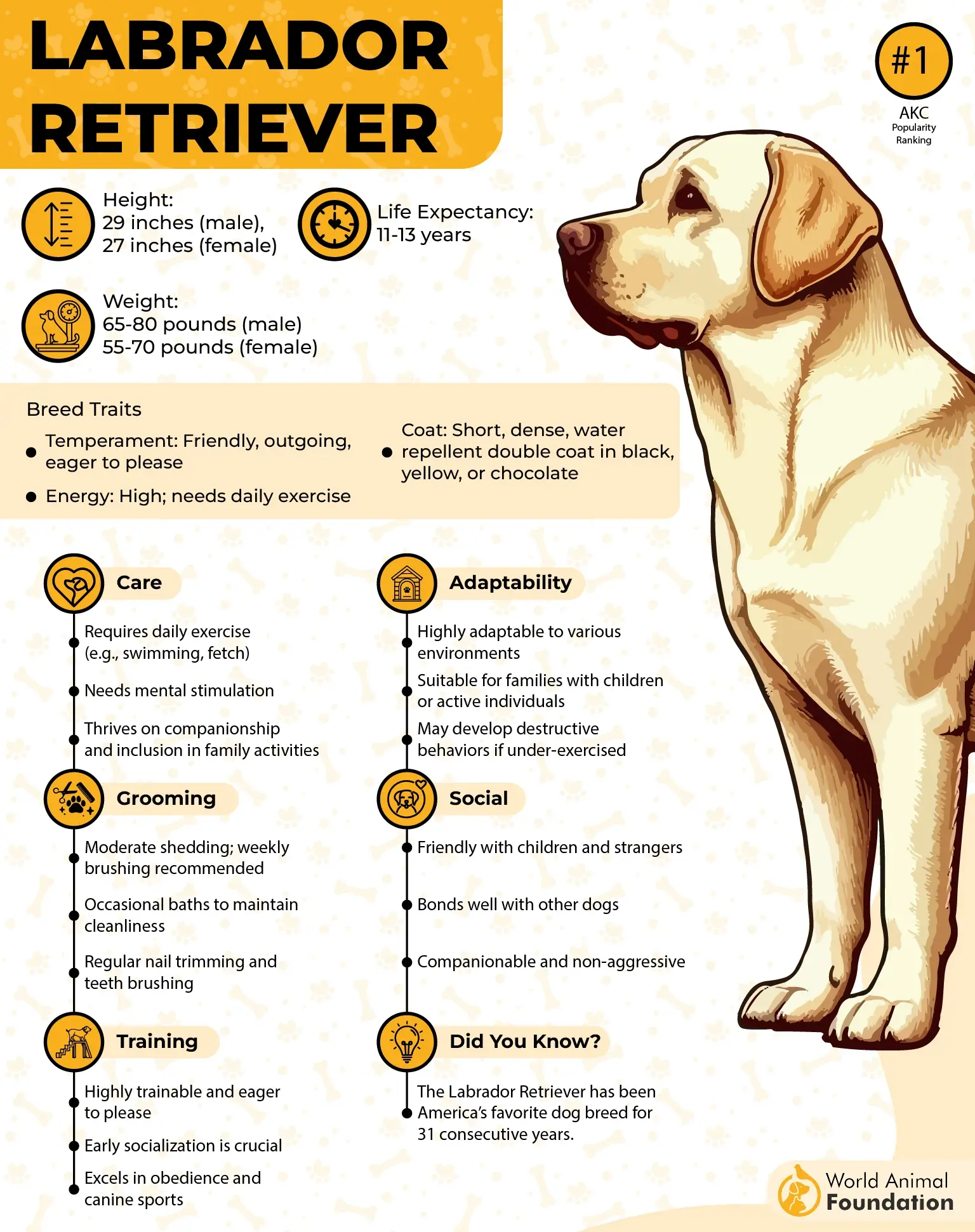
Labrador Retrievers are popular sporting dogs known for their friendly personalities, intelligence, and eagerness to work with people. Originally developed from water dogs used by fishermen and hunters, they were bred for retrieving, particularly from water.
Their strong build, webbed feet, water-repellent double coat, and distinctive otter-like tail reflect their aquatic working heritage. Today, Labs excel as family pets, hunting companions, service and guide dogs, therapy dogs, and search-and-rescue dogs.
Energetic and Eager-to-Please Partners
These athletic dogs are intelligent, outgoing, and eager to please, making them highly trainable and quick learners. Their strong retrieving instinct means they love carrying objects, playing fetch, swimming, hiking, and other active pursuits.
Without enough exercise and mental stimulation, however, Labs can become bored and develop destructive chewing, digging, or excessive barking. Early obedience training and socialization help channel their enthusiasm into positive behaviors.
Affectionate Dogs With Manageable Care Needs
Despite their energetic nature, Labrador Retrievers are affectionate, sociable companions that generally get along well with kids, other dogs, and even strangers.
Their short, dense double coat does not require extensive grooming, but they are heavy shedders and benefit from regular brushing, especially during shedding periods.
Conclusion
Choosing the right dog is about more than appearance or breed popularity. From powerful working dogs and determined protectors to affectionate family companions, each breed has its own personality, exercise needs, training requirements, and care routine.
Understanding these traits can help you find a dog that truly fits your lifestyle.
Before bringing a new companion home, consider how much time you can dedicate to exercise, training, grooming, and companionship. The right match can turn everyday walks, outdoor adventures, and quiet moments at home into years of loyalty, fun, and unforgettable memories.
