




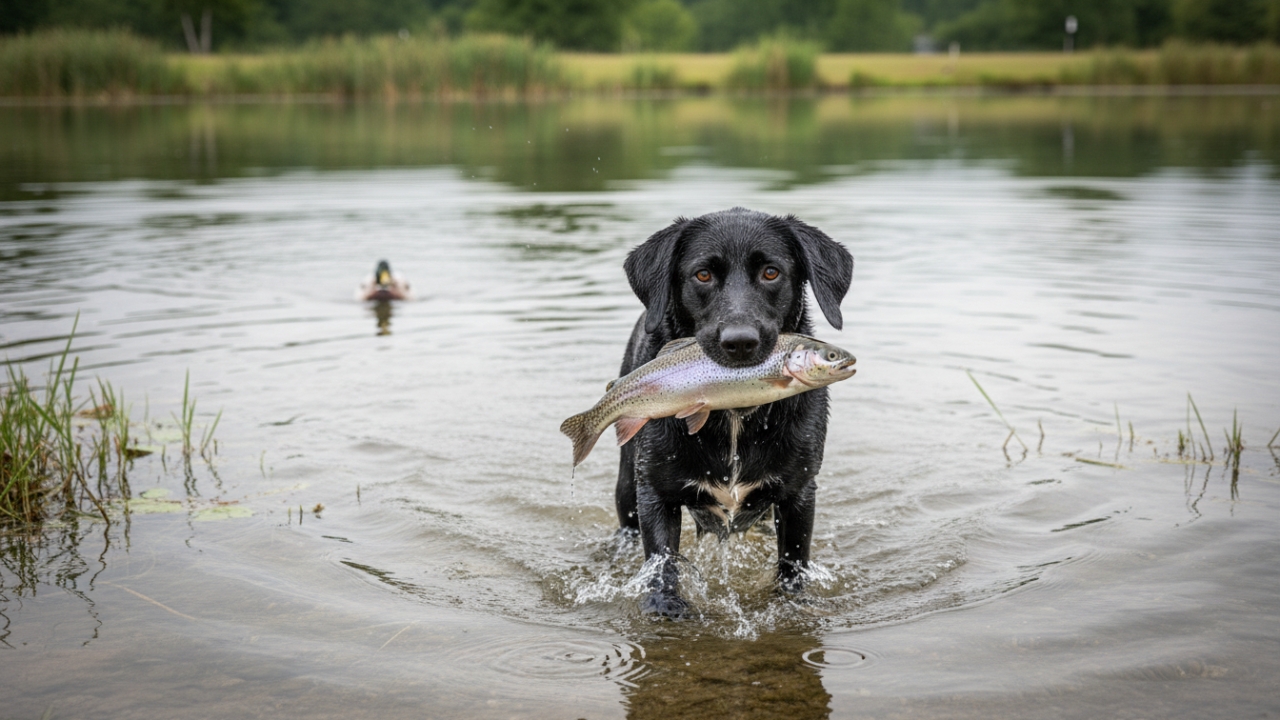
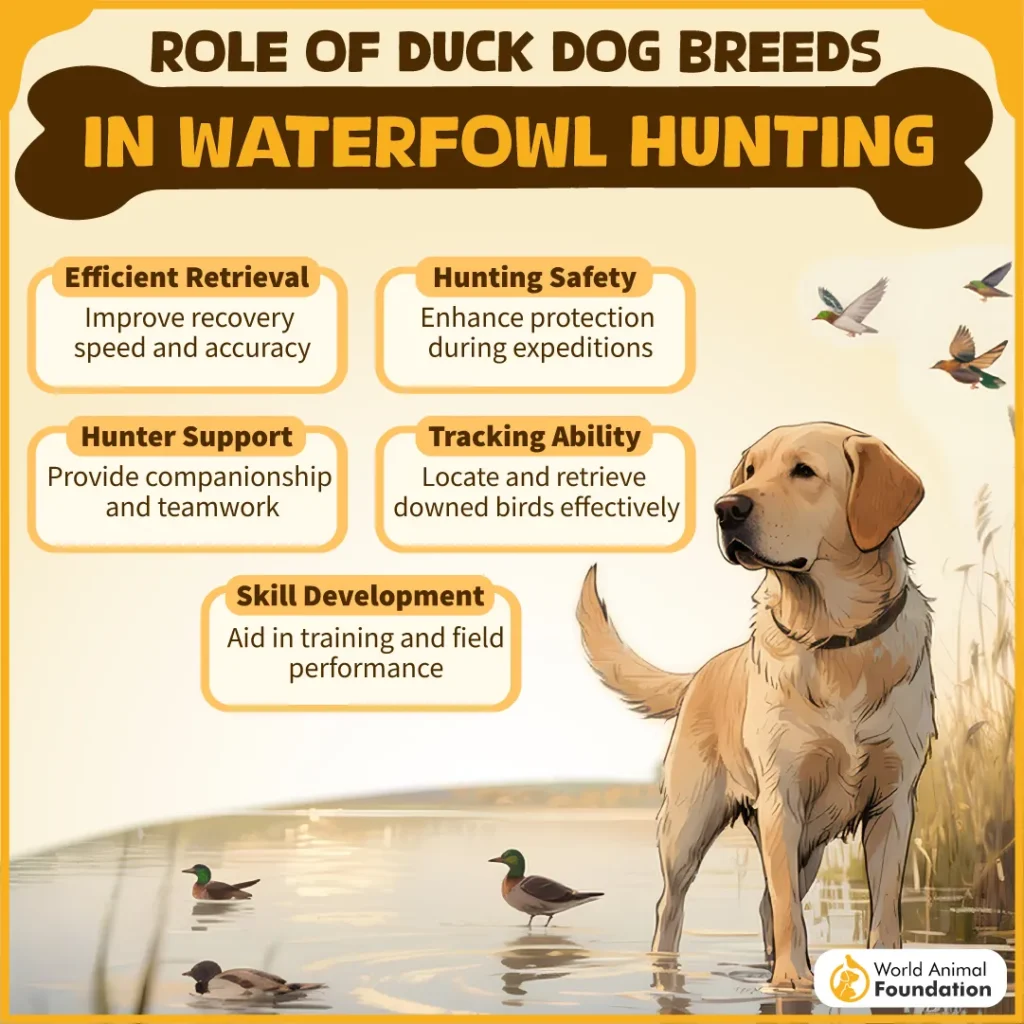
There’s something unforgettable about watching a skilled duck dog explode off the bank, slice through icy water, and return proudly with a bird delivered gently to hand.
For centuries, waterfowl hunters have depended on canine partners to retrieve game from places no human could safely reach—thick marsh, deep water, and boot-sucking mud.
What we do know is that these dogs were carefully developed for instinct, endurance, and intelligence. Bred for strong noses, soft mouths, and a natural drive to retrieve, they thrive in harsh weather and challenging terrain.
Their dense coats protect them in cold water, their athletic build powers them through waves and reeds, and their focus allows them to mark and recover birds with impressive accuracy.
In this article, we’ll explore the canines that have mastered the art of bringing birds back from water, combining skill, partnership, and passion in a way few other hunting companions can.
Key Takeaways
See how Labradors, Goldens, and Chessies master water and marsh hunting.
Discover the unique tricks of the Nova Scotia Duck Tolling Retriever.
Learn why Boykin and Irish Water Spaniels excel in tight spaces.
Find which pointers and retrievers shine at home and in the field.
Top Dog Breeds Specializing in Waterfowl Retrieval
1. Labrador Retriever
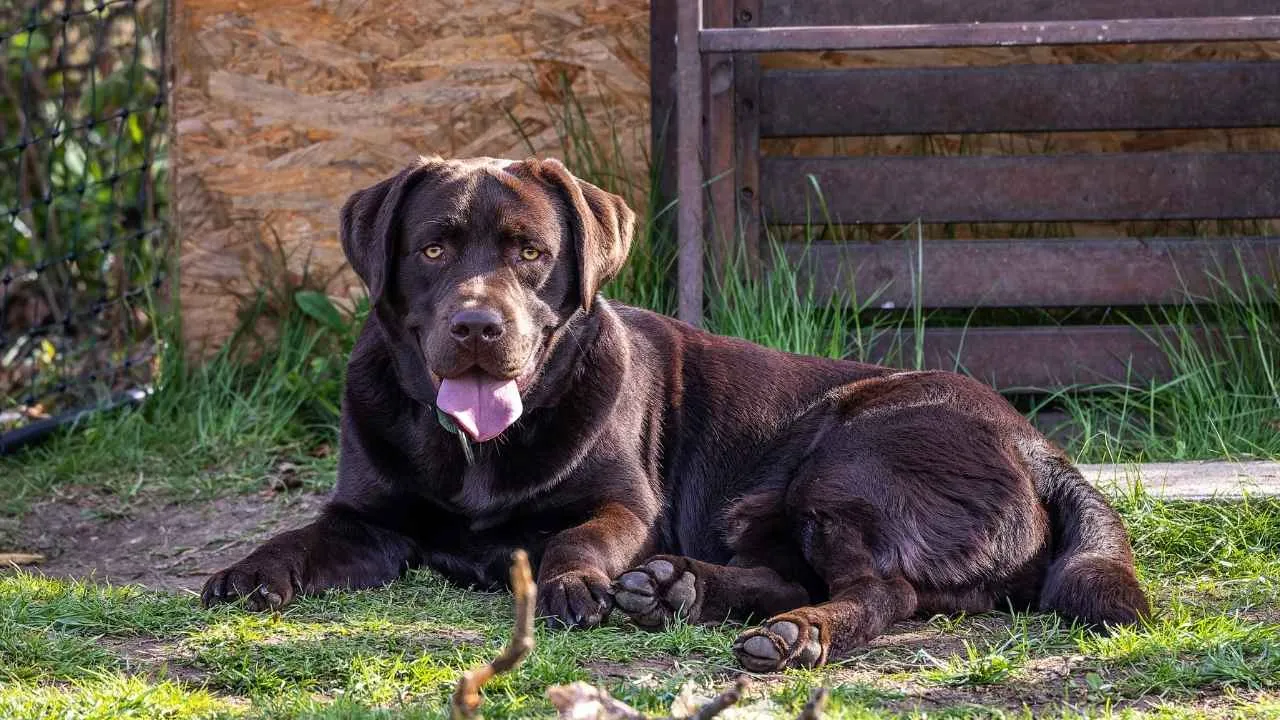
Few dogs look more at home in a duck blind than the Labrador Retriever. Confident and focused, Labs are built for retrieving birds from both land and water. Their dense, water-resistant double coat keeps them warm in cold conditions.
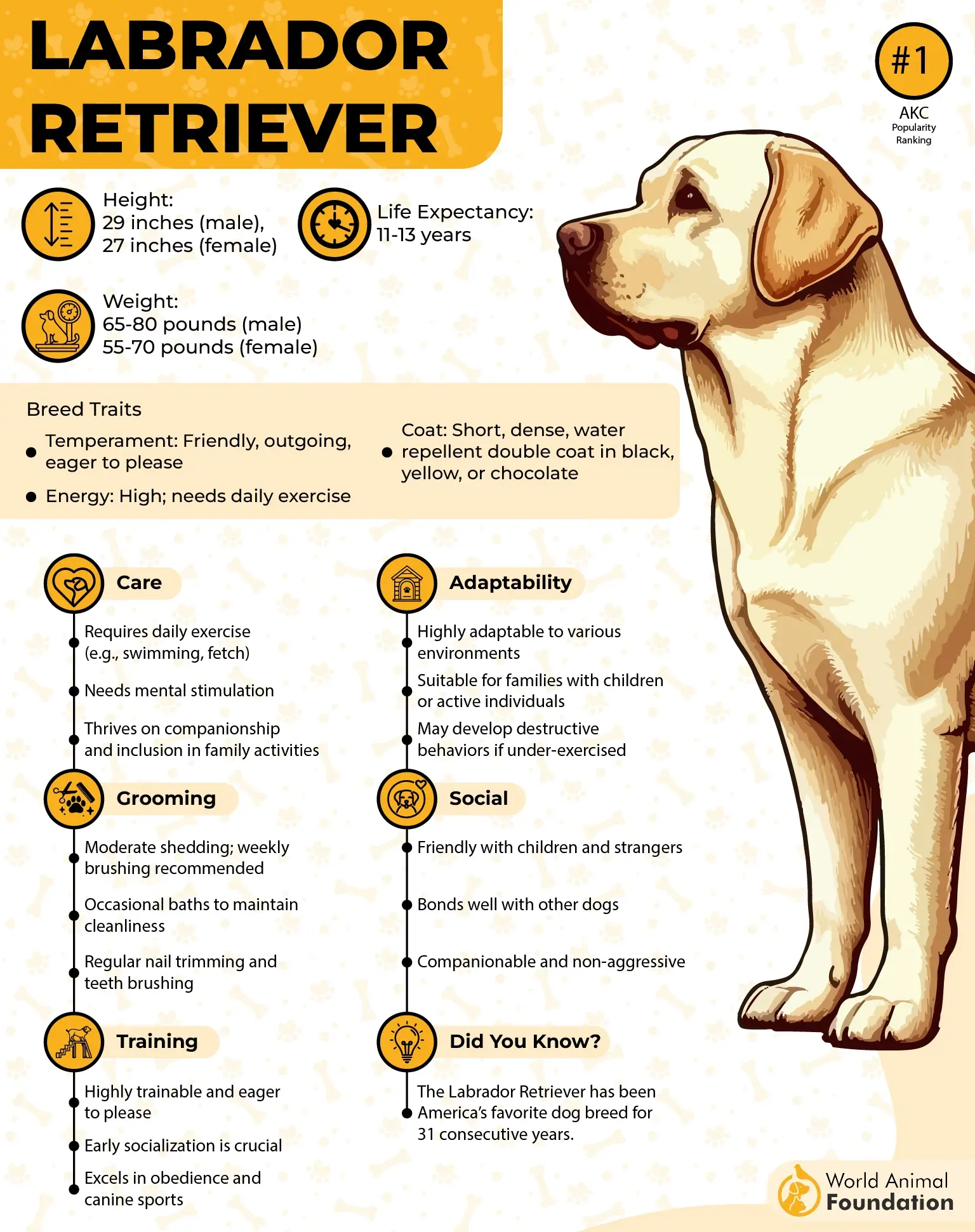
Webbed feet and a strong, rudder-like tail help them swim with power and control. They have the stamina to work long hours and the concentration to remember exactly where a bird falls. Strong swimmers with intense drive, they truly enjoy water work.
From Fishing Boats to Hunting Fields
The breed originated in Newfoundland in the 1800s, where their ancestors helped fishermen retrieve nets, ropes, floats, and even fish, as noted by Britannica. They later gained recognition in Britain in 1903 as a sporting dog and were officially recognized by the American Kennel Club in 1917.
Labradors became widely popular in the United States after World War II. According to the American Kennel Club, they have remained America’s most popular breed for decades. Black Labs are especially common, but yellow and chocolate Labs are also highly valued for their friendly nature and trainability.
Field Excellence and Family Loyalty
In the field, Labs are obedient, eager to please, and quick learners. They rarely struggle to mark downed birds and handle tough conditions with determination. At home, they are gentle, sociable, and wonderful with children.
They also excel as service and police dogs due to their intelligence and steady temperament. However, they need daily exercise and mental stimulation. Running, swimming, hunting, and active play keep them balanced.
2. Golden Retriever
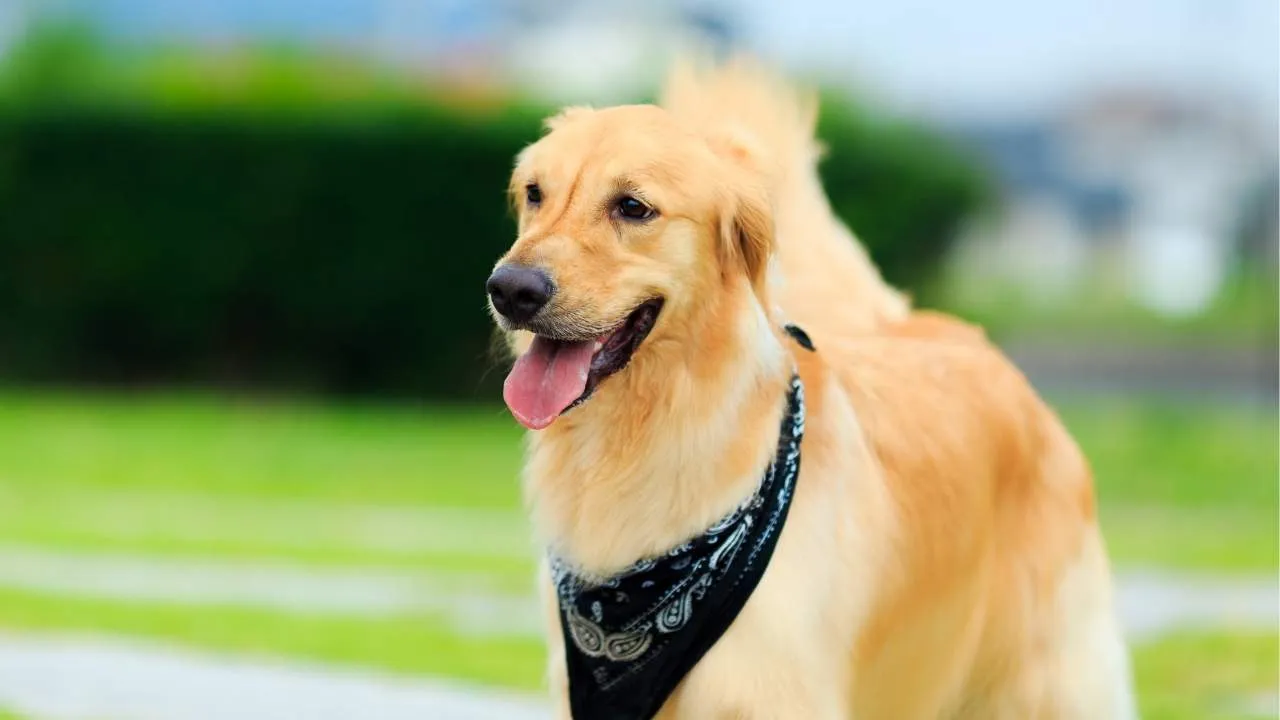
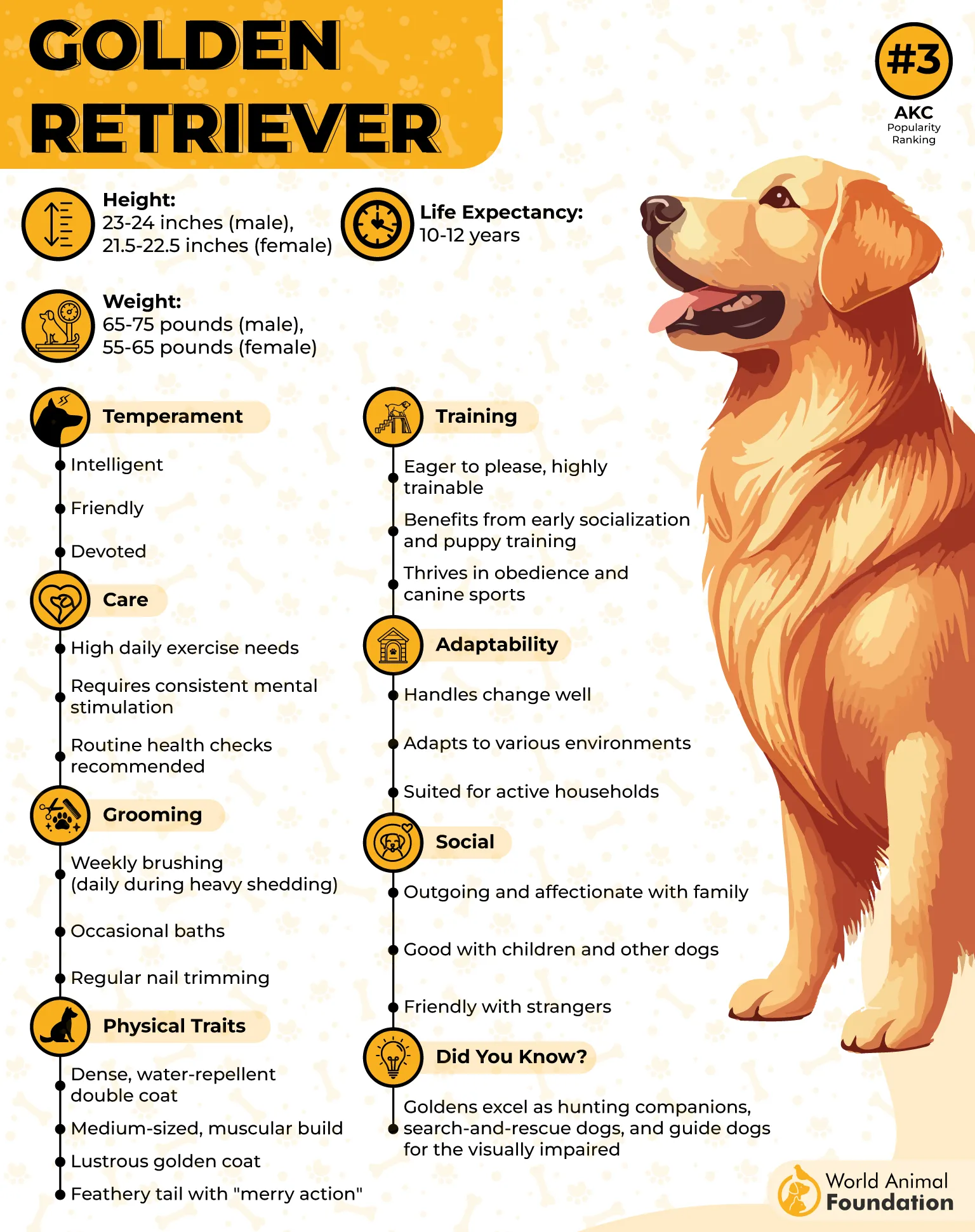
Golden Retrievers bring both beauty and performance to the marsh. Originally developed in Scotland to retrieve downed waterfowl, that instinct still runs deep. Intelligent and highly trainable, they adapt quickly to different hunting situations.
Their sharp sense of smell helps them track birds with accuracy. Thanks to their soft, tender mouth, they return game gently and undamaged. Strong swimmers with a muscular, steady gait, Goldens move confidently through muddy swamps and cold water.
Carefully Crafted for the Field
The breed was developed by Sir Dudley Marjoribanks, also known as Lord Tweedmouth, who kept detailed breeding records. He crossed sporting dogs such as the wavy-coated retriever, the Tweed water spaniel, setters, and a bloodhound to create a skilled and handsome retriever.
Golden Retrievers have ranked among the most popular breeds in the United States for years. However, some modern lines are bred mainly for the show ring and may have little interest in waterfowl work. Hunters should choose dogs from proven hunting bloodlines.
Hunter at Heart, Companion by Nature
Goldens are eager to please both in the blind and at home. They are obedient, loyal, and energetic, making them excellent dual-purpose dogs. Many also serve as guide dogs and in search and rescue roles. Their loving and patient nature makes them wonderful with children.
While they require exercise, grooming, and responsible breeding to reduce health risks like hip issues and certain cancers, a well-bred Golden Retriever offers a strong balance of hunting ability and family companionship.
3. Chesapeake Bay Retriever
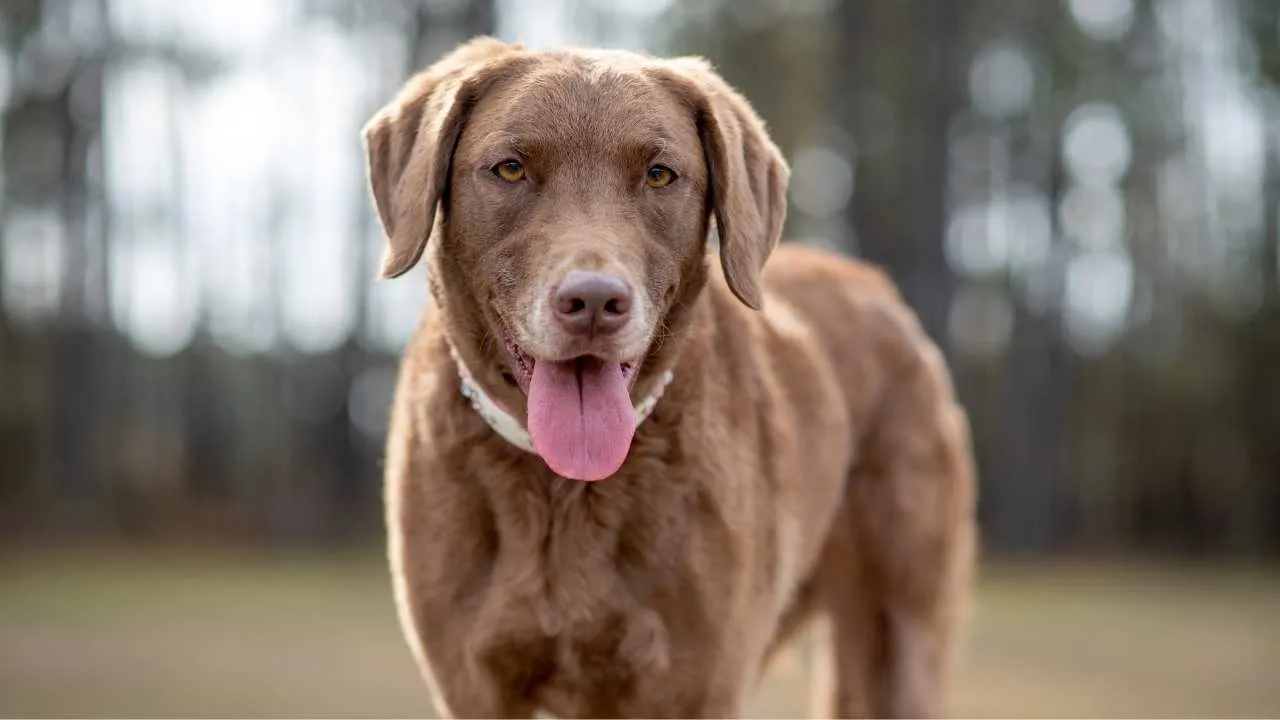
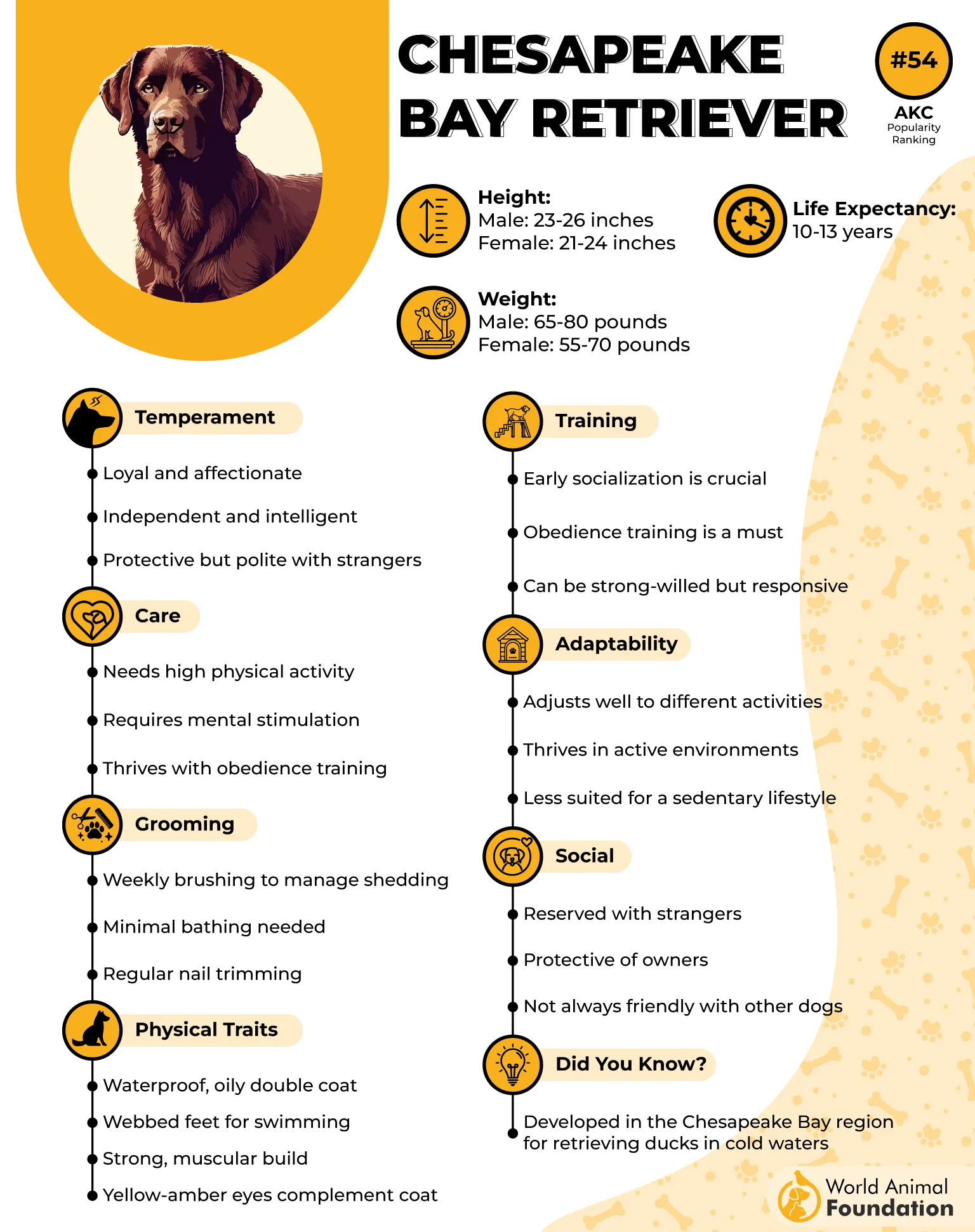
Big, strong, and powerful, the Chesapeake Bay Retriever was developed for one clear purpose: retrieving waterfowl in harsh conditions. Bred along Maryland’s Eastern Shore, these dogs hunted diving ducks in icy, open water.
Their thick, oily double coat provides natural waterproofing and warmth on freezing mornings. During the market hunting era, they were expected to retrieve dozens—sometimes even over 100—ducks in a single day.
Several breeds, including the Newfoundland, Irish Water Spaniel, Bloodhound, and others, contributed to their development. The breed was officially recognized by the American Kennel Club in 1878.
Legendary Origins and Unmatched Drive
Legend says that in 1807, two St. John’s water dogs were rescued from a shipwreck off the Maryland coast and later became the foundation of the breed. Whether fully true or not, St. John’s dogs were indeed bred into what became the Chesapeake Bay Retriever.
Hunters needed a dog with stamina, strength, and the drive to work long hours in rough, cold water—and to guard valuable game on the way to market. Chessies excel in water but are also intelligent enough to flush pheasants, grouse, quail, and other birds.
They are highly intelligent, though sometimes stubborn, and may be challenging for first-time owners. Heavy-handed training does not suit them.
Loyal, Protective, and Family-Focused
Unlike some retrievers that greet everyone as a friend, Chessies can be reserved with strangers. They bond deeply with their families and retain a protective instinct. While not true guard dogs, they are naturally alert and ready to stand their ground if needed.
At home, they are affectionate and generally calm, doing well with children in active households. They enjoy outdoor adventures, especially swimming, and need owners who can match their energy and work ethic.
4. Boykin Spaniel
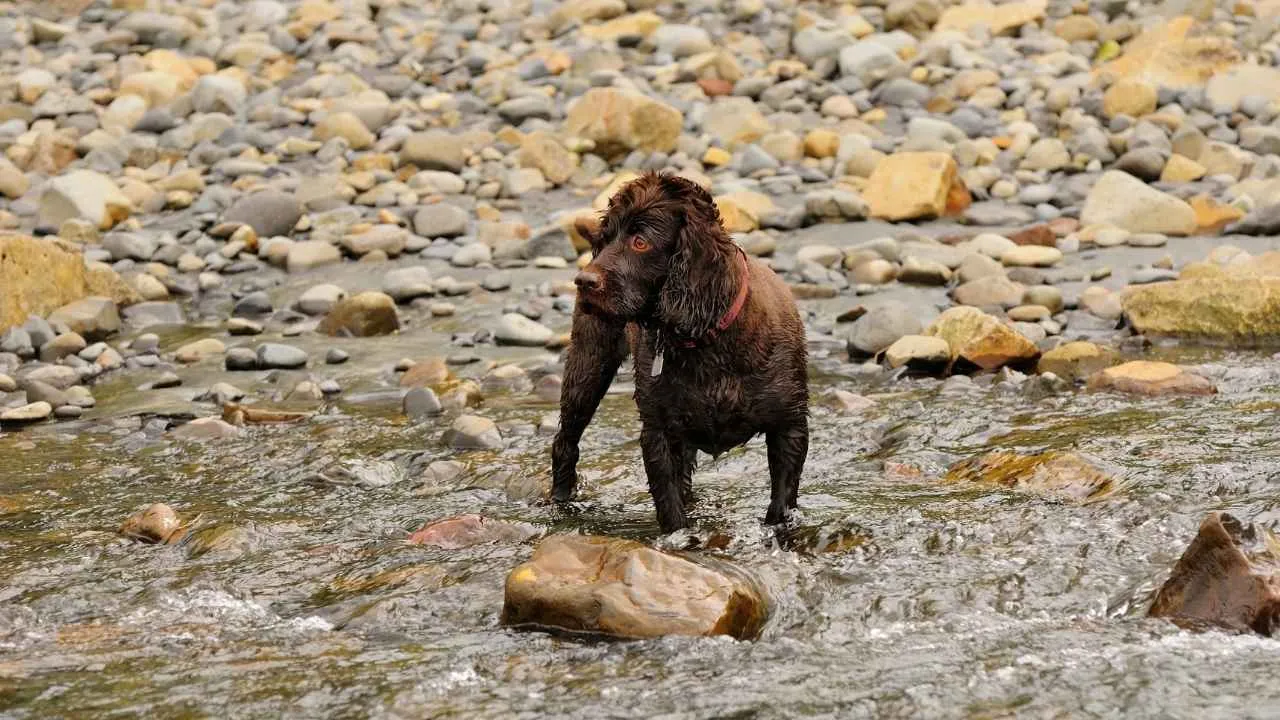
Developed in South Carolina in the early 1900s, the Boykin Spaniel was bred to meet a very specific need. Hunters needed a compact dog that could work swamps, marshes, and river bottoms while riding in small section boats.
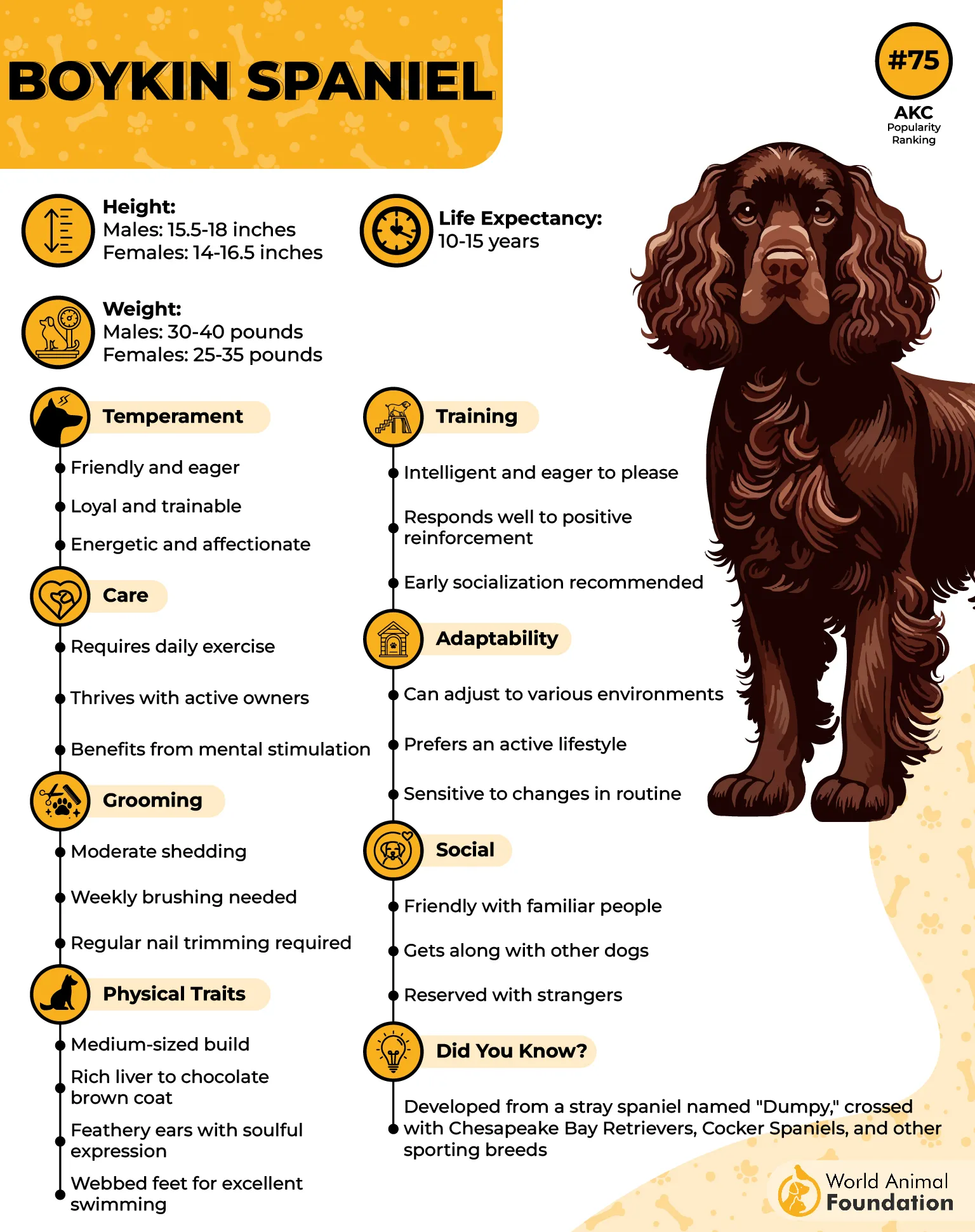
Boykins were the perfect fit. Usually weighing 40 pounds or less, they are easy to handle in tight spaces but bring impressive energy and determination to the field. Their wavy, dark-brown coat and strong chest support them in water work, and they are excellent swimmers.
A True All-American Hunter
Trainer L. Whitaker Boykin began the breed with a small brown spaniel named “Dumpy,” later crossing it with springers, Chesapeake Bay retrievers, American water spaniels, and cocker spaniels. The result was a versatile, well-balanced hunting dog.
Boykins retrieve waterfowl, flush wild turkeys, and work dove and quail fields. Some even serve as pick-up dogs on quail plantations or blood-trailing dogs for deer hunters. Bred for the mild but often hot climate of the South, they handle warm weather well and adapt to a wide variety of hunting conditions.
Loving at Home, Energetic Outdoors
The Boykin Spaniel is the official state dog of South Carolina and remains especially popular there. Though less common nationwide, it is a stellar choice for hunters who work small waters and want a manageable dog.
At home, Boykins are affectionate, sociable, and wonderful with children, according to the American Kennel Club. They easily shift from assertive hunter to loving companion, thriving in active families that can match their high energy and enthusiasm.
5. Irish Water Spaniel
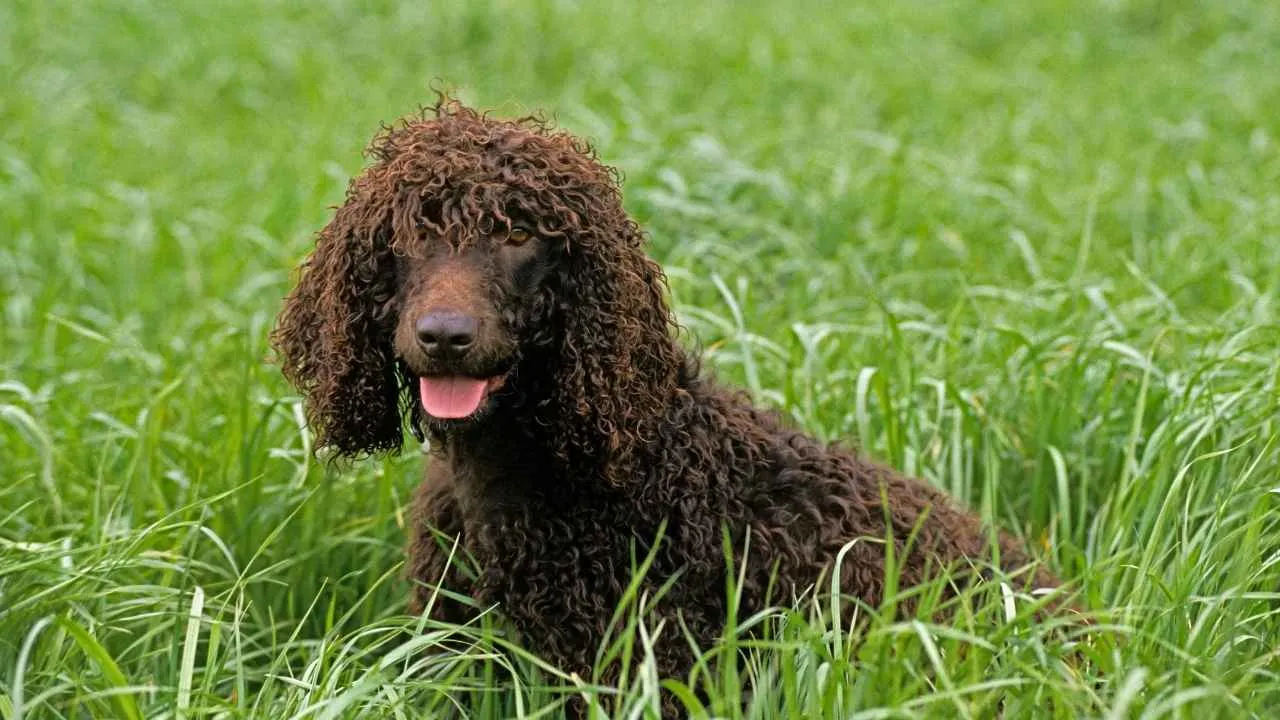
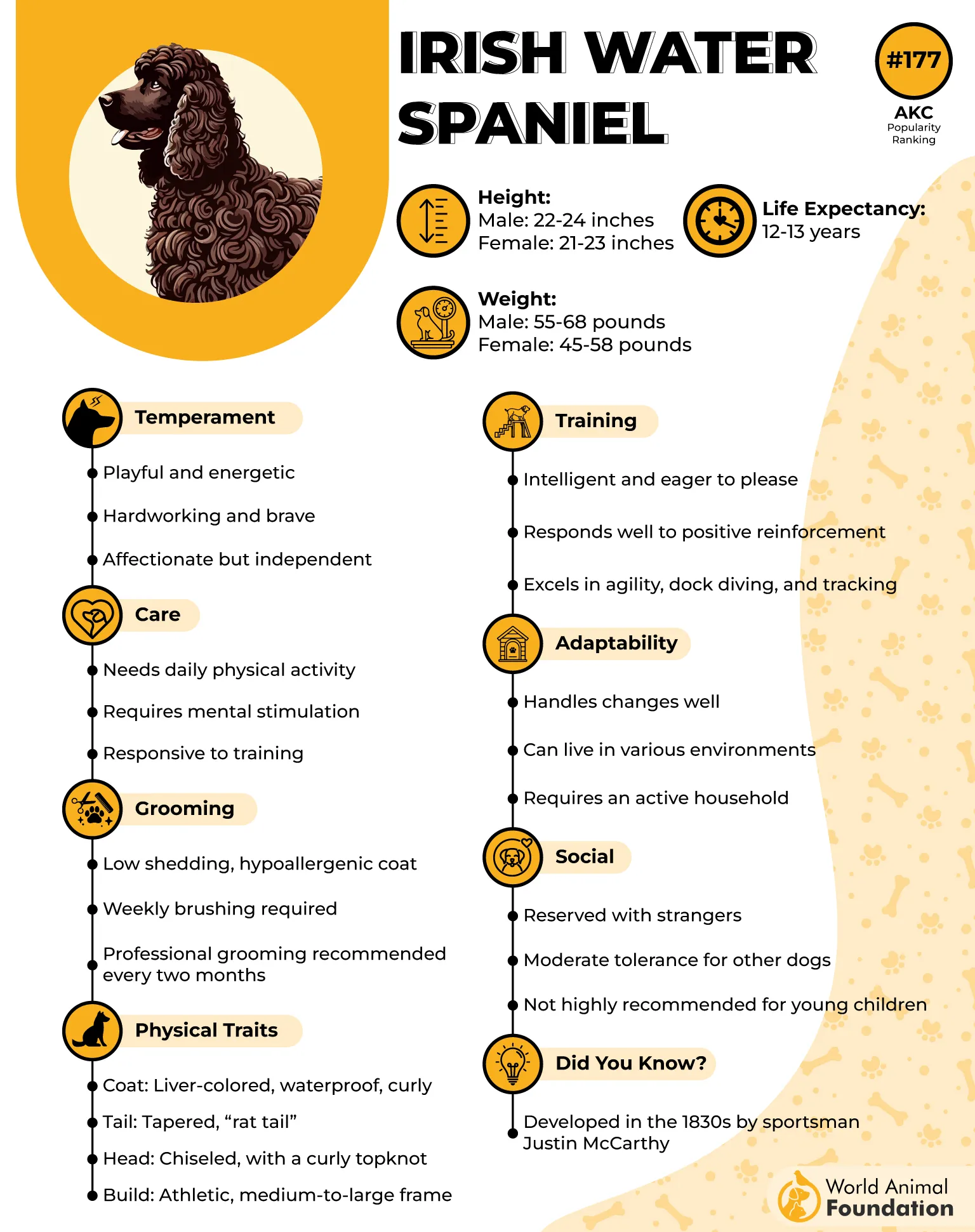
No dog looks quite like the Irish Water Spaniel. With a long, tightly curled, liver-colored coat and a signature topknot, this breed is instantly recognizable. Only the smooth “rat tail” is curl-free. As the tallest of the spaniel breeds, they are long-legged and built for tough terrain.
Their dense, waterproof coat protects them in cold water, and their webbed feet power them through inland sloughs and tidal marshes. Hardy and efficient, they are strong swimmers with sharp eyesight to mark falls and excellent noses for tracking.
A Well-Documented Hunting History
The Irish Water Spaniel’s development is unusually well recorded. The breed can be traced to southern Ireland in the mid-1800s, with references dating back to the 1600s. They likely descended from crosses that included Irish Setters, Poodles, Portuguese Water Dogs, and other regional water spaniels.
Bred specifically to handle the cold waters of the North Sea, they appeared in the 1830s and later arrived in the United States around the time of the Civil War. By the early 1920s, more Irish Water Spaniels were registered in the Field Dog Stud Book than any other retriever breed.
Intelligent, Adaptable, and Family-Friendly
In the field, Irish Water Spaniels are intelligent, quick learners, and eager to please, as noted by PetMD. They respond well to obedience training and adapt easily to upland bird hunting as well as water work. Playful and affectionate by nature, they also make wonderful family pets and are good with children.
Though less common today, this curly-coated retriever remains a capable and versatile partner for hunters who value both performance and personality.
6. Nova Scotia Duck Tolling Retriever
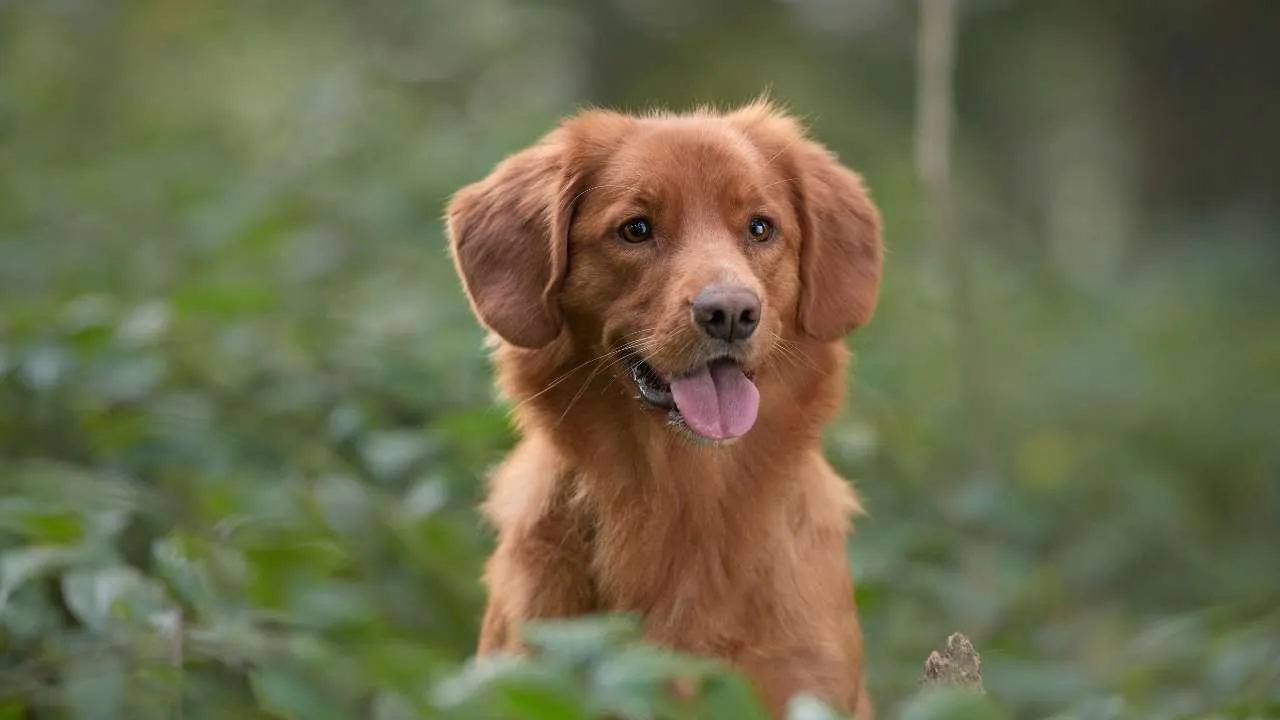
The Nova Scotia Duck Tolling Retriever, often called the “Toller,” is the smallest of the retriever breeds and one of the most unique. Developed in the 1800s in Yarmouth County, Nova Scotia, this breed was originally known as the Little River Duck Dog.
Tollers were bred to lure curious ducks within shooting range by running and playing along the shoreline. Their reddish coat, lively movements, and fox-like appearance would draw waterfowl closer. After the shot, they would enter the water to retrieve the bird.
Small but Powerful in the Water
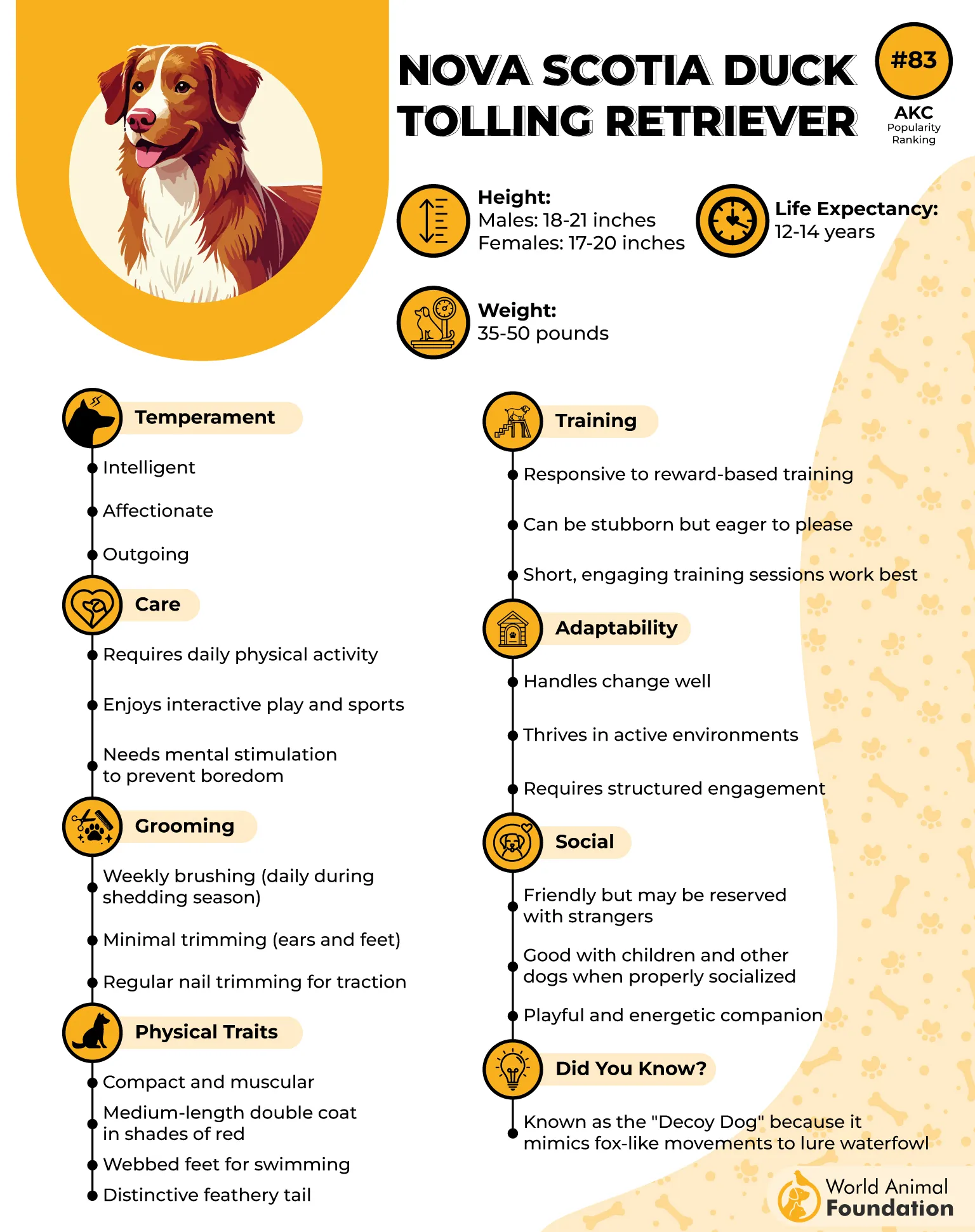
Though compact and seldom over 50 pounds, this versatile hunter is muscular and built for action. Their medium-length, water-repellent double coat protects them in cold, wet conditions.
Many have white markings on the tail, feet, or head, with feathering along the tail. Strong swimmers with boundless energy, they are natural retrievers—playing fetch is part of their hunting style.
They can also work as traditional retrievers and adapt to upland hunting. However, they require patient, thoughtful training and do not respond well to pressure.
Energetic, Affectionate, and Rare
At home, Tollers are intelligent, playful, and extremely affectionate. They are good with children and thrive in active families who enjoy outdoor adventures.
Some even serve as therapy dogs due to their gentle nature. You won’t see many in the blind, as the breed remains relatively uncommon, and not all breeders focus on hunting lines.
7. German Shorthaired Pointer
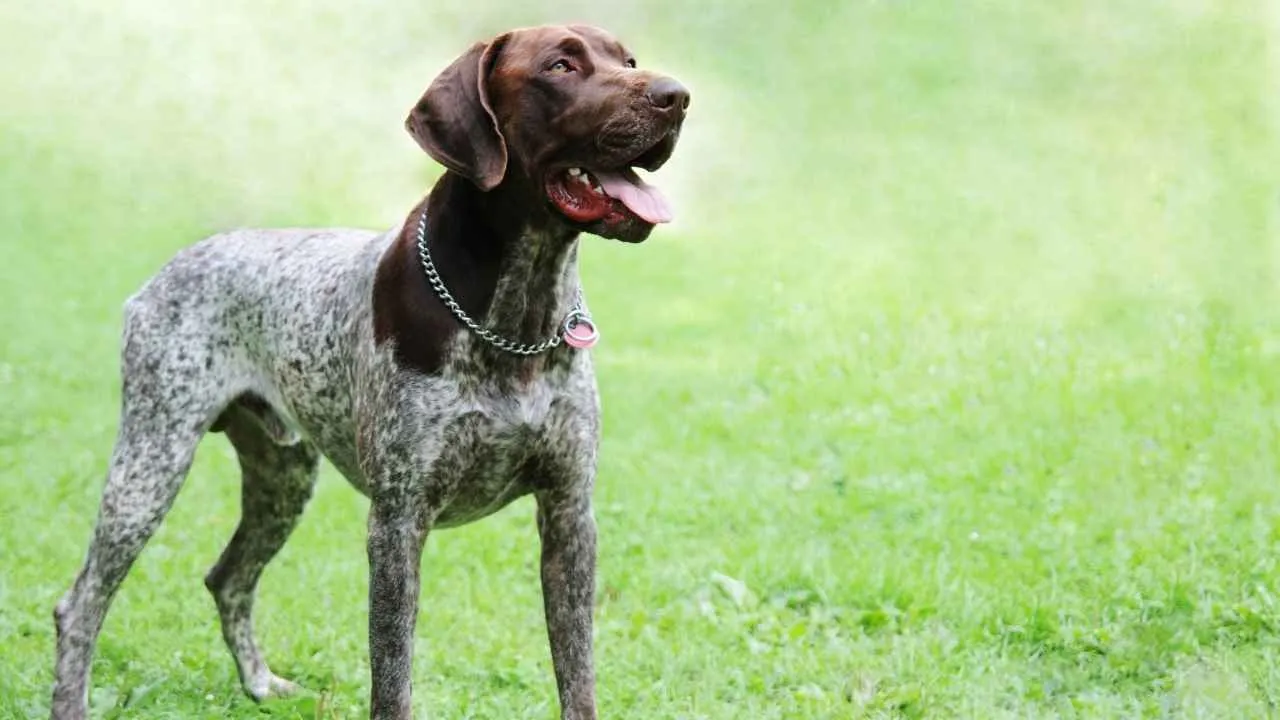
The German Shorthaired Pointer is a dynamic and versatile hunting dog with a strong nose, impressive stamina, and instincts for the field. Bred in Germany in the 1800s, these dogs can point, track, and retrieve with minimal training.
Their short, sleek coat helps keep them clean from muck, duckweed, and debris while working in marshes or shallow water. With webbed feet and a water-repellent coat, they are strong swimmers and highly effective in waterfowl hunting.
Built for Action
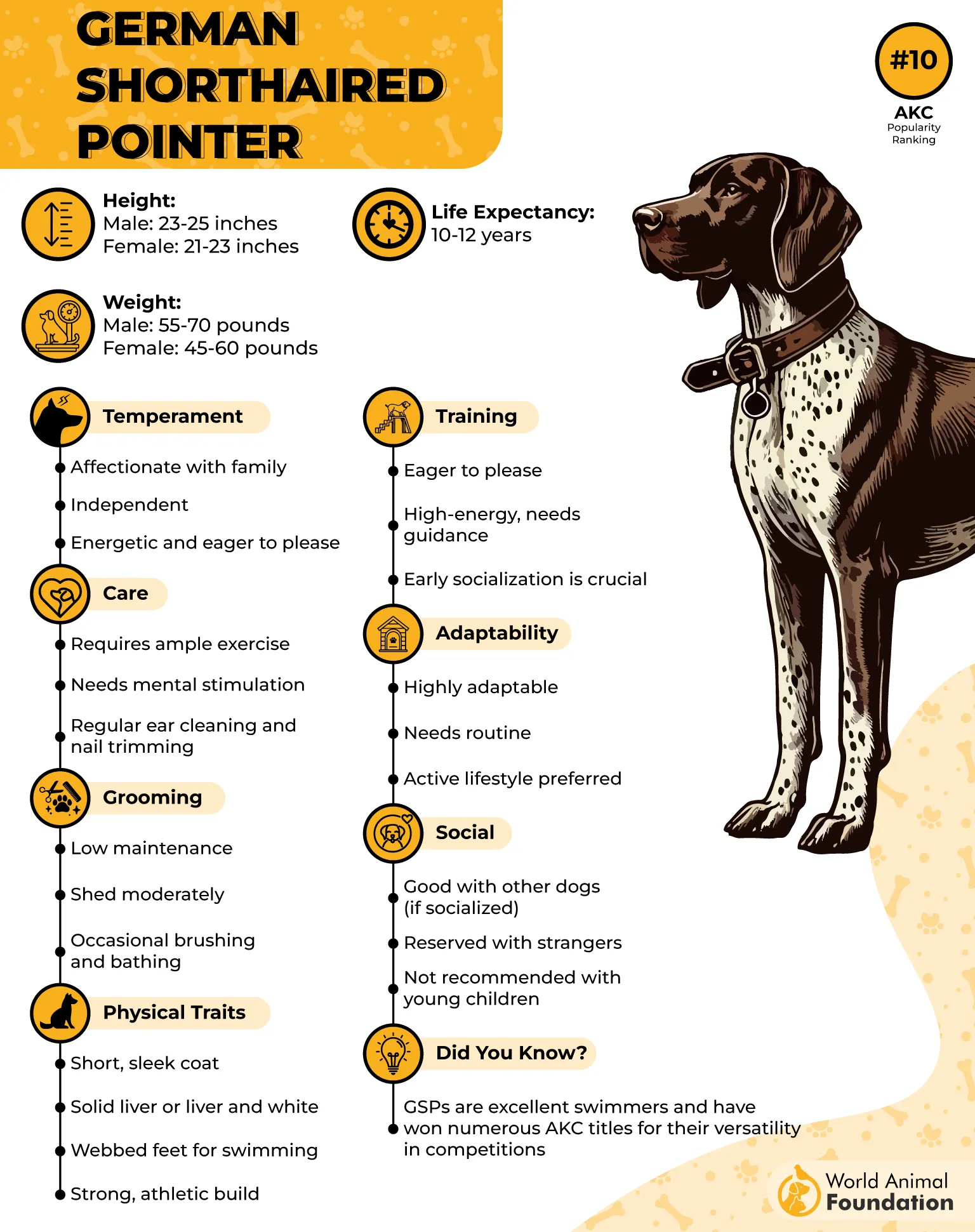
Known as an all-around hunting dog, the breed combines strength, endurance, and speed. German Shorthaired Pointers are energetic and adventurous, thriving outdoors whether on land or in water.
Their pointing ability allows hunters to locate downed game efficiently, making them excellent partners in the field. Despite their high energy, they are intelligent and quick learners, adapting well to a variety of hunting situations.
Loyal Companions
At home, these energetic dogs are playful, friendly, and loyal, making them great family pets. They need daily physical activity to stay happy and healthy, so a yard or regular outdoor adventures are ideal.
Their short coat reduces grooming needs compared to longer-haired retrievers. With the right exercise and attention, a German Shorthaired Pointer balances field excellence with affectionate companionship.
Conclusion
Waterfowl hunting is as much about partnership as it is about skill, and the right dog can make all the difference. From the dependable, family-friendly retrievers to energetic, clever pointers and spaniels, each breed brings its own strengths to the field.
Whether it’s strength in icy water, a keen nose, or the unique ability to lure ducks closer, these dogs are more than hunters—they’re loyal, hardworking companions who elevate every outing.
If you’re thinking about adding one of these remarkable breeds to your hunting adventures—or simply want an active, loving dog for your family—consider their history, instincts, and energy levels carefully.
Choosing the right partner can turn every hunt into a shared adventure and every day at home into an opportunity for joy and connection. After all, the bond with a waterfowl dog is about more than game—it’s about teamwork, trust, and unforgettable memories.
There are other breeds as well that excel at waterfowl hunting. These include the German Wirehaired Pointer, Standard Poodle, Flat Coated Retriever, Wirehaired Pointing Griffon, and English Springer Spaniel.
