




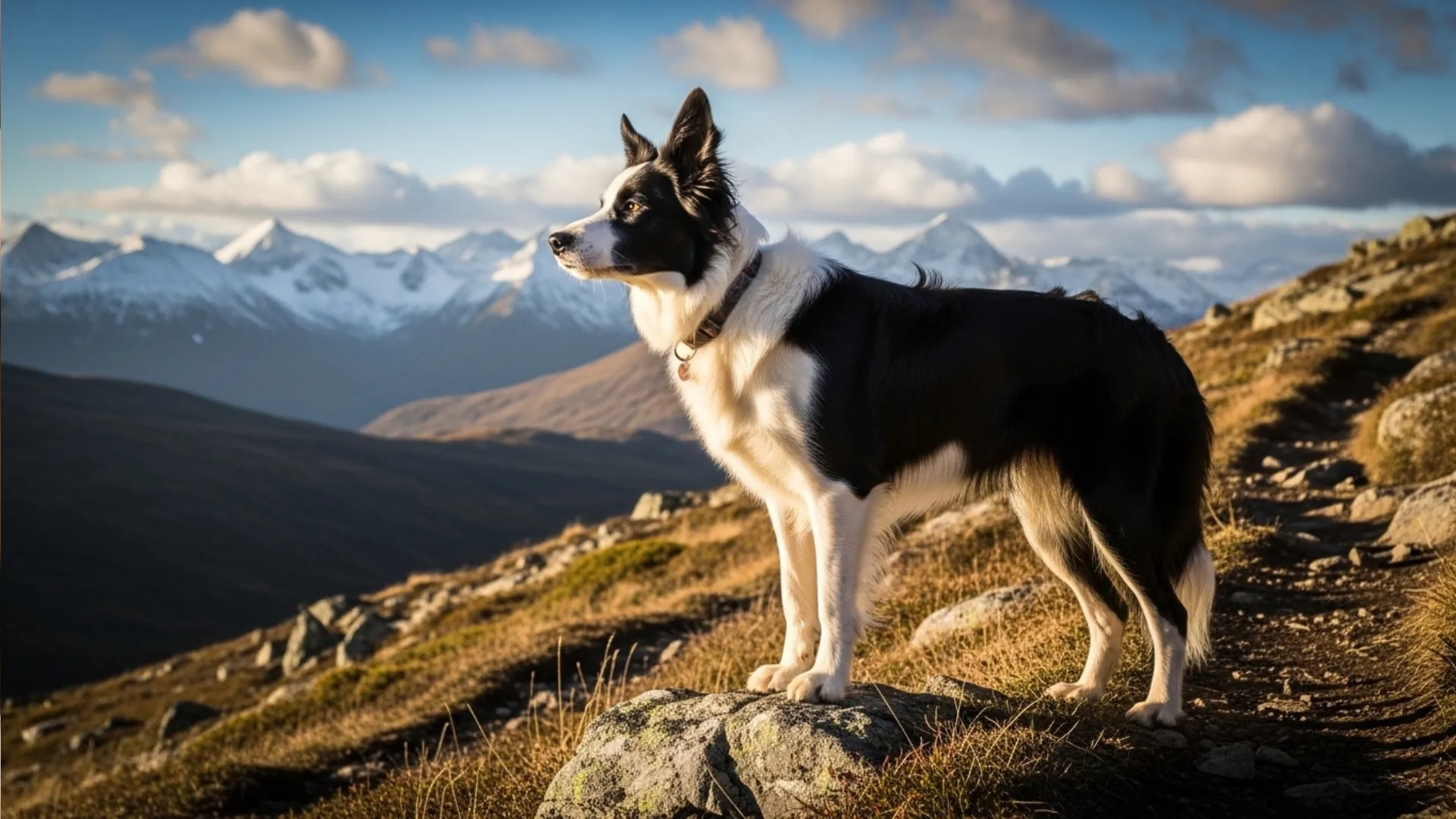
Some dogs enjoy an active lifestyle. Other dogs, like athletic dogs, are constructed genetically. This difference makes itself felt soon as one gets weary after a long walk, the other is still alert, curious, and willing to continue long after one is tired.
A real outdoor dog is not merely an energetic animal. Unlike most dogs, it understands how to deal with the geographical variation, the unpredictable weather, extended periods, and being constantly challenged with physical exercise and mental stimulation without burning out.
Better still, each dog breed is a different way of going out. Some of them store energy, such as endurance athletes; others stay in one place as it is the only way they can solve the puzzle, and other breeds just run because it is unnatural to stand idle.
Assuming that your way of life is not merely that of taking walks but rather lengthy walks, rough paths, water, heat, or cold, then the kind of dog breed you get will entirely determine your experience.
These are 7 sturdy dog breeds that do not merely participate in outdoor adventures; they transform them, in their own unique manner.
Dog Breeds Perfect for a Thrilling Outdoor Lifestyle
1. Siberian Husky
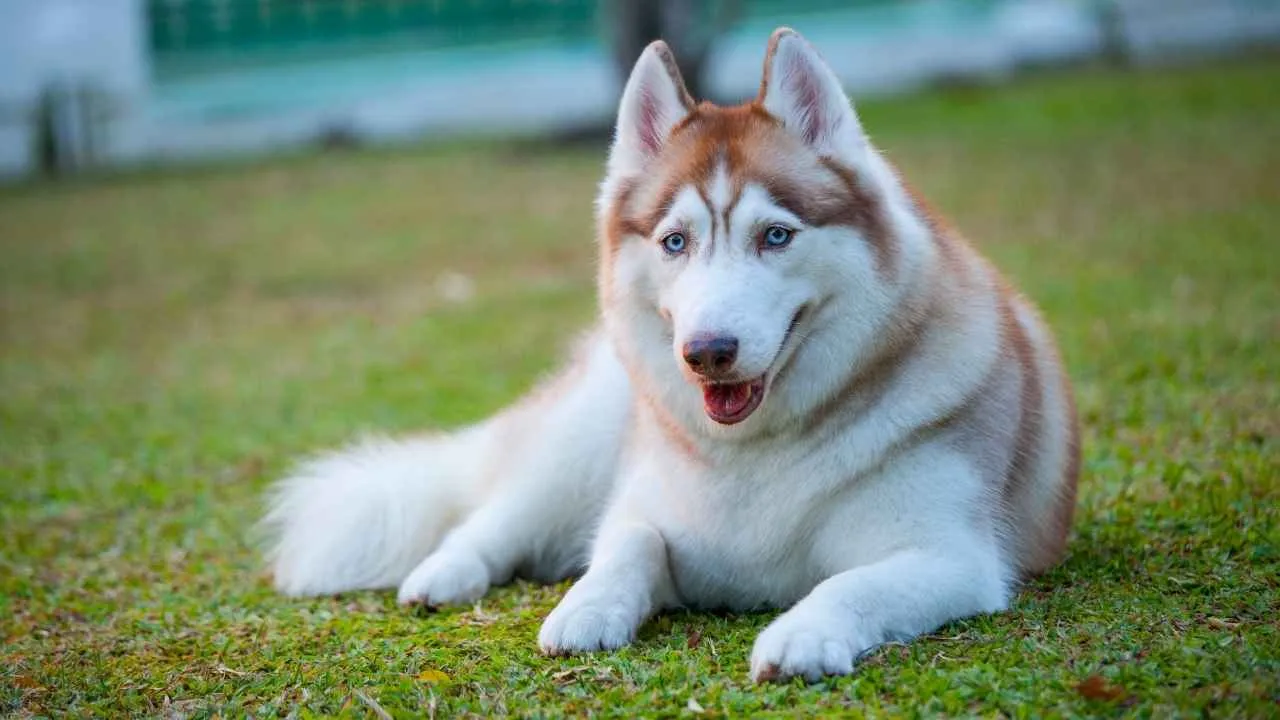
The Siberian Husky does not regard movement as an effort; it is a default.
Huskies are fascinating in the great outdoors because of their energy levels. Most breeds burn out by going all-in too fast, but Huskies are different. They will slow down at the required time and speed up when the time permits, and keep a pace that will take hours. These breeds are amazing for dog sports.
Sibes are naturally clean, with little odor, as per the American Kennel Club. They are also very directionally oriented and spatial. This is based on their past experiences, as they were originally bred to pull sleds through large expanses of featureless land in cold weather, with efficiency being a crucial aspect.
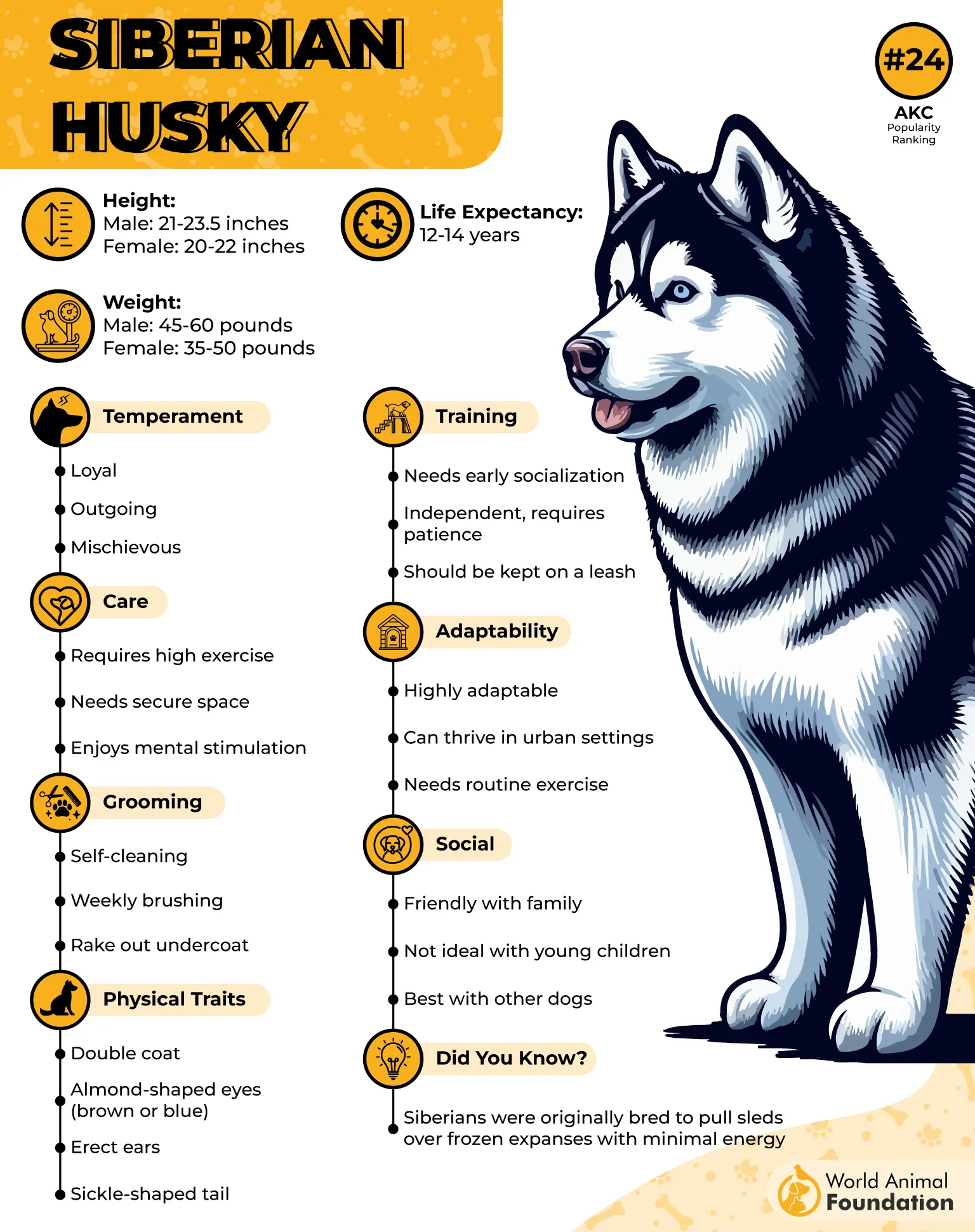
Huskies are able to change their metabolic rate during a run and alternate their energy-consumption method, so they do not become exhausted compared to other animals. It is one of the reasons they are able to travel over long distances without taking breaks.
The trade-off? They do not have a tendency to be obedient and require proper training. In the field, they may ignore the commands because of their curiosity, and thus, they need to be properly trained on how to recall, or they must be placed in a safe environment.
2. Border Collie
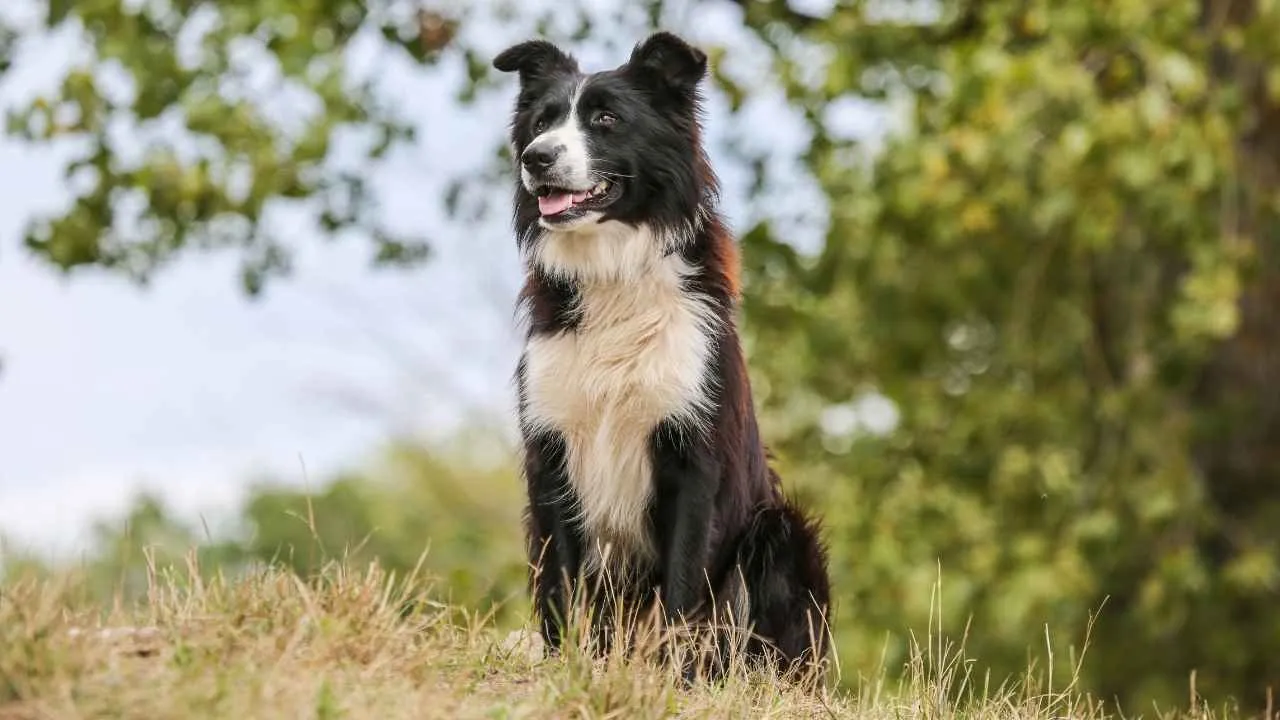
The Border Collie does not merely have an outdoor experience. This extremely intelligent breed processes and anticipates movement. This causes them to be very sensitive to dynamic environments such as uneven trails or outdoor spaces with many people.
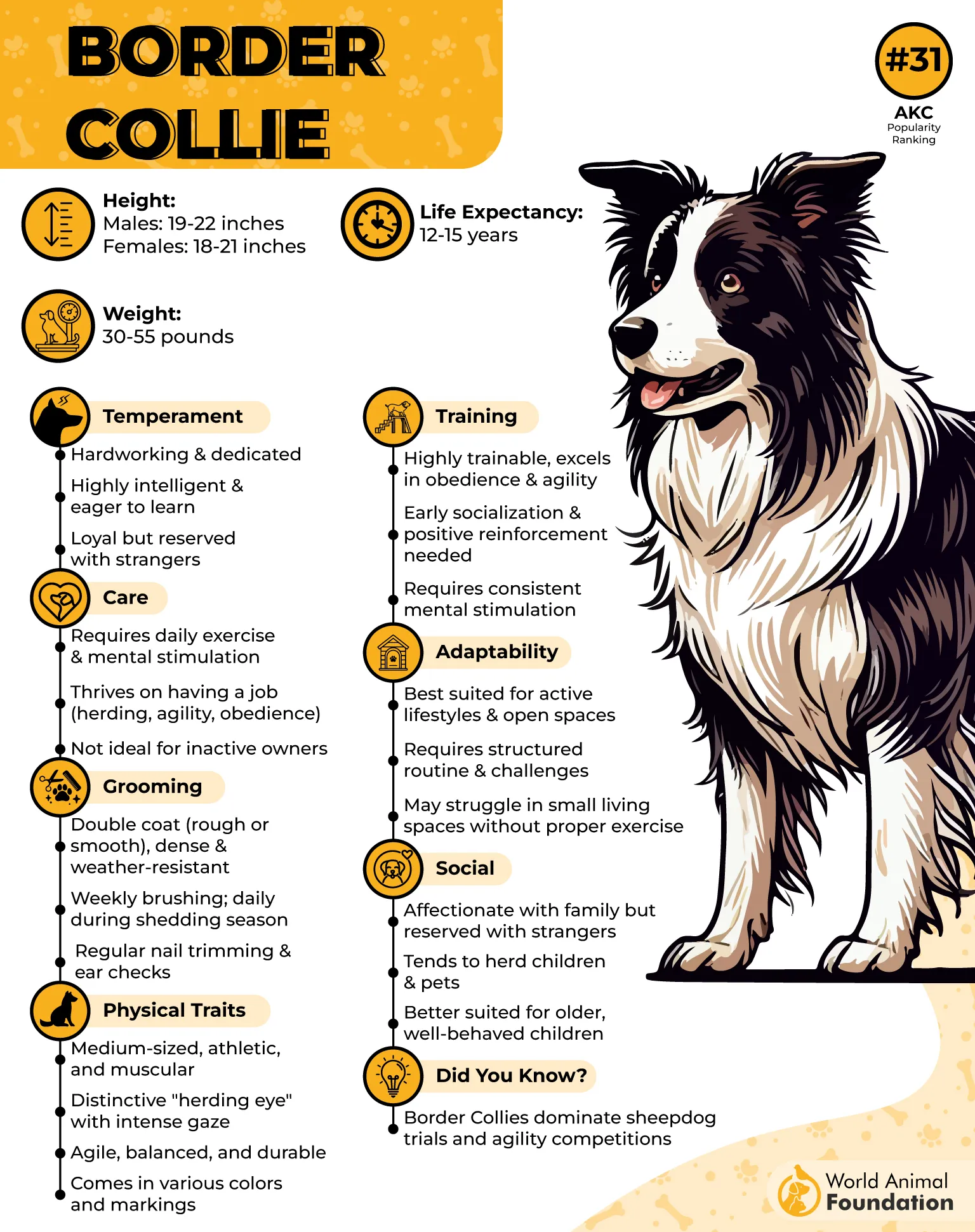
As per PetMD, these high-energy dogs are nimble and agile, built for fast movement. A hike is not a sufficient activity; they need some interaction, guidance, or a challenge. Otherwise, they do not simply become bored, but begin to make their own jobs, and this may involve herding anything in motion.
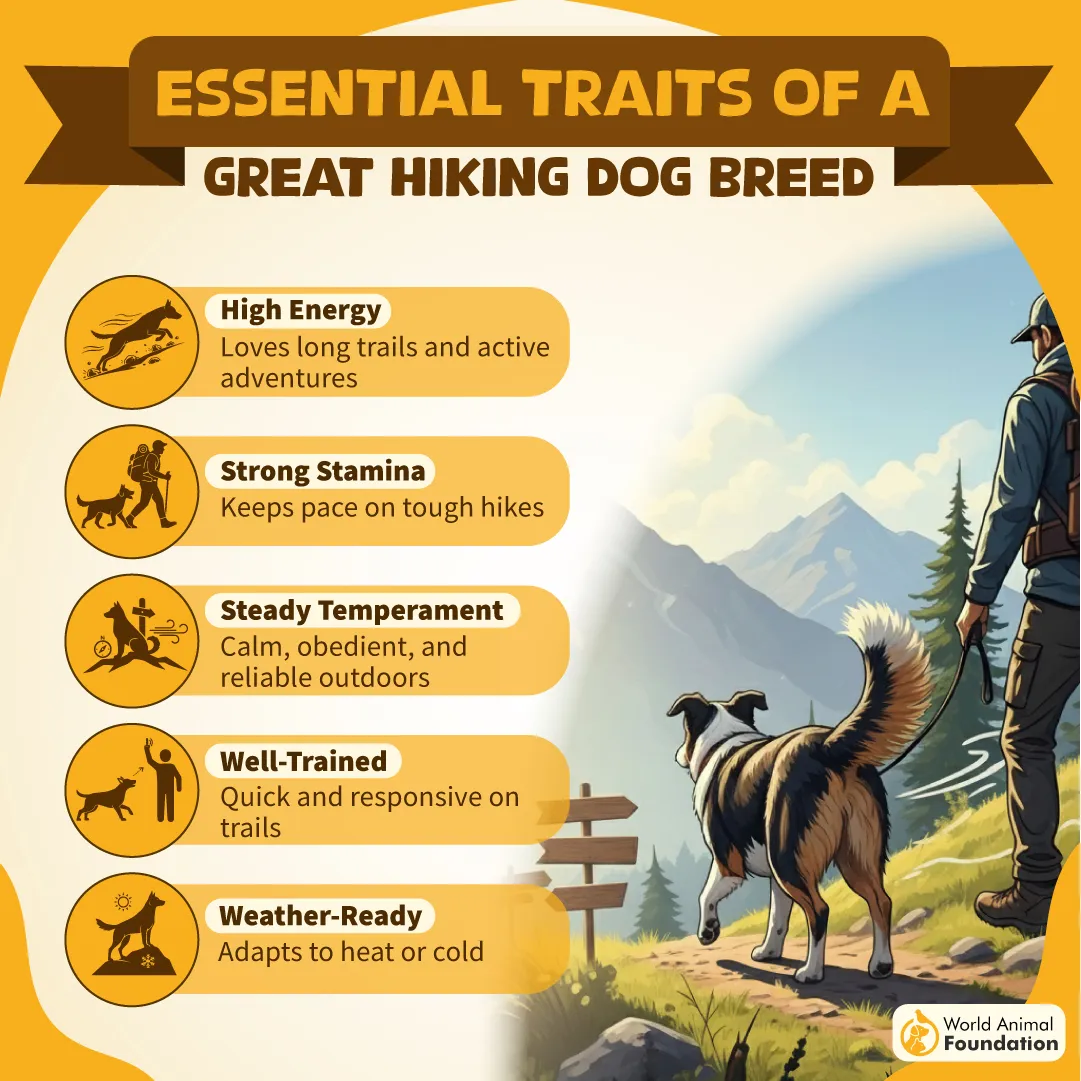
These highly intelligent dogs are reported to have learned hundreds of words and commands. One named Chaser learned over 1000 names of its toys.
These dogs were used to herd cattle, and because of that trait, life with a Collie outdoors is more like work, rather than friendship.
3. Rhodesian Ridgeback
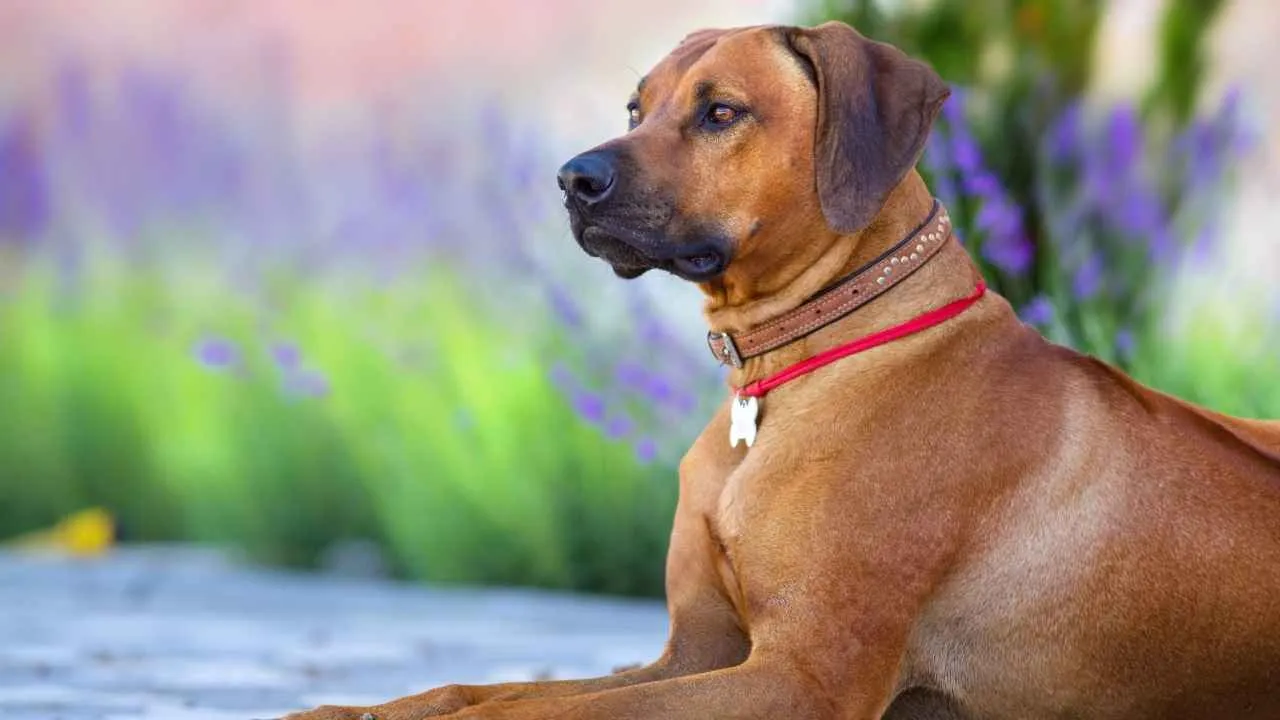
The Rhodesian Ridgebacks are a unique set of dogs: efficiency without dependence.
They do not hurry to get into action, nor are they always trying to be entertained. These hunting dogs instead walk and save energy when they do not need it. This renders them very useful in dry or warmer climates where excess work can be risky.
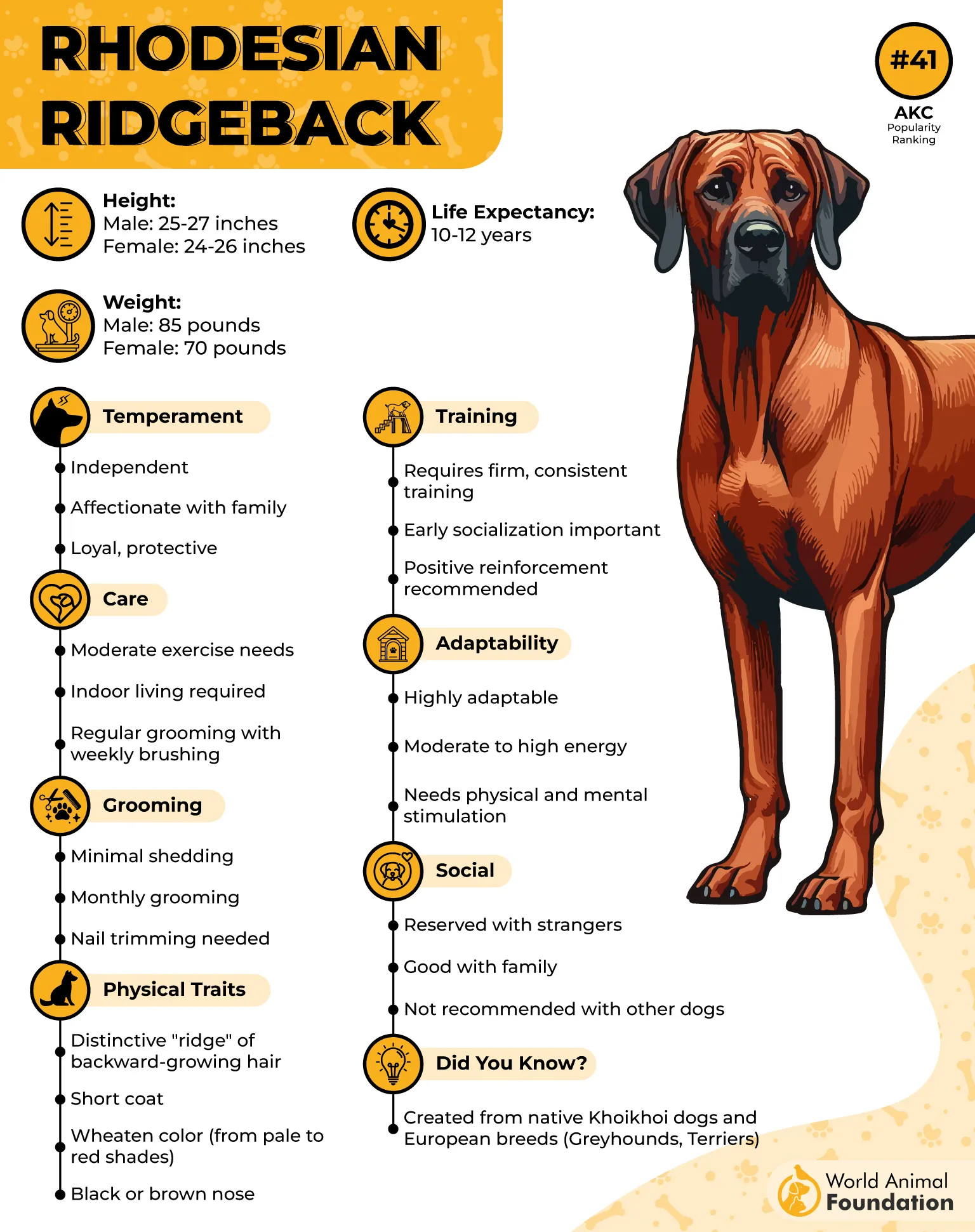
Ridgebacks do not require constant direction, as other active companion dog breeds do. They do not feel shy about making their own space and visiting it now and then, but not being guided.
As per Purina, these dogs are not known to be barkers, and if they do bark, it’s for a good reason.
It is a dog that is appreciated by active families who care about silence rather than communication.
4. German Shepherd Dog
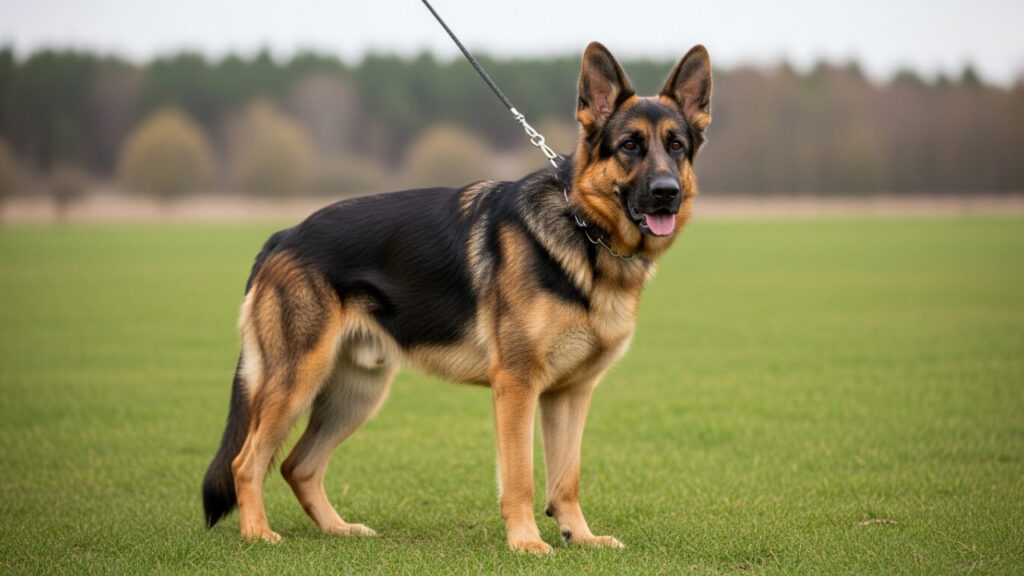
The German Shepherd simply adapts to the outside world.
This highly trainable companion attempts to plan and dominate the situation. They frequently stand on a trail in strategic positions, a little way ahead, occasionally looking back, with the knowledge of the party.
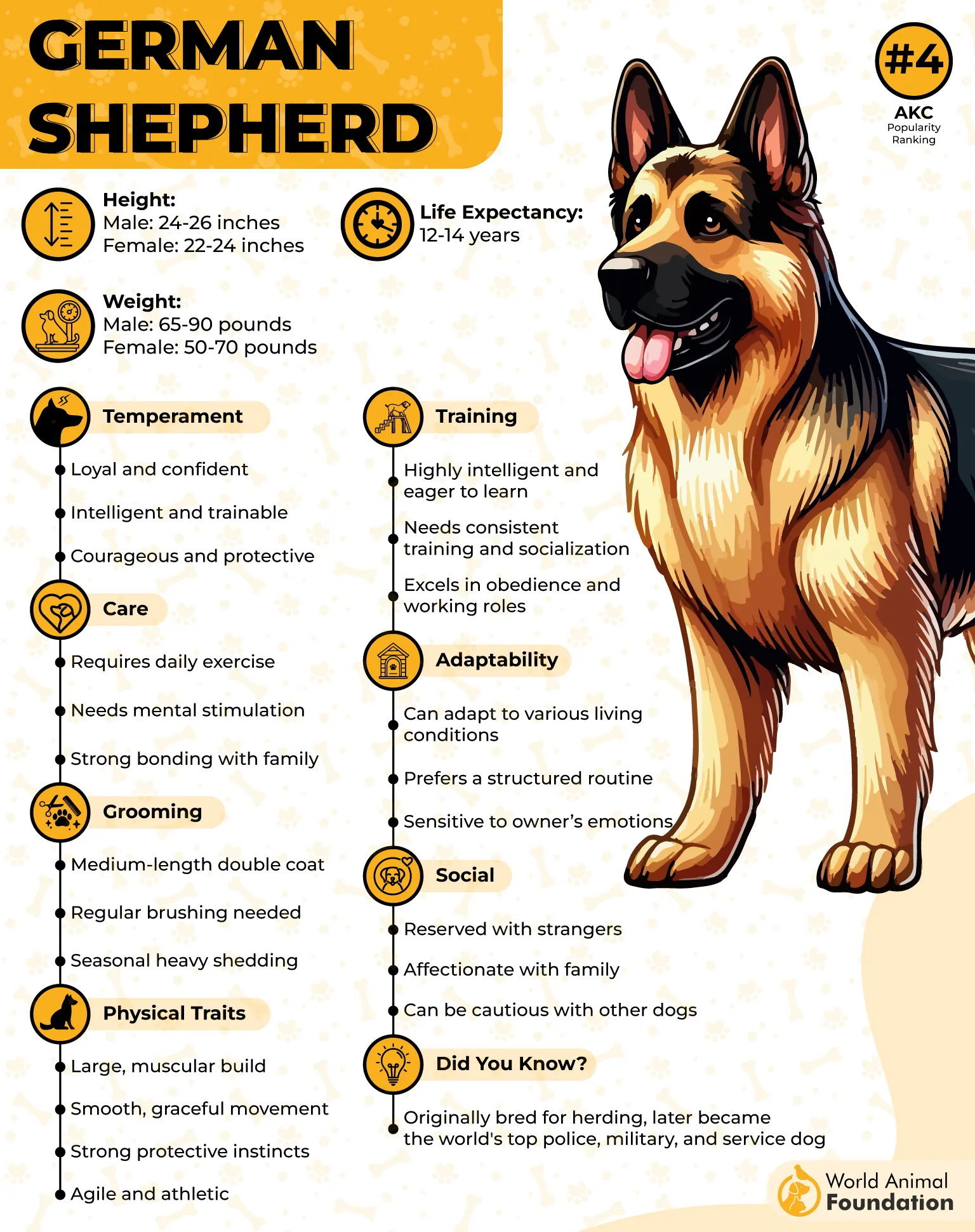
This renders them extremely dependable in uncertain environments. They do not have to travel very far, and they do not easily get distracted. Rather, they work with a sense of responsibility even in cases where no formal training is given to them.
These working dogs are popular in search and rescue not only for scent tracking, but also due to their ability to make independent choices when the handlers are not right at the location.
Their outdoor look seems purposeful – less anarchy, more controlled flow with consciousness.
5. Labrador Retriever
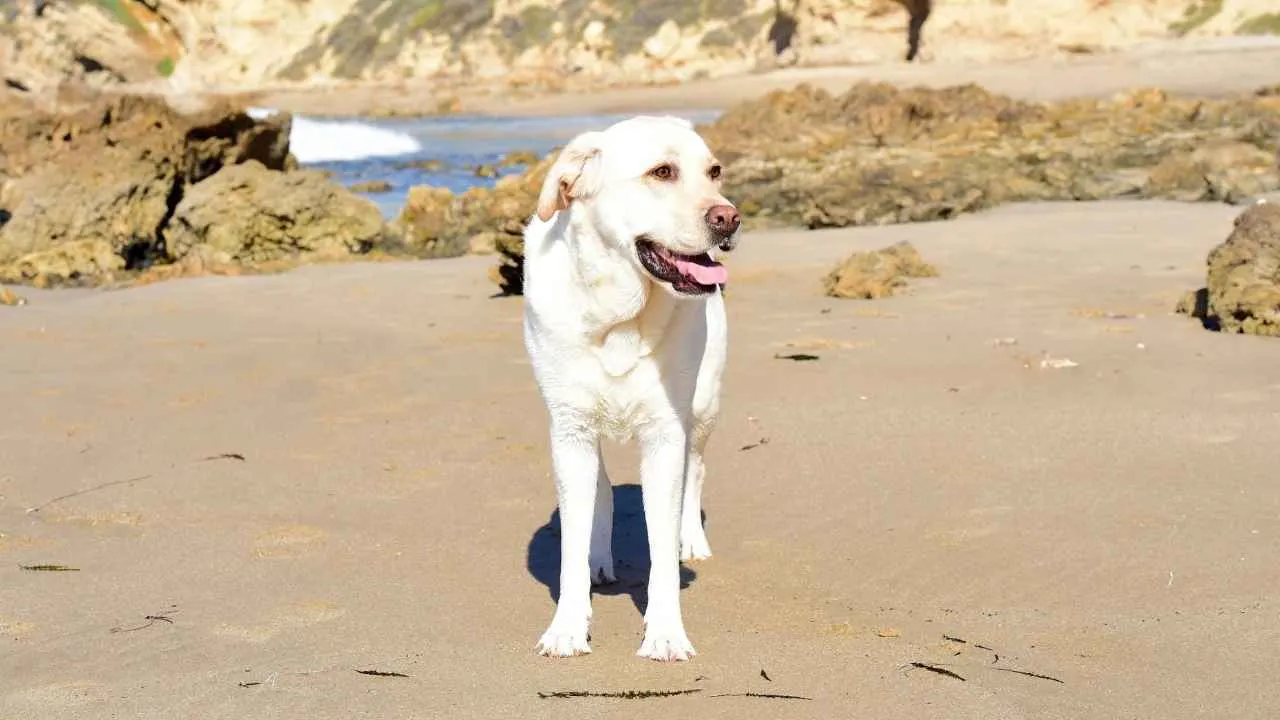
The Labrador Retriever is a hiking partner that offers an element that most high-performance dogs do not deliver to the environment, and that is consistency.
Labs are not specialists in a particular terrain; they are good in nearly anything, like trails in the forest, muddy laps, and fields.
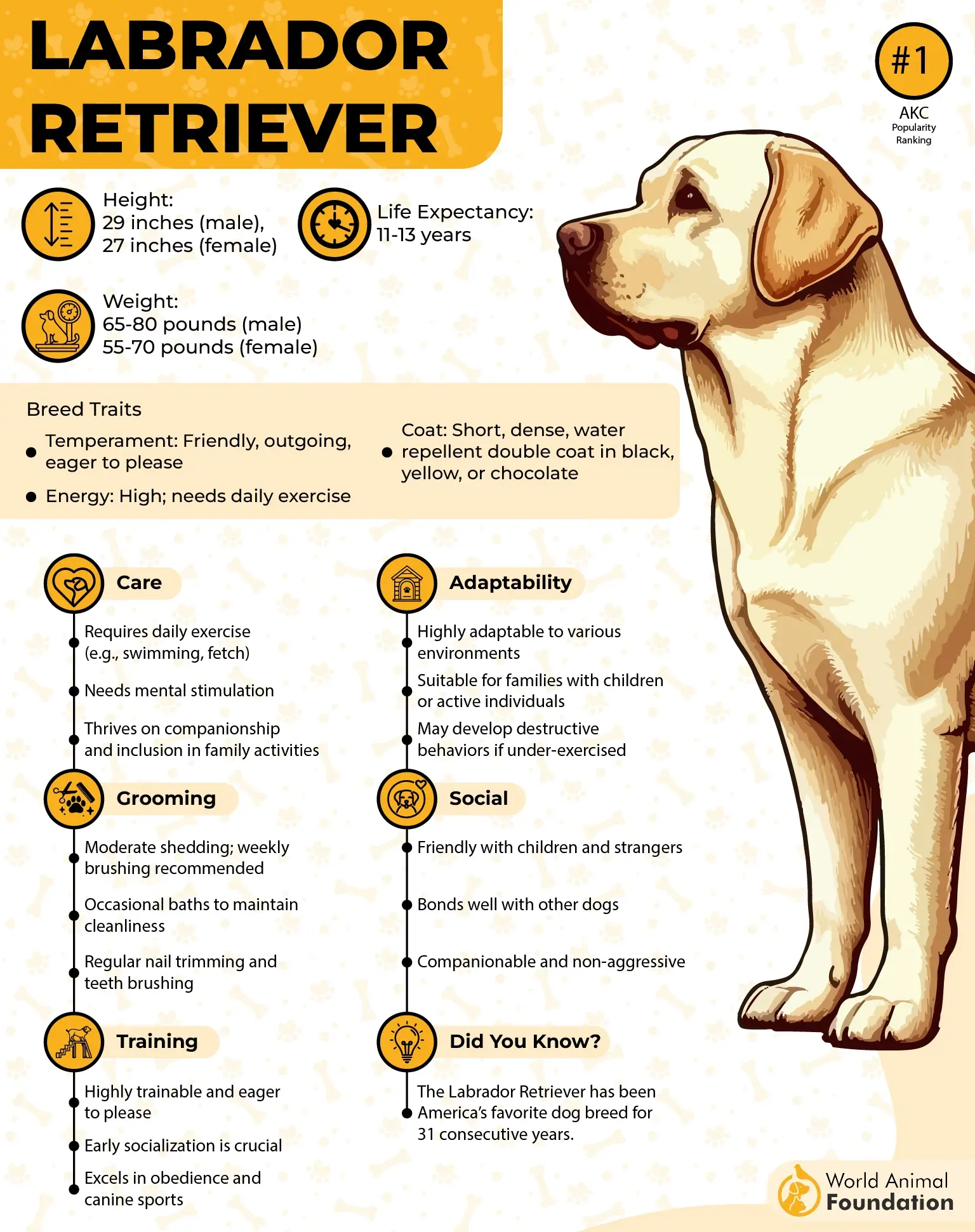
It is the peculiarity of their emotional stability outside. This large breed does not easily get overwhelmed and does not tune out when they are exhausted. Rather, they are consistent and dependable.
Fact: Labs have webbed feet that help them to be naturally efficient swimmers and one of the best water dogs in the world.
They are not the quickest or hardest-working, but they are usually fun-loving, reliable dogs, particularly in combined outdoor tasks.
6. Vizsla
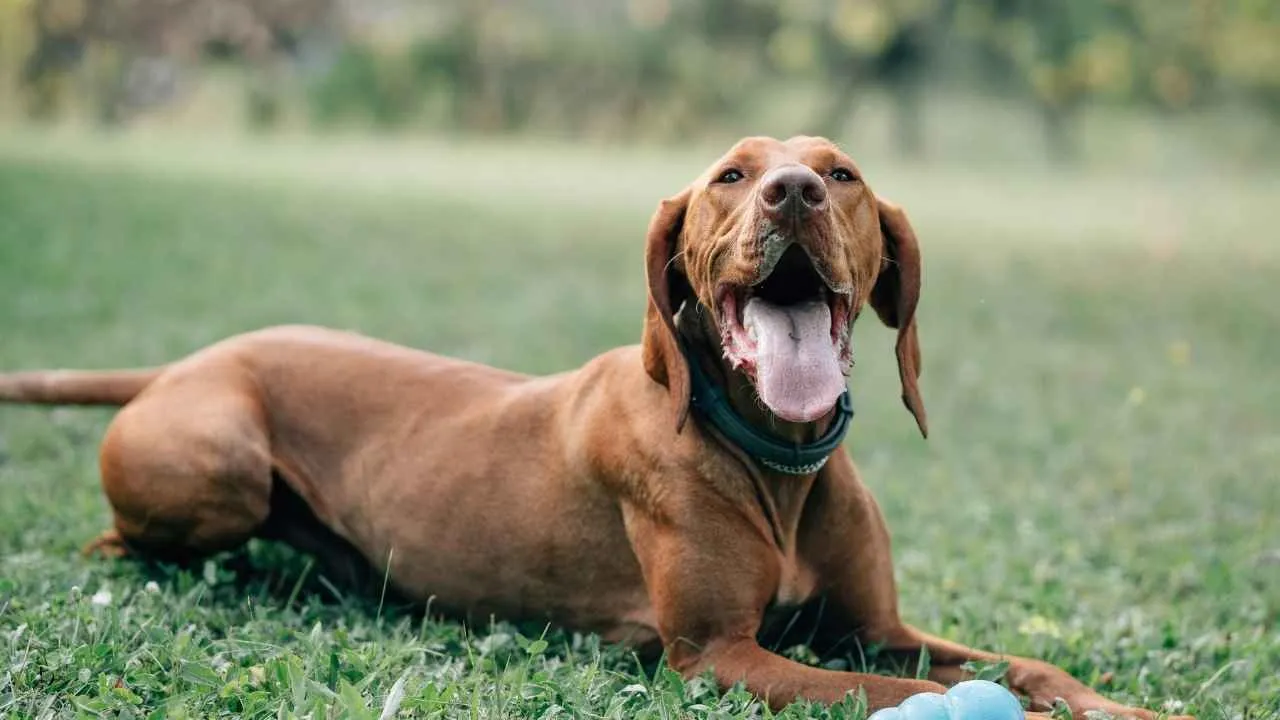
The Vizsla will not walk up and down, but flows.
This is a breed that is designed to move without stopping. Vizslas are not lung-bursting types, but maintain high output in a steady-state, thus they prefer long-distance running or high-speed adventurous endeavors.
The difference is that they are intimate with their master. They are also likely to keep up even at speed and slow their pace to suit yours.
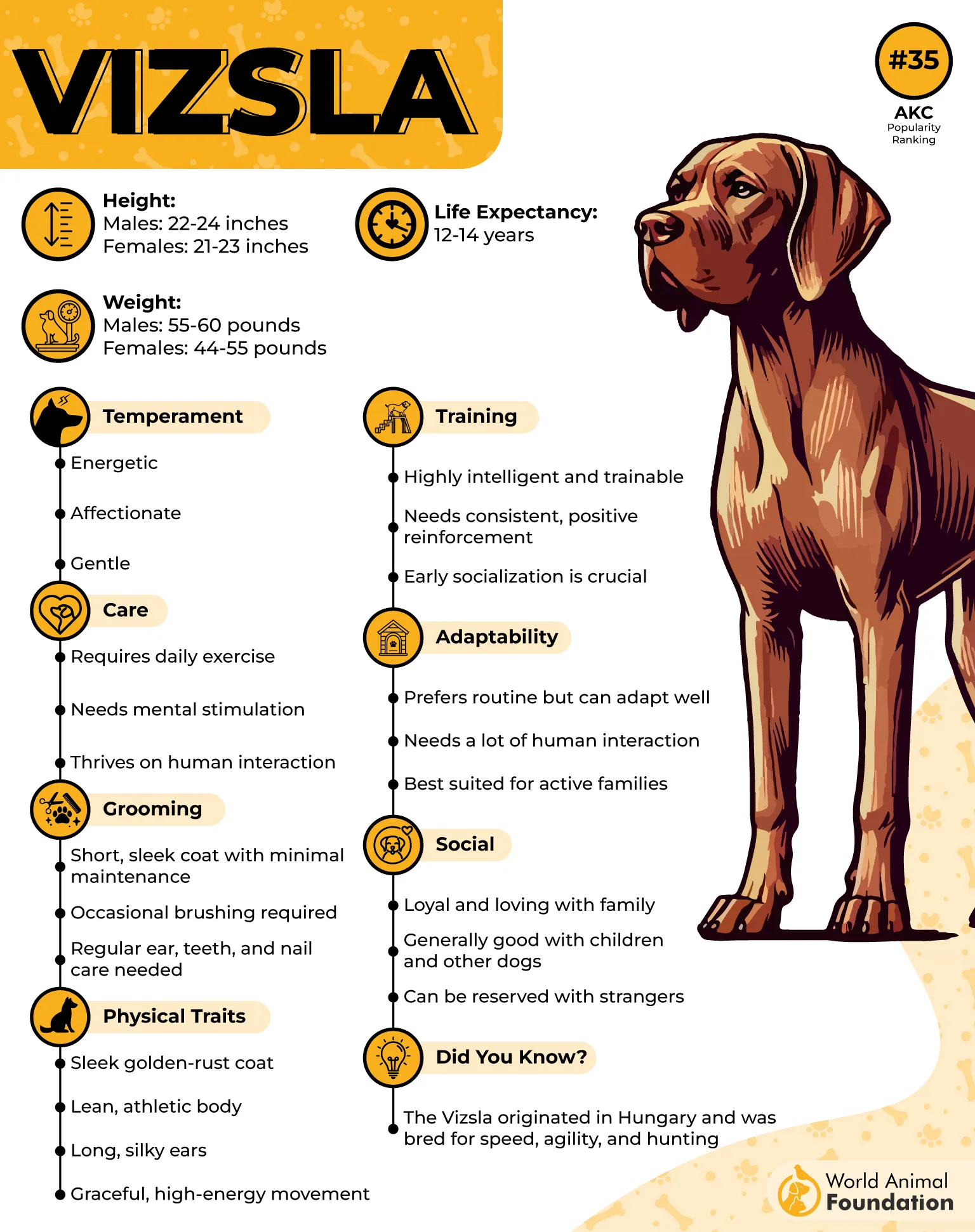
Vizslas have been dubbed the Velcro dogs in that they like to be physically close to their owners, even leaning on them during rest.
When you are outdoors, the Vizsla will always be an adventure partner ready to accompany you.
7. Australian Shepherd
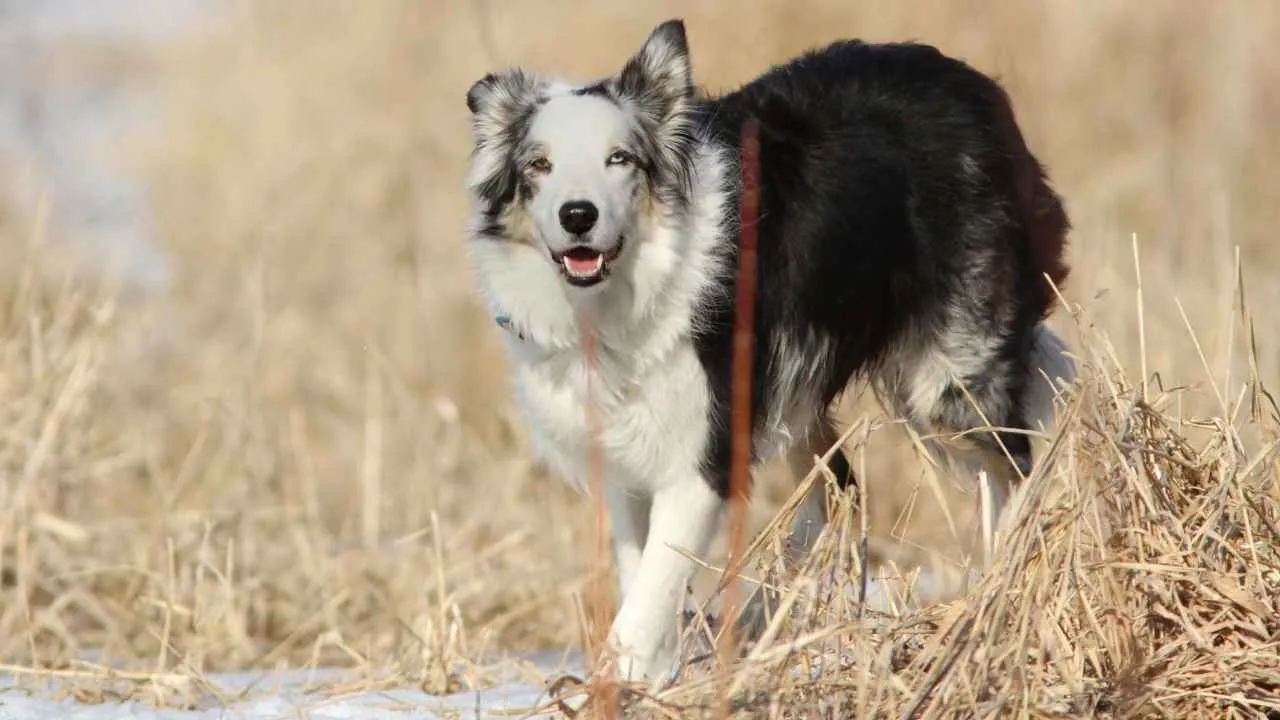
The Australian Shepherd views the outside as an ever-changing system, requiring it to be taken care of.
They are very sensitive to change – be it terrain, movement, or new stimuli. This renders them very efficient in the areas where agility is far more significant than brute strength.
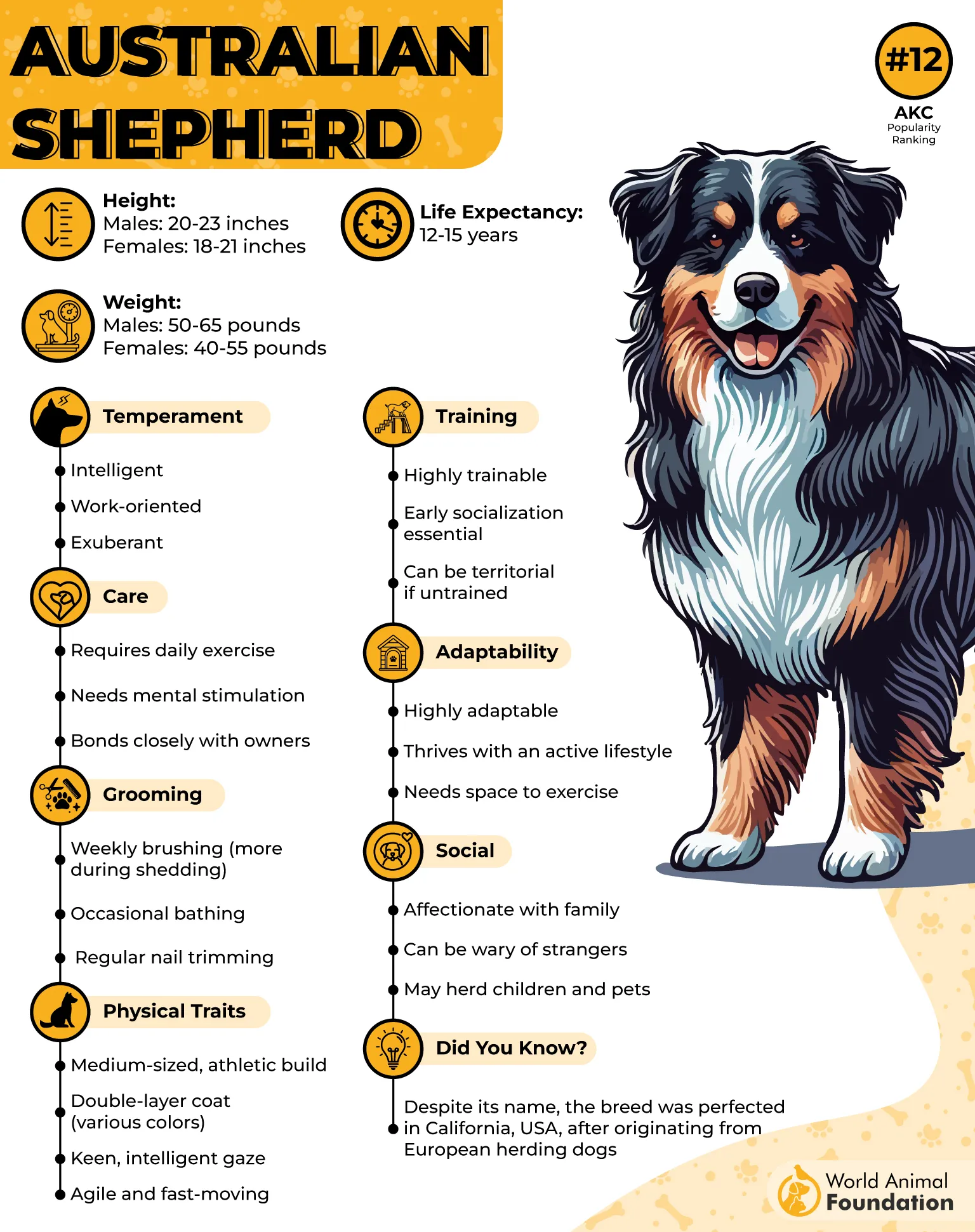
Australian Shepherds are concerned with control and responsiveness, unlike Huskies, who are distance dwellers, or Vizslas, who dwell on pace. They respond faster, adapt immediately, and remain attentive in the process, becoming perfect companions for pet parents who prefer these qualities.
Fun Fact: Aussies were meant to be used in the United States, although the name was coined, they were used by ranchers due to their intelligence in herding.
Life outside with one is like having a dog that can never sleep, can never shut their eyes, and can never be caught off guard.
Conclusion
Outside dogs cannot be substitutes. They introduce totally new styles to the same setting.
Others, such as the Husky, stretch both distance and time, while the Border Collie plays a mental game. The Rhodesian Ridgeback wisely saves energy with silent composure, and the Vizsla appears to be running as though it has no choice but to run.
It is not about which breed can handle long hikes or adapt to avid hikers the best, but rather how they feel about the athletic world.
The right dog should not only be compatible with your level of activity but should also be compatible with your mode of movement, pace, and interaction because the properly matched dog will not simply follow your ventures; it will entirely transform the way you do them.
