




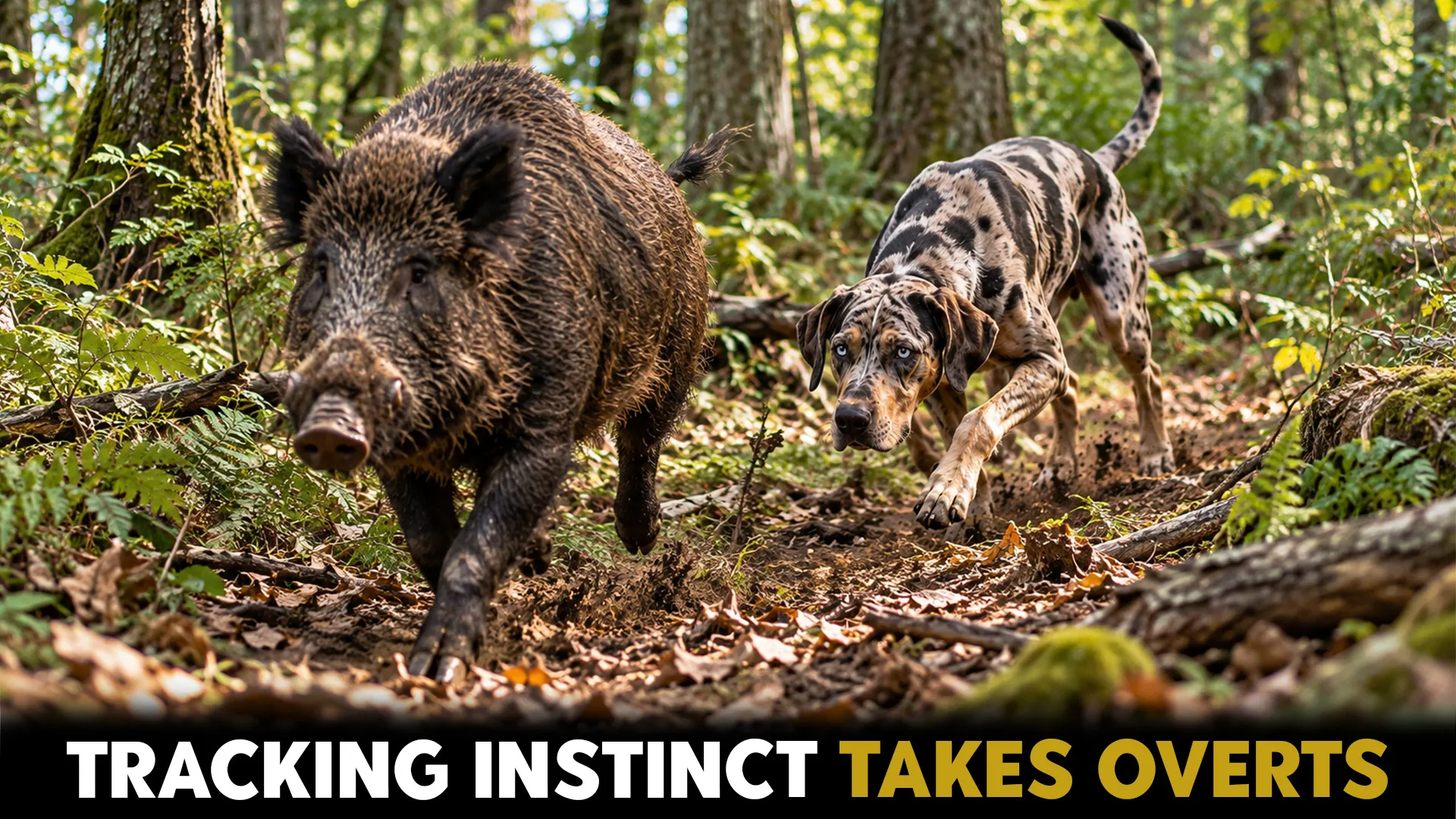
Wild boar tracking is a job where the nose often matters before the eyes ever get a chance. A dog may enter thick woodland with no clear sign of the animal and still find a trail worth following.
That ability comes from a powerful combination of scenting skill, concentration, persistence, and breeding shaped by hunting work. European hunters developed several types of dogs for tracking game, and some were specifically associated with boar. Others became versatile big-game hunters capable of following, pursuing, and baying quarry.
Older tracking traditions valued dogs that could work on trails left hours earlier, when recovering wounded game. These histories explain why certain breeds attract attention in wild boar tracking. Their abilities were refined through repeated selection for practical field tasks in demanding hunting environments.
The breeds here reflect that working heritage, each bringing different skills to the trail and fieldwork, with strengths.
Key Takeaways
Long before a hunter spots a wild boar, a skilled tracking dog may already know which way it went.
Bluetick Coonhounds can recover a fading trail by sweeping from side to side, while Black and Tan Coonhounds keep working across forests, water, and rough ground.
Bloodhounds bring an extraordinary sense of smell to the list, with their tracking ability extending across long distances and old trails.
The story then moves into swampy farms, steep mountains, and demanding hunts, where each breed brings a very different kind of field skill.
Top Dog Breeds Known for Their Wild Boar Tracking Skills
1. Bluetick Coonhound
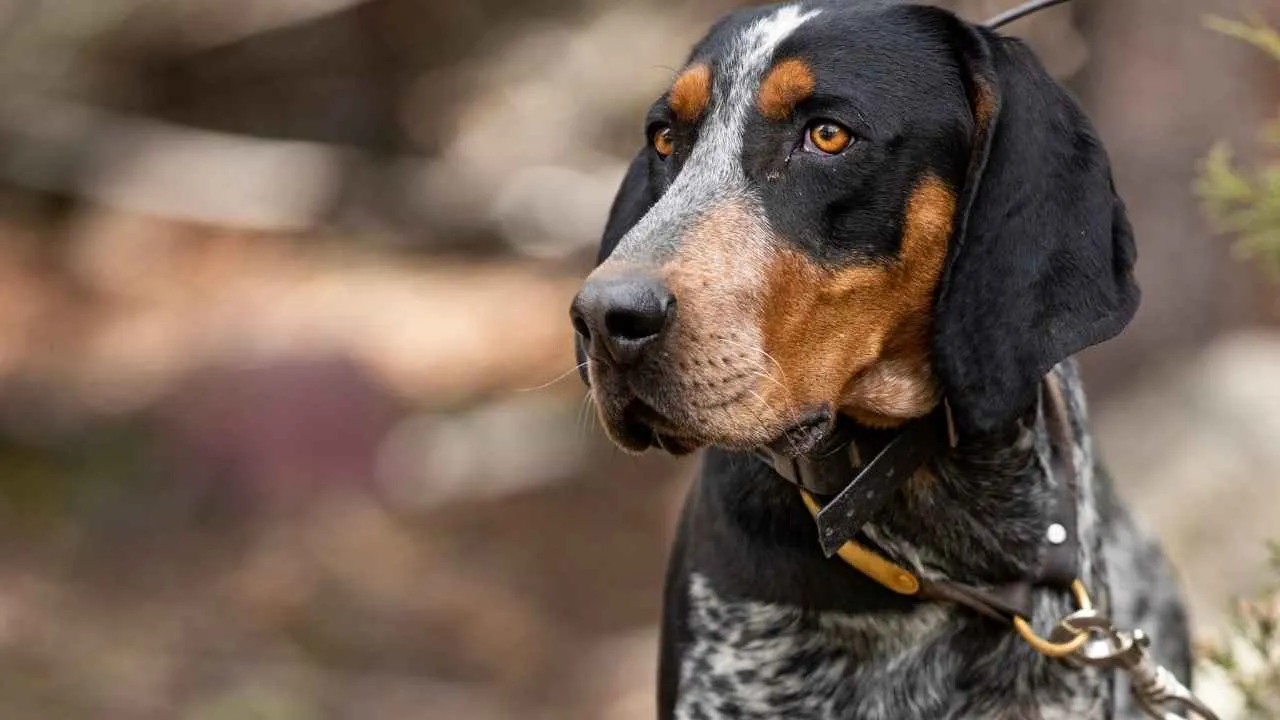
Bluetick Coonhound was established in the United States from bloodlines that predate the country itself, with French hounds gifted to George Washington among its reported ancestors. English Foxhounds and other hound breeds are also believed to have contributed to its lineage.
Nose Leads the Way
This hunting dog has an exceptionally strong scenting system built for following game through forests, swamps, and thick cover. Its long ears and slightly loose facial skin can help direct scent toward the nostrils while the dog works close to the ground.
That tracking style comes with some fascinating working details:
Sweeps side to side to recover a lost scent trail
trees while loudly announcing treed quarry
Can choose its own route when working away from handlers
Made for Long Hunts
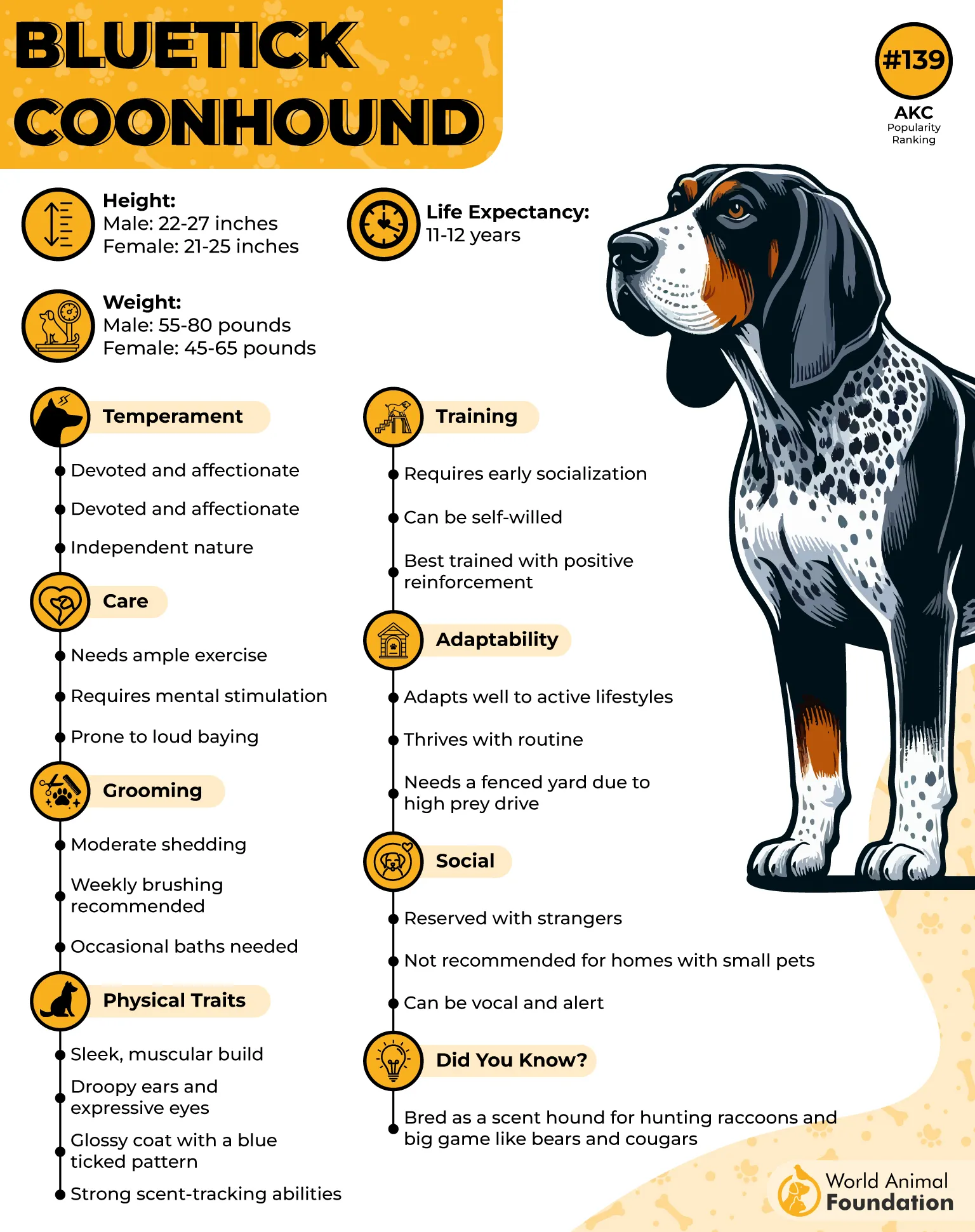
Bluetick Coonhound has a deep chest and powerful shoulders and hips that support sustained work across rugged, uneven ground.
Its short, fairly dense coat also includes distinctive ticking that can blend into brush and dappled woodland surroundings, giving it a natural look in the field.
2. Black And Tan Coonhound
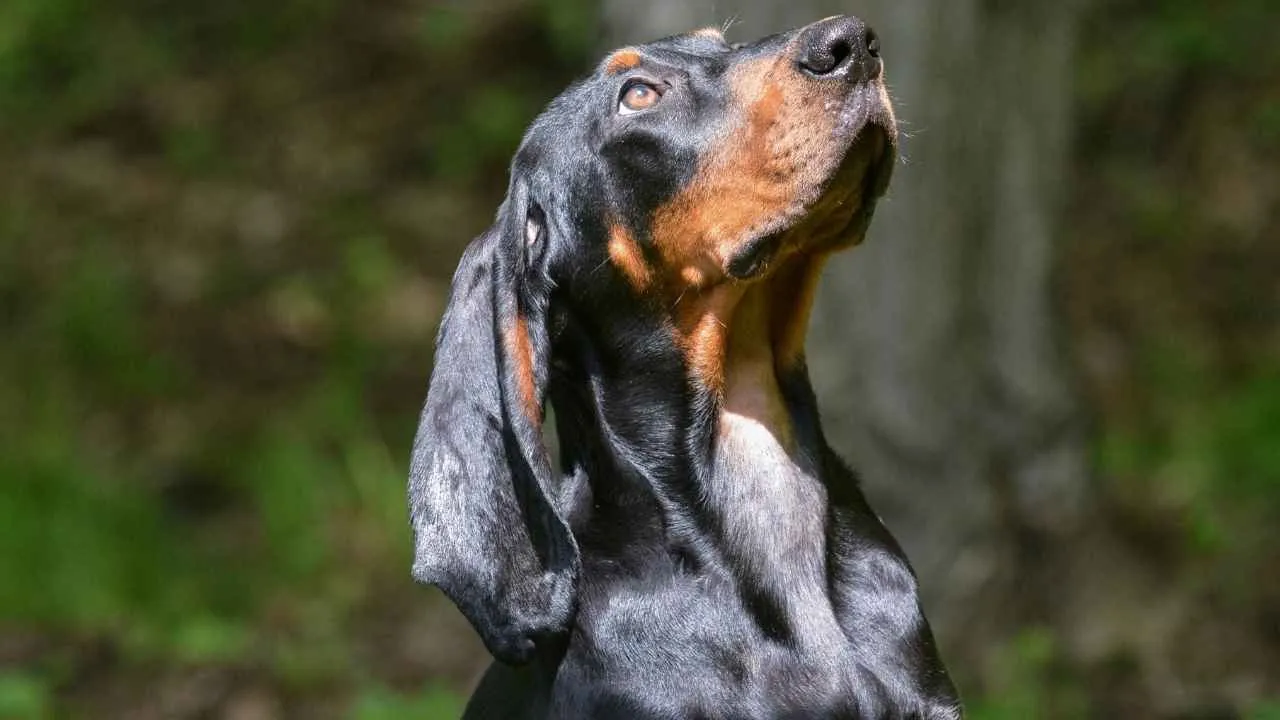
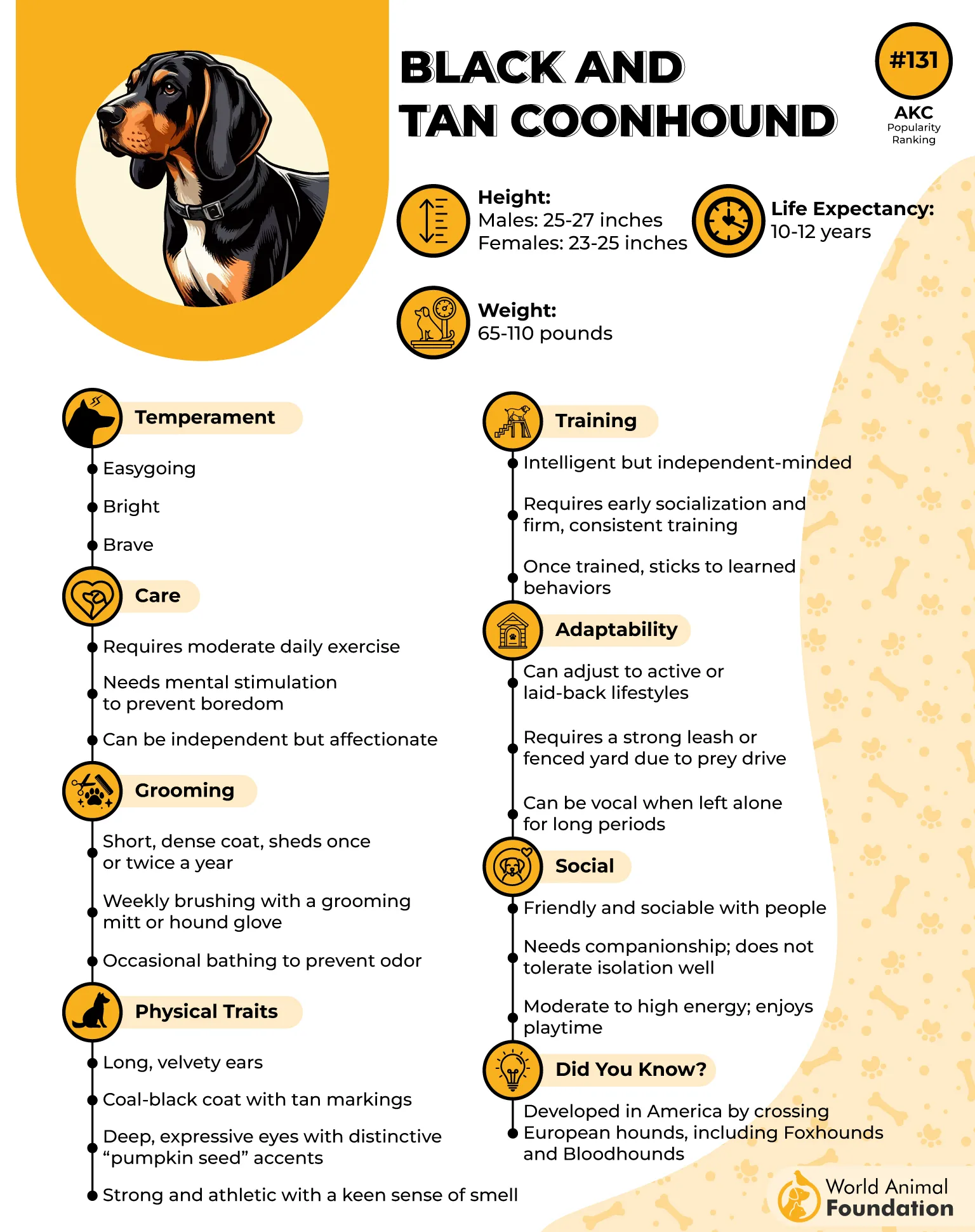
Black and Tan Coonhound emerged in America from hunting hounds and bird dogs brought by 17th-century British settlers. It became the first hound separated from the American Foxhound and recognized as its own type, with early work centered on tracking raccoons.
Built for Boar Trails
Black and Tan Coonhound could follow wild boar across forests, rough ground, and water, drawing heavily on scent rather than sight. Its large nasal cavity, long ears, and loose skin around the head help support this nose-led tracking style.
Three details make its tracking work especially distinctive:
Ground-scent zigzag casting
Deep chest for steady trailing
Strong interest in scent-marked trees
Relentless on the Trail
This hound dog can work for hours across difficult ground and historically hunted after dark, when cooler temperatures suited their activity. Once it locks onto an odor, distractions can become easy to ignore, while its slow maturity calls for patient, positive training rather than intensive drills.
3. Bloodhound
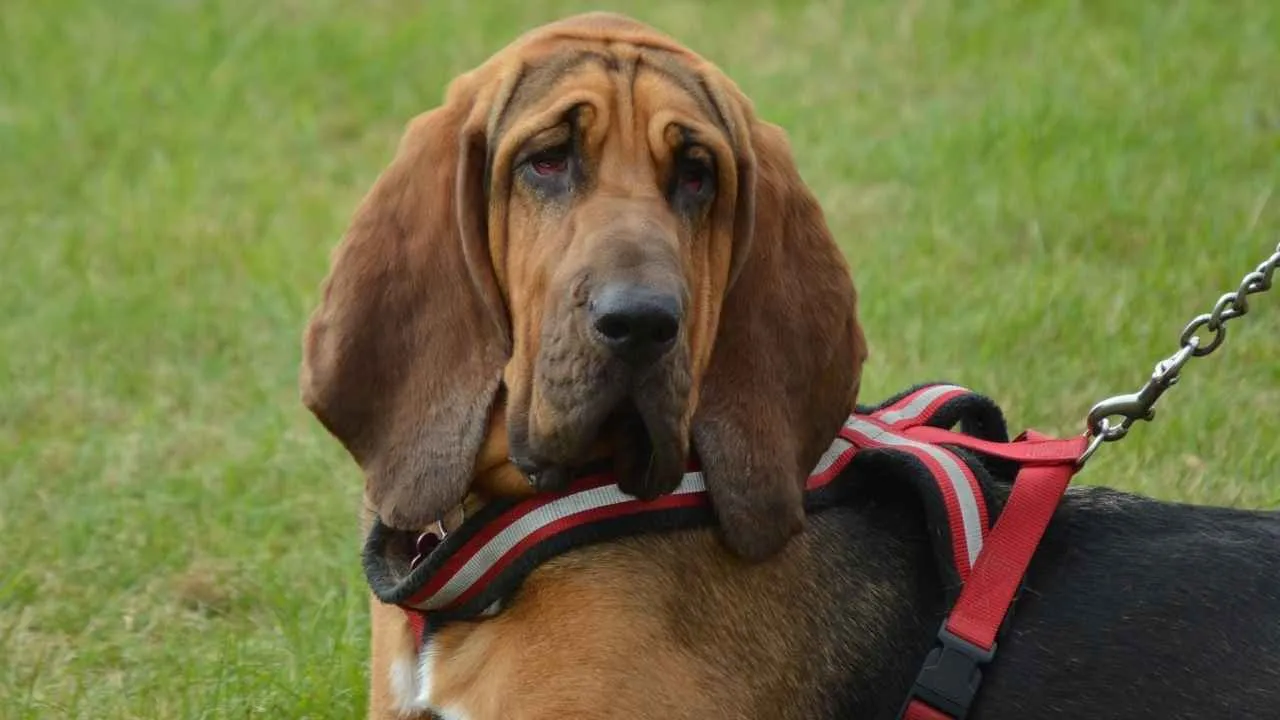
The Bloodhound was well established in England by the 14th century, with its earlier origins often linked to hounds bred by monks at Saint-Hubert monastery in Belgium. Its lineage is believed to reach back to around 1000 AD, giving this breed one of the oldest stories among scent hounds.
A Nose Built for Tracking
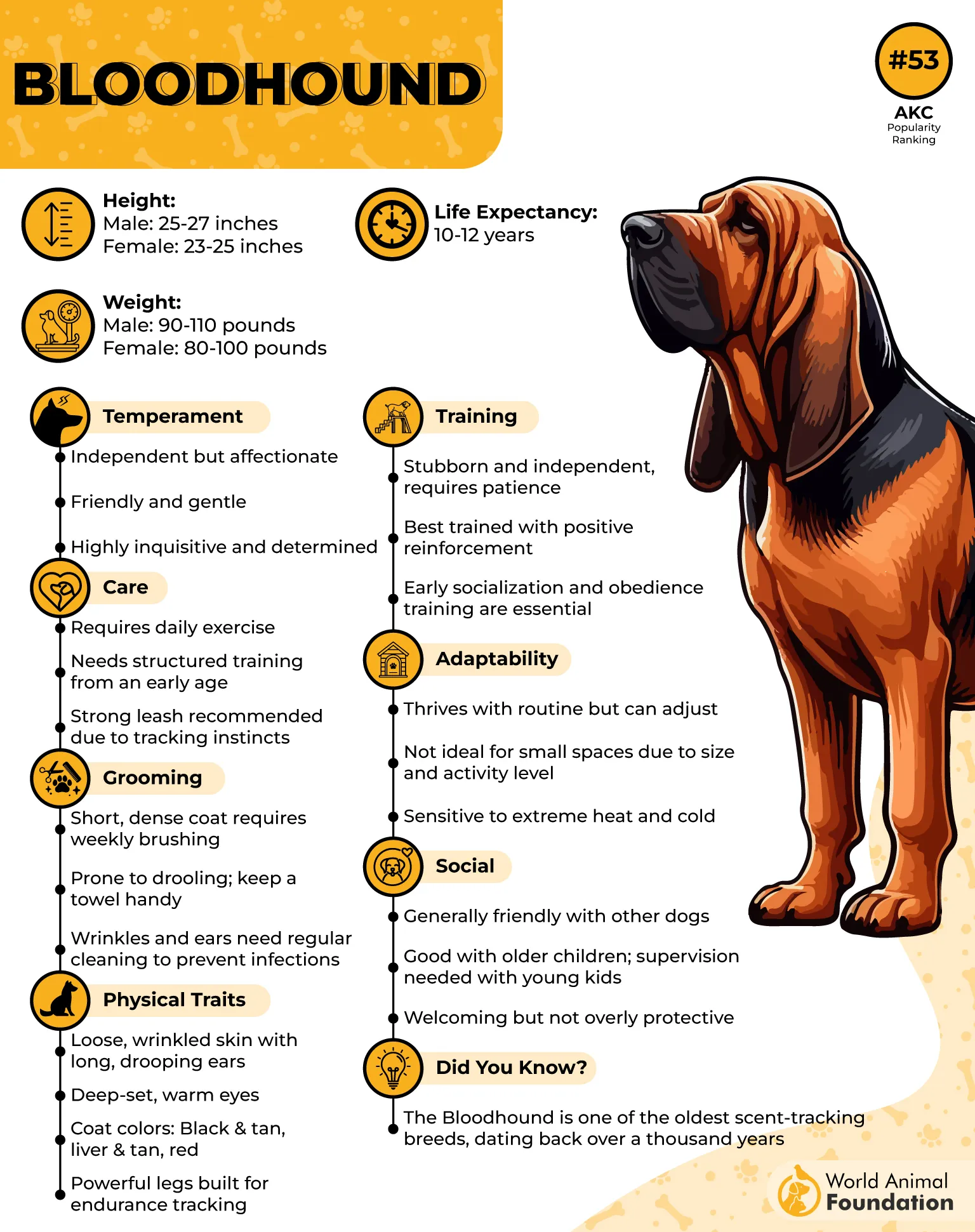
This companion dog can follow scents that are days old across remarkably long distances, making its nose its most valuable tool in the field, as noted by Britannica. Loose facial skin, long low-set ears, and a large nasal cavity all contribute to how this breed gathers and separates scent.
These details make its tracking style especially distinctive:
Sweeps side to side to recover a fading trail
Lifts its head to catch drifting scent
Uses baying to signal progress to handlers
Life Beyond the Trail
Bloodhounds are affectionate with their family and gentle around children, while early introductions can help them accept other dogs and unfamiliar people. Lead training needs to begin from the start because a compelling scent can quickly take priority, and walking politely beside a handler can be challenging.
4. Catahoula Leopard Dog
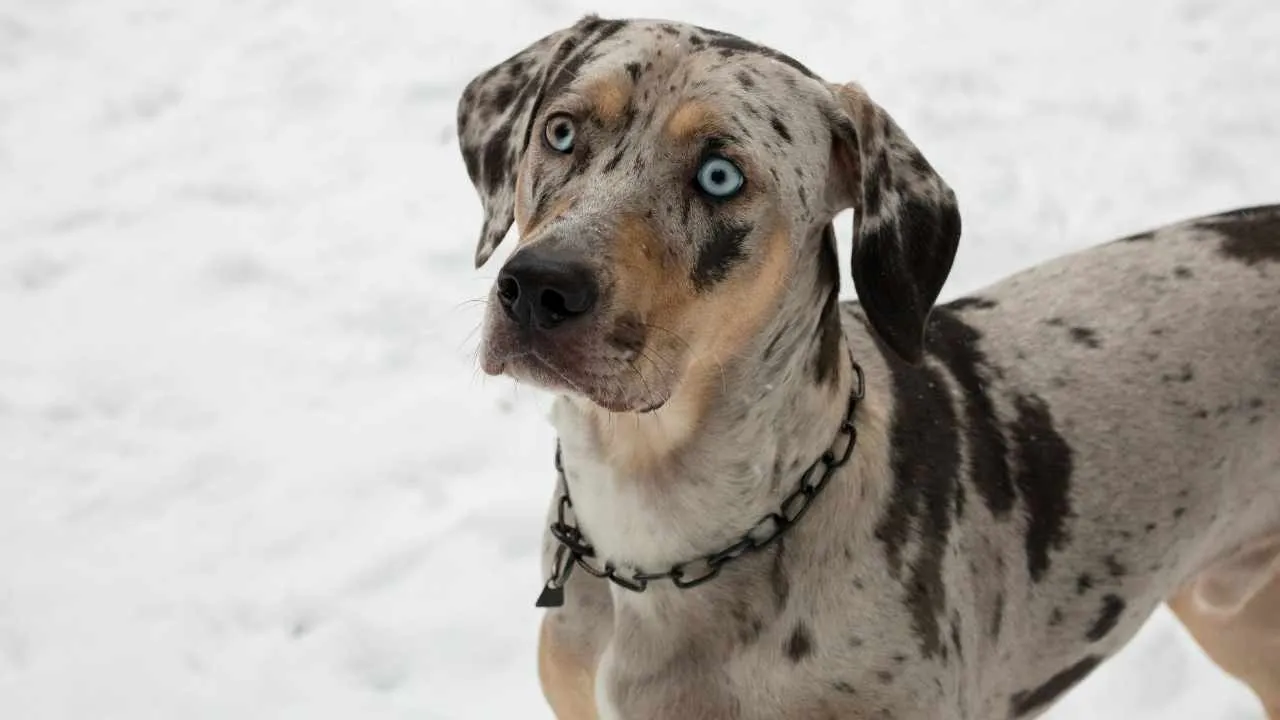
Life on Southern farms and ranches helped shape the Catahoula Leopard Dog during the 1800s, with the breed developing near Catahoula Lake in Louisiana. These muscular dogs handled demanding jobs such as moving cattle and following wild hogs through dense, uneven rural landscapes.
Made for Rough Ground
This boar hunting breed has a tight coat that sheds mud and burrs easily and dries faster than longer fur, a practical advantage around wet Louisiana landscapes. Its often-webbed paws can also provide better traction through muddy or swampy ground.
These features add another layer to their field abilities:
Strong hips and shoulders for sudden turns
Body-pressure herding with chest and shoulders
Sustained stamina for long-range sessions
An Independent Worker
Catahoula Leopard Dog can be deeply loyal while remaining cautious around unfamiliar people, often watching the situation before engaging.
Their independent nature calls for consistent guidance and positive reinforcement, particularly when their energy finds its own projects such as digging or escaping.
5. Weimaraner
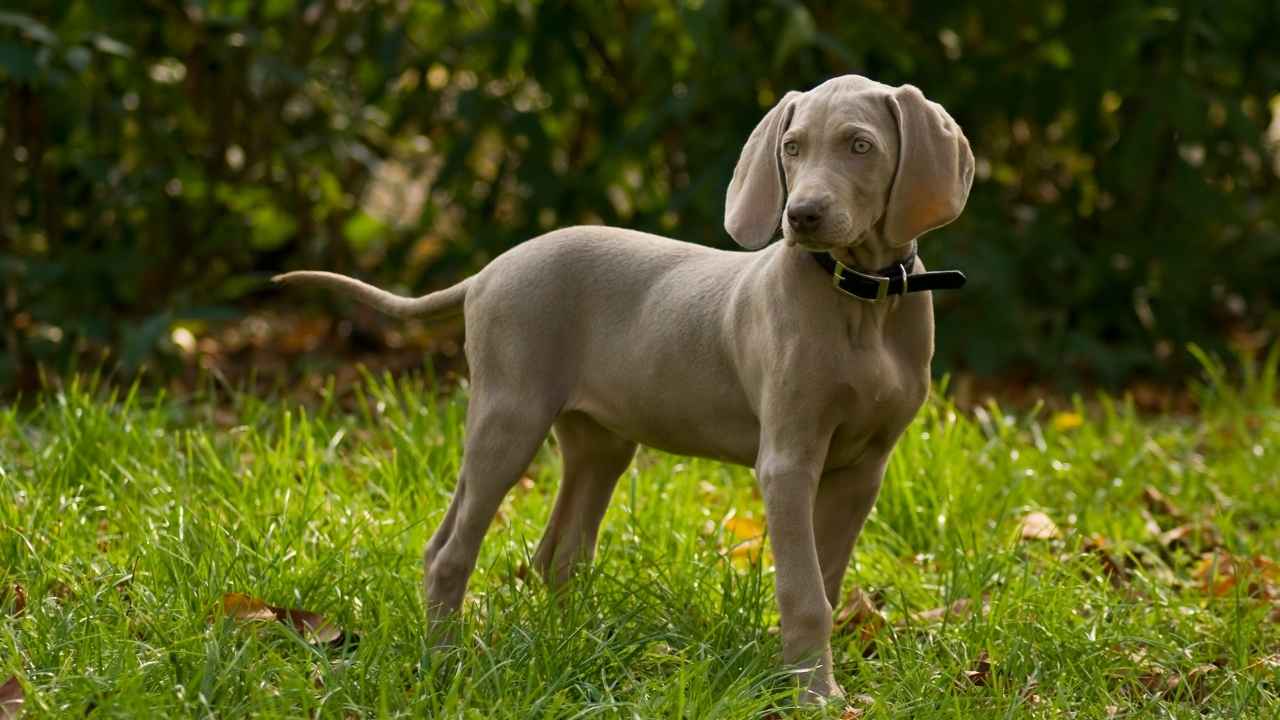
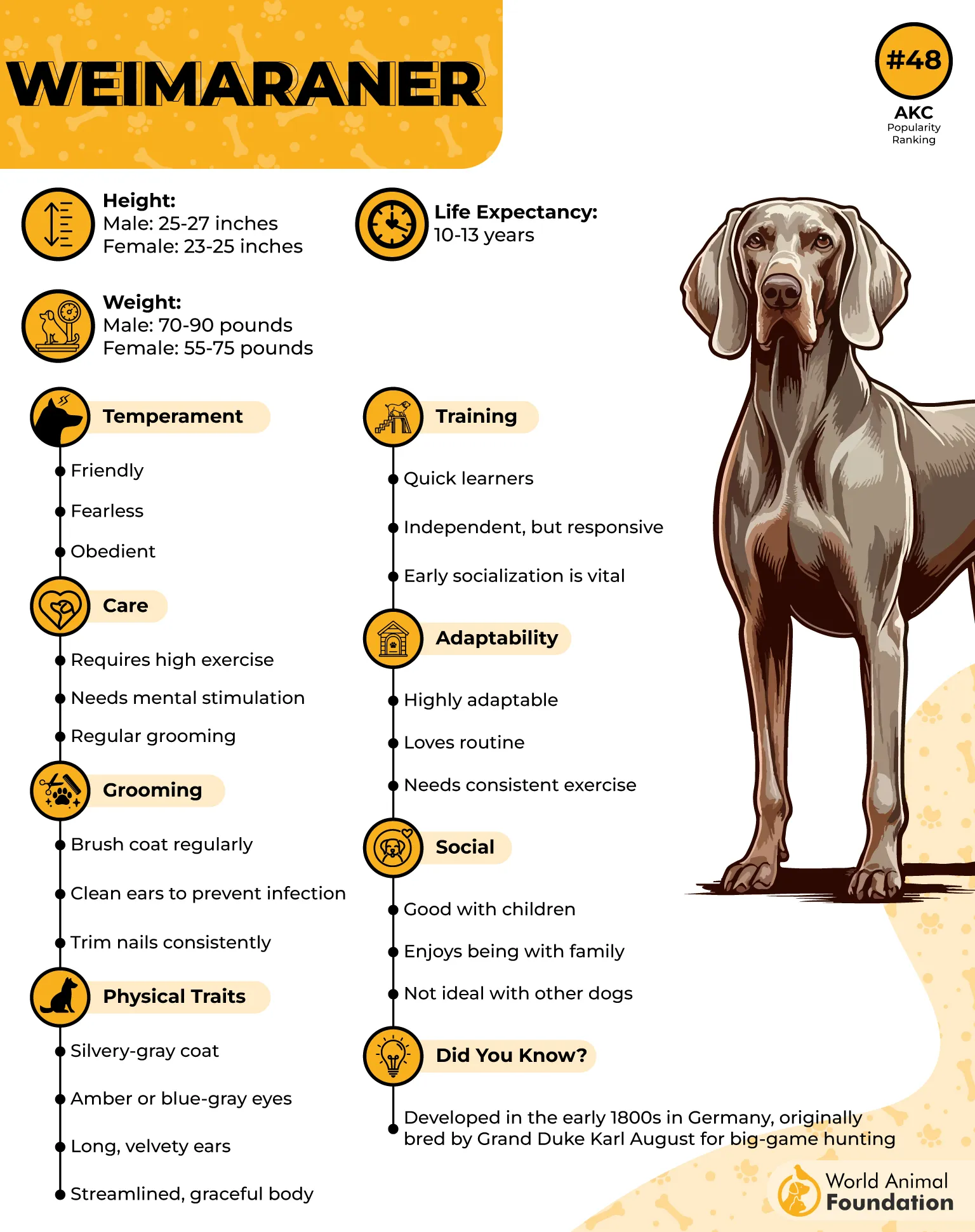
The story of the Weimaraner goes back to 19th-century Germany, where hunters developed it as a versatile gun dog for demanding game such as deer and bear. Its ancestry includes Bloodhounds, Schweisshunds, and pointer breeds, each contributing to the working dog known today.
A Nose for the Trail
This popular breed brings strong scent-tracking ability to difficult searches, paired with an athletic frame built for sustained running over long distances. Its efficient gait and dense coat also suit demanding field work, including wet conditions where quick drying can be useful.
Its field-ready build comes with several useful traits:
Webbed toes can aid water traction
Head-high scanning can precede a sudden freeze
Dense coat dries quickly after wet retrieves
Training With Purpose
Weimaraner learns quickly and responds well to patient, kind training, especially when sessions keep its sharp mind occupied. Early work matters because a strong-willed dog may test boundaries, while consistent guidance helps direct its energy toward useful tasks.
6. Plott Hound
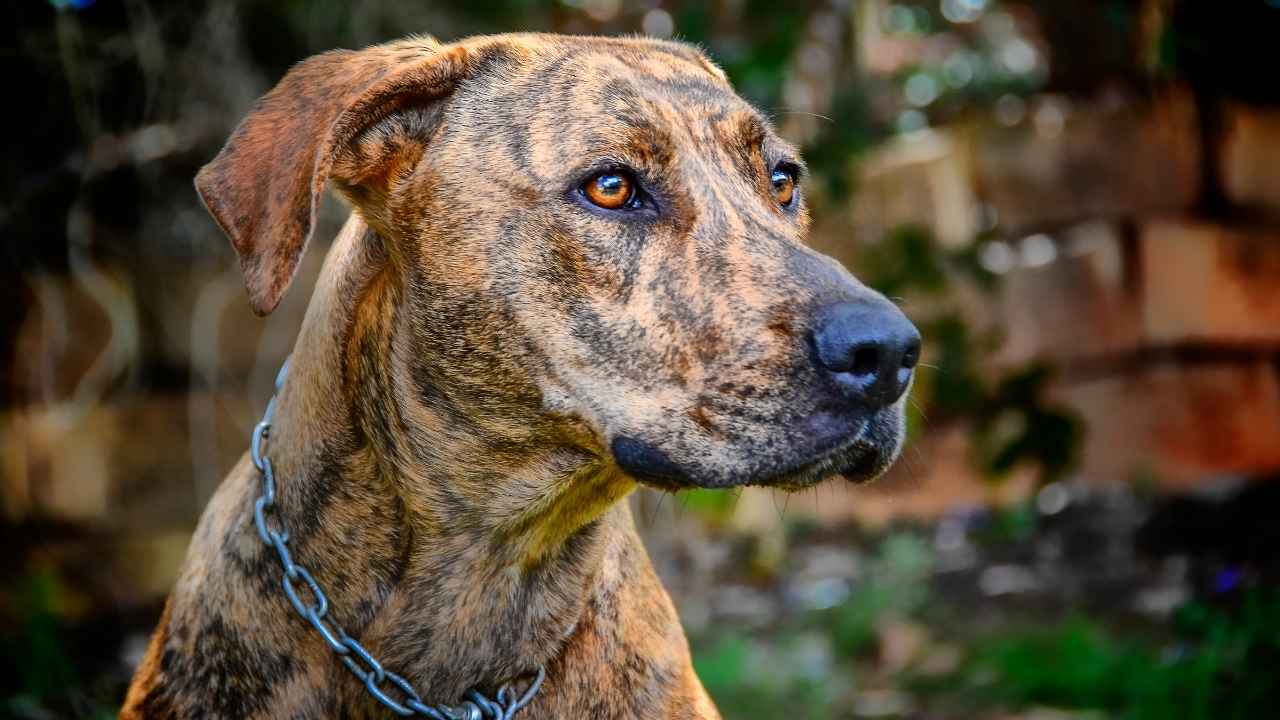
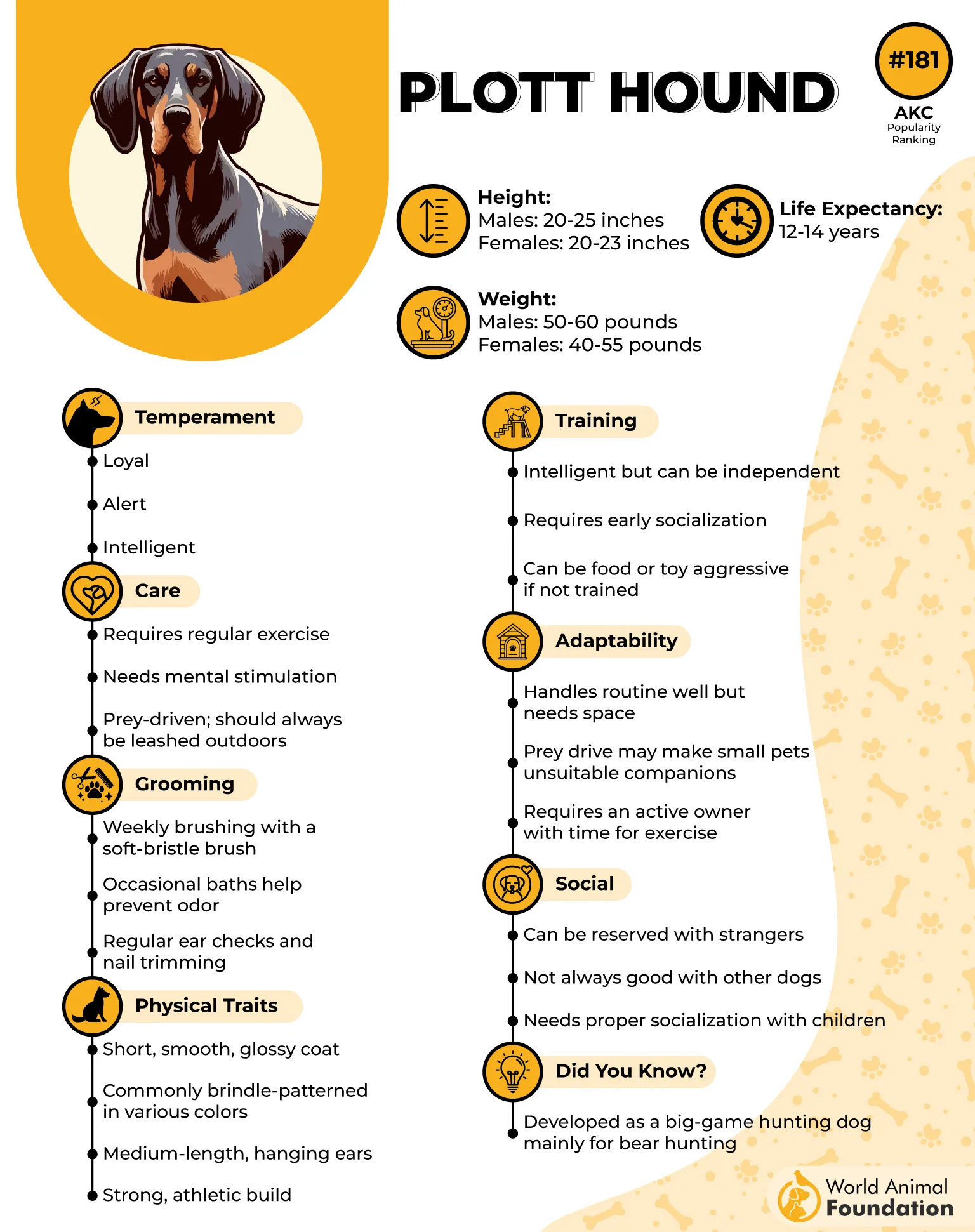
Plott Hound originated in the United States and became North Carolina’s official state dog, with roots that differ from most American coonhounds.
In 1750, German immigrant Johannes Plott brought five Hanoverian Schweisshunds to North Carolina, where his family bred them for wild boar, black bear, and other large-game hunts in the Appalachian Mountains.
Made for the Trail
Plott Hound has an exceptionally strong sense of smell, with tracking ability shaped around older scent trails and rough mountain terrain. Its efficient gait and durable frame allow it to work for long periods through brush and steep country.
These characteristics make its fieldwork especially distinctive:
Side-to-side scent-casting when a trail fades
A deep bay that travels across dense forest
Voice changes that can signal game location
Working With Others
Plott Hound can cooperate effectively in groups, using vocal signals and body language to coordinate with other dogs during a pursuit. Hunters also value its high pain tolerance and tenacity, qualities associated with the demanding work of baying large game across rugged terrain.
7. Dogo Argentino
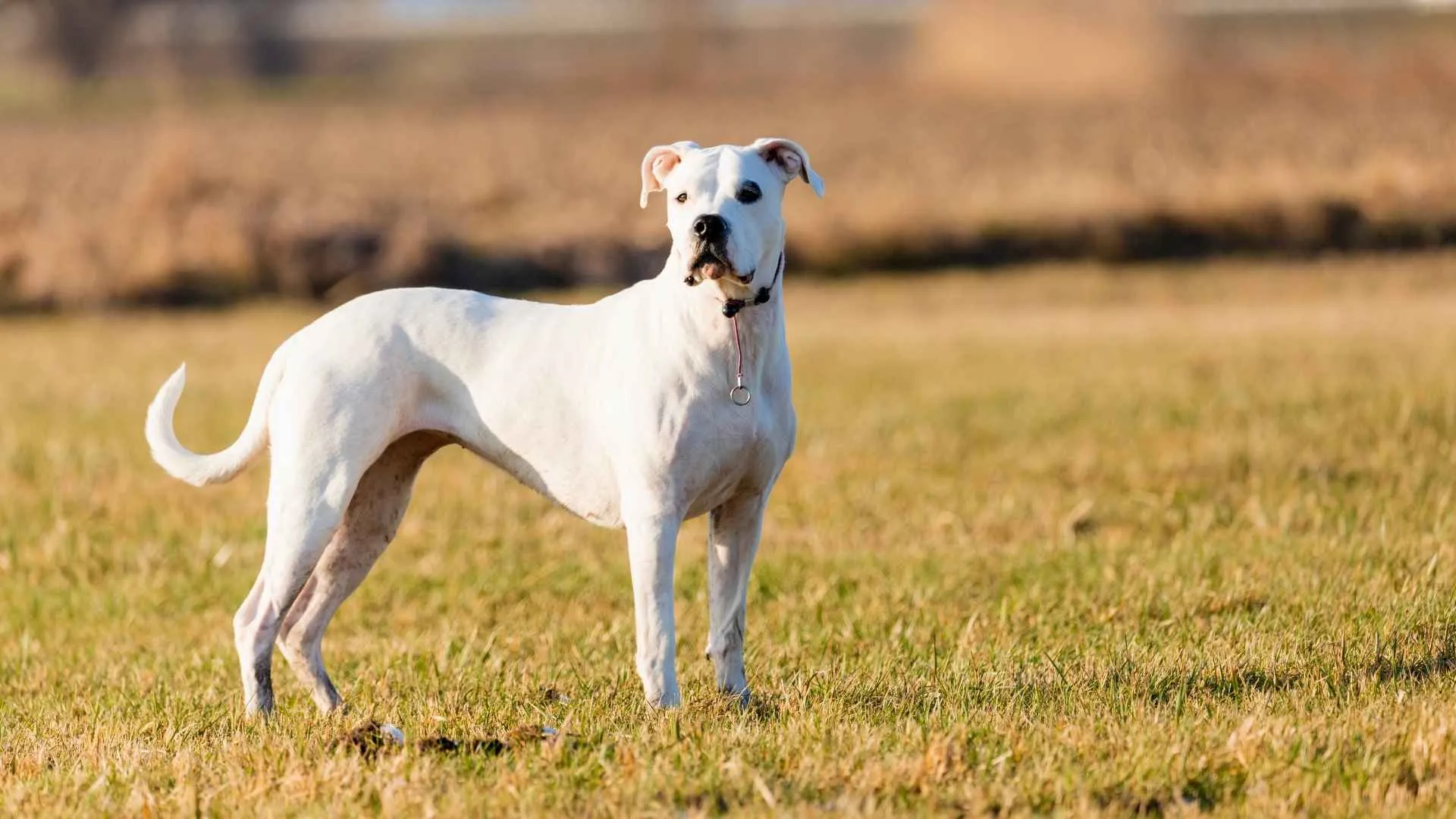
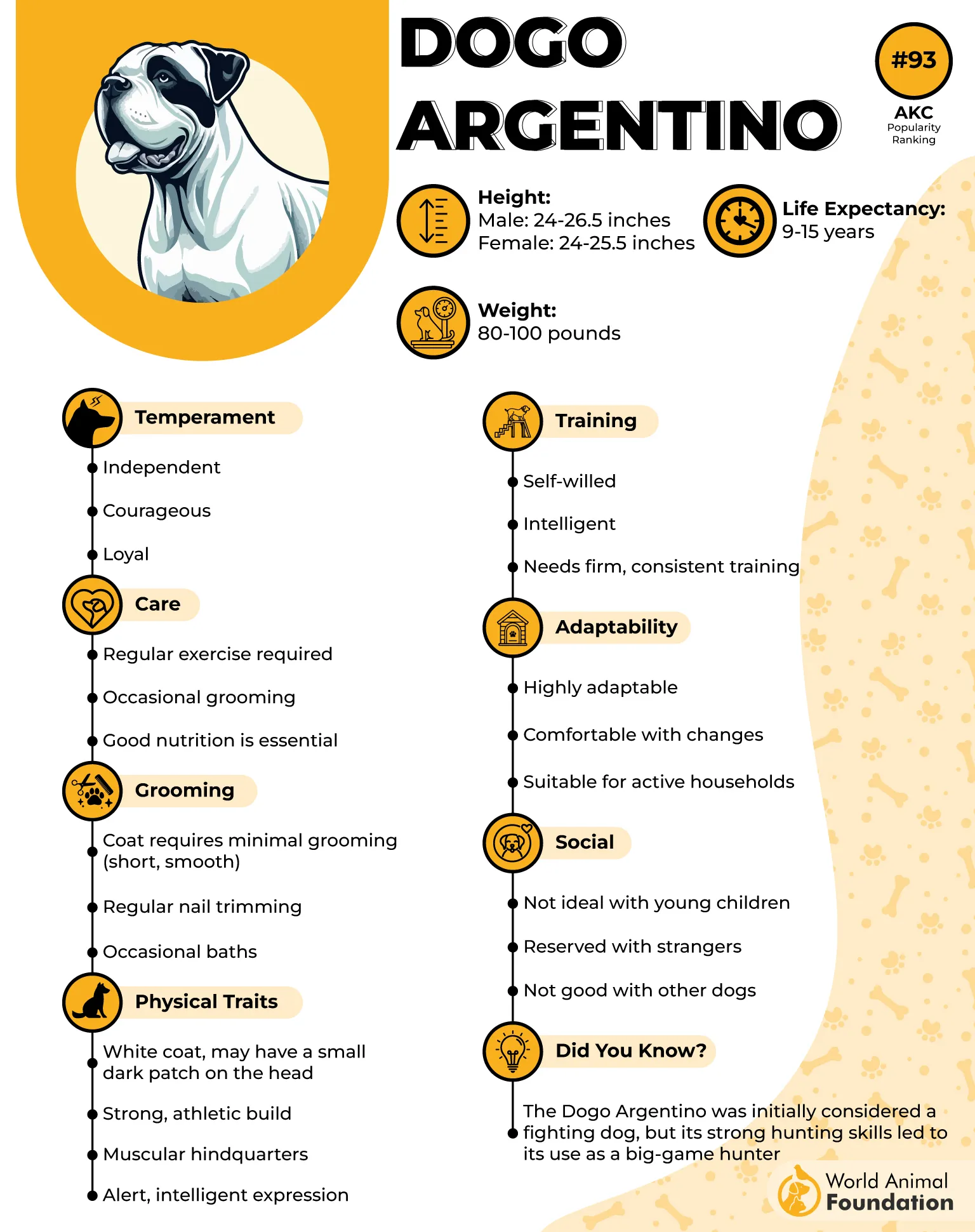
Dogo Argentino was first bred in Argentina in 1928, bringing together breeds such as the Great Dane, Pointer, Bull Terrier, Boxer, and Irish Wolfhound. Local Córdoba dogs and several mastiff breeds also contributed to its early lineage, giving the breed a distinctly varied origin.
Built for the Hunt
Dogo Argentino has a muscular frame built for explosive bursts during pursuit, followed by the stamina needed for longer hunts. Its short, tight coat also suits warm climates and can reduce the chance of vegetation catching against the body.
In thick hunting terrain, these traits become useful:
White coat improves visibility to human hunting partners
Broad head and strong neck support prey control
Powerful grip suits catch-dog work
Serious Energy
Dogo Argentino often alerts quickly to unfamiliar sounds or strangers and can remain vigilant around unfamiliar animals, as noted by Royal Canin. Its physical style also includes strong tugging and grappling instincts, while careful socialization matters because rough dog-to-dog play can become difficult to manage.
8. Airedale Terrier
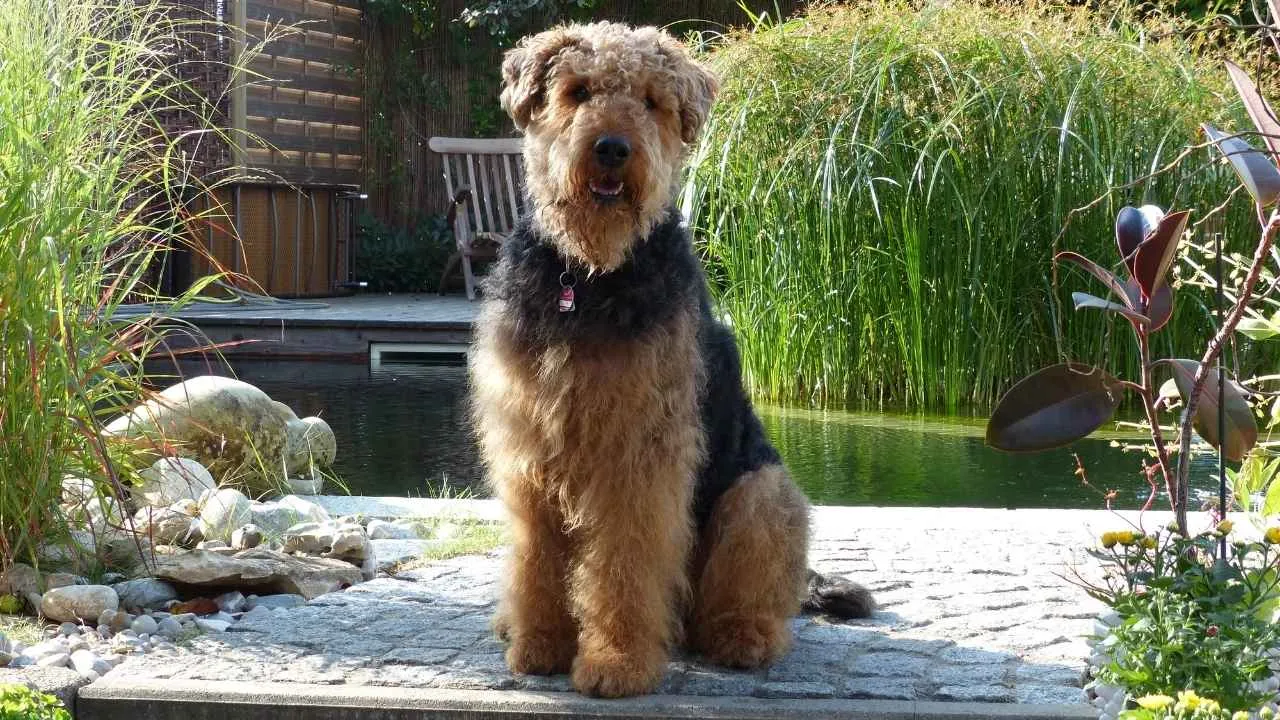
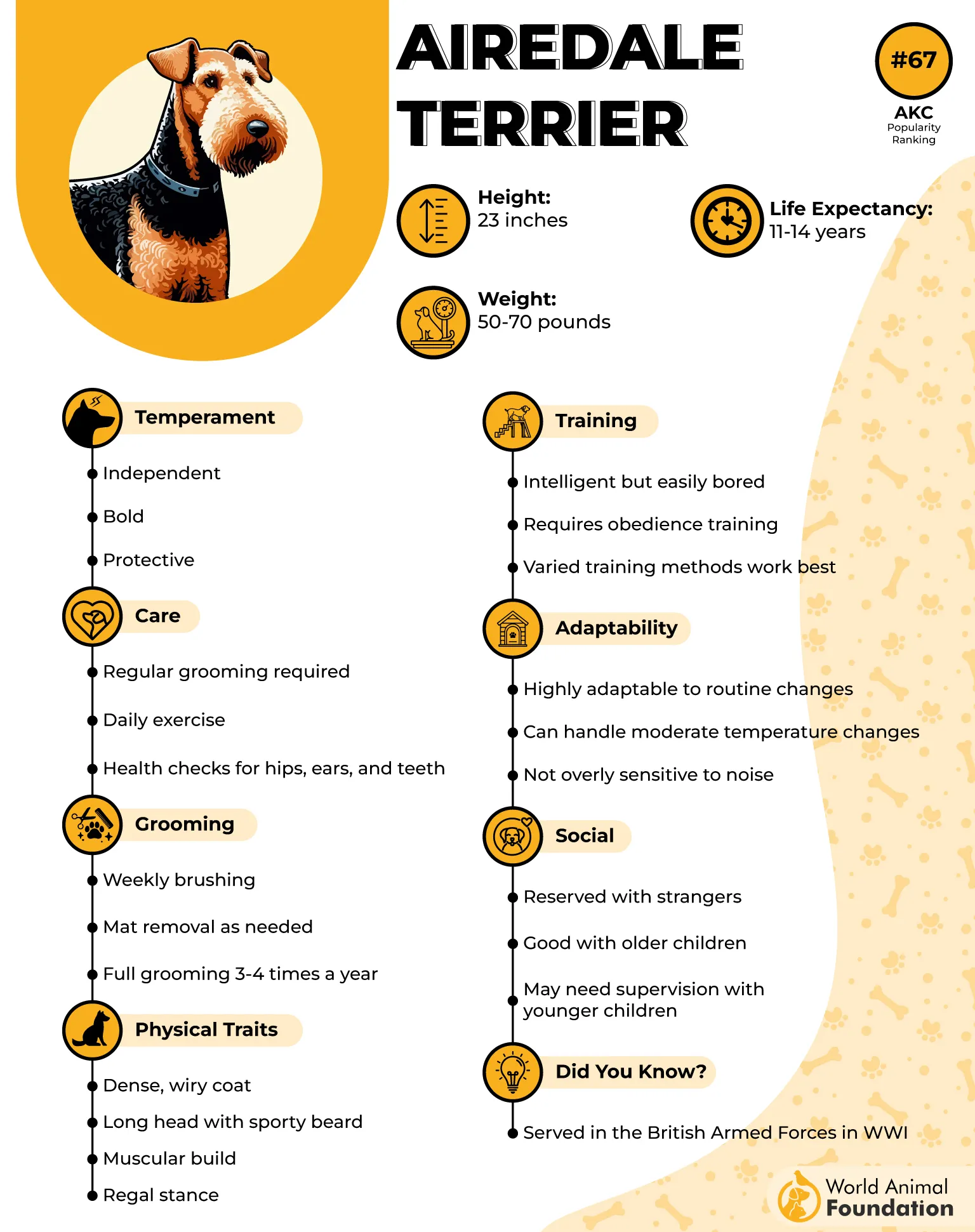
Airedale Terrier earned the title “King Terrier” as the tallest member of the terrier group, with Yorkshire hunters using these dogs for foxes, rats, and otters. During the 1800s, Otterhound crosses strengthened their ability around water, while later Irish and Bull Terrier crosses shaped the modern breed.
Made for the Chase
Airedale Terrier brought together scenting ability and an athletic frame suited to tracking quarry across varied ground. Its work around water became especially important after the Otterhound crosses increased its ability to follow scent in wet terrain.
Its work around water reveals some interesting traits:
Particularly skilled at otter hunting
Enhanced scenting ability around water
Brings plenty of curiosity in everyday life
Protection in Rough Cover
Airedale Terrier has a harsh wire topcoat paired with an insulating undercoat, giving it useful protection from brush and changing weather. The beard and eyebrows also shield the muzzle and eyes from brambles, dirt, and splashing water during outdoor work.
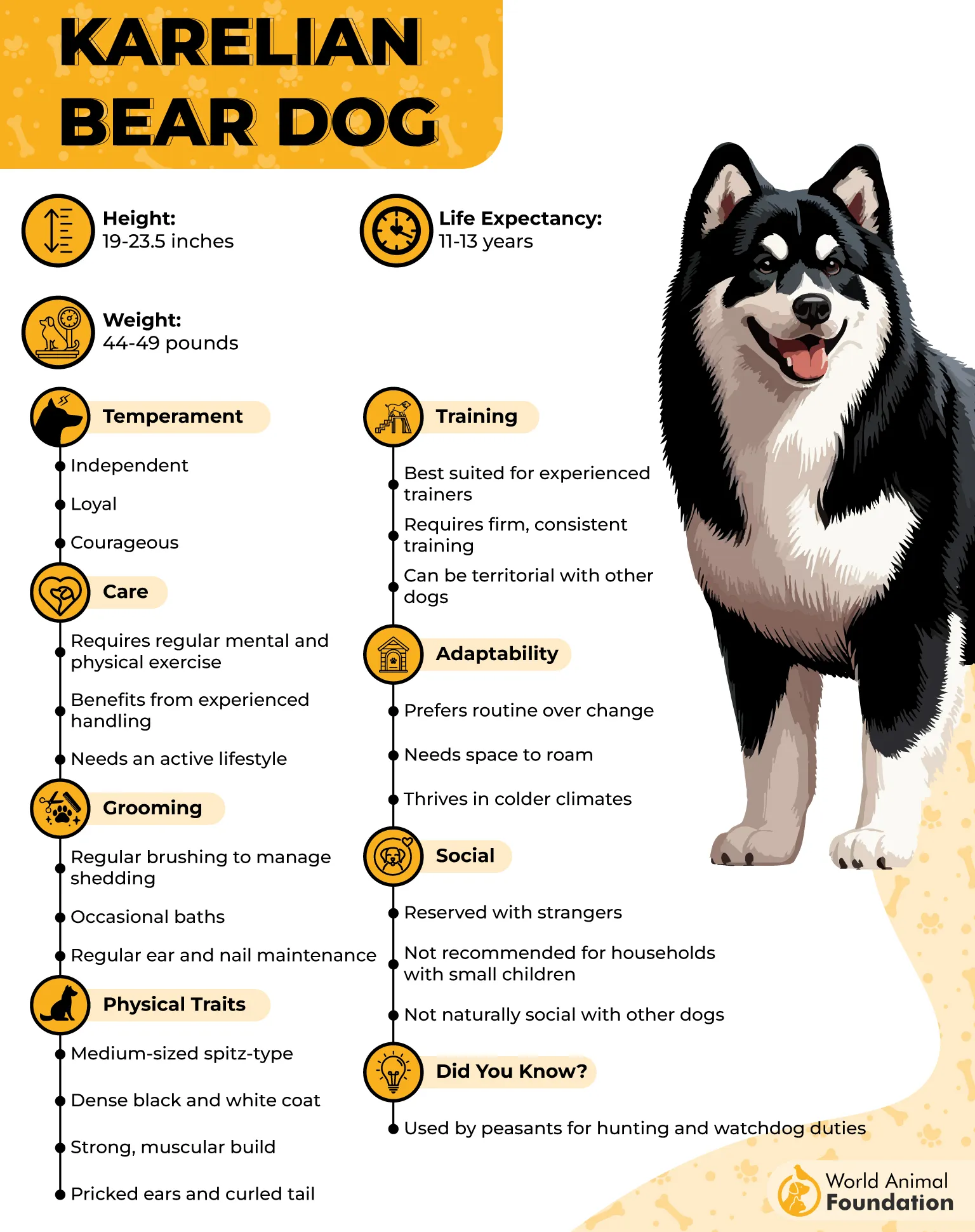
9. Karelian Bear Dog
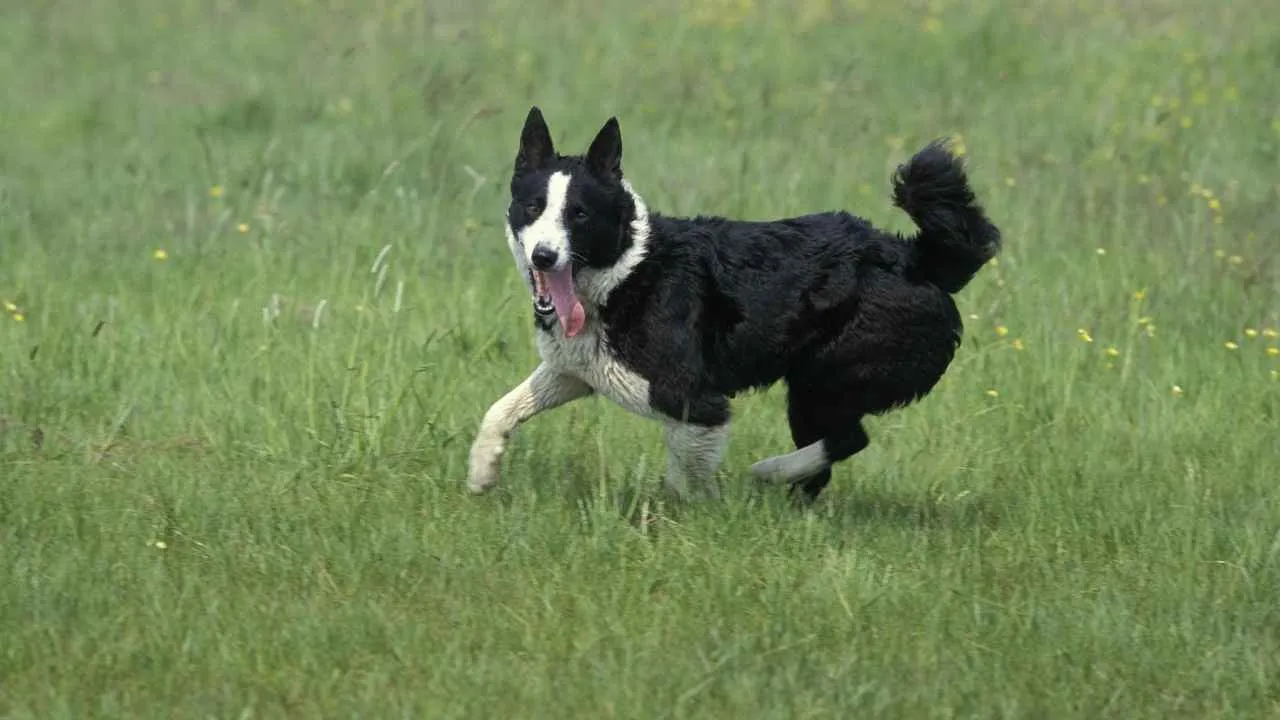
Karelian Bear Dog comes from Karelia in northern Europe, where people relied on hardy hunting dogs for large game such as bears, wolves, and lynx. Similar dogs accompanied early settlers to Finland thousands of years ago, when hunting provided a vital source of food.
Silent on the Trail
Karelian Bear Dog uses a remarkably quiet approach when following a wild boar’s scent through thick forest, allowing it to get closer without immediately alerting the animal. Once the boar is cornered, the dog switches to persistent barking to distract it and signal the hunter.
The hunt demands several precise abilities:
Quick footwork around an aggressive boar
Confidence while working independently
Strong drive to pursue large game
Quick Under Pressure
Karelian Bear Dog relies on agility to circle and harry a wild boar while keeping enough distance to avoid a dangerous charge. Its self-reliant working style allows it to make decisions while tracking game without constant direction from a person, even across unfamiliar terrain, as noted by the AKC.
10. Alano Español
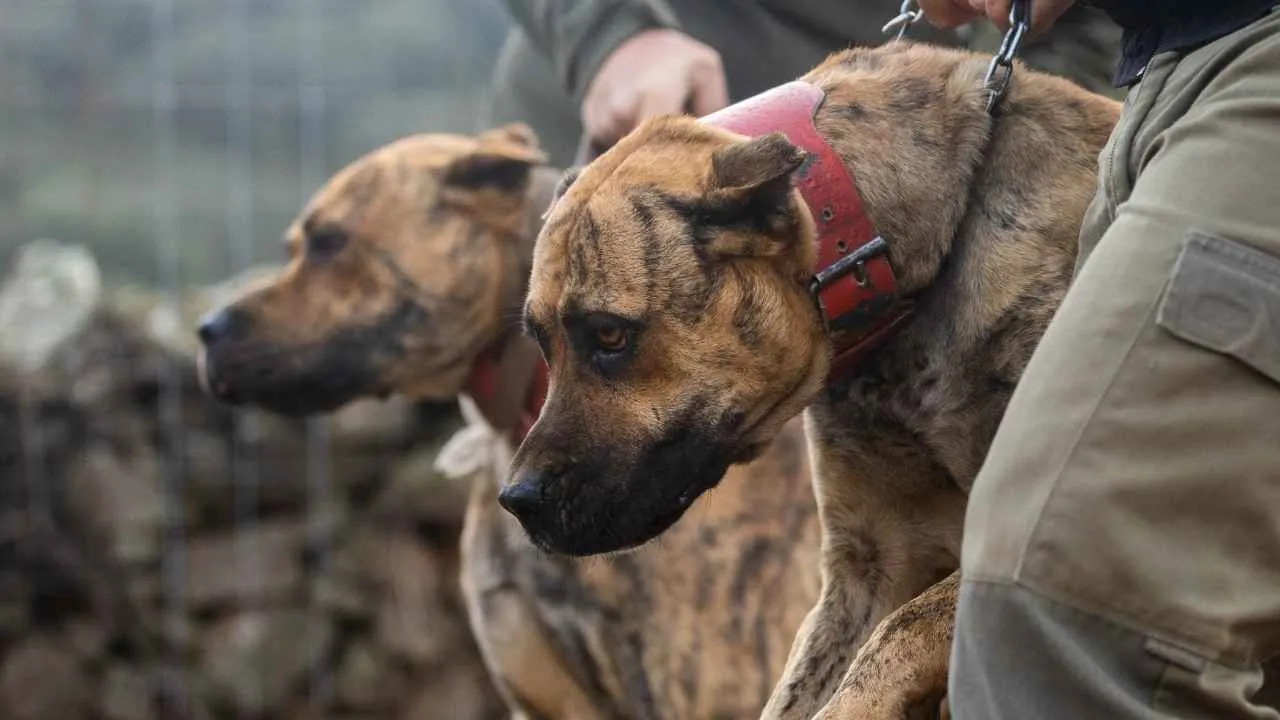
Alano Español is an ancient Spanish breed linked to the Alans, who entered the Iberian Peninsula in 406 AD with dogs that later influenced several molosser types. While related dogs appeared elsewhere in Europe, the Alano survived in Spain for more than 1,500 years.
Made for Wild Boar
Alano Español was traditionally used as a catch dog, working at close range to corner and seize powerful game such as wild boar and bulls. Speed, immense jaw strength, fearlessness, and an unusually high tolerance for pain allowed it to hold difficult animals until the hunter arrived.
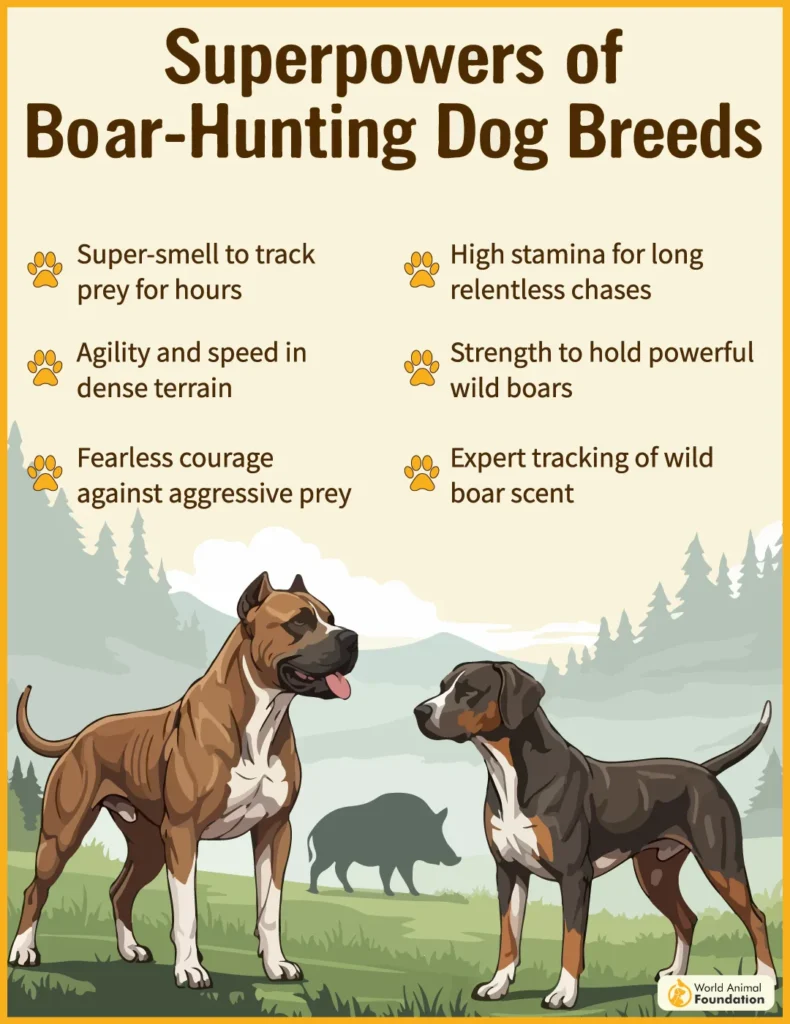
Its hunting work relied on several remarkable abilities:
Grips fiercely with powerful jaws
Holds aggressive game firmly
Ignores pain during a task
Serious Yet Steady
Alano Español has a serious, dominant temperament that remains highly controllable under its handler’s direction. Around familiar people, it can be affectionate and remarkably patient with children, while its reliable nature and obedience make close handling possible.
Conclusion
Wild boar hunting can place serious demands on a working dog, especially when trails cross thick vegetation, uneven ground, or difficult weather. Strong scenting ability helps establish direction, while endurance keeps the dog working when the trail stretches for miles. Courage and physical control become equally important when close contact with large predators or large game is involved, even for breeds with a small size.
The dogs in this group represent several different approaches to the work, from careful scent tracking to pursuit, baying, and close-range holding. Different breeds may also excel in roles such as waterfowl hunting, so finding the best dog depends on the task, terrain, training, and experience of the handler. The right dog should have the skills needed for optimal performance, while an intimidating appearance is only one part of the picture.
