




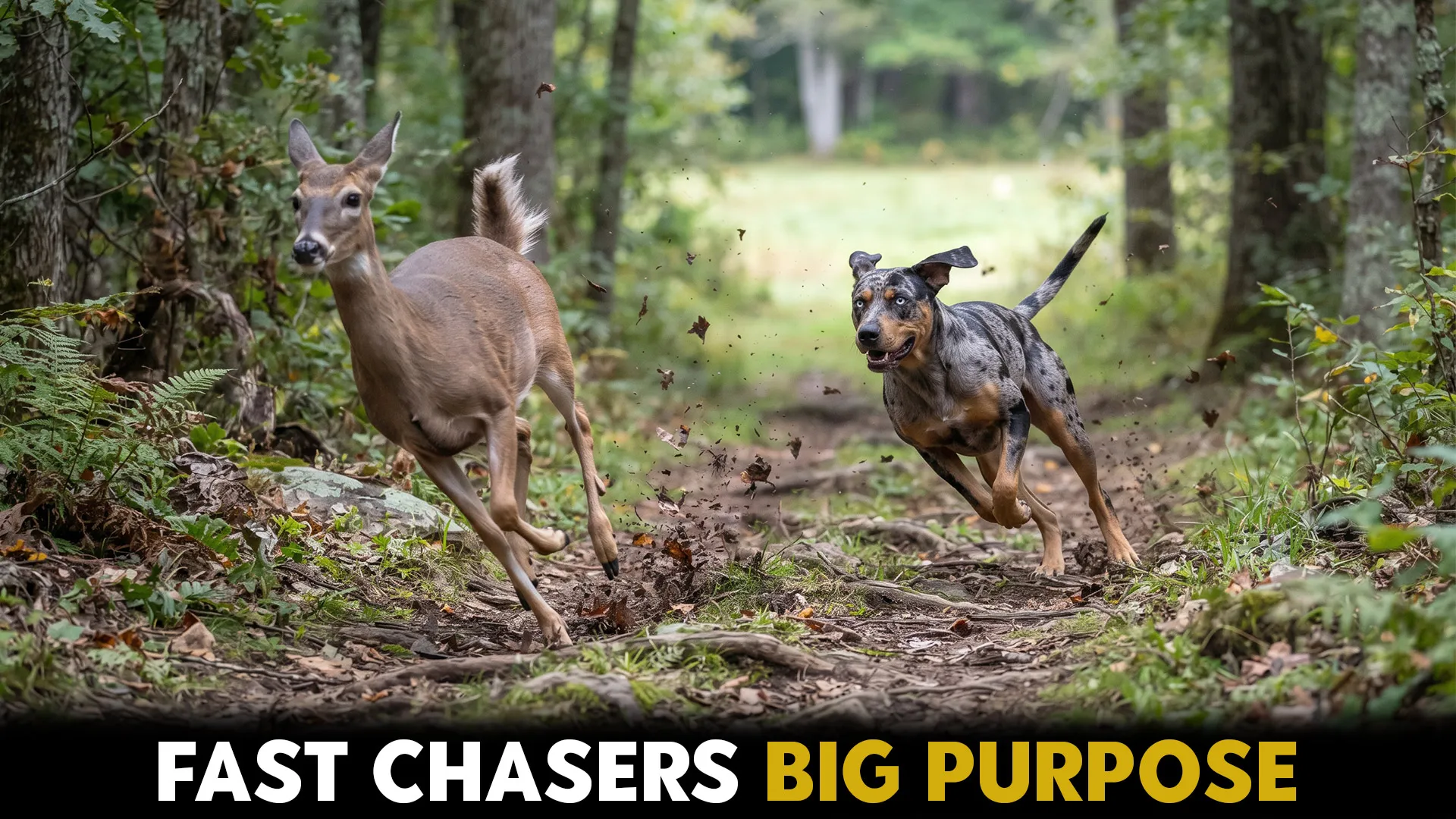
What makes a dog capable of chasing a deer at speed? The answer involves more than having long legs. Some dogs can spot movement from a distance and launch into pursuit almost instantly, while others depend on scent and persistence to follow an animal after it disappears from view.
Breeds bred for hunting often have physical features that support demanding pursuits, including strong hindquarters, efficient lungs, flexible spines, and athletic builds. Their instincts matter just as much. A strong prey drive can turn a sudden glimpse of a running deer into an immediate chase.
Rough terrain changes the equation too, since open fields favor speed while dense woodland can reward agility, scent work, and endurance. Deer themselves are exceptionally quick and agile, capable of sudden turns that challenge even athletic dogs.
The breeds ahead represent different approaches to pursuit, from explosive acceleration to sustained tracking, giving you more to compare than speed.
Key Takeaways
A single glimpse of a running deer can be enough to wake up a powerful hunting instinct.
The German Shorthaired Pointer and American Foxhound bring speed, stamina, and the kind of focus that can keep them moving for miles outdoors.
Then come the scent specialists, including the Treeing Walker Coonhound, Bluetick Coonhound, and Drever, each following a trail in its own determined way.
Stay with the list because one breed was once trusted by Scottish nobility to chase red deer, and its running style is worth knowing about.
Dog Breeds Known for Rapid Deer Chases
1. German Shorthaired Pointer
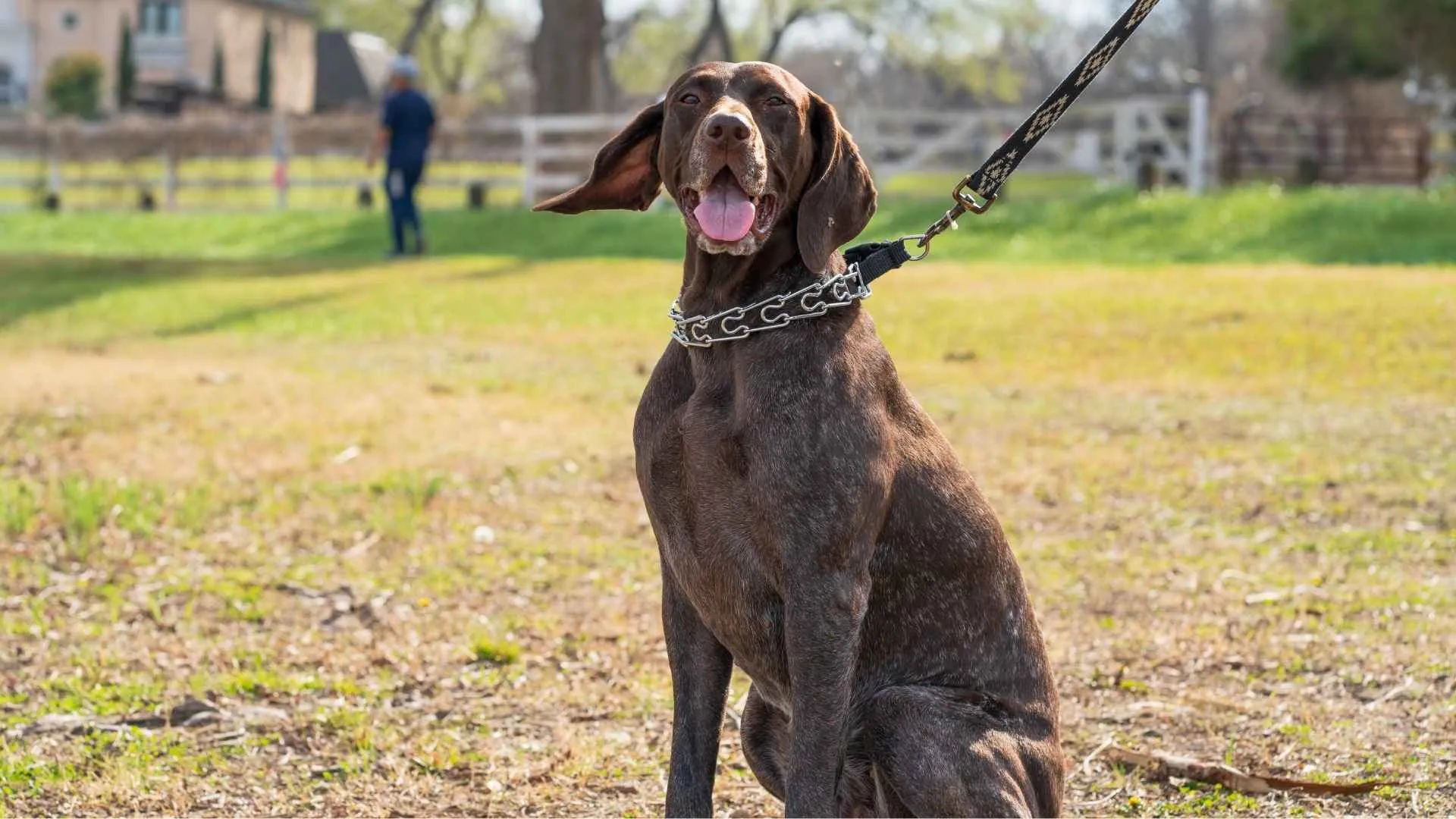
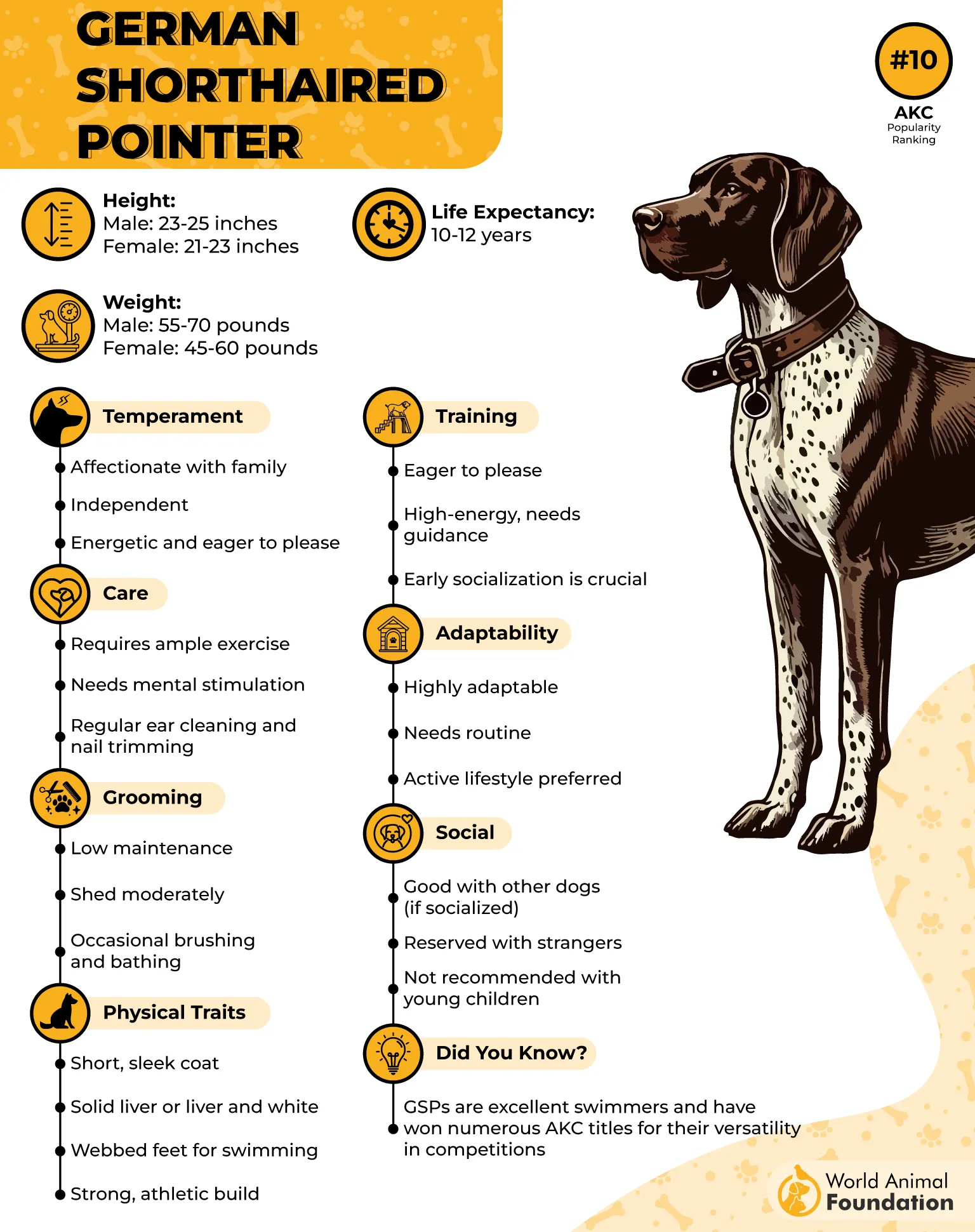
German Shorthaired Pointer took shape from German Bird Dog lines connected to the Old Spanish Pointer, with English Pointer and Arkwright Pointer influence added along the way. Its modern form was largely established around 1870, followed by American Kennel Club recognition in 1930.
Driven to Chase
This hunting dog can point and retrieve across land and water, with a deep chest, long legs, and lean muscular frame suited to sustained galloping.
Its exceptional stamina and strong prey drive make deer, rabbits, and other wildlife especially tempting targets during outdoor pursuits.
Three details explain how this hunting style works:
Air-scenting detects birds carried by wind
Quartering covers ground side to side
Pointing can include one raised forepaw
Puppy Energy for Years
German Shorthaired Pointer can remain puppy-like until around two years old, with youthful energy that may continue into later life. Agility, dock diving, field trials, and full-speed running provide demanding outlets, while a bored young dog can turn that energy toward destructive behavior.
2. American Foxhound
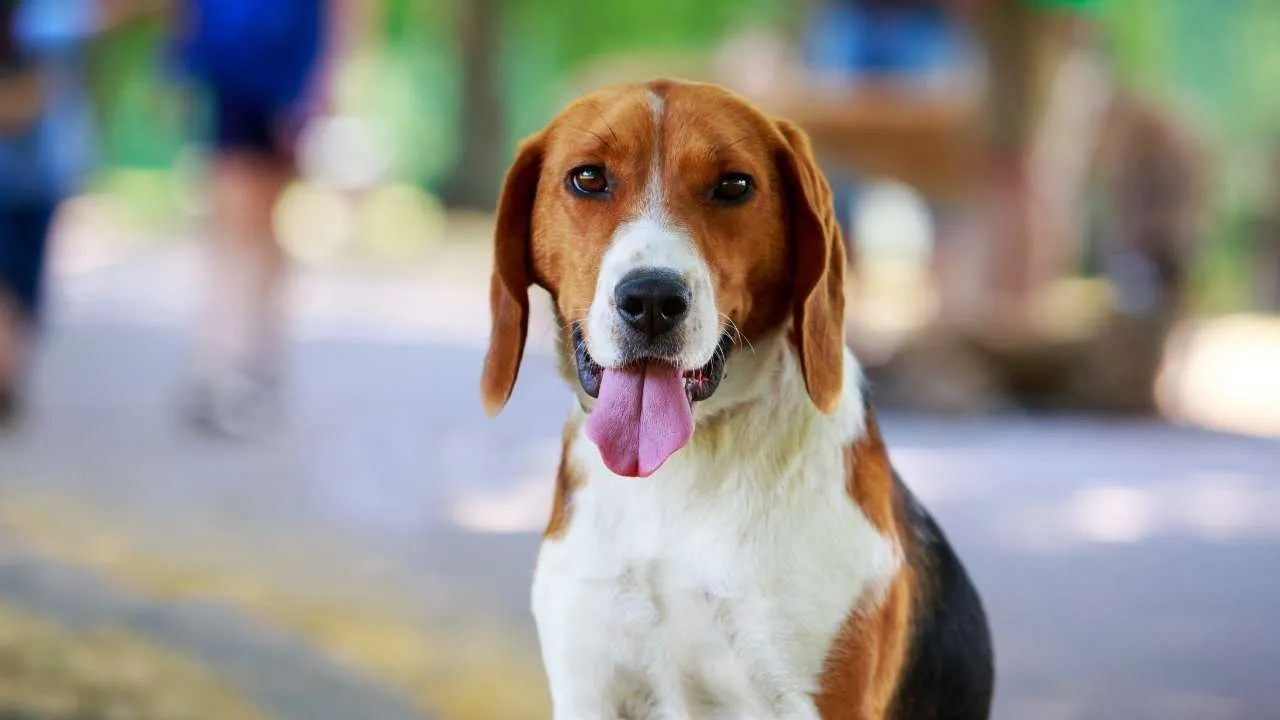
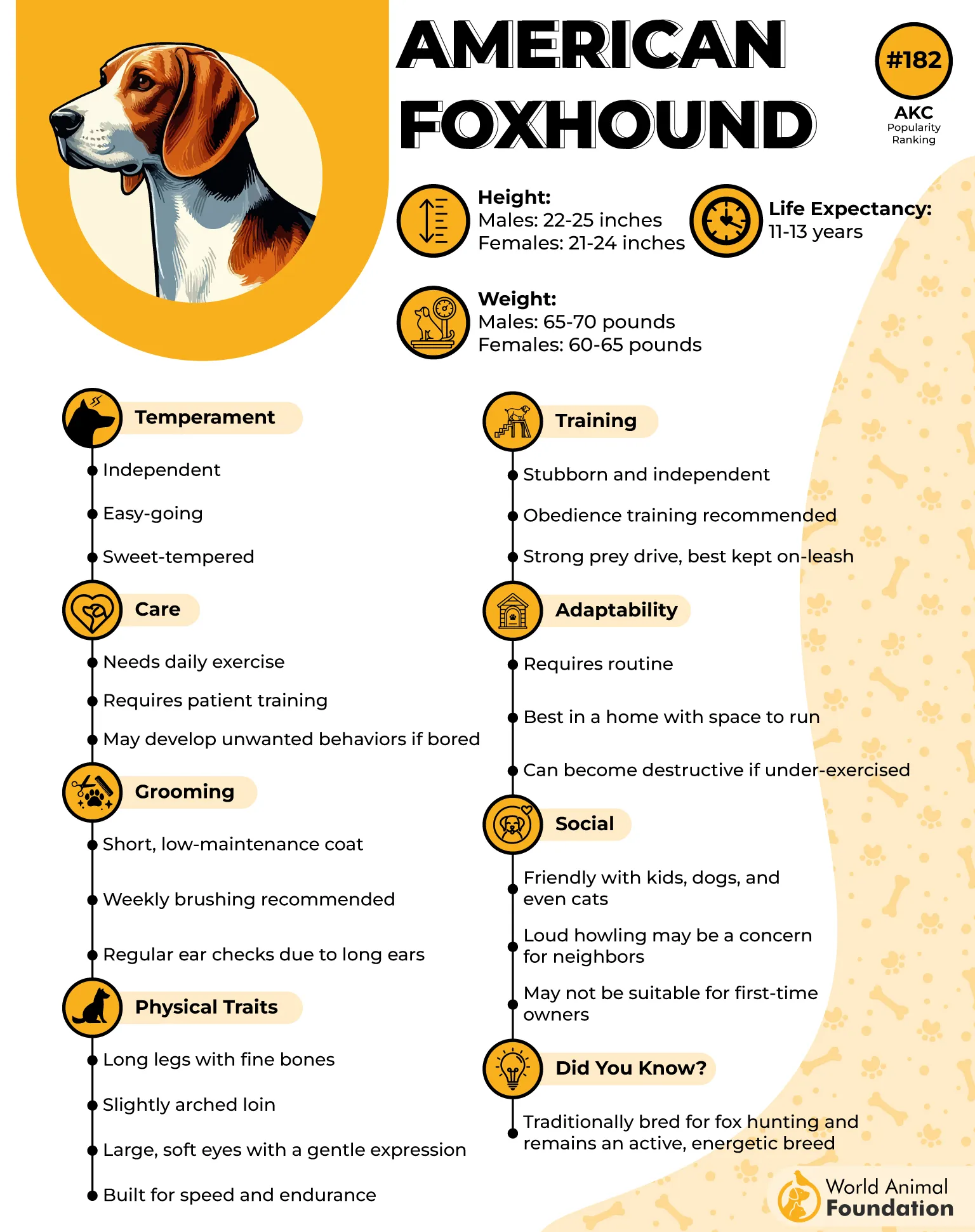
American Foxhound first arrived in America during the 1650s through English introductions, and fox hunting became a fashionable pursuit among upper-class society by the 1700s. Later breeding included American Coonhounds and Irish Foxhounds, shaping the leaner type associated with the breed today.
Quick on the Hunt
American Foxhound has a deep chest, long legs, and a lean muscular frame built around efficient, sustained running. Its large lung capacity and economical stride allow it to cover miles at a steady pace across varied ground while following a scent.
Three details are especially useful to understand its hunting ability:
Works best alongside other dogs
Its loud bay can travel for miles
Small animals may trigger its chase instinct
Nose Takes the Lead
This energetic dog can become intensely focused once it catches a scent, sometimes casting outward in widening arcs until the trail is located again. That strong tracking instinct can also fuel serious wandering, especially when an interesting scent leads beyond an unsecured yard.
3. Treeing Walker Hound
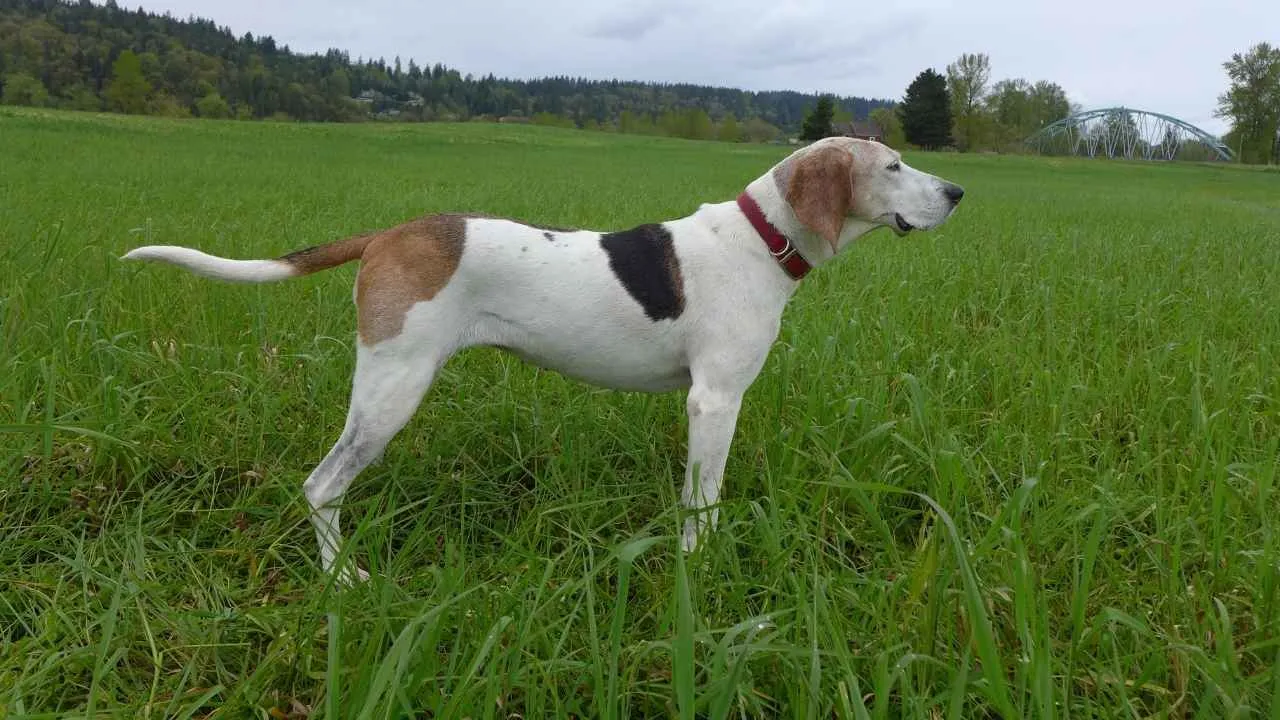
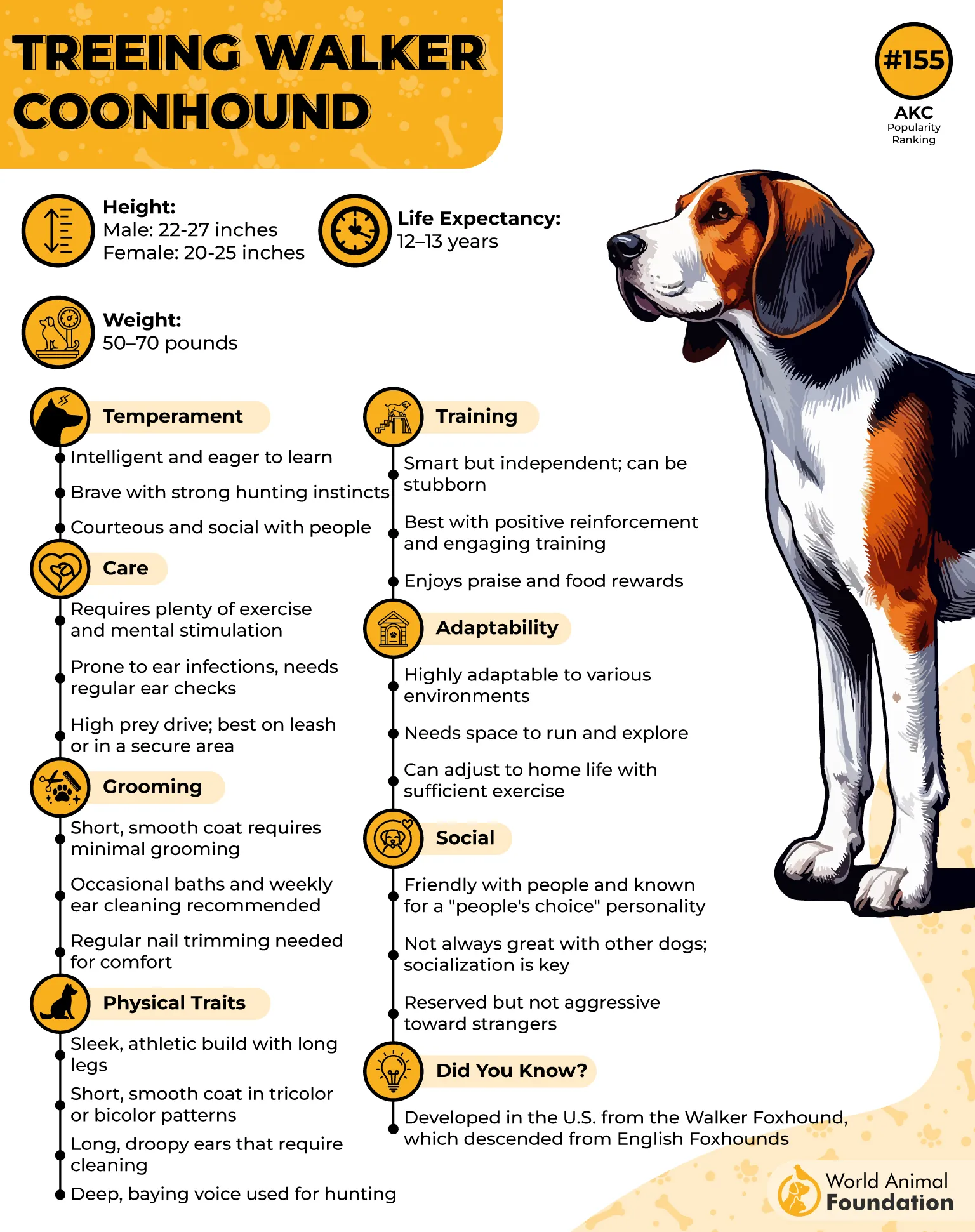
Treeing Walker Coonhound descends from English Foxhounds brought to America by Thomas Walker in 1742. It later developed along a separate path as hunters selected dogs for pursuing quarry that escaped by climbing trees, including raccoons and deer.
Built for the Chase
This Coonhound brings speed, agility, and serious endurance to a pursuit, using its nose to follow complicated scent trails across varied ground. Its long ears help funnel ground scents toward the nose while its lean build supports sustained running over distance.
Three details make its fieldwork especially distinctive:
Tough feet for rough undergrowth
Resilient skin around thorns
Nose-down sweeping scent patterns
Strong Hunting Drive
Treeing Walker Coonhound has a powerful instinct to pursue quarry, so an off-leash dog may travel far enough to ignore recall without solid training, as per the AKC. Its competitive nature also calls for purposeful activities, while short reward-based sessions suit its independent approach to learning.
4. Bluetick Coonhound
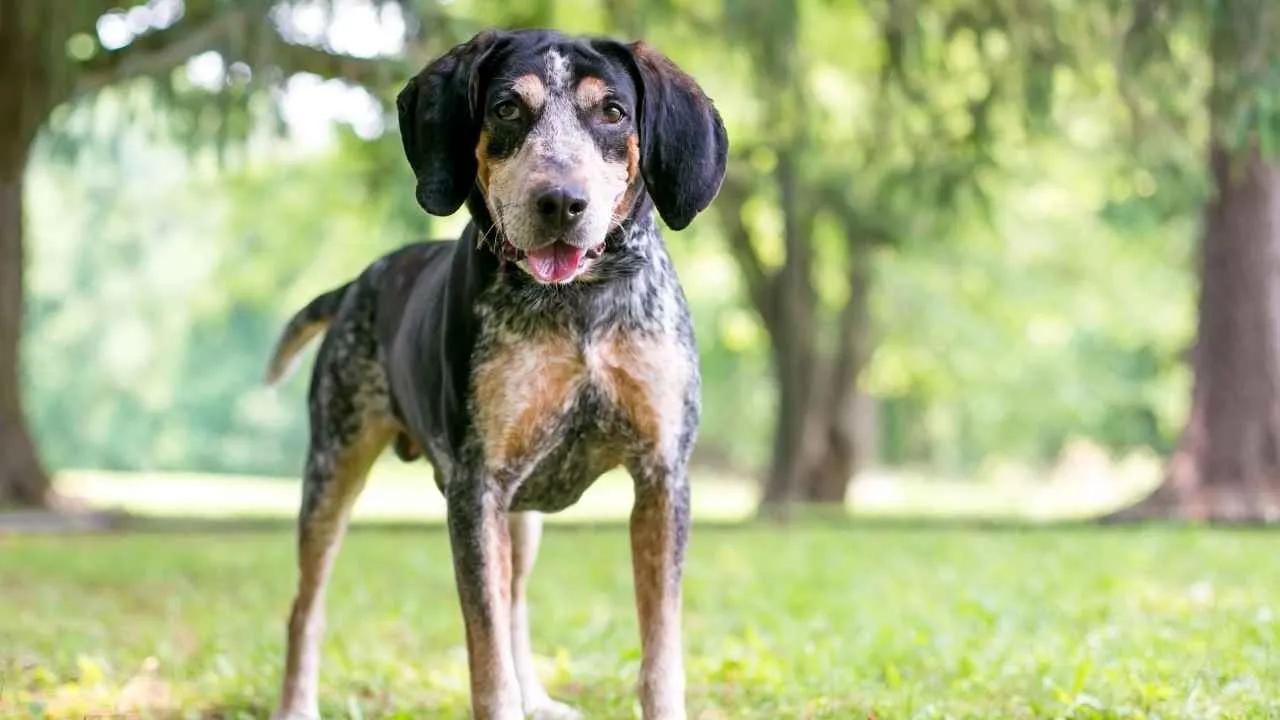
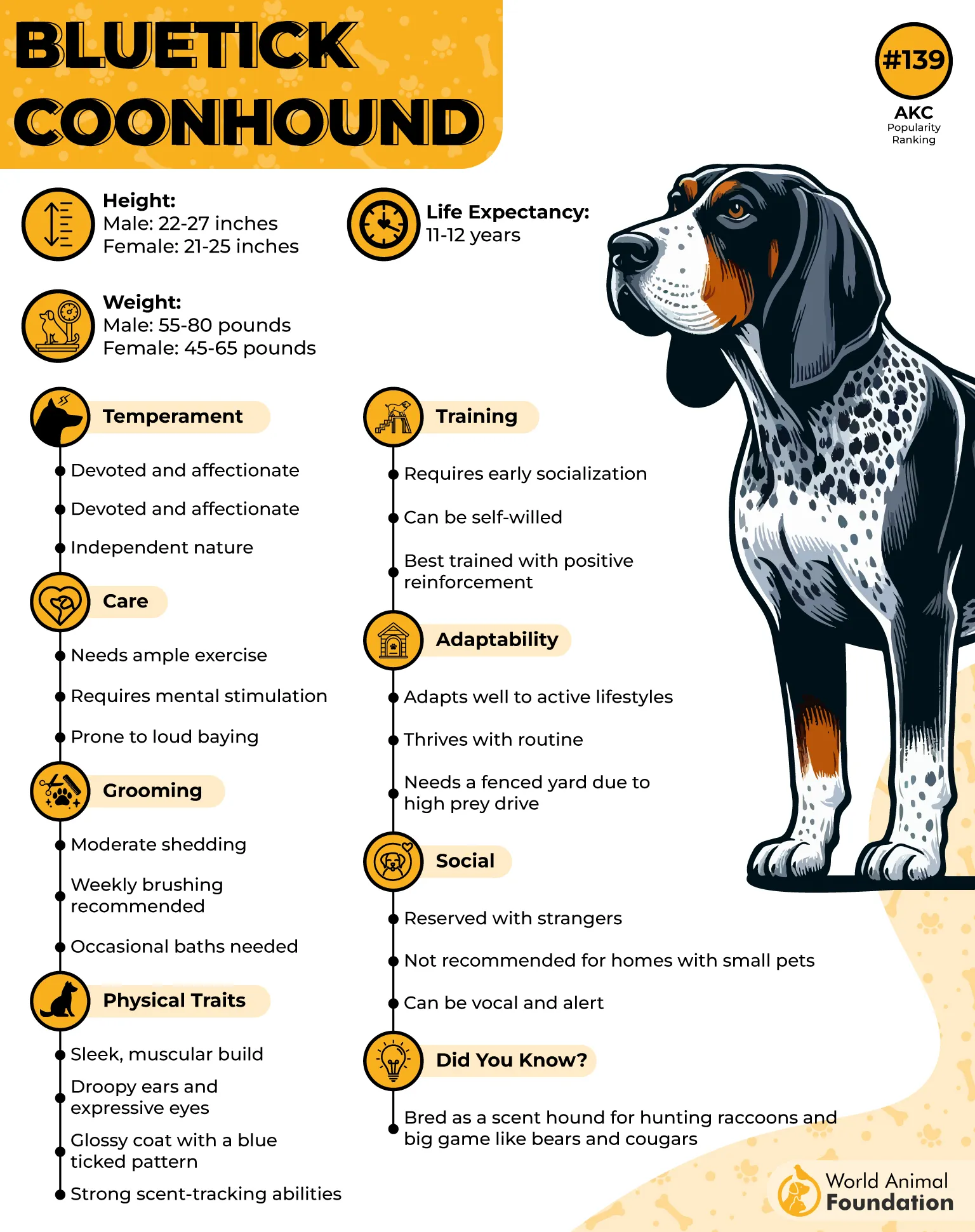
Bluetick Coonhound was once grouped with English Coonhounds until breeders separated in 1945 over the direction of hunting work. The breed favored a slower, more resolute style built around detecting older, colder scents, and the AKC recognized it separately in 2009.
Made to Keep Moving
They have a powerful nose and can work an aging scent by sweeping side to side until the track comes together again. Once the odor line is found, it can lower its nose and pull forward with intense concentration, making scent work its strongest hunting skill.
A few details reveal how that pursuit unfolds:
Sustained baying changes as scent strengthens
Circles trees while vocalizing at quarry
Can choose routes independently from handlers
Life Beyond the Chase
This active dog is affectionate with familiar people and generally welcoming toward newcomers, while its playful nature can make interactions with younger children rather rowdy, as Orvis noted.
Smaller animals can trigger its chase instinct, and consistent training matters because this scent-driven hound may follow an odor rather than immediately respond to a cue.
5. Drever
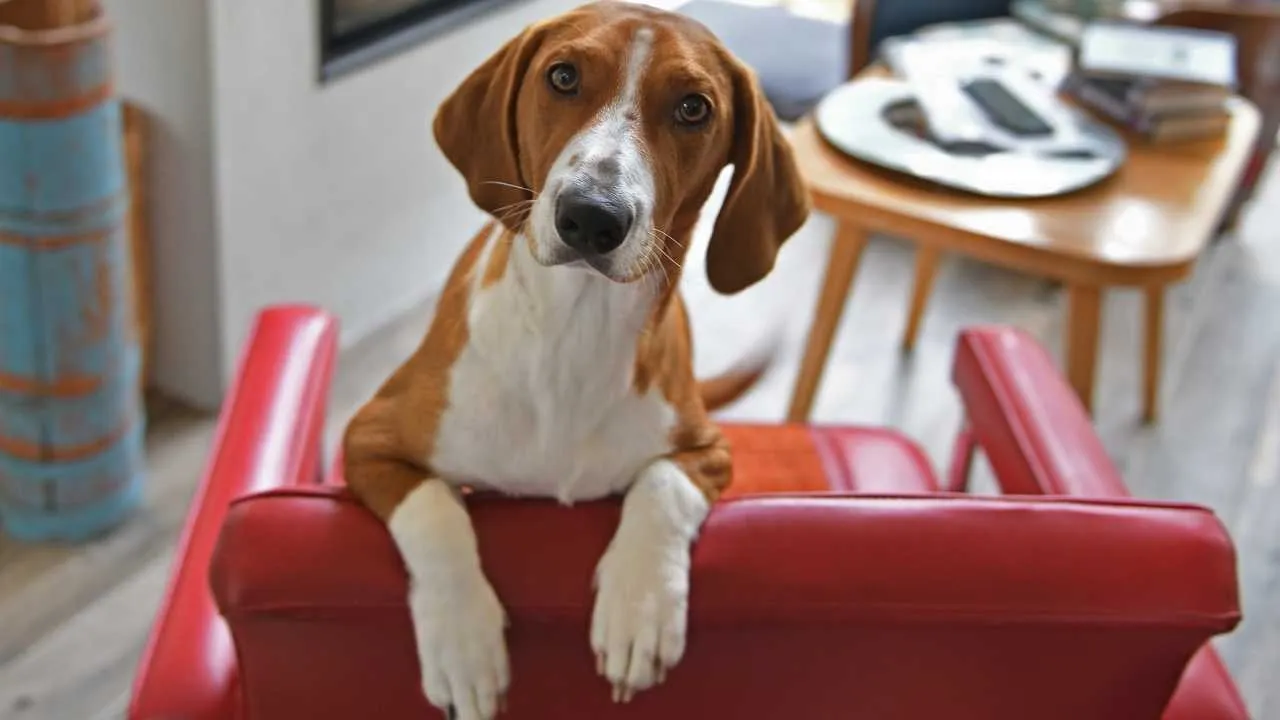
Drever comes from Sweden, where its name is linked to the idea of hunting, and its purpose was closely tied to tracking wild game. The Swedish Kennel Club officially recognized the breed in 1953, and it remains far more common in Sweden than beyond its borders.
Deer on the Scent
Drever brings a very different style to deer pursuit, using its powerful nose to locate a trail and steadily drive the animal toward the hunter. Its stamina lets it keep working through a chase rather than relying on a brief burst of speed.
The breed’s field work has some fascinating details:
Rhythmic baying on a fresh scent
Side-to-side casting when a trail disappears
Strong focus once the odor is found
Independent Worker
Drever can hunt alongside other dogs while confidently following its own line when necessary. That independence comes with a stubborn streak, so clear direction and consistent training are important, especially when its attention locks onto a scent and off-leash recall becomes uncertain.
6. Plott Hound
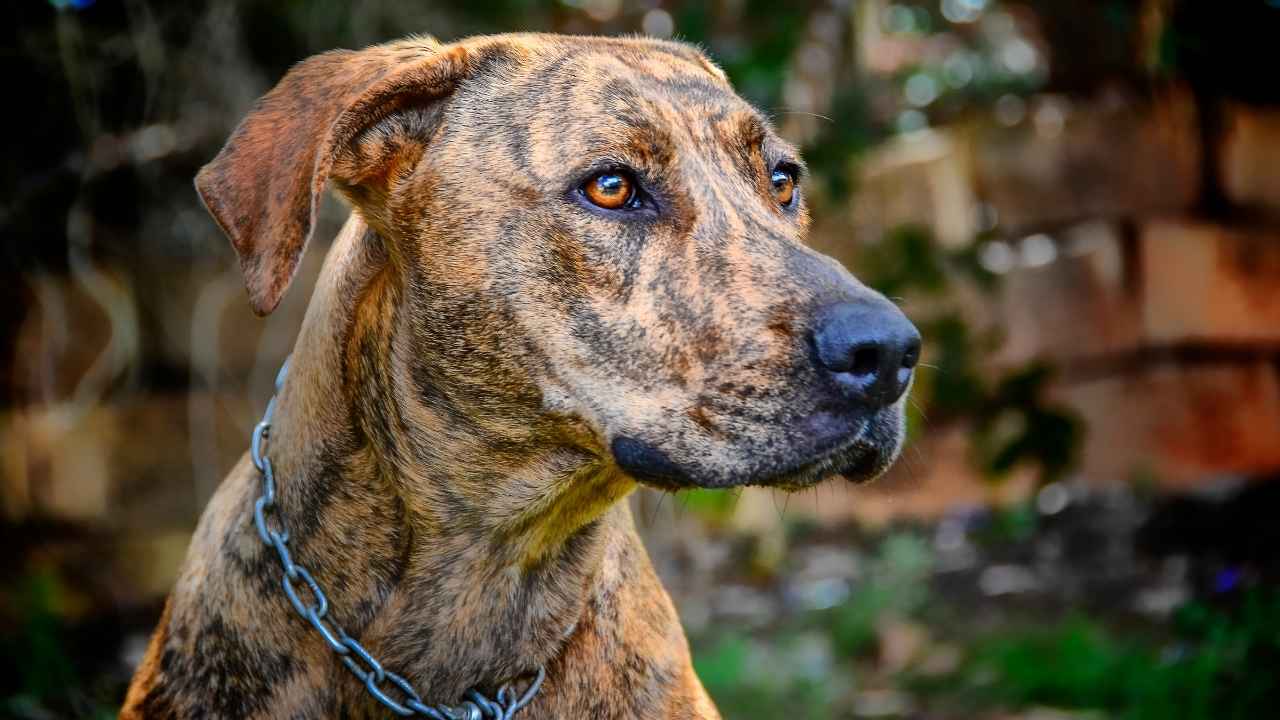
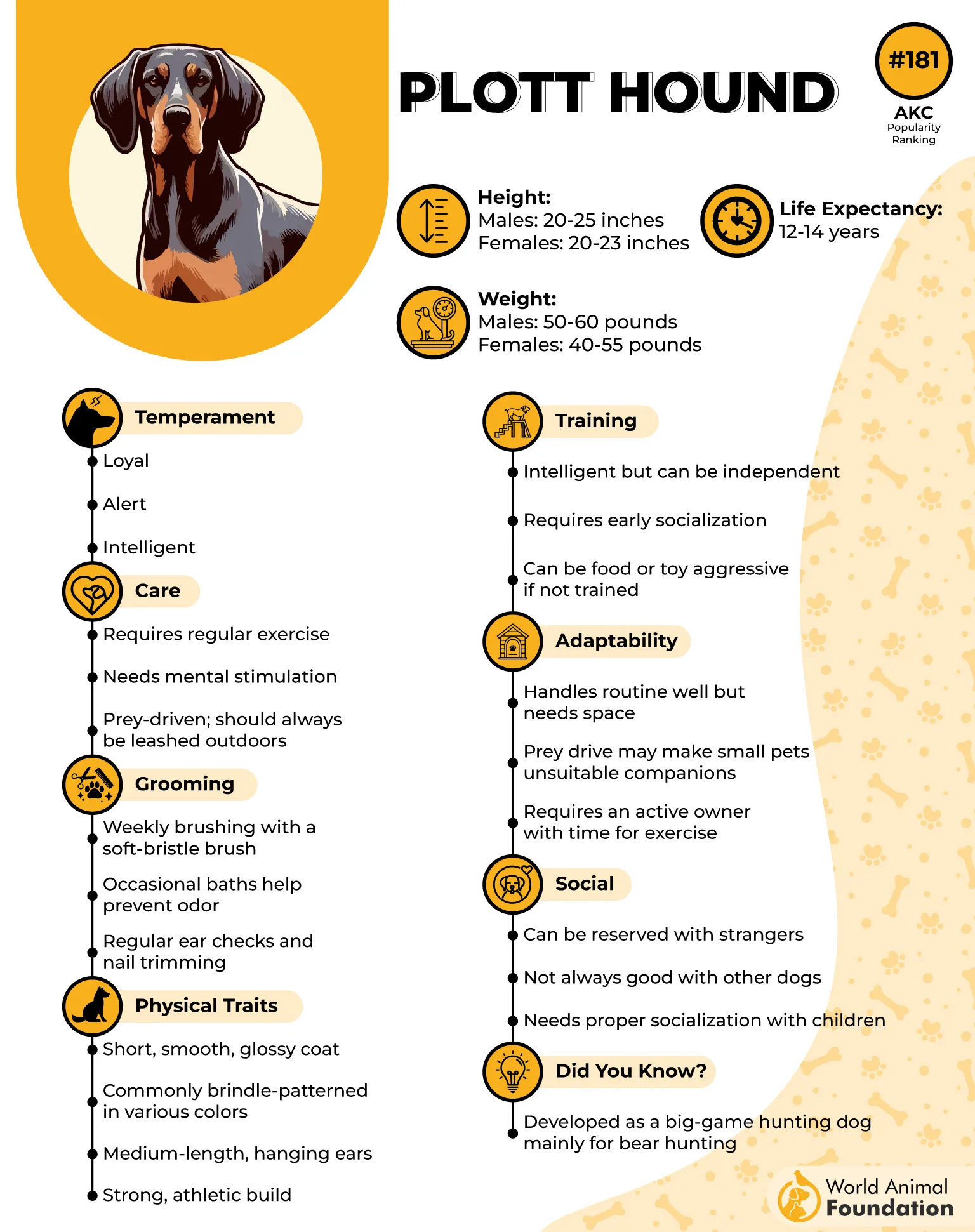
Plott Hound is North Carolina’s official state dog, with a history tied to the Great Smoky Mountains and a German family named the Plotts. The dogs arrived in North Carolina during the mid-1700s and later became known for hunting while also helping guard neighboring farms and homesteads.
A Natural Pursuer
Plott Hound has an athletic, durable frame and an efficient gait suited to mountainous and brush-filled country. Its highly sensitive nose can work cold trails, while a persistent tracking style helps it follow scent across difficult ground for long distances.
A closer look at its working style reveals:
Deep bay carries through dense forests
Helps people locate it when visibility drops
Vocal changes can signal located game
Serious Energy
Plott Hound brings plenty of stamina and curiosity to outdoor activities, with long walks and extended sniffing sessions providing both physical work and mental engagement. After a demanding day outside, this energetic hound can settle into a much calmer routine at home and enjoy affection from its family.
7. Mountain Cur
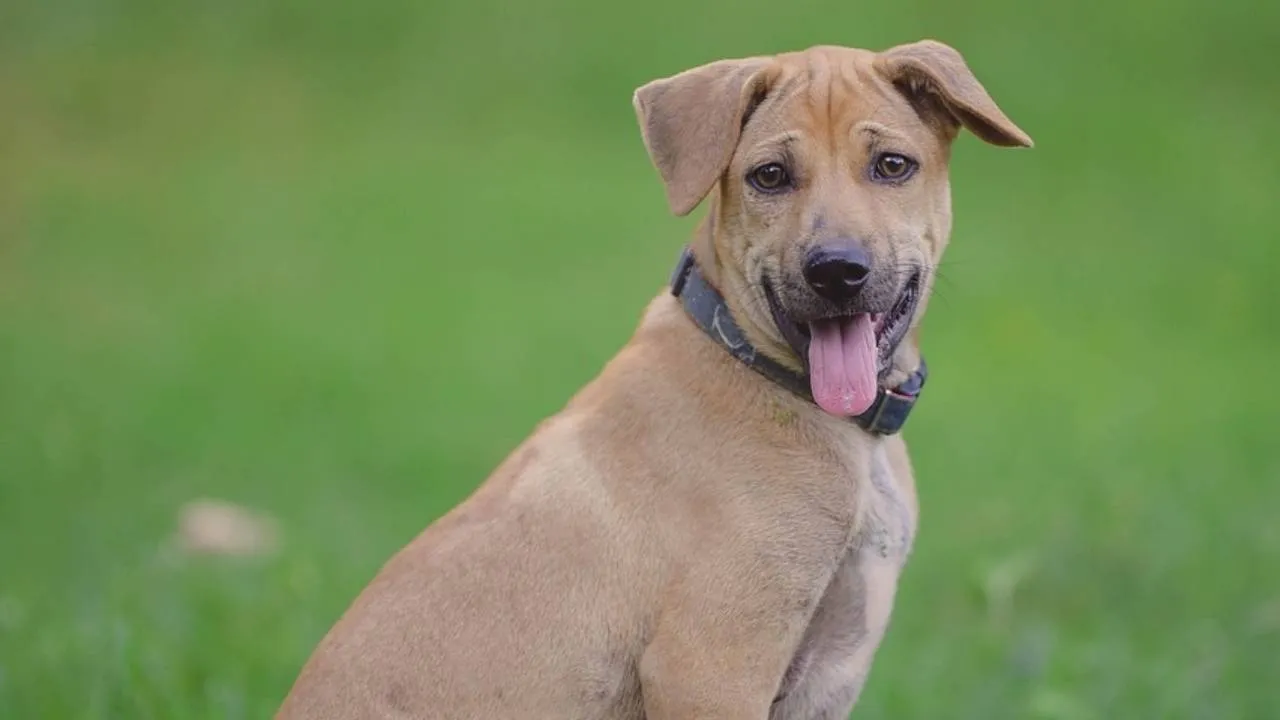
Mountain Cur was originally bred in the Appalachian and Ozark regions, where early frontier families relied on these dogs for demanding farm and hunting work. Their jobs ranged from herding livestock and guarding property to treeing game and helping households navigate rugged wilderness.
Made to Give Chase
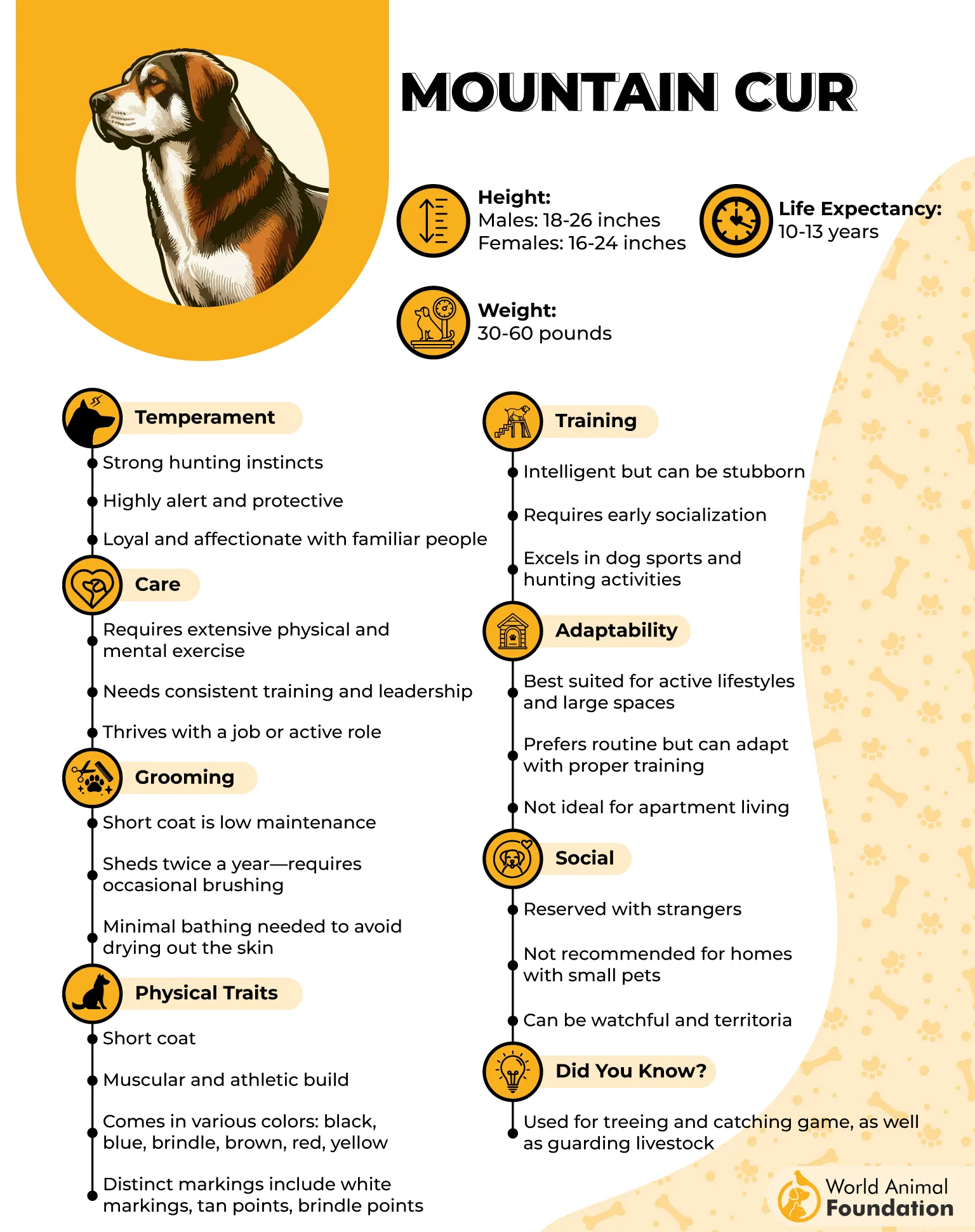
Mountain Cur has the muscular frame, powerful hindquarters, and sure-footed structure needed for steep climbs and rough and varied terrain. Its short, dense coat also sheds woodland debris and dries quickly after wet work, keeping grooming demands relatively low.
Three working details add another layer to its field ability:
Hunts by following wind and ground scent
Adjusts range according to its handler
Uses persistent barking to hold treed game
Easy to Direct
PetMD mentions that the Mountain Cur combines intelligence with an eagerness to please, so positive reinforcement can make training sessions productive and engaging.
Early, consistent socialization also helps this naturally alert breed respond more appropriately when unfamiliar people or unexpected activity appear around the home.
8. Scottish Deerhound
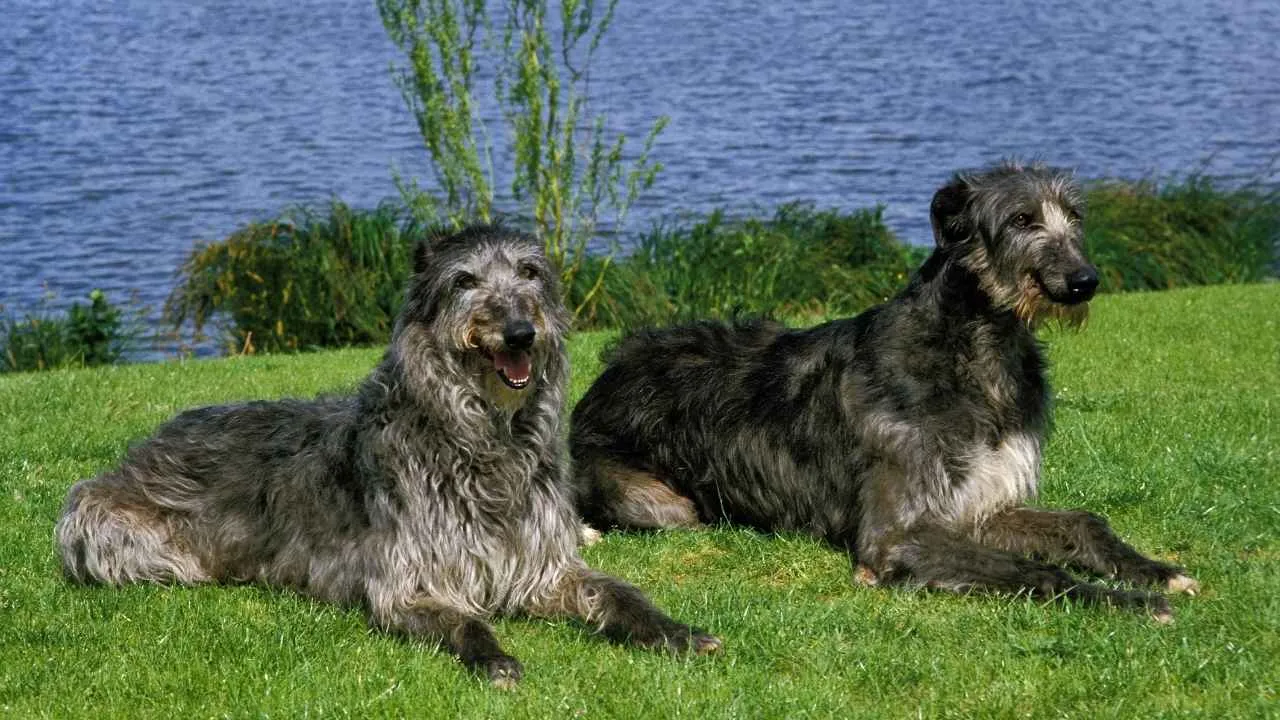
Scottish Deerhound has been associated with Scotland since the Middle Ages, when it was reserved for nobility and used in deer hunting. By the 1800s, firearms changed hunting practices, and its numbers fell sharply before a Deerhound club formed in the 1860s.
Built for the Chase
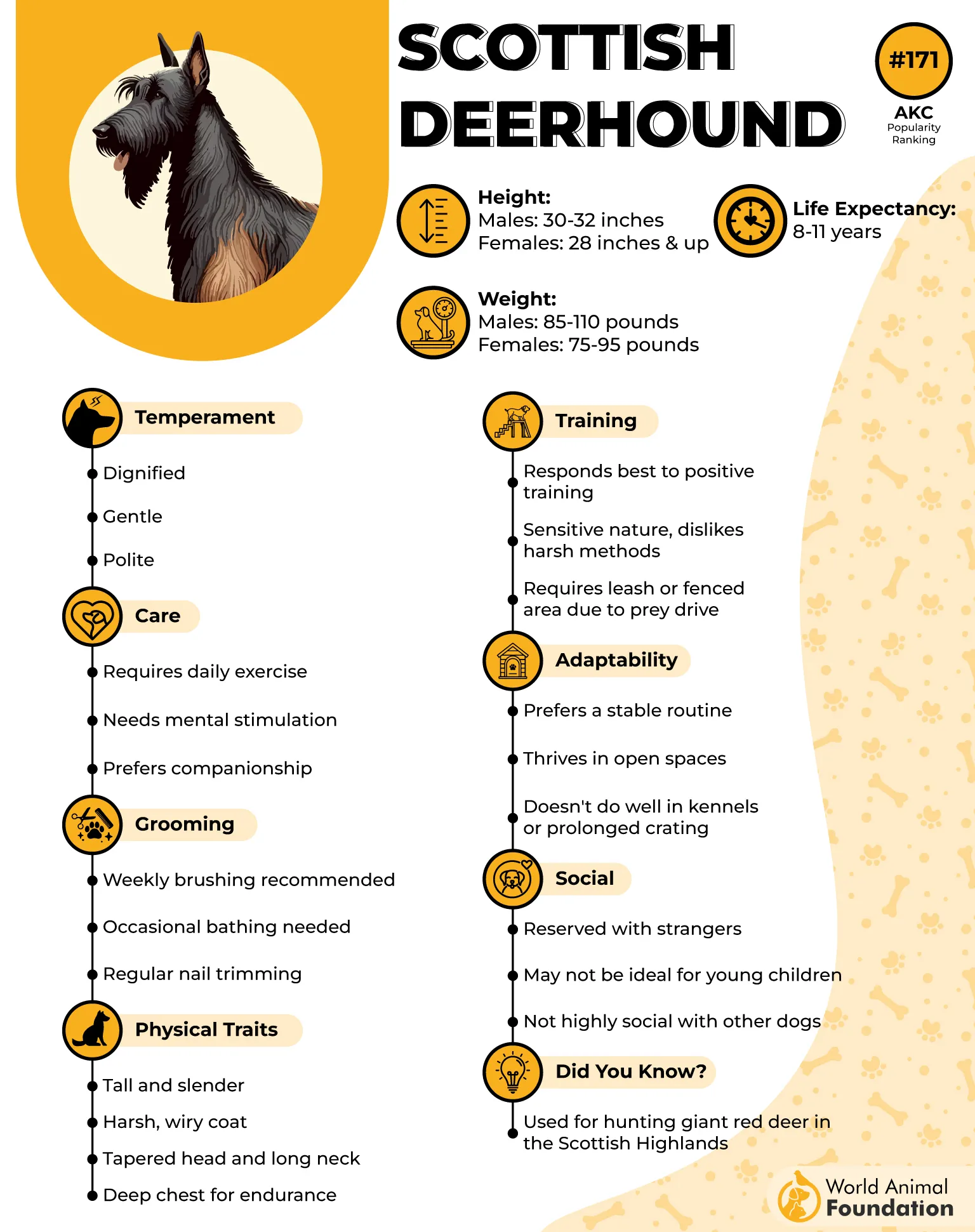
Scottish Deerhound is a true sighthound, using sharp vision, long legs, a flexible spine, and a deep chest to pursue red deer at speed. Its large stride and high ground clearance also help it cover uneven ground efficiently during a chase.
Three details make its running style especially distinctive:
Long limbs create a sweeping stride
Flexible spine aids high-speed galloping
Needs a securely fenced area
Gentle at Home
Scottish Deerhound has a gentle, shy nature and generally avoids aggressive behavior toward people, while its quiet communication often relies more on posture than barking. At home, it enjoys soft bedding and long periods of rest after intense running sessions.
9. Catahoula Leopard Dog
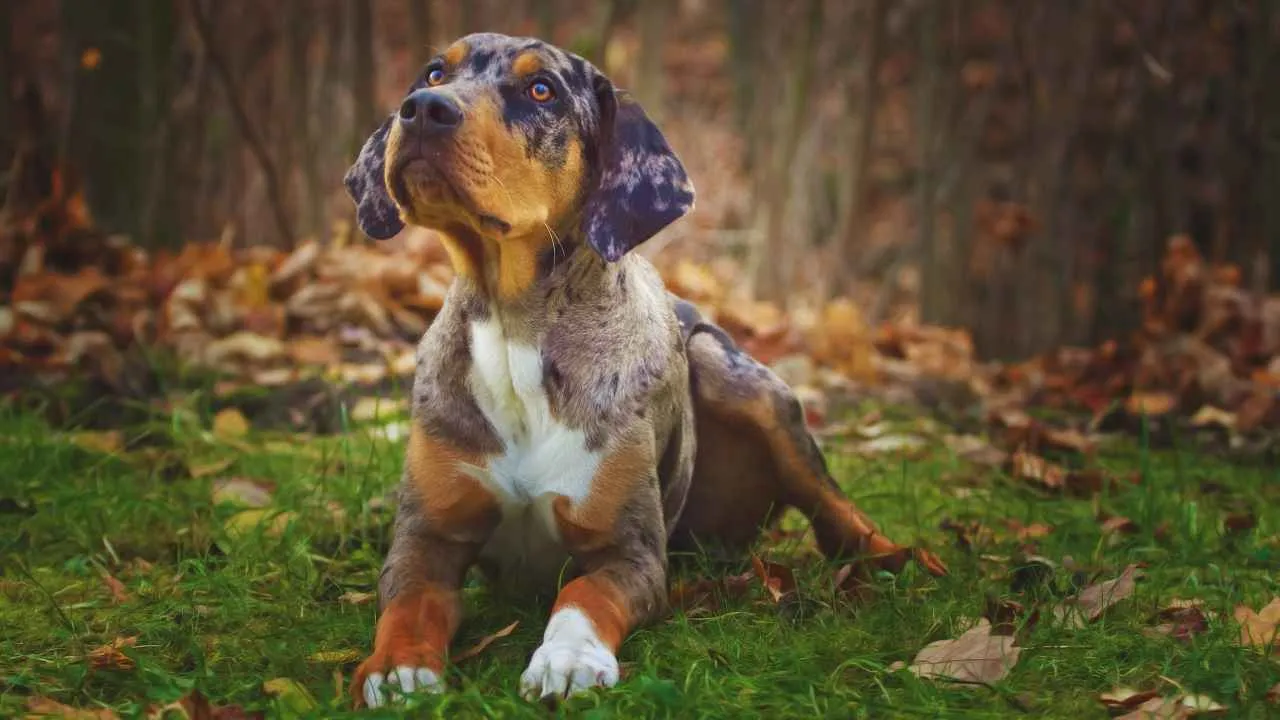
Catahoula Leopard Dog originated near Catahoula Lake in Louisiana, where settlers in the 1800s relied on these dogs for demanding work on Southern farms and ranches. They drove cattle and tracked wild hogs through terrain where agility, stamina, and confidence mattered every day.
Made for the Chase
This breed has a muscular medium-to-large frame with powerful hips and shoulders, giving it the mechanics for sprinting, grappling, and sudden changes of direction. Its webbed feet can also provide better traction through muddy or swampy ground, a useful feature in wet Louisiana terrain.
The working style adds several details worth knowing:
Short coat sheds mud and burrs easily
Sustained stamina for long ranging
Loud baying during livestock work
Selective With People
Catahoula Leopard Dog can be playful and affectionate with family while remaining wary of unfamiliar people, especially without early socialization.
Its strong prey drive also makes careful management important around cats and small pets, while older children and teens can be better suited to its serious, assertive nature.
10. Weimaraner
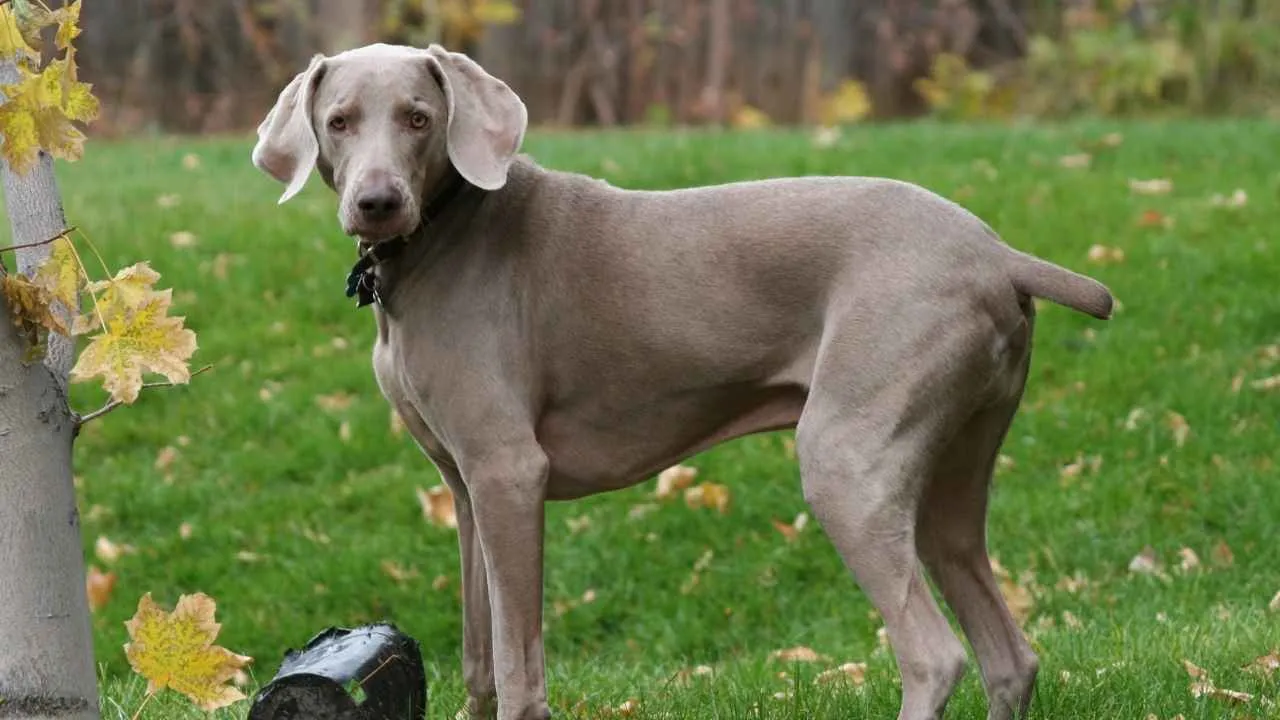
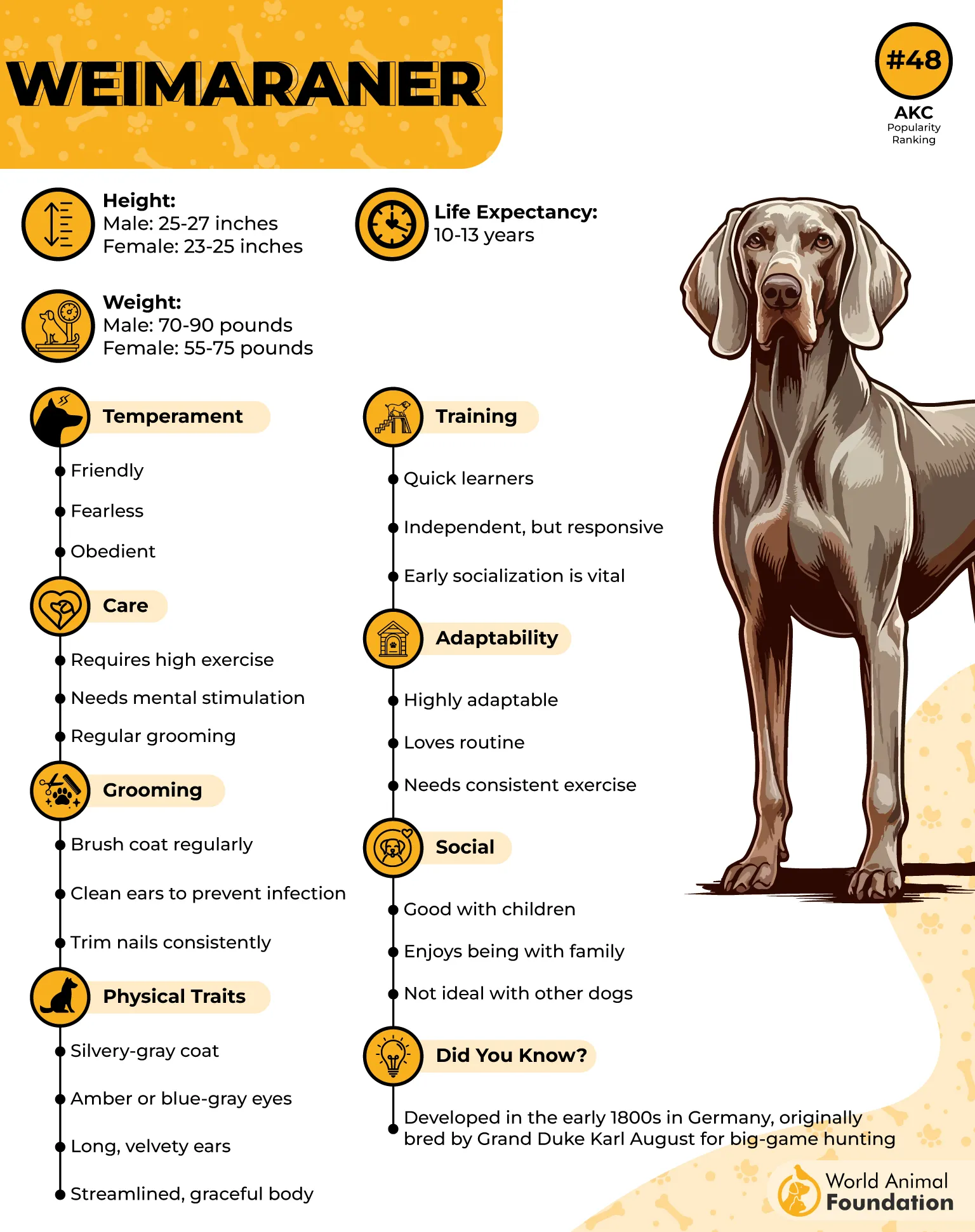
Weimaraner originated in 19th-century Germany as an all-purpose gun dog capable of pursuing large game, including deer and bear, in demanding terrain. Bloodhounds, Schweisshunds, and pointer breeds contributed to the breed that developed from those early hunting lines.
Built for the Chase
Weimaraner has an athletic frame and efficient gait that support long-distance running and sustained work in the field. Its strong prey drive can send it after squirrels, cats, or birds too, making reliable recall especially important during outdoor pursuits.
Three details add a different dimension to its working style:
Webbed toes can aid swimming and traction
Natural retrieving instinct encourages fetch and tug
Head-high scanning can resemble pointing
A Dog That Wants a Job
Weimaraner is highly intelligent and responds well to structured training, especially when learning tasks that require cooperation with a handler. Early training takes time because this confident breed can become stubborn and test boundaries when rules are inconsistent.
Conclusion
Deer pursuit brings together several abilities that are easy to overlook when speed gets all the attention. Athletic structure, powerful senses, endurance, determination, and a strong tracking ability can each influence how a dog performs outdoors. Some of the best dog breeds are built for rapid sprints, while others excel at following scent trails across rough country or pursuing upland game.
These qualities can make outdoor activities exciting, especially for active owners, but they also mean careful supervision is important wherever wildlife is present.
Secure fencing, reliable recall training, and controlled exercise help manage those instincts safely, with a securely fenced yard providing another useful outlet. Knowing what drives a hunting dog gives you a clearer picture of its abilities and everyday needs.
