




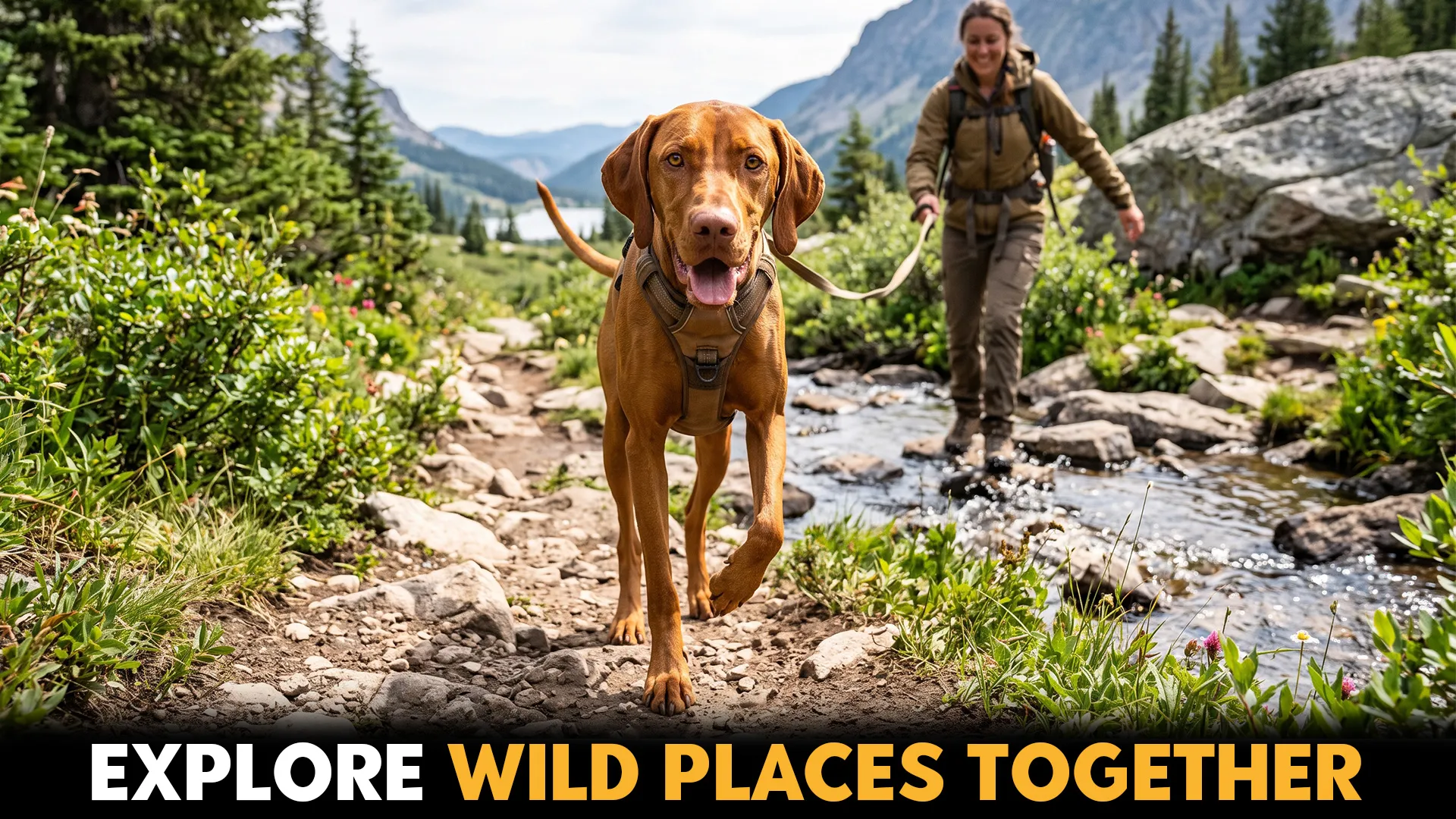
Exploring the wilderness becomes even more exciting with a canine companion who loves discovering new trails, crossing open fields, and investigating unfamiliar scents. Some dogs thrive on outdoor adventures because of their athletic builds, sharp senses, and eagerness to work alongside their owners. Whether the plan involves a forest hike or a weekend camping trip, the right breed can make every outing more engaging.
However, not every energetic dog is suited to the same outdoor activities. Some breeds excel at navigating challenging terrain, while others are natural swimmers, determined scent trackers, or cold-weather explorers. Their historical working roles often explain these differences, helping prospective owners identify a companion whose abilities match their preferred adventures.
Before heading into the wilderness, owners should also consider grooming requirements, health risks, training, and environmental safety. Reliable recall, appropriate conditioning, and access to fresh water are essential for outdoor excursions. The following seven breeds offer different strengths for people who enjoy exploring nature with an active four-legged partner.
Top Dog Breeds for Wilderness Exploration and Fun
1. Border Collie
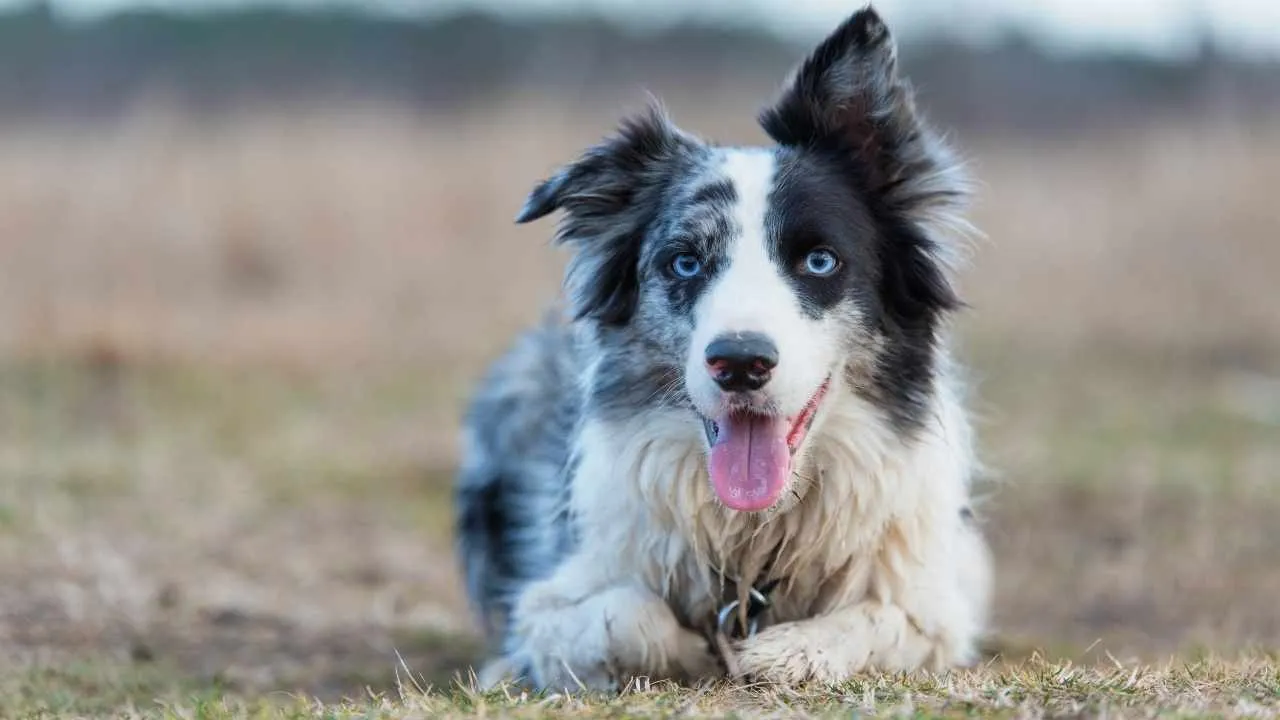
The Border Collie originated along the border between Scotland and England, where shepherds needed intelligent dogs to manage livestock across rugged countryside. Generations of selective breeding strengthened its agility, concentration, and ability to respond quickly to commands. These working instincts still make the breed an enthusiastic companion for outdoor activities.
Keeping an Active Coat Clean and Healthy
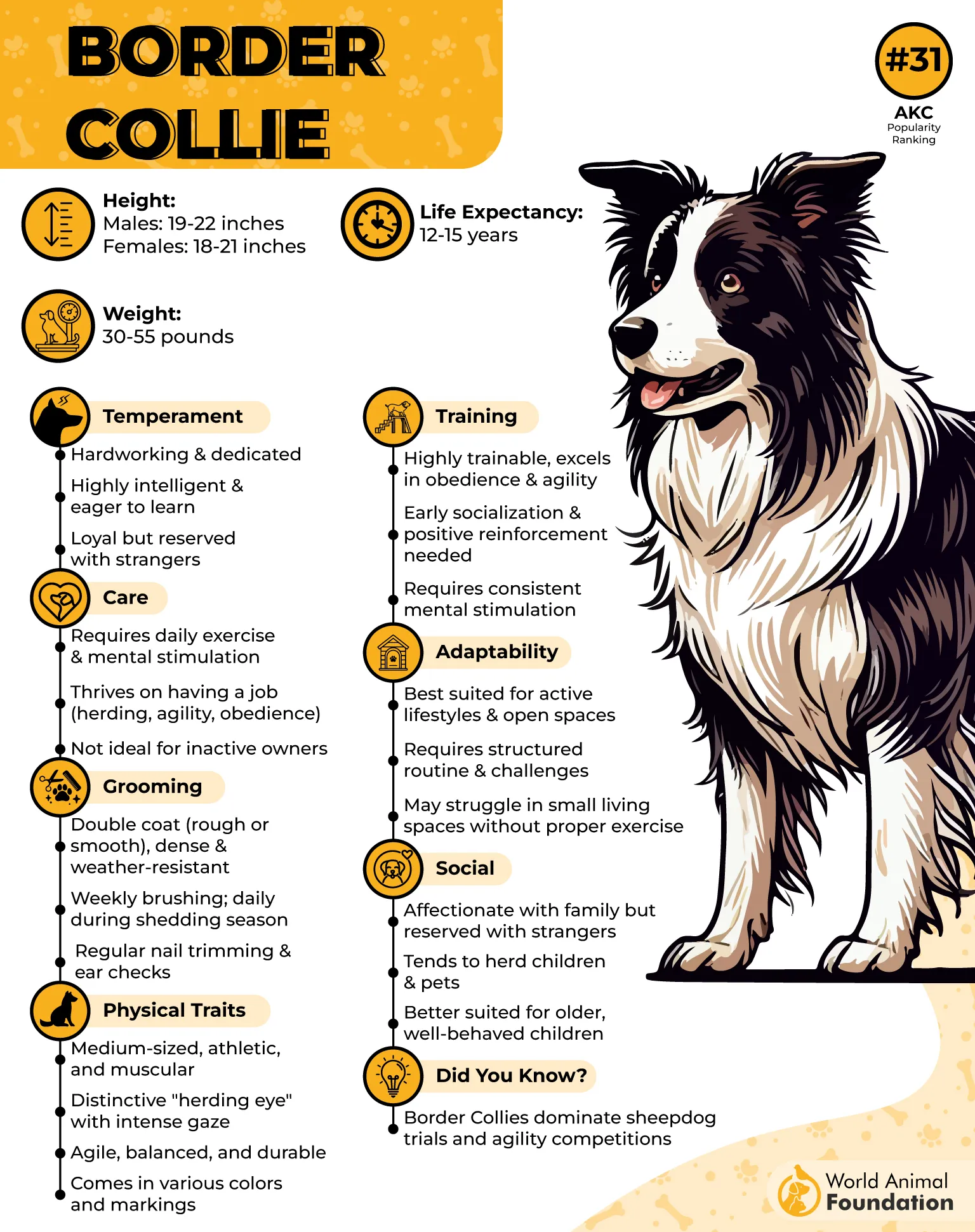
Border Collies have smooth or rough coats that benefit from regular brushing. After wilderness outings, check their paws, ears, and fur for burrs, ticks, and scratches. Hip dysplasia and certain inherited eye conditions are potential health concerns, making routine veterinary care and responsible breeding important.
A Quick-Thinking Companion for Challenging Trails
Border Collies excel at activities that combine physical movement with mental challenges. Their agility helps them navigate winding trails, while their intelligence makes outdoor training particularly rewarding. Reliable recall is essential because their herding instincts may encourage them to chase wildlife or moving objects.
2. Alaskan Malamute
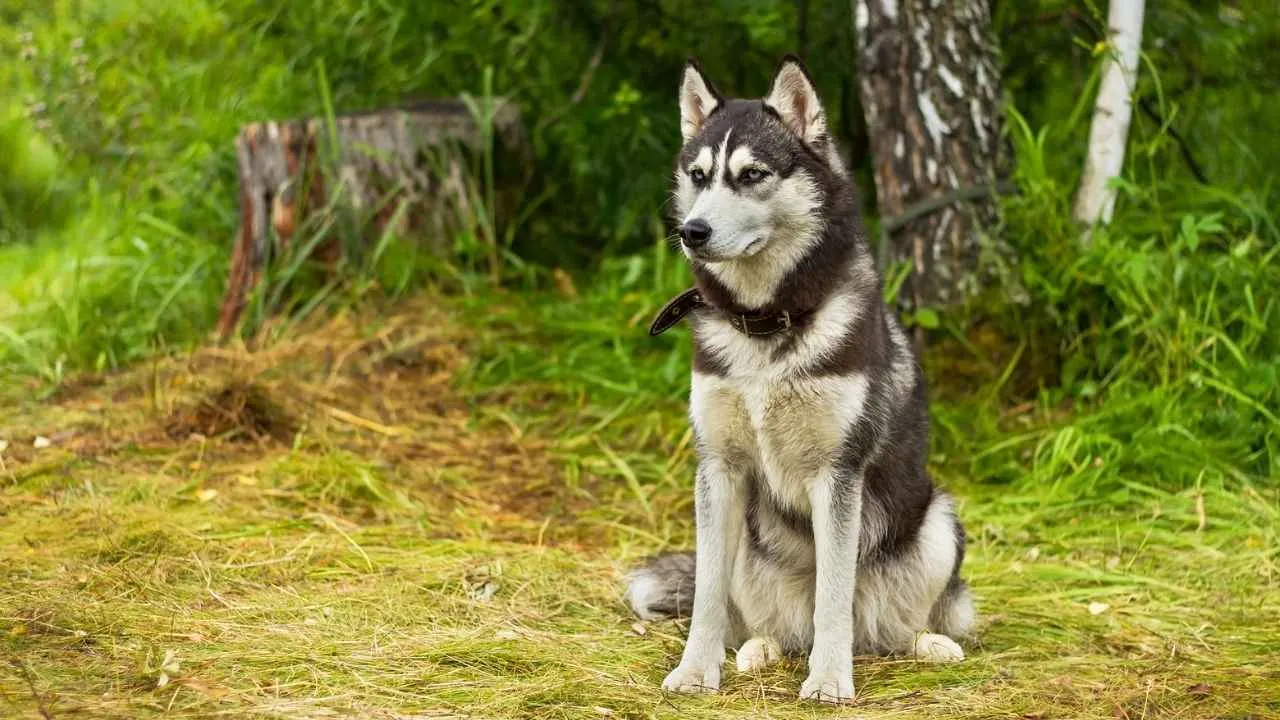
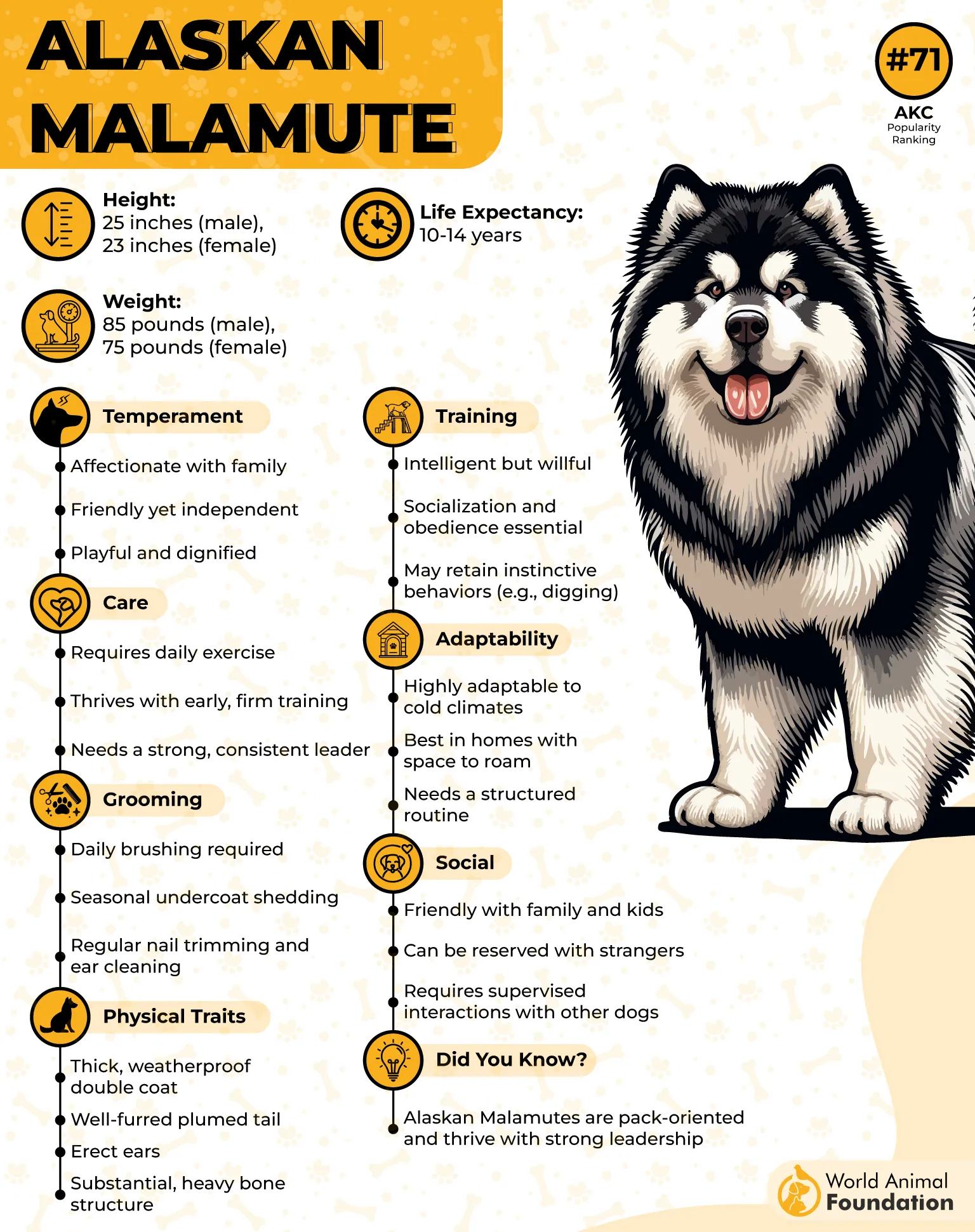
The Mahlemut people of northwestern Alaska developed the Alaskan Malamute to transport heavy loads across snowy terrain, as per PDSA. Unlike racing sled dogs, Malamutes were valued for their strength and ability to work steadily in harsh Arctic conditions. Their muscular bodies and dense coats reflect generations of adaptation to demanding winter environments.
Managing a Thick Coat and Powerful Build
Alaskan Malamutes require regular brushing, with extra grooming during seasonal shedding. Check their paws after winter hikes and monitor their weight to reduce unnecessary joint strain. Hip dysplasia and certain inherited eye conditions are among the health concerns worth discussing with a veterinarian.
A Snow-Bound Explorer With Hauling Strength
The Malamute is particularly suited to cold-weather adventures and suitable pulling activities. Its powerful frame helps it tackle demanding routes, while its insulating coat provides protection against chilly conditions. Hot weather poses a greater challenge, so strenuous exercise should be avoided when temperatures rise.
3. Vizsla
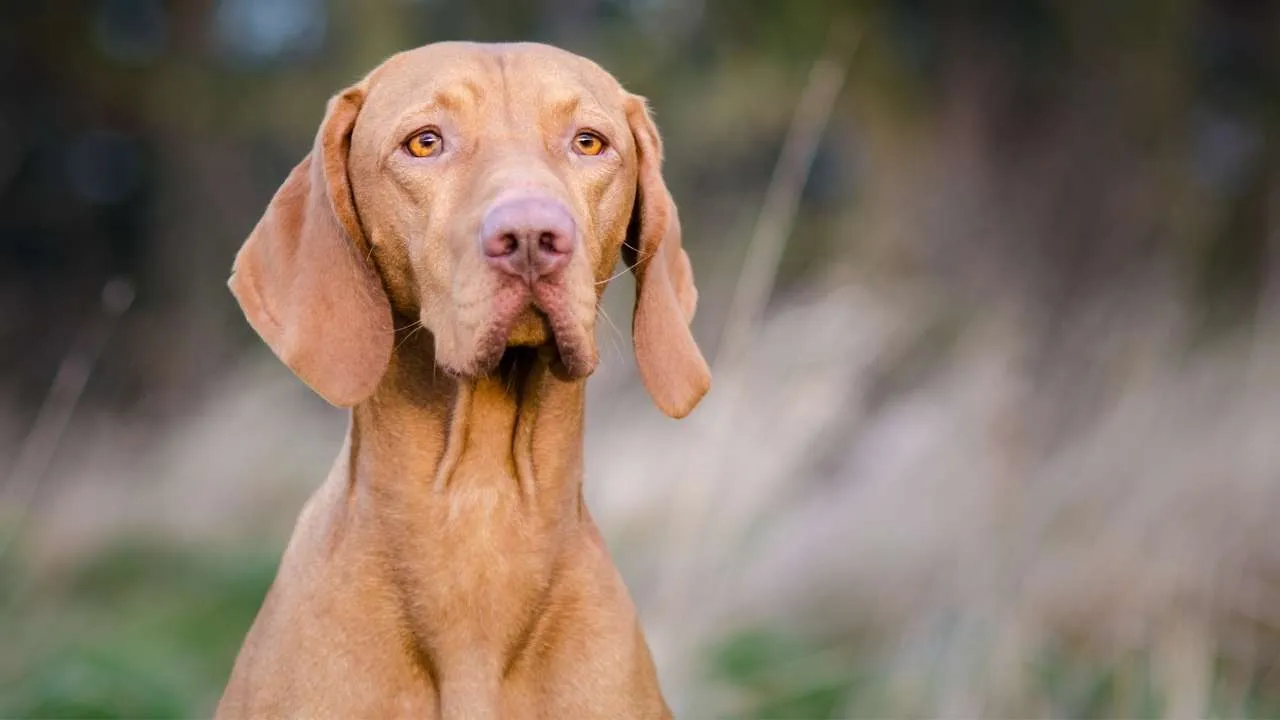
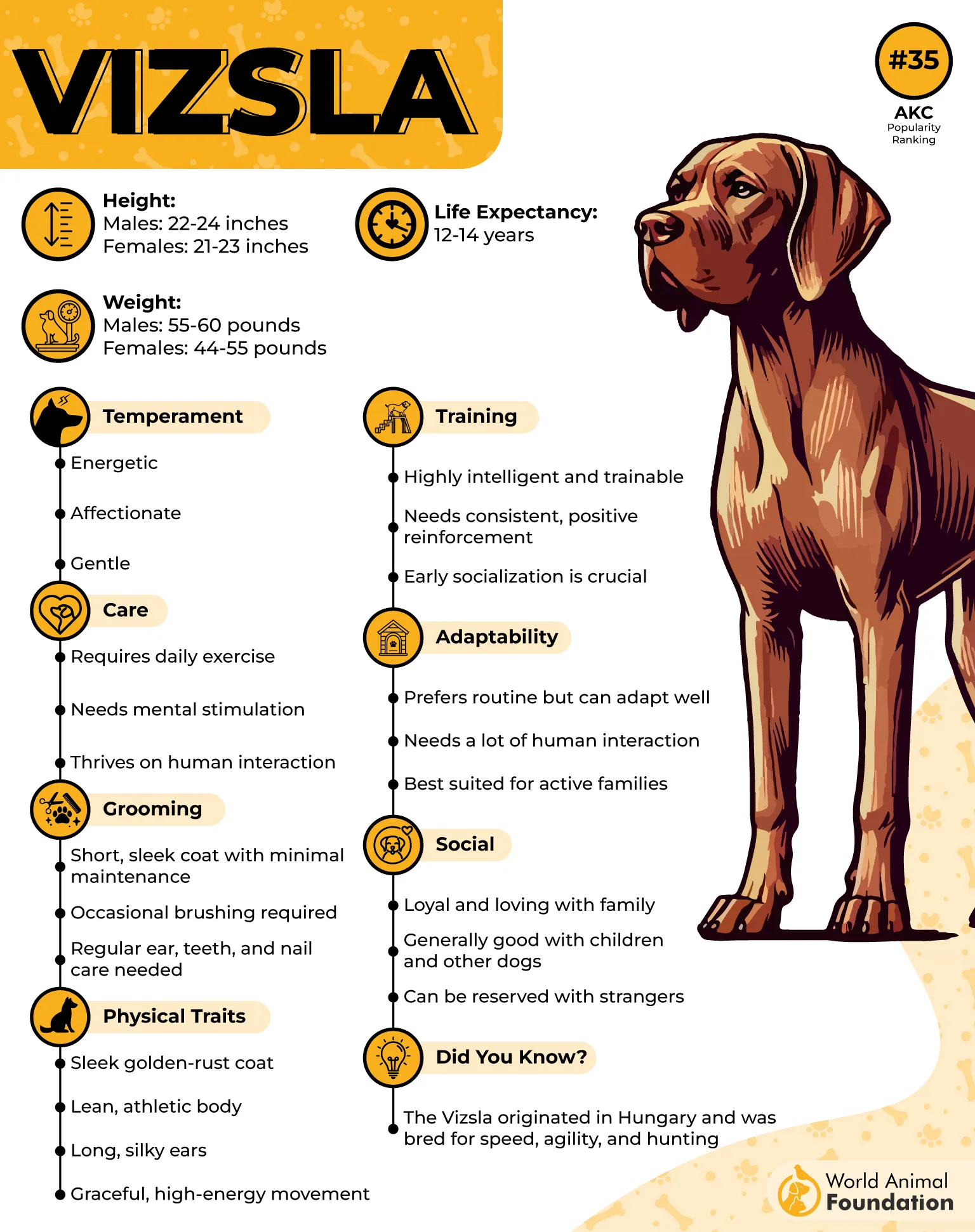
The Vizsla originated in Hungary, where hunters developed it to locate and retrieve game across open countryside, as per Purina. Its speed, keen nose, and close working relationship with people made it a valuable sporting companion. Today, the breed’s athleticism and affectionate personality appeal to hikers and other outdoor enthusiasts.
Simple Coat Care for an Athletic Adventurer
The Vizsla’s short coat requires minimal grooming, although occasional brushing helps remove loose hair. Its thin coat offers limited insulation in cold weather, so a suitable jacket may be useful during chilly outings. Owners should also monitor paw health and discuss potential hip and eye conditions with their veterinarian.
A Swift Companion for Open-Country Adventures
Vizslas thrive on active outings that provide plenty of room to move. Their speed and scenting ability make them enthusiastic partners for exploring meadows, woodland paths, and suitable running trails. They enjoy interactive activities with their owners, although gradual conditioning and reliable recall are important.
4. Weimaraner
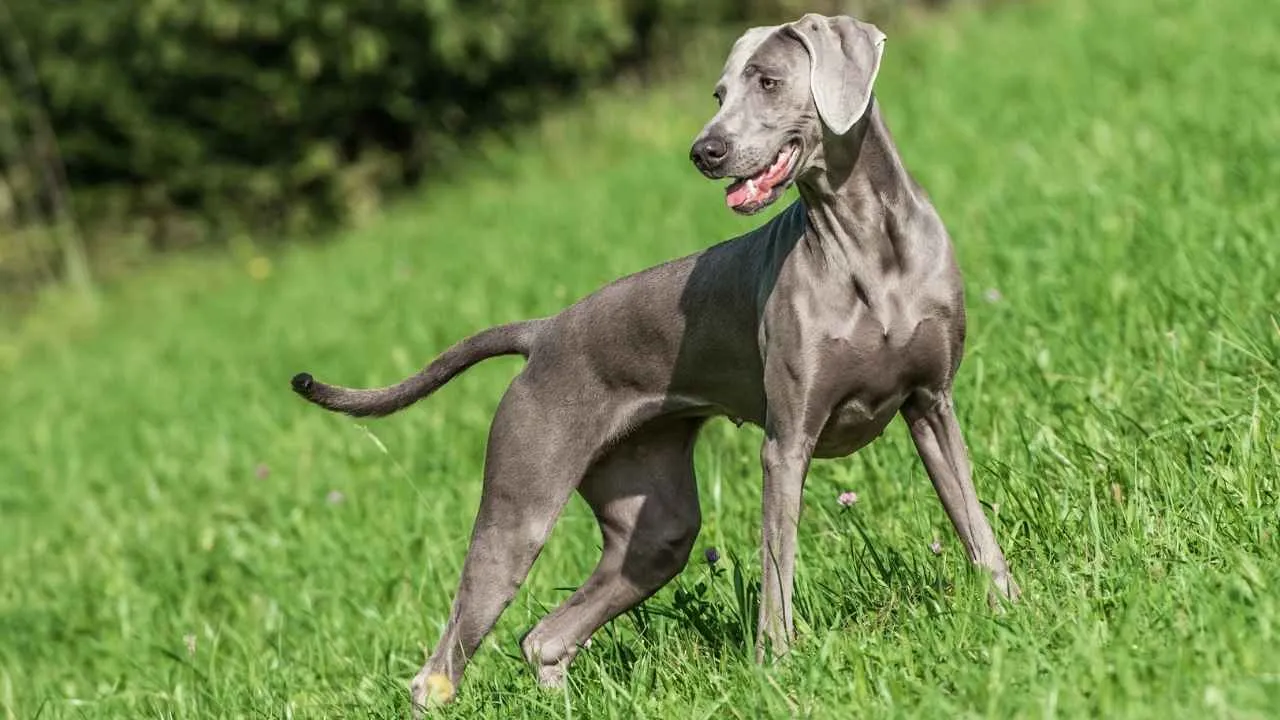
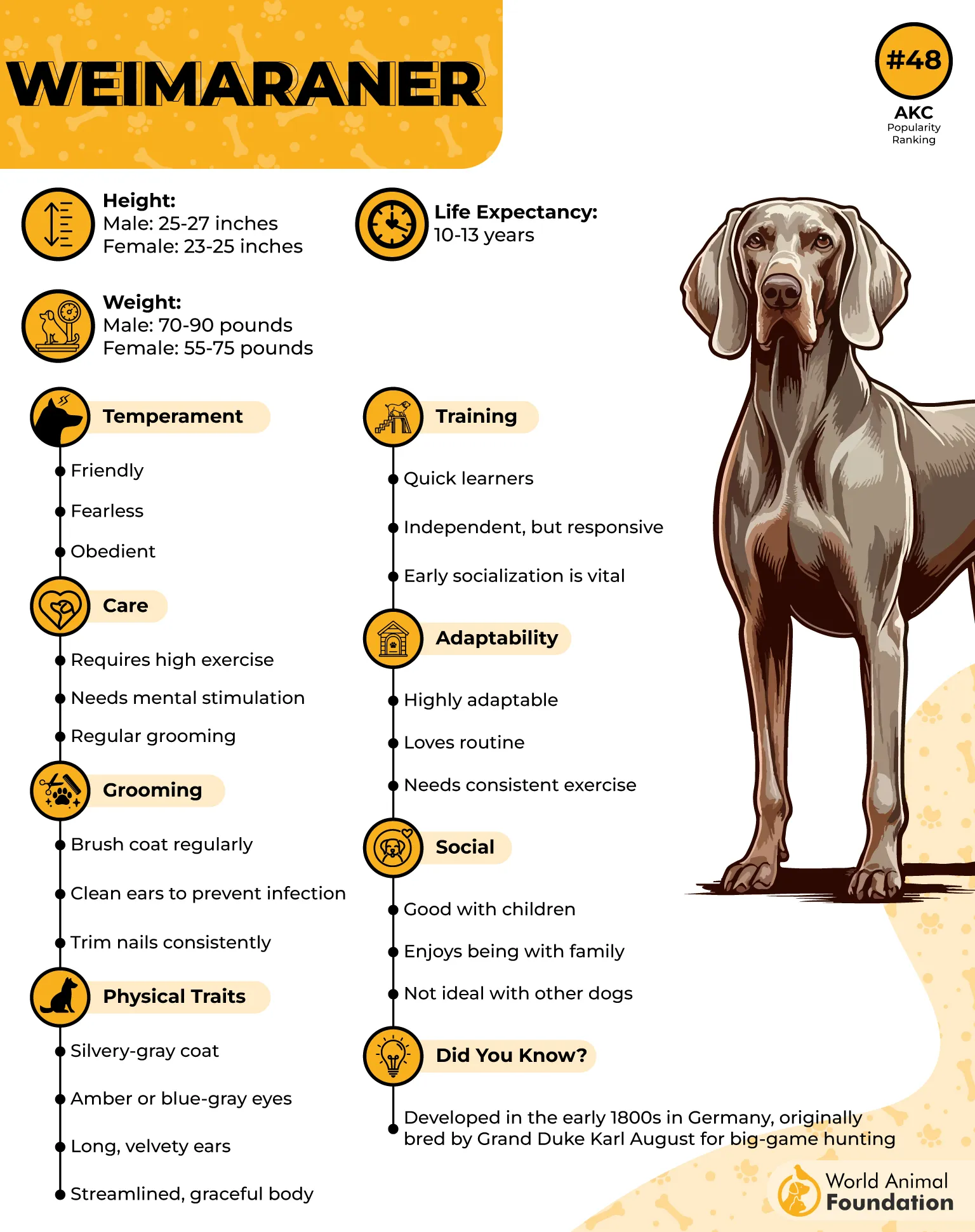
The Weimaraner developed in Germany during the 19th century as a versatile hunting dog. Hunters valued its stamina, speed, and ability to pursue game across varied landscapes. Its distinctive silver-gray coat and athletic physique remain recognizable features of this energetic breed.
Maintaining Healthy Skin, Ears, and Joints
The Weimaraner’s short coat is easy to maintain with occasional brushing. Its floppy ears need regular inspection, especially after swimming or walking through damp vegetation. Hip dysplasia and certain eye conditions can occur, while its deep chest increases the risk of bloat, making veterinary guidance important.
A Fast-Paced Explorer With Hunting Instincts
Weimaraners enjoy outdoor activities that challenge their speed and stamina. Their long strides suit brisk hikes, while their hunting background encourages them to investigate interesting scents. Because they may pursue wildlife, owners should prioritize leash control and dependable recall.
5. German Shorthaired Pointer
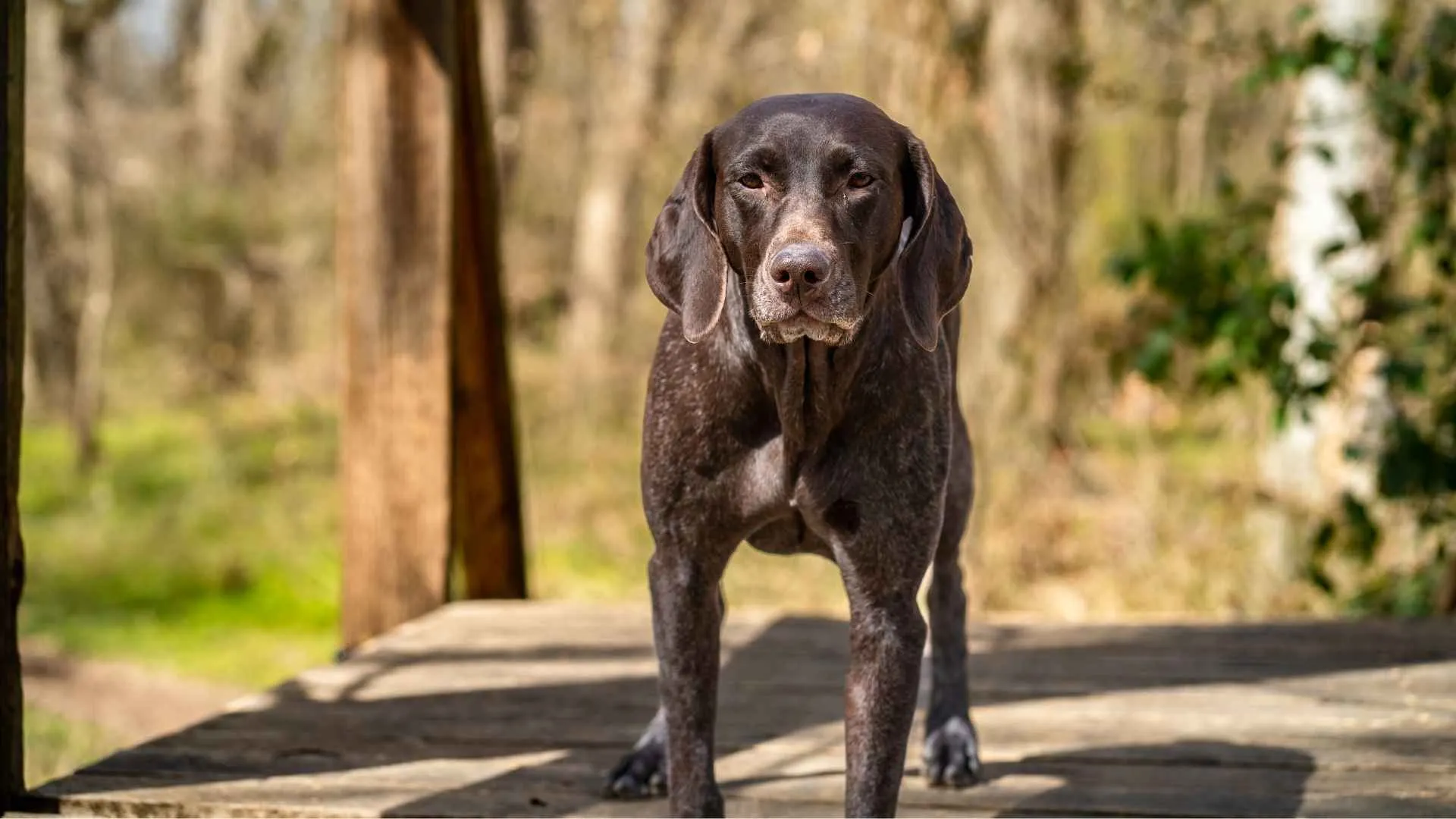
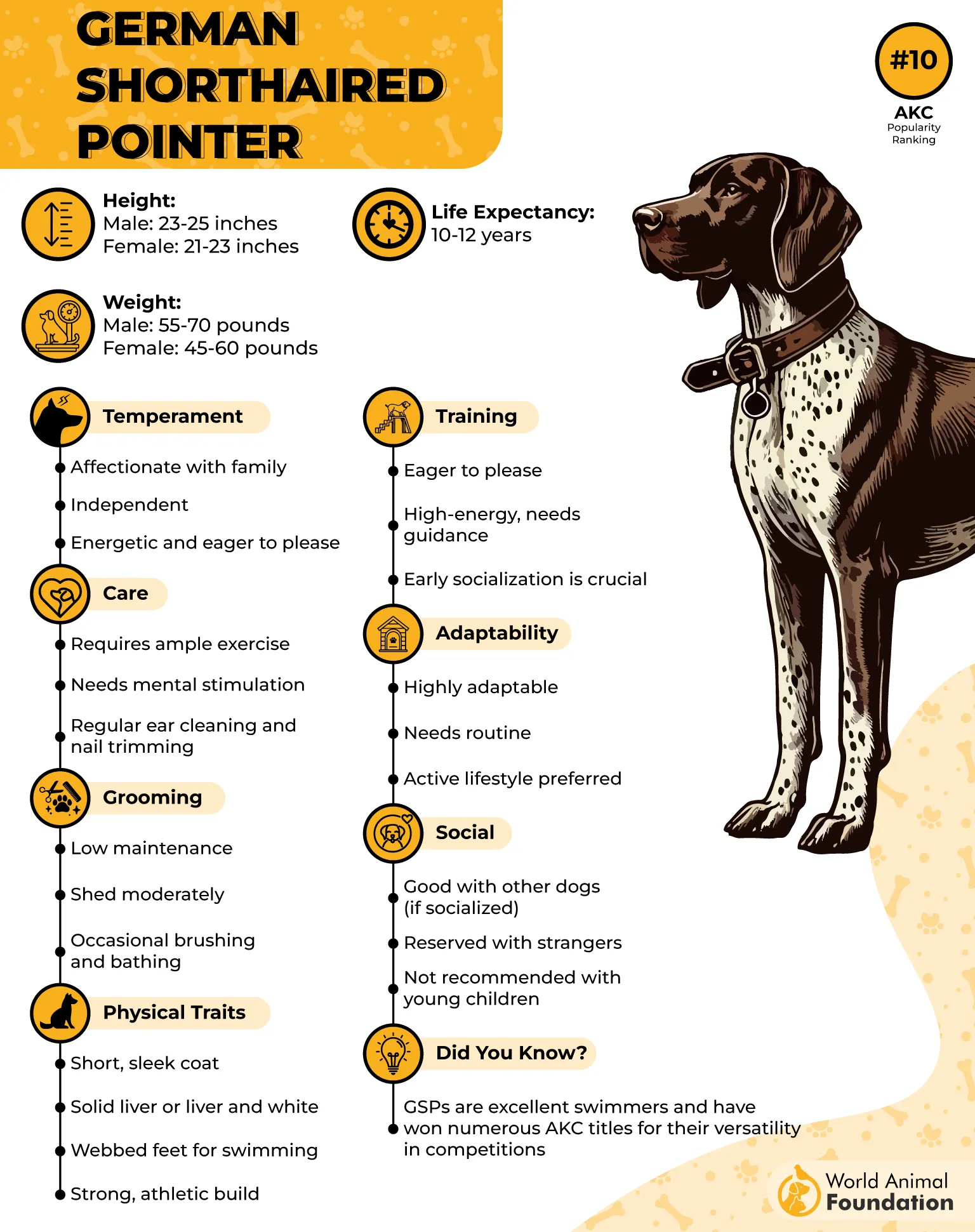
The German Shorthaired Pointer was developed in Germany during the 19th century to help hunters locate, point to, and retrieve game. Breeders sought a versatile, muscular dog capable of working across fields, forests, and wetlands. Its athletic build and sharp senses continue to distinguish it as an adaptable sporting breed.
Easy Coat Maintenance and Essential Health Checks
The German Shorthaired Pointer’s short coat needs only routine brushing and occasional bathing. Check its paws and ears after outdoor adventures, particularly following swims or long walks. Hip dysplasia and bloat are important health concerns, so responsible breeding, appropriate feeding practices, and regular veterinary care are essential.
An All-Terrain Athlete With a Keen Nose
This breed enjoys adventures that combine movement with opportunities to investigate its surroundings. Its athletic legs help it cover open ground, while its scenting instincts make woodland exploration especially engaging. Many German Shorthaired Pointers also enjoy swimming and retrieving, provided the water is safe.
6. Labrador Retriever
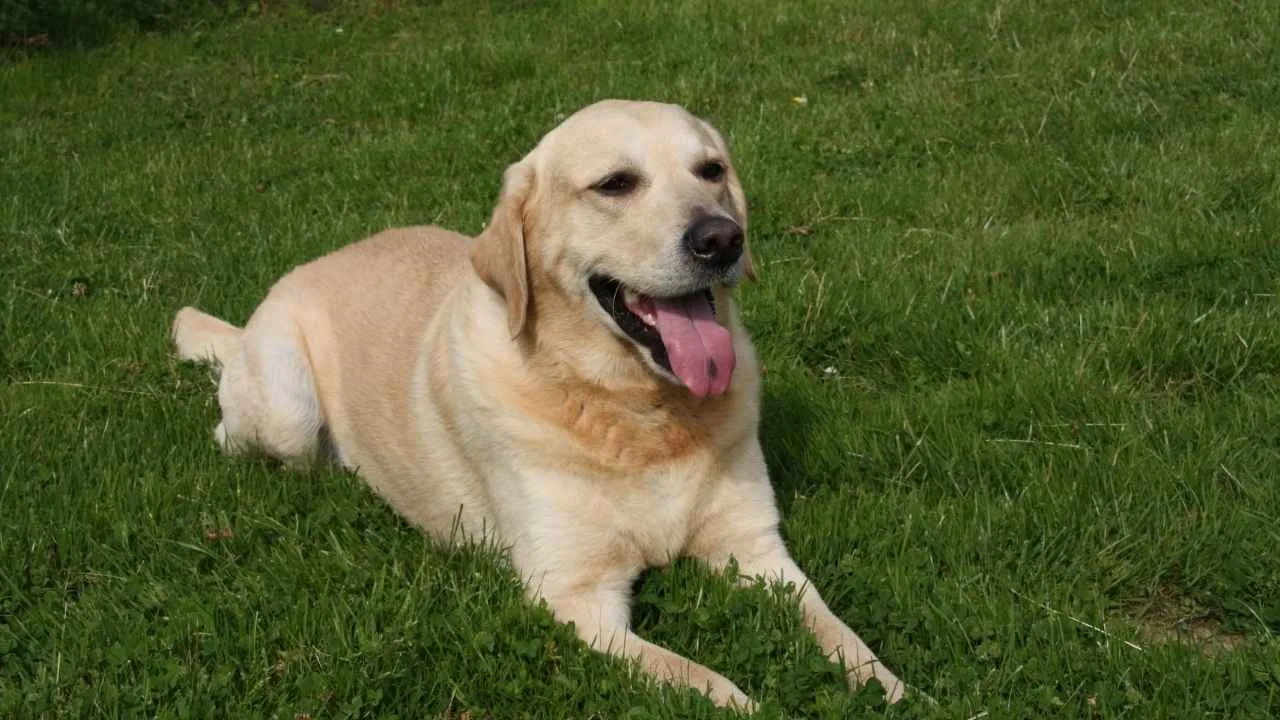
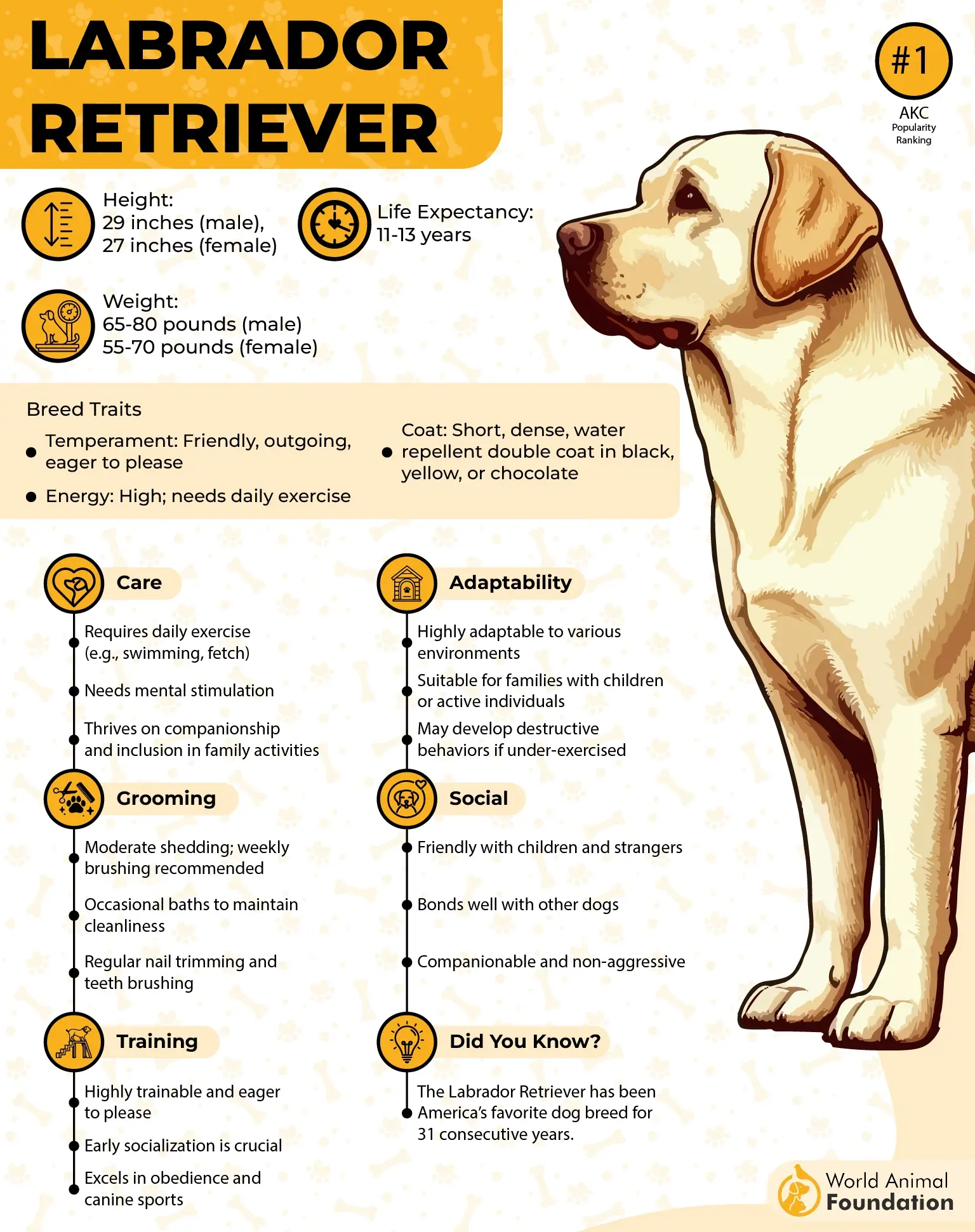
The Labrador Retriever traces its ancestry to working dogs associated with Newfoundland, Canada, before becoming established as a retrieving breed in Britain, as per Orvis. Early dogs assisted fishermen, while later breeding emphasized retrieving game and cooperating closely with hunters. Their love of water and friendly temperament eventually helped make Labradors popular family companions.
Caring for a Water-Resistant Coat and Strong Joints
Labradors have short double coats that benefit from regular brushing, especially during seasonal shedding. Their ears should be checked after swimming, and their paws inspected following rocky walks. Hip and elbow dysplasia can occur, while excess weight increases joint strain, making balanced nutrition and regular exercise important.
A Natural Swimming Partner for Lakeside Fun
Labradors often excel at wilderness adventures involving water and retrieving games. Their water-resistant coats and webbed feet support swimming, while their cooperative nature makes outdoor training enjoyable. Owners should assess currents, water temperature, and local hazards because even capable swimmers can become exhausted.
7. Siberian Husky
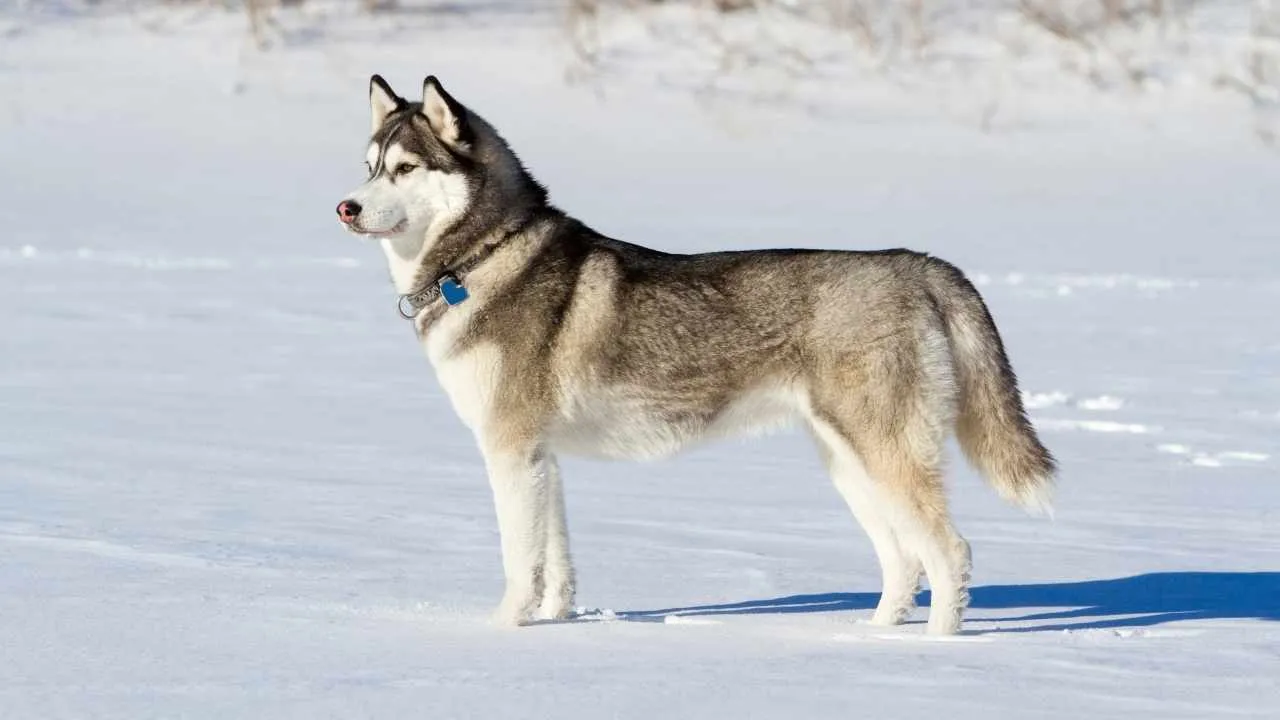
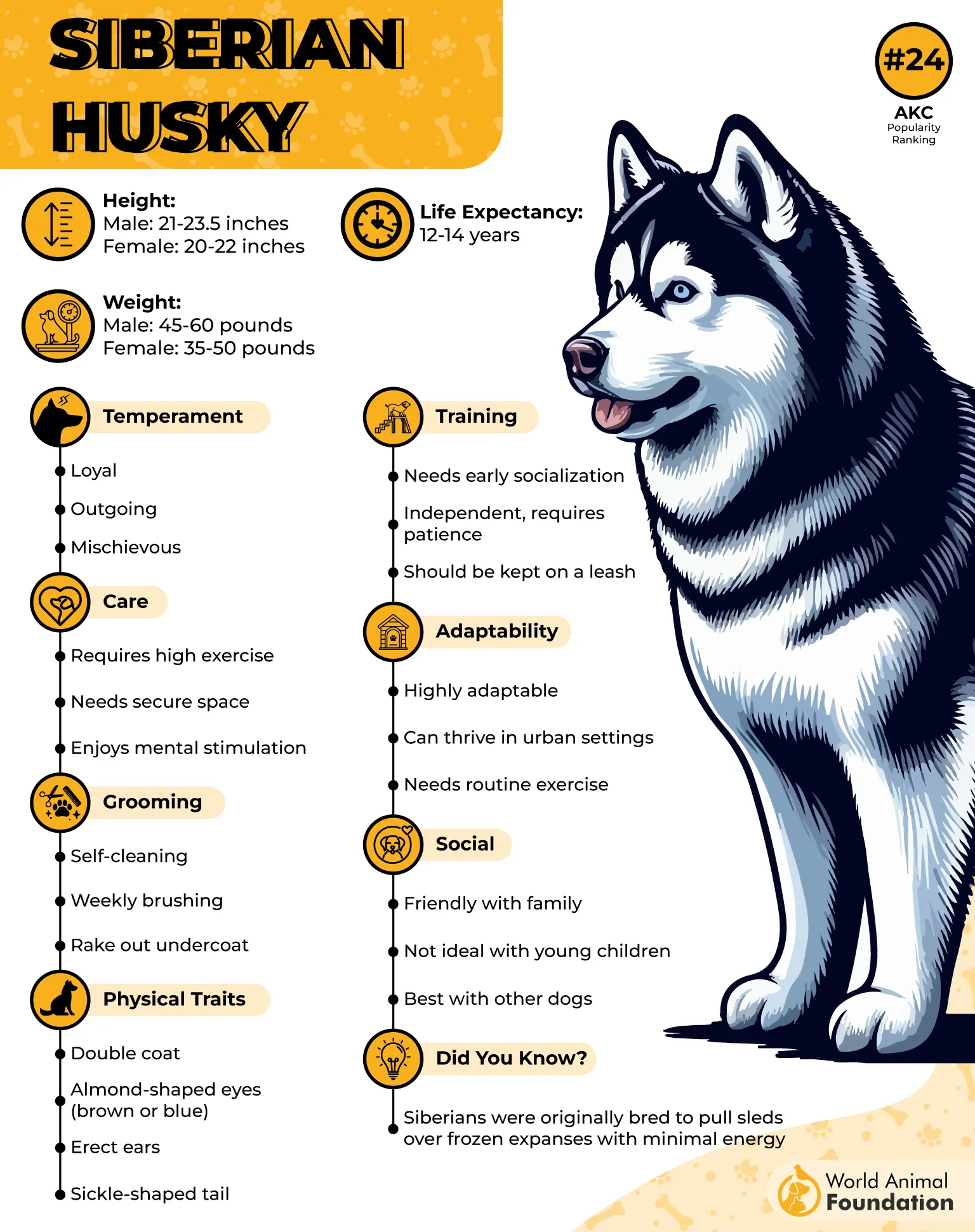
The Siberian Husky originated in northeastern Siberia, where the Chukchi people developed sled dogs for transporting supplies across frozen landscapes. These strong dogs needed to cover long distances efficiently while working cooperatively in teams. Their dense coats, sturdy paws, and endurance reflect generations of adaptation to cold environments.
Seasonal Coat Care and Cold-Weather Precautions
Siberian Huskies need regular brushing to manage their thick double coats, particularly during seasonal shedding. Check their paws for abrasions after snowy hikes and arrange routine dental and veterinary care. Certain inherited eye conditions and hip problems can occur, while their heavy coats make overheating a concern during warm-weather activities.
An Endurance Seeker for Snowy Wilderness Routes
Huskies are well suited to cool-weather adventures involving sustained movement. Their efficient gait and insulating coats support travel across suitable snowy trails, making winter hikes an appealing activity. Strong chasing instincts can complicate recall, so secure leashes and harnesses are valuable in unfamiliar areas.
Conclusion
Border Collies, Alaskan Malamutes, Vizslas, Weimaraners, German Shorthaired Pointers, Labrador Retrievers, and Siberian Huskies each bring different strengths to wilderness exploration. Some excel at navigating trails, while others enjoy swimming, scent tracking, or snowy adventures.
Before choosing an outdoor companion, consider its exercise requirements, grooming needs, health, and temperament. Gradually increase hiking distances, carry sufficient water, and protect your dog from dangerous wildlife and extreme weather.
With proper preparation and consistent training, these seven breeds can make wonderful partners for exploring nature. Their enthusiasm creates opportunities for memorable adventures while reminding owners to prioritize canine safety and well-being.
