




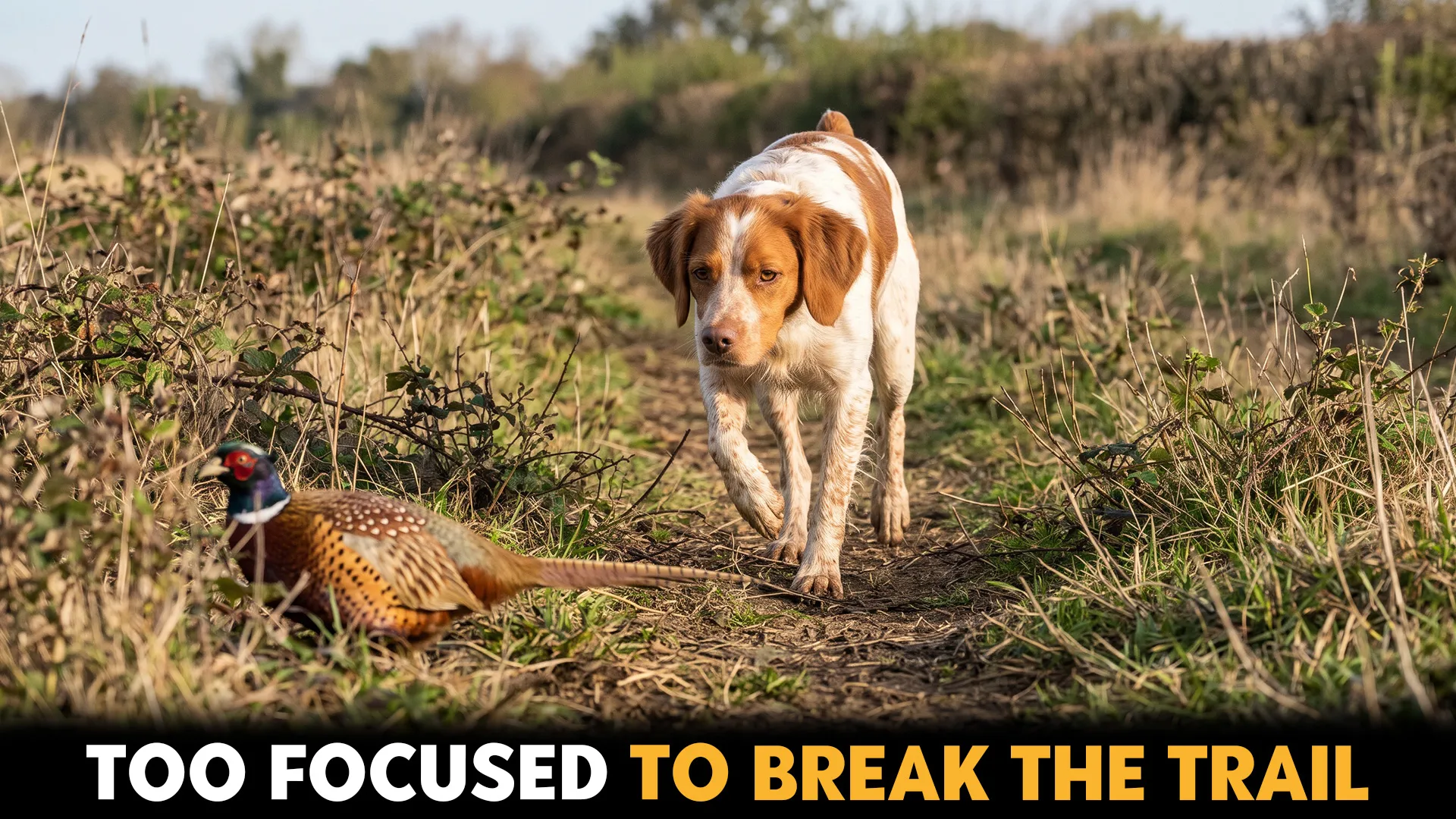
You can take the shot and still not bring the game home. It happens most often when a wounded animal hides, or you simply can’t locate it.
On top of that, you have to move fast to retrieve it, and plenty of hunters end up losing their game. That’s one of the top reasons hunters turn to dedicated hunting breeds.
These are not your regular couch potatoes. They are dogs with tracking, pointing, retrieving, and flushing abilities, backed by the stamina, strength, millions of scent receptors, and tough paw pads needed to find and follow game.
In this guide, we’ve picked the top 10 retrieving and blood-trailing dogs. Some are tracking specialists, while others are versatile hunters, so stick around to learn more. We’ll cover each breed’s hunting style, temperament, exercise needs, training, and grooming routine.
Top Dog Breeds for Tracking and Game Retrieval
1. Bloodhound
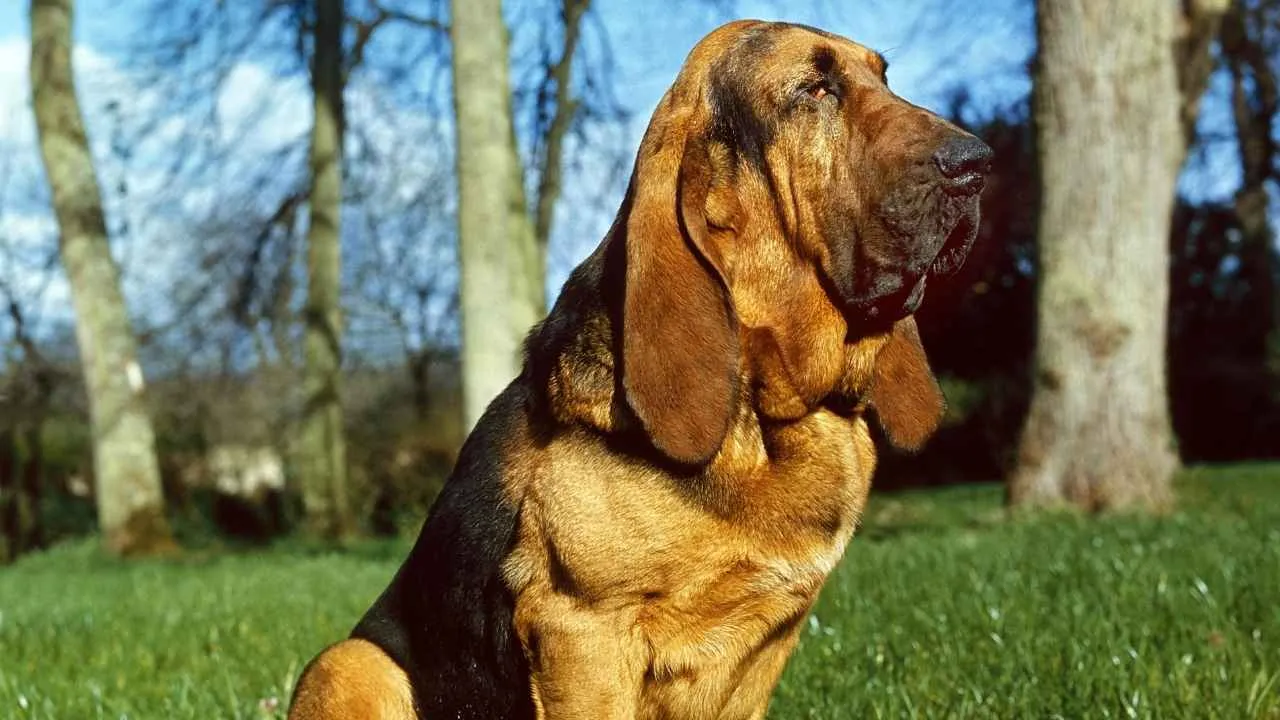
Bloodhounds are gentle giants originally bred to track game over long distances. These scent hounds have roughly 230 million scent receptors, around 40 times more than humans, so they can follow even cold blood trails.
Once put on a trail, they work methodically with their noses to the ground, pushing through water, pavement, and thick brush. These tracking dogs excel at finding wounded deer, wild boar, and other large game. They lock onto a scent, and their long, loose ears help by sweeping scent particles toward their noses.
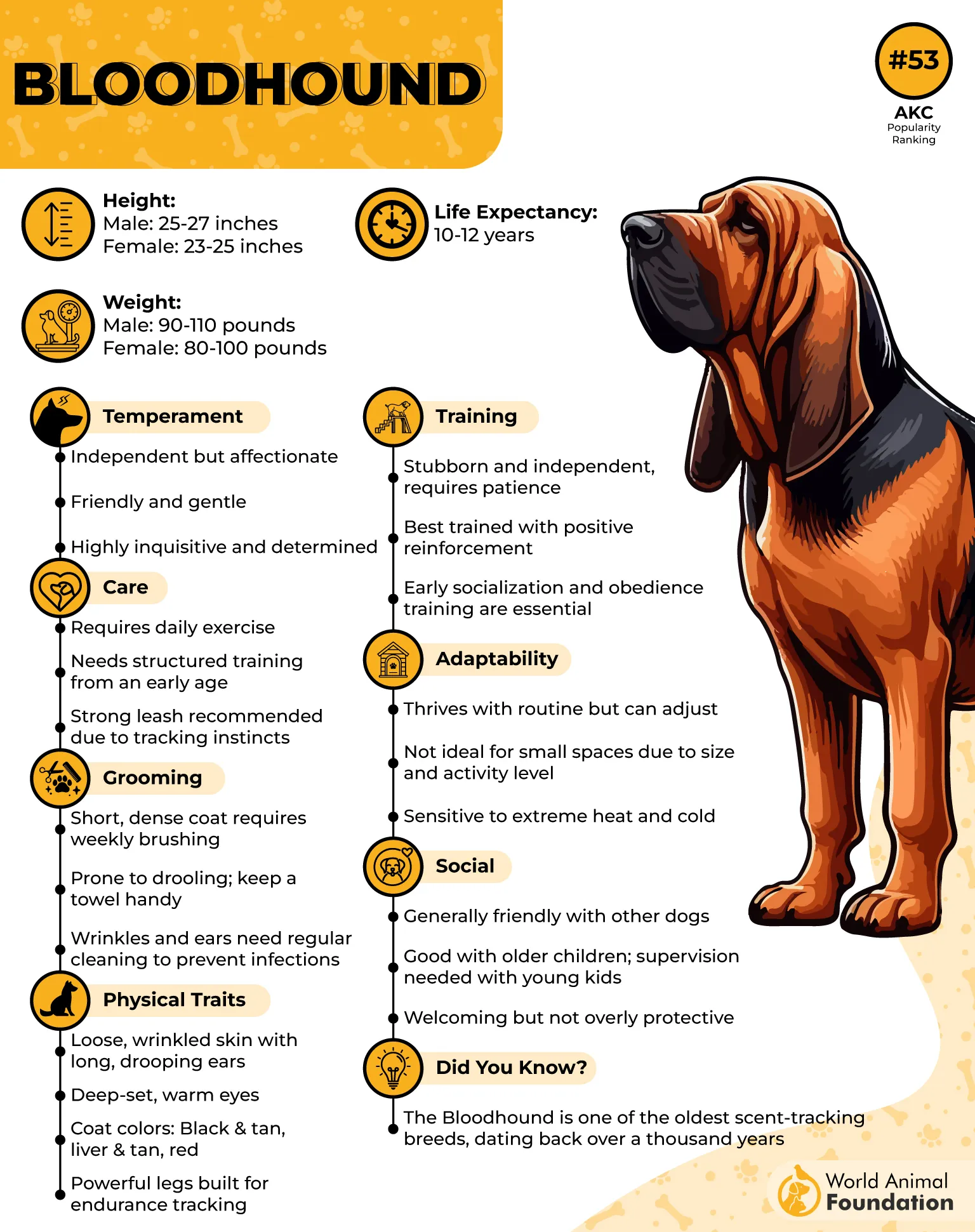
Their trailing work is so trusted that results have been admitted as evidence in court, according to VCA. That said, Bloodhounds are energetic and independent, so they usually do best with experienced owners.
Because they are large and powerful, Bloodhounds can be harder to handle on a leash than smaller blood-trailing breeds like the Wirehaired Dachshund or the Bavarian Mountain Hound. They can also be single-minded or get distracted by non-target animal scents if they aren’t properly conditioned and worked regularly.
2. Golden Retriever
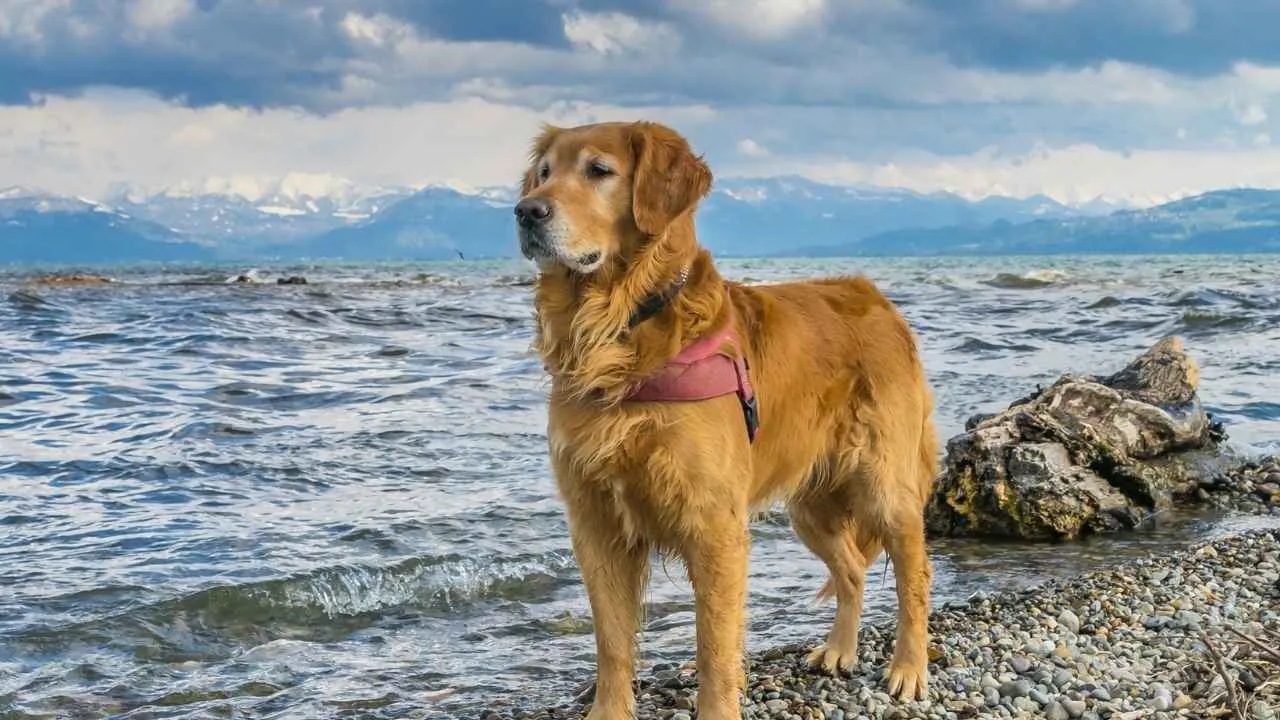
Golden Retrievers are beloved for their gentle, exceptionally friendly, eager-to-please temperament. They are joyful, upbeat, and loyal. These medium-to-large dogs were originally bred to retrieve upland game.
They have a keen sense of smell and a strong memory for marking where birds or game fall, on land and in water. They bond closely with their handlers and respond well to voice and whistle commands at a distance. Beyond standard bird recovery, they can also handle free-search and blood-tracking work.
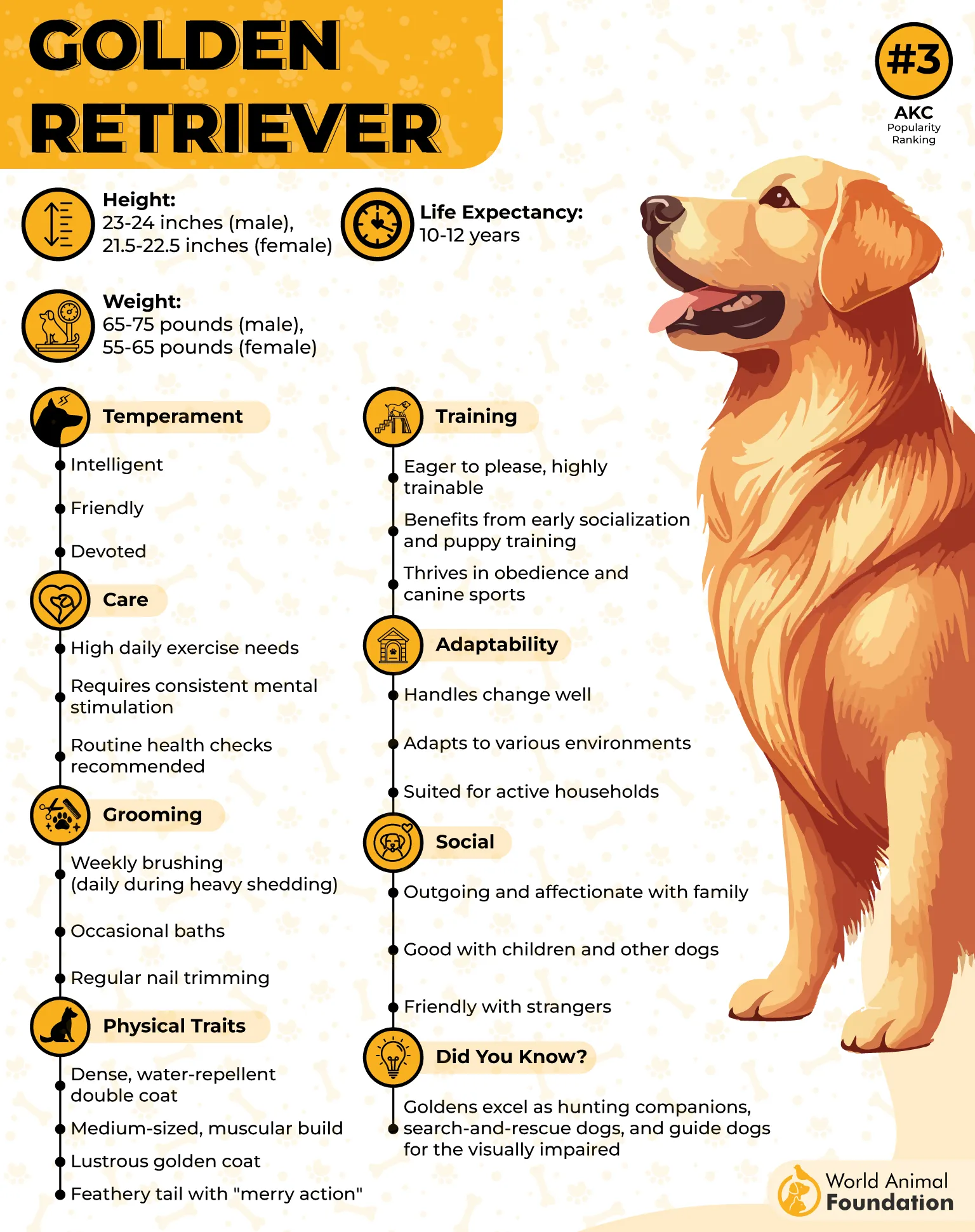
These wonderful family pets have a soft mouth, so they carry wounded game with care. Their webbed feet and water-repellent coats also let them jump into rivers and lakes to make a retrieve.
Goldens have moderate to high energy levels and suit active families and hunters best. They also rank among the smartest breeds, so they are quite easy to train with praise and reward-based methods.
3. German Wirehaired Pointer
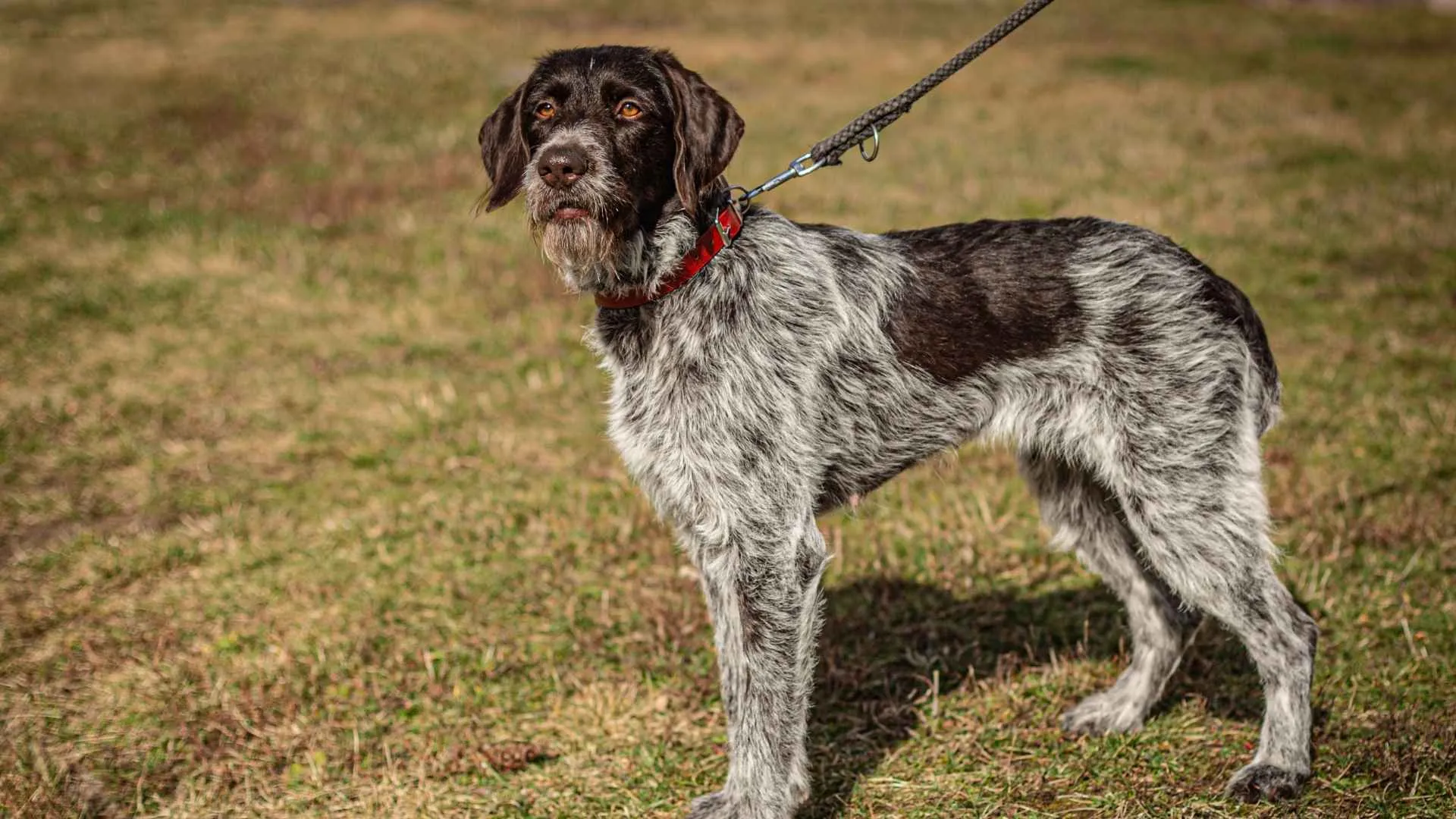
German Wirehaired Pointers are intensely loyal, fiercely independent, and high-energy dogs. They are serious athletes in the field and affectionate pups at home. They were built to search for and point upland birds, track wounded furred game and big game such as deer, fox, and wild boar, and retrieve waterfowl in harsh or cold weather.
Bred with a strong nose and high-intensity tracking instincts, some European lines are even selected to “give voice,” or bark on the trail, when following wounded or elusive quarry.
They use their sharp noses to track, then freeze to point out the location of game. Webbed toes and a water-resistant coat also let them retrieve from water. GWPs can hunt both big and small game.
That said, they need at least two hours of exercise a day, as the Royal Kennel Club notes. They also have a strong prey drive and independent hunting instincts, so they do best with active hunters and dedicated owners.
4. English Cocker Spaniel

English Cocker Spaniels are famously joyful, affectionate, gentle, and emotionally intelligent. They are sensitive companions, but they become high-drive athletes the moment they step into the field, because they were originally bred as hunting dogs.
They work methodically in a tight pattern close to the handler, exploring brambles, bushes, and thick underbrush where game birds hide. Their smaller frame, around 26 to 34 pounds, is an advantage in thick tangles, though tall cover or heavy, live-winged birds may require a brief moment to reposition.
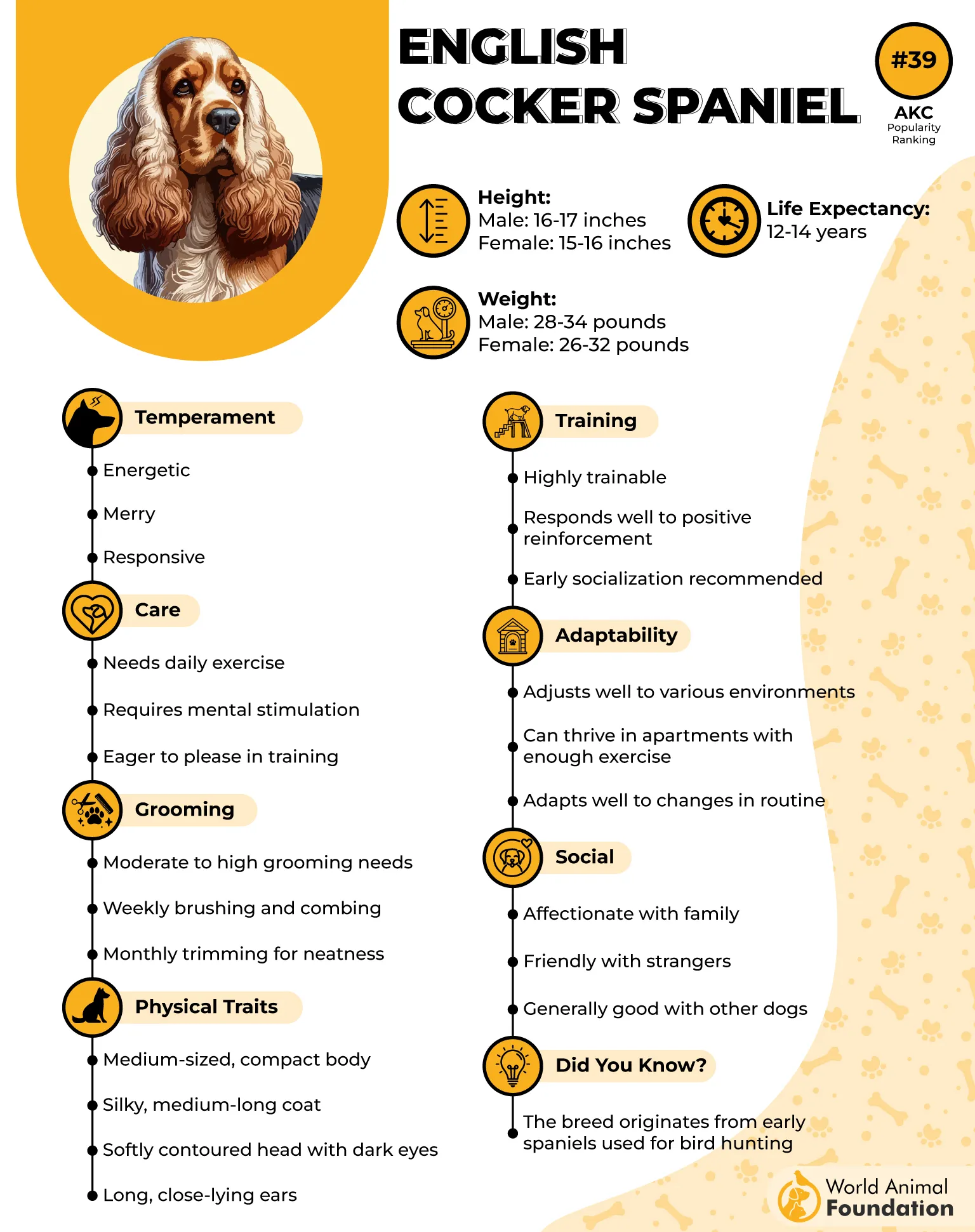
These are flushing and retrieving dogs. They use their noses and boundless energy to flush hidden birds out of thick cover so you can take your shot, and then use their soft mouths to retrieve the wounded game.
These medium-sized dogs need around 60 to 90 minutes of daily exercise and mental stimulation. Because they work so closely with people, they are prone to separation anxiety. Positive reinforcement works best for training.
5. Vizsla
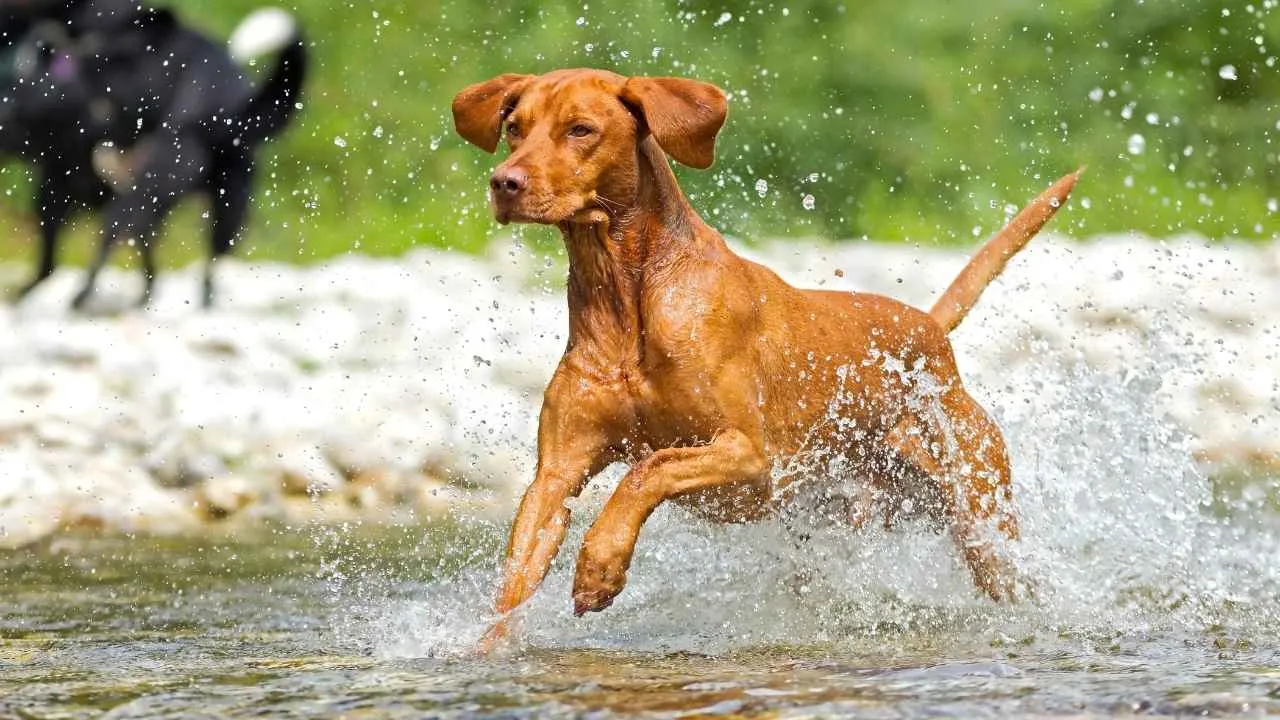
Vizslas are gentle, intensely affectionate, highly sensitive, and loyal dogs. They are also known as “velcro dogs,” as Omlet points out, because they like to follow you wherever you go. They were bred to be versatile hunting dogs.
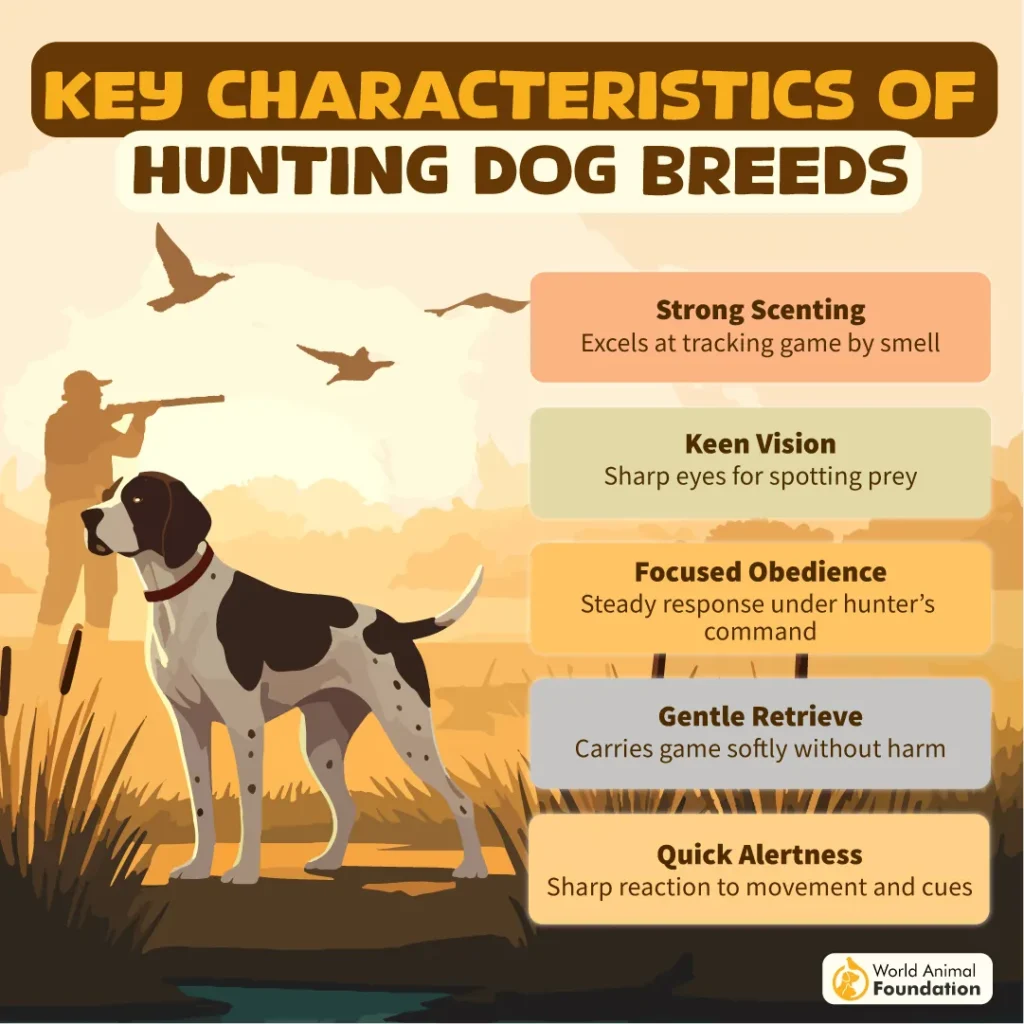
They were traditionally used to hunt birds and other upland game, and they are quite good at pointing and retrieving. Once they locate game, they freeze like a statue, point toward it, and hold their position until the hunter arrives.
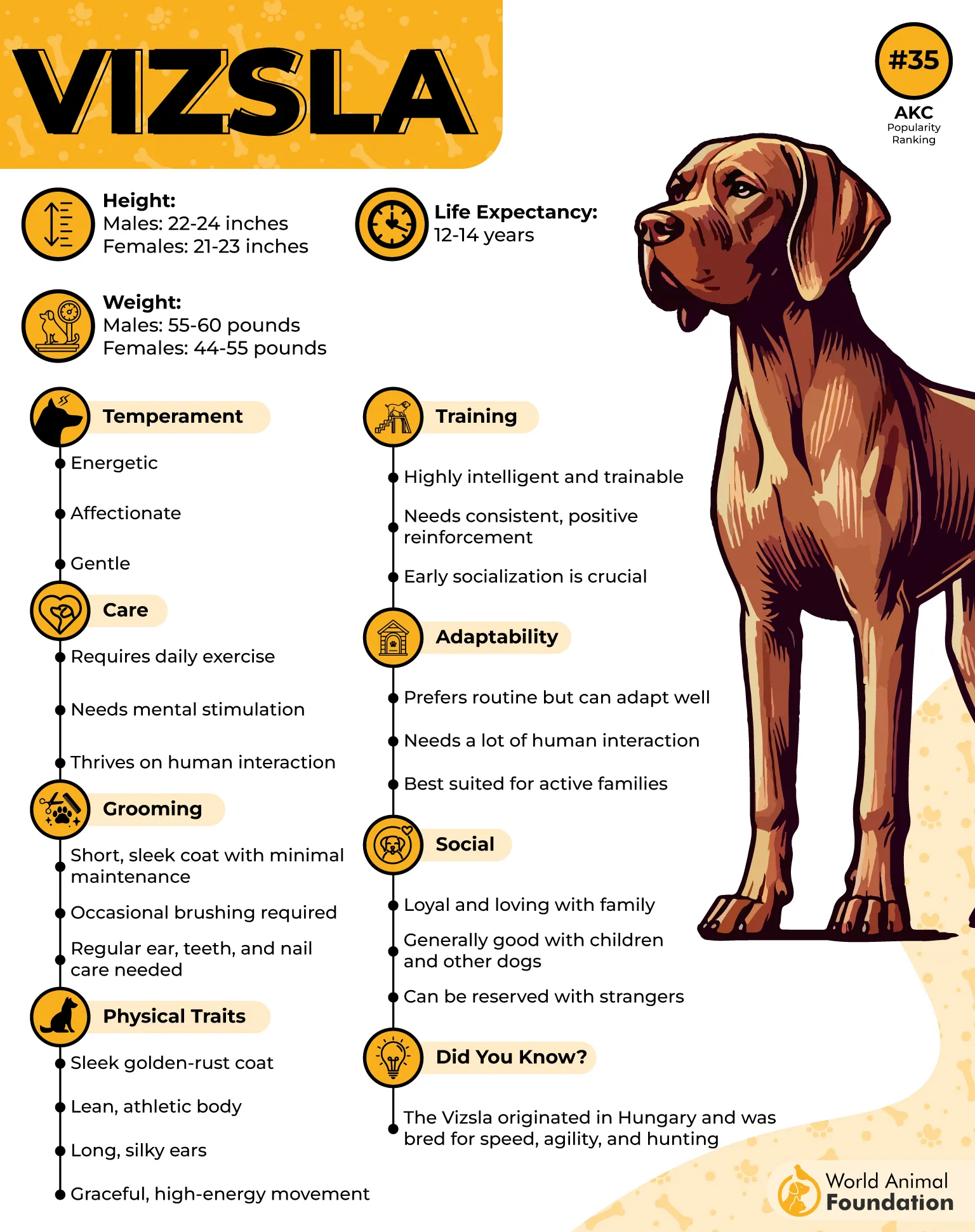
Their exceptional noses let them locate upland birds, track wounded or large game, and find small mammals over great distances. They are also bred to pick up and retrieve waterfowl and upland game gently, without damaging the carcass.
Vizslas have extremely high energy levels, so they suit active hunters and dedicated outdoor enthusiasts best. They are smart and eager to please but also sensitive, so gentle guidance and reward-based training work best.
6. Basset Hound
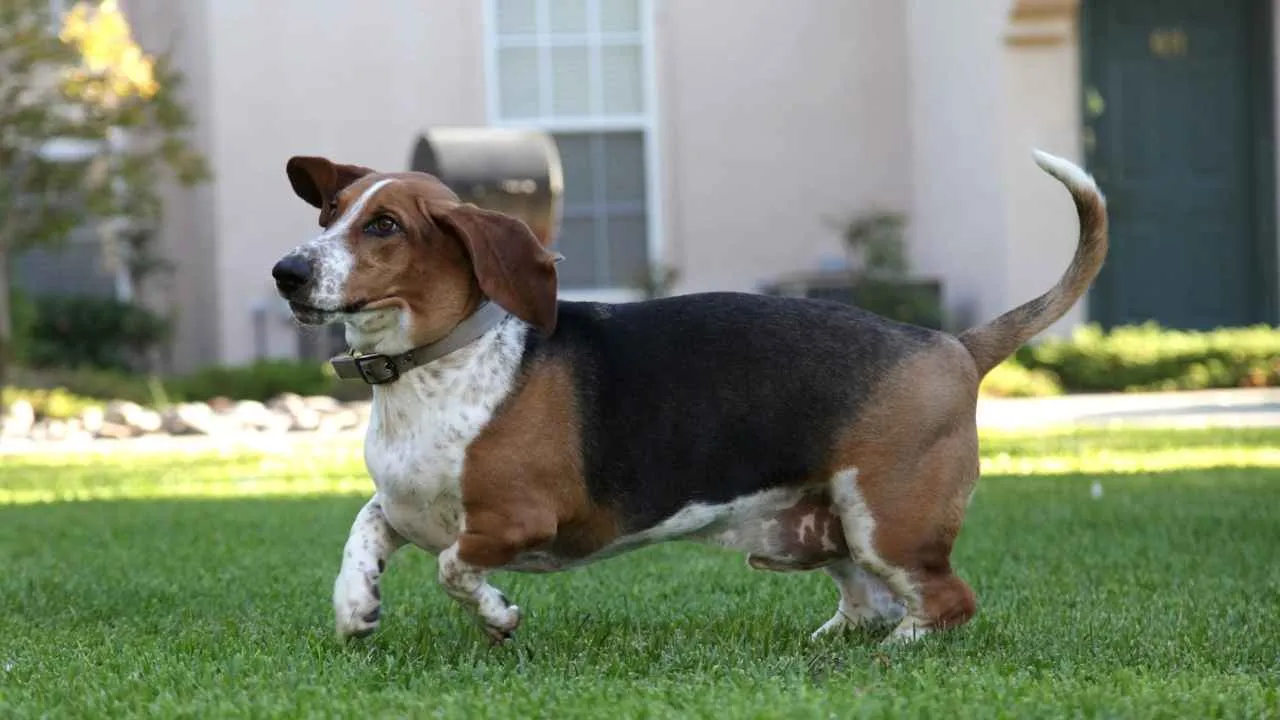
Basset Hounds are famously easygoing, gentle, affectionate, and patient, with a laid-back attitude. At home, they are sweet-natured clowns who love lounging with their families, but in the field they are all business.
Their long, droopy ears drag along the ground to stir up scent particles and sweep them toward the nose. Loose facial skin traps and holds scent near the muzzle, and low-slung, short legs keep the nose close to the ground without tiring the neck.
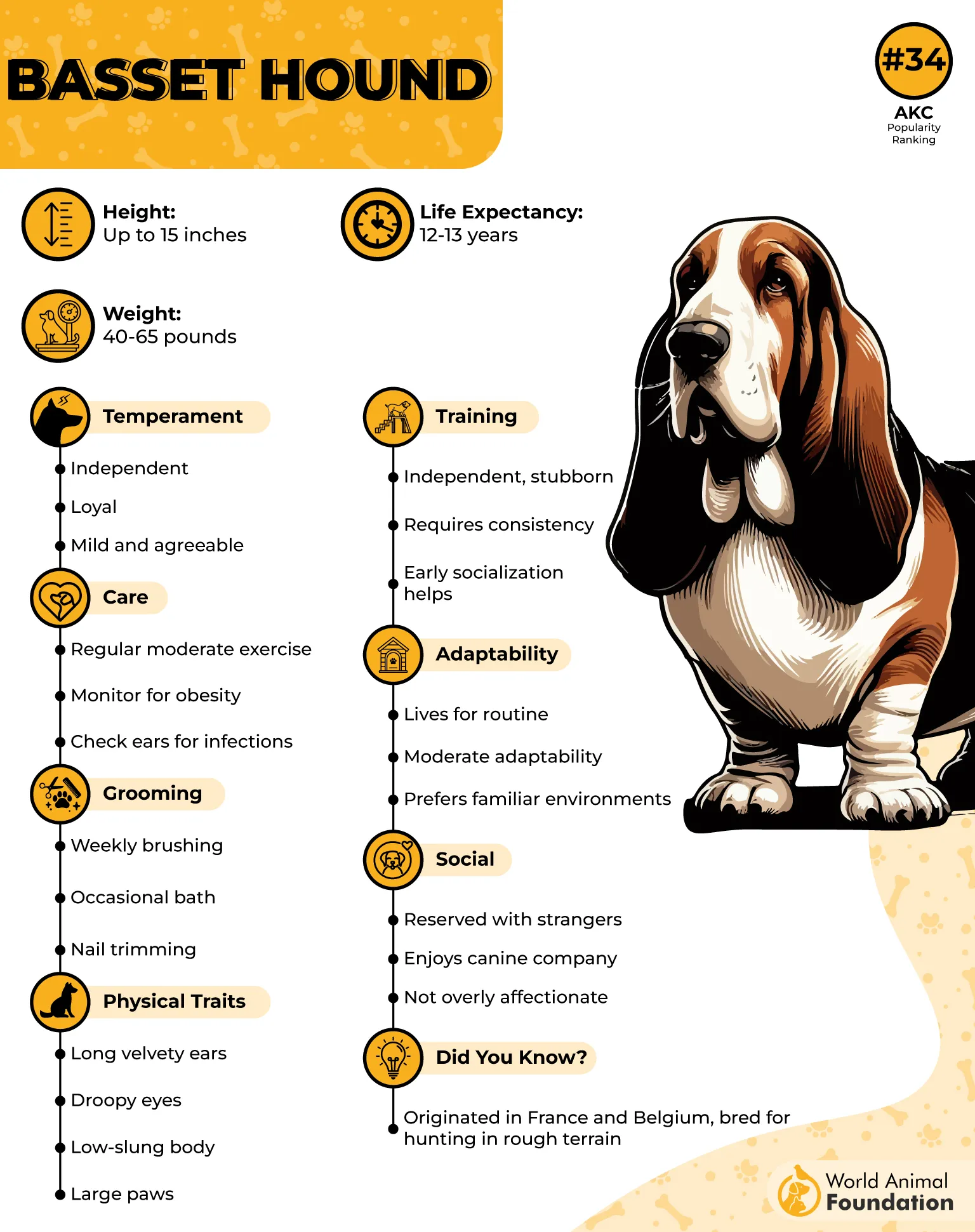
These friendly dogs were bred by monks to track small game on foot. Their short stature makes it easy for hunters to keep up as they follow scent trails, and they are built for endurance rather than speed.
Basset Hounds bark a lot, as Hill’s Pet notes, and they also have an independent, stubborn streak. That means they need proper, consistent, positive reinforcement training. These tracking dogs have low to moderate exercise needs.
7. Brittany
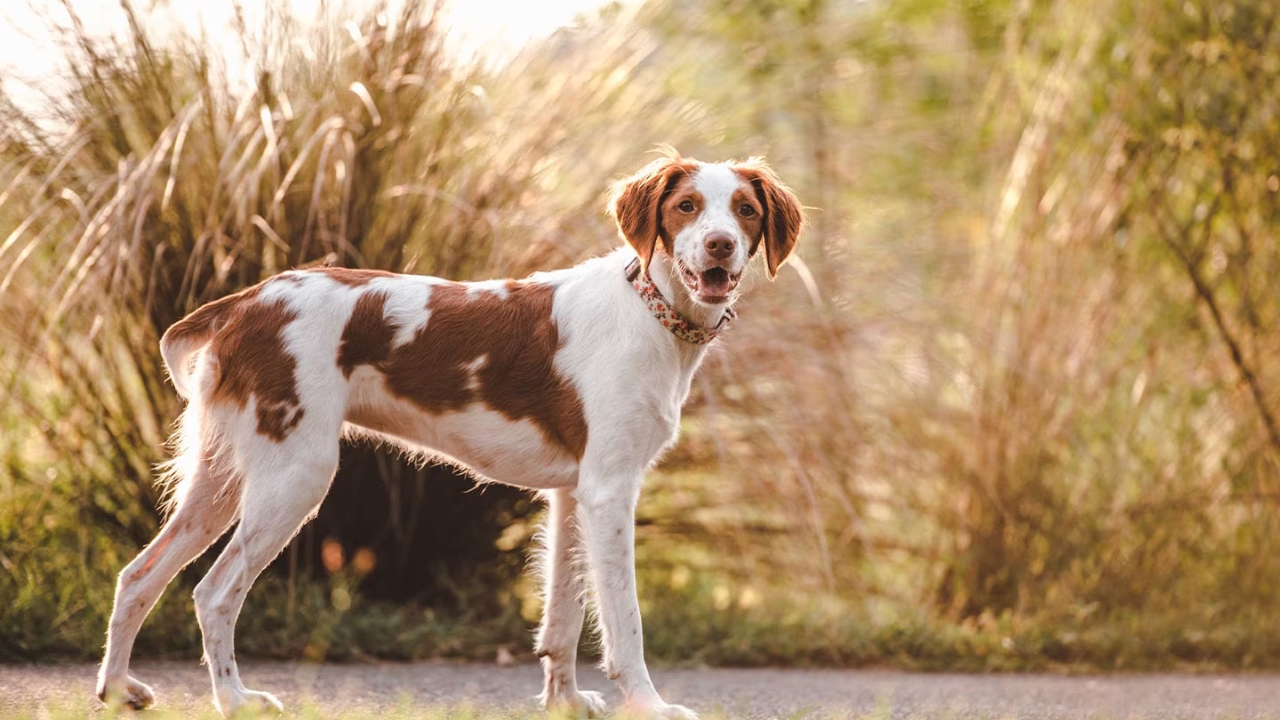
Brittanys are bright, high-energy, affectionate, and eager to please, with a cheerful, upbeat disposition. They form deep bonds with their owners and are famously gentle and friendly with children and other dogs.
They were bred as versatile hunting dogs to find, point, and retrieve game. They use their sharp noses to follow scent trails, both in the air and on the ground, when recovering wounded game. A Brittany stands still to point out the location of upland birds.
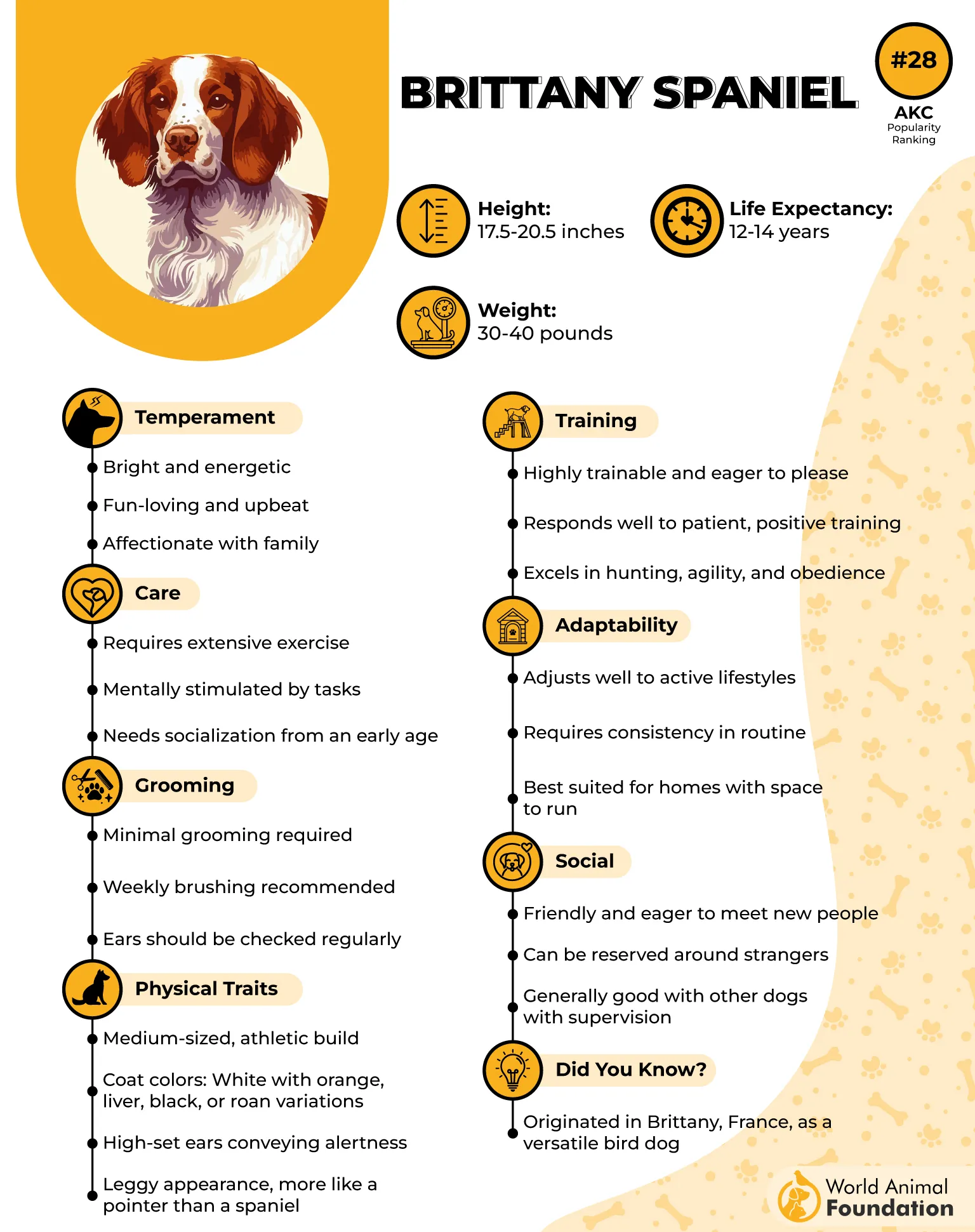
Brittanys have an innate desire to bring downed game back cleanly, on both land and water. Their strong noses and persistence allow them to track and recover winged or running birds over long distances in thick brush.
That said, these energetic dogs need around one to two hours of exercise a day, along with mental stimulation. They also have a strong prey drive, so they are generally best for experienced, active owners.
8. English Springer Spaniel
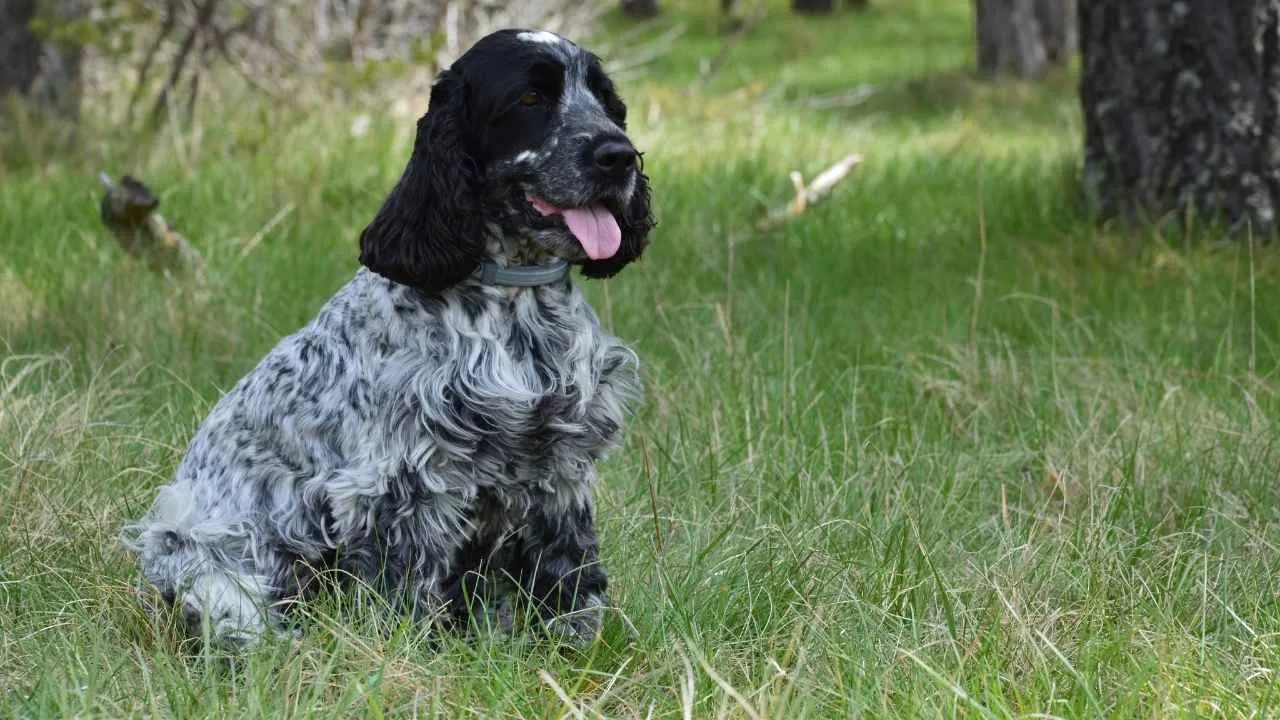
English Springer Spaniels are famously affectionate and even-tempered, with a reputation for constant tail-wagging friendliness. They have high emotional intelligence and form deep bonds with their human families.
Their original purpose was to spring, or flush, game birds out of dense brush and heavy thickets. They are elite flushing and retrieving dogs, and their soft mouths let them carry wounded game back to the hunter gently.
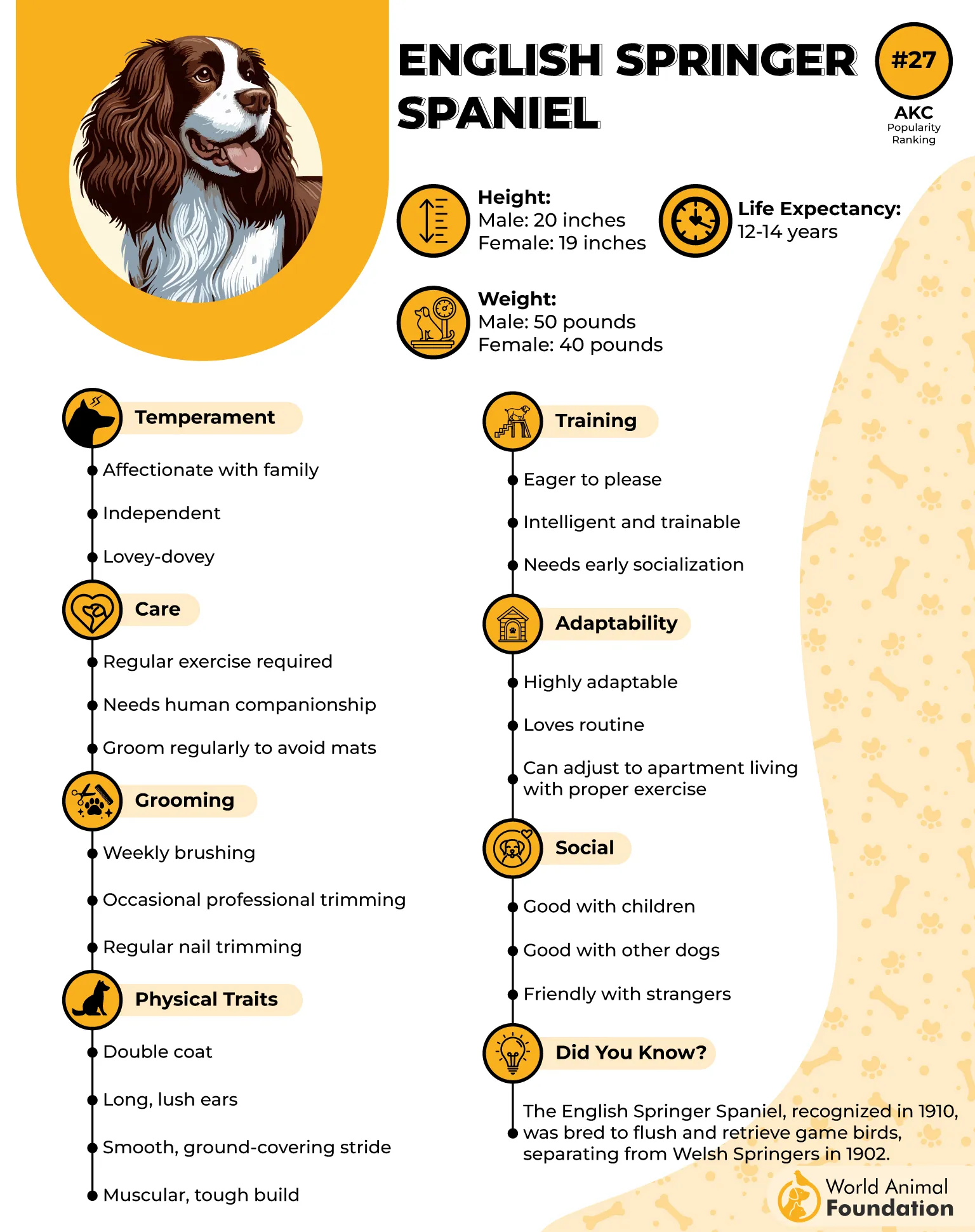
Trained Springers are taught to “hup” (sit) at the flush and stay steady through the shot and the fall before marking and retrieving the game to hand. Their eager-to-please temperament makes them responsive to handler commands during field work and training.
These working dogs bond closely with people, so they can develop separation anxiety. They also have a high hunting drive, so training is non-negotiable. Springers usually do well with experienced owners.
9. Labrador Retriever
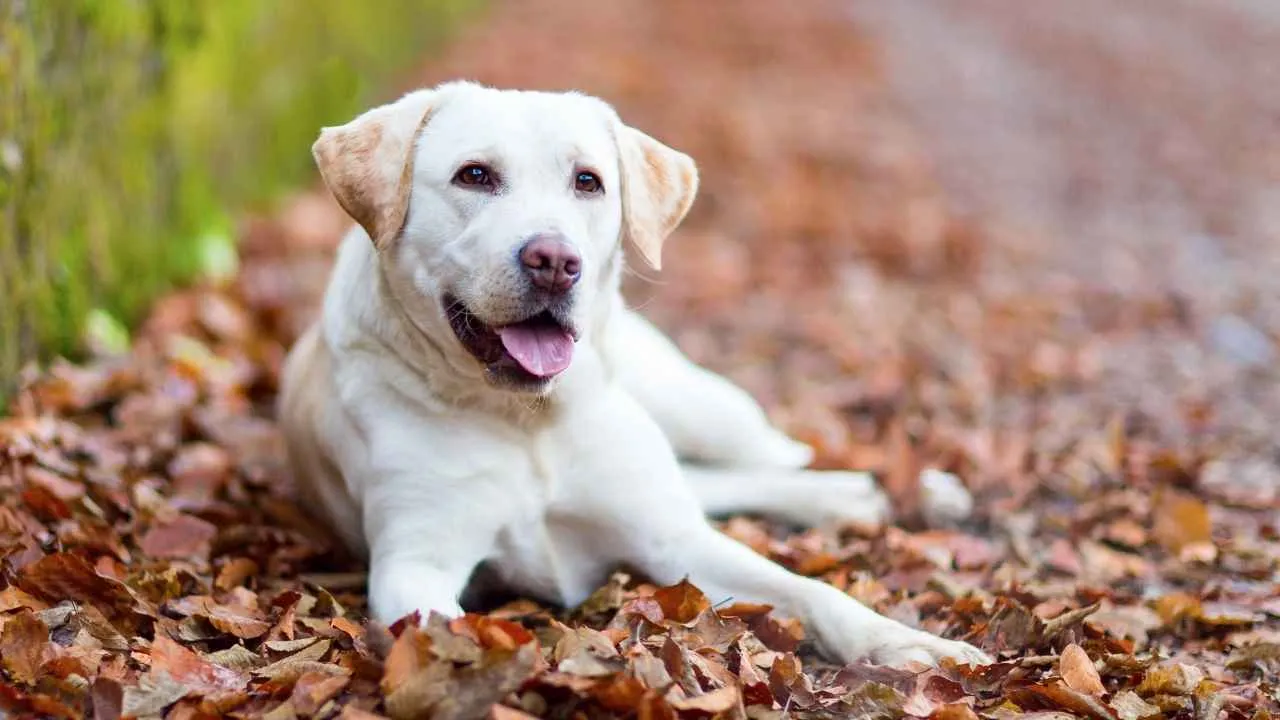
Labrador Retrievers are universally adored for their friendly, outgoing, and intelligent nature. They are exceptionally cooperative working dogs, and on top of that, they make some of the best family pets thanks to their adaptable, loving personalities.
Traditionally bred as flushing and retrieving gundogs, Labs also have strong noses that make them capable blood-trailing and game-tracking partners. Specialized handlers report high recovery rates for wounded game like deer.
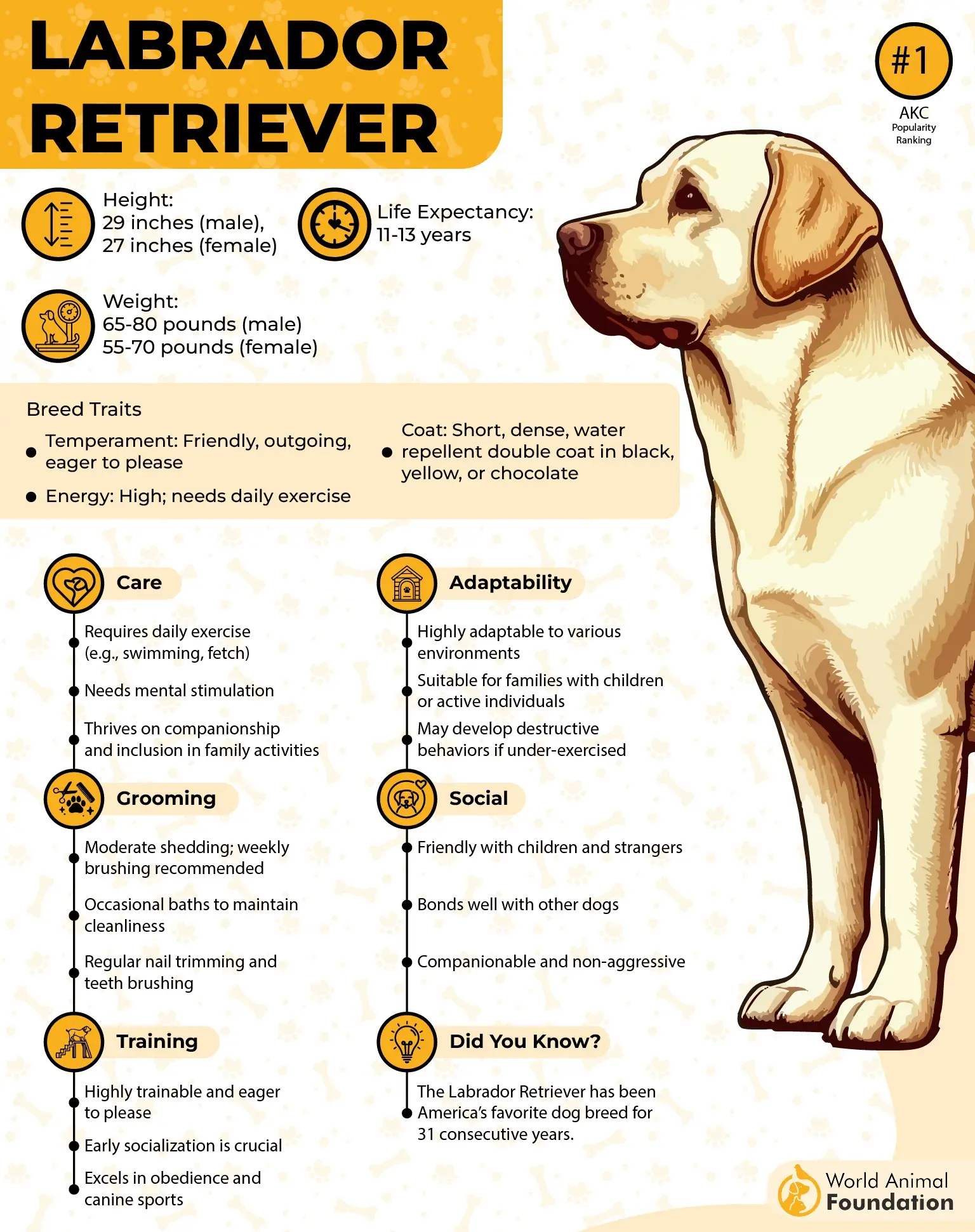
They were originally bred to work alongside fishermen in freezing waters. Labs excel at retrieving waterfowl, and their soft mouths help them carry game gently. However, they are highly social and can suffer from separation anxiety if left alone for long periods.
That’s why they do best with active families and reward-based training. These water-loving dogs are energetic and enjoy jogging, swimming, walks, and games of fetch. They also have a weather-resistant double coat that sheds heavily throughout the year.
10. German Shorthaired Pointer
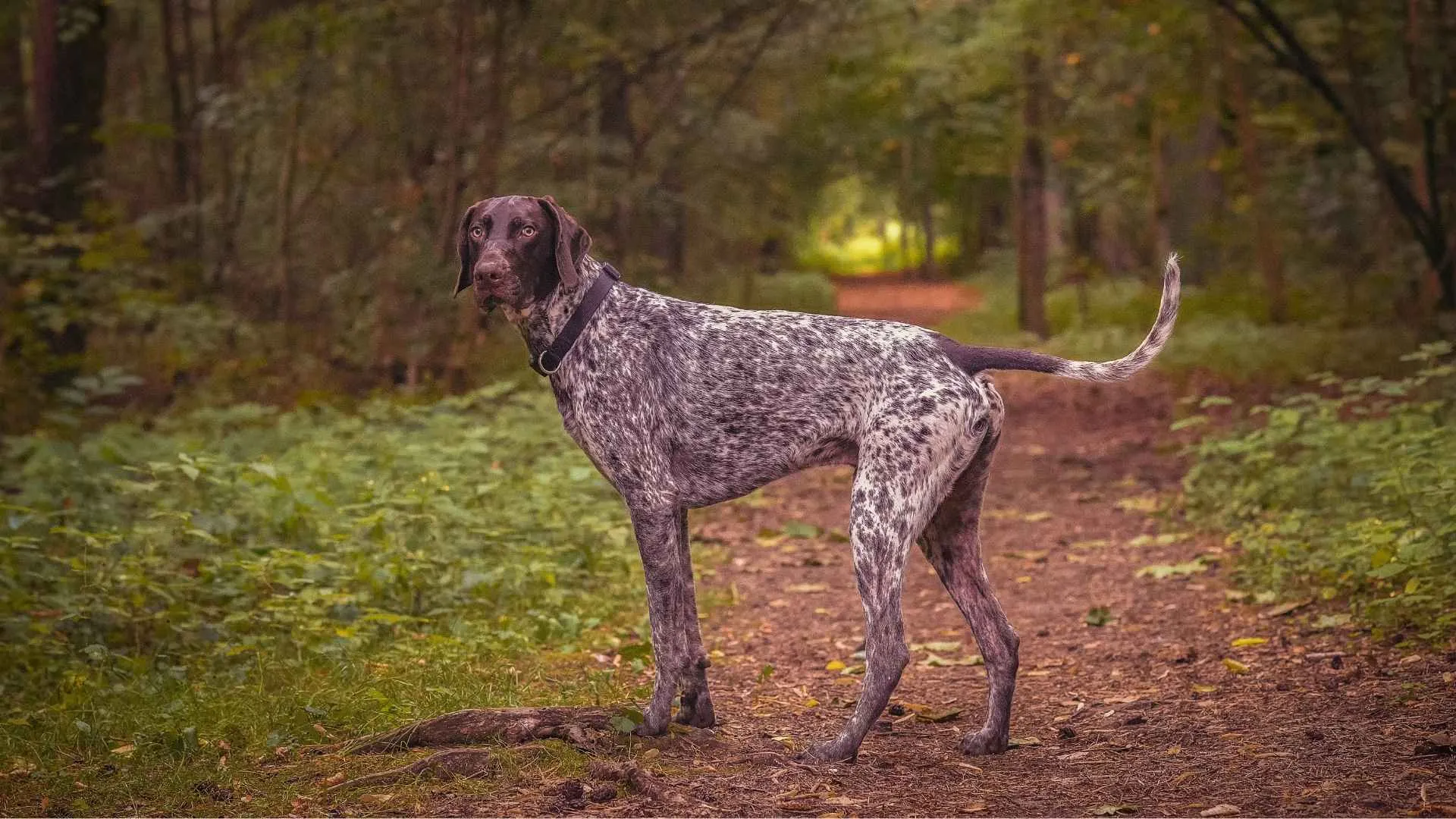
German Shorthaired Pointers are loyal, highly intelligent, and courageous dogs. They are also famous bird dogs, bred to be versatile hunters. GSPs are good at pointing, tracking, and retrieving upland birds, waterfowl, and other small game.
With a short, dense, water-repellent coat, GSPs comfortably enter lakes, rivers, and marshes to retrieve ducks and geese. They have a natural eagerness to pick up game and bring it back to hand, which can be refined through basic obedience and force-fetch or hold-and-fetch training.
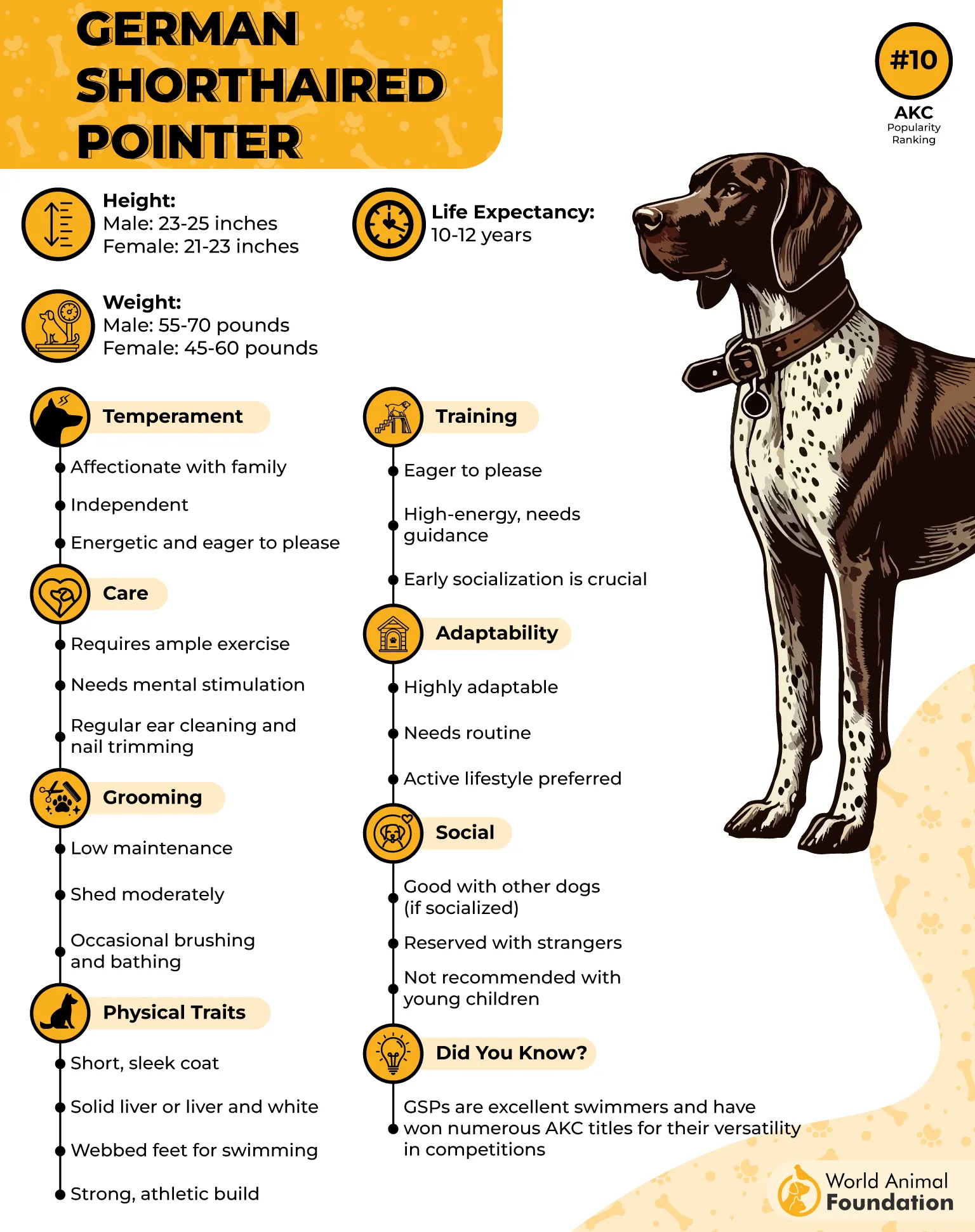
They need plenty of exercise to burn off their boundless energy. These pointers enjoy off-leash running, long-distance hiking, and mentally demanding work like field work and tracking drills. They are smart and eager to please, but also independent, so they need firm, consistent training from experienced owners.
On the grooming side, their flat double coat sheds moderately throughout the year but needs little care, usually just a quick weekly brushing, as WebMD notes.
Conclusion
All ten breeds on this list have a hunting history. They were originally bred to work big game and small game, but their styles differ. Some specialize in tracking, others are phenomenal retrievers, and a few are all-purpose hunting dogs that do a bit of everything. Read through the details above to find the one that best fits your hunting style.
