




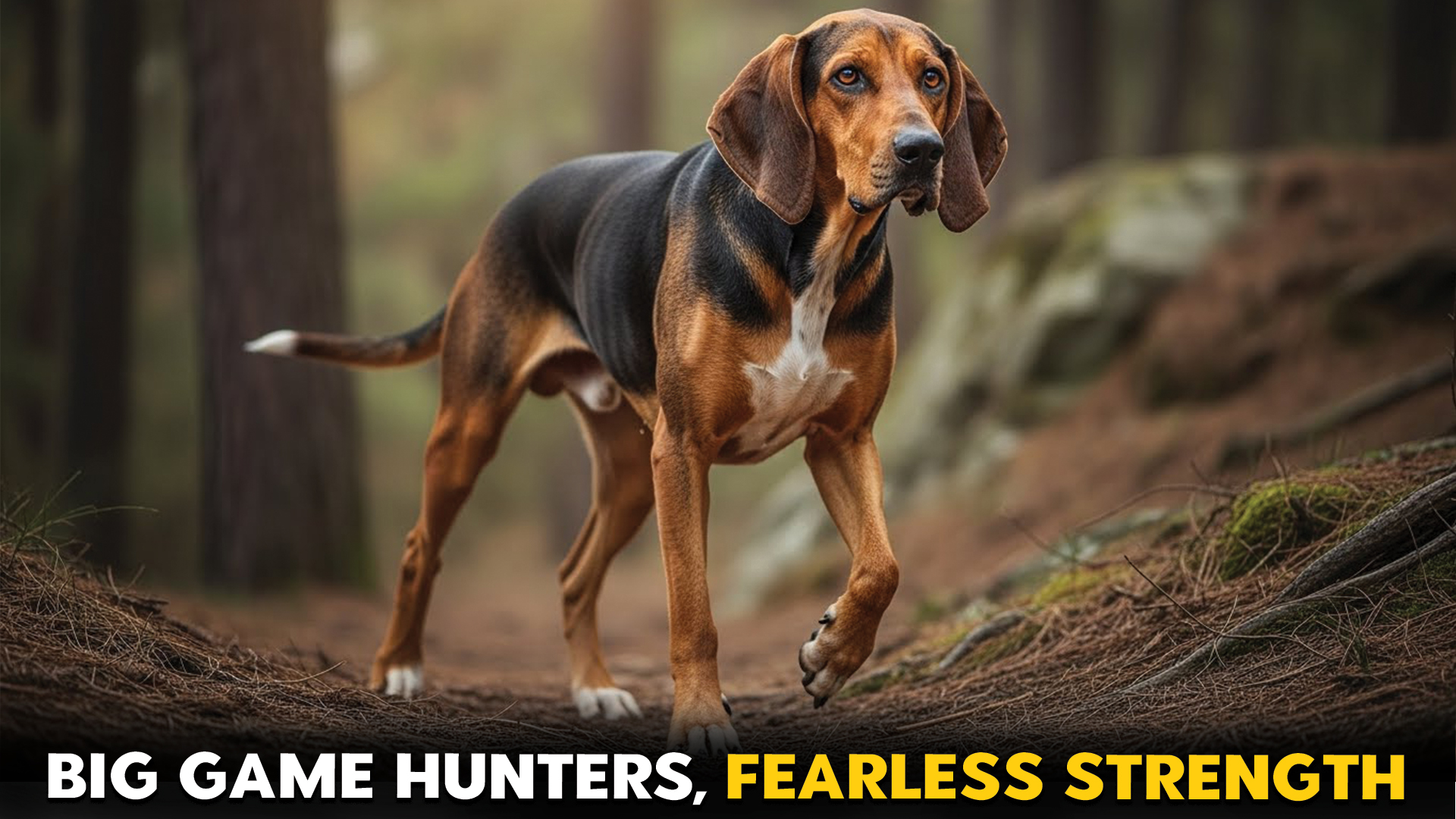
Imagine a universe filled with courage, focus, and unstoppable energy. You might think of superheroes. But wait. These heroes have four legs, sharp senses, and a strong hunting drive.
Yes, we are talking about hunting dogs.
According to Wikipedia, a hunting dog is a dog bred to help humans track, chase, flush, or retrieve game. These dogs were not created by chance. They were shaped over generations for specific hunting tasks. Some follow hidden trails by scent. Some retrieve from water. Others stand fearless when facing larger game.
Isn’t that impressive?
But why are there so many different hunting dog breeds?
The answer lies in purpose.
As noted by the American Kennel Club (AKC), dogs in the Sporting Group were developed to work closely with hunters in the field and water. Each breed has skills matched to terrain, prey, and hunting style. Some dogs handle birds and small game. Others assist with big game like deer or even bear.
That is exactly what we are about to explore.
Top Dog Breeds for Specialized Big Game Hunting
1. American Foxhound
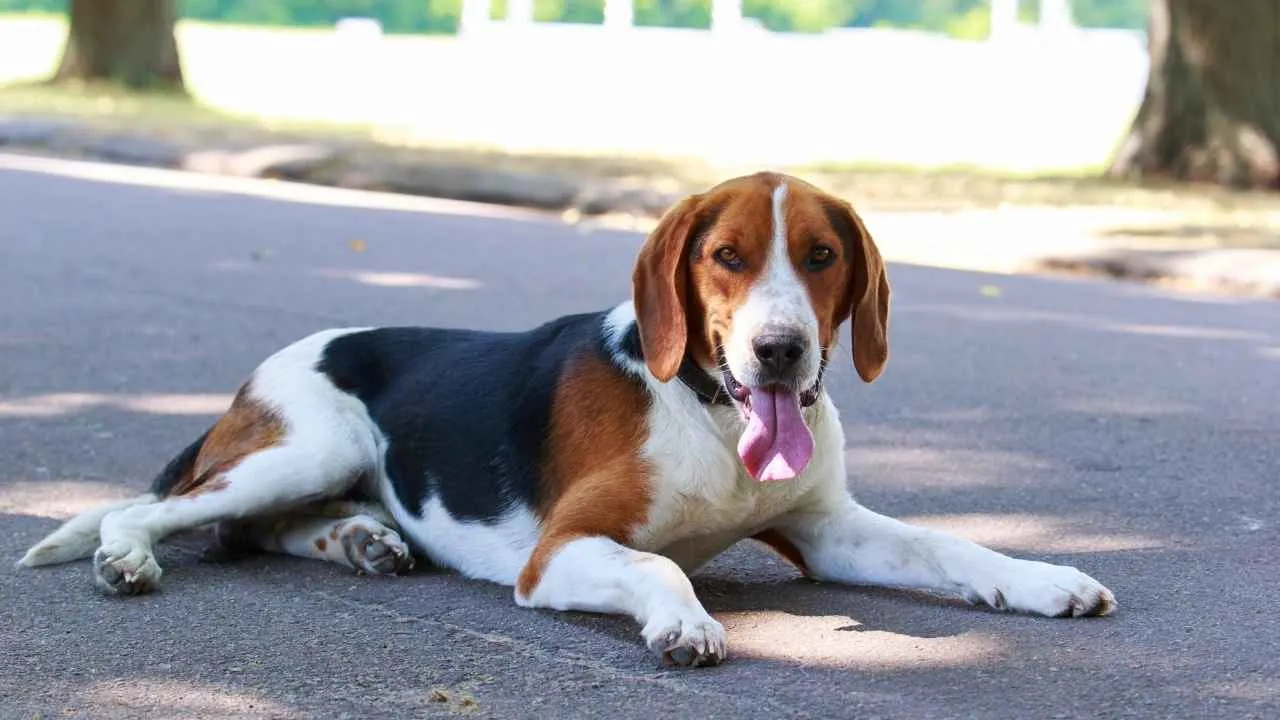
At first glance, the American Foxhound looks like motion itself. Long legs. Lean body. Endless stamina. This is one of the oldest dog breeds developed in America, shaped for speed, distance, and determination. If this dog were a story, it would be written in miles, not pages.
The American Foxhound was originally bred for long hunts over wide land. This breed descends from English hounds brought to America in the 1600s. Over time, it became tougher, faster, and more independent. These dogs do not quit easily.
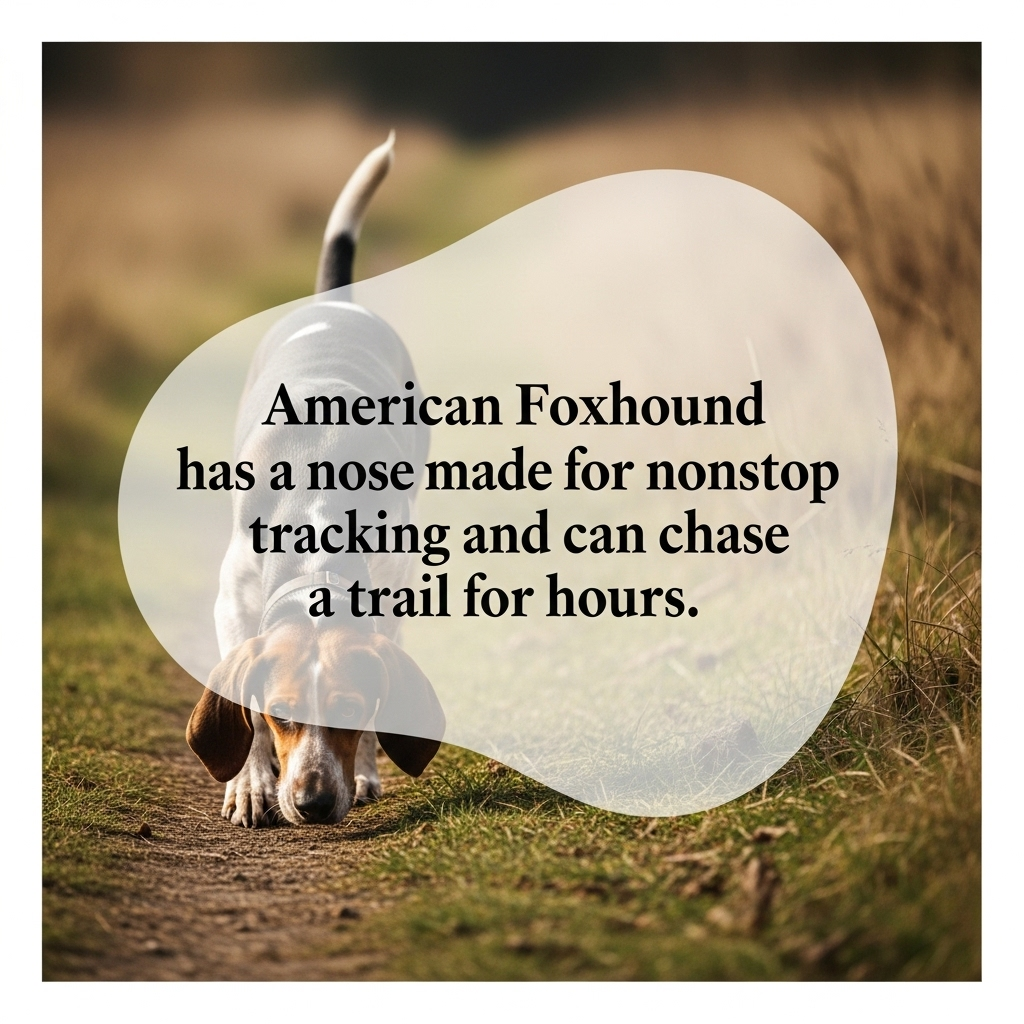
They are built for work. The breed has a strong nose and high endurance, making it ideal for tracking game over long distances.
Key traits
Speed
Endurance
Independence
PetMD explains that American Foxhounds are high-energy and independent thinkers. They thrive outdoors and need space to move. These dogs excel at scent work and tracking larger game like deer. They work best with experienced hunters who understand their drive.
🎧 Dogcast
Episode 30 — If Dogs Could Talk — How Dogs Really Feel When You Leave (Separation Explained)
If you don’t hear sound, tap the button above to enable audio.
2. English Springer Spaniel
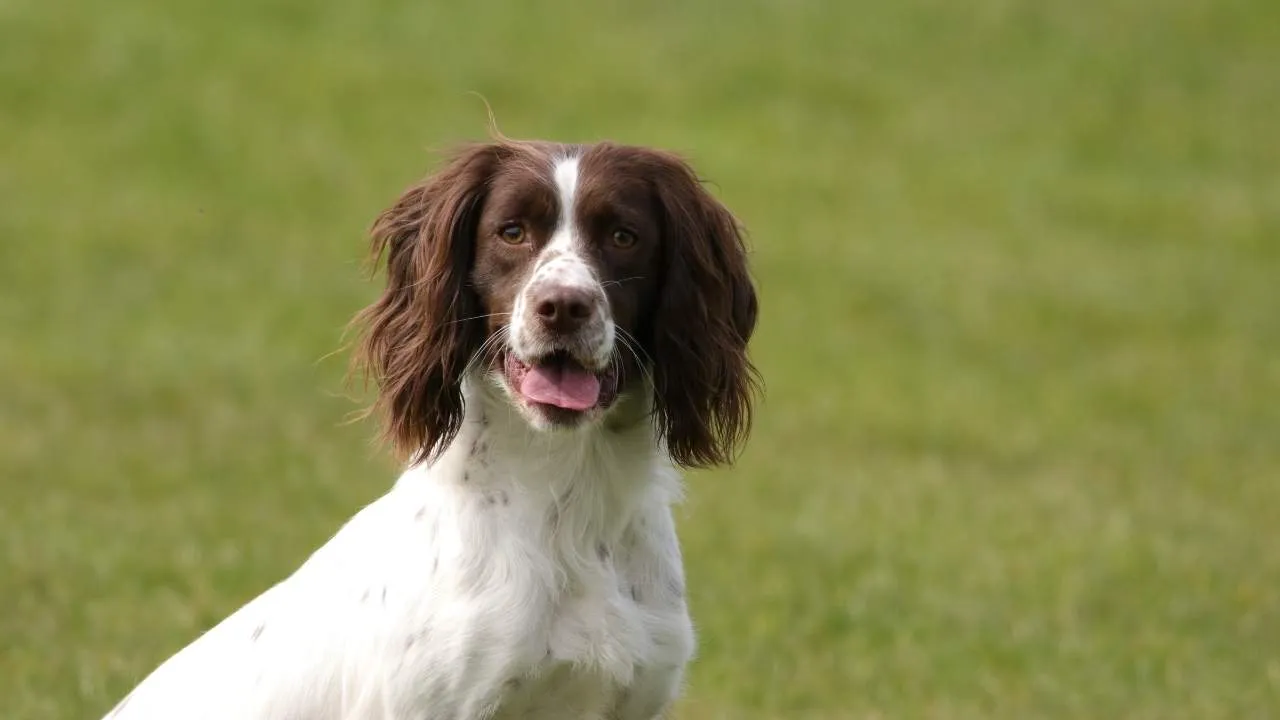
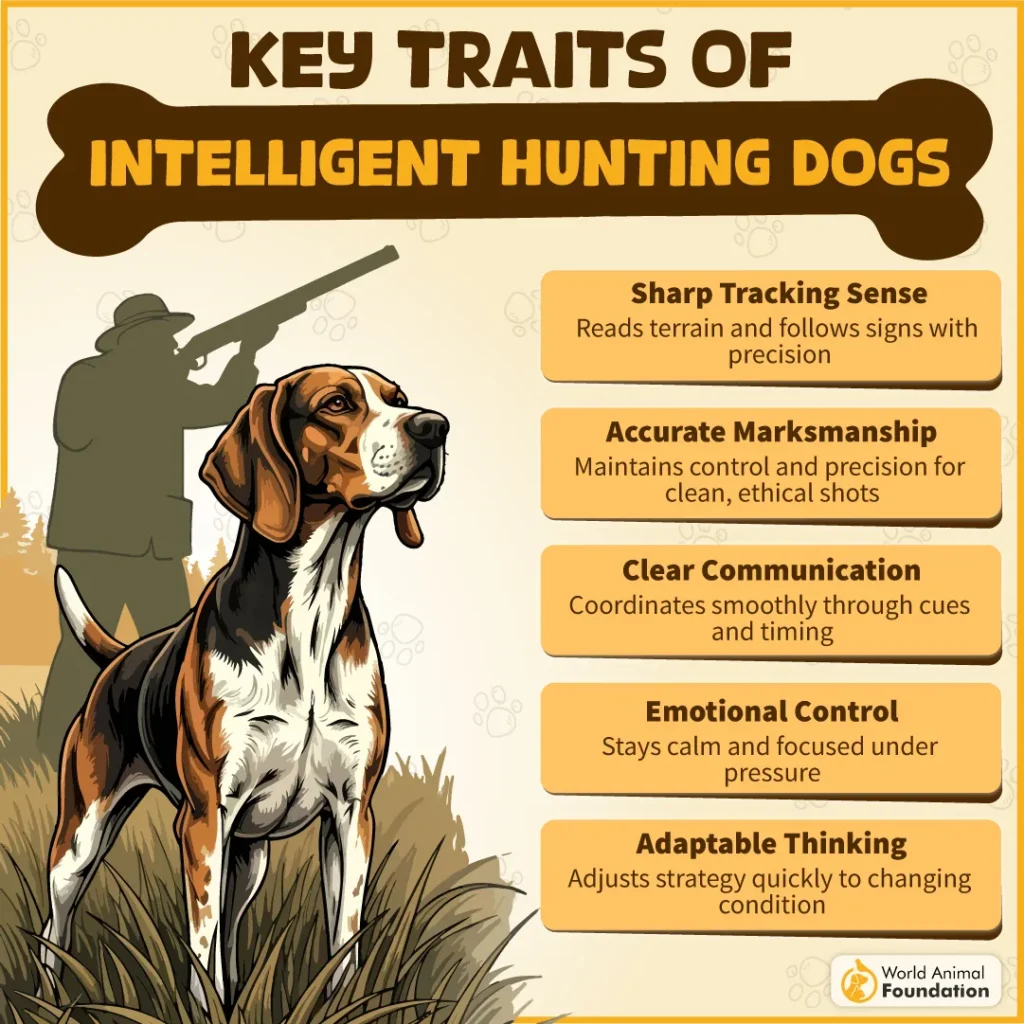
The English Springer Spaniel is a classic hunting puppy known for its fluffy ears and alert expression. This breed was developed to work closely with hunters in the field. Its medium-sized body, strong legs, and feathered coat allow it to move easily through thick cover and dense vegetation.
This Spaniel was bred to flush birds from hiding. This makes it especially useful for small game and other upland birds. The dog moves forward with control, pushes birds into the air, and waits for the hunter’s command.
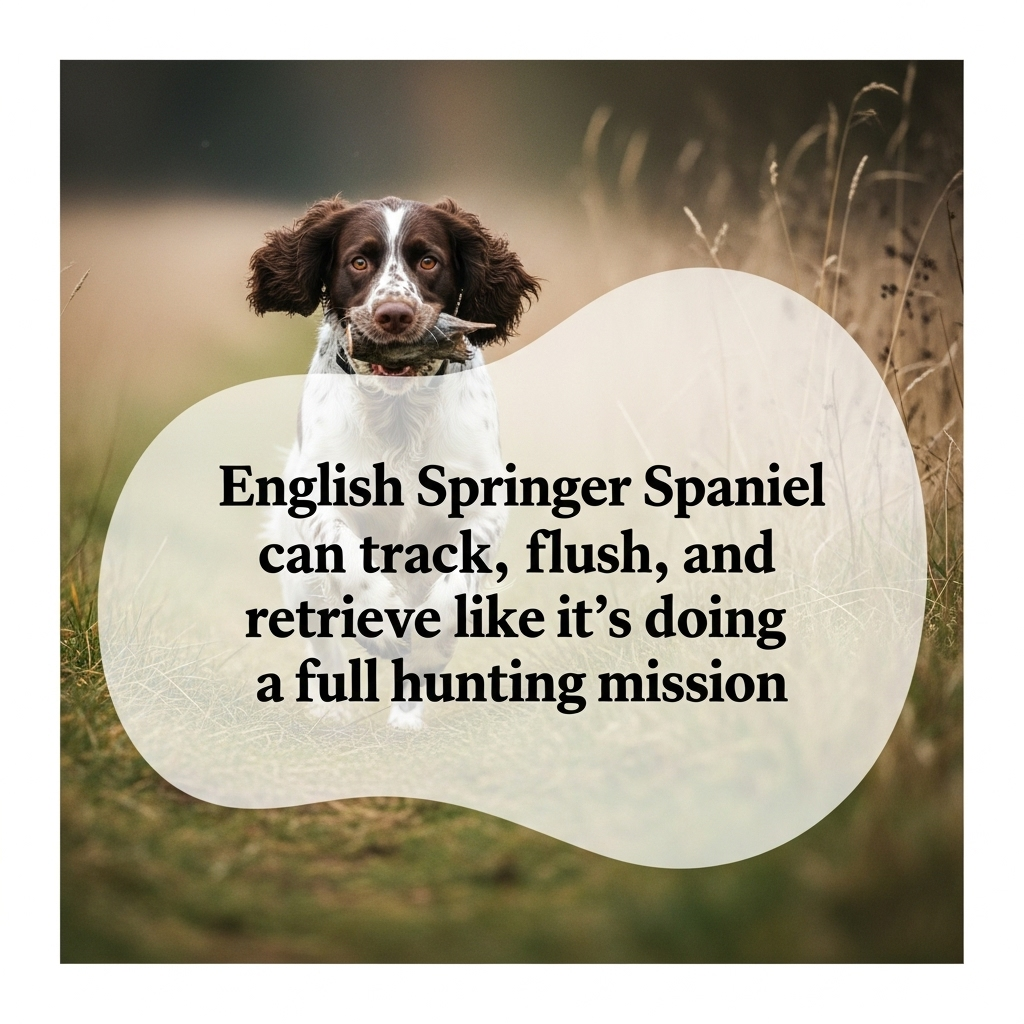
This controlled behavior sets it apart from dogs that chase blindly. This breed traveled widely during the British Empire. Hunters valued it for reliability and adaptability. These dogs perform well in rough terrain, including fields, forests, and wet ground.
Key Points
Protective floppy ears
Reliable retrieval abilityStrong recovery skills
Loyal hunting companions
3. Irish Water Spaniel
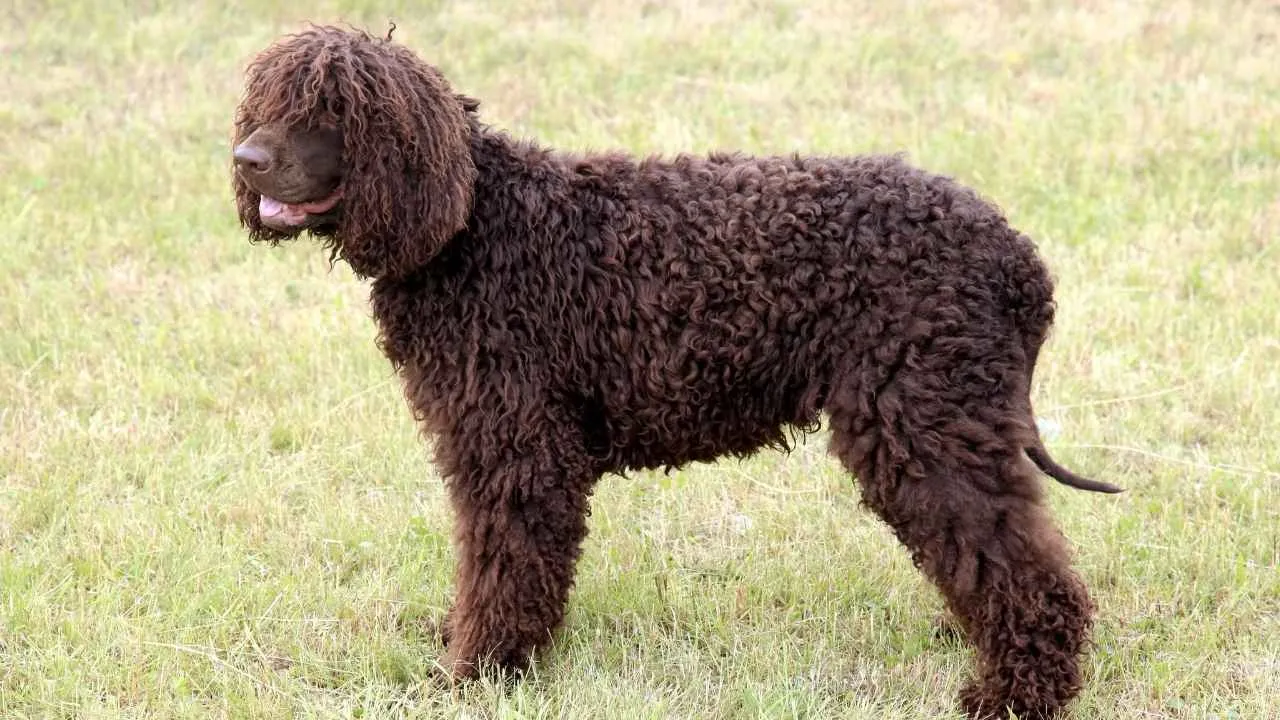
The Irish Water Spaniel looks like it stepped out of a legend. Tight curls frame its face. A proud head sits high. The coat shines in deep shades of liver brown, sometimes appearing almost purple in sunlight. This dog does not blend in. It stands out.
It is considered one of the oldest bird dog breeds, developed for serious work in harsh conditions. Built for cold water and rough weather, this breed carries a dense, curly coat that acts like natural armor. Long legs and a strong chest allow it to move smoothly through marshes and deep water.
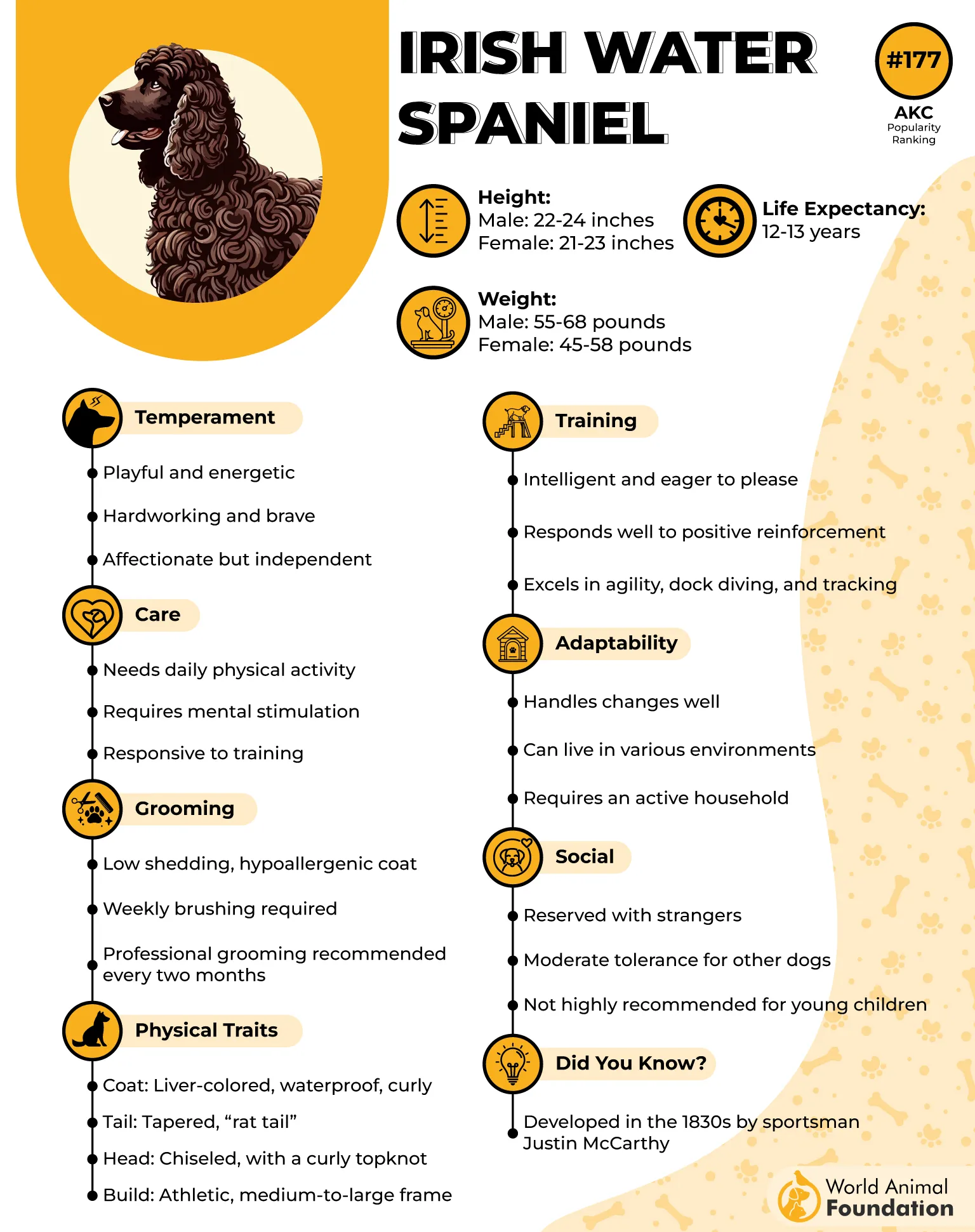
This Spaniel was bred for precision. It retrieves gently. It follows scent with focus. It stays steady until the hunter signals. This balance of patience and drive makes it special among the gun dog breeds. Its intelligence allows it to learn quickly, but it needs direction and purpose to stay happy.
For hunters who enjoy waterfowl hunting and active days outdoors, this dog delivers both skill and spirit.
Key traits
Curly coat
Water focus
Sharp mind
4. Boykin Spaniel
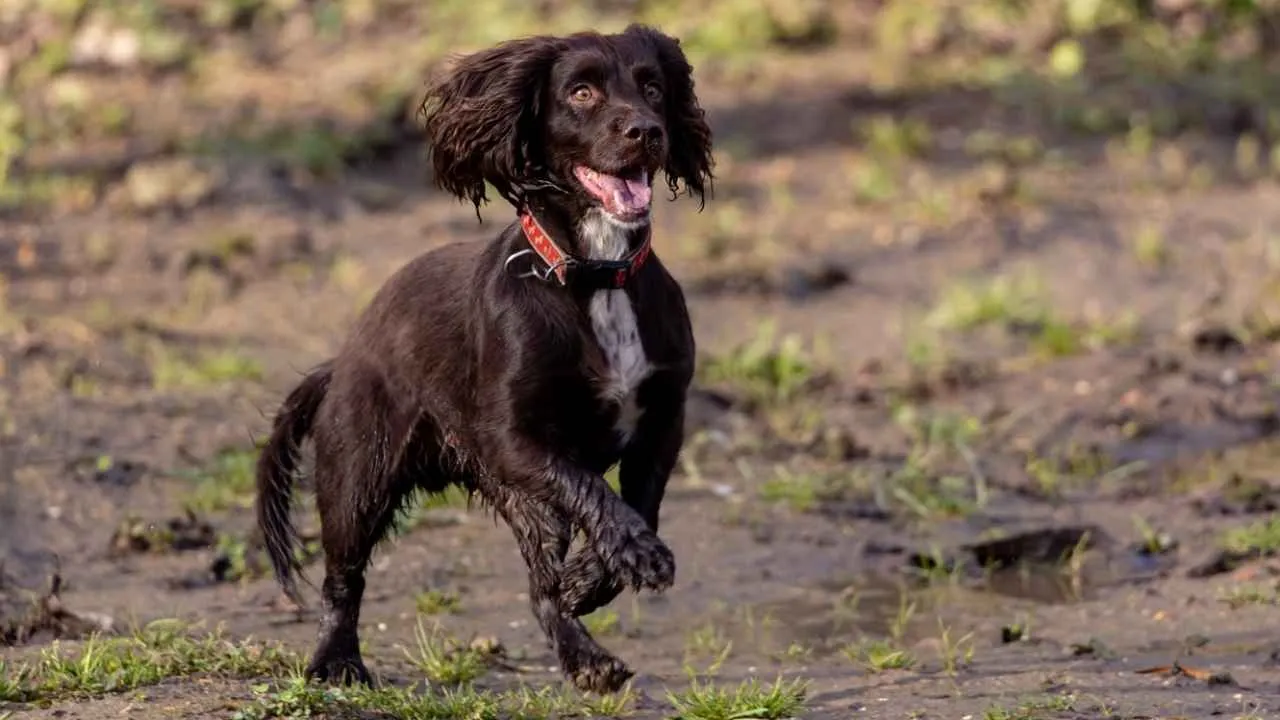
Who says curly hair cannot hunt? The Boykin Spaniel proves that power does not always come in a large frame.
This smaller but energetic dog carries confidence in every step. Its rich brown, slightly curly coat hides a body built for motion. Bright eyes stay alert. The tail never seems to rest.
The Boykin Spaniel was developed in South Carolina, USA, where hunters needed a compact dog that could work from boats and move easily through wetlands.
Today, it proudly holds the title of South Carolina’s official state dog. This great dog combines strong instincts with a willingness to learn, making it excellent for obedience training and controlled work.
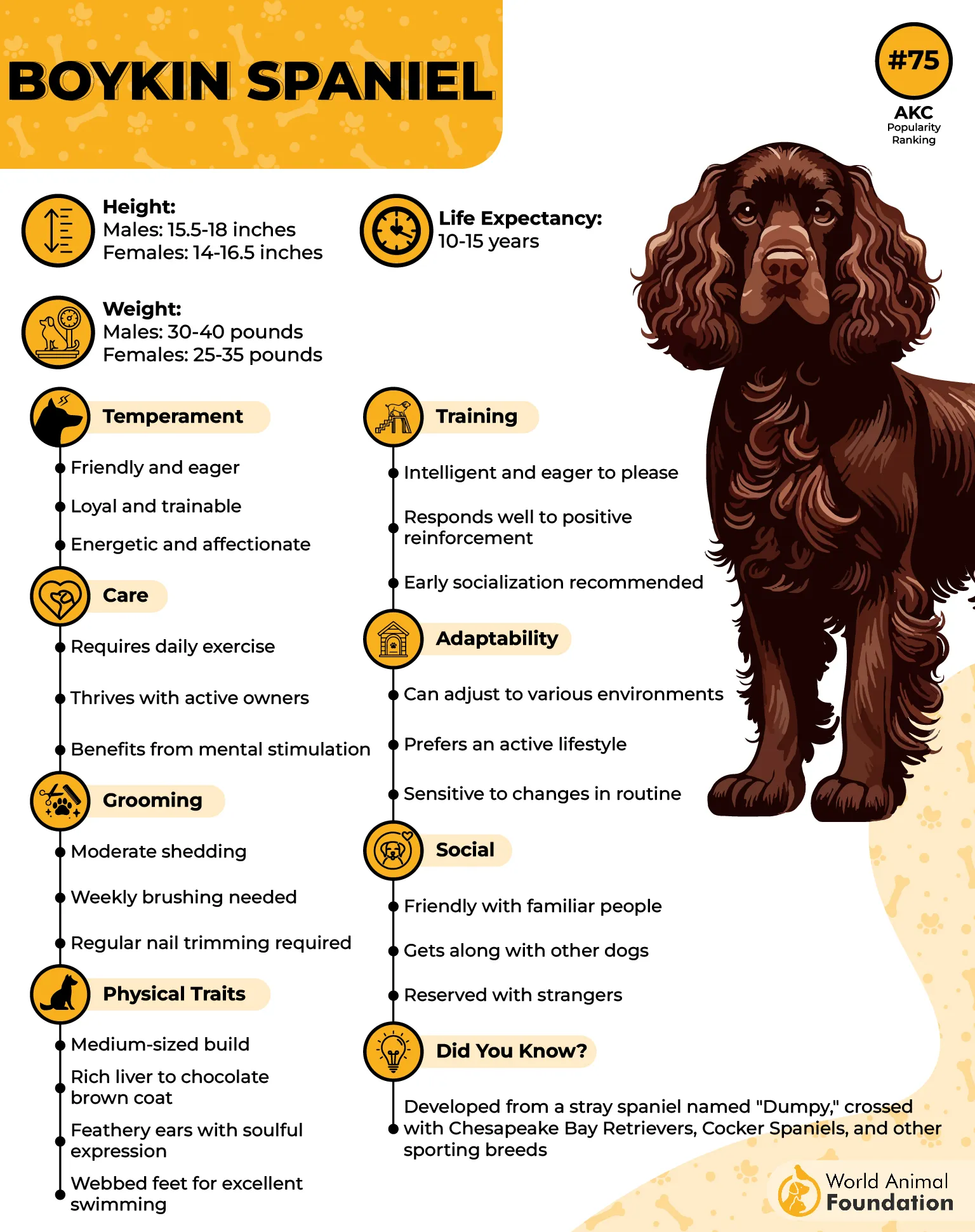
Despite its size, this dog works with confidence. It drives upland fowl into the air cleanly, retrieves with care, and performs well in water. Hunters value it as a reliable companion that also fits comfortably into family life. That balance makes it special among sporting dogs.
Historically used for
Waterfowl
Upland birds
Hunting partner
Active pet
The Boykin Spaniel adapts easily to varied terrain. It works in marshes, fields, and shallow water. In the modern hunting world, it remains proof that heart and drive matter more than size.
5. Labrador Retriever
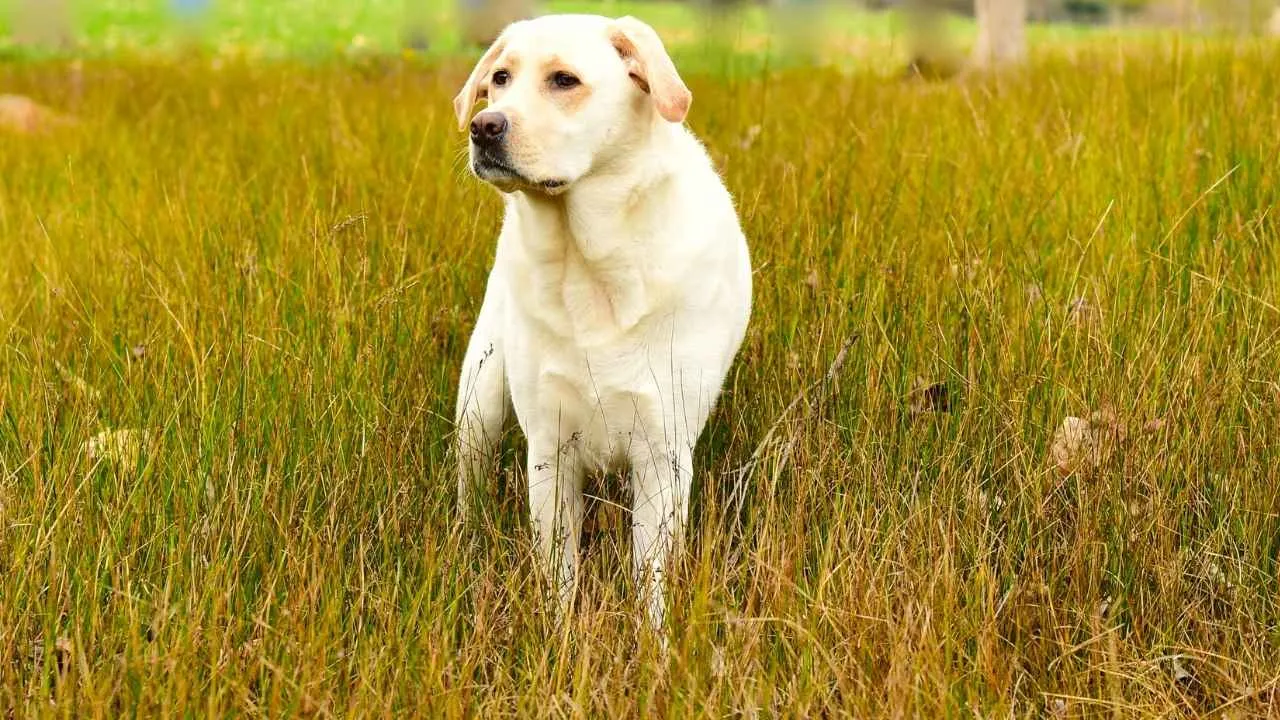
Who does not know the Labrador Retriever? Honestly, it would be surprising to hear someone say they have never heard of this breed. The Labrador is one of the most popular dog breeds in America, and for good reason.
This dog feels familiar, trusted, and dependable the moment you meet it. But the Lab is not just a friendly face or a family favorite. Long before it became a household name, this breed was a hardworking water dog.
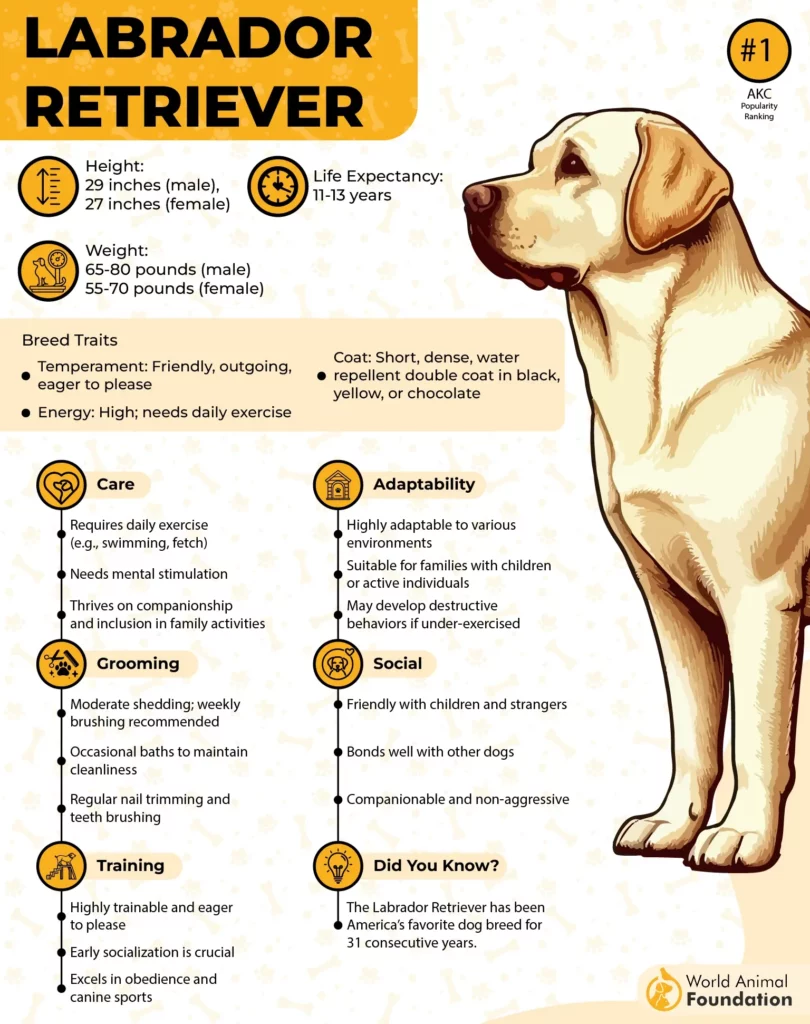
Labs were built to swim, retrieve, and work beside humans for long hours. Their strong bodies, webbed feet, and water-resistant coats made them natural partners in cold lakes and marshes.
Today, the Labrador Retriever shines as a versatile hunting dog. It moves easily from retrieving waterfowl to field tasks. It retrieves gently. It tracks wounded animals with confidence.
Its nose is one of its greatest tools—sharp, reliable, and always searching. Many hunters value Labs because they stay focused without becoming reckless.
This breed also responds extremely well to positive reinforcement. Training feels like teamwork, not force. That balance makes the Lab a rare combination: a skilled hunting partner in the field and a loving family dog at home.
Known for
Strong retrieving
Excellent nose
Steady temperament
6. German Shorthaired Pointer
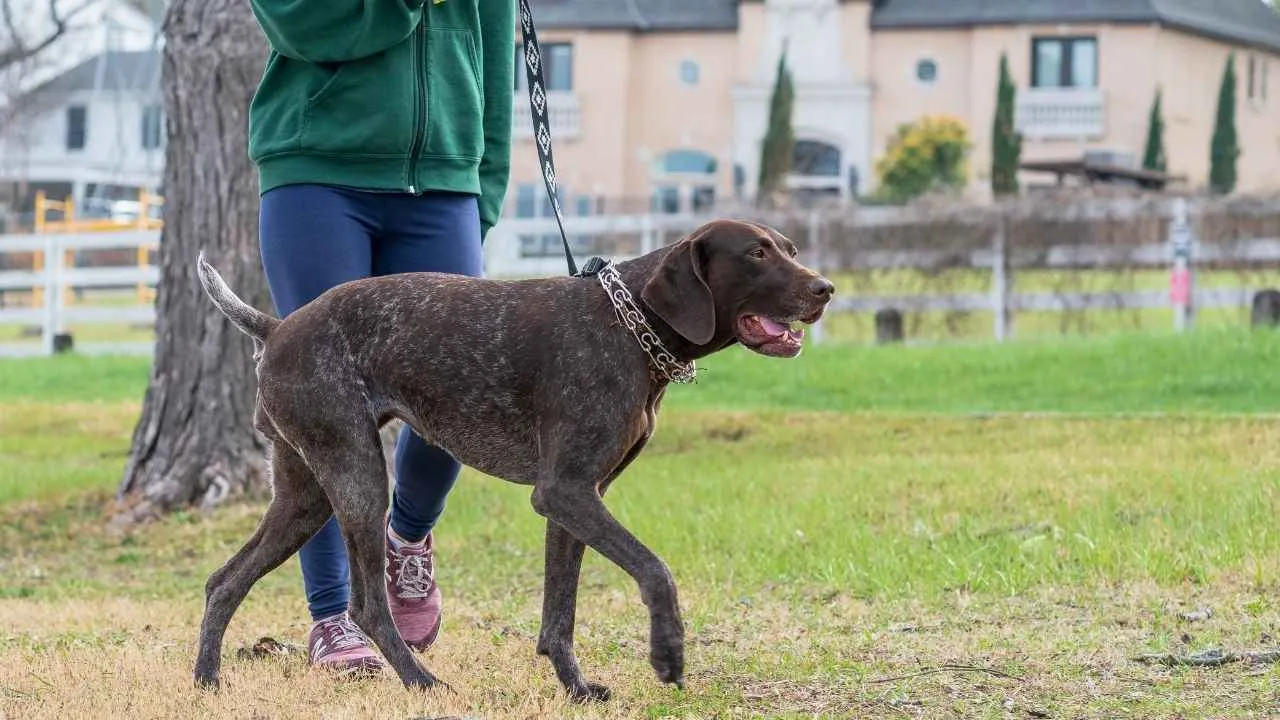
This pointer dog stands tall, focused, and ready. The German Shorthaired Pointer is often called one of the best gun dogs ever developed, and it earns that reputation every time it enters the field. From the moment it locks its stance and lifts a paw, you can see purpose written across its body.
Built with a lean, athletic frame, the German Shorthaired Pointer was designed for endurance rather than short bursts of speed. It moves confidently through open fields, dense brush, and uneven terrain without hesitation.
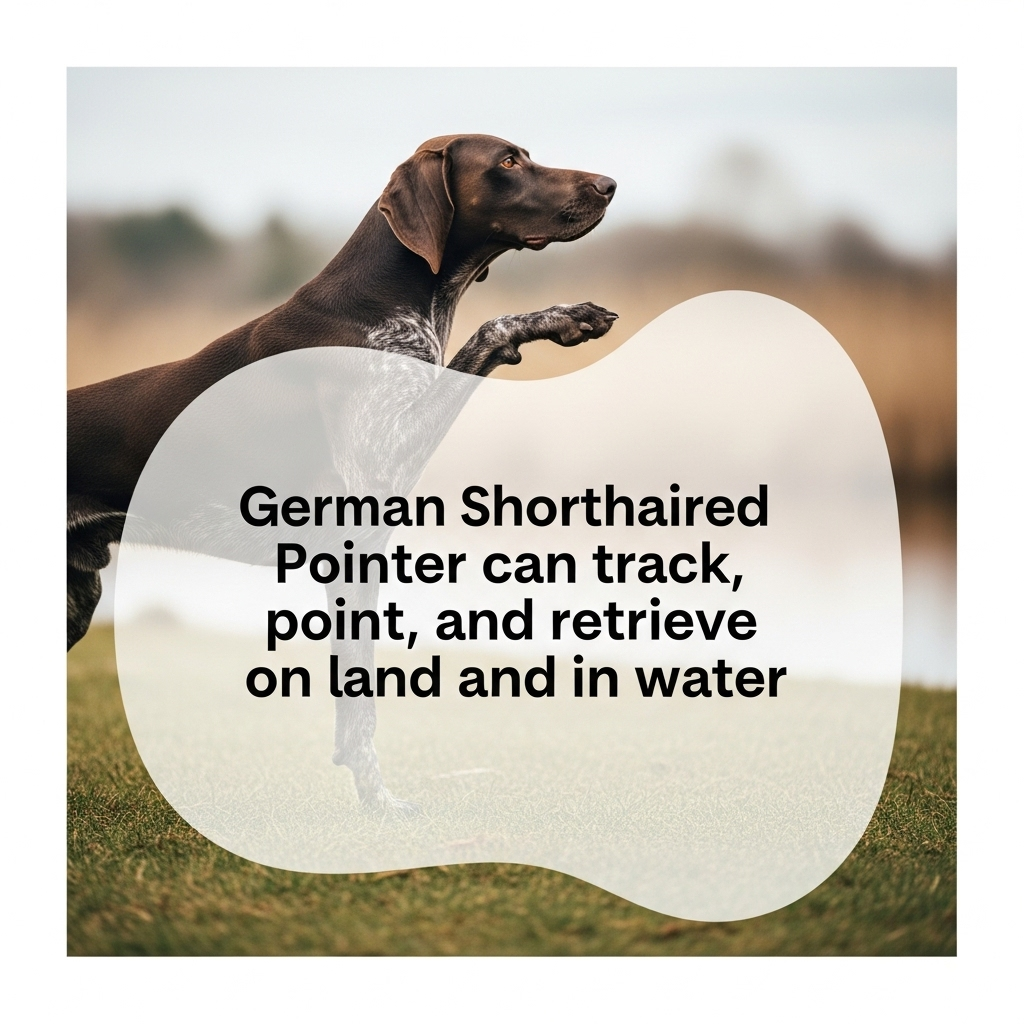
What sets this breed apart is its versatility. It can point, track, retrieve, and pursue game with proper training, making it effective for birds, small game, and even larger game. This adaptability allows hunters to rely on one capable partner instead of multiple specialized dogs.
Highly intelligent and responsive, the breed requires regular field activity to stay focused and balanced. When given consistent work, it becomes a thoughtful and reliable hunting companion rather than an overly restless dog.
Originally developed as an all-purpose hunting dog, the German Shorthaired Pointer successfully fulfilled its goal of replacing several specialized breeds with one dependable partner.
Key Points
Needs daily physical outlets
Performs best with structured routines
Not suited for sedentary lifestyles
Benefits from early social exposure
7. Bloodhound
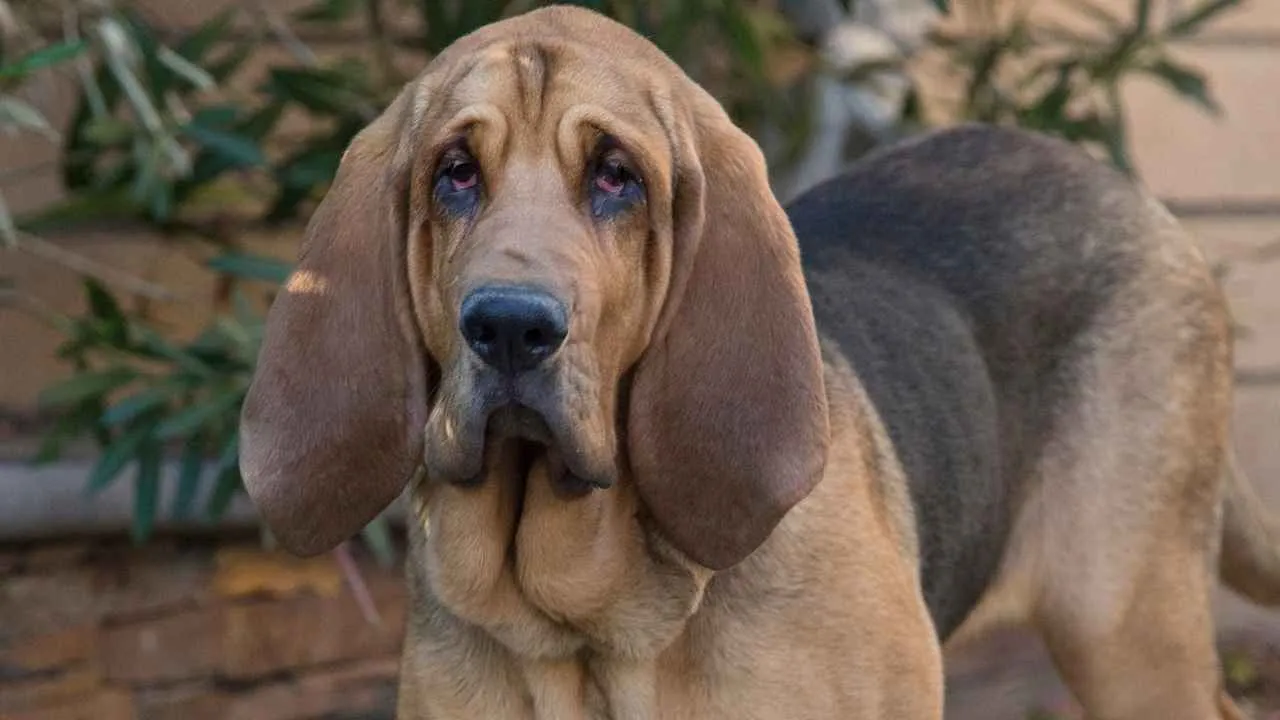
When it comes to scent, few animals rival the Bloodhound. Humans have about five million scent receptors, while a Bloodhound has nearly 300 million. That difference defines how this breed experiences the world. Once its nose meets the ground, everything else fades away.
The Bloodhound has earned its reputation as one of the most dependable tracking dogs ever developed. According to Britannica, this breed has been trusted for centuries in search and rescue and law enforcement due to its ability to follow scent over long distances and challenging terrain. That same reliability makes it a valuable asset in hunting.
In the field, Bloodhounds are often used for deer and bear recovery. Their calm nature allows them to work steadily without rushing a trail, focusing on accuracy rather than pursuit. This deliberate approach reduces errors when tracking wounded animals and helps hunters recover game responsibly.
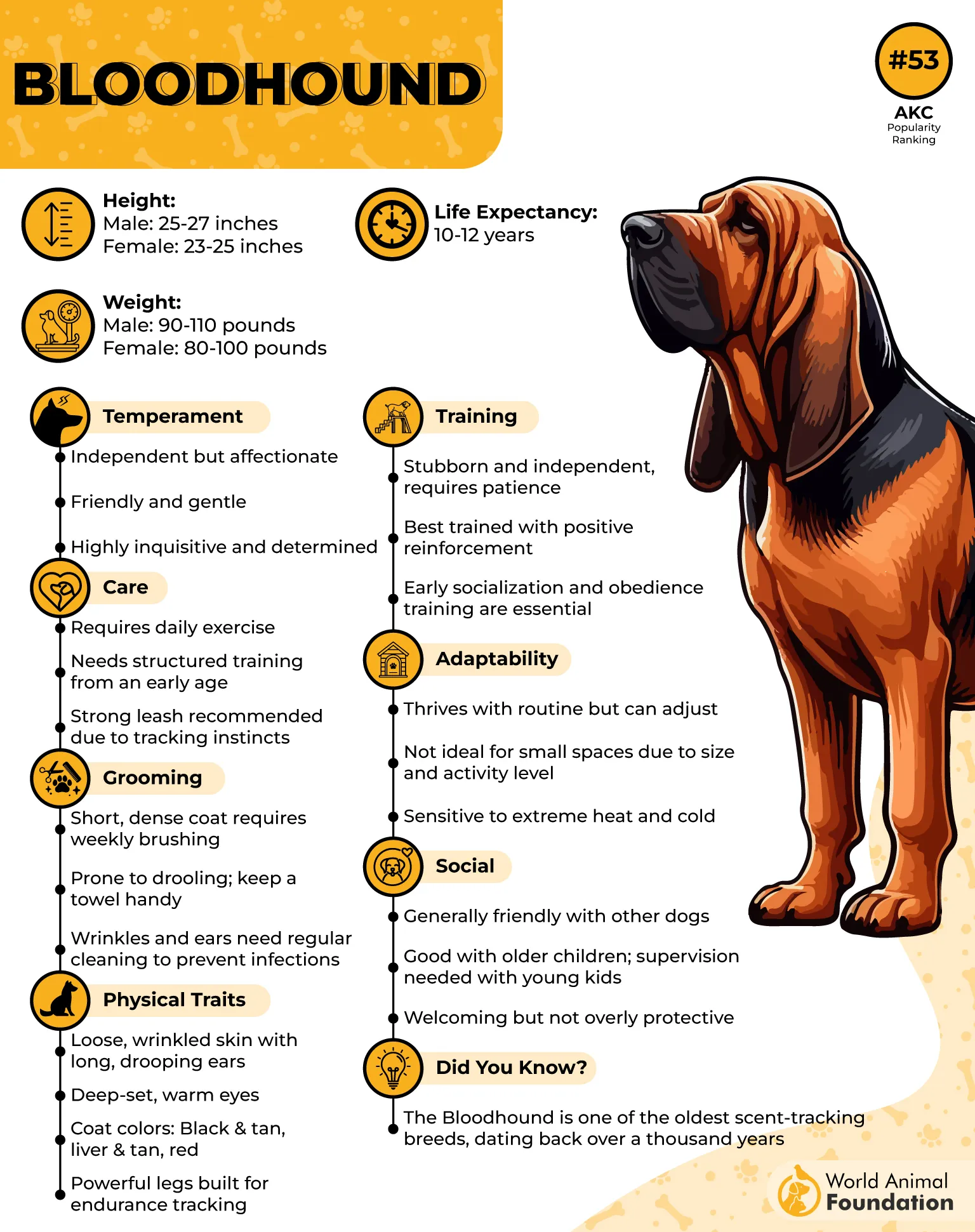
The breed’s distinctive appearance supports its working ability. Long ears help collect scent near the ground, while loose skin around the face aids in trapping scent particles. Though the Bloodhound may appear relaxed or slow-moving at rest, its concentration becomes intense once a trail is found.
This dog performs best under the guidance of an experienced hunter who understands patience and structure. With proper handling, the Bloodhound becomes one of the most dependable tracking partners available.
Additional considerations
Excels in overnight trail work
Performs best on leash-based tracking
Not suited for fast-paced chase hunts
Thrives with structured routines
8. Norwegian Elkhound
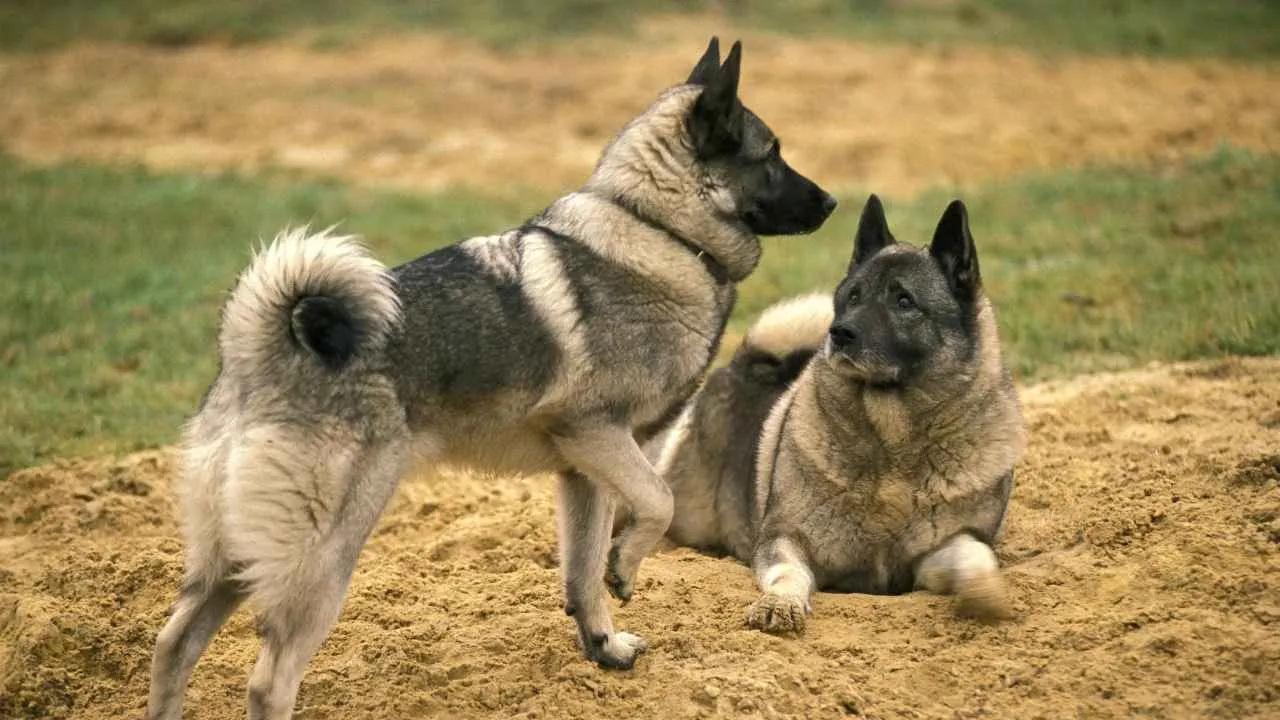
The Norwegian Elkhound is an ancient hunting breed developed in Scandinavia for demanding big game work.
For centuries, hunters relied on this dog to track and hold powerful animals like elk and bear in harsh northern environments. Its compact yet muscular build allows it to move confidently across forests, rocky terrain, and deep snow.
This pup does not chase recklessly. Instead, it tracks large game with precision and uses a strong, steady bark to alert the hunter once the animal is located. That barking serves a critical hunting function, helping the handler follow the action even when visibility is limited.
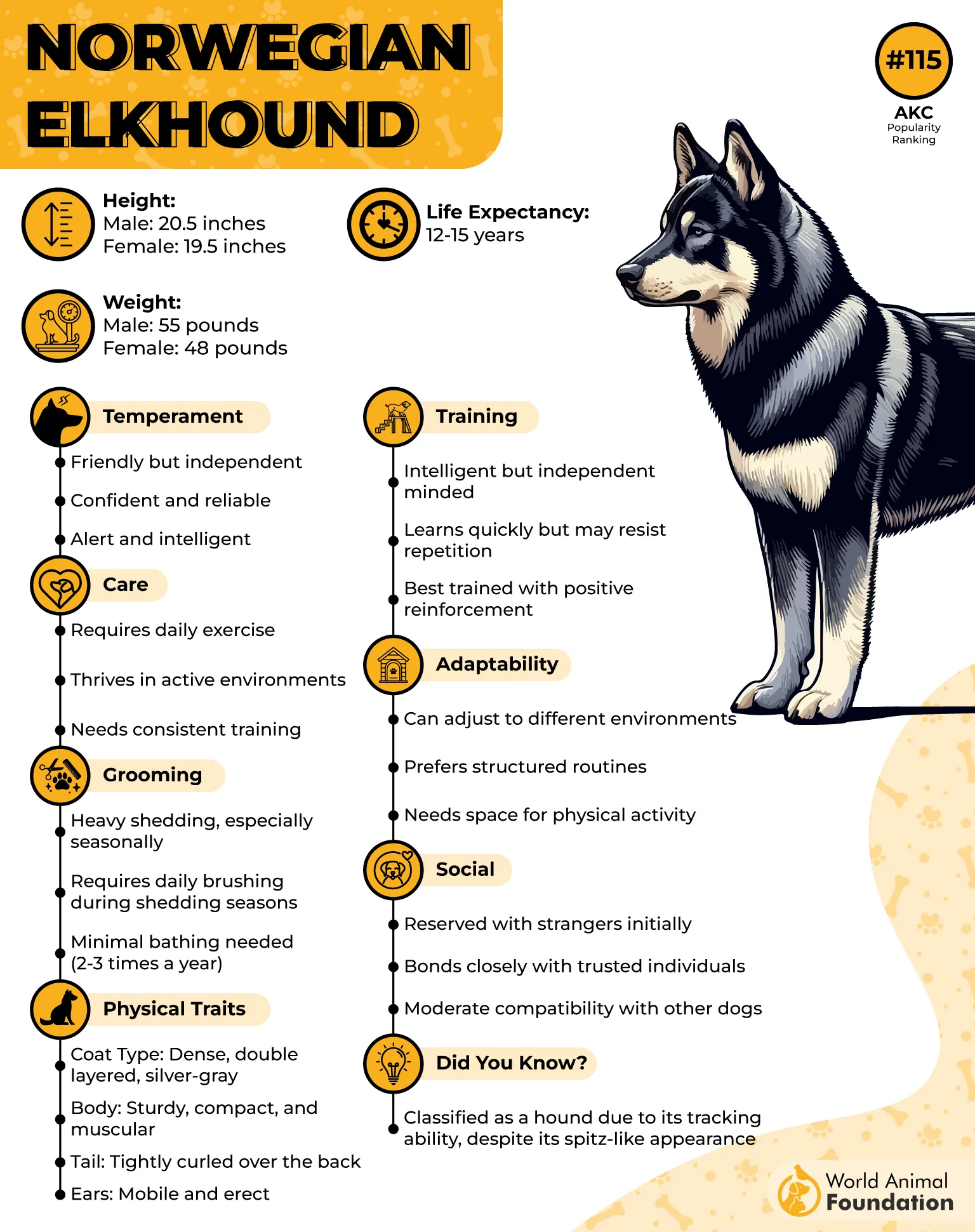
The Norwegian Elkhound’s thick, weather-resistant coat protects in cold climates, allowing it to work for long hours without slowing down.
According to Orvis, the Norwegian Elkhound is known for independence, courage, and endurance in the field. These dogs rely heavily on their instincts and decision-making skills, which makes them effective but best suited for experienced handlers.
When trained properly, they become fearless companions with a deep sense of loyalty.
Key working traits
Strong prey focus
Independent thinking
Alert barking
Cold-weather endurance
In modern hunting, the Norwegian Elkhound remains a capable partner for big-game hunters who value control, communication, and tradition in the field.
9. Karelian Bear Dog
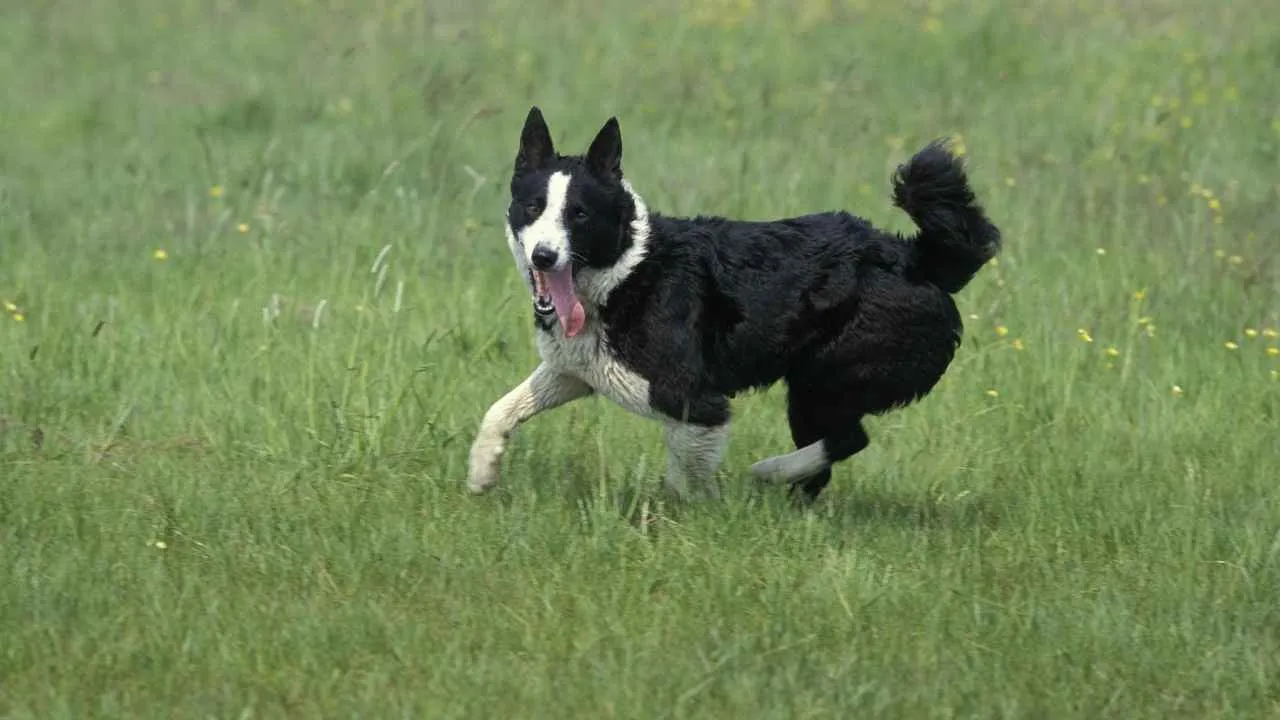
Courage. If one word could define this breed, that would be it. The Karelian Bear Dog does not hesitate, does not retreat, and does not second-guess its purpose.
This Spitz-type dog was developed to face one of nature’s most dangerous challenges—bear hunting—and it carries that responsibility with fearless intensity.
Originating in Finland, the Karelian Bear Dog was bred specifically for hunting large and aggressive game. It does not overpower a bear through size. Instead, it relies on sharp instincts, relentless focus, and an exceptionally strong prey drive.
The dog tracks, confronts, and holds the animal’s attention through controlled pressure and alert barking, giving the hunter time to move into position. This method requires precision, confidence, and nerve—traits deeply rooted in the breed.
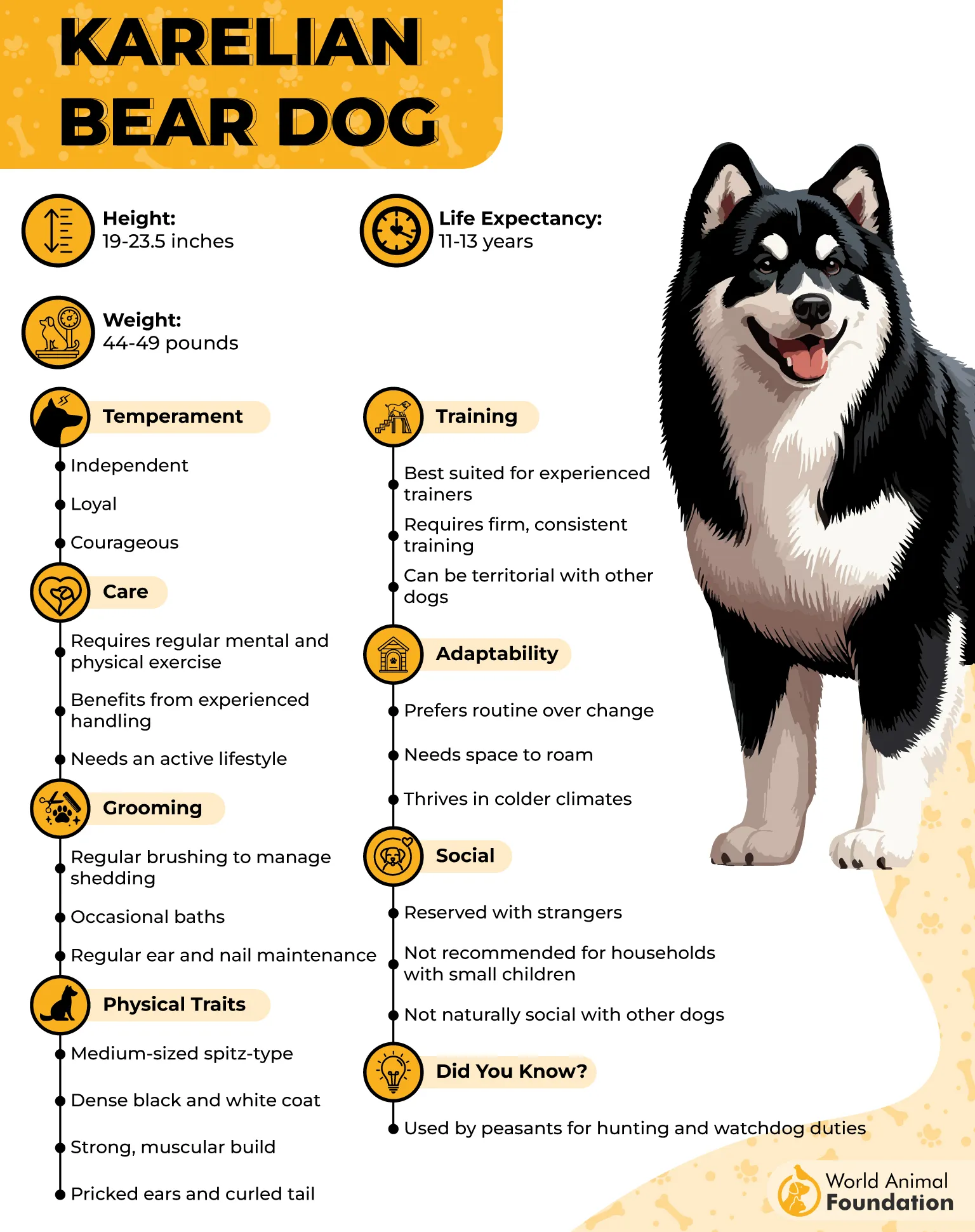
The Karelian Bear Dog is highly independent and decisive. It thinks quickly and reacts without hesitation, which makes it effective in the field but challenging in inexperienced hands. This is not a breed suited for first-time dog owners.
They can be easily trained by a handler who understands working dogs and respects their intensity. When guided correctly, it becomes a powerful and great companion, especially in demanding big game situations.
Key traits
Fearless big-game hunter
Strong prey drive
Independent decision-maker
Alert, controlled barking
In Finland, this breed remains a symbol of traditional hunting strength. Even today, the Karelian Bear Dog is valued not just for its skill but for its unmatched bravery when it matters most.
10. German Wirehaired Pointer
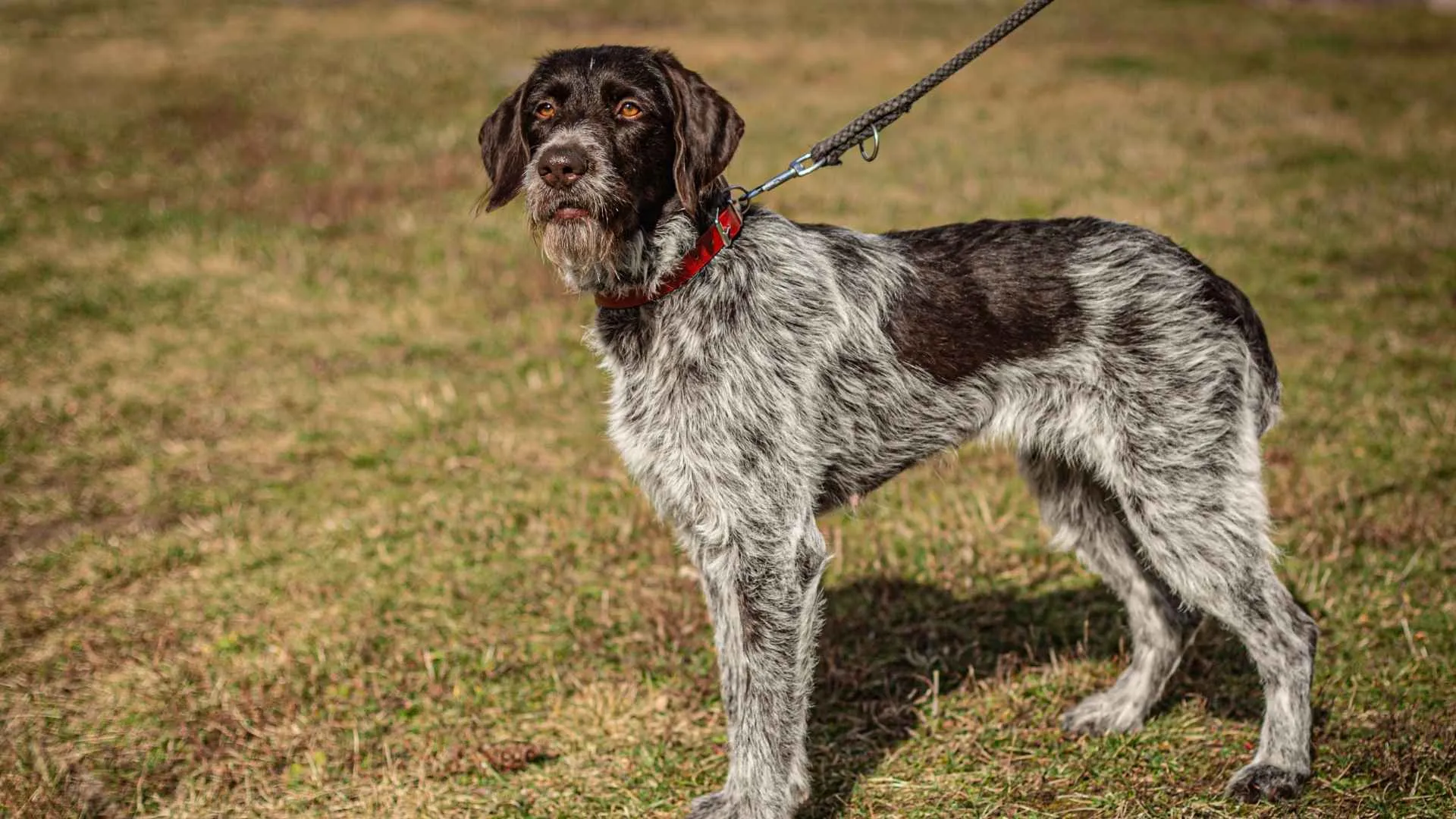
This Wirehaired Pointer looks like its Shorthaired cousin decided to put on a rugged jacket and head into tougher weather.
It has stolen the cuteness of its smooth-coated cousin, then added grit, strength, and endurance to match. This is not just a good-looking dog—it is a serious working partner built for demanding hunts.
Developed in Germany, the German Wirehaired Pointer was bred to point, retrieve, and scent game with equal confidence. It is especially well-suited for larger game and long tracking work, where focus and stamina matter most.
The dense, wiry coat protects the dog from cold, rain, thorns, and rough terrain, allowing it to hunt across land and water without hesitation.
Highly intelligent and energetic, this breed thrives when given structure and regular work. It often forms a strong attachment to one person and responds best to consistent leadership. While it generally does well with other dogs, it is not known for being patient or gentle with children, making it a better fit for experienced owners.
The breed comes in colors such as liver, liver and white, and roan patterns, giving it a rugged appearance that matches its role as an ideal sporting dog.
Well known for
All-purpose hunting
Harsh-weather endurance
Strong tracking ability
High intelligence
Conclusion
Choosing the right dog is more than picking a breed. It is about partnership. These dogs were shaped by history, terrain, and purpose. Some excel at hunting big game. Others shine in tracking or other work. What matters most is how well the dog fits your hunting style and experience.
Do you need a fearless tracker for wounded game?
A versatile dog that works on land and water?
Or a loyal companion that stays steady from field to home?
The best dogs bring natural hunting instincts, focus, and drive, but success still depends on proper guidance and trust.
From ancient breeds built for big game to modern sporting dogs, each has a role to play.
When matched with the right handler, these dogs become more than tools. They become partners in the hunt, sharing effort, challenge, and reward—season after season.
Big Game Hunting Dogs Quiz 🐕🦺
What skill makes the American Foxhound ideal for long hunts?
Which breed was developed to flush birds from dense cover?
Which dog is known for having nearly 300 million scent receptors?
Which breed was developed specifically for hunting bear?
Which dog is known as an all-purpose hunter with a protective wiry coat?
