




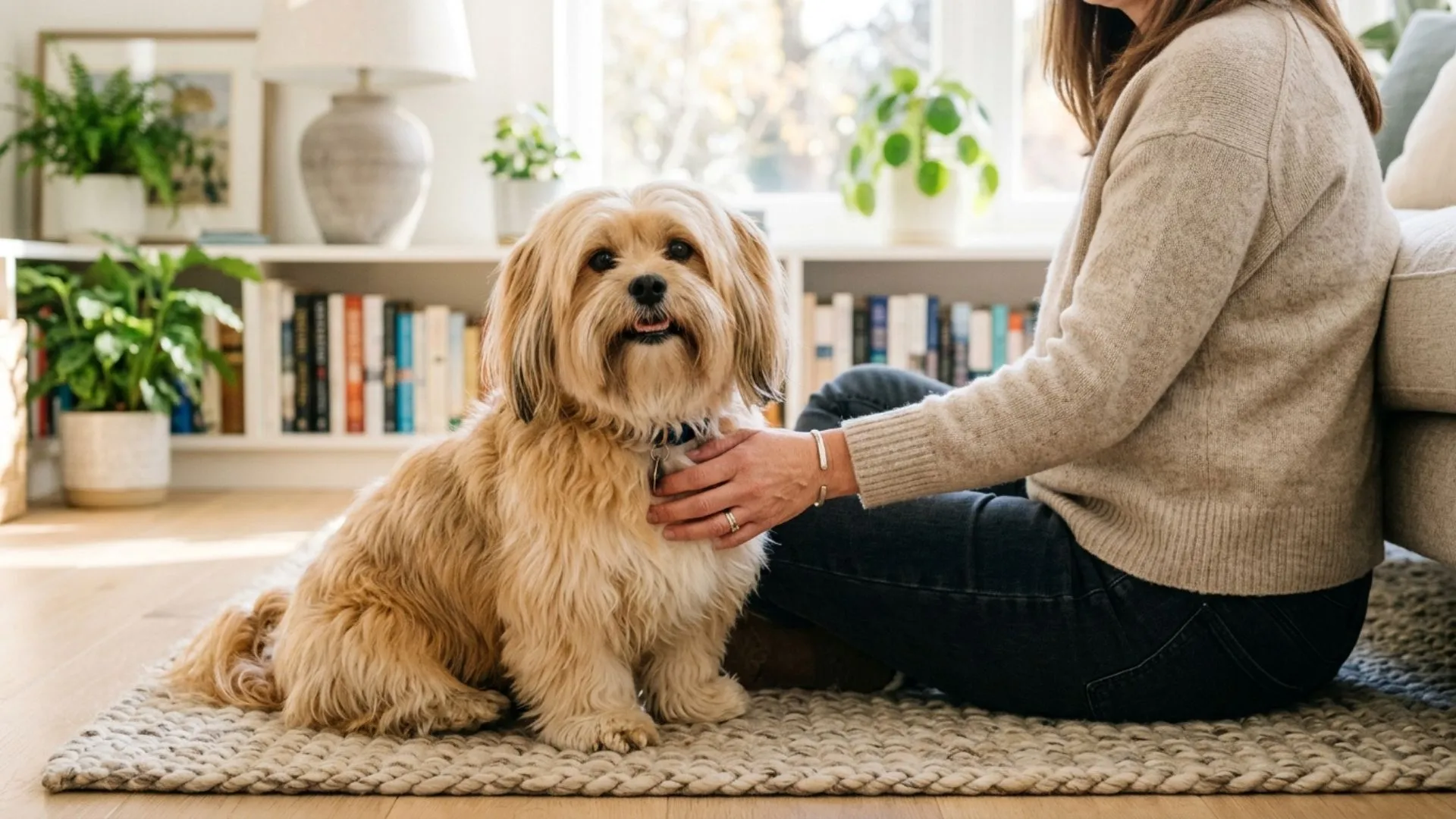
A dog isn’t just “an animal that stays home alone.”
It’s a company.
Real company.
For a single parent or anyone living alone, that quiet house can feel… too quiet. Too empty. And that’s where the right dog changes everything.
They’re not just waiting for you to come back.
They’re there with you.
In the room. In the routine. In the small, everyday moments that don’t feel so lonely anymore.
A presence.
A heartbeat in the background of your life.
So yes—some breeds can handle being home alone…
But the real truth is this:
They don’t just survive your absence.
They complete your presence.
Now let’s get into it…
Below are the dog breeds for single parents who live alone—and want a companion that fits right into real life.
Dog Breeds For Single Parents That Can Be Home Alone
1. Basset Hound

Basset Hounds are slow-paced, steady companions that fit naturally into homes where life is busy but still needs a warm, grounding presence.
Unlike high-energy breeds, they move through the day with patience and ease, often settling into long hours of rest.
In a single-parent home where attention is divided between work, children, and responsibilities, this predictable rhythm makes them easy to manage and comforting to have around.
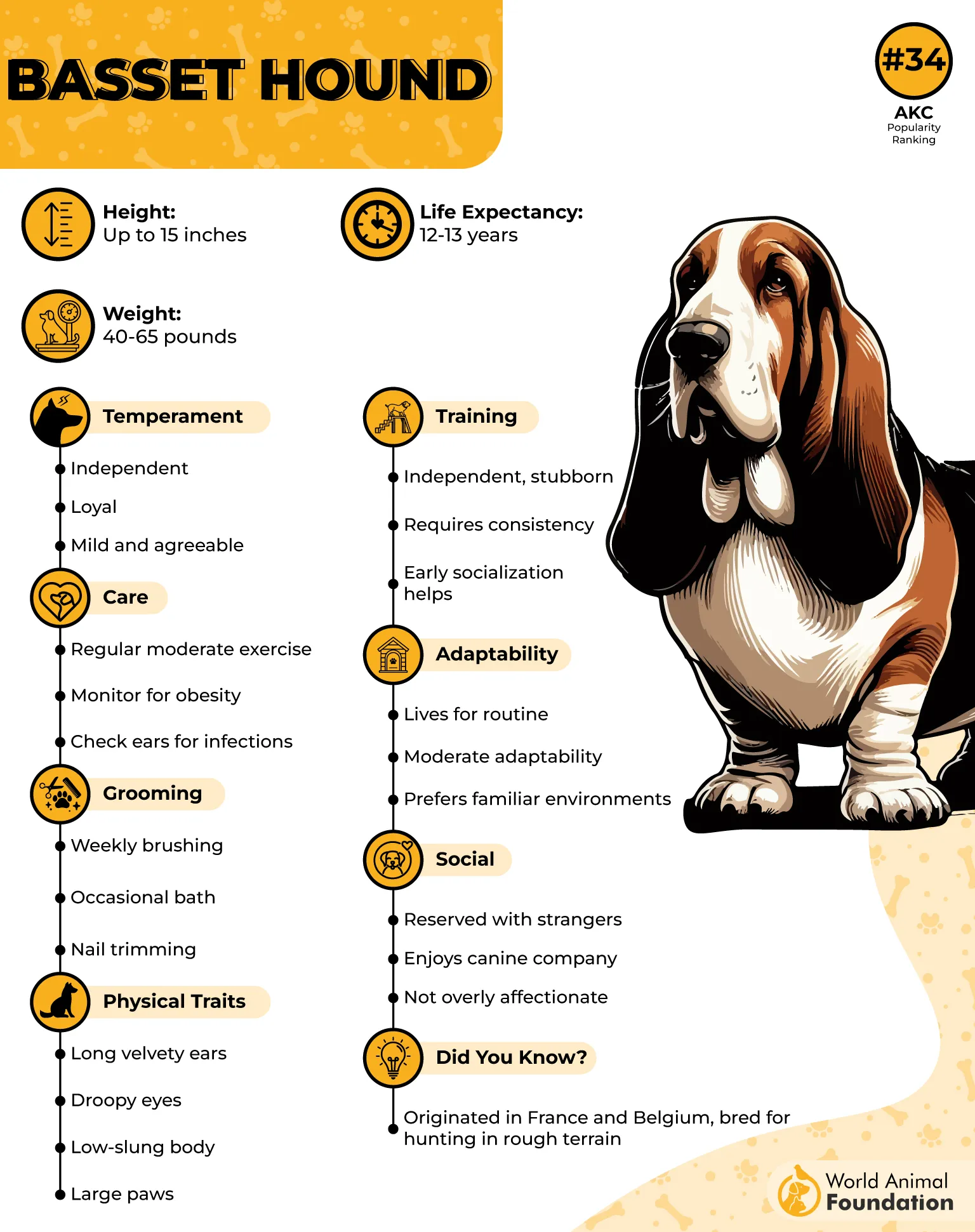
Why they fit well in this lifestyle:
Naturally low-energy and happy, spending most of the day resting indoors
Can stay alone for moderate hours without having separation anxiety
Adapts easily to changing daily routines and household schedules
Uses scent-focused curiosity to stay quietly mentally engaged
Patient and gentle with children, even in noisy environments
A short coat makes grooming simple and low-effort
Generally quiet and not prone to incessant barking
One important thing to understand is their emotional attachment style. They form strong bonds and may feel uneasy if left completely alone for long periods, preferring a calm presence in the home.
Overall, they offer a steady, easygoing companionship that fits well into households where time is limited but emotional warmth still matters.
2. Greyhound
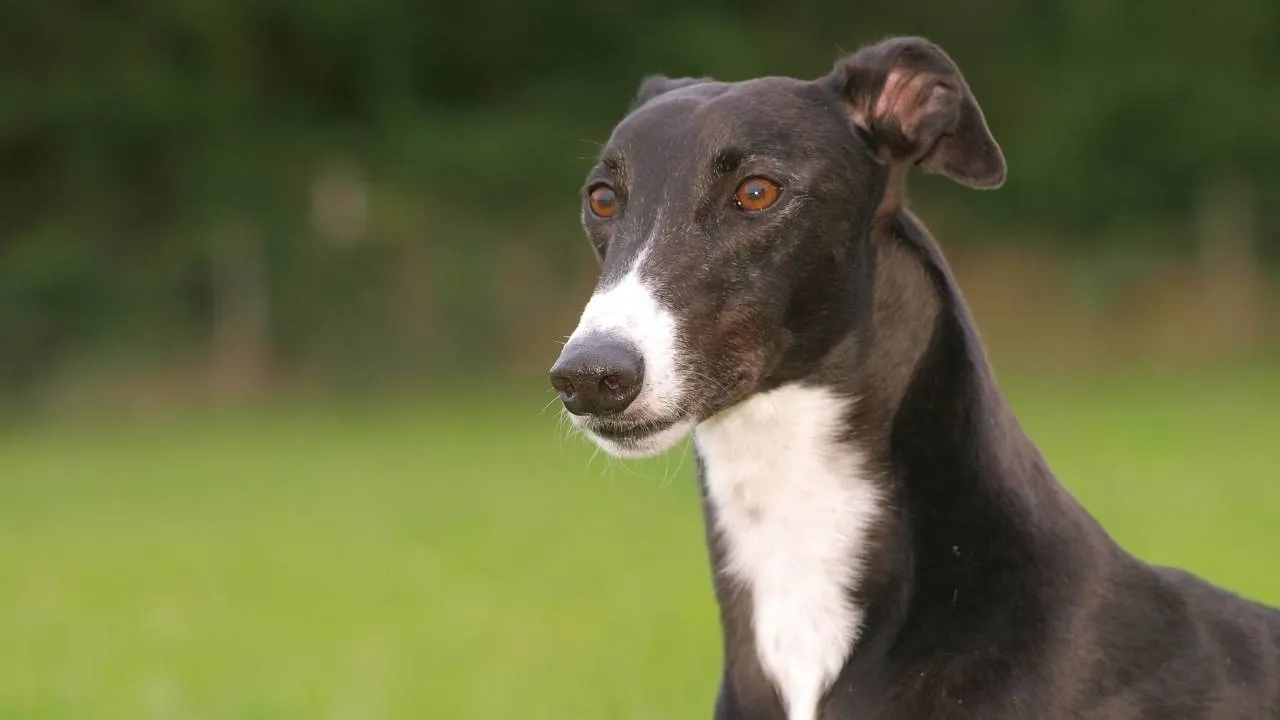
Greyhounds are surprisingly well-suited for single-parent households because they balance independence with a calm, easy indoor lifestyle.
Even though they are built for speed, most of their day is spent resting quietly, which makes them low-maintenance in busy homes, as noted by Omlet.
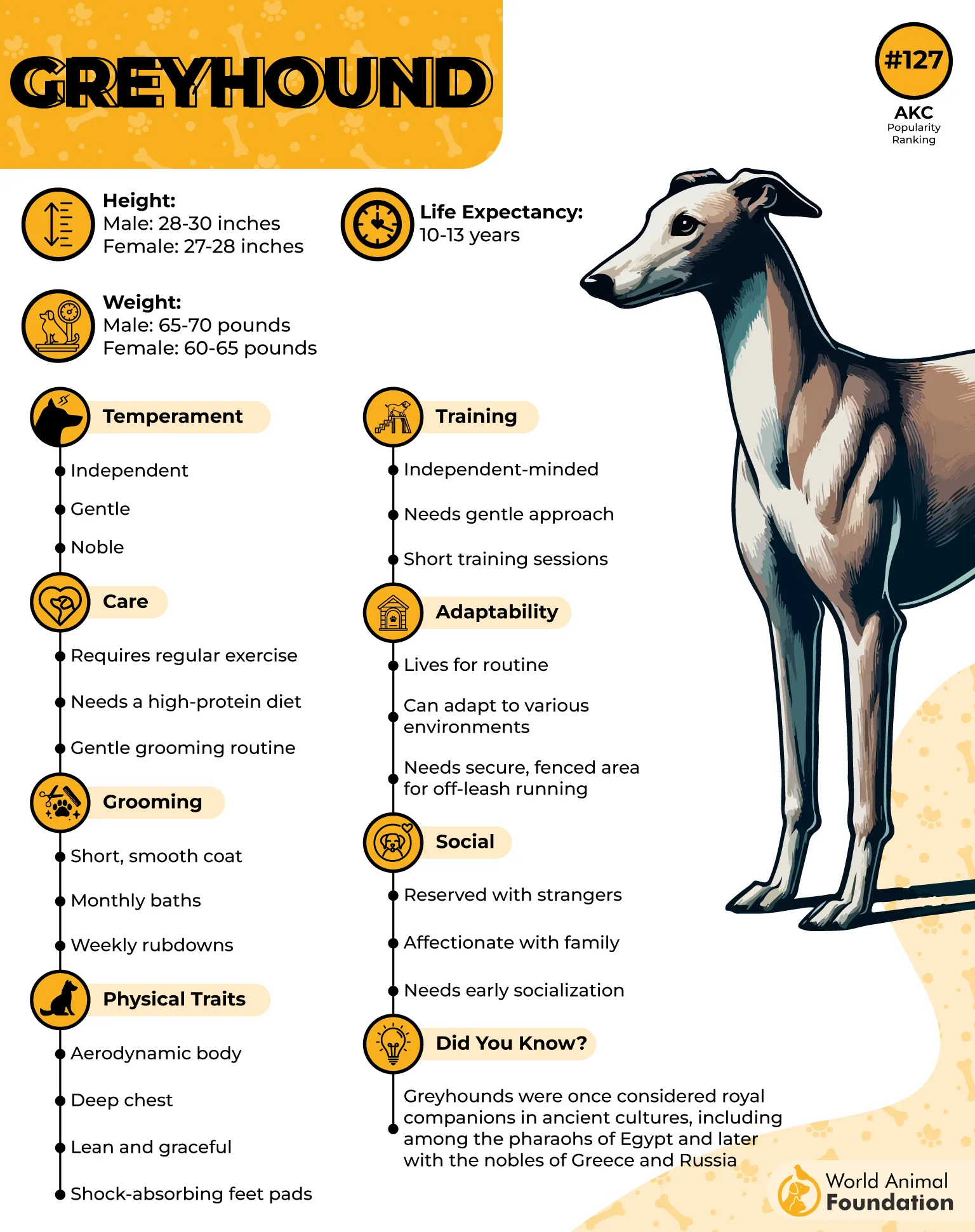
Why they fit well in this lifestyle:
Naturally calm and low-energy indoors, so they don’t demand constant attention
Comfortable spending several hours alone, often sleeping peacefully while the family is out
Quiet temperament with very little barking, keeping the home environment peaceful
Gentle and affectionate when family is home, without being overly clingy or demanding
Easy grooming needs, requiring minimal coat maintenance in daily life
Adaptable to apartment or house living, as long as they get short daily walks
Generally good with children and familiar household routines
One thing to keep in mind is their strong instinct to chase moving animals outdoors, so leash walks or secure spaces are important. They are also sensitive to cold due to low body fat, so a simple coat is often needed in winter.
Overall, they bring a calm, steady presence into homes where time is limited but companionship still matters deeply.
3. Chow Chow
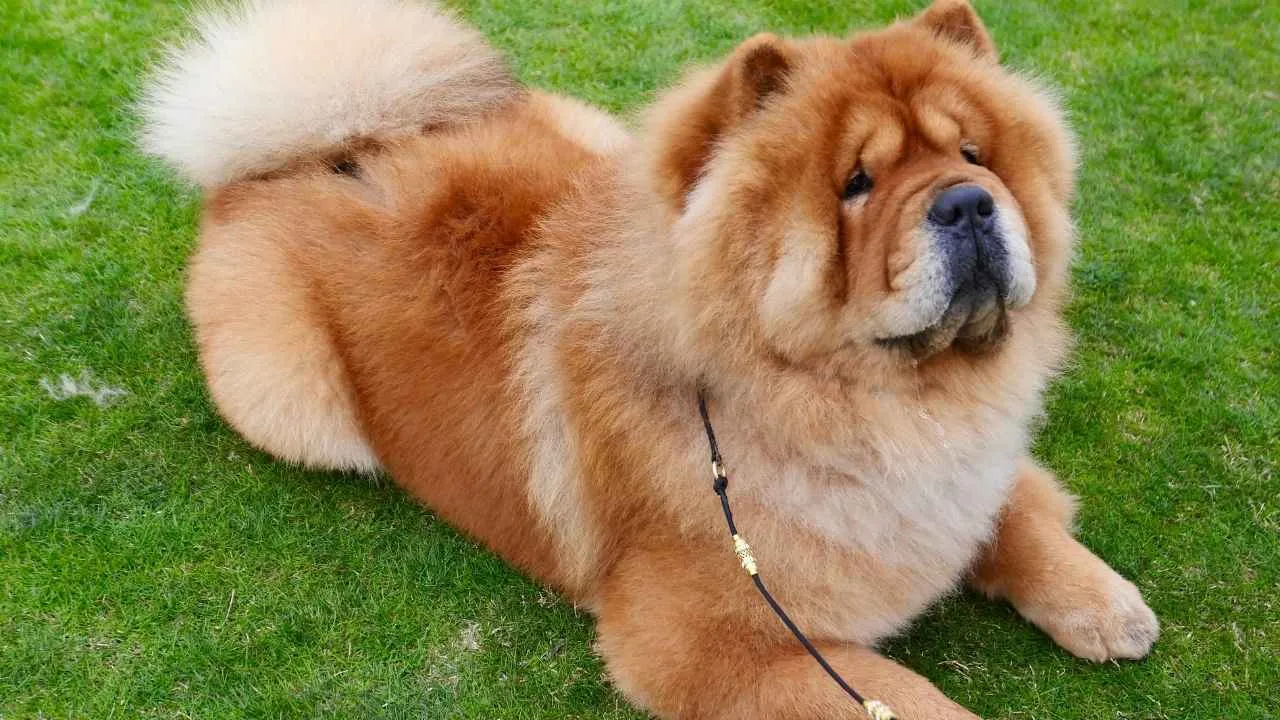
The Chow Chow is a quiet, self-contained companion that fits well in homes where structure is steady but attention is not constant.
In a solo-parent household, this breed can adapt to periods of alone time because it is a naturally independent dog breed and not overly demanding for interaction, as stated by PetMD.
Instead of seeking constant affection, it prefers calm observation of its surroundings and chooses when to engage.
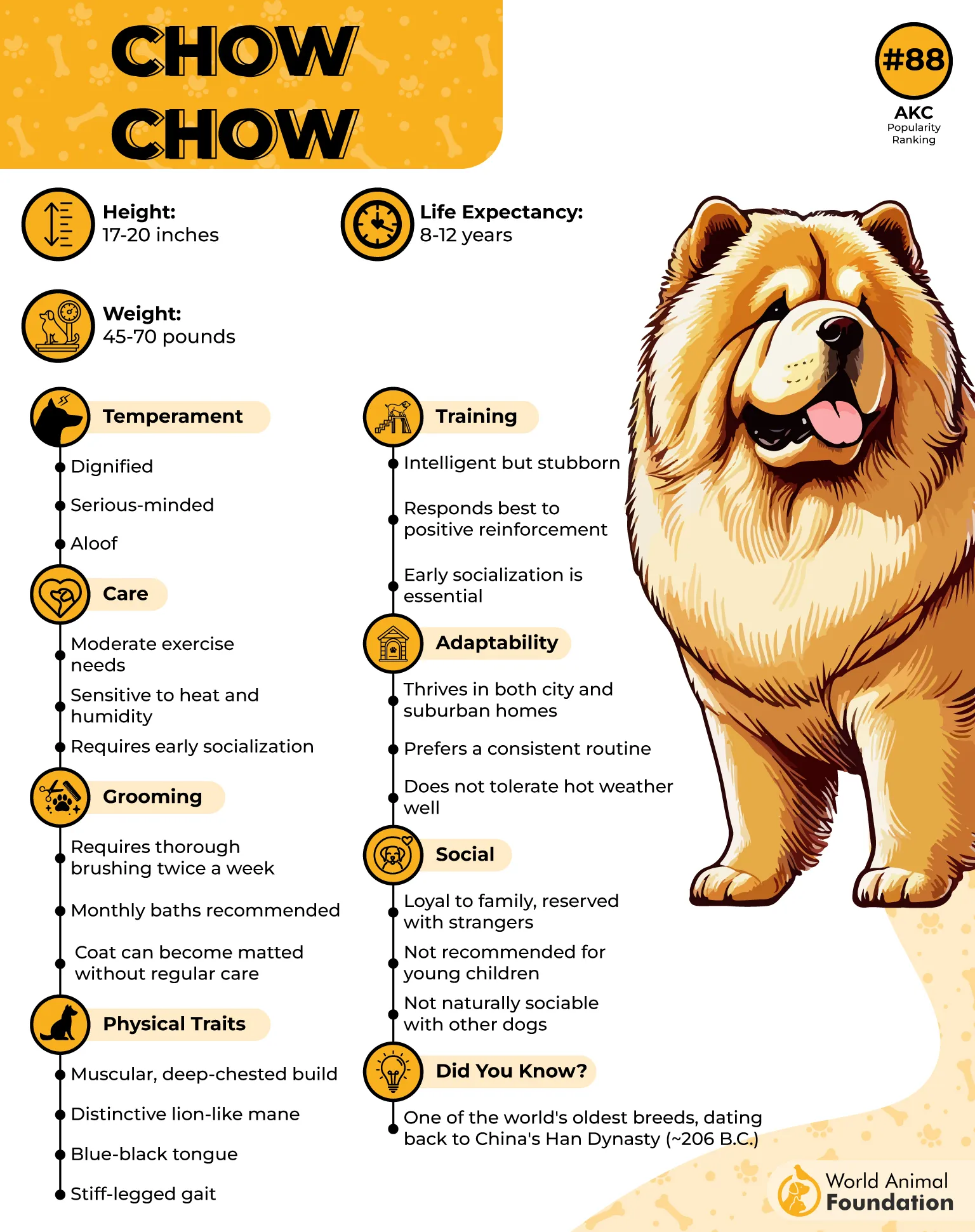
Why they fit well in this lifestyle:
Comfortable spending time alone without becoming overly anxious or clingy
Naturally independent, often preferring personal space over constant interaction
Forms a strong bond with one primary person in the household
Generally quiet and not prone to unnecessary barking
Can adapt to calm, structured indoor living routines
Low enthusiasm for constant physical attention or play
Often communicates needs clearly rather than seeking continuous contact
One thing to understand is their emotional style. They are not typically cuddly or overly expressive, and they function best in homes where their boundaries are respected.
When they do want interaction, they tend to initiate it on their own terms rather than responding to constant invitations.
A unique physical trait is their thick double coat combined with a blue-black tongue, which sets them apart visually and reflects their ancient lineage.
Overall, they offer a calm, low-pressure companionship suited for households that value independence, routine, and quiet coexistence.
4. Shiba Inu

The Shiba Inu is a compact, confident breed that can adapt well to a solo-parent home when routines are consistent and expectations are clear.
Originally developed for hunting, it still carries a strong sense of independence, which means it is comfortable spending time alone without becoming overly dependent or anxious.
In a busy home where schedules revolve around work, school, and daily responsibilities, this self-sufficiency can be a practical advantage.
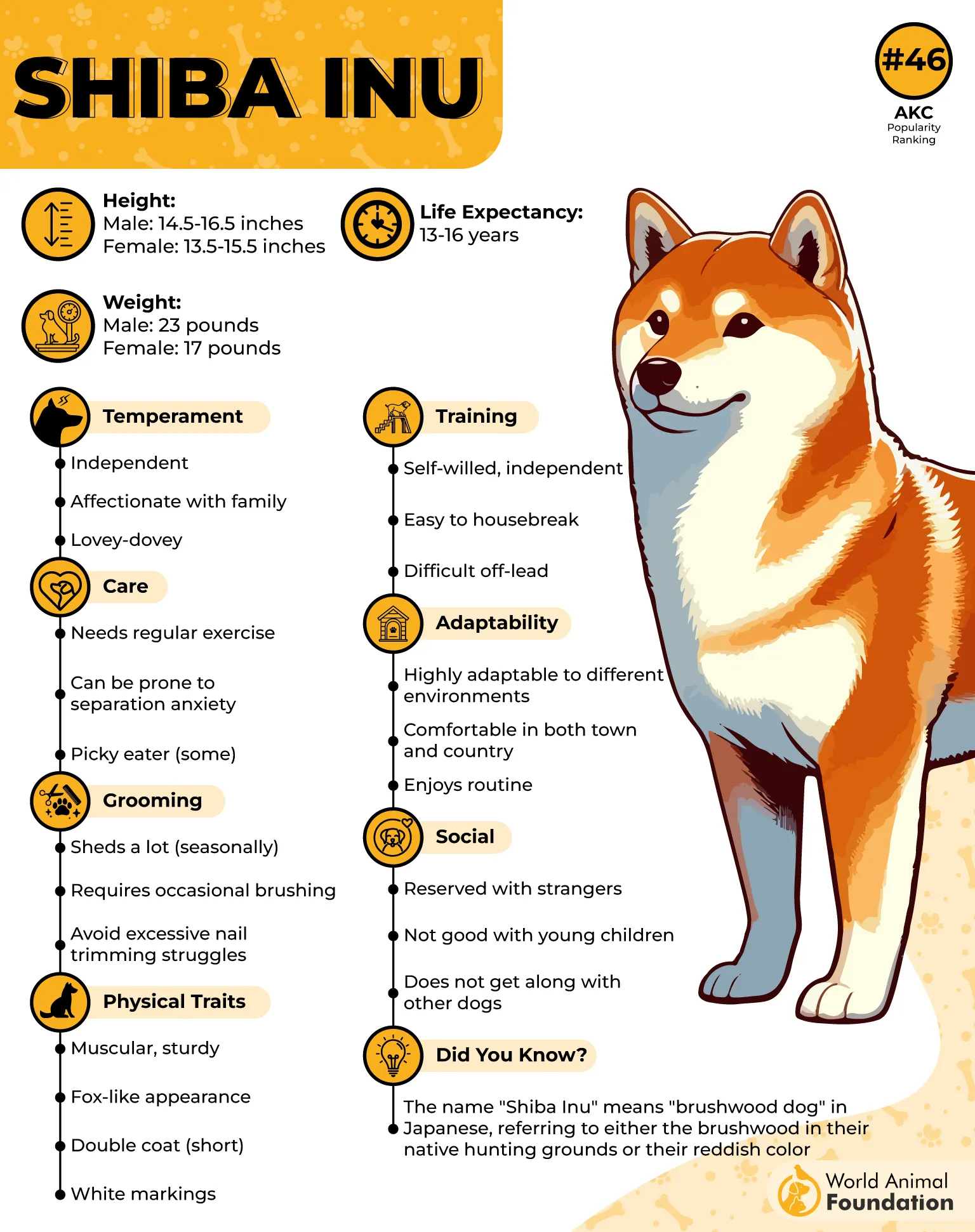
Why they fit well in this lifestyle:
Handles alone time well and is generally content occupying itself indoors
Naturally clean and quick to develop strong toilet habits from a young age
An independent mindset means it doesn’t constantly seek attention or reassurance
Quiet indoors, helping maintain a calm household atmosphere
Adaptable to both apartment and house living with a proper routine
Observant and alert, often aware of changes in its surroundings
Forms a bond with family but remains emotionally self-contained
One important reality is their strong independence outdoors. They are not reliably off-leash and require secure areas or leash control at all times, as their instinct to explore can override recall training.
A unique physical and behavioral combination is its fox-like appearance paired with a sharp, expressive body language system—ears, tail, and posture clearly signal mood and intent, often without vocalization.
5. Lhasa Apso
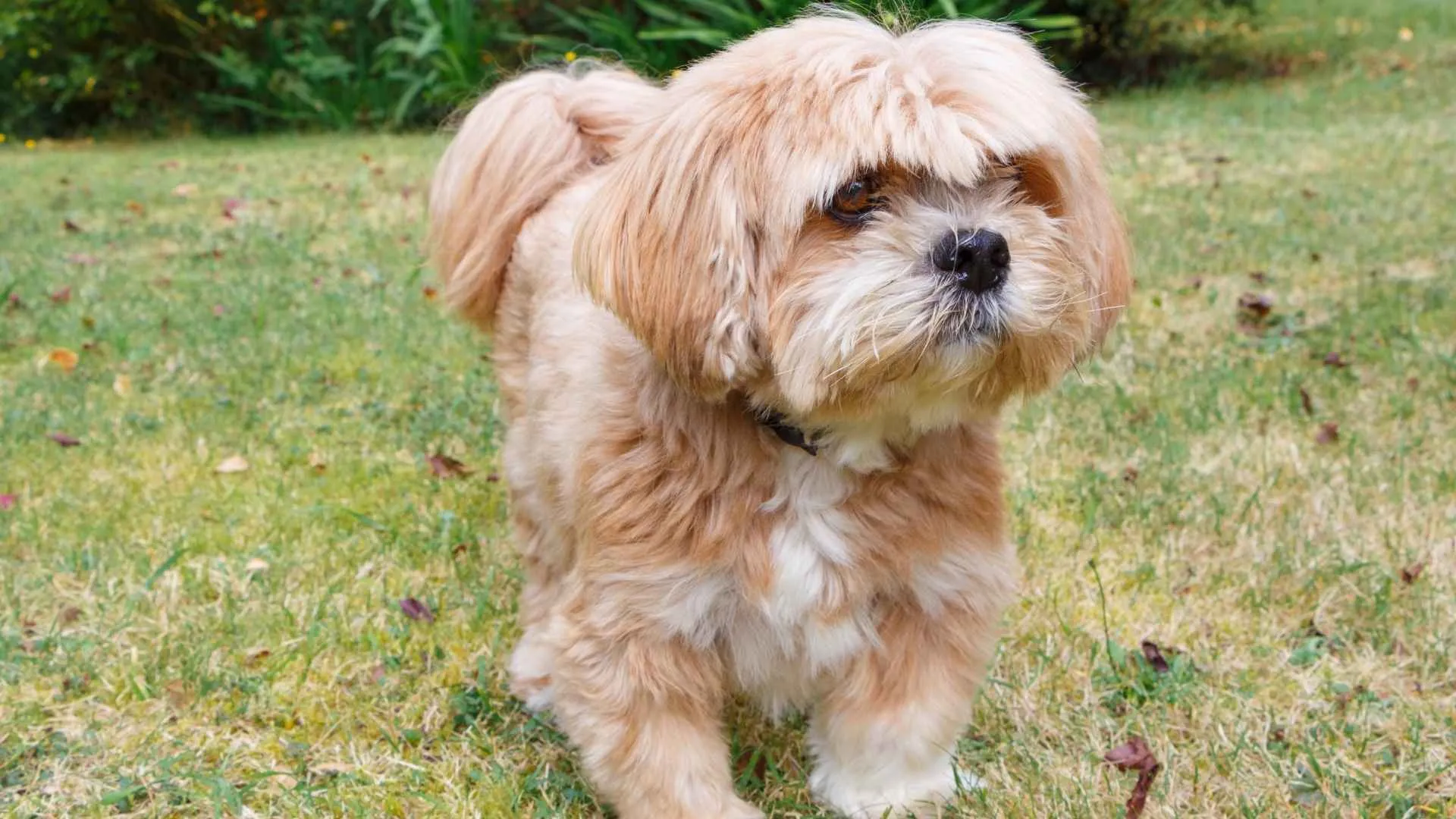
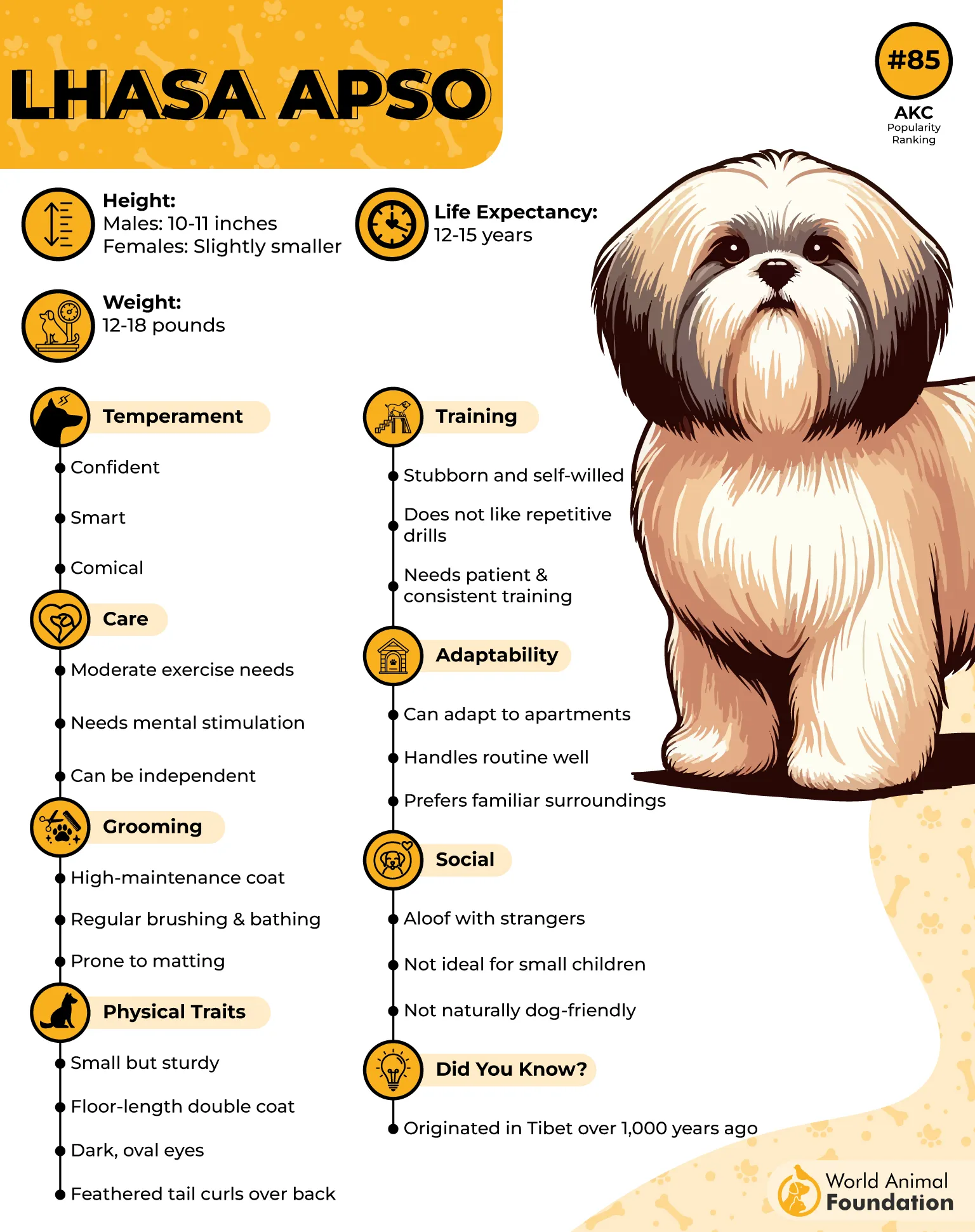
The Lhasa Apso is a small but confident companion that fits well in a single-parent home where safety, routine, and steady companionship matter.
With roots as an ancient Tibetan guard dog breed, it still carries a natural watchful attitude, often staying alert to sounds and movements inside the home.
This makes it a reassuring presence in households where one person is managing both family life and daily responsibilities.
Why they fit well in this lifestyle:
Comfortable staying alone for moderate hours while remaining calm indoors
Naturally watchful, often reacting quietly to unusual sounds or visitors
Forms a strong bond with family but stays independent when needed
Can adapt to apartment living with regular but simple daily activity
Generally not overly needy, managing alone time without stress
Alert but not overly noisy, helping maintain a balanced home environment
Capable of switching between playful energy and quiet rest easily
One important aspect is their personality around strangers. They tend to be cautious at first and warm up slowly, preferring to observe before trusting new people. With familiar family members, however, they show a lighter, more playful side and enjoy interaction on their own terms.
A unique physical detail is their heavy, floor-length double coat paired with a naturally sturdy frame that helped them survive harsh high-altitude climates, which is why regular grooming becomes part of their care routine today.
Overall, they are good dog breeds that offer a calm yet attentive presence, well-suited to homes where independence and quiet protection are both valued.
6. Boston Terrier
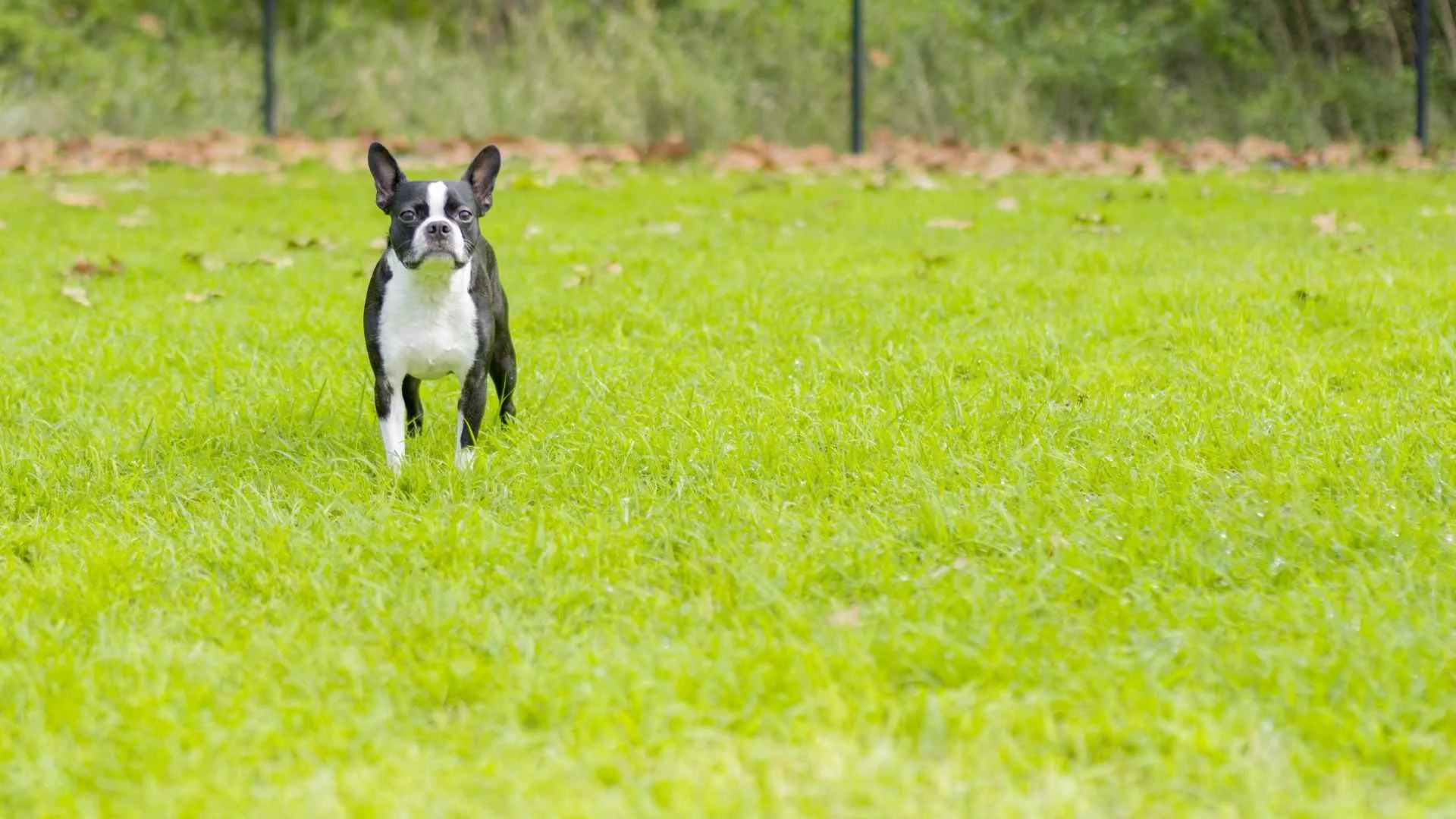
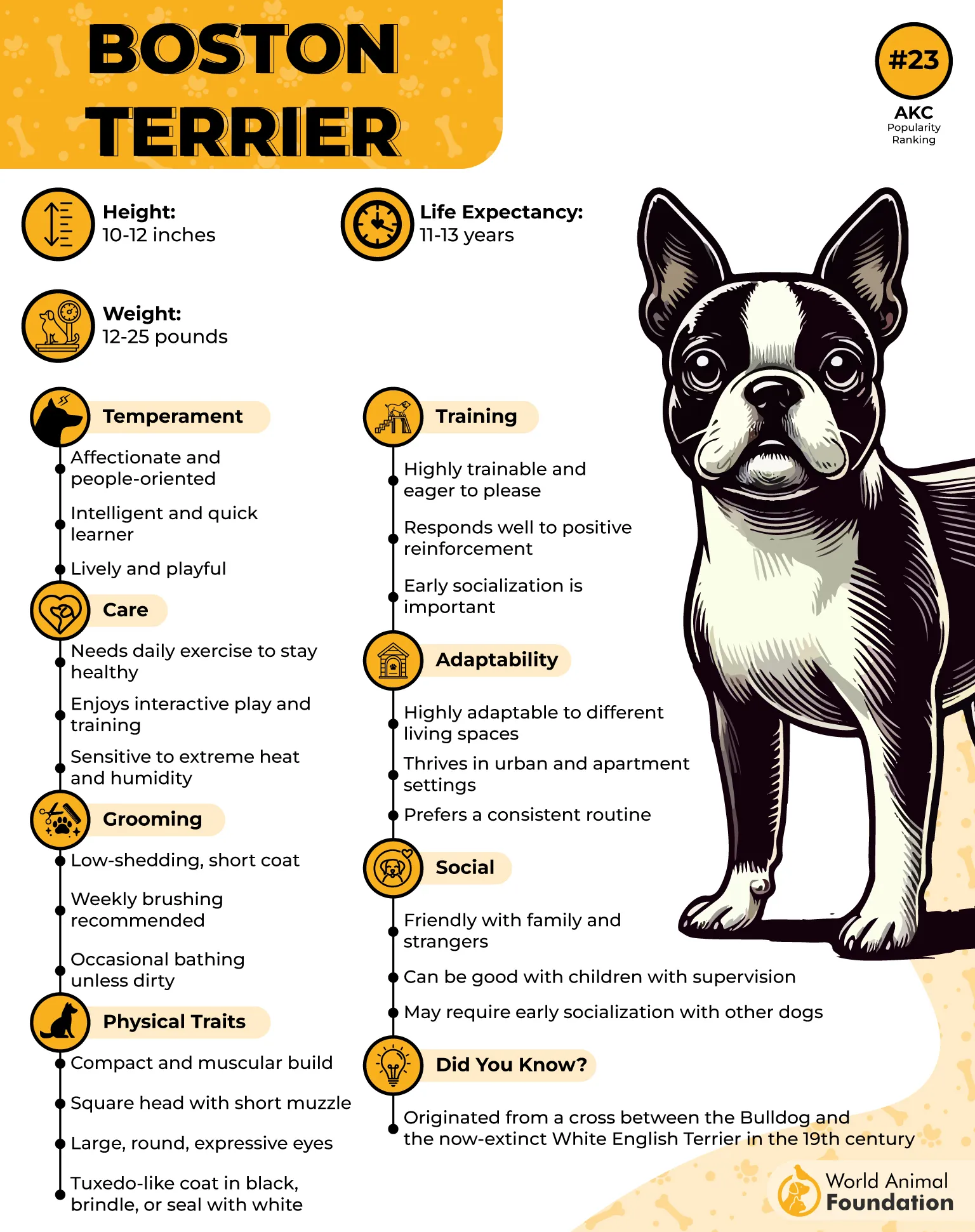
The Boston Terrier is a lively, people-focused companion that brings energy and warmth into a one-parent household, especially where interaction and play are part of daily life.
This breed is known for its cheerful attitude and expressive behavior, often using its eyes, posture, and playful movements to communicate emotions clearly, as mentioned by WebMD.
In homes where one parent is balancing work and children, this emotional expressiveness makes them feel very connected when everyone is together.
Why they fit well in this lifestyle:
Very people-oriented and enjoys being actively involved in family routines
Friendly and sociable, often welcoming guests without hesitation
Highly intelligent and responsive to simple training and structure
Enjoys short bursts of play that fit easily into busy schedules
Generally good indoors and adapts well to apartment living
An affectionate nature makes them closely bonded to family members
Quick to learn household routines and daily patterns
One important thing to understand is their emotional dependence. Because they are so people-focused, they may struggle with being left alone for long hours and can develop stress if isolation becomes frequent.
A unique physical detail is their tuxedo-like coat pattern combined with naturally large, expressive eyes that give them a constantly animated and almost human-like facial expression, making their moods easy to read.
Overall, they are best suited for homes where someone is present for a good part of the day, and companionship is actively shared rather than distant.
7. Basenji

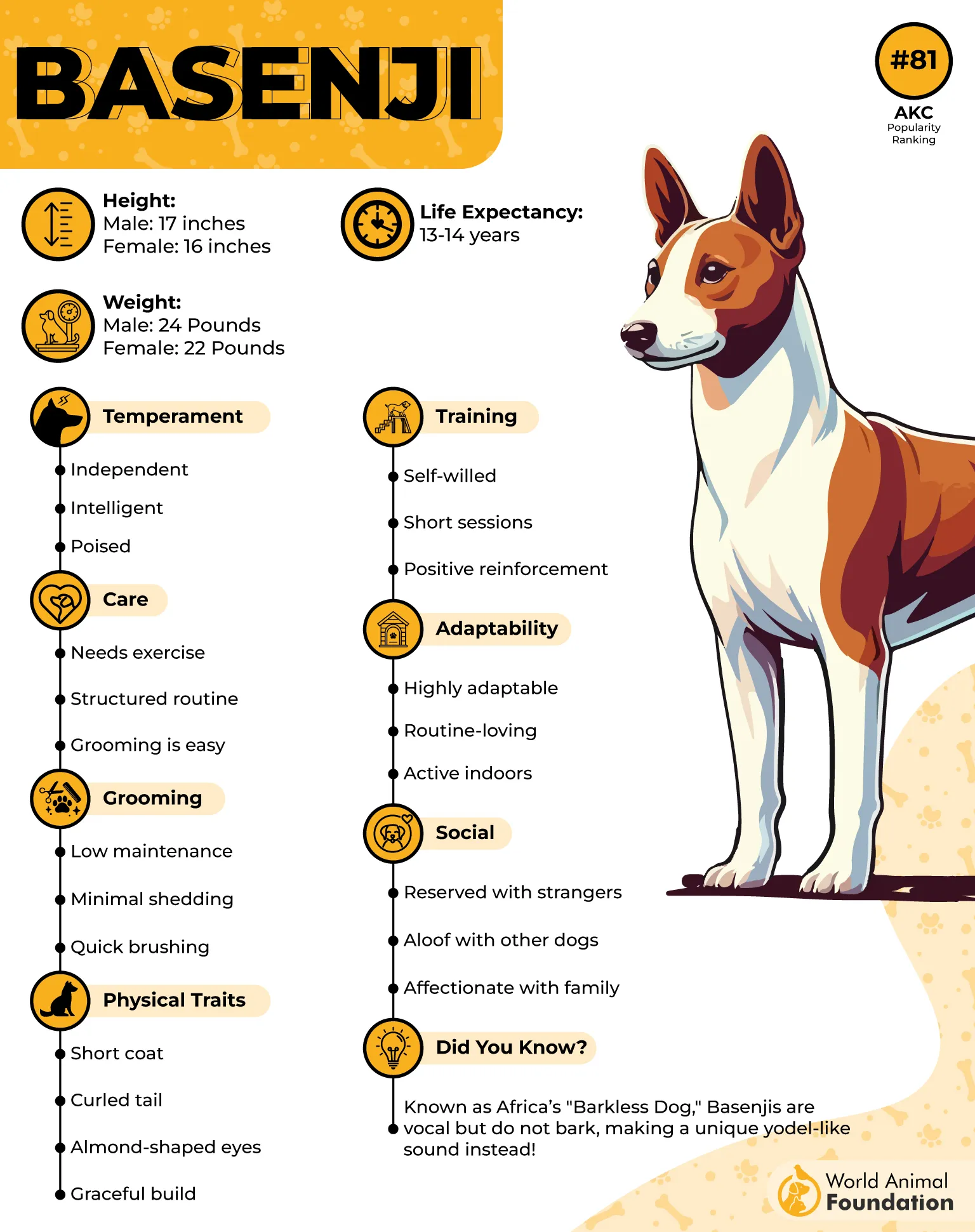
The Basenji is a highly independent and intelligent companion that fits well in single-parent homes where routines are busy, and dogs need to cope with alone time calmly.
Originating from Central Africa, this breed developed strong self-reliance, which means it can manage periods of solitude without becoming overly anxious or dependent.
In a one-parent home, this independence can be useful during work hours or school runs when the home is temporarily quiet.
Why they fit well in this lifestyle:
Comfortable spending time alone and generally avoids destructive behavior when properly exercised
Naturally quiet indoors, helping maintain a peaceful and low-noise home environment
Highly observant and alert, quickly noticing changes in surroundings
Independent thinker that does not require constant attention or reassurance
Clean habits and fast learning when routines are consistent
Adaptable to structured indoor living with regular activity breaks
Forms bonds with family while still maintaining emotional self-control
One important point is their strong instinct to explore. They were developed as hunting companions, so they may not always respond reliably to recall in open spaces and should be managed in secure areas or on leash during outdoor time.
A unique physical and behavioral detail is their tightly curled tail, combined with a natural tendency to produce yodel-like vocal sounds instead of barking, making their communication style very distinct.
Overall, these barkless dogs offer a calm, self-managed presence that suits homes where independence and structure go hand in hand.
Conclusion
Living alone or raising children solo doesn’t mean living without companionship. The right dog can bring balance, comfort, and emotional grounding into a busy household.
Some dogs are naturally independent and comfortable with alone time, while still offering warmth and connection when their family returns. Others bring energy, structure, or quiet loyalty that fits different routines and lifestyles.
What matters most is matching temperament with daily life, not just appearance. When chosen thoughtfully, a dog becomes more than a pet—it becomes a steady presence that supports both routine and emotional well-being.
