




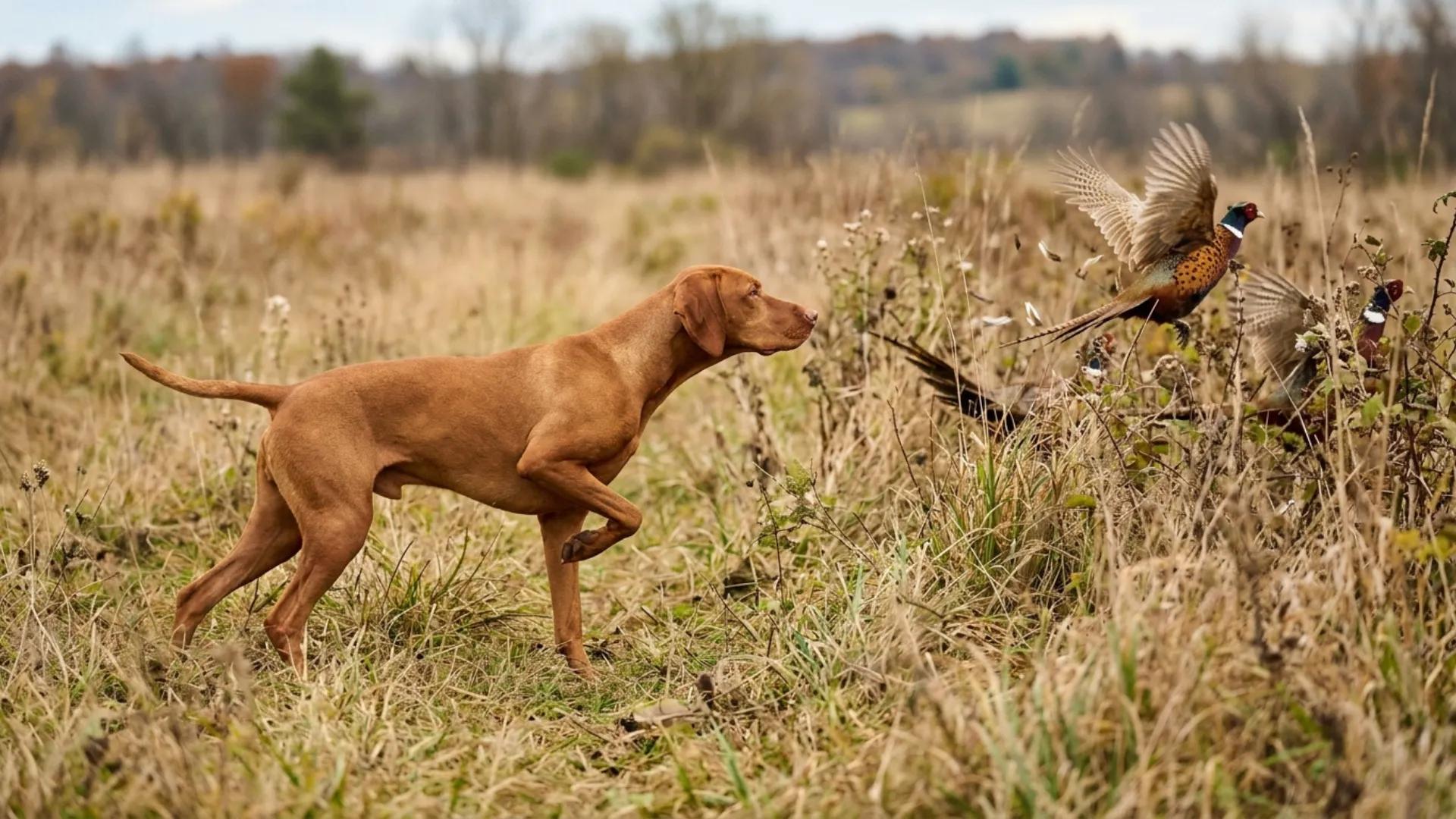
Bird hunting has produced some of the world’s most specialized working dogs. Some breeds are naturally inclined to locate game and hold a steady point, giving hunters time to approach, while others are skilled at flushing birds from dense cover so they can take flight. Although these jobs are related, they require different instincts, physical abilities, and working styles.
The best breed for a particular hunter depends on the type of birds pursued, the terrain, the amount of exercise available, and the owner’s experience with working dogs. A good hunting companion also needs more than instinct. Obedience, recall, steadiness, socialization, and exposure to realistic field conditions all contribute to a reliable bird dog.
The breeds below include both pointing and flushing specialists. Their histories have shaped the ways they search, locate, point, or flush game, while their individual temperaments determine how they work alongside people.
Top Dog Breeds for Pointing and Flushing Birds
1. German Shorthaired Pointer
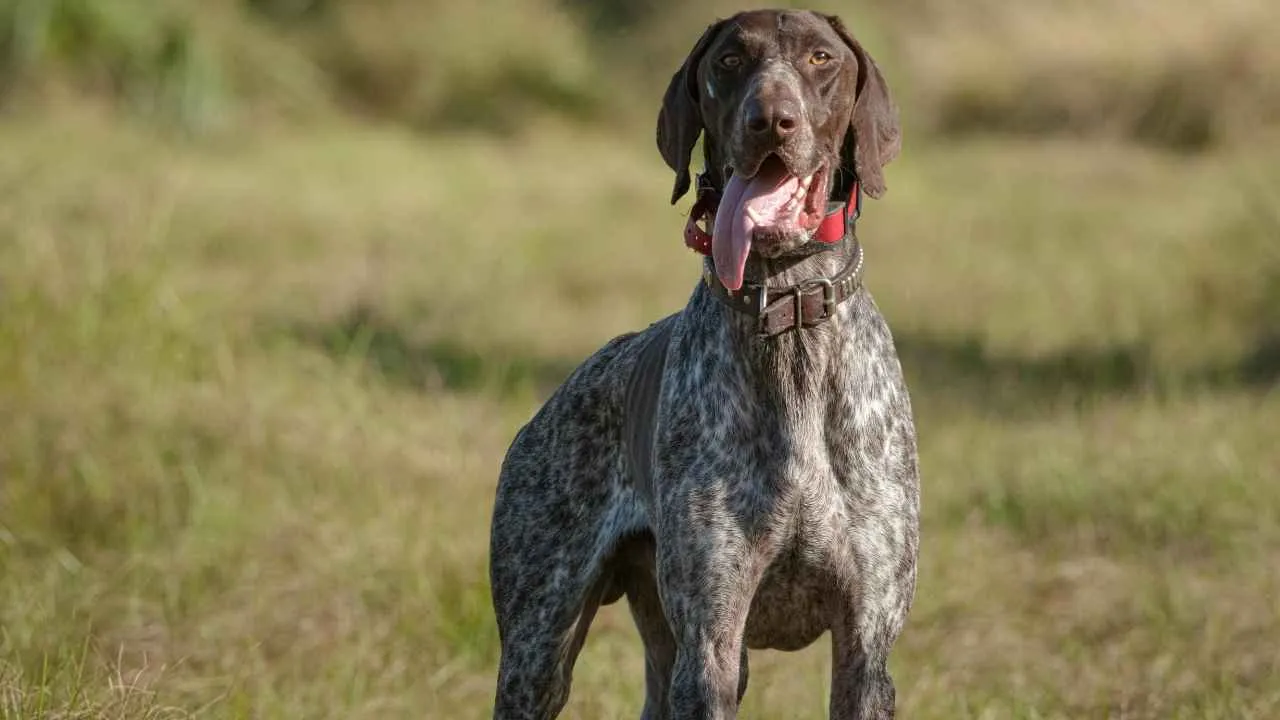
The German Shorthaired Pointer was developed in Germany during the 19th century as an all-purpose hunting dog. Breeders combined several pointing and hunting dogs to produce an athletic companion capable of locating game, retrieving birds, and working across different environments. Its versatility eventually helped it become one of the best-known pointing breeds.
Energetic, Alert, and Eager to Work
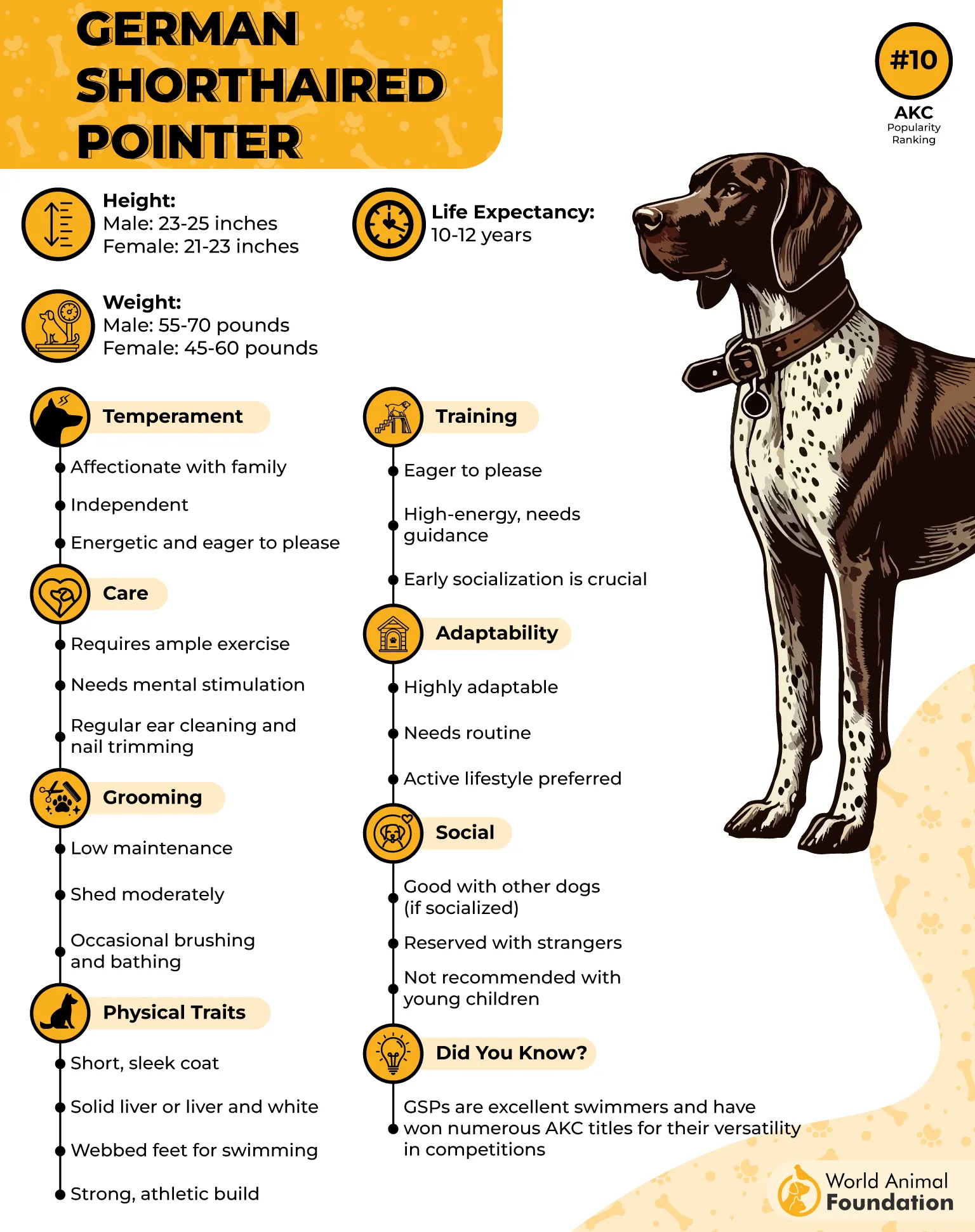
A German Shorthaired Pointer is rarely short on enthusiasm. These dogs tend to be intelligent, active, people-oriented, and eager to participate in whatever their handler is doing. Their high energy can be an advantage in the field, although it also means they need regular physical exercise and mental challenges outside hunting activities.
A Versatile Bird-Finding Specialist
The breed’s strongest hunting quality is versatility. German Shorthaired Pointers can search for birds, establish a point, and retrieve downed game, making them useful across different stages of a hunt. Their athletic build allows them to cover considerable ground, while their natural pointing instinct can help identify the location of hidden birds before they flush.
2. Brittany
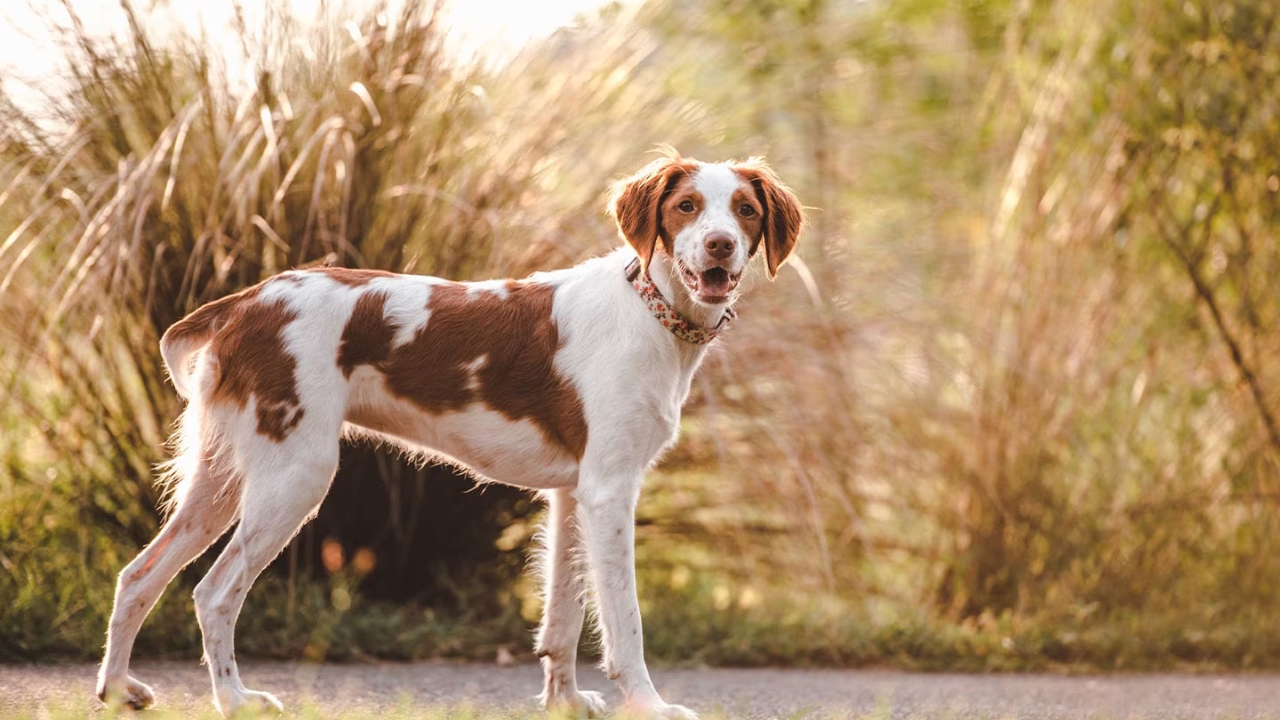
The Brittany developed in the French region of Brittany, where landowners and hunters valued compact dogs capable of finding and retrieving game birds. The breed’s exact ancestry is debated, but its development as a practical bird dog is well established. Over time, Brittanys became popular beyond France because of their manageable size and strong hunting abilities.
Bright-Minded and Highly Responsive
Brittanys are typically lively, intelligent dogs that enjoy working closely with their handlers. They can be sensitive to harsh treatment, so training tends to work best when it combines clear expectations with encouragement. Their enthusiasm and willingness to stay engaged can make them particularly rewarding for owners who enjoy active training.
Quick Searches and Reliable Bird Work
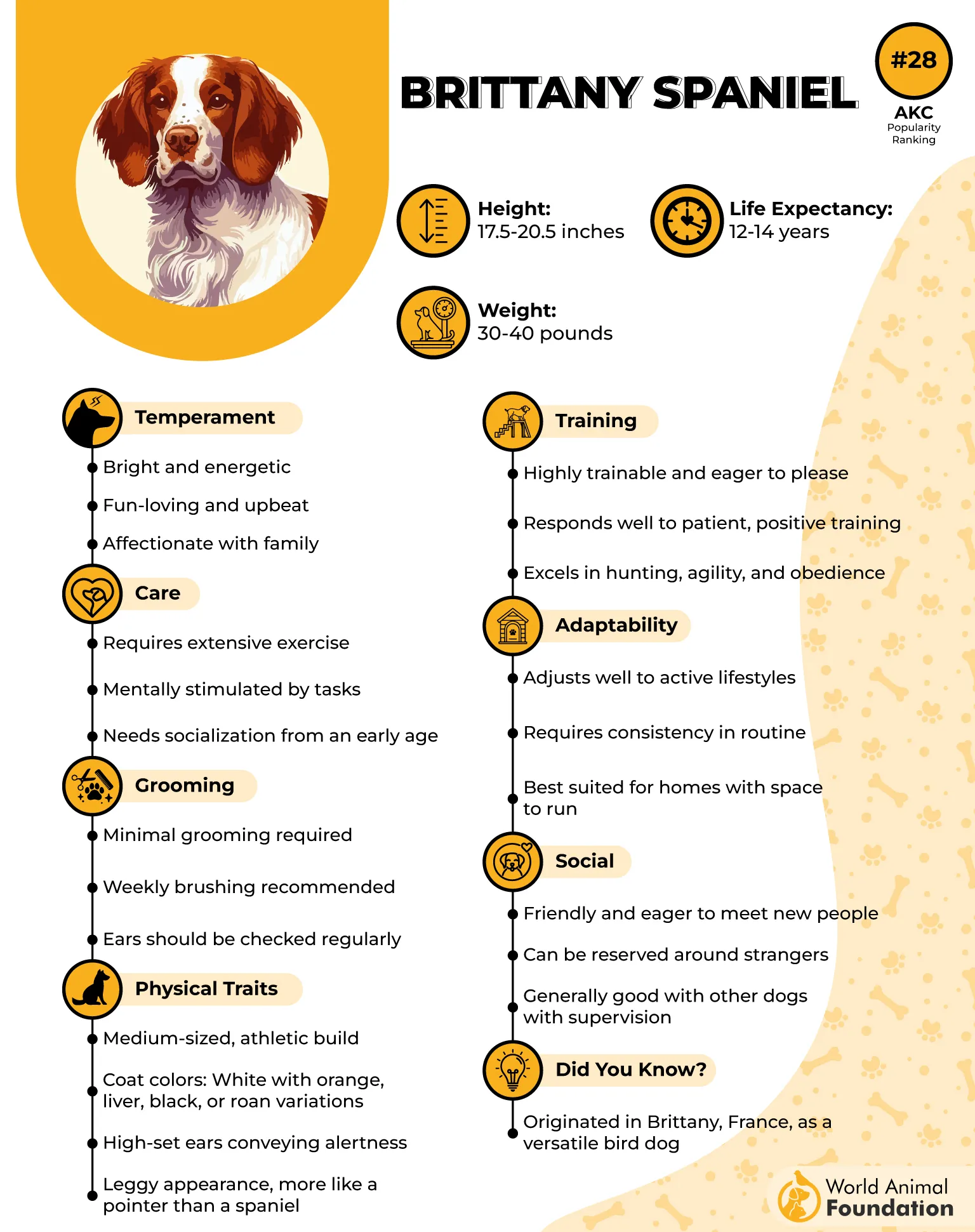
In the field, the Brittany is known for covering ground efficiently without the bulk of a larger pointing breed. It can use its nose to locate birds and naturally pause or point when it detects game. Its compact size can also be useful in rough or heavily vegetated terrain where maneuverability matters.
3. English Setter
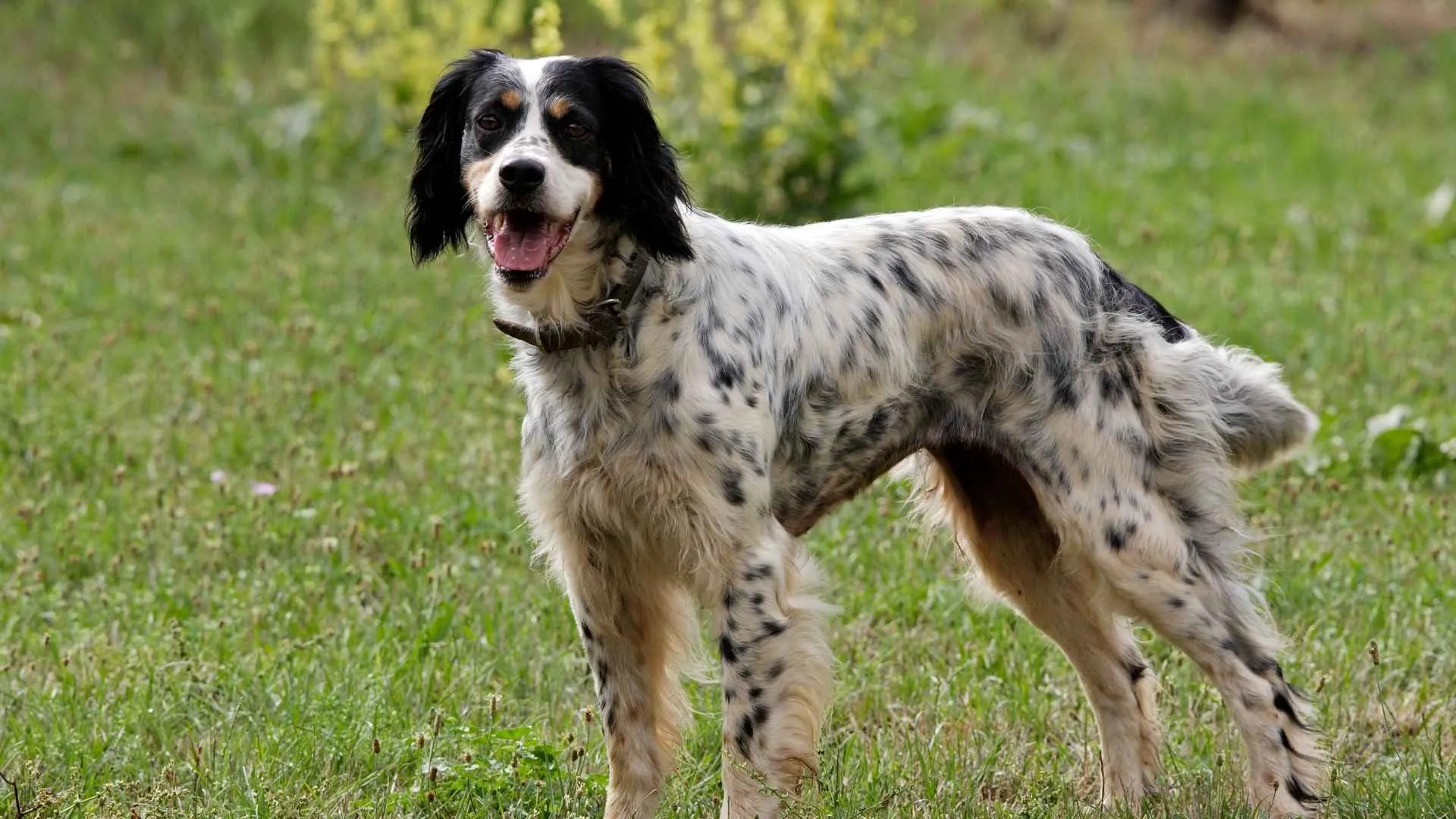
The English Setter has roots in Britain and developed from setting dogs used to locate game birds for hunters. Earlier setters were trained to find birds and crouch or “set” near them, allowing hunters to approach before the birds were disturbed, as per Hill’s Pet. As firearms changed hunting practices, the breed’s pointing style evolved while its bird-finding purpose remained central.
Gentle at Home, Focused in the Field
English Setters often have a softer temperament than their energetic field performance might suggest. They can be affectionate, sociable, and pleasant household companions, particularly when their exercise needs are satisfied. Their sensitivity makes thoughtful handling important, and they generally benefit from patient training rather than excessive pressure.
A Classic Pointing Performance
The English Setter is particularly associated with the art of locating birds and holding a point. When it catches the scent of game, it can freeze into a characteristic stance that tells the hunter where the bird is located. This ability allows the hunter to move into position before the bird is flushed.
4. Wirehaired Pointing Griffon

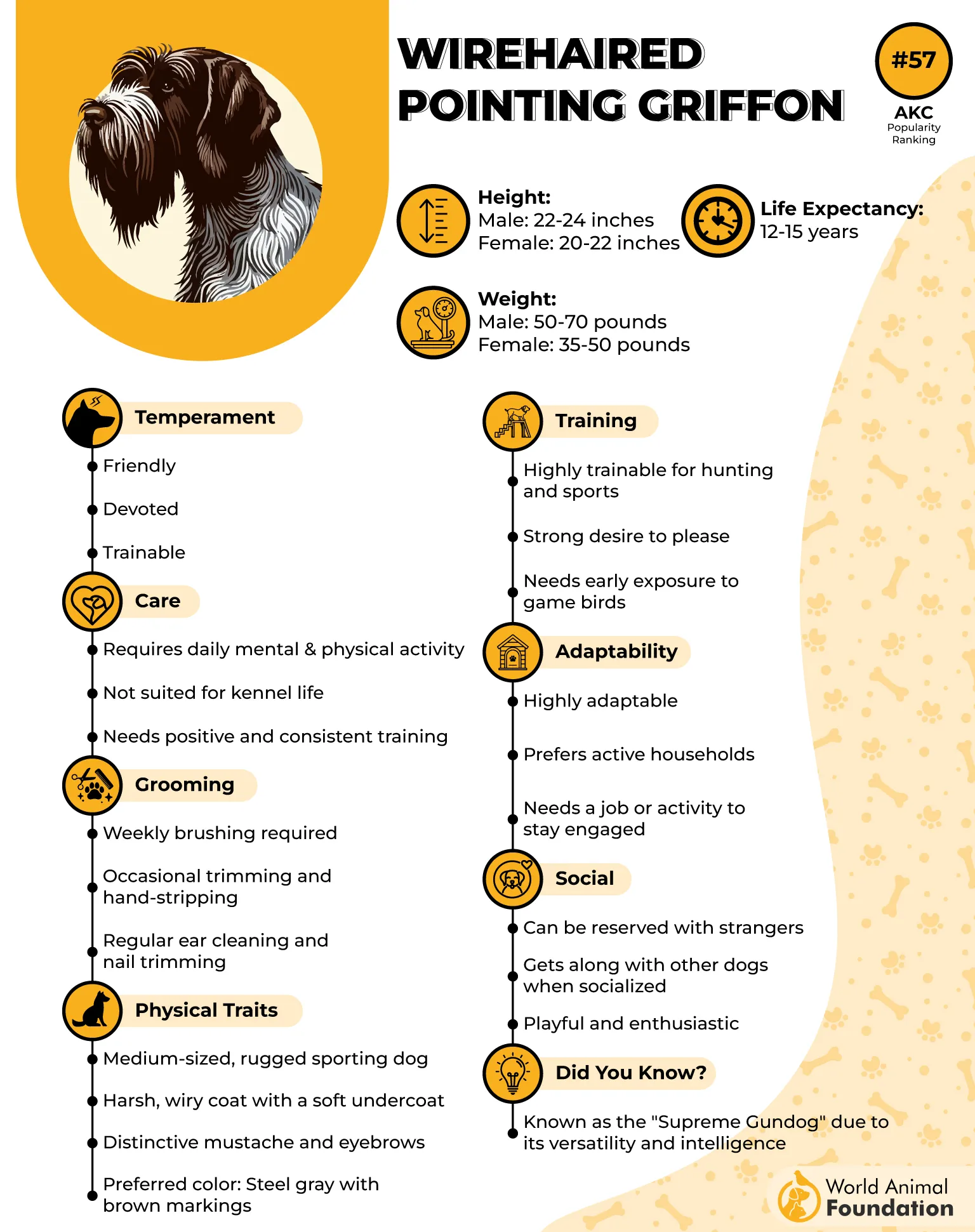
The Wirehaired Pointing Griffon was developed in Europe during the 19th century, with Dutch breeder Eduard Korthals playing a major role in establishing the breed, as per the AKC. His goal was to create a rugged hunting dog capable of pointing and retrieving game in challenging conditions. The resulting breed became valued for its versatility, weather-resistant coat, and strong field instincts.
Rugged, Sociable, and Determined
This breed combines a hardworking attitude with an affectionate nature. Wirehaired Pointing Griffons are often closely connected to their families and can be enthusiastic participants in outdoor activities. Their determination can be useful during demanding hunts, but they still need consistent guidance so their independence does not interfere with responsiveness.
Built for Difficult Bird-Hunting Conditions
The Wirehaired Pointing Griffon’s coarse coat gives it useful protection when working through brush, wet vegetation, and rough terrain. It can locate birds, point them, and retrieve after the shot, giving it a broad role in the hunt. Its willingness to work in less-than-ideal conditions makes it especially appealing for hunters who regularly encounter dense cover or changing weather.
5. Vizsla
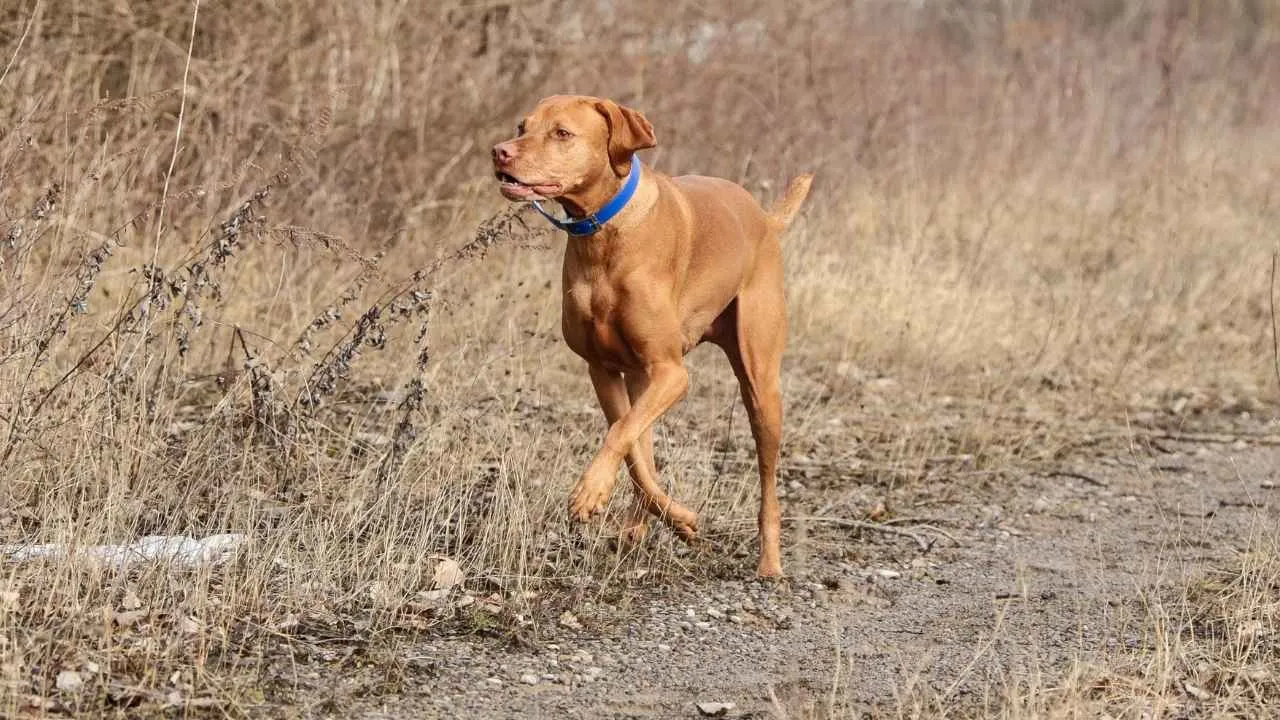
The Vizsla has a long association with Hungary, where its ancestors served as hunting dogs for Hungarian nobles and sporting hunters. The breed was developed to locate and point game while remaining closely connected to its handler. Its history as a versatile hunting companion helped shape the athletic and cooperative dog recognized today.
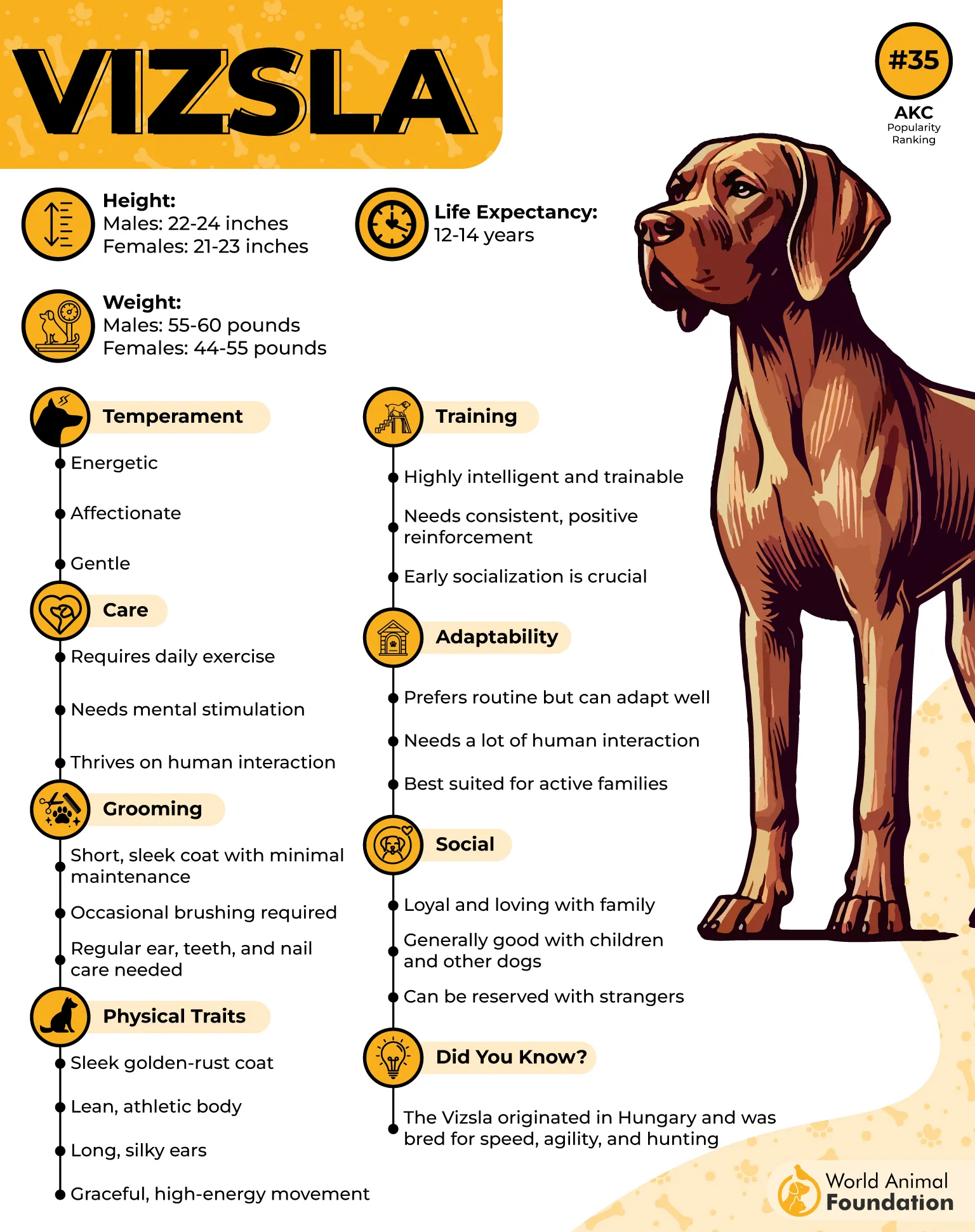
Affectionate, Sensitive, and People-Oriented
Vizslas are often described as highly loyal dogs that prefer staying close to their people. They tend to be affectionate and responsive, but their sensitivity means they may not respond well to unnecessarily harsh correction. A Vizsla usually thrives when its physical exercise is combined with opportunities to work alongside its owner.
Close-Working Pointing Ability
The Vizsla is well suited to hunters who want a pointing dog that naturally maintains a close relationship with the handler. It can use its exceptional sense of smell to locate birds and indicate their presence through a point. Its athleticism also allows it to move efficiently through fields while remaining engaged with the person directing the hunt.
6. Weimaraner
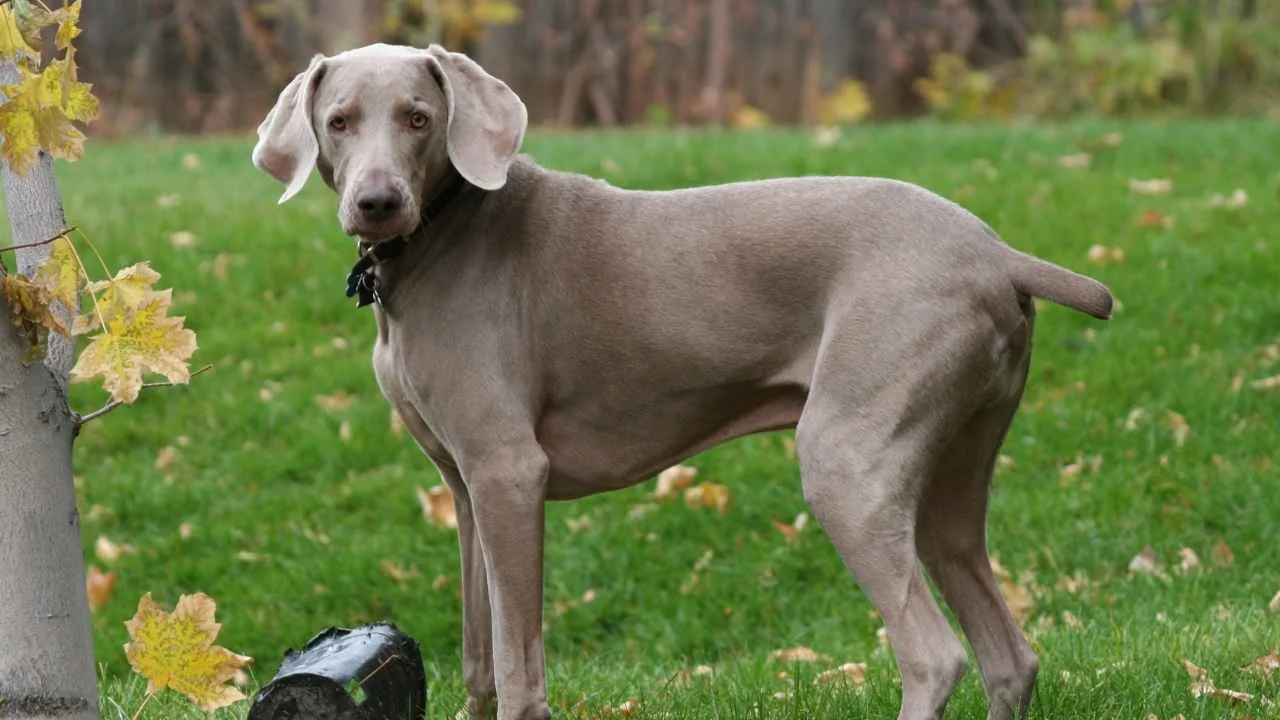
The Weimaraner originated in Germany and was developed among hunting enthusiasts and aristocratic circles associated with the Weimar region. Early dogs were used for hunting substantial game before the breed became increasingly associated with smaller game and birds. Its distinctive appearance developed alongside a history centered on athletic hunting work.
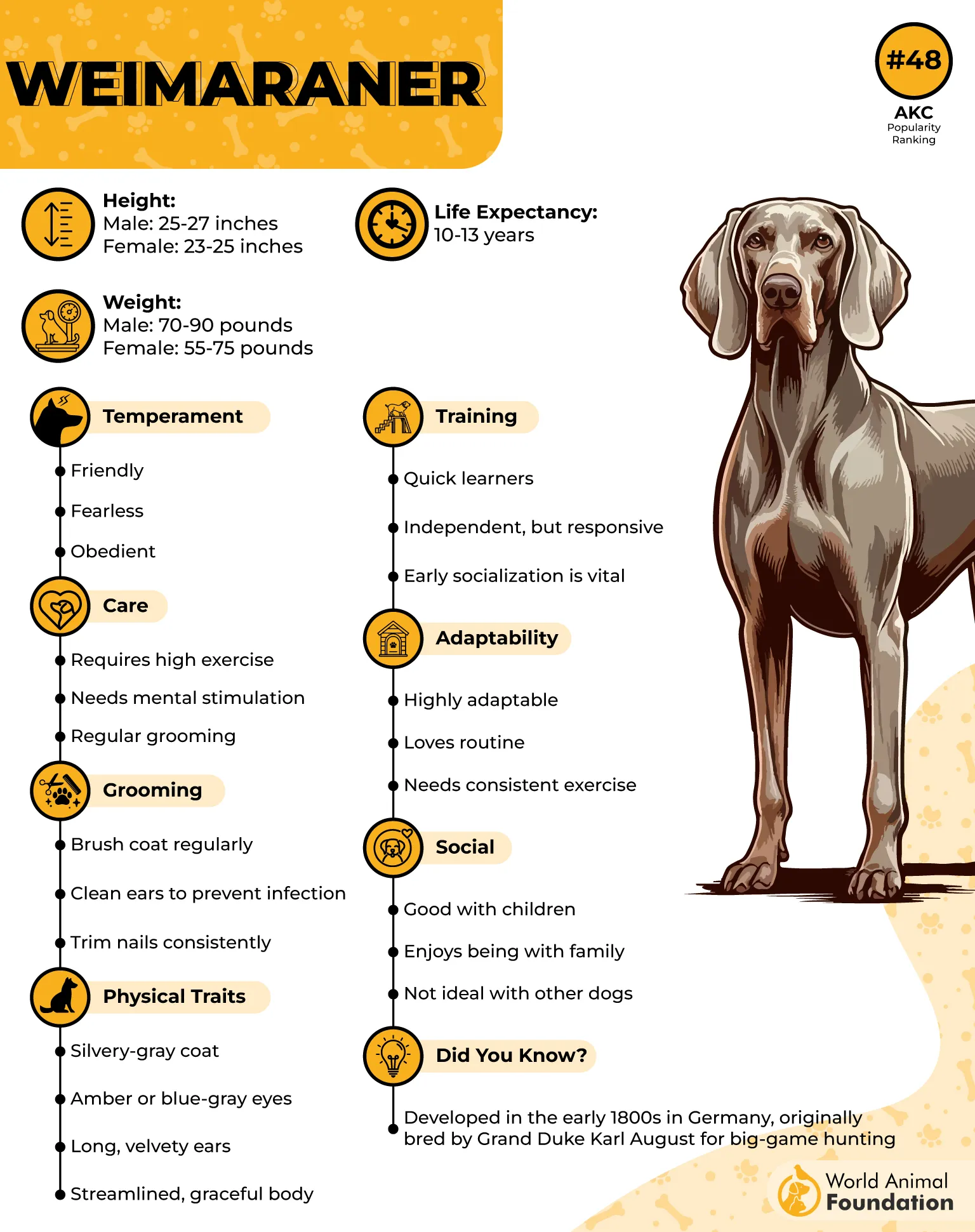
Confident, Intelligent, and Full of Drive
Weimaraners tend to be energetic dogs with considerable stamina and curiosity. They can form strong attachments to their families and often want to be involved in daily activities. Without enough exercise or purposeful engagement, their energy can become difficult to manage, making structured routines particularly valuable.
Strong Nose With a Broad Hunting Role
The Weimaraner’s hunting heritage gives it a natural interest in locating game. It can work as a pointing dog and use its speed and endurance to search substantial areas. For hunters who cover large stretches of open ground, its physical capabilities can be a significant advantage, although training is essential for turning enthusiasm into controlled field performance.
7. English Springer Spaniel
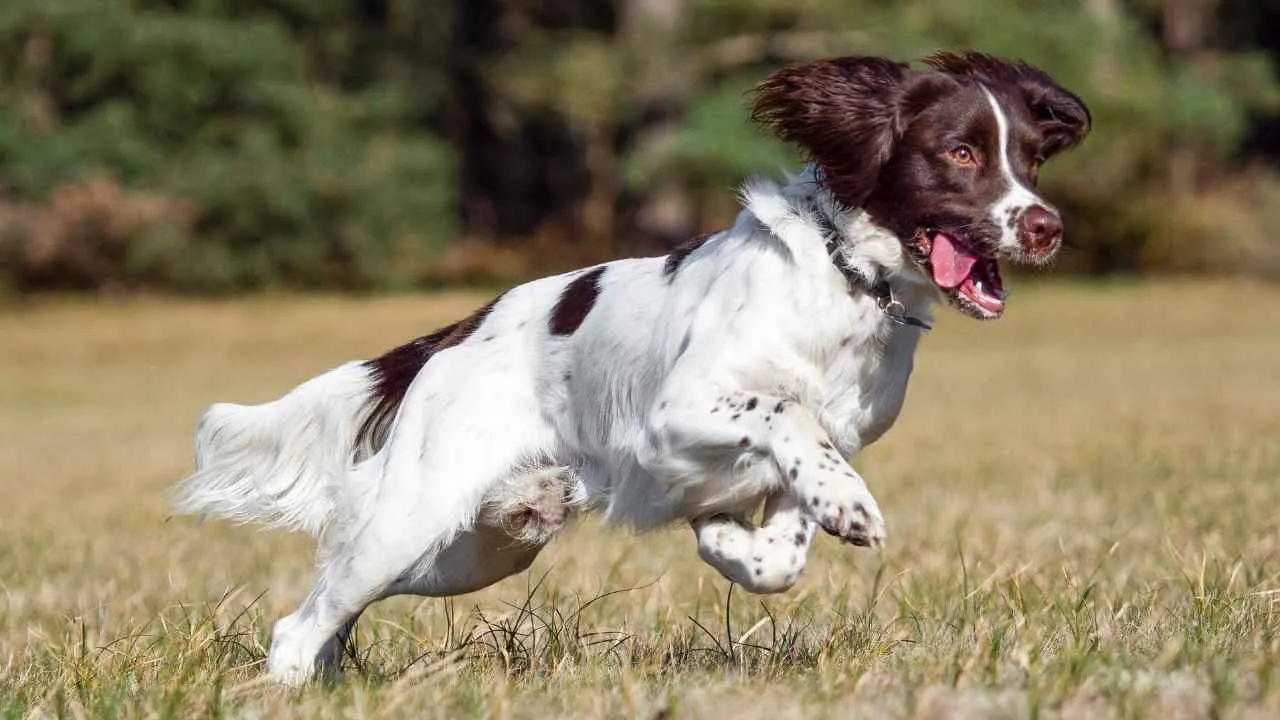
The English Springer Spaniel developed in England from land spaniels that were used to hunt and flush game birds. Historically, spaniels were valued for entering cover and driving birds from hiding places so hunters could take a shot. The Springer eventually became a distinct breed and earned a reputation as an energetic and capable sporting dog.
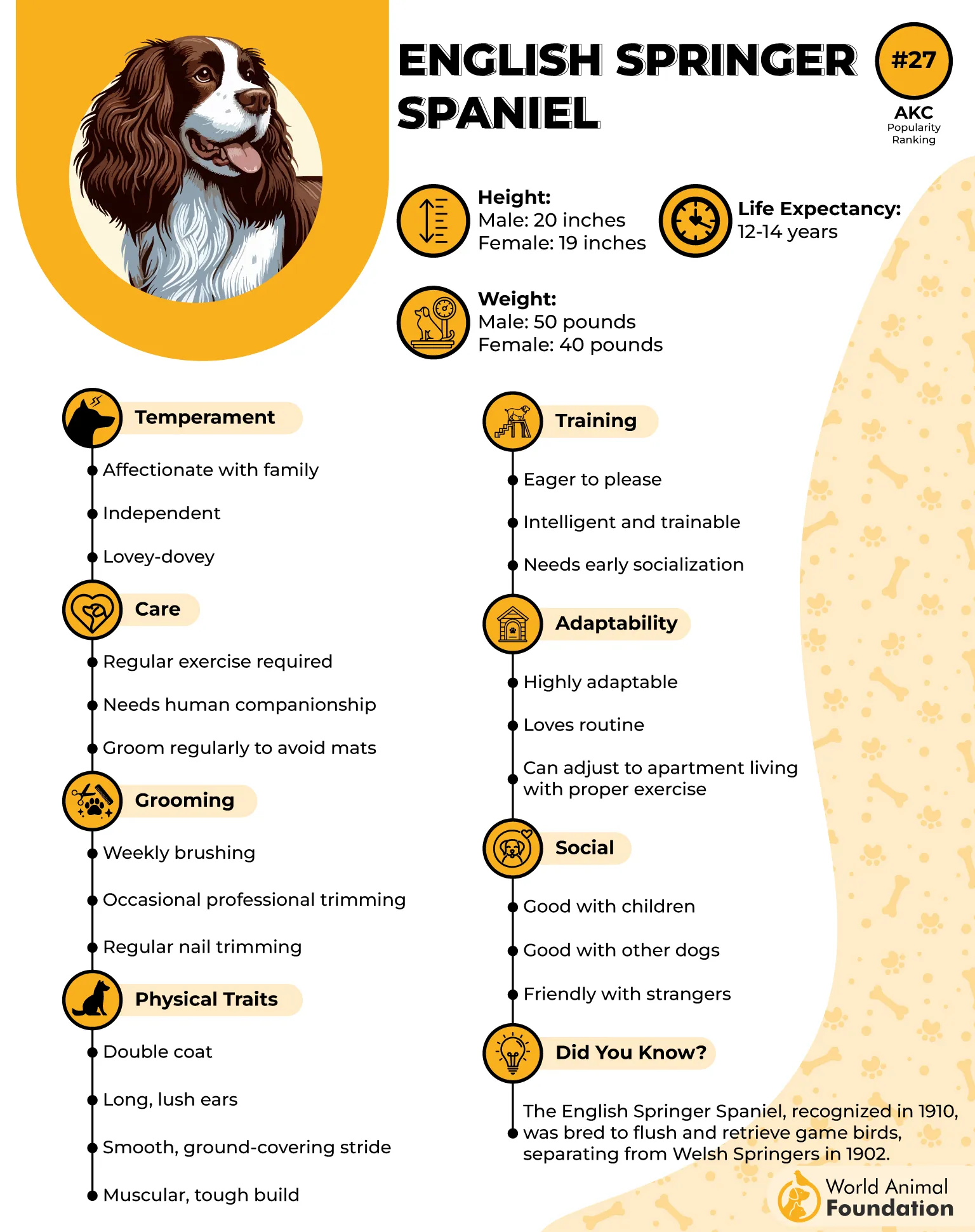
Enthusiastic, Playful, and Highly Trainable
English Springer Spaniels often bring an upbeat personality to both the household and the field. They tend to enjoy interaction, learning, and physical activity, which can make them responsive training partners. Their eagerness should still be channeled through obedience and impulse-control exercises, particularly around exciting game.
A Natural Flushing Partner
Rather than holding a distant point like a traditional setter, the English Springer Spaniel is designed to work actively through cover and flush birds into the air. Its energetic movement can disturb hidden game while keeping the dog within useful hunting range. Once the bird is down, many Springers can also be trained to retrieve it, making them practical all-around flushing companions.
8. Boykin Spaniel
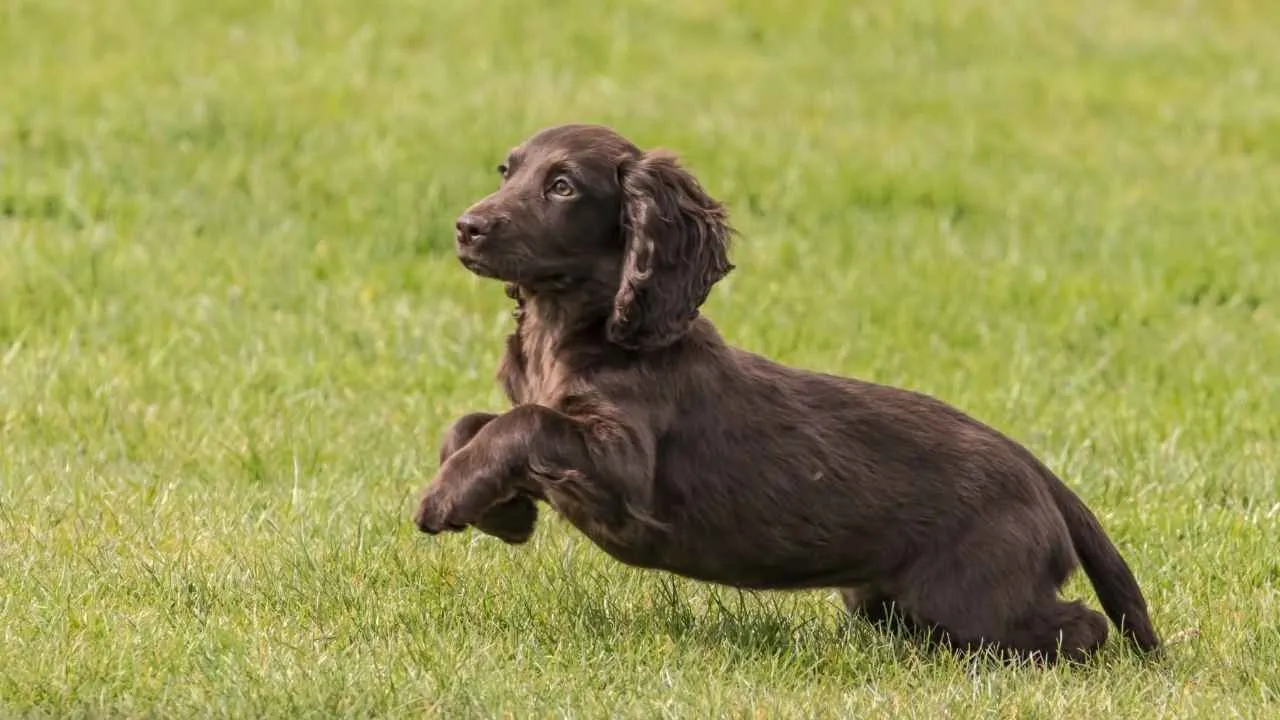
The Boykin Spaniel was developed in South Carolina in the United States during the early 20th century. Local hunters wanted a relatively small dog that could work effectively from boats and retrieve wild turkeys and waterfowl in the region’s swamps and waterways. The breed’s compact body and enthusiasm for retrieving made it particularly useful in these environments.
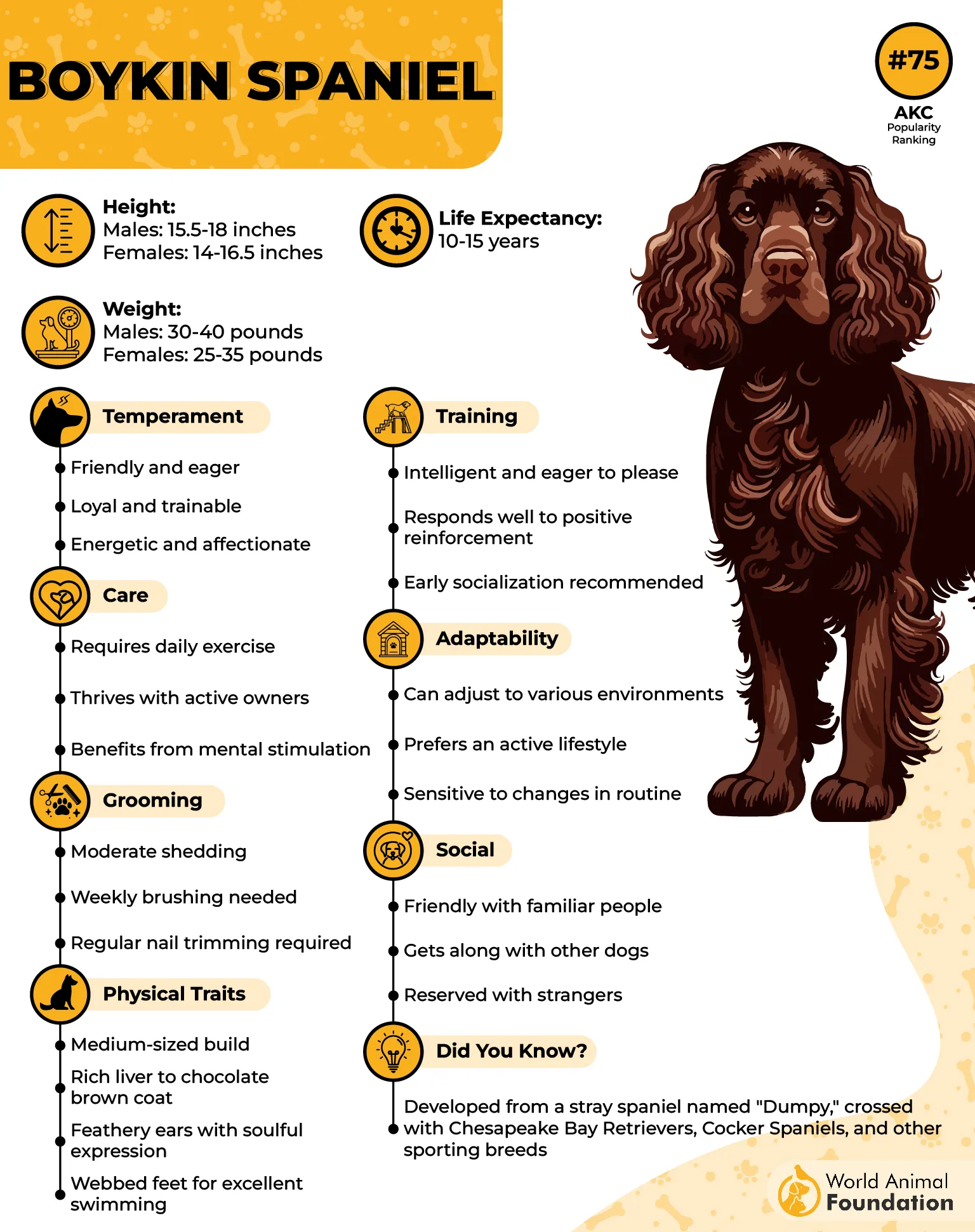
Cheerful, Adaptable, and Willing
Boykin Spaniels are generally energetic dogs with an affectionate and cooperative temperament. They often enjoy spending time with their families and participating in outdoor activities. Their manageable size can make them easier to handle in confined spaces, while their working background gives them plenty of enthusiasm for purposeful activity.
Designed for Flushing and Retrieving
The Boykin’s hunting heritage is closely tied to flushing birds from cover and retrieving them afterward. Its smaller frame can be advantageous when working from a boat or moving through dense vegetation. For hunters pursuing waterfowl or upland birds in environments where a compact dog is useful, the Boykin can offer an effective combination of flushing instinct and retrieving ability.
9. Irish Water Spaniel
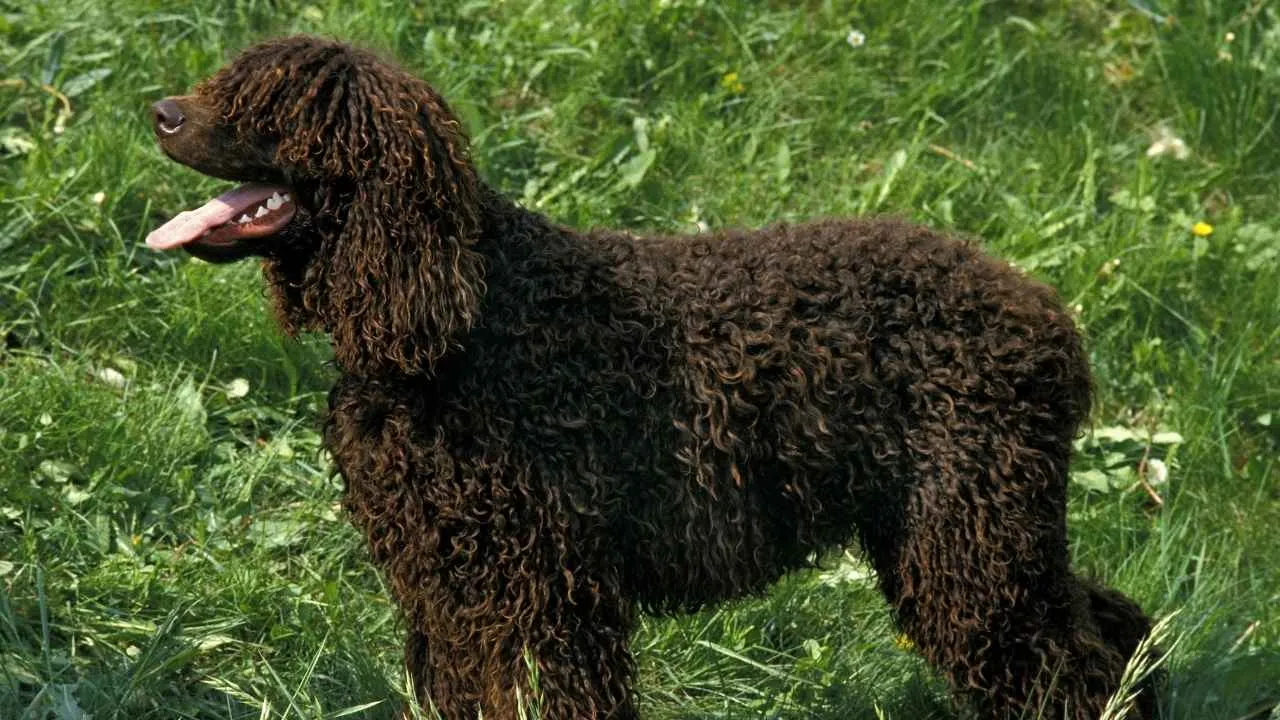
The Irish Water Spaniel developed in Ireland as a specialized waterfowl and retrieving dog. Its history is associated with the country’s wetlands and waterways, where hunters needed dogs capable of entering cold water and recovering birds. The breed’s unusual curly coat, distinctive topknot, and tapering “rat tail” helped give it a unique appearance among spaniels.
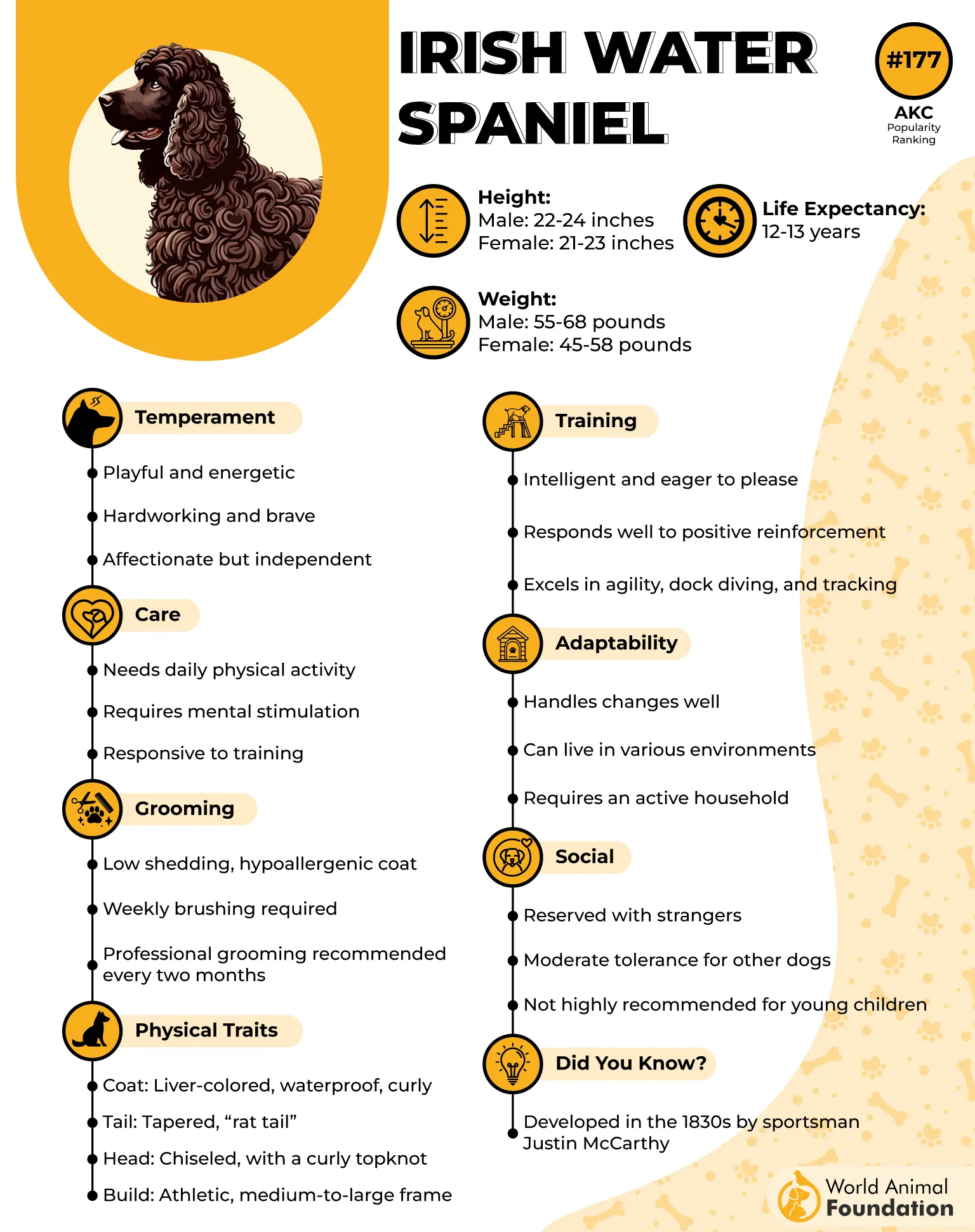
Clever, Spirited, and Sometimes Independent
Irish Water Spaniels are intelligent dogs that can show a playful and occasionally mischievous side. They often enjoy solving problems and staying mentally engaged rather than simply repeating dull exercises. Their independence makes thoughtful training important, particularly when teaching reliable responses in stimulating outdoor environments.
A Water-Loving Flushing and Retrieving Dog
The breed’s strength lies particularly in work around water. An Irish Water Spaniel can search cover, flush birds, and retrieve them from ponds or other waterways. Its water-resistant coat and swimming ability make it especially suited to hunters who regularly combine flushing work with waterfowl retrieving.
10. Gordon Setter
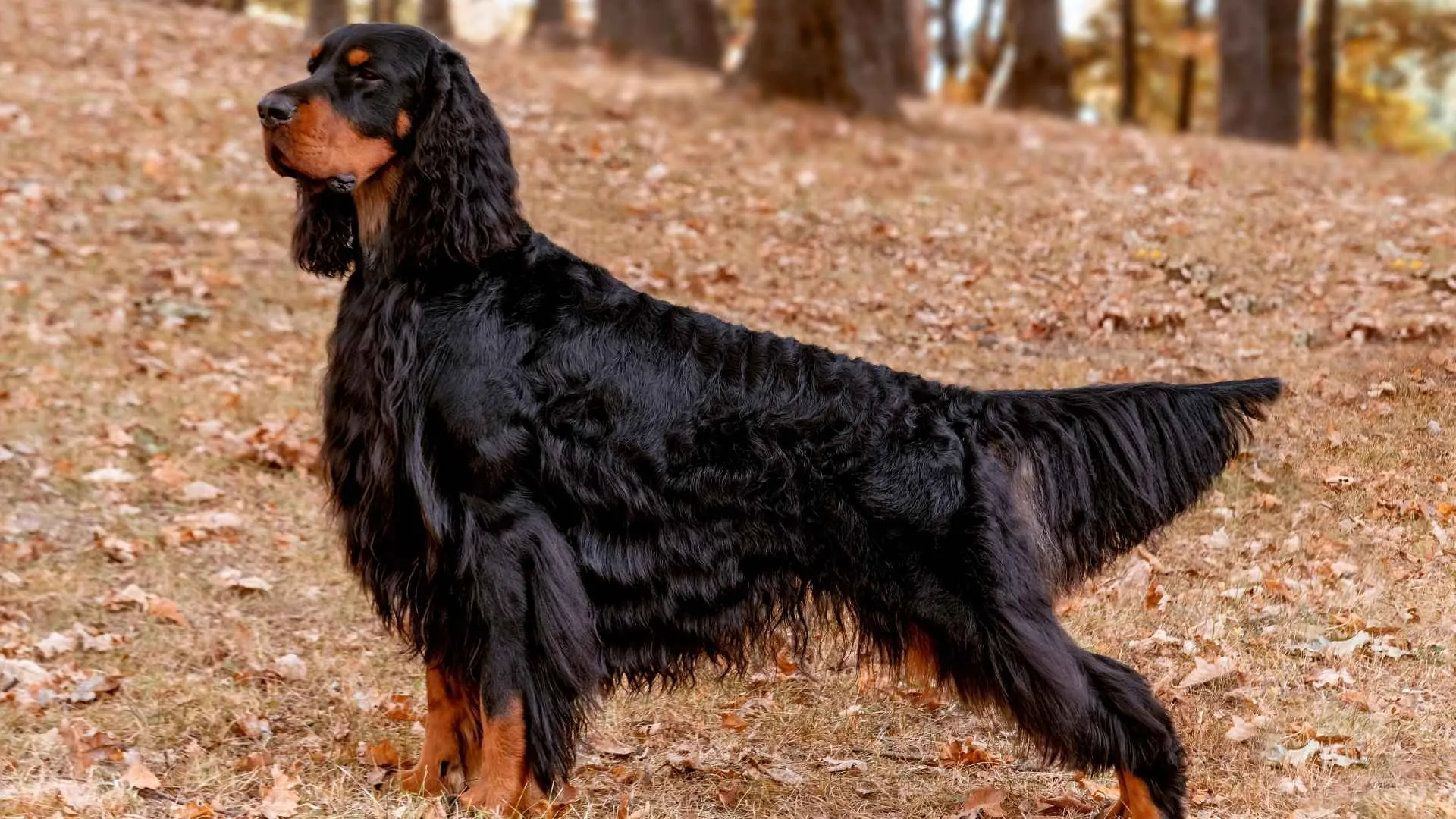
The Gordon Setter originated in Scotland and became closely associated with the Gordon family, particularly the fourth Duke of Gordon during the 18th and 19th centuries, as per Orvis. The breed was developed for locating game birds in the Scottish countryside, with selective breeding emphasizing stamina, scenting ability, and a strong pointing instinct.
Steady, Loyal, and Deliberate
Gordon Setters are often more substantial and measured in their working style than some lighter pointing breeds. They can be devoted to their families while retaining the determination expected of a serious sporting dog. Their combination of stamina and concentration can suit owners who appreciate a dog that works methodically rather than simply racing across the landscape.
A Sturdy Pointing Dog for Challenging Terrain
Gordon Setters are capable of searching large areas for birds and indicating game through a steady point. Their endurance is particularly valuable when working across demanding terrain for extended periods. The breed’s dark, feathered coat and substantial build also reflect its development as a rugged Scottish hunting companion rather than a purely ornamental dog.
Conclusion
The right bird dog depends largely on the kind of hunting a person intends to do. German Shorthaired Pointers, Brittanys, English Setters, Wirehaired Pointing Griffons, Vizslas, Weimaraners, and Gordon Setters are especially associated with locating and pointing game, while English Springer Spaniels, Boykin Spaniels, and Irish Water Spaniels are particularly useful for flushing and retrieving birds.
Pointing and flushing are different jobs, so hunters should consider whether they want a dog that searches for game and holds its location or one that actively enters cover to make birds take flight. Terrain, bird species, retrieving conditions, and the hunter’s preferred working style can all influence the best choice.
Breed tendencies provide a useful starting point, but individual dogs can vary considerably. Successful hunting companions require appropriate socialization, obedience training, physical conditioning, field exposure, and responsible handling. With the right preparation, a well-matched pointing or flushing breed can become both a capable hunting partner and a valued companion.
