




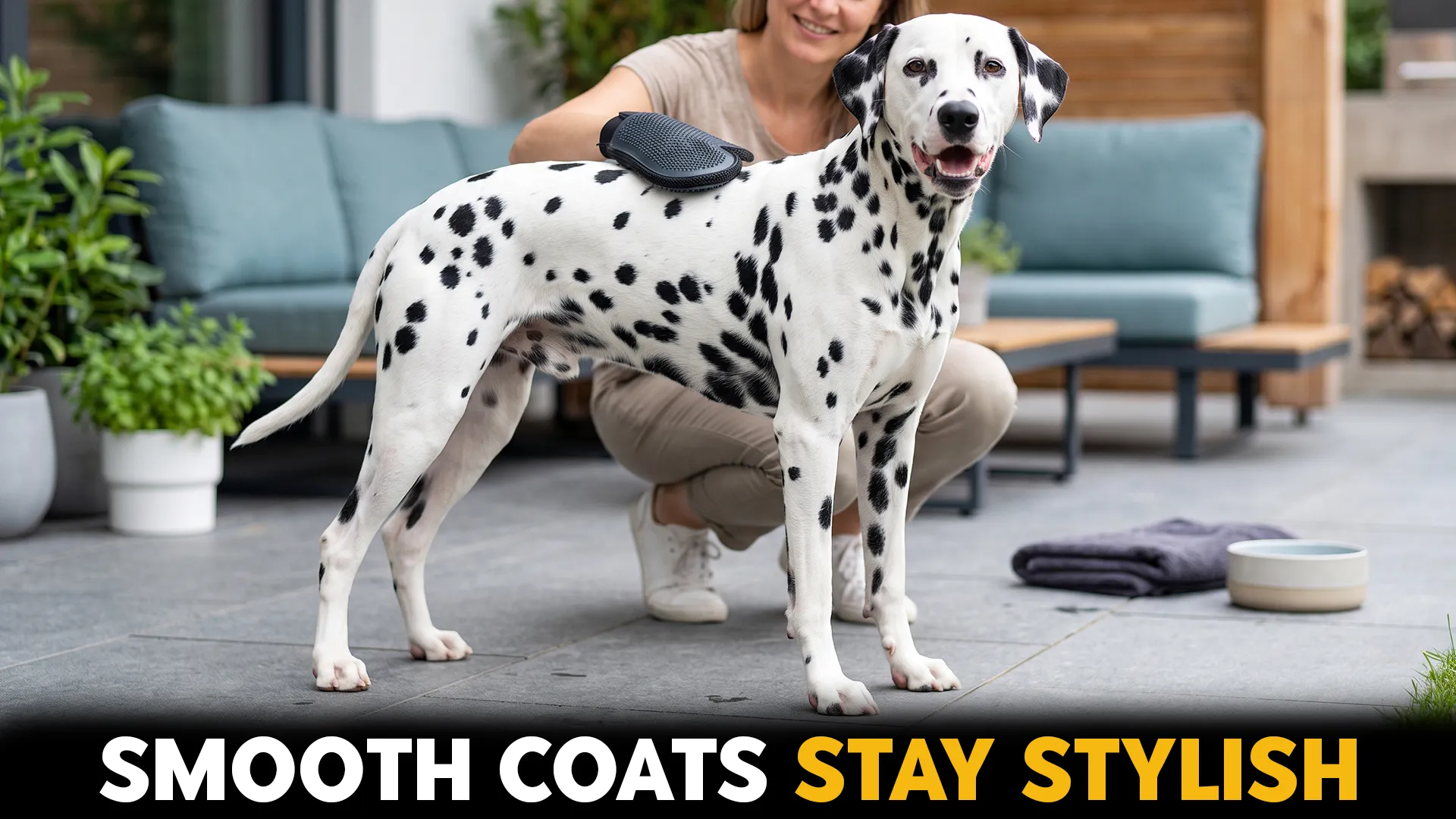
Tired of finding dog hair on your clothes, furniture, and just about every corner of the house? A short-haired dog can make everyday grooming feel much easier.
With less fur to brush and manage, these dogs can be a practical option for pet owners who want to spend more time playing, cuddling, and enjoying life with their pets.
But here’s the catch: short hair doesn’t always mean less shedding. Some short-haired dogs can still leave plenty of hair around the home, especially those with dense or double coats.
Regular brushing, occasional baths, and simple cleaning routines can still help control loose fur and keep your dog looking neat.
The good news is that plenty of short-furred companions come in different sizes, personalities, and activity levels to suit different households.
So what are you waiting for? Let’s explore some of the best short-coated breeds.
Top Dog Breeds for Owners Who Prefer Short Fur
1. Boxer
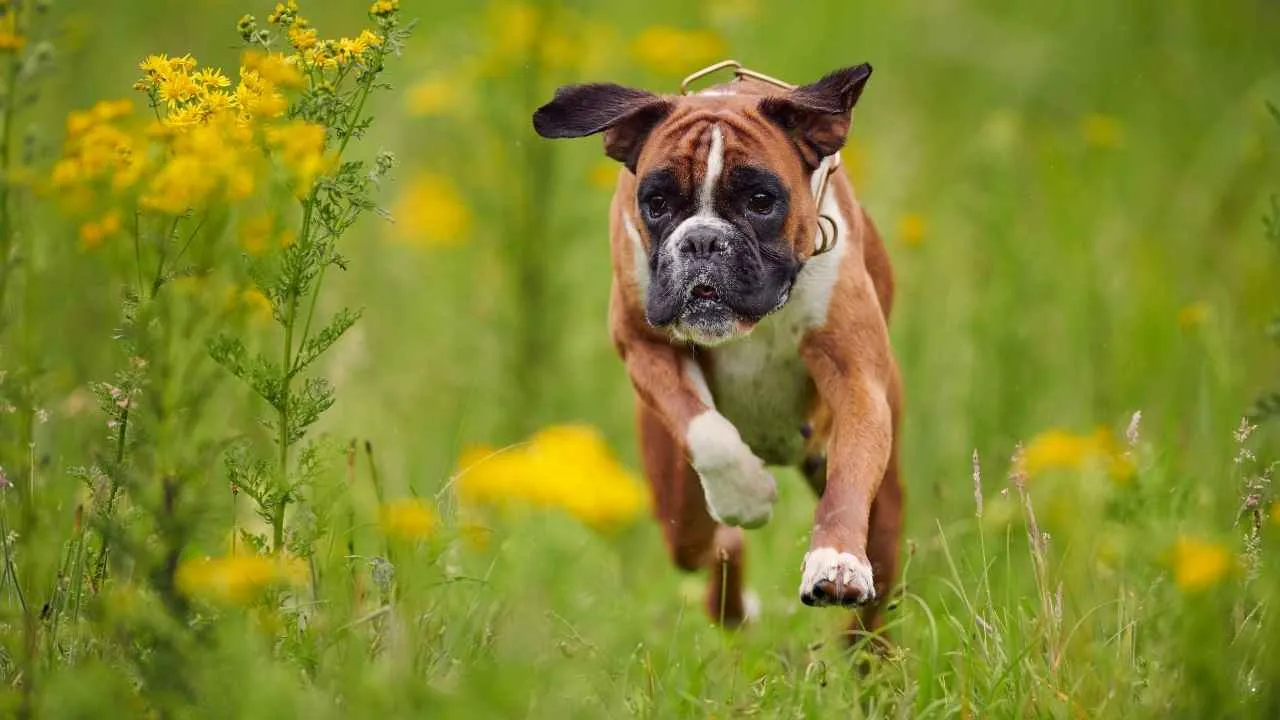
Boxers were imported to the United States from Germany in the 1930s and were originally used for hunting.
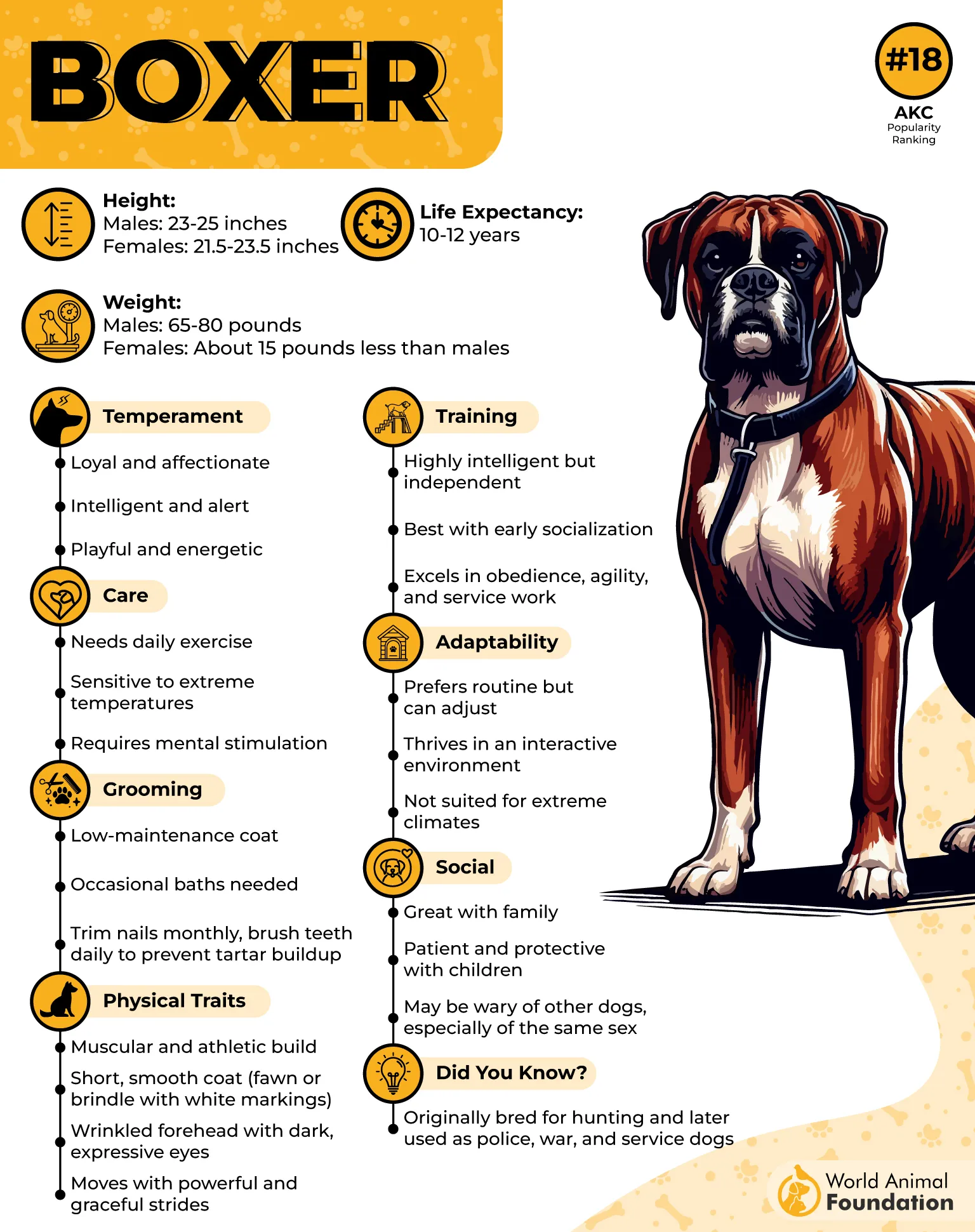
Today, their athletic background shows in their love for running, jumping, and active play. They have smooth, short coats and a strong, well-muscled build.
Care and Grooming
Boxers are high-energy dogs that need about 30 minutes to two hours of exercise each day. They can also enjoy dog sports such as rally, agility, and lure coursing.
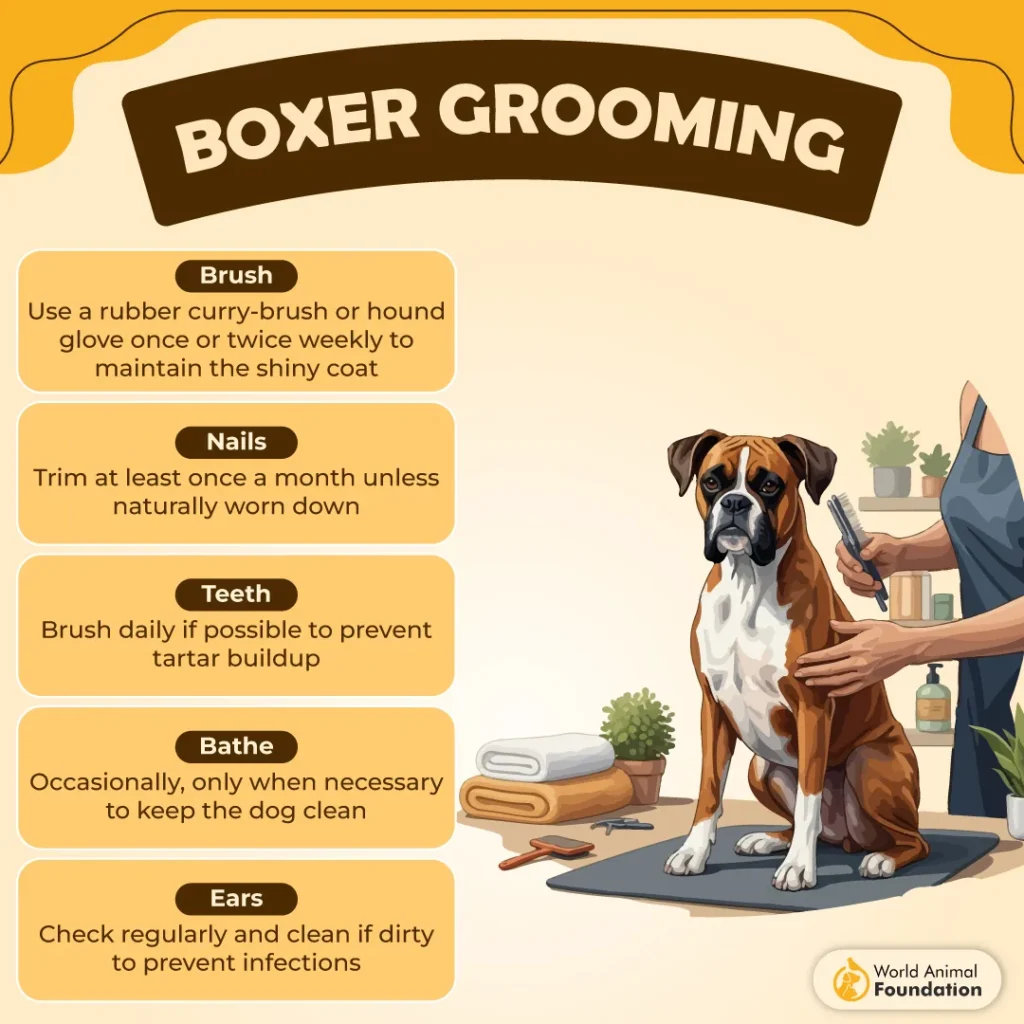
Their short coats are easy to maintain and shed moderately. Weekly brushing can help keep their coats healthy, while baths may be needed about once a month or less often if they stay clean.
Personality and Training
Boxers are playful, loving, loyal, and affectionate with their families. They can be boisterous, especially while young, and often remain puppy-like for years. They are intelligent and eager to please, although they can be stubborn at times.
Boxers can be suspicious of unfamiliar people and animals, but they are good watchdogs and protection dogs. Purina says they also dislike being left alone and may become distressed or destructive without enough attention, exercise, and mental stimulation.
2. Great Dane
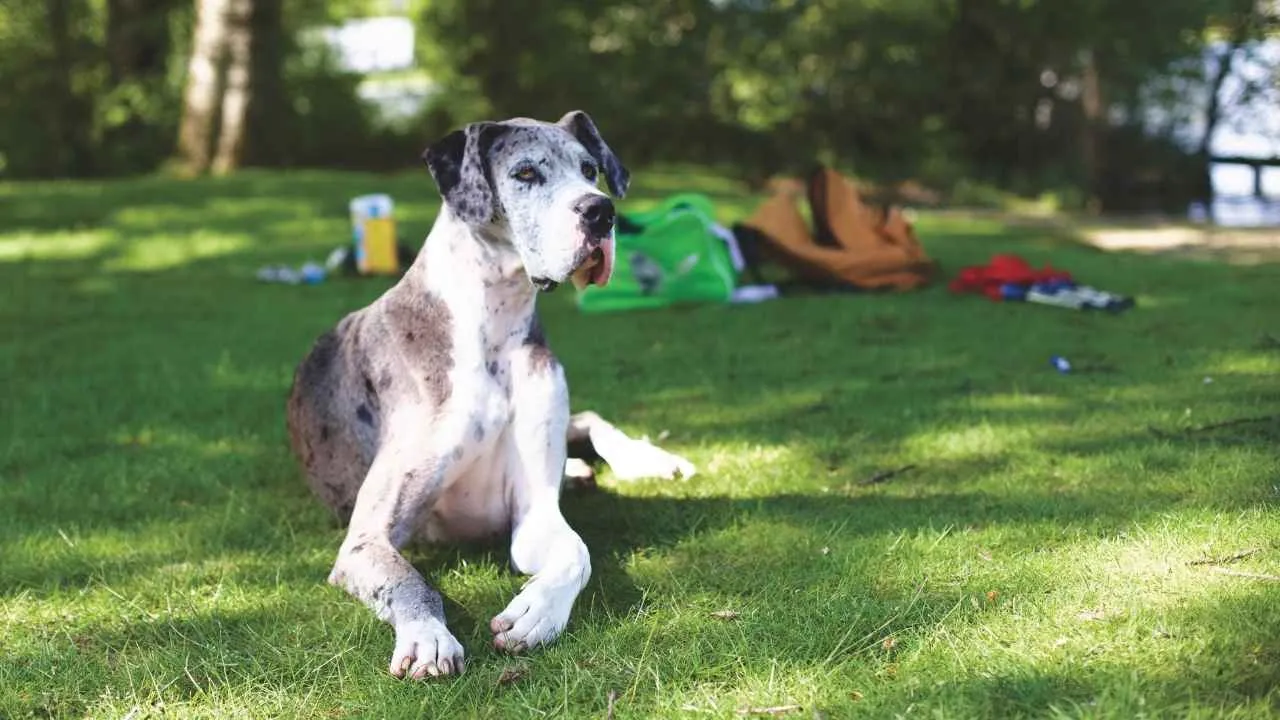
Great Danes may look intimidating because of their size, but their personalities are usually gentle and affectionate. Originally bred in Germany during the 1800s, they were used to hunt wild boar and guard estates and carriages.
Today, these big dogs are known for being loyal family companions who often think they are lap dogs despite their impressive size.
Care and Grooming
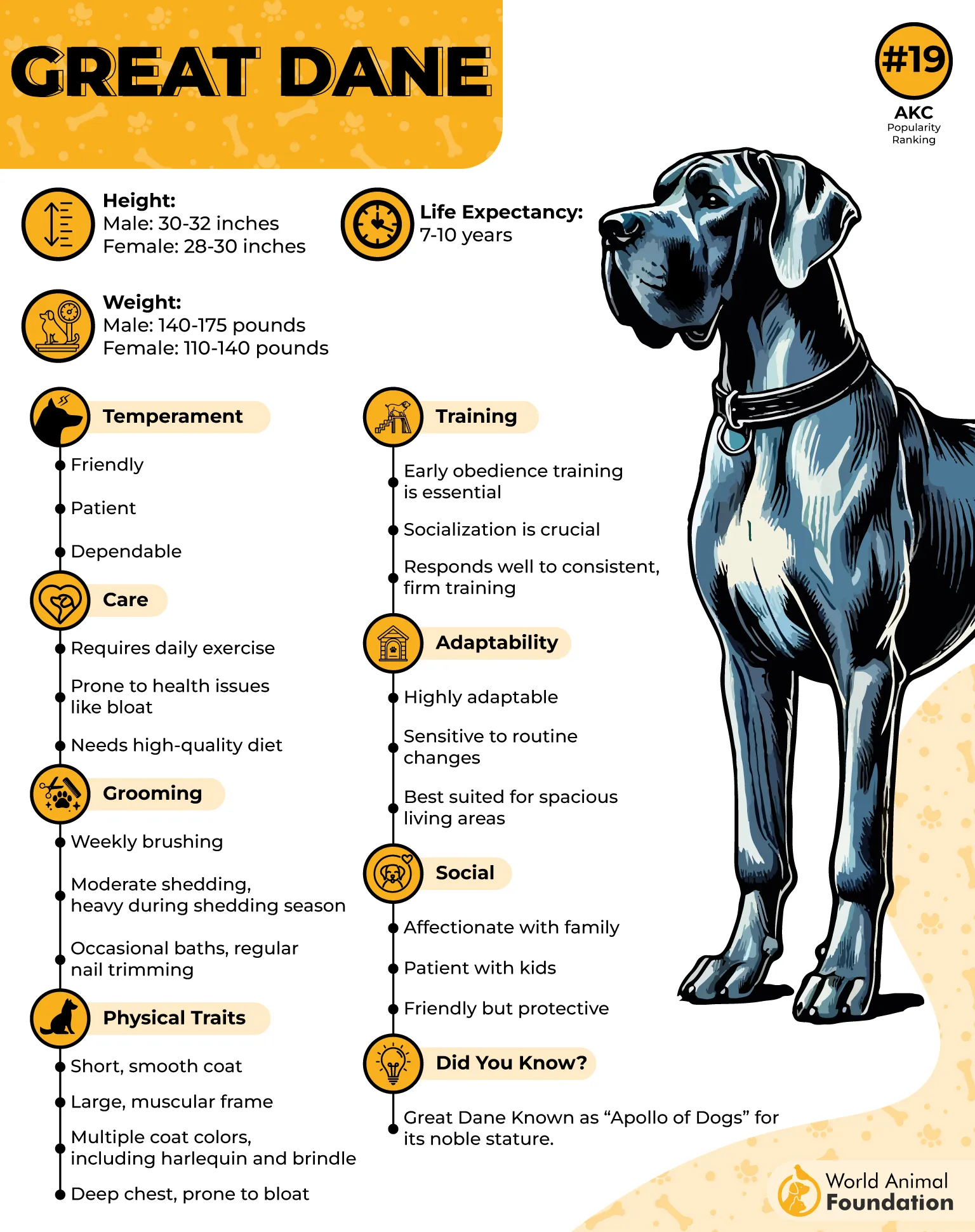
Great Danes have short coats that do not shed much and need a weekly brush-through. They have fairly low energy levels, although they still enjoy running and playing.
Their large size means they need plenty of space to move around. They also eat much more than smaller dogs, so feeding costs can be higher. Their lifespan is typically seven to 10 years.
Personality and Training
Great Danes are kind, loving, and very attached to their families. They often like to stay close to their people and can be loyal even to familiar visitors. They are excellent guard dogs and use their deep, powerful bark to alert their families to strangers.
Some can be territorial or wary of unfamiliar dogs. Early socialization and training are important to help them feel comfortable around new people and animals.
3. Dalmatian
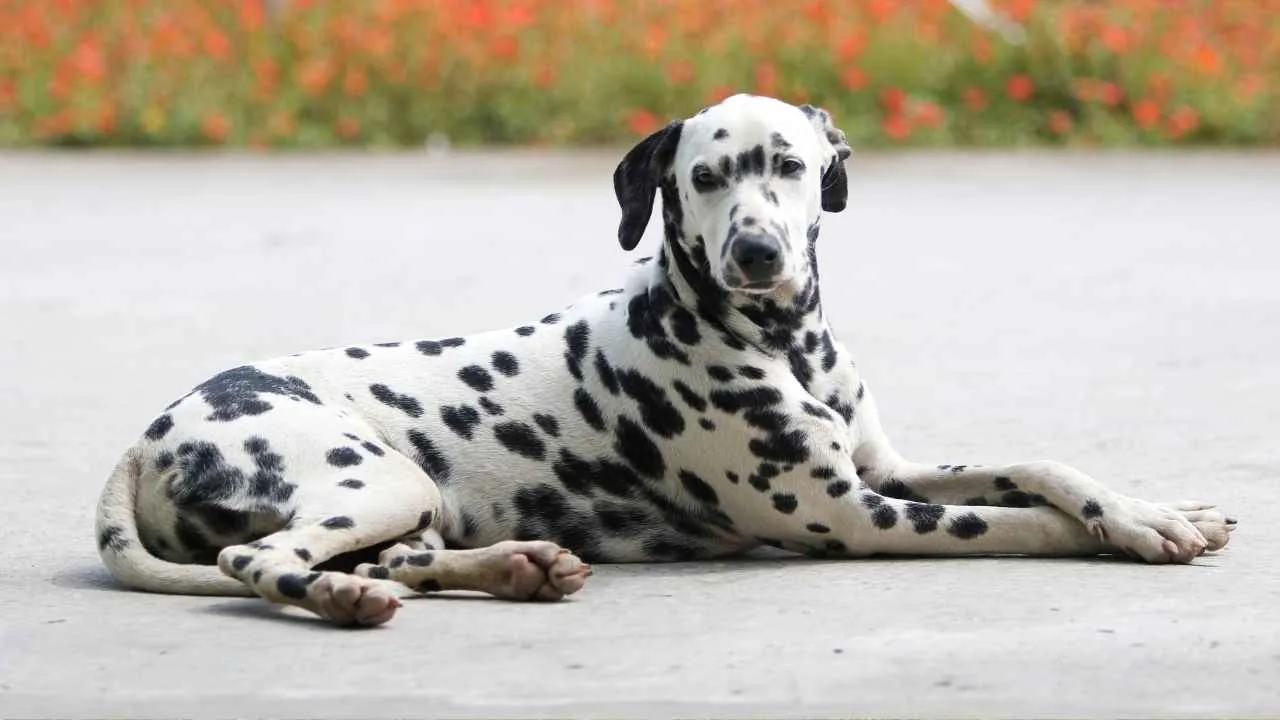
With their famous spots and energetic personalities, Dalmatians are hard to miss. They were originally coach dogs and ran alongside carriages in the 1700s.
They also worked alongside fire carriages, barking to alert people and clear the way. Their loyalty, intelligence, and endurance still make them active companions today.
Care and Exercise
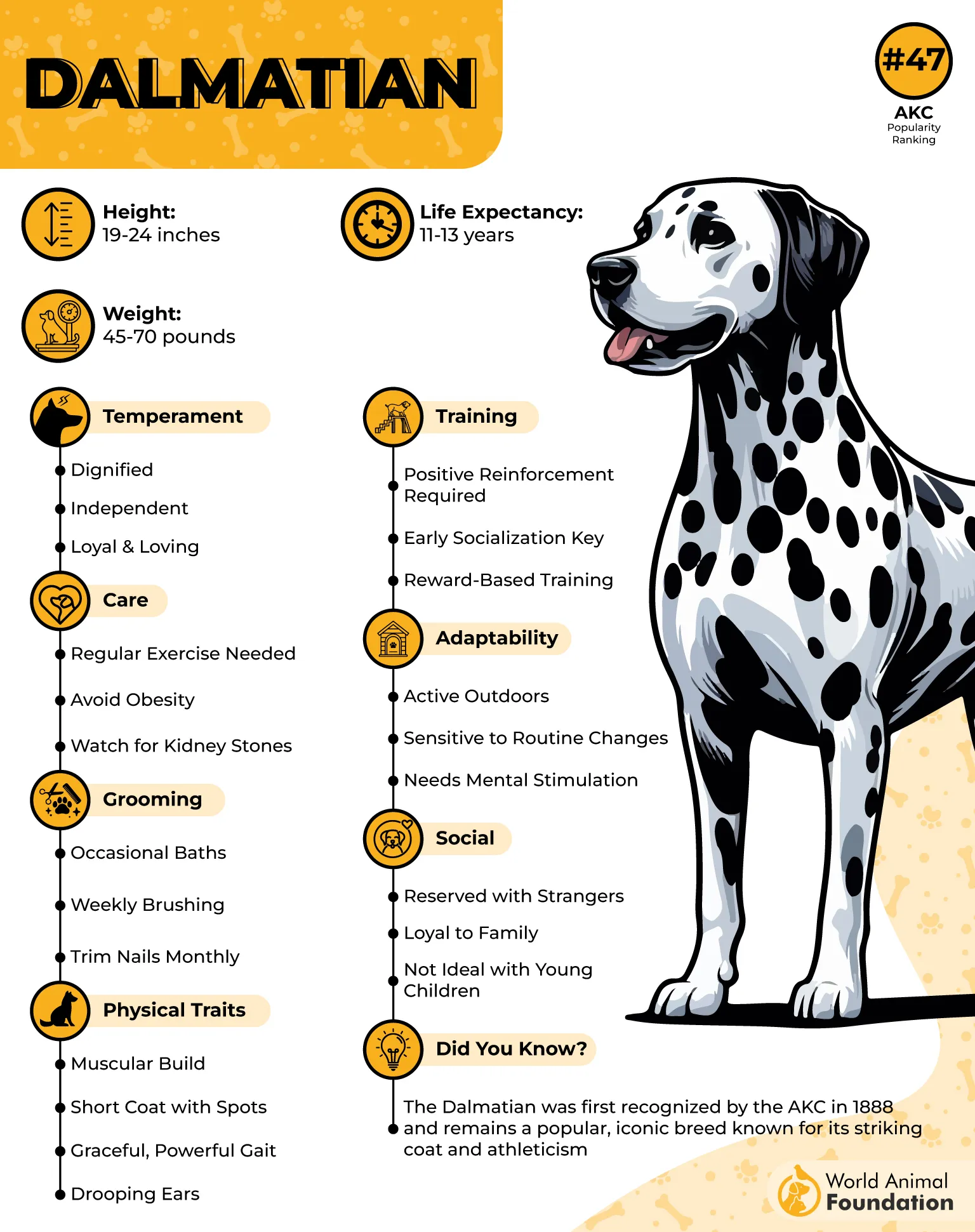
Dalmatians need a highly active lifestyle and plenty of daily exercise. They enjoy activities such as agility and can take part in long-distance road trials.
Their fine coat needs regular brushing to help reduce shedding. They also do best when they can stay involved with their families and should not be left alone for long periods.
Personality and Training
Dalmatians are playful, affectionate, curious, and devoted to their families. They generally get along with household pets, although some may be aggressive toward unfamiliar dogs or chase smaller animals.
They are moderately easy to train and learn quickly, but distractions and their independent nature can make training challenging.
4. Greyhound
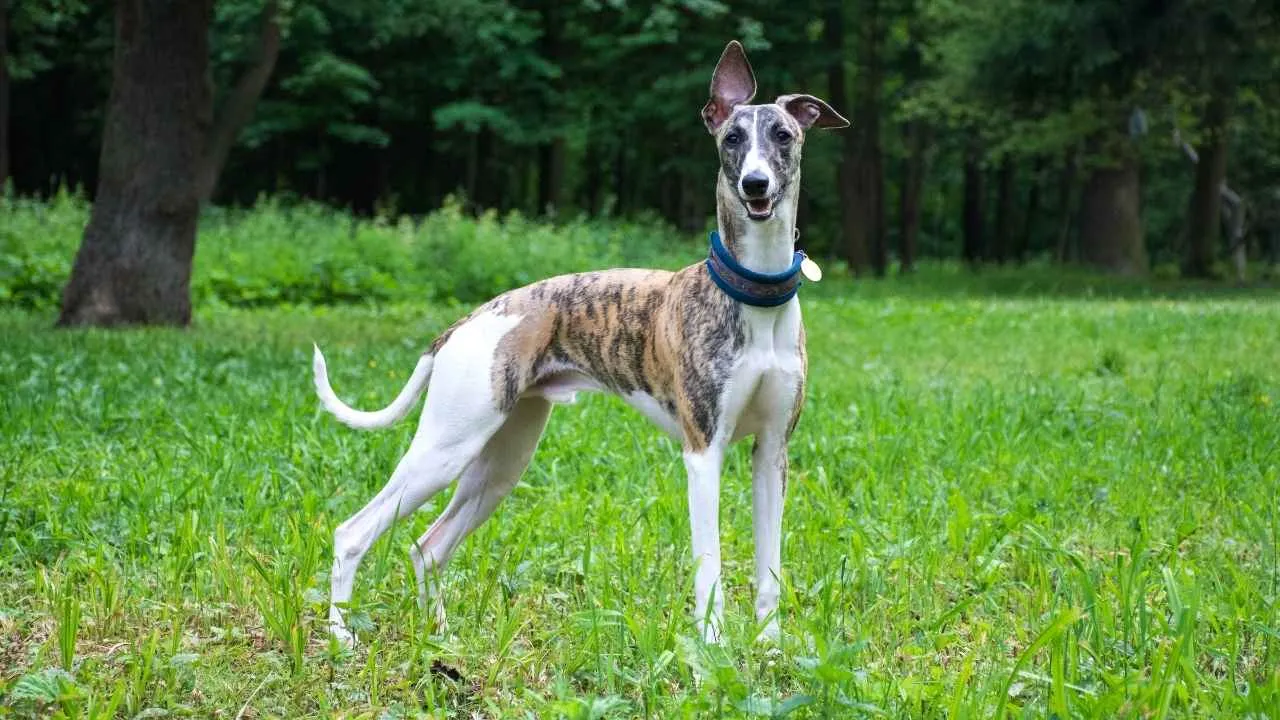
Greyhounds are famous for being the fastest dog breed, but there is much more to them than speed. This ancient breed was once used to hunt deer, foxes, hares, and other game.
Their history goes back thousands of years, with images of Greyhounds appearing in ancient tombs. Despite their athletic build and racing history, they are often calm, quiet, and relaxed at home.
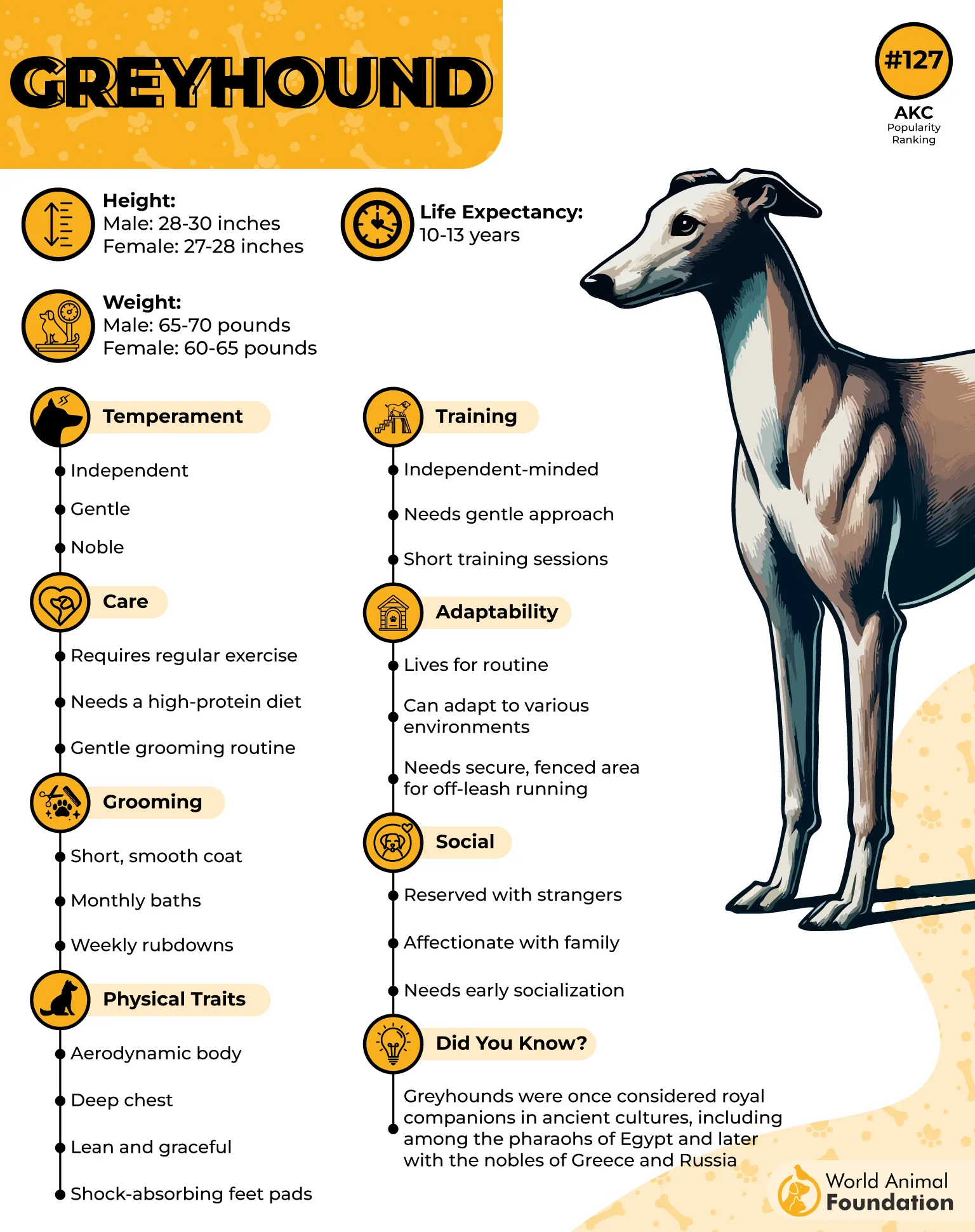
Care and Grooming
Greyhounds need less exercise than their speed might suggest. Two 20-minute runs a day are often enough, as they are sprinters rather than endurance athletes. A safe place to run is important, and a reliable recall is essential because of their strong chase instinct.
Their short, fine coats are easy to maintain with occasional brushing and bathing. They can also feel the cold easily, so a warm coat may be needed in colder weather. Smaller, more frequent meals can help reduce the risk of bloating and stomach problems.
Personality and Training
Greyhounds are loving, gentle, and social with their families and other dogs. They can be calm and even lazy indoors, earning them the nickname “40 mph couch potatoes.” They are often affectionate with family but may be aloof with strangers.
Their strong prey drive means homes with cats, rabbits, or other small pets require extra caution, along with careful socialization and training. They can live with other pets when introduced properly.
5. Beagle
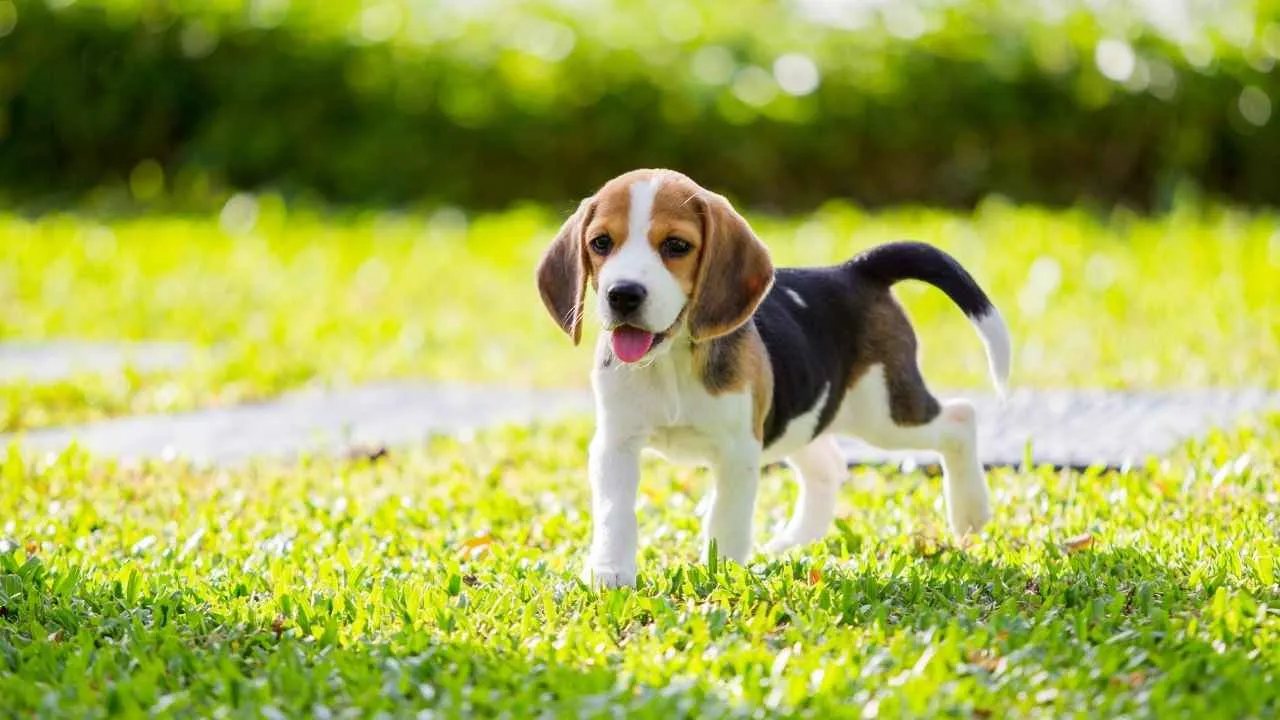
Beagles are cheerful, friendly companions with a natural love for people and other dogs. Originally bred to hunt alongside other dogs, they are happiest when they have company and plenty to do.
Their smooth, dense double coats come in several colors, including lemon, red, and white, and the familiar tricolor.
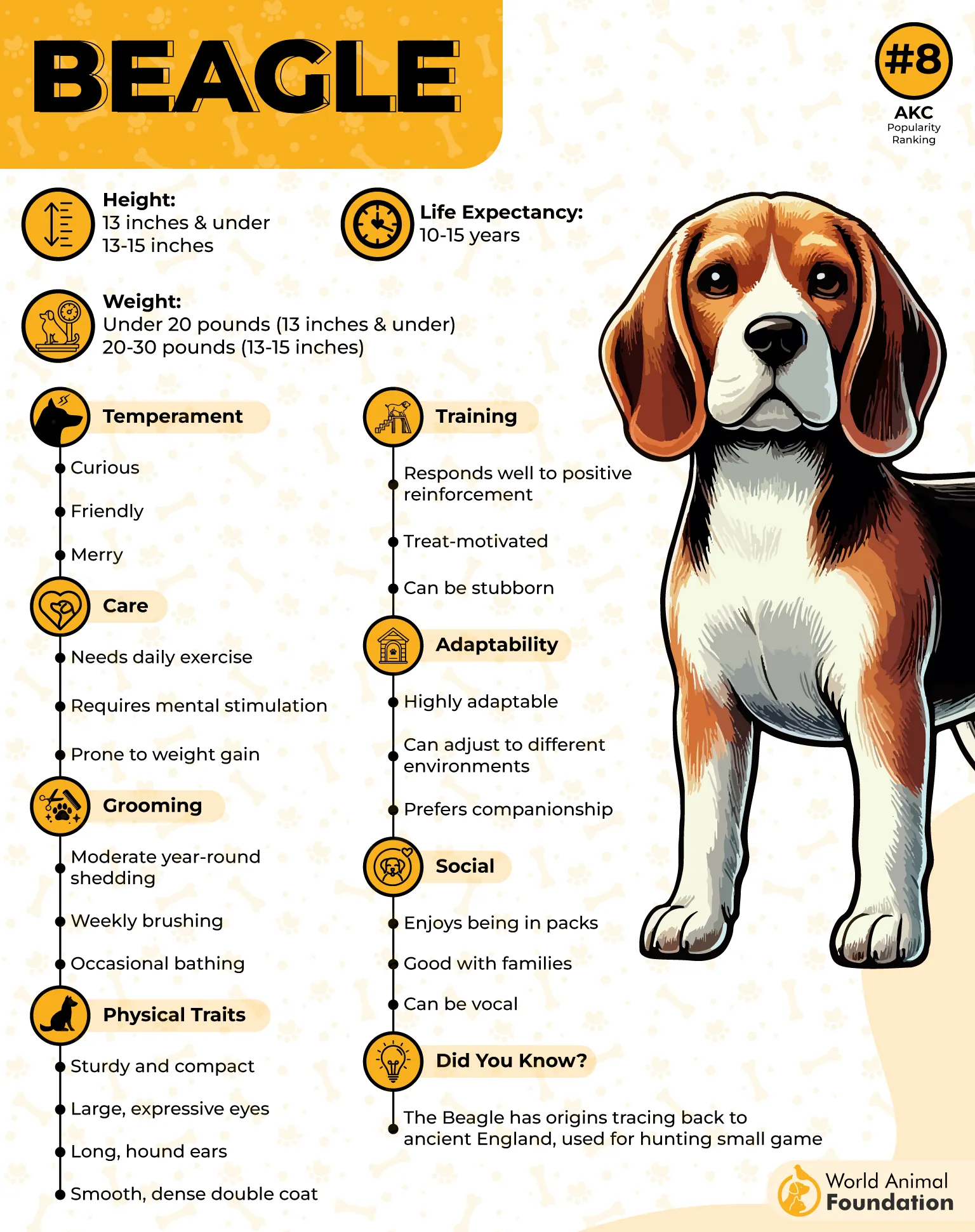
Care and Exercise
Beagles are active dogs that need regular activities, play, and supervision. Their strong sense of smell can lead them into trouble, so they should be kept on a leash during walks and watched closely outdoors.
Their short coats are easy to manage, but their floppy ears need regular cleaning because they are more prone to ear infections. Measured meals at regular times are also important, as Beagles can be prone to obesity.
Personality and Training
Beagles are affectionate, playful, outgoing, gentle, and adventurous. They usually get along well with people, dogs, and other pets. They can also be calm indoors when their activity needs are met.
However, their independence and distractibility can make training difficult. They may bark when lonely or untrained and can become restless or destructive if left alone too long.
6. Boston Terrier
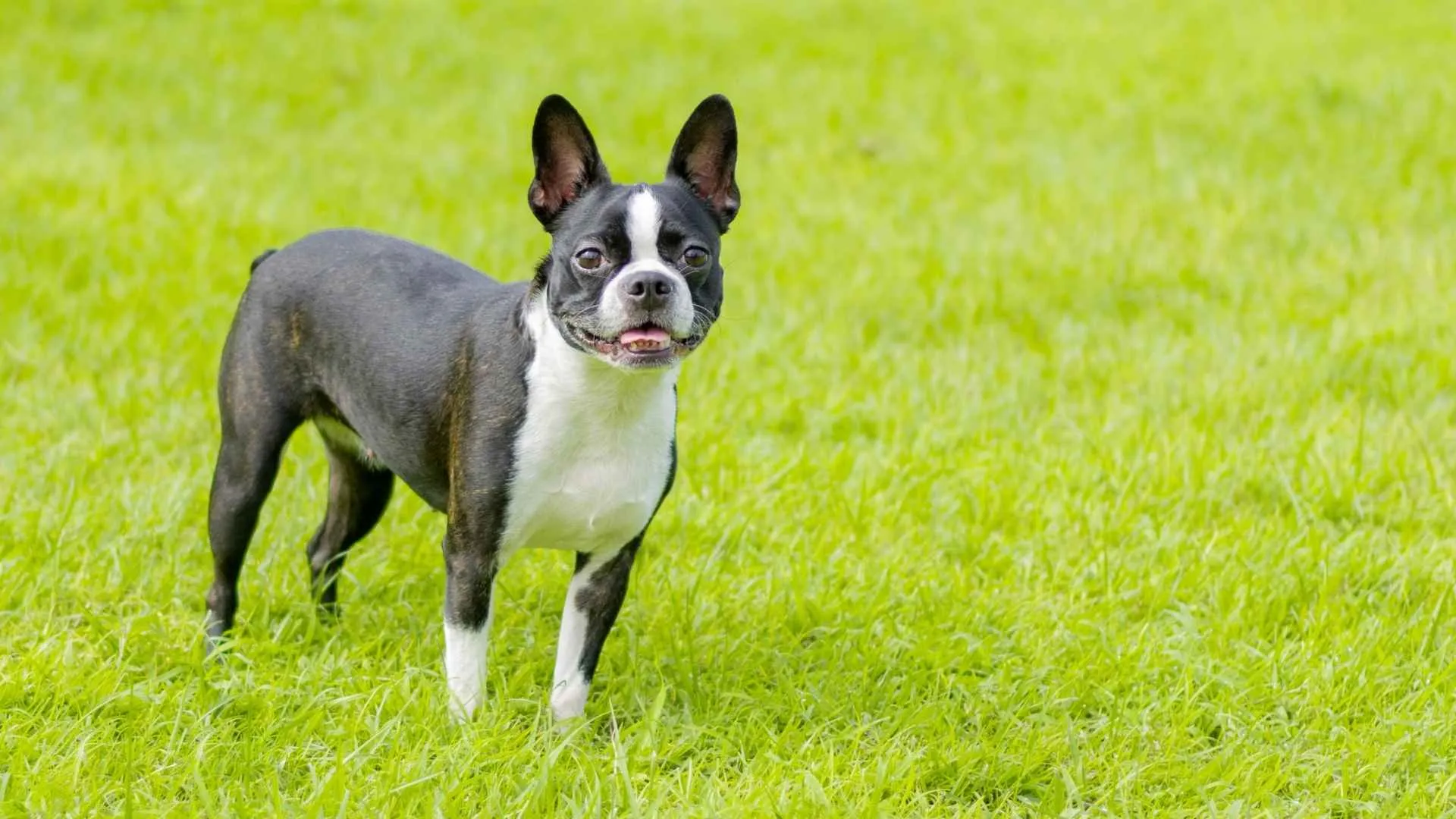
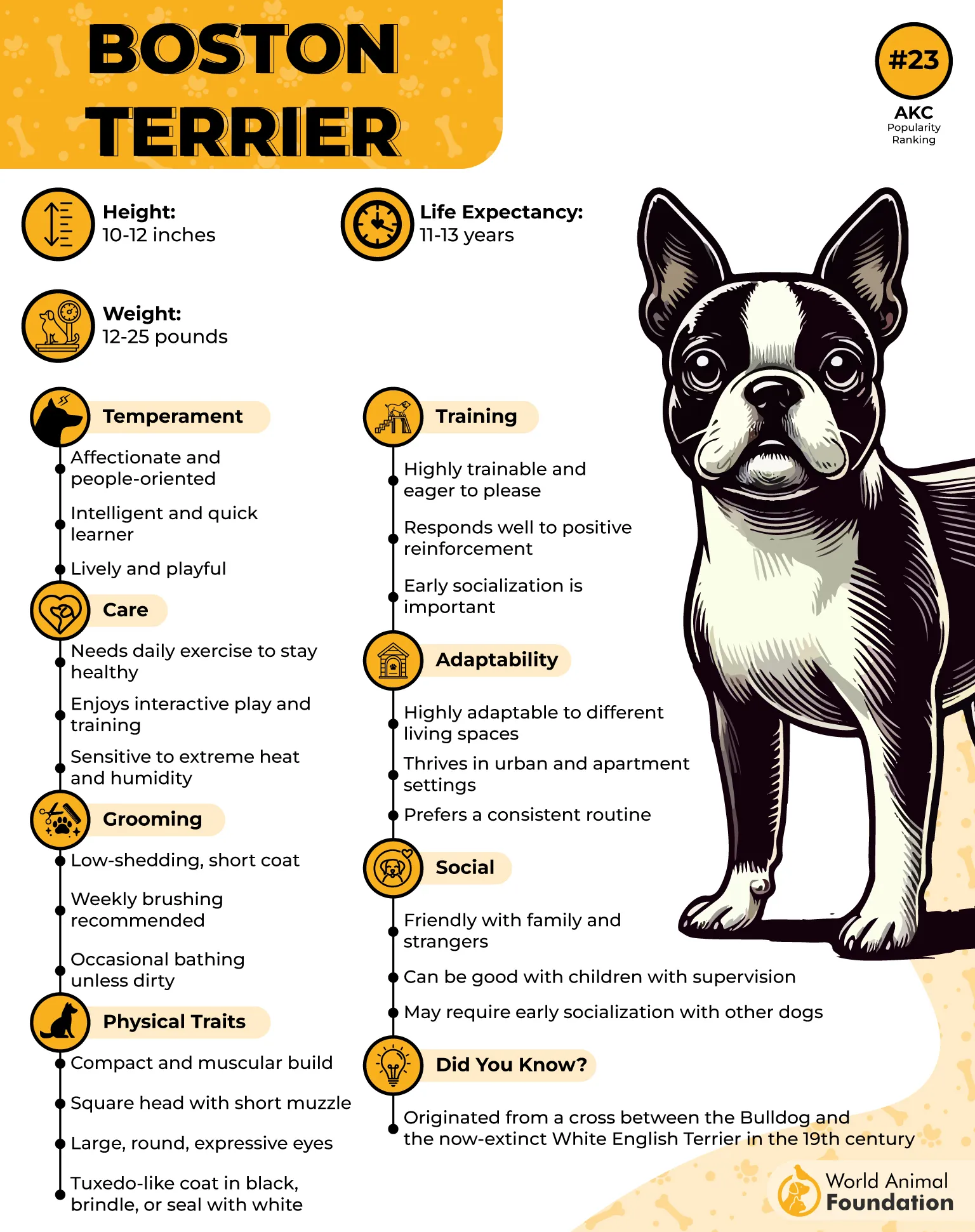
Boston Terriers are lively, playful companions with plenty of personality packed into a small frame. These pooches originated in Boston and are often called the “American Gentleman” because of their good manners and tuxedo-like coat, according to PetMD.
They can be mischievous and energetic, but they are just as happy relaxing on a comfortable lap. Their short coat also fits well with the needs of owners who prefer less fur to manage.
Care and Exercise
Boston Terriers have plenty of energy but usually do well with regular, moderate exercise. They can adapt to many living environments, including apartments.
As brachycephalic dogs, they have a flat nose and narrow airway, so they can develop breathing problems, especially with overheating or too much exercise. During hot weather, play and exercise are best kept to cooler mornings and evenings.
Personality and Training
Boston Terriers are loving, cheerful, confident, and affectionate with their families. They enjoy being involved in whatever their people are doing and make entertaining companions.
They can be stubborn and strong-willed, but they learn quickly and respond well to treats, games, encouragement, and correction.
7. Pug
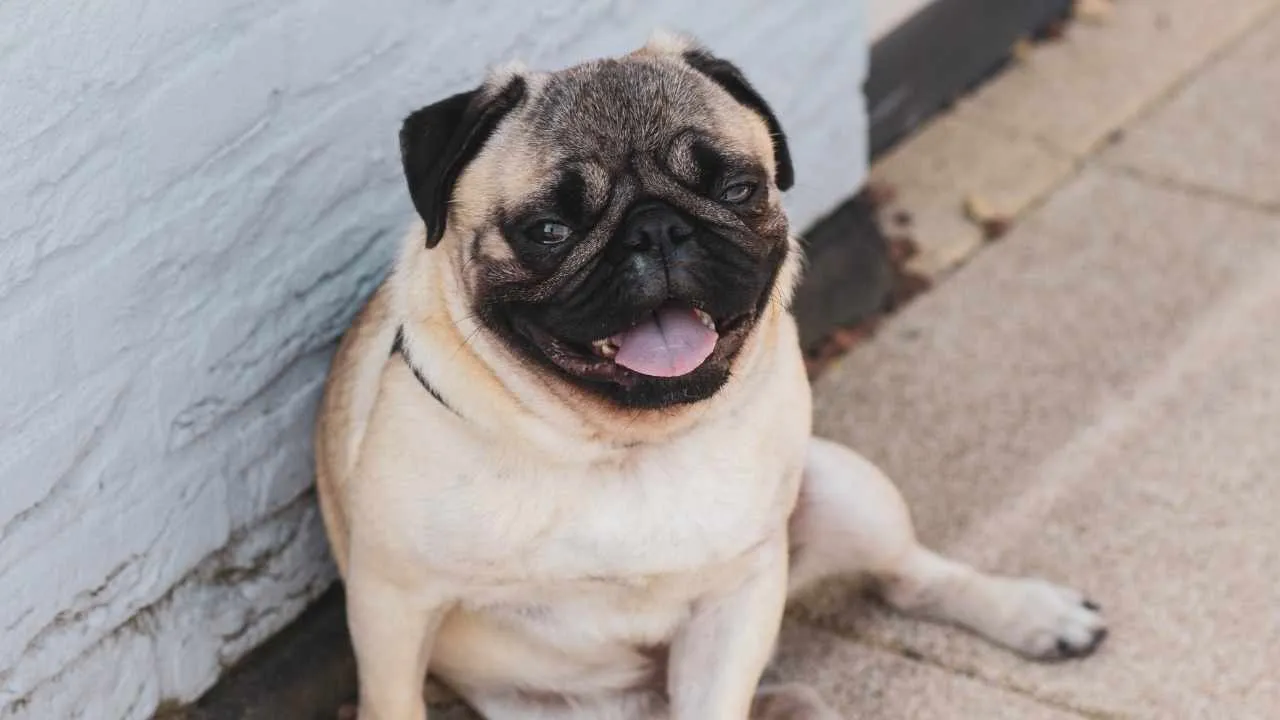
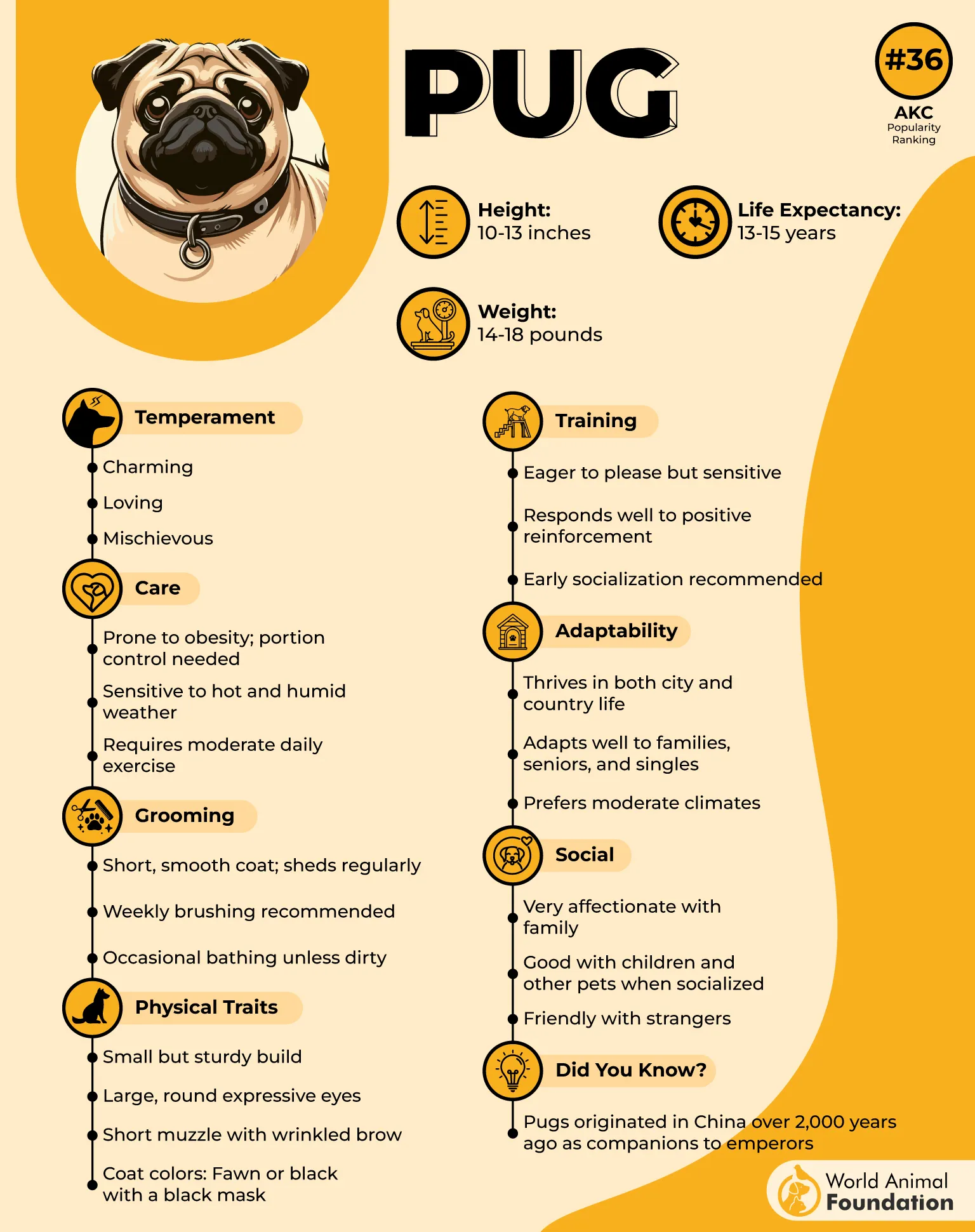
Pugs are ancient companion dogs that originated in China around 2,000 years ago and later became favorites of royals. Today, these small dogs are loved for their playful personalities and unmistakable looks.
Their short, smooth coats are usually fawn or black, while their wrinkled faces, curled tails, and prominent eyes give them plenty of character.
Care and Exercise
Pugs shed moderately throughout the year, with heavier shedding in spring and fall. Brushing a few times a week can help manage loose fur, while daily brushing may be useful during heavier shedding periods.
They are not built for intense exercise because of their flat faces and narrow airways. Several short walks of about 15–20 minutes work well, along with gentle play or a quick game of fetch. Pugs can overheat easily, so they do best mainly indoors with controlled outdoor activity.
Personality and Training
Pugs are friendly, cheerful, playful, and affectionate. They enjoy being around people and love being included in household activities.
They can adapt well to different living environments and are often suitable for first-time pet parents who can give them plenty of attention and care. Pugs are usually easy to train despite sometimes being stubborn.
8. Basenji
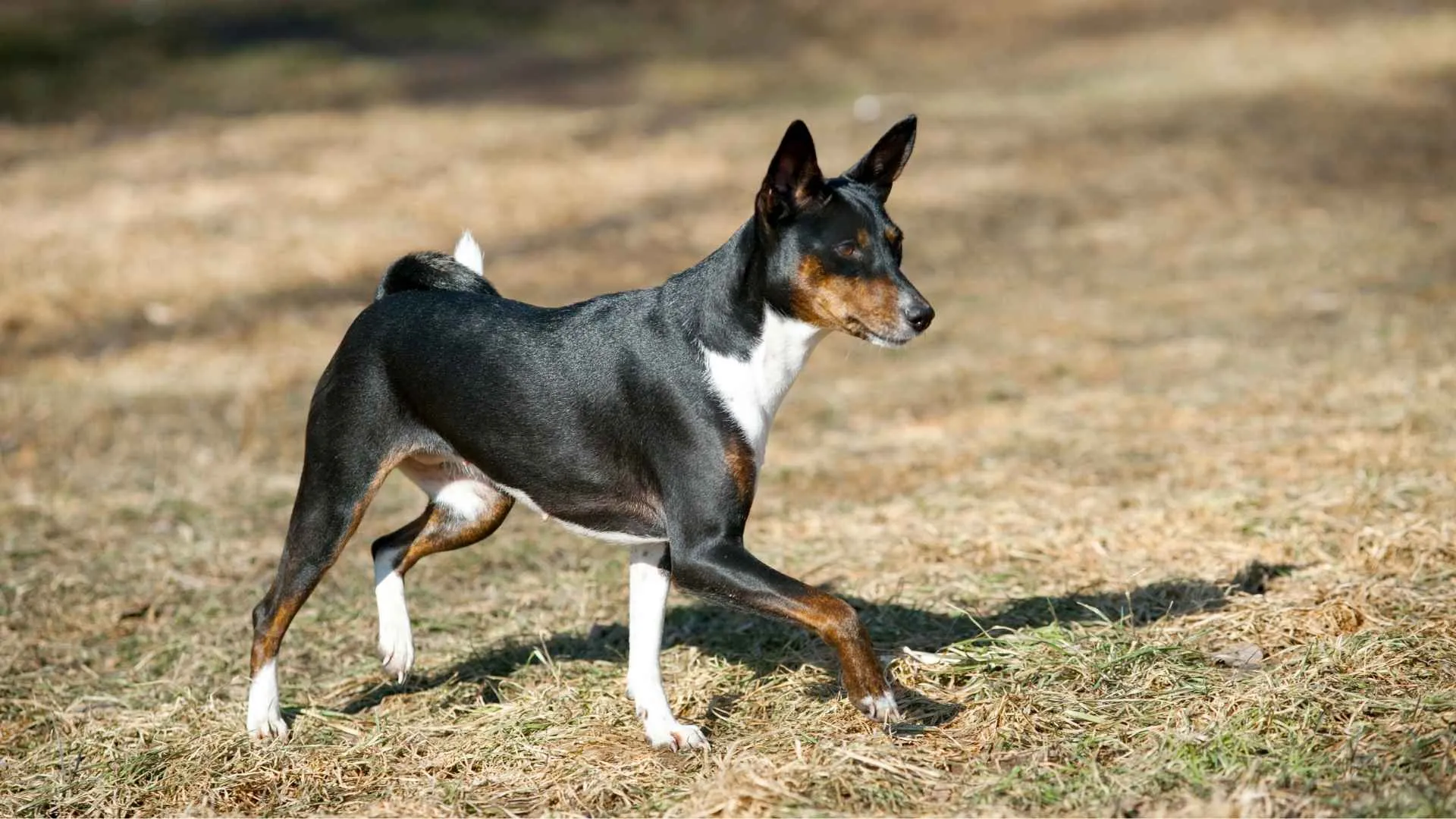
If you want a short-furred dog with a personality unlike most others, the Basenji certainly stands out. This ancient breed comes from the Congo region of Africa, where it was used by hunters to herd game.
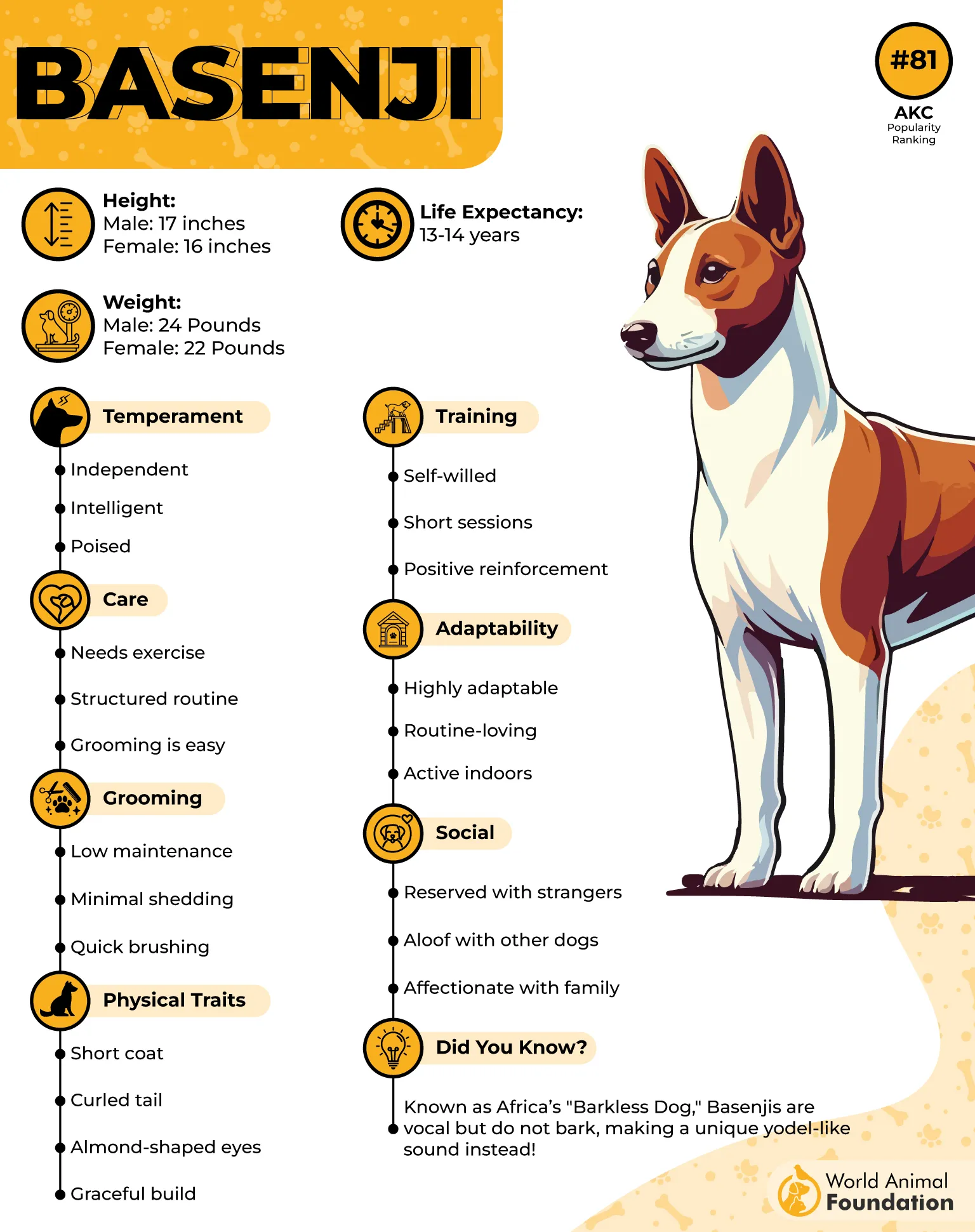
According to Omlet, Basenjis are often called “barkless dogs” because they rarely bark. Instead, they can yodel, howl, chortle, or crow when excited. They are also famously cat-like, often grooming themselves and staying very clean.
Care and Exercise
Basenjis have short, smooth coats that need only occasional grooming. They are naturally fastidious and often clean themselves like cats. However, they are energetic, curious, and easily bored, so they need daily play, training, or other stimulating activities.
Canine sports such as agility and lure coursing can help keep their minds busy. Their strong prey drive also means they should be kept on a leash or in a secure fenced area outdoors. They are excellent climbers and can be determined escape artists.
Personality and Training
Basenjis are intelligent, playful, alert, and companionable with their owners, but they can also be independent and aloof. They may be wary of strangers and are not always comfortable with unfamiliar dogs.
Their strong prey drive means small furry animals can be unsafe around them, while cats need careful introductions. Basenjis can be difficult to train because they are stubborn and independent-minded.
9. Vizsla
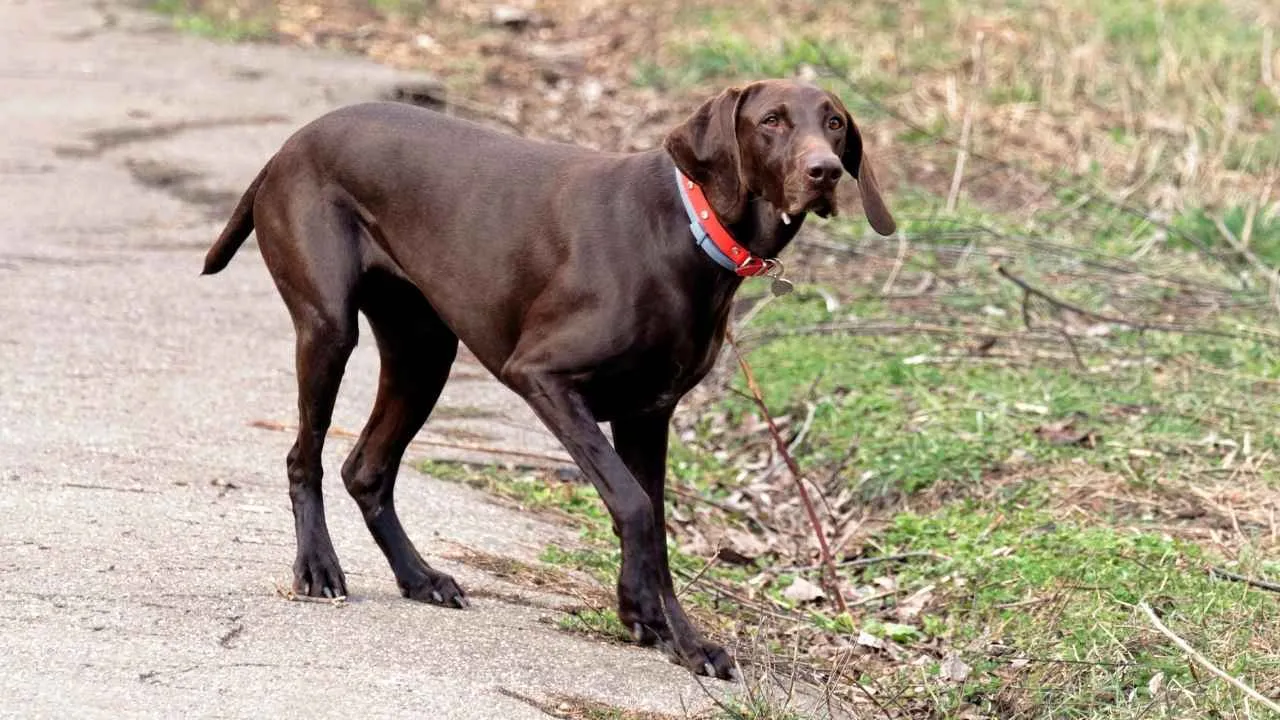
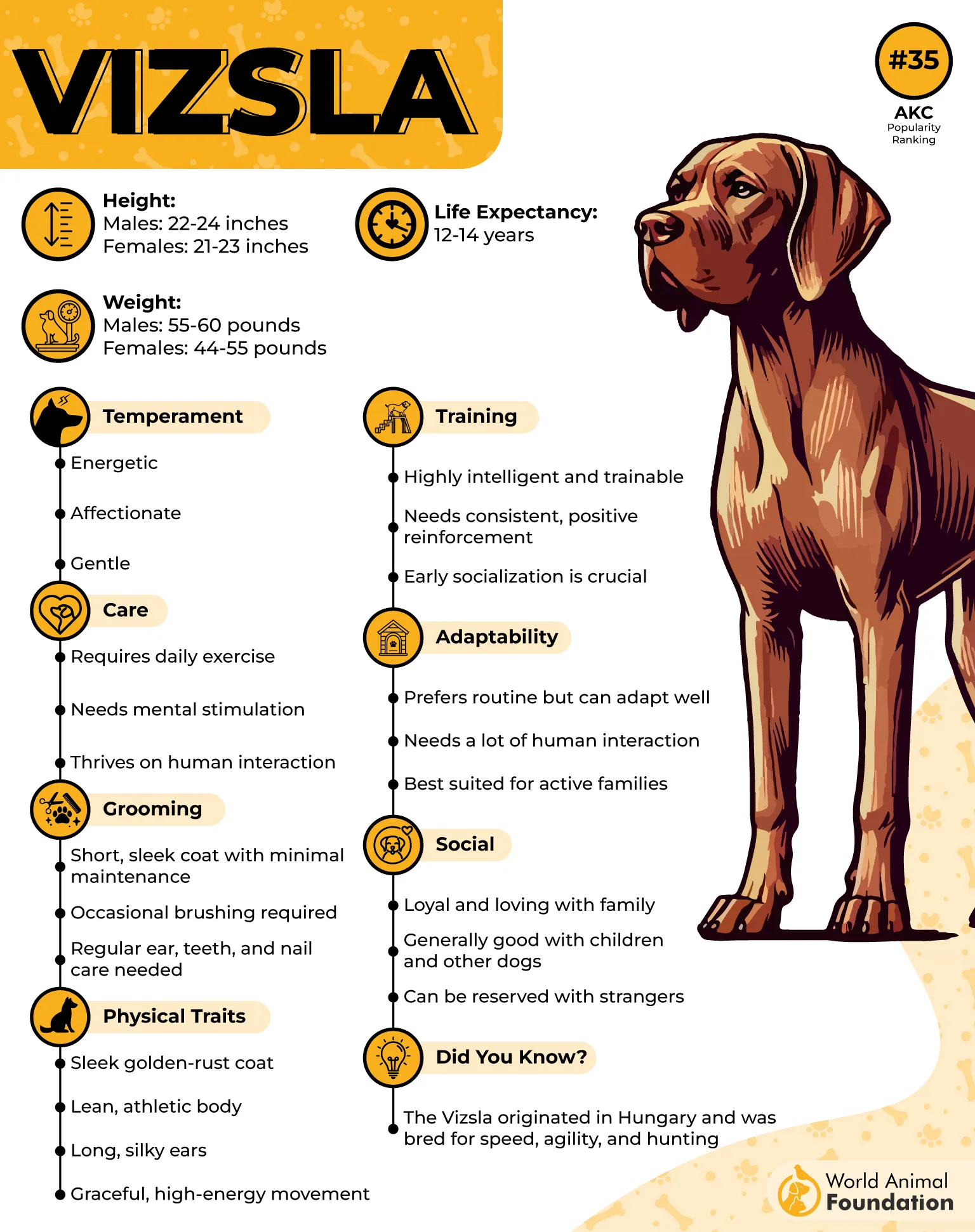
Cheerful, energetic, and deeply devoted, Vizslas are short-furred dogs with a strong love for their people. They originated in Hungary as hunting companions and were bred to point, track, and retrieve game.
Their smooth, red-golden coats are easy to care for, but their active nature means they need owners who can give them plenty of exercise, attention, and affection.
Care and Exercise
Vizslas are natural athletes with plenty of energy to use. They need regular physical and mental stimulation through activities such as jogging, swimming, agility, training, and outdoor play. They do best with room to roam and access to secure areas where they can exercise freely.
Regular brushing is enough to keep their short, smooth coats in good condition. Their strong hunting instincts also make recall training important, as they may wander while following game.
Personality and Training
Vizslas are loyal, gentle, affectionate, and eager to please. They love human company so much that they are often called “Velcro dogs” because they like to stay close to their owners.
They generally do well with children, strangers, and other pets, although some can be shy or overly excited around visitors. They dislike being left alone and may become distressed without companionship.
Conclusion
Choosing a short-furred dog can make grooming simpler, but every breed still has its own needs. From energetic companions to calm house dogs, these breeds offer different personalities, exercise needs, and shedding levels to consider before bringing one home.
Take some time to think about your lifestyle, daily routine, and how much care you can provide. The right short-furred companion is not just about having less fur around the house. It is about finding an easy-care breed whose needs fit naturally into your everyday life.
