




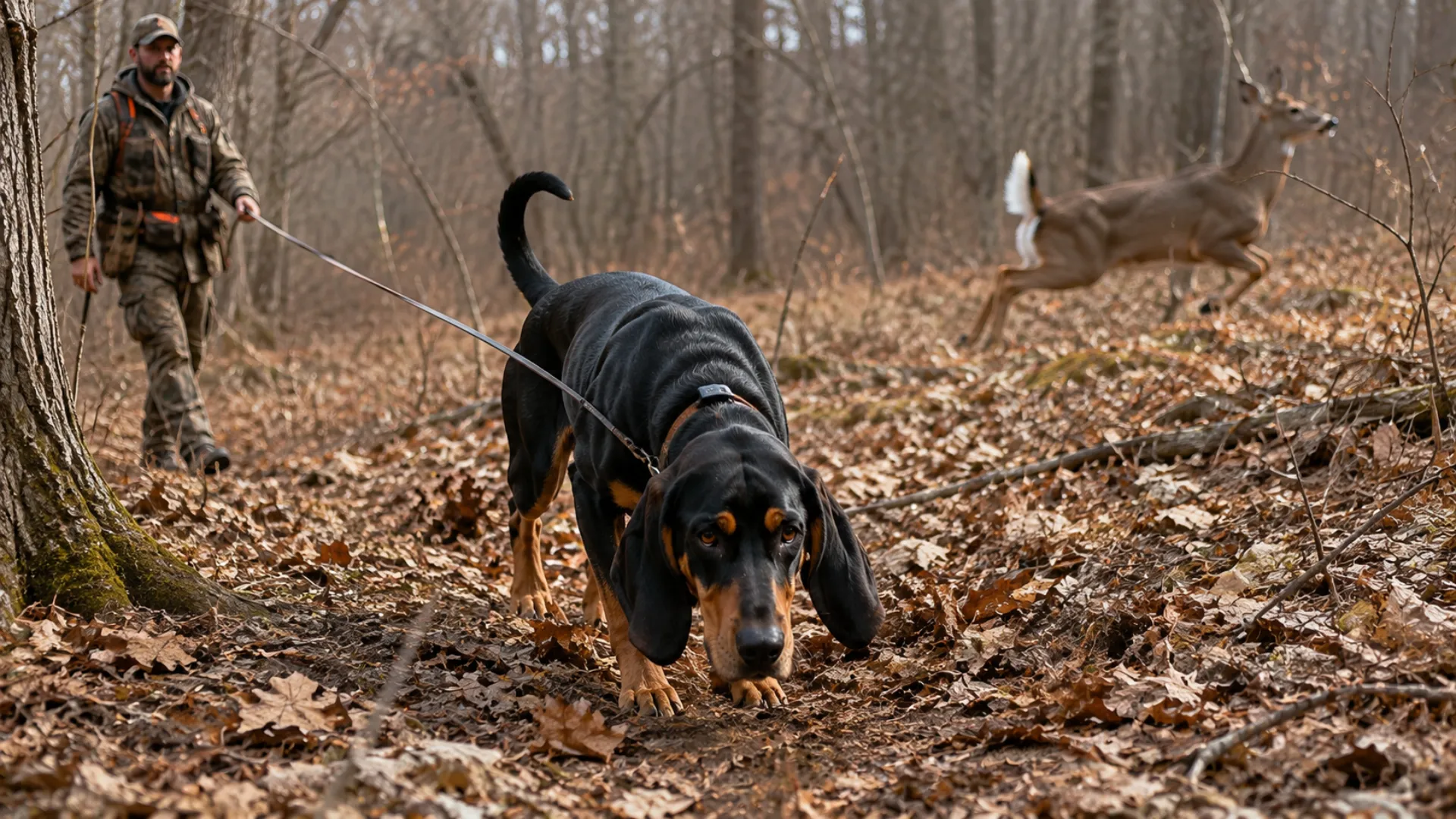
Long-distance hunting demands more than physical strength. Dogs working across large areas need endurance, concentration, efficient movement, and sensory abilities that allow them to stay connected to a trail for extended periods.
Different breeds developed specialized skills depending on the type of quarry, terrain, and hunting style they were expected to handle.
A Bloodhound’s sense of smell is among the most highly developed of any dog breed, which helps explain its legendary reputation for following scent trails. Other breeds rely on a combination of scent, speed, stamina, eyesight, and cooperation with their handlers to cover substantial distances while searching for game.
The ten breeds below represent several approaches to demanding outdoor work. Some are exceptional scent trackers, while others were developed to chase quarry across open country or locate game and work closely with hunters.
Their impressive abilities also mean that they require appropriate exercise, training, and secure environments when kept as companions.
Top Dog Breeds for Long-Distance Hunting and Tracking
1. Bloodhound
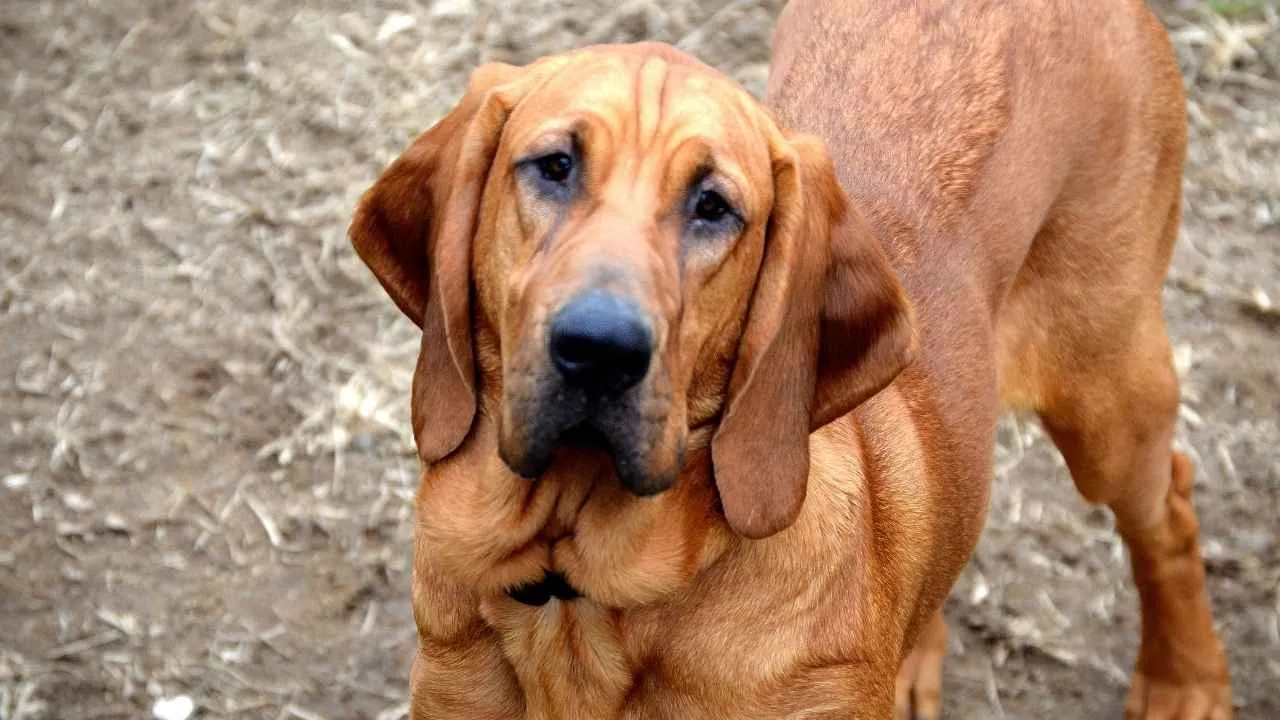
Bloodhounds are renowned for their extraordinary scenting ability and have been used for tracking people and animals for centuries, as per the AKC. Their loose skin, long ears, and powerful noses are distinctive physical characteristics, while their persistence makes them especially effective at following scent trails over considerable distances.
Unlike dogs that primarily rely on speed to pursue visible quarry, Bloodhounds can methodically work out where a scent has traveled. Their ability to remain focused on a trail is one of the qualities that makes them such remarkable tracking specialists.
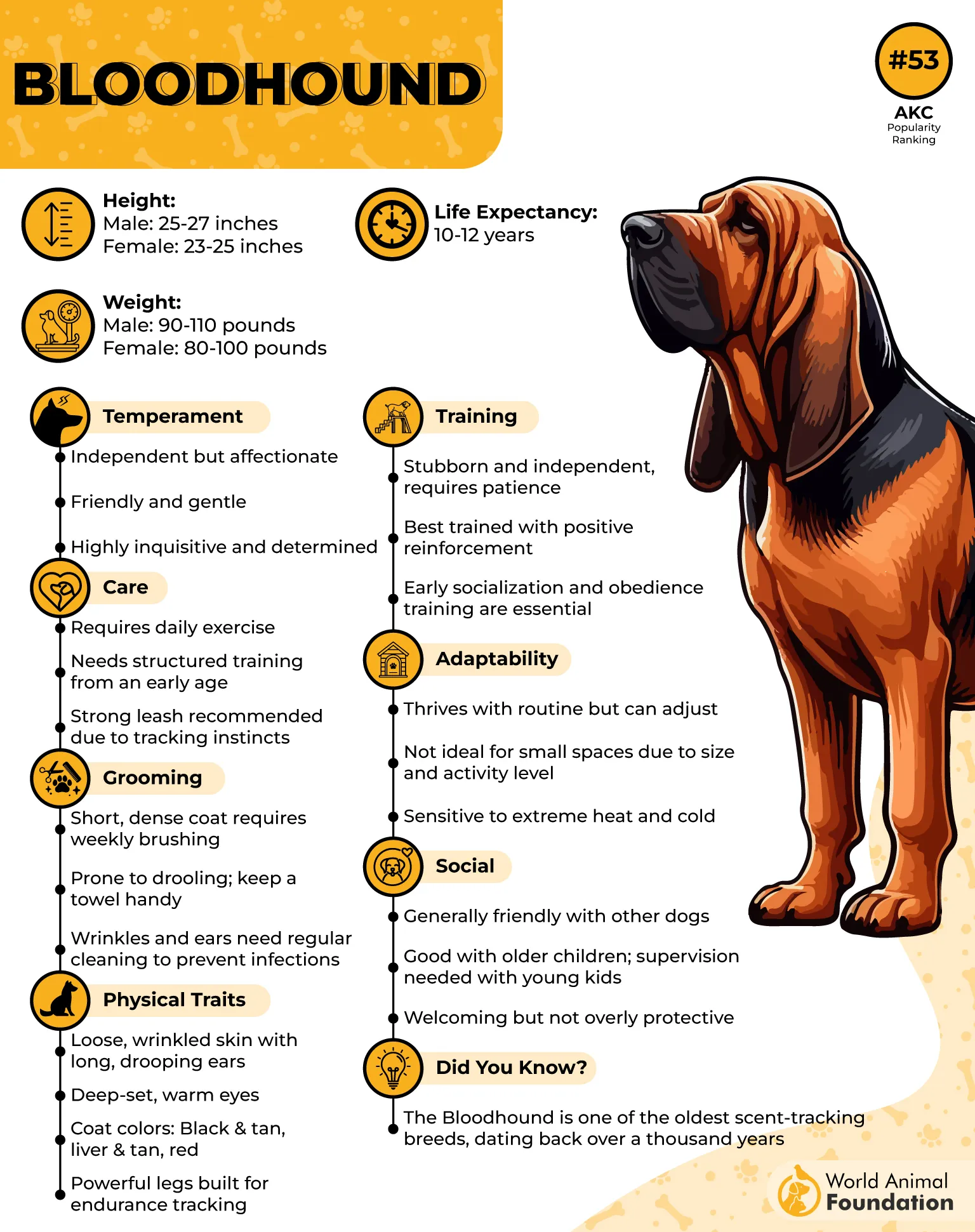
Support Their Nose With Steady Physical Activity
Bloodhounds need regular walks and opportunities to investigate their surroundings. Scent games, tracking exercises, and controlled outdoor exploration can provide valuable mental stimulation alongside physical exercise.
Training requires patience and consistency. A fascinating odor can quickly become more rewarding than following a handler, so recall and leash skills should be practiced regularly in increasingly distracting environments.
A Specialist Built for Long-Range Tracking
The Bloodhound’s greatest strength is its extraordinary commitment to following scent. It may continue investigating a trail long after humans have lost any obvious indication of where it leads.
That persistence makes the breed particularly impressive for tracking work. Owners should provide secure boundaries because a determined Bloodhound may travel considerable distances when following an interesting odor.
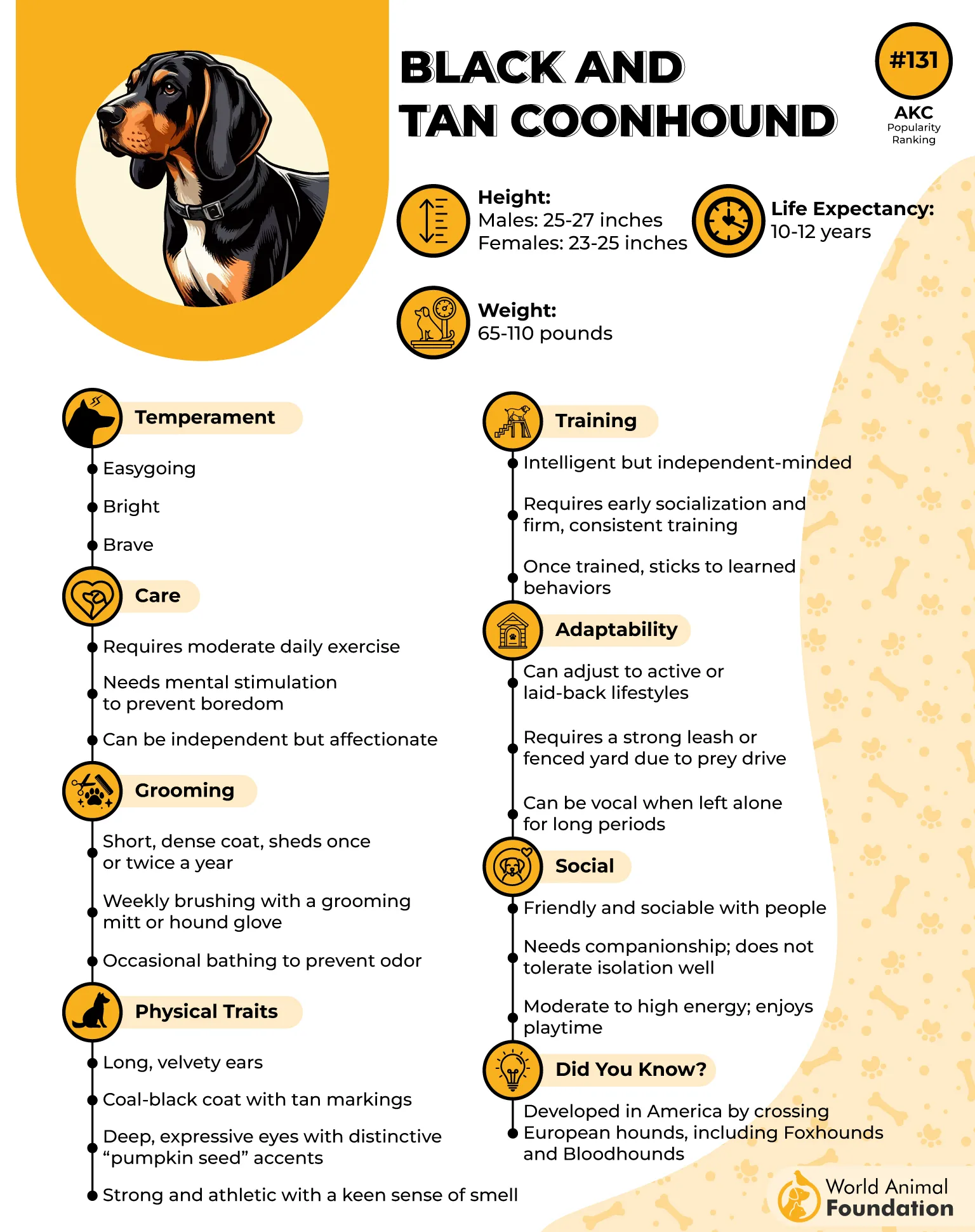
2. Black and Tan Coonhound
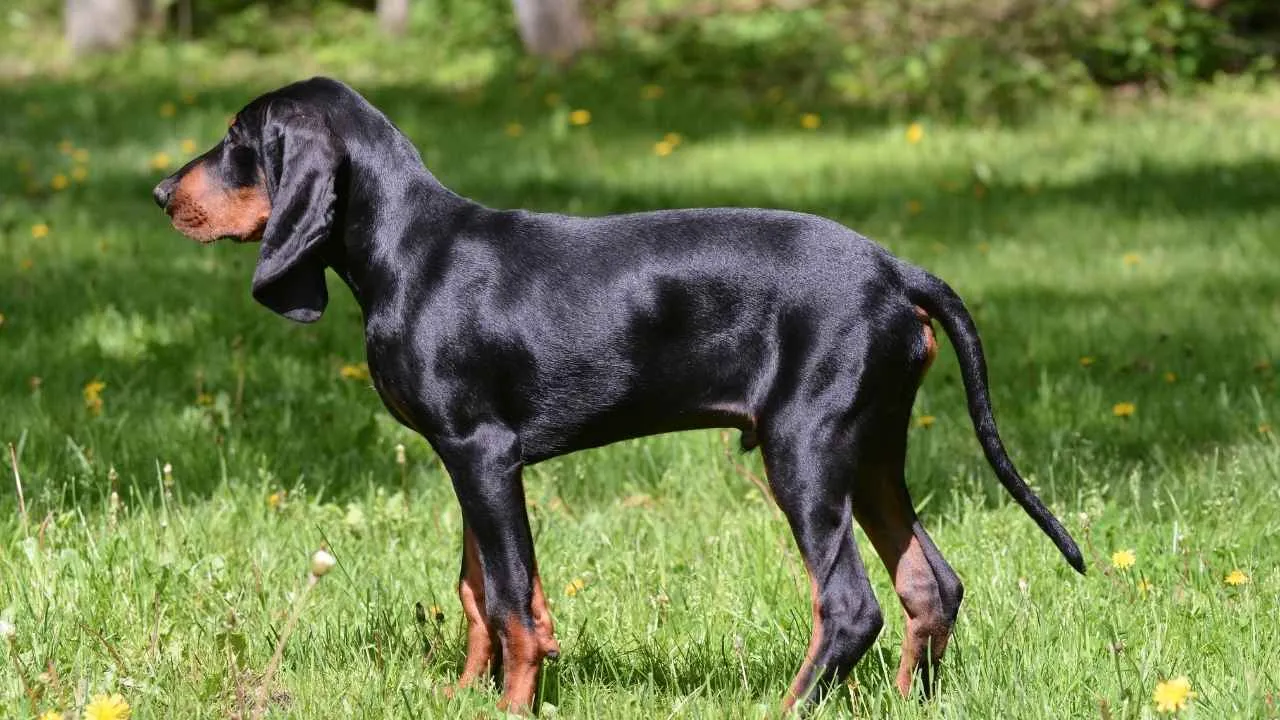
Black and Tan Coonhounds were developed in the United States as scent hounds used for tracking raccoons and other game. Their powerful noses, sturdy bodies, and endurance allowed them to work through forests and challenging terrain.
Their traditional hunting style relied on following scent and communicating with hunters through their distinctive vocalizations. This combination of sensory ability and stamina made them valuable partners during extended outdoor pursuits.
Keep Their Endurance Satisfied With Active Days
Black and Tan Coonhounds benefit from long walks, hiking, scent activities, and supervised exploration. They are generally better suited to households that can provide regular outdoor activity, as per Hill’s Pet.
Their strong tracking instincts can make an exciting trail difficult to ignore once they become interested.
A Persistent Scent Tracker With Staying Power
Their ability to remain engaged with a scent is central to their hunting talent. Rather than depending entirely on speed, they can methodically follow a trail across substantial distances.
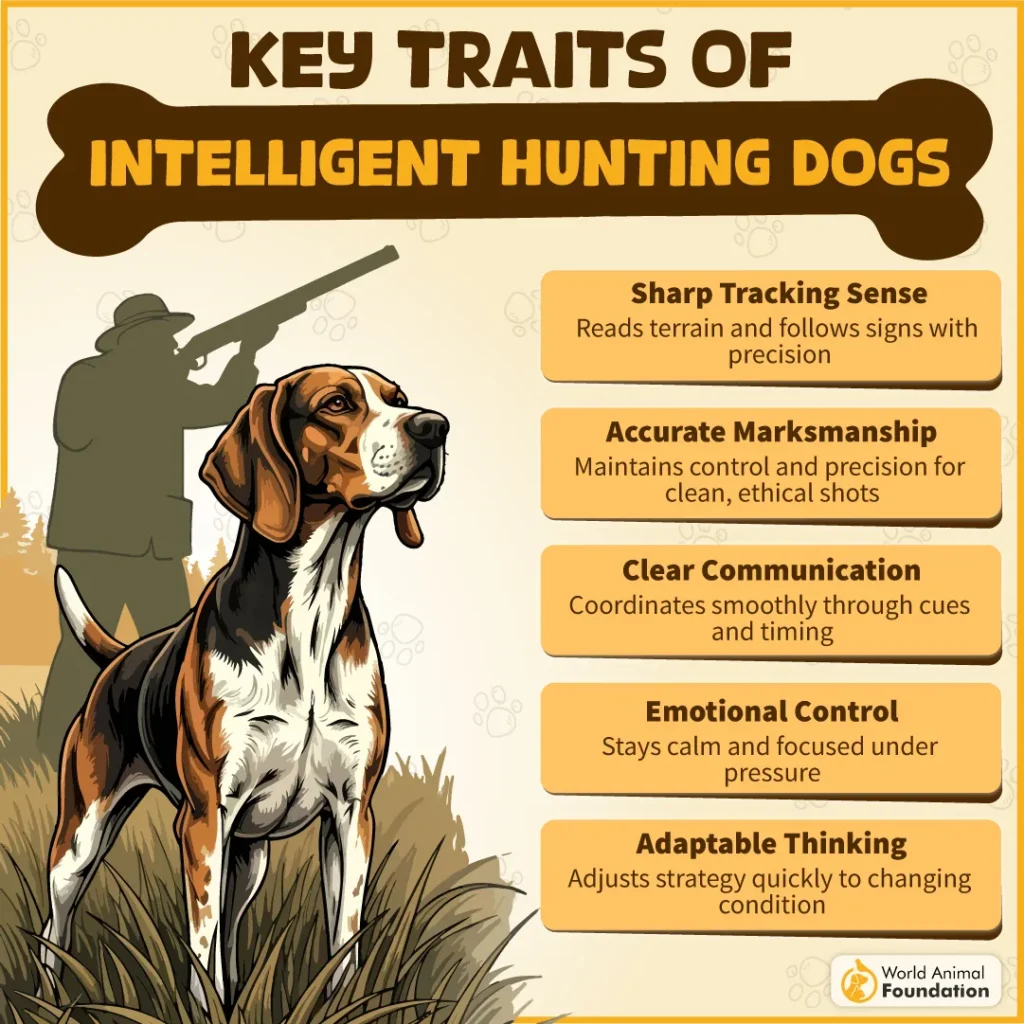
For companion owners, nose work and tracking games can provide an appropriate outlet. Secure fencing is also important because an intriguing scent may encourage independent exploration.
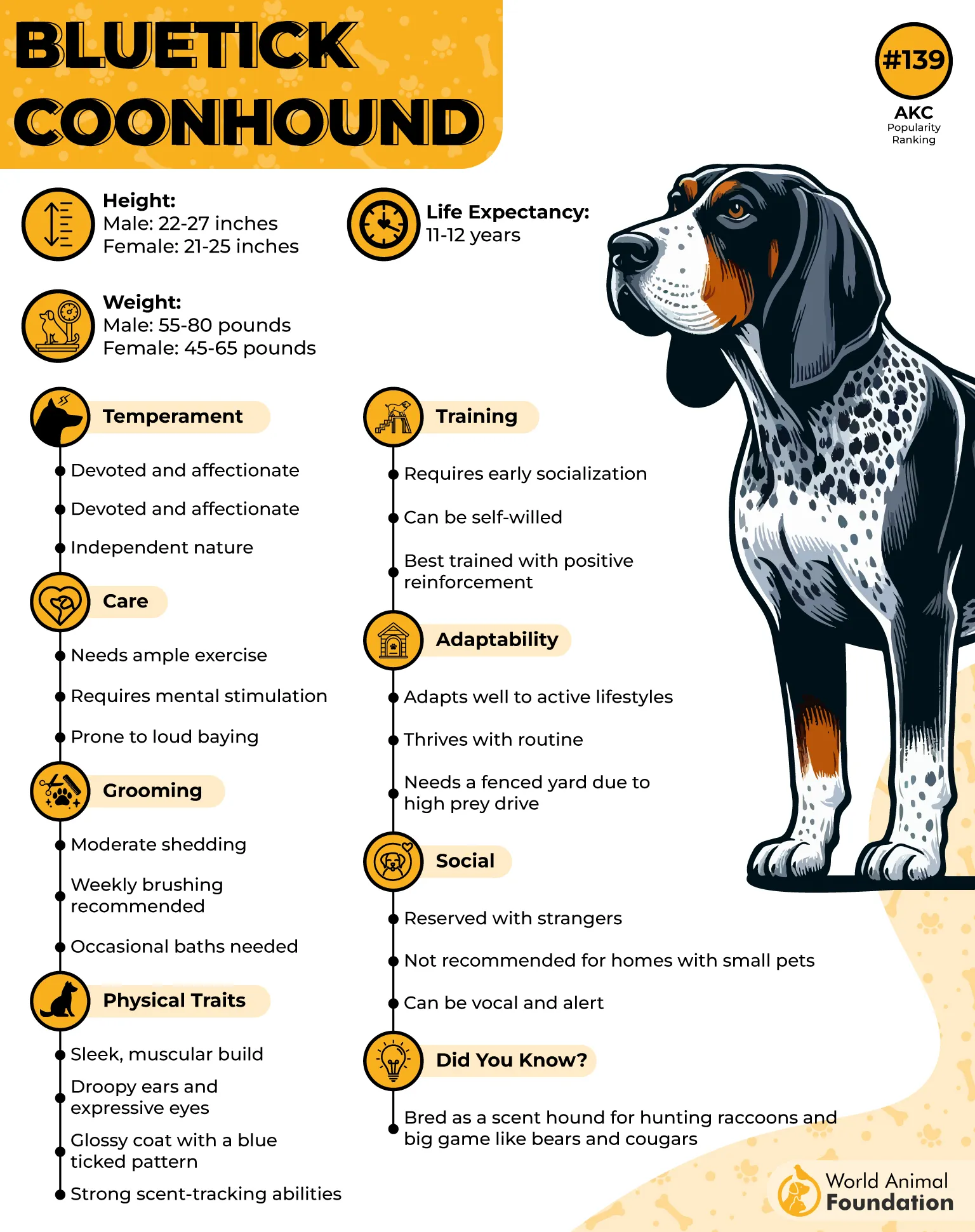
3. Bluetick Coonhound
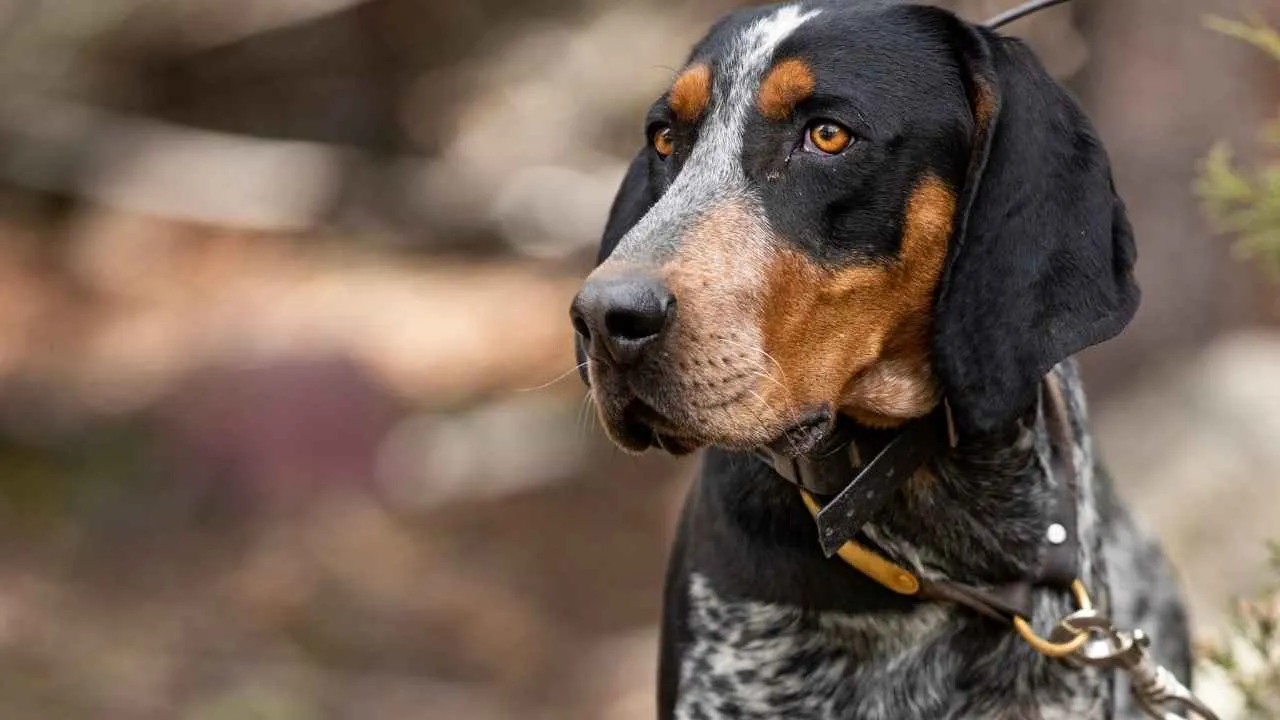
Bluetick Coonhounds are American hunting dogs recognized for their distinctive mottled coats and strong scenting abilities. They were developed to track game, particularly raccoons, through demanding terrain while maintaining a determined working pace.
Their athletic construction gives them the endurance needed for extended pursuits. They can also remain highly focused when following a promising trail, making them capable working dogs for owners who understand their instincts.
Combine Exercise With Scent-Based Challenges
Blueticks require regular activity to remain physically and mentally satisfied. Hiking, long walks, tracking games, scent puzzles, and controlled outdoor exploration can all provide useful outlets.
Recall deserves special attention because the discovery of an appealing scent can temporarily become the dog’s main priority. Training should be consistent and rewarding.
A Tenacious Hunter Guided by Its Nose
The Bluetick’s long-distance ability comes largely from its powerful sense of smell and determination. Once a trail captures its attention, it may continue following it through changing terrain.
This characteristic makes it well suited to tracking and hunting activities. At home, owners can redirect that instinct toward nose work while using secure boundaries to prevent unsupervised roaming.
4. Redbone Coonhound
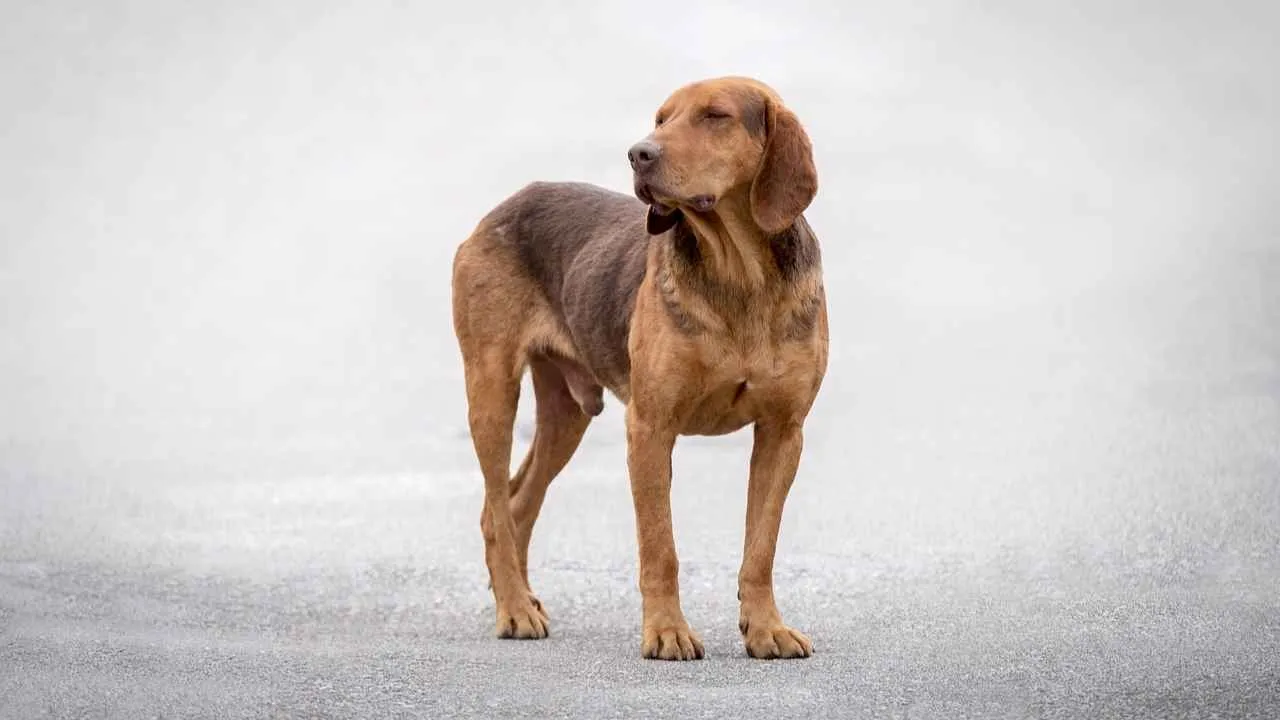
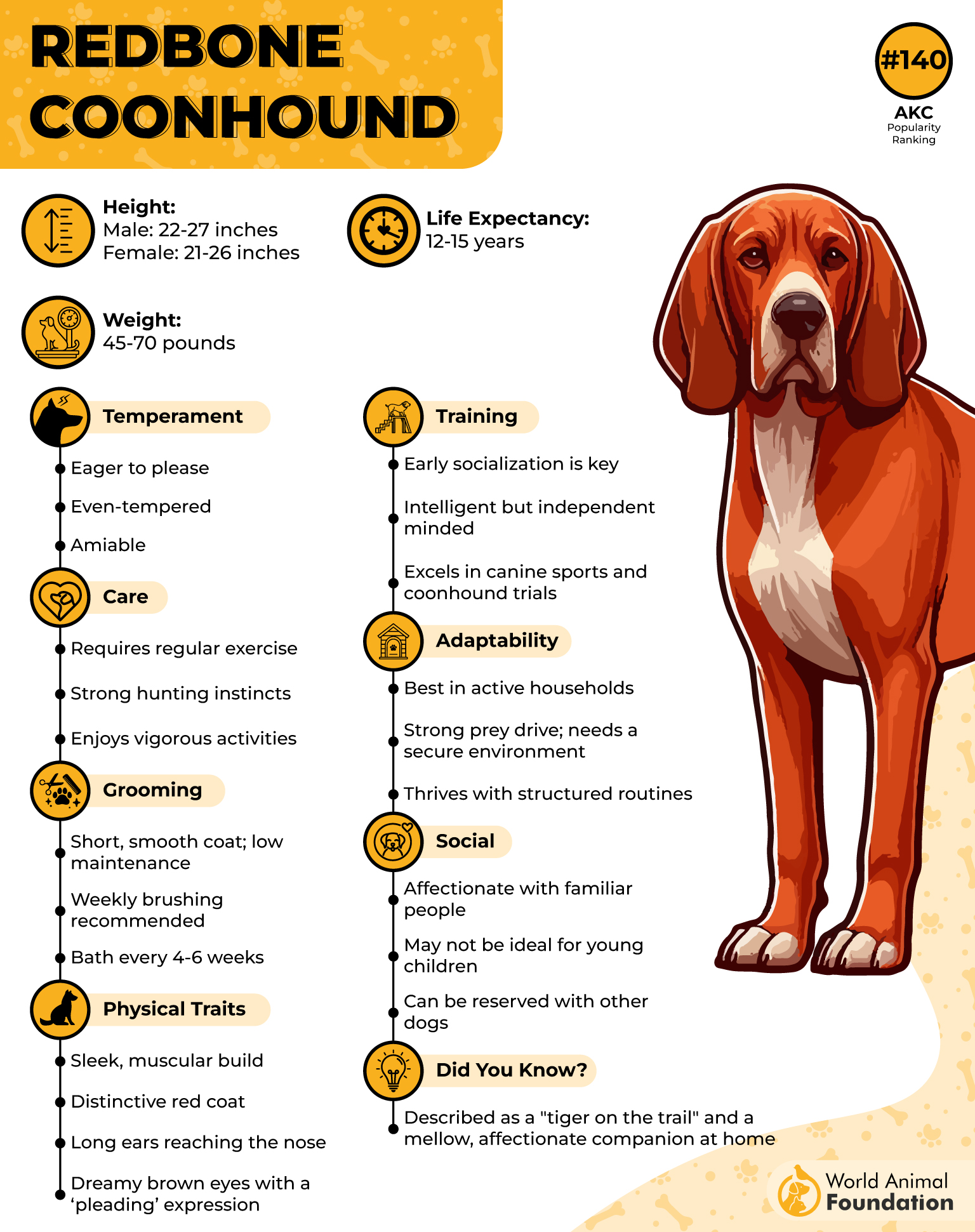
Redbone Coonhounds originated in the United States and were developed as versatile hunting hounds. Their striking red coats distinguish them visually, while their athletic bodies and strong noses support demanding fieldwork.
They have traditionally been associated with raccoon hunting but can also pursue other types of quarry. Their combination of speed and scenting ability allows them to cover ground while maintaining focus on a trail.
Give Them Room to Move and Explore Safely
Redbone Coonhounds need regular physical activity, including lengthy walks, hiking, controlled running, and scent games. Mental stimulation can make exercise more satisfying for a breed that naturally enjoys investigating its surroundings.
Training should establish dependable recall and appropriate leash behavior. Because these dogs can be enthusiastic explorers, secure outdoor areas are preferable to unrestricted off-leash environments.
An Enduring Hound With a Strong Tracking Instinct
Redbones can use their noses to follow quarry while maintaining enough athletic ability to cover considerable ground. Their willingness to continue working contributes significantly to their usefulness as hunting dogs.
Their natural persistence can become challenging when an interesting trail appears during an ordinary walk. Providing structured tracking opportunities allows owners to work with the instinct instead of constantly trying to suppress it.
5. German Shorthaired Pointer
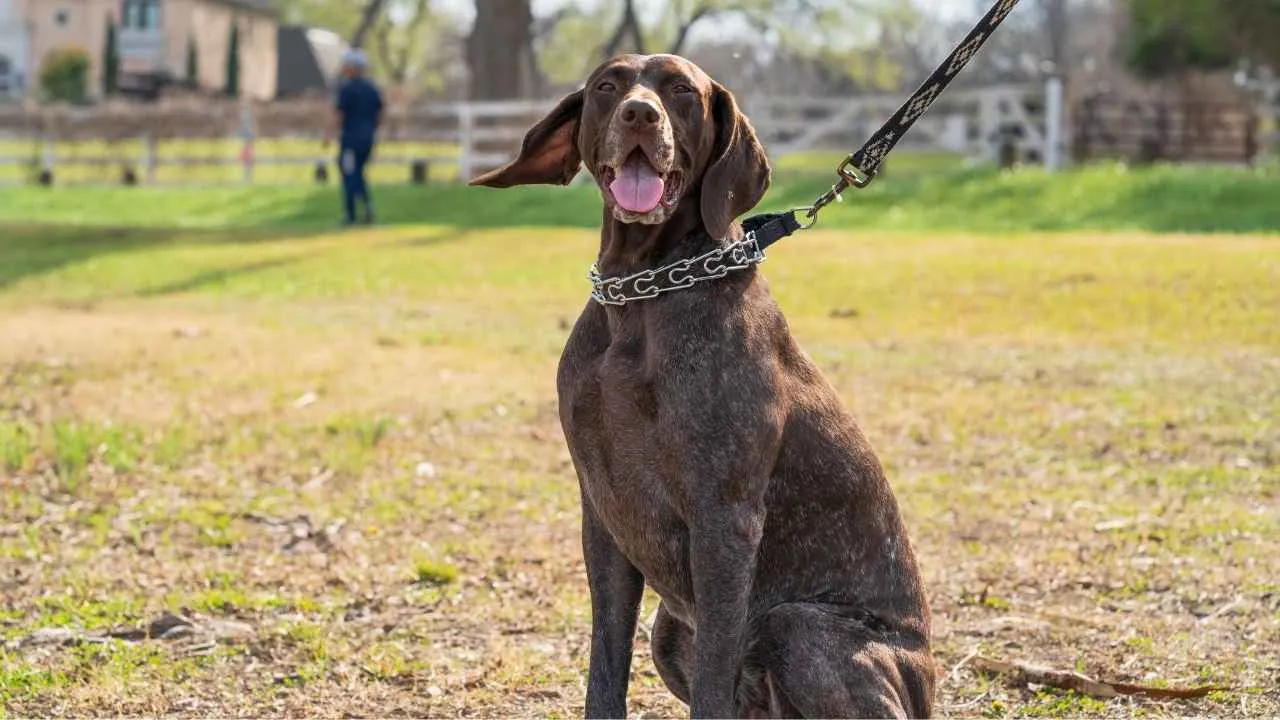
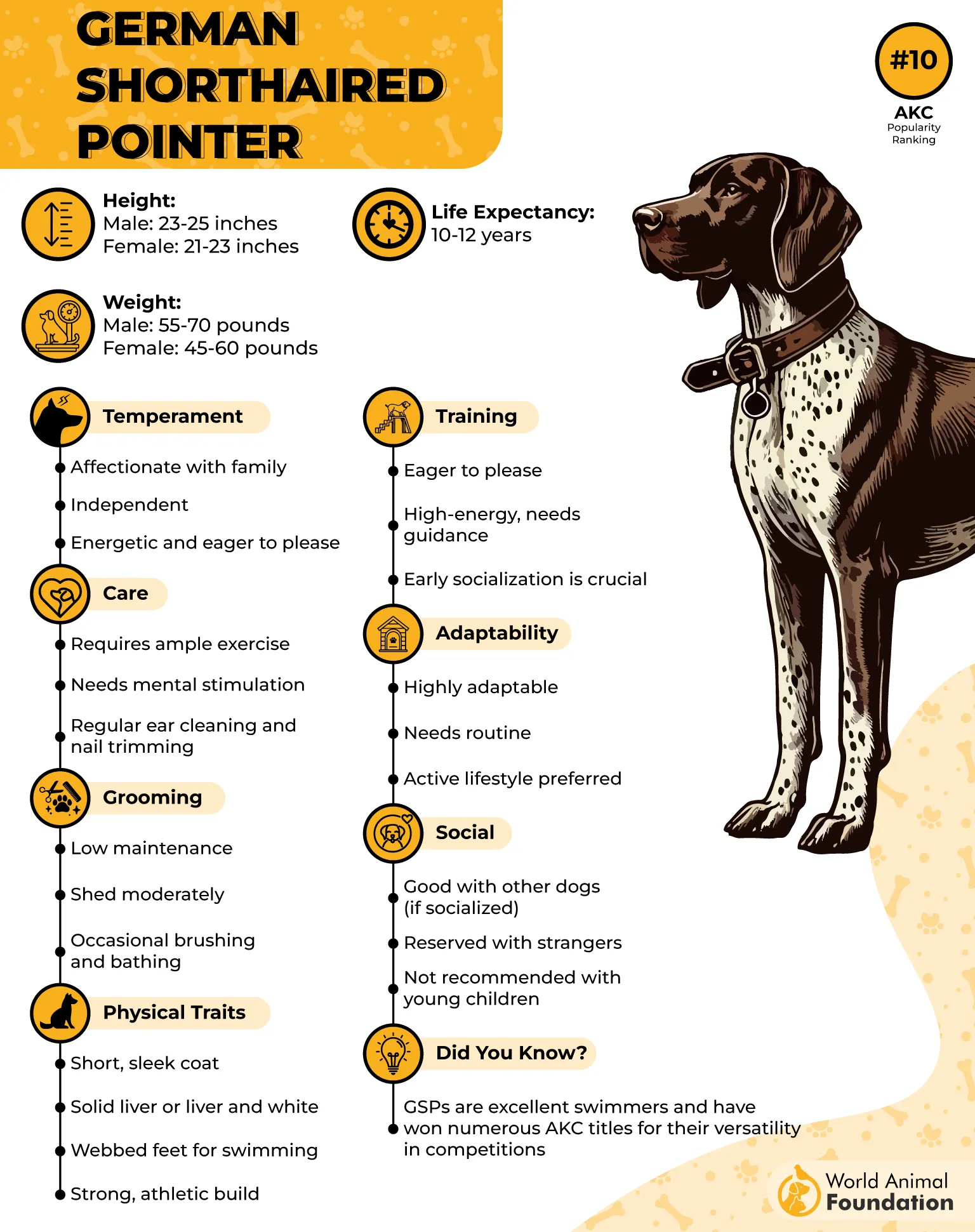
German Shorthaired Pointers were developed in Germany as versatile sporting dogs capable of performing multiple hunting tasks. Their abilities include searching for game, pointing, retrieving, and working across different types of terrain.
Their athletic bodies and high energy levels make them well suited to active outdoor lifestyles. Unlike highly specialized scent hounds, they combine sensory abilities with responsiveness to human direction.
Match Their Stamina With Demanding Activities
German Shorthaired Pointers need substantial daily exercise and mental stimulation. Running, hiking, swimming, retrieving, field training, and canine sports can provide appropriate outlets for their energy.
Recall, impulse control, retrieving skills, and calm behavior around wildlife are especially useful for managing a highly active sporting dog.
A Versatile Athlete for Extended Field Work
Their hunting ability comes from combining endurance with searching, pointing, and retrieving skills. They can remain active for long periods while working closely with a handler.
This versatility makes them valuable for people seeking an adaptable hunting companion. For non-hunting owners, activities such as dock diving, retrieving games, hiking, and scent work can help satisfy similar instincts.
6. Weimaraner
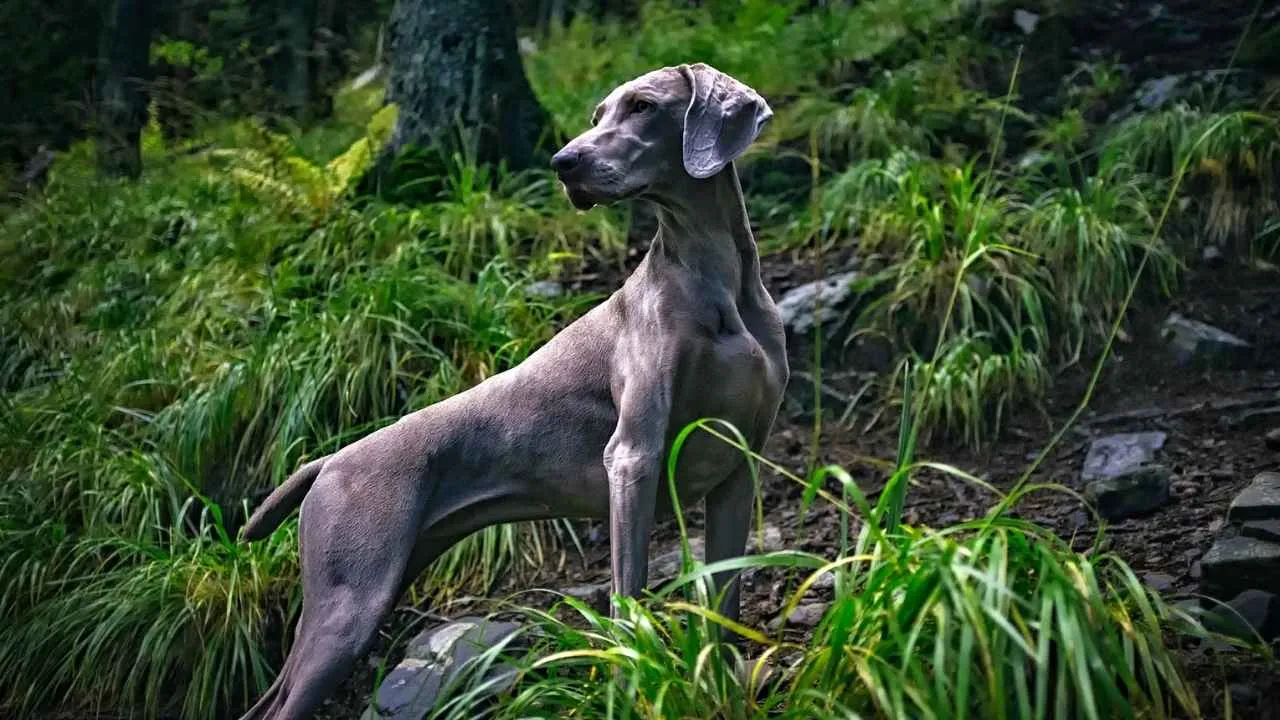
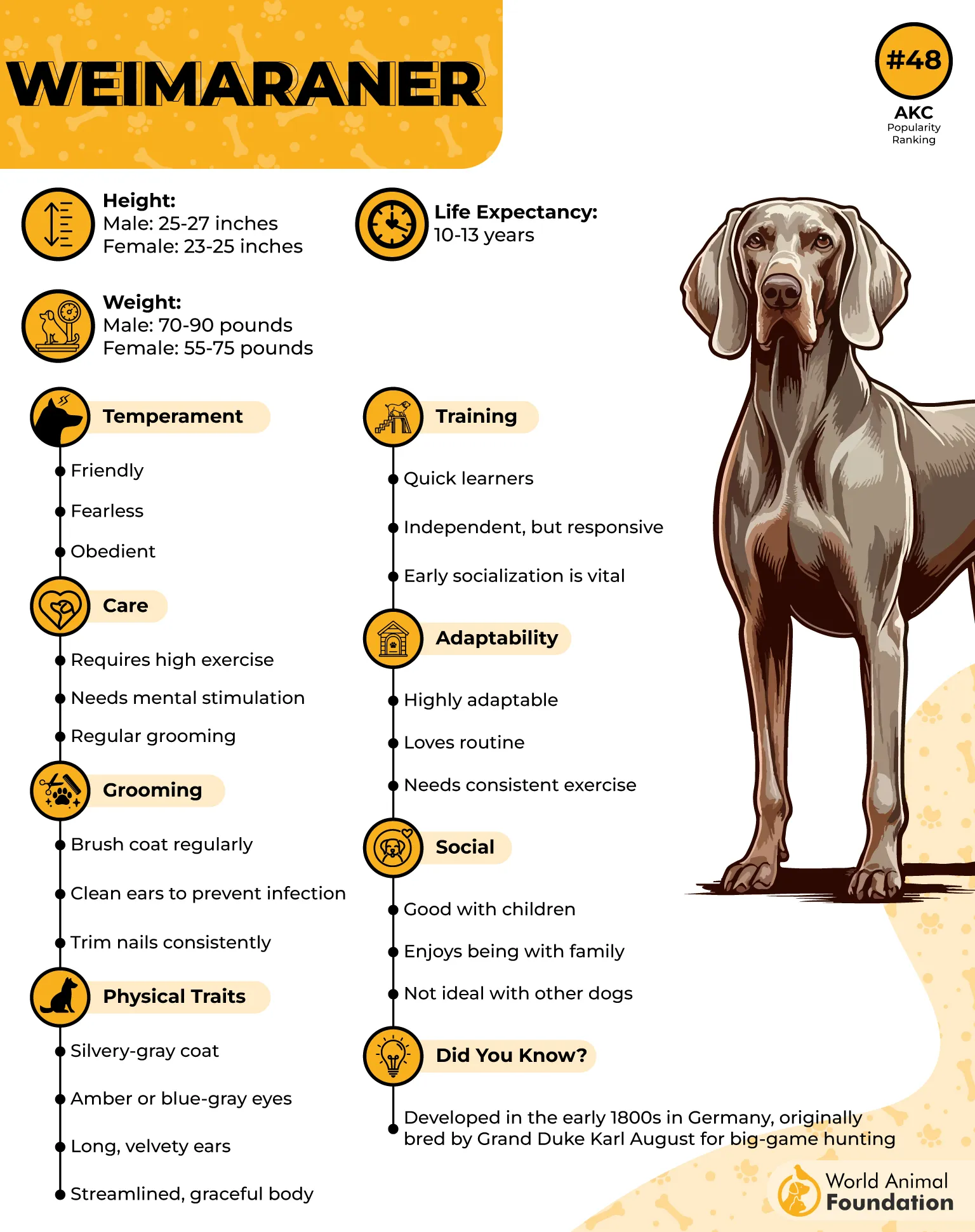
Weimaraners originated in Germany and were developed as hunting dogs capable of handling different forms of game. Their sleek bodies, strength, endurance, and intelligence made them suitable for physically demanding fieldwork.
They are often affectionate dogs and closely attached to their families, but their working heritage gives them considerable energy. A Weimaraner generally needs much more than occasional exercise to remain content.
Build a High-Activity Routine
Weimaraners thrive with running, hiking, retrieving, swimming, scent games, and advanced obedience. Their daily routine should provide both physical exertion and opportunities to use their minds.
Training should emphasize recall, impulse control, and cooperation. Because their strength can become difficult to manage, good manners should be established before adulthood.
A Strong and Persistent Field Companion
Weimaraners can cover ground efficiently and remain focused during outdoor pursuits. Their athleticism allows them to maintain activity over demanding distances, while their hunting instincts encourage them to search and investigate.
Their endurance is best appreciated when given a constructive purpose. Structured field activities can channel their natural drive while helping companion owners prevent boredom and frustration.
7. American Foxhound
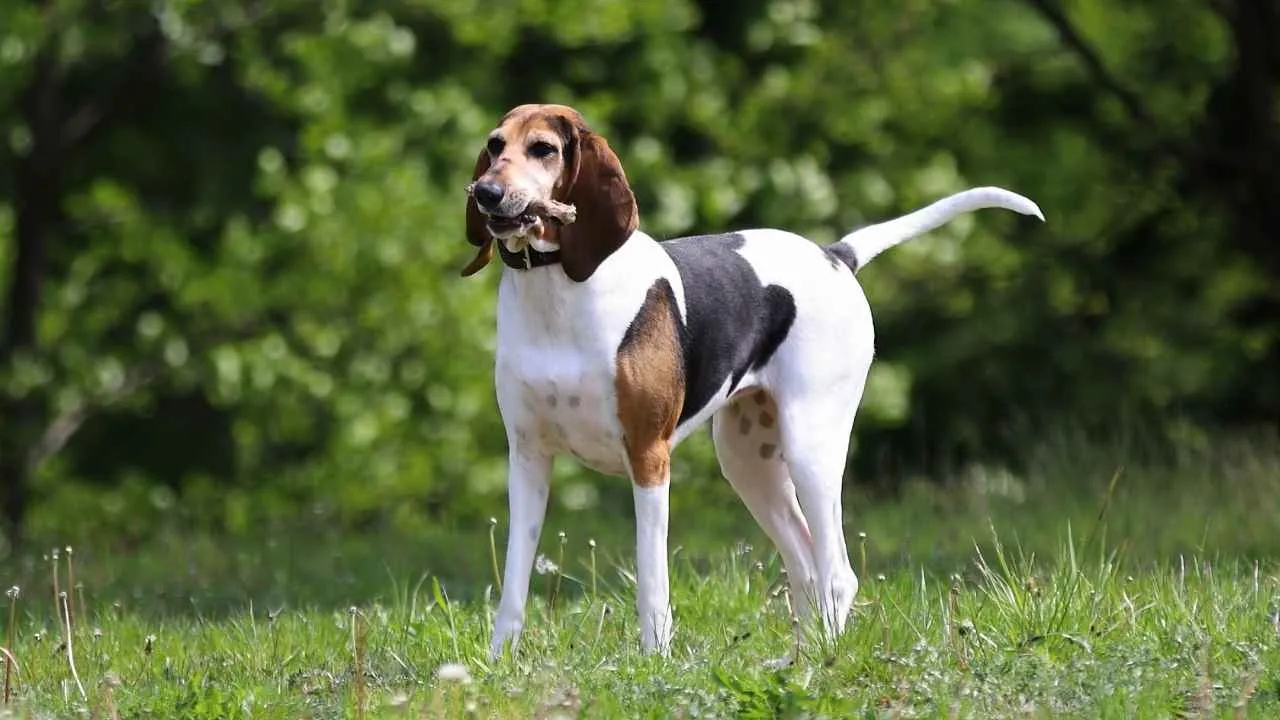
American Foxhounds were developed in the United States from foxhound lines brought from Europe and selectively bred for American hunting conditions. These loyal dogs became valued for their ability to pursue foxes across extensive stretches of countryside.
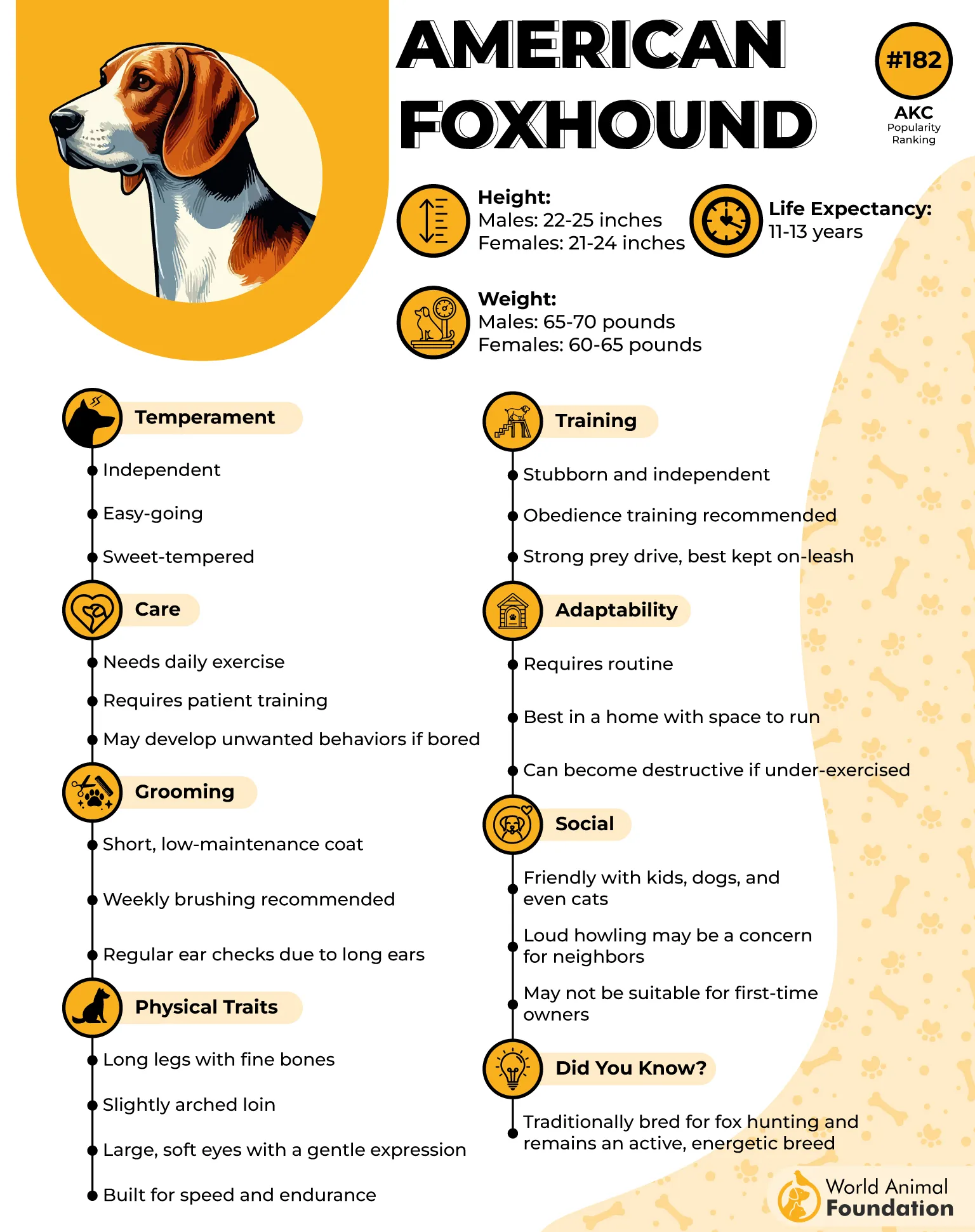
Their long legs, lean build, stamina, and scenting ability allow them to maintain a steady pace during extended hunts. They are particularly suited to owners who appreciate active hounds and have suitable space for exercise.
Encourage Endurance Without Overloading Young Dogs
American Foxhounds benefit from regular walking, hiking, controlled running, and opportunities to explore safely. Their exercise routine should gradually develop according to age and physical maturity.
Their independent hunting instincts can become powerful distractions. Secure fencing is especially useful for preventing them from following a scent beyond the owner’s control.
A Long-Distance Pursuer With Remarkable Stamina
The American Foxhound was developed to stay with a moving quarry over substantial distances. Its efficient build and endurance allow it to maintain pursuit rather than relying only on short bursts of speed.
That stamina remains one of the breed’s defining hunting qualities. Owners should recognize that a dog capable of extended pursuit also needs substantial daily outlets when living outside a hunting environment.
8. Beagle
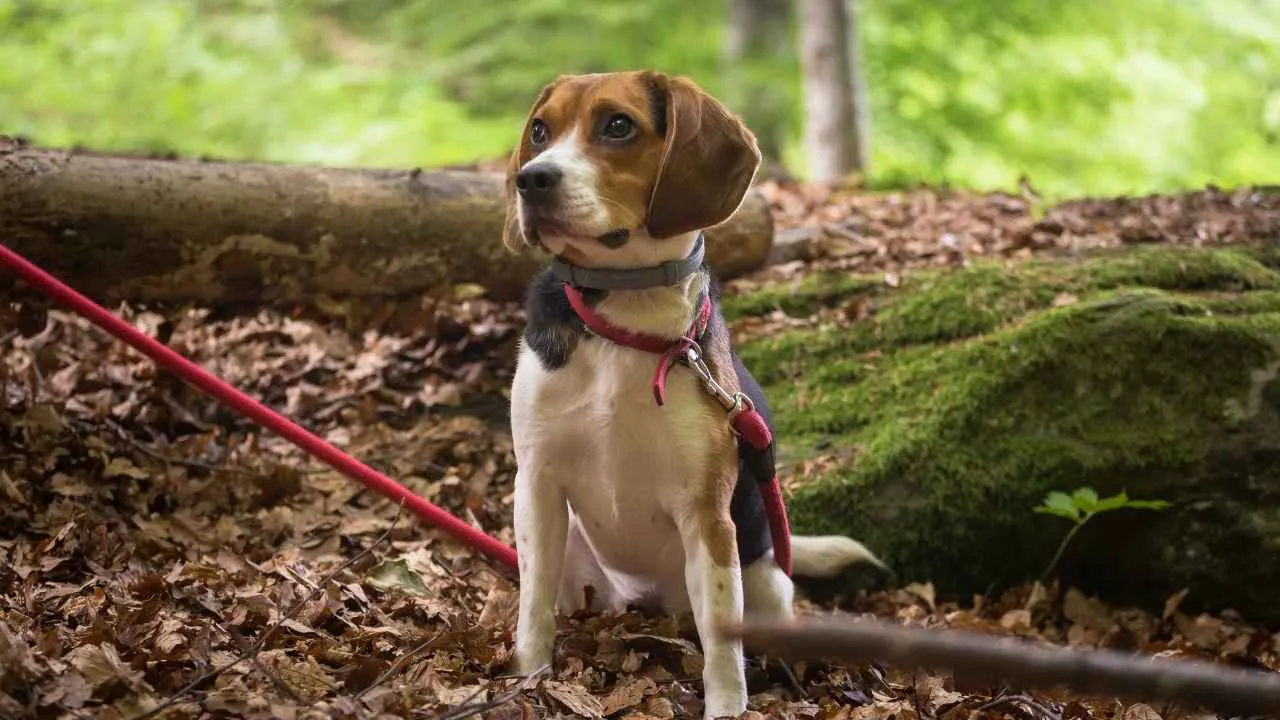
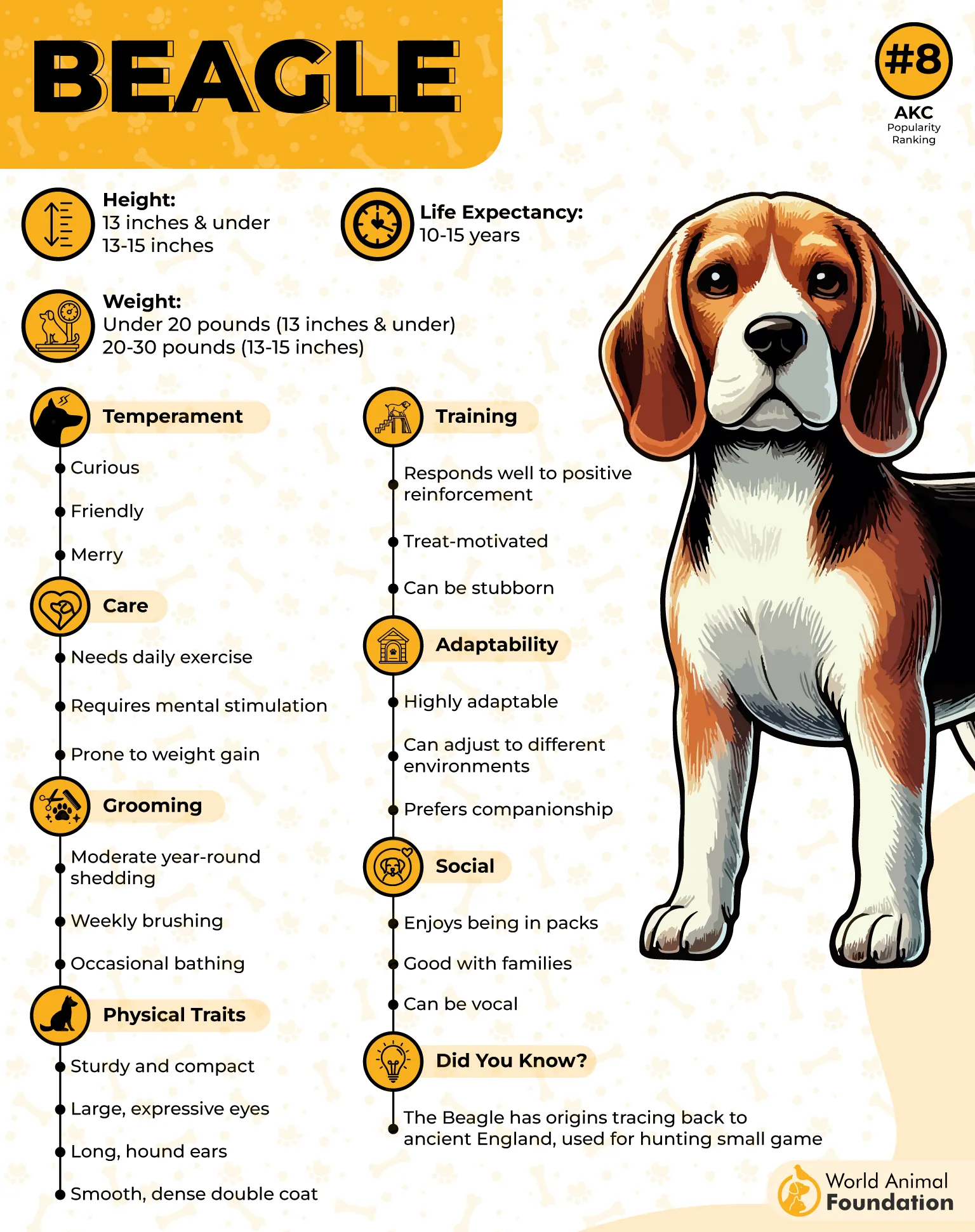
Beagles are compact scent hounds historically used for tracking rabbits and hares. Their smaller size did not prevent them from working persistently, and their excellent noses allowed them to maintain contact with trails across varied terrain.
Today, Beagles are widely appreciated as family companions, but their hunting instincts remain prominent. Their curiosity and determination can become particularly obvious when they discover an interesting scent.
Turn Everyday Walks Into Mental Exercise
Beagles benefit from walks that allow safe sniffing and exploration. Scent puzzles, food-search games, tracking exercises, and interactive play can provide additional enrichment, as per WebMD.
Training should be patient and rewarding. Recall can be challenging when a Beagle becomes absorbed in a trail, so owners should practice it consistently and avoid assuming that a familiar command will always override a strong scent.
A Compact Hound With Impressive Tracking Endurance
Beagles may be smaller than many other dogs on this list, but their determination allows them to follow trails for surprisingly long periods. Their hunting method relies heavily on scent rather than raw speed.
This makes them excellent candidates for nose work and tracking games. Giving them opportunities to investigate appropriately can satisfy their natural curiosity while keeping their activities under control.
9. Plott Hound
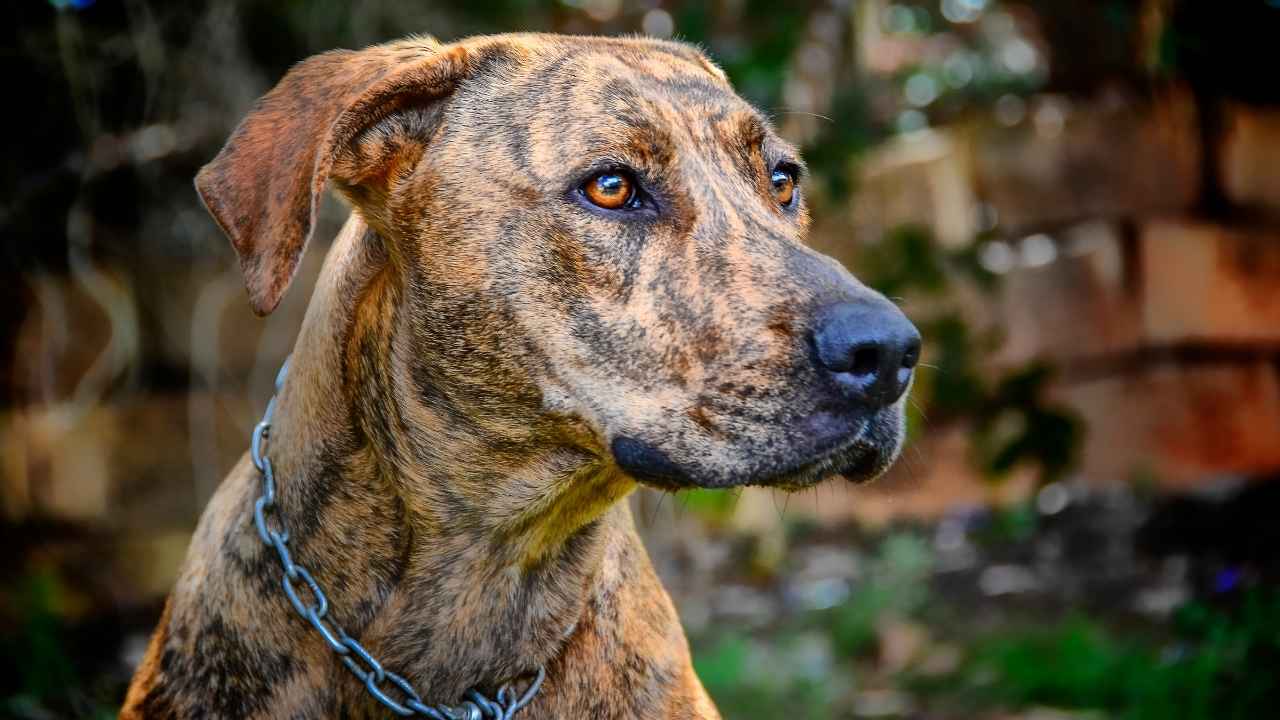
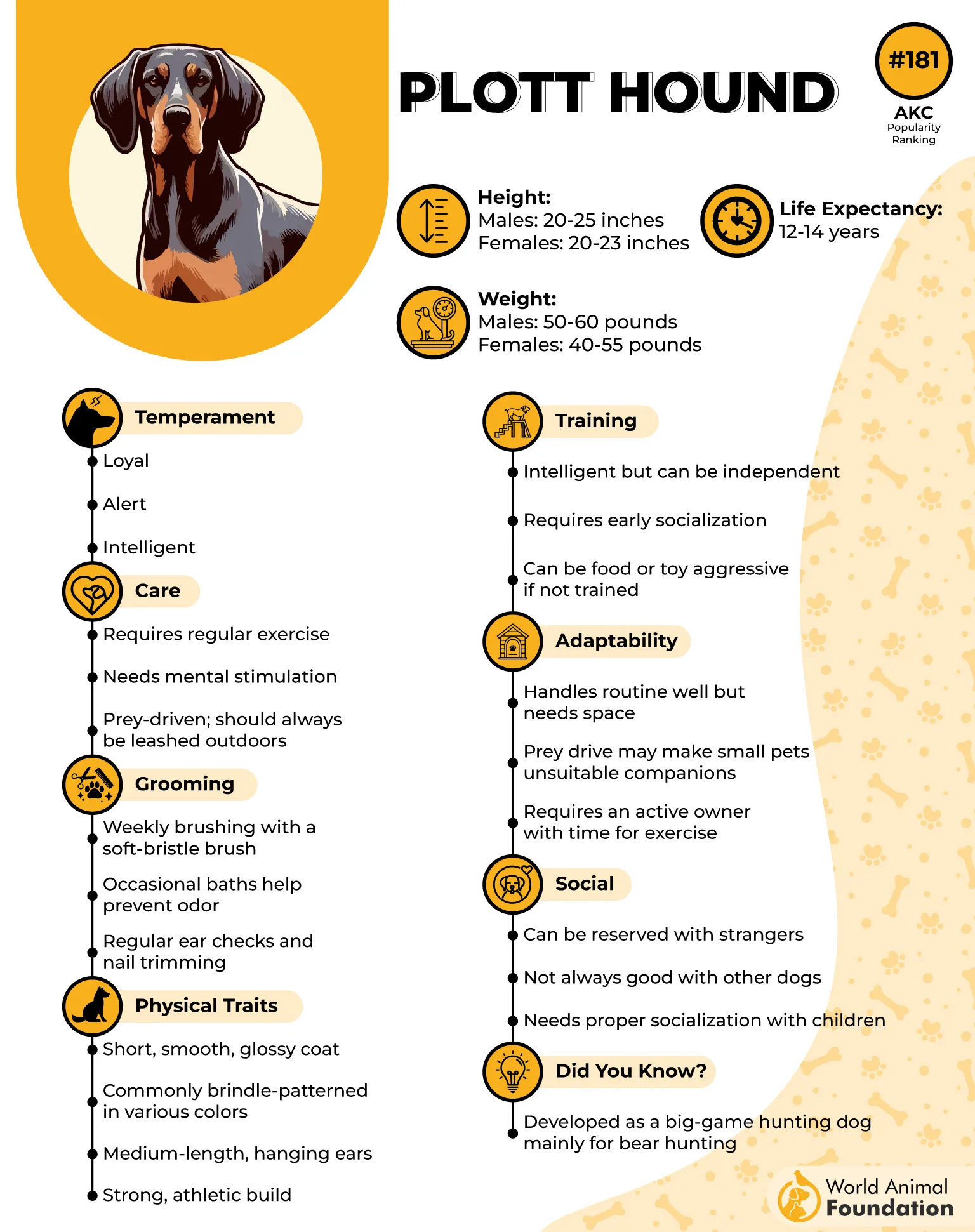
The Plott Hound has an American heritage and was developed in North Carolina for hunting large game. Its history includes work involving bear, which demanded courage, physical ability, stamina, and determination.
The breed’s muscular body and confident nature reflect its demanding working background. It can also use scent effectively when tracking quarry through difficult surroundings.
Combine Physical Conditioning With Obedience
Plott Hounds require regular exercise that challenges both their bodies and minds. Hiking, running, tracking, scent work, and advanced obedience can provide productive outlets.
Training should establish clear boundaries and dependable responses. Their confidence and physical strength make early guidance particularly important.
A Courageous Hunter Made for Tough Terrain
The Plott Hound’s ability to pursue challenging quarry comes from its combination of determination, endurance, and courage. It can remain engaged with demanding work rather than quickly losing interest.
That persistence should be respected by owners. Controlled tracking and structured outdoor activities can provide suitable ways to express its hunting heritage without allowing uncontrolled pursuit.
10. Harrier
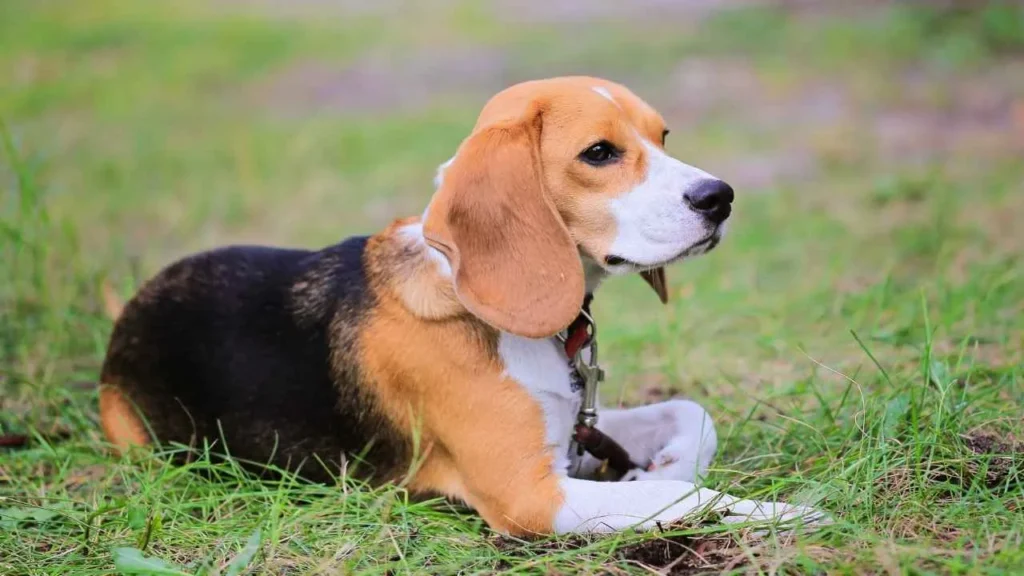
The Harrier is an English scent hound historically associated with hunting hare. Its medium-sized build sits between some smaller and larger hunting hounds, giving it a useful combination of stamina, agility, and manageable size.
Harriers were developed to work in groups while following scent trails over considerable distances. Their social nature and endurance make them particularly interesting among long-distance hunting breeds.
Keep Them Active and Mentally Engaged
Harriers benefit from long walks, hiking, scent games, supervised running, and interactive activities. Their natural endurance means short, repetitive outings may not provide enough stimulation.
Training should focus on recall, leash skills, and cooperation. Consistent socialization can also help them develop appropriate behavior around people and other dogs.
A Hardy Hound With Lasting Hunting Drive
The Harrier’s hunting strength comes from its ability to maintain a steady pursuit while following scent. Its stamina allows it to stay engaged during extended outdoor work without relying solely on explosive speed.
For companion owners, tracking games and scent-based enrichment can recreate some of the mental satisfaction of its traditional role. With sufficient activity and secure management, its long-distance instincts can become a rewarding part of its personality.
Conclusion
The ten breeds in this list demonstrate several different approaches to long-distance hunting and tracking. Bloodhounds, Coonhounds, Beagles, and Harriers are especially notable for scent-based work, while Foxhounds combine tracking with the stamina needed for extended pursuit.
These abilities also shape life outside the field. Dogs bred to follow trails or pursue quarry can require more exercise, mental stimulation, recall training, and secure outdoor access than many companion breeds.
For owners who understand and accommodate those instincts, these dogs can be remarkable partners for hiking, tracking, scent work, sporting activities, or hunting. Their endurance is most rewarding when it is paired with purposeful activity, consistent guidance, and an environment suited to their needs.
