




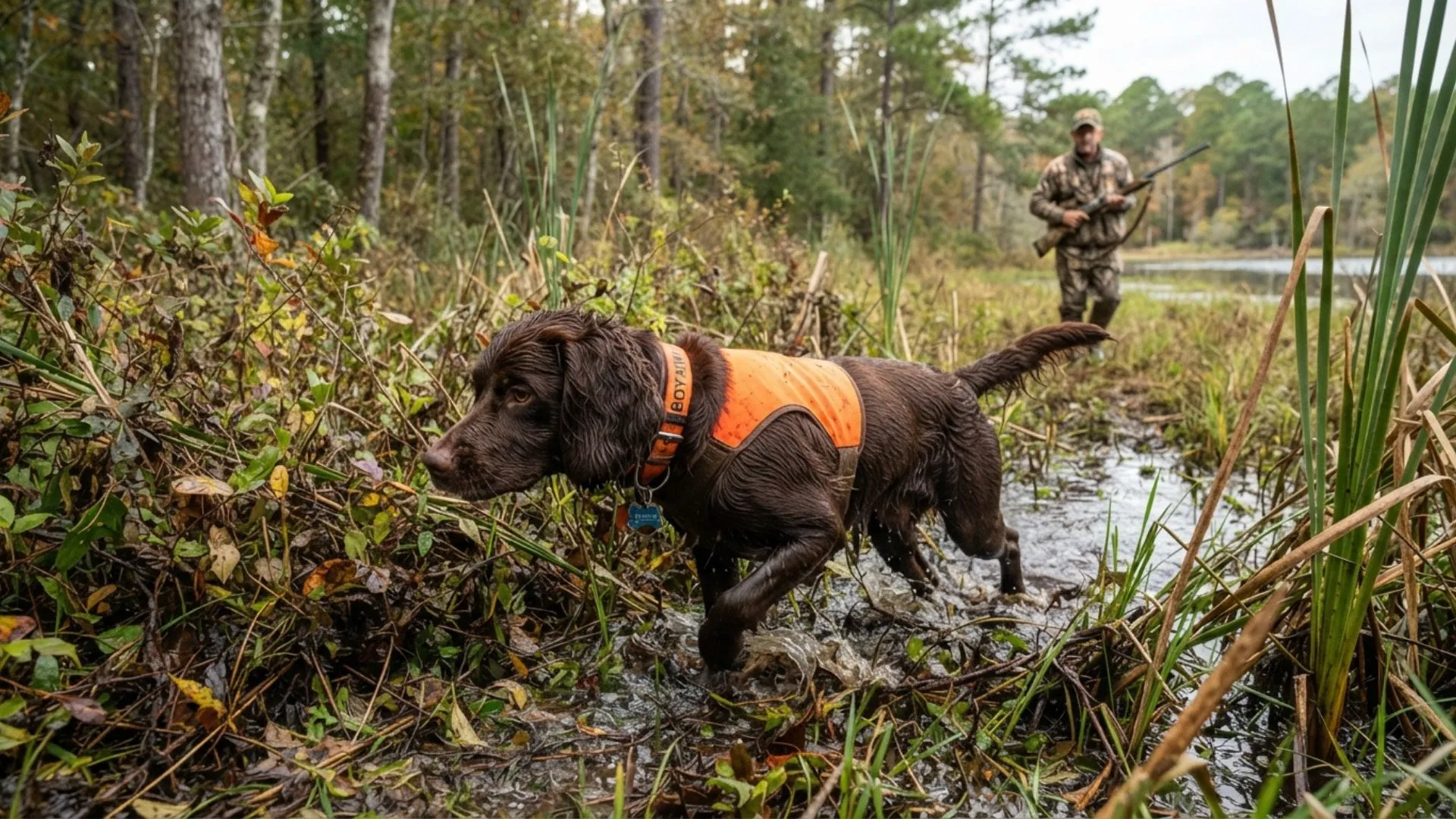
If you’re serious about hunting, the right dog can make every trip more rewarding. A skilled hunting companion does far more than follow along—they can track game over long distances, pick up faint scents, navigate rough terrain, and work closely with you as a trusted partner.
People have relied on hunting dogs for thousands of years, long before modern hunting tools existed. Over generations, these dogs developed remarkable abilities to track, locate, flush, and retrieve game in a wide range of environments.
While many still excel in the field today, they can also be loyal, affectionate family companions when given the exercise, training, and mental stimulation they need. Some are built for following scent trails across miles of wilderness, while others thrive in dense forests, wetlands, or open fields.
In this article, we’ll explore the best dog breeds for hunters seeking outstanding tracking skills, along with what makes each one a dependable partner for your next outdoor adventure.
Key Takeaways
Discover why the Weimaraner, Vizsla, and German Shorthaired Pointer are among the best trackers for serious hunters.
Compare each breed’s hunting style, temperament, and training needs to find your perfect field companion.
Explore versatile breeds like the Boykin Spaniel, Irish Setter, Braque Français Pyrenean, and Cirneco dell’Etna, each with unique strengths.
Find out which hunting dog matches your lifestyle, experience, and next outdoor adventure.
Top Dog Breeds for Hunters Seeking Tracking Prowess
1. Braque Français Pyrenean
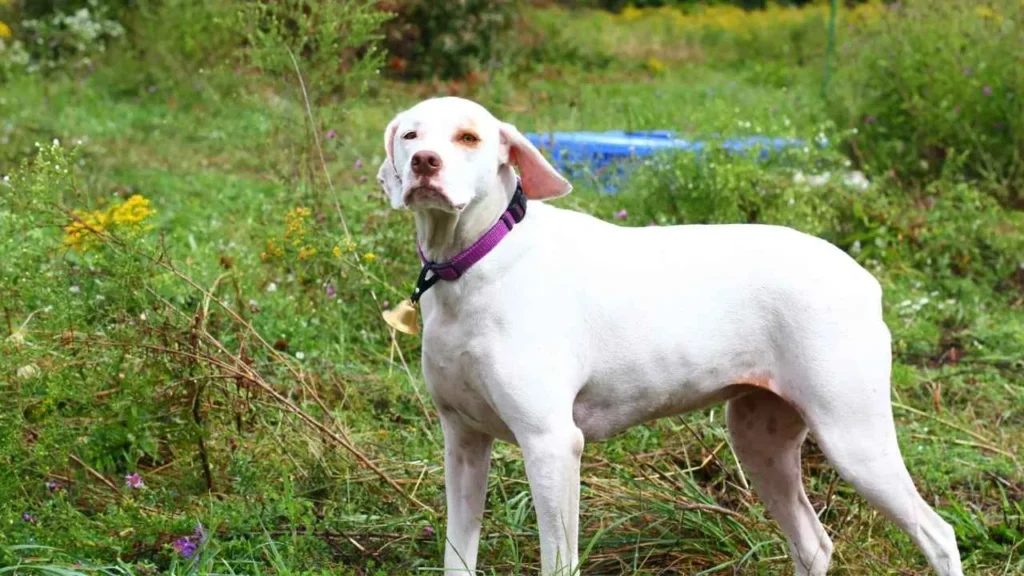
The Braque Français Pyrenean is a versatile hunting dog from France, developed to work in the rugged Pyrenees Mountains along the border of France and Spain. Used for hunting for centuries, it is considered an ancestor of many modern shorthaired pointing breeds.
The Pyrenean is the smaller of the two Braque Français types and is known for its excellent tracking, pointing, and natural retrieving abilities. It also loves working in water, making it a dependable hunting partner across different terrains.

Temperament
This breed is gentle, friendly, and eager to please. It forms strong bonds with its owner and works well as a team in the field. Its sociable and cooperative nature makes training easier, while its calm personality also allows it to fit well into active family life when not hunting.
Exercise & Training Needs
The Braque Français Pyrenean has plenty of energy and needs daily activity to stay in top condition. Long walks, hiking, swimming, retrieving games, and regular play help build the stamina needed for hunting and tracking.
It also enjoys learning through agility, obedience, and rally training, which keep both its body and mind engaged.
2. Weimaraner
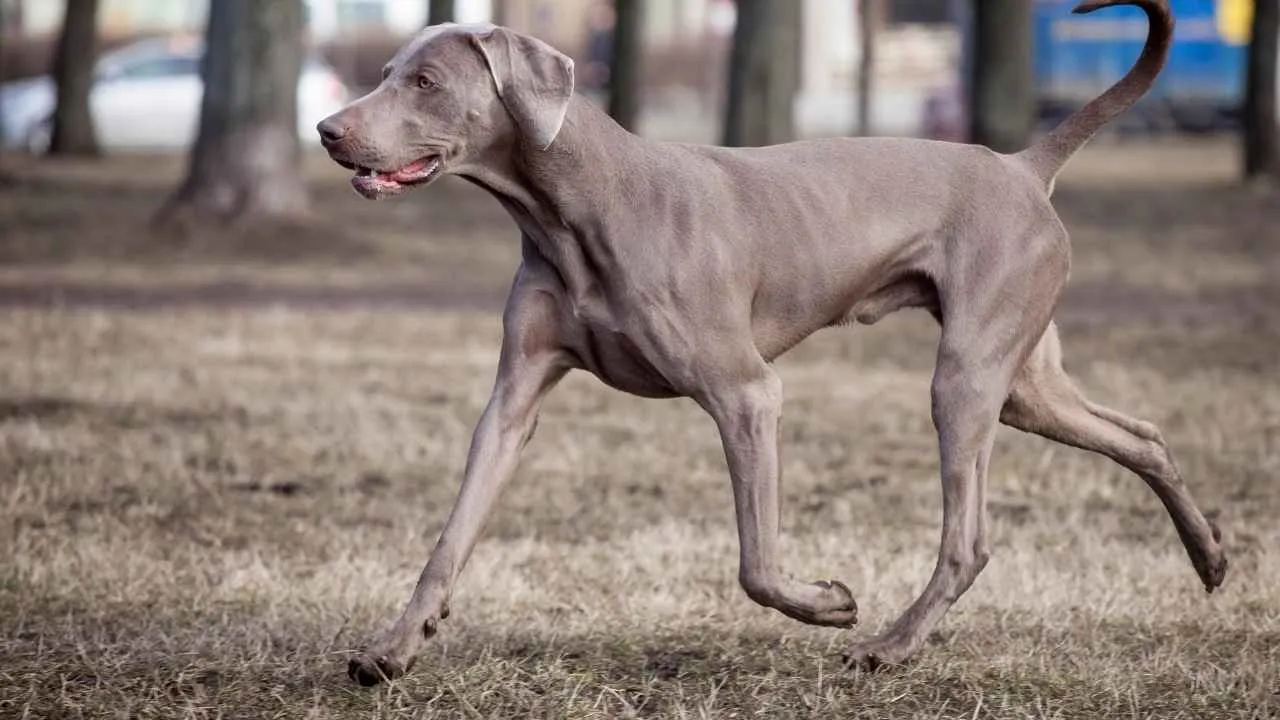
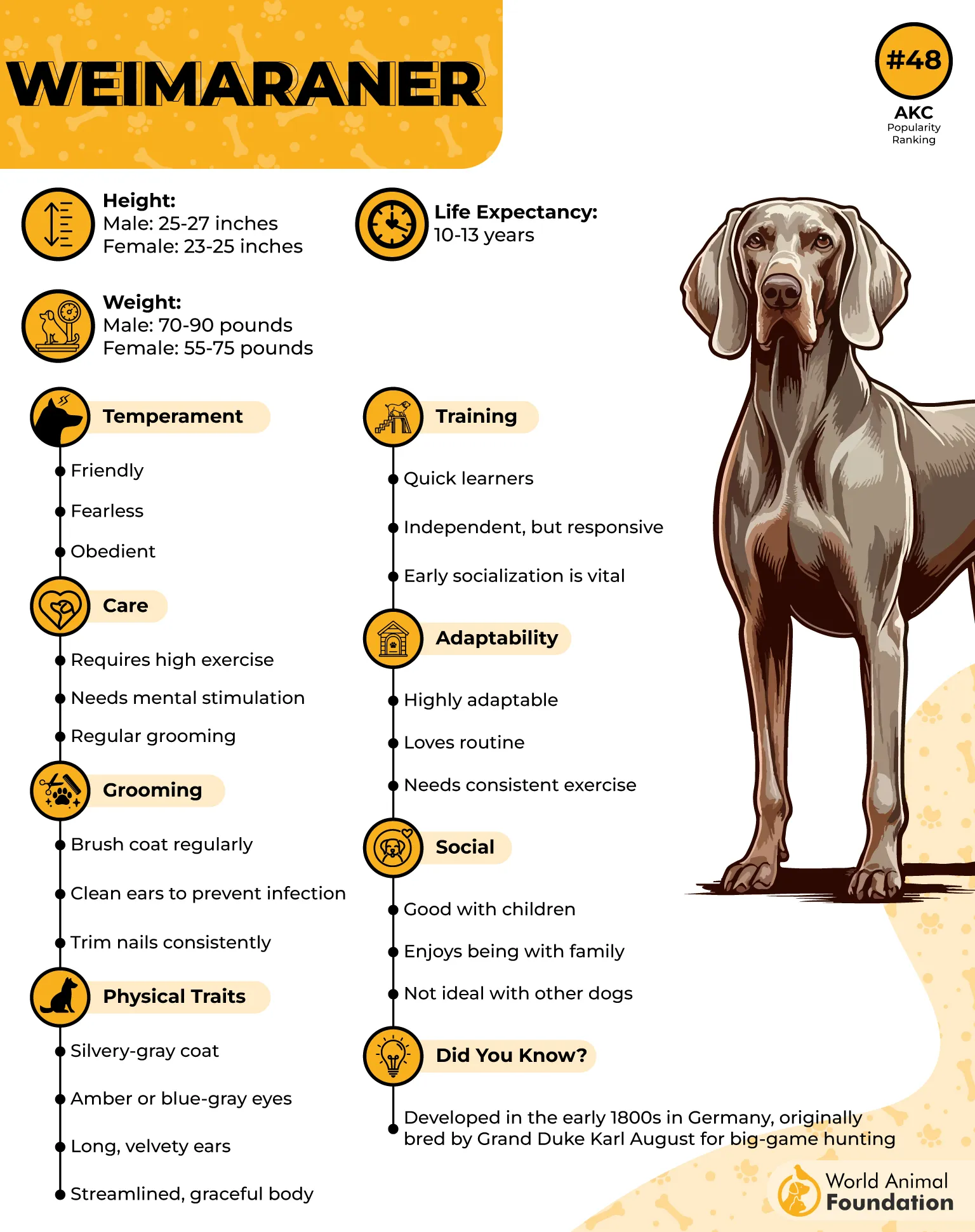
Originally developed by German nobles in the 19th century, the Weimaraner was bred for exceptional tracking ability, speed, courage, and endurance. Often called the “Gray Ghost,” this versatile sporting dog excels at tracking, pointing, and hunting across different terrains.
Its strong prey drive, sharp instincts, and willingness to work make it a reliable hunting companion. It also has a natural protective instinct and will quickly alert its owner to unfamiliar people or activity.
Temperament
The Weimaraner is friendly, fearless, obedient, and highly devoted to its family. It thrives on human companionship and prefers to stay close to its owner at all times. Intelligent and eager to please, it learns quickly but also needs early socialization and consistent training to prevent unwanted behaviors.
Because of its strong prey drive, it may chase smaller animals and is best suited for experienced owners who can provide firm, positive guidance, as mentioned by Orvis.
Exercise & Training Needs
This breed has extremely high energy levels and needs at least two hours of daily exercise. Long runs, hikes, swimming, fetch, and hunting activities help satisfy its physical and mental needs. Without enough activity, it can become bored and develop destructive habits like chewing, digging, barking, or escaping.
Regular training and mentally stimulating activities such as agility, puzzle games, and obedience work help keep the Weimaraner focused, well-behaved, and ready for the field.
3. Vizsla
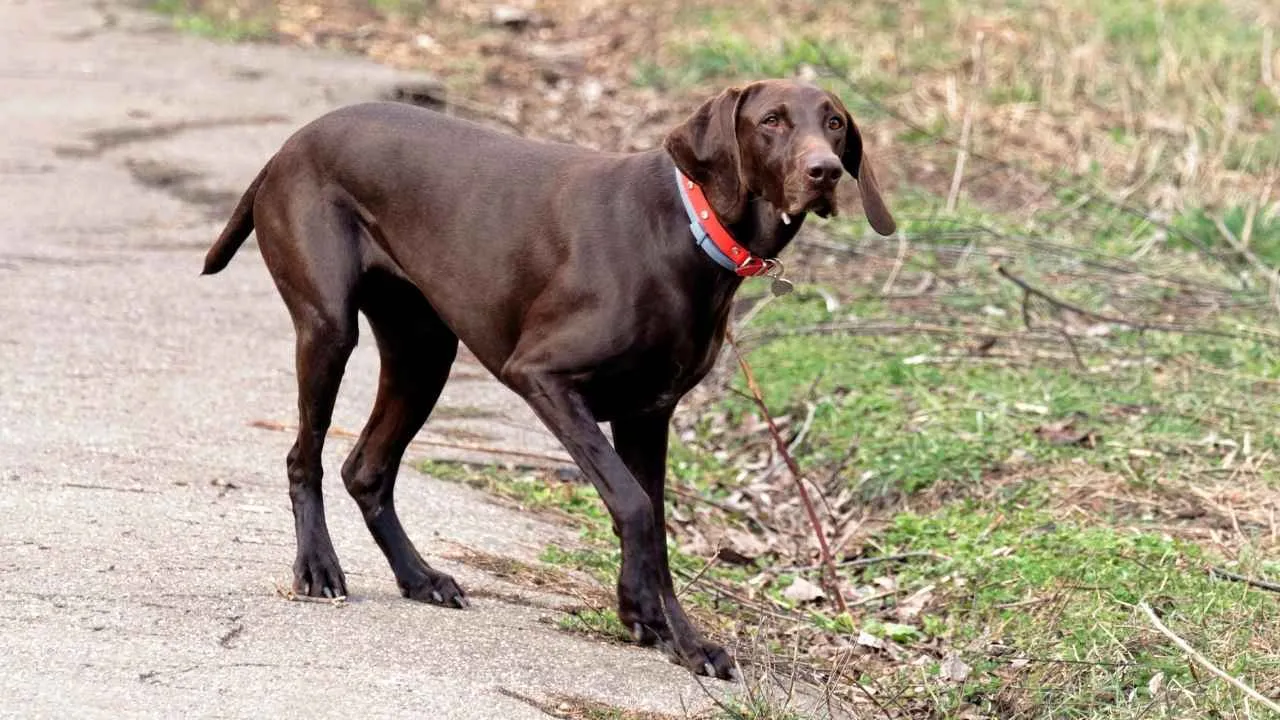
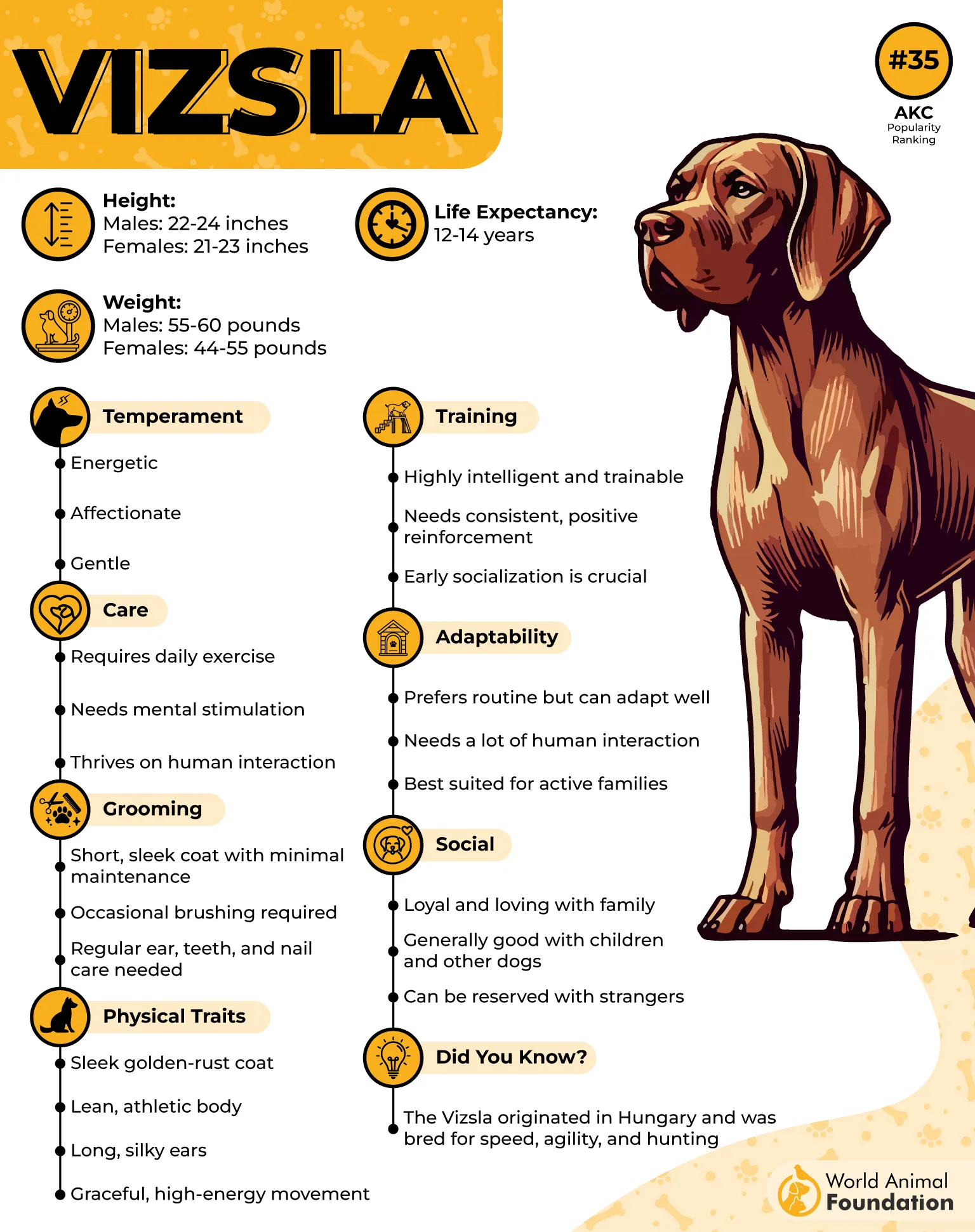
The Vizsla is a versatile hunting dog from Hungary that has been trusted by hunters for centuries. Bred to work closely with people, it excels at tracking, pointing, and retrieving game across different terrains.
Known for its speed, stamina, and sharp hunting instincts, the Vizsla thrives during long days in the field. Its strong prey drive and eagerness to work make it an outstanding tracking companion, while scent-based activities help keep its natural abilities sharp.
Temperament
Often called a “Velcro dog,” the Vizsla forms an incredibly strong bond with its owner and loves staying close at all times, according to PDSA. It is affectionate, intelligent, courageous, and eager to please, making it highly trainable with positive reinforcement.
However, this sensitive breed does not respond well to harsh training and can develop separation anxiety if left alone for long periods. Early socialization is essential, as its strong hunting instincts may lead it to chase smaller animals.
Exercise & Training Needs
The Vizsla is a high-energy athlete that needs at least two hours of exercise every day. Long hikes, running, swimming, fetch, and hunting activities help satisfy its physical and mental needs. It also excels in agility, search and rescue, and other dog sports thanks to its intelligence and willingness to learn.
Training sessions should be short, engaging, and reward-based, as the breed can become distracted or stubborn if it loses interest.
4. German Shorthaired Pointer
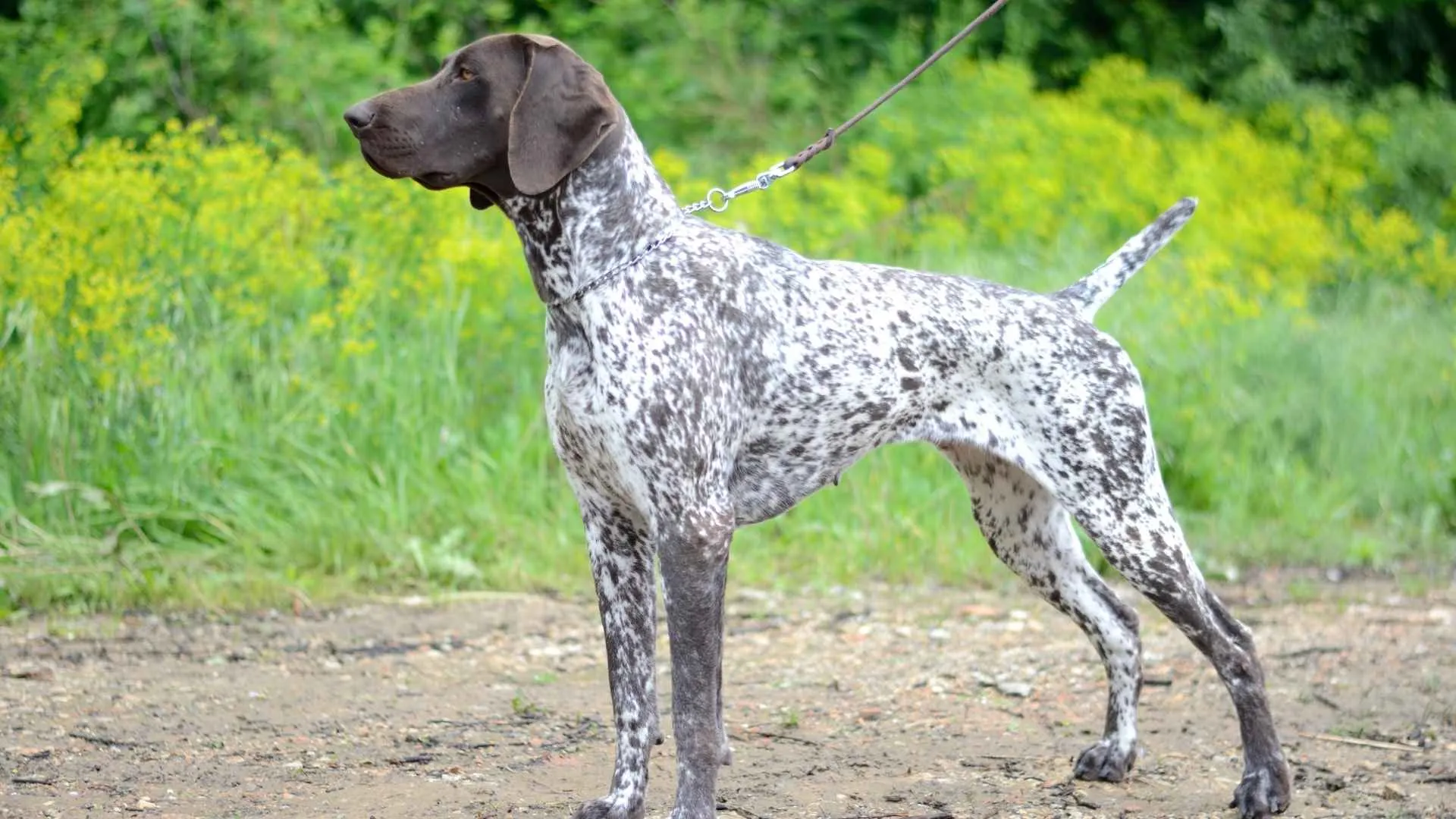
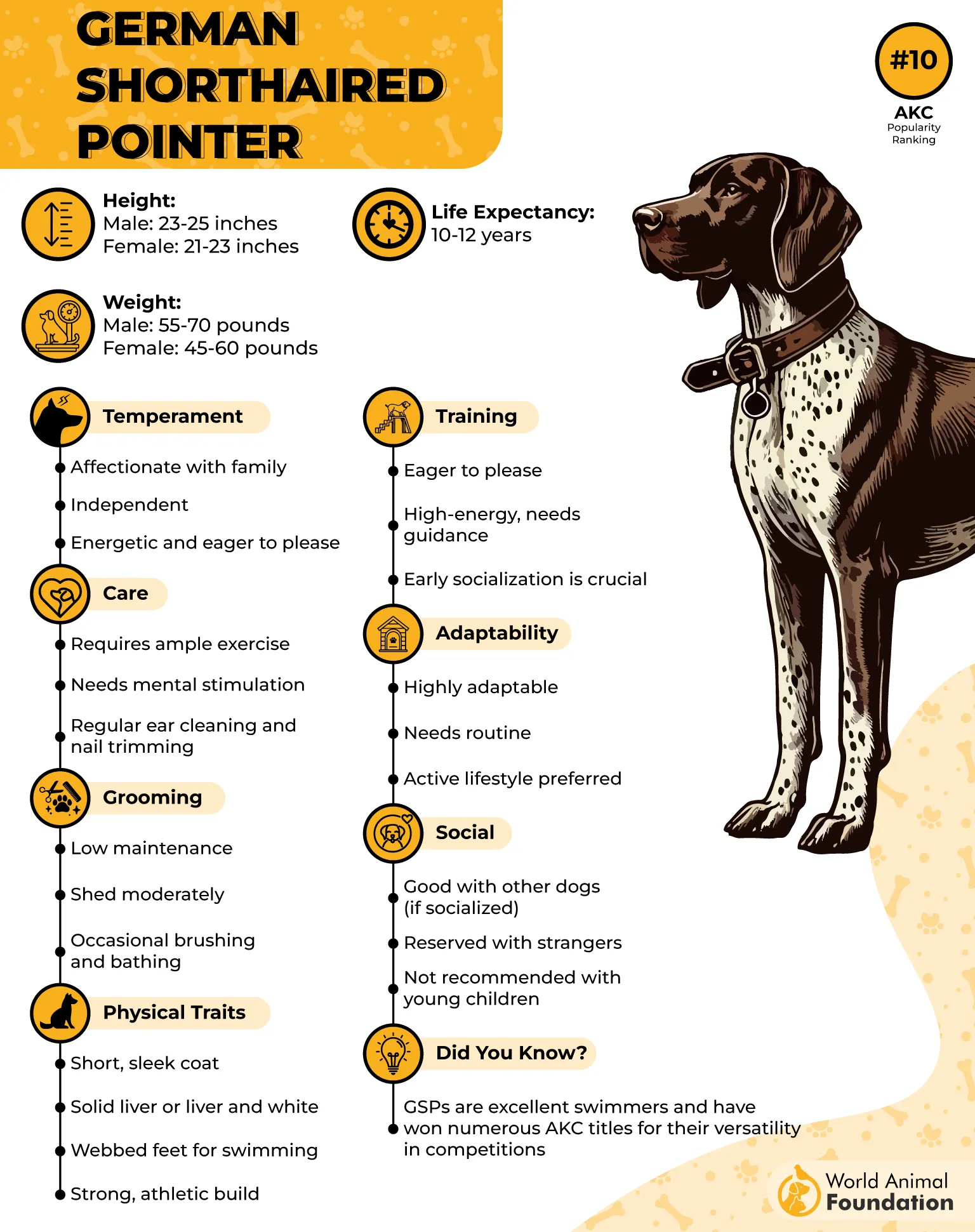
The German Shorthaired Pointer is a versatile gundog known for its speed, endurance, and outstanding tracking ability. Bred to locate and retrieve game birds, it is famous for its natural pointing instinct, standing still to signal the location of game before the hunter moves in.
With a sharp nose, high prey drive, and excellent stamina, this tracking dog performs well across fields, forests, and wetlands, making it a dependable hunting partner.
Temperament
This breed is gentle, affectionate, and deeply devoted to its family, making great family dog. It thrives on human companionship and enjoys being involved in daily activities. Highly intelligent and eager to learn, the German Shorthaired Pointer responds well to consistent, positive training.
However, its strong hunting instincts mean it may chase small animals, so early socialization and proper training are essential.
Exercise & Training Needs
The German Shorthaired Pointer is an energetic working dog that needs at least one to two hours of vigorous exercise every day. Running, hiking, swimming, fetch, agility, and hunting activities help keep it physically fit and mentally stimulated.
Without enough activity, it can become bored and destructive. Because it naturally tracks scents, it should be exercised in secure areas or on a leash, while regular training and interactive games help channel its intelligence and energy.
5. Cirneco dell’Etna
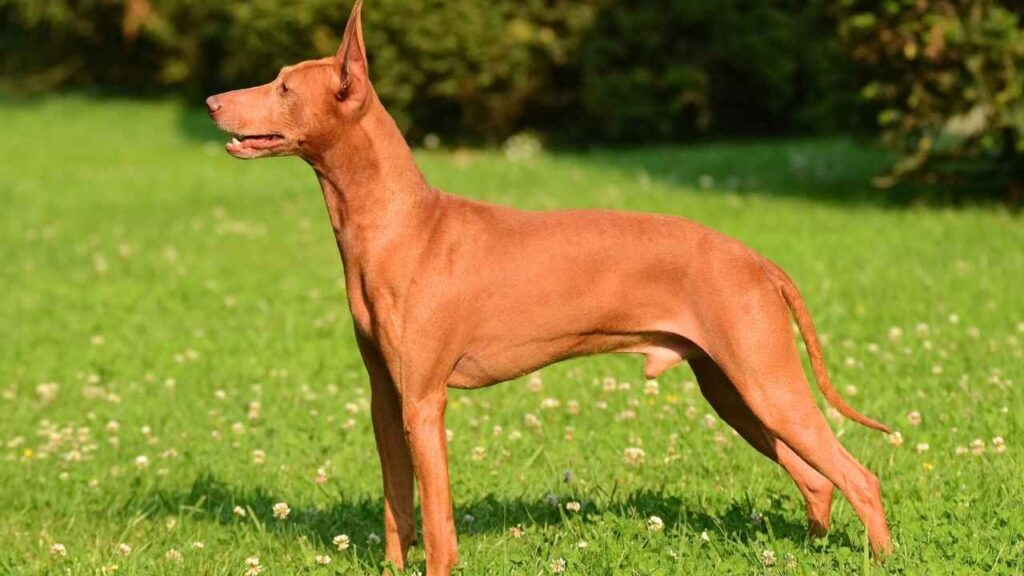
The Cirneco dell’Etna is one of the oldest hunting dogs, originating from Sicily, Italy, where it was traditionally used to hunt rabbits and hares across the rocky slopes of Mount Etna. This agile and athletic sighthound is known for its speed, endurance, and sharp hunting instincts.
Despite its smaller size, it is a determined tracker that can work for long hours over difficult terrain, making it a reliable hunting companion.
Temperament
The Cirneco dell’Etna is gentle, affectionate, and loyal, forming close bonds with its family while maintaining an independent nature in the field. Intelligent and quick to learn, it responds well to positive reinforcement but also likes to think for itself.
Early socialization is important, as its natural hunting instincts may lead it to chase smaller animals, though it can live peacefully with other dogs when introduced properly.
Exercise & Training Needs
Purina says this energetic breed needs at least two hours of daily exercise, along with regular play and mental stimulation to stay happy and healthy. Long walks, scent games, and outdoor adventures help satisfy its hunting instincts and prevent boredom.
Because it is naturally active and intelligent, consistent training from an early age helps build good manners while encouraging its excellent tracking abilities.
6. Boykin Spaniel
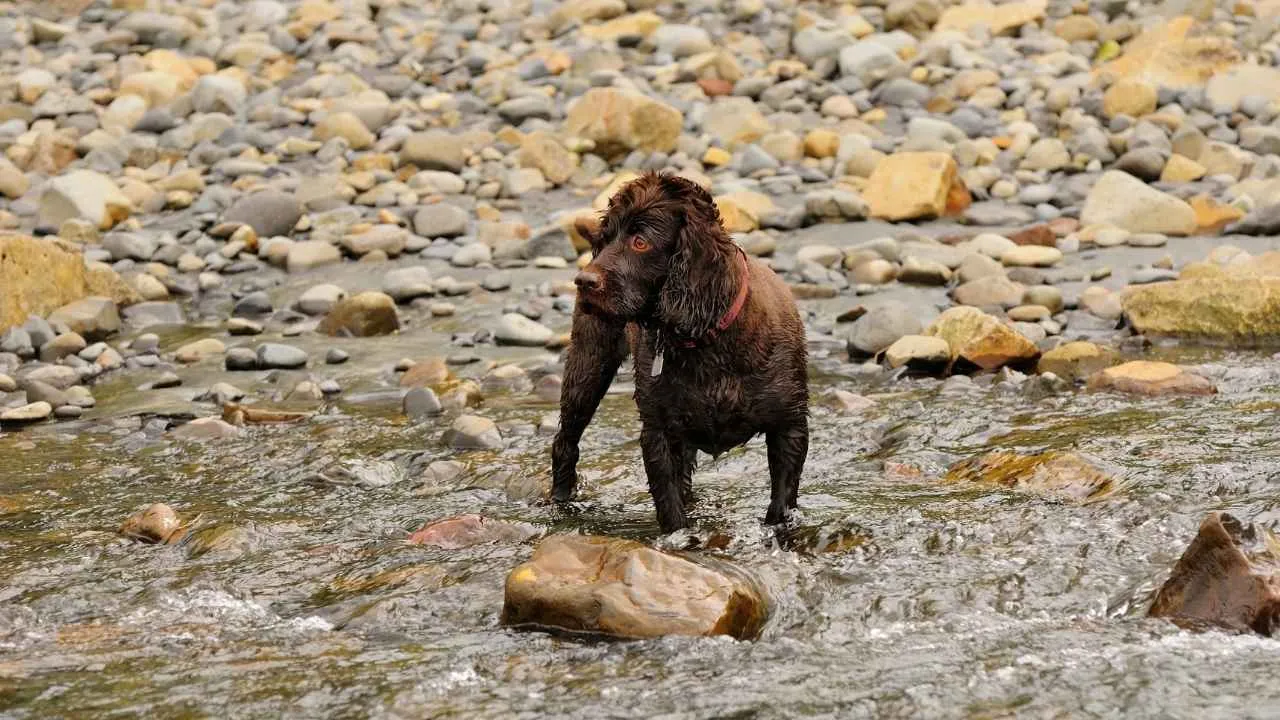
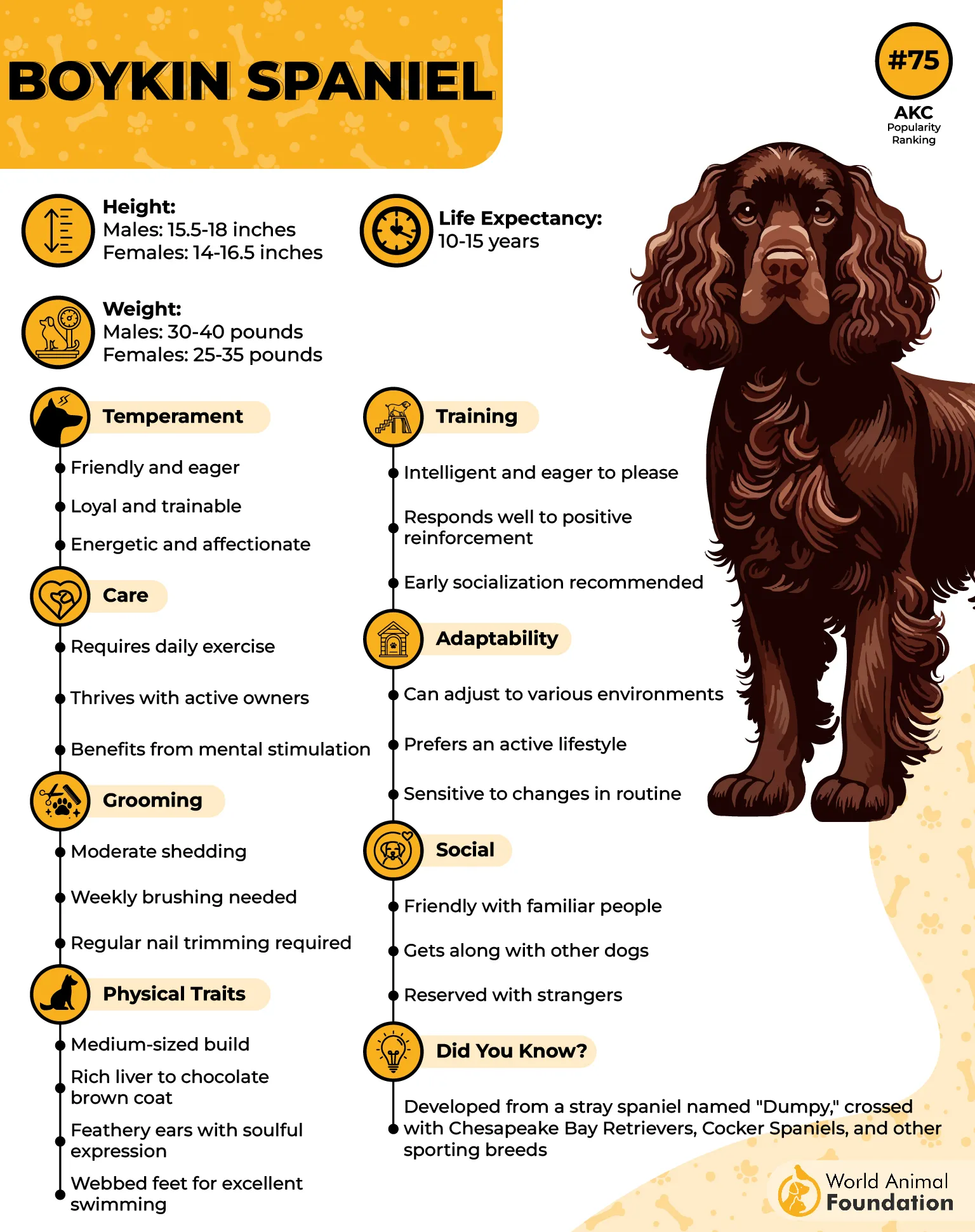
The Boykin Spaniel was developed in South Carolina as a versatile hunting dog, originally bred to hunt wild turkeys, ducks, and doves. Its compact size made it ideal for traveling in small hunting boats, while its excellent stamina allowed it to work long days in the field.
Skilled at flushing and retrieving game, the Boykin is also a strong swimmer thanks to its webbed feet, making it especially effective for waterfowl hunting.
Temperament
The Boykin Spaniel is friendly, affectionate, and eager to please, making it an excellent hunting partner and family companion. It enjoys working closely with its owner and is highly intelligent, which makes training relatively easy.
This energetic breed also gets along well with children and other pets when properly socialized, but it is happiest when it has a job to do.
Exercise & Training Needs
Bred for long hunting days, the Boykin Spaniel has plenty of energy and needs several hours of daily activity to stay healthy and well-behaved. Hunting, swimming, hiking, retrieving, agility, and obedience training are all excellent ways to keep it physically and mentally engaged.
Without enough exercise and stimulation, it may develop destructive habits such as chewing or digging. Positive reinforcement and consistent training help this eager learner reach their full potential in the field.
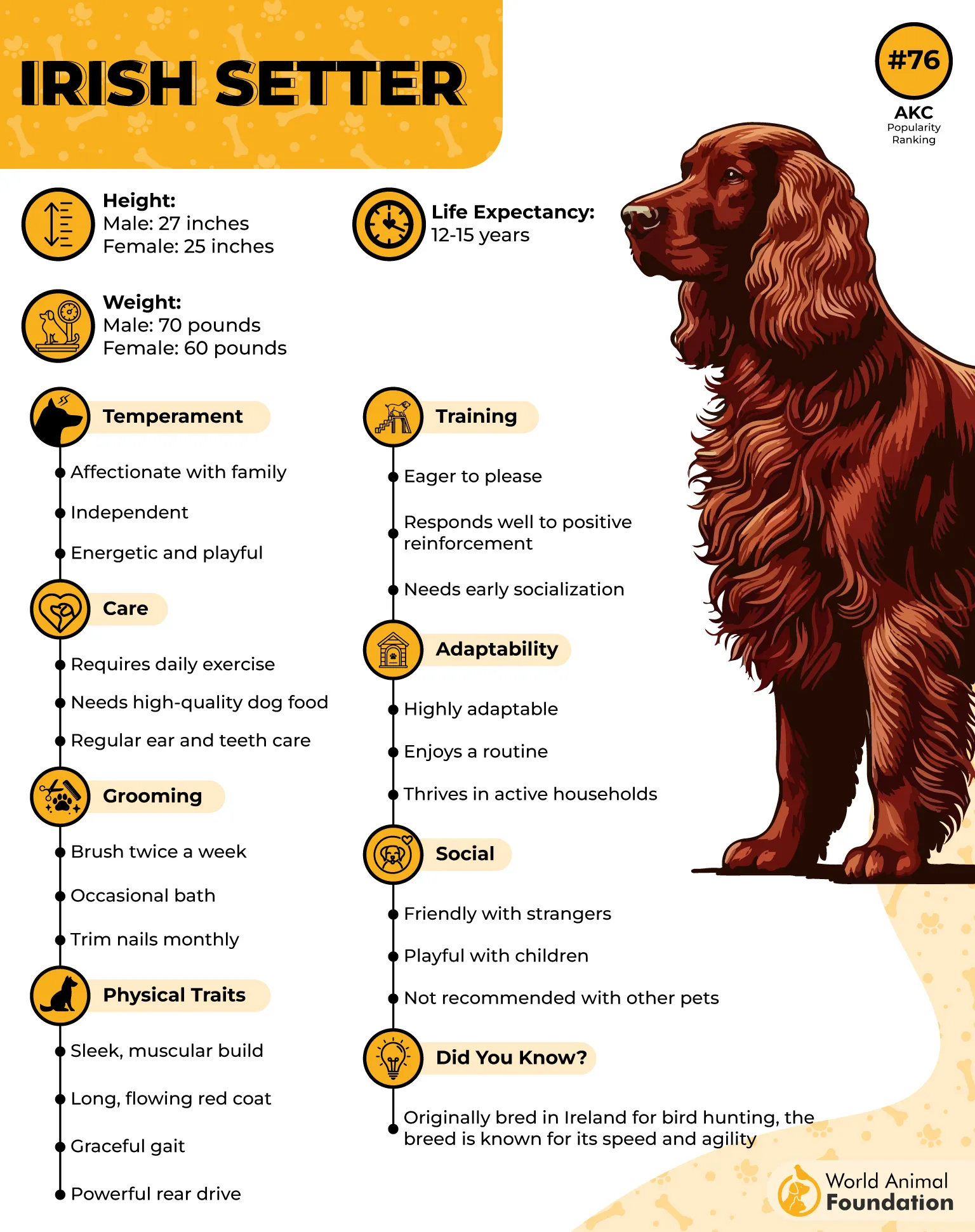
7. Irish Setter
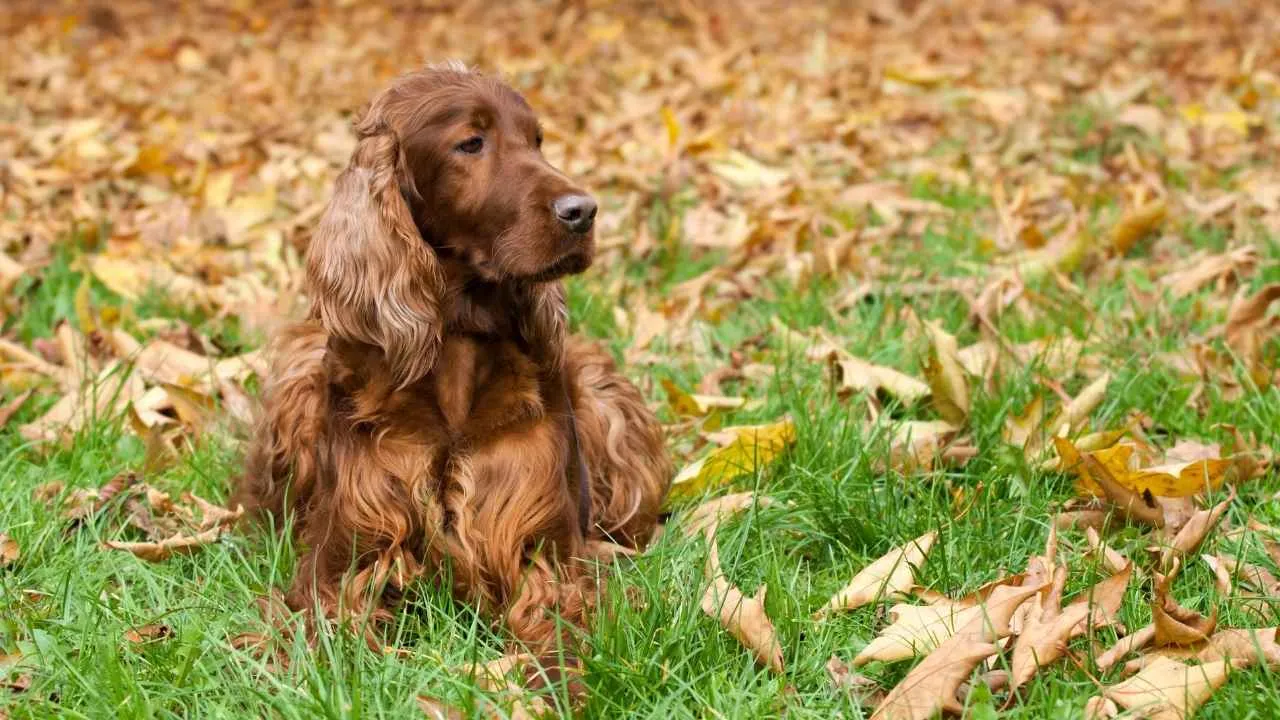
The Irish Setter is a graceful and energetic gundog that has been a trusted hunting companion for more than 200 years. Bred to cover large areas with speed and stamina, it has a keen nose and excels at locating downed birds in rough terrain.
Bold, determined, and eager to work, the Irish Setter combines strong hunting instincts with excellent endurance, making it a dependable choice for hunters who need a skilled tracking partner.
Temperament
The Irish Setter is sweet-natured, affectionate, and loves being around people. It forms strong bonds with its family and thrives on companionship, making it an excellent family dog as well as a hunting partner. Intelligent and eager to please, it learns quickly but has an independent and playful streak.
Positive, reward-based training and early socialization help bring out the breed’s best qualities, while its hunting instincts mean care should be taken around smaller pets.
Exercise & Training Needs
Built for long days in the field, the Irish Setter needs plenty of daily exercise to stay happy and well-behaved. Hunting, hiking, jogging, swimming, fetch, agility, and obedience training are all excellent ways to keep it physically and mentally stimulated.
Without enough activity, it may become bored and develop unwanted behaviors like chewing, digging, or excessive running. Consistent training and an active lifestyle help this energetic breed reach its full potential.
Conclusion
Choosing the right hunting dog comes down to more than speed or strength. The best tracking breeds combine sharp instincts, endurance, intelligence, and a willingness to work closely with their handler.
Whether you’re navigating dense forests, open fields, or wetlands, the right companion can make every hunt more efficient and enjoyable.
Take the time to match a breed’s hunting style, energy level, and training needs with your own lifestyle and experience. With proper training, regular exercise, and a strong bond, these remarkable dogs can become trusted partners in the field and loyal companions at home for years to come.
