




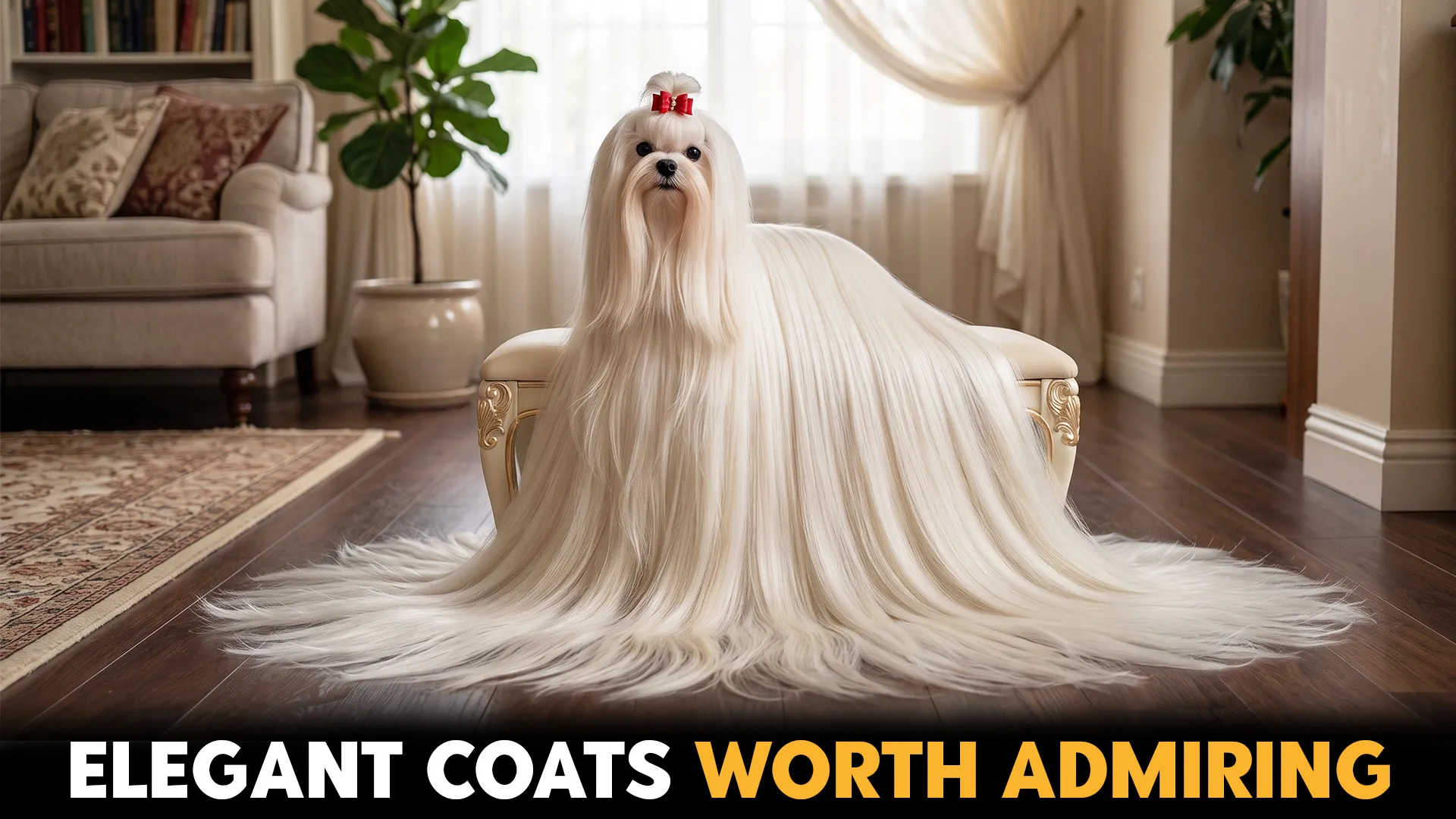
There is something irresistible about a dog with a flowing coat and a face that seems to understand every mood. One look from those bright eyes, and suddenly your bad day does not feel quite so heavy. Long-haired breeds have a way of making a house feel like a home.
Of course, that gorgeous fur comes with a few trade-offs. You may find hair on your clothes, a brush in your bag, and a dog that believes bath time is a personal insult. Still, many owners would not trade those small inconveniences for anything.
The breeds ahead are more than pretty faces. Each has its own history, energy level, and way of showing affection. Some thrive in busy families, while others prefer a calm apartment and a favorite sunny spot. Whether you want a playful sidekick, a dignified companion, or a devoted lap dog, one of these charming breeds may be exactly the friend you have been looking for.
Charming Long-Haired Dog Breeds That Are Easy to Love
1. Shih Tzu
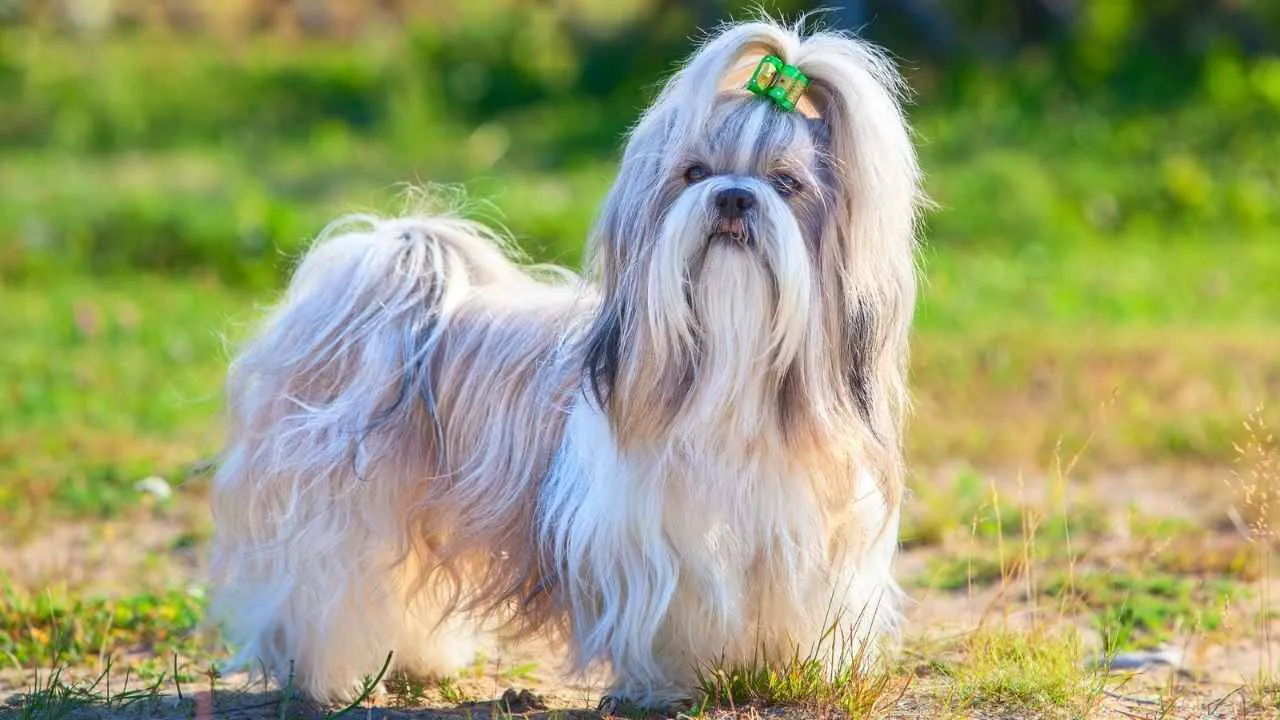
Originally bred in Tibet, the small dog gained popularity in the time of Empress Tzu Hsi. After her death, the breed was gifted to foreign visitors. The modern-day breed is thought to be a cross of the ancient Shih Tzu and the Pekingese, according to Dogs Australia.
The dog has a thick double coat that contains human hair and grows continuously. It is mostly straight, but a slightly wavy coat is also acceptable. It comes in all colors and markings, including white, gold, silver, blue, liver, etc. A puppy is born with a short coat and transitions to the double coat between the ages of 8 and 14 months.
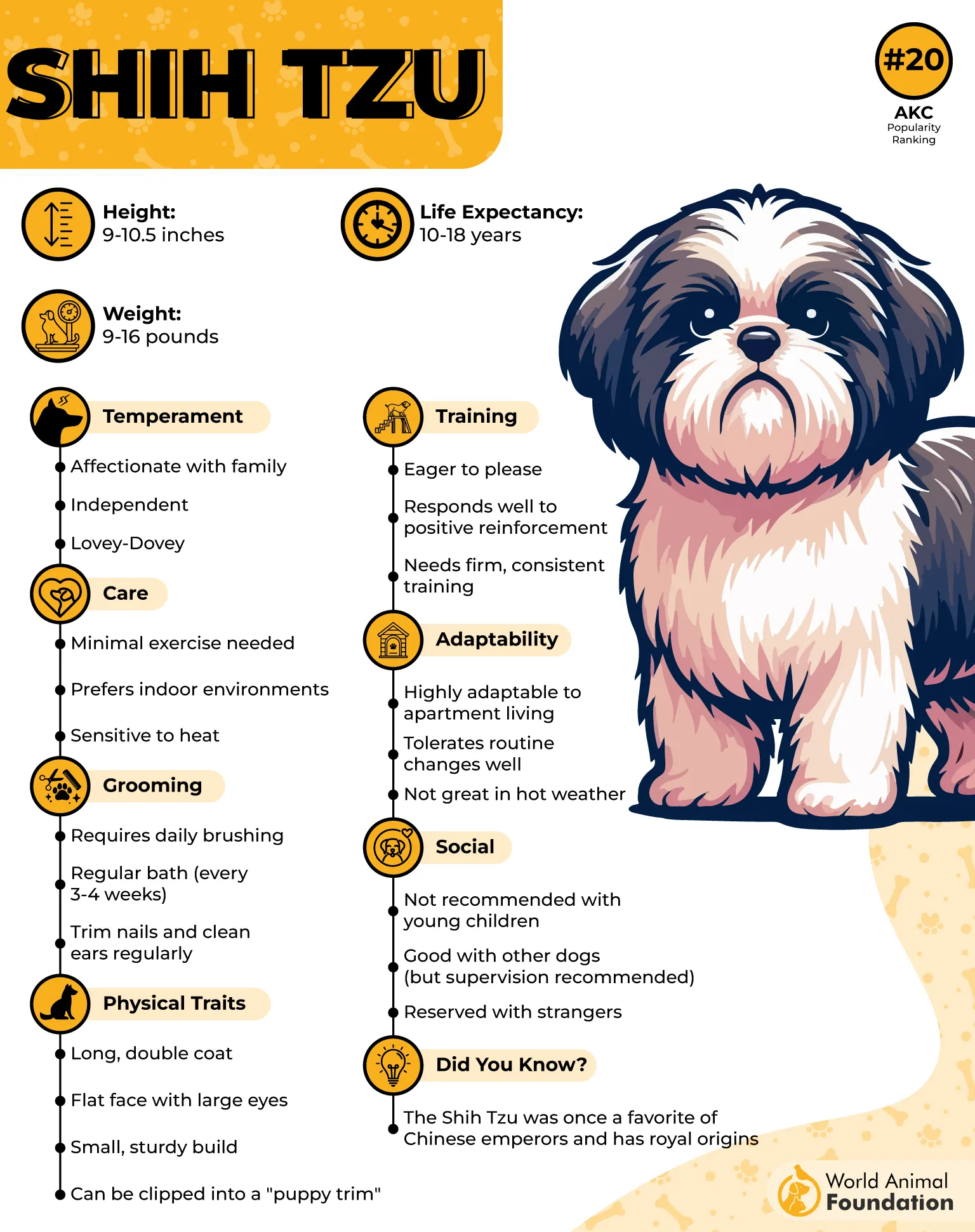
The long coat needs daily brushing using a metal grooming comb and a slicker brush. Use a dog-safe shampoo every 3-6 weeks for bathing. Daily wash the muzzle and wipe the area around the eyes to prevent tear staining.
2. Havanese
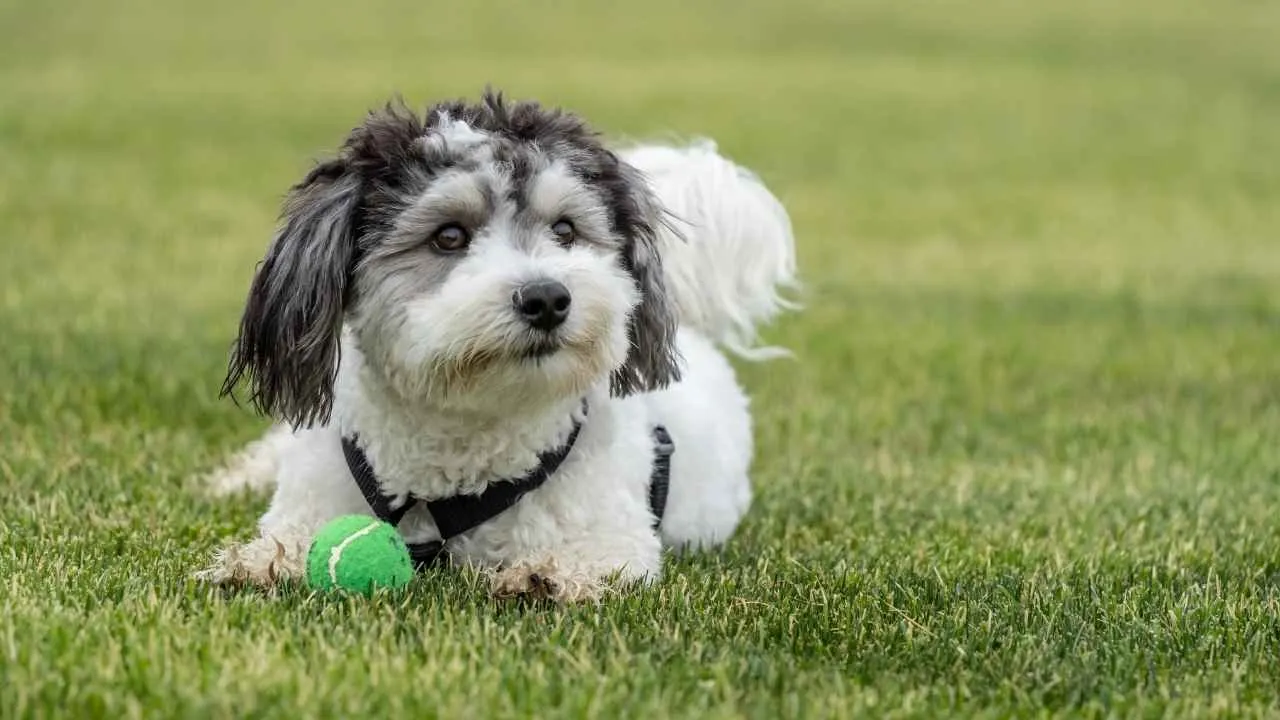
The dog with a silky coat was developed in the Western Mediterranean region and was carried to Cuba by the Italian sailors. The brown (tobacco) color breed is thought to have developed in Cuba, and other variants were slowly diminished in the region.
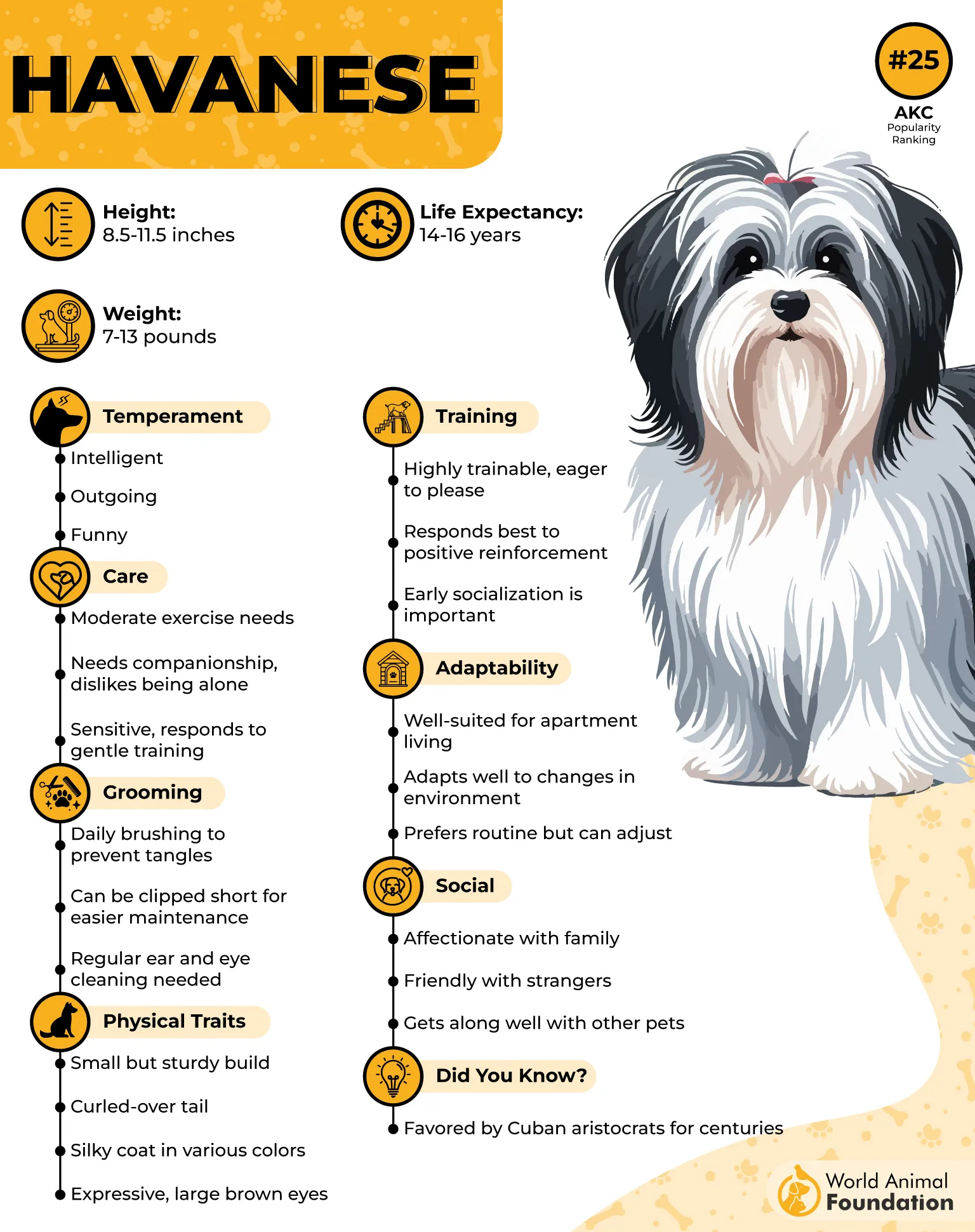
The double coat has a silky appearance; however, the undercoat is so light that it is sometimes completely absent in the breed. The coat typically reaches the length of 6-8 inches. The hair naturally falls to either side down the spine and must not be parted intentionally. The coat comes in cream, gold, silver, fawn, red, white, and black colors.
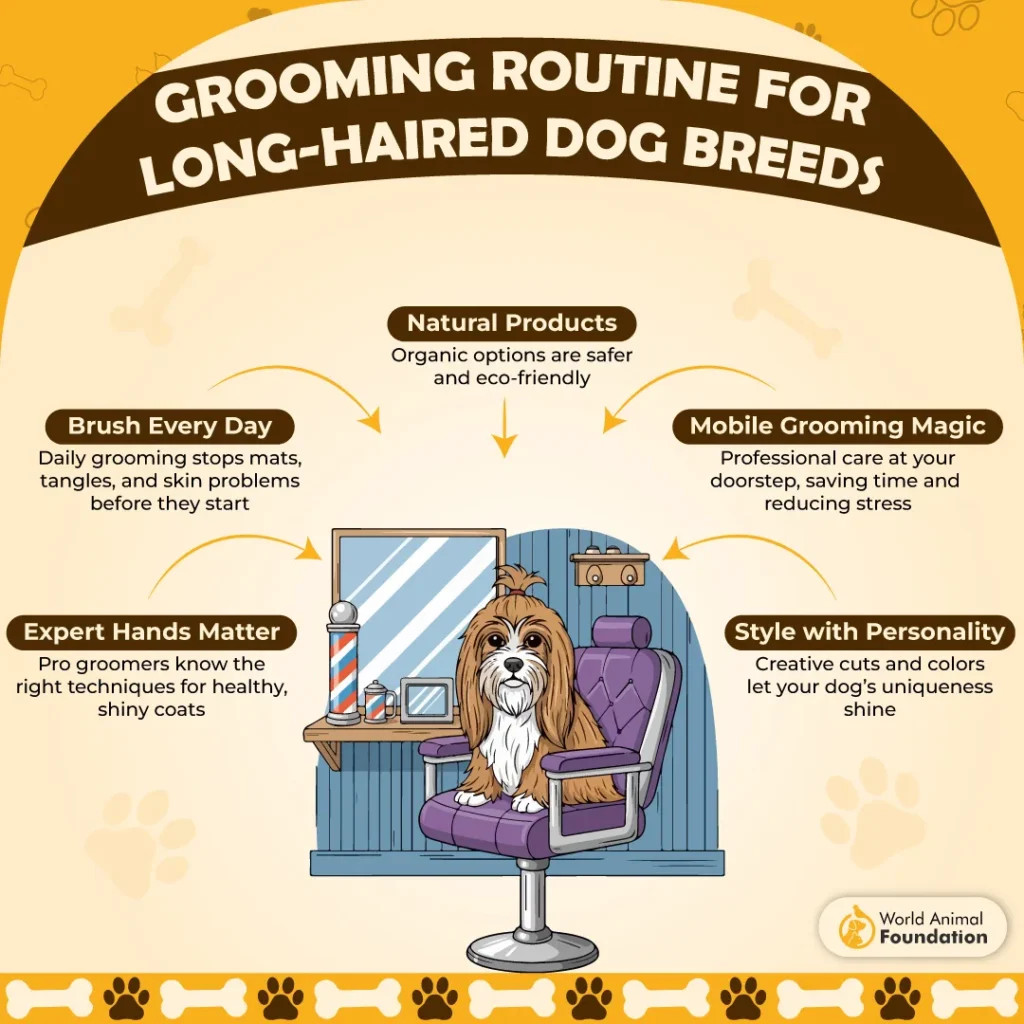
Daily brushing is recommended for long-haired dogs. However, some owners opt for cording rather than regular brushing. Never dry brush a coat, as it can lead to detangling and hair breakage. Bathing is recommended 1-2 times a week.
3. Lhasa Apso
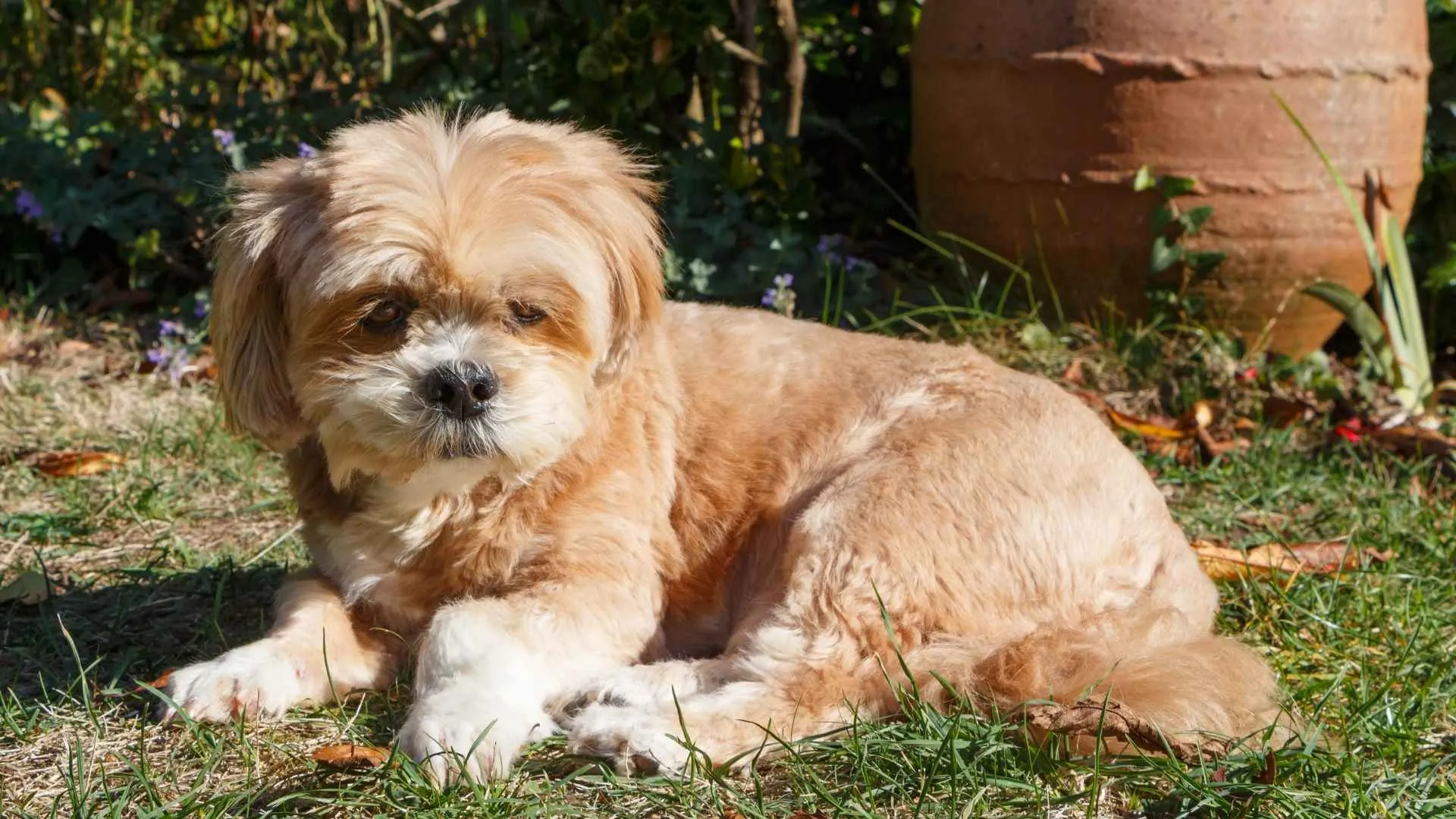
The ancient breed has a special place in the Buddhist monasteries and the royal palaces. It first arrived in the United States with the Fourteenth Dalai Lama, when he gifted 2 Lhasa Apsos to American Charles Suydam Cutting, as reported by Purina.
The dog has a hard-textured double coat with a straight and heavy appearance. It has heavy facial furnishings, with the hair cascading over the eyes. This protects the eyes from dust and harsh Tibetan glare. The cat-like feet have dense feathering with hair growing between the toes.
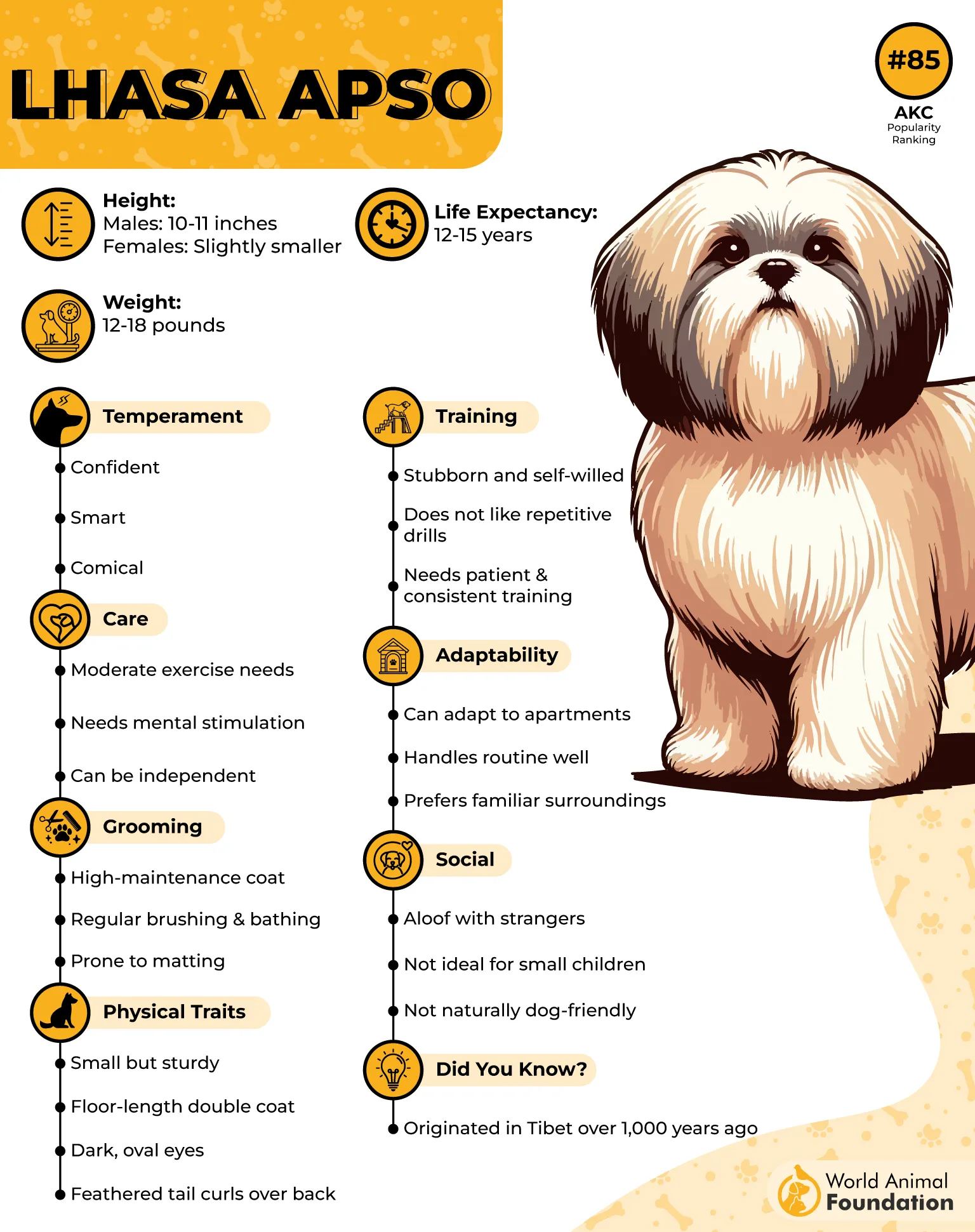
Use a mist spray and a Greyhound comb for daily line-brushing. Pay close attention to friction zones, in the armpits, behind the ears, and around the groin. Bathing and detangling are recommended after 2-4 weeks to remove dirt, oil, and sebum.
4. Yorkshire Terrier
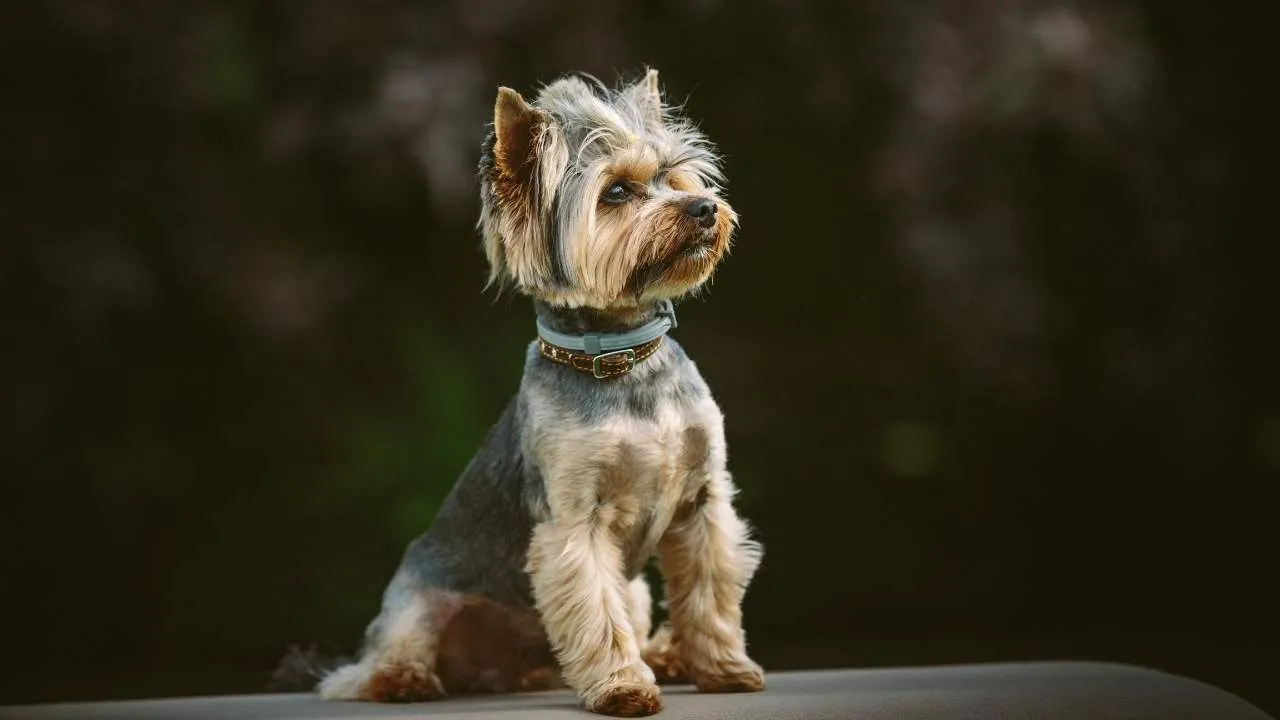
Small Terriers were brought to the city of Yorkshire during the Industrial Revolution in the mid-19th century. It was then crossed with the local small Terriers to develop a rat catcher breed for the cotton and wool mills, the Yorkie. Some other breeds, such as the Skye Terrier, the Dandie Dinmont Terrier, and the Maltese, have also contributed to the development of the breed.
The single-layered coat consists of long hair of a straight and glossy texture. Since it produces less dander and has minimal dog odor, it is considered a hypoallergenic breed. The coat comes in two types: the silky coat (with excellent growth and needs high maintenance) and the woolly coat (poor growth nd needs extensive grooming).
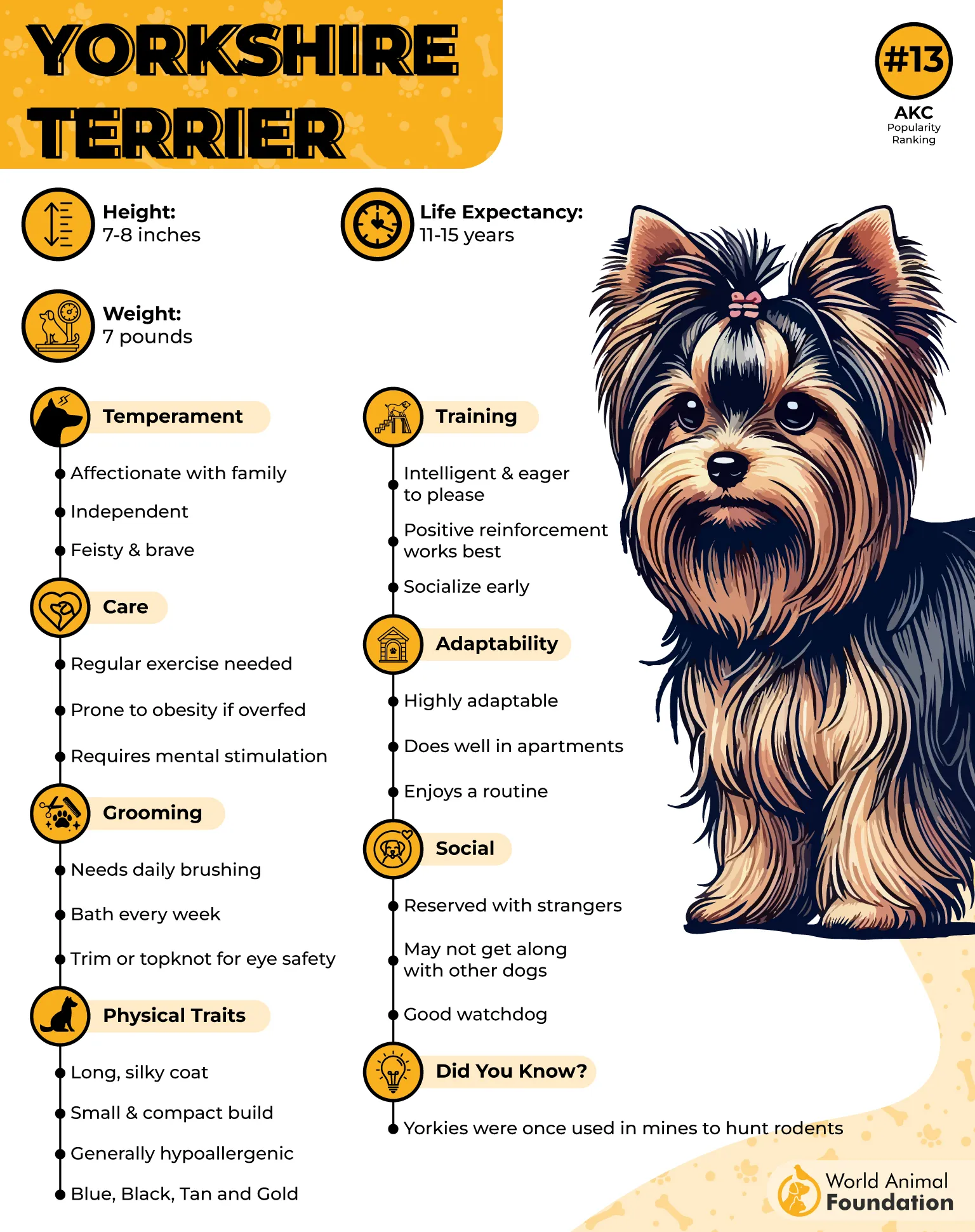
Puppies are born black and tan and transition to a dark steel blue color as they reach maturity. The final coat coloration settles by the age of 2-3 years. The long coat needs daily brushing using a fine-toothed metal comb.
5. Cavalier King Charles Spaniel
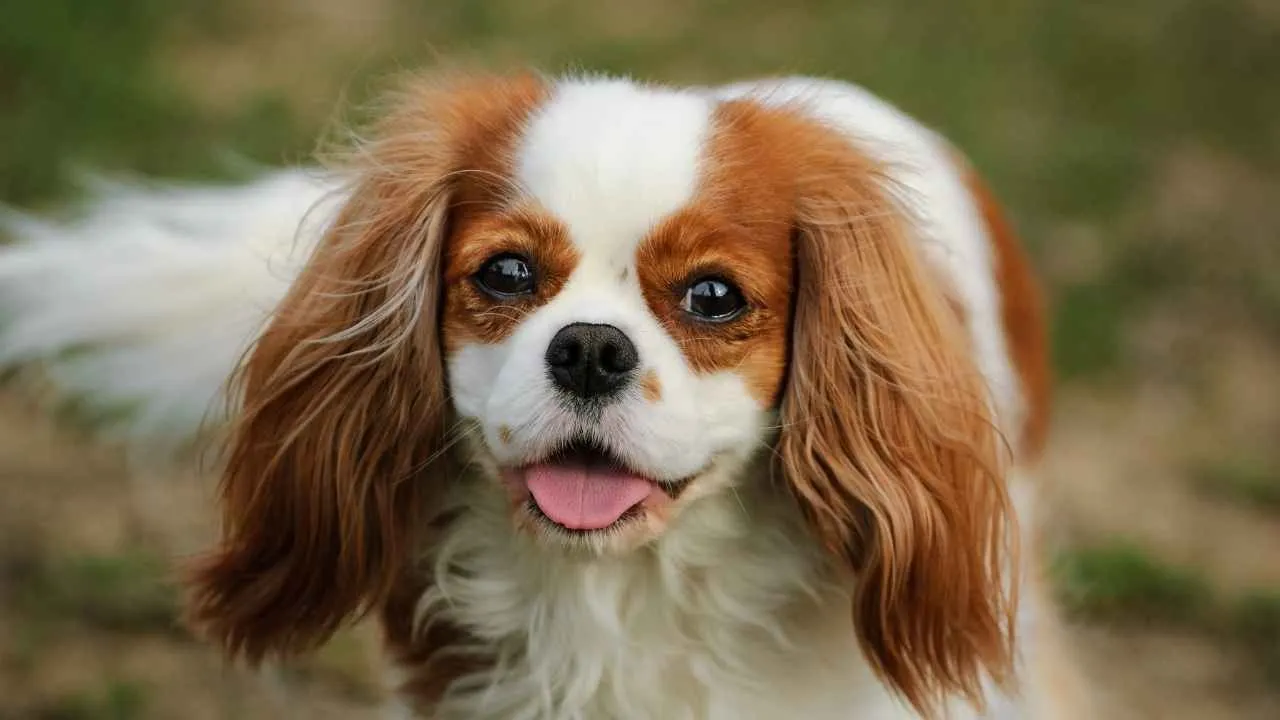
Descended from the small Toy Spaniel, the old breed has been depicted in the ancient paintings of Northern Europe from the 16th to the 18th centuries. Also known as the ‘comfort dog,’ the breed was mostly kept as a lap dog, as noted by Hill’s Pet.
The breed does not experience massive seasonal blow-outs, since it has a single-layered non-shedding coat that grows medium-to-long in length. Slight natural waves are allowed by the AKC. The dog has long fringe (feathering) around ears, chest, legs, feet, and tail. Some common coat colors include blenheim, ruby, and black and tan.
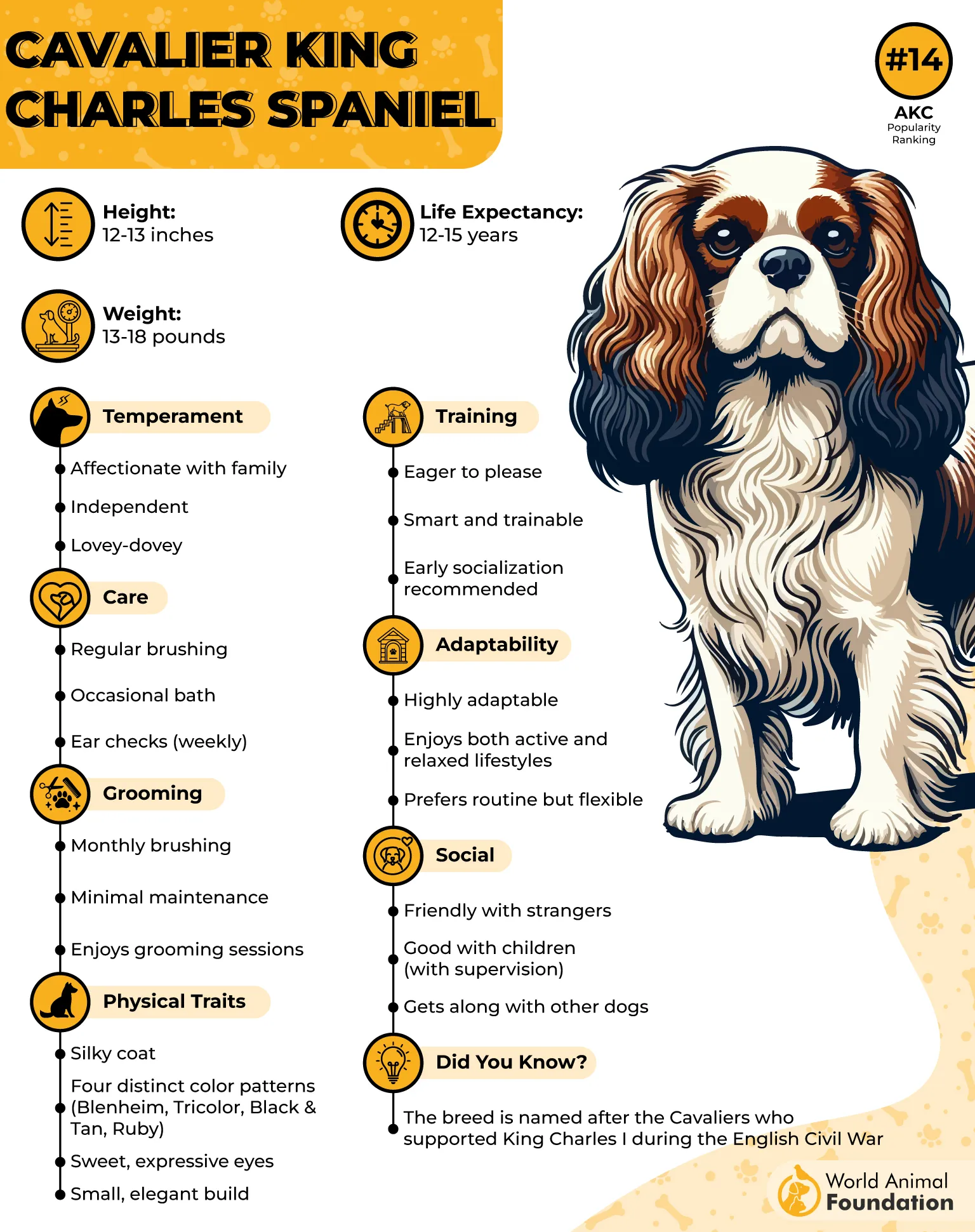
The breed needs daily 10 minutes of brushing, or 3-4 times weekly brushing to prevent knots using a metal greyhound comb or white-toothed comb. Monthly baths are highly recommended.
6. Maltese
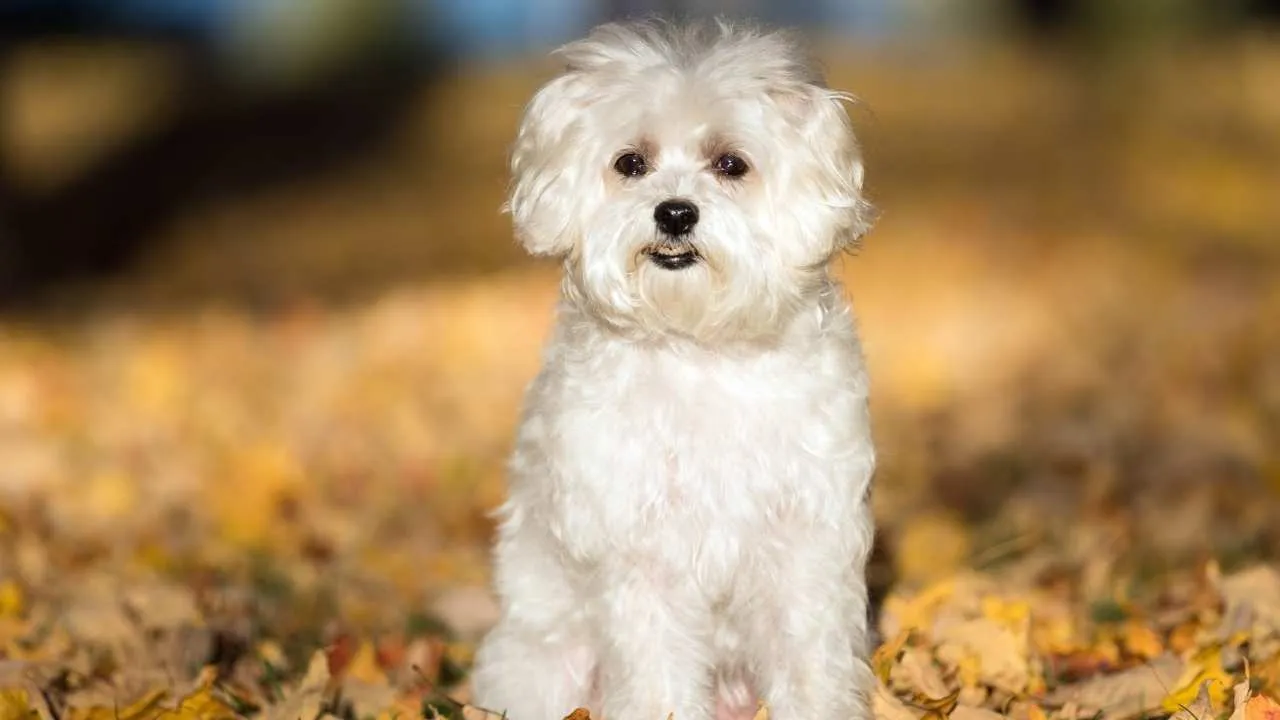
The white dog breed was originally developed in the Maltese region and was kept by the Roman governor of Malta in the 1st century. The artwork of the tiny breed has also been depicted in the Greek tombs from the 5th century. It was famously kept by noble women in their sleeves.
The single-layered long coat has a silky texture. The hair above the eyes is tied in a topknot to prevent irritation. Other light colors, such as light tan and lemon, are also accepted. The coat is highly prone to tangles and severe matting because of the moisture; thus, it needs extensive grooming.
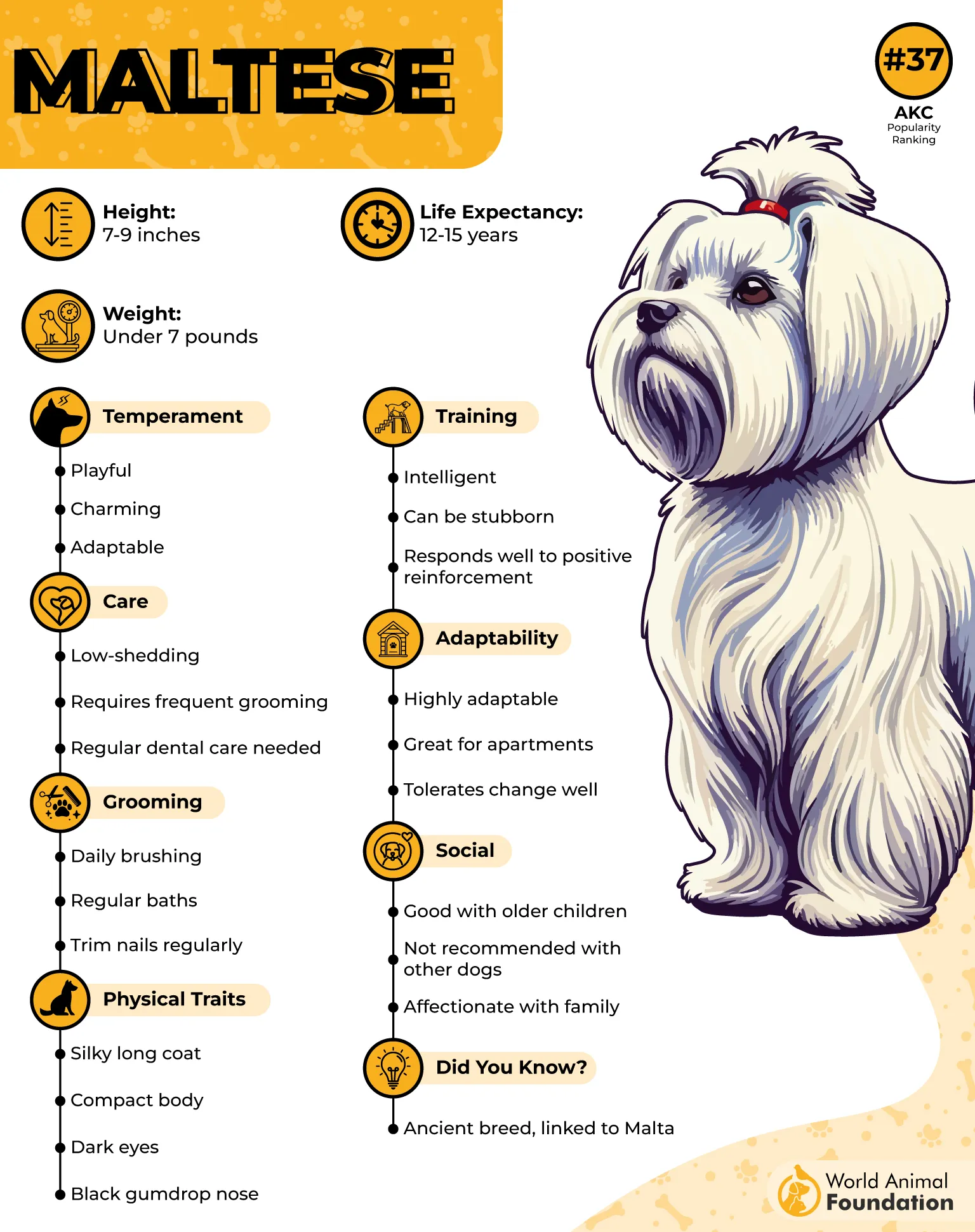
The show coat needs daily brushing (section by section), while the puppy coat needs brushing 2- 3 times a week. Monthly baths are recommended (remove all mats before bathing). Never let the coat air-dry.
7. Pekingese
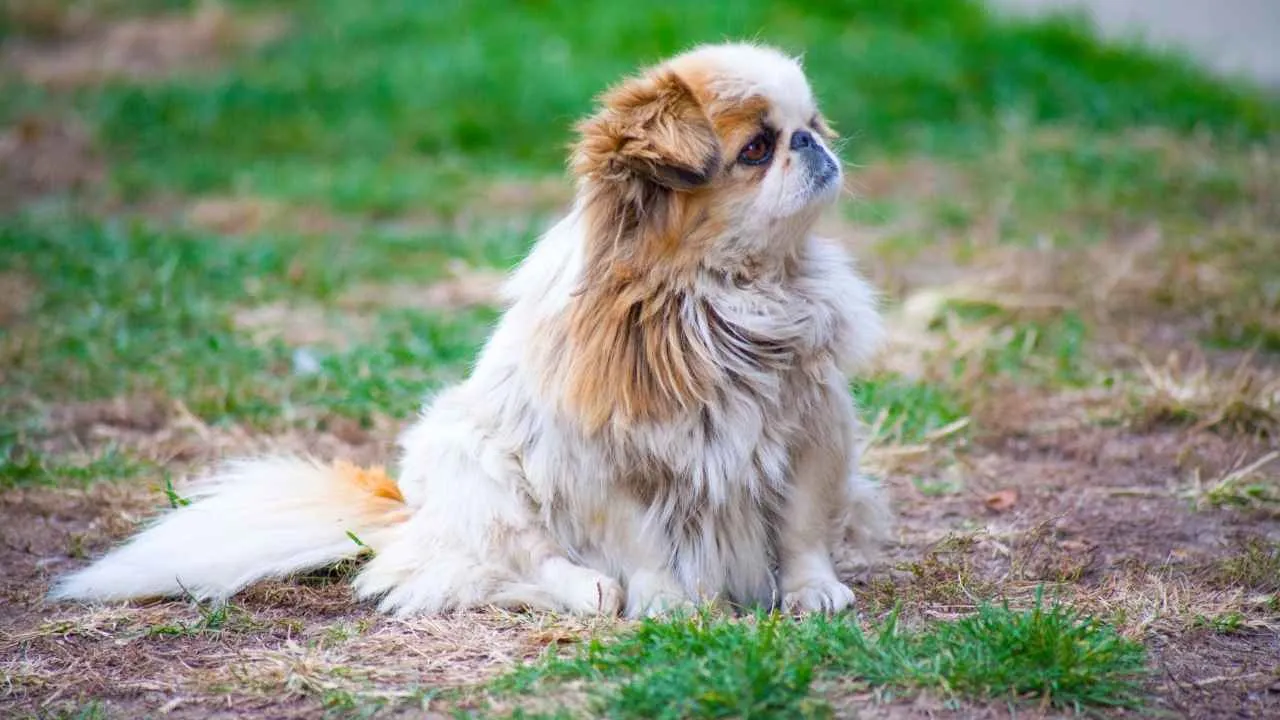
The Pekingese was originally developed in China and was favored by the royal courts as a companion dog. Because of its unique appearance, the breed is prone to certain health issues. It was also kept by the British royalty, including Queen Victoria, who named the dog ‘Looty.’
The fluffy dog breed has a stand-offish double coat with a thick ruff around the neck, feathered ears and legs, a plume tail, and abundant hair covering the toes. The common base colors include red, fawn, cream, white, black, grey, etc. However, the breed is susceptible to heatstroke, skin-fold dermatitis, and matting.
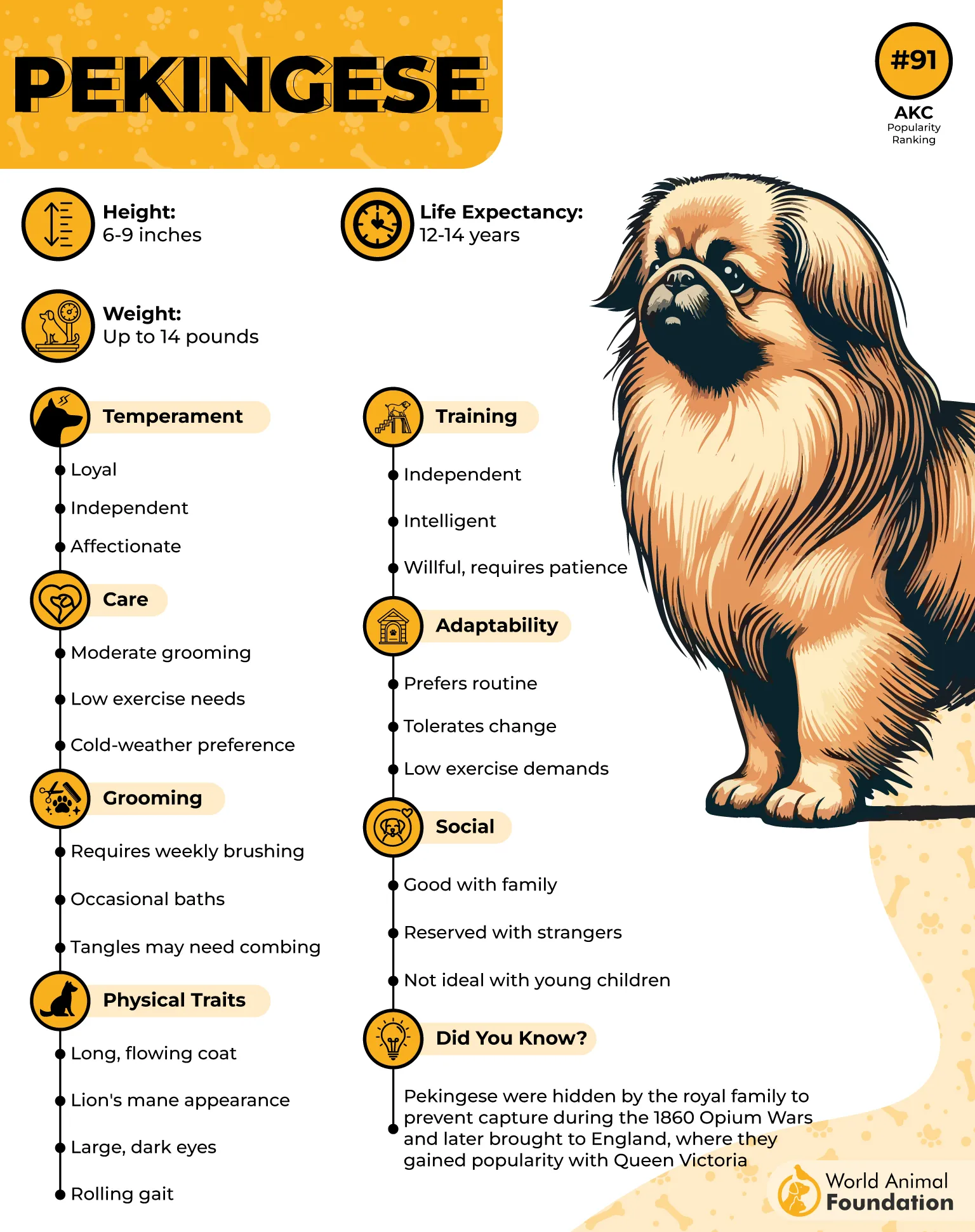
Combing and line brushing are needed 2-3 times a week. High-velocity blow-drying and bathing are required monthly. Daily facial folds and eye cleaning are recommended to prevent infection.
Conclusion
Bringing home a long-haired dog is a decision that changes your daily life in the best ways. There will be grooming sessions, muddy paws, and the occasional “who left fur on the couch?” moment. But there will also be warm greetings, quiet companionship, and a friend who is genuinely happy to see you.
Visit shelters, speak with reputable breeders, and spend time around different dogs when possible. The right match is not always the most popular breed or the fluffiest one. It is the dog whose temperament fits your home and whose needs you can meet with patience. When that connection happens, the extra hair becomes a small price for a lifetime of loyalty.
