




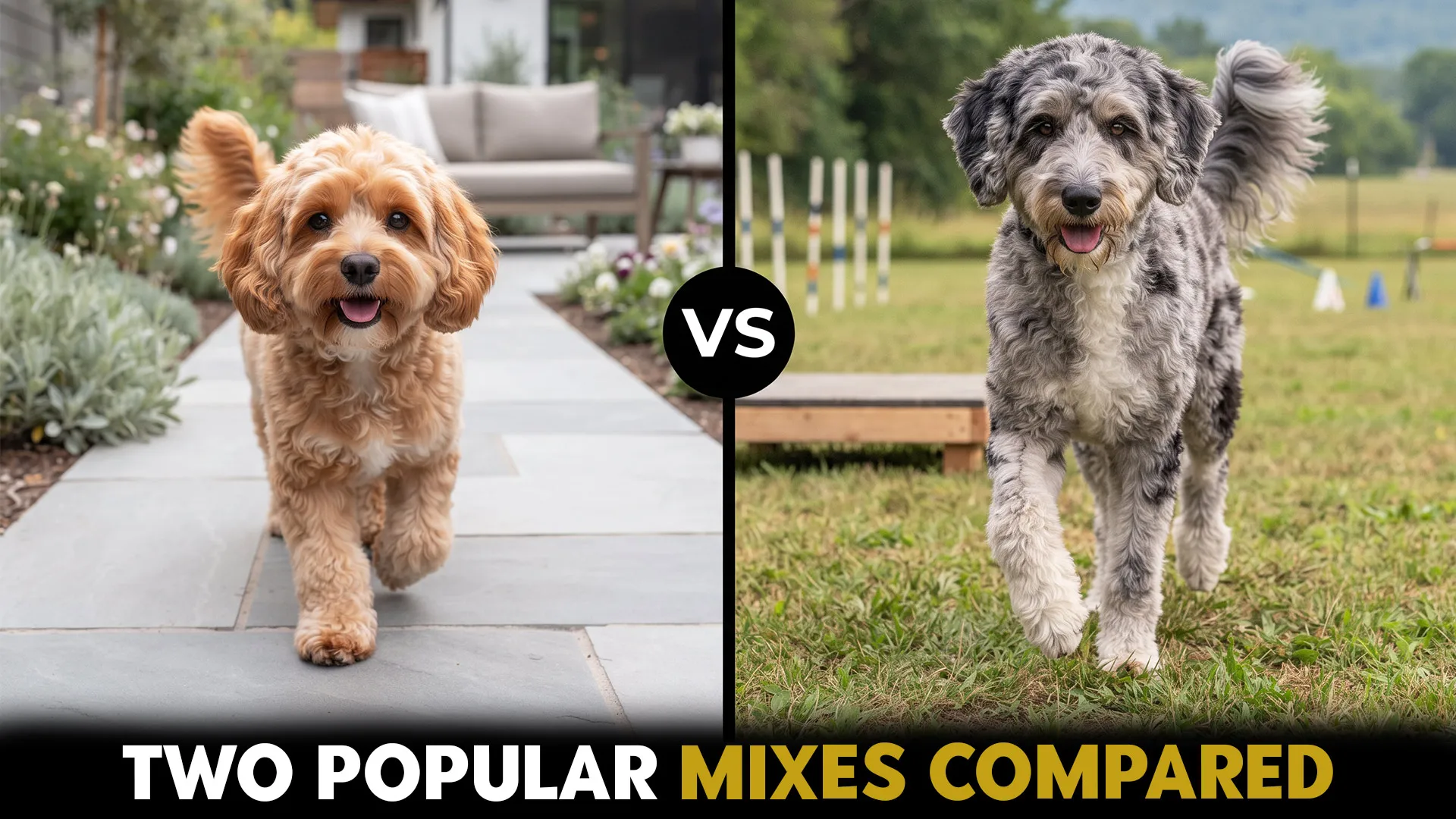
Choosing between a Cavapoo and an Aussiedoodle can be surprisingly difficult. Both are popular Poodle mixes known for their affectionate personalities, intelligence, and appealing coats, but their Cavalier King Charles Spaniel and Australian Shepherd backgrounds give them noticeably different characteristics.
Cavapoos are generally smaller companion dogs, while Aussiedoodles can range from relatively compact dogs to substantially larger, athletic companions. Their exercise requirements, grooming routines, training needs, and household suitability can therefore differ considerably.
Looking beyond their adorable appearances is important when deciding which one fits a particular family. When comparing them, consider size, budget, activity level, personality, grooming commitment, and long-term health.
Cavapoo vs. Aussiedoodle: A Guide to Choosing the Right Breed
1. Origins & Purpose
Cavapoo: A Companion-Focused Cross
The Cavapoo is a cross between the Cavalier King Charles Spaniel and a Toy or Miniature Poodle. The cross became popular in Australia during the 1990s and was developed to combine the Cavalier’s affectionate companion temperament with characteristics associated with the Poodle.
Aussiedoodle: A Mix With Working-Dog Roots
The Aussiedoodle combines the Australian Shepherd with the Poodle. The Australian Shepherd was developed as a versatile herding dog, while the Poodle has historical roots as a water retriever. Today’s Aussiedoodles are primarily companion dogs, but they can still inherit considerable intelligence, energy, and working instincts from their parent breeds.
Different Histories, Different Roles
The Cavapoo’s background is centered more strongly around companionship, whereas the Aussiedoodle comes from two parent breeds with substantial working histories. That distinction can show up in everyday life: Cavapoos often thrive on close human interaction, while Aussiedoodles may look for additional activities and mental challenges.
2. Size & Build
Cavapoo: A Small Companion Dog
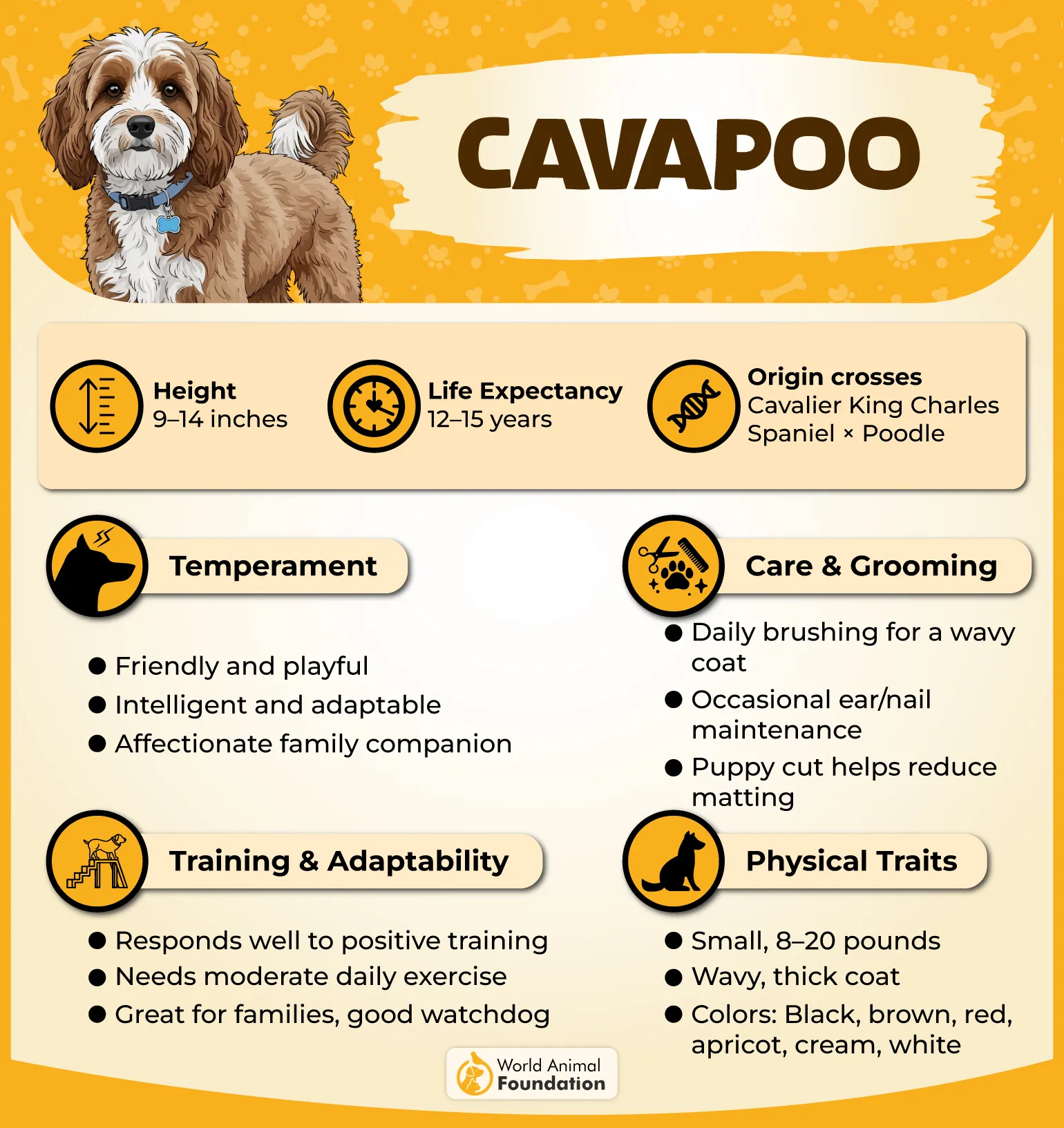
Cavapoos generally stand around 9–14 inches tall and weigh approximately 8–25 pounds. Their eventual size depends heavily on whether the Poodle parent is Toy or Miniature. They typically have a compact body, floppy ears, and a coat that can range from wavy to curly.
Aussiedoodle: Three Common Size Categories
Aussiedoodles have a much broader size range because breeders may use Toy, Miniature, or Standard Poodles. Toy Aussiedoodles can be around 10–12 inches and 6–12 pounds, Miniature Aussiedoodles roughly 12–19 inches and 15–35 pounds, while Standard Aussiedoodles can reach approximately 19–24 inches and 40–70 pounds.
Which One Is Smaller?
The Cavapoo is generally the more compact option, with most individuals falling within a small-dog range. Aussiedoodles can overlap with Cavapoos at their smaller end but may become dramatically larger, particularly when a Standard Poodle is involved. Because both are mixed breeds, looking at the parents’ adult sizes is useful when estimating a puppy’s eventual dimensions.
3. Pricing & Availability
Cavapoo: A Popular Designer Dog With a Wide Price Range
Cavapoos are highly sought-after companion dogs, and reputable breeders commonly charge around $2,000–$4,000 for puppies, although prices can vary according to location, lineage, health testing, and breeder practices, as per Purina. Some current listings show lower or higher figures, so there is no universal market price.
Aussiedoodle: Cost Varies With Size and Breeding
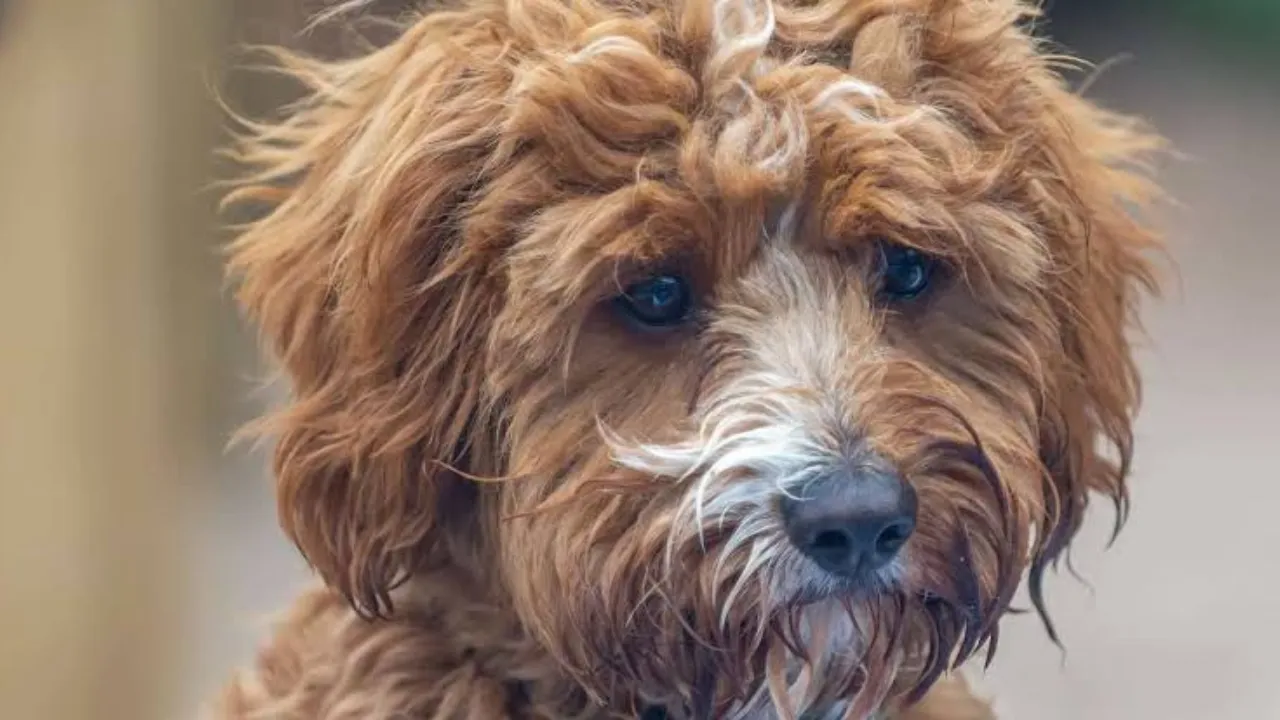
Aussiedoodle prices also fluctuate considerably. Current sources report prices ranging from approximately $500 to $5,000, while a 2026 analysis of listed puppies found a typical range of about $900–$3,000, with a median listed price of approximately $1,900. Size, coat pattern, generation, location, and parental health testing can all influence the asking price.
Comparing Their Purchase Costs
There is significant overlap between the two breeds, so neither has a universally cheaper purchase price. A responsibly bred puppy with appropriate health screening can cost substantially more than an individual advertised at the low end of the market. Prospective owners should therefore examine what is included in the price rather than choosing solely by the cheapest listing.
4. Temperament & Personality
Cavapoo: Affectionate and People-Focused
Cavapoos often inherit the Cavalier’s gentle, social nature alongside the Poodle’s intelligence. Many form close bonds with their families and enjoy being involved in everyday activities. They generally appreciate human company and can become unhappy if regularly left alone for extended periods.
Aussiedoodle: Alert, Lively, and Highly Engaged
Aussiedoodles can be extremely interactive and affectionate dogs. Their Australian Shepherd heritage may contribute herding instincts, alertness, and a strong desire to participate in activities, while their Poodle ancestry adds intelligence. Some individuals can be vocal or energetic, particularly when they are bored or under-stimulated.
Two Social Dogs With Different Levels of Drive
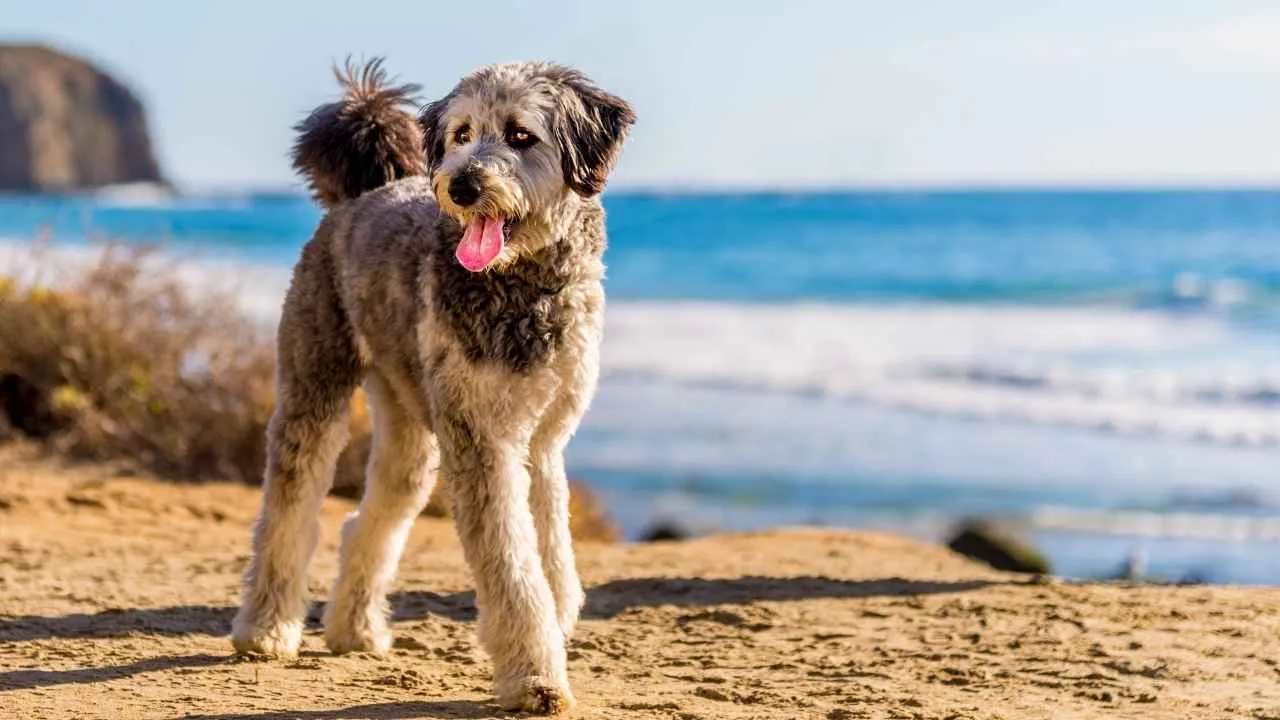
Both breeds can be affectionate and family-oriented, but their day-to-day personalities may feel quite different. The Cavapoo often fits the role of a close companion, whereas the Aussiedoodle may bring more intensity, enthusiasm, and task-oriented behavior. Individual genetics, upbringing, and socialization remain important factors.
5. Exercise Needs & Energy Levels
Cavapoo: Moderate Daily Activity
Cavapoos generally benefit from regular walks, play sessions, and interactive activities rather than extremely strenuous exercise. Around 45–75 minutes of daily activity is a commonly cited range, although individual needs vary. Their small size also means that indoor games can contribute meaningfully to their daily exercise.
Aussiedoodle: At Least an Hour of Activity
Aussiedoodles tend to have considerably more energy, especially when they inherit strong working characteristics from the Australian Shepherd. PetMD recommends at least one hour of exercise and stimulation per day, with additional activity potentially needed for particularly energetic individuals. Herding instincts may also require careful management around smaller animals or children.
Which One Requires More Exercise?
The Aussiedoodle generally demands the more active routine. A Cavapoo can often be satisfied with walks, play, and moderate interaction, while an Aussiedoodle may need a combination of physical exercise and mentally challenging activities. Owners who enjoy training, hiking, dog sports, or interactive games may find the Aussiedoodle’s energy easier to accommodate.
6. Trainability & Intelligence
Cavapoo: Responsive With Positive Reinforcement
Cavapoos can be receptive to training because both parent breeds are intelligent and people-oriented. Short sessions using treats, praise, and other rewards can help maintain their interest. Early socialization and basic obedience are particularly useful for establishing good household habits.
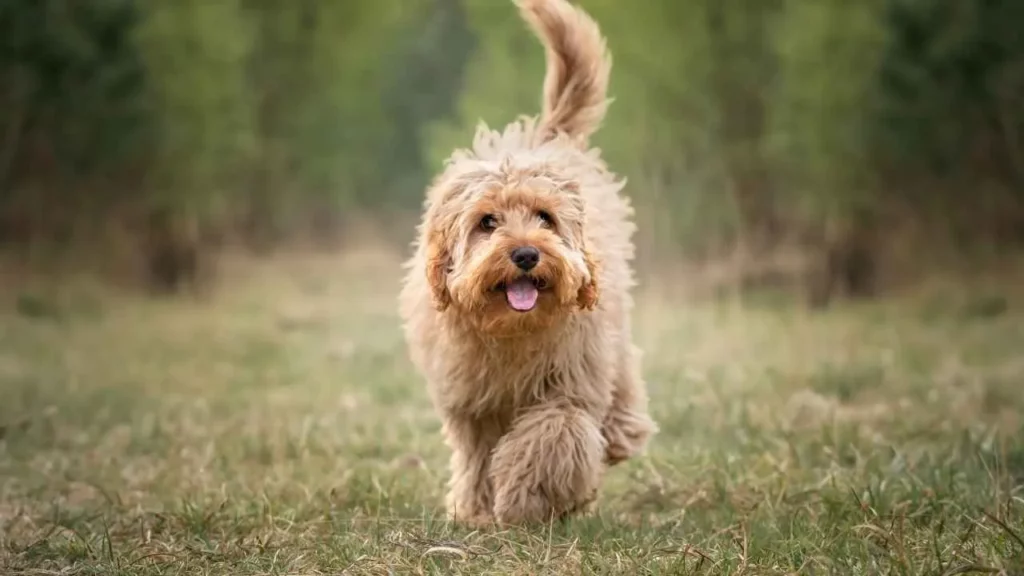
Aussiedoodle: Exceptionally Quick to Pick Things Up
Aussiedoodles can inherit substantial problem-solving ability from both the Australian Shepherd and Poodle. They often enjoy trick training, obedience exercises, interactive toys, and dog sports. Their intelligence can be an advantage during training, but it also means repetitive routines may not provide enough mental stimulation.
Both Are Trainable, but the Aussiedoodle May Need More Mental Work
Neither breed is generally considered difficult to teach when training is consistent and rewarding. The key difference is how much mental engagement they may require. Cavapoos can often be satisfied with foundational obedience and everyday manners, while Aussiedoodles may benefit from increasingly challenging tasks as they mature.
7. Grooming Needs & Shedding
Cavapoo: Low-Shedding Potential With Regular Grooming
Cavapoo coats can be straight, wavy, or curly depending on inheritance. Some shed relatively little because of their Poodle ancestry, but no Cavapoo should automatically be considered completely non-shedding or hypoallergenic. Regular brushing is important, and professional grooming may be needed to prevent mats and maintain the coat.
Aussiedoodle: A Coat That Can Become High Maintenance
Aussiedoodle coats vary significantly and may be wavy or curly. Longer, denser coats require frequent brushing to prevent tangles and matting, while professional grooming may be necessary at regular intervals. Their ears also deserve attention, particularly after bathing or swimming.
Neither Breed Is Truly Maintenance-Free
Both mixes can have lower-shedding coats, but that benefit comes with grooming responsibilities. The Cavapoo may be easier to manage because of its smaller size, while a large Aussiedoodle with a dense curly coat can require considerably more brushing and grooming time. Coat type is therefore more important than the breed name alone.
8. Health & Lifespan
Cavapoo: Typically 12–15 Years
Cavapoos commonly have a lifespan of approximately 12–15 years. Because they inherit traits from both Cavalier King Charles Spaniels and Poodles, they can be susceptible to health conditions found in either parent breed. Potential concerns include heart disease, patellar luxation, hip problems, eye conditions, and dental issues.
Aussiedoodle: Around 10–13 Years
Aussiedoodles are generally reported to have a lifespan of approximately 10–13 years, although some sources give a broader 10–15-year range. Their potential health concerns can include orthopedic and eye conditions, with the Australian Shepherd side also carrying considerations such as the MDR1 gene mutation. Health testing of both parent dogs is therefore particularly important.

Comparing Longevity and Health Considerations
Published lifespan estimates overlap, but Cavapoos are commonly cited around 12–15 years, while Aussiedoodles are often placed around 10–13 years. Neither crossbreed is guaranteed to avoid inherited conditions. Responsible breeding, appropriate veterinary care, healthy weight, preventive healthcare, and screening of the parent dogs can all influence an individual dog’s long-term well-being.
9. Which Adorable Companion Is Right for Your Family?
Cavapoo: A Smaller Dog for Companion-Oriented Homes
A Cavapoo may suit families looking for a relatively small, affectionate dog that enjoys daily interaction without requiring an especially demanding exercise schedule. Its 9–14-inch height, 8–25-pound weight range, and 12–15-year typical lifespan make it a manageable option for many households, although grooming and companionship needs should not be overlooked.
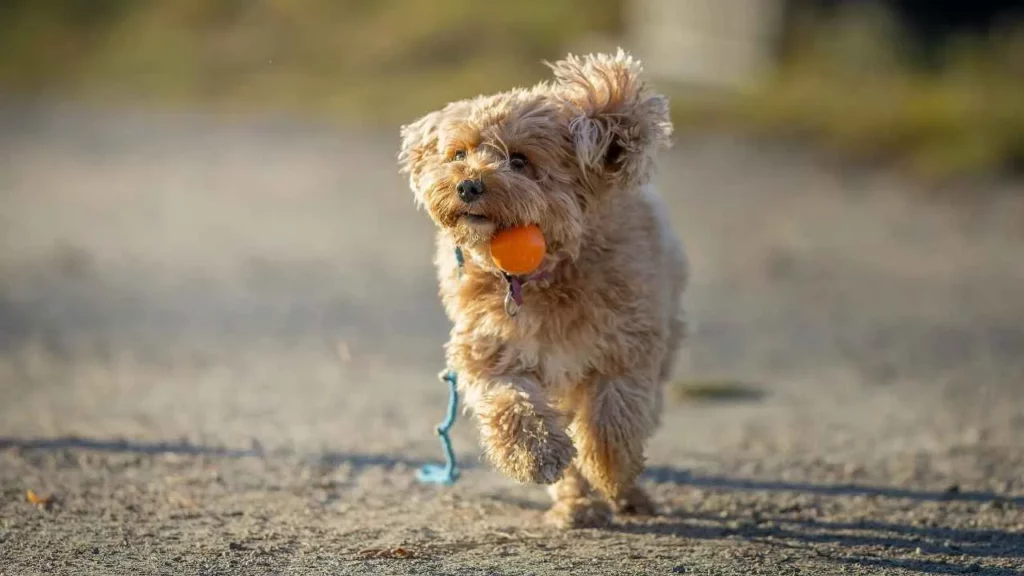
Aussiedoodle: A More Active Choice for Engaged Families
An Aussiedoodle can be a better match for households prepared to provide more physical activity, training, and mental stimulation. Depending on its size variety, it can range from roughly 6 to 70 pounds, with Standard individuals reaching around 19–24 inches. Its lifespan is commonly estimated at approximately 10–13 years, with some sources reporting a broader range.
Which Breed Fits Which Lifestyle?
The comparison ultimately comes down to lifestyle rather than appearance. The Cavapoo generally offers a smaller package with moderate exercise needs and a strong desire for companionship. The Aussiedoodle can bring greater athletic ability, a wider size range, and a stronger need for daily stimulation.
Families should consider their available time, living space, grooming budget, activity level, and tolerance for training demands before choosing between them.
Conclusion
Cavapoos and Aussiedoodles share Poodle ancestry, but their other parent breeds create meaningful differences. The Cavapoo combines the Cavalier King Charles Spaniel with a Toy or Miniature Poodle and generally remains a small companion dog. The Aussiedoodle pairs a Poodle with an Australian Shepherd and can range from a small dog to a substantially larger, athletic companion.
In terms of size, Cavapoos generally fall around 9–14 inches and 8–25 pounds, while Aussiedoodles can range from approximately 10–24 inches and 6–70 pounds, depending on their size variety. Their reported puppy prices also overlap considerably, while typical lifespan estimates place Cavapoos around 12–15 years and Aussiedoodles around 10–13 years.
Neither breed is automatically the right fit for every family. The better match depends on whether a household wants a smaller, moderately active companion or a potentially larger dog that needs more exercise, training, and mental engagement.
Considering the dog’s temperament, the parents’ health history, and the owner’s daily routine can make the decision much more informed.
