




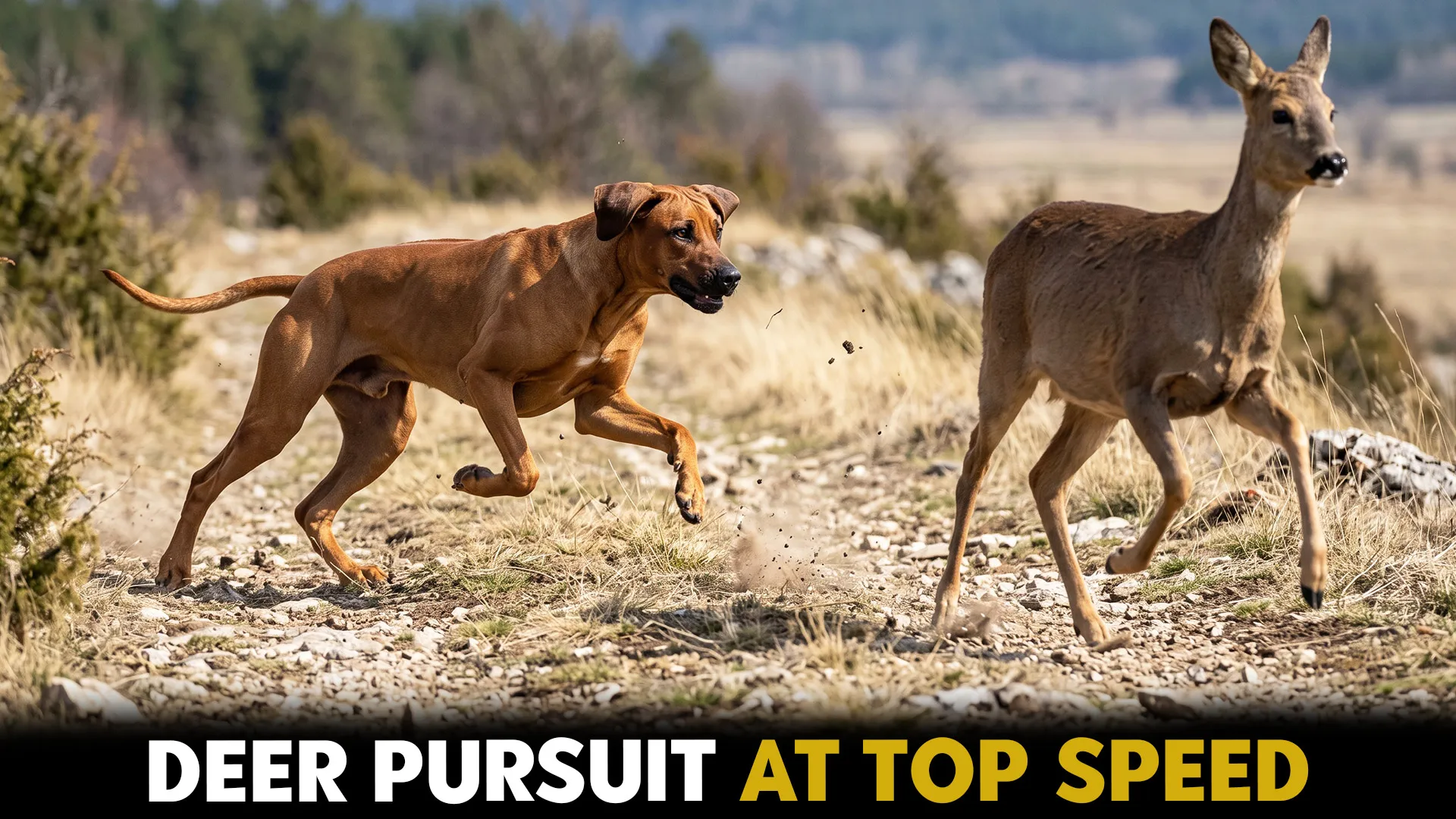
Deer can accelerate quickly, change direction without sending a calendar invite, and disappear into woodland cover within seconds.
A capable deer-tracking dog therefore needs more than raw pace—it also requires scenting ability, endurance, judgment, responsiveness, and enough self-control to avoid turning every sighting into uncontrolled chaos.
Let’s talk about dog breeds that can reach impressive speeds when hunting deer and become phenomenal hunting companions.
Dog Breeds Known for Lightning Speed During Deer Pursuits
1. Weimaraner
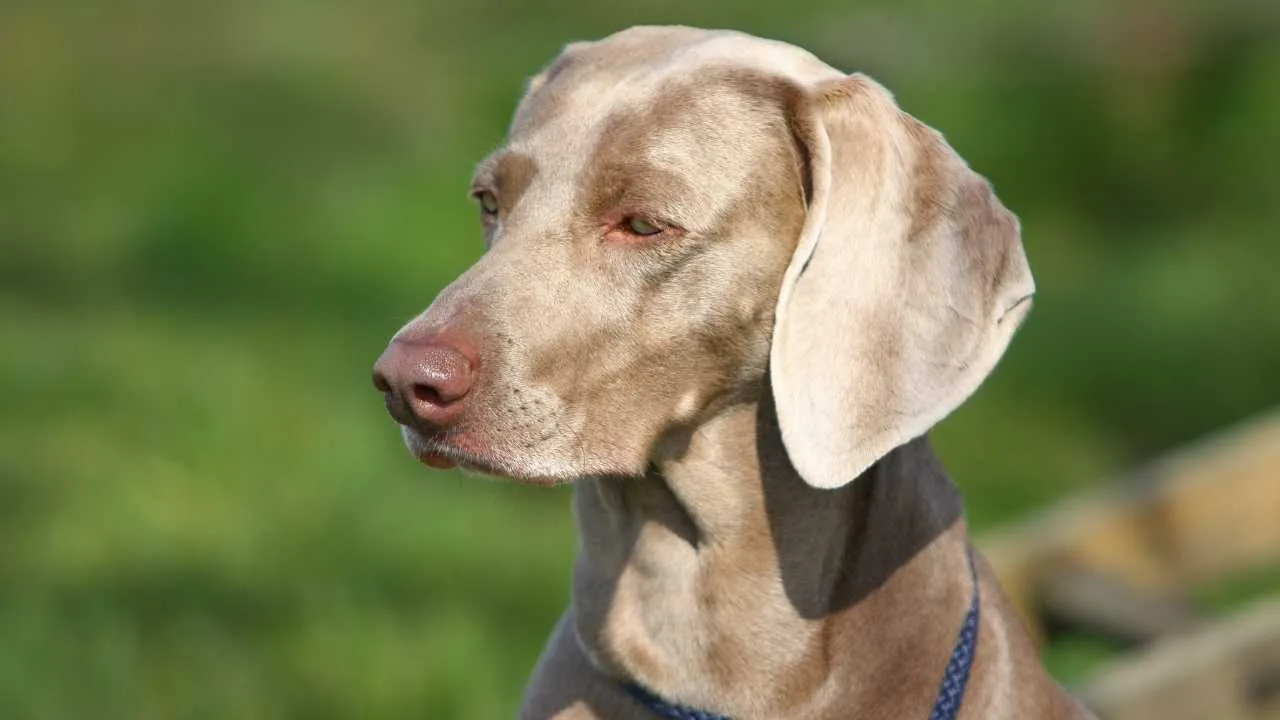
The Weimaraner was developed in early nineteenth-century Germany for demanding big-game work, claims AKC. Breeders combined hound and pointing-dog qualities to produce an athletic hunter with strong scenting ability, sharp vision, courage, stamina, and impressive ground speed.
Unlike a pure sighthound, this loyal companion does not depend solely on spotting a deer and exploding into pursuit. It can work scent through forest edges, fields, and broken terrain, using speed to sweep a larger area and quickly investigate fresh tracks or disturbed vegetation.
These wonderful pets belong to the hunt-point-retrieve tradition, meaning thoughtful control is more important than endless chasing.
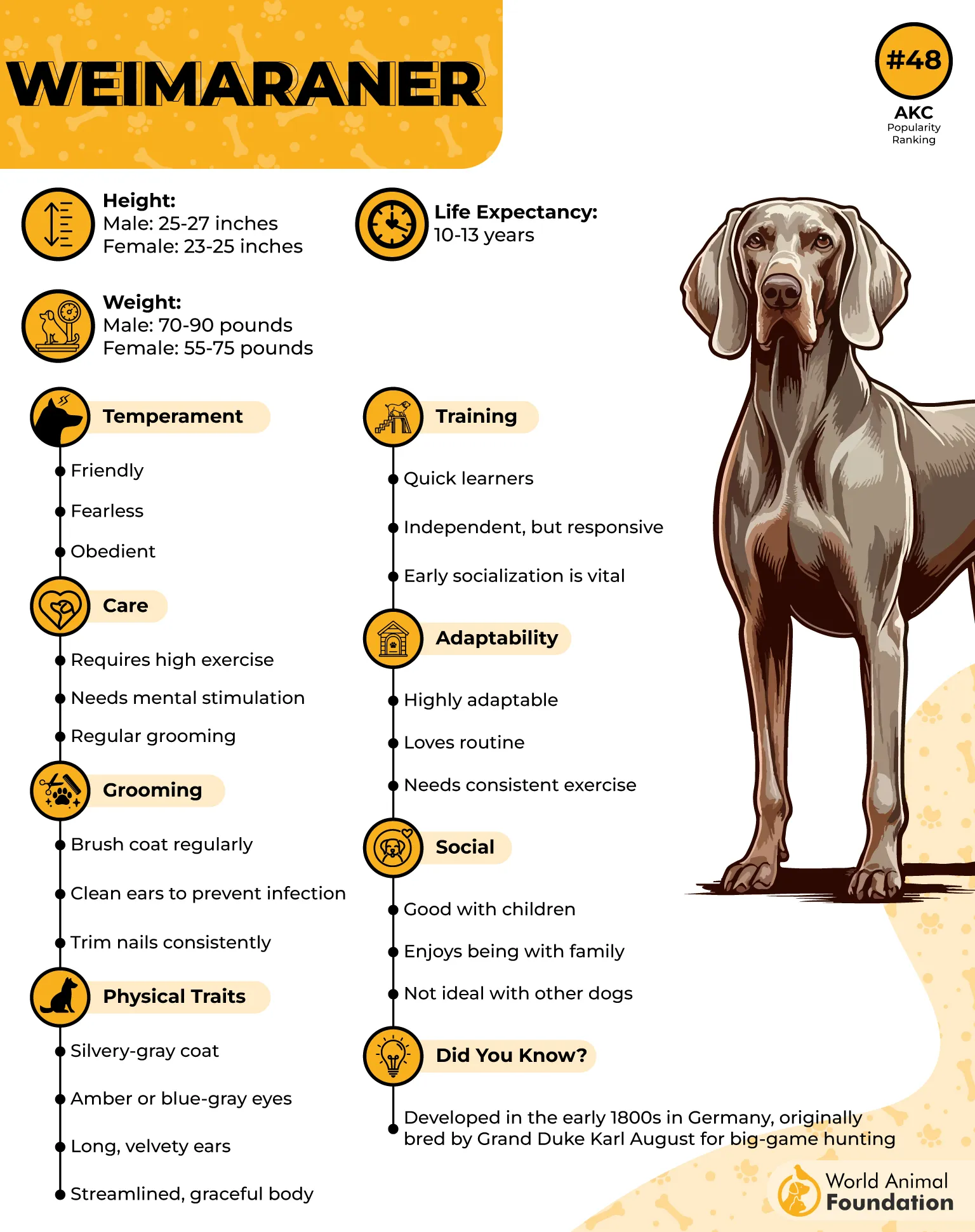
Their pace allows them to move ahead, check likely bedding or crossing areas, and return to the handler without losing valuable time, while their pointing instinct can freeze the action when quarry is located.
Their Specific Deer Hunting Strategy
Rapid terrain coverage: The Weimaraner uses a fast, systematic search to inspect woodland margins, feeding routes, and likely deer crossings before scent disperses.
Speed followed by control: Once fresh deer odor is detected, it should shorten its stride, work the trail precisely, and point or indicate instead of continuing a reckless chase.
Recovery advantage: During wounded-deer tracking, its endurance helps it follow a changing trail across several miles while still moving quickly between confirmed scent locations.
2. Saluki
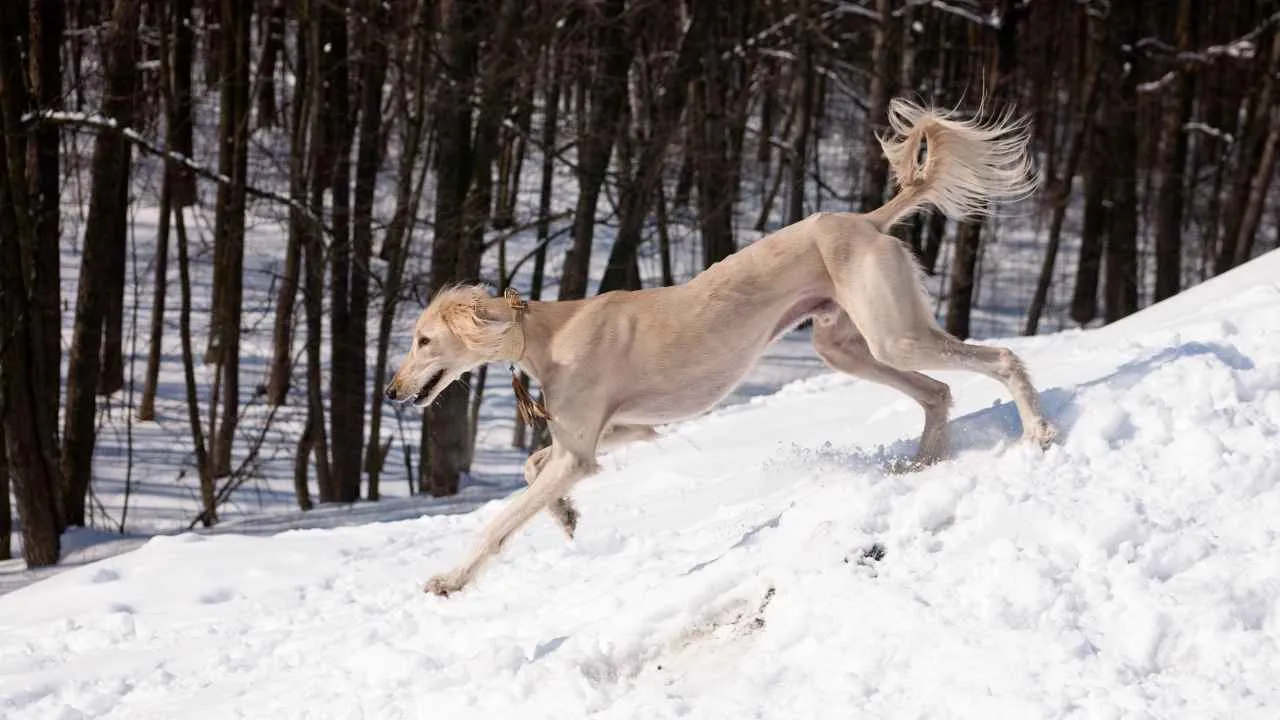
The Saluki is among the world’s oldest recognized hunting types, with evidence of similar dogs dating back thousands of years across Egypt and the Middle East. Nomadic hunters valued these elegant hounds for their ability to pursue swift animals such as gazelles, hares, and foxes.
These high-energy dogs are genuine speed specialists, with their running speed around 30–35 miles per hour, though some historical claims go even higher. Their narrow bodies, deep chests, flexible movement, long legs, and light frames allow them to accelerate rapidly.
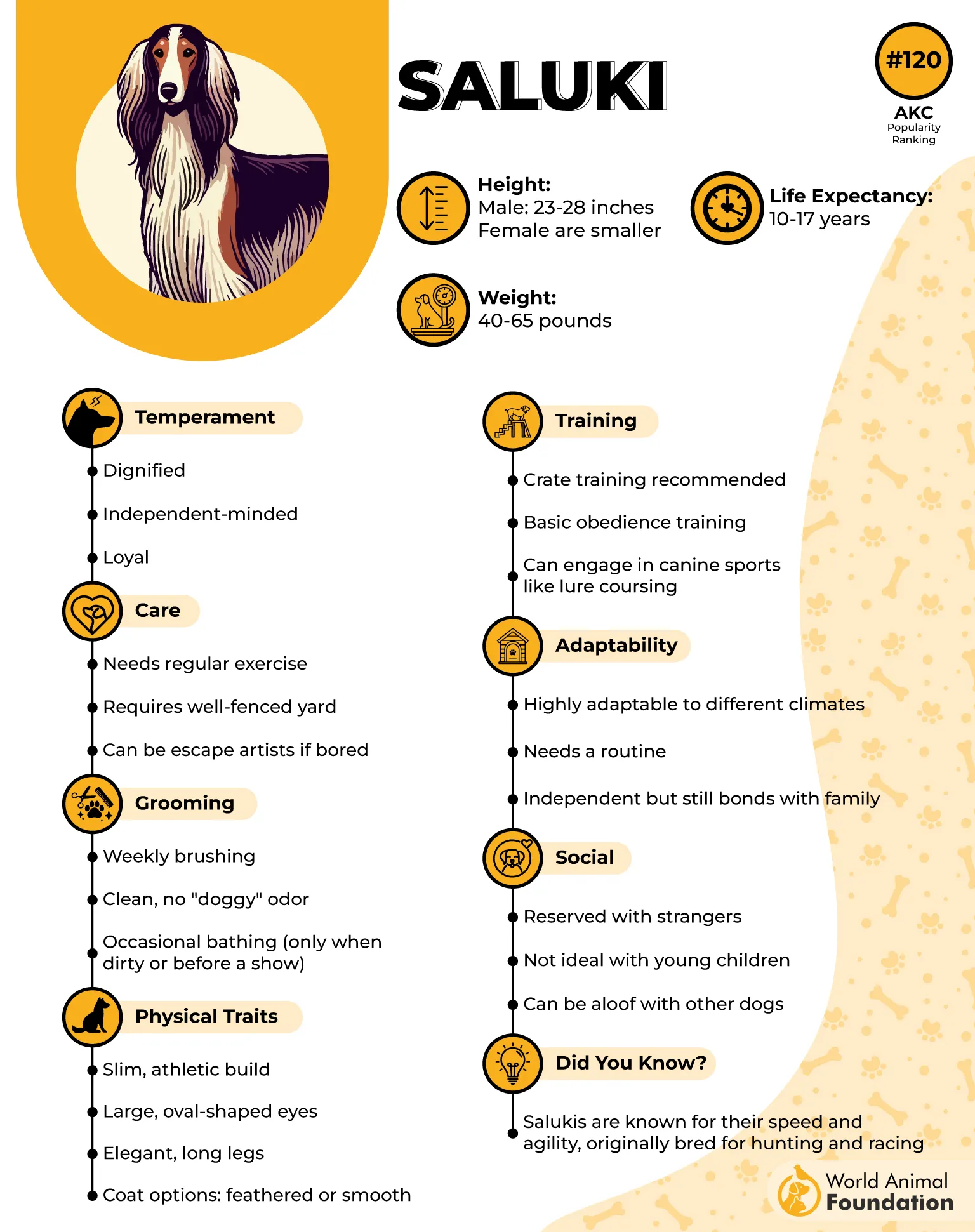
During a deer pursuit, it would rely primarily on sight rather than patiently sorting scent at walking pace. Its speed is most effective on open or semi-open ground, where the dog can watch the deer’s turns, match directional changes, and close the distance with long, economical strides.
Hills Pet says the breed’s endurance and excellent jumping ability set it apart from dogs built only for short bursts of speed.
Their Specific Deer Hunting Strategy
Visual lock-on: The Saluki identifies a moving deer with its exceptional eyesight and accelerates immediately rather than spending time reconstructing the route through scent.
Long-stride pressure: It uses smooth, ground-covering strides to remain close enough to react when the deer turns, slows, or changes terrain.
Energy conservation: Instead of running at maximum output every second, an experienced coursing hound varies its pace so it can produce another burst when the quarry attempts to escape.
3. Rhodesian Ridgeback
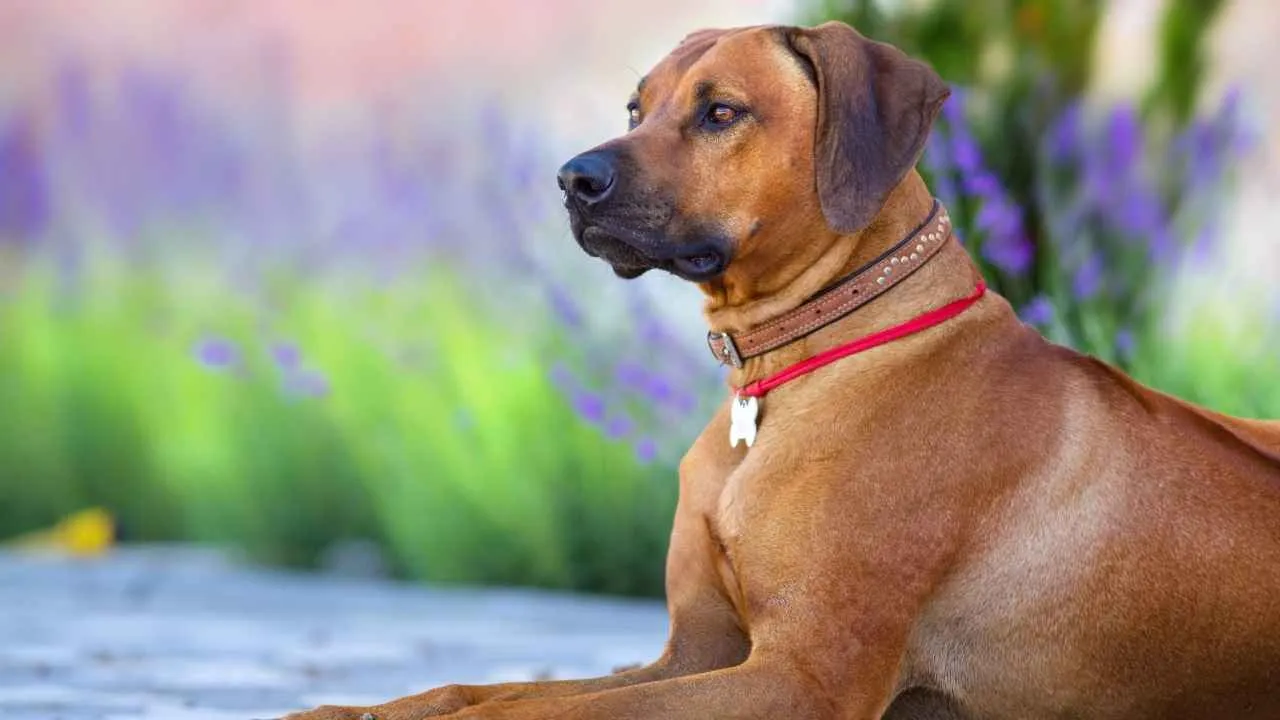
A Ridgeback’s speed is less about producing the fastest ten-second sprint and more about moving powerfully for an extended period. It has a muscular body, long legs, deep chest, and heat tolerance.
When following deer, the Ridgeback can combine scent tracking with visual pursuit after the animal breaks cover. Royal Canin says that its fast cruising pace helps it maintain contact across open ground, while its strength allows it to climb, turn, and continue through uneven terrain that might disrupt a lighter sprinter.
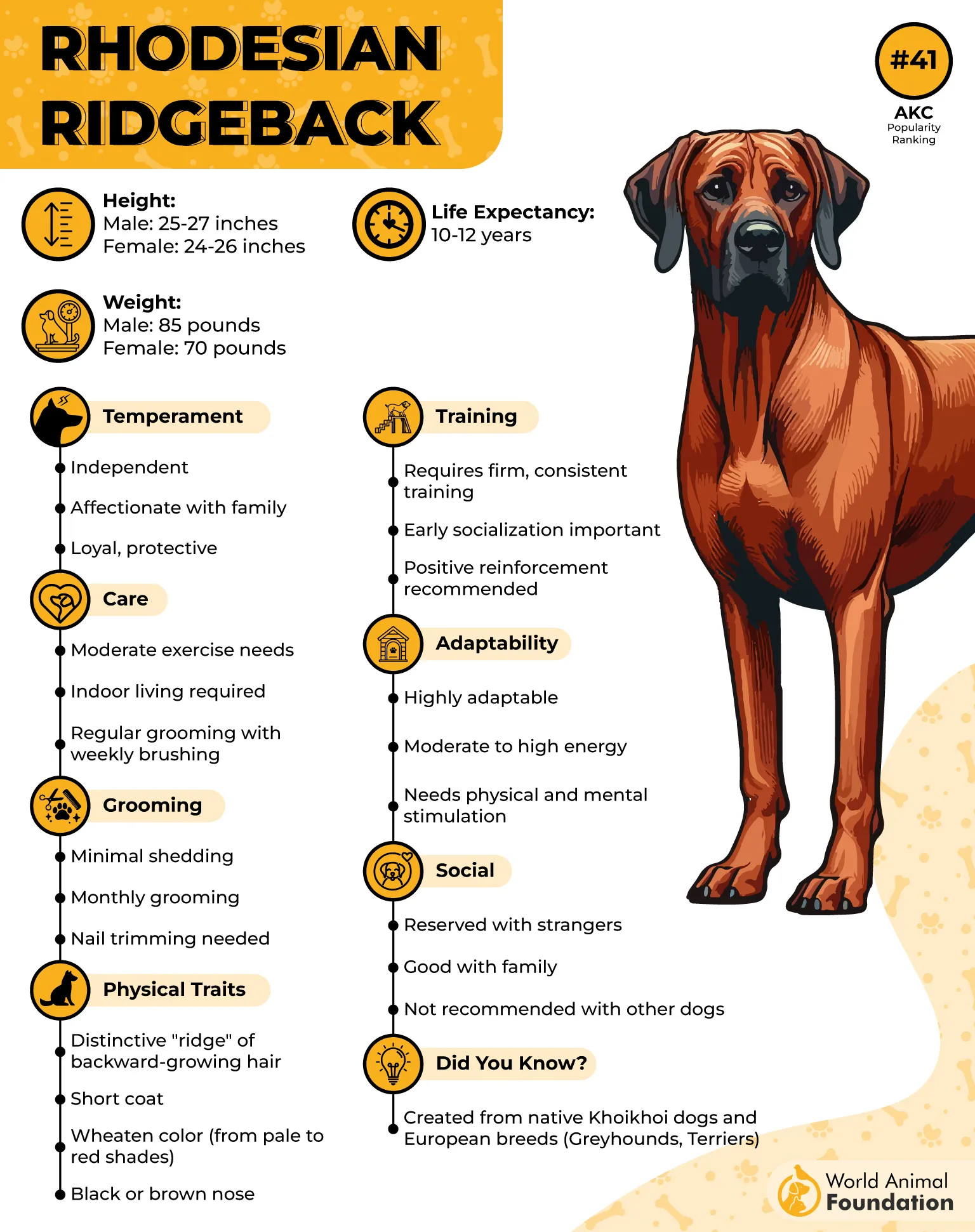
The breed is also known for working quietly, which creates both advantages and complications. Silence allows the dog to approach without constantly announcing its location, but it can make it difficult to follow its progress when vegetation blocks the handler’s view.
These hunting dogs are intelligent, independent, physically strong, and not always interested in repeating exercises they already understand.
Their Specific Deer Hunting Strategy
Sustained pursuit: The Ridgeback maintains a strong traveling pace behind a deer instead of spending all its energy during the first seconds of the chase.
Terrain adaptation: It uses power and balance to continue across scrub, slopes, and uneven earth where a lighter sprinting dog might lose momentum.
Controlled pressure: When trained for tracking or recovery, it closes distance without crashing directly into the animal, giving the handler time to follow safely.
4. Vizsla
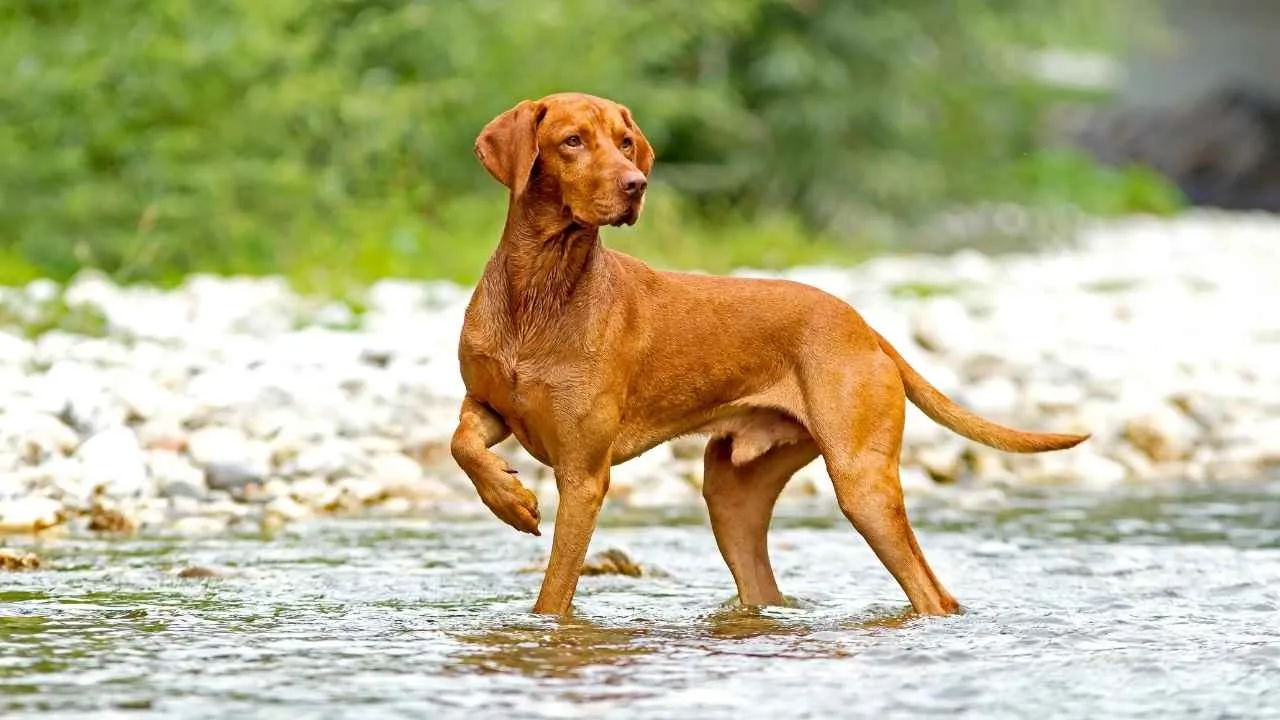
Vizslas use speed differently from Salukis or Sloughis because they are not classic sight-coursing hounds. Their quick, athletic movement allows them to quarter efficiently in front of a handler, checking scent across a broad section of ground without ranging so far that communication disappears.
Omlet mentions that the breed is particularly useful for tracking wounded game because it combines a strong nose with pace and persistence. Instead of trying to overtake a healthy deer, a properly trained Vizsla follows scent, blood, disturbed soil, and other indicators while using speed to move between reliable trail points.
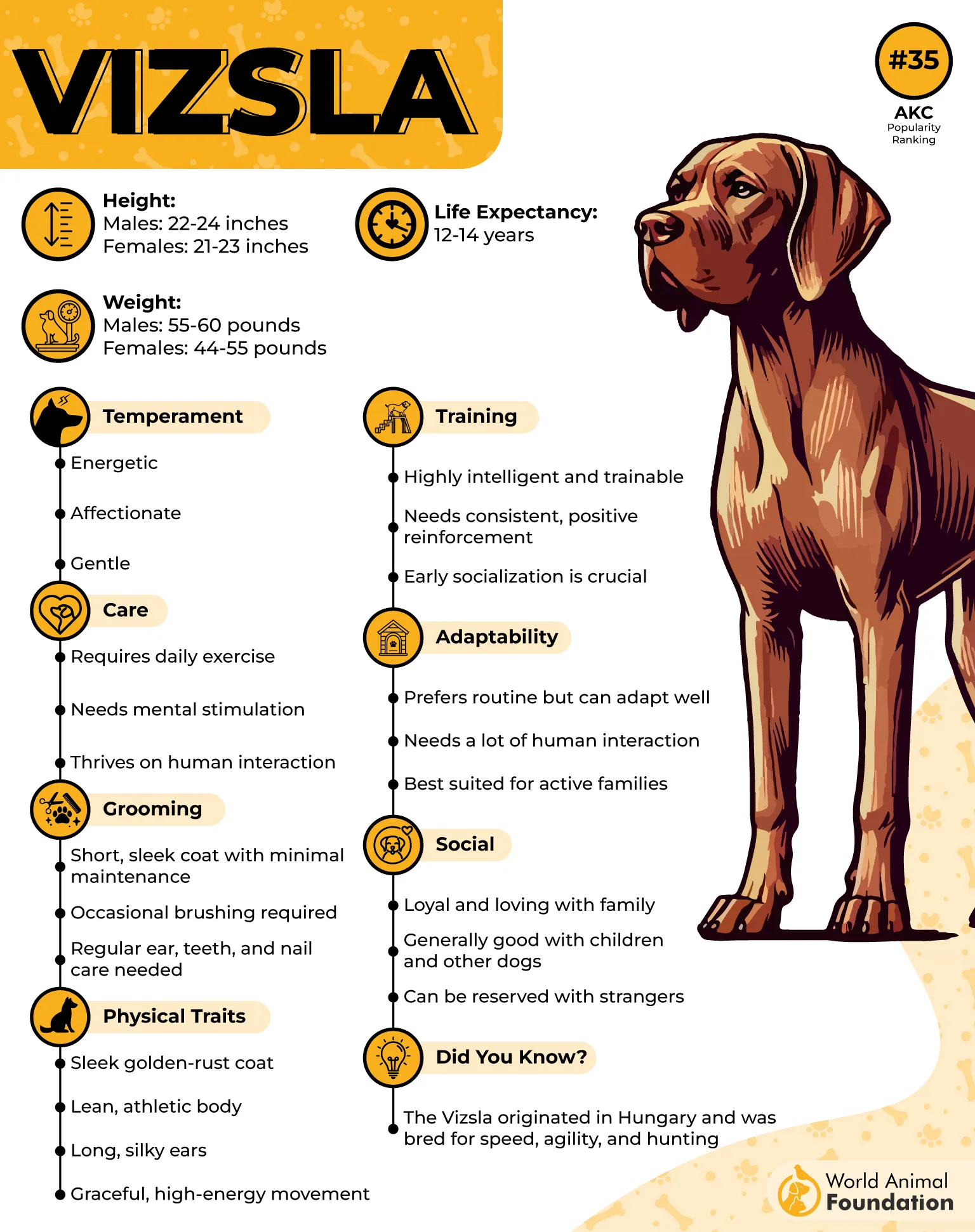
Vizslas are famous for duck hunting as they stay in close contact with their handlers, a trait that sets them apart from highly independent coursing breeds. That communication allows the handler to control how quickly the team advances and pauses at uncertain sections.
Their enthusiasm can still become chaotic without steadiness training, but a well-schooled Vizsla often works like a fast teammate rather than a freelance wildlife influencer.
Their Specific Deer Hunting Strategy
Fast quartering: The Vizsla moves in controlled arcs to sample a wide scent area and locate the direction taken by a deer more quickly.
Handler-linked pace: It repeatedly checks its position relative to the hunter, allowing speed to be adjusted before the dog overshoots a turn in the trail.
Swift recovery work: Once wounded-deer scent is confirmed, the Vizsla uses stamina and efficient movement to follow it across fields, woodland, or shallow water.
5. Scottish Deerhound
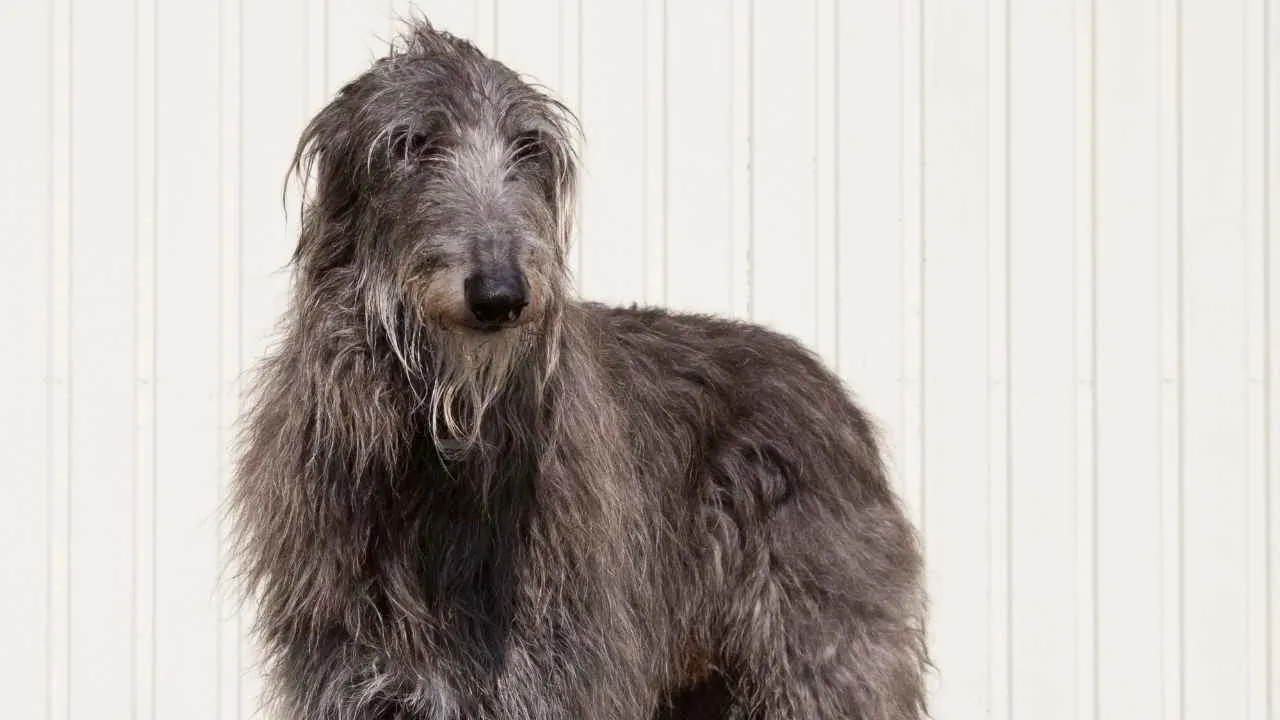
Scottish Deerhounds may look like chilled-out sofa philosophers at home, but historically, they could switch into lightning-speed pursuit mode the moment deer started running. Unlike many hunting breeds, these powerful sighthounds were specifically bred to chase and bring down Scottish red deer across enormous stretches of rugged Highland terrain.
Basically, beneath that shaggy, introverted exterior was a serious four-legged pursuit machine capable of keeping up with quarry far larger than itself.
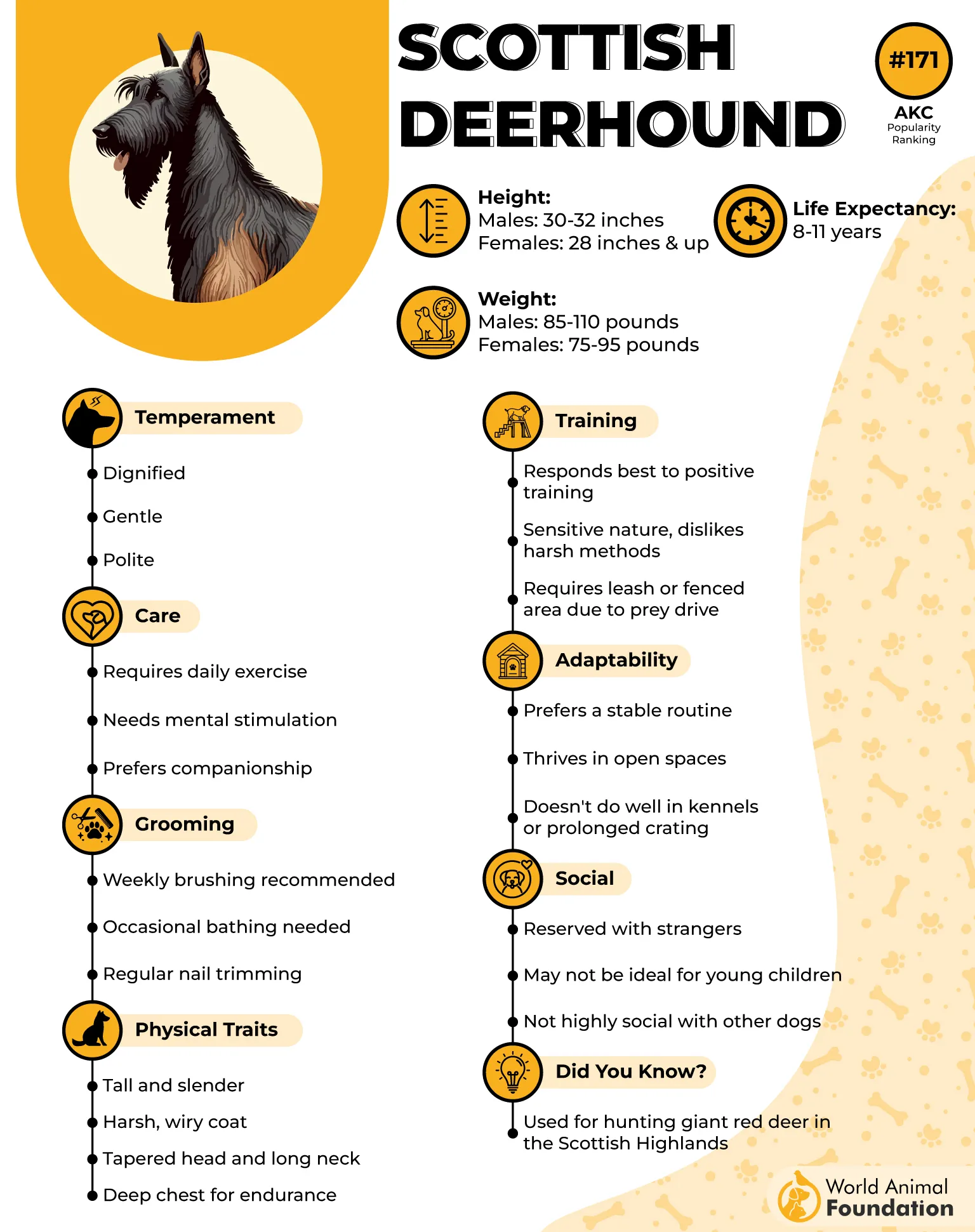
Their hunting job required more than simply running fast in a straight line, because Scotland’s hills, uneven ground, rocks, and open moorland demanded balance, stamina, and rapid changes of direction.
Once a Deerhound spotted moving prey, those long legs and deep chest allowed it to cover ground incredibly quickly while maintaining the endurance needed for a demanding chase.
That combination of explosive acceleration and graceful galloping is why the breed could pursue red deer, reportedly several times its own weight, without looking remotely as chaotic as most of us do when running for a bus.
Their Specific Deer Hunting Strategy
Rapid deployment: Its acceleration helps it reach a deer’s last confirmed location and begin searching before the freshest odor fades.
Route checking: It can quickly inspect multiple trail exits under direction, returning to the handler when one route fails to produce consistent scent.
Tracking rather than coursing: Its most responsible deer-related use is controlled recovery of wounded game, not physically chasing or attempting to catch a healthy animal.
6. Sloughi
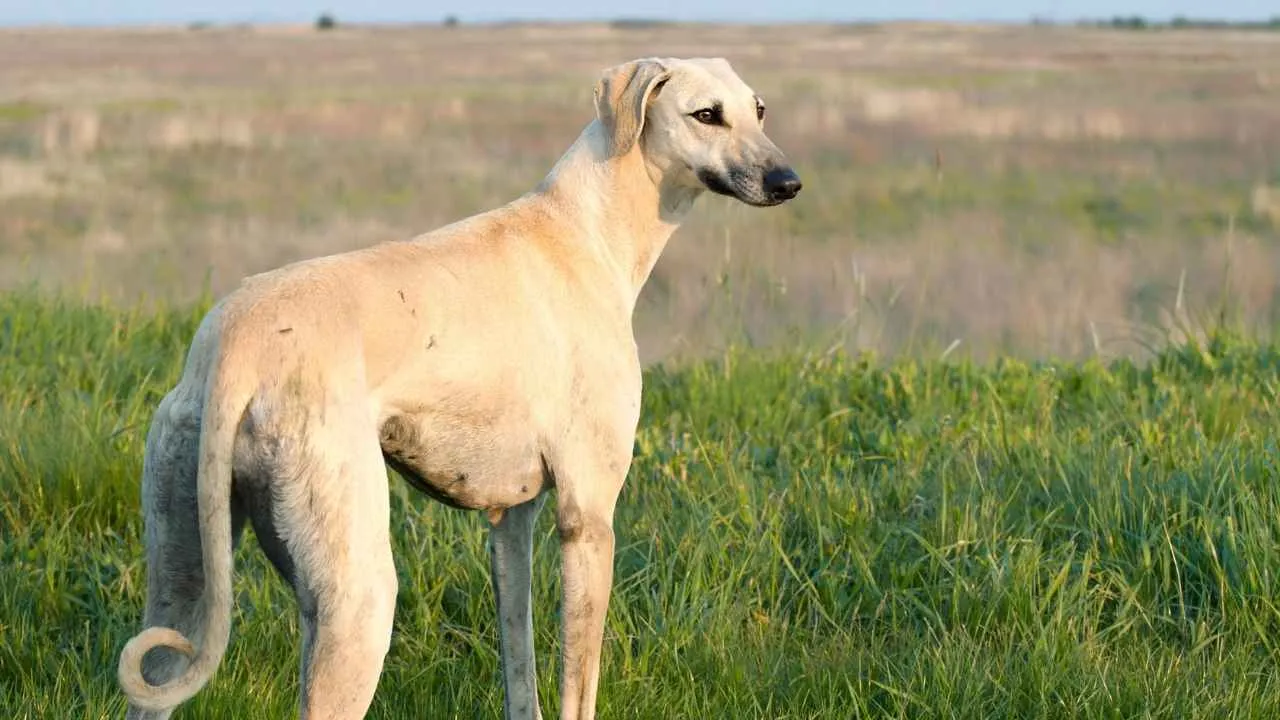
The Sloughi is an ancient North African sighthound associated with Morocco, Algeria, Tunisia, and Libya. Berber and Bedouin communities valued it for hunting animals such as gazelles, wild pigs, jackals, foxes, ostriches, and hares across desert sand, mountains, and rough brush.
Speed comes from a long, supple stride, powerful hindquarters, light frame, and efficient movement that wastes very little energy. Sloughis can accelerate sharply after visible prey yet continue over greater distances than dogs designed purely for short races.
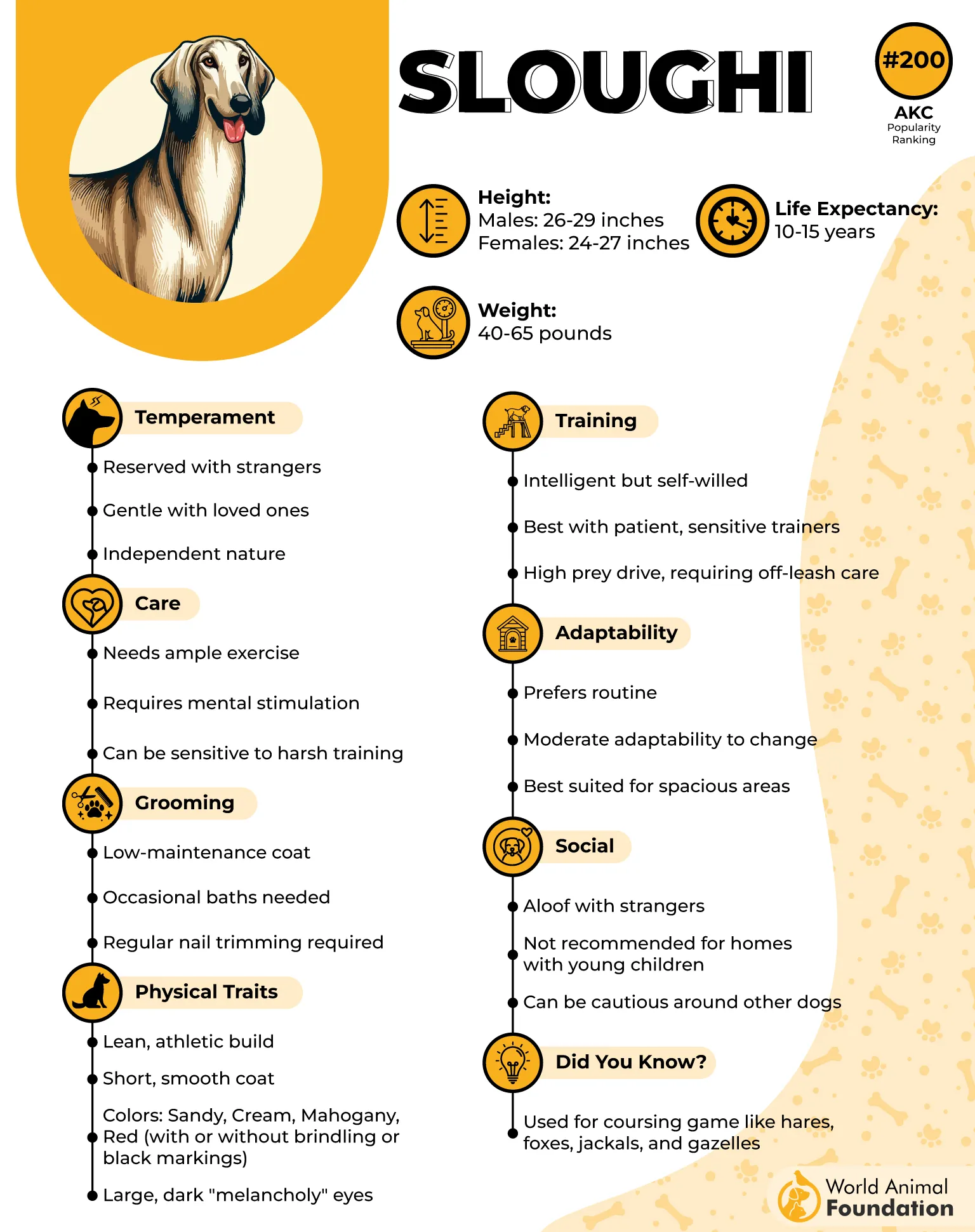
Although primarily a visual hunter, the Sloughi also responds to scent and sound during a chase. If a deer briefly disappears behind terrain or vegetation, those additional cues may help the dog estimate direction until visual contact is restored.
These hunting dogs are loyal and affectionate with their families but frequently cautious around strangers. They are sensitive dogs that respond poorly to force, making fair, patient reinforcement essential for recall and disengagement training.
Their Specific Deer Hunting Strategy
Explosive visual pursuit: The Sloughi launches after a deer once movement is confirmed, using rapid acceleration to prevent the animal from gaining an immediate lead.
Effortless distance coverage: Its economical gait allows continued pressure across open ground after the first sprint has ended.
Multisensory adjustment: Sight leads the chase, but scent and sound help the dog estimate the deer’s route when terrain briefly hides it.
7. Borzoi
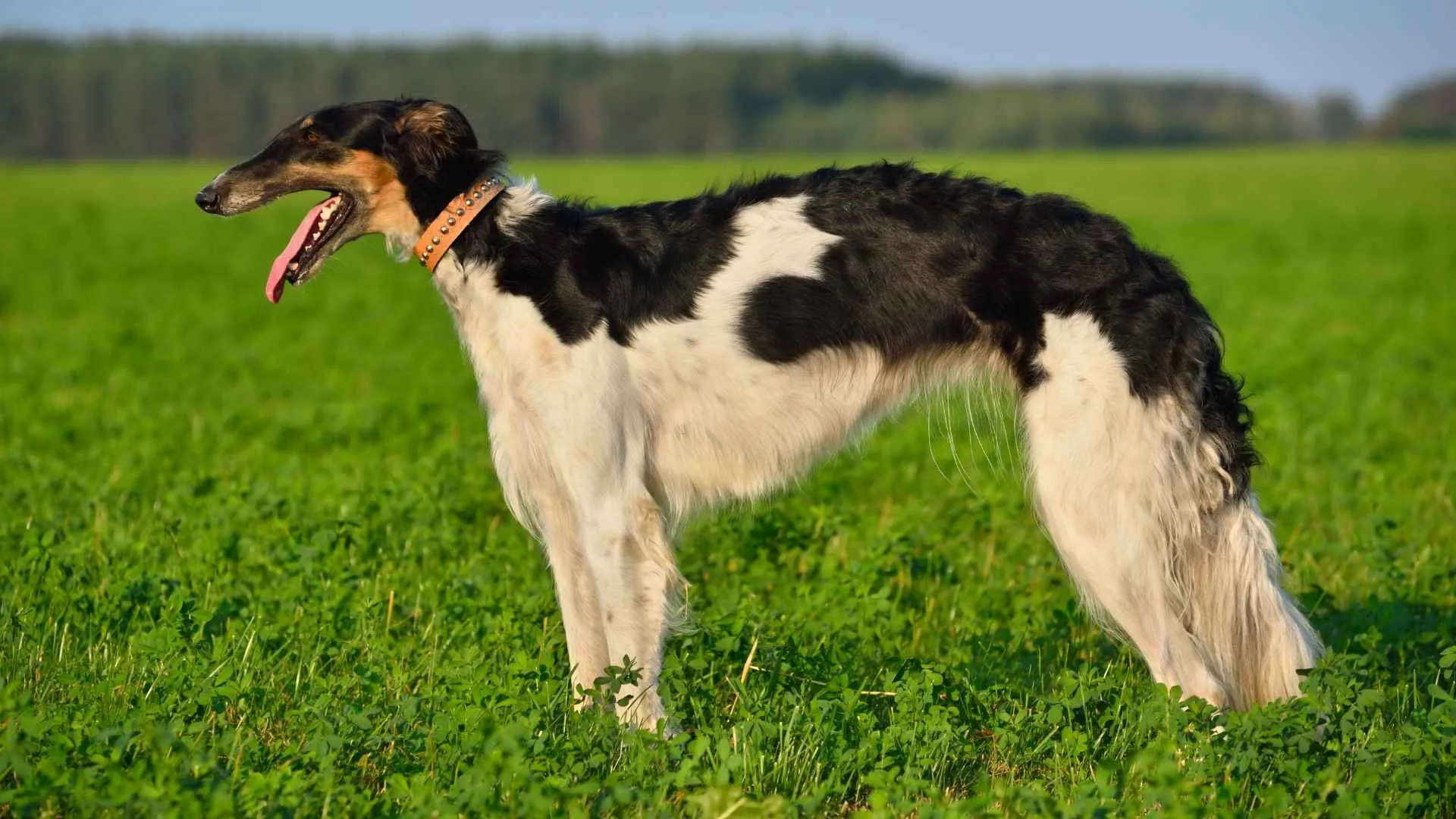
The Borzoi was developed in Russia as a large sighthound capable of coursing fast, powerful game across wide estates. Purina claims that it hunts with its eyes, scanning for movement before producing a powerful burst from its long, flexible body.
These dogs’ pursuit strategy traditionally depended on release timing rather than searching miles of ground independently. Once other dogs or hunters pushed quarry into the open, Borzoi were released in pairs or trios to accelerate, flank the animal, and close the distance.
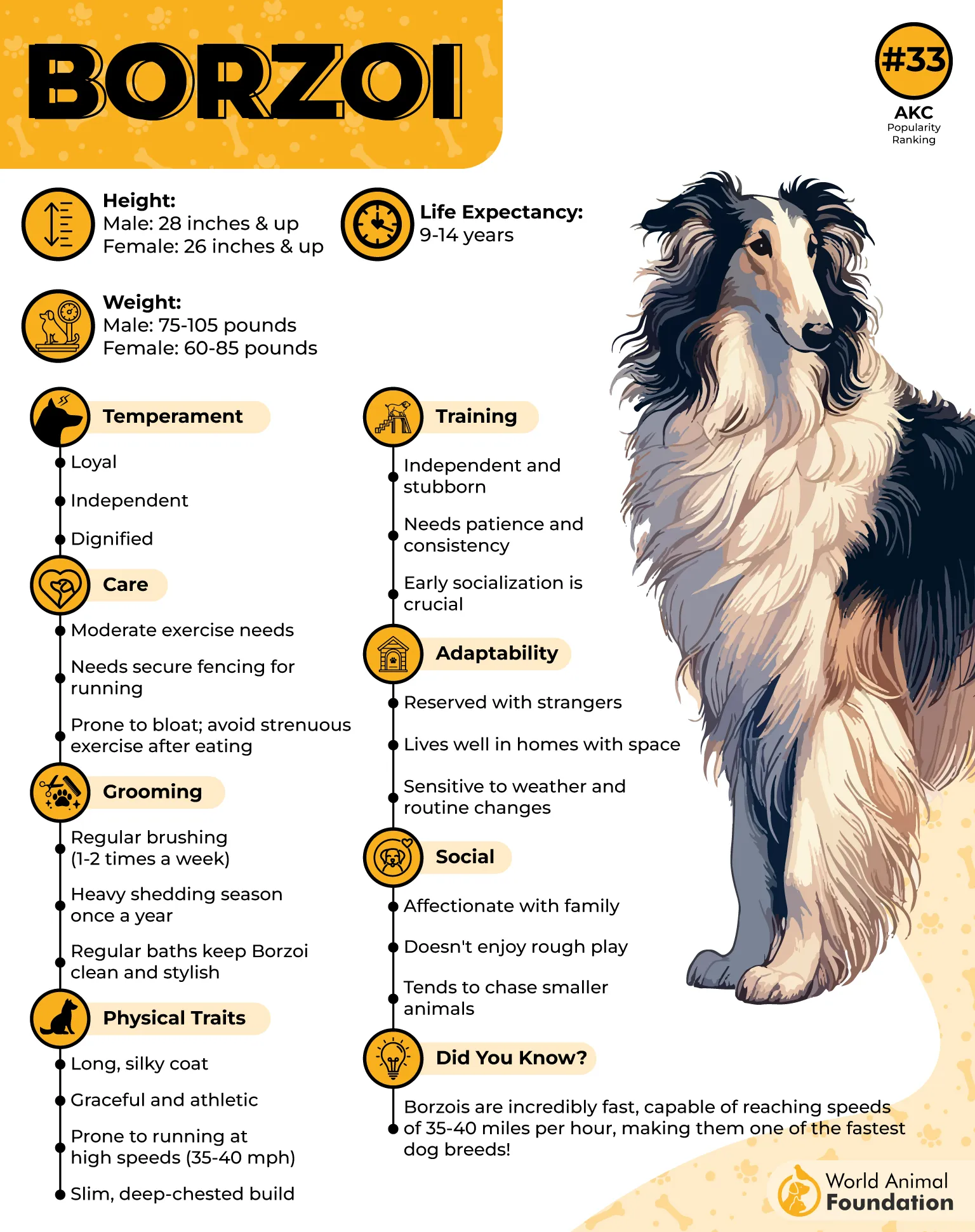
Modern owners must treat the breed’s visual prey drive with extreme respect. A Borzoi that spots a deer can become difficult to recall, and its combination of giant size and high speed creates serious risks around roads, livestock, fencing, and uneven ground.
Secure running areas, positive training, and lure coursing are safer ways to satisfy their natural chasing instinct. These activities let them run and chase without the risk of suddenly taking off after something outdoors.
Their Specific Deer Hunting Strategy
Timed release: The Borzoi conserves energy until a deer enters open ground, then accelerates when it can use its long stride without heavy obstruction.
Flanking movement: Working dogs historically coursed in small groups, approaching from different angles so fast quarry had fewer clear escape lines.
Agile interception: Rather than following directly behind every turn, the Borzoi uses vision and reach to anticipate the deer’s path and shorten the route.
Conclusion
A successful deer dog combines physical speed with scenting skill, endurance, training, and the ability to remain connected to its handler.
Whether the dog works in a recovery role or expresses its instincts through tracking trials and lure coursing, responsible handling must come first. Condition gradually, protect wildlife, respect local regulations, and never ask a dog to take risks simply because its ancestors were legendary hunters.
